Radiator hose TOYOTA RAV4 1996 Service Repair Manual
[x] Cancel search | Manufacturer: TOYOTA, Model Year: 1996, Model line: RAV4, Model: TOYOTA RAV4 1996Pages: 1632, PDF Size: 41.64 MB
Page 128 of 1632
clutch, fan shroud and radiator. Remove transmission dipstick. Remove dipstick tube upper bolt.
Disconnect 2 bleeder hoses.
2. Remove knob from transfer case shift lever. Remove upper console panel. Remove 4 boots to transfer
shift lever boot and remove shift lever boot. Raise and support vehicle. Remove 2 lower engine covers.
Remove exhaust pipes as necessary. Place reference marks on drive shaft flanges for reassembly
reference. Remove bolts and all drive shafts.
3. Remove dipstick tube lower bolt. Remove dipstick tube and "O" ring. Remove nut and plate washer, and
disconnect transmission shift control rod. Remove clip, plate washer and collar, and disconnect transfer
shift lever rod assembly. Disconnect all necessary electrical connectors for transmission and transfer case
removal. Remove 2 bolts and cover from front of transmission for access to torque converter bolts.
Remove torque converter bolts. Remove oil cooler pipe union nuts and pipe bracket bolt from
transmission.
4. Support transmission with transmission jack. Remove 8 bolts and 2 nuts from crossmember and remove
crossmember. Lower rear of transmission. Remove transmission wire clamp bolt. Remove 10
transmission-to-cylinder block bolts. Lower transmission with transfer case from vehicle.
Installation
1. Before installing transmission, use dial indicator to check drive plate runout. Drive plate runout should be
checked right next to the starter ring gear on the drive plate. Replace drive plate if runout
exceeds .0079" (.200 mm).
2. Install torque converter on transmission. To ensure torque converter is fully seated, torque converter
depth should be checked. Using straightedge and caliper, measure torque converter depth from torque
converter bolt lug on torque converter to the surface on transmission. See Fig. 1
.
3. Torque converter depth should be more than .673" (17.10 mm). If torque converter depth is less than
specified, check for improperly seated torque converter.
4. To install, reverse removal procedure. Tighten all bolts/nuts to specification. See TORQUE
SPECIFICATIONS When installing torque converter bolts, apply Loctite to torque converter bolt
threads before installing. Ensure the Green torque converter bolt is installed first before installing the
remaining torque converter bolts.
5. Install NEW "O" ring on dipstick tube. Use NEW gaskets and NEW nuts when installing front exhaust
pipe. Fill cooling system and check for leaks. Adjust shift linkages and fill with ATF. See appropriate
TRANSMISSION SERVICING article.
Removal (Paseo)
1. Disconnect negative battery cable. Remove transaxle oil dipstick. Disconnect throttle valve cable from
throttle body. Remove air cleaner assembly along with air intake duct to air cleaner.
2. Remove upper bolt from starter. Remove the 2 upper transaxle-to-cylinder block bolts located at top of
transaxle. Raise and support vehicle. Remove lower engine covers.
3. Support engine with hoist. Remove front wheels. Drain transaxle fluid. Remove axle shafts from
transaxle. See FWD AXLE SHAFTS article in DRIVE AXLES.
4. Disconnect necessary electrical connectors, ground cables, speedometer cable, control cables and oil
cooler lines for transaxle removal. Remove the 2 vertical bottom bolts from front (radiator side) transaxle
mount.
1998 Toyota Avalon XLS
TRANSMISSION SERVICING - A/T 1997-98 TRANSMISSION SERVICING Toyota - Transmission Removal &
Installation
Helpmelearn
November-03-08 10:30:28 AMPage 16 © 2005 Mitchell Repair Information Company, LLC.
Page 134 of 1632
5. Once engine and transaxle are installed, adjust all cables and fill with ATF. See appropriate
TRANSMISSION SERVICING article.
Removal (Sienna)
1. Disconnect negative battery cable. Remove hood. Remove wiper arms. Remove hood-to-cowl top seal.
Remove cowl panel hole cover. Remove clips and left and right side cowl top ventilator louvers.
Disconnect washer hoses. Remove 2 washer nozzles from cowl top ventilator louvers. Remove 11 bolts
and outer front cowl top panel.
2. Remove battery, battery tray, air cleaner assembly and air cleaner case. Disconnect throttle valve cable
from throttle body. Remove cruise control actuator with mounting bracket from the body.
3. Raise and support vehicle. Disconnect necessary electrical connectors and ground cables for transaxle
removal. Remove starter. Disconnect shift cable and oil cooler lines at transaxle. Remove shift cable
clamp bracket from transaxle.
4. Remove front (radiator side) engine mount shock absorber-to-lower frame assembly bolts. Remove front
(radiator side) engine mount-to-lower frame assembly bolts/nuts.
5. Remove front (radiator side) exhaust manifold brace from rear of exhaust manifolds. Brace fits between
rear of exhaust manifold and front of transaxle.
6. Remove the 5 upper transaxle-to-cylinder block bolts. Support engine with hoist. Steering gear assembly
must be supported in place during transaxle removal. Secure steering gear assembly to the engine hoist
using an attaching strap placed at each end of steering gear assembly.
7. Remove front wheels. Remove engine undercover. Remove front exhaust pipe located between exhaust
manifolds and rear exhaust pipe. Drain transaxle fluid. Remove axle shafts from transaxle. See FWD
AXLE SHAFTS article in DRIVE AXLES.
8. Disconnect shift control cable from mounting bracket. Remove rear (firewall side) engine mount-to-lower
frame assembly bolts/nuts. Remove transaxle mount-to-transaxle bolts/nuts at driver's side end of
transaxle.
9. Remove stabilizer bar mount bracket-to-lower frame assembly bolts. Remove steering gear assembly-to-
lower frame assembly bolts/nuts. Support lower frame assembly with floor jack. Lower frame assembly is
located below the engine and transaxle.
10. Disconnect power steering reservoir pipe mounting brackets from lower frame assembly. Remove lower
frame assembly mounting brackets. Lower frame assembly mounting brackets are located on the front
and rear of lower frame assembly attaching the lower frame assembly to the body. Remove lower frame
assembly.
11. Support transaxle with transmission jack. Remove torque converter bracket and cover bolts and nuts from
front of transaxle. Remove torque converter bolts. Remove remaining transaxle-to-cylinder block bolts.
Lower transaxle from vehicle.
Installation
NOTE: Wiper/washer components and output front cowl top panel must be
removed for clearance during transaxle removal and installation.
1998 Toyota Avalon XLS
TRANSMISSION SERVICING - A/T 1997-98 TRANSMISSION SERVICING Toyota - Transmission Removal &
Installation
Helpmelearn
November-03-08 10:30:29 AMPage 22 © 2005 Mitchell Repair Information Company, LLC.
Page 694 of 1632
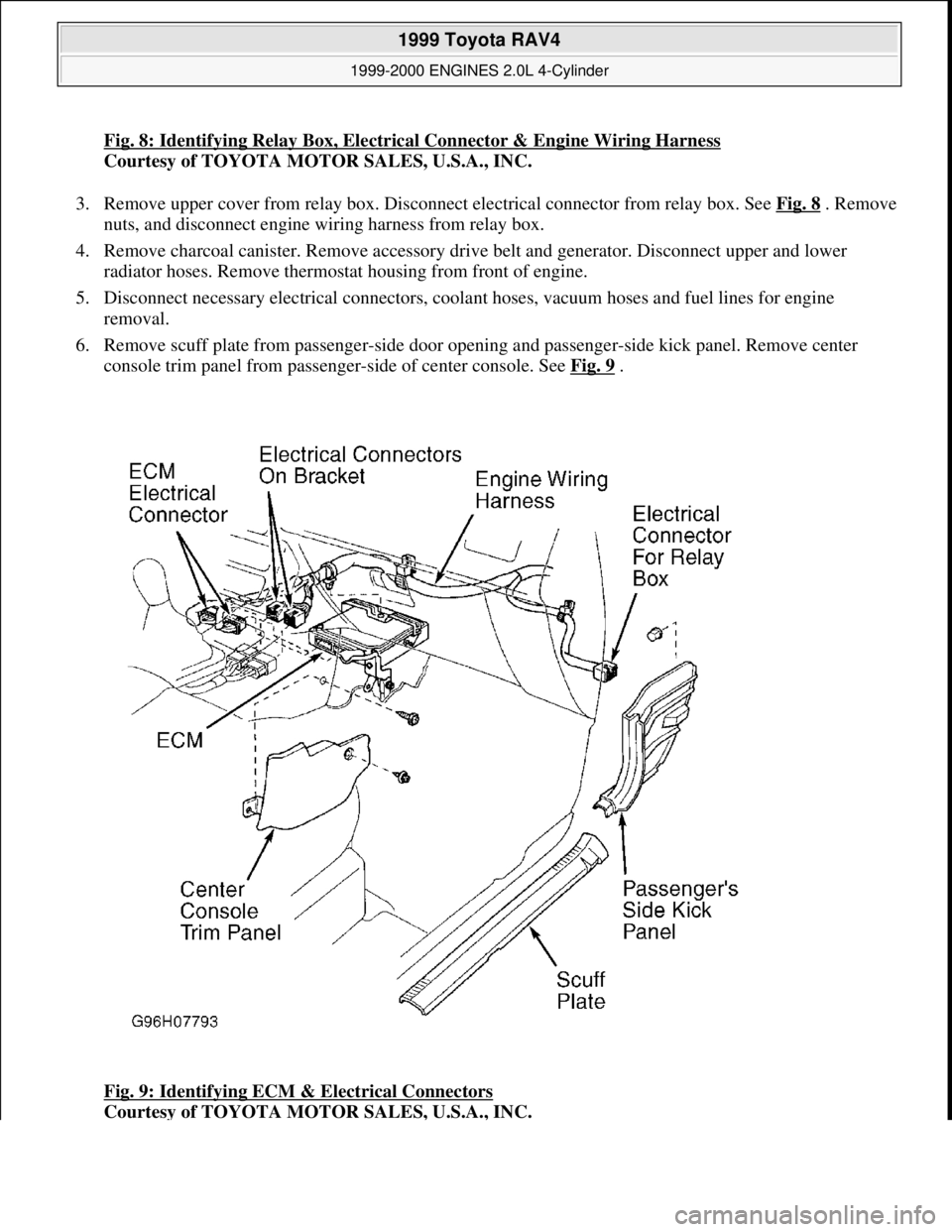
Fig. 8: Identifying Relay Box, Electrical Connector & Engine Wiring Harness
Courtesy of TOYOTA MOTOR SALES, U.S.A., INC.
3. Remove upper cover from relay box. Disconnect electrical connector from relay box. See Fig. 8
. Remove
nuts, and disconnect engine wiring harness from relay box.
4. Remove charcoal canister. Remove accessory drive belt and generator. Disconnect upper and lower
radiator hoses. Remove thermostat housing from front of engine.
5. Disconnect necessary electrical connectors, coolant hoses, vacuum hoses and fuel lines for engine
removal.
6. Remove scuff plate from passenger-side door opening and passenger-side kick panel. Remove center
console trim panel from passenger-side of center console. See Fig. 9
.
Fig. 9: Identifying ECM & Electrical Connectors
Courtesy of TOYOTA MOTOR SALES, U.S.A., INC.
1999 Toyota RAV4
1999-2000 ENGINES 2.0L 4-Cylinder
Microsoft
Sunday, November 22, 2009 10:22:26 AMPage 11 © 2005 Mitchell Repair Information Company, LLC.
Page 705 of 1632
control cable to intake manifold. On all models, install NEW gasket and EGR valve with union nut and 2
nuts. Install vacuum modulator to clamp on intake manifold. Connect vacuum hoses to EGR VSV.
Connect fuel inlet hose to fuel filter
14. Connect vacuum sensor hose to gas filter, and brake booster vacuum hose to intake manifold. Install
throttle body. Install NEW "O" ring on coolant by-pass pipe, and NEW gasket on water pump cover
before installing coolant by-pass pipe. Apply soapy water solution to "O" ring before installing coolant
by-pass pipe. Install by-pass pipe.
15. Install NEW gasket and water outlet. Connect radiator, water by-pass and heater water hoses. Connect
ECT sensor and sender gauge connectors. Connect oil pressure switch.
16. Install ignition coils, manifold stay and spark plug wires. Connect wire clamp to manifold stay. Connect
spark plug wires to spark plugs and clamps on cylinder head cover. Connect ignition coil connectors.
17. Install 2 heat insulators. Install lower heat insulator. On California models, install A/F sensor to exhaust
manifold. All others, install oxygen sensor (bank 1 sensor 1) to exhaust manifold.
18. Using a new gasket, install exhaust manifold and heat insulator assembly. Install right-side exhaust
manifolds stay (California). Install left-side exhaust manifold stay. Install upper manifold heat insulator.
Connect A/F sensor connectors (California), or Oxygen sensor (bank 1 sensor 1).
19. Use NEW gasket and NEW nuts when installing front exhaust pipe. Ensure all bolts/nuts are loosely
installed on front exhaust pipe before tightening to specification. See TORQUE SPECIFICATIONS
20. Install generator and air cleaner and cap. Connect accelerator cable to throttle body and cable bracket. On
A/T models, connect throttle cable to throttle body and cable bracket. On all models, start engine and
check for leaks. Recheck engine coolant and oil level. Install right-side engine undercover.
CRANKSHAFT FRONT SEAL
Removal & Installation (Oil Pump Installed)
1. Remove timing belt and crankshaft sprocket. See TIMING BELT . Using a knife, cut lip from seal. Pry
seal from oil pump housing. DO NOT damage sealing surfaces.
2. To install, apply grease to lip of new seal. Using hammer and Seal Installer (SST 09226-10010), install
seal until seal surface is even with oil pump housing. To install remaining components, reverse removal
procedure.
Removal & Installation (Oil Pump Removed)
Using hammer and drift, remove seal from oil pump housing. To install, use hammer and Seal Installer (SST
09226-10010). Install seal until seal surface is even with oil pump housing. Apply grease to lip of new seal.
TIMING BELT
CAUTION: If reusing timing belt, mark direction of timing belt rotation, and place
reference mark on timing belt at camshaft sprocket for reassembly
reference. Also, place reference mark on timing belt at upper edge of No. 1
timing belt cover. DO NOT bend, twist or turn timing belt inside-out. DO
NOT expose timing to oil, water or steam.
1999 Toyota RAV4
1999-2000 ENGINES 2.0L 4-Cylinder
Microsoft
Sunday, November 22, 2009 10:22:26 AMPage 22 © 2005 Mitchell Repair Information Company, LLC.
Page 722 of 1632
17. Ensure slot area on intake camshaft is vertically positioned. Rotate coupling on distributor so cutout
aligns with alignment mark on distributor housing.
18. Install distributor so center of flange on distributor is aligned with bolt hole on cylinder head. Install
distributor hold-down bolt(s). Adjust ignition timing.
CRANKSHAFT REAR OIL SEAL
Removal
Remove transaxle, clutch assembly (if equipped) and flywheel/drive plate. Using a knife, cut seal lip from oil
seal. Pry oil seal from rear seal housing. DO NOT damage sealing surfaces.
Installation
1. Ensure all sealing surfaces are clean. Apply grease to seal lip of new oil seal. Using Oil Seal Installer
(SST 09223-15030), install oil seal into rear seal housing until oil seal is even with surface of rear seal
housing.
2. Apply Loctite to flywheel/drive plate bolts. Install flywheel/drive plate. Install bolts and tighten to
specification using a crisscross pattern. See TORQUE SPECIFICATIONS
. To install remaining
components, reverse removal procedure.
WATER PUMP
Removal
1. Disconnect negative battery cable. Drain cooling system. Remove timing belt and idler pulley(s) as
needed for access to water pump. See TIMING BELT
.
2. Disconnect lower radiator hose from thermostat housing. Remove generator adjusting bracket. Remove
coolant b
y-pass pipe-to-water pump nuts. See Fig. 27. NOTE: On 4WD models, manufacturer recommends removing engine with transaxle for
transaxle removal. On 2WD models, transaxle may be removed with engine in
vehicle.
1999 Toyota RAV4
1999-2000 ENGINES 2.0L 4-Cylinder
Microsoft
Sunday, November 22, 2009 10:22:26 AMPage 39 © 2005 Mitchell Repair Information Company, LLC.
Page 758 of 1632
Fig. 7: Exhaust Valve Adjusting Shim Selection Chart
Courtesy of TOYOTA MOTOR SALES, U.S.A., INC.
REMOVAL & INSTALLATION
FUEL PRESSURE RELEASE
1. Remove driver-side rear seat and floor panel cover for access to electrical connector for electric fuel
pump.
2. Disconnect electrical connector for electric fuel pump. Start engine and allow engine to idle until engine
stalls. Turn ignition off.
3. Reconnect electrical connector for electric fuel pump. Reinstall floor panel cover and driver-side rear
seat.
4. Disconnect negative battery cable. Place an approved gasoline container under fuel line. Cover fuel line
connection with shop towel.
5. Slowly loosen fuel line connection to release fuel pressure. Once fuel pressure is released, fuel system
components may be serviced.
ENGINE
Removal
1. Engine and transaxle are removed as an assembly from bottom of engine compartment. Release fuel
pressure. See FUEL PRESSURE RELEASE
. Remove hood, battery and battery tray. Drain cooling
system and engine oil.
2. Disconnect control cables at throttle body. Remove air cleaner assembly and air cleaner case. Remove
bolts, and disconnect relay box from body. Relay box is located near driver-side strut tower. See Fig. 8
.
3. Remove upper cover from relay box. Disconnect electrical connector from relay box. See Fig. 8
. Remove
nuts, and disconnect engine wiring harness from relay box.
4. Remove charcoal canister. Remove accessory drive belt and generator. Disconnect upper and lower
radiator hoses. Remove thermostat housing from front of engine.
5. Disconnect necessar
y electrical connectors, coolant hoses, vacuum hoses and fuel lines for engine CAUTION: To prevent air bag deployment, disconnect negative battery cable and wait
at least 90 seconds before working on vehicle.
CAUTION: When battery is disconnected, vehicle computer and memory systems
may lose memory data. Driveability problems may exist until computer
systems have completed a relearn cycle.
NOTE: For reassembly reference, label all electrical connectors, vacuum hoses and
fuel lines before removal. Also place mating marks on engine hood and other
major assemblies before removal.
1997 Toyota RAV4
2.0L 4-CYL 1997-98 ENGINES Toyota 2.0L 4-Cylinder
Microsoft
Sunday, November 22, 2009 10:23:30 AMPage 10 © 2005 Mitchell Repair Information Company, LLC.
Page 787 of 1632
17. Ensure slot area on intake camshaft is vertically positioned. Rotate coupling on distributor so cutout
aligns with alignment mark on distributor housing. See Fig. 16
.
18. Install distributor so center of flange on distributor is aligned with bolt hole on cylinder head. Install
distributor hold-down bolt(s). Adjust ignition timing.
CRANKSHAFT REAR OIL SEAL
Removal
Remove transaxle, clutch assembly (if equipped) and flywheel/drive plate. Using a knife, cut seal lip from oil
seal. Pry oil seal from rear seal housing. DO NOT damage sealing surfaces.
Installation
1. Ensure all sealing surfaces are clean. Apply grease to seal lip of NEW oil seal. Using Oil Seal Installer
(SST 09223-15030), install oil seal in rear seal housing until oil seal is even with surface of rear seal
housing.
2. Apply Loctite to flywheel/drive plate bolts. Install flywheel/drive plate. Install bolts and tighten to
specification using a crisscross pattern. See TORQUE SPECIFICATIONS
. To install remaining
components, reverse removal procedure.
WATER PUMP
Removal
1. Disconnect negative battery cable. Drain cooling system. Remove timing belt and idler pulley(s) as
needed for access to water pump. See TIMING BELT
.
2. Disconnect lower radiator hose from thermostat housing. Remove generator adjusting bracket. Remove
coolant by-pass pipe-to-water pump nuts. See Fig. 28
.
3. Remove water pump bolts in sequence. See Fig. 29
. Remove water pump, water pump cover and "O"
rings. See Fig. 28
. Remove water pump-to-water pump cover bolts. Remove water pump and gasket
from water pump cover. NOTE: On 4WD models, manufacturer recommends removing engine with transaxle for
transaxle removal. On 2WD models, transaxle may be removed with engine in
vehicle.
1997 Toyota RAV4
2.0L 4-CYL 1997-98 ENGINES Toyota 2.0L 4-Cylinder
Microsoft
Sunday, November 22, 2009 10:23:31 AMPage 39 © 2005 Mitchell Repair Information Company, LLC.