remove seats TOYOTA RAV4 1996 Service Repair Manual
[x] Cancel search | Manufacturer: TOYOTA, Model Year: 1996, Model line: RAV4, Model: TOYOTA RAV4 1996Pages: 1632, PDF Size: 41.64 MB
Page 126 of 1632
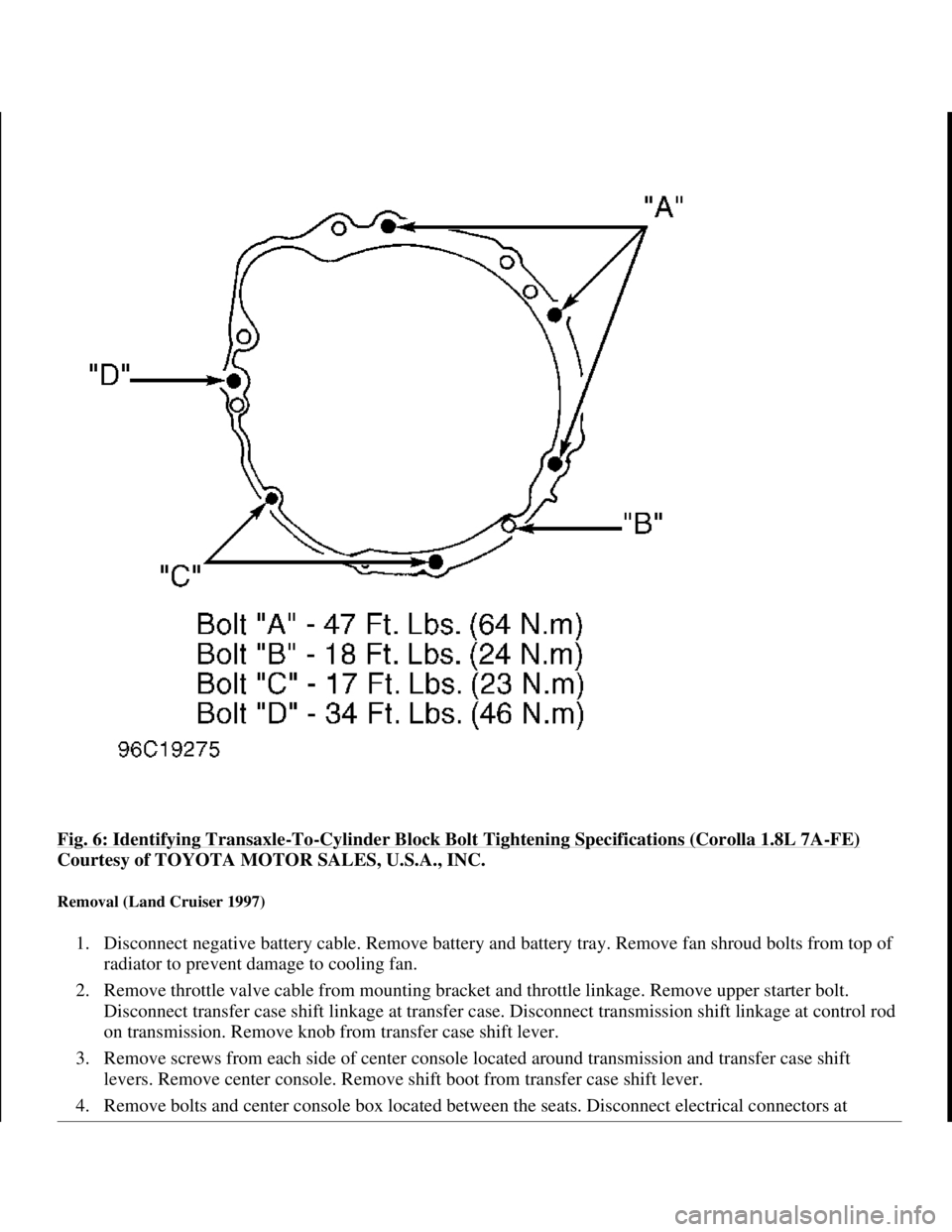
Fig. 6: Identifying Transaxle-To-Cylinder Block Bolt Tightening Specifications (Corolla 1.8L 7A-FE)
Courtesy of TOYOTA MOTOR SALES, U.S.A., INC.
Removal (Land Cruiser 1997)
1. Disconnect negative battery cable. Remove battery and battery tray. Remove fan shroud bolts from top of
radiator to prevent damage to cooling fan.
2. Remove throttle valve cable from mounting bracket and throttle linkage. Remove upper starter bolt.
Disconnect transfer case shift linkage at transfer case. Disconnect transmission shift linkage at control rod
on transmission. Remove knob from transfer case shift lever.
3. Remove screws from each side of center console located around transmission and transfer case shift
levers. Remove center console. Remove shift boot from transfer case shift lever.
4. Remove bolts and center console box located between the seats. Disconnect electrical connectors at
1998 Toyota Avalon XLS
TRANSMISSION SERVICING - A/T 1997-98 TRANSMISSION SERVICING Toyota - Transmission Removal &
Installation
Helpmelearn
November-03-08 10:30:28 AMPage 14 © 2005 Mitchell Repair Information Company, LLC.
Page 137 of 1632
exceeds .0079" (.200 mm).
2. Install torque converter on transmission. To ensure torque converter is fully seated, torque converter
depth should be checked. Using straightedge and caliper, measure torque converter depth from torque
converter bolt lug on torque converter to the surface on transmission. See Fig. 1
.
3. Torque converter depth should be more than .707" (17.95 mm). If torque converter depth is less than
specified, check for improperly seated torque converter.
4. To install, reverse removal procedure. Tighten all bolts/nuts to specification. See TORQUE
SPECIFICATIONS When installing torque converter bolts, apply Loctite to torque converter bolt
threads before installing. Ensure the Green torque converter bolt is installed first before installing the
remaining torque converter bolts.
5. Once engine and transmission are installed, adjust all cables and fill with ATF. See appropriate
TRANSMISSION SERVICING article.
Removal (Tacoma 4WD)
1. Disconnect negative battery cable. Remove transmission oil dipstick. Disconnect throttle valve cable from
throttle body.
2. Raise and support vehicle. Remove lower engine cover. Remove fan shroud from radiator. Remove rear
console box, located between the seats. Remove screws from front console, located near transfer case and
transmission shift levers.
3. Remove front console with transfer case shift lever knob. Disconnect electrical connectors for removal of
transmission shift lever assembly. Disconnect shift linkage at transmission shift lever assembly. Remove
transmission shift lever assembly.
4. Remove snap ring and transfer case shift lever from transfer case. Remove transmission oil dipstick tube
and "O" ring. Place reference marks on drive shaft flanges for reassembly reference. Remove drive shafts.
5. Remove exhaust pipes as necessary for access to transmission and transfer case. Disconnect speedometer
cable and necessary electrical connectors for transmission and transfer case removal. Remove
transmission oil cooler pipes and brackets as necessary.
6. Remove starter and stabilizer bar. Remove torque converter cover from front of transmission. Remove
torque converter bolts. Front differential assembly rear mount must be removed for transmission removal.
Rear mount is located on front differential assembly, just behind the drive shaft flange.
7. Support front differential assembly with jack. Remove front differential assembly rear mount-to-
crossmember nut. Slightly raise front differential assembly. Remove the 2 front differential assembly rear
mount bolts.
8. Support transmission with transmission jack. Remove transmission mount-to-transmission crossmember
bolts. Remove transmission crossmember, located below transmission and transfer case. Remove
transmission-to-cylinder block bolts. Lower transmission with transfer case from vehicle.
Installation
1. Before installing transmission, use dial indicator to check drive plate runout. Drive plate runout should be
checked right next to the starter ring gear on the drive plate. Replace drive plate if runout
exceeds .0079" (.200 mm).
2. Install torque converter on transmission. To ensure torque converter is full
y seated, torque converter
1998 Toyota Avalon XLS
TRANSMISSION SERVICING - A/T 1997-98 TRANSMISSION SERVICING Toyota - Transmission Removal &
Installation
Helpmelearn
November-03-08 10:30:29 AMPage 25 © 2005 Mitchell Repair Information Company, LLC.
Page 851 of 1632
1999 HEATER SYSTEMS
RAV4, Tacoma & 4Runner
DESCRIPTION
Major components of the heater system are a heater core, control panel, blower motor, water valve, hoses,
control cables and air ducts. 4Runner may be equipped with a dual heater system with separate controls for
front and rear. Rear temperature and blower controls are located in the console between front seats.
OPERATION
BLOWER SWITCH
Switch controls blower motor speed through blower resistor. Blower speed is adjusted by control lever, knob or
push button.
CONTROL PANEL
Temperature and mode knobs or levers are connected by cable to heater coolant valve and air doors. All models
have a fresh/recirculation lever to provide choice of outside air or recirculated inside air.
HEATER RELAY
A heater (or main) relay controls current through system. For location of heater (main) relay, see WIRING
DIAGRAMS .
ADJUSTMENTS
AIR INLET DAMPER CABLE
Set air inlet damper and control lever to fresh (recirculated on RAV4) air position. Remove cable retaining clip,
and ensure damper and cable are in full fresh (recirculated on RAV4) air position. Install control cable clip.
Check operation of air intake damper.
AIRFLOW MODE DAMPER CABLE WARNING:To avoid injury from accidental air bag deployment, read and carefully
follow all SERVICE PRECAUTIONS and DISABLING & ACTIVATING AIR
BAG SYSTEM procedures in AIR BAG SYSTEM SAFETY article in
GENERAL SERVICING.
CAUTION: When battery is disconnected, radio will go into anti-theft protection mode.
Obtain radio anti-theft protection code from owner prior to servicing
vehicle.
1999 Toyota RAV4
1999 HEATER SYSTEMS RAV4, Tacoma & 4Runner
1999 Toyota RAV4
1999 HEATER SYSTEMS RAV4, Tacoma & 4Runner
Microsoft
Sunday, November 22, 2009 10:30:50 AMPage 1 © 2005 Mitchell Repair Information Company, LLC.
Microsoft
Sunday, November 22, 2009 10:30:55 AMPage 1 © 2005 Mitchell Repair Information Company, LLC.
Page 860 of 1632
case and remove blower motor. To install, reverse removal procedure. See Fig. 10 .
HEATER ASSEMBLY
Removal & Installation (All Except 4Runner Rear)
1. Remove A/C cooling unit (if equipped). See appropriate MANUAL A/C-HEATER SYSTEMS article.
Drain cooling system. Disconnect hoses from heater core. Remove grommets from hoses. Remove
instrument panel (if required).
2. Disconnect control cables from heater assembly. Remove defroster nozzle and heater duct. Remove
heater unit. See Fig. 7
, Fig. 8 or Fig. 9 . Remove screws, clamps and heater core. To reassemble and
install, reverse removal procedure.
Removal & Installation (4Runner Rear)
1. Drain cooling system. Remove front seats and center console box. Roll floor carpet back and disconnect
water hoses. Remove heater duct.
2. Disconnect control cable and remove heater control assembly. Remove heater unit. See Fig. 10
. Remove
wire harness and clamps. Separate heater case and heater core. To reassemble and install, reverse removal
procedure. NOTE: Tacoma and 4Runner may require removal of instrument panel and/or glove box
components. See INSTRUMENT PANEL
.
1999 Toyota RAV4
1999 HEATER SYSTEMS RAV4, Tacoma & 4Runner
Microsoft
Sunday, November 22, 2009 10:30:50 AMPage 10 © 2005 Mitchell Repair Information Company, LLC.
Page 972 of 1632
REMOVAL & INSTALLATION
See appropriate MANUAL TRANSMISSION REMOVAL article in TRANSMISSION SERVICING.
TRANSAXLE DISASSEMBLY
1. Unbolt transfer case from transaxle housing. Using a plastic hammer, remove transfer case from
transaxle. Screw appropriate bolt and washer into differential side gear intermediate shaft. Using slide
hammer type puller, remove shaft. Remove snap ring from shaft.
2. Remove clutch release fork and bearing. Remove back-up light switch. Remove speedometer adapter.
Remove speedometer driven gear or speed sensor, if equipped. Remove gear selecting bellcrank. Remove
shift and select lever lock bolt. Remove control shaft cover. Remove shift and select lever shaft assembly.
See Fig. 1
.
3. Remove case cover. Unstake output shaft lock nut. Lock transmission in 2 gears. Remove output shaft
lock nut. Unlock transmission. See Fig. 2
.
4. Remove No. 3 shift fork set bolt. Remove No. 3 hub sleeve and No. 3 shift fork. Using puller, remove 5th
driven gear. See Fig. 2
. Measure 5th gear clearances. Record for reassembly reference. Using dial
indicator, measure 5th gear thrust clearance. See Fig. 3
and Fig. 4 . Standard clearance should be .004-
.022" (.10-.57 mm). Service limit is .026" (.65 mm). Remount dial indicator to measure lateral movement
(oil clearance) of 5th gear. Standard clearance should be .0004-.002" (.009-.05 mm). Service limit
is .0028" (.070 mm).
5. Remove input shaft snap ring. Using puller, remove No. 3 clutch hub with synchronizer ring and 5th gear.
Remove needle bearing and spacer. Remove 7 Torx (T45) screws and rear bearing retainer. Remove
adjusting shim.
6. Remove input shaft rear bearing snap ring. Remove shift fork shaft snap rings. Remove plug. Remove
seat, spring and detent ball with a magnet. Remove reverse idler gear shaft retaining bolt.
7. Remove transmission housing. Remove output shaft rear bearing outer race. Remove No. 2 oil pipe.
Remove reverse shift arm bracket. Remove reverse idler gear, thrust washer and shaft. Remove all
remaining plugs, seats, springs and detent balls with magnet.
8. To remove No. 1 shift fork shaft, pull up No. 3 shift fork shaft. Using magnetic finger, remove interlock
roller. Remove No. 2 shift fork shaft, shift head and No. 1 shift fork. Pull out No. 3 shift fork shaft along
with the reverse shift fork. Remove No. 2 shift fork. Remove snap rings from shift fork shafts.
9. Remove output and input shaft assemblies. Remove oil pump drive gear. Remove differential case
assembly. Remove oil pipe and oil pump. See Fig. 1
.
1999 Toyota RAV4
1999 MANUAL TRANSMISSIONS Toyota E250 & E250F 5-Speed Overhaul
Microsoft
Sunday, November 22, 2009 10:48:07 AMPage 2 © 2005 Mitchell Repair Information Company, LLC.
Page 999 of 1632
REASSEMBLY
1. Assembly is reverse order of disassembly. Remove output shaft. Install oil pump drive gear. Install input
and output shaft assemblies, and shift fork assemblies as single unit. Install shift fork shaft locking balls,
springs, seats and plugs. Install reverse idler gear and shaft. Align referencing marks on idler gear and
clutch housing. Place reverse shift fork pivot into reverse shift arm, and install reverse shift arm bracket to
clutch housing. Install No. 2 oil pipe. Install NEW gasket to oil pipe. See Fig. 1
.
2. Apply Three Bond (1281) sealant to transmission housing. Install transmission housing to clutch housing.
Install reverse idler gear shaft retaining bolt. Install shift shaft locking ball, spring, seat and plug. Install
snap rings onto shift fork shafts.
3. Install output shaft rear bearing outer race. Install correct adjusting shim. Install snap ring onto input shaft
rear bearing. Install rear bearing retainer. Install spacer, needle bearing and 5th gear. Install synchro ring
and key spring to No. 3 clutch hub. Using Installer (09310-17010), install No. 3 clutch hub with
synchronizer ring and key spring. See Fig. 2
.
4. Select a snap ring that will allow minimum axial play and install snap ring onto shaft. Snap rings are
available in thicknesses of .068" (1.75 mm) to .084" (2.15 mm) in .002" (.05 mm) increments. Shims are
stamped "A"-"J". See Fig. 2
.
5. Recheck 5th gear thrust clearance. Standard clearance is .004-.022" (.10-.57 mm). Install 5th driven gear.
Install No. 3 hub sleeve and No. 3 shift fork. Lock transmission in 2 gears. Install and tighten NEW lock
nut to 90 ft. lbs. (123 N.m). Stake lock nut. Unlock transmission.
6. Apply Three Bond (1281) sealant to transmission case cover. Install cover. Install shift and select lever
shaft. Install control shaft cover. Install lock bolt. Install boot onto control shaft oil seal. Ensure boot is
installed in correct direction. Position air bleed of boot downward. Install selecting bellcrank. Install
back-up light switch and speedometer driven gear. Install side gear intermediate shaft. Distance from end
of shaft to clutch housing should be 10.06" (255.5 mm).
TORQUE SPECIFICATIONS
TORQUE SPECIFICATIONS NOTE: This transmission does not use gaskets between major housings, use
Three Bond (1281) sealant. Assemble housing within 20 minutes after
applying liquid gasket. Allow 30 minutes curing time before filling with oil.
ApplicationFt. Lbs. (N.m)
Back-Up Light Switch30 (40)
Bellcrank Bolt14 (20)
Clutch Release Fork Bolt35 (47)
Differential Case Bolt46 (63)
Differential Ring Gear Bolt91 (123)
Drain & Filler Plug36 (49)
Elbow-To-Transaxle Bolt20 (27)
Oil Cooler Tube-To-Elbow Bolt25 (34)
Oil Pipe Clamp13 (17)
1999 Toyota RAV4
1999 MANUAL TRANSMISSIONS Toyota E250 & E250F 5-Speed Overhaul
Microsoft
Sunday, November 22, 2009 10:48:07 AMPage 29 © 2005 Mitchell Repair Information Company, LLC.
Page 1117 of 1632
Inspection
1. With rack mounted horizontally on "V" blocks, use dial indicator to measure rack runout. Runout should
not exceed .012" (.3 mm). Check rack and teeth for wear and damage. Replace rack if necessary.
2. Using cylinder gauge, measure inside diameter of rack housing bushing. Maximum diameter should not
exceed 1.11" (28.2 mm). Using micrometer, measure outside diameter or control valve. Minimum
diameter should not exceed 1.09" (27.69 mm). Replace components if necessary.
3. If necessary, use puller to extract bushing from rack housing. Using screwdriver, carefully tap oil seal
upward out of rack housing. Coat NEW seal lip with power steering fluid. Using seal installer, carefully
tap NEW seal into place from upper side of rack housing. Make sure oil seal is facing same direction as
removed.
4. Coat NEW bushing with molybdenum disulfide lithium-base grease. Using press, install bushing against
oil seal in rack housing.
5. If necessary, use screwdriver to remove Teflon ring and "O" ring from steering rack. Coat NEW "O" ring
with power steering fluid. Install "O" ring. Carefully expand NEW Teflon ring by hand, only enough to
accommodate installation. Coat Teflon ring with power steering fluid. Press ring into rack groove. Use
ring installer to fully seat ring.
6. If necessary, use screwdriver to remove 4 Teflon rings from control valve assembly. Coat NEW rings
with power steering fluid. Slightly expand rings by hand, and install in each groove. Use installer tool to
slide over rings and fully seat them.
7. If necessary, use screw extractor to remove 2 union seats from rack housing. See Fig. 7
. Use drift and
hammer to tap in 2 NEW union seats.
8. Check cylinder end stopper bushing for wear or damage. If necessary, replace cylinder end stopper
(bushing is not replaceable separately). Coat inside of bushing with molybdenum disulfide lithium-base
grease.
Reassembly
1. With rack housing mounted vertically in soft-jaw vise, coat NEW seal with power steering fluid, and
press into rack housing from end opposite control valve housing portion. See Fig. 8
. Ensure oil seal faces
in proper direction.
2. Mount rack housing horizontally in vise. Clean rack teeth of any burrs. Place protective end piece on
steering rack teeth end. Coat protective sleeve with power steering fluid. Install steering rack into rack
housing. Remove protective sleeve.
3. Coat NEW oil seal lip with power steering fluid. Wrap tape on end of steering rack (opposite of control
valve housing end). Push oil seal evenly into rack housing. See Fig. 8
.
4. Install end stopper into rack housing. Install NEW snap ring.
5. Install special connectors onto union fittings of rack housing, and attach hand vacuum pump. Apply
15.75" Hg for about 30 seconds. Ensure there is no vacuum leak. If leak exists, check installation of oil
seals at each end of housin
g. See Fig. 9.
1999 Toyota RAV4
1999-2000 STEERING Power Rack & Pinion - Trucks
Microsoft
Sunday, November 22, 2009 10:35:47 AMPage 24 © 2005 Mitchell Repair Information Company, LLC.
Page 1129 of 1632
Fig. 16: Exploded View Of Power Rack & Pinion Steering Gear Assembly (Tacoma 2WD -2 Of 2)
Courtesy of TOYOTA MOTOR SALES, U.S.A., INC.
Inspection
1. With rack mounted horizontally on "V" blocks, use dial indicator to measure rack runout. Runout should
not exceed .012" (.30 mm). Check rack and teeth for wear and damage. Replace rack if necessary.
2. If necessary, press oil seal and bearing from control valve housing. Coat NEW seal lip with power
steering fluid. Press seal into place. Ensure oil seal is facing same direction as removed.
3. Coat NEW bushing with molybdenum disulfide lithium-base grease. Using press, install bushing against
oil seal in rack housing.
4. If necessary, use brass bar and hammer to tap lower bearing out of rack housing. See Fig. 15
. Turn
housing over and press upper bearing out of rack housing.
5. Coat NEW lower bearing with molybdenum disulfide lithium-base grease. Using press, install NEW
bearing into lower side of rack housing. Turn housing over, coat NEW upper bearing with molybdenum
disulfide lithium-base grease. Using press, install bearing into upper side of rack housing.
6. If necessary, use puller to remove oil seal from rack end bushing. See Fig. 16
. Coat NEW oil seal lip
with power steering fluid. Press seal into bushing.
7. If necessary, use screwdriver to remove Teflon ring and "O" ring from steering rack. Coat NEW "O" ring
with power steering fluid. Install "O" ring. Carefully expand NEW Teflon ring by hand, only enough to
accommodate installation. Coat Teflon ring with power steering fluid. Press ring firmly into rack groove.
8. If necessary, use screwdriver to remove 4 Teflon rings from control valve assembly. Coat NEW rings
with power steering fluid. Slightly expand rings by hand and install in each groove. Use installer tool to
slide over rings and fully seat them.
9. If necessary, use screw extractor to remove union seats from side of control valve housing. Carefully tap
NEW seats into place.
Reassembly
1. With rack housing mounted vertically in soft-jaw vise, coat NEW seal with power steering fluid, and
press into rack housing from end opposite control valve housing portion. See Fig. 16
. Ensure oil seal
faces in proper direction.
2. Mount rack housing horizontally in vise. Clean rack teeth of any burrs. Place protective sleeve end piece
on steering rack teeth end. Coat protective sleeve with power steering fluid. Install steering rack into rack
housing. Remove protective sleeve.
3. Coat NEW "O" ring with power steering fluid, and install on rack bushing. Tape steering rack end and
coat end with power steering fluid. Install rack bushing. Remove tape.
4. Align hole for wire of cylinder end stopper with slot of rack housing. Use installer tool and turn stopper
clockwise 400-500 degrees. See Fig. 14
.
5. Install special connectors onto union fittings of rack housing and attach hand vacuum pump. Apply
15.75" Hg for about 30 seconds. Ensure there is no vacuum leak. If there is, check installation of oil seals
at each end of housing. See Fig. 9
.
6. Coat Teflon rings of control valve assembly with power steering fluid. Wrap serrated end of control valve
shaft with tape. Push control valve assembly into housing. Press NEW oil seal into place after coating lip
1999 Toyota RAV4
1999-2000 STEERING Power Rack & Pinion - Trucks
Microsoft
Sunday, November 22, 2009 10:35:47 AMPage 36 © 2005 Mitchell Repair Information Company, LLC.
Page 1130 of 1632
with power steering fluid.
7. Place NEW gasket on rack housing. Position control valve housing. Install and tighten mounting bolt. See
TORQUE SPECIFICATIONS
. Hold control valve shaft from turning, and install NEW self-locking
nut on lower end of shaft. Install dust cover.
8. Apply thread lock sealant to 2-3 threads of rack housing cap. Install and tighten cap to specification. See
TORQUE SPECIFICATIONS
. Stake cap in 2 places.
9. Install rack guide seat to guide. Apply thread lock sealant to 2-3 threads of rack guide spring cap. Install
guide, spring, washer and cap. Temporarily tighten cap.
10. Temporarily install both rack ends. Using 21-mm wrench, tighten rack guide spring cap to 18 ft. lbs. (24
N.m). Loosen cap by 12 degrees. Using torque wrench on top end of control valve stem, turn stem right
and left 1-2 times. Loosen rack guide spring cap until rack guide spring is not functioning. Tighten rack
guide spring cap until preload is within 7.8-13.0 INCH lbs. (0.9-1.5 N.m), measured with torque wrench
on control valve stem. See Fig. 11
.
11. Apply thread lock sealant to rack guide spring cap lock nut. Hold spring cap from rotating, use torque
wrench to tighten lock nut to specification. See TORQUE SPECIFICATIONS
. Recheck preload.
12. Remove both rack ends. Install No. 2 rack housing bracket and grommet. Align reference marks. Install
and tighten bolt. See TORQUE SPECIFICATIONS
.
13. Install NEW claw washers on each end of rack. Align claws with grooves in rack. Install rack ends. Hold
rack from turning, and tighten rack ends to 44 ft. lbs. (60 N.m). Stake claw washers.
14. Ensure steering rack hole (next to rack end) is not clogged with grease. Clean as necessary. Install boots,
clamps and clips. Pinch clamp until there is .08" (2.0 mm) or less clearance between clamp ends.
15. Screw tie rod end lock nut onto tie rod until reference marks are aligned. Install left and right tie rod ends.
After adjusting toe-in, tighten lock nuts to specification. See TORQUE SPECIFICATIONS
.
16. Install 2 turn pressure tubes. Use NEW "O" rings coated with power steering fluid. Tighten fittings to
specification. See TORQUE SPECIFICATIONS
.
Disassembly (Land Cruiser, Tacoma 4WD, Tundra & 4Runner)
1. Secure rack and pinion housing in soft-jaw vise (DO NOT over-tighten vise). Remove 2 turn pressure
tubes. Remove union seats from fittings. See Fig. 17
.
2. Place reference marks on tie rod ends and rack ends, across lock nuts. Remove lock nuts and tie rod ends.
Remove boot clips and clamps. Mark and remove left and right side rack boots.
3. Unstake claw washer on both rack ends. See Fig. 18
. Holding steering rack, use appropriate removal tool
to remove rack ends. Mark left and right sides for proper reinstallation.
4. Remove rack guide spring cap lock nut. See Fig. 17
. Remove rack guide spring cap, spring and rack
guide. Remove dust cover.
5. Place reference marks on valve housing and rack housing. Remove mounting bolts, and pull control valve
assembly and housing from rack housing. Remove "O" ring from rack housing.
6. Loosen bearing guide nut. See Fig. 17
. Tape serrated end of control valve shaft. Tap control valve
assembly and bearing guide nut from housing. Remove nut. Remove "O" ring from nut. NOTE: When removing oil seals, be sure to note direction seals are facing for
reinstallation in same direction.
1999 Toyota RAV4
1999-2000 STEERING Power Rack & Pinion - Trucks
Microsoft
Sunday, November 22, 2009 10:35:47 AMPage 37 © 2005 Mitchell Repair Information Company, LLC.
Page 1133 of 1632
Fig. 18: Exploded View Of Power Rack & Pinion Steering Gear Assembly (Tacoma 4WD &
4Runner Shown; Land Cruiser & Tundra Are Similar - 2 Of 2)
Courtesy of TOYOTA MOTOR SALES, U.S.A., INC.
Inspection
1. With rack mounted horizontally on "V" blocks, use dial indicator to measure rack runout. Runout should
not exceed .012" (.30 mm). Check rack and teeth for wear and damage. Replace rack if necessary.
2. If necessary, press oil seal and bearing from control valve housing. Coat NEW seal lip with power
steering fluid. Press seal into place. Ensure oil seal is facing same direction as removed.
3. Coat NEW bushing with molybdenum disulfide lithium-base grease. Using press, install bushing against
oil seal in rack housing.
4. If necessary, press oil seal from bearing guide nut. Coat NEW oil seal with power steering fluid and press
into bearing guide nut.
5. Check needle bearing of rack housing for pitting or wear. If faulty, replace rack housing. If okay, coat
inside of bearing with molybdenum disulfide lithium-base grease.
6. Inspect condition of control valve bearing. If worn or damaged, replace control valve assembly. If okay,
coat inside of bearing with molybdenum disulfide lithium-base grease.
7. Check inside of cylinder end stopper bushing. If faulty, replace bushing. If okay, coat inside of bearing
with molybdenum disulfide lithium-base grease.
8. If necessary, use screwdriver to remove Teflon ring and "O" ring from steering rack. Coat NEW "O" ring
with power steering fluid. Install "O" ring. Carefully expand NEW Teflon ring by hand, only enough to
accommodate installation. Coat Teflon ring with power steering fluid. Press ring firmly into rack groove.
9. If necessary, use screwdriver to remove 4 Teflon rings from control valve assembly. Coat NEW rings
with power steering fluid. Slightly expand rings by hand, and install in each groove. Use installer tool to
slide over rings and fully seat them.
10. If necessary, use screw extractor to remove union seats from side of control valve housing. Carefully tap
NEW seats into place.
Reassembly
1. With rack housing mounted vertically in soft-jaw vise, coat NEW seal lip with power steering fluid. Press
seal and spacer into rack housing from end opposite control valve housing portion. See Fig. 18
. Ensure
oil seal faces in proper direction.
2. Mount rack housing horizontally in vise. Clean rack teeth of any burrs. Place protective sleeve end piece
on steering rack teeth end. Coat protective sleeve with power steering fluid. Install steering rack into rack
housing. Remove protective sleeve.
3. Coat NEW rack housing oil seal lip with power steering fluid. Install seal into rack housing.
4. Coat NEW cylinder end stopper "O" ring with power steering fluid. Install cylinder end stopper and
tighten to specification. See TORQUE SPECIFICATIONS
. Stake rack housing at end stopper.
5. Install special connectors onto union fittings of rack housing and attach hand vacuum pump. Apply
15.75" Hg for about 30 seconds. Ensure there is no vacuum leak. If there is a leak, check installation of
oil seals at each end of housing. See Fig. 9
.
6. Coat Teflon rin
gs of control valve assembly with power steering fluid. Wrap serrated end of control valve
1999 Toyota RAV4
1999-2000 STEERING Power Rack & Pinion - Trucks
Microsoft
Sunday, November 22, 2009 10:35:47 AMPage 40 © 2005 Mitchell Repair Information Company, LLC.