warning VOLKSWAGEN JETTA 2007 Owners Manual
[x] Cancel search | Manufacturer: VOLKSWAGEN, Model Year: 2007, Model line: JETTA, Model: VOLKSWAGEN JETTA 2007Pages: 477, PDF Size: 77.6 MB
Page 365 of 477
Booklet 3.2 Tips and Advice
Checking the coolant level and topping off
The correct coolant level is important for correct functioning of the engine cooling
system .
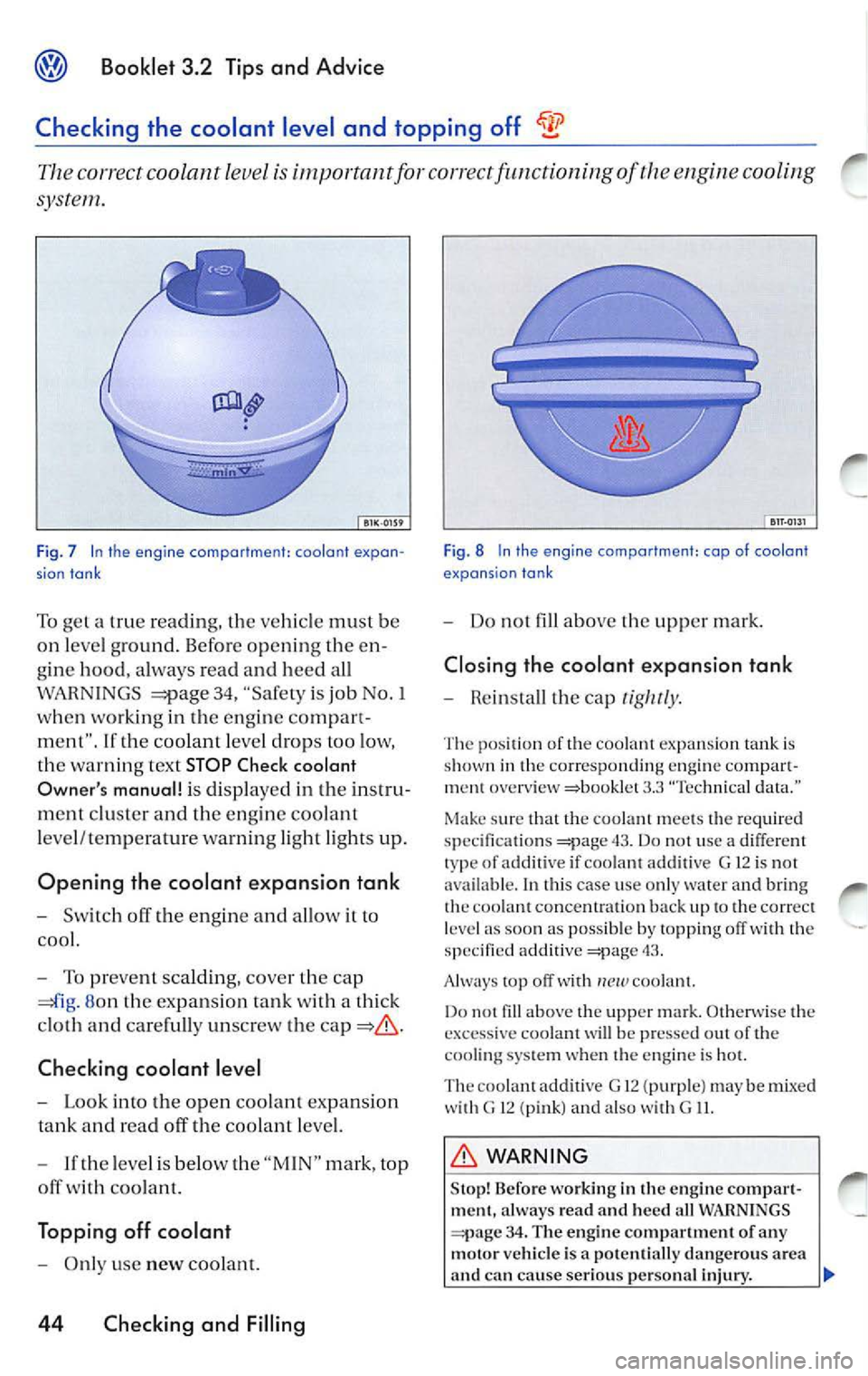
Fig. 7 In the engine compartment: coolant expan
s ion tank
To get a true reading, the vehicle must be
on level grou nd. Before opening the en
gine hood, always read and heed all
WARN INGS
34, is job No. l
when working in the eng ine compart
If th e coo lant level drops too low,
th e wa rning text
STOP Ch eck coolant
O w ner's manual!
is disp layed in the instru
ment cluster and t he engine coo lant
level/temperatu re wa rning lig h t lights up.
Opening the coolant e xpansion tank
- Switc h off the eng ine and allow it to
coo l.
- To prevent scald in g, cove r the cap
8011 the expansion tank with a thick
cloth and ca refu lly un screw the
Checking coolant level
- Look into the open coo lant expansion
tan k and read off the coo lant leve l.
- If th e leve l is belo w the
mark , top
off w ith coolant.
Topping off coolant
- Only use new coolant.
44 Checking and Filling
Fi g. 8 In the engine compar tment: cap of coola nt
expansion tank
-Do not fill above the upper mark.
Closing the coolant expansion tank
-Reinsta ll the cap
pos itio n of t he coo lant expa nsion tank i s
show n in the corre spo ndin g en gin e co mpart
overview 3.3 'Technical data."
Make sure that the coola nt meets the required
s p eci fications
43. Do not use a different
typ e of add itive if coolant addit ive G 12 i s not
avai lable. In this case use only water and bring
coola nt co ncentrati on back up to th e corr ect
l eve l as soo n as po ssible by to pping off with the
s p ec ified addi tive
43 .
A lways top off wi th
Do not fill above the upper mark. Otherwi se the
excess ive coo la nt be pressed out of the
coo ling sys tem w hen th e engine is hot.
T he
additive G 12 (purp le) may be mixed
w ith G 12 (pink) and a lso with G 1 1.
WARNING
Stop! Before working in the e ngine compart
ment, a lways read and heed all WARNINGS
34. The engine compar tment of an y
motor vehicle i s a poten tially dangerous area
and can cause serious personal injury.
Page 366 of 477
Note
• When mixed with ot heradditives t he colo r of
G 12 w ill chan ge to brown . If thi s ha ppens. im
mediat ely change the coo lant. Otherw ise it wi ll
res ult in engi ne damage!
• If a lot o f coo la n t ha s been lost. wa it for the
engine to
coo l before topping cold
coolant to h elp prevent damage to th e e ngine.
Large coolan t losses are a s ign of leaks in the
Book let 3.2 Tip s and Advic e ®
cooling syste m. Ha ve the cool ing syste m
che cke d imm ediatel y by an authori zed Volk
swage n dea le r or qua lifi ed worksho p to red uce
the risk of engine damage.
• Do not add an y type of radia to r leak sealant
to you r veh icle's e ngi ne coola nt.Adding ra di ator
repair fluid m ay adve rse ly aff ect th e f un ction
and performanc e of yo ur coo ling sys te m and
co uld result in damage not covere d by your New
Ve hicle Lim ited
The water for cleaning windsh ield should always be mixed windshield
washer
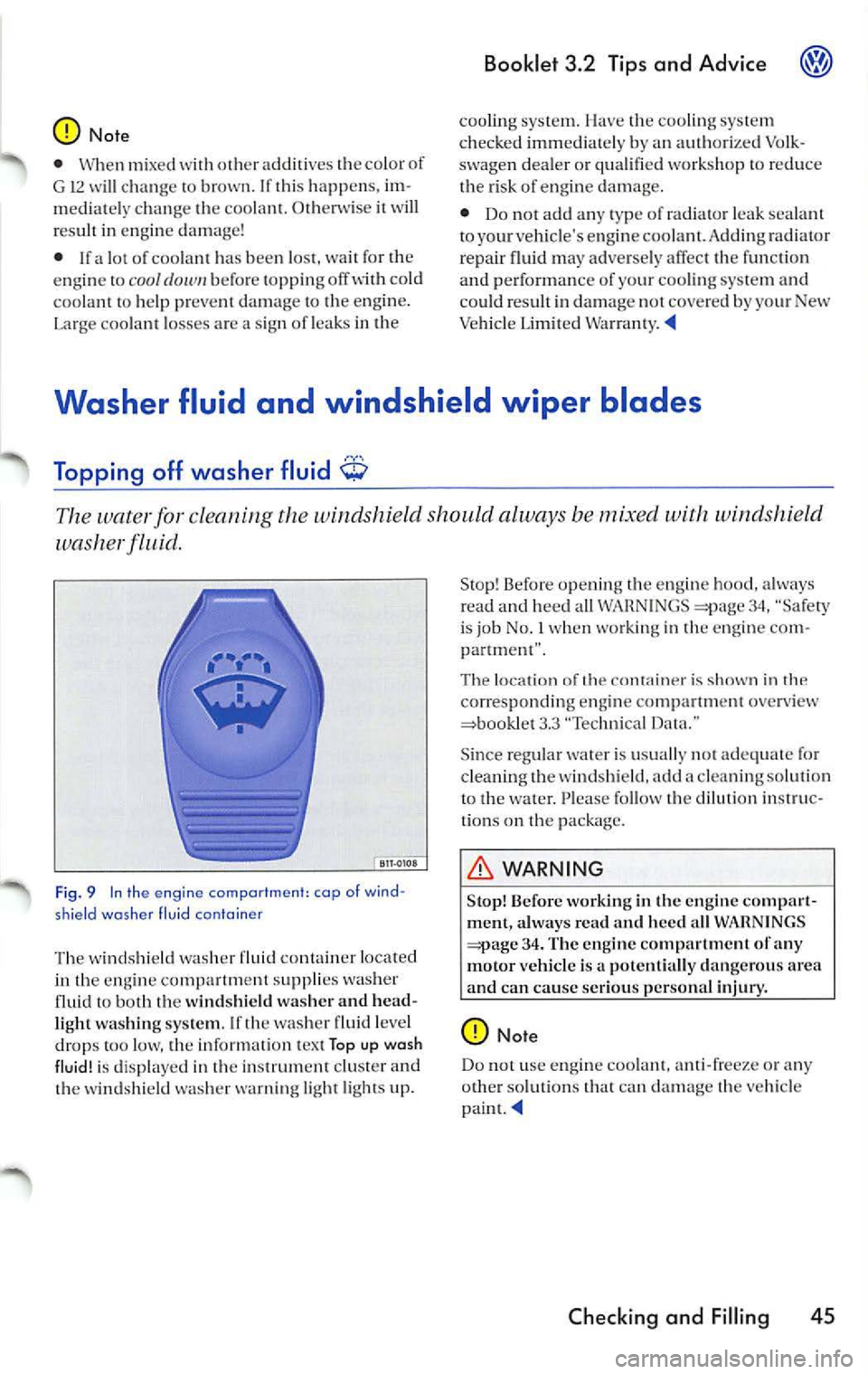
Fig . 9 In the engine comportment: cop of wind
shie ld wa sher flu id container
Th e wi ndsh iel d washer co ntain er loca ted
in t he eng ine c ompartme nt suppli es was her
fluid to b oth th e wind shield wash er an d hea d
li g ht washi ng sys te m . If the was her flu id l eve l
drop s to o low. the informat io n tex t Top up
was h fluid! i s di sp layed in the ins trument cluster a nd
t h e w indshield washer warn ing light ligh ts up . Stop!
o
p eni ng t he engine hood, always
r ea d and hee d all WA RN INGS 34, is job No. l w hen working in the engi ne com
partm ent ".
Th e location of the container is shown in
corresponding engine co mpartm elll overview
=>bookle t 3.3 ''Techn ical Data."
S inc e regular water is usually not adequate for
cleaning t he wi ndshi eld, a dd
clea ning so lution
to the water. Please follow the diluti on in stru c
t io ns on the package.
WARNING
Stop! Before working in the eng in e co mpa rt
m ent , a lways read a nd heed all WA RN INGS
34 . Th e engine co mpartm ent an y
motor ve hicl e is a potent ially dan gerous area
a nd ca n ca use se riou s personal inju ry.
D o not use engine coo lan t, anti-freeze a ny
o th er so lu tions that ca n damage t he ve hicl e
Ch ecki ng and Fillin g 45
Page 367 of 477
Booklet 3.2 Tips and Ad vic e
Changing windshield wiper blades
Dama ged wiper blades must be rep lac ed
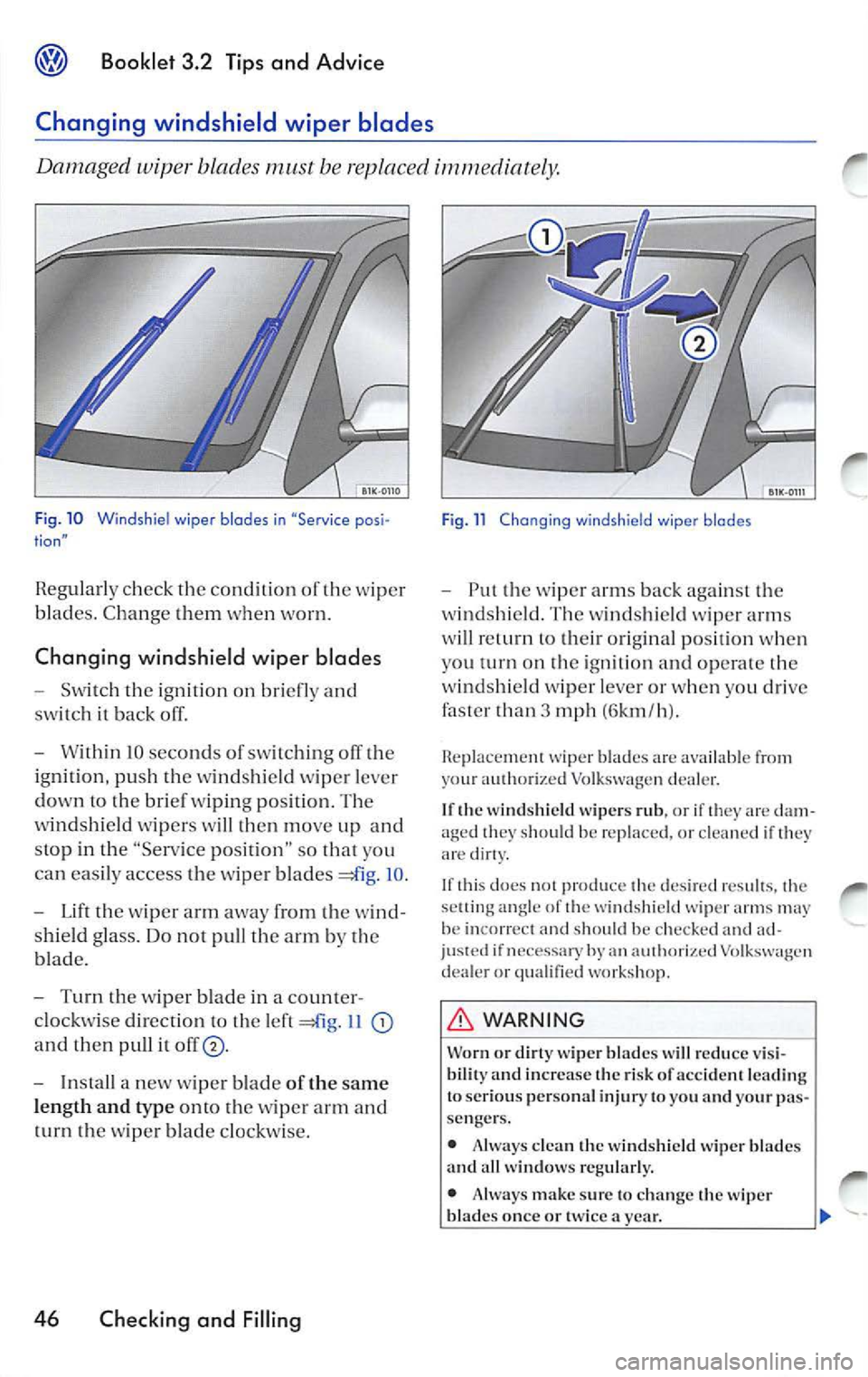
Fig . 10 Windsh iel wiper blades in "Service posi tion"
Regularl y check the co nditi on of the wipe r
blad es. Change them when worn.
Chang ing windshield wip er blades
- Switch the ignition on briefl y and
sw itch it back off.
- Wit hin IO seconds of switching
th e
i g ni tion, push the windshi eld wiper lever
down to the brie f w ipin g position. The
w indshield wip ers w ill then mo ve up and
stop in the "Service posit ion " so that you
can easily access the wipe r blade s
IO .
- Lift th e wiper arm away from the w ind
s hield glass. Do not pull th e arm by th e
bl ad e.
- Turn the wiper blade in a counter
cl oc kwise directio n to the lef t
I I
and then pull it
- In sta ll a n ew wipe r blade of the same
l eng th and type onto the w ip er arm and
t urn th e w ip er bl ade clockwi se.
46 Checking and Filling
Fig. 11 Changing windshie ld wiper blades
- Put the wip er arms back agains t the
w indshie ld. The win dsh ie ld wiper arms
wi ll re turn to their original po sition w hen
you turn on the ignit ion and opera te th e
w ind shi eld wipe r lever or w hen yo u dri ve
faster than 3 mph (6km /h ).
Replac ement wip er blad es are available from
y our au thorized Volkswage n deal er.
I f th e w ind shi eld wiper s rub , or if they are dam
ag ed
shou ld be rep laced , or clea ned if th ey
are dirty.
If th is do es
produ ce de sired re sult s, settin g angle of winds hield wiper arm s ma y
be in correct sh ould be ch eck ed an d ad if necessary by an dealer or quali fied work sh op .
WARNING
Worn or wip er b la d es w ill redu ce vis i
bilit y and increase the risk of acci dent l ead ing
to ser io us perso nal inju ry to you and your p as
se nger s.
•
clea n wind shi eld wip er blade s
and all wi ndo ws reg ular ly.
• Alw ays mak e sure to ch an ge the
blade s onc e or tw ice a yea r.
Page 368 of 477
fluid reservoir has a black cap.
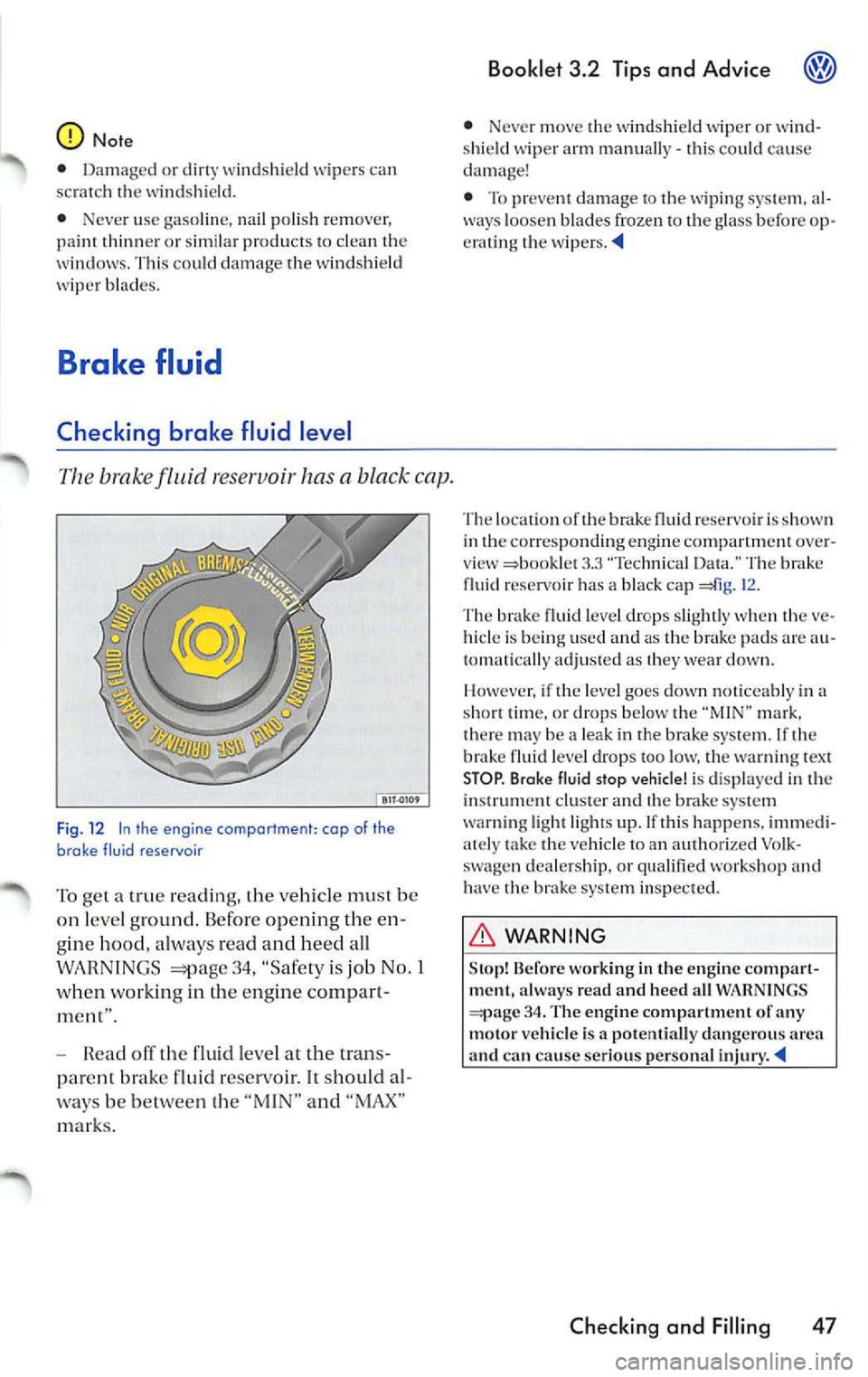
Fig. 12 I n the engine compartm ent : c ap of the
brake fluid reservoi r
To get a read in g, the ve hicl e be
on leve l g round . Before opening th e
g in e hood, always rea d and hee d all
WA RN INGS
34, "Sa fety is job No. 1
w hen wo rkin g in the eng ine com par t·
m ent' '.
H ead off fluid leve l a t the tran s
par ent brak e fluid reservo ir. IL sho uld
ways be be twee n th e "M IN" and "MAX"
m arks .
Bookl et 3.2 Tips and Advic e @
• Never move the w indshi eld wiper o r sh ield wiper arm manu ally· this co uld cause
damage!
• To prevent damage to the wiping sys te m,
ways loose n blades froze n to th e g lass befor e ting th e wi pers
Th e loca tion of the brak e flu id reservo ir is show n
in the correspo nding engin e co mpartm ent over·
v iew
3 .3 "Tec hnical Data. " T he brake
fluid reservoir has a black cap 12 .
Th e fluid leve l drops slightly w hen th e hide is bein g use d and as the pads are to mat ically a dju ste d as they wea r dow n.
Howe ver, if the leve l goes
no ticeab ly i n a time, o r drops below th e "MIN " mark,
ther e ma y be a lea k in the brake syste m. If th e
brak e fluid leve l drops too low, the wa rnin g tex t
STOP . Brake fluid stop vehicle! i s disp layed i n the
instrumem cluste r an d the brake system
warning lig ht light s up . If this hap pens, imm edi ·
ate ly take the ve hicle to an auth orized Vo lk
s wa gen d ealer ship, or qua lified workshop a nd
have the brak e sys te m insp ecte d.
WARNING
Stop! Before wo rk in g in the en gin e compart
ment , a lways read and h eed all WARN IN GS
34 . Th e engine compar tme nt of any
motor vehicle is a pot entia lly dan gerou s area
and can ca use ser io us perso nal injur y
Checking and Filling 47
Page 369 of 477
Booklet 3.2 Tips and Advice
Changing the brake fluid
The brake must b e chang ed e very ye ars
We r ecomm end th at yo u have the br ake fl uid
c h a nged by a n au th ori zed Volksw age n dea le r.
S to p! B efo re openin g th e eng in e hoo d, a lways
rea d and hee d all WA RN INGS
34. is jo b No . I w hen work ing in e n gine com
p a rtm ent ".
B rak e fluid absorbs mois tu re. Ove r tim e. it w ill
a bsor b wat er fr om th e air . If
co n1en 1 in
th e brak e fluid is too high, brake co uld co rro de. Too much wa te r in brake fl uid
co nsid erabl y re du ces th e boilin g of brak e fluid. Very heavy use of 1h e bra kes old
b ra ke fluid may ca use va por loc k. Va po r l oc k re
du ces brakin g powe r. in creases s!Opp in g di s
tan ces and can ev en cau se to tal br ake failur e.
Fo r thi s re a so n th e brak e fluid m ust be r epla ced
ev ery
y e ars.
Only use brak e fluid
th e US
standard FM VSS 116 D OT 4. Th e fluid mu st
b e new.
WARNING
Stop! Before working in the engine co mpart
m en t, a lways re ad and heed all
34. Th e eng in e co mpartm en t of motor vehicle is a po tent ially dangerou s area
and can ca use s eriou s per sona l injury.
WARNING
Brake failur e ca n r esult from old o r incorr ec t
brake fluid.
48 Ch ecking and Filling
,0. W ARN ING (c on tinue d)
• U se onl y brake fluid that meets SAE speci
fi ca tion J 1703 and conforms to Federa l Mo tor
Veh icle Safety Sta ndard 116.
• Alwa ys check wit h your a uthor ized Vo lk
s wagen dea le r to make su re that yo u arc usin g
the correc t
fluid.
• The correc t brake fluid is al so listed on the
l abe l o n the brake fluid reservo ir .
WARNING
Brake fluid is poison ous.
• Alway s store brake fluid in the closed or ig
inal contain ers in a safe place.
• To reduce the risk of po iso nin g, ne ver u se
em pty food or beverage co ntain ers that might
mislead someo ne into drinkin g from th em.
• Always keep brak e fluid out of the reac h of
c hildr en.
• Always c hange the brake fluids as required
in the m aint enan ce boo klet. Heavy braking
w ith old brak e fluid m ay cause a va por lock
th at reduces braking power , in crea ses stop
pi ng di sta nce s an d can eve n ca use tota l brake
Note
Llrake fluid ca n d am age t he pa int. Wipe
a n y
b ra ke fluid from th e pa int imm edi ately.
flu id mu st be dr ained and di sp ose d of in
t h e prope r ma nne r observ in g environme ntal
reg ulatio ns.
Page 370 of 477
Booklet 3.2 Tips and Advice
Vehicl e batt ery
Location of battery
The battery is mai nte nance-free is c h ecked during the inspection serv ice.
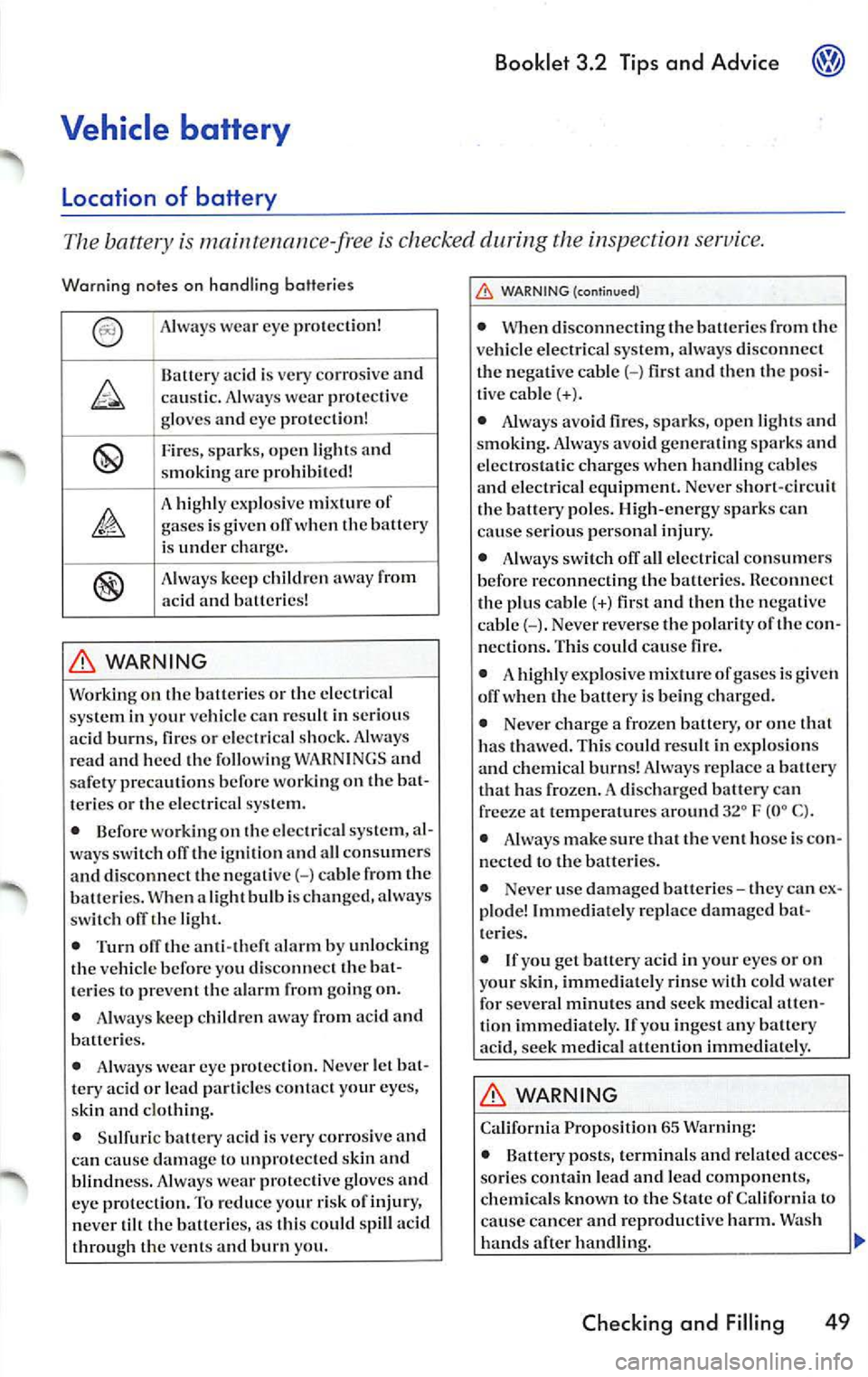
Warning note s on handling batterie s
Battery acid is very co rrosive a nd
ca usti c. Always we ar protective
g loves and eye prot ection !
Fires, s park s, open ligh ts and
s moking arc pro hibit ed!
Always kee p childr en away acid and batt eries!
WARNING
Wo rki ng on the batt eri es or the electr ical
syste m in yo ur vehicl e can result in ser ious
acid burns,
th e
batt eri es . Whe n a light bulb is c han ged, always
sw itch o!Tt he light.
• Turn o!Tt he an ti- th ert alarm by unl ockin g
the vehicl e befor e yo u disco nnect th e bat
terie s to pre vent th e ala rm rrom goin g on.
• Always kee p childr en a way
acid an d
batterie s.
• Alw ays wear eye prot ectio n. Nev er let bat
t ery acid or lead particl es contact your eyes,
and clothin g.
•
batter y acid is ve ry co rrosive and
can cause damag e to unprote cted ski n and
blindn ess. A lways wear protectiv e gloves a nd
eye protec tion. To re du ce yo ur risk o r injur y,
n eve r tilt the batt eri es, as thi s co uld spill acid
throu gh th e ve nts and burn you.
WARN ING
• Wh en disconn ecting the batt eri es from the
ve hicl e elec tr ic al sys tem , a lways disco nnect
the negative cable(- ) fir st a nd th en th e po si
ti ve ca ble(+ ).
• Alwa ys avo id fires, spark s, op en li ght s a nd
s moking. Alw ays avoid generatin g sparks a nd
e lectro static charges whe n handlin g cables
a nd elect rica l equipment. Never short-cir cuit
the battery pole s. Hi gh -energy sparks can
c au se se rious per sonal injury.
• Always swi tc h off all electrica l con sumer s
before recon nectin g the batteries. Heconncct
th e plu s ca ble( +) first and then the negative
cab le(-). Neve rrever se the polarity or the con
ne ctions. This could cause fire.
• A hi ghl y exp losive mixtur e or gases is give n
off when th e batter y is bein g ch arged.
• Never cha rge a frozen batt ery, or one that
ha s th awe d. Thi s could res ult in explos io ns
and chemical burns! A lways re pla ce
batte ry
t h at h as frozen. A discharged battery can
rr eeze a t temperatures around 32° F (0 ° CJ.
• Alwa ys make sure that t he ven t hose is co n
n ec ted to the batt eries.
• Never use dama ged batter ie s- they can ex
p lode ! Im med iately repl ace dam aged bat
terie s.
•
yo u ge t b att ery acid in yo ur eyes or on
y our imm edi ate ly rin se with co ld water
fo r sev eral minut es and see k m edi ca l att en
tion imm ed ia te ly.
yo u in ges t a ny batt ery
aci d, seek medi cal aue ntion imm ediatel y.
WARNING
California Propositi on 65 Warnin g:
• Battery posts, te rm in al s and re la te d acces
so ries contain l ead and lead compon ent s,
c hemicals kno wn to the
of Ca lifornia lo
ca use cance r and reproducti ve harm . Wash
h ands
h and ling.
Ch ecking and Filling 49
Page 371 of 477
Booklet 3.2 Tips and Advice
The electrolyte level be checked reg ularly in high-mileage vehicles, in hot
cou ntri es and in older batteries.
- Open the engine hood and open the
batt ery cover at the front.
- C heck th e co lor display in the round
w ind ow at the top of the battery.
- If there are air bubb les in the window,
tap the w indow gent ly un til they disp erse .
Th e positio n of th e battery is sh ow n in th e corre
spo ndin g engine compart ment diagram
3.3. Th
e ro und window ("magic eye '') on th e to p of
t h e batt ery chang es color, d epending on the
c harg e le vel and ele ctrolyt e le vel of the ba ttery.
I f th e c olor in the w indow i s co lor less or bri gh t
ye llow . the elec trol yte le vel of the battery is to o
I la ve the ba tte1y ch ec ked by a q ualifi ed
d eal ers hip ..
The col ors g ree n and b la ck ar c use d b y the work
s h op t o diagno se the battery.
Charging and replacing vehicle batteries
All work with the vehicle battery req uir es specia l know ledge.
Have th e batteries checked by auth orized
Vo lkswagen deale r o r qua lified workshop be
t ween regular ma inten an ce i nt erva ls if you of te n
driv e short distance s or i f th e vehicle is not
driven for lo ng peri ods.
I f the bat te ry has discharged and you have prob
l ems starting th e ve hicle, the battery might be
damaged . If thi s happens, we re comme nd you
h ave the ve hicle batte ry c hecked by an autho
ri ze d Vol kswag en dealer
it w ill he erly recha rged o r re pla ced.
C har ging vehicle batteries
T he c har ging of the vehicl e batt eri es s hould be
l ef t to an aut horized Vo lkswage n deale r o r qual
ifi ed workshop, b ecau se your ve hicle is
equipp ed w ith specia l batteri es th at mu st b e
charg ed in a contro lled e nvironm ent.
50 Checking and Filling
Rep lacing a battery
T he batt eries have been specia lly deve lo ped for
th eir lo cat io ns and they have specia l sa fe ty fea
Genui ne Volkswage n batte ries me et th e m aint e
nan ce, and safety sp ecificat io ns
fo r you r ve hicl e.
WARNING
• u se on ly maint en an ce -fr ee or
cycle -free, leak-proof batteries with the same
s pecification s and dimen sions as the ori ginal
e quipm ent batt ery. S pecifi cation s are liste d
on the batt ery hous ing.
• Before sta rtin g
work on th e batteries,
a lways rea d and heed a ll in
"Loca tion of battery" on page 49.
Page 372 of 477
c£> For the sa ke of e nvironment
Batte ries
1ox ic s ubstan ces includin g sul
furi c acid and le ad . Th ey mus! be dis posed ap
p ro pria lc ly an d 110 1
ord inary garbage.
Tires and wheels
Genera l notes
Booklet 3.2 Tips and Advice
Tips
Wh en !h e ba ttery is reconne c1e d .
warning
li gh l for 1he S1abi lization Program
(ES P). (AS RJ ma y lig ht up
a nd sla y on. go out if yo u dri ve briefly in a line al a sp eed of 15 20 km /h .
Tires may le n st appr eciated and most abus ed parts of motor vehicle.
Tire s ma y be 1h e appr eciale d and mo st
ab use d pans of rn o!O r ve hicl e. Tire s are,
ever . o ne mo s! pans ofa ve
h icl e. p arli cula rly co nsid erin g comp arasmall o f rubb er on eac h tir e th al as
s ure s all-imponanl b etwee n yo u,
your vehicl e
road.
Mainl ainin g 1h e c orr cc1 lire pressure , ma kin g
s ur e
vehicl e an d i1s 1ir es do 1101 have to
ca rry mor e !hey can safe ly hand le ,
a vo iding dam age from haz ards and regu
larl y in spec lin g !ir es fo r d am age including
slas hes ir reg ular wear and co ndi tion are
th e mos! impor lan 11hin gs you ca n do lo
h elp avoid sudd en lire f ailur e includ ing tread
se para lion and hlo wo u1s.
Avoiding damage If yo u ha ve
dri ve ove r a cu rb or sim ilar ob
s tacl e, dri ve ve ry s lowly a nd as cl ose as po ssib le
a l a rig h1 angl e 10
curb.
ke e p ch emi ca ls including g rease. o il. gas
o lin e an d brak e fluid off 1 he 1ires .
ln spe cl
1ir es regul arly fo r damag e (c ut s.
c ra cks or c1c.J. any foreign
bo dies em bed de d in ! r e ad s.
Storing tires
Mark lires when yo u r em ove th em
to indi cale dire cti on T hi s ens ures y ou 10 be hie 10 m ou nl when yo u rein sta ll
!h em .
W hen
1h e whee ls or 1ires s hou ld be
s tor ed in a cool, dry and preferab ly dark place. S
!o re tir es in
a ven ica l po sil ion if th ey are 1101
m ount ed on rim s, in a horizo ntal pos i1 ion if1h ey
are mou n1ed on rim s.
New tires
!ir es have to be broke n
The !r ea d ofn ew lir es may vary, accor ding
10 1h e 1y pe and mak e of li re an d 1h e tre ad pat
l e rn.
Hidd en damag e
!ir es rim s is 11 01 r ead ily vis
ibl e. you n olice unu sual vibral ion or !he vepull s 10 one side, !his may indi cale th al o n e or 1h e 1ires be en dama ged. The tir es mu st b e
c h ec ke d imm ediale ly by an auth ori zed Vo lk
s wag en dea ler or qua lifi ed wo rk sh op.
U nidirectiona l tires
A unidir ec1ional lir e can b e id e111 ifi ed by arro ws
o n 1h e sid ew all , 1h a1
in 1he dir ection 1h e
l ire is designe d 10 ro la!C. Yo u must fo llow 1h e
s p ecifie d direc1 io n of ro 1a 1ion. This is necessa ry
so
1h es e 1ires de velo p !heir rega rding grip , road noi se, we ar
an d hydro plan ing For m ore info rm a
lion " Unidi re c tional 1ir es".
WARNING
tir es or !ires th al arc o ld, worn or dam
aged cannol provide max imum control and
brak ing abilil y.
• New tir es len d to be s lippery a nd mu st be
broken in.
re duce !he r is k of losin g conlrol ,
a co llisio n and serious pe rso nal injur ies, dri ve
Checking and Filling 51
Page 373 of 477
Booklet 3.2 Tips and Advice
WARNING (continued)
with special care for the fir st 35 0 mile s
( 560km ).
• Driving with worn or dam aged tires can
l ead to los s of co ntrol, sud den tire failure, in
clud ing a blowout and sudden deflation,
cras hes and se riou s perso nal injurie s. H ave
worn or damaged tires rep laced immediat ely.
• Tires age even if th ey arc not bein g used
a n d can fail sudd enl y, es pecia lly
at high
s p ee ds. Tire s th at ar c mor e than 6 yea rs old
WARNIN G (contin ued)
ca n onl y be use d in an em erge ncy and then
w ith specia l ca re and at lo w er sp eeds.
• Neve r m ount u sed t ires on yo ur vehicl e if
you arc not s ure of th eir "pre vio us hi story."
Old use d tir es ma y have been dama ged eve n
t h ough th e damage cann ot b e see n that can
l ea d to sudd en tir e fa ilur e and loss of vehicle
contro l.
• If yo u notice unu sual vibrat ion or if th e ve
hicle pull s to one sid e wh en drivin g, a lways
stop as soo n as it is safe to do so and check the
wheels and tires for dam age.
Glossary of tire and loading terminology
Accessor y weight
m ea ns th e comb ined weigh t (in excess of those
s tand ard item s wh ic h may b e re p laced ) of auto
matic tran sm iss ion, powe r stee ring . power
brake s, pow er wind ows, powe r se ats. radio, a nd
heat er, to th e ex tent that th ese item s are ava il
ab le as factory- in st all ed eq ui pment (w heth er in
s talled or not).
Aspect ratio m ea ns th e ra tio of th e heig h t
th e wid th of th e
ti re in perce nt. Numbers of70 or lowe r ind icat e
a sh ort sid ewa ll for imp roved steering r espons e
a nd be tter ove rall hand ling d ry pa vement.
B ead
m ea ns th e pan oft he tire that is m ade of stee l
w ires, wrapp ed or reinfor ced by ply cords and
t h at is s hape d to
th e rim .
B ead separation
mean s a breakdow n of th e bo nd b etwee n com
p on ent s in the bea d.
Cord mea ns th e s trands for ming the plies in t he tire .
Cold lir e inflation pressure
m ea ns th e tire press ure reco mmend ed by the
ve hicl e m anu factur er f or a tire of a des ig nate d
s ize th a t ha s not b ee n d rive n for th an a co up le of
m iles ( kilomete rs) at low sp eeds in th e thr ee
h our peri od befo re th e tire press ure is m eas ured
or ad juste d.
52 Checking and Filling
Curb weig ht
mea ns th e weig ht of
a moto r ve hicle sta n
dard equipm ent in cluding th e maxi mum ca
paci ty o f fuel. oil. a nd coolant, air co ndition ing
and additional weight of o ptional equipme nt.
Gr oss Axle Weight Roting
m ea ns th e load -ca rryi ng ca pacity of a sin gle axle
sys tem, measured at th e tire-gro und in te rface s.
Gro ss Vehicl e W eight Roling
means th e max imum t otal load ed weig ht of the
ve hicl e.
Groo ve
m ea ns th e spa ce betw een
ad jacent tread
r ib s.
L o ad rotin g (cod e)
m eans the maximum load that
tir e is ra ted to
carry for a given inflation press ure. You may not
this o n all tir es bec ause it is not
required by law.
Ma ximum load roting
m ean s th e load rating for
tire at th e perm iss ible inflatio n pressu re for that t ir e .
Ma ximum load ed ve hicle weig ht
mean s th e
of:
(a) C urb weig ht,
( b ) Accesso ry weight,
( c ) Vehicle capa city weigh t, a nd
(cl ) Pro duction o ptions we ig h t.
Page 374 of 477
Maximum (permissible) inflation pressure means the maximum cold inflation pressure to
which a tire may be inflated. Also called "max imum inflation pressure."
Normal occupant weight
means
150 lbs. (68 kilograms) times the number
of occupants seated in the vehicle up to the total seating capacity of your vehicle.
Outer diameter
means the overall diameter of an inflated new
tire.
Overall width means the linear distance between the exteriors
of the sidewalls of an inflated tire, including ele
vations due to labeling, decorations, or protec tive bands or ribs.
Ply
means a layer of rubber-coated parallel cords.
Radial ply tire
means a pneumatic tire in which the ply cords
that extend to the beads are laid at substantially
90 degrees to the centerline of the tread.
Recommended inflation pressure
see
52, "Cold tire inflation pressure".
Rim
means a metal support for a tire or a tire and
tube assembly upon which the tire beads are
seated.
Rim diameter
means nominal diameter of the bead seat . If you
change your wheel size, you will have to pur
chase new tires to match the new rim diameter.
Rim size designation
means rim diameter and width.
Rim width
means nominal distance between rim flanges.
Sidewall
means that portion of a tire between the tread
and bead.
Booklet 3.2 Tips and Advice
Speed rating (letter code) means the speed at which a tire is designed to be
driven for extended periods of time. The ratings range from 93 mph (150 km/h) to 186 mph
(298 km/h). These ratings are listed in the table
below 62. You may not find this informa
tion on all tires because it is not required by law.
The speed rating letter code, where applicable, is molded on the tire sidewall and indicates the
maximum permissible road speeds.
Tire pressure monitoring system
1 )
means a system that detects when one or more
of a vehicle's tires are underinflated and illumi nates a low tire pressure warning telltale.
Tread means that portion of a tire that comes into con
tact with the road.
Tread separation means pulling away of the tread from the tire
carcass.
Tread wear indicators (TWI) means the projections within the principal
grooves designed to give a visual indication of
the degrees of wear of the tread. See
59, "Tread Wear Indicator (TWI)" for more informa
tion on measuring tire wear.
Uniform Tire Quality Grading
is a tire information system developed by the United States National Highway Traffic Safety
Administration (NHTSA) that is designed to help buyers make relative comparisons among tires.
The UTQG is not a safety rating and not a guar antee that a tire
will last for a prescribed number
of miles or perform in a certain way. It simply
gives tire buyers additional information to com bine with other considerations, such as price,
brand loyalty and dealer recommendations .
Under UTQG, tires are graded by the tire manu
facturers in three areas: tread wear, traction and temperature resistance. The UTQG information
on the tires, molded into the sidewalls.
U.S. DOT Tire Identification Number (TIN)
This is the tire's "serial number."
It begins with
the letters "DOT" and indicates that the tire
meets all federal standards. The next two num-
Tire pressure monitoring system)
Checking and Filling 53