warning VOLKSWAGEN T-ROC 2020 Workshop Manual
[x] Cancel search | Manufacturer: VOLKSWAGEN, Model Year: 2020, Model line: T-ROC, Model: VOLKSWAGEN T-ROC 2020Pages: 502, PDF Size: 8.58 MB
Page 75 of 502
The front passenger front airbag should be switched off only in exceptional circumstances.
To prevent damage to the airbag system, switch the front passenger front airbag on and off only
when the ignition is switched off.
It is the driver's responsibility to ensure that the key-operated switch is set to the correct position.
Switch off the front passenger front airbag only if in exceptional circumstances a child seat is fitted
on the front passenger seat.
Switch the front passenger front airbag back on again as soon as the child seat on the front
passenger seat is no longer being used.
WARNING
Do not leave the vehicle key in the key switch while driving.
Strong vibrations may cause the vehicle key to turn in the key switch, which could cause the front
passenger front airbag to be activated.
Untimely inflation of the front passenger front airbag could lead to serious or fatal injuries.
NOTICE
If the key bit is not inserted far enough, the key switch could be damaged when the key is turned.
NOTICE
Do not leave the vehicle key in the key switch, as this could result in damage to the interior door
trim, dash panel, key switch or vehicle key when the front passenger door is closed.
Safe transport of children
Introduction
This chapter contains information on the followingsubjects:
Types of child seat
Fitting and using child seats
Securing systems
Securing a child seat with ISOFIX
Securing child seats with a seat belt
Page 76 of 502
seats when driving with children.
Note the following:
Child seats are classified into groups depending on the size, age and weight of child for which they
are designed.
Various securing systems are used to secure child seats in the vehicle.
For safety reasons, child seats must always be fitted to the rear seats Fitting and usi
Volkswagen recommends child seats from the Volkswagen range of accessories. These child seats
have been developed and approved for use in Volkswagen vehicles.
WARNING
If children are not secured or are inadequately secured, they are at greater risk of serious or even
fatal injury. Please note the following:
Children who are either under twelve years of age or less than 150 cm tall must not be carried in the
vehicle if they are not secured in a suitable child seat while the vehicle is in motion. Regulations in
some countries may differ and must be complied with.
Always secure children in the vehicle in a suitable child seat. The seat used must be appropriate to
the child's height, weight and age.
Never fasten more than one child into one child seat.
Under no circumstances should children or babies be held in a passenger's or drivers lap while
driving.
Never leave a child unsupervised in a child seat.
Never allow a child to be carried in a vehicle without being properly secured, and never allow a child
to stand up or to kneel on a seat, or to sit incorrectly while the car is in motion. This is particularly
important for children carried on the front passenger seat. In an accident, children may sustain
serious injuries to themselves and others.
The child seat can provide maximum protection only if the seat belt is routed correctly around it.
Always ensure that the seat belt is routed as specified in the instructions provided by the child seat
manufacturer. If the seat belt is routed incorrectly, injuries may occur even in a minor accident.
After an accident, it is vital to replace any child seats that were in use during the accident, as they
could have sustained non-visible damage.
Types of child seat
Page 77 of 502
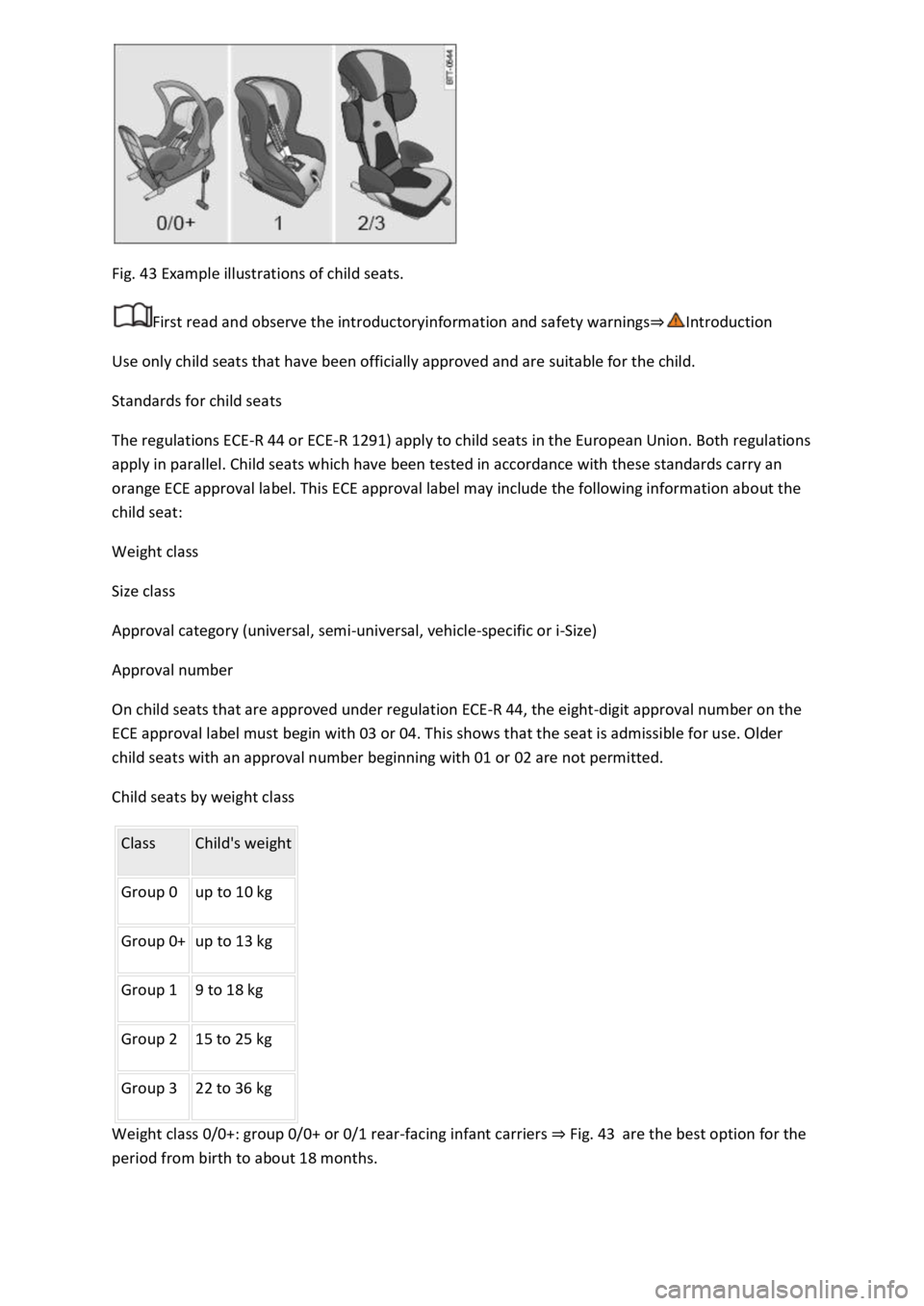
Fig. 43 Example illustrations of child seats.
First read and observe the introductoryinformation and safety warnings
Use only child seats that have been officially approved and are suitable for the child.
Standards for child seats
The regulations ECE-R 44 or ECE-R 1291) apply to child seats in the European Union. Both regulations
apply in parallel. Child seats which have been tested in accordance with these standards carry an
orange ECE approval label. This ECE approval label may include the following information about the
child seat:
Weight class
Size class
Approval category (universal, semi-universal, vehicle-specific or i-Size)
Approval number
On child seats that are approved under regulation ECE-R 44, the eight-digit approval number on the
ECE approval label must begin with 03 or 04. This shows that the seat is admissible for use. Older
child seats with an approval number beginning with 01 or 02 are not permitted.
Child seats by weight class
Class Child's weight
Group 0 up to 10 kg
Group 0+ up to 13 kg
Group 1 9 to 18 kg
Group 2 15 to 25 kg
Group 3 22 to 36 kg
Weight class 0/0+: group 0/0+ or 0/1 rear-facing infant carriers Fig. 43are the best option for the
period from birth to about 18 months.
Page 79 of 502
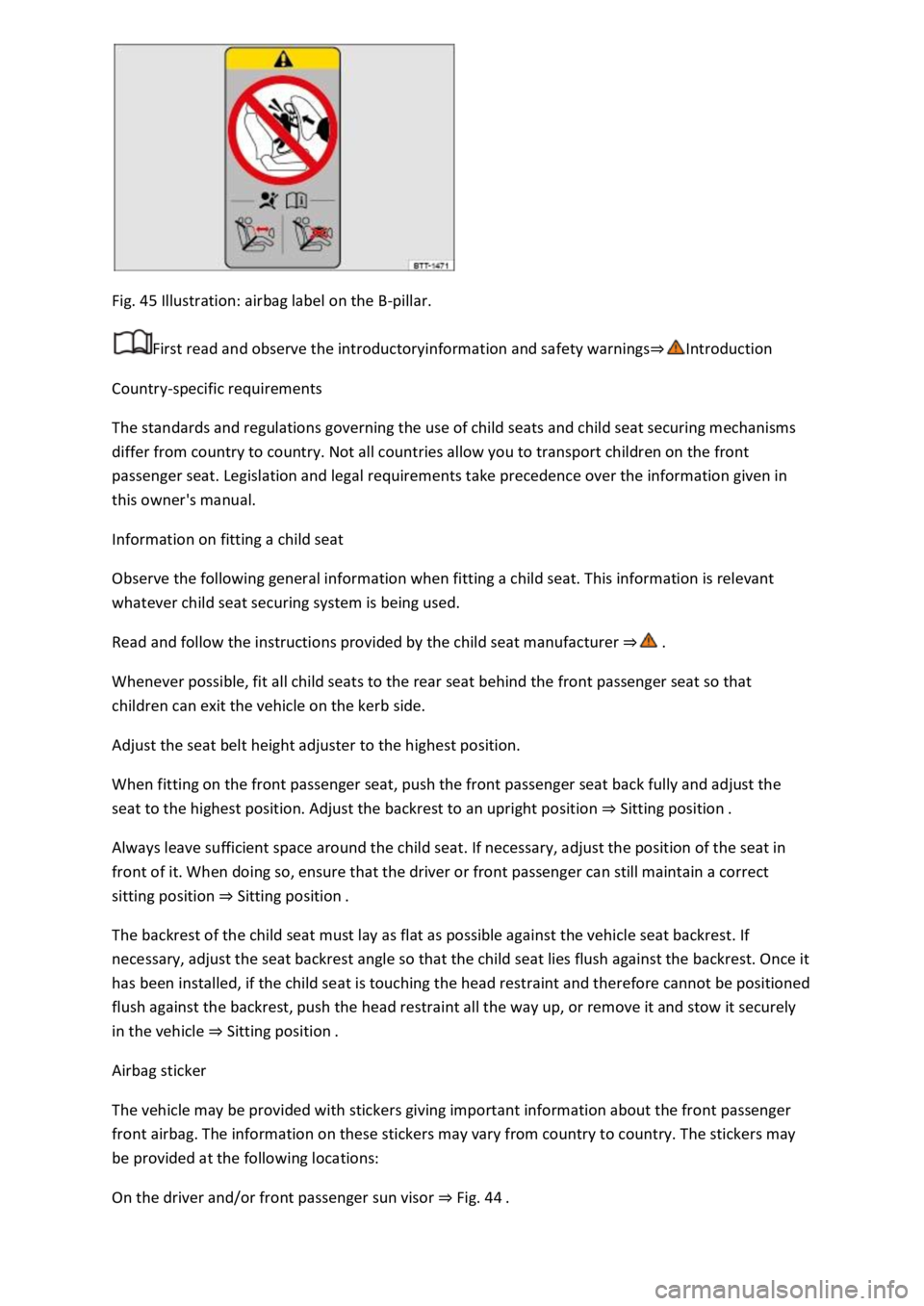
Fig. 45 Illustration: airbag label on the B-pillar.
First read and observe the introductoryinformation and safety warnings
Country-specific requirements
The standards and regulations governing the use of child seats and child seat securing mechanisms
differ from country to country. Not all countries allow you to transport children on the front
passenger seat. Legislation and legal requirements take precedence over the information given in
this owner's manual.
Information on fitting a child seat
Observe the following general information when fitting a child seat. This information is relevant
whatever child seat securing system is being used.
Read and follow the instructions provided by the child seat manufacturer
Whenever possible, fit all child seats to the rear seat behind the front passenger seat so that
children can exit the vehicle on the kerb side.
Adjust the seat belt height adjuster to the highest position.
When fitting on the front passenger seat, push the front passenger seat back fully and adjust the
seat to the highest position. Adjust the backrest to an upright position Sitting position
Always leave sufficient space around the child seat. If necessary, adjust the position of the seat in
front of it. When doing so, ensure that the driver or front passenger can still maintain a correct
sitting position Sitting position
The backrest of the child seat must lay as flat as possible against the vehicle seat backrest. If
necessary, adjust the seat backrest angle so that the child seat lies flush against the backrest. Once it
has been installed, if the child seat is touching the head restraint and therefore cannot be positioned
flush against the backrest, push the head restraint all the way up, or remove it and stow it securely
in the vehicle Sitting position
Airbag sticker
The vehicle may be provided with stickers giving important information about the front passenger
front airbag. The information on these stickers may vary from country to country. The stickers may
be provided at the following locations:
On the driver and/or front passenger sun visor Fig. 44
Page 80 of 502
-pillar on the front passenger side Fig. 45
It is essential to note the warning information shown on these stickers before installing a rear-facing
child seat
Risks involved in carrying children on the front passenger seat
If you are using a rear-facing child seat, the front passenger front airbag can cause critical or
potentially fatal injuries when it inflates
Rear-facing child seats may be used on the front passenger seat only if the front passenger front
airbag has been deactivated. A deactivated front passenger front airbag is indicated by the
continuously lit PASSENGER AIR BAG indicator lamp in the driver's field of vision.
PASSENGER AIR BAG indicator lamp Indicator lamp
If using a front-facing child seat, do not deactivate the front passenger front airbag. When fitting the
child seat, ensure that it is as far away as possible from the front passenger front airbag. The front
passenger front airbag can cause severe injuries when it inflates
Some child seats are not suitable for use on the front passenger seat. The child seat must be
specially approved by the manufacturer for use on the front passenger seat in vehicles with front
and side airbags. Volkswagen dealerships keep an up-to-date list of approved child seats.
DANGER
If you use a rear-facing child seat on the front passenger seat, the child in it is at increased risk of
sustaining critical or fatal injuries in the event of an accident.
Deactivate the front passenger front airbag. If the front passenger front airbag cannot be
deactivated, no rear-facing child seat may be used.
Move the front passenger seat as far back as possible and adjust to its highest position to create the
largest possible distance between the child seat and the front passenger front airbag.
Move the backrest to the upright position.
Adjust the seat belt height adjuster to the highest position.
Use only child seats that have been approved by the child seat manufacturer for use on a front
passenger seat with front and side airbags.
WARNING
There is a risk of injury if child seats are installed incorrectly.
Always read and follow the installation instructions and warning information provided by the child
seat manufacturer.
WARNING
Page 81 of 502
-facing child seat is on the front passenger seat.
Move the front passenger seat as far back as possible and adjust to its highest position to create the
largest possible distance between the child seat and the front passenger front airbag.
Move the backrest to the upright position.
Adjust the seat belt height adjuster to the highest position.
Use only child seats that have been approved by the child seat manufacturer for use on a front
passenger seat with front and side airbags.
WARNING
To help avoid injuries caused by inflation of a curtain airbag or side airbag:
Ensure that no children are seated within the airbag deployment zones Airbag system
Do not place any objects in the side airbag deployment zones.
Securing systems
First read and observe the introductoryinformation and safety warnings
Different countries use different securing systems for safely fitting child seats in the vehicle.
Overview of securing systems
ISOFIX: ISOFIX is a standardised securing system for fitting child seats in the vehicle quickly and
safely. The ISOFIX attachment system creates a rigid connection between the child seat and the
vehicle body.
Compatible child seats have two rigid attachment arms that engage in ISOFIX attachment points at
the bottom of the backrest (on the outer rear seats). The ISOFIX securing system as described here is
specific to Europe Securing a child seat with ISOFIX
foot may sometimes have to be used in addition to the ISOFIX anchor points described above.
Three-point automatic seat belt. It is preferable to secure child seats using the ISOFIX system, if
available, rather than with a three-point automatic seat belt Securing c
Additional securing points:
Recommended child seat securing systems
Volkswagen recommends that child seats are secured as follows:
Infant carrier or rear-facing child seat: ISOFIX and support foot.
Front-facing child seat: ISOFIX and top tether and possibly also support foot.
WARNING
Page 82 of 502
Ensure that the support foot is always correctly and safely installed.
Securing a child seat with ISOFIX
Fig. 46 Markings identifying the ISOFIX anchor points for child seats.
Fig. 47 Illustration: fitting an ISOFIX child seat with attachment arms.
First read and observe the introductoryinformation and safety warnings
Overview of child seat installation with ISOFIX and i-Size
The table below shows the options for securing ISOFIX or i-Size child seats to the ISOFIX anchor
points at the various possible seats in the vehicle.
Group Size class Front passenger seat Outer rear seats Centre rear seat
Group 0: up to 10 kg E X IL-SU X
Group 0+: up to 13 kg E X IL-SU X
D X X
C X X
Group 1: 9 to 18 kg D X IL-SU, IUF X
Page 83 of 502
seat. The size class is indicated on the ECE approval label for child seats with universal or semi-
universal approval. The size class label is affixed to the child seat.
X: seat not suitable for securing an ISOFIX or i-Size child seat in this group.
IL-SU: seat suitable for installing an ISOFIX child seat with "semi-universal" approval. Refer to the
vehicle list supplied by the child seat manufacturer.
IUF: seat suitable for installing an ISOFIX child seat with "universal" approval.
i-U: seat suitable for installing a front-facing or rear-facing i-Size child seat with "universal" approval.
i-UF: seat suitable for installing a front-facing i-Size child seat with "universal" approval.
Installing child seats with ISOFIX/i-Size
Observe and follow the instructions Fitting and using child seats
Pull on both sides of the child seat to check whether the seat has clicked properly into place.
Securing child seats with a seat belt
First read and observe the introductoryinformation and safety warnings
If you want to fit a child seat from the "universal" (u) approval category in your vehicle, you must
first ensure that it is approved for the seat position in question. Important information is given on
the orange ECE approval label on the child seat. Installation options are shown in the table below.
Securing a child seat with a seat belt
Observe and follow the instructions Fitting and using child seats
Fasten the seat belt and guide it through the child seat as described in the child seat manufacturer's
instructions.
Ensure that the seat belt is not twisted.
Page 84 of 502

and push it down until it audible locks
into place.
In an emergency
Making you and your vehicle safe
Observe any legislation concerning the safety of a broken-down vehicle. For example, many
countries stipulate that you have to switch on the hazard warning lights and wear a high-visibility
waistcoat Equipment for an emergency
Checklist
To ensure your own safety and that of your passengers, carry out the following actions in the
specified order
Stop the vehicle at a safe distance away from moving traffic and on a suitable surface .
Switch on the hazard warning lights using the button Centre console.
Switch on the electronic parking brake Electronic parking brake.
Select the neutral position Manual gearbox: selecting a gear or move the selector lever to P position
DSG
Page 85 of 502
indicate a change in direction or lane change by operating the turn signal. The hazard warning lights
will be interrupted temporarily.
Switch on the hazard warning lights, e.g. in the following situations:
When traffic ahead suddenly starts moving more slowly or you reach the tail end of a traffic jam to
warn vehicles behind you.
There is an emergency situation.
The vehicle has broken down.
When tow-starting or towing.
Always follow local regulations on the use of the hazard warning lights.
If the hazard warning lights are not working, you must use an alternative method of drawing
attention to the broken-down vehicle. This method must comply with traffic legislation.
WARNING
Any broken-down vehicle poses a high accident risk for the vehicle occupants and for other road
users.
Stop the vehicle as soon as possible and when safe to do so.
Park the vehicle at a safe distance from moving traffic.
Switch on the hazard warning lights.
Never leave other persons alone in the vehicle, particularly children or people requiring assistance.
This applies in particular when the doors are locked. People locked in the vehicle may be subjected
to very high or very low temperatures.
WARNING
Ignoring any of the items on this important safety checklist can lead to accidents and severe injuries.
Always follow the instructions in the checklist and observe the general safety procedures.
WARNING
The components of the exhaust system become very hot. This can cause fires and serious injuries.
Park the vehicle so that no part of the exhaust system can come into contact with any inflammable
material underneath the vehicle, e.g. dry grass, fuel.