brake VOLKSWAGEN T-ROC 2021 Owner´s Manual
[x] Cancel search | Manufacturer: VOLKSWAGEN, Model Year: 2021, Model line: T-ROC, Model: VOLKSWAGEN T-ROC 2021Pages: 502, PDF Size: 9.42 MB
Page 365 of 502

Depress and hold the brake pedal until you have switched off the ignition.
Switch on the electronic parking brake Electronic parking brake.
Move the gear lever to neutral position Manual gearbox: selecting a gear or move the selector lever
to position P DSG® dual clutch gearbox.
Switch off the ignition and remove the vehicle key from the ignition lock Starting and stopping the
engine.
Allow the engine to cool sufficiently.
Children and other people should be kept well away from the engine compartment.
Ensure that the vehicle cannot roll away unexpectedly.
WARNING
Ignoring any of the items on this important safety checklist can lead to severe injuries.
Opening and closing the bonnet
Page 382 of 502
Refill only with distilled water. All other types of water can cause corrosion in the engine due to
the chemical components contained in the water. This can also lead to engine failure. If any other
type of water apart from distilled water has been refilled, the fluid in the cooling system should be
completely replaced immediately by a qualified workshop.
⇒ Fig. 188 . Otherwise the excess coolant will
be forced out of the cooling system when the engine is hot and could cause damage.
completely. Heavy coolant loss is an indication of leaks in the cooling system. The cooling system
should be checked by a qualified workshop as soon as possible. Failure to do so can result in engine
damage.
have entered the cooling system. Do not drive on! Seek expert assistance. Failure to do so can result
in engine damage.
correct openings. The use of incorrect service fluids could result in serious malfunctions and engine
damage.
Brake fluid
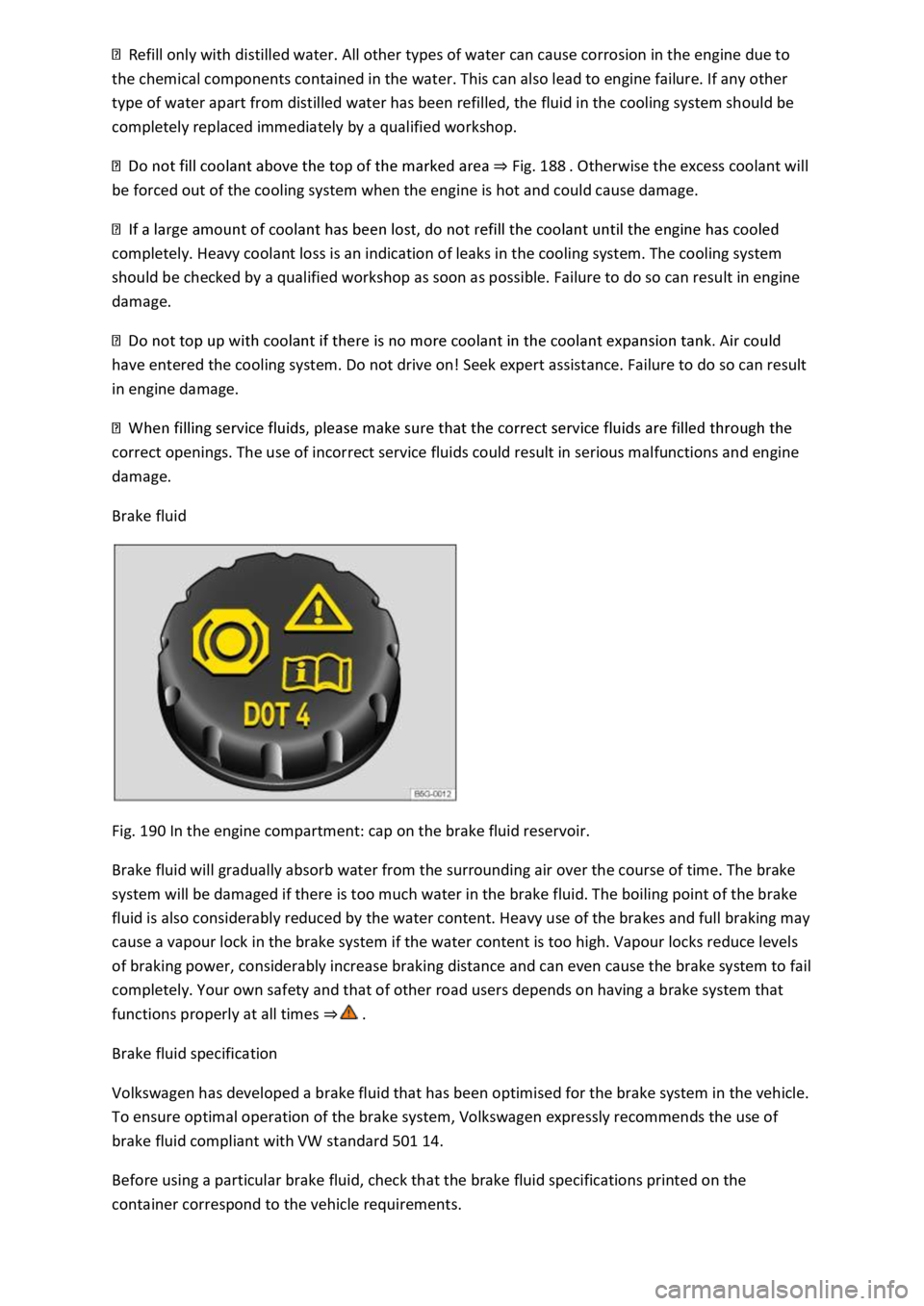
Fig. 190 In the engine compartment: cap on the brake fluid reservoir.
Brake fluid will gradually absorb water from the surrounding air over the course of time. The brake
system will be damaged if there is too much water in the brake fluid. The boiling point of the brake
fluid is also considerably reduced by the water content. Heavy use of the brakes and full braking may
cause a vapour lock in the brake system if the water content is too high. Vapour locks reduce levels
of braking power, considerably increase braking distance and can even cause the brake system to fail
completely. Your own safety and that of other road users depends on having a brake system that
functions properly at all times ⇒ .
Brake fluid specification
Volkswagen has developed a brake fluid that has been optimised for the brake system in the vehicle.
To ensure optimal operation of the brake system, Volkswagen expressly recommends the use of
brake fluid compliant with VW standard 501 14.
Before using a particular brake fluid, check that the brake fluid specifications printed on the
container correspond to the vehicle requirements.
Page 383 of 502

Brake fluid that is compliant with VW standard 501 14 is available from Volkswagen dealerships.
If this brake fluid is not available and it is necessary to use another high-quality brake fluid instead,
brake fluid that is compliant with DIN ISO 4925 CLASS 4 or US standard FMVSS 116 DOT 4 can be
used.
Not all brake fluids that are compliant with DIN ISO 4925 CLASS 4 or US standard FMVSS 116 DOT 4
have the same chemical composition. Some of these brake fluids may contain chemicals that can
damage or destroy brake system components over time.
Volkswagen therefore recommends the use of brake fluid that is compliant with VW standard 501 14
to ensure sustained proper operation of the brake system.
Brake fluid that is compliant with VW standard 501 14 fulfils the requirements of DIN ISO 4925
CLASS 4 or US standard FMVSS 116 DOT 4.
Brake fluid level
The brake fluid level must always be between the MIN and MAX marking on the brake fluid reservoir
or above the MIN marking ⇒ .
The brake fluid level cannot be checked accurately in all models as engine components may partially
conceal the fluid level in the brake fluid reservoir. If the brake fluid level cannot be read exactly,
please go to a qualified workshop.
The brake fluid level drops slightly during vehicle operation as the brake pads wear and the brakes
are automatically adjusted.
Brake fluid level
The indicator lamp lights up red.
Brake fluid level is too low.
Do not drive on! Check the brake fluid level.
If the brake fluid level is too low, inform a qualified workshop. Have the brake system checked.
Changing the brake fluid
The brake fluid should be changed by a qualified workshop. Volkswagen recommends using a
Volkswagen dealership for this purpose. Only brake fluid that conforms with the required
specification should be used.
WARNING
Brake failure or reduced braking efficiency can be caused by the brake fluid level being too low or by
brake fluid that is too old or unsuitable.
Page 384 of 502

reduce braking efficiency, considerably increase braking distance and can cause the brake system to
fail completely.
with VW standard 501 14.
fluid or low-quality brake fluid can affect the functioning of the brakes and reduce
their effectiveness.
501 14 is not available, use a high-quality brake fluid
compliant with DIN ISO 4925 CLASS 4 or the US standard FMVSS 116 DOT 4, but only in exceptional
circumstances.
WARNING
Brake fluid is toxic.
brake fluid. There is always a risk of someone drinking from such containers, even if they are labelled
appropriately.
children.
NOTICE
Brake fluid that has leaked or been spilt can damage the vehicle paintwork, plastic parts and tyres.
Immediately wipe off brake fluid that has leaked or been spilt from all parts of the vehicle.
Brake fluid can pollute the environment. Any service fluids that have escaped or been spilt must be
collected and disposed of properly.
12-volt vehicle battery
Introduction
This chapter contains information on the followingsubjects:
⇒ Checking the electrolyte level of the 12-volt vehicle battery
⇒ Charging, replacing, disconnecting and connecting the 12-volt vehicle battery
⇒ Troubleshooting
The 12-volt vehicle battery is a component of the electrical system and serves to supply power in the
vehicle.
Page 398 of 502

Replacing tyres
lace tyres at least on an axle-by-axle basis ⇒ .
type.
-approved tyres.
Re-synchronising the Tyre Pressure Loss Indicator
The Tyre Pressure Loss Indicator must be re-synchronised each time one or more wheels is changed.
This also applies if the wheels have been swapped, e.g. from the front to the rear ⇒ Tyre monitoring
system .
WARNING
Aggressive liquids and other substances can cause visible and invisible damage to the tyres, which
can cause the tyre to burst.
from the tyres.
WARNING
Even if they have not been used, old tyres can suddenly lose pressure or burst, especially at high
speeds, and thus cause accidents and serious injuries.
ith
extra care at all times.
WARNING
New tyres must be run in as they initially have reduced grip and braking efficiency.
km in order to prevent accidents and serious injury.
WARNING
Wheels must have the necessary clearance. If the wheels do not have the necessary clearance, the
tyre could rub on parts of the running gear, vehicle body and the brake lines. This can lead to a fault
in the brake system and to tread separation and thus to a tyre bursting.
and must not rub on any vehicle body parts.
Page 405 of 502

r remove the luggage compartment floor ⇒ Luggage compartment floor .
centre hole in the rim is positioned exactly above the hole or threaded pin.
overing in the luggage compartment if necessary.
⇒ Luggage compartment floor .
If the spare wheel tyre is not the same as the tyres on the vehicle
If the spare wheel tyre differs from the other tyres on the vehicle, the spare wheel must be used
only in the event of a tyre failure and for a short time ⇒ .
Observe these driving notes:
km/h (50 mph).
not use snow chains on the temporary spare wheel ⇒ Snow chains .
spare wheel ⇒ Tyre pressure .
WARNING
Incorrect use of the spare wheel or temporary spare wheel can lead to a loss of control over the
vehicle, collisions or other accidents and cause serious injuries.
wear indicators.
ped with a temporary spare wheel instead of a spare wheel. The
temporary spare wheel can be recognised by a sticker and the text 80 km/h or 50 mph. This is the
maximum speed at which you are permitted to drive with this tyre. The sticker must not be covered
during use of the wheel.
km/h (50 mph. Do not accelerate quickly, brake suddenly or drive at
high speed through bends.
km with a temporary spare wheel if it is fitted to the drive axle.
Page 414 of 502
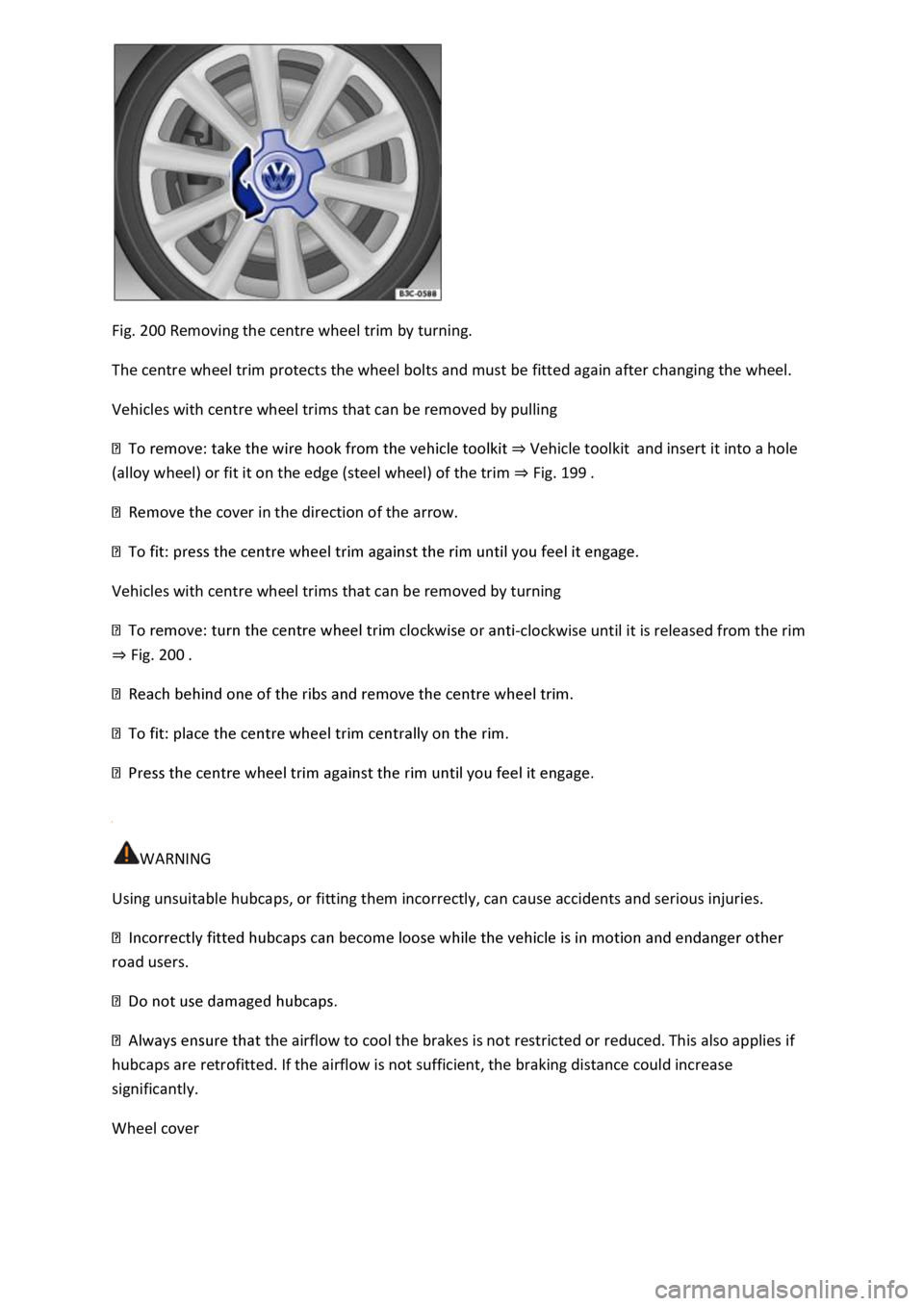
Fig. 200 Removing the centre wheel trim by turning.
The centre wheel trim protects the wheel bolts and must be fitted again after changing the wheel.
Vehicles with centre wheel trims that can be removed by pulling
⇒ Vehicle toolkit and insert it into a hole
(alloy wheel) or fit it on the edge (steel wheel) of the trim ⇒ Fig. 199 .
cover in the direction of the arrow.
Vehicles with centre wheel trims that can be removed by turning
-clockwise until it is released from the rim
⇒ Fig. 200 .
WARNING
Using unsuitable hubcaps, or fitting them incorrectly, can cause accidents and serious injuries.
road users.
the airflow to cool the brakes is not restricted or reduced. This also applies if
hubcaps are retrofitted. If the airflow is not sufficient, the braking distance could increase
significantly.
Wheel cover
Page 417 of 502

Changing a wheel can be dangerous, especially when carried out at the side of a road. Please
observe the following steps in order to reduce the risk of serious injuries:
as soon as possible and when safe to do so. Park the vehicle at a safe distance
from moving traffic in order to carry out the wheel change.
work during the wheel change.
board or similar support for the vehicle jack.
urself when you feel confident with carrying out the procedure. If not,
seek expert assistance.
ver
to the position P or select a gear on a manual gearbox in order to reduce the risk of unintended
vehicle movement.
immediately after changing a wheel.
n the case of vehicles with a Tyre Pressure Loss Indicator, the system must be re-synchronised
immediately after a wheel change⇒ Tyre Pressure Loss Indicator .
Preparations for changing a wheel
First read and observe the introductoryinformation and safety warnings⇒Introduction
Checklist
The following actions must always be carried out in the given order in preparation for changing the
wheel ⇒ :
If your vehicle has a flat tyre, park the vehicle on a firm and level surface at a safe distance from
moving traffic.
Switch on the electronic parking brake Parking and manoeuvring.
DSG® dual clutch gearbox: move the selector lever to position P DSG® dual clutch gearbox.
Switch off the engine and remove the key from the ignition.
Page 421 of 502
-piece wheel bolts: use only two-piece wheel bolts.
Lifting the vehicle with the jack
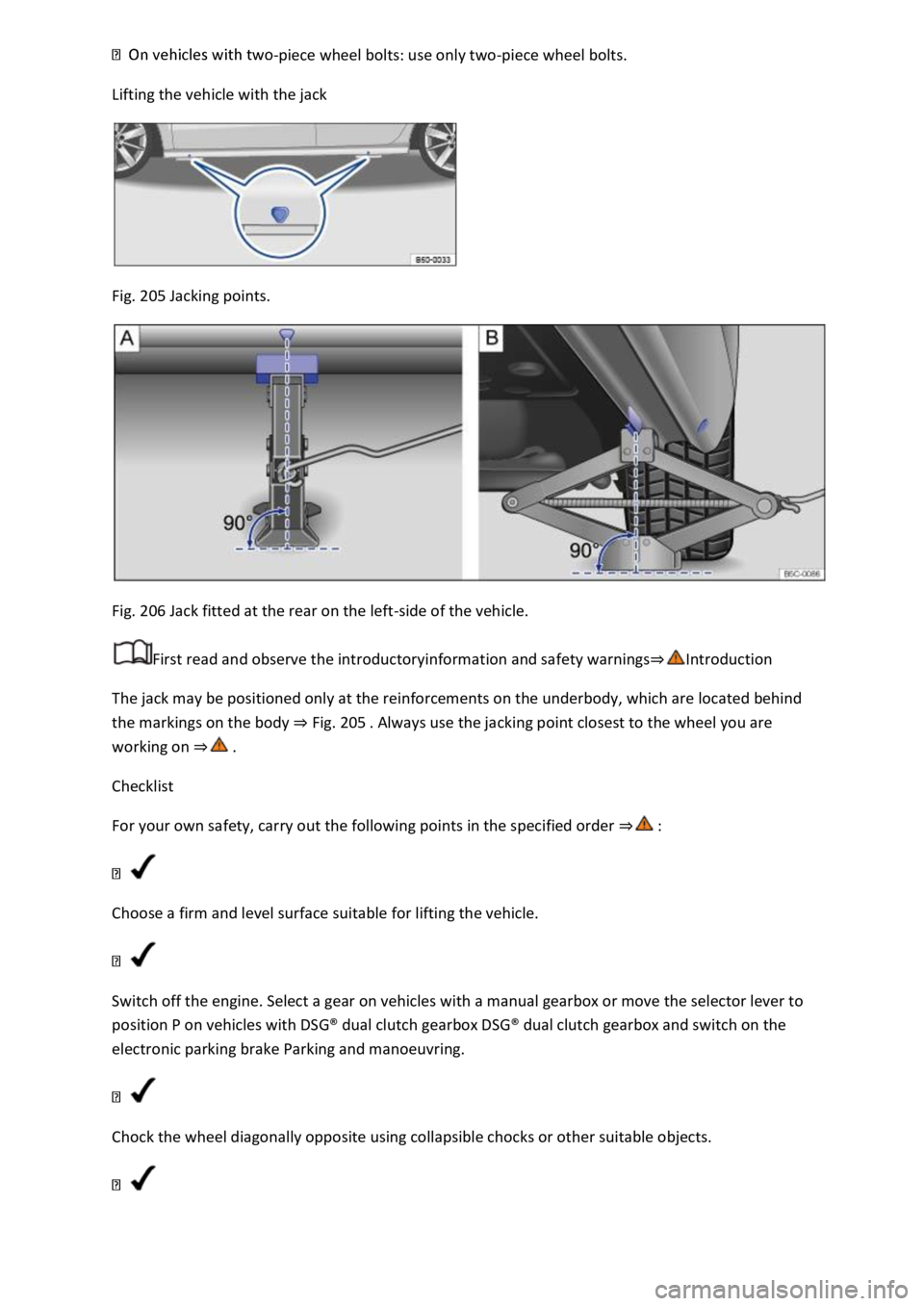
Fig. 205 Jacking points.
Fig. 206 Jack fitted at the rear on the left-side of the vehicle.
First read and observe the introductoryinformation and safety warnings⇒Introduction
The jack may be positioned only at the reinforcements on the underbody, which are located behind
the markings on the body ⇒ Fig. 205 . Always use the jacking point closest to the wheel you are
working on ⇒ .
Checklist
For your own safety, carry out the following points in the specified order ⇒ :
Choose a firm and level surface suitable for lifting the vehicle.
Switch off the engine. Select a gear on vehicles with a manual gearbox or move the selector lever to
position P on vehicles with DSG® dual clutch gearbox DSG® dual clutch gearbox and switch on the
electronic parking brake Parking and manoeuvring.
Chock the wheel diagonally opposite using collapsible chocks or other suitable objects.
Page 428 of 502

The air compressor from the breakdown set may be operated from the 12-volt socket, even if the
power rating on the type plate of the air compressor exceeds the maximum power rating of the
socket.
Preparations
First read and observe the introductoryinformation and safety warnings⇒Introduction
Checklist
Always carry out the following actions in the given order ⇒ :
If your vehicle has a flat tyre, park the vehicle on a firm and level surface at a safe distance from
moving traffic.
Switch on the electronic parking brake Parking and manoeuvring.
DSG® dual clutch gearbox: move the selector lever to position P DSG® dual clutch gearbox.
Switch off the engine and remove the key from the ignition.
Manual gearbox: select a gear Manual gearbox: selecting a gear.
Ask all vehicle occupants to leave the vehicle and stand at a safe distance away from moving traffic.
Switch on the hazard warning lights and set up the warning triangle In an emergency. Observe any
legal requirements.
Check whether the puncture can be repaired with the breakdown set The tyre sealant must not be
used:.
When towing a trailer: unhitch the trailer from the vehicle and park it properly .