Media VOLKSWAGEN T-ROC 2021 Owner´s Manual
[x] Cancel search | Manufacturer: VOLKSWAGEN, Model Year: 2021, Model line: T-ROC, Model: VOLKSWAGEN T-ROC 2021Pages: 502, PDF Size: 9.42 MB
Page 397 of 502

The tyres and wheel rims approved by Volkswagen have been carefully selected.
Rotating wheels
Regularly rotating the wheels as shown in the illustration ⇒ Fig. 193 is recommended to help ensure
that tyres wear evenly. All the tyres will then last for about the same time.
Volkswagen recommends having the wheels changed by a qualified workshop.
Avoiding damage to the wheel rims and tyres
⇒ Tyre lettering and
tyre type .
worn tyres must be replaced immediately ⇒ Tyre damage .
fluid ⇒ .
Tyres that are older than 6 years
Tyres age through physical and chemical processes that can impair their function. Tyres that have
been stored unused for an extended period of time age more quickly than tyres that are used all the
time.
Volkswagen recommends replacing tyres that are older than 6 years with new tyres. This also applies
to tyres which appear to still be in good condition and whose tread depth has not yet reached the
minimum value stipulated by legislation ⇒ .
Winter and all-year tyres also largely lose their effectiveness through ageing – regardless of the
remaining tread depth.
The age of each tyre can be determined using the manufacturing date ⇒ Tyre lettering and tyre
type .
Storing tyres
es mounted on the
wheel rim vertically.
should be stored vertically (standing on the tread).
New tyres
with new tyres as the tyres have to be run in. Tyres
that have not been run in have reduced grip ⇒ and braking efficiency ⇒ .
Page 417 of 502

Changing a wheel can be dangerous, especially when carried out at the side of a road. Please
observe the following steps in order to reduce the risk of serious injuries:
as soon as possible and when safe to do so. Park the vehicle at a safe distance
from moving traffic in order to carry out the wheel change.
work during the wheel change.
board or similar support for the vehicle jack.
urself when you feel confident with carrying out the procedure. If not,
seek expert assistance.
ver
to the position P or select a gear on a manual gearbox in order to reduce the risk of unintended
vehicle movement.
immediately after changing a wheel.
n the case of vehicles with a Tyre Pressure Loss Indicator, the system must be re-synchronised
immediately after a wheel change⇒ Tyre Pressure Loss Indicator .
Preparations for changing a wheel
First read and observe the introductoryinformation and safety warnings⇒Introduction
Checklist
The following actions must always be carried out in the given order in preparation for changing the
wheel ⇒ :
If your vehicle has a flat tyre, park the vehicle on a firm and level surface at a safe distance from
moving traffic.
Switch on the electronic parking brake Parking and manoeuvring.
DSG® dual clutch gearbox: move the selector lever to position P DSG® dual clutch gearbox.
Switch off the engine and remove the key from the ignition.
Page 420 of 502

On wheels with a wheel cover, the anti-theft wheel bolt must be screwed into position
⇒ Fig. 204② or ③ according to the position of the tyre valve ①. The wheel cover can otherwise
not be fitted.
Tightening torque of wheel bolts
Specified tightening torque for wheel bolts for steel or alloy wheels:
Nm
If the wheel bolts are corroded and difficult to turn, they must be replaced before the tightening
torque is checked and the wheel hub threads cleaned.
Never grease or oil the wheel bolts or the threads of the wheel hub.
The tightening torque should be checked with a properly functioning torque wrench immediately
after changing a wheel.
WARNING
Incorrectly tightened wheel bolts can loosen while the vehicle is in motion and cause accidents,
serious injury, and loss of control of the vehicle.
easily.
bolts.
the wheel bolts only by approximately one turn before raising the vehicle with the vehicle
jack.
loosen while the vehicle is in motion, even if they have been tightened with the specified tightening
torque.
-on rings.
while the vehicle is in motion. The wheel bolts and the threads could be damaged if the tightening
torque is too high. Check the tightening torque regularly using a torque wrench.
WARNING
The wrong wheel bolts can loosen while the vehicle is in motion and cause accidents, serious injury,
and loss of control of the vehicle.
Page 441 of 502
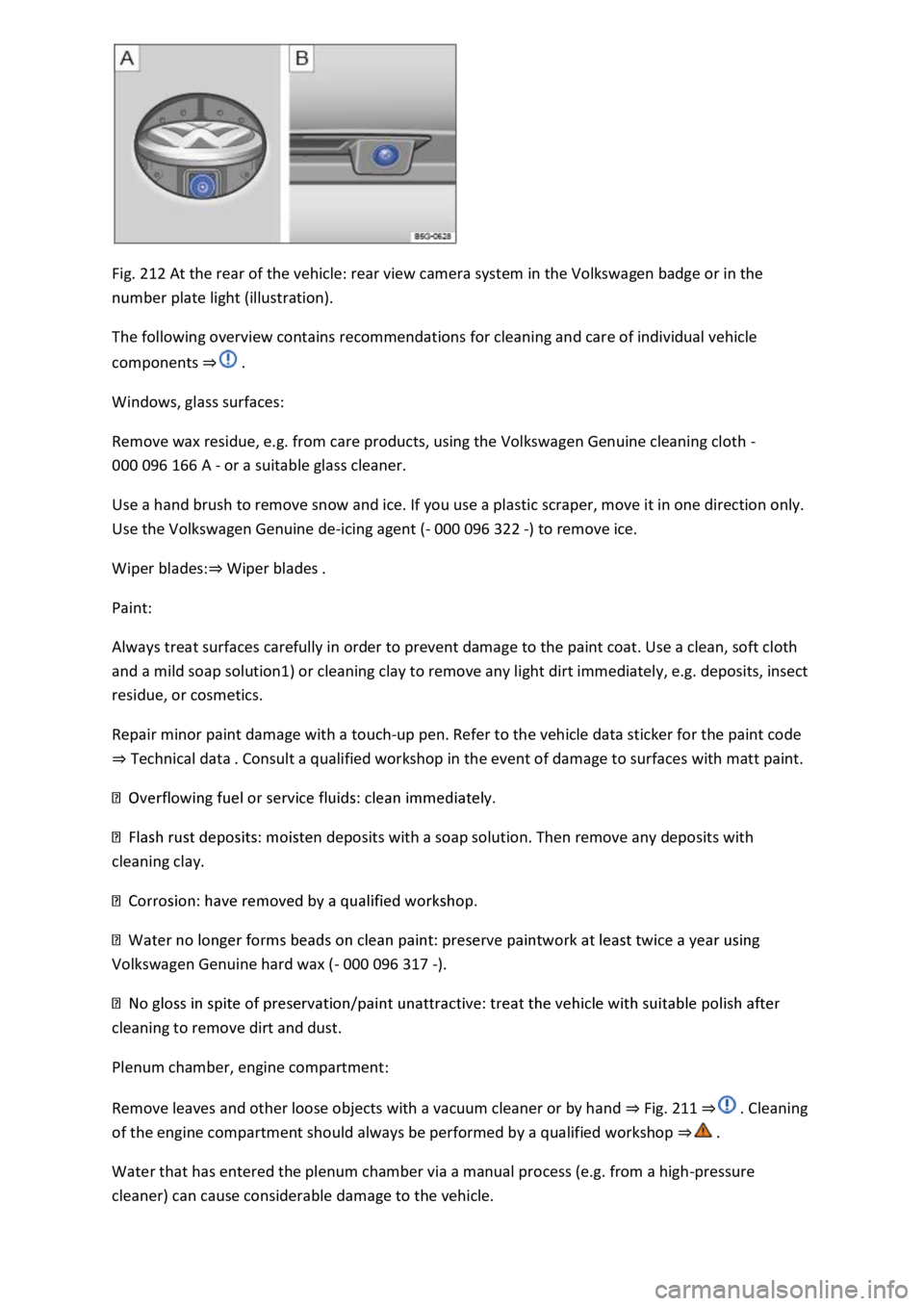
Fig. 212 At the rear of the vehicle: rear view camera system in the Volkswagen badge or in the
number plate light (illustration).
The following overview contains recommendations for cleaning and care of individual vehicle
components ⇒ .
Windows, glass surfaces:
Remove wax residue, e.g. from care products, using the Volkswagen Genuine cleaning cloth -
000 096 166 A - or a suitable glass cleaner.
Use a hand brush to remove snow and ice. If you use a plastic scraper, move it in one direction only.
Use the Volkswagen Genuine de-icing agent (- 000 096 322 -) to remove ice.
Wiper blades:⇒ Wiper blades .
Paint:
Always treat surfaces carefully in order to prevent damage to the paint coat. Use a clean, soft cloth
and a mild soap solution1) or cleaning clay to remove any light dirt immediately, e.g. deposits, insect
residue, or cosmetics.
Repair minor paint damage with a touch-up pen. Refer to the vehicle data sticker for the paint code
⇒ Technical data . Consult a qualified workshop in the event of damage to surfaces with matt paint.
n deposits with a soap solution. Then remove any deposits with
cleaning clay.
Volkswagen Genuine hard wax (- 000 096 317 -).
cleaning to remove dirt and dust.
Plenum chamber, engine compartment:
Remove leaves and other loose objects with a vacuum cleaner or by hand ⇒ Fig. 211 ⇒ . Cleaning
of the engine compartment should always be performed by a qualified workshop ⇒ .
Water that has entered the plenum chamber via a manual process (e.g. from a high-pressure
cleaner) can cause considerable damage to the vehicle.