mirror VOLKSWAGEN TIGUAN 2017 Owner´s Manual
[x] Cancel search | Manufacturer: VOLKSWAGEN, Model Year: 2017, Model line: TIGUAN, Model: VOLKSWAGEN TIGUAN 2017Pages: 341, PDF Size: 9.14 MB
Page 75 of 341
Lock the vehicle. When the anti-theft alarm is switched on, interior monitoring and the anti-tow
alarm are also active.
Temporarily switching off the interior monitoring system and anti-tow
alarm
Depending on the vehicle equipment, the interior monitoring system and anti-tow alarm can be
switched off temporarily by means of the button or the Infotainment system ⇒ Operation
and display in the Infotainment system.
•Switch off the ignition and open the driver door.
•Press the button. A yellow indicator lamp in the button lights up.
•Close all doors and the boot lid.
•Lock the vehicle using the vehicle key.
Press the button again before locking the vehicle to reactivate interior monitoring and the
anti-tow alarm.
•Switch on the ignition.
•Deactivate interior monitoring and the anti-tow alarm in the Infotainment system ⇒ Operation
and display in the Infotainment system.
•Close all doors and the boot lid.
•Lock the vehicle using the vehicle key.
The interior monitoring system and anti-towing alarm are deactivated until the next time the vehicle
is locked.
We recommend deactivating interior monitoring and the anti-tow alarm in the following situations:
•If any people or animals are to remain inside the vehicle.
•If the vehicle is to be loaded onto another vehicle.
•If the vehicle is being transported.
•If the vehicle is going to be towed with one axle off the ground.
•If the vehicle is to be parked in a two-storey garage.
•If the vehicle is to be parked in a car wash.
Risk of false interior monitoring alarms
The interior monitoring system functions only when the vehicle is completely closed. Comply with
legal regulations. A false alarm can be triggered in the following situations:
•If one or more windows or the glass roof are fully or partially open.
•If lightweight items such as loose pieces of paper or items hung from the interior mirror are left
in the vehicle.
•If a mobile telephone that is left in the vehicle vibrates.
•If the vehicle is being transported.
•If the vehicle is being parked in a two-storey garage.
•If the vehicle is in a car wash.
Permanent deactivation of interior monitoring and the anti-tow alarm is not possible.
If doors or the boot lid are still open when the anti-theft alarm is activated, only the anti-theft
alarm is activated. Interior monitoring and the anti-tow alarm are not activated until all doors and the
boot lid are closed.
SAFELOCK is also deactivated when the interior monitoring system and anti-tow alarm are
switched off ⇒ SAFELOCK.
Locking the vehicle after the airbag has been triggered
First read and observe the introductoryinformation and safety warnings⇒
Introduction
The entire vehicle is unlocked if the airbags are activated during an accident. Depending on the
extent of the damage, the vehicle can be locked as follows after an accident:
•Switch the ignition off and then back on again.
Troubleshooting
First read and observe the introductoryinformation and safety warnings⇒
Introduction
Fault in locking system: red LED flashes at short intervals and then lights up continuously. Go to a
qualified workshop.
Page 90 of 341
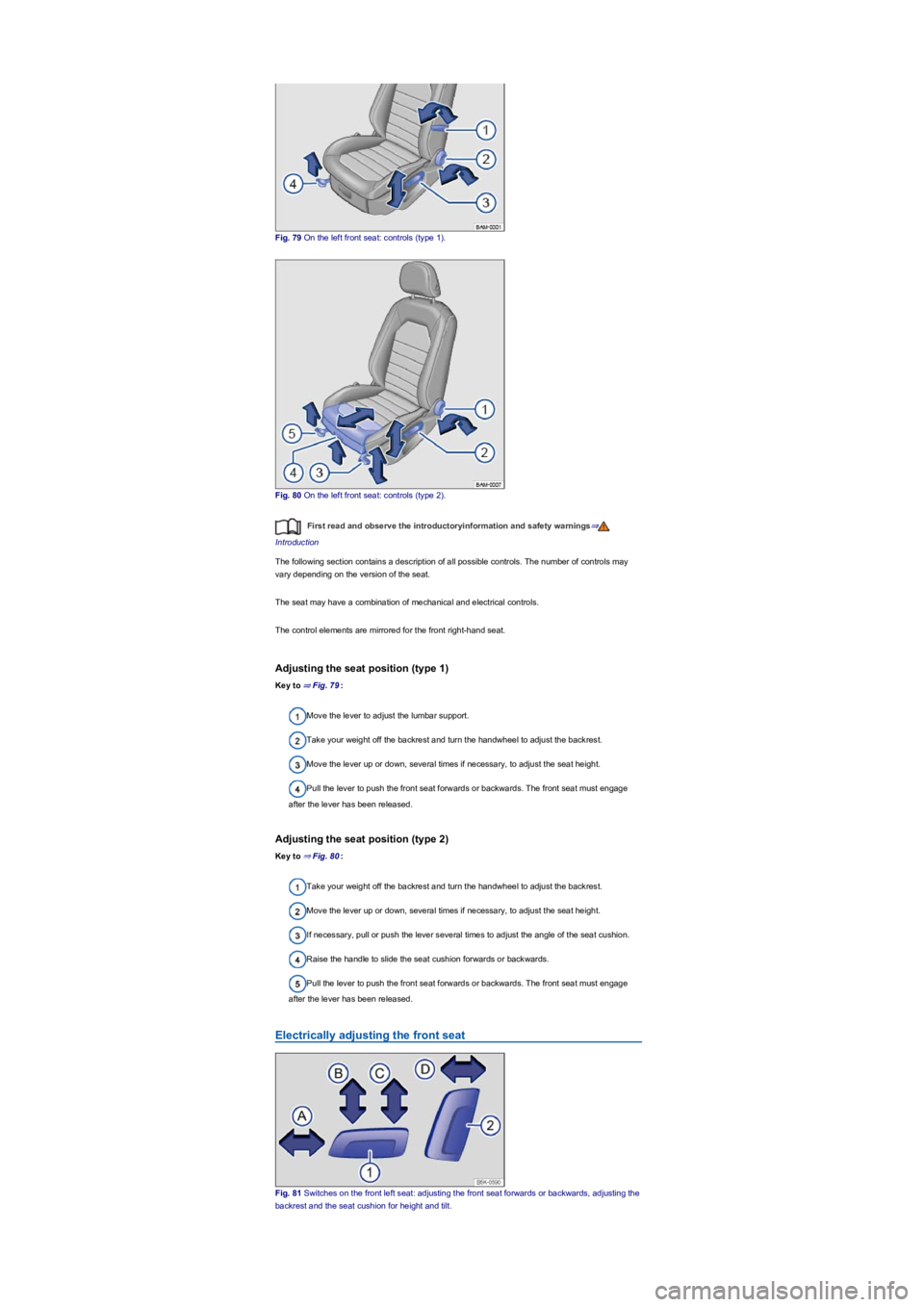
Fig. 79 On the left front seat: controls (type 1).
Fig. 80 On the left front seat: controls (type 2).
First read and observe the introductoryinformation and safety warnings⇒
Introduction
The following section contains a description of all possible controls. The number of controls may
vary depending on the version of the seat.
The seat may have a combination of mechanical and electrical controls.
The control elements are mirrored for the front right-hand seat.
Adjusting the seat position (type 1)
Key to ⇒ Fig. 79:
Move the lever to adjust the lumbar support.
Take your weight off the backrest and turn the handwheel to adjust the backrest.
Move the lever up or down, several times if necessary, to adjust the seat height.
Pull the lever to push the front seat forwards or backwards. The front seat must engage
after the lever has been released.
Adjusting the seat position (type 2)
Key to ⇒ Fig. 80:
Take your weight off the backrest and turn the handwheel to adjust the backrest.
Move the lever up or down, several times if necessary, to adjust the seat height.
If necessary, pull or push the lever several times to adjust the angle of the seat cushion.
Raise the handle to slide the seat cushion forwards or backwards.
Pull the lever to push the front seat forwards or backwards. The front seat must engage
after the lever has been released.
Electrically adjusting the front seat
Fig. 81 Switches on the front left seat: adjusting the front seat forwards or backwards, adjusting the
backrest and the seat cushion for height and tilt.
Page 91 of 341
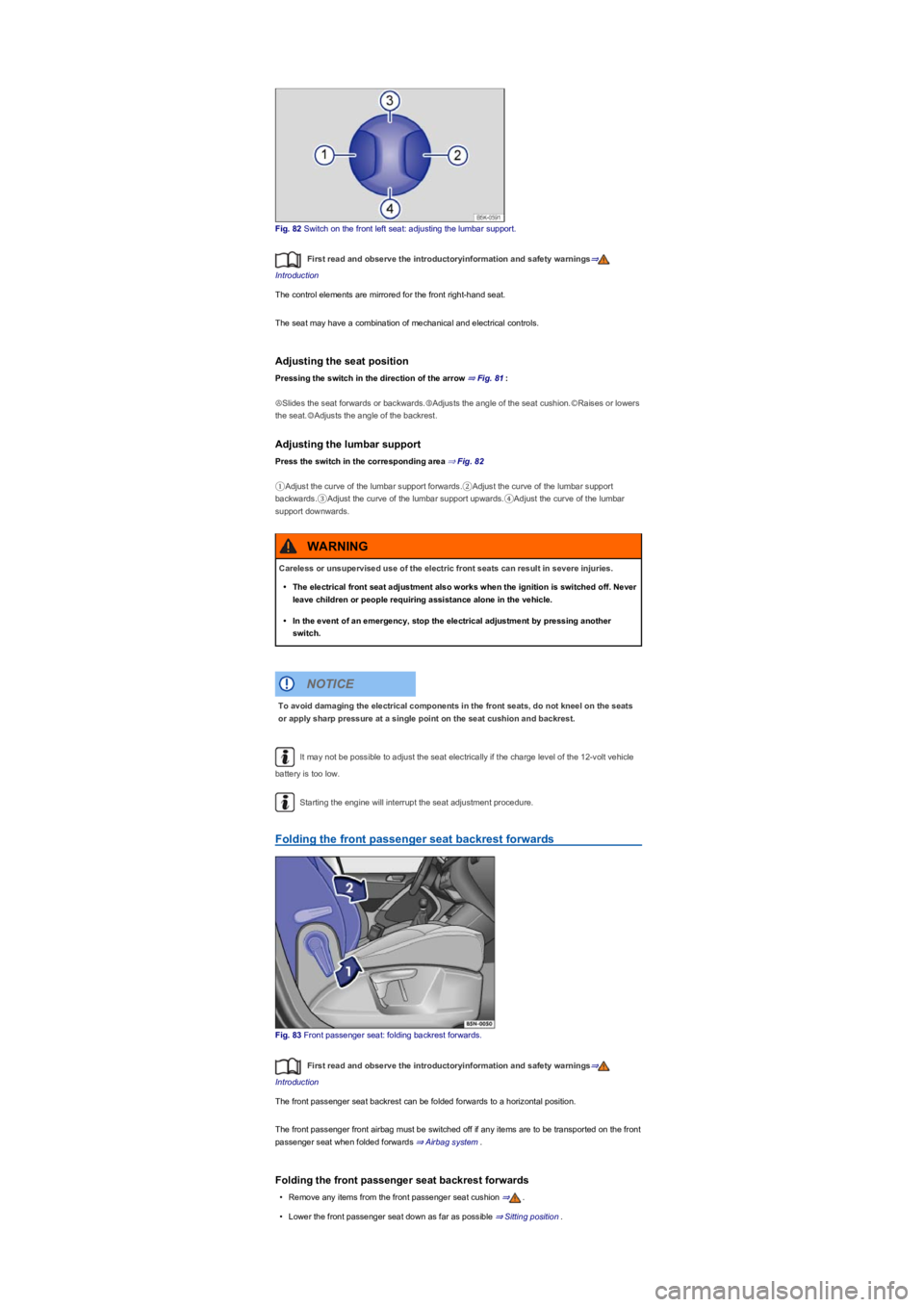
Fig. 82 Switch on the front left seat: adjusting the lumbar support.
First read and observe the introductoryinformation and safety warnings⇒
Introduction
The control elements are mirrored for the front right-hand seat.
The seat may have a combination of mechanical and electrical controls.
Adjusting the seat position
Pressing the switch in the direction of the arrow ⇒ Fig. 81:
ⒶSlides the seat forwards or backwards.ⒷAdjusts the angle of the seat cushion.ⒸRaises or lowers
the seat.ⒹAdjusts the angle of the backrest.
Adjusting the lumbar support
Press the switch in the corresponding area ⇒ Fig. 82
①Adjust the curve of the lumbar support forwards.②Adjust the curve of the lumbar support
backwards.③Adjust the curve of the lumbar support upwards.④Adjust the curve of the lumbar
support downwards.
It may not be possible to adjust the seat electrically if the charge level of the 12-volt vehicle
battery is too low.
Starting the engine will interrupt the seat adjustment procedure.
Folding the front passenger seat backrest forwards
Fig. 83 Front passenger seat: folding backrest forwards.
First read and observe the introductoryinformation and safety warnings⇒
Introduction
The front passenger seat backrest can be folded forwards to a horizontal position.
The front passenger front airbag must be switched off if any items are to be transported on the front
passenger seat when folded forwards ⇒ Airbag system.
Folding the front passenger seat backrest forwards
•Remove any items from the front passenger seat cushion ⇒.
•Lower the front passenger seat down as far as possible ⇒ Sitting position.
Careless or unsupervised use of the electric front seats can result in severe injuries.
•The electrical front seat adjustment also works when the ignition is switched off. Never
leave children or people requiring assistance alone in the vehicle.
•In the event of an emergency, stop the electrical adjustment by pressing another
switch.
WARNING
To avoid damaging the electrical components in the front seats, do not kneel on the seats
or apply sharp pressure at a single point on the seat cushion and backrest.
NOTICE
Page 98 of 341
Memory function
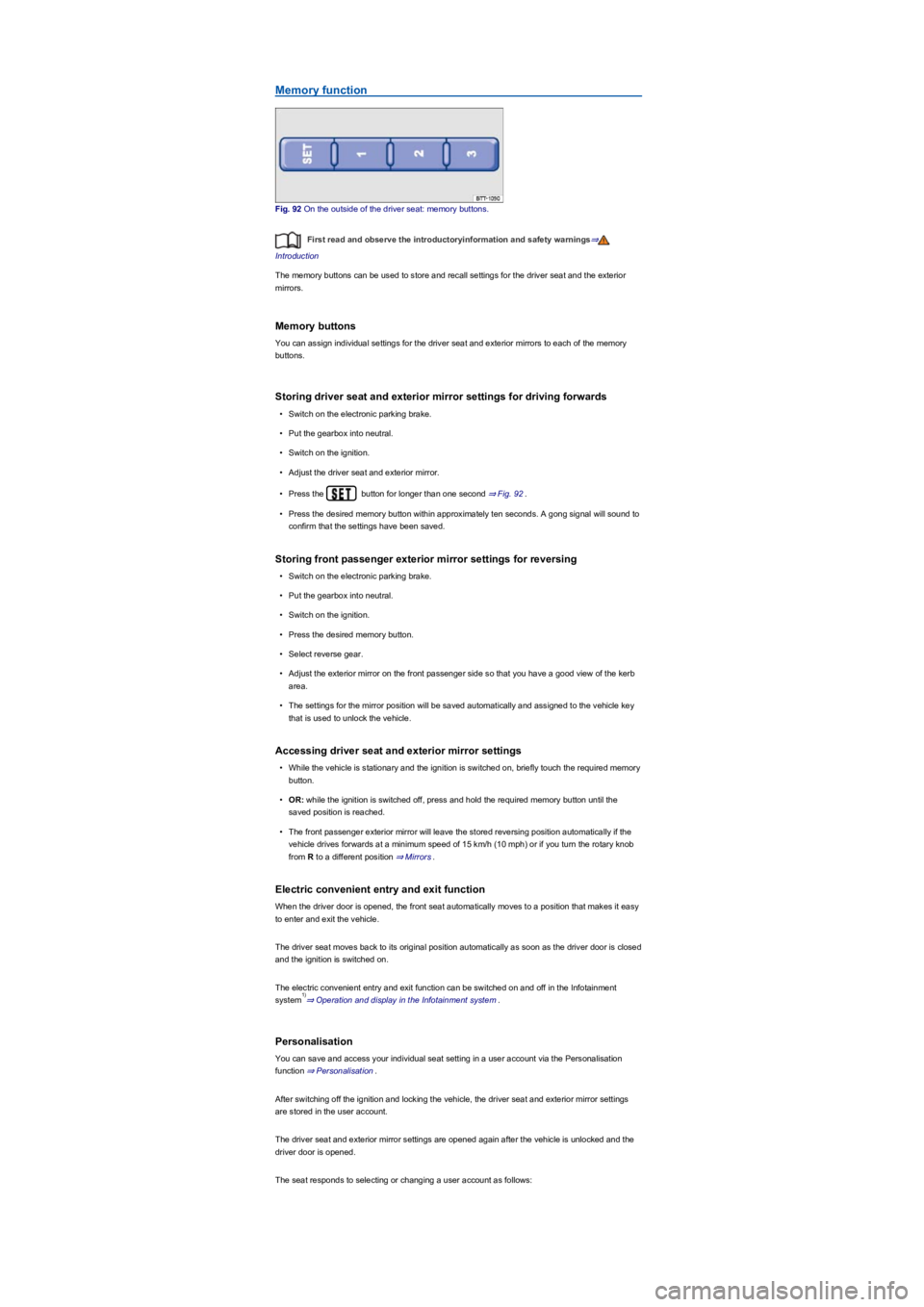
Fig. 92 On the outside of the driver seat: memory buttons.
First read and observe the introductoryinformation and safety warnings⇒
Introduction
The memory buttons can be used to store and recall settings for the driver seat and the exterior
mirrors.
Memory buttons
You can assign individual settings for the driver seat and exterior mirrors to each of the memory
buttons.
Storing driver seat and exterior mirror settings for driving forwards
•Switch on the electronic parking brake.
•Put the gearbox into neutral.
•Switch on the ignition.
•Adjust the driver seat and exterior mirror.
•Press the button for longer than one second ⇒ Fig. 92.
•Press the desired memory button within approximately ten seconds. A gong signal will sound to
confirm that the settings have been saved.
Storing front passenger exterior mirror settings for reversing
•Switch on the electronic parking brake.
•Put the gearbox into neutral.
•Switch on the ignition.
•Press the desired memory button.
•Select reverse gear.
•Adjust the exterior mirror on the front passenger side so that you have a good view of the kerb
area.
•The settings for the mirror position will be saved automatically and assigned to the vehicle key
that is used to unlock the vehicle.
Accessing driver seat and exterior mirror settings
•While the vehicle is stationary and the ignition is switched on, briefly touch the required memory
button.
•OR: while the ignition is switched off, press and hold the required memory button until the
saved position is reached.
•The front passenger exterior mirror will leave the stored reversing position automatically if the
vehicle drives forwards at a minimum speed of 15 km/h (10 mph) or if you turn the rotary knob
from R to a different position ⇒ Mirrors.
Electric convenient entry and exit function
When the driver door is opened, the front seat automatically moves to a position that makes it easy
to enter and exit the vehicle.
The driver seat moves back to its original position automatically as soon as the driver door is closed
and the ignition is switched on.
The electric convenient entry and exit function can be switched on and off in the Infotainment
system⇒ Operation and display in the Infotainment system.
Personalisation
You can save and access your individual seat setting in a user account via the Personalisation
function ⇒ Personalisation.
After switching off the ignition and locking the vehicle, the driver seat and exterior mirror settings
are stored in the user account.
The driver seat and exterior mirror settings are opened again after the vehicle is unlocked and the
driver door is opened.
The seat responds to selecting or changing a user account as follows:
1)
Page 99 of 341
•Vehicle stationary or moving no faster than 5 km/h: seat is moved. You can cancel the
movement at any time by touching the appropriate function button in the Infotainment system or
by pressing a button on the driver seat.
•Vehicle moving faster than 5 km/h: seat is not moved. All other setup configurations are
adopted.
If the driver door is opened later than approximately 10 minutes after unlocking the vehicle,
the driver seat and exterior mirrors are not automatically adjusted.
Some settings can be stored in the user accounts of the personalisation function and
therefore change automatically when the user account changes ⇒ Personalisation.
Only if the personalisation function is activated ⇒ Personalisation.
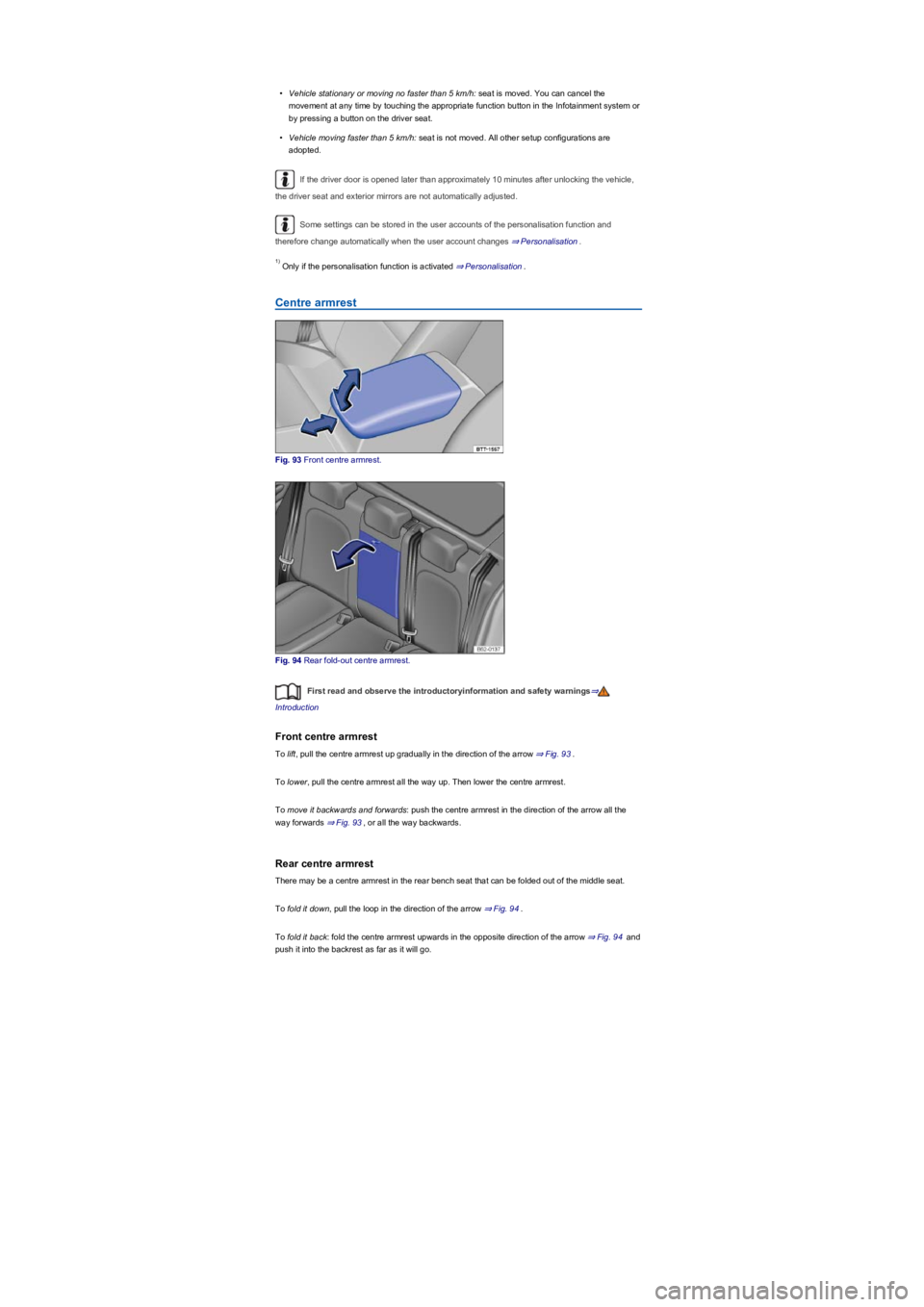
Centre armrest
Fig. 93 Front centre armrest.
Fig. 94 Rear fold-out centre armrest.
First read and observe the introductoryinformation and safety warnings⇒
Introduction
Front centre armrest
To lift, pull the centre armrest up gradually in the direction of the arrow ⇒ Fig. 93.
To lower, pull the centre armrest all the way up. Then lower the centre armrest.
To move it backwards and forwards: push the centre armrest in the direction of the arrow all the
way forwards ⇒ Fig. 93, or all the way backwards.
Rear centre armrest
There may be a centre armrest in the rear bench seat that can be folded out of the middle seat.
To fold it down, pull the loop in the direction of the arrow ⇒ Fig. 94.
To fold it back: fold the centre armrest upwards in the opposite direction of the arrow ⇒ Fig. 94 and
push it into the backrest as far as it will go.
1)
Page 111 of 341
Troubleshooting
Washer fluid level too low. Fill up the washer fluid reservoir as soon as possible ⇒ Washer
fluid.Fault in the rain/light sensor. Switch the ignition on and off. If the indicator lamp still lights
up permanently after you switch the ignition back on, seek expert assistance.Fault in
windscreen wipers. Switch the ignition on and off. If the indicator lamp still lights up permanently
after you switch the ignition back on, seek expert assistance.
Changes in the response of the rain/light sensor
Possible causes for faults and misinterpretations relating to the sensitive surface of the rain/light
sensor ⇒ Vehicle overviews include:
•Damaged wiper blades: a film of water or smears caused by damaged wiper blades can
increase the time the wipers are switched on, can shorten the length of the intervals between
wipes or cause the wipers to run quickly and continuously.
•Insects: insects hitting the windscreen surface can cause the wipers to be activated.
•Salt deposits: in winter, salt deposits on the windscreen can cause the wipers to continue to
wipe the windscreen when it is almost dry.
•Soiling: dry dust, wax, windscreen coatings (lotus effect), or detergent deposits (from an
automatic car wash) can cause the rain/light sensor to become less sensitive and react too
slowly, or prevent it from reacting at all. Clean the sensitive surface of the rain/light sensor
⇒ Caring for and cleaning the vehicle exterior at regular intervals and inspect the wiper blades
for damage.
•Crack in the windscreen: a wipe cycle will be triggered if the rain/light sensor is on when the
windscreen is impacted by a stone. The rain/light sensor will then register the reduction in
sensitivity of the surfaces and adjust accordingly. The size of the crack can affect the way in
which the rain/light sensor activates the wipers.
We recommend that you use an alcohol-based glass cleaner to remove wax and polish.
The wipers will try to wipe away any obstacles that are on the windscreen. The wipers will
stop moving if the obstacle blocks their path. Remove the obstacle and switch the wipers back on
again.
Mirrors
Introduction
This chapter contains information on the followingsubjects:
⇒ Interior mirror
⇒ Exterior mirrors
You can use the exterior mirrors and the interior mirror to observe traffic behind you and adjust
driving style accordingly.
For safety reasons it is important that the driver positions the exterior and interior mirrors correctly
before starting a journey ⇒.
Looking in the exterior mirrors and the interior mirror does not allow the driver to see the entire side
and rear area of the vehicle. The area that cannot be seen is known as the blind spot. There may
be objects and other road users in the blind spot.
Adjusting the exterior and interior mirrors while driving may cause the driver to become
distracted. This can lead to accidents and serious injuries.
•Exterior and interior mirrors should only be adjusted when the vehicle is stationary.
•When parking, changing lane, or performing an overtaking or turning manoeuvre,
always pay careful attention to the area around the vehicle as objects and other road
users may be located in the blind spot.
•Always ensure that the mirrors are positioned correctly and that the rear view is not
restricted by ice, snow, condensation or any other objects.
WARNING
If you estimate the distance from traffic behind you incorrectly, you can cause accidents
and serious injuries.
•Curved mirrors (convex or aspheric) enlarge the field of vision and can make objects in
the mirror seem smaller and further away than they actually are.
•Using curved mirrors to estimate the distance from other vehicles behind you when
changing lanes can provide inaccurate results and can lead to accidents and severe
injuries.
•Whenever possible, use the interior mirror to check the exact distance between your
vehicle and following traffic or other objects.
•Ensure that you have a good view to the rear of the vehicle.
WARNING
Page 112 of 341
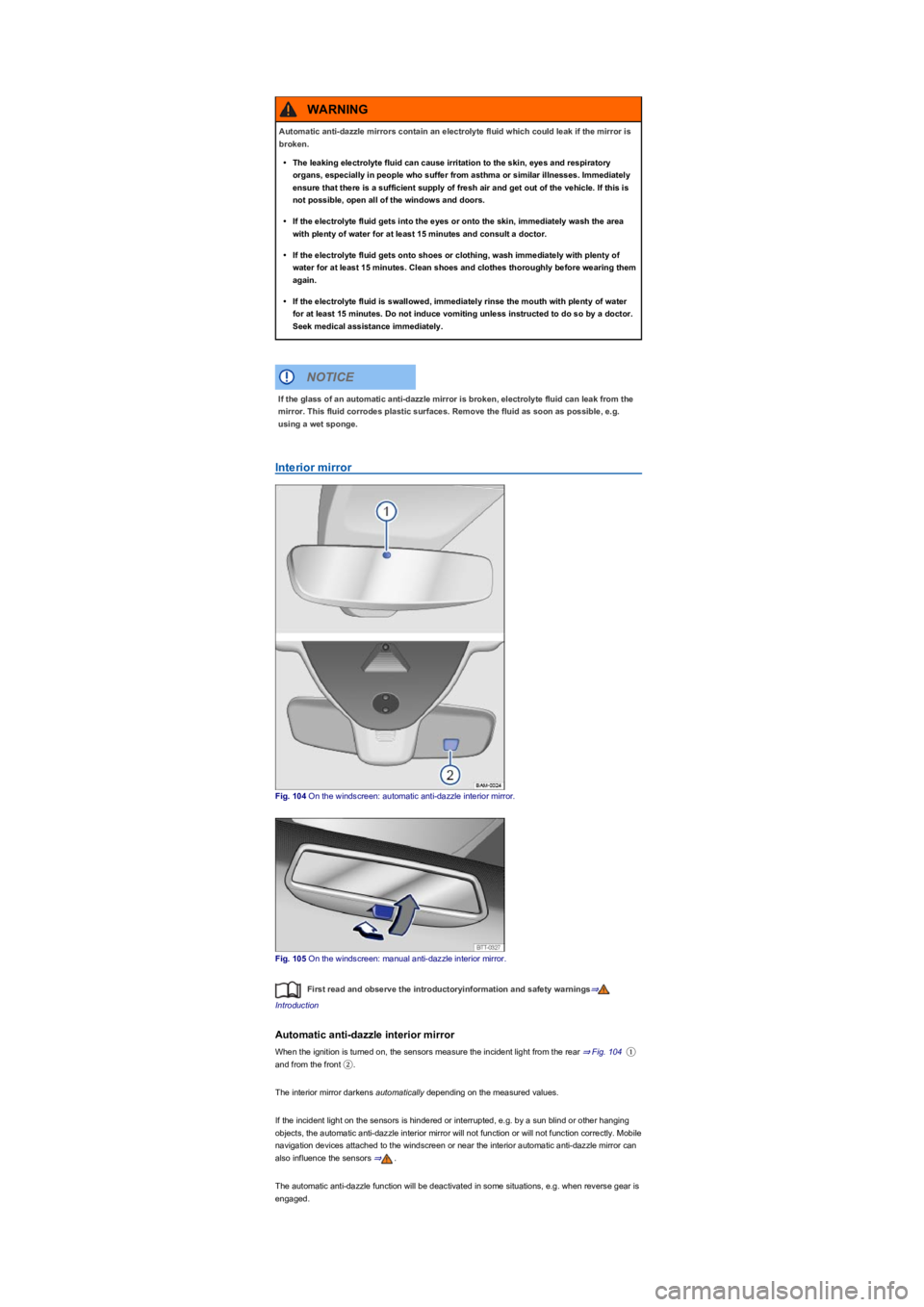
Interior mirror
Fig. 104 On the windscreen: automatic anti-dazzle interior mirror.
Fig. 105 On the windscreen: manual anti-dazzle interior mirror.
First read and observe the introductoryinformation and safety warnings⇒
Introduction
Automatic anti-dazzle interior mirror
When the ignition is turned on, the sensors measure the incident light from the rear ⇒ Fig. 104①
and from the front ②.
The interior mirror darkens automatically depending on the measured values.
If the incident light on the sensors is hindered or interrupted, e.g. by a sun blind or other hanging
objects, the automatic anti-dazzle interior mirror will not function or will not function correctly. Mobile
navigation devices attached to the windscreen or near the interior automatic anti-dazzle mirror can
also influence the sensors ⇒.
The automatic anti-dazzle function will be deactivated in some situations, e.g. when reverse gear is
engaged.
Automatic anti-dazzle mirrors contain an electrolyte fluid which could leak if the mirror is
broken.
•The leaking electrolyte fluid can cause irritation to the skin, eyes and respiratory
organs, especially in people who suffer from asthma or similar illnesses. Immediately
ensure that there is a sufficient supply of fresh air and get out of the vehicle. If this is
not possible, open all of the windows and doors.
•If the electrolyte fluid gets into the eyes or onto the skin, immediately wash the area
with plenty of water for at least 15 minutes and consult a doctor.
•If the electrolyte fluid gets onto shoes or clothing, wash immediately with plenty of
water for at least 15 minutes. Clean shoes and clothes thoroughly before wearing them
again.
•If the electrolyte fluid is swallowed, immediately rinse the mouth with plenty of water
for at least 15 minutes. Do not induce vomiting unless instructed to do so by a doctor.
Seek medical assistance immediately.
WARNING
If the glass of an automatic anti-dazzle mirror is broken, electrolyte fluid can leak from the
mirror. This fluid corrodes plastic surfaces. Remove the fluid as soon as possible, e.g.
using a wet sponge.
NOTICE
Page 113 of 341
Manual anti-dazzle interior mirror
•Basic position: the lever on the lower part of the mirror is pointing towards the windscreen.
•Pull the lever to the back to select the anti-dazzle function ⇒ Fig. 105.
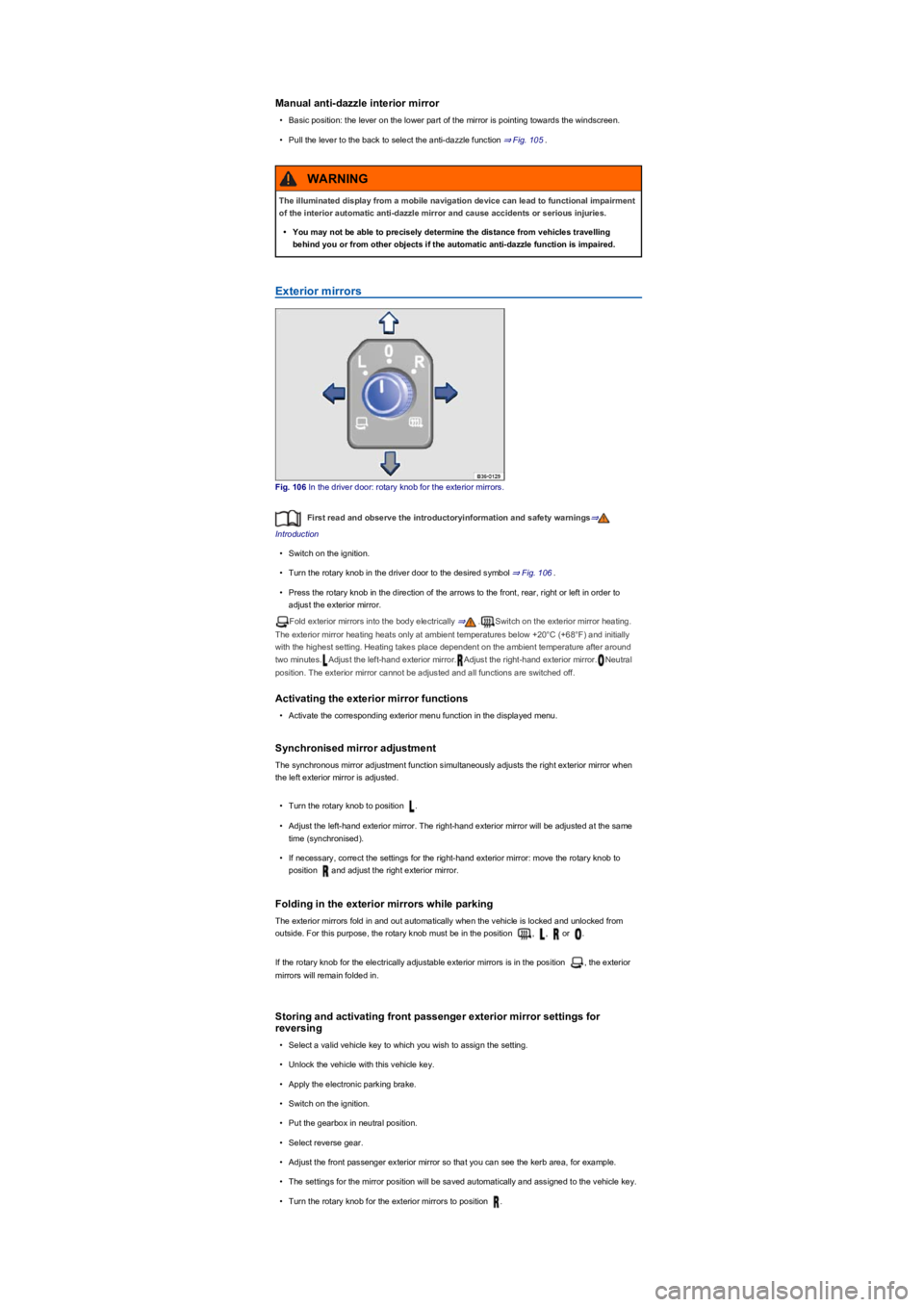
Exterior mirrors
Fig. 106 In the driver door: rotary knob for the exterior mirrors.
First read and observe the introductoryinformation and safety warnings⇒
Introduction
•Switch on the ignition.
•Turn the rotary knob in the driver door to the desired symbol ⇒ Fig. 106.
•Press the rotary knob in the direction of the arrows to the front, rear, right or left in order to
adjust the exterior mirror.
Fold exterior mirrors into the body electrically ⇒.Switch on the exterior mirror heating.
The exterior mirror heating heats only at ambient temperatures below +20°C (+68°F) and initially
with the highest setting. Heating takes place dependent on the ambient temperature after around
two minutes.Adjust the left-hand exterior mirror.Adjust the right-hand exterior mirror.Neutral
position. The exterior mirror cannot be adjusted and all functions are switched off.
Activating the exterior mirror functions
•Activate the corresponding exterior menu function in the displayed menu.
Synchronised mirror adjustment
The synchronous mirror adjustment function simultaneously adjusts the right exterior mirror when
the left exterior mirror is adjusted.
•Turn the rotary knob to position .
•Adjust the left-hand exterior mirror. The right-hand exterior mirror will be adjusted at the same
time (synchronised).
•If necessary, correct the settings for the right-hand exterior mirror: move the rotary knob to
position and adjust the right exterior mirror.
Folding in the exterior mirrors while parking
The exterior mirrors fold in and out automatically when the vehicle is locked and unlocked from
outside. For this purpose, the rotary knob must be in the position , , or .
If the rotary knob for the electrically adjustable exterior mirrors is in the position , the exterior
mirrors will remain folded in.
Storing and activating front passenger exterior mirror settings for
reversing
•Select a valid vehicle key to which you wish to assign the setting.
•Unlock the vehicle with this vehicle key.
•Apply the electronic parking brake.
•Switch on the ignition.
•Put the gearbox in neutral position.
•Select reverse gear.
•Adjust the front passenger exterior mirror so that you can see the kerb area, for example.
•The settings for the mirror position will be saved automatically and assigned to the vehicle key.
•Turn the rotary knob for the exterior mirrors to position .
The illuminated display from a mobile navigation device can lead to functional impairment
of the interior automatic anti-dazzle mirror and cause accidents or serious injuries.
•You may not be able to precisely determine the distance from vehicles travelling
behind you or from other objects if the automatic anti-dazzle function is impaired.
WARNING
Page 114 of 341
•Select reverse gear while the ignition is switched on. The right exterior mirror will now adjust
itself to the stored position.
The front passenger exterior mirror will move out of the position saved for reversing when the
vehicle is driven forwards faster than approximately 15 km/h (9 mph) or when the rotary knob is
moved out of position into another position.
The exterior mirror heating should be switched off when it is no longer needed. Fuel is
otherwise wasted.
In the event of a fault, the electric exterior mirrors can be adjusted by hand by pressing on
the outer edge of the mirror.
Some settings can be stored in the user accounts of the personalisation function and
therefore change automatically when the user account changes ⇒ Personalisation.
Protection from the sun
Sun visors
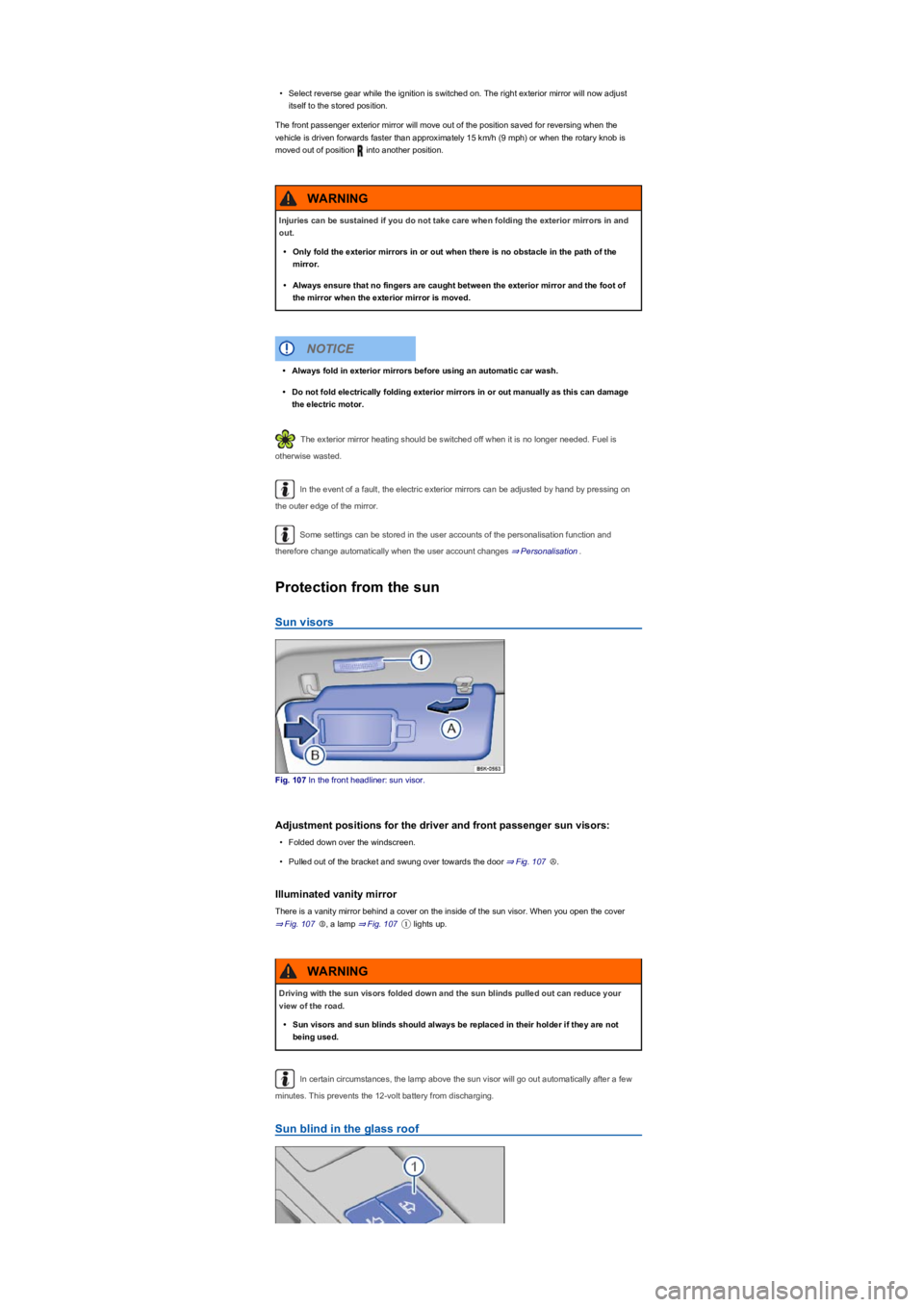
Fig. 107 In the front headliner: sun visor.
Adjustment positions for the driver and front passenger sun visors:
•Folded down over the windscreen.
•Pulled out of the bracket and swung over towards the door ⇒ Fig. 107Ⓐ.
Illuminated vanity mirror
There is a vanity mirror behind a cover on the inside of the sun visor. When you open the cover
⇒ Fig. 107Ⓑ, a lamp ⇒ Fig. 107① lights up.
In certain circumstances, the lamp above the sun visor will go out automatically after a few
minutes. This prevents the 12-volt battery from discharging.
Sun blind in the glass roof
Injuries can be sustained if you do not take care when folding the exterior mirrors in and
out.
•Only fold the exterior mirrors in or out when there is no obstacle in the path of the
mirror.
•Always ensure that no fingers are caught between the exterior mirror and the foot of
the mirror when the exterior mirror is moved.
WARNING
•Always fold in exterior mirrors before using an automatic car wash.
•Do not fold electrically folding exterior mirrors in or out manually as this can damage
the electric motor.
NOTICE
Driving with the sun visors folded down and the sun blinds pulled out can reduce your
view of the road.
•Sun visors and sun blinds should always be replaced in their holder if they are not
being used.
WARNING
Page 145 of 341
DSG dual clutch gearbox
Function of the DSG dual clutch gearbox
Description
The vehicle is equipped with a DSG dual clutch gearbox.
The DSG dual clutch gearbox is a gearbox which uses dual-clutch technology to change gear
automatically. It uses a dual clutch and two gear train halves to enable very fast gear changes with
no loss of torque. The DSG dual clutch gearbox thus combines the performance and economy of a
manual gearbox with the comfort and convenience of a conventional automatic transmission.
Function
When driving, engine power is transferred to the drive axle via the gearbox. In order to change
gears, the power transmission between the engine and the gearbox has to be interrupted. This is
what the clutch is for.
With the DSG dual clutch system with its two gear train halves, the engine power is always
connected to one gear train half when driving. Before a gear change, the next higher or lower gear
is already preselected in the load-free second gear train half. The clutch on the non-driven gear is
closed and the other is opened at the same time. This is what makes very fast gear changes
possible.
Thanks to its design, the DSG dual clutch gearbox is more efficient than an automatic gearbox.
Whereas in an automatic gearbox the torque converter is constantly in use, in the DSG dual clutch
system the clutch can be opened at idling speed, thus saving fuel. Thanks to its efficiency, low
weight and intelligent control system, the DSG dual clutch system usually enables fuel
consumption equal to or lower than a manual gearbox.
However, just like the manual gearbox, the clutch in the DSG dual clutch gearbox is subject to
wear. Regular maintenance is necessary depending on the type of dual clutch gearbox DSG;
further information ⇒ Scope of service. In the event of a fault in one gear train half, the DSG dual
clutch gearbox also allows one gear train half to be deactivated and the journey to be continued
using the other gear train half ⇒ Troubleshooting. If this happens, have the system checked as
soon as possible by a qualified workshop.
DSG dual clutch gearbox: selecting a gear
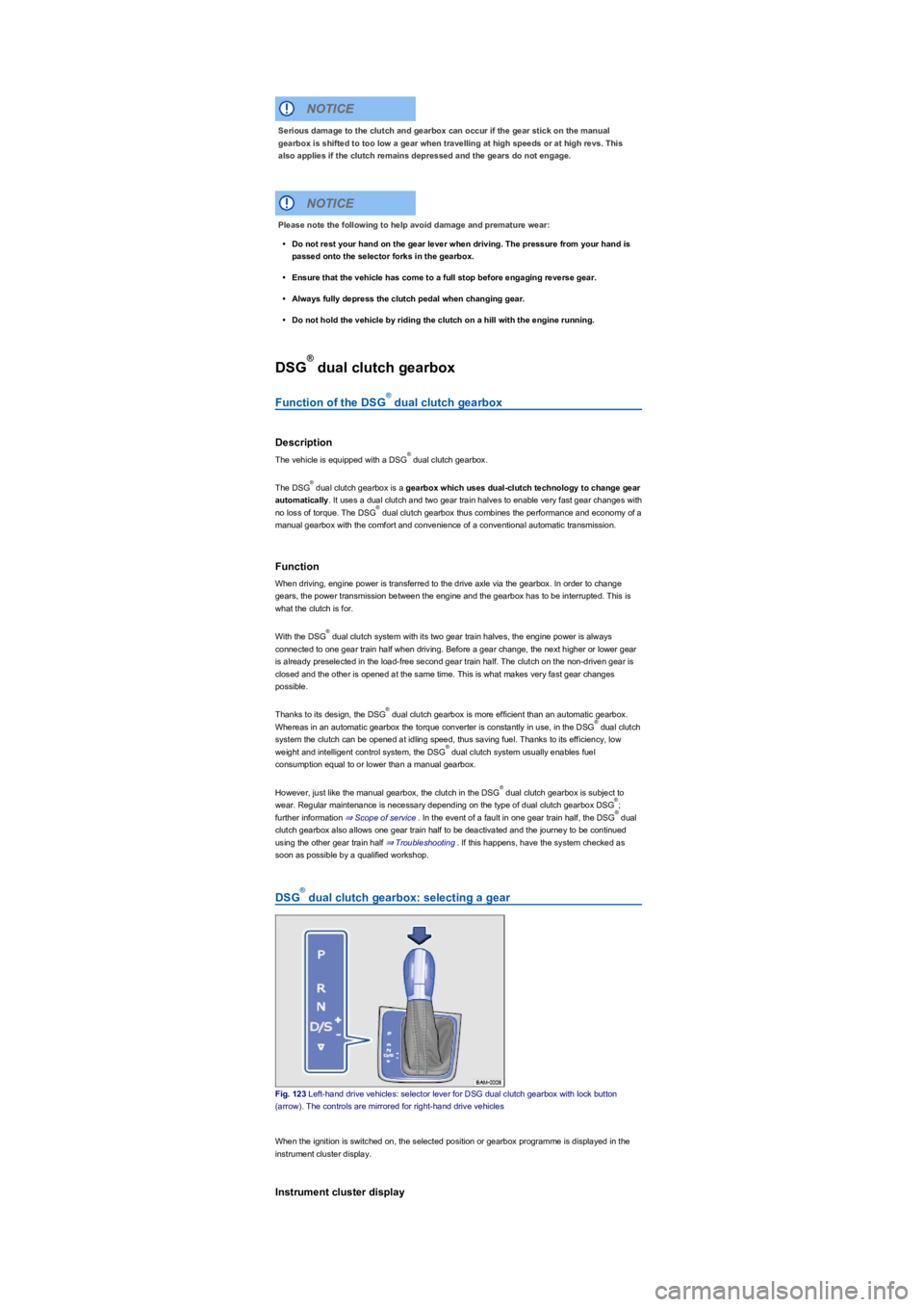
Fig. 123 Left-hand drive vehicles: selector lever for DSG dual clutch gearbox with lock button
(arrow). The controls are mirrored for right-hand drive vehicles
When the ignition is switched on, the selected position or gearbox programme is displayed in the
instrument cluster display.
Instrument cluster display
Serious damage to the clutch and gearbox can occur if the gear stick on the manual
gearbox is shifted to too low a gear when travelling at high speeds or at high revs. This
also applies if the clutch remains depressed and the gears do not engage.
NOTICE
Please note the following to help avoid damage and premature wear:
•Do not rest your hand on the gear lever when driving. The pressure from your hand is
passed onto the selector forks in the gearbox.
•Ensure that the vehicle has come to a full stop before engaging reverse gear.
•Always fully depress the clutch pedal when changing gear.
•Do not hold the vehicle by riding the clutch on a hill with the engine running.
NOTICE
®
®
®
®
®
®
®
®
®
®
®
®
®