lock VOLKSWAGEN TRANSPORTER 2015 Owner´s Manual
[x] Cancel search | Manufacturer: VOLKSWAGEN, Model Year: 2015, Model line: TRANSPORTER, Model: VOLKSWAGEN TRANSPORTER 2015Pages: 486, PDF Size: 72.17 MB
Page 62 of 486
A WARNING (Continued)
• Only adjust the height and tilt of the seat or move lt forwards and backwards when the area around the seat is clear.
• There should be no objects in the adjust-ment area of the front seats.
• Make sure that there is no dirt in the areas within which the front seats can be adjusted (and locked In place).
A WARNING
Cigarette lighters in the vehicle could be damaged or accidentally lit. This could lead to serious burns and other Injuries.
• Before adjusting the seats always make sure that there is no lighter on or near the moveable parts of the seat.
• Before closing stowage areas or compart-ments always ensure that there Is no lighter in the way.
• Never stow lighters in stowage areas or compartments or on other surfaces In the ve-hicle. Cigarette lighters may self-Ignite on high-temperature surfaces, especially In sum-
The dangers of assuming an incorrect sitting position
.....-m First read and observe the Introductory L-.bU information and safety warnings & on page 61.
If the seat belts are not worn or are worn incorrect-ly, the risk of severe or fatal injuries increases. Seat belts can only provide optimal protection if the seat belt routing is correct. Assuming an incorrect sitting position considerably impairs the level of protection provided by a seat belt. This could lead to severe or even fatal injuries. The risk of severe or fatal injuries is especially increased when a de-ploying airbag strikes a vehicle occupant who has assumed an incorrect sitting position. The driver is responsible for all occupants transported in the ve-hicle, especially children.
The following list contains examples of sitting posi-tions that can be dangerous for all vehicle occu-pants.
Whenever the vehicle is in motion:
• Never stand in the vehicle.
• Never stand on the seats.
• Never kneel on the seats.
• Never tilt the backrest too far to the rear.
• Never lean against the dash panel.
• Never lie on the seats in the passenger com-partment.
• Never sit on the front edge of a seat.
• Never sit sideways.
Before the journey
• Never lean out of a window .
• Never put your feet out of a window.
• Never put your feet on the dash panel.
• Never place your feet on the seat cushion or seat backrest.
• Never travel in a footwell.
• Never sit on the armrest.
• Never travel on a seat without wearing the seat belt.
• Never use the bed.
• Never travel in the luggage compartment or on the load surface.
A WARNING
Every Incorrect sitting position In the vehicle Increases the risk of severe or fatal Injuries In the event of an accident or sudden driving or braking manoeuvre.
• All vehicle occupants must maintain a cor-rect sitting position and wear their seat belt properly while the vehicle Is In motion.
• Sitting In an incorrect position, not fasten-ing the seat belt, or too short a distance to the alrbag exposes the occupants to critical or fatal injuries, especially if the alrbags de-ploy and strike an occupant who has as-sumed an Incorrect sitting position.
Page 68 of 486
A WARNING
Driving without head restraints or with Incor-rectly adjusted head restraints Increases the risk of severe or fatal injuries In the event of an accident or sudden' driving or braking ma-noeuvre.
• If a seat is occupied, the head restraint for that seat must be fitted and adjusted correct-ly.
• Each vehicle occupant must adjust the head restraint to suit their body size, to help reduce the risk of neck injuries in an acci-dent. As far as possible, the upper edge of
Adjusting the steering wheel position
an-0211
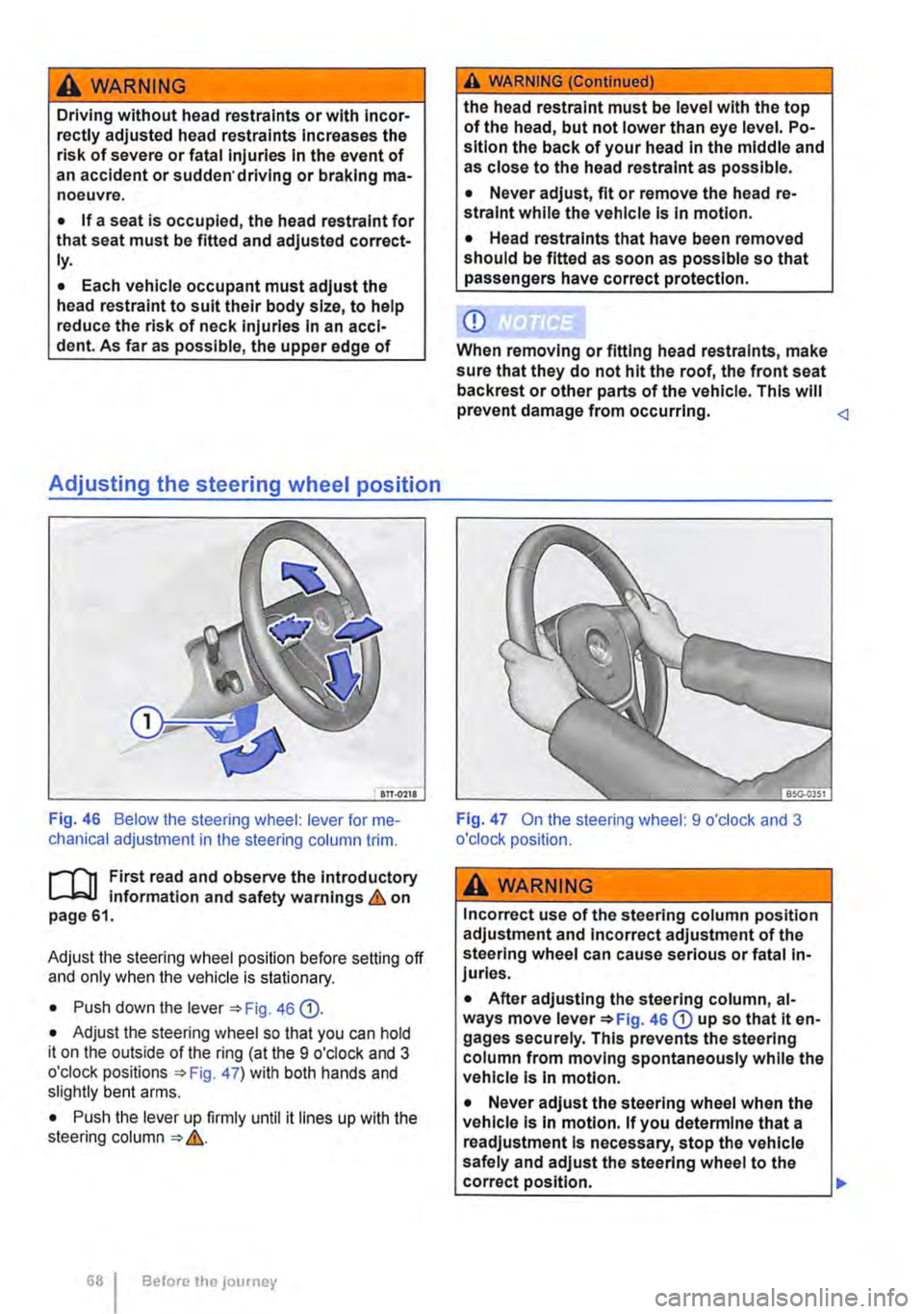
Fig. 46 Below the steering wheel: lever for me-chanical adjustment in the steering column trim.
r--f'n First read and observe the introductory L-W.I information and safety warnings & on page 61.
Adjust the steering wheel position before setting off and only when the vehicle is stationary.
• Push down the lever 46 Q).
• Adjust the steering wheel so that you can hold it on the outside of the ring (at the 9 o'clock and 3 o'clock positions =:o Fig. 47) with both hands and slightly bent arms.
• Push the lever up firmly until it lines up with the steering column =:o &.
Before the journey
A WARNING (Continued)
the head restraint must be level with the top of the head, but not lower than eye level. Po-sition the back of your head in the middle and as close to the head restraint as possible.
• Never adjust, fit or remove the head re-straint while the vehicle is in motion.
• Head restraints that have been removed should be fitted as soon as possible so that passengers have correct protection.
CD
When removing or fitting head restraints, make sure that they do not hit the roof, the front seat back rest or other parts of the vehicle. This will prevent damage from occurring.
A WARNING
Incorrect use of the steering column position adjustment and Incorrect adjustment of the steering wheel can cause serious or fatal In-juries.
• After adjusting the steering column, al-ways move lever =:oFig. 46 CD up so that it en-gages securely. This prevents the steering column from moving spontaneously while the vehicle Is In motion.
• Never adjust the steering wheel when the vehicle Is In motion. If you determine that a readjustment Is necessary, stop the vehicle safely and adjust the steering wheel to the correct position. .,.
Page 69 of 486
A WARNING (Continued)
• The steering wheel must always point to-wards the chest and not towards the face. This ensures that the driver front airbag pro-vides maximum protection in the event of an accident.
• While driving, always keep both hands on the outside of the steering wheel (at the 9 o'clock and 3 o'clock positions =>Fig. 47). This reduces the risk of injury if the driver front alrbag Is triggered.
Seat functions, front
a:n Introduction
This chapter contains information on the following subjects:
Seat heating . . . . . . . . . . . . . . . . . . . • • • . . . . . . 69
Memory seats . . . . . . . . . . . . . . . . . . . 70
Rotating front seats . . . . . . . . . . . . . . . . . . . . . . 71
Additional information and warnings:
• Adjusting the seat position =>page 61
• Seat bells =>page 79
• Airbag system =>page 87
• Child seats (accessories) 96
• Heating, ventilating, cooling 322
Seat heating
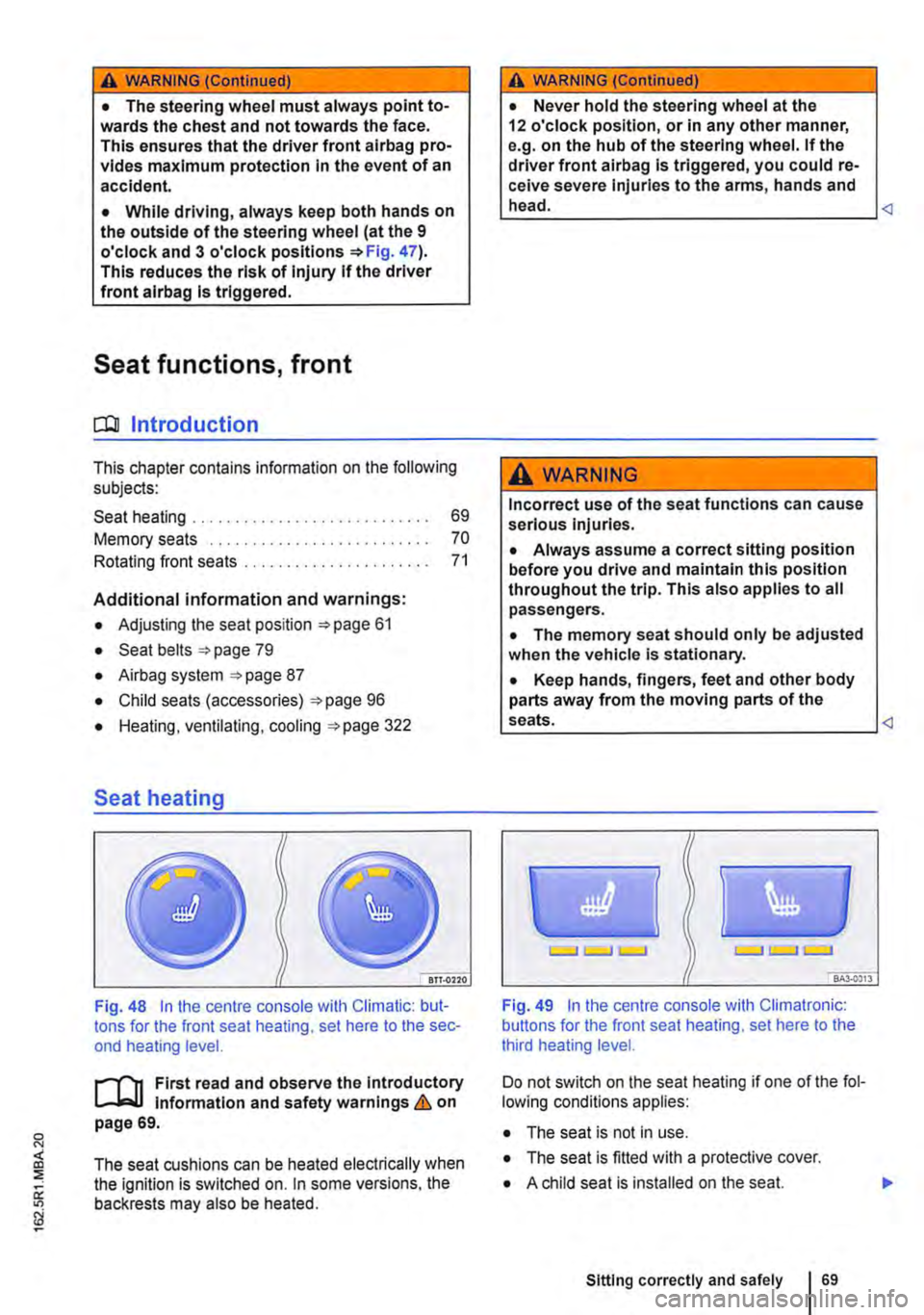
Fig. 48 In the centre console with Climatic: but-tons for the front seat heating, set here to the sec-ond heating level.
First read and observe the Introductory l-J,:.,U Information and safety warnings & on page 69.
The seat cushions can be heated electrically when the ignition is switched on. In some versions, the backrests may also be heated.
A WARNING (Continued)
• Never hold the steering wheel at the 12 o'clock position, or in any other manner, e.g. on the hub of the steering wheel. If the driver front airbag is triggered, you could re-ceive severe Injuries to the arms, hands and head.
A WARNING
Incorrect use of the seat functions can cause serious injuries.
• Always assume a correct sitting position before you drive and maintain this position throughout the trip. This also applies to all passengers.
• The memory seat should only be adjusted when the vehicle Is stationary.
• Keep hands, fingers, feet and other body parts away from the moving parts of the seats.
Fig. 49 In the centre console with Climatronic: buttons for the front seat heating, set here to the third heating level.
Do not switch on the seat heating if one of the fol-lowing conditions applies:
• The seat is not in use.
• The seat is fitted with a protective cover.
• A child seat is installed on the seat.
Sitting correctly and safely 69
Page 71 of 486
Calling up the driver seat settings
• Within 10 minutes after the vehicle has been unlocked, briefly press the respective memory but-ton while the driver door is opened and the ignition is switched off.
• OR: with the driver door closed or ignition switched on, press and hold the corresponding memory button until the stored position has been attained.
Activating memory function of the vehicle key
• Unlock the driver door.
• Press the desired memory button 50 and keep it pressed until the end of the activation proc-ess.
• If required, keep the memory button pressed until the saved seat position is reached.
• Keeping the memory button pressed, simulta-neously press the unlocking button@ in the vehi-cle key within 10 seconds. A gong will sound to confirm that the settings have been activated.
Rotating front seats
r--('n First read and observe the introductory information and safety warnings & on page 69.
Turning the front seats
• Additional point to note for driver seat: en-gage selector lever position P or a gear to ensure the vehicle cannot roll.
• Additional point to note for driver seat: re-lease the handbrake and adjust the steering wheel so that it is as far up and as far forward as possi-ble.
• Open driver door or front passenger door.
• Adjust the backrest to an upright position.
• Place the outer armrest in the horizontal posi-tion.
• Move the driver seat to the mid point of the fore-and-aft adjustment.
• Pull the small lever on the front of the seat base and, at the same time, turn the seat inwards.
• You may need to readjust the seat and armrest for turning.
Deactivating memory function of the vehicle key
• Press Fig. 50 button and then keep it pressed till the end of the deactivation process.
• Keeping the memory button pressed, simulta-neously press the unlocking button @ in the vehi-cle key within 10 seconds. A gong will sound to confirm that the settings have been deactivated.
Assigning driver seat settings to a vehicle key
• Activate memory function of the vehicle key.
• Unlock the vehicle using the same vehicle key.
• Adjust the driver seat.
• Lock the vehicle using the @button in the re-mote control key in order to save the settings.
After the settings have been stored, the driver seat always returns to the stored position automatically, as soon as the@ button in the vehicle key 39 is used to unlock the vehicle and the driver door is opened. <1
A WARNING
Incorrect handling of the rotating front seats can cause accidents and serious Injuries.
• Only ever adjust the front seats when the vehicle is stationary otherwise you could as-sume an incorrect sitting position.
• Rotating front seats must always be in the direction of travel and securely engaged in this position when the vehicle is in motion.
CD
If the seat is occupied when it is turned, it could be damaged.
• Turn the front seats only when they are not occupied.
Page 76 of 486
• Remove all protective covers from the seat rails =-page 133.
• Lift the 3-seat bench at the points shown =>Fig. 54 (arrows).
• Place the feet of the 3-seat bench into the slots so that the backrest is facing the rear of the vehi-cle.
• Adjust the backrest to an upright position.
• Make sure that the lever or the loop has re-turned to its original position. The red marking should no longer be visible.
• Pull the backrest to ensure that it is securely engaged.
• Insert the single seats and the central table into the seat rails and push them back.
• Lock the single seats and the central table se-curely in the seat rails.
• Place the removed covers on the open slots in the seat rails.
Drawers in the 3-seat bench
r' ,f} I
---
VII f/l/ \\\
Fig. 55 In the 3-seat bench: drawers.
1""111 First read and observe the Introductory L-lo:oJJ information and safety warnings & on page 72.
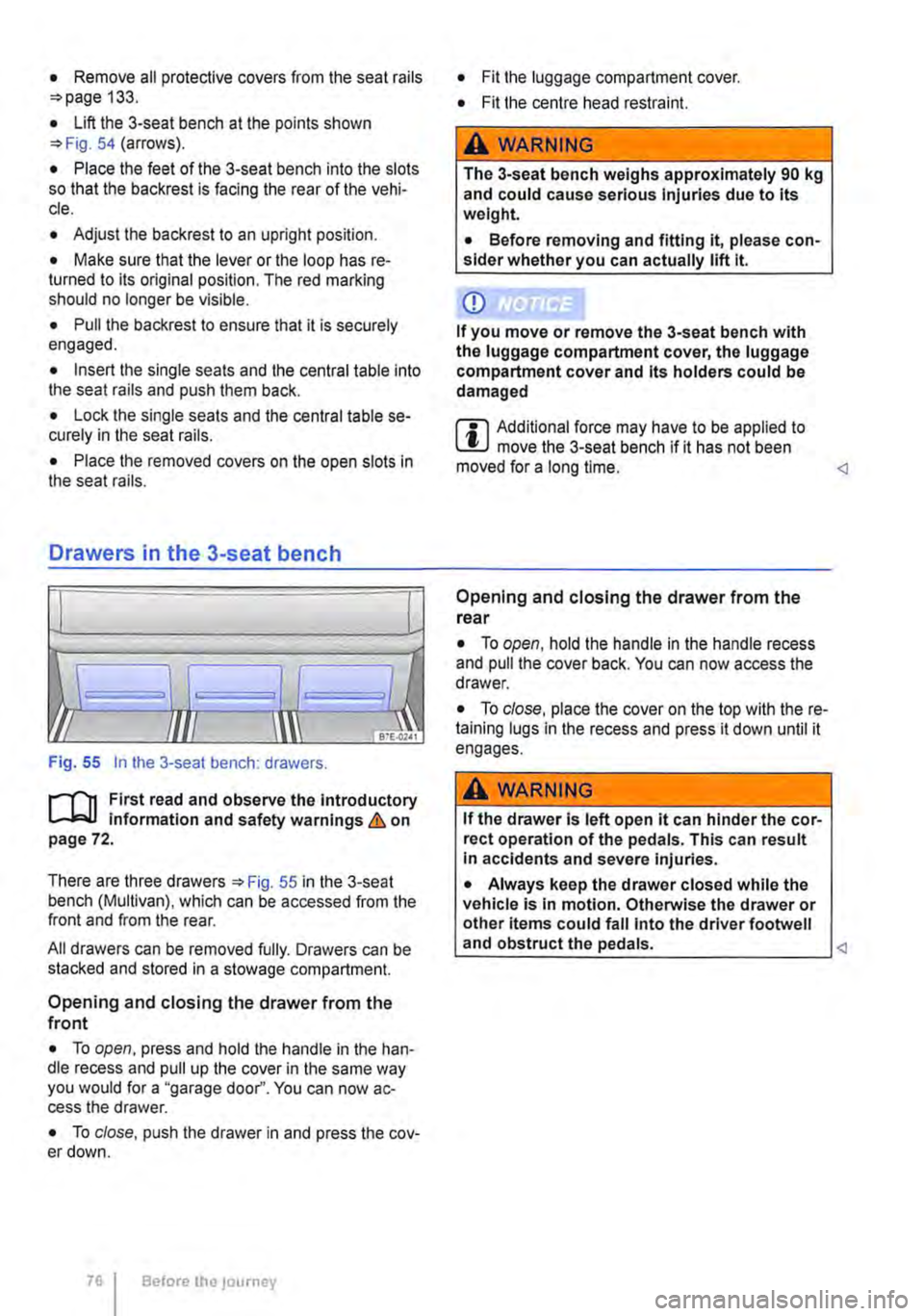
There are three drawers =-Fig. 55 in the 3-seat bench (Multivan), which can be accessed from the front and from the rear.
All drawers can be removed fully. Drawers can be stacked and stored in a stowage compartment.
Opening and closing the drawer from the front
• To open, press and hold the handle in the han-dle recess and pull up the cover in the same way you would for a "garage door". You can now ac-cess the drawer.
• To close, push the drawer in and press the cov-er down.
76 Before the journey
• Fit the luggage compartment cover.
• Fit the centre head restraint.
A wARNING
The 3-seat bench weighs approximately 90 kg and could cause serious Injuries due to its weight.
• Before removing and fitting it, please con-sider whether you can actually lift it.
CD
If you move or remove the 3-seat bench with the luggage compartment cover, the luggage compartment cover and Its holders could be damaged
m Additional force may have to be applied to W move the 3-seat bench if it has not been moved for a long lime.
• To open, hold the handle in the handle recess and pull the cover back. You can now access the drawer.
• To close, place the cover on the top with the re-taining lugs in the recess and press it down until it engages.
A WARNING
If the drawer Is left open it can hinder the cor-rect operation of the pedals. This can result In accidents and severe Injuries.
• Always keep the drawer closed while the vehicle is in motion. Otherwise the drawer or other items could fall Into the driver footwell and obstruct the pedals.
Page 77 of 486
Bed extension (multi-flex board)
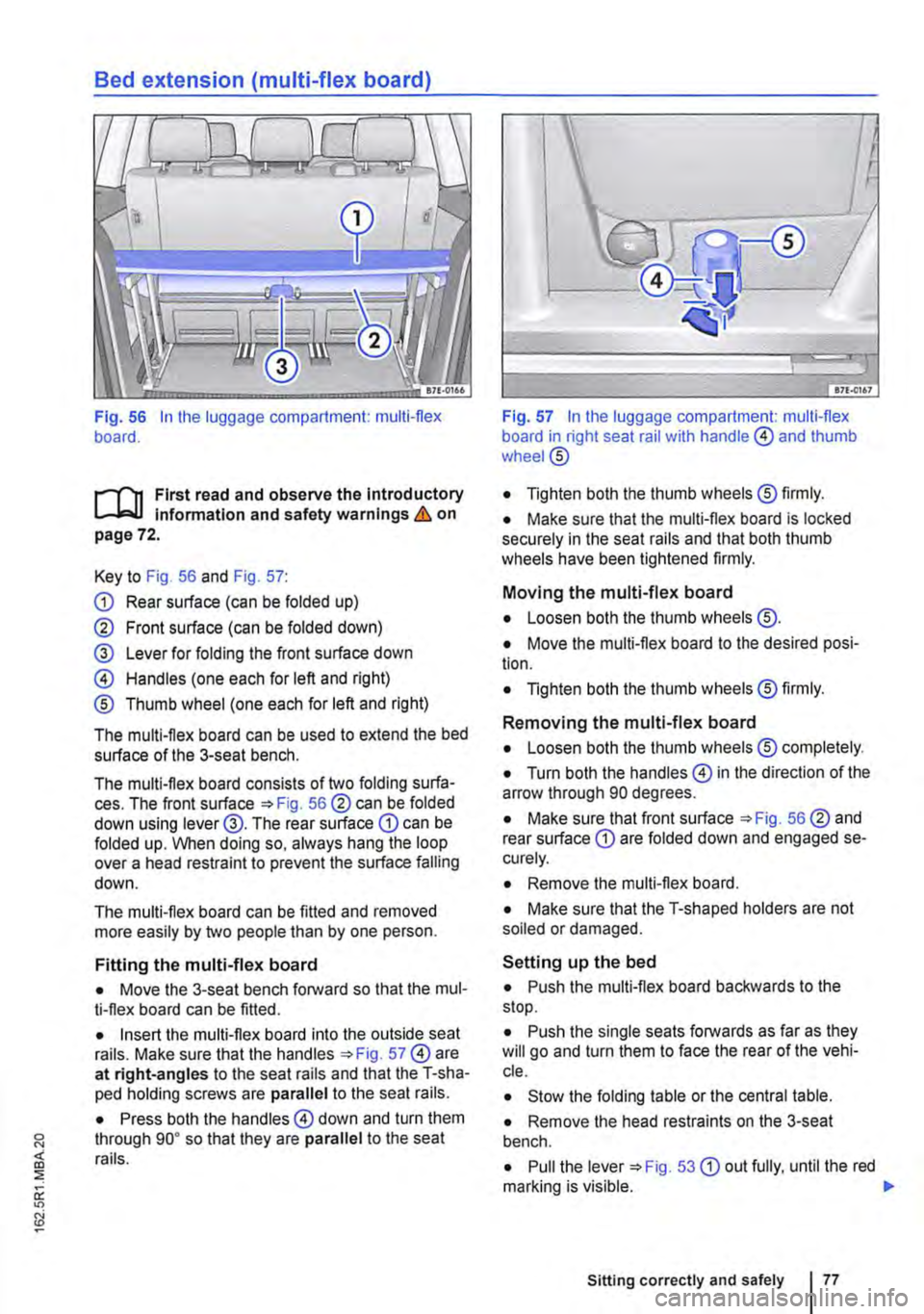
Fig. 56 In the luggage compartment: multi-flex board.
.--m First read and observe the Introductory L-.J,..U lnfonmatlon and safety warnings & on page 72.
Key to Fig. 56 and Fig. 57:
CD Rear surface (can be folded up)
@ Front surface (can be folded down)
@ Lever for folding the front surface down
@ Handles (one each for left and right)
® Thumb wheel (one each for left and right)
The multi-flex board can be used to extend the bed surface of the 3-seat bench.
The multi-flex board consists of two folding surfa-ces. The front surface =>Fig. 56@ can be folded down using lever@. The rear surface CD can be folded up. When doing so, always hang the loop over a head restraint to prevent the surface falling down.
The multi-flex board can be fitted and removed more easily by two people than by one person.
Fitting the multi-flex board
• Move the 3-seat bench forward so that the mul-ti-flex board can be fitted.
• Insert the multi-flex board into the outside seat rails. Make sure that the handles =>Fig. 57@ are at right-angles to the seat rails and that the T-sha-ped holding screws are parallel to the seat rails.
• Press both the handles@ down and turn them through go• so that they are parallel to the seat rails.
Fig. 57 In the luggage compartment: multi-flex board in right seat rail with handle @ and thumb wheel@
• Tighten both the thumb wheels® firmly.
• Make sure that the multi-flex board is locked securely in the seat rails and that both thumb wheels have been tightened firmly.
Moving the multi-flex board
• Loosen both the thumb wheels @.
• Move the multi-flex board to the desired posi-tion.
• Tighten both the thumb wheels® firmly.
Removing the multi-flex board
• Loosen both the thumb wheels® completely.
• Turn both the handles@ in the direction of the arrow through 90 degrees.
• Make sure that front surface =>Fig. 56@ and rear surface CD are folded down and engaged se-curely.
• Remove the multi-flex board.
• Make sure that the T-shaped holders are not soiled or damaged.
Setting up the bed
• Push the multi-flex board backwards to the stop.
• Push the single seats forwards as far as they will go and turn them to face the rear of the vehi-cle.
• Stow the folding table or the central table.
• Remove the head restraints on the 3-seat bench.
• Pull the lever =>Fig. 53 CD out fully, until the red marking is visible. 11>
Sitting correctly and safely
Page 84 of 486
Fasten the seat belt even if you are unable to undo the twist. However, the twist should not be in part of the seat belt that comes into direct contact with the body. The twist should be corrected immediate-ly by a qualified workshop.
A WARNING
Using seat belts incorrectly Increases the risk of severe or fatal Injuries.
Fastening and unfastening seat belts
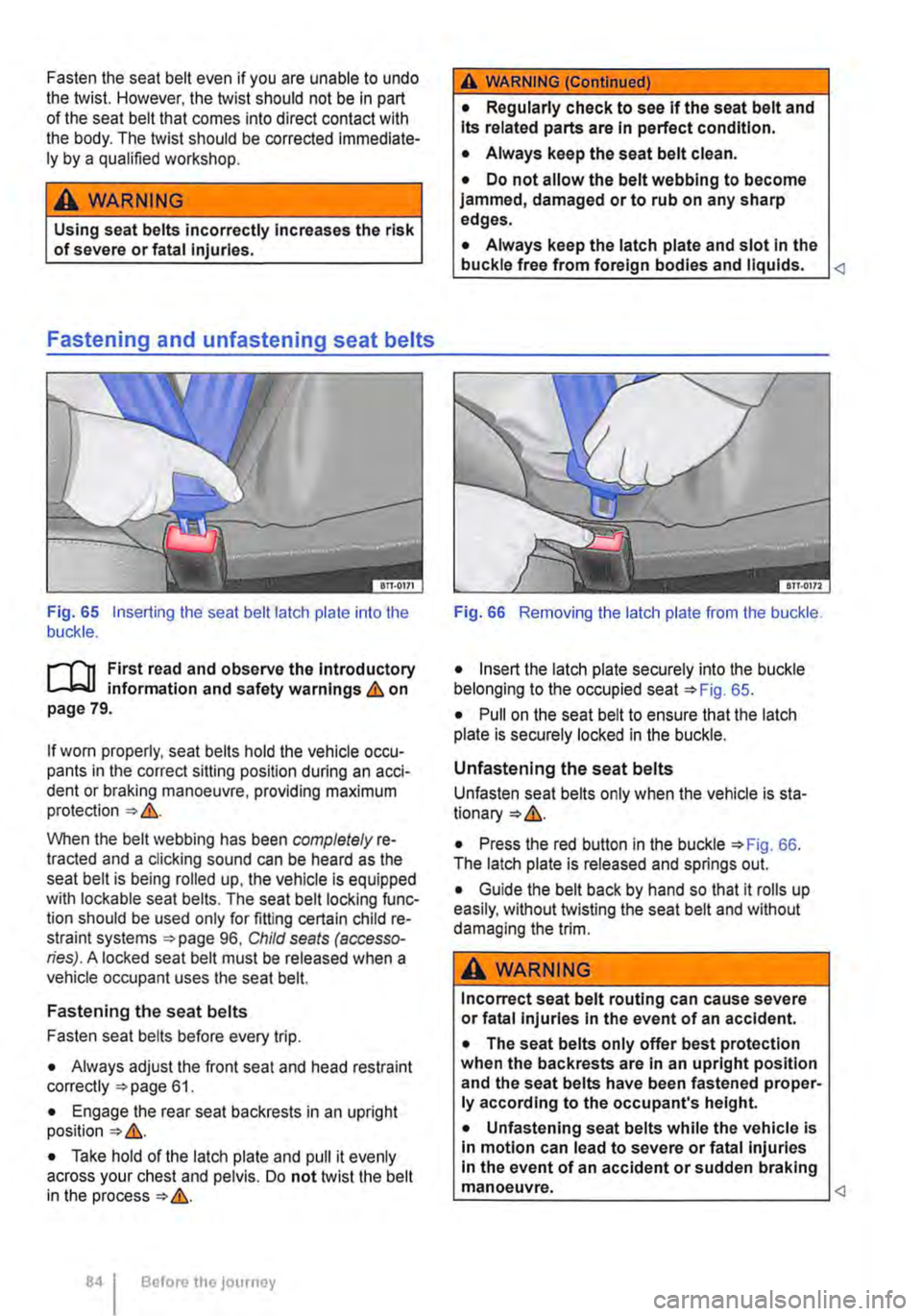
Fig. 65 Inserting the seat belt latch plate into lhe buckle.
f""'"'1'l1 First read and observe the Introductory L-J,:.iJ information and safety warnings & on page 79.
If worn properly, seat belts hold the vehicle occu-pants in the correct sitting position during an acci-dent or braking manoeuvre, providing maximum protection &.
When the belt webbing has been completely re-tracted and a clicking sound can be heard as the seat belt is being rolled up, the vehicle is equipped with lockable seat belts. The seat belt locking func-tion should be used only for fitting certain child re-straint systems 96, Child seals (accesso-ries). A locked seat belt must be released when a vehicle occupant uses the seat belt.
Fastening the seat belts
Fasten seat belts before every trip.
• Always adjust the front seat and head restraint correctly 61.
• Engage the rear seat backrests in an upright position &.
• Take hold of the latch plate and pull it evenly across your chest and pelvis. Do not twist the belt in the process &.
Before the journey
A WARNING (Continued)
• Regularly check to see if the seat belt and Its related parts are In perfect condition.
• Always keep the seat belt clean.
• Do not allow the belt webbing to become jammed, damaged or to rub on any sharp edges.
• Always keep the latch plate and slot In the buckle free from foreign bodies and liquids.
• Insert the latch plate securely into the buckle belonging to the occupied seat 65.
• Pull on the seat belt to ensure that the latch plate is securely locked in the buckle.
Unfastening the seat belts
Unfasten seat belts only when the vehicle is sta-
• Press the red button in the buckle 66. The latch plate is released and springs out.
• Guide the belt back by hand so that it rolls up easily, without twisting the seat belt and without damaging the trim.
A WARNING
Incorrect seat belt routing can cause severe or fatal Injuries In the event of an accident.
• The seat belts only offer best protection when the backrests are In an upright position and the seat belts have been fastened proper-ly according to the occupant's height.
• Unfastening seat belts while the vehicle is In motion can lead to severe or fatal injuries In the event of an accident or sudden braking manoeuvre. <1
Page 87 of 486
pulled out quickly or during sudden braking, during travel in mountains or bends and during acceleration, the automatic belt retractor is locked.
Belt tensioners
The seat belts for the front seat occupants are equipped with belt tensioners.
The belt tensioners are activated by sensors dur-ing severe frontal, side and rear collisions. They tighten the seat belts against the direction in which they are pulled. Any slack in the seat belt is retrac-ted, which can reduce the passenger's movement forwards or in the direction of the impact. The belt
tensioner works together with the airbag system. The belt tensioner will not be activated if the vehi-cle rolls over if the combined curtain and side air-bags are not activated.
A fine dust may be produced when the airbags are triggered. This is quite normal and does not mean that there is a fire in the vehicle.
W All safety requirements must be observed L!.J when the vehicle or components of the sys-tem are scrapped. Qualified workshops are familiar with these requirements 87.
r-f'n First read and observe the introductory L-J,:.U information and safety warnings & on page 79.
Seat belts may become damaged during any work on the belt tensioners or while removing or refitting any vehicle parts in conjunction with any other re-pair work. This damage will not always be noticea-ble. The consequence may be that the belt ten-sioners could function incorrectly, or not function at all, in the event of an accident.
Regulations must be observed to ensure that the effectiveness of the belt tensioner is not reduced and that removed parts do not cause any injuries or environmental pollution. Qualified workshops are familiar with these requirements.
Airbag system
o:lJ Introduction
This chapter contains information on the following subjects:
Types of front passenger airbag systems . . . . 89
Indicator lamp . . . . . . . . . . . . . . . . . . . 89
Description and function of the airbags 90 Front airbags 92 Switching the front passenger front airbag on and off manually using the key-operated switch . . . 93
A WARNING
The risk of severe or fatal injuries may be in-creased if the seat belts, automatic belt re-tractors and belt tensioners are not used cor-rectly, or if they are repaired by a non-profes-sional. As a result, the belt tensioners may not be triggered when they should, or they may be triggered unexpectedly.
• Any repairs, adjustments or removal and refitting of parts in the belt tensioners or seat belts should always be carried out by a quali-fied workshop and never by yourself 394.
• Belt tensioners and automatic belt retrac-tors cannot be repaired. They must be re-placed.
r:Gl:-. The airbag modules and belt tensioners may C!fS contain perchlorate. Please comply with leg-islation regarding disposal.
Curtain airbags . . . . . . . . . . . . . . . . . . . . . . . . . 95
The vehicle is equipped with a front airbag for the driver and front passenger. The front airbags can provide front seat occupants with additional chest and head protection if the seat, seat belts, head re-straints and, in the case of the driver, steering wheel are adjusted and used correctly. Airbags are meant only for additional protection. The airbags .,.
Sitting correctly and safely 87
Page 88 of 486
are not a substitute for seat belts. Seat belts must always be worn, even when the front seats are equipped with front airbags.
Additional information and warnings:
• Driving tips 33
• Central locking system 39
• Correct sitting position 61
• Seat belts 79
• Child seats (accessories) 96
• Cleaning and caring for the interior 388
• Accessories, modifications, repairs and renewal of parts 394
• Consumer information 404
A WARNING
Never rely solely on the airbag system for your protection.
• Even if an alrbag is triggered, it only offers auxiliary protection.
• The airbag system offers the best level of protection, and reduces the risk of injury, when seat belts are properly worn 79, Seat belts.
• Before every trip, each vehicle occupant must adopt the correct sitting position, cor-rectly fasten the seat belt belonging to their seat and keep it fastened properly throughout the trip. This applies to ail vehicle occupants and also in urban traffic.
A WARNING
The risk of injury increases if there are any objects between the vehicle occupants and the deployment area of the airbag when it is triggered. This will alter the deployment zone of the airbag, or the objects will be flung against the body.
• Never hold any objects in your hand or on your lap while the vehicle is in motion.
• Never transport any objects on the front passenger seal The objects could enter the deployment zone of the airbag during sudden braking or driving manoeuvres and then be flung dangerously through the vehicle interi-or if the airbag is activated.
• Vehicle occupants sitting on the front seats and rear outer seats must never carry any people, pets or objects in the deployment zone between themselves and the airbags. Make sure that children and passengers also keep to this rule.
BB I Before the journey
A WARNING
External devices in the vehicle that are not properly secured can be flung though the in-terior and cause injuries, if there is a sudden driving or braking manoeuvre, or in the event of an accident.
• You should never position or attach an ex-ternal device on a door, on the windscreen or above or near to the areas marked "AIRBAG" on the steering wheel, the dash panel and the seat backrests, or between these areas and the vehicle occupants. External devices can cause serious Injury in an accident, especial-ly when the airbags deploy.
A WARNING
The alrbag system can only be triggered once. The system will have to be replaced if the airbags have been triggered.
• Alrbags that have deployed and any affec-ted system parts must be immediately re-placed with new parts that are approved by Volkswagen Commercial Vehicles for the re-spective vehicle.
• Repairs and modifications to your vehicle should only be carried out by a qualified workshop. Qualified workshops have the nec-essary tools, diagnostic equipment, repair in-formation and qualified personnel.
• Never use recycled alrbag components or components that have been taken from end-of-life vehicles in your vehicle.
• Never alter any components of the airbag system.
A WARNING
Fine dust particles or steam may be released when the alrbags trigger. This Is normal and does not mean that there is a fire in the vehi-cle.
• The fine dust can cause irritation to the skin and eye membranes and cause breath-ing difficulties, particularly for people suffer-ing from asthma or people who have {had) other respiratory problems. To help reduce breathing difficulties, get out of the vehicle or open the windows or doors for more fresh air.
• If you come into contact with the dust, you should wash your hands and face with a mild soap and water before eating.
• Do not let the dust get into your eyes or into open wounds.
Page 93 of 486
A DANGE;R (Continued) --
• No other people, animals or objects may be carried between the occupants of the front seats and the alrbag deployment zone. Make sure that children and passengers also keep to this rule.
• Do not attach any objects, e.g. mobile nav-igation devices, to the windscreen above the front alrbag on the front passenger side.
• Do not cover or stick anything on the steering wheel hub or the soft plastic surface of the alrbag unit In the dash panel on the front passenger side, and do not modify them In any way.
A WARNING
The front alrbags are deployed In front of the steering wheel "*Fig. 71 and dash panel '*Fig. 72.
• When driving, always hold the steering wheel with both hands on the outside of the ring at the 9 o'clock and 3 o'clock positions.
• Adjust the driver seat so that there is at least 25 cm between your breastbone and the hub of the steering wheel. Contact a qualified workshop if your physical build makes this Impracticable.
• Adjust the front passenger seat so that the distance between the passenger and the
__ ____
Switching the front passenger front airbag on and off manually using the
key-operated switch
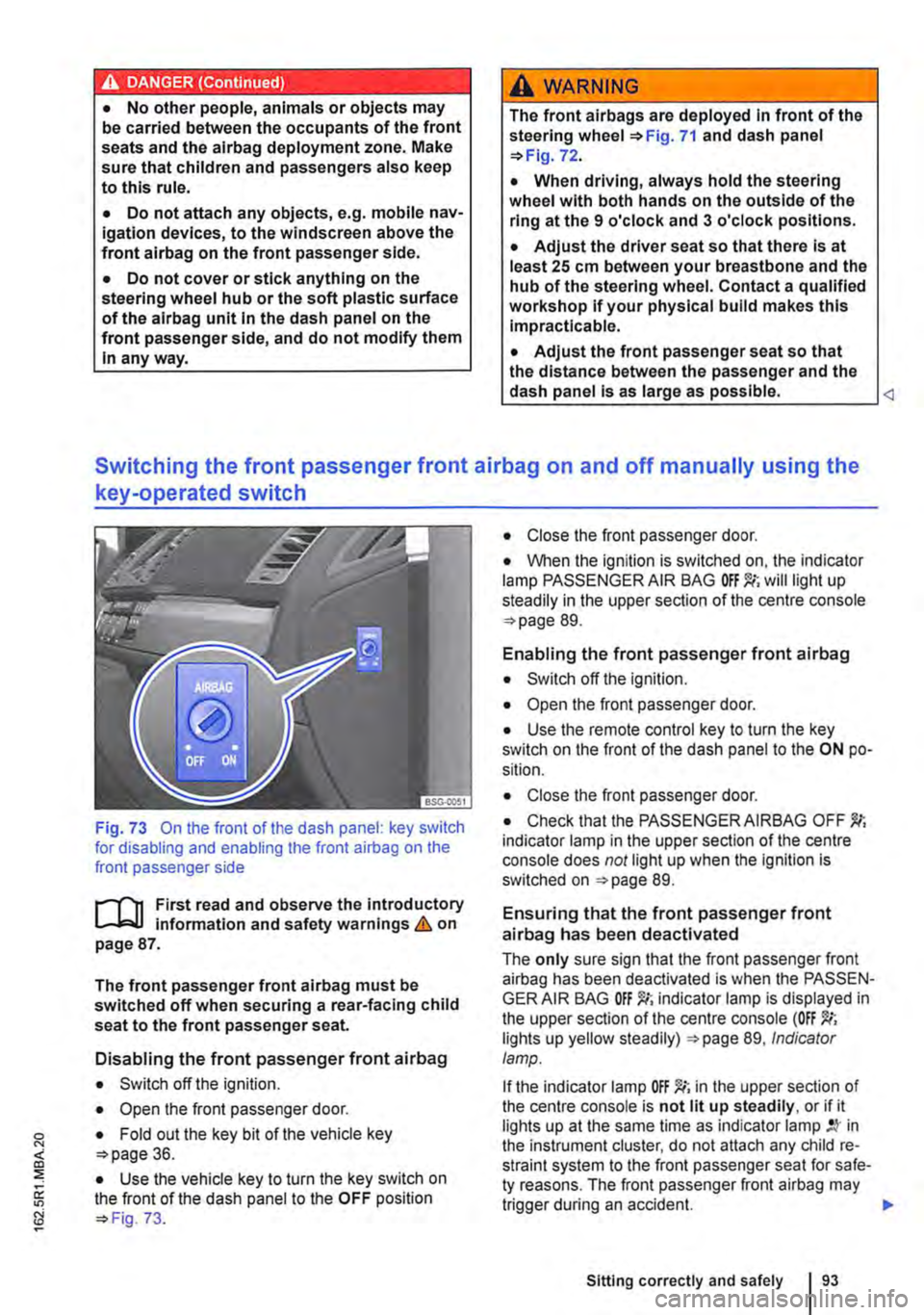
Fig. 73 On the front of the dash panel: key switch for disabling and enabling the front airbag on the front passenger side
l""'rn First read and observe the introductory L-J,::.U information and safety warnings&. on page 87.
The front passenger front airbag must be switched off when securing a rear-facing child seat to the front passenger seat.
Disabling the front passenger front airbag
• Switch off the ignition.
• Open the front passenger door.
• Fold out the key bit of the vehicle key o>page 36.
• Use the vehicle key to turn the key switch on the front of the dash panel to the OFF position o> Fig. 73.
• Close the front passenger door.
• When the ignition is switched on, the indicator lamp PASSENGER AIR BAG will light up steadily in the upper section of the centre console o> page 89.
Enabling the front passenger front airbag
• Switch off the ignition.
• Open the front passenger door.
• Use the remote control key to turn the key switch on the front of the dash panel to the ON po-sition.
• Close the front passenger door.
• Check that the PASSENGER AIRBAG OFF indicator lamp in the upper section of the centre console does not light up when the Ignition is switched on =>page 89.
Ensuring that the front passenger front airbag has been deactivated
The only sure sign that the front passenger front airbag has been deactivated is when the PASSEN-GER AIR BAG indicator lamp is displayed in the upper section of the centre console (OFF lights up yellow steadily) =>page 89, Indicator lamp.
If the indicator lamp OFF )!(; in the upper section of the centre console is not lit up steadily, or if it lights up at the same time as indicator lamp in the instrument cluster, do not attach any child re-straint system to the front passenger seat for safe-ty reasons. The front passenger front airbag may trigger during an accident.
Sitting correctly and safely