instrument cluster VOLKSWAGEN TRANSPORTER 2015 Owner´s Manual
[x] Cancel search | Manufacturer: VOLKSWAGEN, Model Year: 2015, Model line: TRANSPORTER, Model: VOLKSWAGEN TRANSPORTER 2015Pages: 486, PDF Size: 72.17 MB
Page 321 of 486
Function and control
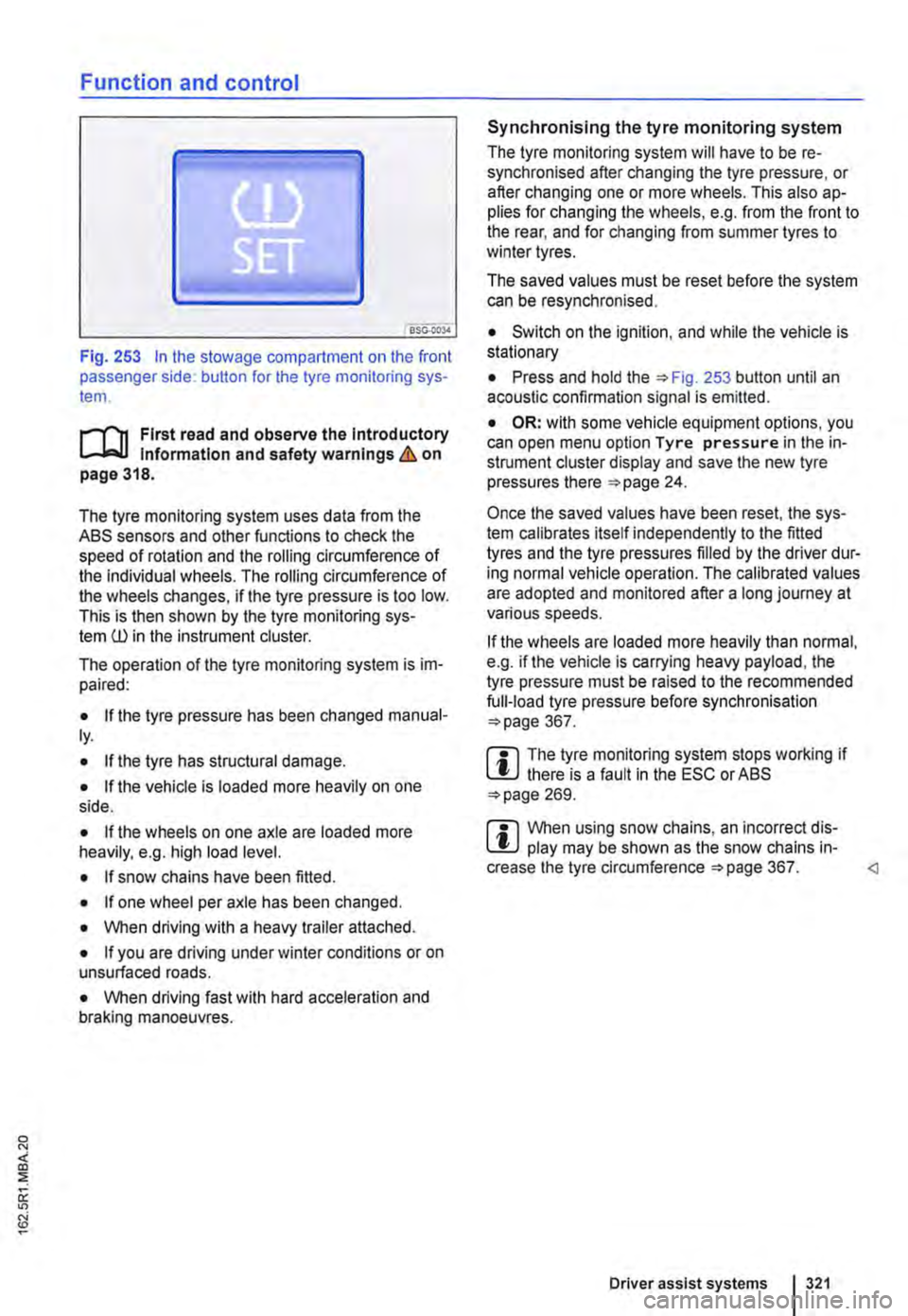
Fig. 253 In the stowage compartment on the front passenger side: button for the tyre monitoring sys-tem.
l"'"""f'n First read and observe the Introductory l.-J,.:,LL Information and safety warnings & on page 318.
The tyre monitoring system uses data from the ASS sensors and other functions to check the speed of rotation and the rolling circumference of the individual wheels. The rolling circumference of the wheels changes, if the tyre pressure is too low. This is then shown by the tyre monitoring sys-tem ill in the instrument cluster.
The operation of the tyre monitoring system is im-paired:
• If the tyre pressure has been changed manual-ly.
• If the tyre has structural damage.
• If the vehicle Is loaded more heavily on one side.
• If the wheels on one axle are loaded more heavily, e.g. high load level.
• If snow chains have been fitted.
• If one wheel per axle has been changed.
• When driving with a heavy trailer attached.
• If you are driving under winter conditions or on unsurfaced roads.
• When driving fast with hard acceleration and braking manoeuvres.
Synchronising the tyre monitoring system
The tyre monitoring system will have to be re-synchronised after changing the tyre pressure, or after changing one or more wheels. This also ap-plies for changing the wheels, e.g. from the front to the rear, and for changing from summer tyres to winter tyres.
The saved values must be reset before the system can be resynchronised.
• Switch on the ignition, and while the vehicle is stationary
• Press and hold the =>Fig. 253 button until an acoustic confirmation signal is emitted.
• OR: with some vehicle equipment options, you can open menu option Tyre pressure in the in-strument cluster display and save the new tyre pressures there =>page 24.
Once the saved values have been reset, the sys-tem calibrates itself independently to the fitted tyres and the tyre pressures filled by the driver dur-ing normal vehicle operation. The calibrated values are adopted and monitored after a long journey at various speeds.
If the wheels are loaded more heavily than normal, e.g. if the vehicle is carrying heavy payload, the tyre pressure must be raised to the recommended full-load tyre pressure before synchronisation =>page 367.
m The tyre monitoring system stops working if l!.J there is a fault in the ESC or ASS =>page 269.
m When using snow chains, an incorrect dis-l!.J play may be shown as the snow chains in-crease the tyre circumference =>page 367.
Page 338 of 486
Programming the supplementary heating system
r('n First read and observe the introductory L-Wl Information and safety warnings & on page 332.
In vehicles with camping equipment (California), the supplementary heater is programmed via the central control panel =>page 192.
Setting the date
Before being used for the first time and if the vehi-cle battery has been disconnected and reconnec-ted, the date needs to be set.
• Press any button on the roof display to activate the roof display.
• Press button @!) until the date is displayed.
• Press button @!) again. The day flashes.
• Press the function button .... or T until the re-quired day is displayed.
• Press button @!) again to confirm the day. The month flashes.
• Proceed in the same way for the month and the year.
Time
The time is automatically taken from the instrument cluster.
Setting the start time
You can programme up to three different start times. Only one of these can be activated at a time.
The following steps must be carried out in less than 10 seconds as the procedure will otherwise be stopped.
• Press any button on the roof display to activate the roof display.
• Press until OFF is displayed.
• Press the @) button, press function button .... or T as often as necessary until ON is displayed.
• Press the@) button to confirm.
• Press the function button .... or T until the re-quired temperature or mode is displayed.
• Press the @!) button to confirm.
• Press the function button .... or T as often as necessary until the start time to be switched on or off is displayed.
338 I While dnvmg
• Press the function button .... or T until the re-quired day of week is displayed. If a day is not dis-played, no day has been programmed, only a time. The supplementary heater will then be switched on at this programmed time.
• Press the @) button to confirm the selected day of the week. The hour menu is displayed.
• Proceed in the same way for the hour, for mi-nutes as well as the operating duration.
• Press the @) button to confirm the settings. A summary of the settings is displayed.
The start time for which the changes have been made has been activated. To activate additional start times, press and hold down for several seconds, select the start time with the func-tion buttons .... or T and then proceed as descri-bed above.
Deactivating the start time
If changes have been made for a start time, this start time still remains activated. To deactivate the start time, proceed as follows:
• Press any button on the roof display to activate the roof display.
• Push and hold down button for several seconds, then press the@) button until an active start time that is to be deactivated is displayed.
• Press the function button .... or T as often as necessary until OFF is displayed.
• Press the @) button to confirm.
The start time has now been deactivated and is no longer shown on the roof display.
A WARNING
Never program the supplementary heating system so that Is switched on and run In un-ventllated or enclosed areas. The fumes from the supplementary heating system contain carbon monoxide, which Is an odourless and colourless poisonous gas. Carbon monoxide can cause people to lose consciousness. lt can also cause death.
Page 341 of 486
A WARNING (Continued)
CD
-Please ensure that the spare fuel can is· ter corresponds with the Industry stand· ard, for example AN SI or ASTM F852-86.
• Remove split fuel from all vehicle compo· nents as quickly as possible In order to avoid damage to the wheel housing, tyres and vehicle paint.
• • Filling up with petrol in a vehicle fitted with a diesel engine or refilling with diesel in vehicle equipped with a petrol engine can cause seri· ous ands expensive engine damage and dam· age to the fuel system that is not covered by
Indicator lamps and fuel gauge
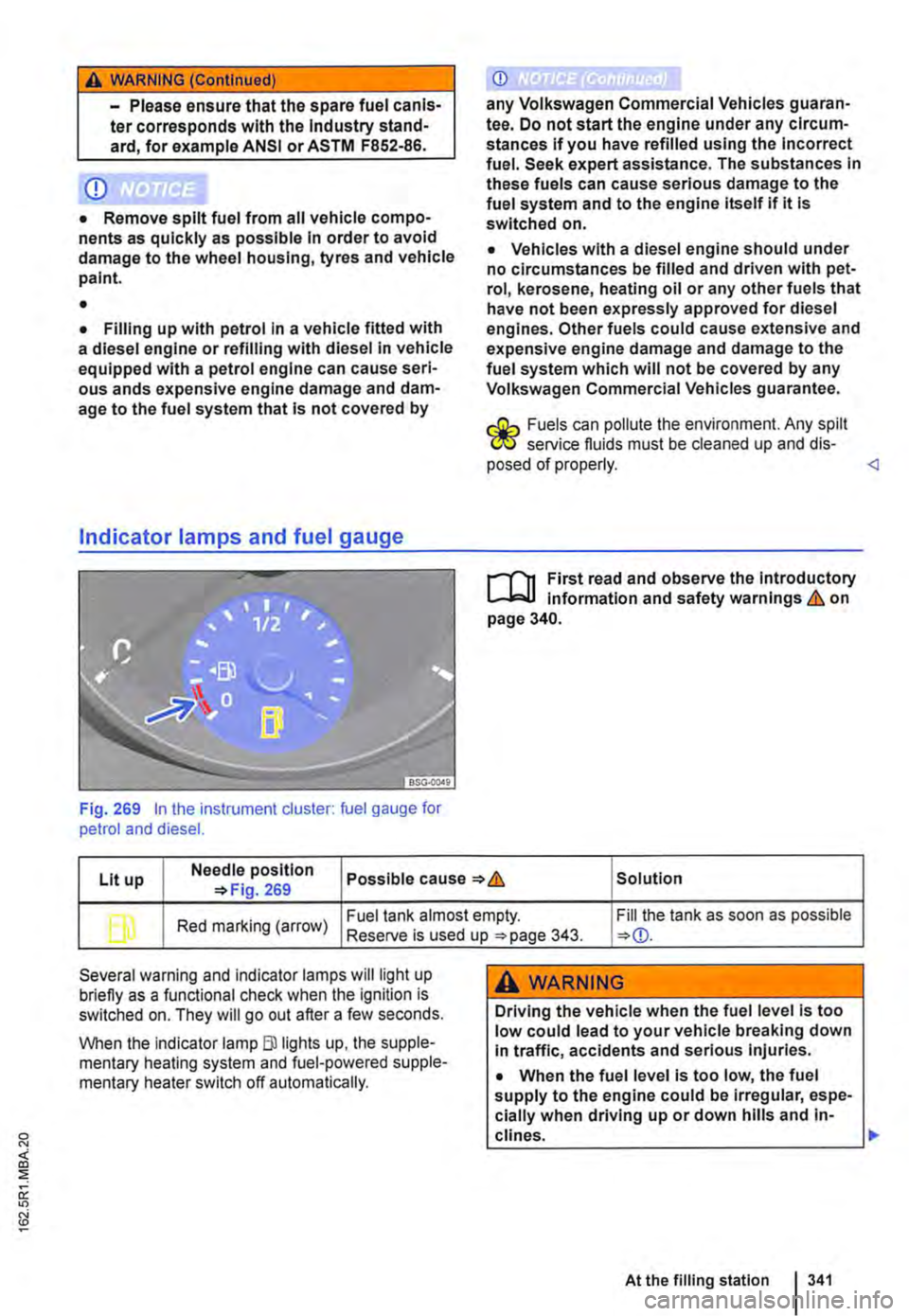
Fig. 269 In the instrument cluster: fuel gauge for petrol and diesel.
CD
any Volkswagen Commercial Vehicles guaran· tee. Do not start the engine under any circum-stances if you have refilled using the Incorrect fuel. Seek expert assistance. The substances In these fuels can cause serious damage to the fuel system and to the engine itself if it Is switched on.
• Vehicles with a diesel engine should under no circumstances be filled and driven with pet· rol, kerosene, heating oil or any other fuels that have not been expressly approved for diesel engines. Other fuels could cause extensive and expensive engine damage and damage to the fuel system which will not be covered by any Volkswagen Commercial Vehicles guarantee.
r.:Gh Fuels can pollute the environment. Any spilt W service fluids must be cleaned up and dis· posed of properly.
Lit up Needle position Possible cause & Solution 269
b Red marking (arrow) Fuel tank almost empty. Fill the tank as soon as possible Reserve is used up 343.
Several warning and indicator lamps will light up briefly as a functional check when the ignition is switched on. They will go out after a few seconds.
When the Indicator lamp Blllghts up, the supple-mentary heating system and fuel-powered supple-mentary heater switch off automatically.
A WARNING
Driving the vehicle when the fuel level is too low could lead to your vehicle breaking down In traffic, accidents and serious injuries.
• When the fuel level is too low, the fuel supply to the engine could be Irregular, espe-cially when driving up or down hills and in-clines. .,..
At the filling station 341
Page 346 of 486
CD
• Your vehicle is not suitable for use with bio-diesel and must not be filled up or driven with biodiesel. Failure to observe this point can re-sult in damage to the fuel system and engine.
• Some diesel manufacturers blend biodiesel with diesel fuel in compliance with European Standard 590 or an equivalent standard (in Ger-many). Use of this diesel is allowed and will not damage the engine or fuel system.
• The diesel engine has been developed for use with diesel only. For this reason, petrol, heating oil or other unsuitable fuels may not be used. These fuels can cause serious damage to the fuel system and engine.
CD
• The service life of the diesel particulate filter can be reduced considerably if diesels with a high sulphur content are used. A Voikswagen Commercial Vehicles dealership will be able to tell you which countries have diesel with a high sulphur content.
o:::n Introduction
This chapter contains information on the following subjects:
Warning and indicator lamps Refilling Ad Blue® ... 347
348
SCR catalysts can be used to reduce emissions from diesel engines (SCR = Selective Catalytic Re-duction). The SCR catalyst uses Ad Blue® urea sol-ution to convert nitrogen oxides into nitrogen and water.
If the vehicle is equipped with this kind of emission control system for diesel vehicles, the filler neck for the Ad Blue® tank is located below the filler cap for the fuel tank.
The Ad Blue® level should be checked within the scope of the service work Service schedule.
Information on AdBiue®
The Ad Blue® consumption figures depend on the individual driving style, the system's operating tem-perature and the ambient temperature that the ve-hicle is operated in.
The vehicle is fitted with a separate tank for Ad Bl-ue®. The Ad Blue® tank holds approximately 13 li-tres. For technical reasons, the capacity may be slightly larger when refilling using refill bottles.
The Ad Blue® tank must never run empty. As of a remaining distance of approximately 2,400 km. the instrument cluster display will indicate that the
346 While drivmg
Ad Blue® must be refilled 348. If the re-maining range is 0 km, the engine cannot be star-ted anymore 347.
The Ad Blue® trademark is held by the German As-sociation of the Automobile Industry (VDA) in the USA, Germany, the European Union and other countries.
Additional information and warnings:
• Fuel 343
• Accessories, modifications, repairs and renewal of parts 394
A WARNING
If the AdBiue® level is too low, the vehicle cannot be restarted after the Ignition has been switched off. Starting with jump leads is also not possible.
• Refill AdBiue® at the latest when the re-maining distance reaches approximately 1,000 km.
• Never allow the Ad Blue® tank to run emp-ty.
A WARNING
Ad Blue® is an Irritant and corrosive fluid that can damage the skin, eyes and breathing passages upon contact.
Page 348 of 486
![VOLKSWAGEN TRANSPORTER 2015 Owner´s Manual Refilling AdBiue®
Fig. 271 Behind the tank flap: filler cap of the Ad Blue tank unscrewed [A CD and attached in holder [[ ®. Fill the Ad Blue tank using a filler bottle [B@ or a filler nozzle C] @.](/img/18/40253/w960_40253-347.png "VOLKSWAGEN TRANSPORTER 2015 Owner´s Manual Refilling AdBiue®
Fig. 271 Behind the tank flap: filler cap of the Ad Blue tank unscrewed [A CD and attached in holder [[ ®. Fill the Ad Blue tank using a filler bottle [B@ or a filler nozzle C] @.")
Refilling AdBiue®
Fig. 271 Behind the tank flap: filler cap of the Ad Blue tank unscrewed [A CD and attached in holder [[ ®. Fill the Ad Blue tank using a filler bottle [B@ or a filler nozzle C] @.
,....-.('n First read and observe the Introductory 1.-J=,U Information and safety warnings & on page 346.
To refill with Ad Blue®, park the vehicle on a level surface and not on any kind of incline. The tank level gauge may not detect the refill quantity cor-rectly if the vehicle is not parked on a level surface.
Do not fill fuel and AdBiue® at the same lime.
If a message about the Ad Blue® level appears on the instrument cluster display, refill with at least 7 litres of Ad Blue®. A smaller amount of refill is insufficient. if no message about the AdBiue® level appears on the instrument cluster display, use any quantity to refill the tank to the maximum level.
Opening the tank filler neck
• Opening the tank flap.
• Unscrew the cap of the tank filler neck =>Fig. 271 anticlockwise.
• Fit the cap of the filler neck into the holder]) @.
Use only Ad Blue® that complies with the stand-ard ISO 22241-1.
Refilling using a refill bottle
• Please read the manufacturer's notes and infor-mation on the refill bottle.
• Observe the expiry date.
• Remove the screw top of the refill bottle.
• Place the neck of the refill bottle =>Fig. 271 [ID @ vertically onto the tank filler neck and turn it clockwise hand-tight.
• Push the refill bottle towards the filler neck, press and hold down.
348 While driving
• Wait until the contents of the refill bottle have entered the Ad Blue® tank. Do not crumple up or damage the refill bottle!
• Unscrew the refill bottle anticlockwise and lift it carefully up and out =>CD.
• When the Ad Blue® tank is full, Ad Blue® will no longer flow out of the bottle and into the tank.
Refilling using a filler bottle
• Please read the manufacturer's notes and infor-mation on the container.
• Observe the expiry date.
• Use the integrated spout.
• Refill at least 7 litres of AdBiue®. A smaller amount of refill is insufficient.
• Do overfill the tank. The Ad Blue® tank is com-pletely filled when Ad Blue® reaches the top level of tank filler neck.
Refilling using a filler nozzle
• The procedure for refilling with an Ad Blue® filler nozzle =>Fig. 271 @]@) is the same as for refilling the fuel tank with fuel =>CD.
• The Ad Blue® tank is full as soon as the (proper-ly operated) filler nozzle clicks off for the first time =>CD.
Closing the tank filler neck
• Screw the cap onto the tank filler neck =>Fig. 271 clockwise until it clicks into place.
• Close the tank flap.
Page 359 of 486
Warning lamp and coolant temperature display
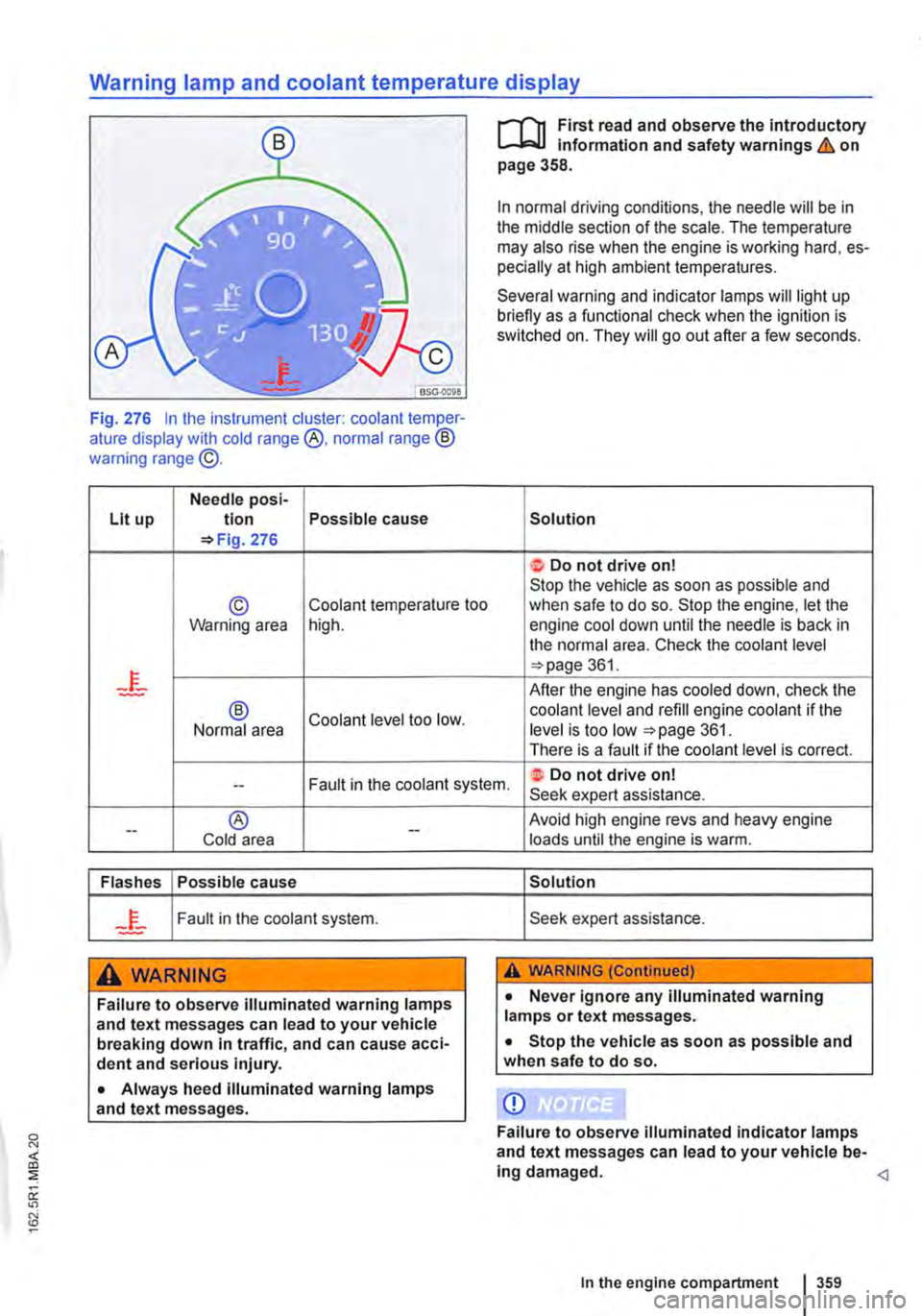
Fig. 276 In the instrument cluster: coolant temper-ature display with cold range @, normal range ® warning range @.
Needle posi-Lit up tion Possible cause =>Fig. 276
© Coolant temperature too Warning area high.
® Coolant level too low. Normal area
r-f"n First read and observe the introductory L,....J.:.lJ Information and safety warnings & on page 358.
In normal driving conditions, the needle will be in the middle section of the scale. The temperature may also rise when the engine is working hard, es-pecially at high ambient temperatures.
Several warning and indicator lamps will light up briefly as a functional check when the ignition is switched on. They will go out after a few seconds.
Solution
t Do not drive on! Stop the vehicle as soon as possible and when safe to do so. Stop the engine, let the engine cool down until the needle is back in the normal area. Check the coolant level =>page 361.
After the engine has cooled down, check the coolant level and refill engine coolant if the level is too low =>page 361. There is a fault if the coolant level is correct.
Fault in the coolant system. ·t Do not drive on! --Seek expert assistance.
--® Cold area --
Flashes Possible cause
Fault in the coolant system.
A WARNING
Failure to observe illuminated warning lamps and text messages can lead to your vehicle breaking down In traffic, and can cause acci-dent and serious injury.
• Always heed illuminated warning lamps and text messages.
Avoid high engine revs and heavy engine loads until the engine is warm.
Solution
Seek expert assistance.
A WARNING (Continued)
• Never ignore any illuminated warning lamps or text messages.
• Stop the vehicle as soon as possible and when safe to do so.
CD
Failure to observe illuminated indicator lamps and text messages can lead to your vehicle be-ing damaged.
Page 378 of 486
z
w y
over 240 km/h (149 mph)
max. 270 kmlh (168 mph)
max. 300 kmlh (186 mph)
Winter tyres
r-f'n First read and observe the introductory L-J,::JJ information and safety warnings & on page 367.
In winter road conditions, winter tyres will consider-ably improve the car's handling. The design of summer tyres (width, rubber compound, tread pat-tern) gives less grip on ice and snow. Volkswagen Commercial Vehicles urgently recommends you use winter tyres or all-year tyres on all 4 wheels of the vehicle, particularly if winter conditions are ex-pected on the roads. Winter tyres will also improve the braking response of the vehicle and will help to reduce braking distances in winter weather. Volks-wagen Commercial Vehicles recommends that win-ter tyres be fitted to the vehicle at temperatures un-der+ 7•c (+45°F).
Winter tyres lose their effectiveness when the tread is worn down to a depth of 4 mm. Winter tyres also largely lose their effectiveness through ageing-regardless of the tread depth.
The following applies when using winter tyres:
• Observe any country-specific legal require-ments.
• Use winter tyres on all four wheels at the same time.
• Only use in winter road conditions.
• Only use the sizes of winter tyre that have been approved for the vehicle.
• Winter tyres must have the same type, size (rolling circumference) and the same tread pattern.
• Heed the maximum speed permitted by the speed index => &.
Speed limitation
Winter tyres have a speed limitation depending on the speed index =>page 375.
In some vehicle versions, a speed warning can be set in the menu MFD (multi function display) in the instrument cluster =>page 24.
378 I Cleaning and maintenance
Some tyre manufacturers use the code "ZR" for tyres with a highest permitted speed of over 240 km/h (149 mph).
If you use V-rated tyres the speed limits and re-quired tyre pressure will be determined by the en-gine size. You must ask a Volkswagen Commercial Vehicles dealership about the highest permitted speed and required tyre pressure.
Four-wheel drive (4MOTION)
Thanks to its four-wheel drive, the vehicle will have plenty of traction in winter conditions, even with the standard tyres. Nevertheless, Volkswagen Com-mercial Vehicles still recommends that winter tyres or all-year tyres should be fitted on all four wheels when winter road conditions are expected, mainly because this will give a better braking response.
Please refer to the appropriate information and notes when using snow chains =>page 379.
A WARNING
The Improved winter driving characteristics afforded by the winter tyres should not en-courage you to take any risks.
• Always adapt your speed and driving style to suit visibility, weather, road and traffic con-ditions.
• Never exceed the top speed and load per-mitted for the winter tyres that are fitted.
r:Q;-.. Summer tyres should be fitted in good time at the end of the winter. The vehicle handling is better if summer tyres are fitted at temperatures above +7•c (+45.F). They are quieter, do not wear so quickly and reduce fuel consumption.
m In vehicles with a tyre monitoring system, the l!.J systems have to "re-synchronise" after wheels are changed =>page 318.
m Volkswagen Commercial Vehicles dealer-l!.J ships can provide details on permissible win-
Page 398 of 486
Retrofitting two-way radios
.--m First read and observe the introductory L-.lc.U information and safety warnings & on page 394.
You will need an external aerial to use a two-way radio in the vehicle.
Any retrofit installation of electrical or electronic equipment in the vehicle will affect its vehicle type approval. Under certain circumstances, this can negate the type approval for the vehicle.
Volkswagen Commercial Vehicles has approved the vehicle for use with two-way radios providing the following conditions are observed:
• Correct installation of external aerial.
• A maximum transmitting power of 10 watts.
The equipment can only operate at maximum range with an external aerial.
Check first with a qualified workshop if you wish to use a two-way radio with a transmitting power of over 10 watts. Qualified workshops are familiar with the technical options for retrofitting. Volkswa-gen Commercial Vehicles recommends using a Volkswagen Commercial Vehicles dealership for this purpose.
Information stored in the control units
.--m First read and observe the introductory L-.lc.U Information and safety warnings & on page 394.
Your vehicle is factory fitted with electronic control units which are responsible for engine and gearbox management. The control units also monitor the function of the exhaust system and the airbags.
These electronic control units continuously evalu-ate data relevant to the vehicle while the vehicle is being driven. Only these data will be stored if there are any faults recorded or any deviations from the specified values. This is generally displayed by the indicator lamps on the instrument cluster.
Special units are required to read and evaluate da-ta stored in the control units.
These data are stored so that specialist workshops can diagnose and solve problems. The following data may have been stored:
• Engine and gearbox-relevant data.
• Speed.
• Direction of travel.
398 Cleaning and maintenance
Please comply with relevant legislation and the in-structions and information given in the operating manuals for radio equipment.
A WARNING
If radio equipment is not secured or not prop-erly secured in the vehicle, it could be flung though the interior during a sudden driving or braking manoeuvre, or In the event of an accident. This can cause Injuries.
• While the vehicle is in motion, always se-cure radio equipment properly outside the airbag deployment zone or stow them away safely.
A CAUTION
If you use two-way radios in the car without an external aerial, electromagnetic radiation in the vehicle could exceed limit values. This also applies to external aerials which have not been correctly installed.
• Two-way radios should only be used In the vehicle If an external aerial Is properly connected.
• Braking power.
• Seat belt monitor.
The control units never record conversations that take place in the vehicle. it is neither possible nor permitted to use the stored data to create move-ment profiles.
When the vehicle is being used, situations may arise in which the stored data (alone or in conjunc-tion with other information such as accident re-ports, vehicle damage, witness statements etc.) can become assignable to a particular person, whereby consultation of an expert and use of the expert's information may be necessary.
In vehicles with an emergency call function via a mobile telephone or other units, the current loca-tion can be transmitted. In the event of an accident in which the control units register that an airbag has been triggered, the system can automatically send out a signal. This depends on your service provider. Transmission is possible only in areas
Page 433 of 486
A WARNING
Changing the bulb incorrectly can cause ac-cidents and serious Injuries.
• When working In the engine compartment, always read and observe the safety warnings =>page 350. The engine compartment of any motor vehicle Is a dangerous area. Serious Injuries can be sustained here.
• Halogen bulbs are pressurised and could explode when they are being changed.
• Only change the defective bulb once it has had time to cool down completely.
• Never change a bulb unless you are famili-ar with the procedure. If you are uncertain of what to do, the work should be carried out by a qualified workshop.
Indicator lamp
r--f"n First read and observe the introductory L-.J,:.lJ Information and safety warnings & on page 432.
Lit up Possible cause
A bulb in the exterior lighting has failed.
Several warning and indicator lamps will light up briefly as a functional check when the ignition is switched on. They will go out after a few seconds.
A WARNING
Failure to observe illuminated warning lamps and text messages can lead to your vehicle breaking down In traffic, and can cause acci-dent and serious Injury.
• Never ignore any illuminated warning lamps or text messages.
Information on changing bulbs
r--f"n First read and observe the introductory L-.J,:.lJ Information and safety warnings & on page 432.
A WARNING (Continued)
• Do not touch the glass part of the bulb with unprotected fingers. When the light is switched on, heat will cause fingerprints to evaporate on the bulb, which In turn will cause the reflector to dim.
• There are sharp-edged parts In the head-light housing In the engine compartment and on the tall light cluster housing. Protect your hands when changing bulbs.
CD
Damage to the electrical system can be caused by water entering the system if the rubber cov-ers or plastic caps on the headlight housing are not properly mounted after a bulb has been changed.
If bulbs of the exterior lighting fail, an indicator lamp lights up in the instrument cluster.
Solution
Change the defective bulb.
A WARNING (Continued)
• Stop the vehicle as soon as possible and when safe to do so.
CD
Failure to observe Illuminated indicator lamps and text messages can lead to your vehicle be-ing damaged.
m if an individual light emitting diode (LED) in W the exterior lighting fails, no warning is given. If all LEDs fail, this is indicated by the indicator lamp*··
Checklist
Always carry out the following actions for changing a bulb in the given order => &:
1. Park the vehicle on a firm and level surface at a safe distance from the flow of traffic.
2. Apply the handbrake firmly =>page 269. .,..
Practical tips I 433
Page 470 of 486
Supplementary heater . . . . . . • . . . . . . . . 345 Winter diesel . . . . . . . . . . . . . . . . . . . . . . 345
Diesel engines Technical data . . . . . . . . . . . • . . . . . . . . . 455
Diesel partlcutate filter . . . . . . • . . . . . . . . . 409 ............................. 408 Gear-change indicator . . . . . . . . . . . . . . . 268 Indicator lamp . . . . . . . . . . . • . . . . . . . . . 407 Regeneration . . . . . . . . . . . . . . . . . . . . . . 409 Things to note . . . . . . . . . . . . . . . . . . . . . 346
Differential lock see Brake support systems . . . . . . . . . . . 275
Digital clock . . . . . . . . . . . . . . . . . . . . . . . . . . 20
Digital voice enhancement . . . . . . . . . . . . . 173 Setting the volume . . . . . . . . • . . • . . . . . . 173 Switching on and off . . . . . . . . . . . . . . . . . 173
Dimensions . . . . . . . . . . . . . . . . . . . . . . . . . 452
Dipped beam headlights . . . . . . . . . . . . . . . 108
Display Adaptive cruise control . . . . . . . . . . . . . . . 300
Displays . . . . . . . . . . . . . . . . . . . . . . . . . . 20, 21 Area monitoring system . . . . . . . . . . . . . . 308 Front Assist .. .. .. .. .. .. .. .. .. . .. .. 308 Instrument cluster . . . . . . . . . . . . . . . . . . . 21
Disposal Airbag system . . . . . . . . . . . . . . . . . . . . . 407 Belt tensioner . . . . . . . . . . . . • . . . . . . . . . . 87 End-of-life vehicle . . . . . . . . . . . . . . . . . . 407
Door arresters . . . . . . . . . . . . . . . . . . . . . . . . 54
Door release lever . . . . . . . . . . . . . . . . . . . . 5, 9
Doors .................•............. 45 Manual opening . . . . . . . . . . . . . . . . . . . . 414 Warning lamp . . . . . . . . . • . . . . . • . . . . . . . 45
Drawbar load . . . . . . . . . . . . . . . . . . . . . . . . 140 Loading the trailer . . . . . . . . • . . . . . . . . . 146
Drawers .....................•....... 76
Drink holder . . . . . . . . . . . . . . . . . . . . . • . . . 153 California . . . . . . . . . • . . • . . . . . . . . • . . . 215 Centre console . . . . . . . . . . . . . . . . . . . . . 154 Living area . . . . . . . . . . . . . . . . . . . . . . . . 154
Driver Alert System . . . . . . . . . . . . . . . . . . . 315 Fault . . . . . . . . . . . . . . . . • . . . . . . . . • . . . 316 Function . . . . . . . . . . . . . • . . . . . • . . • . . . 316 Operation by the user . . • . . . . . . . . • . . . 316 Switching on and off........ . . . . . . . . . 316
Driver assist systems see Assist systems . . . . . . . . . . . . . . . . . 282 Driver door Overview ........................... 9
Driving Before setting off . . . . . . . . . . . . . . . . . . . . 33 Data recording . . . . . . . . . . . . . . . . . . . . . 398 Driving abroad . . . • . . . . . . . . . . . . . . . . . . 34 Driving tips . . . . . . . . . . . . . . . . . . . . . . . . . 33 Economically . . . . . . . . . . . . . . . . . . . . . . 278 Engine and transmission guard . . . . . . . . . 33
470 I Index
Fuel gauge . . . . . . . . . . . . . . . . . . . . . . . . 341 Fuel level too low . . . . . . . . . . . . . . . . . . . 341 Off-road driving . . . . . . . . . . . . . . . . . . . . . 33 Parking on a downward incline . . . . . . . . 272 Parking on an upward incline . . . . . . . . . . 272 Preparing for a journey . . . . . . . . . . . . . . . 33 Pulling away on an incline . . . . . . . . . . . . 267 Stopping on an incline . . . . . . . . . . . . . . . 267 Through salt water . . . . . . . . . . . . . . . . . . . 35 Towing ........................... 448 Water on the roads . . . . . . . . . . . • . . . . . . . 35 With a trailer . . . . . . . . . . . . . . . . . . . . . . . 146 with dual clutch gearbox . . . . . . . . . . . . . 266 With Loaded vehicle . . . . . . . . . . . . . . . . . 125 With respect for the environment . . . . . . . 278
Driving abroad Checklist . . . . . . . . . . . . . . . . . . . . . . . . . . 34 Headlights . . . . . . . . . . . . . . . . . • . . • . . . . 111
Driving economically . . . . . . . . . . . . . . . . . 278
Driving safely . . . . . . . . . . . . . . . . . . . . . . . . . 33
Driving through salt water . . . . . . . . . . . . . . 35
Driving through water . . . . . . . . . . • . . . . . . . 35
Driving tips . . . . . . . . . . . . . . . . . . . . . . . . . . . 33 Spare wheel . . . . . . . . . . . . . . . . . . . . . . . 374
Driving with respect for the environment . 278
DSG see Dual clutch gearbox . . . • . . • . . . . . . 266
DSG dual clutch gearbox Changing gear . . . . . . . . . . . . . . . . . . . . . 264 Fault . . . . . . . . . . . . . . . . . . . . . . . . . . . . . 267 Malfunction . . . . . . . . . . . . . . . . . . . . . . . . 268 Pulling away on an incline . . . . . . . . . . . . 267 Safety interlock for ignition key . . . . . . . . 258 Stopping on an incline . . . . . . . . . . . . . . . 267
Dual clutch gearbox . . . . . . . . . . . . . . 260, 266 also refer to Changing gears . . . . . . . . . . 260 Coasting function . . . . . . . . . . . . . . . . . . . 266 Driving . . . . . . . . . . . . . . . . . • . . . . . . . . . 266 Dual clutch gearbox . . . . . . . . . . . . . . . . . 266 Kickdown function . . . . . . . . . . . . . . . . . . 266 Towing ........................... 447 Unlocking the selector lever lock manually .4.15
Dual clutch gearbox DSG . . . . . . . . . . . . . . 264
Dust filter . . . . . . . . . . . . . . . . . . . . . . . . . . . 322
DVD player . . . . . . . . • . . • . . . . . . . . . . . . . . 167 Main menu . . . . . . . . . • . . • . . . . . . . . . . . 171 Settings . . . . . . . . . . . . . . . . . . . . . . . . . . 171
DVE ................................ 173
Dynamic headlight range control .....•... 113
E
E10 Refuelling . . . . . . . . . . . . . . . . . . . • . . . . . 344 EDL see Brake support systems . . . . . . . . . . . 275