tow VOLKSWAGEN UP! 2021 Owner´s Manual
[x] Cancel search | Manufacturer: VOLKSWAGEN, Model Year: 2021, Model line: UP!, Model: VOLKSWAGEN UP! 2021Pages: 211, PDF Size: 5.98 MB
Page 54 of 211
Comply with any country-specific legal regulations.
Volkswagen recommends that children under 12 years of age are always transported on
the rear seats.
A child should only be transported on the front passenger seat in exceptional
circumstances Using a child seat on the front passenger seat. The safest seat in the
vehicle is on the rear seat behind the front passenger seat.
Always secure any children in the vehicle in a restraint system. The restraint system must
be suitable for the child's height, weight and build.
Transport only one child per child seat.
Observe the instructions from the manufacturer of the child seat and always keep them in
the vehicle.
When securing a child seat using the seat belt, always guide the belt through or around
the child seat as described in the instructions from the child seat manufacturer.
Always ensure that the seat belt routing is correct for children and that they are sitting in
the correct position.
Whenever possible, fit the child seat on the rear bench seat behind the front passenger
seat so that children can exit the vehicle on the kerb side.
Replace child seats that withstand any force during an accident as they could have
sustained damage that may not be visible.
General information on transporting children in the vehicle
First read and observe the introductoryinformation and safety warnings⇒
Introduction
Legislation and legal requirements take precedence over the descriptions in this owner's manual.
Various standards and regulations govern the use of child seats and methods for securing them ().
For example, this could mean that in some countries you are not allowed to use child seats on
certain seats in the vehicle.
The laws of physics, which come into force on a vehicle during a collision or any other kind of
accident, also apply to children ⇒ Seat belts. In contrast to adults and teenagers, however,
children's muscles and bones are not yet fully developed. There is a higher risk for children than for
adults of sustaining serious injuries in an accident.
Children must be transported using child restraint systems that are specifically suited to their size,
weight and physical build, as children's bodies are not yet fully developed. In many countries there
are laws that require the use of approved child restraint systems for babies and small children.
Only use suitable, approved and authorised child seats in your vehicle. If you are unsure, always
speak to your Volkswagen dealership or a qualified workshop.
Checklist
Transporting children in the vehicle ⇒:
Children who are not strapped in or who are not strapped in properly could sustain severe or
fatal injuries while the vehicle is in motion.
•Never use a rear-facing child seat on the front passenger seat when the front passenger
front airbag is switched on.
•Children up to 12 years of age should always be transported on the rear seat.
•Always secure children in the vehicle in an authorised restraint system suitable for their
height and weight.
•Always fasten children's seat belts correctly and ensure that they assume a correct sitting
position.
•Adjust the seat backrest to an upright position if a child seat is to be used on this seat.
•Do not allow children to sit with their heads or any other body parts in the deployment
zone of the side airbag.
•Ensure that the seat belt routing is correct.
•Never allow children or babies to be transported on someone's lap, or while being held.
•Only ever fasten one child into each child seat.
•Read and follow the instructions by the manufacturer of the child seat.
WARNING
An unsecured, unoccupied child seat can be flung through the vehicle interior in the event of a
sudden braking manoeuvre or accident and cause injuries.
•Always secure child seats safely or stow them in the luggage compartment if they are not
being used while the vehicle is in motion.
WARNING
Page 59 of 211
•Pull on both sides of the child seat.
Child seats with adjustable attachment belts
•Observe the child seat manufacturer's instructions when fitting or removing the child seat ⇒.
•Position the child seat on the seat cushion and attach the hooks from the attachment belts onto
the retaining rings ⇒ Fig. 59.
•Pull the attachment belts to ensure that they are equally taut. The child seat must fit snugly to
the vehicle seat.
•Pull on both sides of the child seat.
Securing child seats with the top tether
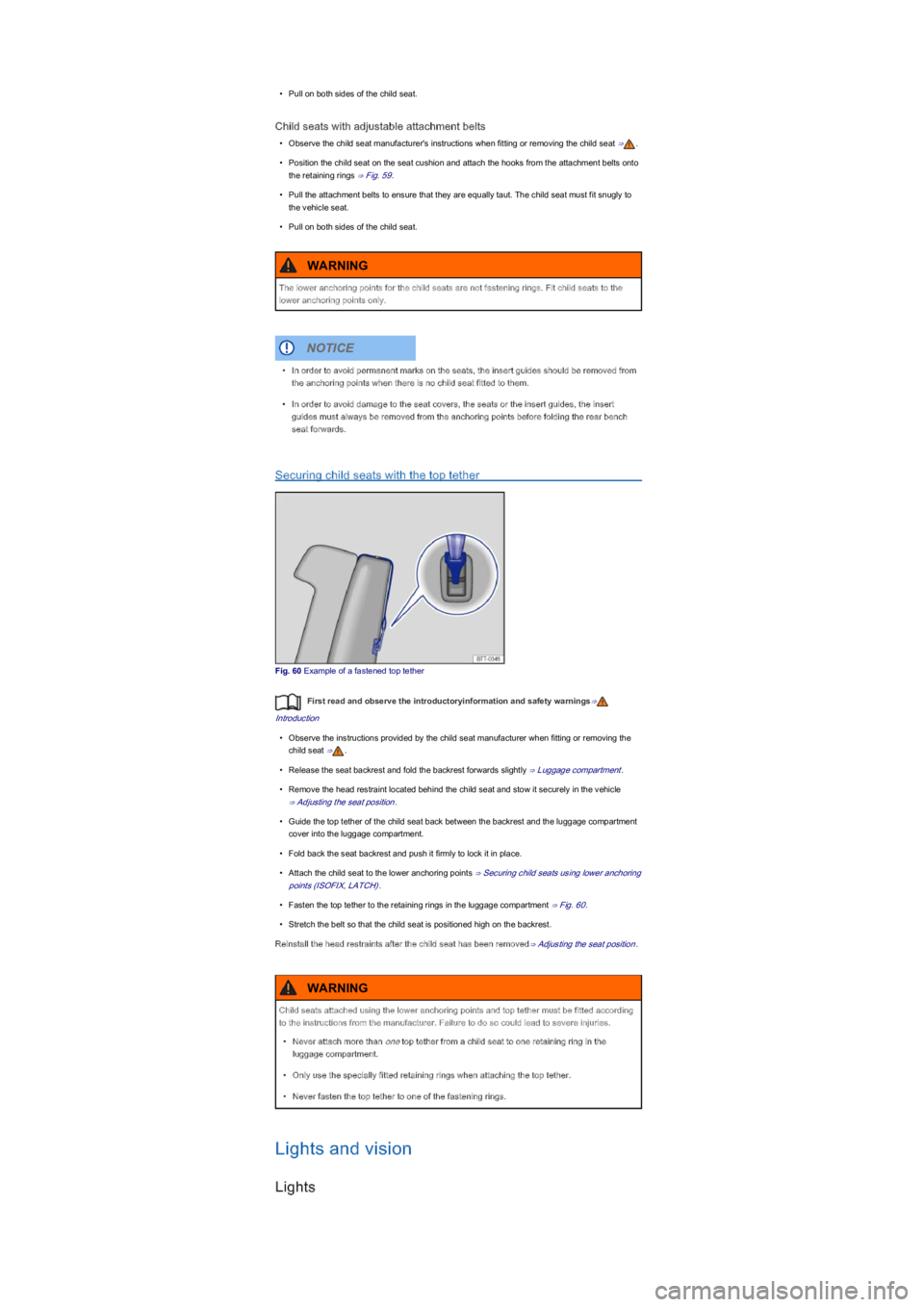
Fig. 60 Example of a fastened top tether
First read and observe the introductoryinformation and safety warnings⇒
Introduction
•Observe the instructions provided by the child seat manufacturer when fitting or removing the
child seat ⇒.
•Release the seat backrest and fold the backrest forwards slightly ⇒ Luggage compartment.
•Remove the head restraint located behind the child seat and stow it securely in the vehicle
⇒ Adjusting the seat position.
•Guide the top tether of the child seat back between the backrest and the luggage compartment
cover into the luggage compartment.
•Fold back the seat backrest and push it firmly to lock it in place.
•Attach the child seat to the lower anchoring points ⇒ Securing child seats using lower anchoring
points (ISOFIX, LATCH).
•Fasten the top tether to the retaining rings in the luggage compartment ⇒ Fig. 60.
•Stretch the belt so that the child seat is positioned high on the backrest.
Reinstall the head restraints after the child seat has been removed⇒ Adjusting the seat position.
Lights and vision
Lights
The lower anchoring points for the child seats are not fastening rings. Fit child seats to the
lower anchoring points only.
WARNING
•In order to avoid permanent marks on the seats, the insert guides should be removed from
the anchoring points when there is no child seat fitted to them.
•In order to avoid damage to the seat covers, the seats or the insert guides, the insert
guides must always be removed from the anchoring points before folding the rear bench
seat forwards.
NOTICE
Child seats attached using the lower anchoring points and top tether must be fitted according
to the instructions from the manufacturer. Failure to do so could lead to severe injuries.
•Never attach more than one top tether from a child seat to one retaining ring in the
luggage compartment.
•Only use the specially fitted retaining rings when attaching the top tether.
•Never fasten the top tether to one of the fastening rings.
WARNING
Page 64 of 211
Protection from the sun
Introduction
This chapter contains information on the followingsubjects:
⇒ Sun visors
Sun visors
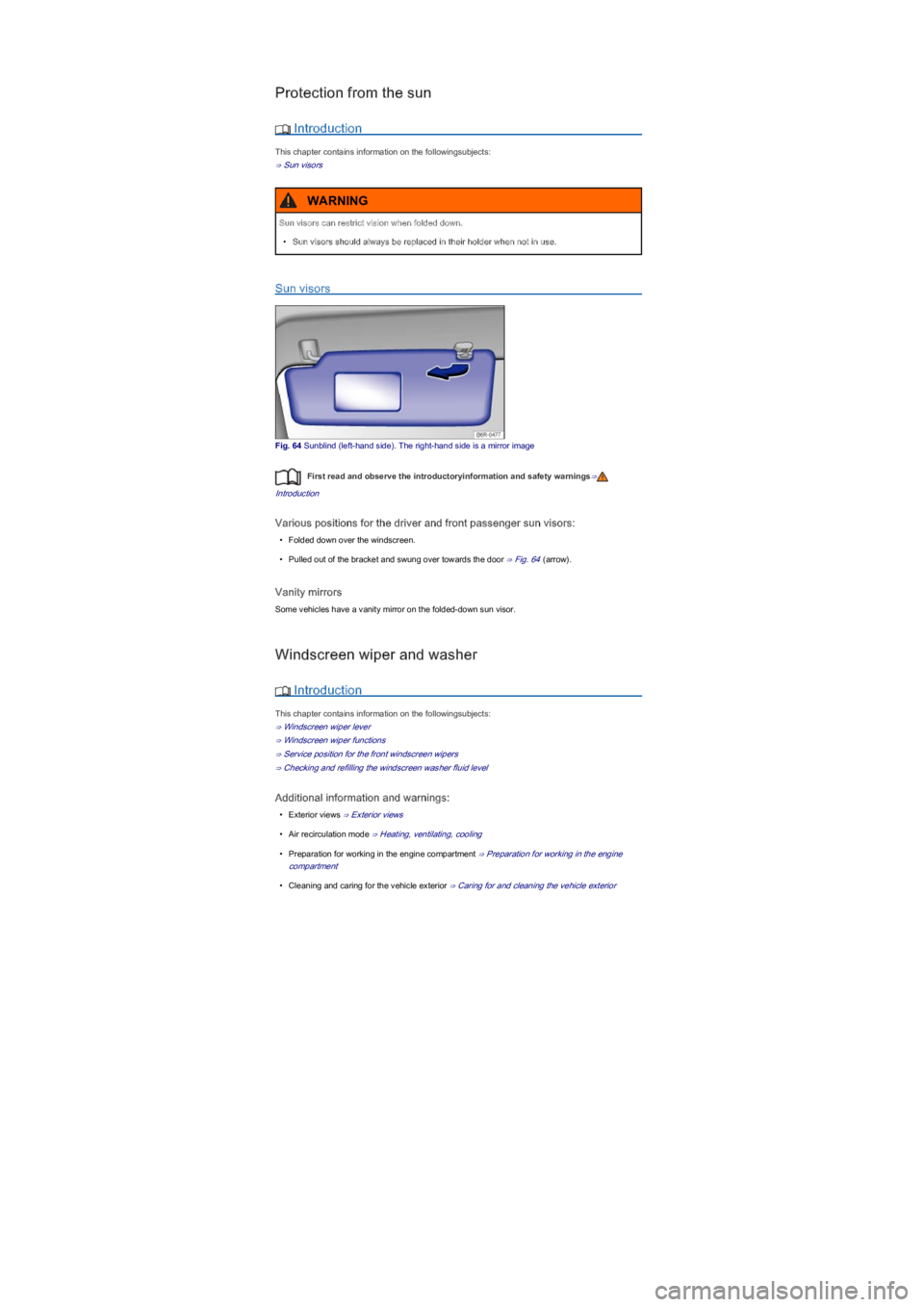
Fig. 64 Sunblind (left-hand side). The right-hand side is a mirror image
First read and observe the introductoryinformation and safety warnings⇒
Introduction
Various positions for the driver and front passenger sun visors:
•Folded down over the windscreen.
•Pulled out of the bracket and swung over towards the door ⇒ Fig. 64 (arrow).
Vanity mirrors
Some vehicles have a vanity mirror on the folded-down sun visor.
Windscreen wiper and washer
Introduction
This chapter contains information on the followingsubjects:
⇒ Windscreen wiper lever
⇒ Windscreen wiper functions
⇒ Service position for the front windscreen wipers
⇒ Checking and refilling the windscreen washer fluid level
Additional information and warnings:
•Exterior views ⇒ Exterior views
•Air recirculation mode ⇒ Heating, ventilating, cooling
•Preparation for working in the engine compartment ⇒ Preparation for working in the engine
compartment
•Cleaning and caring for the vehicle exterior ⇒ Caring for and cleaning the vehicle exterior
Sun visors can restrict vision when folded down.
•Sun visors should always be replaced in their holder when not in use.
WARNING
Page 68 of 211
allow the driver to see the entre side and rear area of the vehicle. The area that cannot be seen is
known as the blind spot. Objects and other road users may also be located in the blind spot.
Additional information and warnings:
•Exterior views ⇒ Exterior views
•Adjusting the seat position ⇒ Adjusting the seat position
•Changing gear ⇒ Changing gear
•Braking, stopping and parking ⇒ Braking, stopping and parking
Interior mirror
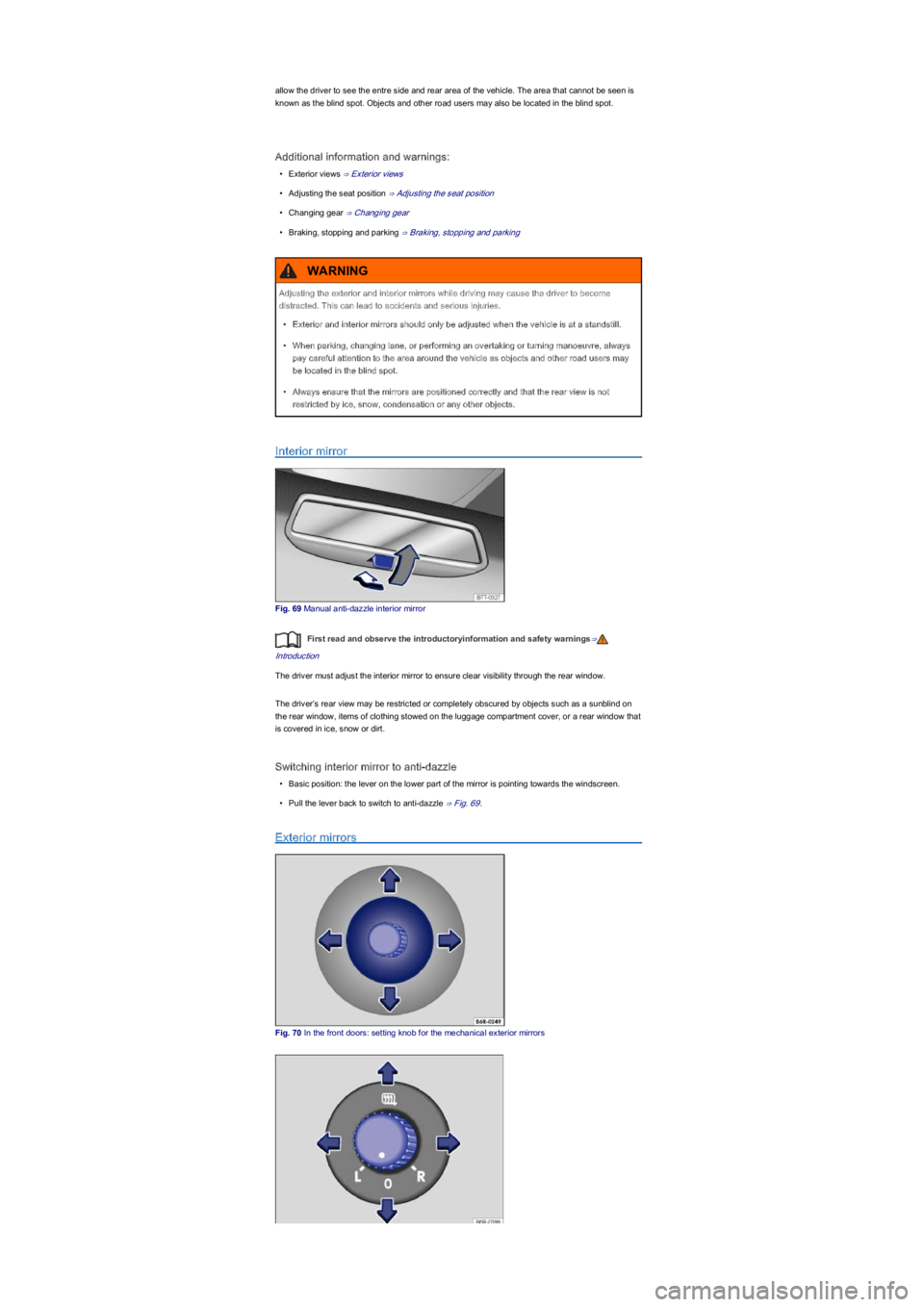
Fig. 69 Manual anti-dazzle interior mirror
First read and observe the introductoryinformation and safety warnings⇒
Introduction
The driver must adjust the interior mirror to ensure clear visibility through the rear window.
The driver’s rear view may be restricted or completely obscured by objects such as a sunblind on
the rear window, items of clothing stowed on the luggage compartment cover, or a rear window that
is covered in ice, snow or dirt.
Switching interior mirror to anti-dazzle
•Basic position: the lever on the lower part of the mirror is pointing towards the windscreen.
•Pull the lever back to switch to anti-dazzle ⇒ Fig. 69.
Exterior mirrors
Fig. 70 In the front doors: setting knob for the mechanical exterior mirrors
Adjusting the exterior and interior mirrors while driving may cause the driver to become
distracted. This can lead to accidents and serious injuries.
•Exterior and interior mirrors should only be adjusted when the vehicle is at a standstill.
•When parking, changing lane, or performing an overtaking or turning manoeuvre, always
pay careful attention to the area around the vehicle as objects and other road users may
be located in the blind spot.
•Always ensure that the mirrors are positioned correctly and that the rear view is not
restricted by ice, snow, condensation or any other objects.
WARNING
Page 69 of 211
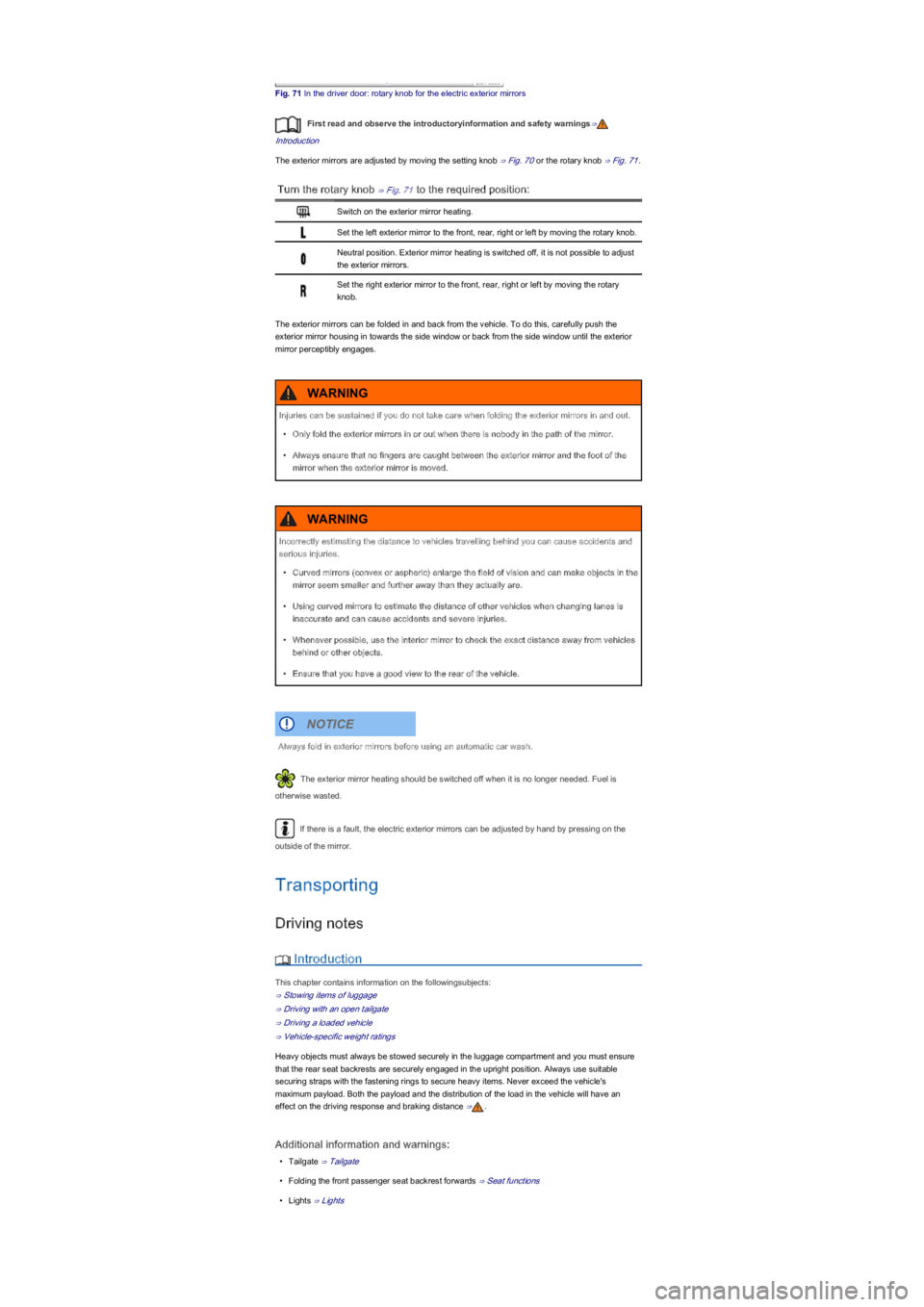
Fig. 71 In the driver door: rotary knob for the electric exterior mirrors
First read and observe the introductoryinformation and safety warnings⇒
Introduction
The exterior mirrors are adjusted by moving the setting knob ⇒ Fig. 70 or the rotary knob ⇒ Fig. 71.
Turn the rotary knob ⇒ Fig. 71 to the required position:
Switch on the exterior mirror heating.
Set the left exterior mirror to the front, rear, right or left by moving the rotary knob.
Neutral position. Exterior mirror heating is switched off, it is not possible to adjust
the exterior mirrors.
Set the right exterior mirror to the front, rear, right or left by moving the rotary
knob.
The exterior mirrors can be folded in and back from the vehicle. To do this, carefully push the
exterior mirror housing in towards the side window or back from the side window until the exterior
mirror perceptibly engages.
The exterior mirror heating should be switched off when it is no longer needed. Fuel is
otherwise wasted.
If there is a fault, the electric exterior mirrors can be adjusted by hand by pressing on the
outside of the mirror.
Transporting
Driving notes
Introduction
This chapter contains information on the followingsubjects:
⇒ Stowing items of luggage
⇒ Driving with an open tailgate
⇒ Driving a loaded vehicle
⇒ Vehicle-specific weight ratings
Heavy objects must always be stowed securely in the luggage compartment and you must ensure
that the rear seat backrests are securely engaged in the upright position. Always use suitable
securing straps with the fastening rings to secure heavy items. Never exceed the vehicle's
maximum payload. Both the payload and the distribution of the load in the vehicle will have an
effect on the driving response and braking distance ⇒.
Additional information and warnings:
•Tailgate ⇒ Tailgate
•Folding the front passenger seat backrest forwards ⇒ Seat functions
•Lights ⇒ Lights
Injuries can be sustained if you do not take care when folding the exterior mirrors in and out.
•Only fold the exterior mirrors in or out when there is nobody in the path of the mirror.
•Always ensure that no fingers are caught between the exterior mirror and the foot of the
mirror when the exterior mirror is moved.
WARNING
Incorrectly estimating the distance to vehicles travelling behind you can cause accidents and
serious injuries.
•Curved mirrors (convex or aspheric) enlarge the field of vision and can make objects in the
mirror seem smaller and further away than they actually are.
•Using curved mirrors to estimate the distance of other vehicles when changing lanes is
inaccurate and can cause accidents and severe injuries.
•Whenever possible, use the interior mirror to check the exact distance away from vehicles
behind or other objects.
•Ensure that you have a good view to the rear of the vehicle.
WARNING
Always fold in exterior mirrors before using an automatic car wash.
NOTICE
Page 70 of 211
•Luggage compartment ⇒ Luggage compartment
•Roof carrier ⇒ Roof carrier
•Wheels and tyres ⇒ Wheels and tyres
Stowing items of luggage
First read and observe the introductoryinformation and safety warnings⇒
Introduction
Always stow all items of luggage in the vehicle securely.
•Always distribute any loads in the vehicle and on the roof as evenly as possible.
•Place heavy objects as far forward in the luggage compartment as possible. Position the rear
seat backrests securely in the upright position.
•Secure luggage in the luggage compartment to the fastening rings with suitable straps
⇒ Luggage compartment.
•Adjust the headlight range ⇒ Lights.
•Adjust the tyre pressure according to the vehicle load. Please read the tyre pressure sticker
⇒ Wheels and tyres.
Observe any information concerning the loading of a roof carrier ⇒ Roof carrier.
Driving with an open tailgate
First read and observe the introductoryinformation and safety warnings⇒
Introduction
Driving with an open tailgate is particularly dangerous. Ensure that the open tailgate and any
objects are secured properly, and take appropriate measures to reduce the quantity of toxic
exhaust fumes entering the vehicle.
Objects that are not secured, or are secured incorrectly, can cause serious injuries in the
event of a sudden driving or braking manoeuvre or accident. This applies particularly if
objects are struck by the airbag when activated and then flung through the vehicle interior.
Please apply the following rules to reduce the risk of accidents:
•Always stow all objects in the vehicle securely. Always stow luggage and heavy objects in
the luggage compartment.
•Always use suitable straps to prevent luggage from entering the deployment zones of the
side airbag or the front airbag in the event of a sudden driving or braking manoeuvre or an
accident.
•Objects should be stowed in the vehicle interior in such a way that they can never enter
the airbag deployment zones while the vehicle is in motion.
•Always keep stowage compartments closed while the vehicle is in motion.
•All objects must be removed from the seat cushion of the front passenger seat if the front
passenger backrest is folded forward. Even light and small objects could be pressed into
the weight detection mat underneath the seat cushion by the backrest when it is folded
forwards and thus send incorrect information to the airbag control units.
•The front airbag must be switched off and the indicator lamp PASSENGER AIR BAG OFF
must light up for as long as the front passenger seat backrest is folded forwards.
•Stowed objects must never cause passengers to assume an incorrect sitting position.
•Any seat blocked by stowed objects must not be used by any passengers.
WARNING
The vehicle handling and braking effect may alter significantly if large or heavy objects are
being transported.
•Adapt your speed and driving style to suit visibility, weather, road and traffic conditions.
•Accelerate carefully and gently.
•Avoid sudden braking and driving manoeuvres.
•Brake earlier than in normal driving.
WARNING
Hard objects on the shelf can chafe against the wires of the heating element in the rear
window and cause damage.
NOTICE
Page 71 of 211
Driving a loaded vehicle
First read and observe the introductoryinformation and safety warnings⇒
Introduction
For good vehicle handling when driving a loaded vehicle, please observe the following:
•Stow all items of luggage securely ⇒ Stowing items of luggage.
•Accelerate carefully and gently.
•Avoid sudden braking and driving manoeuvres.
•Brake earlier than in normal driving.
•If applicable, heed the information about driving with a roof carrier ⇒ Roof carrier.
Vehicle-specific weight ratings
First read and observe the introductoryinformation and safety warnings⇒
Introduction
All data in the official vehicle documents take precedence over these data. All data in this manual
apply to the basic model. The vehicle data sticker in the service schedule and the official vehicle
documents show which engine is installed in your vehicle.
The values quoted here may differ if additional equipment is fitted, for different models or for special
vehicles.
The values for the kerb weight in the following table apply for the road-ready vehicle with driver
(75 kg), service fluids including fuel tank carrying 90% of its capacity and, if applicable, tools and
Driving with an unlocked or open tailgate can cause serious injuries.
•Always drive with the tailgate closed.
•Always stow all items in the luggage compartment securely. Loose objects can fall out of
the luggage compartment and injure other road users.
•Always drive carefully and ensure that you think ahead.
•Avoid any abrupt or sudden driving and braking manoeuvres as this can cause the open
tailgate to move unpredictably.
•Any objects protruding from the luggage compartment must be marked to ensure that they
are visible to other road users. Comply with legal regulations.
•Any objects protruding from the luggage compartment must never be held in position by
the tailgate.
•If it is necessary to drive with the tailgate open, all luggage racks and cargo stowed on the
rack must be removed from the tailgate.
WARNING
Poisonous exhaust fumes can enter the vehicle interior when the tailgate is open. This could
result in loss of consciousness, carbon monoxide poisoning, serious injury and accidents.
•Always drive with the tailgate closed in order to prevent toxic gases from entering the
vehicle.
•If exceptional circumstances require you to drive with an open tailgate, you must do the
following to reduce the quantity of toxic exhaust fumes that could enter the vehicle:
- Close the electric panorama sliding/tilting glass roof.
- Switch off air recirculation mode.
- Open all vents in the dash panel.
- Switch the blowers to the highest setting.
WARNING
The vehicle length and height are different when the tailgate is open.
NOTICE
Moving loads can severely impair the vehicle's stability and driving safety, which can cause
accidents and severe injuries.
•Secure objects properly to prevent them from sliding.
•Use suitable straps when securing heavy objects.
•Engage the rear seat backrests securely in an upright position.
WARNING
Page 73 of 211
The ventilation openings between the rear window and the luggage compartment cover must
not be covered as this would prevent stale air escaping from the vehicle.
Folding the backrests on the rear bench seat forwards and backwards
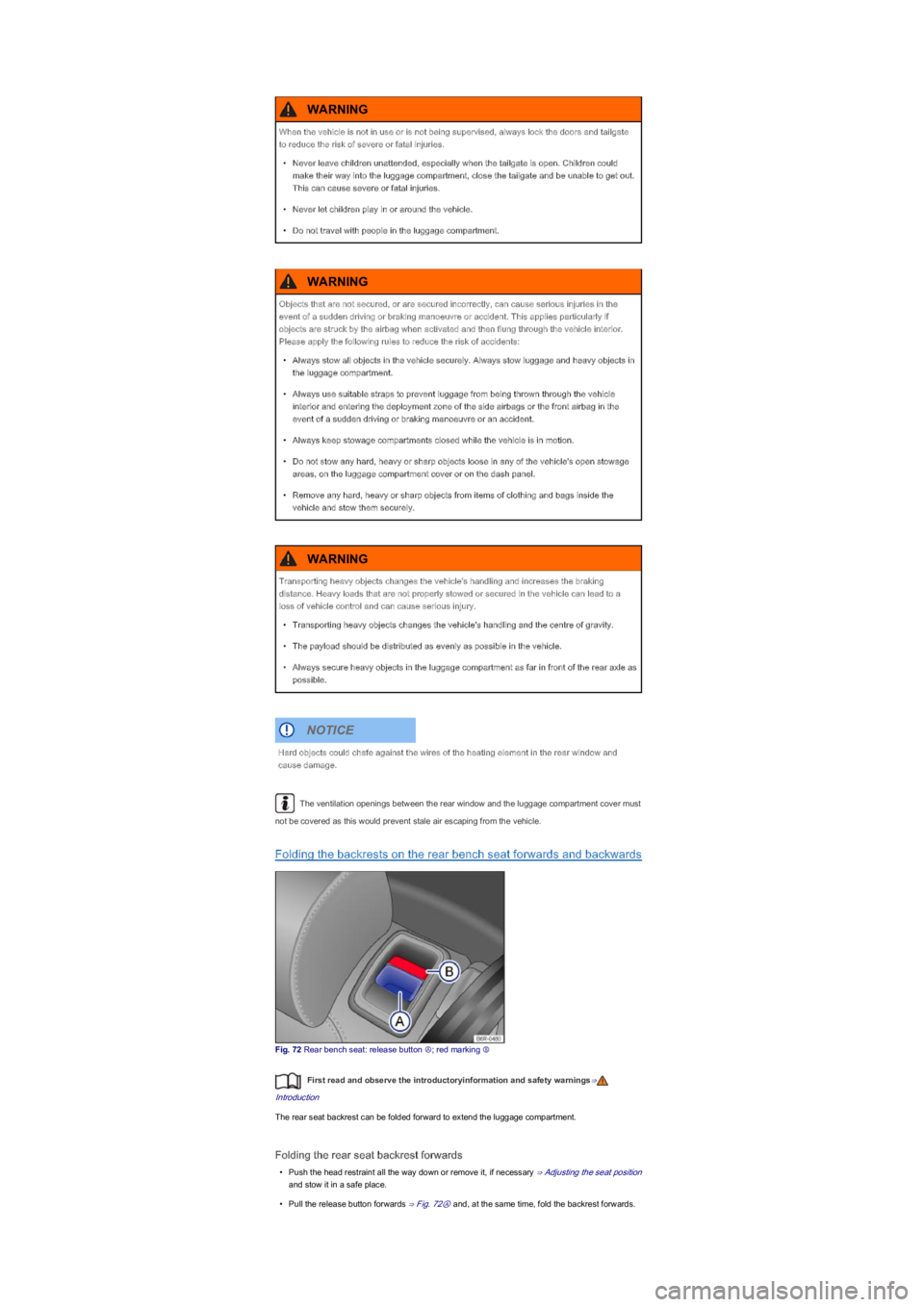
Fig. 72 Rear bench seat: release button Ⓐ; red marking Ⓑ
First read and observe the introductoryinformation and safety warnings⇒
Introduction
The rear seat backrest can be folded forward to extend the luggage compartment.
Folding the rear seat backrest forwards
•Push the head restraint all the way down or remove it, if necessary ⇒ Adjusting the seat position
and stow it in a safe place.
•Pull the release button forwards ⇒ Fig. 72Ⓐ and, at the same time, fold the backrest forwards.
When the vehicle is not in use or is not being supervised, always lock the doors and tailgate
to reduce the risk of severe or fatal injuries.
•Never leave children unattended, especially when the tailgate is open. Children could
make their way into the luggage compartment, close the tailgate and be unable to get out.
This can cause severe or fatal injuries.
•Never let children play in or around the vehicle.
•Do not travel with people in the luggage compartment.
WARNING
Objects that are not secured, or are secured incorrectly, can cause serious injuries in the
event of a sudden driving or braking manoeuvre or accident. This applies particularly if
objects are struck by the airbag when activated and then flung through the vehicle interior.
Please apply the following rules to reduce the risk of accidents:
•Always stow all objects in the vehicle securely. Always stow luggage and heavy objects in
the luggage compartment.
•Always use suitable straps to prevent luggage from being thrown through the vehicle
interior and entering the deployment zone of the side airbags or the front airbag in the
event of a sudden driving or braking manoeuvre or an accident.
•Always keep stowage compartments closed while the vehicle is in motion.
•Do not stow any hard, heavy or sharp objects loose in any of the vehicle's open stowage
areas, on the luggage compartment cover or on the dash panel.
•Remove any hard, heavy or sharp objects from items of clothing and bags inside the
vehicle and stow them securely.
WARNING
Transporting heavy objects changes the vehicle's handling and increases the braking
distance. Heavy loads that are not properly stowed or secured in the vehicle can lead to a
loss of vehicle control and can cause serious injury.
•Transporting heavy objects changes the vehicle's handling and the centre of gravity.
•The payload should be distributed as evenly as possible in the vehicle.
•Always secure heavy objects in the luggage compartment as far in front of the rear axle as
possible.
WARNING
Hard objects could chafe against the wires of the heating element in the rear window and
cause damage.
NOTICE
Page 74 of 211
•The rear seat backrest is unlocked when you can see a red marking in the button ⇒ Fig. 72Ⓑ.
•Passengers (adults and children) must not use seats if the backrest is folded forwards.
Folding the rear seat backrest backwards
•Fold back the rear backrest and push it firmly into the lock until it clicks securely into place ⇒
.
•The red marking on the release button ⇒ Fig. 72Ⓑ should no longer be visible.
•The rear seat backrest must always be securely engaged.
•If necessary, fit the head restraints and adjust to the correct position ⇒ Sitting correctly and
safely.
Luggage compartment cover
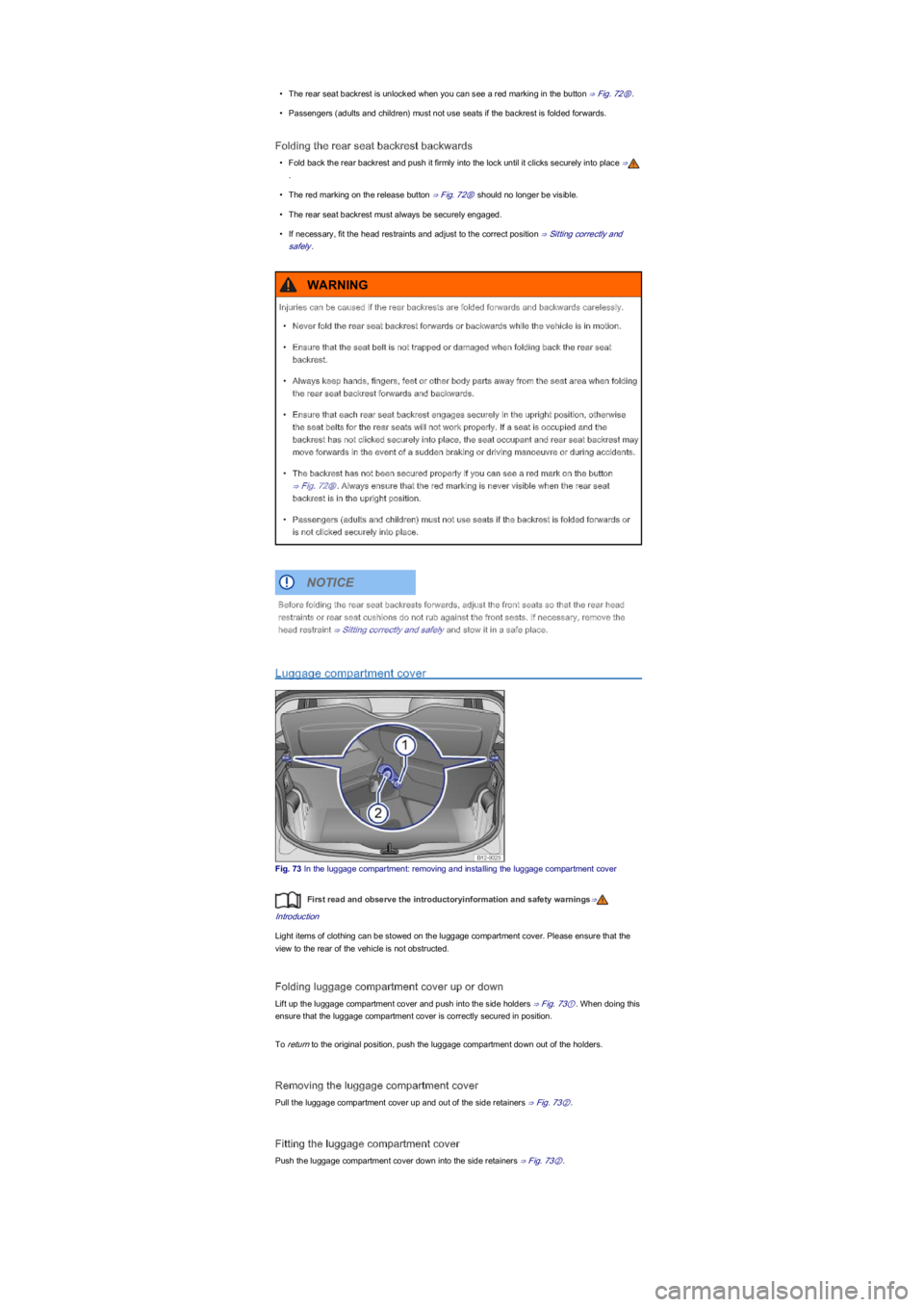
Fig. 73 In the luggage compartment: removing and installing the luggage compartment cover
First read and observe the introductoryinformation and safety warnings⇒
Introduction
Light items of clothing can be stowed on the luggage compartment cover. Please ensure that the
view to the rear of the vehicle is not obstructed.
Folding luggage compartment cover up or down
Lift up the luggage compartment cover and push into the side holders ⇒ Fig. 73①. When doing this
ensure that the luggage compartment cover is correctly secured in position.
To return to the original position, push the luggage compartment down out of the holders.
Removing the luggage compartment cover
Pull the luggage compartment cover up and out of the side retainers ⇒ Fig. 73②.
Fitting the luggage compartment cover
Push the luggage compartment cover down into the side retainers ⇒ Fig. 73②.
Injuries can be caused if the rear backrests are folded forwards and backwards carelessly.
•Never fold the rear seat backrest forwards or backwards while the vehicle is in motion.
•Ensure that the seat belt is not trapped or damaged when folding back the rear seat
backrest.
•Always keep hands, fingers, feet or other body parts away from the seat area when folding
the rear seat backrest forwards and backwards.
•Ensure that each rear seat backrest engages securely in the upright position, otherwise
the seat belts for the rear seats will not work properly. If a seat is occupied and the
backrest has not clicked securely into place, the seat occupant and rear seat backrest may
move forwards in the event of a sudden braking or driving manoeuvre or during accidents.
•The backrest has not been secured properly if you can see a red mark on the button
⇒ Fig. 72Ⓑ. Always ensure that the red marking is never visible when the rear seat
backrest is in the upright position.
•Passengers (adults and children) must not use seats if the backrest is folded forwards or
is not clicked securely into place.
WARNING
Before folding the rear seat backrests forwards, adjust the front seats so that the rear head
restraints or rear seat cushions do not rub against the front seats. If necessary, remove the
head restraint ⇒ Sitting correctly and safely and stow it in a safe place.
NOTICE
Page 75 of 211
Variable luggage compartment floor
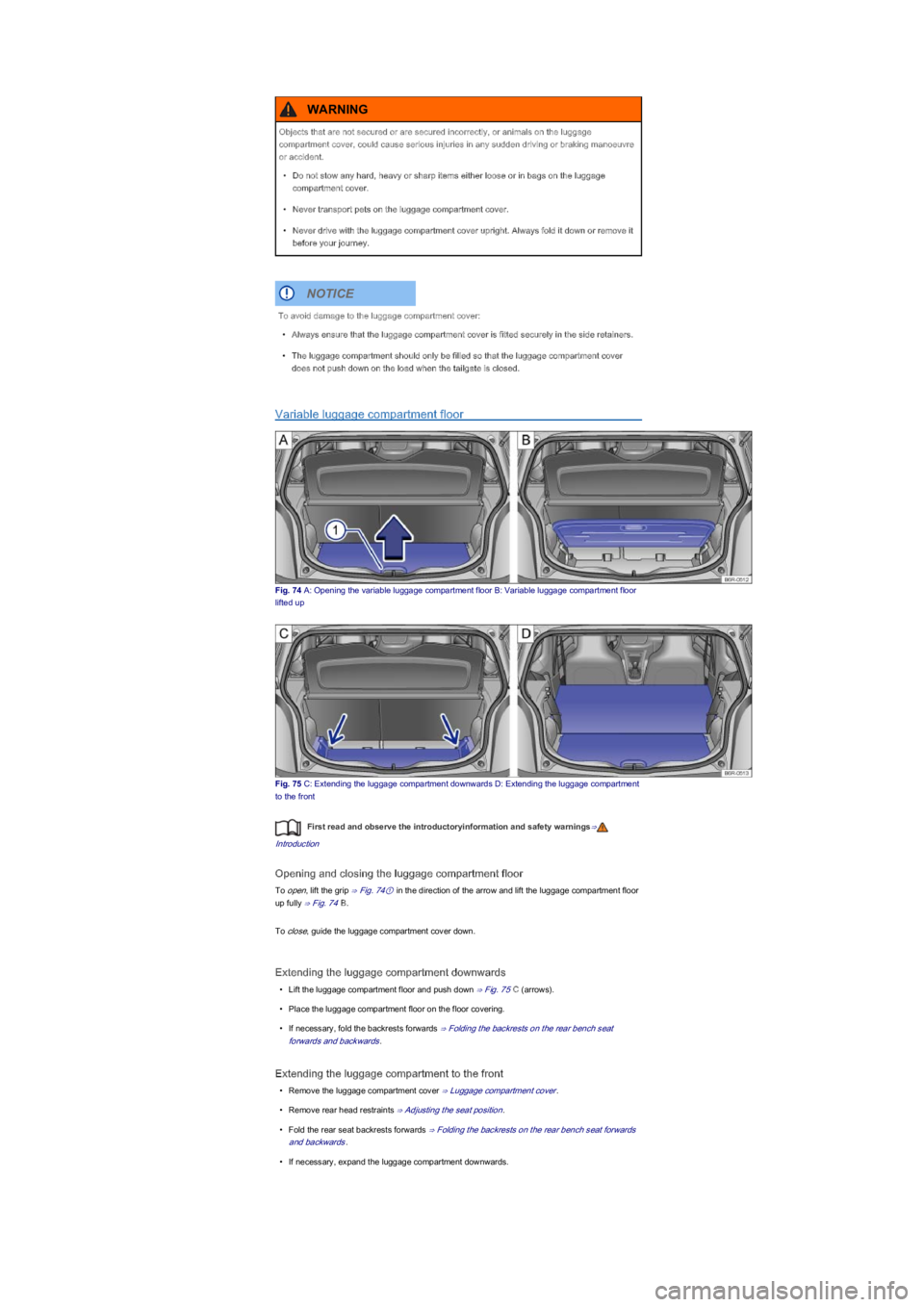
Fig. 74 A: Opening the variable luggage compartment floor B: Variable luggage compartment floor
lifted up
Fig. 75 C: Extending the luggage compartment downwards D: Extending the luggage compartment
to the front
First read and observe the introductoryinformation and safety warnings⇒
Introduction
Opening and closing the luggage compartment floor
To open, lift the grip ⇒ Fig. 74① in the direction of the arrow and lift the luggage compartment floor
up fully ⇒ Fig. 74B.
To close, guide the luggage compartment cover down.
Extending the luggage compartment downwards
•Lift the luggage compartment floor and push down ⇒ Fig. 75C (arrows).
•Place the luggage compartment floor on the floor covering.
•If necessary, fold the backrests forwards ⇒ Folding the backrests on the rear bench seat
forwards and backwards.
Extending the luggage compartment to the front
•Remove the luggage compartment cover ⇒ Luggage compartment cover.
•Remove rear head restraints ⇒ Adjusting the seat position.
•Fold the rear seat backrests forwards ⇒ Folding the backrests on the rear bench seat forwards
and backwards.
•If necessary, expand the luggage compartment downwards.
Objects that are not secured or are secured incorrectly, or animals on the luggage
compartment cover, could cause serious injuries in any sudden driving or braking manoeuvre
or accident.
•Do not stow any hard, heavy or sharp items either loose or in bags on the luggage
compartment cover.
•Never transport pets on the luggage compartment cover.
•Never drive with the luggage compartment cover upright. Always fold it down or remove it
before your journey.
WARNING
To avoid damage to the luggage compartment cover:
•Always ensure that the luggage compartment cover is fitted securely in the side retainers.
•The luggage compartment should only be filled so that the luggage compartment cover
does not push down on the load when the tailgate is closed.
NOTICE