door lock VOLKSWAGEN UP! 2021 Owner´s Manual
[x] Cancel search | Manufacturer: VOLKSWAGEN, Model Year: 2021, Model line: UP!, Model: VOLKSWAGEN UP! 2021Pages: 211, PDF Size: 5.98 MB
Page 173 of 211
Event data recorder
The vehicle is not fitted with an event data recorder.
Event data recorders temporarily store vehicle information. This provides precise information in the
event of an accident. In vehicles with an airbag system, data that might be relevant in the event of
an accident can be stored, e.g. impact speed, belt buckle status, seat positions and trigger speed.
The scope of the data is manufacturer-specific.
An event data recorder may only be fitted if the owner has approved the procedure. This is covered
by legislation in some countries.
Reprogramming control units
All data for the control of components are stored in the control units. Some convenience functions,
such as lane change flash, single door unlocking and displays, can be reprogrammed using special
workshop equipment. If this is the case, the descriptions in your vehicle wallet will no longer
correspond with the original functions. Volkswagen recommends that you have any reprogramming
confirmed in the service schedule under Workshop comments.
Information about possible reprogramming can be obtained from the Volkswagen dealership.
Reading the vehicle's event memory
A diagnostic interface for reading the event memories is located in the vehicle interior ⇒. Data
relating to the function and status of the electronic control units are stored in the event memory.
Additional information on the stored data is available from qualified workshops.
The diagnosis interface is located behind near the fuse box in the footwell on the driver side.
The event memory should only be read and reset by a qualified workshop.
After a fault has been rectified, the information in the memory pertaining to the fault is deleted.
Other memory content is overwritten on an on-going basis.
Using a mobile telephone in the vehicle without a connection to the
external aerial
First read and observe the introductoryinformation and safety warnings⇒
Introduction
Both during telephone calls and in standby mode, mobile telephones transmit and receive radio
waves, which may also be termed "high-frequency energy". Current scientific literature warns us
that radio waves can be harmful to human beings if they exceed certain limits. Government bodies
and international committees have introduced threshold values and guidelines to ensure that
electromagnetic radiation produced by mobile telephones does not pose a hazard to health.
However, there is no proven scientific evidence that demonstrates that cordless telephones are
absolutely safe.
For this reason, some experts are calling for more precautions to be taken in the use of mobile
telephones, by taking steps to reduce the level of personal exposure to electromagnetic radiation.
If a mobile telephone that is not connected to the vehicle's external aerial is used inside the vehicle,
the level of electromagnetic radiation could be higher than when the mobile telephone is connected
to an integrated aerial or any other external aerial.
If the vehicle is fitted with a suitable hands-free unit which enables the use of innumerable
additional functions of Bluetooth compatible mobile telephones, this will satisfy the legal
requirements in many countries which permit the use of a mobile telephone in a vehicle only if a
hands-free unit is used.
The hands-free system of the portable navigation device (delivered by Volkswagen) in your vehicle
has been developed for mobile telephones that are compatible with Bluetooth⇒ Portable
navigation device. Mobile telephones must be located in a suitable telephone holder or be stored
securely in the vehicle. If a telephone holder is used it must be securely attached to the base plate.
This is the only way to ensure that the mobile telephone is securely attached to the dash panel and
always within reach of the driver. Depending on the hands-free system, the connection between the
mobile telephone and the external aerial is established either via the telephone holder or via an
existing Bluetooth connection between the mobile telephone and the vehicle.
Connecting the mobile telephone is to a telephone aerial integrated in the vehicle or to an external
telephone aerial reduces the electromagnetic radiation generated by the telephone which could
affect the human body. Using an aerial also improves the quality of the signal.
Incorrect use of the diagnostic interface can cause faults, which can result in accidents and
serious injuries.
•Never read the event memory using the diagnostic interface yourself.
•The diagnostic interface should only be read by a qualified workshop.
WARNING
®
®
®
Page 178 of 211
Information stickers and plates
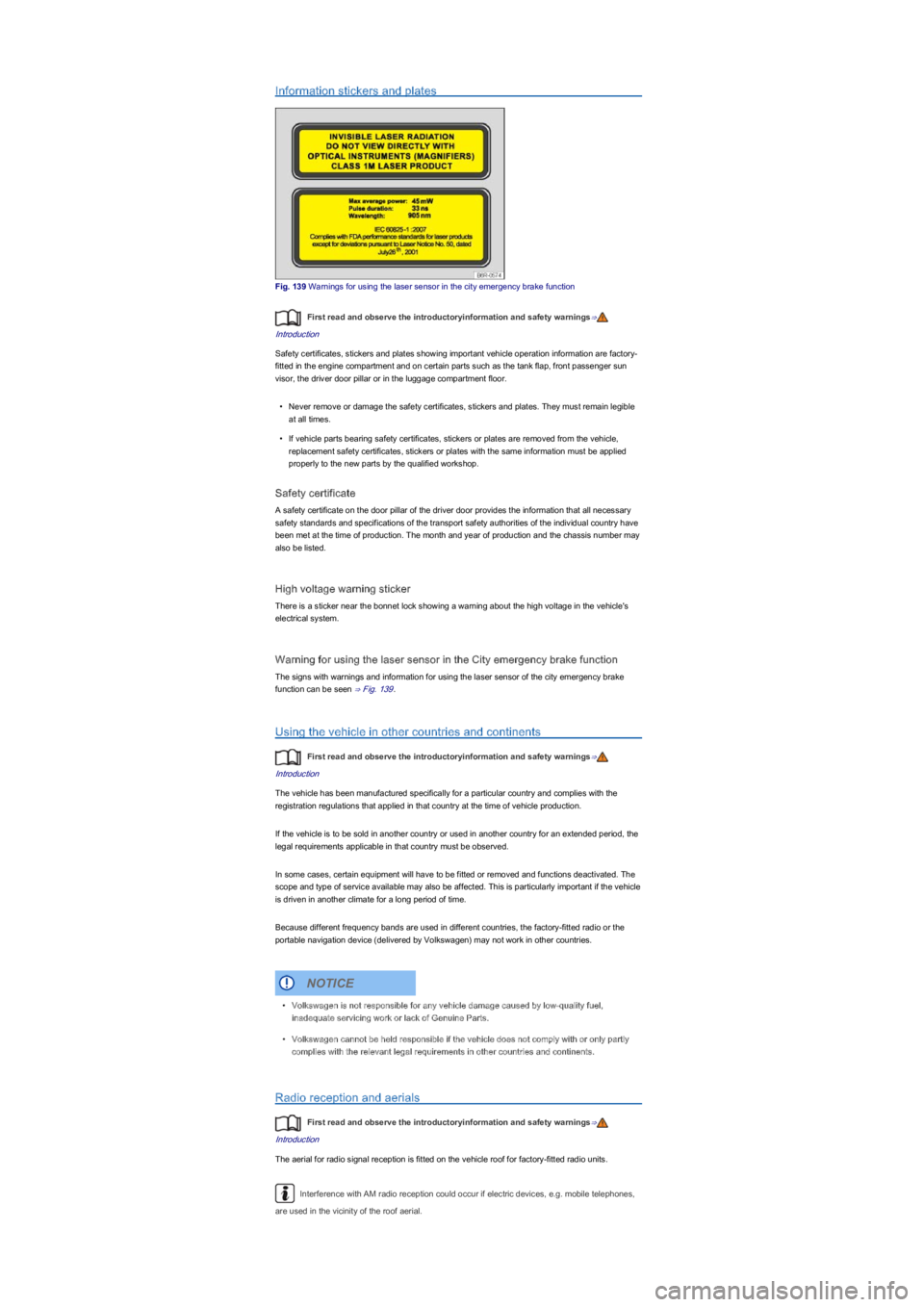
Fig. 139 Warnings for using the laser sensor in the city emergency brake function
First read and observe the introductoryinformation and safety warnings⇒
Introduction
Safety certificates, stickers and plates showing important vehicle operation information are factory-
fitted in the engine compartment and on certain parts such as the tank flap, front passenger sun
visor, the driver door pillar or in the luggage compartment floor.
•Never remove or damage the safety certificates, stickers and plates. They must remain legible
at all times.
•If vehicle parts bearing safety certificates, stickers or plates are removed from the vehicle,
replacement safety certificates, stickers or plates with the same information must be applied
properly to the new parts by the qualified workshop.
Safety certificate
A safety certificate on the door pillar of the driver door provides the information that all necessary
safety standards and specifications of the transport safety authorities of the individual country have
been met at the time of production. The month and year of production and the chassis number may
also be listed.
High voltage warning sticker
There is a sticker near the bonnet lock showing a warning about the high voltage in the vehicle's
electrical system.
Warning for using the laser sensor in the City emergency brake function
The signs with warnings and information for using the laser sensor of the city emergency brake
function can be seen ⇒ Fig. 139.
Using the vehicle in other countries and continents
First read and observe the introductoryinformation and safety warnings⇒
Introduction
The vehicle has been manufactured specifically for a particular country and complies with the
registration regulations that applied in that country at the time of vehicle production.
If the vehicle is to be sold in another country or used in another country for an extended period, the
legal requirements applicable in that country must be observed.
In some cases, certain equipment will have to be fitted or removed and functions deactivated. The
scope and type of service available may also be affected. This is particularly important if the vehicle
is driven in another climate for a long period of time.
Because different frequency bands are used in different countries, the factory-fitted radio or the
portable navigation device (delivered by Volkswagen) may not work in other countries.
Radio reception and aerials
First read and observe the introductoryinformation and safety warnings⇒
Introduction
The aerial for radio signal reception is fitted on the vehicle roof for factory-fitted radio units.
Interference with AM radio reception could occur if electric devices, e.g. mobile telephones,
are used in the vicinity of the roof aerial.
•Volkswagen is not responsible for any vehicle damage caused by low-quality fuel,
inadequate servicing work or lack of Genuine Parts.
•Volkswagen cannot be held responsible if the vehicle does not comply with or only partly
complies with the relevant legal requirements in other countries and continents.
NOTICE
Page 182 of 211
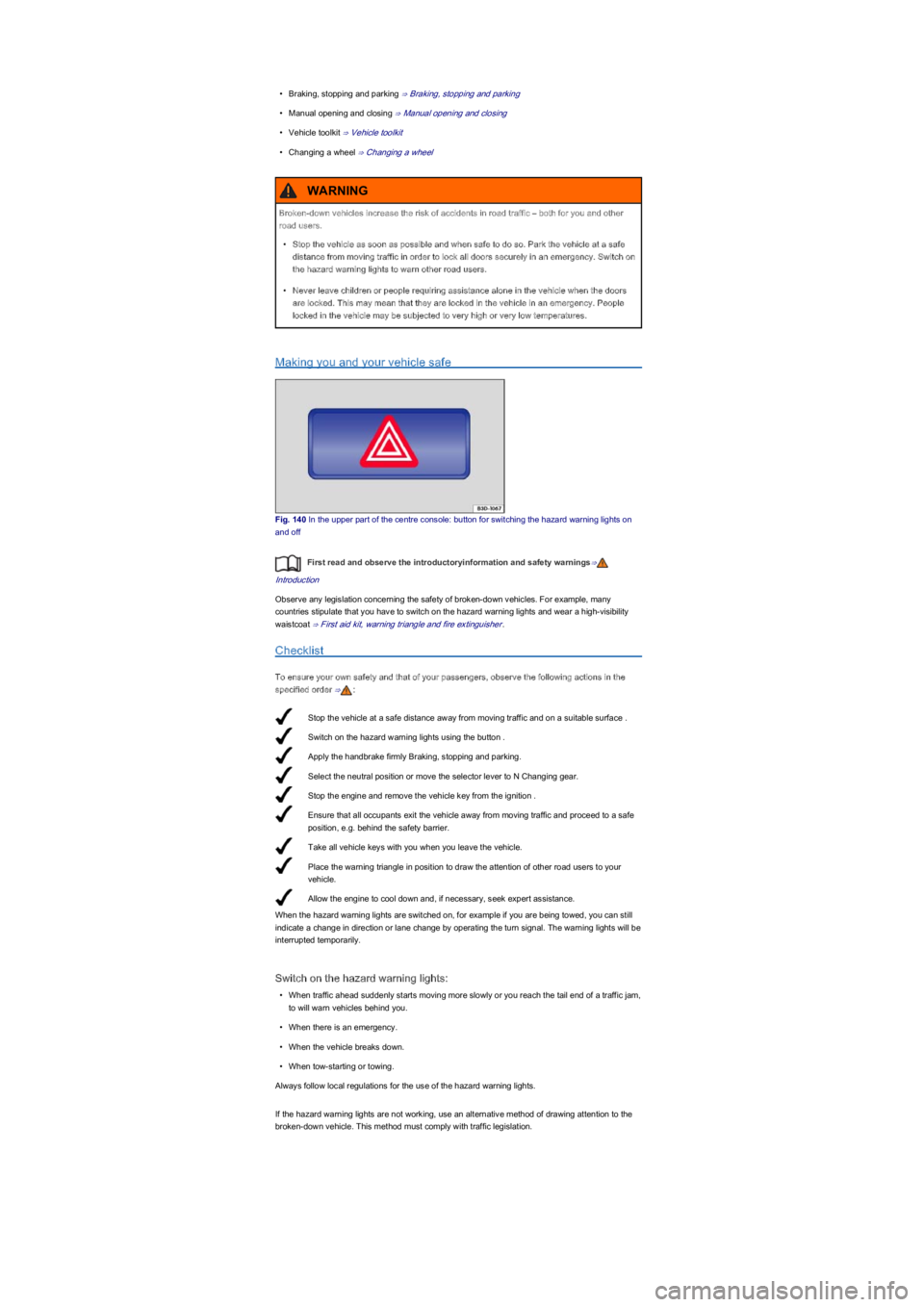
Stop the vehicle at a safe distance away from moving traffic and on a suitable surface .
Switch on the hazard warning lights using the button .
Apply the handbrake firmly Braking, stopping and parking.
Select the neutral position or move the selector lever to N Changing gear.
Stop the engine and remove the vehicle key from the ignition .
Ensure that all occupants exit the vehicle away from moving traffic and proceed to a safe
position, e.g. behind the safety barrier.
Take all vehicle keys with you when you leave the vehicle.
Place the warning triangle in position to draw the attention of other road users to your
vehicle.
Allow the engine to cool down and, if necessary, seek expert assistance.
•Braking, stopping and parking ⇒ Braking, stopping and parking
•Manual opening and closing ⇒ Manual opening and closing
•Vehicle toolkit ⇒ Vehicle toolkit
•Changing a wheel ⇒ Changing a wheel
Making you and your vehicle safe
Fig. 140 In the upper part of the centre console: button for switching the hazard warning lights on
and off
First read and observe the introductoryinformation and safety warnings⇒
Introduction
Observe any legislation concerning the safety of broken-down vehicles. For example, many
countries stipulate that you have to switch on the hazard warning lights and wear a high-visibility
waistcoat ⇒ First aid kit, warning triangle and fire extinguisher.
Checklist
To ensure your own safety and that of your passengers, observe the following actions in the
specified order ⇒:
When the hazard warning lights are switched on, for example if you are being towed, you can still
indicate a change in direction or lane change by operating the turn signal. The warning lights will be
interrupted temporarily.
Switch on the hazard warning lights:
•When traffic ahead suddenly starts moving more slowly or you reach the tail end of a traffic jam,
to will warn vehicles behind you.
•When there is an emergency.
•When the vehicle breaks down.
•When tow-starting or towing.
Always follow local regulations for the use of the hazard warning lights.
If the hazard warning lights are not working, use an alternative method of drawing attention to the
broken-down vehicle. This method must comply with traffic legislation.
Broken-down vehicles increase the risk of accidents in road traffic – both for you and other
road users.
•Stop the vehicle as soon as possible and when safe to do so. Park the vehicle at a safe
distance from moving traffic in order to lock all doors securely in an emergency. Switch on
the hazard warning lights to warn other road users.
•Never leave children or people requiring assistance alone in the vehicle when the doors
are locked. This may mean that they are locked in the vehicle in an emergency. People
locked in the vehicle may be subjected to very high or very low temperatures.
WARNING
Page 183 of 211
The vehicle battery will discharge if the hazard warning lights are left on over a long period of
time – even when the ignition is switched off.
If you brake hard at speeds over approximately 80 km/h (50 mph), the brake lights will flash
to warn the traffic behind. If you then continue to brake, the hazard warning lights will be switched
on automatically at speeds under approximately 10 km/h (6 mph). The brake light will light up
continuously. Once the vehicle starts to accelerate, the hazard warning lights will switch off again.
First aid kit, warning triangle and fire extinguisher
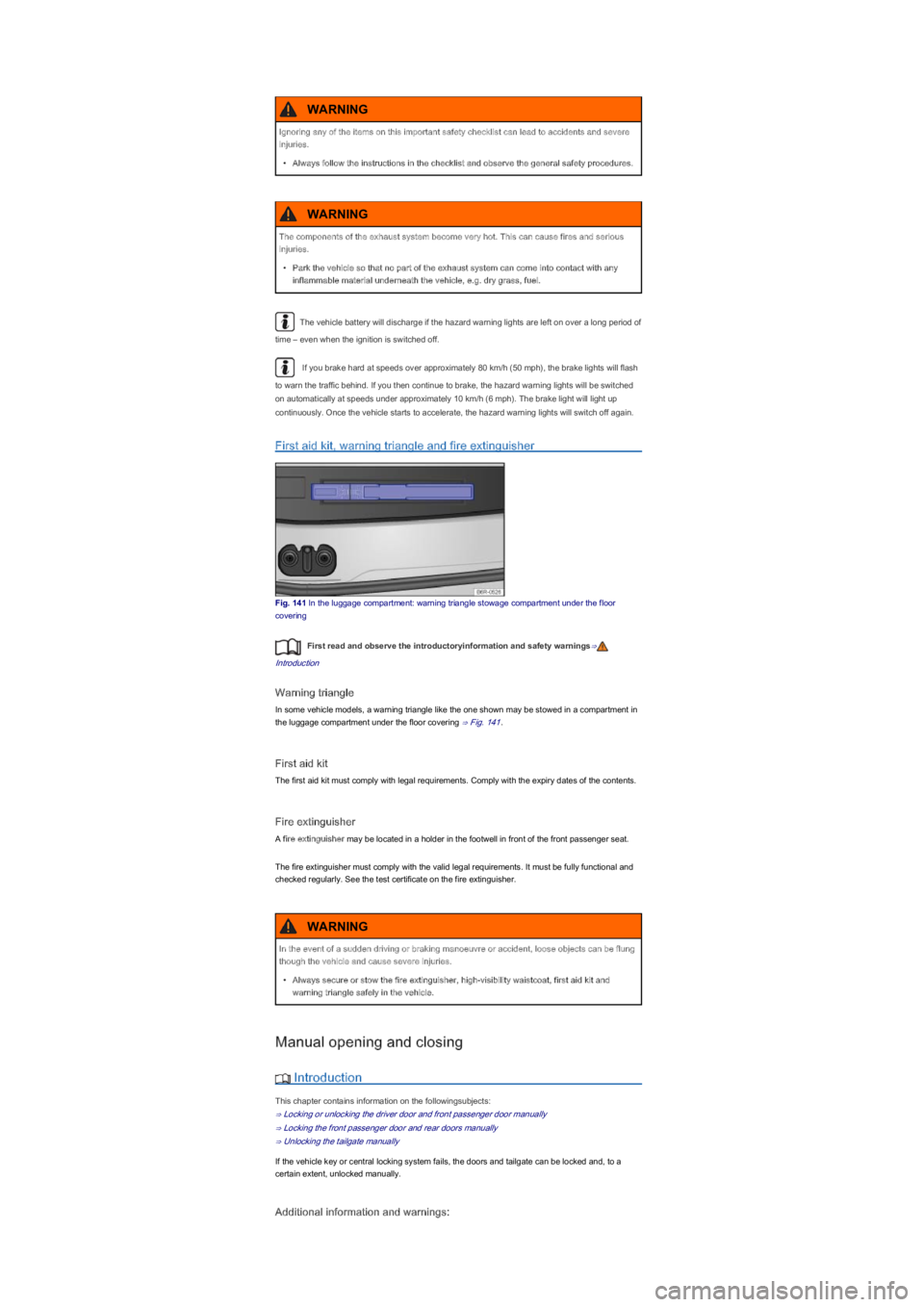
Fig. 141 In the luggage compartment: warning triangle stowage compartment under the floor
covering
First read and observe the introductoryinformation and safety warnings⇒
Introduction
Warning triangle
In some vehicle models, a warning triangle like the one shown may be stowed in a compartment in
the luggage compartment under the floor covering ⇒ Fig. 141.
First aid kit
The first aid kit must comply with legal requirements. Comply with the expiry dates of the contents.
Fire extinguisher
A fire extinguisher may be located in a holder in the footwell in front of the front passenger seat.
The fire extinguisher must comply with the valid legal requirements. It must be fully functional and
checked regularly. See the test certificate on the fire extinguisher.
Manual opening and closing
Introduction
This chapter contains information on the followingsubjects:
⇒ Locking or unlocking the driver door and front passenger door manually
⇒ Locking the front passenger door and rear doors manually
⇒ Unlocking the tailgate manually
If the vehicle key or central locking system fails, the doors and tailgate can be locked and, to a
certain extent, unlocked manually.
Additional information and warnings:
Ignoring any of the items on this important safety checklist can lead to accidents and severe
injuries.
•Always follow the instructions in the checklist and observe the general safety procedures.
WARNING
The components of the exhaust system become very hot. This can cause fires and serious
injuries.
•Park the vehicle so that no part of the exhaust system can come into contact with any
inflammable material underneath the vehicle, e.g. dry grass, fuel.
WARNING
In the event of a sudden driving or braking manoeuvre or accident, loose objects can be flung
though the vehicle and cause severe injuries.
•Always secure or stow the fire extinguisher, high-visibility waistcoat, first aid kit and
warning triangle safely in the vehicle.
WARNING
Page 184 of 211
•Vehicle key set ⇒ Vehicle key set
•Central locking system ⇒ Central locking system
•Doors ⇒ Doors
•Tailgate ⇒ Tailgate
•In an emergency ⇒ In an emergency
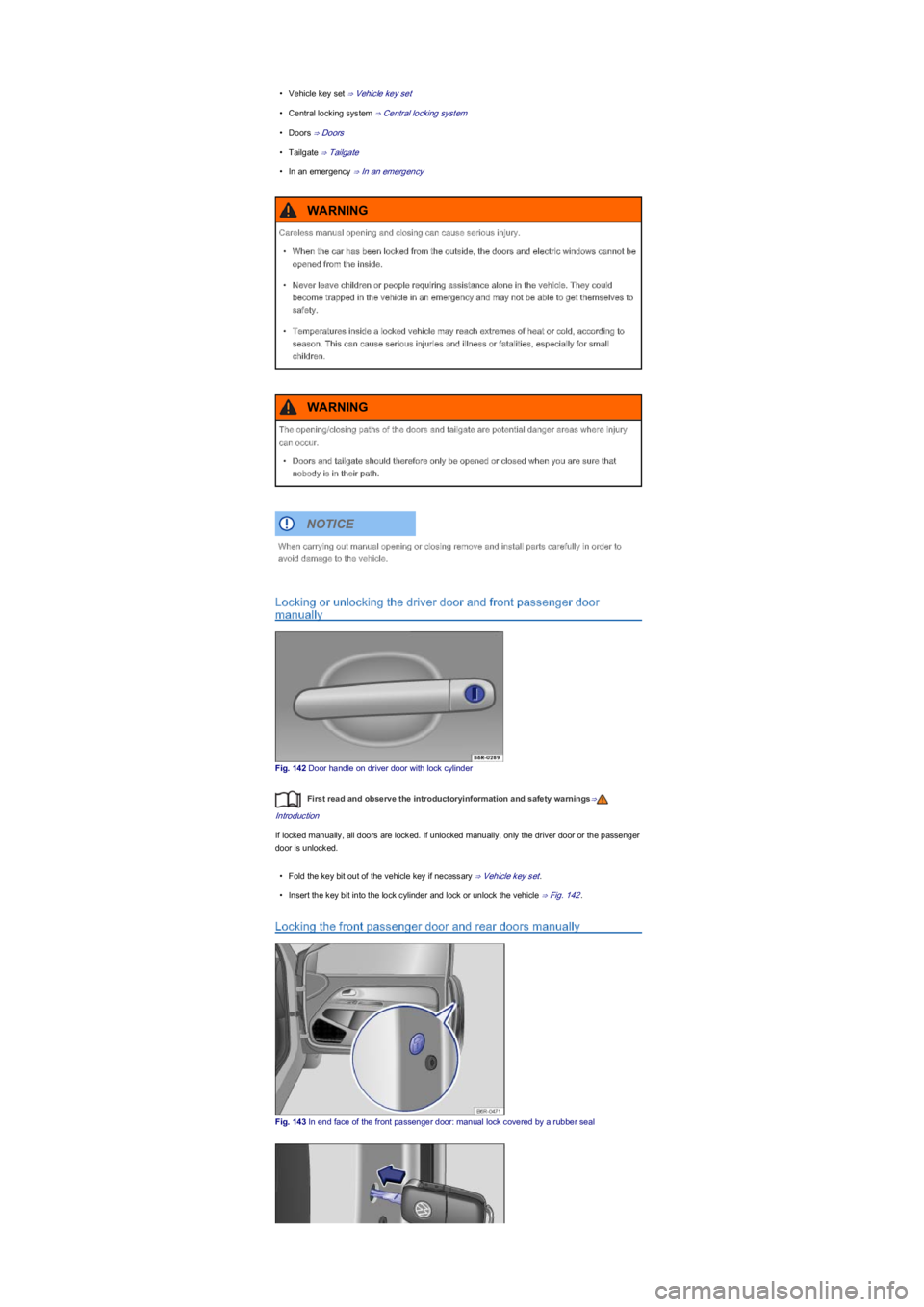
Locking or unlocking the driver door and front passenger door
manually
Fig. 142 Door handle on driver door with lock cylinder
First read and observe the introductoryinformation and safety warnings⇒
Introduction
If locked manually, all doors are locked. If unlocked manually, only the driver door or the passenger
door is unlocked.
•Fold the key bit out of the vehicle key if necessary ⇒ Vehicle key set.
•Insert the key bit into the lock cylinder and lock or unlock the vehicle ⇒ Fig. 142.
Locking the front passenger door and rear doors manually
Fig. 143 In end face of the front passenger door: manual lock covered by a rubber seal
Careless manual opening and closing can cause serious injury.
•When the car has been locked from the outside, the doors and electric windows cannot be
opened from the inside.
•Never leave children or people requiring assistance alone in the vehicle. They could
become trapped in the vehicle in an emergency and may not be able to get themselves to
safety.
•Temperatures inside a locked vehicle may reach extremes of heat or cold, according to
season. This can cause serious injuries and illness or fatalities, especially for small
children.
WARNING
The opening/closing paths of the doors and tailgate are potential danger areas where injury
can occur.
•Doors and tailgate should therefore only be opened or closed when you are sure that
nobody is in their path.
WARNING
When carrying out manual opening or closing remove and install parts carefully in order to
avoid damage to the vehicle.
NOTICE
Page 185 of 211
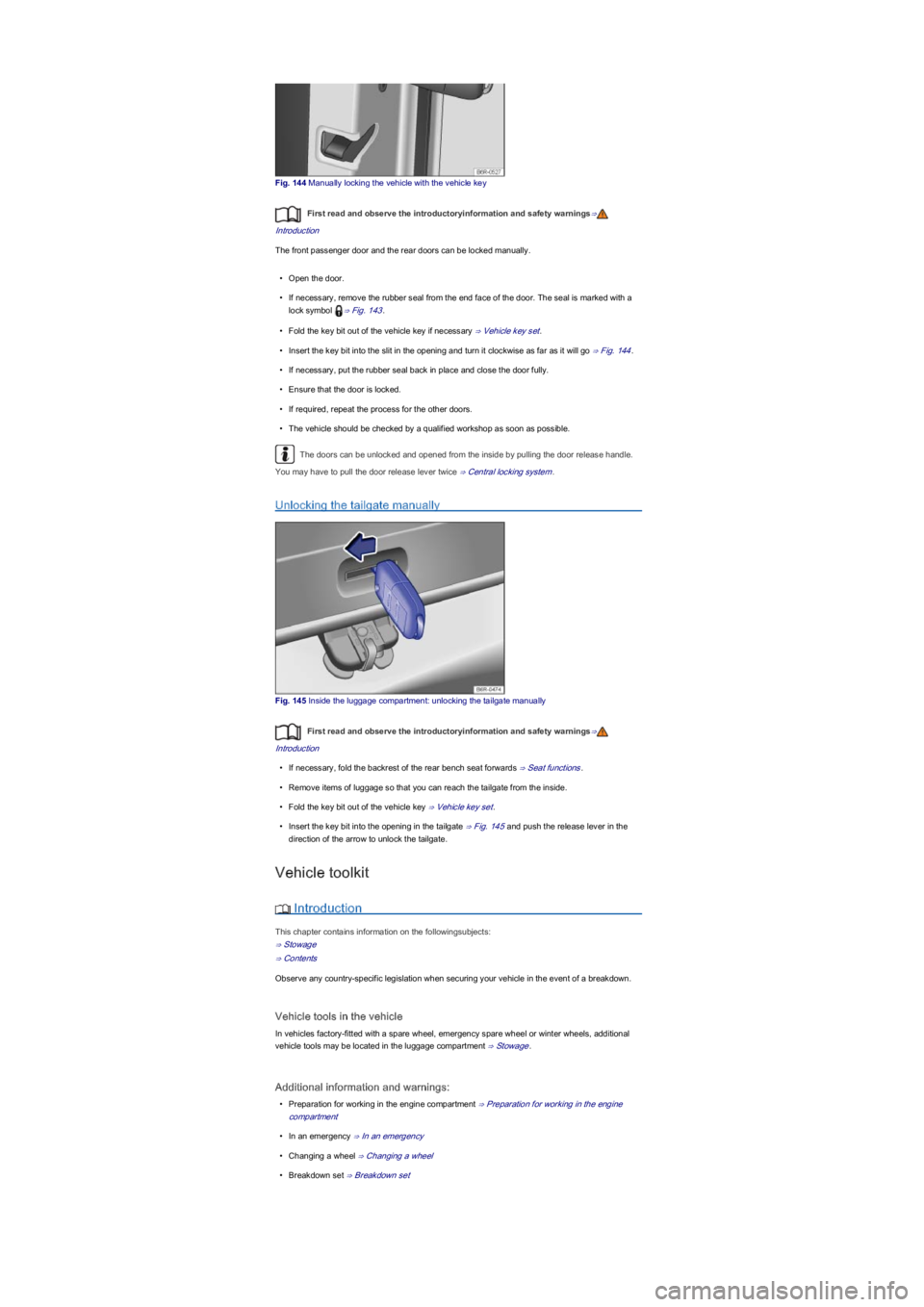
Fig. 144 Manually locking the vehicle with the vehicle key
First read and observe the introductoryinformation and safety warnings⇒
Introduction
The front passenger door and the rear doors can be locked manually.
•Open the door.
•If necessary, remove the rubber seal from the end face of the door. The seal is marked with a
lock symbol ⇒ Fig. 143.
•Fold the key bit out of the vehicle key if necessary ⇒ Vehicle key set.
•Insert the key bit into the slit in the opening and turn it clockwise as far as it will go ⇒ Fig. 144.
•If necessary, put the rubber seal back in place and close the door fully.
•Ensure that the door is locked.
•If required, repeat the process for the other doors.
•The vehicle should be checked by a qualified workshop as soon as possible.
The doors can be unlocked and opened from the inside by pulling the door release handle.
You may have to pull the door release lever twice ⇒ Central locking system.
Unlocking the tailgate manually
Fig. 145 Inside the luggage compartment: unlocking the tailgate manually
First read and observe the introductoryinformation and safety warnings⇒
Introduction
•If necessary, fold the backrest of the rear bench seat forwards ⇒ Seat functions.
•Remove items of luggage so that you can reach the tailgate from the inside.
•Fold the key bit out of the vehicle key ⇒ Vehicle key set.
•Insert the key bit into the opening in the tailgate ⇒ Fig. 145 and push the release lever in the
direction of the arrow to unlock the tailgate.
Vehicle toolkit
Introduction
This chapter contains information on the followingsubjects:
⇒ Stowage
⇒ Contents
Observe any country-specific legislation when securing your vehicle in the event of a breakdown.
Vehicle tools in the vehicle
In vehicles factory-fitted with a spare wheel, emergency spare wheel or winter wheels, additional
vehicle tools may be located in the luggage compartment ⇒ Stowage.
Additional information and warnings:
•Preparation for working in the engine compartment ⇒ Preparation for working in the engine
compartment
•In an emergency ⇒ In an emergency
•Changing a wheel ⇒ Changing a wheel
•Breakdown set ⇒ Breakdown set
Page 192 of 211
Crank the vehicle jack further until the wheel is just clear of the ground.
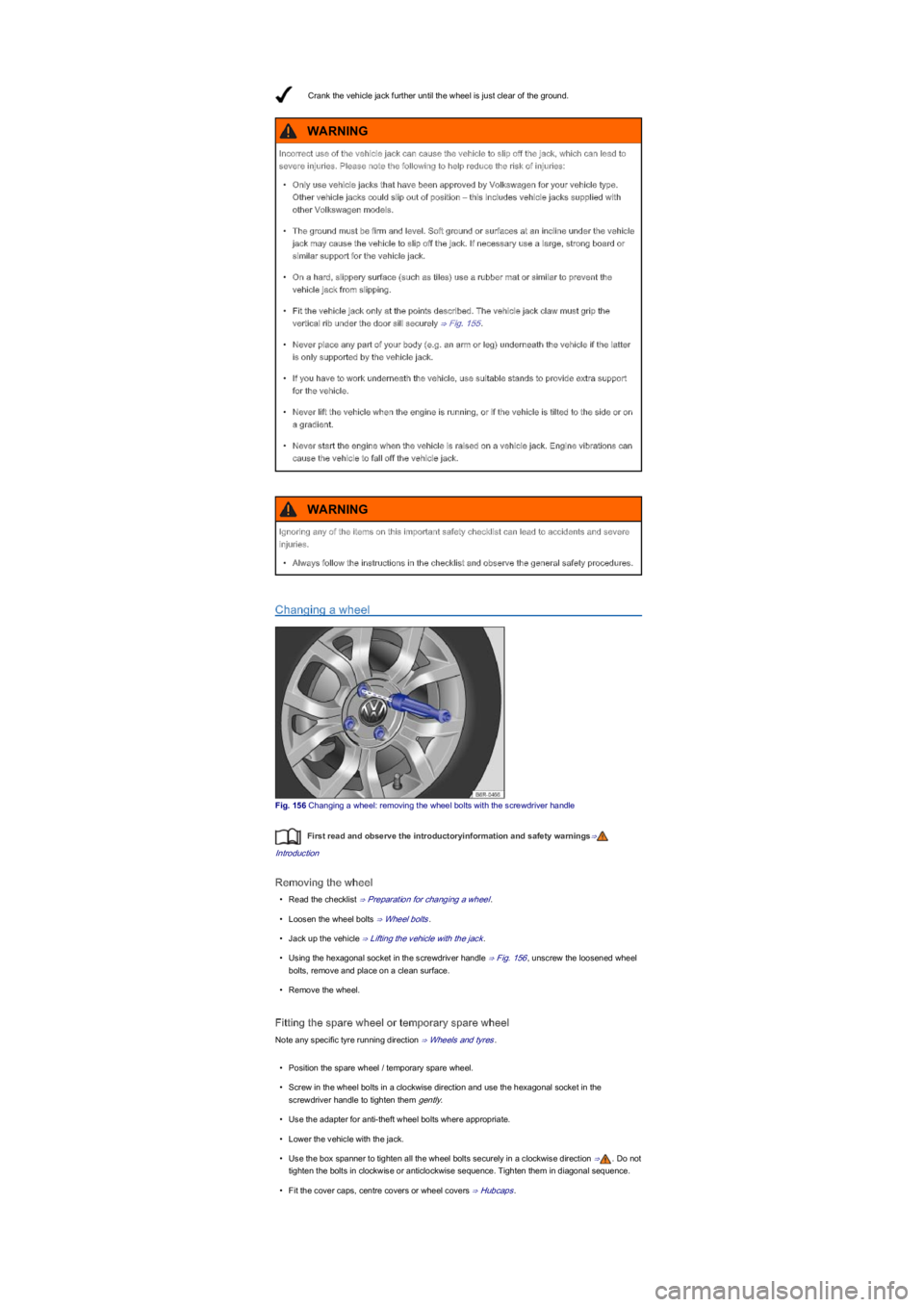
Changing a wheel
Fig. 156 Changing a wheel: removing the wheel bolts with the screwdriver handle
First read and observe the introductoryinformation and safety warnings⇒
Introduction
Removing the wheel
•Read the checklist ⇒ Preparation for changing a wheel.
•Loosen the wheel bolts ⇒ Wheel bolts.
•Jack up the vehicle ⇒ Lifting the vehicle with the jack.
•Using the hexagonal socket in the screwdriver handle ⇒ Fig. 156, unscrew the loosened wheel
bolts, remove and place on a clean surface.
•Remove the wheel.
Fitting the spare wheel or temporary spare wheel
Note any specific tyre running direction ⇒ Wheels and tyres.
•Position the spare wheel / temporary spare wheel.
•Screw in the wheel bolts in a clockwise direction and use the hexagonal socket in the
screwdriver handle to tighten them gently.
•Use the adapter for anti-theft wheel bolts where appropriate.
•Lower the vehicle with the jack.
•Use the box spanner to tighten all the wheel bolts securely in a clockwise direction ⇒. Do not
tighten the bolts in clockwise or anticlockwise sequence. Tighten them in diagonal sequence.
•Fit the cover caps, centre covers or wheel covers ⇒ Hubcaps.
Incorrect use of the vehicle jack can cause the vehicle to slip off the jack, which can lead to
severe injuries. Please note the following to help reduce the risk of injuries:
•Only use vehicle jacks that have been approved by Volkswagen for your vehicle type.
Other vehicle jacks could slip out of position – this includes vehicle jacks supplied with
other Volkswagen models.
•The ground must be firm and level. Soft ground or surfaces at an incline under the vehicle
jack may cause the vehicle to slip off the jack. If necessary use a large, strong board or
similar support for the vehicle jack.
•On a hard, slippery surface (such as tiles) use a rubber mat or similar to prevent the
vehicle jack from slipping.
•Fit the vehicle jack only at the points described. The vehicle jack claw must grip the
vertical rib under the door sill securely ⇒ Fig. 155.
•Never place any part of your body (e.g. an arm or leg) underneath the vehicle if the latter
is only supported by the vehicle jack.
•If you have to work underneath the vehicle, use suitable stands to provide extra support
for the vehicle.
•Never lift the vehicle when the engine is running, or if the vehicle is tilted to the side or on
a gradient.
•Never start the engine when the vehicle is raised on a vehicle jack. Engine vibrations can
cause the vehicle to fall off the vehicle jack.
WARNING
Ignoring any of the items on this important safety checklist can lead to accidents and severe
injuries.
•Always follow the instructions in the checklist and observe the general safety procedures.
WARNING