door lock VOLKSWAGEN UP! 2021 Owner´s Manual
[x] Cancel search | Manufacturer: VOLKSWAGEN, Model Year: 2021, Model line: UP!, Model: VOLKSWAGEN UP! 2021Pages: 211, PDF Size: 5.98 MB
Page 30 of 211
Windows
Introduction
This chapter contains information on the followingsubjects:
⇒ Opening or closing the windows electrically
⇒ Opening and closing the rear hinged windows
Additional information and warnings:
•Volkswagen information system ⇒ Volkswagen information system
•Central locking system ⇒ Central locking system
Opening or closing the windows electrically
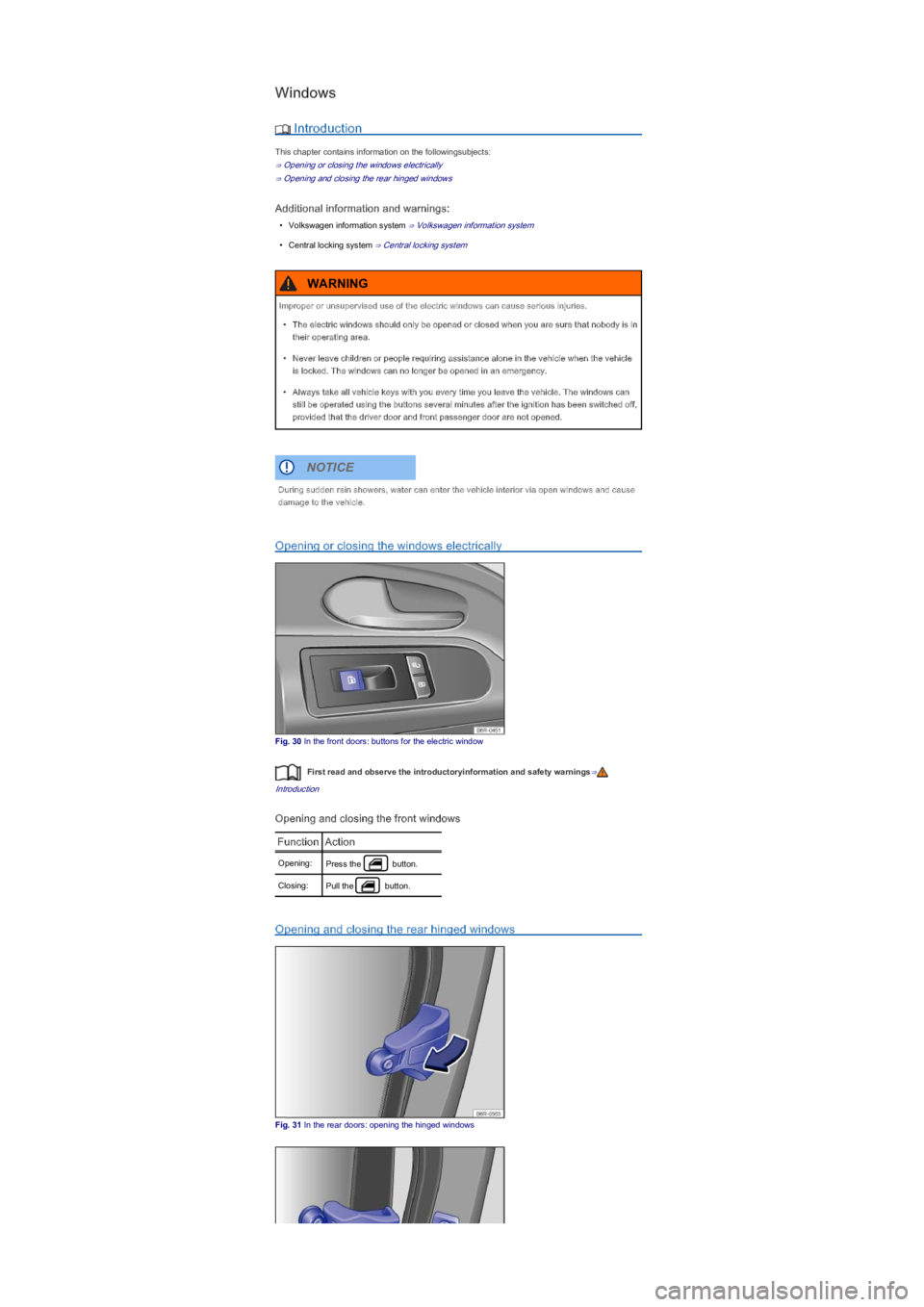
Fig. 30 In the front doors: buttons for the electric window
First read and observe the introductoryinformation and safety warnings⇒
Introduction
Opening and closing the front windows
FunctionAction
Opening:Press the button.
Closing:Pull the button.
Opening and closing the rear hinged windows
Fig. 31 In the rear doors: opening the hinged windows
Improper or unsupervised use of the electric windows can cause serious injuries.
•The electric windows should only be opened or closed when you are sure that nobody is in
their operating area.
•Never leave children or people requiring assistance alone in the vehicle when the vehicle
is locked. The windows can no longer be opened in an emergency.
•Always take all vehicle keys with you every time you leave the vehicle. The windows can
still be operated using the buttons several minutes after the ignition has been switched off,
provided that the driver door and front passenger door are not opened.
WARNING
During sudden rain showers, water can enter the vehicle interior via open windows and cause
damage to the vehicle.
NOTICE
Page 31 of 211
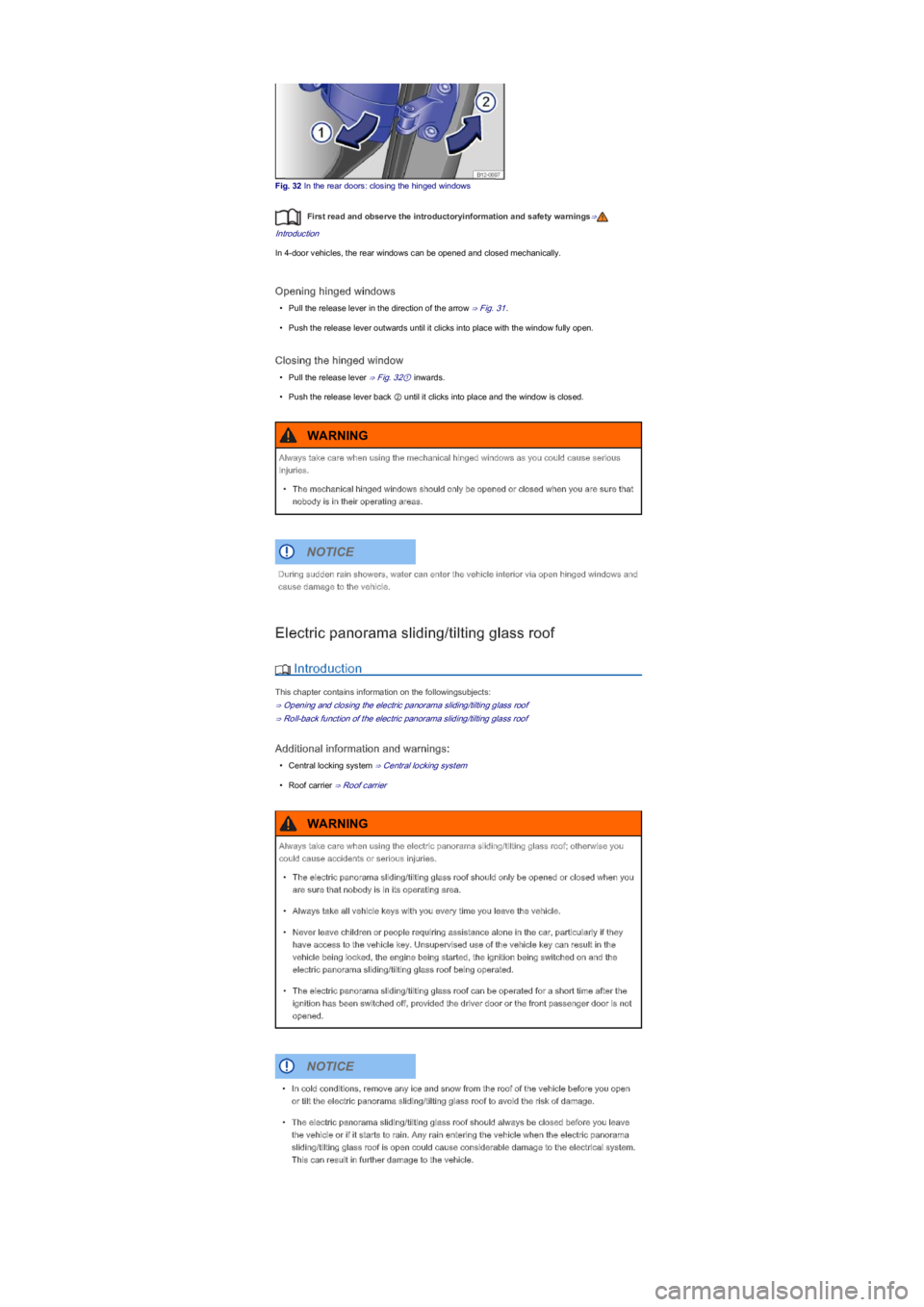
Fig. 32 In the rear doors: closing the hinged windows
First read and observe the introductoryinformation and safety warnings⇒
Introduction
In 4-door vehicles, the rear windows can be opened and closed mechanically.
Opening hinged windows
•Pull the release lever in the direction of the arrow ⇒ Fig. 31.
•Push the release lever outwards until it clicks into place with the window fully open.
Closing the hinged window
•Pull the release lever ⇒ Fig. 32① inwards.
•Push the release lever back ② until it clicks into place and the window is closed.
Electric panorama sliding/tilting glass roof
Introduction
This chapter contains information on the followingsubjects:
⇒ Opening and closing the electric panorama sliding/tilting glass roof
⇒ Roll-back function of the electric panorama sliding/tilting glass roof
Additional information and warnings:
•Central locking system ⇒ Central locking system
•Roof carrier ⇒ Roof carrier
Always take care when using the mechanical hinged windows as you could cause serious
injuries.
•The mechanical hinged windows should only be opened or closed when you are sure that
nobody is in their operating areas.
WARNING
During sudden rain showers, water can enter the vehicle interior via open hinged windows and
cause damage to the vehicle.
NOTICE
Always take care when using the electric panorama sliding/tilting glass roof; otherwise you
could cause accidents or serious injuries.
•The electric panorama sliding/tilting glass roof should only be opened or closed when you
are sure that nobody is in its operating area.
•Always take all vehicle keys with you every time you leave the vehicle.
•Never leave children or people requiring assistance alone in the car, particularly if they
have access to the vehicle key. Unsupervised use of the vehicle key can result in the
vehicle being locked, the engine being started, the ignition being switched on and the
electric panorama sliding/tilting glass roof being operated.
•The electric panorama sliding/tilting glass roof can be operated for a short time after the
ignition has been switched off, provided the driver door or the front passenger door is not
opened.
WARNING
•In cold conditions, remove any ice and snow from the roof of the vehicle before you open
or tilt the electric panorama sliding/tilting glass roof to avoid the risk of damage.
•The electric panorama sliding/tilting glass roof should always be closed before you leave
the vehicle or if it starts to rain. Any rain entering the vehicle when the electric panorama
sliding/tilting glass roof is open could cause considerable damage to the electrical system.
This can result in further damage to the vehicle.
NOTICE
Page 37 of 211
In 4-door vehicles: on the interior side of the seat only.
Adjusting the rear head restraint
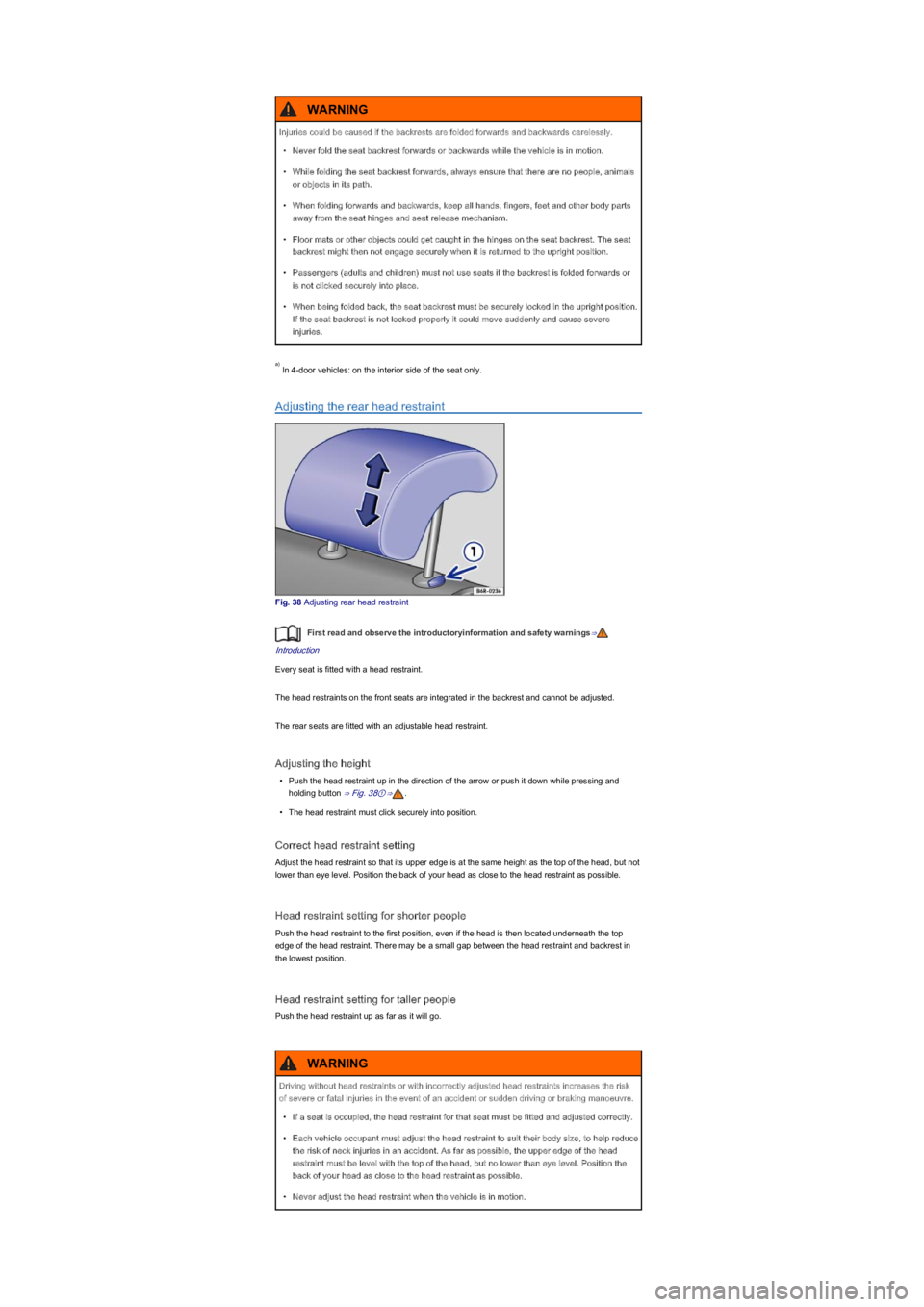
Fig. 38 Adjusting rear head restraint
First read and observe the introductoryinformation and safety warnings⇒
Introduction
Every seat is fitted with a head restraint.
The head restraints on the front seats are integrated in the backrest and cannot be adjusted.
The rear seats are fitted with an adjustable head restraint.
Adjusting the height
•Push the head restraint up in the direction of the arrow or push it down while pressing and
holding button ⇒ Fig. 38①⇒.
•The head restraint must click securely into position.
Correct head restraint setting
Adjust the head restraint so that its upper edge is at the same height as the top of the head, but not
lower than eye level. Position the back of your head as close to the head restraint as possible.
Head restraint setting for shorter people
Push the head restraint to the first position, even if the head is then located underneath the top
edge of the head restraint. There may be a small gap between the head restraint and backrest in
the lowest position.
Head restraint setting for taller people
Push the head restraint up as far as it will go.
Injuries could be caused if the backrests are folded forwards and backwards carelessly.
•Never fold the seat backrest forwards or backwards while the vehicle is in motion.
•While folding the seat backrest forwards, always ensure that there are no people, animals
or objects in its path.
•When folding forwards and backwards, keep all hands, fingers, feet and other body parts
away from the seat hinges and seat release mechanism.
•Floor mats or other objects could get caught in the hinges on the seat backrest. The seat
backrest might then not engage securely when it is returned to the upright position.
•Passengers (adults and children) must not use seats if the backrest is folded forwards or
is not clicked securely into place.
•When being folded back, the seat backrest must be securely locked in the upright position.
If the seat backrest is not locked properly it could move suddenly and cause severe
injuries.
WARNING
a)
Driving without head restraints or with incorrectly adjusted head restraints increases the risk
of severe or fatal injuries in the event of an accident or sudden driving or braking manoeuvre.
•If a seat is occupied, the head restraint for that seat must be fitted and adjusted correctly.
•Each vehicle occupant must adjust the head restraint to suit their body size, to help reduce
the risk of neck injuries in an accident. As far as possible, the upper edge of the head
restraint must be level with the top of the head, but no lower than eye level. Position the
back of your head as close to the head restraint as possible.
•Never adjust the head restraint when the vehicle is in motion.
WARNING
Page 62 of 211
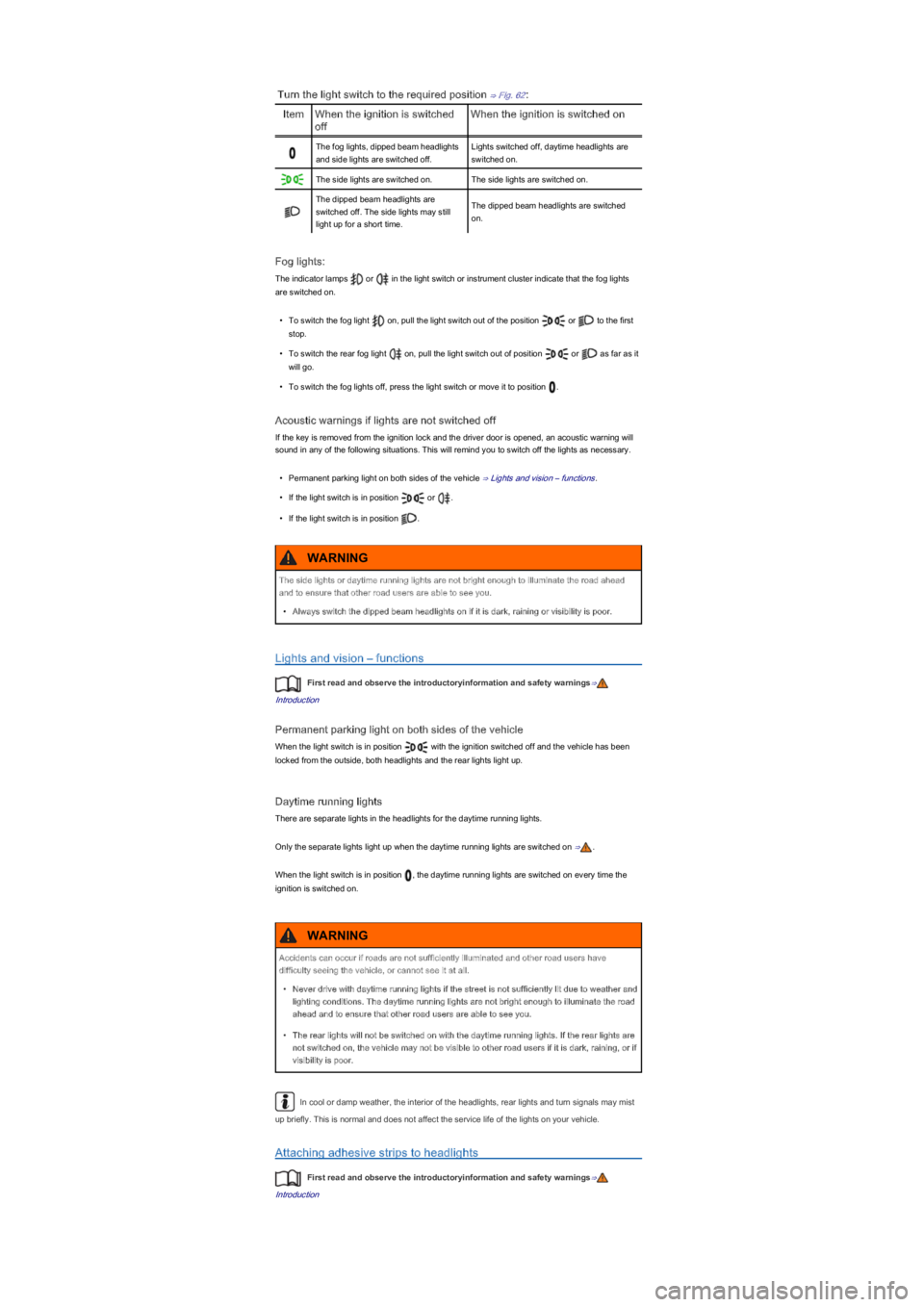
Turn the light switch to the required position ⇒ Fig. 62:
ItemWhen the ignition is switched
off
When the ignition is switched on
The fog lights, dipped beam headlights
and side lights are switched off.
Lights switched off, daytime headlights are
switched on.
The side lights are switched on.The side lights are switched on.
The dipped beam headlights are
switched off. The side lights may still
light up for a short time.
The dipped beam headlights are switched
on.
Fog lights:
The indicator lamps or in the light switch or instrument cluster indicate that the fog lights
are switched on.
•To switch the fog light on, pull the light switch out of the position or to the first
stop.
•To switch the rear fog light on, pull the light switch out of position or as far as it
will go.
•To switch the fog lights off, press the light switch or move it to position .
Acoustic warnings if lights are not switched off
If the key is removed from the ignition lock and the driver door is opened, an acoustic warning will
sound in any of the following situations. This will remind you to switch off the lights as necessary.
•Permanent parking light on both sides of the vehicle ⇒ Lights and vision – functions.
•If the light switch is in position or .
•If the light switch is in position .
Lights and vision – functions
First read and observe the introductoryinformation and safety warnings⇒
Introduction
Permanent parking light on both sides of the vehicle
When the light switch is in position with the ignition switched off and the vehicle has been
locked from the outside, both headlights and the rear lights light up.
Daytime running lights
There are separate lights in the headlights for the daytime running lights.
Only the separate lights light up when the daytime running lights are switched on ⇒.
When the light switch is in position , the daytime running lights are switched on every time the
ignition is switched on.
In cool or damp weather, the interior of the headlights, rear lights and turn signals may mist
up briefly. This is normal and does not affect the service life of the lights on your vehicle.
Attaching adhesive strips to headlights
First read and observe the introductoryinformation and safety warnings⇒
Introduction
The side lights or daytime running lights are not bright enough to illuminate the road ahead
and to ensure that other road users are able to see you.
•Always switch the dipped beam headlights on if it is dark, raining or visibility is poor.
WARNING
Accidents can occur if roads are not sufficiently illuminated and other road users have
difficulty seeing the vehicle, or cannot see it at all.
•Never drive with daytime running lights if the street is not sufficiently lit due to weather and
lighting conditions. The daytime running lights are not bright enough to illuminate the road
ahead and to ensure that other road users are able to see you.
•The rear lights will not be switched on with the daytime running lights. If the rear lights are
not switched on, the vehicle may not be visible to other road users if it is dark, raining, or if
visibility is poor.
WARNING
Page 63 of 211
If you have to drive a right-hand drive vehicle in a left-hand drive country, or vice versa, the
asymmetric dipped beam headlights may dazzle oncoming traffic.
Therefore you may have to apply stickers to certain parts of the headlight lenses if you are driving
abroad. A qualified workshop can provide you with further information. Volkswagen recommends
using a Volkswagen dealership for this purpose.
Stickers may only be used on the headlights for a limited period. Please contact a qualified
workshop for a permanent alteration. Volkswagen recommends using a Volkswagen dealership for
this purpose.
Headlight range control, instrument and switch lighting
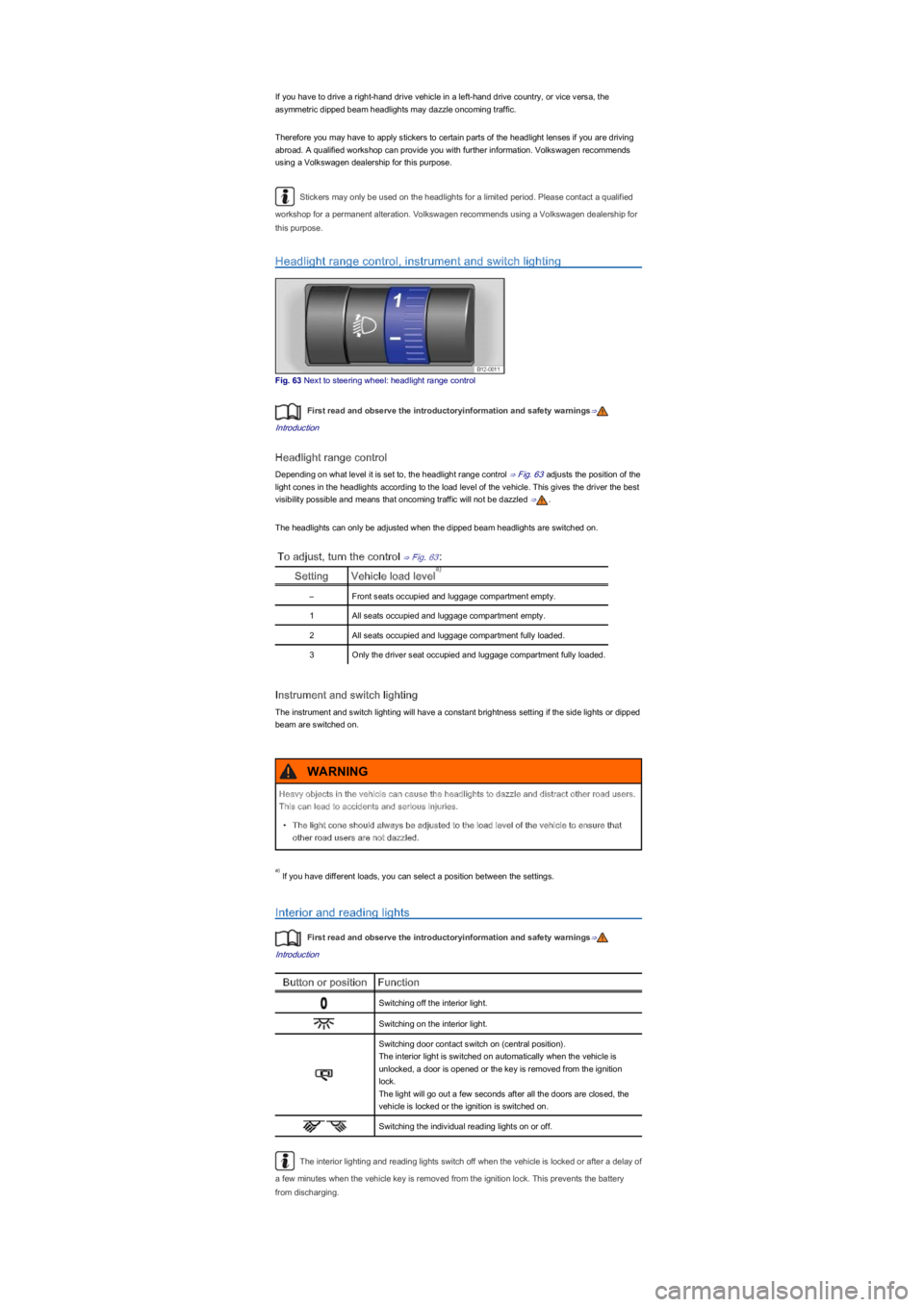
Fig. 63 Next to steering wheel: headlight range control
First read and observe the introductoryinformation and safety warnings⇒
Introduction
Headlight range control
Depending on what level it is set to, the headlight range control ⇒ Fig. 63 adjusts the position of the
light cones in the headlights according to the load level of the vehicle. This gives the driver the best
visibility possible and means that oncoming traffic will not be dazzled ⇒.
The headlights can only be adjusted when the dipped beam headlights are switched on.
To adjust, turn the control ⇒ Fig. 63:
SettingVehicle load level
–Front seats occupied and luggage compartment empty.
1All seats occupied and luggage compartment empty.
2All seats occupied and luggage compartment fully loaded.
3Only the driver seat occupied and luggage compartment fully loaded.
Instrument and switch lighting
The instrument and switch lighting will have a constant brightness setting if the side lights or dipped
beam are switched on.
If you have different loads, you can select a position between the settings.
Interior and reading lights
First read and observe the introductoryinformation and safety warnings⇒
Introduction
Button or positionFunction
Switching off the interior light.
Switching on the interior light.
Switching door contact switch on (central position).
The interior light is switched on automatically when the vehicle is
unlocked, a door is opened or the key is removed from the ignition
lock.
The light will go out a few seconds after all the doors are closed, the
vehicle is locked or the ignition is switched on.
Switching the individual reading lights on or off.
The interior lighting and reading lights switch off when the vehicle is locked or after a delay of
a few minutes when the vehicle key is removed from the ignition lock. This prevents the battery
from discharging.
a)
Heavy objects in the vehicle can cause the headlights to dazzle and distract other road users.
This can lead to accidents and serious injuries.
•The light cone should always be adjusted to the load level of the vehicle to ensure that
other road users are not dazzled.
WARNING
a)
Page 73 of 211
The ventilation openings between the rear window and the luggage compartment cover must
not be covered as this would prevent stale air escaping from the vehicle.
Folding the backrests on the rear bench seat forwards and backwards
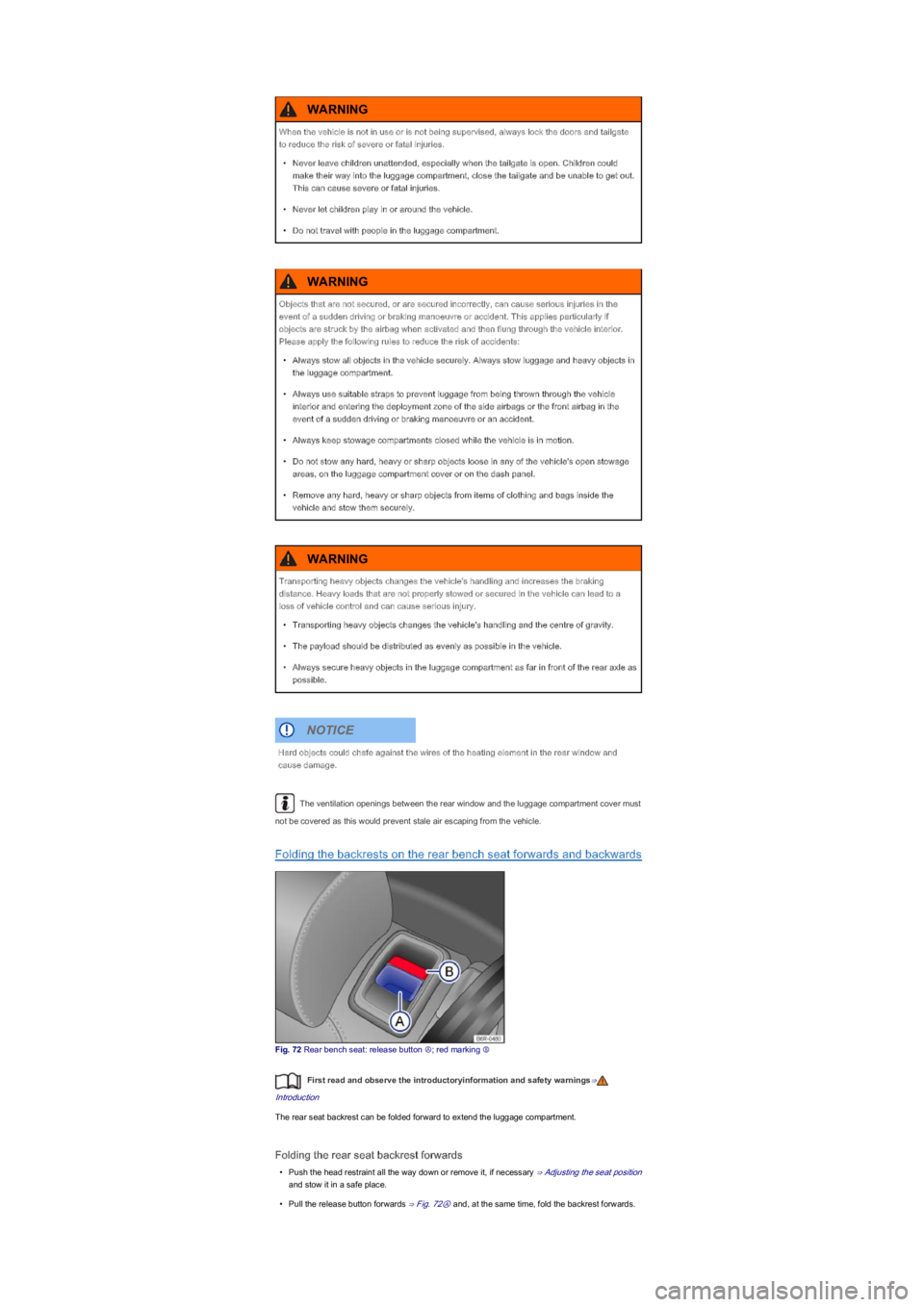
Fig. 72 Rear bench seat: release button Ⓐ; red marking Ⓑ
First read and observe the introductoryinformation and safety warnings⇒
Introduction
The rear seat backrest can be folded forward to extend the luggage compartment.
Folding the rear seat backrest forwards
•Push the head restraint all the way down or remove it, if necessary ⇒ Adjusting the seat position
and stow it in a safe place.
•Pull the release button forwards ⇒ Fig. 72Ⓐ and, at the same time, fold the backrest forwards.
When the vehicle is not in use or is not being supervised, always lock the doors and tailgate
to reduce the risk of severe or fatal injuries.
•Never leave children unattended, especially when the tailgate is open. Children could
make their way into the luggage compartment, close the tailgate and be unable to get out.
This can cause severe or fatal injuries.
•Never let children play in or around the vehicle.
•Do not travel with people in the luggage compartment.
WARNING
Objects that are not secured, or are secured incorrectly, can cause serious injuries in the
event of a sudden driving or braking manoeuvre or accident. This applies particularly if
objects are struck by the airbag when activated and then flung through the vehicle interior.
Please apply the following rules to reduce the risk of accidents:
•Always stow all objects in the vehicle securely. Always stow luggage and heavy objects in
the luggage compartment.
•Always use suitable straps to prevent luggage from being thrown through the vehicle
interior and entering the deployment zone of the side airbags or the front airbag in the
event of a sudden driving or braking manoeuvre or an accident.
•Always keep stowage compartments closed while the vehicle is in motion.
•Do not stow any hard, heavy or sharp objects loose in any of the vehicle's open stowage
areas, on the luggage compartment cover or on the dash panel.
•Remove any hard, heavy or sharp objects from items of clothing and bags inside the
vehicle and stow them securely.
WARNING
Transporting heavy objects changes the vehicle's handling and increases the braking
distance. Heavy loads that are not properly stowed or secured in the vehicle can lead to a
loss of vehicle control and can cause serious injury.
•Transporting heavy objects changes the vehicle's handling and the centre of gravity.
•The payload should be distributed as evenly as possible in the vehicle.
•Always secure heavy objects in the luggage compartment as far in front of the rear axle as
possible.
WARNING
Hard objects could chafe against the wires of the heating element in the rear window and
cause damage.
NOTICE
Page 145 of 211
How the vehicle battery discharges:
•Long periods at a standstill in which the engine is not running, especially if the ignition is
switched on.
•The use of electrical consumers when the engine is switched off.
Dispose of the vehicle battery as required by legislation. Batteries may contain toxic
substances such as sulphuric acid and lead.
Electrolyte can pollute the environment. Clean up any service fluid leakages and dispose of
them properly.
Vehicle care and maintenance
Caring for and cleaning the vehicle exterior
Introduction
This chapter contains information on the followingsubjects:
⇒ Washing the vehicle
⇒ Washing the vehicle with a high-pressure cleaner
⇒ Cleaning windows and exterior mirrors
⇒ Cleaning and changing windscreen wiper blades
⇒ Waxing and polishing the vehicle
⇒ Cleaning and caring for chrome and aluminium trim parts
⇒ Cleaning wheels
⇒ Care of rubber seals
⇒ De-icing the door lock cylinders
⇒ Underseal
⇒ Cleaning the engine compartment
Regular and expert care helps to maintain the value of the vehicle. Proper maintenance may also
be one of the requirements for the approval of warranty claims in the event of corrosion or paint
defects.
Suitable care products are available from Volkswagen dealers.
Additional information and warnings:
•Preparation for working in the engine compartment ⇒ Preparation for working in the engine
compartment
•Cleaning and caring for the interior ⇒ Cleaning and caring for the interior
•Accessories, modifications, repairs and renewal of parts ⇒ Accessories, modifications, repairs
and renewal of parts
Incorrectly attaching the battery and using incorrect vehicle batteries can cause short circuits,
fire and serious injuries.
•Always use maintenance-free and leak-proof batteries that have the same properties,
specifications and dimensions as the factory-fitted vehicle battery.
WARNING
A highly explosive mixture of gases is given off when the vehicle battery is being charged.
•Vehicle batteries should only be charged in well-ventilated spaces.
•Never charge a vehicle battery once it has been frozen. Discharged vehicle batteries can
even freeze at temperatures of around 0°C (+32°F).
•A vehicle battery must be replaced if it has been frozen.
•Incorrectly connected cables can cause a short circuit. First connect the positive cable and
then the negative cable.
WARNING
•Never make or break connections between vehicle batteries if the ignition is switched on or
the engine is running. Never use a vehicle battery that does not correspond with the
vehicle's specifications. The vehicle's electrical system or electronic components could be
damaged, which could lead to electrical faults, for example in the start/stop system.
•Never connect equipment that provides electricity, such as solar panels or a battery
charger, to the 12-volt socket or to the cigarette lighter to charge the vehicle battery. This
can damage the vehicle electrical system.
NOTICE
Page 147 of 211
Washing the vehicle with a high-pressure cleaner
First read and observe the introductoryinformation and safety warnings⇒
Introduction
Follow the instructions provided by the manufacturer when cleaning your vehicle using a high-
pressure cleaner. This applies in particular to the pressure and the spraying distance⇒.
Maintain sufficient distance to soft materials such as rubber hoses, insulation, and the ParkPilot
sensors. The ParkPilot sensors are located in the rear bumper ⇒.
Never use concentrated jet nozzles or dirt blasters⇒.
Parts of the vehicle with sharp edges can cause injury.
•Protect your hands and arms from cuts on sharp parts, for example when cleaning the
underbody or the inside of the wheel housings.
WARNING
After the car has been washed, the braking effect could set in later than normal and extend
the braking distance as the brake discs and brake pads will be wet, or iced up in winter.
•You can dry and de-ice the brakes by performing careful braking manoeuvres. Ensure that
you do not endanger any other road users or violate any legal regulations when doing so.
WARNING
•The water should be no warmer than +60°C (+140°F).
•Do not wash the vehicle in direct sunlight in order to avoid damage to the vehicle
paintwork.
•Never clean with insect sponges, rough kitchen sponges or similar products as these can
damage the surface.
•Never clean the headlights with a dry cloth or sponge. Always use a wet cloth or sponge. It
is best to use soapy water.
•Washing the vehicle in cold weather: if the vehicle is rinsed with a hose, do not direct the
water into the lock cylinders or the gaps round the doors, boot, or bonnet. The locks and
seals could freeze.
NOTICE
Observe the following guidelines before driving the vehicle into an automatic car wash in order
to avoid damage to the vehicle:
•Ensure that the gap between the guide rails in the car wash is sufficient for the vehicle
track. If the track is too narrow your wheels and tyres will be damaged.
•Switch off the city emergency brake function before driving the vehicle into an automatic
car wash.
•Check that the car wash is tall and wide enough for your vehicle.
•Fold in the exterior mirrors.
•In order to prevent damage to the paintwork on the bonnet, fold the windscreen wipers
back onto the windscreen after drying the wiper blades. Do not drop the wipers onto the
glass.
•Lock the tailgate to prevent it from opening accidentally in the car wash.
NOTICE
Page 148 of 211
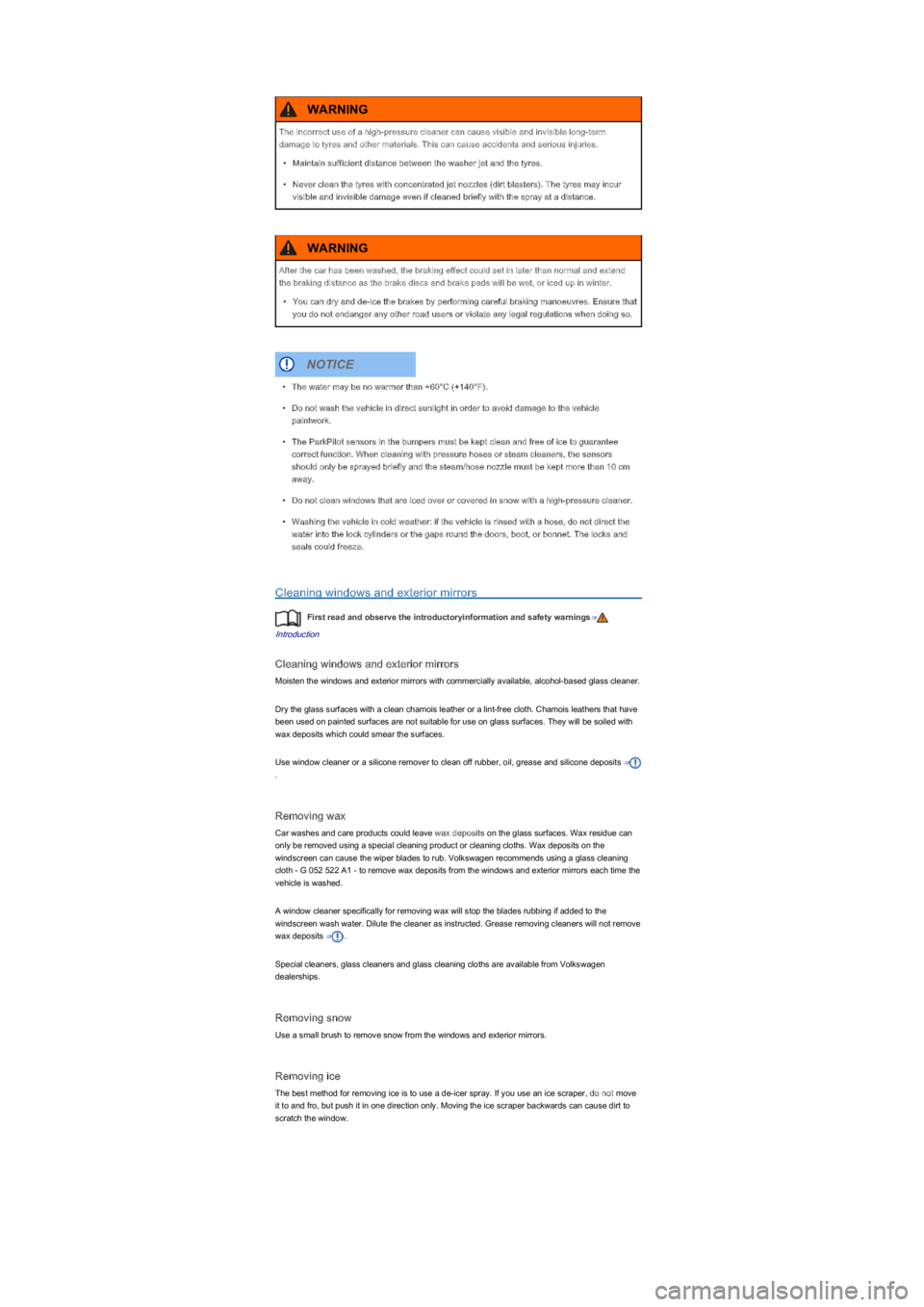
Cleaning windows and exterior mirrors
First read and observe the introductoryinformation and safety warnings⇒
Introduction
Cleaning windows and exterior mirrors
Moisten the windows and exterior mirrors with commercially available, alcohol-based glass cleaner.
Dry the glass surfaces with a clean chamois leather or a lint-free cloth. Chamois leathers that have
been used on painted surfaces are not suitable for use on glass surfaces. They will be soiled with
wax deposits which could smear the surfaces.
Use window cleaner or a silicone remover to clean off rubber, oil, grease and silicone deposits ⇒
.
Removing wax
Car washes and care products could leave wax deposits on the glass surfaces. Wax residue can
only be removed using a special cleaning product or cleaning cloths. Wax deposits on the
windscreen can cause the wiper blades to rub. Volkswagen recommends using a glass cleaning
cloth - G 052 522 A1 - to remove wax deposits from the windows and exterior mirrors each time the
vehicle is washed.
A window cleaner specifically for removing wax will stop the blades rubbing if added to the
windscreen wash water. Dilute the cleaner as instructed. Grease removing cleaners will not remove
wax deposits ⇒.
Special cleaners, glass cleaners and glass cleaning cloths are available from Volkswagen
dealerships.
Removing snow
Use a small brush to remove snow from the windows and exterior mirrors.
Removing ice
The best method for removing ice is to use a de-icer spray. If you use an ice scraper, do not move
it to and fro, but push it in one direction only. Moving the ice scraper backwards can cause dirt to
scratch the window.
The incorrect use of a high-pressure cleaner can cause visible and invisible long-term
damage to tyres and other materials. This can cause accidents and serious injuries.
•Maintain sufficient distance between the washer jet and the tyres.
•Never clean the tyres with concentrated jet nozzles (dirt blasters). The tyres may incur
visible and invisible damage even if cleaned briefly with the spray at a distance.
WARNING
After the car has been washed, the braking effect could set in later than normal and extend
the braking distance as the brake discs and brake pads will be wet, or iced up in winter.
•You can dry and de-ice the brakes by performing careful braking manoeuvres. Ensure that
you do not endanger any other road users or violate any legal regulations when doing so.
WARNING
•The water may be no warmer than +60°C (+140°F).
•Do not wash the vehicle in direct sunlight in order to avoid damage to the vehicle
paintwork.
•The ParkPilot sensors in the bumpers must be kept clean and free of ice to guarantee
correct function. When cleaning with pressure hoses or steam cleaners, the sensors
should only be sprayed briefly and the steam/hose nozzle must be kept more than 10 cm
away.
•Do not clean windows that are iced over or covered in snow with a high-pressure cleaner.
•Washing the vehicle in cold weather: if the vehicle is rinsed with a hose, do not direct the
water into the lock cylinders or the gaps round the doors, boot, or bonnet. The locks and
seals could freeze.
NOTICE
Page 151 of 211
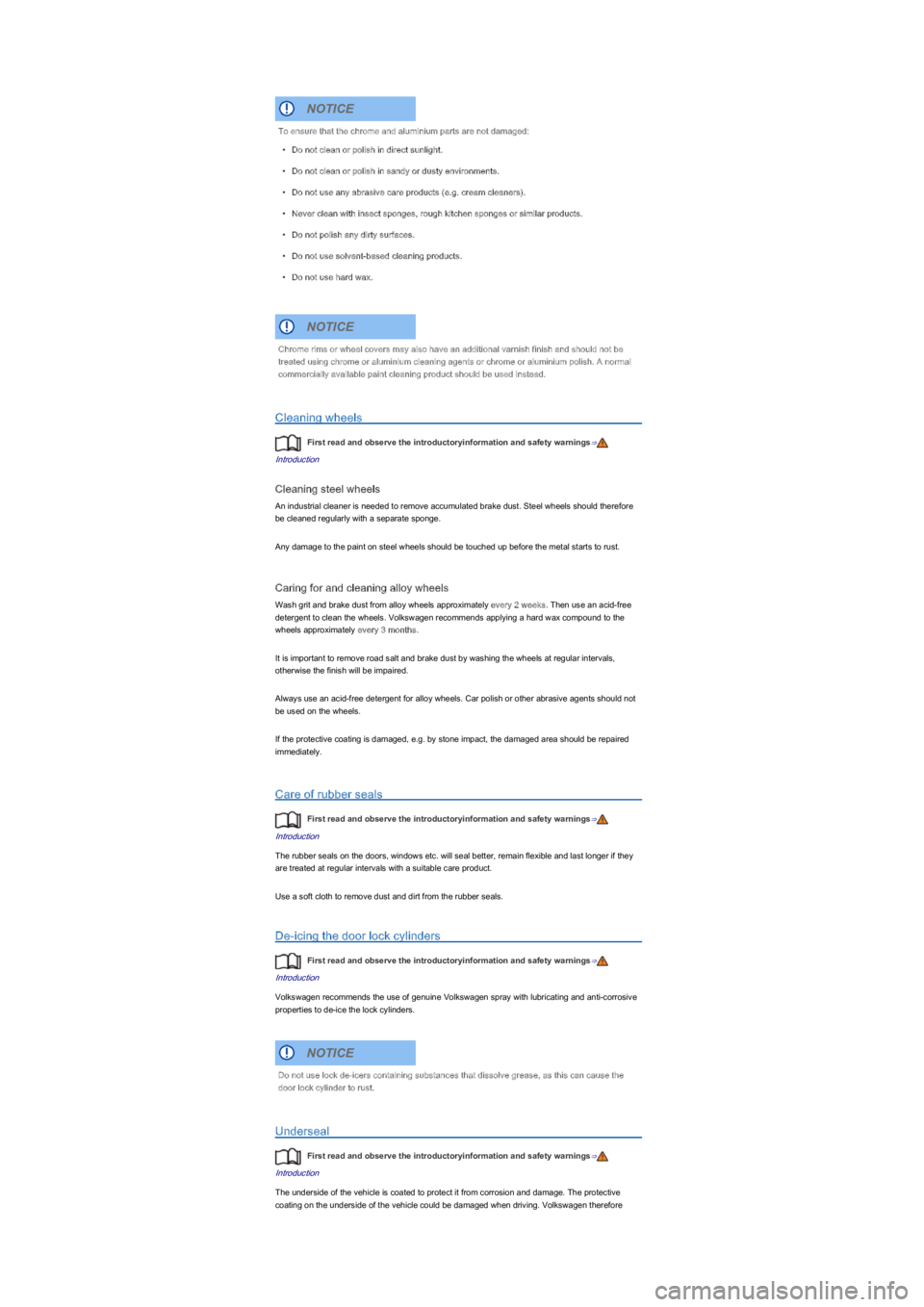
Cleaning wheels
First read and observe the introductoryinformation and safety warnings⇒
Introduction
Cleaning steel wheels
An industrial cleaner is needed to remove accumulated brake dust. Steel wheels should therefore
be cleaned regularly with a separate sponge.
Any damage to the paint on steel wheels should be touched up before the metal starts to rust.
Caring for and cleaning alloy wheels
Wash grit and brake dust from alloy wheels approximately every 2 weeks. Then use an acid-free
detergent to clean the wheels. Volkswagen recommends applying a hard wax compound to the
wheels approximately every 3 months.
It is important to remove road salt and brake dust by washing the wheels at regular intervals,
otherwise the finish will be impaired.
Always use an acid-free detergent for alloy wheels. Car polish or other abrasive agents should not
be used on the wheels.
If the protective coating is damaged, e.g. by stone impact, the damaged area should be repaired
immediately.
Care of rubber seals
First read and observe the introductoryinformation and safety warnings⇒
Introduction
The rubber seals on the doors, windows etc. will seal better, remain flexible and last longer if they
are treated at regular intervals with a suitable care product.
Use a soft cloth to remove dust and dirt from the rubber seals.
De-icing the door lock cylinders
First read and observe the introductoryinformation and safety warnings⇒
Introduction
Volkswagen recommends the use of genuine Volkswagen spray with lubricating and anti-corrosive
properties to de-ice the lock cylinders.
Underseal
First read and observe the introductoryinformation and safety warnings⇒
Introduction
The underside of the vehicle is coated to protect it from corrosion and damage. The protective
coating on the underside of the vehicle could be damaged when driving. Volkswagen therefore
To ensure that the chrome and aluminium parts are not damaged:
•Do not clean or polish in direct sunlight.
•Do not clean or polish in sandy or dusty environments.
•Do not use any abrasive care products (e.g. cream cleaners).
•Never clean with insect sponges, rough kitchen sponges or similar products.
•Do not polish any dirty surfaces.
•Do not use solvent-based cleaning products.
•Do not use hard wax.
NOTICE
Chrome rims or wheel covers may also have an additional varnish finish and should not be
treated using chrome or aluminium cleaning agents or chrome or aluminium polish. A normal
commercially available paint cleaning product should be used instead.
NOTICE
Do not use lock de-icers containing substances that dissolve grease, as this can cause the
door lock cylinder to rust.
NOTICE