braking VOLKSWAGEN UP! 2021 Owner´s Manual
[x] Cancel search | Manufacturer: VOLKSWAGEN, Model Year: 2021, Model line: UP!, Model: VOLKSWAGEN UP! 2021Pages: 211, PDF Size: 5.98 MB
Page 163 of 211
Tyre damage
First read and observe the introductoryinformation and safety warnings⇒
Introduction
Damage to tyres and rims is often not readily visible. Any unusual vibrations or signs that the car is
pulling to one side may indicate that one of the tyres is damaged ⇒.
•Reduce your speed immediately if you suspect that a wheel is damaged.
•Check the tyres and rims for damage.
•If the tyre is damaged, do not drive on. Seek expert assistance.
•If there is no visible damage, drive slowly and cautiously to the next qualified workshop in order
to have the vehicle checked.
Foreign bodies in the tyre
•Leave the foreign body in the tyre if it has entered the inner tyre. However, foreign bodies that
are stuck between the tyre tread blocks can be removed.
•For vehicles with a spare wheel or temporary spare wheel: where appropriate, change the
damaged wheel ⇒ Changing a wheel If required, seek expert assistance when changing the
damaged wheel. Volkswagen recommends using a Volkswagen dealership for this purpose.
•For vehicles with a breakdown set: if required, seal the tyre and pump it up using the
breakdown set ⇒ Breakdown set. Proceed to a qualified workshop. Volkswagen recommends
using a Volkswagen dealership for this purpose.
•Check the pressure and adjust it as required.
Tyre wear
Tyre wear is affected by several factors. These include:
•Driving style.
•Unbalanced wheels.
•Running gear setting.
Driving style – fast cornering, heavy acceleration and hard braking all increase tyre wear. The
running gear should be checked by a qualified workshop if the tyres show excessive wear despite a
normal driving style.
Unbalanced wheels – the wheels on new vehicles are balanced. However, various factors
encountered in normal driving can cause them to become unbalanced, which results in steering
vibration. Unbalanced wheels will affect levels of wear on the steering system and the suspension.
In this case the wheels should be balanced again. A new tyre will have to be balanced after fitting.
Running gear setting – incorrect wheel alignment causes excessive tyre wear, impairing the safety
of the vehicle. The wheel alignment should be checked by a qualified workshop if tyres show
excessive wear.
Spare wheel or temporary spare wheel
Worn tyres are a safety risk and can lead to a loss of control of the vehicle and cause serious
injury.
•Tyres must be replaced at the latest when the tread is worn down to the tread wear
indicators.
•Worn tyres have considerably less tread, particularly on wet roads, which can cause the
vehicle to glide along the road surface (aquaplaning).
•Worn tyres reduce the possibility of controlling the vehicle well in normal and difficult
driving situations and increase braking distance and the risk of sliding.
WARNING
If you notice unusual vibration or the car pulling to one side while the vehicle is in motion, this
may indicate that one of the tyres is damaged.
•Reduce speed immediately and park the vehicle without obstructing traffic.
•Check the tyres and rims for damage.
•Never drive on if wheels or tyres are damaged. Seek expert assistance instead.
•If there is no visible damage, drive slowly and cautiously to the next qualified workshop in
order to have the vehicle checked.
WARNING
Page 164 of 211
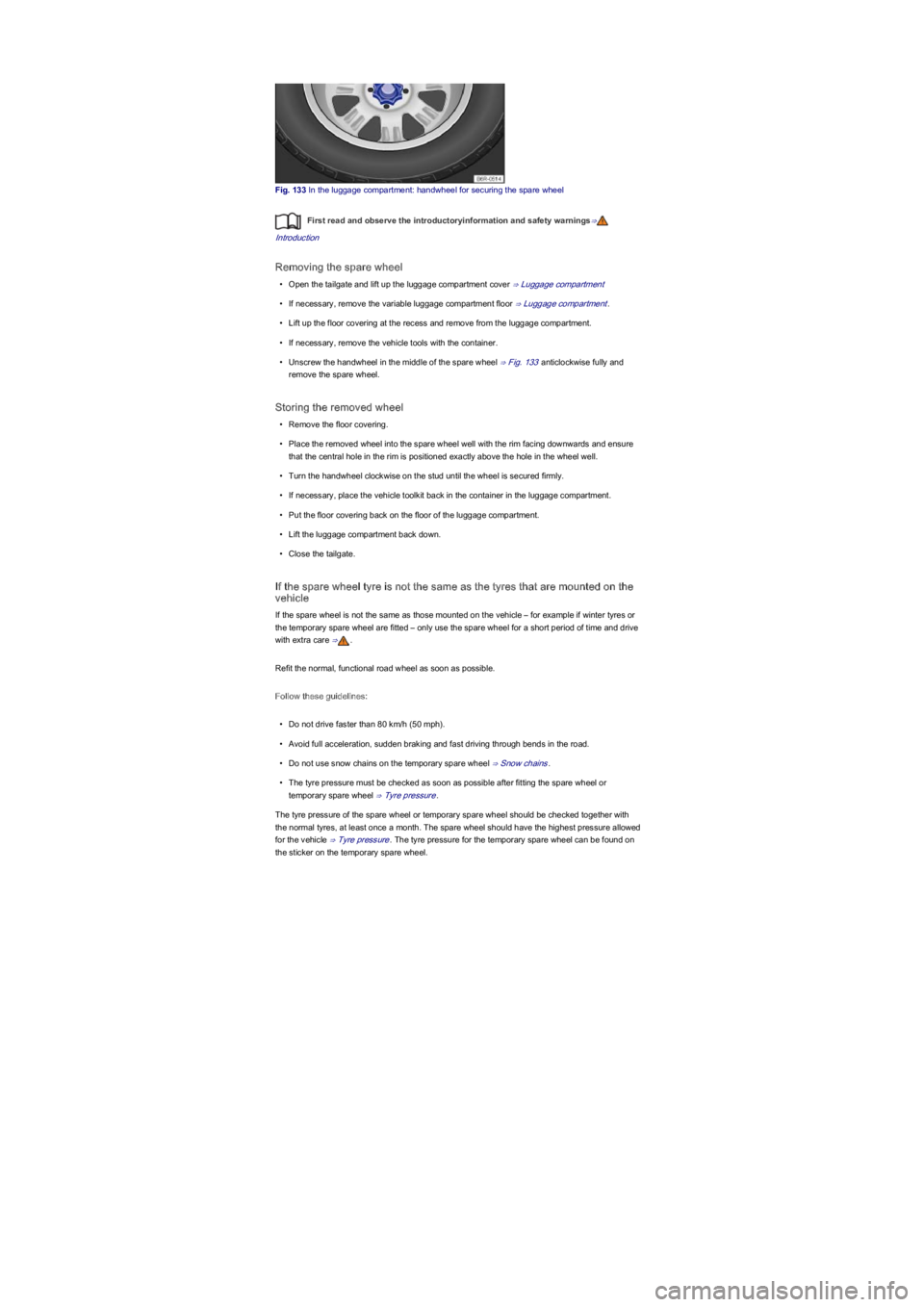
Fig. 133 In the luggage compartment: handwheel for securing the spare wheel
First read and observe the introductoryinformation and safety warnings⇒
Introduction
Removing the spare wheel
•Open the tailgate and lift up the luggage compartment cover ⇒ Luggage compartment
•If necessary, remove the variable luggage compartment floor ⇒ Luggage compartment.
•Lift up the floor covering at the recess and remove from the luggage compartment.
•If necessary, remove the vehicle tools with the container.
•Unscrew the handwheel in the middle of the spare wheel ⇒ Fig. 133 anticlockwise fully and
remove the spare wheel.
Storing the removed wheel
•Remove the floor covering.
•Place the removed wheel into the spare wheel well with the rim facing downwards and ensure
that the central hole in the rim is positioned exactly above the hole in the wheel well.
•Turn the handwheel clockwise on the stud until the wheel is secured firmly.
•If necessary, place the vehicle toolkit back in the container in the luggage compartment.
•Put the floor covering back on the floor of the luggage compartment.
•Lift the luggage compartment back down.
•Close the tailgate.
If the spare wheel tyre is not the same as the tyres that are mounted on the
vehicle
If the spare wheel is not the same as those mounted on the vehicle – for example if winter tyres or
the temporary spare wheel are fitted – only use the spare wheel for a short period of time and drive
with extra care ⇒.
Refit the normal, functional road wheel as soon as possible.
Follow these guidelines:
•Do not drive faster than 80 km/h (50 mph).
•Avoid full acceleration, sudden braking and fast driving through bends in the road.
•Do not use snow chains on the temporary spare wheel ⇒ Snow chains.
•The tyre pressure must be checked as soon as possible after fitting the spare wheel or
temporary spare wheel ⇒ Tyre pressure.
The tyre pressure of the spare wheel or temporary spare wheel should be checked together with
the normal tyres, at least once a month. The spare wheel should have the highest pressure allowed
for the vehicle ⇒ Tyre pressure. The tyre pressure for the temporary spare wheel can be found on
the sticker on the temporary spare wheel.
Page 166 of 211
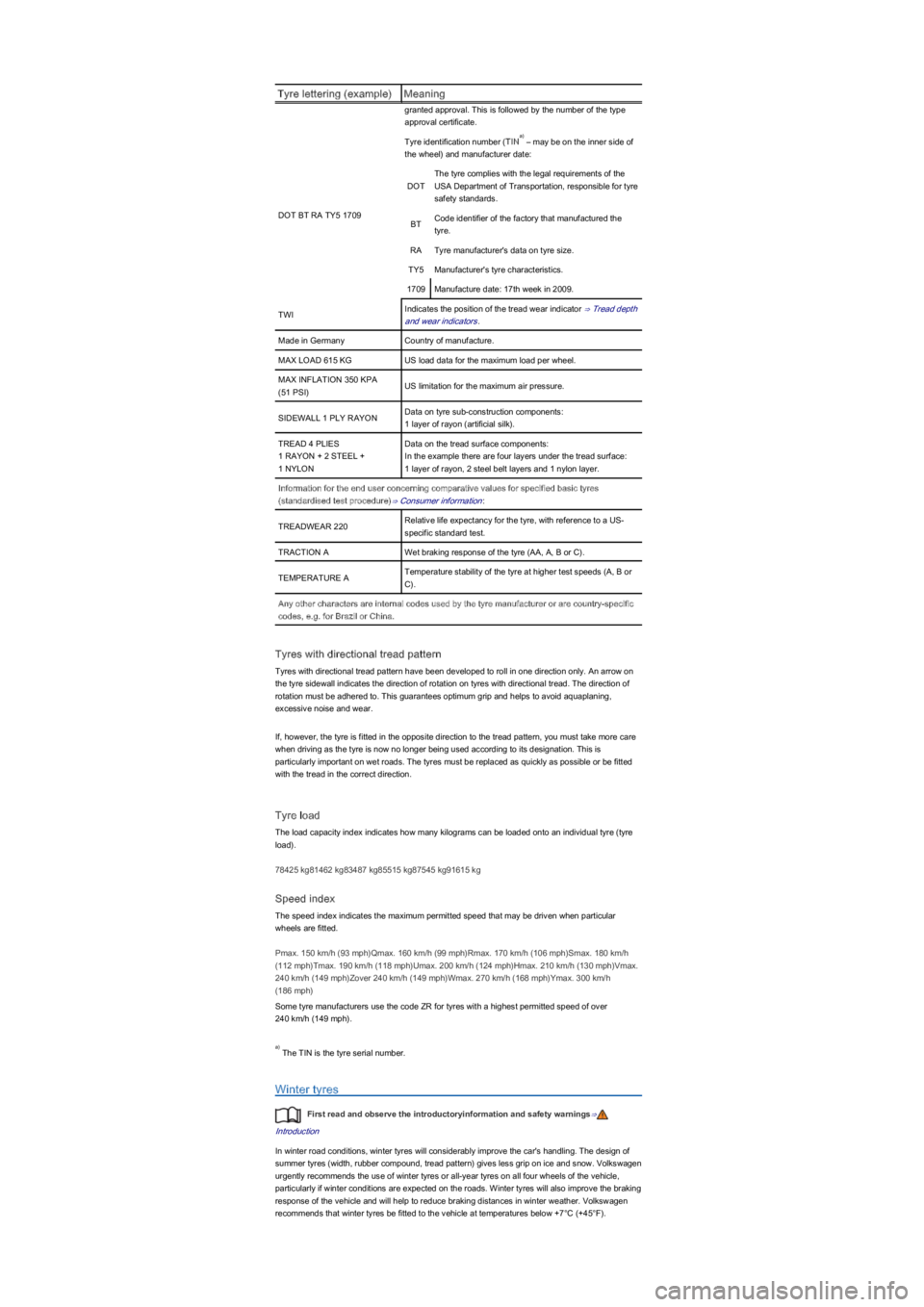
Tyre lettering (example)Meaning
granted approval. This is followed by the number of the type
approval certificate.
DOT BT RA TY5 1709
Tyre identification number (TIN – may be on the inner side of
the wheel) and manufacturer date:
DOT
The tyre complies with the legal requirements of the
USA Department of Transportation, responsible for tyre
safety standards.
BTCode identifier of the factory that manufactured the
tyre.
RATyre manufacturer's data on tyre size.
TY5Manufacturer's tyre characteristics.
1709Manufacture date: 17th week in 2009.
TWIIndicates the position of the tread wear indicator ⇒ Tread depth
and wear indicators.
Made in GermanyCountry of manufacture.
MAX LOAD 615 KGUS load data for the maximum load per wheel.
MAX INFLATION 350 KPA
(51 PSI)US limitation for the maximum air pressure.
SIDEWALL 1 PLY RAYONData on tyre sub-construction components:
1 layer of rayon (artificial silk).
TREAD 4 PLIES
1 RAYON + 2 STEEL +
1 NYLON
Data on the tread surface components:
In the example there are four layers under the tread surface:
1 layer of rayon, 2 steel belt layers and 1 nylon layer.
Information for the end user concerning comparative values for specified basic tyres
(standardised test procedure)⇒ Consumer information:
TREADWEAR 220Relative life expectancy for the tyre, with reference to a US-
specific standard test.
TRACTION AWet braking response of the tyre (AA, A, B or C).
TEMPERATURE ATemperature stability of the tyre at higher test speeds (A, B or
C).
Any other characters are internal codes used by the tyre manufacturer or are country-specific
codes, e.g. for Brazil or China.
Tyres with directional tread pattern
Tyres with directional tread pattern have been developed to roll in one direction only. An arrow on
the tyre sidewall indicates the direction of rotation on tyres with directional tread. The direction of
rotation must be adhered to. This guarantees optimum grip and helps to avoid aquaplaning,
excessive noise and wear.
If, however, the tyre is fitted in the opposite direction to the tread pattern, you must take more care
when driving as the tyre is now no longer being used according to its designation. This is
particularly important on wet roads. The tyres must be replaced as quickly as possible or be fitted
with the tread in the correct direction.
Tyre load
The load capacity index indicates how many kilograms can be loaded onto an individual tyre (tyre
load).
78425 kg81462 kg83487 kg85515 kg87545 kg91615 kg
Speed index
The speed index indicates the maximum permitted speed that may be driven when particular
wheels are fitted.
Pmax. 150 km/h (93 mph)Qmax. 160 km/h (99 mph)Rmax. 170 km/h (106 mph)Smax. 180 km/h
(112 mph)Tmax. 190 km/h (118 mph)Umax. 200 km/h (124 mph)Hmax. 210 km/h (130 mph)Vmax.
240 km/h (149 mph)Zover 240 km/h (149 mph)Wmax. 270 km/h (168 mph)Ymax. 300 km/h
(186 mph)
Some tyre manufacturers use the code ZR for tyres with a highest permitted speed of over
240 km/h (149 mph).
The TIN is the tyre serial number.
Winter tyres
First read and observe the introductoryinformation and safety warnings⇒
Introduction
In winter road conditions, winter tyres will considerably improve the car's handling. The design of
summer tyres (width, rubber compound, tread pattern) gives less grip on ice and snow. Volkswagen
urgently recommends the use of winter tyres or all-year tyres on all four wheels of the vehicle,
particularly if winter conditions are expected on the roads. Winter tyres will also improve the braking
response of the vehicle and will help to reduce braking distances in winter weather. Volkswagen
recommends that winter tyres be fitted to the vehicle at temperatures below +7°C (+45°F).
a)
a)
Page 167 of 211
Winter tyres lose their effectiveness when the tread is worn down to a depth of 4 mm. Winter tyres
also largely lose their effectiveness through ageing – regardless of the tread depth.
The following applies when using winter tyres:
•Observe any country-specific legal requirements.
•Use winter tyres on all four wheels at the same time.
•Only use in winter road conditions.
•Only use the sizes of winter tyre that have been approved for the vehicle.
•Winter tyres must have the same type, size (rolling circumference) and the same tread pattern.
•Heed the maximum speed permitted by the speed index ⇒.
Speed limitation
Winter tyres have a speed limitation depending on the speed index ⇒ Tyre lettering.
In some vehicle versions, a speed warning can be set in the MFD (multifunction display) menu in
the instrument cluster ⇒ Volkswagen information system.
If you use V-rated tyres the speed limits and required tyre pressure will be determined by the
engine size. You must ask a Volkswagen dealership about the highest permitted speed and
required tyre pressure.
Summer tyres should be fitted in good time at the end of the winter. The vehicle handling is
better if summer tyres are fitted at temperatures above +7°C (+45°F). They are quieter, do not wear
so quickly and reduce fuel consumption.
Volkswagen dealerships can provide details on permissible winter tyre sizes.
Snow chains
First read and observe the introductoryinformation and safety warnings⇒
Introduction
Please heed legislation and also the permitted speed when driving your vehicle with snow chains.
In winter conditions, snow chains will not only improve acceleration, but also braking response.
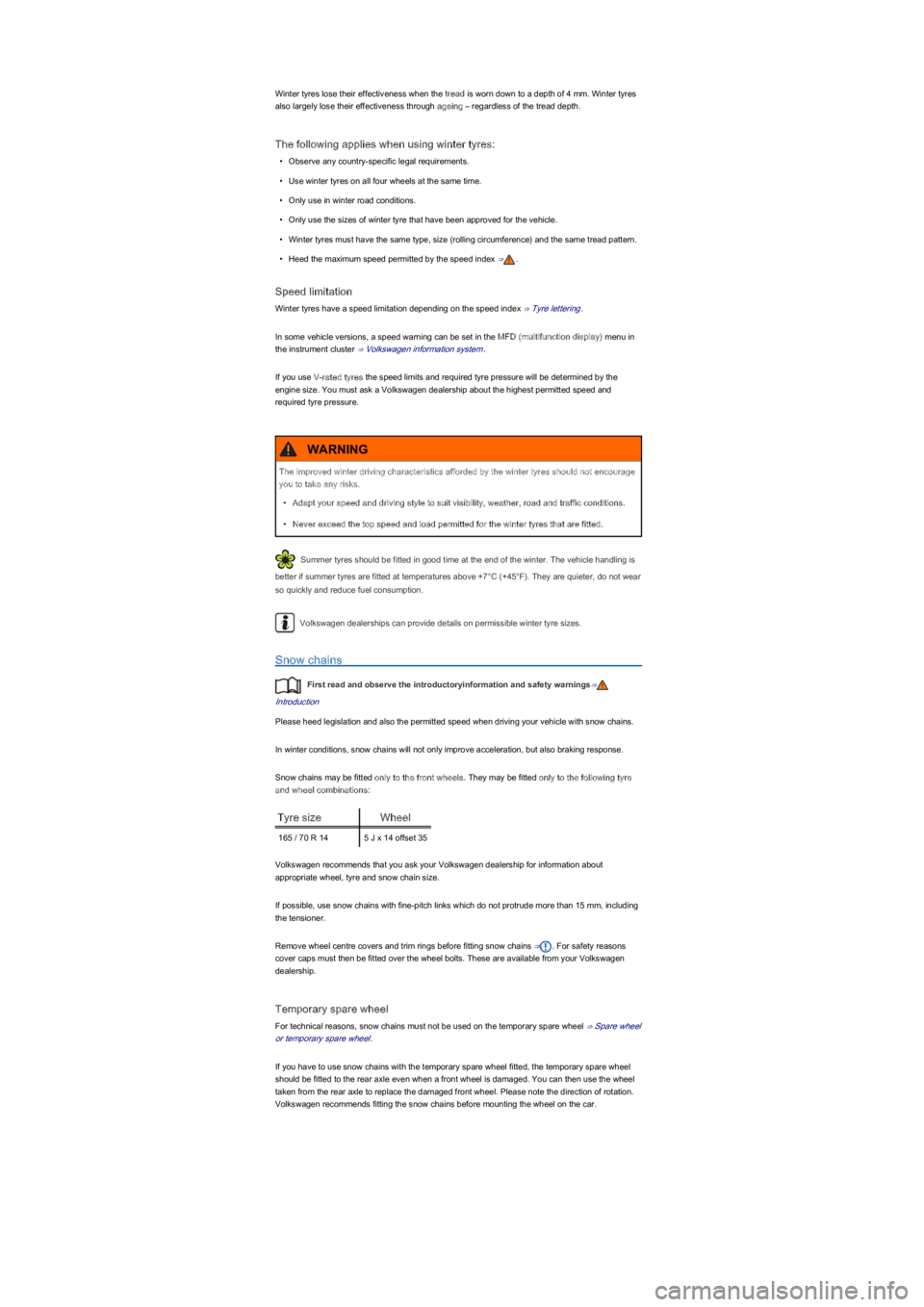
Snow chains may be fitted only to the front wheels. They may be fitted only to the following tyre
and wheel combinations:
Tyre sizeWheel
165 / 70 R 145 J x 14 offset 35
Volkswagen recommends that you ask your Volkswagen dealership for information about
appropriate wheel, tyre and snow chain size.
If possible, use snow chains with fine-pitch links which do not protrude more than 15 mm, including
the tensioner.
Remove wheel centre covers and trim rings before fitting snow chains ⇒. For safety reasons
cover caps must then be fitted over the wheel bolts. These are available from your Volkswagen
dealership.
Temporary spare wheel
For technical reasons, snow chains must not be used on the temporary spare wheel ⇒ Spare wheel
or temporary spare wheel.
If you have to use snow chains with the temporary spare wheel fitted, the temporary spare wheel
should be fitted to the rear axle even when a front wheel is damaged. You can then use the wheel
taken from the rear axle to replace the damaged front wheel. Please note the direction of rotation.
Volkswagen recommends fitting the snow chains before mounting the wheel on the car.
The improved winter driving characteristics afforded by the winter tyres should not encourage
you to take any risks.
•Adapt your speed and driving style to suit visibility, weather, road and traffic conditions.
•Never exceed the top speed and load permitted for the winter tyres that are fitted.
WARNING
Page 168 of 211
Snow chains are available in a range of sizes for a vehicle type.
Accessories, modifications, repairs and renewal of
parts
Introduction
This chapter contains information on the followingsubjects:
⇒ Running-in
⇒ Accessories and parts
⇒ Service fluids and consumables
⇒ Repairs and technical modifications
⇒ Repairs and faults in the airbag system
⇒ Retrofitting two-way radios
⇒ Information stored in the control units
⇒ Using a mobile telephone in the vehicle without a connection to the external aerial
⇒ Portable navigation device
⇒ Vehicle lifting points
Additional information and warnings:
•Seat belts ⇒ Seat belts
•Airbag system ⇒ Airbag system
•Roof carrier ⇒ Roof carrier
•Ashtray and cigarette lighter ⇒ Ashtray and cigarette lighter
•Electrical socket ⇒ Socket
•Braking, stopping and parking ⇒ Braking, stopping and parking
•Pull-away assist systems ⇒ Pull-away assist systems
•ParkPilot ⇒ ParkPilot
•Cruise Control System (CCS) ⇒ Cruise control system (CCS)
•Preparation for working in the engine compartment ⇒ Preparation for working in the engine
compartment
•Engine oil ⇒ Engine oil
•Engine coolant ⇒ Coolant
•Battery ⇒ Vehicle battery
•Cleaning and caring for the vehicle exterior ⇒ Caring for and cleaning the vehicle exterior
•Cleaning and caring for the interior ⇒ Cleaning and caring for the interior
•Consumer information ⇒ Consumer information
•⇒BookletRadio,
•User's manual for the portable navigation device (delivered by Volkswagen)
The use of snow chains that are unsuitable for your vehicle or the incorrect installation of
snow chains can cause accidents and serious injuries.
•Always use the correct snow chains.
•Follow the assembly instructions provided by the snow chain manufacturer.
•Never exceed the maximum speed permitted for the snow chains that are fitted.
WARNING
•Remove the snow chains when driving on roads that are free of snow. The snow chains will
otherwise impair handling, damage the tyres and wear out very quickly.
•Snow chains that are in direct contact with the wheel can scratch or damage it.
Volkswagen recommends using non-scratch snow chains.
NOTICE
Page 169 of 211
Running-in
First read and observe the introductoryinformation and safety warnings⇒
Introduction
Please follow the regulations concerning running-in new parts.
Running in a new engine
Any new engine has to be run in during the first 1,500 kilometres. During its first few hours of
running, the internal friction in the engine is greater than later on when all the moving parts have
bedded down.
The style of driving during the first 1,500 kilometres will also affect the engine quality. Even after
this time – and especially with a cold engine – drive the vehicle at moderate speeds in order to
reduce engine wear and to increase the mileage that the engine can cover. Do not drive at engine
speeds that are too low. Always shift down gear if the engine is not running smoothly. The
following applies up to 1,000 kilometres:
•Do not depress the accelerator fully.
•Do not drive the vehicle at more than 2/3 of the top engine speed.
From 1,000 to 1,500 kilometres, gradually increase driving performance to top speed and highest
engine speed.
Running in new tyres and brake pads
•New wheels and tyres ⇒ Wheels and tyres
•Information on the brakes ⇒ Braking, stopping and parking
If the engine is run in gently, the life of the engine will be increased and its oil consumption
reduced.
Accessories and parts
First read and observe the introductoryinformation and safety warnings⇒
Introduction
Volkswagen recommends that you seek advice from a Volkswagen dealership before purchasing
accessories, spare parts or service fluids. For example, if the vehicle is to be retrofitted with
accessories or if parts have to be renewed. Volkswagen dealerships can recommend accessories,
parts and service fluids suitable for your requirements. They can also answer any questions you
might have regarding official regulations.
Volkswagen recommends that you only use approved Volkswagen accessories and Volkswagen
Genuine Parts. These parts and accessories have been specially tested by Volkswagen for
suitability, reliability and safety. And Volkswagen dealerships are qualified to install them correctly.
Although the market is constantly scrutinised, Volkswagen cannot assume responsibility for the
reliability, safety and suitability of products Volkswagen has not approved. Volkswagen can
therefore assume no responsibility for these parts, even if they have been approved by an official
testing agency or are covered by an official approval certificate.
Any retro-fitted equipment that has a direct effect on the vehicle and/or the way it is driven must be
approved by Volkswagen for use in your vehicle and bear the e mark (the European Union's
authorization symbol). These devices include cruise control systems or an electronically controlled
suspension.
Any additional electrical components fitted that do not serve to control the vehicle itself must bear
the mark (manufacturer conformity declaration in the European Union). Such devices include
refrigerator boxes, laptops and ventilator fans.
Unsuitable spare parts and accessories, incorrectly carried out work, modifications and
repairs can lead to damage to the vehicle and cause accidents and serious injuries.
•Volkswagen strongly recommends that you only use approved Volkswagen accessories
and Volkswagen Genuine Parts. These parts and accessories have been specially tested
by Volkswagen for suitability, reliability and safety.
•Repairs and modifications to your vehicle should only be carried out by a qualified
workshop. Qualified workshops have the necessary tools, diagnostic equipment, repair
information and qualified personnel.
•Never fit parts to your vehicle that are in any way different from the factory-fitted parts.
•Never secure or mount objects such as drink holders or telephone holders on or next to
the airbag covers or within the deployment zone of the airbag.
•Only use rim/tyre combinations that have been approved by Volkswagen for your vehicle
type.
WARNING
®
®
Page 172 of 211
You will need an external aerial to use a two-way radio in the vehicle.
Any retrofit installation of electrical or electronic equipment in the vehicle will affect its vehicle type
approval. Under certain circumstances, this can negate the type approval for the vehicle.
Volkswagen has approved the vehicle for use with two-way radios subject to the following
conditions:
•Correct installation of external aerial.
•A maximum transmitting power of 10 watts.
An external aerial is needed to give the equipment its optimal range.
Check first with a qualified workshop if you wish to use a two-way radio with a transmitting power of
over 10 watts. A qualified workshop is familiar with the technical options for retrofitting. Volkswagen
recommends using a Volkswagen dealership for this purpose.
Please observe legislation and the instructions and information given in the operating manuals for
radio equipment.
Information stored in the control units
First read and observe the introductoryinformation and safety warnings⇒
Introduction
Your vehicle is factory fitted with electronic control units which are responsible for engine and
gearbox management. The control units also monitor the function of the exhaust system and the
airbags.
These electronic control units continuously evaluate data relevant to the vehicle while the vehicle is
being driven. Only these data will be stored if there are any faults recorded or any deviations from
the specified values. This is generally displayed by the indicator lamps on the instrument cluster.
Special units are required to read and evaluate data stored in the control units.
These data are stored so that specialist workshops can diagnose and solve problems. The
following data may have been stored:
•Engine and gearbox-relevant data.
•Speed.
•Direction of travel.
•Braking power.
•Seat belt monitor.
The control units never record conversations that take place in the vehicle. It is neither possible nor
permitted to use the stored data to create movement profiles.
When the vehicle is being used, situations may arise in which the stored data (alone or in
conjunction with other information such as accident reports, vehicle damage, witness statements
etc.) can become assignable to a particular person, in which case it may be necessary to consult an
expert and use the expert's information.
In vehicles with an emergency call function via a mobile telephone or other units, the current
location can be transmitted. In the event of an accident in which the control units register that an
airbag has been triggered, the system can automatically send out a signal. This depends on your
service provider. Transmission is possible only in areas with a sufficiently strong mobile telephone
signal.
Additional functions that are contractually agreed with the customer, e.g. vehicle positioning in an
emergency, allow certain vehicle data to be transmitted from the vehicle.
If radio equipment is not secured or not properly secured in the vehicle, it could be flung
though the interior during a sudden driving or braking manoeuvre, or in the event of an
accident. This can cause injuries.
•While the vehicle is in motion, always secure two-way radios properly outside the airbag
deployment zones or stow them away safely.
WARNING
If two-way radios that are not connected to an external aerial are used, electromagnetic
radiation in the vehicle could exceed limit values and thus be a health hazard for drivers and
other vehicle occupants. This also applies to external aerials that have not been correctly
installed.
•Two-way radios should only be used in the vehicle if an external aerial is properly
connected.
CAUTION
Page 174 of 211
If a mobile telephone is used in the vehicle interior without this hands-free system, it is not safely
secured in the vehicle and also not connected to the vehicle's external telephone aerial.
Furthermore, the mobile telephone is not being charged in the telephone holder. It is also likely that
the telephone connection will be disrupted and the signal strength will be poor.
A mobile telephone should only be used in the vehicle if it is connected to a hands-free unit.
Volkswagen recommends the use of an external aerial when using a mobile telephone in the
vehicle.
Bluetooth is a registered trademark of Bluetooth SIG, Inc.
Portable navigation device
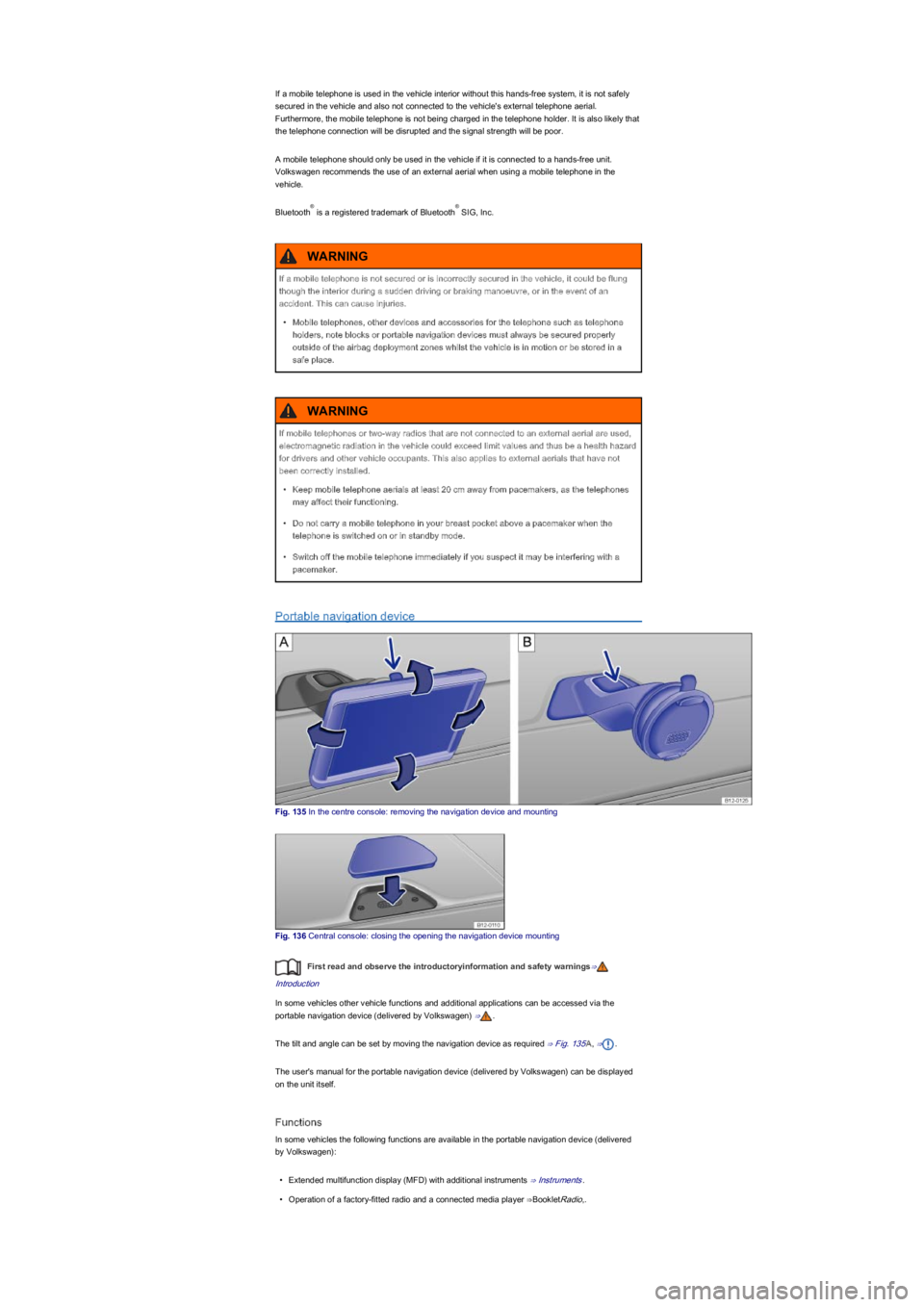
Fig. 135 In the centre console: removing the navigation device and mounting
Fig. 136 Central console: closing the opening the navigation device mounting
First read and observe the introductoryinformation and safety warnings⇒
Introduction
In some vehicles other vehicle functions and additional applications can be accessed via the
portable navigation device (delivered by Volkswagen) ⇒.
The tilt and angle can be set by moving the navigation device as required ⇒ Fig. 135A, ⇒.
The user's manual for the portable navigation device (delivered by Volkswagen) can be displayed
on the unit itself.
Functions
In some vehicles the following functions are available in the portable navigation device (delivered
by Volkswagen):
•Extended multifunction display (MFD) with additional instruments ⇒ Instruments.
•Operation of a factory-fitted radio and a connected media player ⇒BookletRadio,.
®®
If a mobile telephone is not secured or is incorrectly secured in the vehicle, it could be flung
though the interior during a sudden driving or braking manoeuvre, or in the event of an
accident. This can cause injuries.
•Mobile telephones, other devices and accessories for the telephone such as telephone
holders, note blocks or portable navigation devices must always be secured properly
outside of the airbag deployment zones whilst the vehicle is in motion or be stored in a
safe place.
WARNING
If mobile telephones or two-way radios that are not connected to an external aerial are used,
electromagnetic radiation in the vehicle could exceed limit values and thus be a health hazard
for drivers and other vehicle occupants. This also applies to external aerials that have not
been correctly installed.
•Keep mobile telephone aerials at least 20 cm away from pacemakers, as the telephones
may affect their functioning.
•Do not carry a mobile telephone in your breast pocket above a pacemaker when the
telephone is switched on or in standby mode.
•Switch off the mobile telephone immediately if you suspect it may be interfering with a
pacemaker.
WARNING
Page 176 of 211
Volkswagen recommends that you take the portable navigation device with you when leaving
the vehicle to prevent it being stolen.
Vehicle lifting points
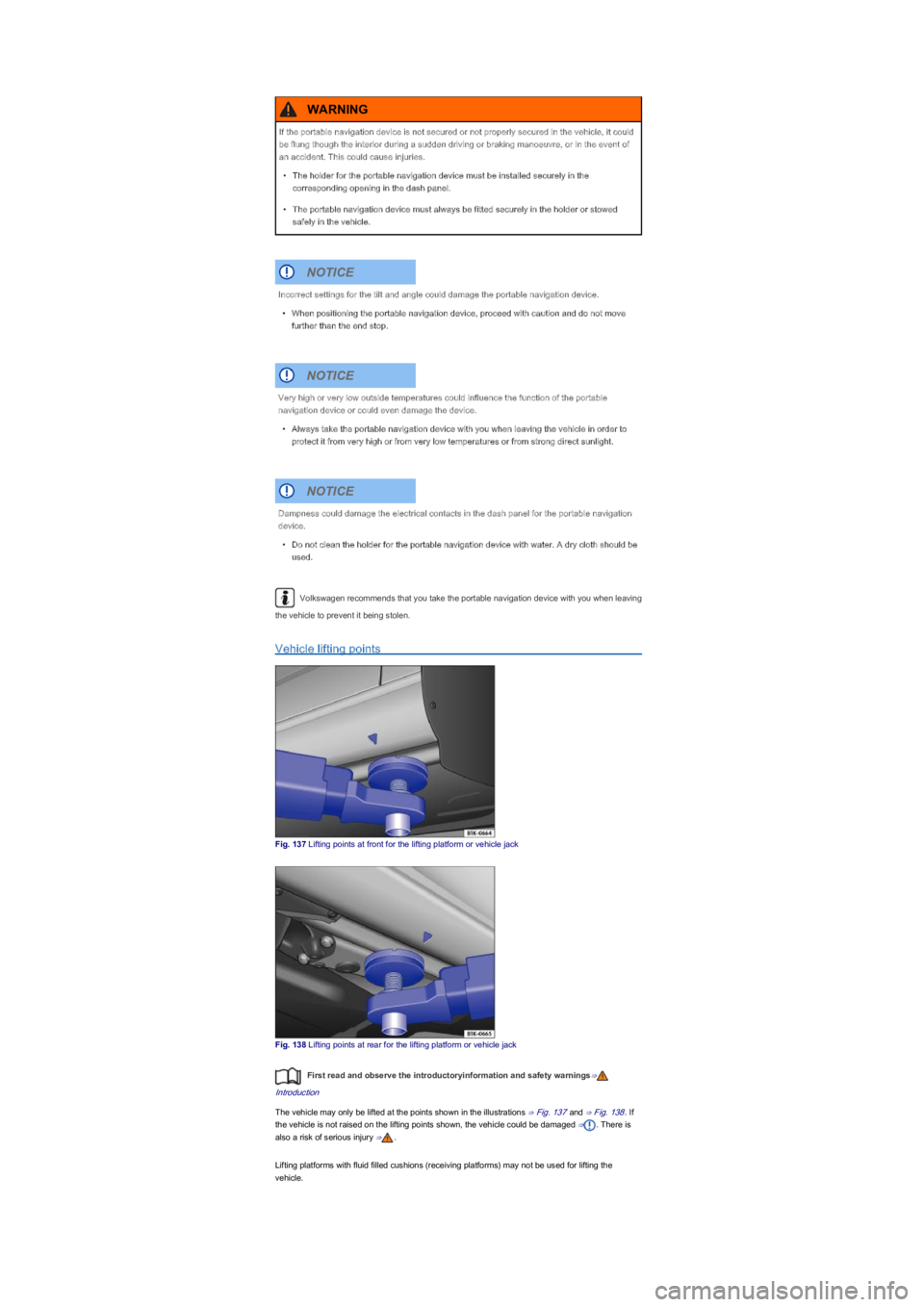
Fig. 137 Lifting points at front for the lifting platform or vehicle jack
Fig. 138 Lifting points at rear for the lifting platform or vehicle jack
First read and observe the introductoryinformation and safety warnings⇒
Introduction
The vehicle may only be lifted at the points shown in the illustrations ⇒ Fig. 137 and ⇒ Fig. 138. If
the vehicle is not raised on the lifting points shown, the vehicle could be damaged ⇒. There is
also a risk of serious injury ⇒.
Lifting platforms with fluid filled cushions (receiving platforms) may not be used for lifting the
vehicle.
If the portable navigation device is not secured or not properly secured in the vehicle, it could
be flung though the interior during a sudden driving or braking manoeuvre, or in the event of
an accident. This could cause injuries.
•The holder for the portable navigation device must be installed securely in the
corresponding opening in the dash panel.
•The portable navigation device must always be fitted securely in the holder or stowed
safely in the vehicle.
WARNING
Incorrect settings for the tilt and angle could damage the portable navigation device.
•When positioning the portable navigation device, proceed with caution and do not move
further than the end stop.
NOTICE
Very high or very low outside temperatures could influence the function of the portable
navigation device or could even damage the device.
•Always take the portable navigation device with you when leaving the vehicle in order to
protect it from very high or from very low temperatures or from strong direct sunlight.
NOTICE
Dampness could damage the electrical contacts in the dash panel for the portable navigation
device.
•Do not clean the holder for the portable navigation device with water. A dry cloth should be
used.
NOTICE
Page 182 of 211
Stop the vehicle at a safe distance away from moving traffic and on a suitable surface .
Switch on the hazard warning lights using the button .
Apply the handbrake firmly Braking, stopping and parking.
Select the neutral position or move the selector lever to N Changing gear.
Stop the engine and remove the vehicle key from the ignition .
Ensure that all occupants exit the vehicle away from moving traffic and proceed to a safe
position, e.g. behind the safety barrier.
Take all vehicle keys with you when you leave the vehicle.
Place the warning triangle in position to draw the attention of other road users to your
vehicle.
Allow the engine to cool down and, if necessary, seek expert assistance.
•Braking, stopping and parking ⇒ Braking, stopping and parking
•Manual opening and closing ⇒ Manual opening and closing
•Vehicle toolkit ⇒ Vehicle toolkit
•Changing a wheel ⇒ Changing a wheel
Making you and your vehicle safe
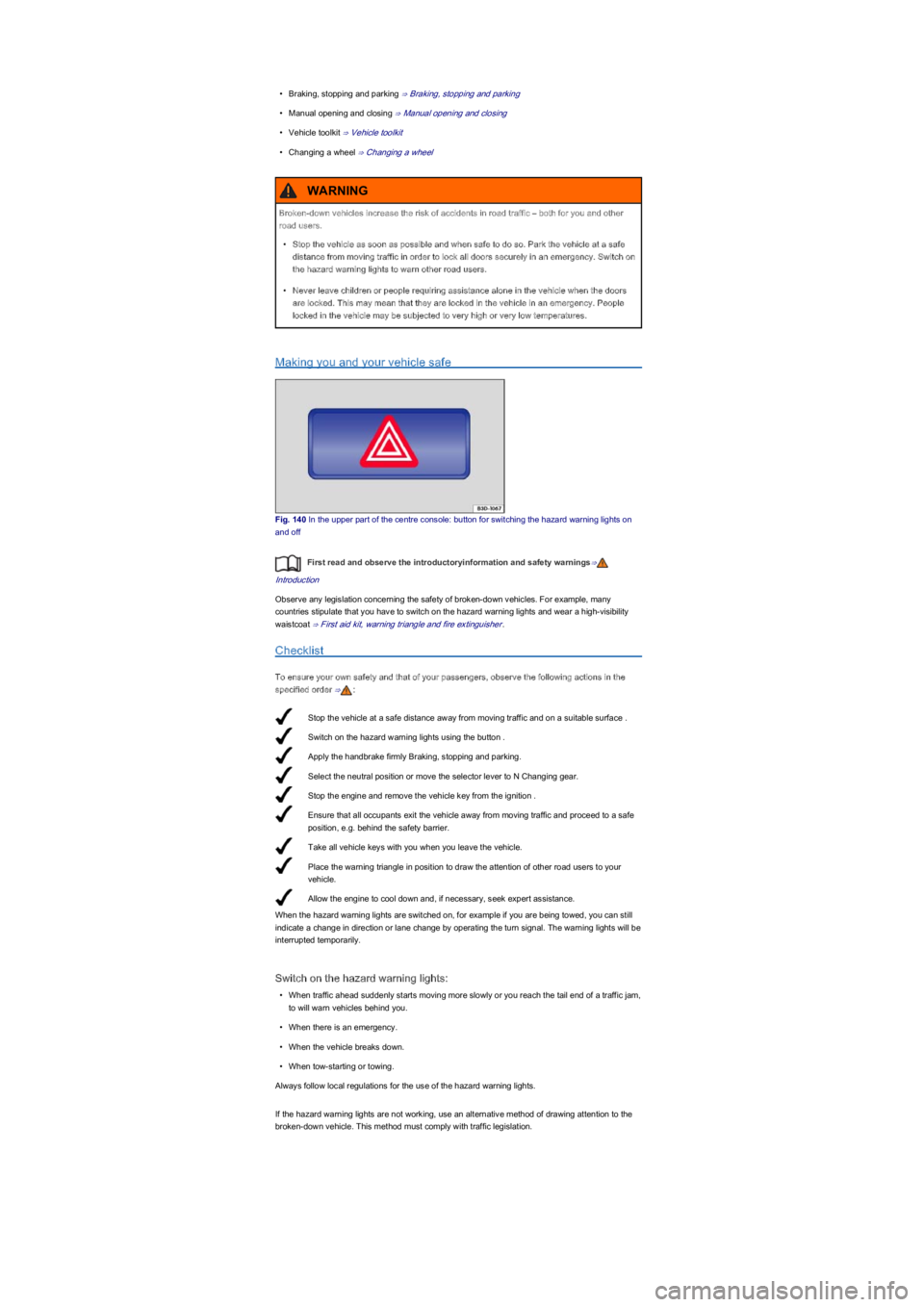
Fig. 140 In the upper part of the centre console: button for switching the hazard warning lights on
and off
First read and observe the introductoryinformation and safety warnings⇒
Introduction
Observe any legislation concerning the safety of broken-down vehicles. For example, many
countries stipulate that you have to switch on the hazard warning lights and wear a high-visibility
waistcoat ⇒ First aid kit, warning triangle and fire extinguisher.
Checklist
To ensure your own safety and that of your passengers, observe the following actions in the
specified order ⇒:
When the hazard warning lights are switched on, for example if you are being towed, you can still
indicate a change in direction or lane change by operating the turn signal. The warning lights will be
interrupted temporarily.
Switch on the hazard warning lights:
•When traffic ahead suddenly starts moving more slowly or you reach the tail end of a traffic jam,
to will warn vehicles behind you.
•When there is an emergency.
•When the vehicle breaks down.
•When tow-starting or towing.
Always follow local regulations for the use of the hazard warning lights.
If the hazard warning lights are not working, use an alternative method of drawing attention to the
broken-down vehicle. This method must comply with traffic legislation.
Broken-down vehicles increase the risk of accidents in road traffic – both for you and other
road users.
•Stop the vehicle as soon as possible and when safe to do so. Park the vehicle at a safe
distance from moving traffic in order to lock all doors securely in an emergency. Switch on
the hazard warning lights to warn other road users.
•Never leave children or people requiring assistance alone in the vehicle when the doors
are locked. This may mean that they are locked in the vehicle in an emergency. People
locked in the vehicle may be subjected to very high or very low temperatures.
WARNING