braking VOLKSWAGEN UP! 2021 Owner´s Manual
[x] Cancel search | Manufacturer: VOLKSWAGEN, Model Year: 2021, Model line: UP!, Model: VOLKSWAGEN UP! 2021Pages: 211, PDF Size: 5.98 MB
Page 73 of 211
The ventilation openings between the rear window and the luggage compartment cover must
not be covered as this would prevent stale air escaping from the vehicle.
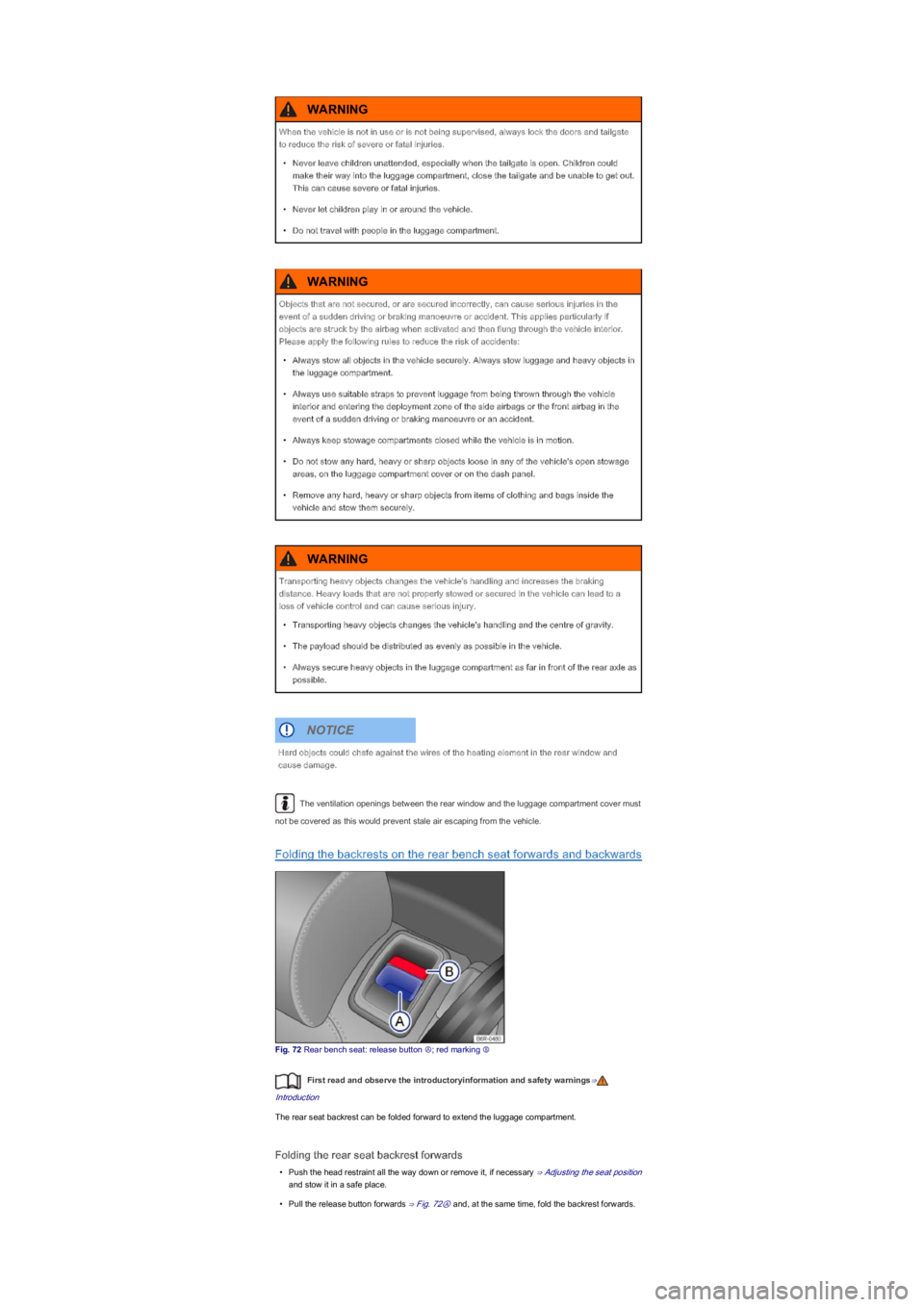
Folding the backrests on the rear bench seat forwards and backwards
Fig. 72 Rear bench seat: release button Ⓐ; red marking Ⓑ
First read and observe the introductoryinformation and safety warnings⇒
Introduction
The rear seat backrest can be folded forward to extend the luggage compartment.
Folding the rear seat backrest forwards
•Push the head restraint all the way down or remove it, if necessary ⇒ Adjusting the seat position
and stow it in a safe place.
•Pull the release button forwards ⇒ Fig. 72Ⓐ and, at the same time, fold the backrest forwards.
When the vehicle is not in use or is not being supervised, always lock the doors and tailgate
to reduce the risk of severe or fatal injuries.
•Never leave children unattended, especially when the tailgate is open. Children could
make their way into the luggage compartment, close the tailgate and be unable to get out.
This can cause severe or fatal injuries.
•Never let children play in or around the vehicle.
•Do not travel with people in the luggage compartment.
WARNING
Objects that are not secured, or are secured incorrectly, can cause serious injuries in the
event of a sudden driving or braking manoeuvre or accident. This applies particularly if
objects are struck by the airbag when activated and then flung through the vehicle interior.
Please apply the following rules to reduce the risk of accidents:
•Always stow all objects in the vehicle securely. Always stow luggage and heavy objects in
the luggage compartment.
•Always use suitable straps to prevent luggage from being thrown through the vehicle
interior and entering the deployment zone of the side airbags or the front airbag in the
event of a sudden driving or braking manoeuvre or an accident.
•Always keep stowage compartments closed while the vehicle is in motion.
•Do not stow any hard, heavy or sharp objects loose in any of the vehicle's open stowage
areas, on the luggage compartment cover or on the dash panel.
•Remove any hard, heavy or sharp objects from items of clothing and bags inside the
vehicle and stow them securely.
WARNING
Transporting heavy objects changes the vehicle's handling and increases the braking
distance. Heavy loads that are not properly stowed or secured in the vehicle can lead to a
loss of vehicle control and can cause serious injury.
•Transporting heavy objects changes the vehicle's handling and the centre of gravity.
•The payload should be distributed as evenly as possible in the vehicle.
•Always secure heavy objects in the luggage compartment as far in front of the rear axle as
possible.
WARNING
Hard objects could chafe against the wires of the heating element in the rear window and
cause damage.
NOTICE
Page 74 of 211
•The rear seat backrest is unlocked when you can see a red marking in the button ⇒ Fig. 72Ⓑ.
•Passengers (adults and children) must not use seats if the backrest is folded forwards.
Folding the rear seat backrest backwards
•Fold back the rear backrest and push it firmly into the lock until it clicks securely into place ⇒
.
•The red marking on the release button ⇒ Fig. 72Ⓑ should no longer be visible.
•The rear seat backrest must always be securely engaged.
•If necessary, fit the head restraints and adjust to the correct position ⇒ Sitting correctly and
safely.
Luggage compartment cover
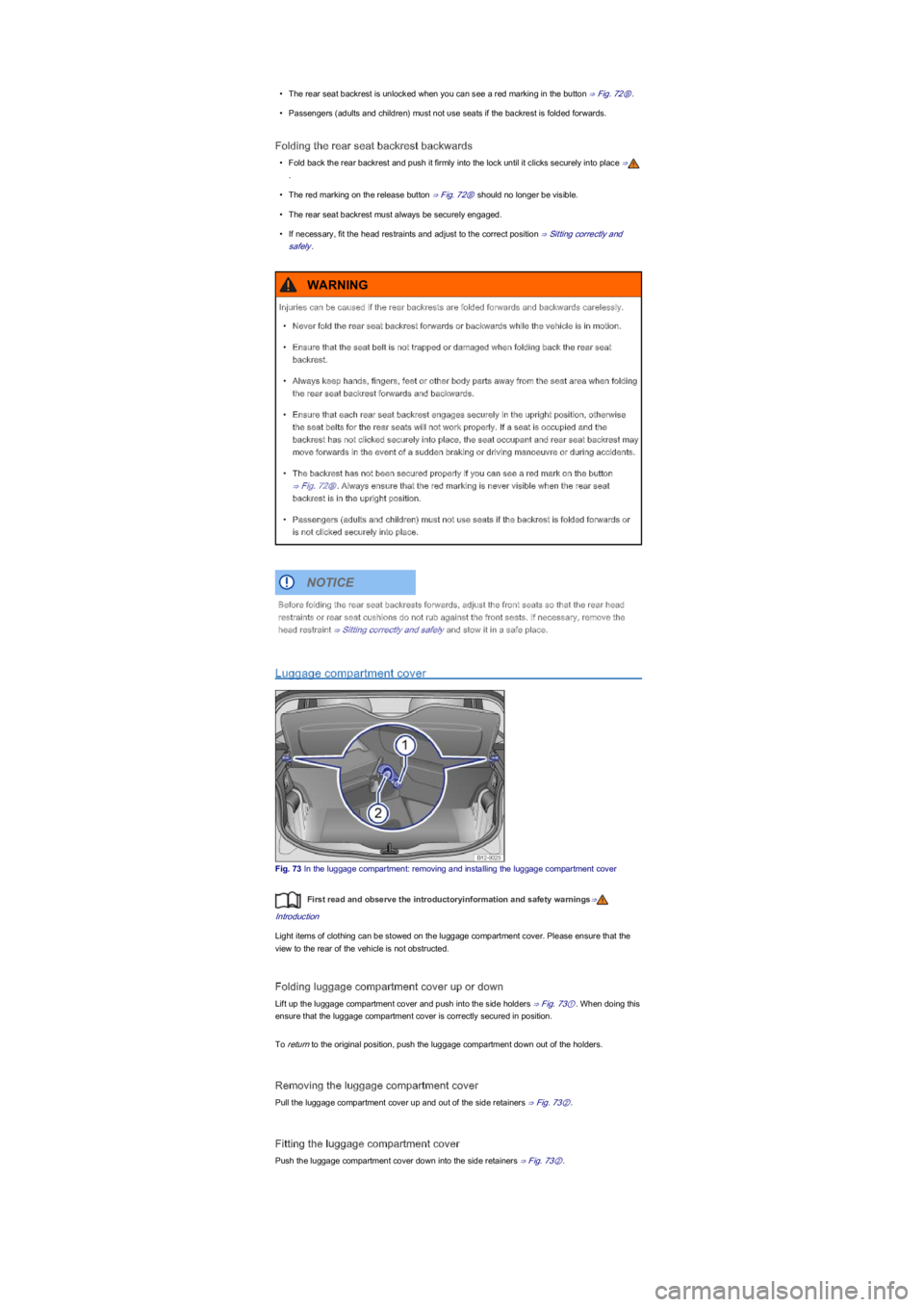
Fig. 73 In the luggage compartment: removing and installing the luggage compartment cover
First read and observe the introductoryinformation and safety warnings⇒
Introduction
Light items of clothing can be stowed on the luggage compartment cover. Please ensure that the
view to the rear of the vehicle is not obstructed.
Folding luggage compartment cover up or down
Lift up the luggage compartment cover and push into the side holders ⇒ Fig. 73①. When doing this
ensure that the luggage compartment cover is correctly secured in position.
To return to the original position, push the luggage compartment down out of the holders.
Removing the luggage compartment cover
Pull the luggage compartment cover up and out of the side retainers ⇒ Fig. 73②.
Fitting the luggage compartment cover
Push the luggage compartment cover down into the side retainers ⇒ Fig. 73②.
Injuries can be caused if the rear backrests are folded forwards and backwards carelessly.
•Never fold the rear seat backrest forwards or backwards while the vehicle is in motion.
•Ensure that the seat belt is not trapped or damaged when folding back the rear seat
backrest.
•Always keep hands, fingers, feet or other body parts away from the seat area when folding
the rear seat backrest forwards and backwards.
•Ensure that each rear seat backrest engages securely in the upright position, otherwise
the seat belts for the rear seats will not work properly. If a seat is occupied and the
backrest has not clicked securely into place, the seat occupant and rear seat backrest may
move forwards in the event of a sudden braking or driving manoeuvre or during accidents.
•The backrest has not been secured properly if you can see a red mark on the button
⇒ Fig. 72Ⓑ. Always ensure that the red marking is never visible when the rear seat
backrest is in the upright position.
•Passengers (adults and children) must not use seats if the backrest is folded forwards or
is not clicked securely into place.
WARNING
Before folding the rear seat backrests forwards, adjust the front seats so that the rear head
restraints or rear seat cushions do not rub against the front seats. If necessary, remove the
head restraint ⇒ Sitting correctly and safely and stow it in a safe place.
NOTICE
Page 75 of 211
Variable luggage compartment floor
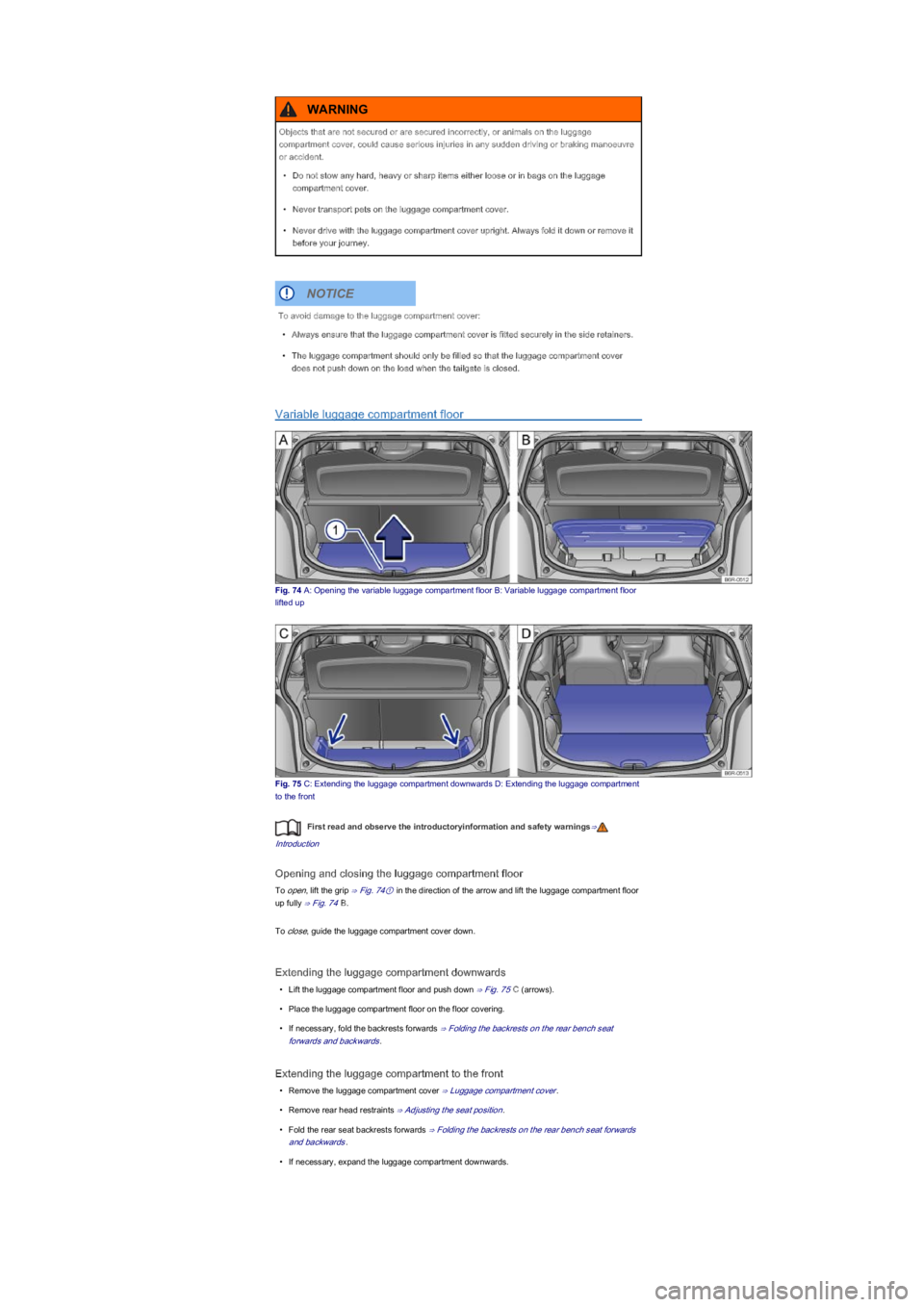
Fig. 74 A: Opening the variable luggage compartment floor B: Variable luggage compartment floor
lifted up
Fig. 75 C: Extending the luggage compartment downwards D: Extending the luggage compartment
to the front
First read and observe the introductoryinformation and safety warnings⇒
Introduction
Opening and closing the luggage compartment floor
To open, lift the grip ⇒ Fig. 74① in the direction of the arrow and lift the luggage compartment floor
up fully ⇒ Fig. 74B.
To close, guide the luggage compartment cover down.
Extending the luggage compartment downwards
•Lift the luggage compartment floor and push down ⇒ Fig. 75C (arrows).
•Place the luggage compartment floor on the floor covering.
•If necessary, fold the backrests forwards ⇒ Folding the backrests on the rear bench seat
forwards and backwards.
Extending the luggage compartment to the front
•Remove the luggage compartment cover ⇒ Luggage compartment cover.
•Remove rear head restraints ⇒ Adjusting the seat position.
•Fold the rear seat backrests forwards ⇒ Folding the backrests on the rear bench seat forwards
and backwards.
•If necessary, expand the luggage compartment downwards.
Objects that are not secured or are secured incorrectly, or animals on the luggage
compartment cover, could cause serious injuries in any sudden driving or braking manoeuvre
or accident.
•Do not stow any hard, heavy or sharp items either loose or in bags on the luggage
compartment cover.
•Never transport pets on the luggage compartment cover.
•Never drive with the luggage compartment cover upright. Always fold it down or remove it
before your journey.
WARNING
To avoid damage to the luggage compartment cover:
•Always ensure that the luggage compartment cover is fitted securely in the side retainers.
•The luggage compartment should only be filled so that the luggage compartment cover
does not push down on the load when the tailgate is closed.
NOTICE
Page 76 of 211
Fastening rings
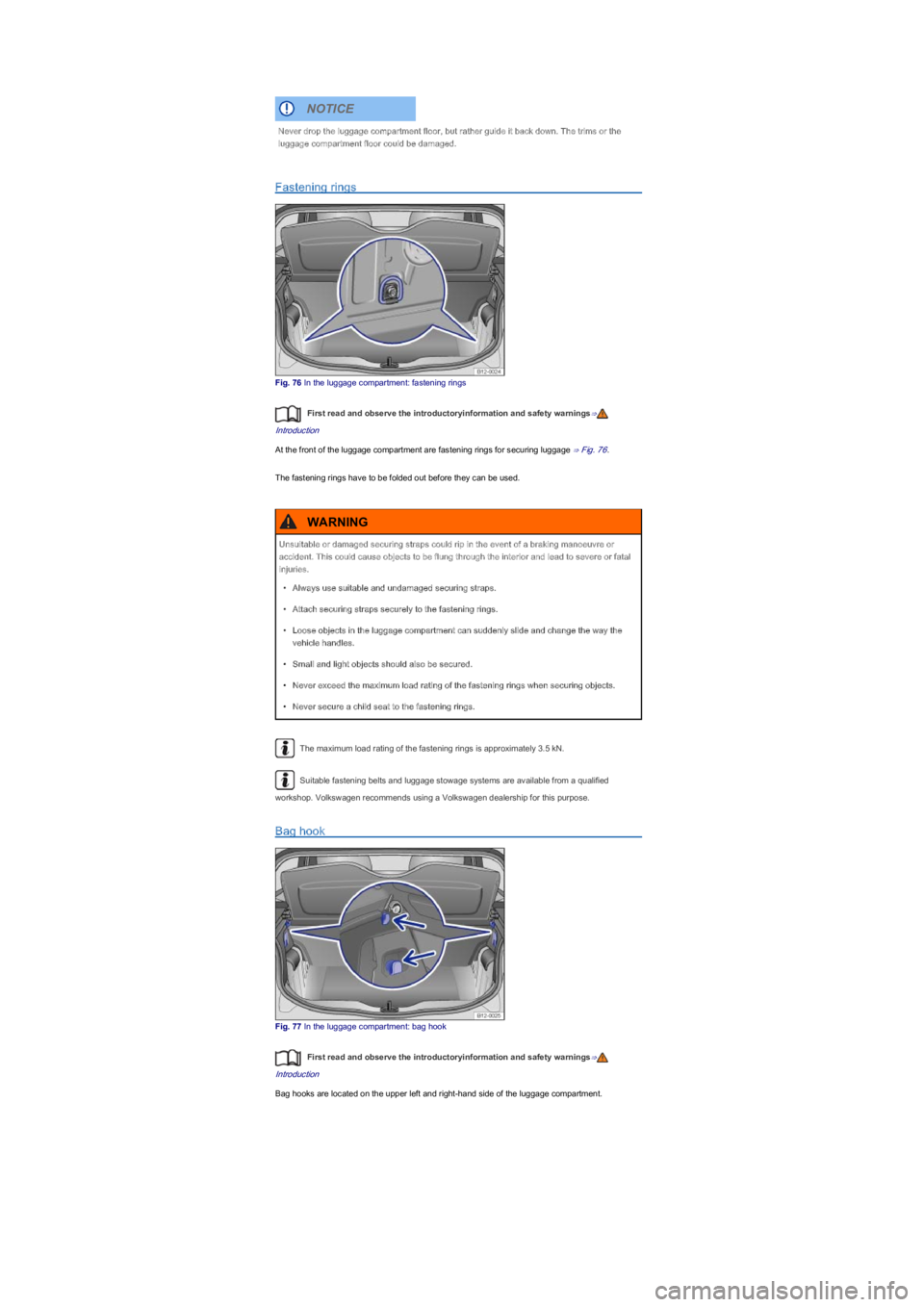
Fig. 76 In the luggage compartment: fastening rings
First read and observe the introductoryinformation and safety warnings⇒
Introduction
At the front of the luggage compartment are fastening rings for securing luggage ⇒ Fig. 76.
The fastening rings have to be folded out before they can be used.
The maximum load rating of the fastening rings is approximately 3.5 kN.
Suitable fastening belts and luggage stowage systems are available from a qualified
workshop. Volkswagen recommends using a Volkswagen dealership for this purpose.
Bag hook
Fig. 77 In the luggage compartment: bag hook
First read and observe the introductoryinformation and safety warnings⇒
Introduction
Bag hooks are located on the upper left and right-hand side of the luggage compartment.
Never drop the luggage compartment floor, but rather guide it back down. The trims or the
luggage compartment floor could be damaged.
NOTICE
Unsuitable or damaged securing straps could rip in the event of a braking manoeuvre or
accident. This could cause objects to be flung through the interior and lead to severe or fatal
injuries.
•Always use suitable and undamaged securing straps.
•Attach securing straps securely to the fastening rings.
•Loose objects in the luggage compartment can suddenly slide and change the way the
vehicle handles.
•Small and light objects should also be secured.
•Never exceed the maximum load rating of the fastening rings when securing objects.
•Never secure a child seat to the fastening rings.
WARNING
Page 77 of 211
Roof carrier
Introduction
This chapter contains information on the followingsubjects:
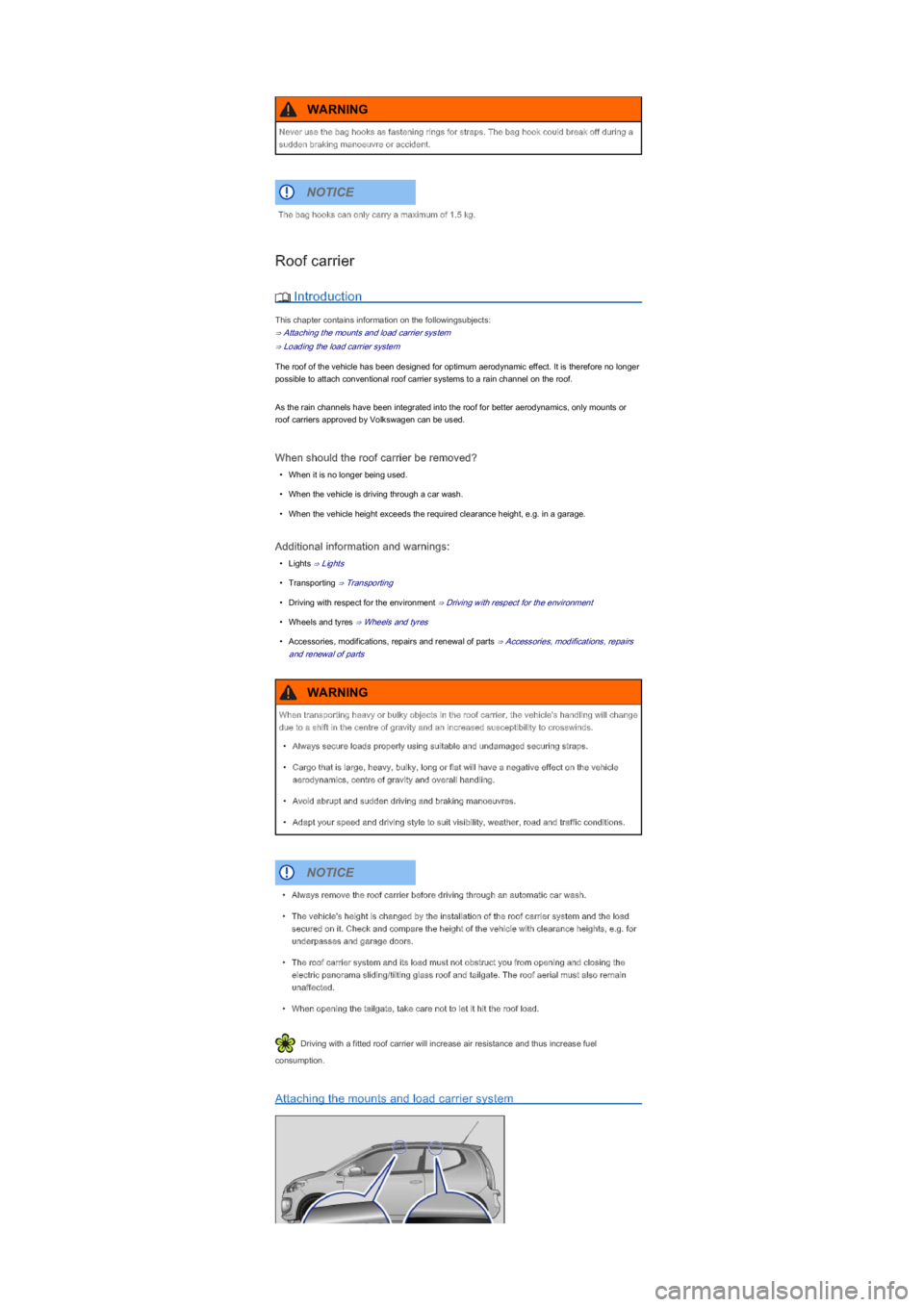
⇒ Attaching the mounts and load carrier system
⇒ Loading the load carrier system
The roof of the vehicle has been designed for optimum aerodynamic effect. It is therefore no longer
possible to attach conventional roof carrier systems to a rain channel on the roof.
As the rain channels have been integrated into the roof for better aerodynamics, only mounts or
roof carriers approved by Volkswagen can be used.
When should the roof carrier be removed?
•When it is no longer being used.
•When the vehicle is driving through a car wash.
•When the vehicle height exceeds the required clearance height, e.g. in a garage.
Additional information and warnings:
•Lights ⇒ Lights
•Transporting ⇒ Transporting
•Driving with respect for the environment ⇒ Driving with respect for the environment
•Wheels and tyres ⇒ Wheels and tyres
•Accessories, modifications, repairs and renewal of parts ⇒ Accessories, modifications, repairs
and renewal of parts
Driving with a fitted roof carrier will increase air resistance and thus increase fuel
consumption.
Attaching the mounts and load carrier system
Never use the bag hooks as fastening rings for straps. The bag hook could break off during a
sudden braking manoeuvre or accident.
WARNING
The bag hooks can only carry a maximum of 1.5 kg.
NOTICE
When transporting heavy or bulky objects in the roof carrier, the vehicle's handling will change
due to a shift in the centre of gravity and an increased susceptibility to crosswinds.
•Always secure loads properly using suitable and undamaged securing straps.
•Cargo that is large, heavy, bulky, long or flat will have a negative effect on the vehicle
aerodynamics, centre of gravity and overall handling.
•Avoid abrupt and sudden driving and braking manoeuvres.
•Adapt your speed and driving style to suit visibility, weather, road and traffic conditions.
WARNING
•Always remove the roof carrier before driving through an automatic car wash.
•The vehicle's height is changed by the installation of the roof carrier system and the load
secured on it. Check and compare the height of the vehicle with clearance heights, e.g. for
underpasses and garage doors.
•The roof carrier system and its load must not obstruct you from opening and closing the
electric panorama sliding/tilting glass roof and tailgate. The roof aerial must also remain
unaffected.
•When opening the tailgate, take care not to let it hit the roof load.
NOTICE
Page 80 of 211
The ventilation openings between the rear window and the luggage compartment cover must
not be covered as this would prevent stale air escaping from the vehicle.
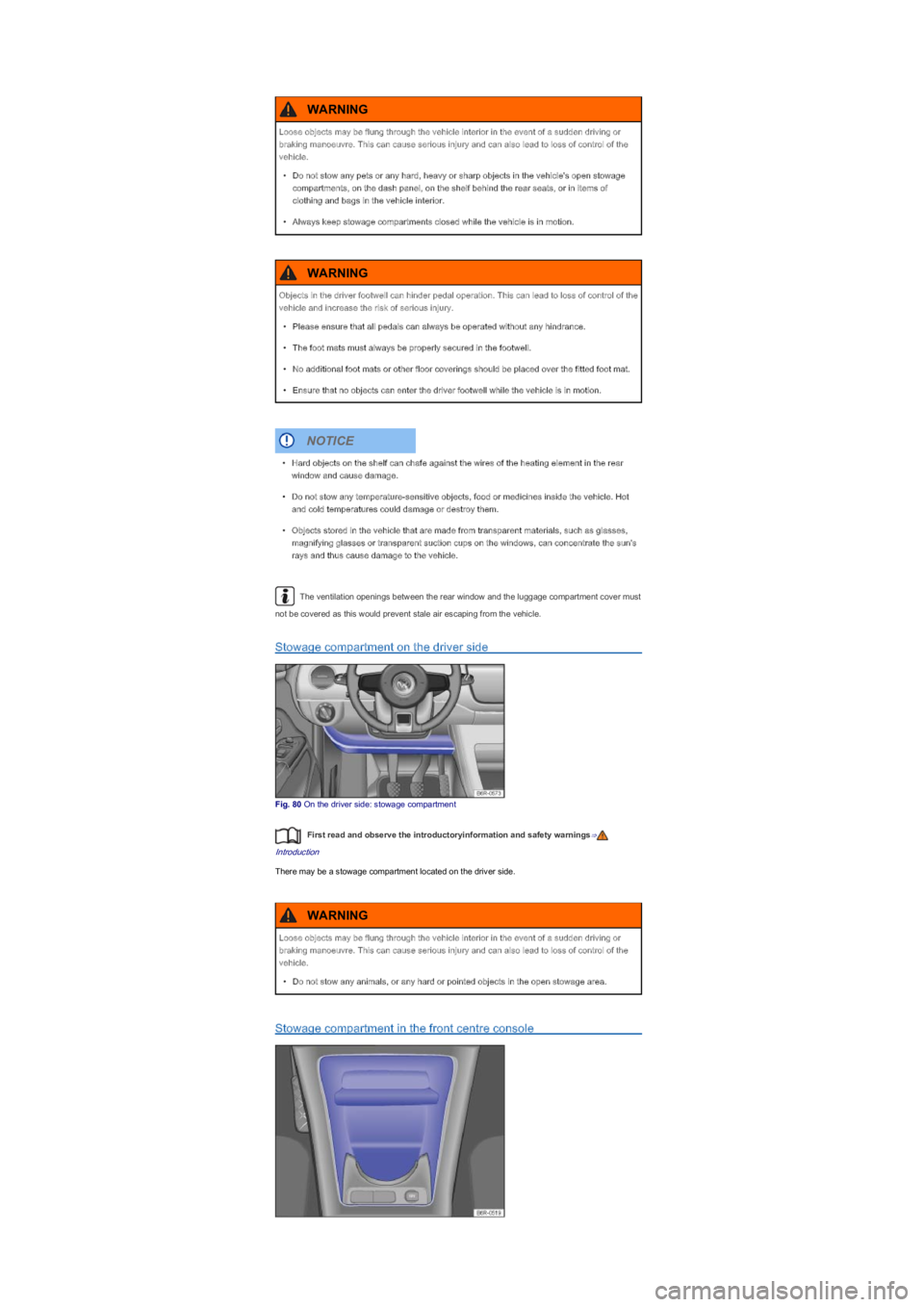
Stowage compartment on the driver side
Fig. 80 On the driver side: stowage compartment
First read and observe the introductoryinformation and safety warnings⇒
Introduction
There may be a stowage compartment located on the driver side.
Stowage compartment in the front centre console
Loose objects may be flung through the vehicle interior in the event of a sudden driving or
braking manoeuvre. This can cause serious injury and can also lead to loss of control of the
vehicle.
•Do not stow any pets or any hard, heavy or sharp objects in the vehicle's open stowage
compartments, on the dash panel, on the shelf behind the rear seats, or in items of
clothing and bags in the vehicle interior.
•Always keep stowage compartments closed while the vehicle is in motion.
WARNING
Objects in the driver footwell can hinder pedal operation. This can lead to loss of control of the
vehicle and increase the risk of serious injury.
•Please ensure that all pedals can always be operated without any hindrance.
•The foot mats must always be properly secured in the footwell.
•No additional foot mats or other floor coverings should be placed over the fitted foot mat.
•Ensure that no objects can enter the driver footwell while the vehicle is in motion.
WARNING
•Hard objects on the shelf can chafe against the wires of the heating element in the rear
window and cause damage.
•Do not stow any temperature-sensitive objects, food or medicines inside the vehicle. Hot
and cold temperatures could damage or destroy them.
•Objects stored in the vehicle that are made from transparent materials, such as glasses,
magnifying glasses or transparent suction cups on the windows, can concentrate the sun's
rays and thus cause damage to the vehicle.
NOTICE
Loose objects may be flung through the vehicle interior in the event of a sudden driving or
braking manoeuvre. This can cause serious injury and can also lead to loss of control of the
vehicle.
•Do not stow any animals, or any hard or pointed objects in the open stowage area.
WARNING
Page 81 of 211
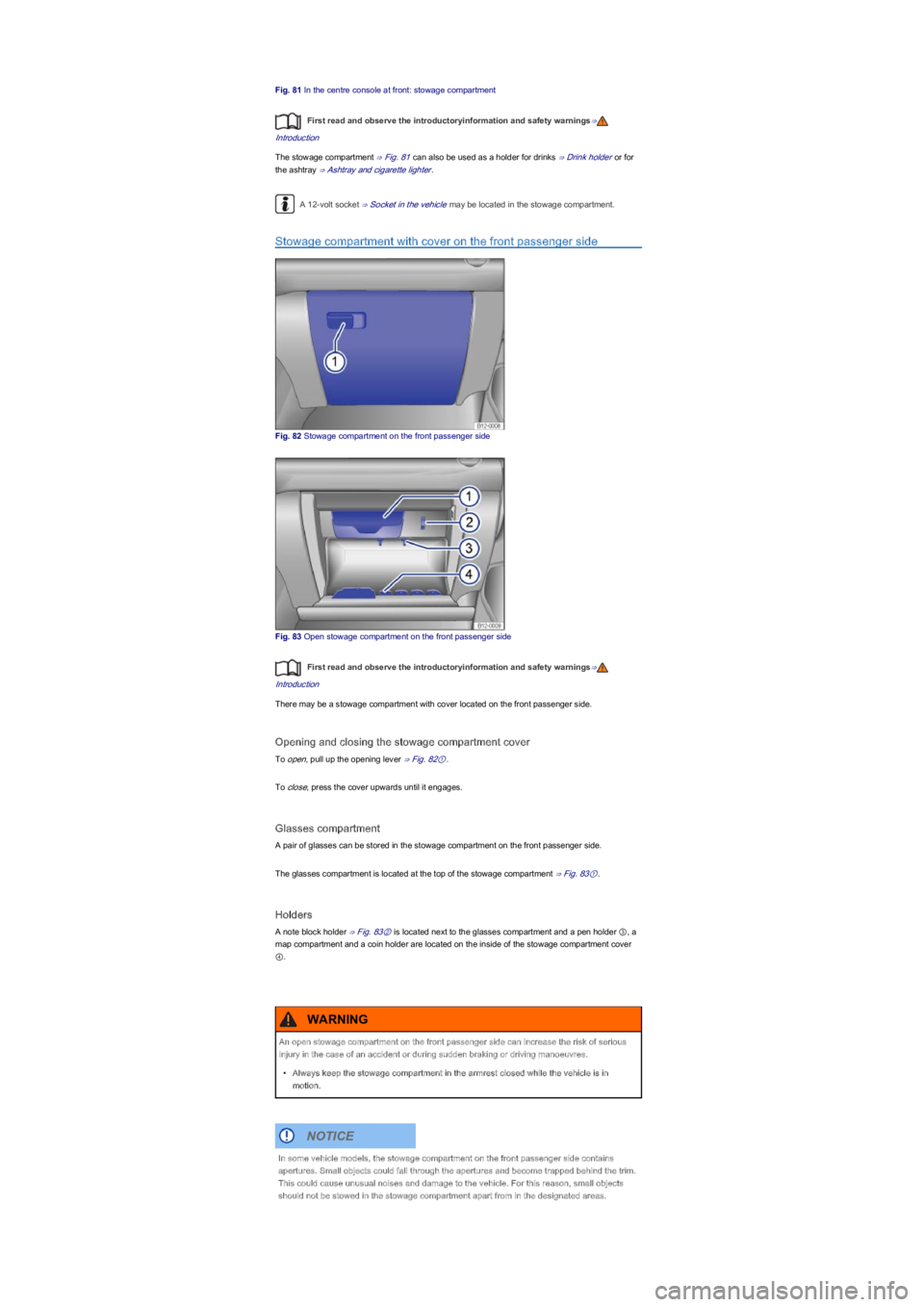
Fig. 81 In the centre console at front: stowage compartment
First read and observe the introductoryinformation and safety warnings⇒
Introduction
The stowage compartment ⇒ Fig. 81 can also be used as a holder for drinks ⇒ Drink holder or for
the ashtray ⇒ Ashtray and cigarette lighter.
A 12-volt socket ⇒ Socket in the vehicle may be located in the stowage compartment.
Stowage compartment with cover on the front passenger side
Fig. 82 Stowage compartment on the front passenger side
Fig. 83 Open stowage compartment on the front passenger side
First read and observe the introductoryinformation and safety warnings⇒
Introduction
There may be a stowage compartment with cover located on the front passenger side.
Opening and closing the stowage compartment cover
To open, pull up the opening lever ⇒ Fig. 82①.
To close, press the cover upwards until it engages.
Glasses compartment
A pair of glasses can be stored in the stowage compartment on the front passenger side.
The glasses compartment is located at the top of the stowage compartment ⇒ Fig. 83①.
Holders
A note block holder ⇒ Fig. 83② is located next to the glasses compartment and a pen holder ③, a
map compartment and a coin holder are located on the inside of the stowage compartment cover
④.
An open stowage compartment on the front passenger side can increase the risk of serious
injury in the case of an accident or during sudden braking or driving manoeuvres.
•Always keep the stowage compartment in the armrest closed while the vehicle is in
motion.
WARNING
In some vehicle models, the stowage compartment on the front passenger side contains
apertures. Small objects could fall through the apertures and become trapped behind the trim.
This could cause unusual noises and damage to the vehicle. For this reason, small objects
should not be stowed in the stowage compartment apart from in the designated areas.
NOTICE
Page 82 of 211
Open stowage compartment on the front passenger side
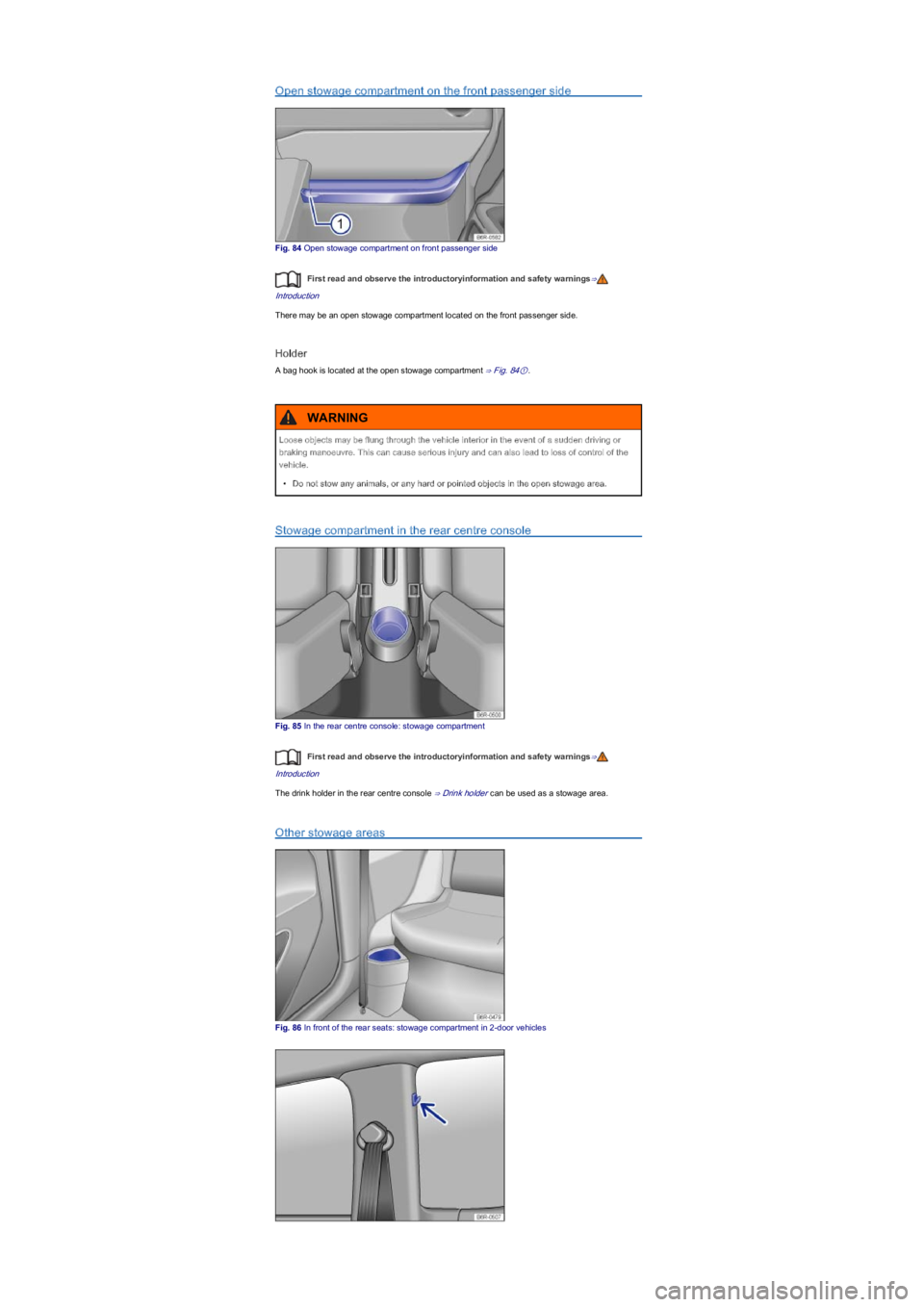
Fig. 84 Open stowage compartment on front passenger side
First read and observe the introductoryinformation and safety warnings⇒
Introduction
There may be an open stowage compartment located on the front passenger side.
Holder
A bag hook is located at the open stowage compartment ⇒ Fig. 84①.
Stowage compartment in the rear centre console
Fig. 85 In the rear centre console: stowage compartment
First read and observe the introductoryinformation and safety warnings⇒
Introduction
The drink holder in the rear centre console ⇒ Drink holder can be used as a stowage area.
Other stowage areas
Fig. 86 In front of the rear seats: stowage compartment in 2-door vehicles
Loose objects may be flung through the vehicle interior in the event of a sudden driving or
braking manoeuvre. This can cause serious injury and can also lead to loss of control of the
vehicle.
•Do not stow any animals, or any hard or pointed objects in the open stowage area.
WARNING
Page 83 of 211
Fig. 87 Coat hooks on the centre door pillars
First read and observe the introductoryinformation and safety warnings⇒
Introduction
Coat hooks
Coat hooks ⇒ Fig. 87 are located on the centre door pillars (arrow).
Other stowage areas:
•In the front door trims ⇒ Vehicle interior.
•In front of the rear seats ⇒ Fig. 86.
•On top of the luggage compartment cover for light items of clothing.
•Bag hooks in the luggage compartment ⇒ Luggage compartment.
•In the upper part of the centre console instead of the radio ⇒ Fig. 7⑤.
•Coat hooks on the centre door pillars ⇒ Fig. 87.
Drink holder
Introduction
This chapter contains information on the followingsubjects:
⇒ Drink holder in centre console
Drink holder
Bottle holders for bottles containing up to 1.5 litres are located in the open stowage areas of the
driver and front passenger doors.
Additional information and warnings:
•Cleaning and caring for the interior ⇒ Cleaning and caring for the interior
Drink holder in centre console
Hanging up items of clothing can restrict the driver's field of vision and cause accidents and
serious injuries.
•Always hang items of clothing in such a way that they do not restrict the driver's field of
vision.
•The clothes hook in the vehicle should only be used for transporting light items of clothing.
Never leave any heavy, hard or sharp objects in the pockets.
WARNING
Incorrect use of the drink holders can cause injury.
•Do not place hot drink containers in the drink holders. Hot drinks in a drink holder could be
spilled and cause scalding in any sudden braking manoeuvre or accident.
•Ensure that drink bottles or any other objects do not enter the driver footwell and obstruct
the pedals while the vehicle is in motion.
•Never place heavy cups, food or any other heavy items in the drink holder. These heavy
objects could be flung through the vehicle interior during an accident and cause serious
injuries.
WARNING
Closed drink bottles can explode in the vehicle in extreme heat or crack in extremely cold
temperatures.
•Never leave closed drink bottles in an extremely hot or extremely cold vehicle for extended
periods.
WARNING
Do not leave any open drink containers in the drink holder while the vehicle is in motion.
Drinks that are spilled, for example during braking, can damage the vehicle and the vehicle
electric system.
NOTICE
Page 87 of 211
Starting the engine, changing gear and
parking
Starting and stopping the engine
Introduction
This chapter contains information on the followingsubjects:
⇒ Ignition lock
⇒ Starting the engine
⇒ Stopping the engine
⇒ Electronic immobilizer
Immobilizer display
If the vehicle key is not valid or there is a fault in the system, then may be displayed in the
instrument cluster. The engine cannot be started ⇒ Electronic immobilizer.
Push-starting or towing
For technical reasons, your vehicle must not be push-started or tow-started. Use jump leads to
start the engine instead.
Additional information and warnings:
•Vehicle key set ⇒ Vehicle key set
•Changing gear ⇒ Changing gear
•Braking, stopping and parking ⇒ Braking, stopping and parking
•Steering ⇒ Steering
•Pull-away assist systems ⇒ Pull-away assist systems
•Filling the tank ⇒ Filling the tank
•Fuel ⇒ Fuel
•Manual opening and closing ⇒ Manual opening and closing
•Starting the engine with jump leads ⇒ Starting the engine with jump leads
•Tow starting and towing ⇒ Tow-starting and towing
•Observe the operating instructions for any device that you plug into the socket.
•Never exceed the maximum power rating as this could damage the whole vehicle electrical
system.
•12-volt socket:
- Only use accessories that have been approved in accordance with the relevant
guidelines on electromagnetic compatibility.
- Never feed electricity into the socket.
NOTICE
While driving