steering AUDI A3 CABRIOLET 2016 User Guide
[x] Cancel search | Manufacturer: AUDI, Model Year: 2016, Model line: A3 CABRIOLET, Model: AUDI A3 CABRIOLET 2016Pages: 272, PDF Size: 67.88 MB
Page 45 of 272
Lights and Vision
When switched on, adaptive light adjusts to
curves depending on the vehicle speed and steer
ing wheel angle. This provides better lighting
through the curve. The system operates in a
speed range from approximately 6 mph (10 km/
h) to 68 mph (110 km/h) .
Static cornering light* -the cornering light
switches on automatically when the steering
wheel is turned at a ce rtain angle at speeds up to
approximately 44 mph (70 km/h) and when the
turn signal is activated at speeds up to approxi
mately 25 mph (40 km/h) . The area to the side of
the vehicle is illuminated better when turning.
Speed dependent light distribution* -The speed
dependent light distribution adapts the light in
towns and on highways or expressways . Intersec
tions can also be illuminated on vehicles with a
navigation system* .
Highway light function*
This function adapts the lighting for highway
driving based on vehicle speed .
A WARNING
-Automatic headlights* are only intended to
assist the driver. They do not relieve the
driver of responsibility to check the head
lights and to turn them on manually accord
ing to the current light and visibility condi
tions. For example, fog cannot be detected by the light sensors . So always switch on the
low beam under these weather conditions
and when driving in the dark ~D.
- Accidents could occur if you can not see the road ahead of you well and if others on the
road cannot see you . Always switch your
headlights on so that you can see the road
ahead of you and others can see your vehicle
from behind.
- The rear fog lights should only be turned on
in accordance with traffic regulations, to
prevent glare for traffic behind your vehicle.
-If the battery has been discharging for a
while, the parking light may switch off auto
matically. Always make sure your vehicle is
parked and adequately lit according to the
44
laws. Avoid using the parking lights for sev
eral hours.
- Please observe legal regulations when using
the lighting systems described.
(D Tips
- The light sensor for the automatic head
lights* is in the rearview mirror mount.
Therefore , do not place any stickers in this
area on the windshield.
- Some exterior lighting functions can be ad
justed
Q page 45.
- If you turn off the ignition while the exterior lights are on and open the door, you will
hear a warning tone.
- In some market-specific versions, the tail
lights do not turn on when switching on the
daytime running lights .
- In cool or damp weather, the inside of the
headlights, turn signals and tail lights can
fog over due to the temperature difference between the inside and outside. They will
clear shortly after switching them on . This
does not affect the service life of the light
ing.
-A message will appear in the instrument
cluster if there is a malfunction in the light
sensor
Q page 21 .
Emergency flasher
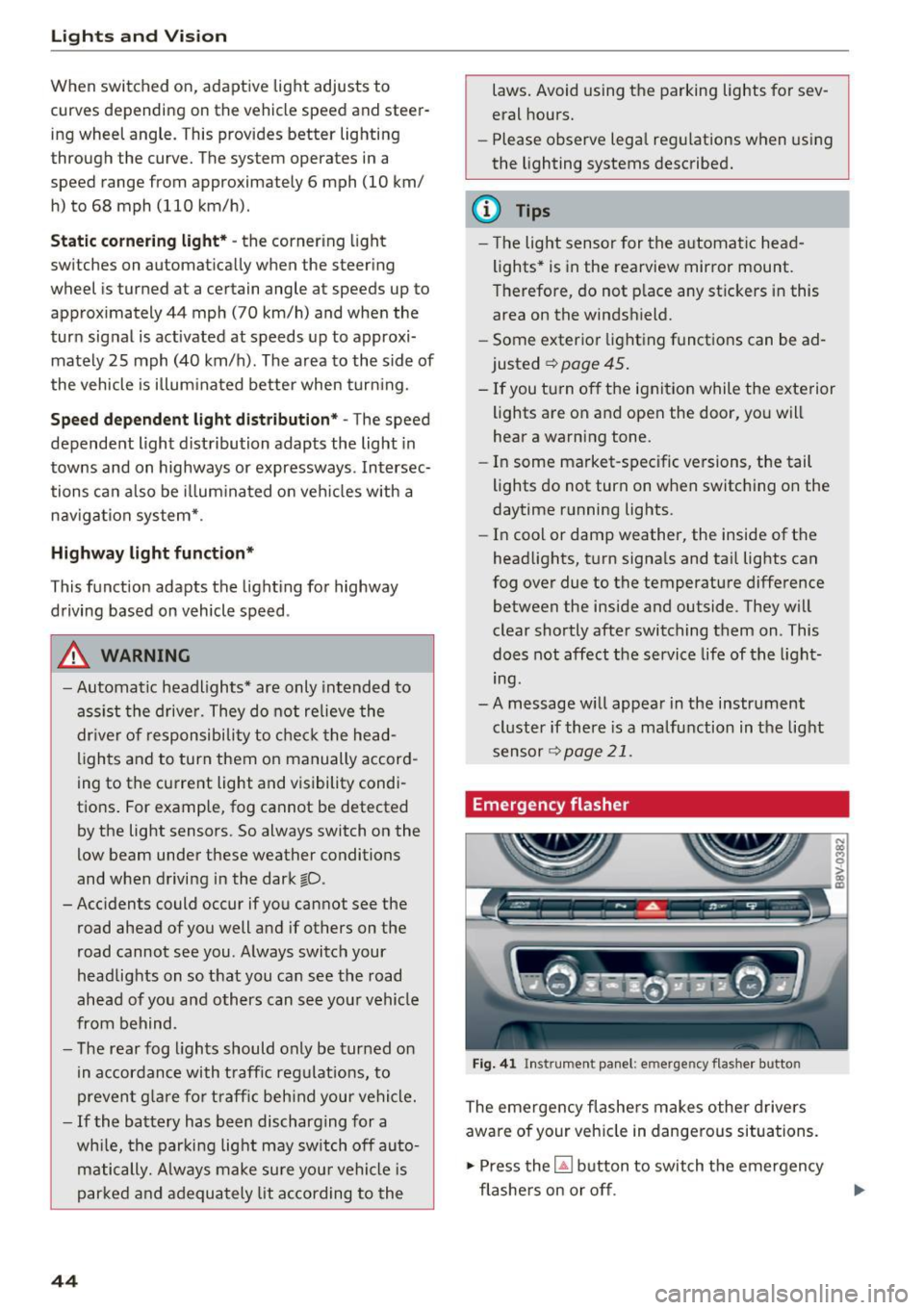
Fig. 41 Ins trumen t panel: e merge ncy flasher butto n
The emergency flashers makes other drivers
aware of your vehicle in dangerous situations.
.,. Press the~ button to switch the emergency
flashers on or off .
Page 68 of 272
<( co ..... N
" N ..... 0
" > 00
You must drive your vehicle about 3,000 miles
(5 ,000 kilomet ers) before you can prop erly as
sess oil consumption .
This also applies to fuel consumption and engine output.
(D Note
- Have your vehicle maintained properly and
in accordance with the service recommenda
tions in your Warranty
& Maintenance book
let. Lack of proper maintenance as well as
improper use of the vehicle will impair the
function of the emission control system and
could lead to damage .
- Do not alter or remove any component of
the Emission Control System unless ap proved by the manufacturer.
- Do not alter or remove any device, such as
heat shields, switches, ignition wires,
valves, which are designed to protect your
vehicle's Emission Control System and other i mportant vehicle components.
Fewer short trips
Fuel consumption will always be relatively high
on short trips.
• Try to avoid driving short dist ances with a cold
engine .
T he eng ine and catalytic converter have to reach
their optimal
operating temperature to reduce
fuel consump tion and noxious emissions effec
tively .
Just after starting, a cold engine in a mid-si ze car
only achieves a fuel economy of 6-8 mi/gal (30-40 l/100 km) . After about a half a mile , fuel
economy climbs to 12 mpg (20 l/100 km) . After
about
2.5 miles (4 km), the engine is at its prop
er operating temperature and fuel economy has reached a normal level. So you can see that you
should avoid sho rt trips whenever possible.
The
outside temperature is also critical in this re
gard . Your car consumes more fuel in the winter
than in the summer .
Driving
Steering
Adjusting the steering wheel position
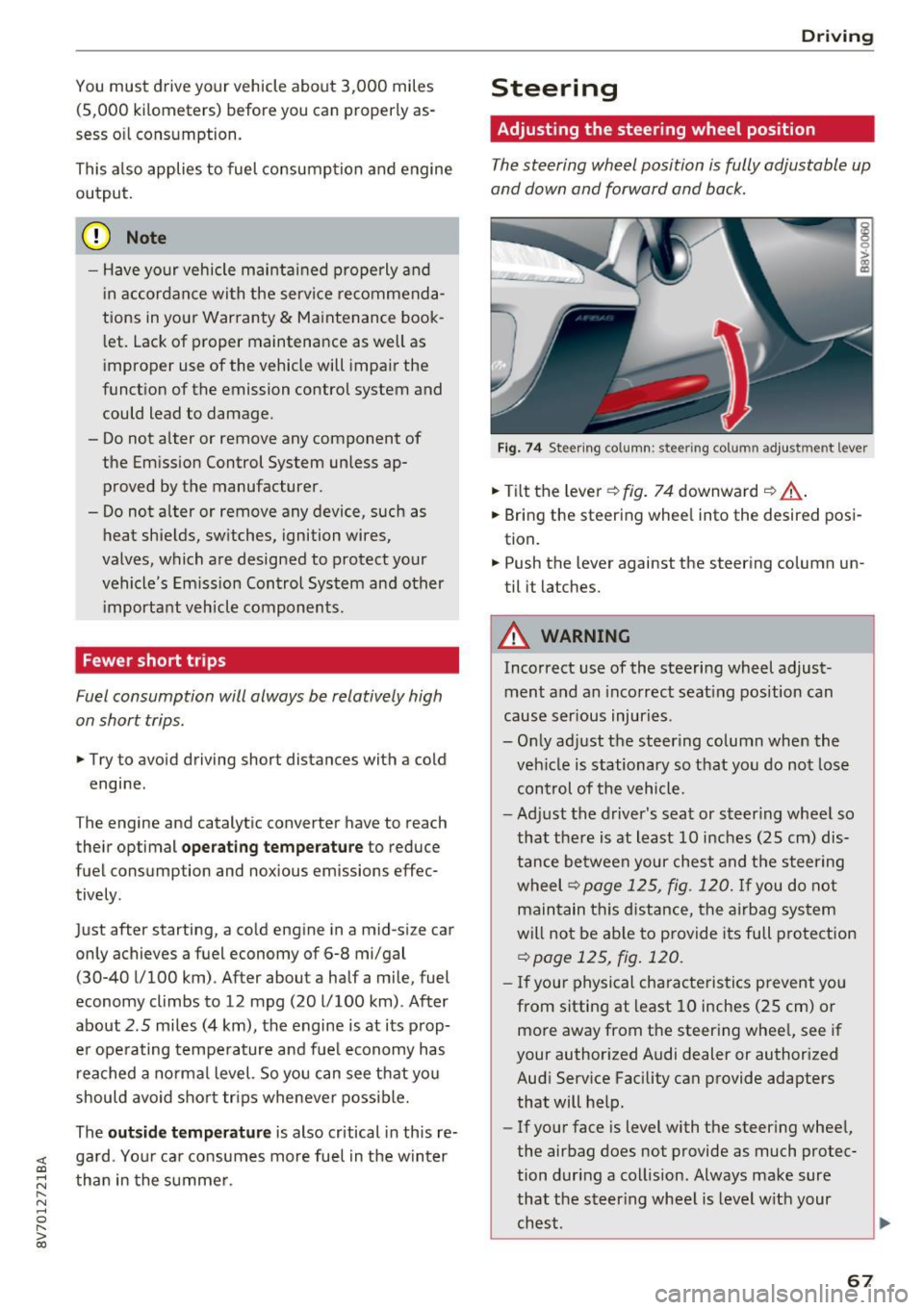
The steering wheel position is fully adjustable up
and down and forward and back.
Fig. 74 St ee ring co lumn: steering col umn adjus tmen t leve r
• Tilt the lever¢ fig. 74 downward ¢&_ .
• Bring the steering wheel into the desired posi
tion.
• Push the lever against the steering column un
til it latches.
A WARNING
-
Incorrect use of the steering wheel adjust ment and an incorrect seating position can
cause serious injuries .
- Only adjust the steering column when the
vehicle is stationary so that you do not lose control of the vehicle.
-
- Adjust the driver's seat or steer ing wheel so
that there is at least 10 inches (25 cm) dis
tance between your chest and the steering
wheel
r:!> page 125, fig. 120. If you do not
maintain this distance, the airbag system
will not be able to provide its full protection
r:!> page 125, fig. 120.
-If your physical characteristics prevent you
from sitting at least 10 inches (25 cm) or
more away from the steering wheel, see if
your authorized Audi dealer or authorized
Audi Service Facility can provide adapters
that will help.
- If your face is level with the steering wheel,
the airbag does not provide as much protec
tion during a collision . Always make sure
that the steering wheel is level with your
chest.
~
67
Page 69 of 272
Driving
-Always hold the steering wheel with your
hands in the 9 o'clock and 3 o'clock posi
t ions to reduce the risk of injury if the airbag
deploys.
- Never hold the steer ing whee l in the 12
o'clock posit ion or w ith both hands on the
rim or the center of the steer ing whee l.
Holding the steering wheel inco rrectly s ig
nificantly incr eas es the risk of inju ry to the
hands, arms and head if t he ai rbag dep loys .
Starting and stopping
the engine (vehicles with
an ignition Lock)
Starting the engine with the key
A pp lies to: ve hicles w ith ig ni tio n lock
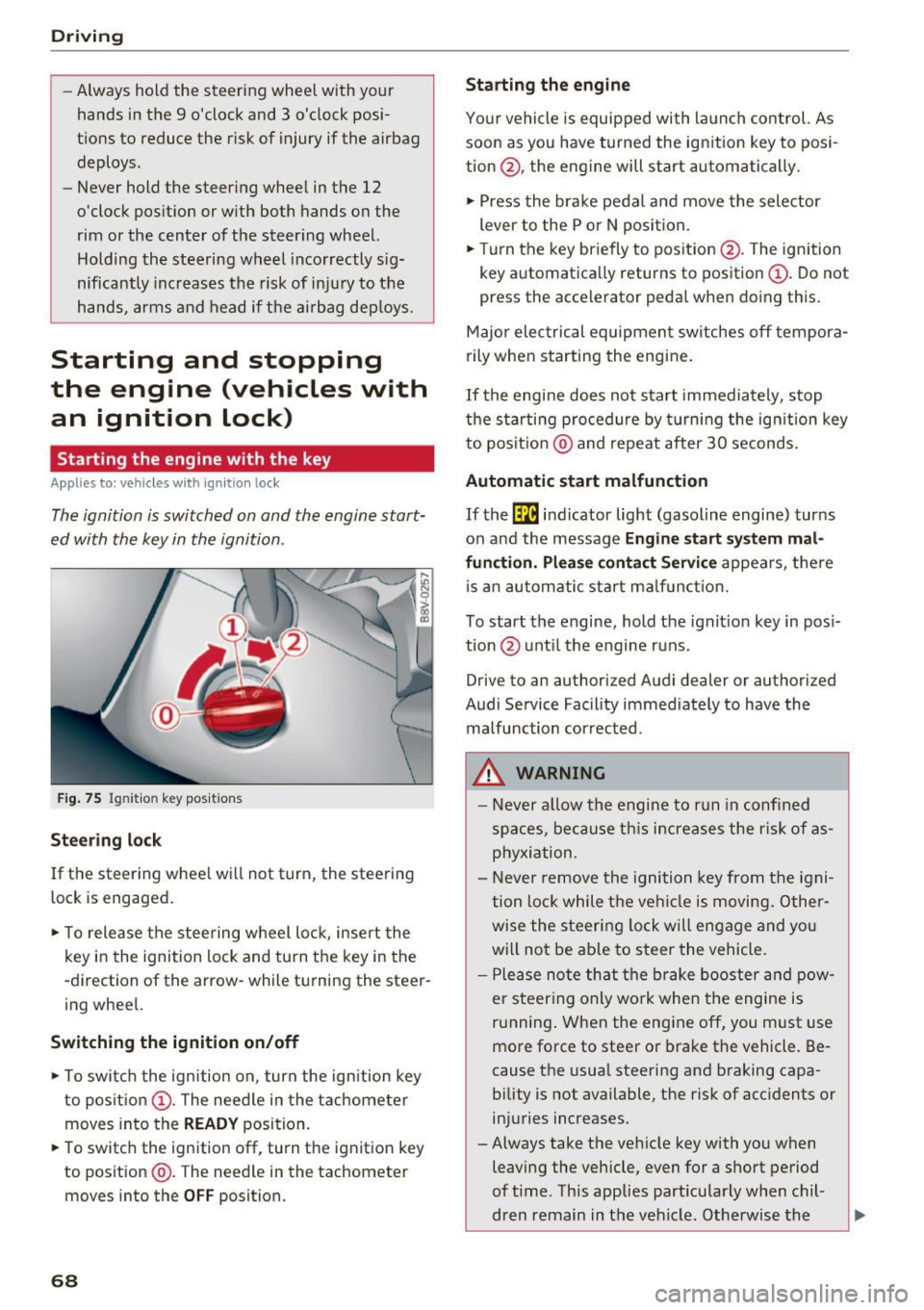
The ignition is switched on and the engine start
ed with the key in the ignition .
Fig . 75 Ig nit io n key pos it ions
Stee ring lock
If the steering whee l w ill not turn, the steering
lock is engaged .
• To release the steering wheel lo ck, inse rt the
k ey in the ignition lock and tu rn t he key in the
-d irection of the arrow- while tu rning the steer
ing wheel.
Sw itching the ignition on/off
• To switc h the ignition on, turn the ign ition key
to posit io n @ . The need le in the tachometer
moves into the
READY position.
• To switc h the ign ition off , turn the ignit ion key
to position @. T he need le in the tachometer
moves into the
OFF position.
68
Starting the engine
Yo ur vehicle is equipped wi th la unch control. As
soon a s you have turned the ign ition key to pos i
tion @, the engine will start automatically .
• Press the bra ke pedal and move the sele ctor
lever to the P o r N posi tion.
• Turn the key br iefly to posit ion @. The ignition
key a utomat ica lly returns to position @. Do not
press the accelerator peda l when do ing this .
Major elec trical equipmen t sw itches off tempora
rily when s tarting the engine .
If the engine does not start immediately, stop
t h e starti ng p ro cedure by t urnin g the ig nition key
to pos it ion @ and repeat after 30 seconds.
Automatic start malfunction
If the ~ in dicator light (gasoline engine) tur ns
on and the message
Engine start sy stem mal
fun ction . Please contact Servic e
appears, t he re
i s an a utom atic start ma lf u n ct io n.
To start the engine, hold t he ignit io n key in pos i
t ion @ unt il the engine r uns.
Drive to an authorized Audi dealer or authorized
Audi Service Facility immediate ly to have the
malfunction correc ted.
A WARNING
- Never a llow th e engine to run in confined
sp aces, because this increases the r is k of as
phyxia tion.
- Never remove the ignition key from the igni
tion lock while t he ve hicl e is moving . Other
w ise the s teering lo ck will engage and yo u
will no t be ab le to s teer the vehicle.
- P lease no te th at the b rake booster and p ow
e r steering only wo rk when the engine is
r u nning . When the engine off, you must use
more force to steer or bra ke the vehicle . Be
cause the usua l steering and braking capa
bility is not available, the risk of acc idents or
in juries increases.
- Always take the veh icle key with yo u when
leaving the vehicle, even for a sho rt pe riod
of t ime. This applies part icularly when chil
dren remain in the vehicle. Otherwise the
Page 70 of 272
<( co .... N r--N .... 0 ,.__
> co
children could start the engine or operate
electrical equipment such as power win
dows.
0 Note
-Avoid high engine speed, fu ll throttle, and
heavy engine load as long as the engine has
not reached operating temperature yet . You
could damage the engine.
- The engine cannot be started by pushing or
towing .
@ For the sake of the environment
Do not let the engine run while parked to
warm up. Begin driving immediately. This re
duces unnecessary emissions.
- If it is difficu lt to turn the key to position
(D, turn the steering wheel back and forth
slightly to release the steering wheel lock .
- Some noise after starting the engine is nor
mal and is no cause for concern.
- If the battery is disconnected and recon
nected, you have to hold the ign ition key in
position
(D for five seconds for the engine
to start.
-After switching the ignition off, you can on ly
remove the key when the selector lever is in
the "P" (Park) position. After that, the selec
tor lever is locked .
Stopping the engine with the key
Appl ies to: ve hicles w ith igni tion loc k
Stopping the engine
~ Bring the vehicle to a full stop.
~ Turn the key to posit ion @. The need le in the
tachometer moves into the
OFF position .
Releasing the steering lock
Requirement: the selector lever must be in P.
~ Remove the ignition key in position@
¢page 70, fig. 76 ¢ _A.
~ Turn the steering wheel until you hear the
steering wheel lock.
Driving
T he locked steering helps prevent vehicle theft .
A WARNING
-
-Never turn off the engine before the vehicle
has come to a complete stop . The full func
tion of the brake booster and the power
steer ing is not guaranteed. You must use
more force to turn or brake. Because you
cannot stee r and brake as you usually
wou ld, this could lead to acc idents and seri
ous injuries.
- Never remove the ignition key from the igni
tion lock while the vehicle is moving. Other
wise, the steering lock could suddenly en
gage and you wou ld not be able to steer the
vehicle.
- Please note that the brake booster and pow
er steering only work when the engine is
running . When the engine off, you must use
more force to steer or brake the vehicle. Be
cause the usua l steering and braking capa
b ili ty is not available, the risk of acc idents or
injuries increases.
- Always take the vehicle key with you when
leaving the vehicle, even for a short period
of t ime . This applies part icularly when chil
dren remain in the vehicle . Otherwise the
children could start the engine or operate
electrical equipment such as power win
dows.
- For safety reasons, always park the vehicle
w ith the selector lever in the P position.
Othe rw ise, there is the risk that the vehicle
could rol l.
- After the engine has been switched off, the
radiator fan can continue to run for up to 10
minutes -even with the ignition switched
off . It can also switch on again after some
time if the coolant temperature rises as the
result of heat bu ildup or if the engine com
partment is heated by the sun's rays and the
engine is hot.
(D Note
If the engine has been under heavy load for
an extended period of time, heat builds up in
the engine compartment after the engine is
switched off -there is a risk of damaging the
69
Page 71 of 272
Driving
engine. For this reason, let the engine run for
at idle for approximately two minutes before
shutt ing it off.
Starting and stopping
the engine (vehicles with
a convenience key)
St rt · th . ith the
button
App lies to: ve hicles w ith conve nien ce key
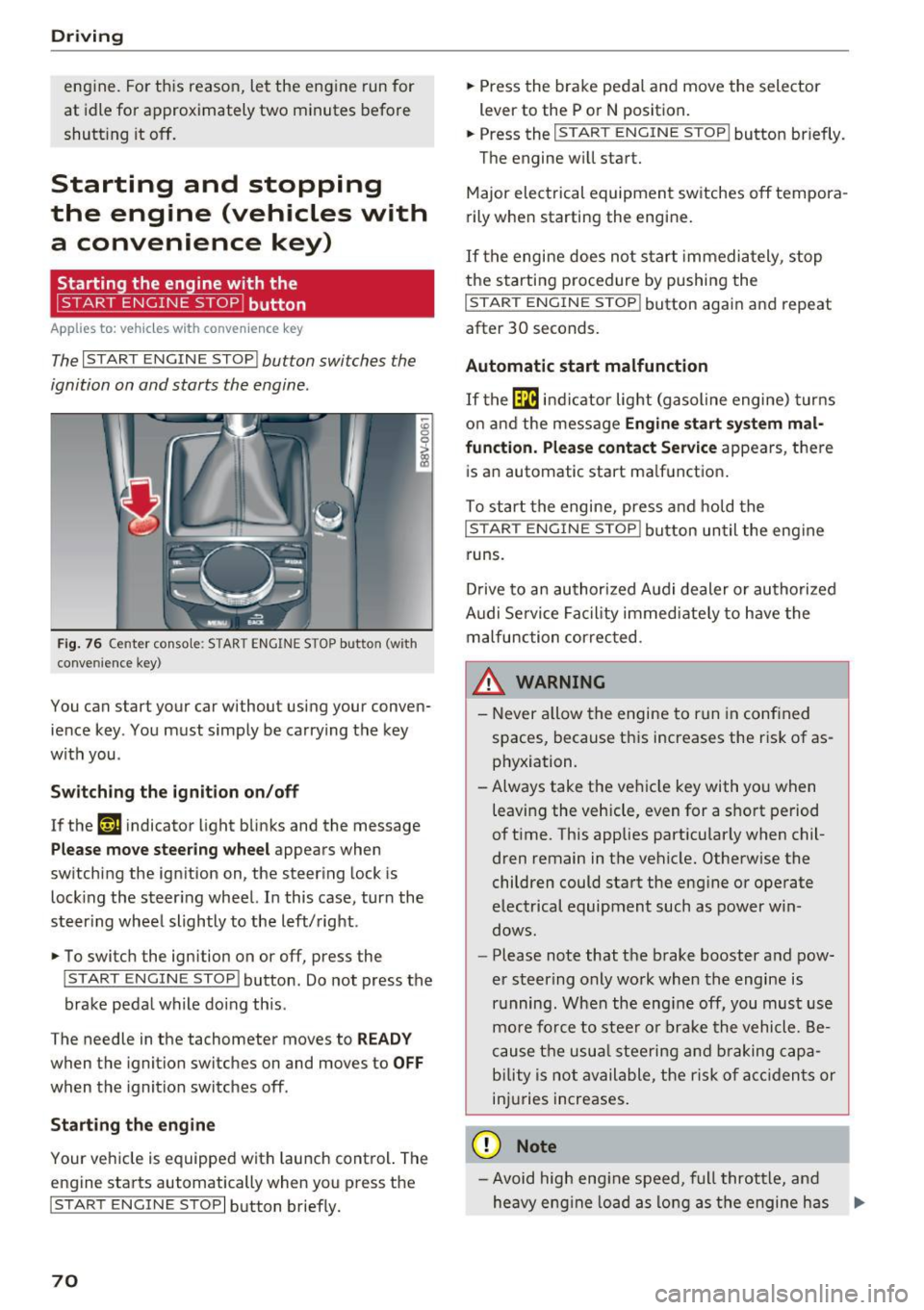
The I ST ART E NGIN E STOP I button switches the
ignition on and starts the engine .
Fig . 76 Ce nter conso le: STAR T ENG IN E ST O P butto n (wit h
conve nie n ce key)
You can start your car without using your conven
ience key . You must simply be carrying the key
with you .
Switch ing the ignit ion on /off
If thP ,7-u indicator light blinks and the message
Ple ase mo ve steer ing whee l appears when
sw itching the ignition on, the steer ing lock is
lock ing the steer ing wheel. In this case, turn the
steering whee l slightly to the left/right.
• To switch the ignition on or off, press the
I START ENGIN E STOP ! button. Do not press the
brake pedal while doing this .
T he needle in the tachometer moves to
R EAD Y
when the ignition swi tches on and moves to OFF
when the ignition switches off .
Starting the engine
Your vehicle is equipped with launch control. The
engine starts automatically when you press the
I S T AR T ENG INE S T OPI button briefly.
70
• Press the brake pedal and move the selector
lever to the P o r N position.
• Press the
I ST AR T ENGINE ST OP I button briefly.
The engine w ill start.
Major electrical equipment switches off tempora
rily when starting the engine.
If the engine does not s tart immediately , stop
the starting procedure by pushing the
I S T AR T ENGINE ST OP I button again and repeat
after 30 seconds.
Automatic start malfunction
If the ~ indicator light (gasoline engine) turns
o n and the message
Engine sta rt sy ste m mal
fun ction. Plea se contact Se rvice
appears, there
is an automatic start ma lfunction.
To start the engine, press and hold the
I S T AR T ENGINE STOP I button until the eng ine
runs.
D rive to an authori zed A udi dealer or authorized
A udi Se rvice Fac ility immediate ly to have the
malfunction correc ted .
& WARNING
- Never a llow the engine to run in confined
spaces, because this increases the risk of as
phyxiation.
- Always take the ve hicle key with you when
leavi ng the vehicle, even for a sho rt period
of t ime. This applies particularly when chil
dren remain in the vehicle. Otherwise the
children could start the eng ine or operate
electrical equipment such as power win
dows.
- Please note that the brake booster and pow
er steering only work when the engine is
running . When the eng ine off, you must use
more force to stee r o r brake the vehicle. Be
cause the usu al stee ring and b raking capa
bility is no t available, the risk of acc iden ts or
in juries increases .
(D Note
-
-Avoid high eng ine speed, full throttle, and
heavy eng ine load as long as the engine has
IJI>
Page 72 of 272
<( co .... N ,.__
N .... 0 ,.__
> co
not reached operating temperature yet. You
could damage the engine.
- The engine cannot be started by pushing or
towing.
@) For the sake of the environment
Do not let the engine run while parked to
warm up. Begin driving immediately . This re
duces unnecessary emissions.
(D Tips
- Some noise after starting the engine is nor
mal and is no cause for concern.
- If the . indicator light blinks in the instru
ment cluster before switching the ignition
off, the ignition will not switch on again.
¢ page 119
-If you leave your vehicle with the ignition
switched on, the ignition will switch off af
ter a certain amount of time. Make sure that
electrical equipment such as the exterior lights are switched off.
T · th · ff using the
button
App lies to: vehicles with convenience key
"'Bring the vehicle to a full stop.
"'Move the selector lever into the P position.
"'Press the
I ST ART ENGINE STOP I button
<=? page 70, fig. 76.
The needle in the tachometer moves to OFF when
the ignition switches off.
Steering lockll
The steering locks when you turn the engine off
using the
I START ENGINE STOPI* button, move
the selector lever into the P position and open
the driver's door.
The locked steering helps prevent vehicle theft .
Emergency off function*
If it is absolutely necessary, the engine can also
be turned off while driving at speeds starting at
4 mph (7 km/h). To switch the engine off, press
l) This fun ctio n is not availab le in all c oun tries.
Driving
the I START ENGINE STOPI button twice in a row
briefly or press and hold for longer than two sec
onds.
A WARNING
=
- Never turn off the engine before the vehicle has come to a complete stop. The full func
tion of the brake booster and the power
steering is not guaranteed. You must use
more force to turn or brake. Because you
cannot steer and brake as you usually
would, this could lead to accidents and seri
ous injuries.
- Please note that the brake booster and pow
er steering only work when the engine is
running. When the engine off, you must use
more force to steer or brake the vehicle. Be
cause the usual steering and braking capa
bility is not available, the risk of accidents or
injuries increases.
- Always take the vehicle key with you when
leaving the vehicle, even for a short period
of time. This applies particularly when chil
dren remain in the vehicle. Otherwise the
children could start the engine or operate
electrical equipment such as power win
dows.
- For safety reasons, always park the vehicle
with the selector lever in the P position.
Otherwise, there is the risk that the vehicle
could roll unintentionally .
- After the engine has been switched off, the
radiator fan can continue to run for up to 10
minutes -even with the ignition switched
off.
It can also switch on again after some
time if the coolant temperature rises as the result of heat buildup or if the engine com
partment is heated by the sun's rays and the
engine is hot.
(D Note
If the engine has been under heavy load for
an extended period of time, heat builds up in
the engine compartment after the engine is
switched off - there is a risk of damaging the
engine. For this reason, let the engine run for
II>
71
Page 73 of 272
Driving
at idle for approxim ately two minutes before
shutting it
off.
Starting the engine if there is a
malfunction
A pp lies to: ve hicles w ith conve nien ce key
It may not be possible to start the engine under
certain circumstances, for example if the battery
in the vehicle key is drained, if interference is af
fected the key or if there is a system malfunc
tion .
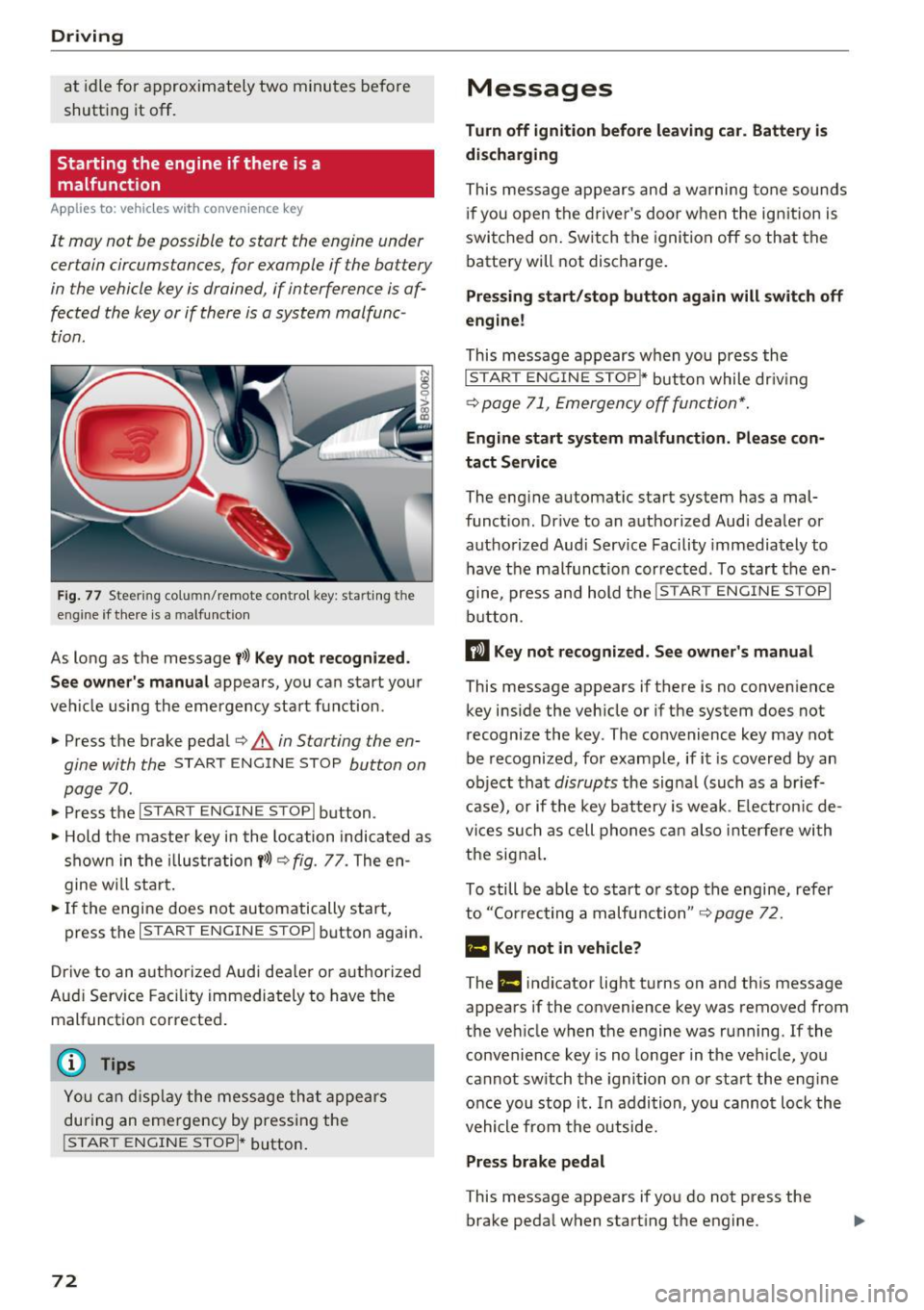
Fig. 77 Steering co lumn/ remote control key: start ing t he
eng ine if th ere is a malfu nct ion
As long as the message t>>) Key not recognized.
See owner' s manual
appears, you can start yo ur
ve hicle using the emergency sta rt function .
• Press t he b rake pedal ¢
A in Starting the en
gine with the
ST ART ENGINE STOP button on
page 70 .
• Press the ~1s= T~A~R~ T~E~N~G~I~ N~E~s= T=o=P~I b utton .
• Hold t he maste r key in the location indica ted as
shown in the i llus trati on
t>>) Q fig. 77. The en
g ine w ill sta rt .
• If the engine does not automatically start,
press the
I START ENGINE STOPI button again .
D rive to an a uth o riz ed Aud i de aler or a uthori zed
Aud i Serv ice Facility immediately to have the
malfunct io n corrected .
Y ou ca n disp lay the me ss a ge th at appe ars
durin g an eme rgency by pressing the
!START ENGINE STOPI* button.
72
Messages
Turn off ignition before leaving car. Battery is
discharging
This mes sage appears and a warning tone sounds
i f you open t he drive r's doo r w hen t he ig nition is
swi tched on . Switch the igni tion
off so that the
batte ry will not discharge .
Pressing start/stop button again will switch off
engine!
This message appears w hen you press the
I STAR T EN GINE STOP~ button while dr iv ing
¢ page 71, Emergency off fun ction*.
Engine start system malfun ction. Please con
tact Service
The eng ine automat ic start system has a mal
funct ion. Dr ive to an a uthorized Audi dea le r or
authorized Aud i Serv ice Facility immedia tely to
have the malfunct ion cor rected. To s tart the en
gine, press an d hold the
I START ENGINE STOPI
button.
II Key not re cogniz ed. S ee owner 's manual
This message appears if there is no conven ience
key i nside the vehicle or if the system does not
recognize the key . The convenience key may not
be recognized, for example, if i t is covered by an
ob ject tha t
disrupts the signa l (such as a br ief
c a se), or if the key battery is we ak. Elec tron ic de
vices such as cell phones c an also inte rfe re wi th
the signa l.
To still be ab le to start o r stop the engine, refer
to ''Co rrecting a malfu nction"
Q page 7 2.
Ill Key not in vehicle?
The Ill indicator light t urns on and th is message
appears if the convenience key was removed from
the vehicle when the engine was ru nning. If the
convenience key is no longe r in the veh icle, yo u
cannot sw itch the ignition on or sta rt the e ng ine
o nce you stop it . In addition, you canno t loc k the
vehicle from the outside.
Press brake pedal
This message appears if yo u do not press the
brake peda l when starting the engine.
Page 75 of 272
Driving
(D Tips
-If the parking brake is set while the ignition
i s sw itched off, the
tG)a indicator light in the
b utton and in the instrument cluster dis
play - (USA models)/ . (Canada mod
e ls) will turn off after a certain amount of
time.
- If dr iver's door is opened while the ign ition
i s sw itched on, the pa rking brake sets a uto
ma tically. T his prevents unin tended ro lling
of the vehicle.
- Occasiona l noises when the parking brake is
set and re leased a re no rmal a nd a re not a
cause for con cer n.
- When the vehicle is par ked, the park ing
b rake goes thro ugh a se lf-test cycle at reg u
l a r int erva ls. A ny no is es asso ciated with th is
a re normal.
- If t here is a power fa ilure, the p arking bra ke
will not se t if i t is re le a se d, and it will not
r ele ase if it is set¢.&.. See an au thori zed
A udi dealer or au thorized A ud i Service Fa
cility for ass istance .
Parking
~ Press the brake pedal to stop the vehicle.
~ Pull the (D switch to set the park ing brake
¢ page 73, fig. 78 .
~ Place the selector lever in the P pos ition.
~ Turn the eng ine off ¢&_ .
~ Turn the steering whee l when pa rking on in
clin es so that the whee ls will roll into the curb
if the ve hicle starts mov ing .
A WARNING
-Always take the vehicle key with you when
leaving the vehicle, even fo r a short period
of time. This applies particularly when chi l
dren rema in in the veh icle . Otherwise ch il
dren could start the engine, release the
par kin g brake or operate elect rical eq uip
me nt such as powe r windows, which in
c reases the ris k of an acc ident.
- When the vehicle is locked, no one -particu
larly not children -sho uld rem ain i n the ve
hicle. Loc ked doors ma ke it more diffic ult
74
-
for emergency workers to get into the vehi
cle, which puts lives at risk.
Starting from a stop
The start assist function ensures that the park
ing broke is released automatically upon start
ing.
Stopping and sett ing the parking brake
~ Pull the (D swi tc h to set t he pa rking brake
¢ page 73, fig . 78 .
Starting and automatically releasing the
parking brake
Require ment: the d river 's doo r mus t be closed
and the driver 's sa fe ty belt must be fastened.
~ When you press the acce lerato r pedal, the
parking bra ke is a utomat ica lly re leased and
your veh icle begi ns to move.
When stopp ing at a traff ic signa l or stopping in
c ity traff ic, the par king b rake can be applied . The
vehicle does no t have to be held wi th the brake
pedal. The par king bra ke elim inates the ten dency
to creep when a se lector lever posi tion is engag
ed. As soon as you p ress the accelerator pedal,
the parking brake releases a utomat ica lly and the
vehicle starts to move.
Starting on slopes
When star ting on in cli nes, the hill start assist
prevents the vehicle from unintentiona lly rolling
b ack . The b raking force of t he parking brake is
not re leased unti l sufficient dr iv ing force has
been built up at the wheels.
@ Tips
F o r safety reasons, the parking brake is re
l eased a utomatica lly on ly when the driver 's
safety be lt is fastened and the driver's door is
l ocked.
Page 82 of 272
<( co ..... N
" N ..... 0 r--. > 00
Shifting manually (tiptronic mode)
Applies to: vehicles with automatic transmissions
The tiptronic allows the driver to shift the gears
manually.
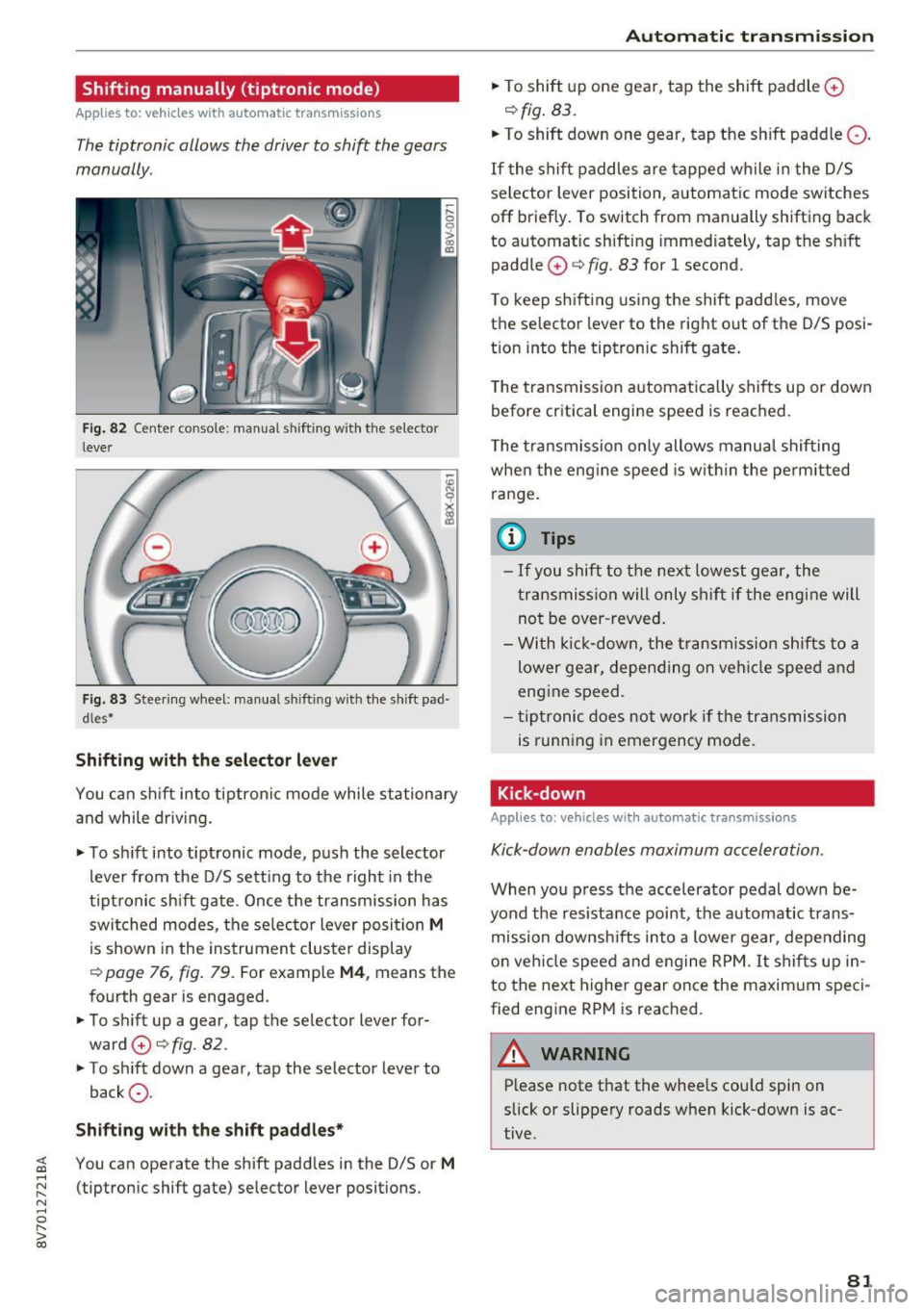
Fig . 82 Center conso le: manua l shifting with the selector
lever
Fig. 83 Steering wheel: manual sh ifting with the shift pad·
dles*
Shifting with th e select or lever
You can sh ift into tiptron ic mode while stationary
and while driv ing.
• To sh ift into tiptronic mode, push the selector
lever from the D/S sett ing to the right in the
tiptronic shift gate. Once the transmission has
switched modes, the se lector lever posi tion
M
is shown in the instrument cluster display
r:::>page 76, fig. 79. For example M4, means the
fourth gear is engaged.
• To shift up a gear, tap the selector lever for
ward
0 r:::> fig. 82.
• To shift down a gear, tap the selector lever to
back
a .
Shifting with the sh ift padd le s*
You can operate the shift padd les in the D/S or M
(tiptronic shift gate) selector lever positions.
Aut oma tic tr ansm iss ion
• To shift up one gear, tap the shift paddle 0
r:::> fig. 83.
• To shift down one gear, tap the shift paddle Q.
If the shift paddles are tapped while in the D/S
selector lever position, automatic mode switches
off briefly. To switch from manually shifting back
to automatic shifting immed iately, tap the sh ift
paddle
0 ¢ fig. 83 for 1 second.
T o keep shifting using the shift padd les, move
the selector lever to the rig ht out of the D/S posi
t ion into the tiptronic shift gate .
T he transmission automatically shifts up or down
before critica l engine speed is reached.
T he transmission only allows manua l shifting
whe n the eng ine speed is w it hi n the pe rmitted
ra nge.
(0 Tips
- If you shift to the next lowest gear, the
transmission will only shift if the eng ine will
not be over -revved .
- With k ick-down, the t ransmiss ion shifts to a
lower gear, depending on vehi cle speed and
engine speed.
- tiptronic does not work if the transmission
is running in emergency mode.
Kick-down
Applies to: vehicles with automatic transmissions
Kick-down enables maximum acceleration.
When you press the accelerator pedal down be
yond the res istance point, the automatic trans
mission downsh ifts into a lower gear, depending
o n veh icle speed and engine RPM.
It shifts up in
to the next higher gear once the maxim um speci
fied eng ine RPM is reached.
A WARNING ~
P lease note that the wheels cou ld spin on
slick or slippery roads when kick-down is ac
tive.
-
81
Page 87 of 272
Trailer mod e
load" on the la bel located on the driver's side B
pillar (visib le when the door is open) . Inflate
tra iler tires to trailer and tire manufacturers'
specif ications.
Lights
Check to make sure both vehicle and t railer lights
are working p roper ly.
Safety chains
Be sure t railer safety chains are properly connect
ed from the trai le r to the hi tch on the veh icle.
L eave enough sla ck in the cha ins to permi t turn
ing corners. When yo u install safety chains, ma ke
sure they wi ll not drag on the road when yo u are
driving .
The cha ins s hou ld cross under the trailer tongue
t o prevent it from dropping in case of separation
from the h itch .
Driving instructions
Driving with a trailer always requires extra care
and consideration .
To obtain t he best poss ible handling of vehicle
and traile r, please note the fo llow ing :
.,. Do not tow a loaded trailer when your car itself
is not loaded.
.. Be especi ally ca ref ul when pass ing othe r
vehicles.
.. Observe speed limi ts .
.. Do not d rive at the maximum permissible
speed.
.. Always apply brakes early.
.. Monitor the temperature gauge .
Weight distribution
Towing a loaded t railer w ith an empty car res ults
in a high ly unstable distribution of weight . If this
cannot be avoided, drive at very low speeds on ly
to avoid the risk of losing steering control.
A "balanced" rig is easie r to operate and cont rol.
This means that the tow vehi cle should be loaded
to the extent possible and permissible, while
keep ing the tra iler as light as possib le under the
circumstances. Whenever possible, transfer
some cargo to the l uggage compartment of the
86
tow veh icle wh ile observing tong ue load require
ments and vehicle loading considerations.
Speed
The higher the speed, the mo re diff icu lt i t be
comes for the driver to con trol the r ig. Do not
drive at t he maxim um permissible speed. Reduce
you r speed even more if load, weather or wind
con dit ions are unfavorab le - partic ularly when
go ing downh ill.
Reduce vehicle speed
immediately if the trailer
shows the slightest sign of swaying.
Do not try
to stop the swaying by accelerating.
Observe speed limi ts. In some areas, s peeds fo r
vehicles towing trailers are lower than for regular
vehicles .
A lways apply bra kes early. Whe n driving down
hill, shift in to a lower gea r to use the engine
b raki ng effect to slow the vehi cle. Use of the
brakes alone ca n cause them to over heat and fai l.
Coolant temperature
The coolant temperature gauge 9 page 12 must
be obse rved caref ully. The coolant temperature
c a n incre ase if yo u drive o n long incl ines in a low
gear a t high engine speeds . Red uce your speed
immediately if the LE Ds in the top part of the dis
play turn on .
Fo r more info rm ation abou t indicator lights, re
fer to .
¢ page 16 .
A WARNING
-
Anyone not prope rly restrai ned in a moving
vehicle is at a much greate r risk in an acci
dent. Never let anyone ride in your car who is
not properly wear ing the restraints provided
by Aud i.
Trailer mode notes
Important to know
Your vehicle handles differen tly when towing a
trailer because o f the additiona l weight and di f
ferent weight distribution. Safety, performance
and economy will g reatly depend on how caref ul-
l y you load your trai ler and operate you r rig. ..,_