seats AUDI A4 2016 User Guide
[x] Cancel search | Manufacturer: AUDI, Model Year: 2016, Model line: A4, Model: AUDI A4 2016Pages: 278, PDF Size: 70.26 MB
Page 71 of 278

,....,
N
0
""' CX) ,....,
I.Cl U"I ,....,
I.Cl ,....,
Luggage compartment
General information
A WARNING
Read and follow the important safety precau
tions on
~ page 126, Storing cargo correctly.
Luggage compartment cover
Applies to vehicles: with luggage compartment cover
Fig. 76 Luggage compartment: cover hanging in position
@
Fig. 77 Right front section of the luggage compartment:
removing the luggage compa rtment cover
The luggage compartment cover can be hung in
position @or in the comfort position @
¢fig. 76.
Extending/Retracting
You can only extend and retract the cover in the
@ position.
• Pull the cover out and attach it in position @in
the mount ing eyelets in the side trim.
Comfort position
In pos ition @, the cover does not need to be re
moved to unload the luggage compar tment.
Seats and storag e
• To move to position @, tilt the end of the cover
upward from the bottom when the cover is ex
tended . It w ill then move into position @ by it
self ~
fig. 76.
Removing
• Pull the lever in the dire ction of the arrow
¢
fig . 77 while lifting the cover out.
Installing
• Plac e the left side of the cover in the mo unt on
the s ide t rim.
" Press the cove r down in to the r ight mo unt u ntil
it locks i nto place .
_&. WARNING
-Whenever driving, never place any hard or
h eavy objects on the luggage compartment or
a llow pets to s it on t he luggage compartment
cover. They could become a hazard to vehicle
occupants in the event of sudden braking or in
an accident.
(D Note
Let the luggage compartment cover roll up
s low ly to avoid damage.
Enlarging the luggage compartment
Applies to vehicles: with fo lding rear seatback
The rear seat backrests can be folded forward ei
ther separately or together.
Fig . 78 Backrest: release lever, securing knob and latch·
Folding the backrest forward
" Pull the release leve r@ ¢ fig. 78 in t he d irec
tion of the arrow and fold the backrest forward . .,.
69
Page 73 of 278
,....,
N
0
""' CX) ,....,
I.Cl U"I ,....,
I.Cl ,....,
(D Note
Let the partition net roll up slowly to prevent
damage.
Partition net {seatback tilted forward )
Applies to vehicles: with partition net
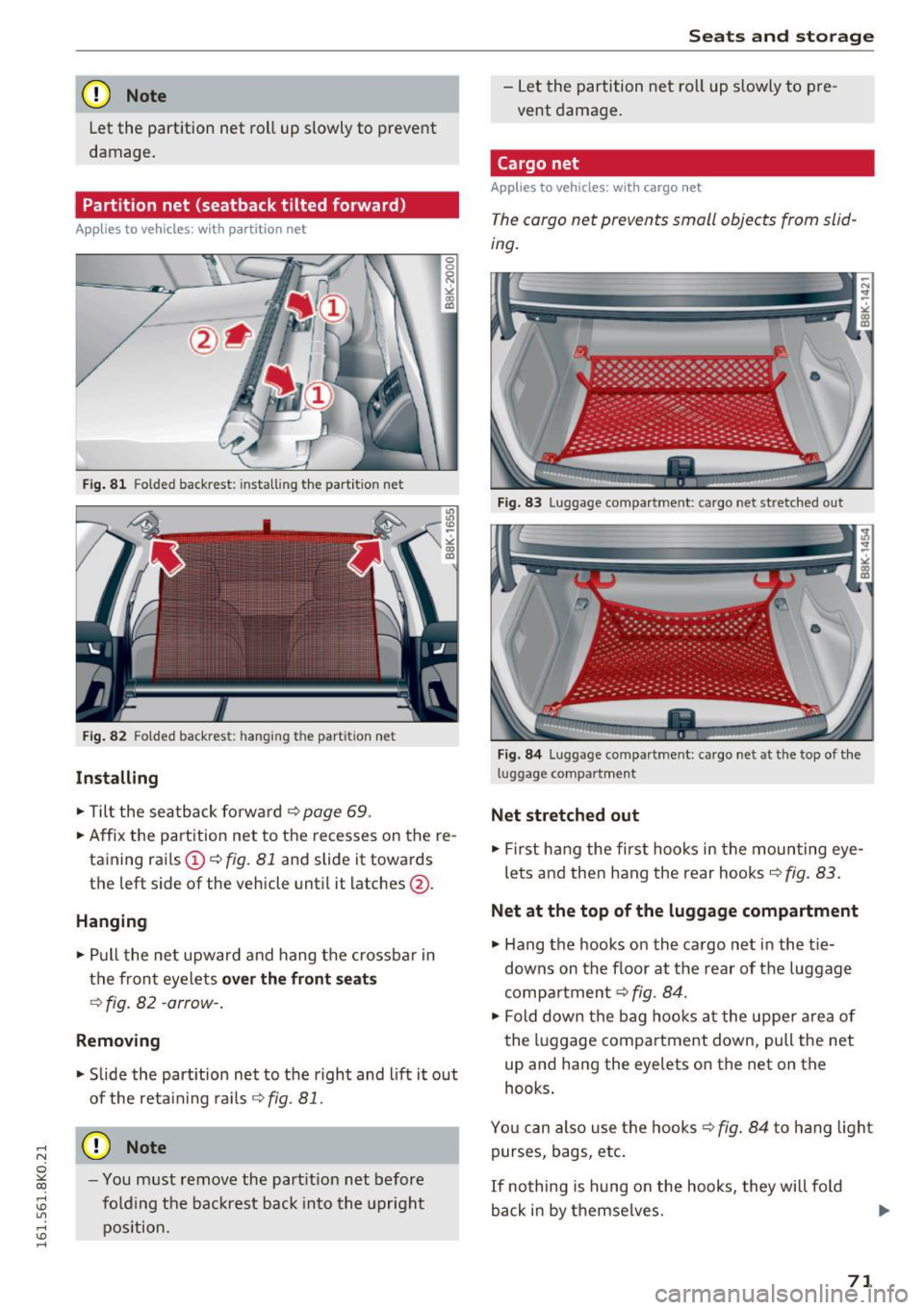
Fig . 81 Folded backrest: installing t he part ition net
Fig . 82 Folded backrest : hanging the partition net
Install ing
.,. Tilt the sea tback fo rwa rd¢ page 69.
.,. Affix the partition net to the recesses on the re
ta ining rails @ ¢
fig. 81 and slide it towards
the left side of the vehicle until it latches @.
Hanging
.,. Pull the ne t upward and hang the crossba r in
the front eyelets
over the front seat s
¢fig . 82 - arrow -.
Removing
.,. Slide the part ition net to the right and l ift it out
of the reta in ing ra ils
¢ fig. 81.
{[) Note
-You must remove the part it ion net before
fo ld ing the backrest back into the upright
pos ition.
Seats and storag e
-Let the partition net ro ll up s lowly to pre
vent damage.
Cargo net
Applies to veh icles: w ith cargo net
The cargo net prevents small objects from slid
ing.
Fig . 83 Luggage compa rtment: ca rgo net stretched out
Fig. 84 Luggage compartment: ca rgo net at the top of the
l uggage compart ment
Net stretched out
.,. Fir st ha ng the fi rst hooks in the moun ting eye
lets and then hang the rear hooks¢
fig. 83.
Net at the top of the luggage compartment
.,. Hang the hooks on the cargo net in the t ie
downs on the floor at the rear of the luggage
compa rtment
¢fig. 84.
.,. Fold down the bag hooks a t the uppe r are a of
the l uggage compar tment down, pull the net
up and hang the eyelets on the net on the
hooks .
You can also use the hooks¢
fig. 84 to hang ligh t
purses, bags, etc.
If nothing is hung on the hooks, they will fo ld
ba ck in by themse lves.
71
Page 75 of 278
,....,
N
0
""' CX) ,....,
I.Cl U"I ,....,
I.Cl ,....,
Luggage compartment covering (reversible
mat)
Applies to vehicles: with luggage compartment covering
The reversible mat protects the luggage com
partment and bumper from dirt and scratches .
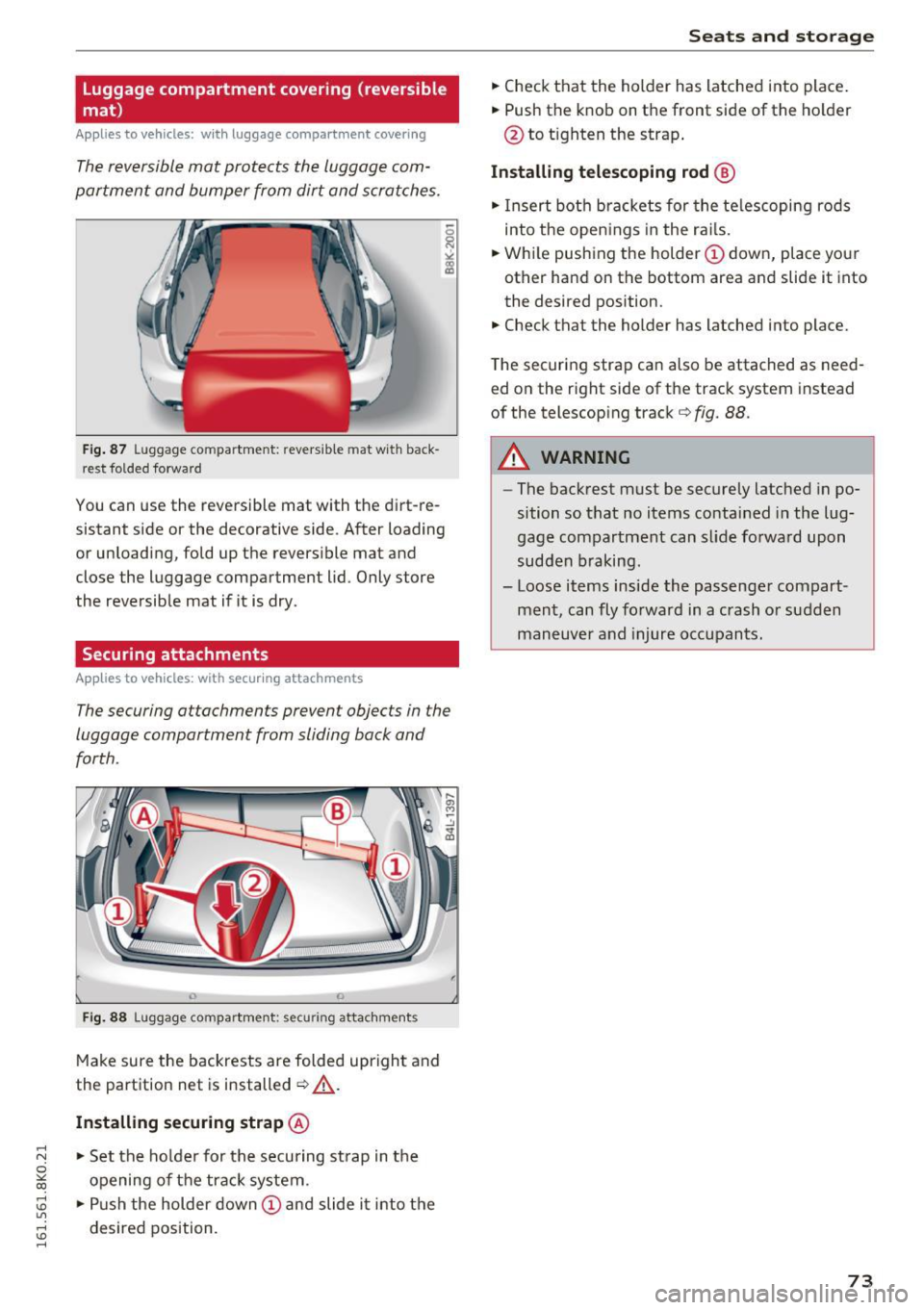
Fig. 87 Lugg age co mpartment : rever sib le m at wit h back
r est folded fo rwa rd
You can use the reversible mat with the d irt -re
sistant side o r the decorative side . After loading
or unloading, fold up the revers ible mat and
close the luggage compartment lid . Only store
the reversible mat if it is dry .
Securing attachments
Applies to vehicles: with securing attachments
The securing attachments prevent objects in the
luggage compartment from sliding back and
forth.
0 0
Fig . 88 Luggage compartm ent : se curin g attachments
Make sure the backrests are folded upright and
the partition net is installed ¢
&,.
Installing securing strap @
.,. Set the ho lder for the securing strap in the
opening of the track system .
.,. Push the holder down
CD and slide i t into the
desired position.
Seats and storag e
.,. Check that the holder has latched into place .
.,. Push the knob on the front side of the ho lder
@ to tighten the strap .
Installing telescoping rod @
.,. Insert both brackets for the telescoping rods
into the open ings in the ra ils .
.,. Whi le pushing the holder
CD down, place your
other hand on th e bottom area and slide it into
the desi red position .
.,. Check that the holder has latched into place.
T he securing strap can also be attached as need
ed on the right s ide of the track system instead
of the telescop ing track ¢
fig. 88 .
A WARNING
--The backrest must be securely latched in po-
sition so that no items co ntained in the lug
gage compartment can slide forward upon
sudden braking .
- Loose items inside the passenger compart ment , can fly forward in a crash or sudden
maneuver and injure occupants.
73
Page 77 of 278

,....,
N
0
""' CX) ,....,
I.Cl U"I ,....,
I.Cl ,....,
Reversible cargo area floor (dirt collector)
Applies to vehicles: with reversible cargo area f loor
You can transport dirty or damp objects in the
reversible cargo area floor
Fi g. 91 Luggage compartment: cargo area floor
F ig. 92 Luggage compartment: cargo area floor reversed
Reversing the cargo area floor
~ Lift the cargo area floor using the handle
~ fig. 91 -arrow- .
~ Flip the floor over and install it.
Parcel shelf
The parcel shelf behind the rear seatback can be
used to carry light items of clothing.
A WARNING
No heavy or hard objects should be p laced on
the parcel shelf. They are a haza rd to the vehi
cle occ upants d uring sudden b raking. The is a
r isk of injury.
(D Note
Please make sure that the heating wires for
the rear window defogger are not damage by abrasive objects.
Seats and storag e
(D Tips
To ensure problem-free ventilation, the venti
l ation slots between the rear window and the
parcel shelf must not be covered.
75
Page 80 of 278
Warm and cold
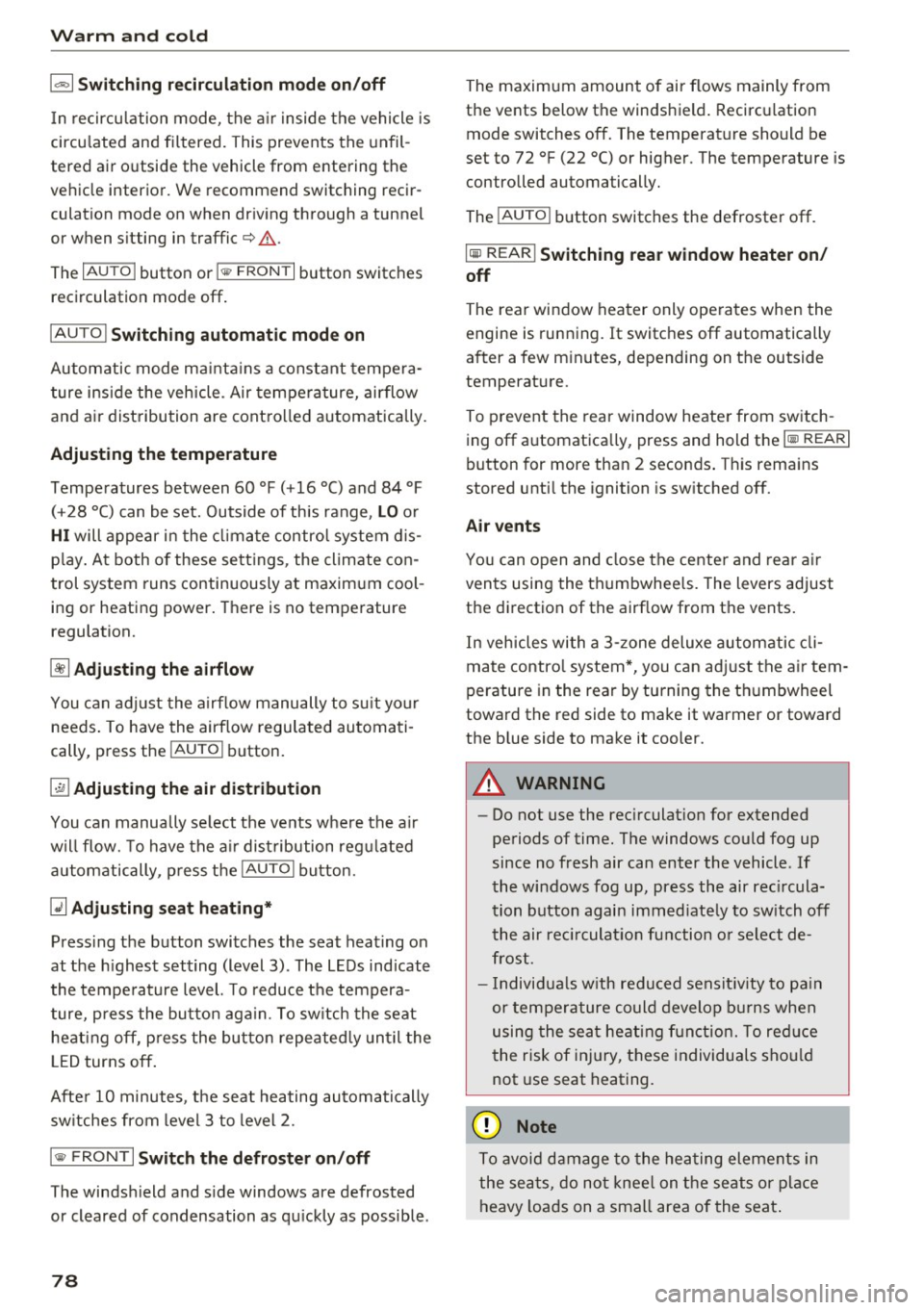
1- 1 Swit ch ing recir cu la tion m ode on /off
In recirculation mode, the a ir inside the vehicle is
circu lated and filtered. This prevents the unfil
tered air outside the vehicle from entering the
ve hicle interior. We recommend switching recir
culation mode on when driving through a tunnel
or when sitting in traffic¢.&,.
The
IAUTOI button or l
IAUTO I Switching aut omatic mode on
Automatic mode ma inta ins a constant tempe ra
ture inside the veh icle . Air temperature, airflow
and air distribution are controlled automatically.
Adjusting th e tempe rature
Temperatures between 60 °f (+16 °C) and 84 °f
( + 28 °C) can be set. Outside of this range,
LO or
HI will appear in the cl imate control system dis
p lay. At both of these settings, the climate con
trol system runs continuously at maximum cool
ing or heating power. There is no temperature
regulation.
~ A dj usting the airflow
You can adjust the airf low manually to s uit your
needs. To have the airflow regulated automati
cally, press the
IAU TO I button.
~ Adjusting the air distribution
You can manually select the vents where the air
will flow. To have the a ir dist ribution reg ulated
automatically , press the
IAU TO I button.
QJ Adju sting seat h eating *
Pressing the button switches the seat heat ing on
at the h ighest setting (level 3) . The LEDs indicate
the temperature level. To reduce the tempera
ture, p ress the button aga in. To sw itch the seat
heating off, p ress the butto n repeated ly unt il the
L ED turns off.
After 10 minutes, the seat heating automatically
sw itches from level 3 to level 2.
I @ FRONT I Switch the d efroster on /off
The windsh ield and s ide windows are defrosted
or cleared of condensation as qu ickly as possible .
78
The maximum amount of air flows mainly from
the vents below the windshield . Recirculation
mode switches off. The temperature should be
set to 72 °f (22 °C) or higher. The temperature is
controlled automatically.
The
! AU TOI button switches the defroster off.
lliil R EAR I Switching rear window heater on /
off
The rear window heater only operates when the
engine is running.
It switches off automatically
after a few minutes, depending on the outside
temperature.
To prevent the rear window heater from switch
i ng off automatica lly, press and hold the
loo REARI
button for more than 2 seconds . This remains
stored unti l the ignition is sw itched off.
Air vents
You can open and close the cente r and rear a ir
vents using the thumbwheels. The levers adjust
the direction of the airf low from the vents.
In veh icles with a 3-zone deluxe automatic cli
mate contro l system*, you can adjust the a ir tem
perature in the rear by turning the th umbwheel
toward the red side to make it warmer or toward
the blue side to make it cooler.
A WARNING
- Do not use the rec irculat ion for extended
periods of time. The windows could fog up
since no fresh air can enter the vehicle. If
the windows fog up, press the air rec ircula
tion button again immed iate ly to sw itch off
the air rec irculat io n function o r select de
frost.
- Individua ls w ith redu ced sensit iv ity to pa in
or temperature could develop b urns when
using the seat heating f unction. To red uce
the risk of inj ury, these individuals sho uld
not use seat heating.
(D Note
To avoid damage to the heating elements in
the seats, do no t knee l on the seats o r place
heavy loads on a small area of the seat .
-
Page 123 of 278
..... N
0 ::..:: co ,....,
Basics
Safe driving habits
Please remember -safety first!
This chapter contains important information,
tips, instructions and warnings that you need to
read and observe for your own safety, the safety
of your passengers and others . We have summar
ized here what you need to know about safety
belts, airbags, child restraints as well as child
safety. Your safety is for us
priority number 1. Al
ways observe the information and warnings in
this section - for your own safety as well as that
of your passengers.
The information in this section applies to all
model versions of your vehicle. Some of the fea
tures descr ibed in this sections may be standard
equipment on some models, or may be optional
equipment on others. If you are not sure, ask
your authorized Audi dealer.
A WARNING
- Always make sure that you follow the in
structions and heed the WARNINGS in this
Manual. It is in your interest and in the in
terest of your passengers .
-
-Always keep the complete Owner's Litera
ture in your Audi when you lend or sell your
vehicle so that this important information
will always be available to the driver and
passengers.
- Always keep the Owner's literature handy so
that you can find it easily if you have ques
tions.
Safety equipment
The safety features are part of the occupant re
straint system and work together to help reduce
the risk of injury in a wide variety of accident sit
uations.
Your safety and the safety of your passengers
should not be left to chance. Advances in tech
nology have made a var iety of features available
to help reduce the risk of injury in an accident.
Driving safety
The following is a list of just a few of the safety
features in your Audi:
- sophisticated safety belts for driver and all pas-
senger seat ing pos itions,
- be lt force limiters for the front seats,
- belt pretensioners for the seats,
- head restraints for each seating position,
- front airbags,
- side airbags in the front seats,
- side curtain airbags,
- specia l LATCH anchorages for child restraints,
- adjustable steering column.
These individual safety features, can work to gether as a system to help protect you and your
passengers in a w ide range of accidents. These
features cannot work as a system if they are not
always correctly adjusted and correctly used.
Safety is everybody's responsibility!
Important things to do before driving
Safety is everybody's job! Vehicle and occupant
safety always depends on the informed and care
ful driver.
For your safety and the safety of your passen
gers,
before driving always:
.. Make sure that all lights and signals are operat
ing correctly.
.. Make sure that the tire pressure is correct.
.. Make sure that all windows are clean and afford
good visibility to the outside .
.. Secure all luggage and other items carefully
c:::>page 65.
.. Make sure that nothing can interfere with the
pedals .
.. Adjust front seat, head restraint and mirrors
correctly for your height.
.. Instruct rear seat passengers to adjust the
head restraints according to their height.
.. Make sure to use the right child restraint cor
rectly to protect children
c:::> page 158, Child
safety .
.. Sit properly in your seat and make sure that
your passengers do the same
c:::> page 59, Seats
and storage.
121
Page 125 of 278
..... N
0 :,,:: co ..... ,J:> Lil
..... ,J:> .....
For detailed information on how to adjust the
driver's seat, see
¢ page 60.
A WARNING
Drivers who are unbelted, out of position or
too close to the airbag can be seriously in
jured by an airbag as it unfolds. To help re
duce the risk of serious personal injury:
- Always adjust the driver's seat and the
steering wheel so that there are at least 10 inches (25 cm) between your breastbone
and the steering wheel.
- Always hold the steering wheel on the out
side of the steering wheel rim with your
hands at the 9 o'clock and 3 o'clock posi
tions to help reduce the r isk of personal in
jury if the driver's airbag inflates.
- Never hold the steering wheel at the
12 o'clock position or with your hands at
other positions inside the steering wheel
rim or on the steering wheel hub. Holding
the steering wheel the wrong way can cause
serious injuries to the hands, arms and head
if the driver's airbag deploys.
- Pointing the steering wheel toward your
face decreases the ability of the supplemen
tal driver's airbag to protect you in a colli sion.
- Always sit in an upright position and never lean against or place any part of your body
too close to the area where the airbags are located .
- Before driving, always adjust the front seats
and head restraints properly and make sure
that all passengers are properly restrained.
- Never adjust the seats while the vehicle is
moving . Your seat may move unexpectedly
and you could lose control of the vehicle .
- Never drive with the backrest reclined or
tilted far back! The farther the backrests are
tilted back, the greater the risk of injury due
to incorrect positioning of the safety belt
and improper seating position.
- Children must a lways ride in child safety
seats¢
page 158 . Special precautions ap
ply when installing a child safety seat on the
front passenger seat ¢
page 138 .
Driving safety
Proper seating position for the front
passenger
The proper front passenger seating position is
important for safe, relaxed driving.
For your own safety and to reduce the risk of in
jury in the event of an acc ident, we recommend
that you adjust the seat for the front passenger
to the following position:
" Move the front passenger seat back as far as
possible . There must be a minimum of 10 in
ches (25 cm) between the breastbone and the
instrument panel¢.&, .
"Adjust the angle of the seatback so that it is in
an upright position and your back comes in full
contact with it whenever the vehicle is moving.
" Applies to vehicles with adjustable head re
straints : Adjust the head restraint so the upper
edge is as even as possible with the top of your
head . If that is not possible, try to adjust the
head restraint so that it is as close to this posi
tion as possible .
" Keep both feet flat on the floor in front of the
front passenger seat.
" Fasten and wear safety belts correctly
¢page 133.
For detailed information on how to adjust the
front passenge r's seat, see ¢
page 59.
A WARNING ~
Front seat passengers who are unbelted, out
of position or too close to the airbag can be
seriously injured or killed by the airbag as it unfolds. To help reduce the risk of serious
personal injury:
- Passengers must always sit in an upright po
sition and never lean against or place any
part of their body too close to the area
where the airbags are located .
- Passengers who are unbelted, out of posi
tion or too close to the airbag can be seri
ously injured by an airbag as it unfolds with
great force in the blink of an eye.
-Always make sure that there are at least 10 inches (25 cm) between the front passen
ger's breastbone and the instrument panel.
123
Page 126 of 278
Driving safety
-Each passenger must always sit on a seat of
their own and properly fasten and wear the
safety belt belonging to that seat.
- Before driving, always adjust the front pas
senger seat and head restraint properly.
- Always keep your feet on the floor in front
of the seat. Never rest them on the seat in-
'
strument panel, out of the window, etc. The
airbag system and safety belt will not be
able to protect you properly and can even in
crease the risk of injury in a crash.
- Never drive with the backrest reclined or
tilted far back! The farther the backrests are
t il ted back, the greater the risk of injury due
to incorrect positioning of the safety belt
and improper seating position.
- Children must always ride in child safety
seats ¢
page 158. Special precaut ions ap
ply when installing a child safety seat on the
front passenger seat¢
page 138.
Proper seating positions for passengers in
rear seats
Rear seat passengers must sit upright with both
feet on the floor consistent with their physical
size and b e properly restrained wh enever the ve
hicle i s in use.
To reduce the risk of injury caused by an incorrect
seating position in the event of a sudden braking
maneuver or an accident, your passengers on the
rear bench sea t must always observe the follow
ing:
... Make sure that the seatback is securely latched
in the upright position ¢
page 69.
... If there is a passenger on the rear center seat
ing position, slide the center head restra int up
ward at least to the next notch .
... Keep both feet flat in the footwell in front of
the rear seat.
.,. Fasten and wear safety be lts properly
¢ page 133.
... Make sure that children are always properly re
strained in a child restraint that is appropriate
for their size and age¢
page 158.
124
A WARNING
Passengers who are improperly seated on the
rear seat can be seriously injured in a crash.
- Each passenger must always sit on a seat of
their own and properly fasten and wear the
safety belt belonging to that seat .
- Safety belts only offer maximum protection
when the seatback is securely latched in the
upright position and the safety belts are
properly positioned on the body . By not sit
ting upr ight, a rear seat passenger increases
the risk of personal injury from improperly
positioned safety belts!
-Always adjust the head restraint properly so
that it can give maximum protection.
Proper adjustment of head restraints
Applies to vehicles: with adjustable head restra ints
Correctly adjusted head restraints are an impor
tant part of your vehicle's occupant restraint sys
tem and can help to reduce the risk of injuries in
accident situations.
Fig. 139 He ad restraint : viewe d from t he front
The head restraints must be correctly adjusted to
achieve the best protection .
... Adjust the head restraints so the upper edge is
as even as possible with the top of your head . If
that is not possible, try to adjust the head re
straint so that it is as close to this position as
possible ¢
fig. 139 .
... If there is a passenger on the rear center seat
ing position, slide the center head restraint up
ward at least to the next notch .
Adjusting head restraints¢
page 61.
Page 127 of 278
..... N
0 ::..:: co ,....,
All seats are equipped with head restraints. Driving without head restraints or with head
restraints that are not properly adjusted in
creases the risk of serious or fatal neck injury
dramatically. To help reduce the risk of injury:
-Always drive with the head restraints in
place and properly adjusted.
- Every person in the vehicle must have a
properly adjusted head restraint.
- Always make sure each person in the vehicle
properly adjusts their head restraint. Adjust
the head restraints so the upper edge is as
even as possible with the top of your head.
If that is not possible, try to adjust the head
restraint so that it is as close to this position
as possible.
- Never attempt to adjust head restraint
whi le driving. If you have driven off and
must adjust the driver headrest for any rea
son, first stop the vehicle safely before at
tempting to adjust the head restra int.
- Children must always be properly restrained
in a child restraint that is appropriate for
their age and size
q page 158.
Examples of improper seating positions
-
The occupant restraint system con only reduce
the risk of injury if vehicle occupants ore properly
seated.
Improper seating positions can cause serious in
jury or death. Safety belts can only work when
they are properly positioned on the body. Im
proper seating positions reduce the effectiveness
of safety belts and will even increase the risk of
injury and death by moving the safety belt to crit
ical areas of the body. Improper seating positions
also increase the risk of serious injury and death
when an airbag deploys and strikes an occupant
who is not in the proper seating position. A driver
is responsible for the safety of all vehicle occu
pants and especia lly for children. Therefore:
.. Never allow anyone to assume an incorrect
seating position when the vehicle is being used
q& ,
Driving safety
The following bulletins list only some sample po
sitions that will increase the risk of serious injury
and death. Our hope is that these examples will
make you more aware of seating positions that
are dangerous .
Therefore, whenever the vehicle is moving:
-never stand up in the vehicle
- never stand on the seats
- never kneel on the seats
- never ride with the seatback reclined
- never lie down on the rear seat
- never lean up against the instrument panel
- never sit on the edge of the seat
- never sit sideways
- never lean out the window
- never put your feet out the window
- never put your feet on the instrument panel
- never rest your feet on the seat cushion or back
of the seat
- never ride in the footwell
- never ride in the cargo area
A WARNING
-Improper seating positions increase the risk
of serious personal injury and death whenever
a vehicle is being used.
- Always make sure that all vehicle occupants
stay in a proper seating position and are
properly restrained whenever the vehicle is
being used.
Pedal area
Pedals
The pedals must always be free to move and
must never be interfered with by a floor mot or
any other object.
Make sure that all pedals move freely w ithout in
terference and that nothing prevents them from
returning to their original positions .
Only use floor mats that leave the pedal area free
and can be secured with floor mat fasteners .
If a brake circuit fails, increased brake pedal trav-
el is required to bring the vehicle to a fu ll stop . .,._
125
Page 132 of 278
Safety belt s
Safety belts
General information
Always wear safety belts!
Wearing safe ty belts correctly saves lives!
This chapte r explains why safety be lts a re neces
sary, how they work and how to adjust and wear
them correct ly.
.. Read all the information that follows and heed
all of the instructions and WARNINGS.
&_ WARNING
Not wea ring safety belts or wearing them im
properly increases the risk of ser ious personal
injury and dea th .
- Safety belts are the s ingle most effective
mea ns ava ilab le to reduce the risk of serious
injury and dea th in automob ile accidents .
For yo ur protect ion and that of your passe n
gers, alw ays co rre ctly wea r sa fety be lt s
when the veh icle is moving .
- Pregnant wom en, in ju re d, o r physically i m
paired persons mus t also use s afety be lts.
L ik e all vehi cle o ccu pants, they are mo re
li kely to be serio usly injure d if th ey do no t
wea r safety be lts. The best way to protect a
fetus is to protect the mothe r -th roughout
the ent ire pregnancy .
Number of seats
Your Audi has a total of five seating positions:
two in the front and three in the rear. Each seat
i n g position has a safety belt.
&_ WARNING
N ot wea ring safety bel ts or weari ng them im
properly increases th e r isk of ser ious personal
inju ry and dea th.
- N ever st rap more tha n one perso n, includ
ing small ch ildren, into a ny be lt .
It is espe
ci ally dan gerous to pla ce a sa fety bel t over a
c hild s itting on you r lap.
- N ever le t mo re people ride in t he vehicle
t h an t he re are saf ety bel ts availab le.
130
-Be sure everyone riding in the vehicle is
properly restrained with a separate safety
be lt or ch ild restraint.
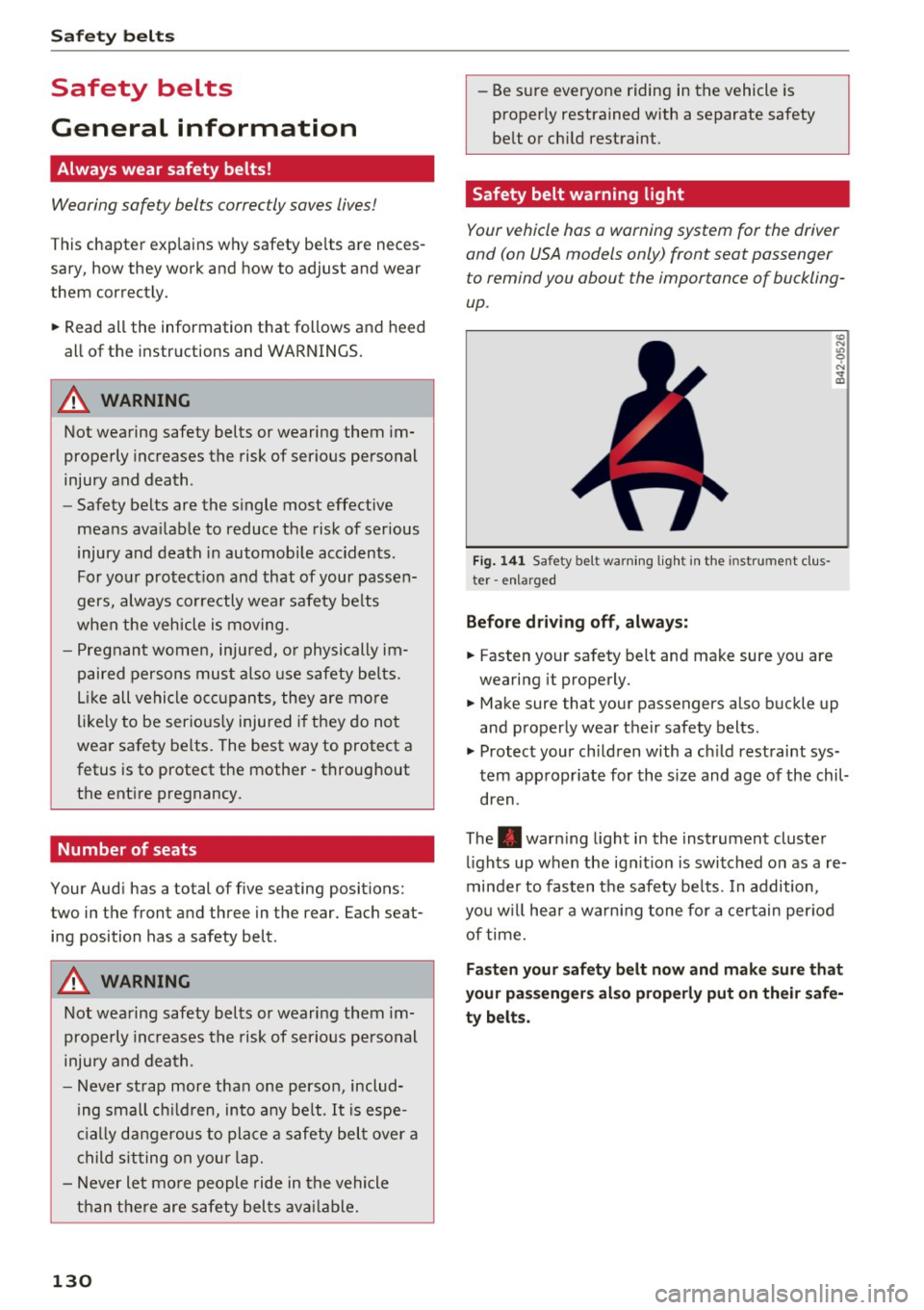
Safety belt warning light
Your vehicle has a warning system for the driver
and (on USA models only) front seat passenger
to remind you about the importance of buckling
up .
Fig. 141 Safety belt wa rning lig ht in th e in st rument clu s
ter -enl arged
Before driv ing off , alway s:
.. Fasten your sa fety belt and make sure you are
wearing it prope rly.
(0
"'
"' 0 N
and proper ly wea r th eir safety belts .
.. Protec t your ch ildren with a ch ild rest raint sys
tem app ropr iate for the size and age of the chil
dren .
The . war ning light i n the instrument cluste r
l ights up when the ig nition is swi tched on as a re
minde r to fas ten t he safety be lts. In addition,
yo u w ill hea r a wa rn ing tone for a ce rt ain per io d
of time.
Fasten your safety belt now and make sure that
your passengers also properly put on their safe
ty belts.