ignition AUDI A5 2015 Owner´s Manual
[x] Cancel search | Manufacturer: AUDI, Model Year: 2015, Model line: A5, Model: AUDI A5 2015Pages: 264, PDF Size: 66.83 MB
Page 182 of 264
Driving and th e environment
Regular maintenance
A badly tuned engine unnecessarily wastes a lot
of fuel .
.,. Have your vehicle serviced at regula r intervals.
By having your vehicle regularly serviced by an
authorized Audi dealer he lps to ensure that it
runs properly and economically. The condition of
your vehicle not only affects its safety and ability to hold its value, it also affects
f uel c onsump
tion .
C he ck you r oil e ach t ime you fill you r ta nk .
The amount of oil used is related to engine load
and speed.
It is normal for the oil consumption of a new en
g ine to reach its lowes t va lue after a cer tain mile
age has been d riven .
You must d rive you r vehicle about 3,000 miles
(5 ,000 k ilometers) before you can properly as
sess o il cons umption .
This a lso applies to fuel consumption and engine
output.
(D Note
- Have your vehicle maintained properly and
in accordance w ith the service recommenda
tions in you r Warra nty
& M aintenance book
l et . Lack of p roper m aintenance as well as
i mprope r use of the vehicle will impair the
funct ion of the emission control system and
could lead to damage.
- Do not a lter or remove any component of
the Emission Cont ro l System unless ap
proved by the manufacturer.
- Do not a lter o r remove any dev ice, such as
heat shie lds, switches, ignition wires,
va lves, which are designed to protect your
vehicle's Emiss ion Control System and other
i mportant veh icle components.
180
· Fewer short trips
Fuel consumption will always be relatively high
on short trips .
.,. Try to avoid dr iv ing short distances with a cold
eng ine .
The eng ine and catalytic converter have to reach
their opt imal
oper atin g temperature to reduce
fuel consumpt ion and noxious emissions effec
tively .
Just after starting, a co ld engine in a mid-s ize car
on ly achieves a fuel economy of 6-8 mi les per
gallon (30-40 l/100 km). After about a half a
mile, fuel economy climbs to 12 mpg (20 l/100
km) . After about
2.5 miles (4 km), the eng ine is
at its proper operating temperature and fuel
economy has reached a norma l level. So you can
see that you should avo id short trips whenever
poss ible .
The
out side t emp eratur e is also cr itical in th is re
gard. Your car consumes more fuel in the winter
than in the summer.
Page 186 of 264
Care and cleaning
Care and cleaning
General information
Regular, proper care he lps to maintain your vehi
cle's value.
It can also be a requirement when
submitting warranty claims for corrosion damage
and paint defects on the body.
The necessary care products can be obtained
from your authorized Audi dealer . Read and fol
low the instructions for use on the packaging.
A WARNING
-Using cleaning and care products incorrectly
can be dangerous to your health.
- Always store cleaning and care products out of reach of children to reduce the risk of poi
soning .
@ For the sake of the environment
-Preferably use environmentally-friendly
products when buying cleaning agents.
- Do not dispose of leftover cleaning and care
products with household trash .
Car washes
The longer that deposits remain on the vehicle,
the more the surface may be damaged. High
temperatures such as those caused by sunlight
increase the damaging effect.
Before washing, rinse
off heavy deposits with
p lenty of water.
Stubborn deposits such as bird dropp ings or tree
sap are best removed with plenty of water and a
microfiber cloth .
A ls o, wash the underside of your veh icle once
road salt stops be ing used for the season .
Pressure washers
When washing your veh icles with a pressure
washer, always follow the operating instructions
provided with the pressure washer. This is espe
cially important in regard to the p ressure and
spray ing distance. Do not aim the spray directly
at seals on side windows, doors, the hood, the
rear lid or the sunroof* or at tires, rubber hoses,
184 insulating
material, sensors* or camera lenses*.
Keep a distance of at least 16 inches (40 cm).
Do not remove snow and ice with a pressure
washe r.
Never use rotary nozzles or high pressure noz
zles.
The water temperature must not be above 140 °F
(60 °() .
Automatic car washes
Spray off the vehicle before washing.
Make sure that the w indows and roof* are closed
and the windshie ld wipers are off. Follow instruc
tions from the car wash operator, especially if
there are accessories attached to your vehicle.
If possible, use car washes that do not have
brushes.
Washing by hand
Clean the veh icle starting from the top and work
i ng down using a soft sponge or cleaning b rush .
Use solvent-free cleaning p roducts.
Washing vehicles with matte finish paint by
hand
To avoid damaging the paint when washing, first
remove dust and large particles from your vehi
cle. Insects, grease spots and fingerprints are
best removed with a special cleaner for matte
finish paint.
Apply the p roduct using a microfiber cloth. To
avoid damaging the paint surface, do not use too
much pressure.
Rinse the ve hicle thoroughly with water. Then
clean using a neutra l shampoo and a soft micro
fiber cloth .
Rinse the veh icle thoroughly again and let it air
dry. Remove any water residue using a shammy.
A WARNING
-On ly wash the vehicle when the ignition is
off and follow the instructions from the car
wash operator to reduce the risk of acc i
dents.
-
Page 188 of 264
Fuel and Refueling
Fuel and Refueling
Fuel
Fuel supply
Using the right fuel helps keep the environment
clean and prevents engine damage.
Fuel recommendation
The fuel recommended for your vehicle is unlead
ed premium
grade gasoline. Audi recommends
using TOP TIER Detergent Gasoline with a mini mum octane rating of 91 AKI (95 RON). For more
information on TOP TIER Detergent Gasoline,
please go to the official website
(www.toptiergas.com).
The recommended gasoline octane rating for
your eng ine can also be found on a label located
on the ins ide of the fuel filler flap. This rating
may be specified as AKI or RON.
Your vehicle may also be operated using unlead
ed regular gasoline with a minimum octane rat ing of 87 AKl/91 RON . However, using 87 AKl/91
RON octane fue l will s lightly reduce eng ine per
formance.
Use unleaded gasoline only. Unleaded gasoline
is available throughout the USA, Canada, and in
most European countries. We recommend that
you do not take your vehicle to areas or countries
where unleaded gasoline may not be available.
For more informat ion on refueling your vehicle,
see
~page 188.
Octane rating
Octane rating ind icates a gasoline's ability to re
sist engine damaging "knock" caused by prema
ture ignition and detonation. Therefore, buying
the correct grade of gasoline is very important to
he lp prevent possible eng ine damage and a loss
of engine performance.
Gasoline most commonly used in the United
States and Canada has the following octane rat
i n gs that can usually be found on the filler pump:
- Premium Grade : 91 - 96 AKI
- Regular Grade: 87 -90 AKI
186
Explanation of the abbreviations:
AKI= Anti Knock Index= (R+M)/2 = (RON+MON)/
2
RON = Re search Octane Number
MON= Motor Octane Number.
CJ) Note
- Do not use any fuel with octane ratings low
er than 87 AKI or 91 RON otherwise expen
sive engine damage will occur.
- Do
not use leaded gasoline. The use of lead
ed gasoline will severely damage your vehi
cle's catalytic converter and its ability to
control exhaust emissions.
Blended gasoline
Use of gasoline containing alcohol or MTBE
( methyl tertiary butyl ether)
You may use unleaded gasoline blended with a l
cohol or MTBE (commonly referred to as oxygen
ates) if the blended mixture mee ts the following
criteria:
Blend of gasoline methanol (wood alcohol or
methyl alcohol)
- Anti-knock index must be 87 AKI or h igher .
- Blend must contain no more than 3% metha-
nol.
- Blend must contain more than 2% co-solvents.
Blend of gasoline and ethanol (grain alcohol or
ethyl alcohol)
-Anti-knock index must be 87 AKI or h igher.
- Blend must not contain more than 1S% etha-
nol.
- Veh icles with flex ible fuel engine: blend must
not contain more than 85% ethanol.
Blend of gasoline and MTBE
-Anti-knock index must be 87 AKI or higher.
- Blend must contain not more than 15% MTBE.
Seasonally adjusted gasoline
Many gasoline grades are blended to perform es
pecially well for winter or summer dr iv ing . Dur-
i ng seasonal change-over, we suggest that you ""
Page 192 of 264
Fuel and Refueling
the tank is full. Do not try to add more fuel
because fuel may spill out. In addition, the
expansion space in the fuel tank will be filled -
causing the fuel to overflow when it becomes
warm and pollute the environment.
(D Tips
- Running your engine while refuelling may
cause vapors to escape or even cause fuel to
spill out of the tank. This would then shut
off the fuel nozzle before the tank is full.
- Do not refuel your vehicle with the ignition
turned on. The fuel gauge may otherwise
not indicate the correct fuel level after refu
elling.
- The fuel filler flap of your vehicle is not
locked when you lock the vehicle from the
inside .
Unlocking the fuel filler flap by hand
You can open the fuel filler flap by hand if the
power locking system should fail.
F ig. 157 Luggag e compartment: open ing the sid e trim
Fig. 158 Luggag e compart ment: Emergency open ing of
fuel filler flap
The emergency opening mechanism is located
behind the right side trim panel in the luggage
compartment.
190
"' a, st
-
" co
"'
Opening the side trim
.. Insert a tool such as a screwdrive r c:> page 225
or the emergency key into the right side of the
upper gap
¢fig. 157.
.. Pry upward to release the trim .
Fuel filler door emergency release
.. Loosen the strap from its bracket and pu ll on it
¢ fig. 158. You can now open the fu el filler flap
as usual
¢page 188.
Page 193 of 264
M N
0 loo
rl I.O
"' N
"' rl
Checking and Filling Hood
Releasing and opening the engine hood
The engine hood is released from inside the vehi
cle.
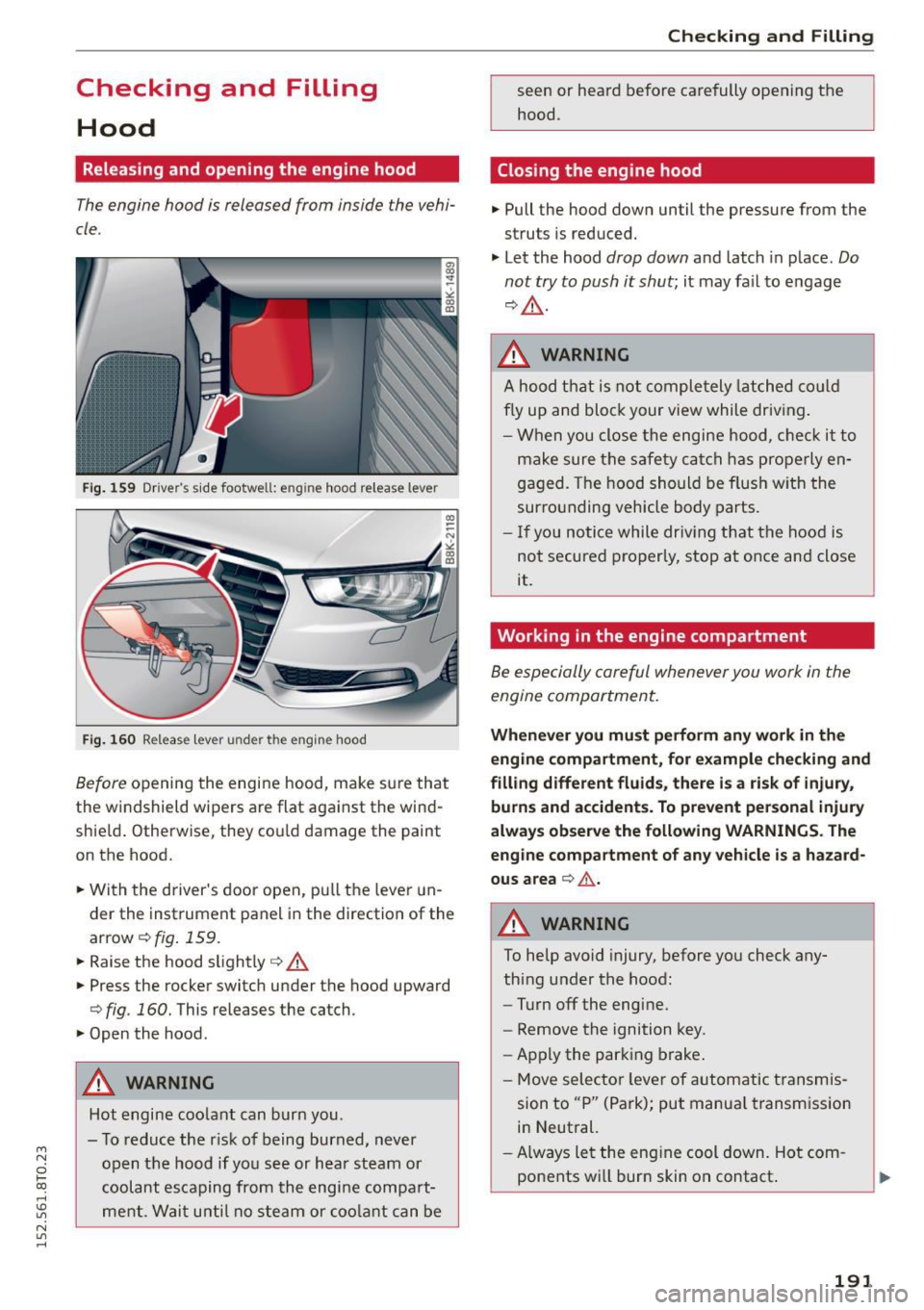
Fig. 159 Driver's side footwell: e ng in e hood release lever
Fig. 160 Releas e lev er un der t he e ngin e hood
Before opening the engine hood, make sure that
the windshield wipers are flat against the wind
shield . Otherwise, they could damage the paint
on the hood.
.. With the driver's door open, pu ll the lever un
der the instrument panel in the direction of the
arrow
c::> fig . 159.
.. Ra ise the hood slightly c::> &.
.. Press the rocker switch under the hood upward
c::> fig . 160. This releases the catch .
.. Open the hood.
A WARNING
Hot engine coolant can burn you.
- To reduce the r isk of being burned, never
open the hood if you see or hear steam or
coolant escaping from the engine compa rt
ment. Wait until no steam or coolant can be
Checking and Filling
seen or heard before carefully opening the
hood .
Closing the engine hood
.. Pull the hood down until the pressure from the
struts is reduced.
"' Let the hood
drop down and latch in place. Do
not try to push it shut;
it may fa il to engage
c::> &. -
A WARNING
A hood that is not comp letely latched could
fly up and block your view while driving.
- When you close the engine hood, check it to
make sure the safety catch has properly en
gaged . The hood should be flush with the
surrounding vehicle body parts.
- If you notice while driv ing that the hood is
not secured properly, stop at once and close
it.
Working in the engine compartment
Be especially careful whenever you work in the
engine compartment.
-
Whenever you must perform any work in the
engine compartment, for example checking and
filling different fluids , there i s a risk of injury ,
burns and accidents. To prevent personal injury
always observe the following WARNINGS . The
engine compartment of any vehicle is a hazard
ous area
c:> .&. .
A WARNING
-
To help avoid injury, before you check any-
thing under the hood:
- Turn off the engine.
- Remove the ignition key .
- Apply the parking brake.
- Move selector lever of automatic transmis-
sion to "P" (Park); put manua l transmission
in Neutral.
-Always let the engine cool down. Hot com
ponents wi ll burn skin on contact .
191
Page 194 of 264
Checking and Filling
-To reduce the risk of being burned, never
open the hood if you see or hear steam or
coolant escaping from the engine compart
ment . Wait until no steam or coolant can be
seen or heard before carefully opening the hood.
- Keep children away from the engine com
partment.
- Never spill fluids on hot engine compo
nents. They can cause a fire.
- Never touch the radiator fan. The auxiliary
electric fan is temperature controlled and
can switch on suddenly .
- Never open the coolant reservoir cap when
the engine is still warm. The coolant system
is pressurized and hot coolant could spray
out.
- Protect your face, hands and arm from
steam or hot engine coolant by placing a
thick rag over the cap when you open the
coolant reservoir .
- Do not remove the engine cover under any
circumstances. This increases the risk of
burns.
- If work on the fuel system or the electrical
system is necessary :
- Always disconnect the battery.
- Never smoke or work near heaters or open
flames. Fluids in the engine compartment could start a fire.
- Keep an approved fire extinguisher imme
diately available .
- To avoid electrical shock and personal injury
while the engine is running or being started,
never touch:
- Ignition cables
- Other components of the high voltage electronic ignition system.
- If you must perform a check or repair with
the engine running:
- First, fully apply the parking brake, move
selector lever of automatic transmission
192
to "P" (Park); put manual transmission in
Neutral.
- Always use extreme caution to prevent
clothing, jewelry, or long hair from getting
caught in the radiator fan, V-belts or other
moving parts, or from contacting hot
parts . Tie back hair before starting, and do
not wear clothing that will hang or droop
into the engine.
- Minimize exposure to emission and chemi cal hazards
~ ,& .
A WARNING
California Proposition 65 Warning:
- Engine exhaust, some of its constituents, and certain vehicle components contain or
emit chemicals known to the State of Cali
fornia to cause cancer and birth defects and
reproductive harm. In addition, certain flu
ids contained in vehicles and certain prod
ucts of component wear contain or emit
chemicals known to the State of California
to cause cancer and birth defects or other
reproductive harm.
- Battery posts, terminals and related acces
sories contain lead and lead compounds,
chemicals known to the State of California
to cause cancer and reproductive harms .
Wash hands after handling .
(D Note
When adding fluids, always make sure that
they are poured into the proper container or
filler opening, otherwise serious damage to
vehicle systems will occur.
@ For the sake of the environment
To detect leaks in time, inspect the vehicle
floor pan from underneath regularly. If you
see spots from oil or other vehicle fluids, have
your vehicle inspected by an authorized Audi
dealer.
Page 197 of 264
M N
0 loo
rl I.O
"' N
"' rl
dealer to have the cause of your concern
properly diagnosed. Keep in mind that the
accurate meas urement of oil cons umption
requires great care and may take some time.
An authorized Audi dealer has instructions
about how to measure oil consumption ac
curately.
Checking the engine oil level
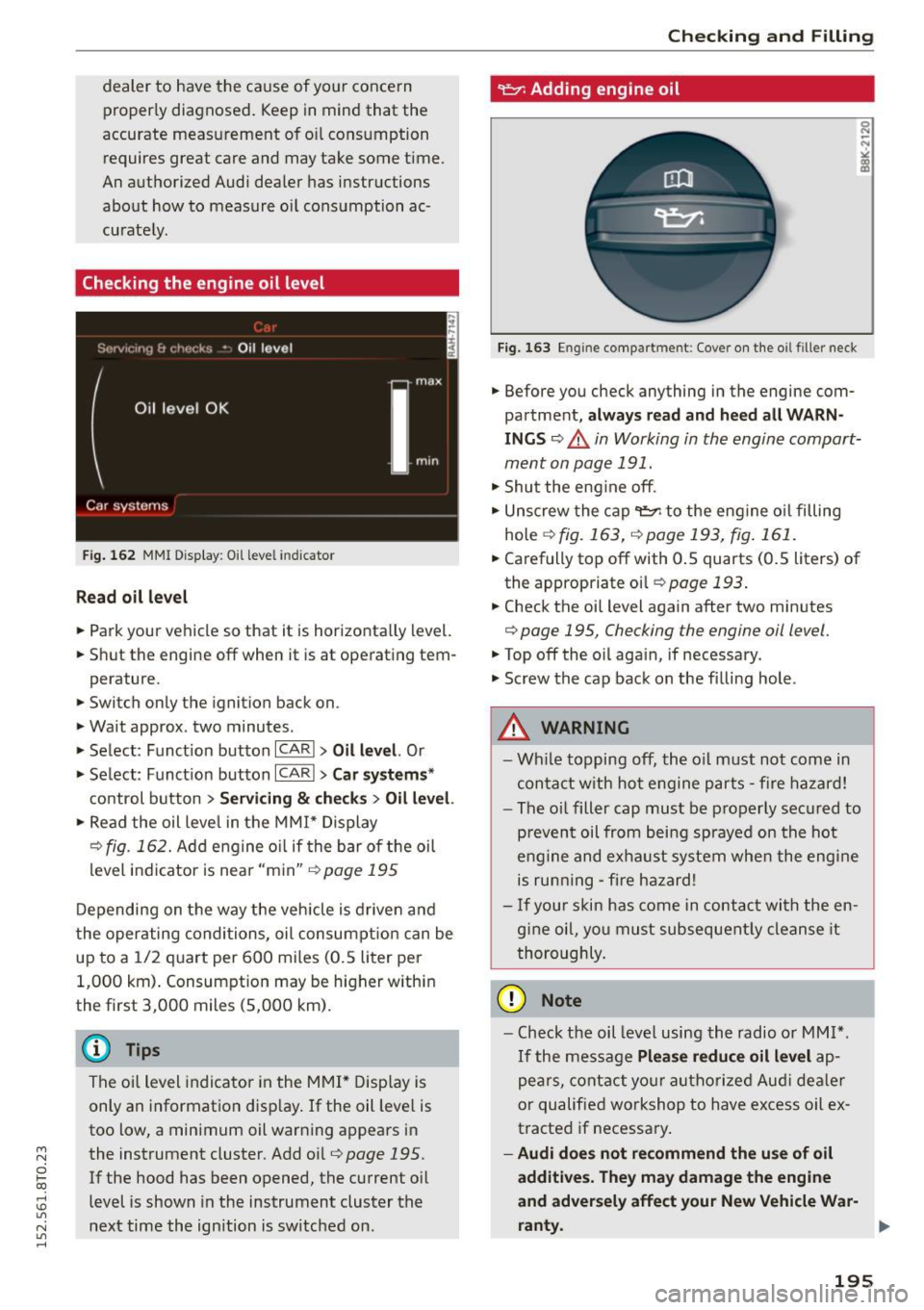
Fig. 162 MMI Disp lay: Oil level indicator
Read oil level
• Park your vehicle so that it is horizonta lly level.
• Shut the engine off when it is at operating tem-
perature.
• Switch only the ignition back on.
• Wait approx. two minutes.
• Select: Function button
~IC ~A ~R~I > Oil level. Or
• Se lect: Funct ion button
ICARI > Car systems*
control button > Servicing & checks > Oil level.
• Read the oil level in the MMI* Display
r:::>fig. 162. Add engine o il if the bar of the oil
level indicator is near "min"
r:::>page 195
Depending on the way the vehicle is driven and
the operating conditions, oil consumpt ion can be
up to a 1/2 quart per 600 miles (O.S liter per
1,000 km) . Consumption may be higher within
the first 3,000 miles (S,000 km).
@ Tips
The oil level indicator in the MMI* Display is
only an information disp lay. If the oil level is
too low, a minimum oil warn ing appears in
the instrument cluster. Add oil¢
page 195.
If the hood has been opened, the current oil
level is shown in the instrument cluster the
next time the ignition is switched on.
Checking and Filling
~ Adding engine oil
Fig. 163 Engine compartment: Cover on the oil filler neck
• Before you check anything in the engine com
partment,
always read and heed all WARN
INGS
¢ .&. in Working in the engine compart
ment on page 191.
• Shut the eng ine off.
• Unscrew the cap~ to the eng ine oil filling
hole
¢ fig. 163, ¢page 193, fig. 161.
• Carefully top off with 0 . S quarts (0.5 liters) of
the appropriate oi l
¢page 193.
• Check the oil level again after two minutes
¢ page 195, Checking the engine oil level.
• Top off the o il aga in, if necessary.
• Screw the cap back on the filling hole.
A WARNING
-
- Wh ile topping off, the o il must not come in
contact w ith hot engine parts -fire hazard!
- The oil filler cap must be properly secured to
p revent oil from being sprayed on the hot
engine and exhaust system when the engine
is running -fire hazard!
- If you r skin has come in contac t with the en
g in e oi l, you must subsequently cleanse it
thoroughly.
CJ) Note
- Check the oil level using the radio or MMI*.
If the message
Please reduce oil level ap
pears, contact your authorized Audi dealer
or qualified workshop to have excess oil ex
tracted if necessary.
-Audi does not recommend the use of oil
additives. They may damage the engine
and adversely affect your New Vehicle War-
ranty. ..,.
195
Page 199 of 264
M N
i? co ,...., \!) 1.1"1
N 1.1"1 ,....,
specially conditio ned water an d the manu fa ctu r
er's glycol-basedcoolant additive Gl3 antifreeze
with anticorrosion additives (50% for USA mod
els; 60% for Canadian models). This m ixture both
assures the necessary frost protection and pro
tects meta l components in the engine's cooling
system from corrosion and scal ing . It also raises
the boiling point of the coolant.
Do not reduce the concentration of the coolant in
the summer by adding plain water .
The p ropor
tion of coolant addit ive must be at l east 50 %
but n ot mor e th an 60 %
to maintain antifreeze
protection and cooling efficiency. If the coolant
frost protection is too low, the coolant cou ld
freeze and damage the vehicle heating and en
gine cooling system.
F or yea r-round driving, antifreeze is added at the
factory fo r temperatures dow n to:
- -31°F(-35°C)USA
- -40 °F ( - 40 °C) Canada.
If you must add coo lant, use a mixture of water
and coolant addit ive. Mixing the coolant additive
with distilled water is recommended.
A WARNING
Before you check anything in the engine com
partment, always read and heed all WARN
INGS
¢ &. in Working in the engine compart
ment on page 191.
(D Note
- Before winter sets in, have the coolant
checked to see if the coolant addit ive in your
vehicle is suffic ient to meet the cli mate con
dit ions. This is especially important if you
li ve in a region where the win ter is extreme
l y co ld. If ne cessary, i ncrease the proport ion
of coo lant add itive to 60%.
- When adding coolant a ddit ive to you r cool
i ng system, remember:
- We recommend using only coolant addi
tive Gl2++ or Gl3 for your ve hicle. This
coolant additive is ava ilable at authorized
Audi dea lers. Other types of ant ifreeze can
significant ly reduce co rrosion protection.
Checking and Fillin g
The resulting corrosion can ca use a loss o f
coolant and serious engine damage.
- Do not add any type of rad iator le ak sealan t
to your vehicle's engine coolant. Adding ra
diator repai r fluid may adverse ly affect the
function and performance of your cooling
system and could result in damage not cov
ered by your New Vehicle Lim ited Warranty.
Checking the engine coolant level
The engine coolant level can be checked with a
quick glance.
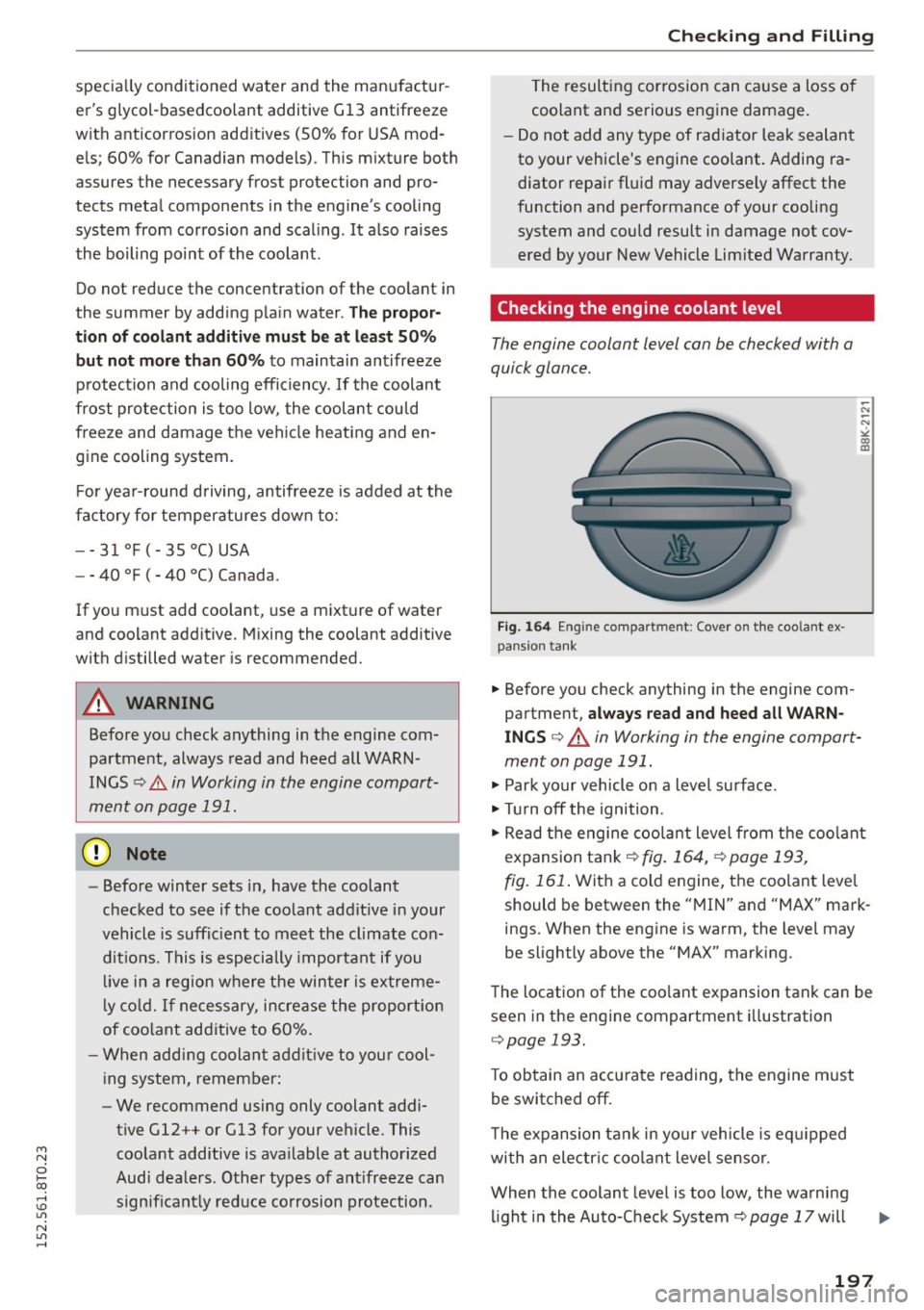
Fi g. 164 Engine compartment: Cover on the coolant ex
pa nsion tank
.. Before you check anything in the engine com
partment,
alwa ys re ad and heed all WARN
INGS ¢ A in Working in the engine compart
ment on page 191.
.. Park your vehicle on a level su rface.
.. Tu rn off the ignition .
.. Read the engine coolant level from the coolant
expansion tank
¢fig . 164, ¢page 193,
fig . 161 .
With a cold engine, the coolant leve l
should be between the "M IN" and "MAX" mark
ings. When the eng ine is warm, the level may
be slightly above the "MAX" marking.
The location of the coo lant expansion tank can be
seen in the engine compartment illustration
¢page 193.
To obtain an a ccur ate reading, the engine m ust
be switched off.
T he expansion tank in yo ur veh icle is eq uipped
with an electric coo lant level senso r.
When the coolant leve l is too low, the wa rn ing
light in the Auto-Check System¢
page 17 will
197
Page 201 of 264
M N
0 loo
rl I.O
"' N
"' rl
-To avoid being burned, do not spi ll anti
freeze or coolant on the exhaust system or hot engine parts. Under certain condi
tions, the ethylene glycol in engine cool ant can catch fire.
- Antifreeze is poisonous. Always store anti
freeze in its original conta iner and well out
of the reach of ch ildren .
-If you drain the coolant, it must be caught
and safely stored in a proper container
clearly marked "poison" .
(D Note
-Do not add coolant if the expansion tank is
empty . Air could enter the cooling system
and damage the eng ine .
If this is the case,
do not continue driving. Seek profess ional
ass istance.
- Coolant pollutes the env ironment and could
cause an eng ine fire . Excess coolant will be
fo rced out through the pressure relief valve
i n the cap when the eng ine becomes hot.
- If, i n an emergency , only water can be add
ed, the correct ratio between wa ter and an
tifreeze
i::;, page 196 must be restored as
soon as possib le .
@) For the sake of the environment
Drained coolant should not be reused. Always
dispose o f used coolant while observ ing all
environmental regulations .
Radiator fan
The radiator fan switches on automatically by it
self.
The radiator fan is driven by the engine via the V
be lt . The viscous clu tch regulates the speed of
the fan ac cording to the temperature of the cool
ant.
An auxiliary e lectr ic rad iator fan* switches on and
off depend ing on coolant temperat ure and othe r
veh icle operati ng conditions.
Afte r you switch the engine off, the auxiliary fan
can continue runn ing for up to 10 minutes -even
Ch eck in g and Fillin g
with the ignition off . It can even sw itch on again
later by itself¢& , if
- the temperatu re of the engine coo lant rises due
to the heat build- up from the engine in the en
gine compartment, or
- the engine compartment heats up because the
veh icle is parked in intense sun light .
A WARNING
-To reduce the risk of persona l injury never
touch the radiator fan .
- The auxiliary electric fan is temperature con trolled and can switch on suddenly even
when the engine is not running.
- The a uxiliary radiator fan sw itches on auto
matica lly when the engine coolant reaches a
certain temperature and will continue to run
until the coolant temperature drops.
Brake fluid
Checking brake fluid level
The brake fluid level can be checked with a quick
glance .
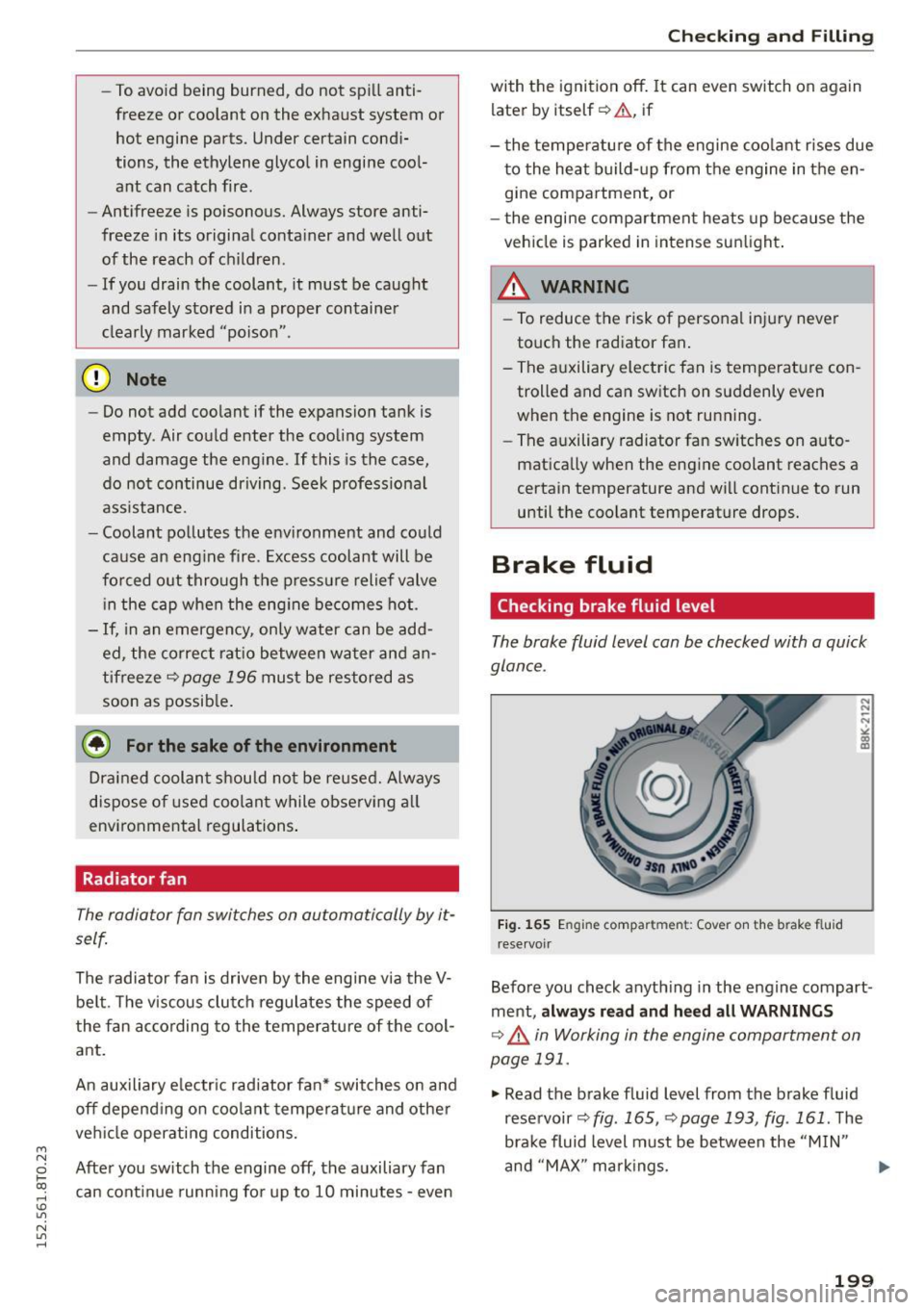
Fig. 1 65 Engine compar tment : Cove r on the b rake fl uid
r e servoir
Before you check anyth ing in the engine compart
ment,
al way s read and h eed all WARNIN GS
¢ _.& in Working in the engine compartment on
page 191 .
.,. Read the brake fluid level from the b rake fluid
reservoir
¢ fig. 165, ¢page 193, fig . 161 . The
brake fluid level must be between the
"MIN "
and "MAX " markings.
19 9
Page 203 of 264
M N
i? co ,...., \!) 1.1'1
N 1.1'1 ,....,
Disconnecting the battery terminals
Some vehicle functions (power window regula
tors , for example) are lost if the battery termi
nals are disconnected. These functions have to be
re learned after th e battery terminals are con
nected again. To prevent this, the batte ry should
only be disconnected from the ve hicle electrical
system when absolutely necessary for repairs.
Vehicles not driven for long periods
If you do not drive your vehicle over a period of
several days or weeks, e lectrica l components are
gradually cut back or switched off. This reduces
energy consumption and maintains starting ca pability over a longer period
c:> page 175 .
Some of the conven ience functions may not oper
ate, such as the interior lights or the power seat
adjustment. The convenience functions will be
available aga in when you turn on the ignition and
start the engine.
Winter operation
During the winter months, battery capacity tends
to decrease as temperatures drop. This is because
more power is also consumed while s tart ing, and
the headlights, rear window defogger, etc ., are
used more often .
Avoid unnecessary power consumption, part icu
larly in city traffic or when traveling only short
d istances . Let your authorized Aud i dealer check
the capacity of the vehicle battery before w inter
sets in ¢
page 202 . A well charged battery will
not only prevent starting problems when the
weather is cold, but will also last longer.
(D Tips
If your vehicle is left standing for severa l
weeks at extremely low temperatures, the ve
hicle battery should be removed and stored
where it will not freeze. This will prevent it
from being damaged and having to be re placed.
Checking and Filling
Working on the battery
Be especially careful when working on or near
the battery.
The battery is located in the luggage compart
men t under the floor. Before you check anything
in the luggage compartment ,
read and heed all
WARNINGS
c:> .&_ .
Always heed the safety warnings, when working
on the vehicle battery or the vehicle electr ical
system to prevent injury .
The following WARNINGS are very important
when working on the battery :
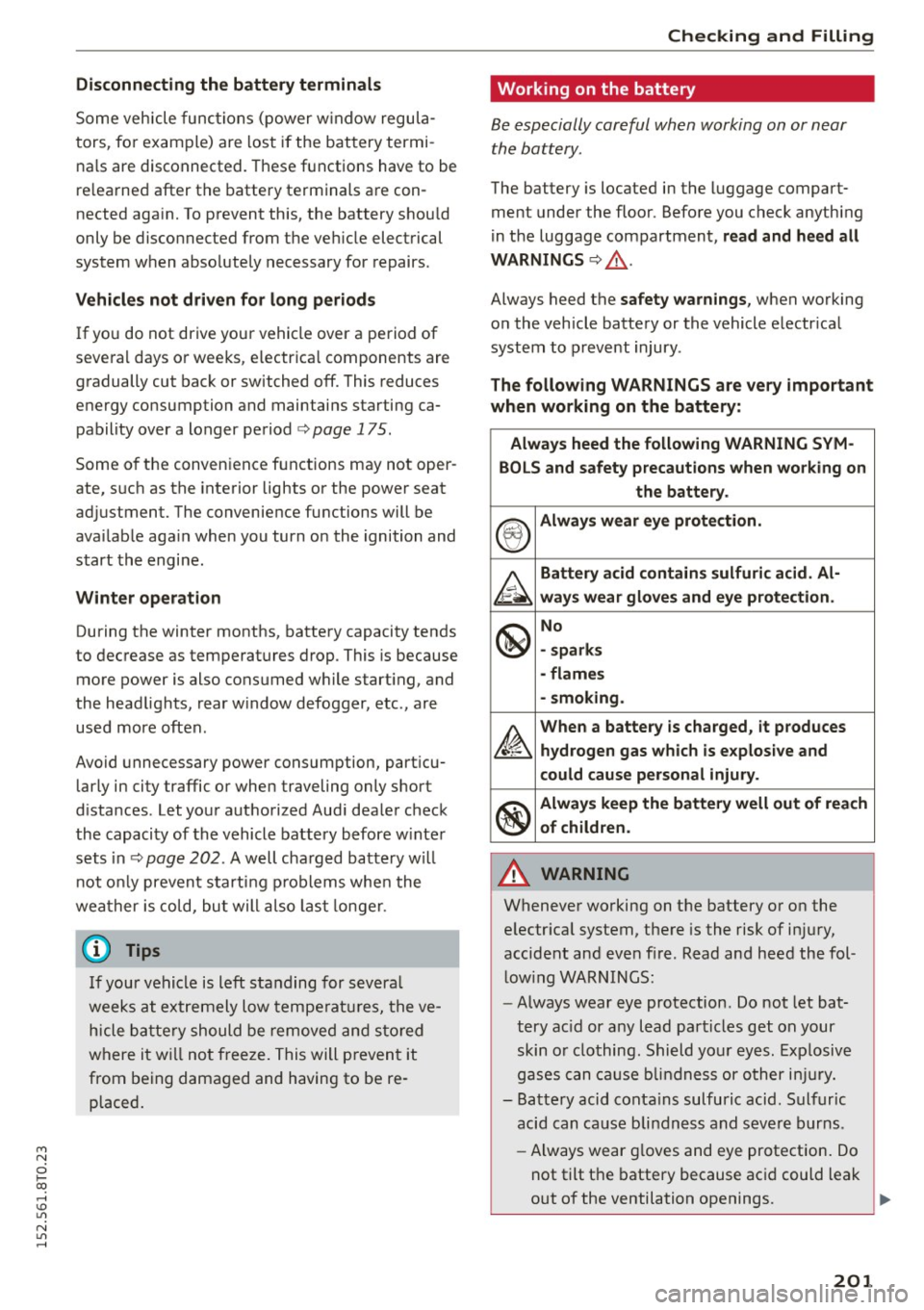
Always heed the following WARNING SYM-
BOLS and safety precautions when working on
the battery.
®
Always wear eye protection.
A
Battery acid contains sulfuric acid. Al-
ways wear gloves and eye protection.
@
No
- sparks
- flames
- smoking.
~
When a battery is charged, it produces
hydrogen gas which is explosive and
could cause personal injury.
®
Always keep the battery well out of reach
of children.
A WARNING
= -
Whenever working on the battery or on the
e lectr ical system, there is the risk of injury,
accident and even f ire. Read and heed the fol
lowing WARNINGS:
- Always wear eye protection . Do not let bat
tery ac id or any lead particles get on your
skin or clothing. Shield your eyes. Exp losive
gases can cause blindness or other in jury.
- Battery acid conta ins sulfuric acid . Sulfuric
acid can cause blindness and severe burns.
- Always wear g loves and eye protection. Do
not tilt the battery because acid could leak
out of the ventilation openings. ...,
201