tow AUDI A5 COUPE 2014 Owner's Manual
[x] Cancel search | Manufacturer: AUDI, Model Year: 2014, Model line: A5 COUPE, Model: AUDI A5 COUPE 2014Pages: 286, PDF Size: 70.99 MB
Page 119 of 286
Programming the transmitter (version B)
Applies to vehicles: with Horne link
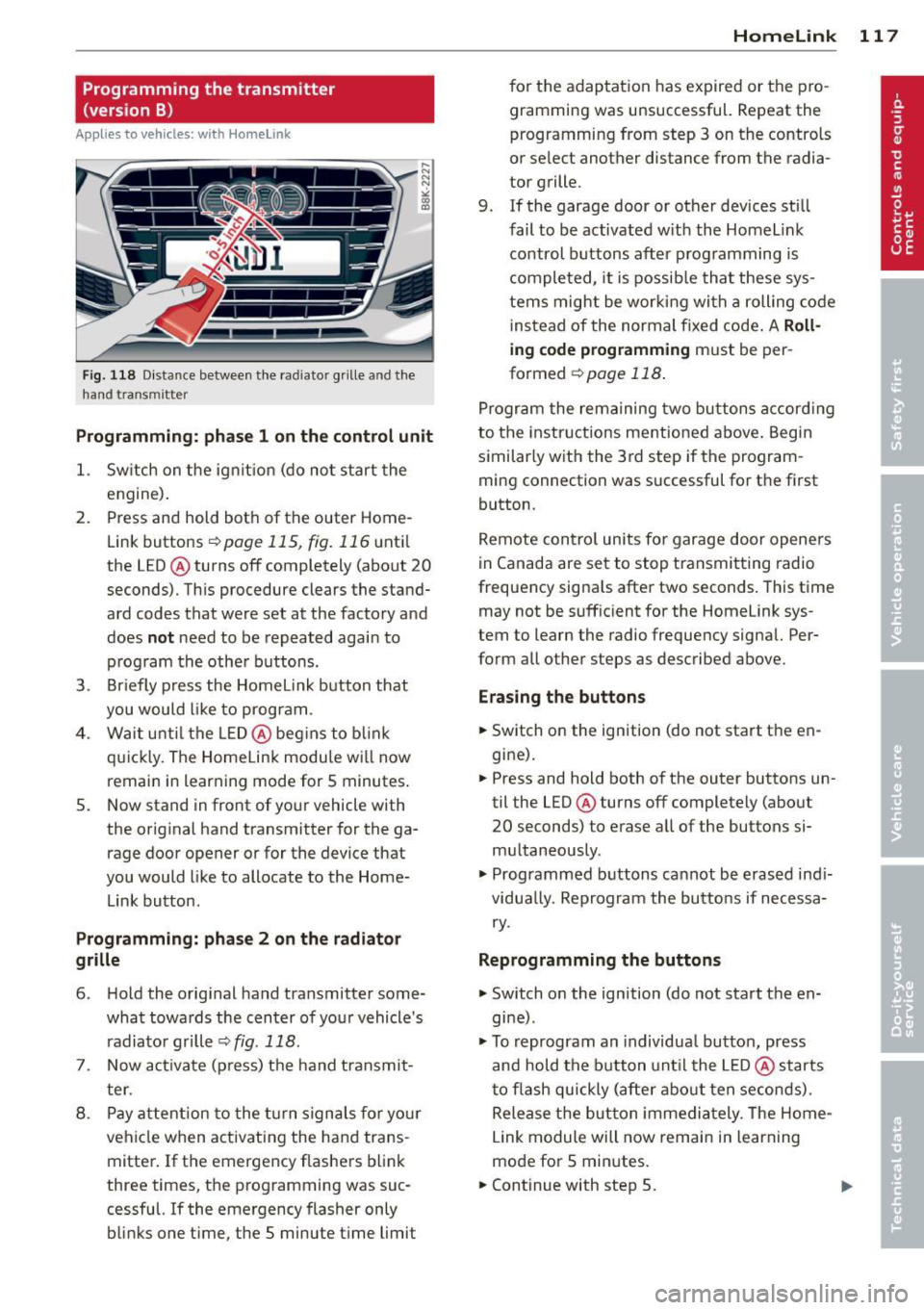
Fig. 118 D istance between t he rad ia to r gr ille a nd the
h and trans mitter
Programming: phase 1 on the control unit
1. Sw itch on the ig nit io n (do no t start the
engine ).
2. Press and hold bot h of the outer Home
Link buttons
r=> page 115, fig. 116 until
the LED @ turns off completely (about
20
seconds). Th is procedure clears the stand
ard codes that were set at the factory and
does
not need to be repeated agai n to
p rog ram the othe r buttons.
3 . Briefly press the Homelink button that
you would like to prog ram .
4 . Wai t unti l the LED @ beg ins to blink
q ui ckly . The Home Lin k modu le wi ll now
remai n in learning mode for
5 minutes .
5. Now stand in front of your vehicle with
the original hand transmitter for the ga rage door opener or for the device that
you would like to allocate to the Home
Link button.
Programming: pha se 2 on the radiator
grille
6 . Hold the orig inal hand t ransmitter some
what towa rds the center o f you r vehicle 's
radiato r gr ille
r=> fig . 118 .
7. Now activate (p ress) t he hand transmit
ter.
8 . Pay a ttention to the t urn sign als for yo ur
vehicle when activating the ha nd trans
mitter . If t he emergency flashers b link
three times, the programming was suc
cessful. If the emergency flasher only bli nks one t ime, the 5 minute t ime limit
Homelink 11 7
for the adaptat ion has expired or the pro
gram ming was unsuccessful. Repeat the
programming from step 3 on the controls
o r se lect another distance from the radia
tor grille.
9. If the garage door or other devices sti ll
fail to be activated w it h the Homelin k
control buttons after p rogramming is
comple ted, it is possib le tha t these sys
tems might be w ork ing wi th a roll ing co de
ins tead of the normal fixed co de.
A Roll
ing code programming must be per
formed
r=> page 118 .
Program the rema ining tw o butt ons accor ding
to the instructions mentioned above . Beg in
similar ly w ith the 3rd step if the program
m ing connection was successful for t he fi rst
button .
Remote con trol units fo r garage door opene rs
in Canada are set to stop tra nsmitting radio
frequency signa ls after two seconds . This t ime
may not be suffic ient for the Homelink sys
tem to learn the radio frequency signa l. Per
form all other steps as described above.
Erasing the buttons
.,. Switch on the ignition (do not sta rt the en
gi ne).
.,. Press and hold both o f the outer buttons un
til the LED@ turns off completely (abo ut
20 seconds) to e rase a ll of the buttons si
m ultaneously .
.,. Programmed b uttons ca nnot be erased ind i
vidua lly. Reprogram the butto ns if necessa
ry .
Reprogramming the buttons
.,. Switch o n the ignition (do not start t he en
gine) .
.,. To reprogram an individua l bu tto n, press
and hold the button unt il the LED @ starts
t o f lash quickly (a fter ab out ten seconds) .
Release t he bu tton imme dia tely. The Home
L ink module will now remai n in learning
mo de for 5 min utes.
.,. Continue with step 5.
Page 123 of 286
~ Always keep both feet in the footwell so
that you are in control of the vehicle at all
times.
F or de tai led information on how to adjust the
driver's seat, see
c:;, page 54.
A WARNING
Drivers who are unbelted, out of position
or too close to the airbag can be ser iously
injured by an airbag as it unfolds. To help
reduce the risk of serious personal injury :
- Always adjust the dr iver's seat and the
steering wheel so that there are at least 10 inches (25 cm) between your breast
bone and the steering wheel.
- Always hold the steering wheel on the
outside of the steering wheel rim with
your hands at the 9 o'clock and 3 o'clock posit ions to he lp red uce the risk of pe r
sonal in jury if the drive r's airbag inflates.
- Never hold the steer ing whee l at the
12 o 'clock posit ion or w it h your hands at
other pos it ions inside the steering wheel
rim or on the stee ring wheel h ub. Hold
ing the steering wheel the wrong way
can cause serious injuries to the hands,
arms and head i f the driver 's airbag de
ploys.
- Pointing the steering whee l toward your
face decreases the ab ility o f the supp le
menta l dr iver's airbag to protect you in a
co llision .
- Always s it in an upright position and nev
er lean against or place any part of your
body too close to the a rea where the air
bags are located.
- Before driv ing, a lways ad just the front
seats and head restra ints properly and
make s ure that all passengers are prop
er ly restrained.
- Never adjust the seats while the vehicle
is moving . Your seat may move unexpect
edly and you could lose control of the ve
hicle.
- Never drive with the backrest recl ined o r
t il ted far ba ck! T he farther the ba ck rests
are t ilted back, the greate r the ris k of in-
Dr iving S afel y 121
jury due to incorrect pos itioning of the
safety belt and improper seating posi
tion .
- Ch ildren must a lways ride in ch ild safety
seats
c:;, page 161. Special precaut ions
apply when installing a child safety seat
on the front passenger seat
c:;, page 137 .
Proper seating position for the front
passenger
The proper front passenger seating position
is important for safe, relaxed driving .
For your own safety and to reduce the risk of
injury in the event of an accident, we recom
mend that you adjust the seat for the front
passenger to the following position :
~ Move the front passenger seat back as far as
possible . There must be a m inimum of
1 0 inches (25 cm) between the breastbone
and the ins trument panel
c:;, &, .
~ Adjust the a ngle of the seatbac k so that it is
in an upr igh t position and yo ur back comes
in full contact wit h it whenever the vehicle is
moving.
~ Applies to vehicles with adjustab le head re
stra ints: Adjust the head restraint so the up
per edge is as even as possible wit h the top
of your head. If that is not possib le, try to
adjust the head restraint so that it is as
close to this pos it ion as poss ible .
~ Keep both feet flat on the floor in front of
t he fron t passenger seat .
~ Fasten and we ar safe ty be lts cor re ctly
c:;, page 132.
Fo r detailed information on how to adj ust the
fron t passenger's seat, see
c:;, page 53.
A WARNING
-
Front seat passengers w ho are unbelted,
out of posi tion or too close to the airbag
can be ser iously injured or killed by the air
bag as it unfolds. To help reduce the risk of
serious personal injury:
•
•
Page 127 of 286
the pedals or the ability to control the
vehicle.
- Never place or install floor mats or other
floor coverings on top of already insta l
led floor mats. Additional floor mats and
other coverings will reduce the size of
the pedal area and interfere with the
pedals.
- Always property reinstall and secure floor
mats that have been taken out for clean
ing.
- Always make sure that objects cannot fall into the driver footwell wh ile the ve
hicle is moving. Objects can become
t rapped under t he brake pedal and accel
erator peda l causing a loss of veh icle
control.
Stowing Luggage
Loading the luggage compartment
All luggage and other objects must be prop
erly stowed and secured in the luggage com
partment.
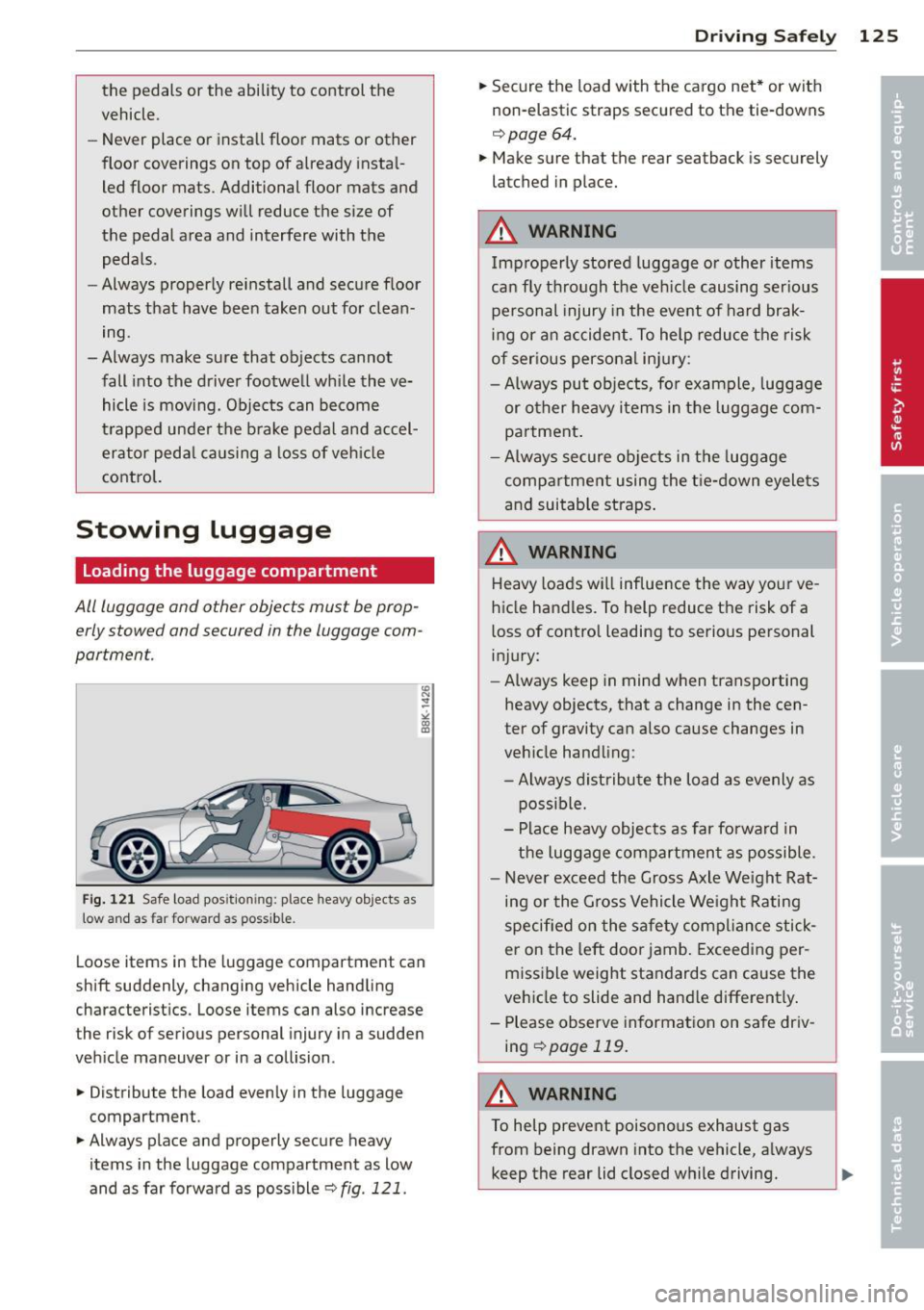
F ig. 121 Safe load pos ition ing: place heavy objects as
low and as far forward as possible.
Loose items in the luggage compartment can
shift suddenly, changing vehicle handling
characteristics. Loose items can also increase
the risk of serious personal injury in a sudden
veh icle maneuver or in a collision .
.. Distribute the load evenly in the luggage
compartment.
.. Always place and properly secure heavy
items in the luggage compartment as low
and as far forward as poss ible r::!)
fig. 121.
Dr ivin g Sa fely 125
.. Secure the load with the cargo net* or with
non-elastic straps secured to the tie-downs
r::!) page 64.
.. Make sure that the rear seatback is securely
latched in place.
A WARNING
Improperly stored luggage or other items
can fly t hro ugh the ve hicle causing ser ious
personal injury in the event of ha rd brak
ing or an accident. To help reduce the risk
of ser ious personal injury:
- Always put obje cts, fo r example, luggage
or other heavy i tems in the luggage com
partment .
- Always secure objects in the luggage
compartment using the t ie-down eyelets
and suitable straps .
A WARNING
Heavy loads w ill influence the way yo ur ve
hicle handles. To help reduce the risk of a
loss of contro l leading to serious personal
i njury:
- Always keep in mind w hen transporting
heavy objects, that a change in the cen
ter of gravity can also cause changes in
veh icle handling:
- Alway s distribute the load as evenly as
possible.
- Place heavy objects as far forward in
the luggage compartment as possible.
- Never exceed the Gross Axle We ight Rat
ing or the G ross Vehicle Weight Rating
speci fied on the safe ty comp lian ce stick
er on the left door jamb . Exceeding per
missible weight standards can cause the
vehicle to slide and hand le different ly .
- Please observe information on safe driv
ing
<::!)page 119.
WARNING
To help prevent poisonous exhaust gas
from being drawn into the vehicle, a lways
keep the rear lid closed w hile driving.
Page 136 of 286
134 Safety belts
should always fit snugly¢ fig. 129. Pull
on the belt to tighten if necessary.
- The lap belt portion of the safety belt
must be positioned as low as possible
across pelvis and never over the abdo men. Make sure the belt lies flat and
snug ¢
fig. 129 . Pull on the belt to tight
en if necessary.
- A loose-fitting safety belt can cause seri
ous injuries by shifting its position on
your body from the strong bones to more
vulnerable, soft tissue and cause serious
injury .
- Always read and heed all WARNINGS and
other important information
¢page 132.
Pregnant women must also be correctly
restrained
The best way to protect the fetus is to make
sure that expectant mothers always wear
safety belts correctly -throughout the preg
nancy.
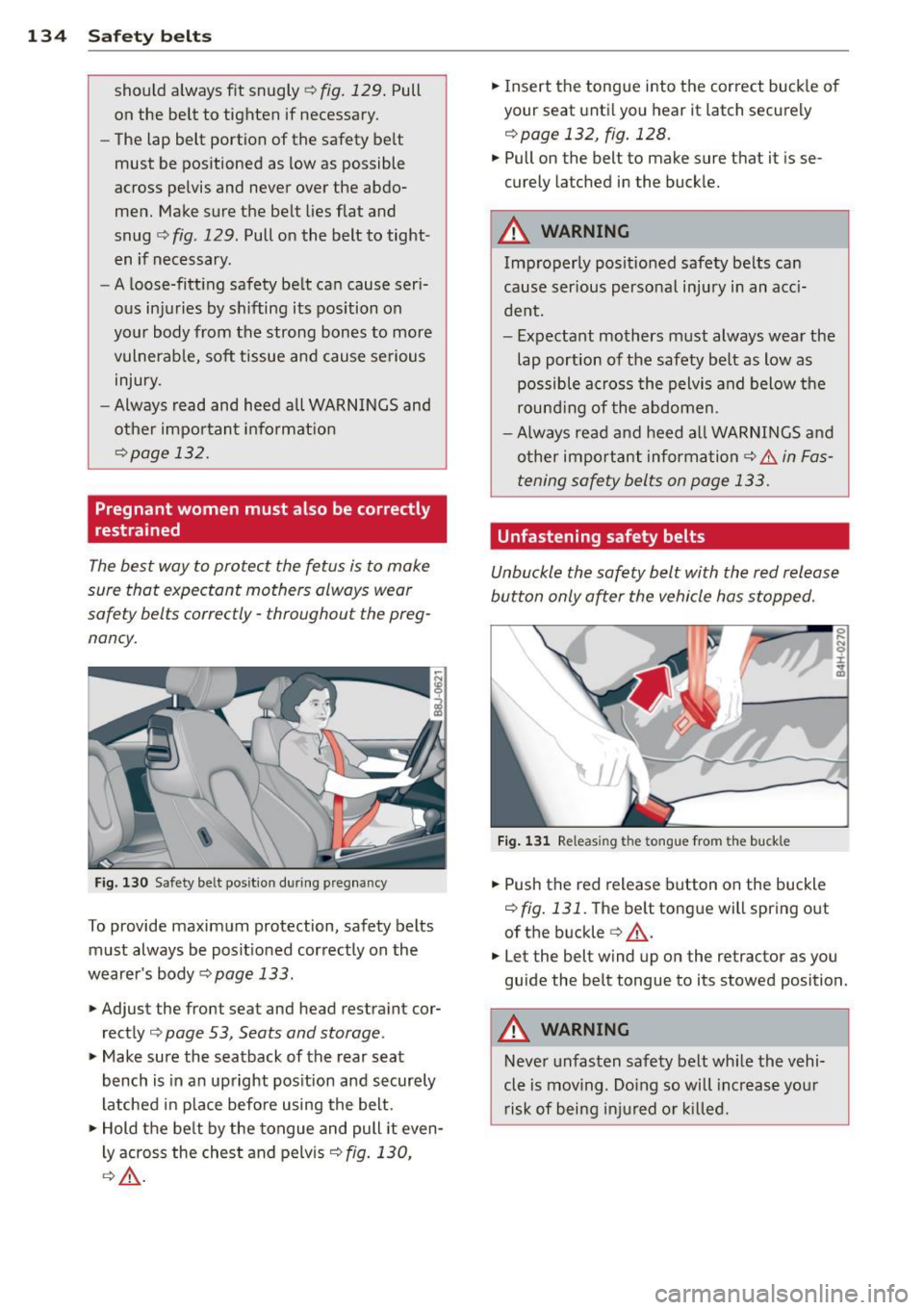
Fig. 130 Safety be lt pos it ion during p regnancy
To provide maximum protection, safety belts
must always be positioned correctly on the
wearer 's
body ¢page 133 .
... Adjust the front seat and head restraint cor
rectly ¢
page 53, Seats and storage.
... Make sure the seatback of the rear seat
bench is in an upright position and securely
latched in place before using the belt.
... Hold the belt by the tongue and pull it
even
ly across the chest and pelvis¢ fig. 130,
¢,&. .
... Insert the tongue into the correct buckle of
your seat until you hear it latch securely
¢page 132, fig. 128 .
... Pull on the belt to make sure that it is se
curely latched in the buckle.
A WARNING
Improperly positioned safety belts can
cause ser ious personal injury in an acc i
dent.
- Expectant mothers must always wear the
lap portion of the safety belt as low as
possible across the pelvis and below the
rounding of the abdomen.
- Always read and heed all WARNINGS and
other important information¢&.
in Fas
tening safety belts on page 133 .
Unfastening safety belts
Unbuckle the safety belt with the red release
button only a~er the vehicle has stopped.
Fig. 131 Releas ing t he ton gue fro m the buck le
... Push the red release button on the buckle
¢ fig. 131. The belt tongue will spring out
of the buckle ¢
,&..
... Let the belt wind up on the retractor as you
guide the belt tongue to its stowed position .
A WARNING
' "' Never unfasten safety belt while the vehi-
cle is moving . Doing so will increase your
risk of being injured or killed .
Page 147 of 286
-Improper repair or disassembly of the
front passenger and driver seat will pre
vent the Advanced Airbag System from
functioning properly.
- Repairs to the front passenger seat must
be performed by qualified and properly
trained workshop personnel.
- Never remove the front passenger or
dr iver seat from the veh icle.
- Never remove the upholstery from the
front passenger seat.
- Never disassemble or remove parts from
the seat or disconnect wires from it.
- Never carry sharp objects in your pockets
or place them on the seat. If the weight
sensing mat in the passenger seat is
punctured it cannot work properly.
- Never carry things on your lap or carry
objects on the passenger seat. Such
items can increase the weight registered
by the weight-sens ing mat and send the
wrong info rmation to the airbag control
unit.
- Never store items under the front pas
senger seat. Parts of the Advanced Ai r
bag System under the passenger seat
cou ld be damaged, preventing them and
the airbag system from working proper
ly .
- Never place seat covers or replacement
upholstery that have not been specifical
ly approved by Audi on the front seats.
- Seat covers can prevent the Advanced
Airbag System from recognizing child re
straints or occupants on the front pas
senger seat and prevent the side airbag
in the seat backrest from deploy ing prop
erly.
- Never use cush ions, pillows, blankets or
similar items on the front passenger
seat. The add itional padd ing will prevent
the weight-sens ing mat in the seat from
accu rately reg iste ring the ch ild restra int
or person on the seat and prevent the
Advanced Airbag System from function ing properly .
-If you must use a child restra int on the
front passenger seat and the chi ld re-
A irbag system 145
straint manufacturer's instructions re
quire the use of a towel, foam cushion or
something e lse to properly position the
child restraint, make certain that the
PASSENGER AIR BAG OF F light comes
on and stays on whenever the ch ild re
straint is installed on the front passen
ger seat.
- If the
PASSENGER AIR BAG OFF light
does not come on and stay on, immed i
ately insta ll child rest raint in a rear seat
ing position and have the airbag system
inspected by your authorized Audi dealer.
How the Advanced Airbag System
components work together
The front Advanced Airbag System and the
s ide airbags supplement the protection of
fered by the front three-point safety belts
with pretensioners and load limiters and the
adjustable head rest raints to help reduce the
risk of inj ury in a wide range of accident and
c rash situations. Be s ure to read the impor
tant information about safety and heed the
WARNINGS in this chapter.
Deployment of the Adv a need A irbag System
and the activation of the safety belt preten
sioners depend on the deceleration measured
by the crash sensors and registered by the
electronic control unit. Crash severity depends
on speed and deceleration as we ll as the mass
and stiffness of the vehicle or object involved
in the crash .
On the passenger side, regardless of safety
belt use, the airbag will be turned off if the
weight on the passenger seat is less than the
amount programmed in the electronic control
unit. The front airbag on the passenger side
will a lso be turned off if one of the child safe
ty seats that has been ce rtified under Fede ral
Motor Vehicle Safety S tanda rd 208 has been
recognized on the seat. The
PAS SEN GER AIR
BAG OFF
light comes on and stays on to tell
you when the front Advanced Airbag on the
passenger side has been turned off
¢ page 138, Child restraints on the front seat
- some important things to know. .,,.
•
•
Page 175 of 286
-Make sure that the PASSENGER AIR BAG
OFF
light comes on and stays on all the
time whenever the ignition is switched on.
- If the
PASSENGER AIR BAG OFF light
does not come on and stay on, immedi
ately install the rearward -facing child
safety seat in a rear seating position and
have the airbag system inspected by your
authorized Audi dealer.
Activating the convertible locking retractor
Use the convertible locking retractor to se
cure a child restraint .
Always heed the child safety seat manufactur
er's instructions when installing a child re
straint in your vehicle. To activate the conver
tible locking retractor :
.,. Place the child restraint on a seat, prefera
bly on the rear seat.
.,. Slowly pull the belt
all the way out.
.,. Route it around or through the child re
straint belt path¢.&_ .
.,. Push the child safety seat down with your
full weight to get the safety belt really tight.
.,. Inser t the belt tongue into the buckle for
that sea ting position .
.,. Guide the safety belt back into the retractor
until the belt lies flat and snug on the child
safety seat .
.,. You should hear a "clicking " noise as the
belt winds back into the inertia reel. Test the
convertible locking retractor by pulling on
the belt . You should no longer be able to
pull the belt out of the retractor. The con
vertible locking retractor is now activated.
.,. Make sure that the red release button is fac
ing away from the child restraint so that it
can be unbuckled quickly .
.,. Pull on the belt to make sure the safety belt
is properly tight and fastened so that the
seat cannot move forward or sideways more
than one inch (2.5 cm).
Child Safety 173
A WARNING
Using the wrong child restraint or an im
properly installed child restraint can cause
serious personal injury or death in a crash .
- Always make sure that the safety belt re-
tractor is locked when installing a child
safety seat. An unlocked safety belt re
tractor cannot hold the child safety seat in place during normal driving or in a
crash.
- Always buckle the child safety seat firmly
in place even if a child is not sitting in it.
A loose child safety seat can fly around
during a sudden stop or in a crash.
- Always make sure the seat backrest to
which the child restraint is installed is in
an upright position and securely latched
into place and cannot fold forward. Oth
erwise, the seatback with the child safety
seat attached to it could fly forward in
the event of an accident or other emer gency situation.
- Always read and heed all WARNINGS
whenever using a child restrained in ave
hicle is being used ¢
page 161. Special
precautions apply when installing a child
safety seat on the front passenger seat
¢ page 138, Child restraints on the front
seat -some important things to know.
-
Deactivating the convertible locking
retractor
The conv ertibl e locking retractor for child r e
straints will be deactivated automatically when the belt is wound all the way back into
the retractor.
.,. Press the red button on the safety belt buck
le . The belt tongue will pop out of the buck
le .
.,. Guide the s afety belt all the way back into
i t s s towed position .
Always let the safety belt retract completely
into its stowed position. The safety belt can
now be used as an ordinary safety belt with
out the convertible locking retractor for child
restraints.
•
•
Page 176 of 286
174 Child Saf ety
If the convertible locking retracto r shou ld be
activated inadvertently, the safety belt must be unfastened and guided completely back in
to its stowed pos ition to deactivate th is fea
ture. If the convertible locking retractor is not
deactivated, the safety belt will gradually be
come tighter a nd uncomfortable to wear.
A WARNING
Improperly insta lled child safety seats in
crease the risk of ser ious personal inju ry
and death in a collision.
- Never unfasten the safety belt to deacti
vate the convert ible lock ing retractor for
child rest rain ts while the veh icle is mov
ing. You would not be restrained and
cou ld be ser iously injured in an accident.
- Always read and heed all WARNI NGS
whenever using a child rest rained in ave
hicle is being used
¢ page 161. Special
precautions apply when installing a ch ild
safety seat on the front passenger seat
¢ page 138, Child restraints on the front
seat -some important things to know.
Page 182 of 286
180 Intellige nt tec hno logy
Intelligent technology
Notice about data
recorded by veh ic le
control modules
Your vehicle is not equipped with an Event Da
ta Recorder (EDR), installed by some manu
facturers fo r the express purpose of capturing
data for retrieval after an accident or crash
event . EDR's are sometimes called "crash re
corders".
Some state laws restrict the retrieval or down
loading of data stored by EDR's that were in
stalled in a vehicle for the express purpose of
retrieving data after an accident or crash
event without the owner's consent.
A lthough your vehicle is not equipped with an
EDR, it is equipped with a number of electron
ic control modules for various vehicle systems
such as, for example, engine function, emis
sion control, as well as for the airbags and
safety belts.
These electronic control modules also record
vehicle-related data during normal vehicle op
eration for diagnostic and repair purposes.
The recording capacity of the electronic con
trol modules is limited to data (no sound is re
corded) and only a small amount of data is ac
tually recorded over a very limited period of
time and stored when a system fault or other
condition is sensed by a control unit. Some of
the data then stored may relate to vehicle
speed, direction, braking as well as restraint
system use and performance in the event of a
crash or other condition. Stored data can only
be read and downloaded with special equip
ment.
Electronic Stab ilization
Control (ESC)
Description
ESC helps to improve road holding and vehicle
dynamics to help reduce the probability of
skidding and loss of vehicle control. It works
only when the engine is running. ESC detects certain difficult driving situations, including
when the vehicle is beginning to spin (yaw)
out of control and helps you to get the vehicle back under control by selectively braking the
wheels, and/or reducing engine power and
providing steering assistance to help hold the
vehicle on the driver's intended course. The in
dicator light
J.i) in the instrument cluster
blinks when ESC is taking action to help you
control the vehicle.
ESC has limitations.
It is important to remem
ber that ESC cannot overcome the laws of
physics. It will not always be able to help out
under a ll cond itions you may come up against.
For example, ESC may not always be able to
help you master situations where there is a
sudden change in the coefficient of friction of
the road surface. When there is a section of dry road that is suddenly covered with water,
slush or snow, ESC cannot perform the same
way it would on the dry surface . If the vehicle
hydroplanes (rides on a cushion of water in
stead of the road surface), ESC will not be
able to help you steer the vehicle because con
tact with the pavement has been interrupted
and the vehicle cannot be braked or steered.
During fast cornering, particularly on winding
roads, ESC cannot always deal as effectively
with difficult driving situations than at lower
speeds. When towing a trailer, ESC is not able
to help you regain control as it would if you
were not towing a trailer.
Always adjust your speed and driving style to road, traffic and weather conditions. ESC can
not override the vehicle's physical limits, in
crease the available traction, or keep a vehicle
on the road if road departure is a result of
driver inattent ion. Instead, ESC improves the
possibility of keeping the vehicle under con
trol and on the road during extreme maneu
vers by using the driver's steering inputs to
help keep the vehicle going in the intended di
rection . If you are traveling at a speed that
causes you to run off the road before ESC can
provide any assistance, you may not experi
ence the benefits of ESC.
Page 187 of 286
overhea t red ucin g the e ffec tiveness of
t h e ent ire brake system.
- Failure of one brake circuit will impair
the bra king capability resulting in an in
creased stopp ing distance. Avoid driv ing
the vehicle and have it towed to the near est author ized Audi dealer or qualified
wor kshop .
- Never let the vehicle roll to a stop w ith
the engine shut off.
- If the brake booster is not work ing, the
brake pedal must be pressed considera
bly harder to make up for the lac k of
booster assistance.
Electro-mechanical
power assist, dynamic
steering
The electro-mechanical power assist helps
the driver when steering.
Power steering adapts electronically based on
the vehicle speed.
Indicator light s and messages
• Steering defecti ve! Do not drive vehicle!
If th is ind icator light tu rns on and stays on
and th is message appears, t he power s teeri ng
may have f ailed.
Do
not co ntin u e d riving . See yo ur autho rized
Aud i dea ler o r a qua lifi ed r epai r fac ility for as
sis tance .
':rj Dynam ic steering: Sy stem fault! You can
continue driving
If the indicator light t urns on and the mes
sage appears, the steer ing may be more diffi
cult to move or more sensitive than usual. The
steer ing wheel may also be at an angle whe n
d riving st raight .
Drive s low ly to your au thor ized Audi dealer or
qua lified workshop to have the malfunction
corrected.
'y.ij Dynam ic steering : initializing
Int ellig ent technolog y 185
If this drive r message appea rs and the indica
tor lig ht is f lashing on the instrument panel,
dynamic steer ing * is being rein itia lized. After
starting the engine, the steering wheel will move s light ly. Re- initiali zation might be nec
essary if the steering wheel was moved hard
to the left and right wh ile the vehicle was not
moving . Th e display goes out as soo n as ini ti
ali zation is comple te .
A WARNING
H ave the dy namic s tee ring * system mal
f u nction repa ired as soon as possible by an
authorized Audi dealer or qualified work
shop - risk of acc ident !
(D Tips
- If the . or l;rj indic ator l ight only st ays
on fo r a short time, you may continue
dr iving.
- T he dynamic s teering* s tabilit y systems
are not availab le in the even t of a system
ma lfunction.
- F or ad ditiona l information on dynamic
steering *, refer to ¢page 104 .
-
Driving with your
quattro
Applies to vehicles: with all-wheel drive
With all-wheel drive, all four wheels are driv
en .
General informati on
With a ll-wheel d rive, power is distrib uted to
all four wheels. This happens automatically depending on your driving style and the road
cond it ions at the time. See also¢ page 180 .
A center d ifferential distributes the driving
power variably to the front and rear ax le. It
wor ks together with selective wheel torque
control, wh ich activates when dr iv ing t hrough
curves Qpage 181. With the sport differen
t ia l*, power d istr ibut io n to the rea r wheels is
var iable a nd can be adjusted w ith dr ive se lect
¢ page 10 4.
IJII>
•
•
Page 191 of 286
A WARNING 1= ~
After driving through water, mud, slush, etc., the brakes may be slow to take effect
because of wet brake rotors and pads. Dry
the brakes first by braking carefully to re
store the full brak ing effect.
([) Note
Vehicle components such as the engine,
transmiss ion, suspension or electrical sys
tem can be severely damaged by driving
through wate r.
@ Tips
- Check the depth of the water before dr iv
i ng through it.
- Do not stop the veh icle, dr ive in reverse
or switch the engine off when driving
th rough water.
- Keep in mind that oncoming vehicles
may create waves that raise the water
level and make it too deep for you r vehi
cle to drive th rough safely.
- Avoid dr iving through sa lt water because
i t can ca use corrosion.
Catalytic converter
It is very important that your emission con
trol system (catalytic converter) is function
ing properly to ensure that your vehicle is run
ning in an environmentally sound manner.
11-Always use lead -free gaso line¢ page 201,
Fuel supply .
"'"Never run the tank down all the way to emp
ty.
11-Never put too much motor oil in your engine
¢ page 211, ~ Adding engine oil .
11-Never try to push -or tow -start your veh icle .
The catalytic converter is an efficient "clean up" device built into the exhaust system of
the vehicle . The catalytic converter burns
many of the pollutants in the exhaust gas be
fore they are released into the atmosphere .
Drivin g and en vironm ent 18 9
The exclusive use of unleaded fuel is critically
important for the life of the catalytic convert
er and proper f unct ion ing of the engine.
A WARNING
- The temperature of the exhaust system
is high, both when driving and after stop
ping the eng ine.
- Never touch the exhaust tail pipes once
they have become hot. This could result in burns.
- Do not park or operate the vehicle in
areas where the hot exhaust system may
come in co ntact with dry grass, br ush,
fue l spill or other material wh ich can
cause a fire .
- Do not apply additional undercoating or
ru stp roof ing on or nea r the exhaust
manifold, exhaust pipes, cataly tic con
ve rter or heat shield s. Dur ing driving, the
substance used for undercoating could
overheat and cause a fire.
(D Note
- Be aware that just o ne tank filling with
leaded fuel w ill already ser iously de
grade the performance of the catalytic
converter .
- Do not exceed the cor rect engine oil level
¢ page 211.
-Do not drive until the f ue l t ank becomes
comple tely empty . The engine co uld m is
fire . Unburned fuel could also get into
the exhaust system and this co uld cause
the catalytic converter to overheat.
- Do not turn off the ignition while the ve
hicle is mov ing.
- Do not continue to operate your vehicle
under these conditions, as othe rwise fuel
can reach the catalyt ic converter. Th is
cou ld result in overheating of the con
verter, requir ing its replacement.
- To assure efficient operation of the Emis -
sion Control System: ..,. •
•