seats AUDI A5 COUPE 2016 User Guide
[x] Cancel search | Manufacturer: AUDI, Model Year: 2016, Model line: A5 COUPE, Model: AUDI A5 COUPE 2016Pages: 264, PDF Size: 66.92 MB
Page 68 of 264
Seats and storage
@ Tips
-You can open the pass-through from the
luggag e compartment. Push the release
button down and push the cover forward.
- You can lock or unlock the pass-through us
ing the mechanical key. This prevents any
access to the luggage compartment from
the vehicle interior.
Securing the ski sack
Appl ies to veh icles: w ith s ki sac k
The ski sack must be secured in the luggage com
partment.
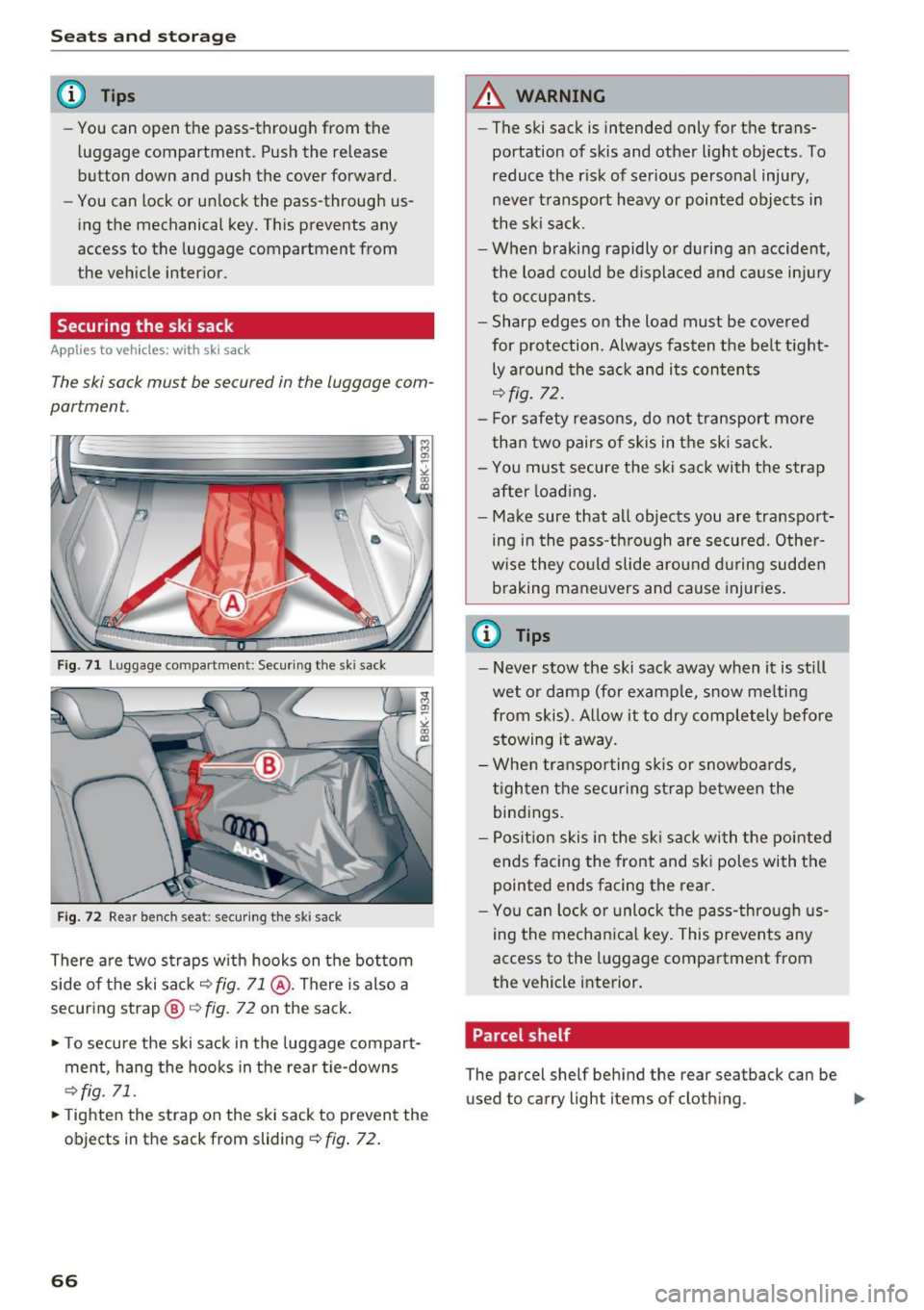
Fig. 71 Luggage compartme nt: Secur ing the ski sack
Fig. 72 Rear bench sea t: secu ring the ski sack
There are two straps with hooks on the bottom
side of the ski sack
~ fig. 71 @ . There is also a
securing strap@~
fig. 72 on the sack.
.. To secure the ski sack in the luggage compart
ment, hang the hooks in the rear tie-downs
~fig. 71.
.. Tight en the strap on the ski sack to prevent the
objects in the sack from sliding
~ fig. 72.
66
A WARNING
-The ski sack is intended only for the trans
portation of skis and other light objects . To
reduce the risk of serious personal injury,
never transport heavy or pointed objects in
the ski sack.
- When braking rapidly or during an accident,
the load could be displaced and cause injury to occupants.
- Sharp edges on the load must be covered
for protection . Always fasten the belt tight
ly around the sack and its contents
~fig . 72.
- For safety reasons, do not transport more
than two pairs of skis in the ski sack.
- You must secure the ski sack with the strap
after loading.
- Make sure that all objects you are transport
ing in the pass-through are secured. Other
wise they could slide around during sudden braking maneuvers and cause injuries.
@ Tips
-Never stow the ski sack away when it is still
wet or damp (for example, snow melting
from skis). Allow it to dry completely before stowing it away.
- When transporting skis or snowboards,
tighten the securing strap between the
bindings.
- Position skis in the ski sack with the pointed
ends facing the front and ski poles with the
pointed ends facing the rear.
- You can lock or unlock the pass-through us
ing the mechanical key. This prevents any
access to the luggage compartment from
the vehicle interior.
. Parcel shelf
The parcel shelf behind the rear seatback can be
used to carry light items of cloth ing. ..,.
Page 73 of 264
.... N
0 Ico ....
@ Note
To avoid damage to the heat ing elements in
the seats, do not kneel on the seats or place
heavy loads on a small area of the seat.
Setup
The basic climate control settings can be adjust
ed in the radio or MMI*.
"" Se lect : I CAR I fu nct ion button > A /C control but
ton. Or
"" Se lect:
I CAR I function button > Car sys tems*
control button > AC.
Automatic recirculation *
When switched on, automatic recircu lation con
trols t he recirculation mode automat ica lly . If the
windows fog up , press the
I® F RONT I button .
Synchr onization *
When synchronization is switched on, the same
settings are app lied to both the drive r and front
passenger, except for the seat heating/venti la
tion* . Synchron ization switches
off when you ad
just the settings on the front passenge r's side .
You can a lso switch synch ronization on by press
i ng and ho ld ing the knob on the driver's side.
Supplementary he ater
T he supplementary heater warms the interior of
vehicles w ith flexible fuel engines more qu ickly .
The supplementary heater is controlled automat i cally in the
Auto setting .
Warm and c old
7 1
Page 114 of 264
Driving sa fe ty
Driving safety
Basics
Safe driving habits
Please remember -safe ty first!
This chapter contains important information,
tips, instruct ions and warn ings that you need to
read and observe for your own safety, the safety
of your passengers and others. We have summar ized here what you need to know about safety
be lts, a irbags, child restra ints as well as child
safety. Your safety is for us
priority number 1 . Al
ways observe the i nfo rmation and wa rn ings in
this section - for your own safety as well as that
of your passengers.
The information i n this section applies to all
model versions of yo ur vehicle . Some of the fea
tures descr ibed in t his sections may be s tanda rd
equipment on some models, or may be optional
equipment on others . If you are not sure, ask
your authorized Audi dealer.
A WARNING
- Always make sure that you follow the in
structions and heed the WARNINGS in th is
Manual.
It is in your interest and in the in
te rest of your passengers .
- Always keep the comp lete Owner's Litera
ture in your A udi when you lend or sell your
vehicle so that this important information
will always be available to the d river and
passenge rs.
- Always keep the Owner 's literature handy so
t h at you ca n find it easily if you have ques
t ions.
Safety equipment
The safety features are part of the occupant re
straint system and work together to help reduce the risk of injury in a wide variety of occident si t
uations.
Your safety and the safety of your passenge rs
should not be left to chance. Advan ces i n tech
nology have made a var iety of features avai lab le
to help reduce t he risk of injury in an accident .
112
The following is a list of just a few of the sa fety
features in your Audi :
- sophis tica ted safety be lts fo r dr ive r and all pas-
senge r seat ing pos itions,
- belt fo rce limi ters for the front seats,
- be lt pretensione rs fo r the seats,
- head restraints for each seating position,
- front airbags,
- side airbags in the front seats,
- side curtain airbags,
- special LATCH anchorages fo r ch ild rest rai nts,
- adj ustab le steer ing column.
T hese ind iv idual safety features, can work to
gether as a system to help protect you and your
passengers i n a wide range of acc idents . These
features canno t wo rk as a system if they are not
always correc tly adj uste d and correct ly used.
Safety i s everybody' s responsibil ity!
Important things to do before driving
Safety is everybody 's job! Vehicle and occupant
safety always depends on the inform ed and care
ful driver .
For your safety and the safety of your passen
gers,
before dri ving always:
.. Make sure that a ll lights and signals are operat
ing correctly .
.. Make sure that the tire pressure is correct.
.. Make sure that all windows are clean and afford
good vis ibility to the outs ide .
.,. Secu re all luggage and othe r items carefully
~page 60.
.,. Mak e sure th at noth ing c an interfere wi th the
pedals .
.. Adjust front seat, head restraint and mirrors
correctly for your height.
.. Instruct rear seat passengers to adj ust the
head restraints according to their he ight.
.. Make sure to use the rig ht child restraint cor
rectly to protect children
c:> page 151, Child
safety .
.. Si t proper ly in yo ur seat a nd make sure t hat
your passenge rs do the same
~ page 54, Seats
and storage.
Page 116 of 264
Driving safety
For detailed information on how to adjust the
driver's seat, see
~ page 55.
A WARNING
Drivers who are unbelted, out of position or
too close to the airbag can be seriously in
jured by an airbag as it unfolds. To help re
duce the risk of serious personal injury:
- Always adjust the driver's seat and the
steering wheel so that there are at least
10 inches (25 cm) between your breastbone
and the steering wheel.
- Always hold the steering wheel on the out
side of the steering wheel rim with your
hands at the 9 o'clock and 3 o'clock posi
tions to help reduce the risk of personal in
jury if the driver's airbag inflates.
- Never hold the steering wheel at the
12 o'clock position or with your hands at
other positions inside the steering wheel
rim or on the steering wheel hub. Holding
the steering wheel the wrong way can cause serious injuries to the hands, arms and head
if the driver's airbag deploys.
- Pointing the steering wheel toward your
face decreases the ability of the su pplemen
tal driver's airbag to protect you in a colli
sion.
- Always sit in an upright position and never lean against or place any part of your body
too close to the area where the airbags are
located.
- Before driving, always adjust the front seats
and head restraints properly and make sure
that all passengers are properly restrained.
- Never adjust the seats while the vehicle is
moving . Your seat may move unexpectedly
and you could lose control of the vehicle.
- Never drive with the backrest reclined or
tilted far back! The farther the backrests are
tilted back, the greater the risk of injury due
to incorrect positioning of the safety belt
and improper seating position.
- Children must always ride in child safety
seats~
page 151. Special precautions ap
ply when installing a child safety seat on the
front passenger seat
q page 129.
114
-
Proper seating position for the front
passenger
The proper front passenger seating position is
important for safe, relaxed driving.
For your own safety and to reduce the risk of in
jury in the event of an accident, we recommend
that you adjust the seat for the front passenger
to the following position :
.,. Move the front passenger seat back as far as
possible . There must be a minimum of 10 in
ches (25 cm) between the breastbone and the
instrument panel~.&-
.,. Adjust the angle of the seatback so that it is in
an upright position and your back comes in full
contact with it whenever the vehicle is moving.
.,. Applies to vehicles with adjustable head re
straints: Adjust the head restraint so the upper
edge is as even as possible with the top of your
head. If that is not possible, try to adjust the
head restraint so that it is as close to this posi
tion as possible .
.,. Keep both feet flat on the floor in front of the
front passenger seat.
.,. Fasten and wear safety belts correctly
~ page 124.
For detailed information on how to adjust the
front passenger's seat, see
~ page 54.
A WARNING
Front seat passengers who are unbelted, out
of position or too close to the airbag can be
seriously injured or killed by the airbag as it unfolds. To help reduce the risk of serious
personal injury:
- Passengers must always sit in an upright po sition and never lean against or place any part of their body too close to the area
where the airbags are located.
- Passengers who are unbelted, out of posi
tion or too close to the airbag can be seri
ously injured by an airbag as it unfolds with
great force in the blink of an eye.
-Always make sure that there are at least 10 inches (25 cm) between the front passen
ger's breastbone and the instrument panel.
Page 117 of 264
.... N
0 I-co ....
their own and properly fasten and wear the
safety belt belonging to that seat.
- Before driving, always adjust the front pas
senger seat and head restraint properly.
- Always keep your feet on the floor in front
of the seat. Never rest them on the seat, in
strument panel, out of the window, etc. The
airbag system and safety belt will not be
able to protect you properly and can even in
crease the risk of injury in a crash.
- Never drive with the backrest reclined or
tilted far back! The farther the backrests are
tilted back, the greater the risk of injury due
to incorrect positioning of the safety belt
and improper seating position .
- Children must always ride in child safety
seats¢
page 151. Spec ial precaut ions ap
ply when installing a child safety seat on the
front passenger seat¢
page 129.
Proper seating positions for passengers in
rear seats
Rear seat passengers must sit upright with both
feet on the floor consistent with their physical
size and be properly restrained whenever the ve hicle is in use.
To reduce the risk of injury caused by an incorrect
seating position in the event of a sudden braking
maneuver or an accident, your passengers on the
rear bench seat must always observe the follow
ing:
~ Make sure that the seatback is securely latched
in the upright position ¢
page 64.
~ Keep both feet flat in the footwell in front of
the rear seat .
~ Fasten and wear safety belts properly
¢page 124.
~ Make sure that children are always properly re
strained in a child restraint that is appropriate
for their size and age¢
page 151 .
A WARNING
Passengers who are improperly seated on the
rear seat can be seriously injured in a crash .
Driving safety
-Each passenger must always sit on a seat of
their own and properly fasten and wear the
safety belt belonging to that seat .
- Safety belts only offer maximum protection
when the seatback is securely latched in the
upright position and the safety belts are properly positioned on the body . By not sit
ting upright, a rear seat passenger increases
the risk of personal injury from improperly
positioned safety belts!
-Always adjust the head restra int properly so
that it can give maximum protection.
Proper adjustment of head restraints
Applies to vehicles: with adjustable head restraints
Correctly adjusted head restraints are an impor
tant part of your vehicle's occupant restraint sys
tem and can help to reduce the risk of injuries in
accident situations.
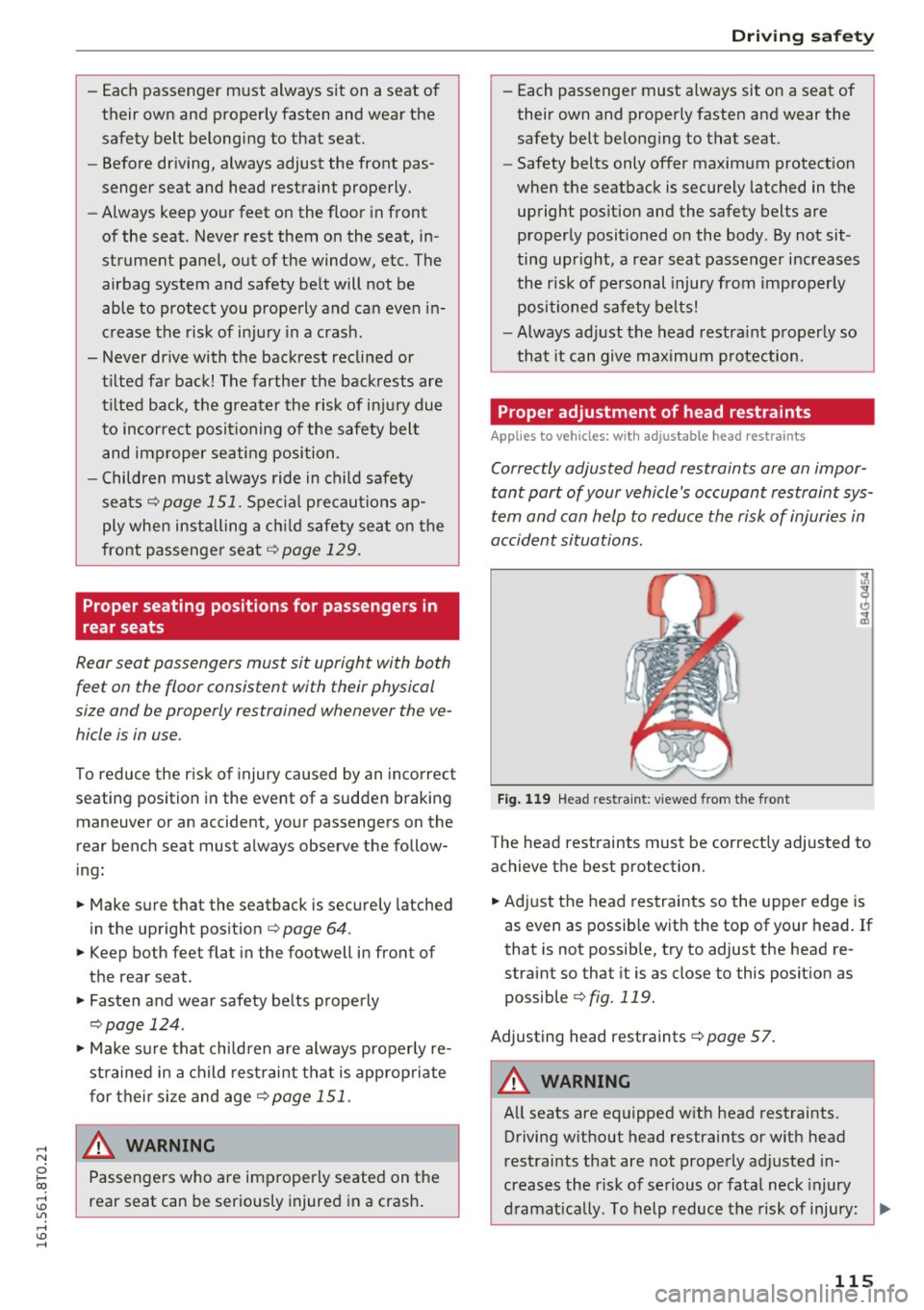
Fig. 119 Head restraint: viewed from t he front
The head restraints must be correctly adjusted to
achieve the best protection.
~ Adjust the head restraints so the upper edge is
as even as possible with the top of your head.
If
that is not possible, try to adjust the head re
straint so that it is as close to this position as
possible
¢ fig . 119.
Adjusting head restraints ¢page 57.
A WARNING
-~
All seats are equipped with head restraints.
Driving without head restraints or with head
restraints that are not properly adjusted in
creases the risk of serious or fatal neck injury
dramatically . To help reduce the risk of injury:
~
115
Page 118 of 264
Driving sa fe ty
-Always drive with the head restraints i n
place and properly adjusted.
- Every person in the vehicle must have a
properly adjusted head restra int.
- Always make sure each person in the vehicle
properly adjusts their head restraint. Adjust
the head restra ints so the upper edge is as
even as possib le w ith the top of your head.
If that is not possib le, try to adjust the head
restra int so that it is as close to th is position
as possib le.
- Never attempt to adjust head restraint wh ile driving.
If you have dr iven off and
must adjust the driver headrest for any rea
son, fi rst stop the vehicle safely before at
tempting to ad just the head restr aint.
- Children must always be p roperly restrained
in a chi ld restrain t th at is appropria te fo r
their age and size~
page 151.
Examples of improper seating positions
The occupant restraint system can only reduce
the risk of injury if vehicle occupants are properly
seated.
I mp roper seating positions can cause se rious in
ju ry or deat h. Safety belts can only wo rk when
they are p roperly posi tioned o n the body . Im
p roper seating posi tions reduce t he effe ct iveness
of sa fety belts and w ill even increase the r isk o f
in jury and death by moving the safety be lt to crit
ical areas of the body . Improper seating posit ions
also increase the risk of ser ious injury and death
when an airbag deploys and strikes an occupant
who is not in the prope r seat ing position. A driver
is respo nsible for the safety of all vehicle occu
pants and especially fo r children. Therefo re:
~ Never allow anyone to assume an incorrect
seat ing pos ition w hen the veh icle is being used
~ .&. -
The follow ing bulletins list only some sample po
sitions that will inc rease the risk of serious inju ry
and death. Ou r hope is that these examples will
make you more aware of seat ing pos it io ns that
a re dangero us.
116
Therefore , whenever the vehicle is moving :
-neve r stand up in the vehicle
- neve r sta nd on the seats
- neve r kneel on the seats
- never ride w ith the seatback recl ined
- neve r lie down on the rear seat
- neve r lean up against the instrument panel
- never s it on the edge of the seat
- neve r sit sideways
- neve r lean out t he window
- neve r put your feet o ut the window
- never put your feet on the instrument panel
- neve r rest your feet on the seat cushion or back
of the seat
- never ride in the footwell
- never ride in the cargo area
A WARNING
Imp roper seating positions inc rease the risk
of ser ious personal injury and death whenever
a veh icle is being used.
- Always make sure that all veh icle occupants
stay in a proper seating posit ion and are
properly restrained whenever the vehicle is be ing used .
Driver's and front
passenger's footwell
' Important safety instructions
Applies to vehicles : wi th knee airbags
A WARNING
Always make su re that the k nee airbag can in
fl ate w ithout interfe rence. Object s between
yourself and the airb ag can inc re ase the risk
of injury in an accident by in terfering with the
way the ai rbag dep loys o r by being pushed in
to you as the airbag dep loys.
- No persons (ch ild ren) or animals should ride
in the footwell in front of the passenger
seat .
If the airbag deploys, this can res ult in
serious or fatal injuries.
- No objects of any kind should be carried in
the footwell area in front of the dr iver's or
passenger's seat. Bu lky objects (shopping
bags, for examp le) can hamper or prevent
Page 123 of 264
.... N
0 I-co ....
General information
Always wear safety belts!
Wearing safety belts correctly saves lives!
This chapter explains why safety belts are neces
sary, how they work and how to adjust and wear
them correctly. "' Read all the information that follows and heed
all of the instructions and WARNINGS.
A WARNING
Not wearing safety belts or wearing them im
properly increases the risk of serious personal
injury and death.
- Safety belts are the single most effective
means available to reduce the risk of serious
injury and death in automobile accidents.
For your protection and that of your passen
gers, always correctly wear safety belts
when the vehicle is moving.
- Pregnant women, injured, o r physically im
paired persons must also use safety belts.
Like all vehicle occupants, they are more
likely to be seriously injured if they do not
wear safety belts. The best way to protect a
fetus is to protect the mother -throughout
the entire pregnancy.
Number of seats
Your Audi has a total of four seating positions:
two in the front and two in the rear. Each seating position has a safety belt.
A WARNING
Not wearing safety belts or wearing them im
properly increases the risk of serious personal
injury and death.
- Never strap more than one person, includ
ing small children, into any belt.
It is espe
cially dangerous to place a safety belt over a
child sitting on your lap.
- Never let more people ride in the vehicle
than there are safety belts available.
Safety belts
-Be sure everyone riding in the vehicle is
properly restrained with a separate safety
belt or child restraint.
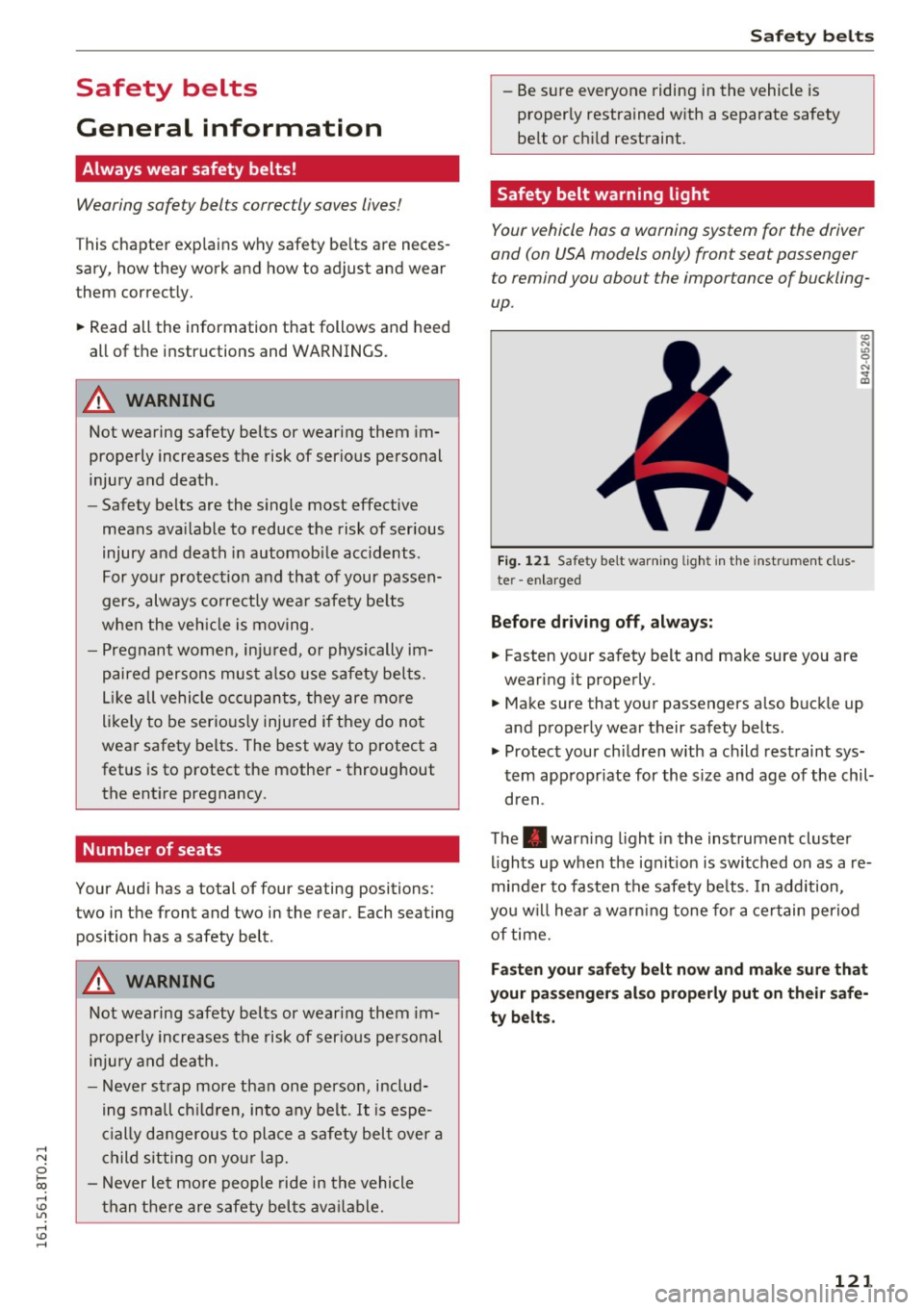
Safety belt warning light
Your vehicle has a warning system for the driver
and (on USA models only) front seat passenger
to remind you about the importance of buckling
up .
Fig. 121 Safety belt warning light in the instrument clus
te r -enlarged
Before driving off, always:
.. Fasten your safety belt and make sure you are
wearing it properly.
.,, N
"' 0 ..:, ., m
"' Make sure that your passengers also buckle up
and properly wear their safety belts.
"' Protect your children with a ch ild restraint sys
tem appropr iate for the size and age of the chil
dren .
The. warning light in the instrument cluster
lights up when the ignit ion is switched on as a re
minder to fasten the safety be lts. In addition,
you w ill hear a warn ing tone for a certain period
of time.
Fasten your safety belt now and make sure that
your passengers also properly put on their safe
ty belts.
121
Page 125 of 264
,-1 N
0 1-CX)
rl I.Cl U"I
,-1 I.Cl ......
Never rely on airbags alone for protection. Even
when they deploy, airbags provide on ly additional
protection. Airbags are not supposed to dep loy in
all kinds of accidents. A lthough your Audi is
equipped with airbags, all vehicle occupants, in
cluding the dr iver, must wear safety belts cor
rectly in order to minimize the risk of severe in
jury or death in a crash .
Remember too, that airbags will deploy only
once and that your safety belts are always there
to offer protect ion in those accidents in w hich
a ir bags are not supposed to deploy or when they
have already deployed. Unbelted occupants can
also be thrown o ut of the vehicle where even
more severe or fatal injur ies can occur.
It is also important for the rear passengers to
wear safety belts correctly . Unbelted passengers
in the rear seats endanger not only themse lves
but also the driver and other passengers
¢fig . 125. In a frontal collision they will be
thrown forward violently, where they can hit and
injure the driver and/or front seat passenger .
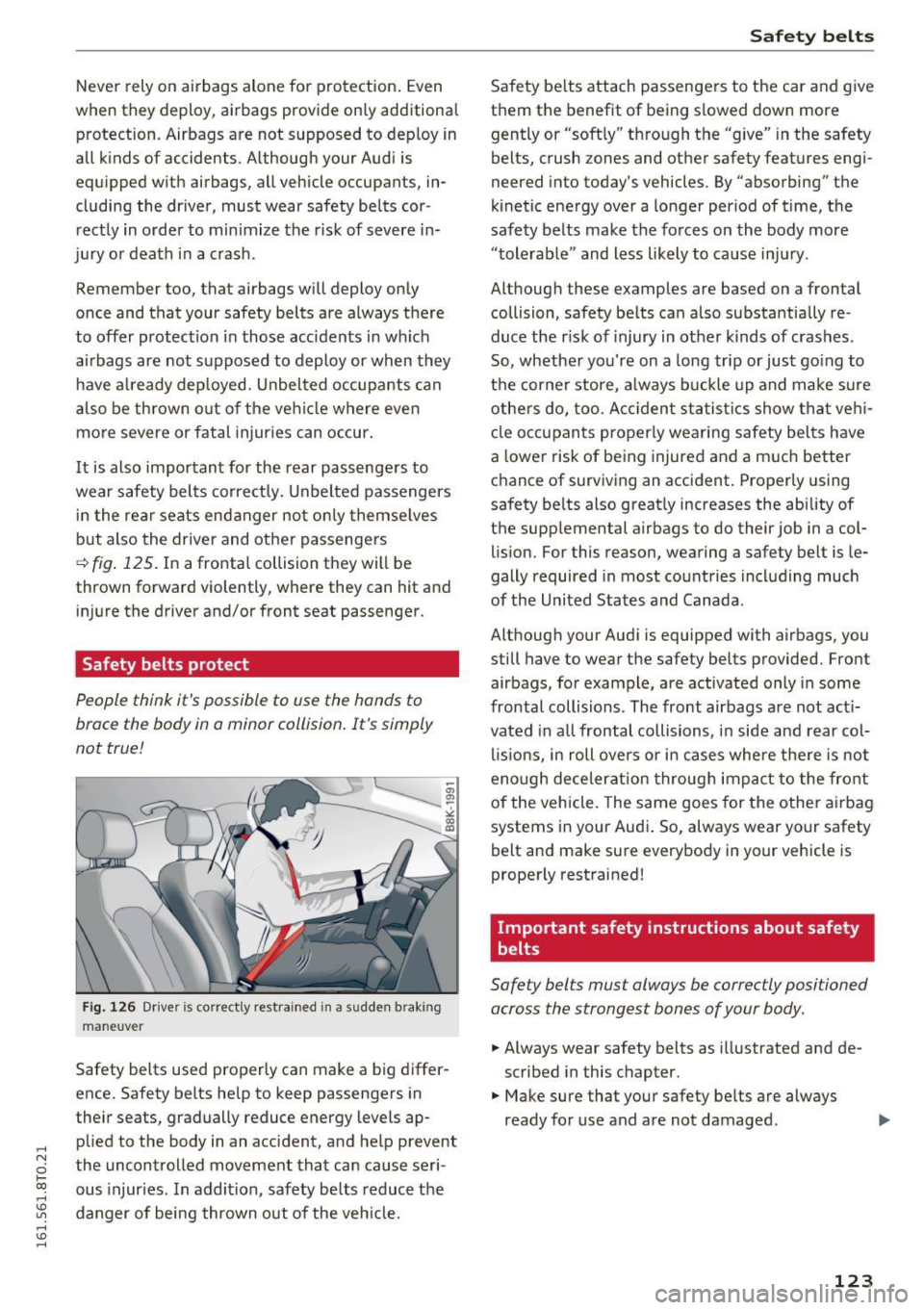
Safety belts protect
People think it's possible to use the hands to
brace the body in a minor collision. It 's simply
not true!
Fig. 126 Driver is correctly restra ined in a sudden b raking
maneuver
Safety belts used properly can make a big differ
ence. Safety belts help to keep passengers in
their seats, gradually reduce energy levels ap
plied to the body in an accident, and help prevent
the uncontrolled movement that can cause se ri
ous injur ies. In addition, safety belts reduce the
danger of being thrown out of the vehicle.
Safety belts
Safety belts attach passengers to the car and give
them the benefit of being slowed down more
gently or "softly" through the "give" in the safety
belts, crush zones and other safety features engi
neered into today's vehicles. By "absorbing" the
kinetic ene rgy over a longer period of time, the
safety belts make the forces on the body more
"tolerab le" and less likely to ca use injury .
Although these examples are based on a frontal collision, safety be lts can also substantially re
duce the r isk of injury in other k inds of crashes.
So, whether you're on a long trip or just going to
the corner store, always buckle up and make sure
others do, too. Acciden t statist ics show that vehi
cle occupants properly wearing safety belts have
a lower risk of being injured and a much better
chance of surviving an accident . Properly using
safety belts also greatly increases the ability of
the supp lemental airbags to do their job in a col
lision. For this reason, wearing a safety belt is le
gally required in most count ries including much
of the United States and Canada .
Although your Aud i is equipped with airbags, you
still have to wear the safety belts provided. Front
airbags, for example, are activated only in some
frontal collisions. The front airbags are not act i
vated in all frontal collisions, in side and rear col
lisions , in roll overs or in cases where there is not
enough deceleration through impact to the front
of the vehicle. The same goes for the other air bag
systems in your Audi . So, always wear your safety
belt and make sure everybody in your vehicle is
properly restrained!
Important safety instructions about safety
belts
Safety belts must always be correctly positioned
across the strongest bones of your body.
.,. Always wear safety belts as illustrated and de
scribed in this chapter.
.,. Make sure that your safety belts are always
ready for use and are not damaged.
123
Page 126 of 264
Safety belts
_& WARNING
Not wearing safety belts or wearing them im
properly increases the risk of serious personal
injury and death . Safety belts can work only
when used correctly.
-Always fasten your safety belts correctly be fore driving off and make sure all passen
gers are correctly restrained.
- For maximum protection, safety belts must
always be positioned properly on the body.
- Never strap more than one person, includ
ing small children, into any belt.
- Never place a safety belt over a child sitting
on your lap.
- Always keep feet in the footwell in front of
the seat while the vehicle is being driven.
- Never let any person ride with their feet on
the instrument panel or sticking out the
window or on the seat.
- Never
remove a safety belt while the vehicle
is moving . Doing so will increase your risk of
being injured or killed .
- Never wear belts twisted.
- Never wear belts
over rigid or breakable ob-
jects in or on your clothing, such as eye
glasses, pens, keys, etc., as these may cause
injury.
- Never allow safety belts to become dam
aged by being caught in door or seat hard
ware .
- Do not wear the shoulder part of the belt
under your arm or otherwise out of position.
- Several layers of heavy clothing may inter
fere with correct positioning of belts and re
duce the overall effectiveness of the system.
- Always keep belt buckles free of anything
that may prevent the buckle from latching
securely .
- Never use comfort clips or devices that cre
ate slack in the shoulder belt. However, spe
cial clips may be required for the proper use
of some child restraint systems.
- Torn or frayed safety belts can tear, and
damaged belt hardware can break in an acci
dent . Inspect belts regularly.
If webbing,
bindings, buckles, or retractors are dam-
124
aged, have belts replaced by an authorized
Audi dealer .
- Safety belts that have been worn and loaded
in an accident must be replaced with the
correct replacement safety belt by an au
thorized Audi dealer. Replacement may be necessary
even if damage cannot be clearly
seen . Anchorages that were loaded must al
so be inspected.
- Never
remove, modify , disassemble, or try
to repair the safety belts yourself .
-Always keep the belts clean. Dirty belts may not work properly and can impair the func
tion of the inertia reel¢
page 184.
Safety belts
Fastening safety belts
Safety first -everybody buckle up!
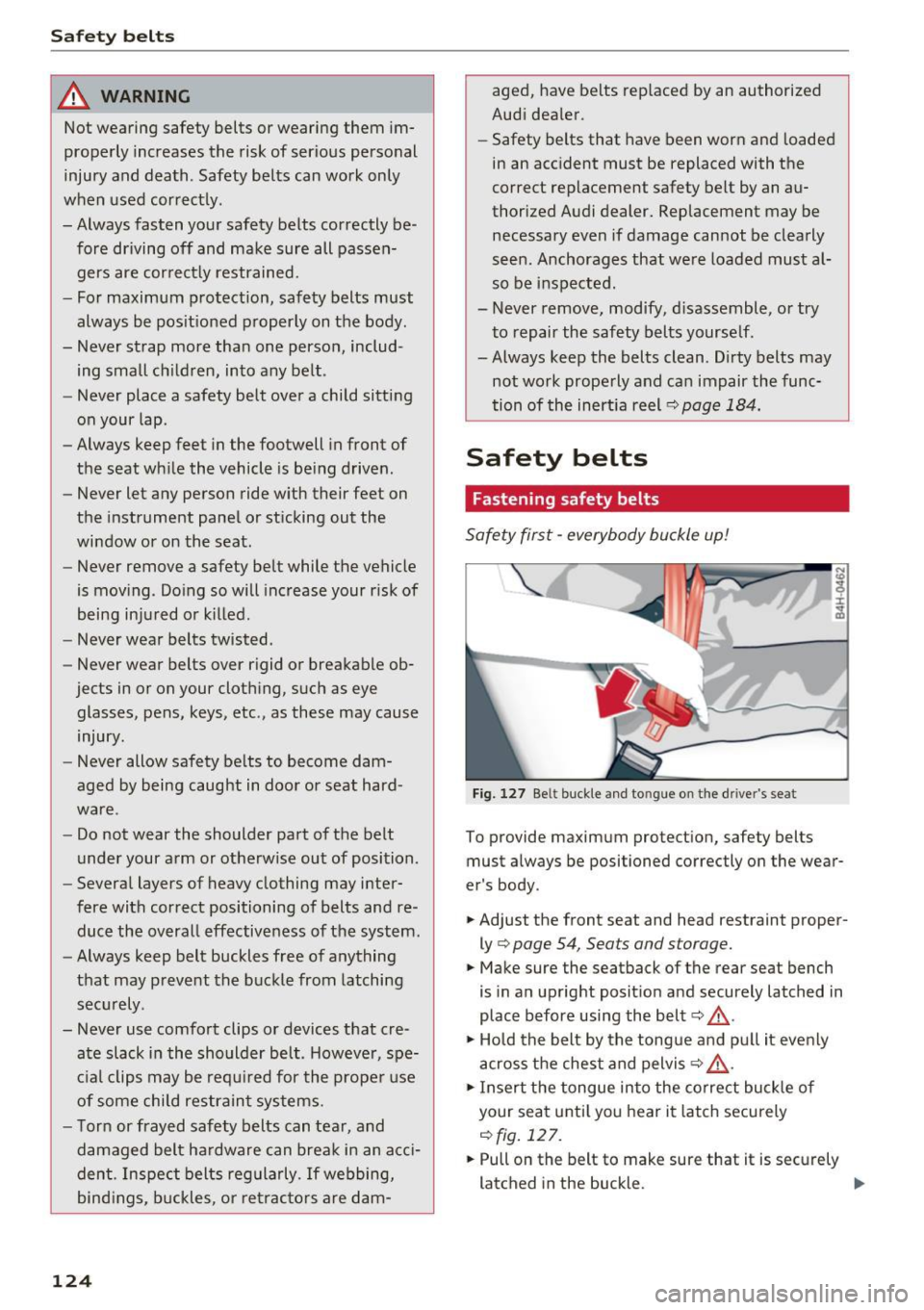
Fig. 127 Be lt buckle and tongu e on t he drive r's seat
To provide maximum protection, safety belts
must alw ays be positioned correctly on the wear
er 's body.
.. Adjust the front seat and head restraint proper
ly¢
page 54, Seats and storage.
.. Make sure the seatback of the rear seat bench
is in an upright position and securely latched in
place before using the belt¢,&. .
.,. Hold the belt by the tongue and pull it evenly
across the chest and pelvis¢,&. .
.. Insert the tongue into the correct buckle of
your seat until you hear it latch securely
¢fig. 127.
.. Pull on the belt to make sure that it is securely
latched in the buckle. .,,_
Page 127 of 264
,-1 N
0 1-CX)
rl I.Cl U"I
,-1 I.Cl ......
Automatic safety belt r etractors
Every safety be lt is equ ipped wi th an automatic
be lt retractor on the shoulder belt. Th is feature
l ocks the belt when the belt is p ulled out fast,
during hard braking and in an accident. The belt
may also lock when you drive up or down a steep
h ill or through a sharp curve. During normal driv
ing the belt lets you move freely .
Safety be lt pret en sioner s
The safety belts are equipped with a belt preten
sioner that helps to tighten the safety belt and
remove slack when the pretensioner is activated.
The funct ion of the pretensioner is monitored by
a warning light
r::> page 19 .
Convertibl e loc king retract or
Every safety belt except the one on the driver
seat is equipped with a convertible locking retrac
tor that
must be used when the safety belt is
used to attach a child safety seat. Be sure to read
the important information about this feature
r::;, page 160.
& WARNING
Improperly posit ioned safety be lts ca n cause
ser ious injury in an accide nt
r::;, page 125,
Safe ty belt position.
- Safety belts offer optimum protection only
when the seatback is upr ight and belts are
prope rly pos itioned on the body.
- Never a ttac h the safety belt to the buckle
for ano ther sea t. Attaching the bel t to the
wrong buckle w ill red uce safety bel t effec
tiveness and can cause serious persona l in
jury .
- A passenger who is no t properly restrained
can be se riously injured by the safety be lt it
self when it
moves from the stronger parts
of the body into cr itical areas like the abdo
men .
- Always lock the convertible lock ing retractor
when you are secur ing a child safety seat in
the vehicle
r::> page 162.
Safet y bel ts
Safety belt position
Correct belt position is the key to getting maxi
mum protection from safety belts .
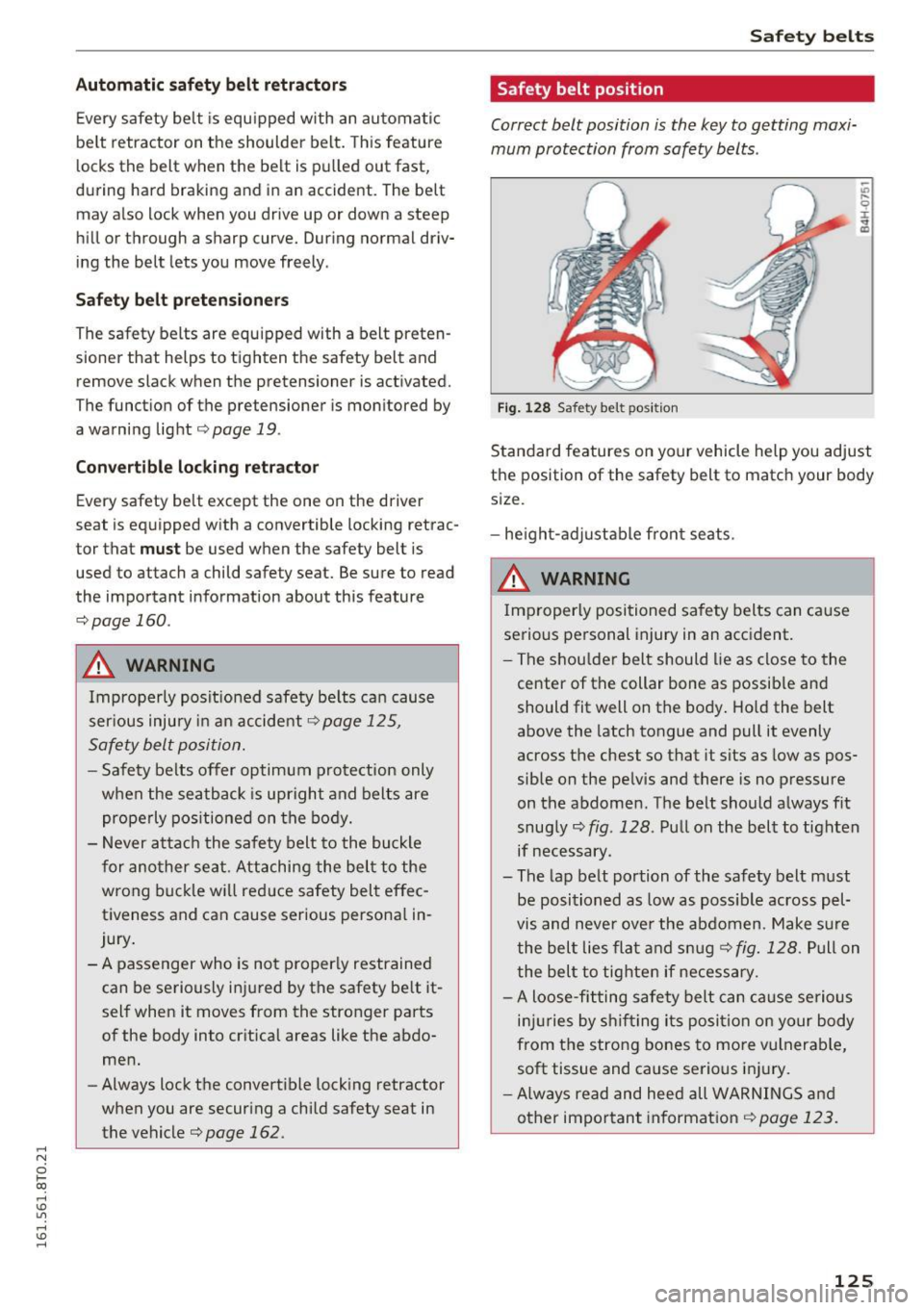
Fig. 128 Safet y belt po sit ion
Standard features on yo ur vehicle help you adjust
the position of the safety belt to match your body
size.
- he ight-adj ustable fro nt seats.
& WARNING
Imp roper ly positioned safety belts can ca use
serious personal injury in an accident.
- The shou lder belt should lie as close to the
center of the collar bone as possib le and
should fit well on the body . Ho ld the belt
above the latch tongue and pull it evenly
across the chest so that it sits as low as pos
sible on the pelvis and there is no pressure
on the abdomen. The belt should a lways fit
snug ly
r::;, fig. 128 . Pull on the belt to tighten
if necessary.
- The lap belt portion of the safety belt must
be posi tioned as low as poss ible across pel
vis and neve r ove r the ab domen . Make s ure
the bel t lies fla t and sn ug
r::;,fig. 128. Pull on
the bel t to tig hte n if necessary.
- A loose-fitting safety belt can ca use serious
in jur ies by s hift ing its posi tion on your body
from the stro ng bones to more vulnerab le,
soft tissue and cause se rious i njury.
- Always read and hee d all WAR NINGS an d
other impor tant in format ion
r::;, page 123.
125