change time AUDI A6 2014 Owner's Manual
[x] Cancel search | Manufacturer: AUDI, Model Year: 2014, Model line: A6, Model: AUDI A6 2014Pages: 304, PDF Size: 76.32 MB
Page 232 of 304
230 Check ing and filling
- The oil filler cap must be properly se
cured to prevent oil from being sprayed
on the hot engine and exhaust system
when the engine is running -fire hazard!
- If your skin has come in contact w ith the
engine oil, you must subsequently
cleanse it thoroughly.
(D Note
- Check the oil level using the MMI. If the
message
P lea se red uce oil l evel appears,
contact your author ized Audi dealer or
other qualified workshop to have excess
oil extracted if necessary.
- Aud i do es not recommend the use of o il
addit ive s. They ma y damag e the engin e
and ad versely affect yo ur New Vehicle
Warrant y.
@, For the sake of the environment
- Under no circumstances can the oil come
in contact w it h the sewage network or
the soil.
- Observe and follow lega l regulations
when disposing of empty oil containers.
Changing the engine oil
We recommend that have your oil changed by
an authorized Audi dealer or a qualified serv
ice station.
Before you check anything in the engine com
partment,
al ways read and h eed all WARN
INGS c::> &. in Working in the engine compart
ment on page 224.
The engine oil must be changed according to
the intervals spec ified in your Warranty
&
Maintenance book let . This is very important
because the lubricating prope rties of oil di
minish gradua lly dur ing normal veh icle use.
Under some c ircumstances the eng ine o il
should be changed more frequently . Change
oil more often if you drive most ly short dis
tances , operate the vehicle in dusty areas or
under predominantly stop-and-go traffic con
ditions, or have your vehicle where tempera -tu res remain below freezing for extended pe
riods.
Detergent additives in the oil will make fresh
o il look dar k after the engine has been run
ning for a sho rt time. This is normal and is not
a reason to change the oil more often than
recommended.
Because of the problem of proper disposal,
along with the specia l tools and necessary ex
pertise required, we strongly recommend that
you have your oil changed by an authorized
Aud i deale r or a qualified service station.
If you choo se to chan ge your o il yours elf ,
please note the fo llowing important informa
t ion:
A WARNING
To reduce the risk of personal injury if you
must change the eng ine oil in your vehicle
yourself:
- Wear eye protect ion.
- To reduce the risk of burns from hot en-
gine oil, let the engine cool down to the
touch.
- When removing the oil dra in p lug with
your fingers, stay as far away as possible.
Always keep your forearm parallel to the ground to help prevent hot oil from run
n ing down you r arm.
- Dra in the oil into a container designed
for this purpose, one large enough to hold at least the tota l amount of o il in
your engine.
- Engine oil is poisonous . Keep it well out
of the rea ch of children.
- Continuous contact with used eng ine o il
is harmful to your sk in . Always protect
your skin by washing oil off tho roughly
wit h soap and wate r.
(D Note
Neve r mix oil additives with you r engine
oi l. These additives can damage your en
gine and adversely affect your Audi Limit
ed New Veh icle War ranty.
Page 236 of 304
234 Checking and filling
continue to run until the coolant temper
ature drops.
Brake fluid
Checking brake fluid level
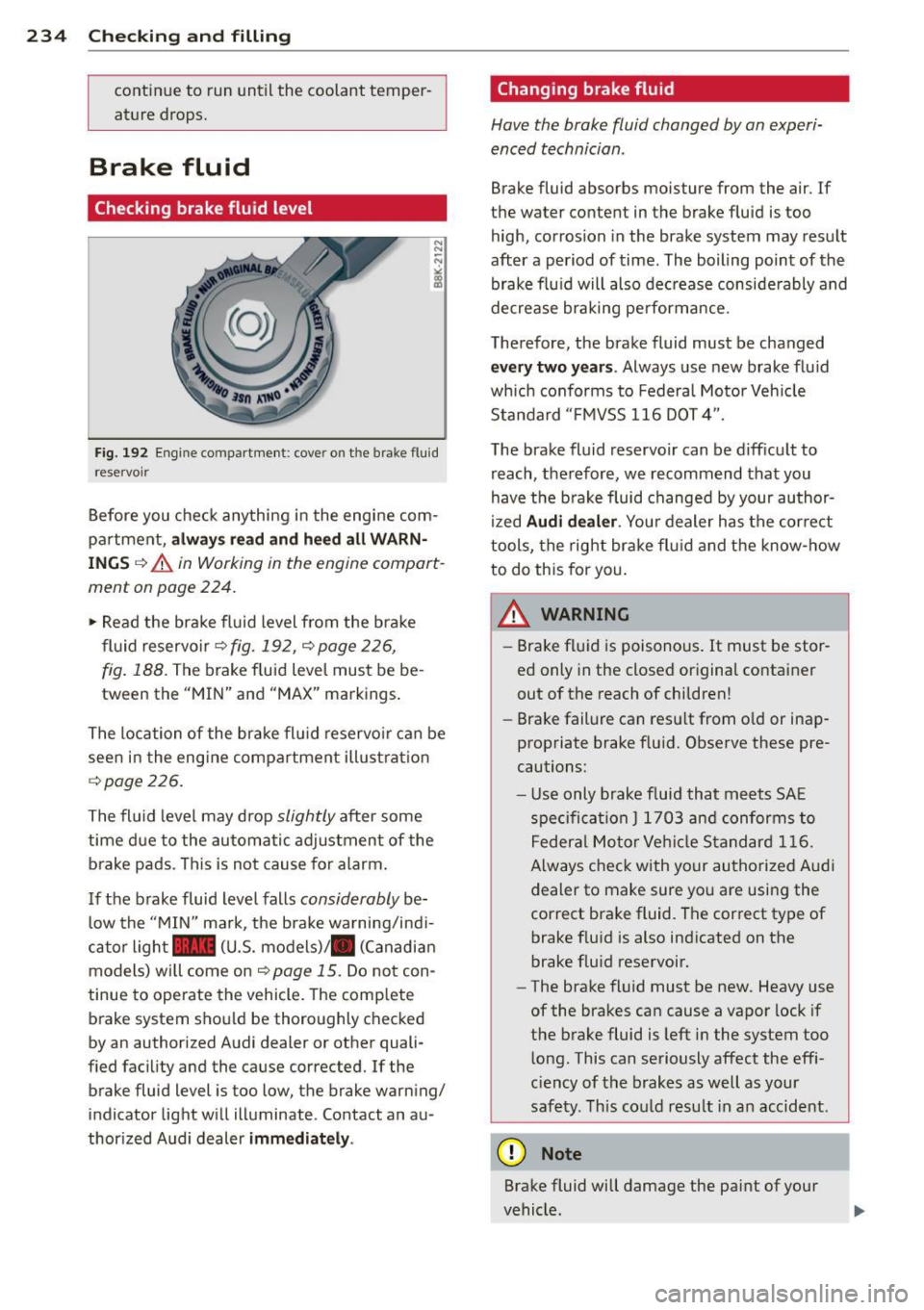
Fig. 192 Engine compartment : cove r on the brake fl uid
reservo ir
Before you check anything in the engine com
partment,
always read and heed all WARN
INGS ~ .&. in Working in the engine compart
ment on page 224.
.,. Read the brake fluid level from the brake
fluid reservoir~
fig. 192 , ~ page 226,
fig.
188. The brake fluid leve l must be be
tween the "MIN" and "MAX" markings .
The location of the brake flu id reservoir can be
seen in the engine compartment illustrat ion
~ page 226.
The fluid level may drop slightly after some
time due to the automatic adjustment of the
brake pads . Th is is not cause for alarm.
I f the brake fluid level falls
considerably be
lo w the "MIN" mark, the brake wa rning/indi
cator light
1111 (U.S. models)/ . (Canadian
models) will come on~
page 15. Do not con
tinue to operate the vehicle. The comp lete
brake system should be thoroughly checked
by an authorized Audi dealer or other quali
fied facility and the ca use corrected. If the
brake fluid level is too low, the brake warning/
indicator light w ill illuminate . Contact an au
thorized Audi dealer
immediately .
Changing brake fluid
Have the brake fluid changed by an experi
enced technician .
Brake fluid absorbs moisture from the air. If
the water content in the brake fluid is too
high, corrosion in the brake system may result
after a period of time . The boiling point of the
brake fluid will also decrease considerably and
decrease braking pe rformance .
Therefore, the brake fluid must be changed
every two years. Always use new brake flu id
which conforms to Federal Motor Vehicle
Standard "FM VSS 116 DOT 4".
The brake fluid reservoir can be diff icult to
reach, therefore, we recommend that you
have the brake fluid changed by your author
ized
Audi dealer . Your dealer has the correct
tools, the right brake fluid and the know-how
to do this for you.
A WARNING
- Brake fluid is poisonous . It must be stor
ed only in the closed original container
out of the reach of children!
- Brake failure can resu lt from o ld or inap
propriate brake fluid. Observe these pre
cautions:
- Use only brake fluid that meets SA E
specification
J 1703 and conforms to
Federal Motor Vehicle Standard 116.
Always check with your authorized Audi
dealer to make sure you are using the
correct brake fluid. The correct type of
brake flui d is also ind icated on the
brake fluid reservoir.
- The brake fluid must be new. Heavy use
of the brakes can cause a vapor lock if
the brake fluid is left in the system too
long. This can seriously affect the effi
c ie ncy of the brakes as well as your
safety. This could result in an accident.
(D Note
Brake fluid will damage the paint of your
vehicle .
Page 237 of 304
@ For the sake of the environment
Because of the pr oblem of proper d isposa l
of brake flu id as we ll as the special tools
requ ired and the necessary expert ise, we
recommend that you have the brake fluid
changed by your author ized Audi dealer .
Battery
General information
Under normal operating conditions, the bat
tery in your Audi does not need any mainte
nance. With
high outside temperatures or
long daily dr ives we recommend that you have
the electro lyte level checked by a service fa
cility . The electrolyte level shou ld also be
checked each time the battery is charged
¢ page 237.
Have the battery checked when you take your
ve hicle in for service . Yo u are well adv ised to
replace a battery that is older than 5 yea rs .
W ith certa in types of a irbag deployment, t he
b attery is d isconnected from the vehicle elec
tr ica l system for safety reasons¢.&.
in Re
pair, core and disposal of the airbags on
page 163.
Disconnecting the battery terminals
Some vehicle functions (power w indow regu
lators , for example) are lost if the battery ter
m inals a re d isconnected. These func tions have
to be re lea rned after the batte ry term inals a re
connected agai n. T o prevent this , the bat tery
should only be d isconnec ted from the vehicle
e lec tric al system when absolu tely necessa ry
for repairs .
Vehicles not driven for long periods
If you do not drive you r vehicle over a period
of severa l days or weeks, ele ctrical compo
nen ts are gr adually cut b ack o r swi tched off .
This redu ces energy cons umption and main
tains starting capab ility over a longer per io d
¢
page 199. Some of the co nvenience func
tions may not operate, s uch as the inte rior
lights or power seat adjustme nt. The conven-
Checkin g and fillin g 235
ience funct ions w ill be available again when
yo u sw itch on the ign ition an d start the en
gine.
Winter operation
D ur ing the w inte r mon ths, bat tery ca pa city
tends to decrease as tempera tures drop . This
is beca use more power is a lso consumed wh ile
starting, and the headlights, rear window de
fogger, etc., are used mo re often.
Avoid unnecess ary powe r consumpt ion, pa r
ticu lar ly in city traffic o r when traveling only
sho rt distances. Let yo ur authorized A udi
dealer check the capacity of the vehicle bat
tery before w inter sets in¢
page 23 7. A well
charged battery will no t on ly prevent star tin g
problems w hen the weather is cold, but w ill
also last longer .
@ Tips
If your vehicle is left standing for seve ral
weeks at extremely low temperatures, the
vehicle battery s hou ld be removed and
stored where it will not freez e. This will
p reve nt it from be ing dam aged and having
to be repl aced .
Working on the battery
Be especially careful when working on or near
the bat tery.
The battery is located in the luggage compar t
ment under the floor . B efo re you che ck any
thi ng in the luggage compartment,
read and
heed all WARNINGS
¢ .&, .
Always heed the safety warnings , when work
i ng on the veh icle batte ry or t he vehicle e lec
t rical sys tem to p reven t inju ry.
The following WARNINGS are very
important when working on the battery:
Always heed the following WARNING SYM· BO LS and safety precautions when working
on the battery .
®
Always wear eye protection.
•
•
Page 240 of 304
238 Check ing and filling
- Char ge the bat tery i n a we ll ven tilated
area. Kee p away from open flame or elec
trical spa rk. Do n ot smoke. Hydrogen gas
generated b y the battery is explosive.
- To reduce the danger of explosion, never
connect or disconnect charger cables
wh ile the charger is operating.
- Fast charg ing a battery is dangerous and
should only be attempted by a compe
tent technicia n w ith the proper equ ip
ment.
- Battery acid that may spill during charg ing should be washed off wit h a solution
of warm water and baking soda to neu
t rali ze the acid.
(D Note
Never use a fast charger as a booster to
start the engine. This will se riously dam
age sensitive elect ronic components, such
as control units, relays, rad io, etc., as we ll
as t he battery charger.
Battery replacement
The new battery must have the same specifi
c ations and dimensions as the original equip
ment battery.
Intell igent energy management in your veh i
cle is respons ible for d istributing the e lectr i
cal energy throughou t your vehicle
qpage 199. The intel ligen t energy manage
ment system w ill keep the engine battery
charged better than vehicles without th is sys
tem. To make sure the additional electrical en
ergy is available once again after you have
changed the battery, we recommend that you
install batteries of the same type and ma nu
facture only (the same as those installed at
the time your vehicle was delivered). Specifi
cations a re listed on the battery ho using. Yo ur
author ized de aler must code the b attery in
the energy management system to enable you
to use the energy management fu nctions cor
rectly after replacing the battery. T
he new battery must have the same capacity,
vo ltage ( 12-volts), amperage, construction
and plug sea ling.
When ins tall ing t he battery, make su re the ig
nition and a ll elect rical consume rs are switch
ed off.
(D Note
M ake sure the ven tilat ion hose on the side
of the ba ttery is connecte d, otherwise
fumes or batte ry acid can lea k out .
- Veh icles with the Start-S top-System * are
equip ped with a spec ial cycle-proof AGM
battery . Install ing a d iffe rent type of
battery can cause problems in the vehi
cle e lectr ica l system. Whe n replac ing the
vehicle battery, always install one w ith
the same specifications as the origi na l
battery.
@) For the sake of the environment
Because of the prob lem of proper disposal
of a battery, we recomme nd your author
i zed Audi dealer change the battery fo r
you. Batteri es contain sulfur ic acid and
l ead and must a lways be di spo sed o f prop
erly in comp liance wi th all envi ronmental
regulations. Disposing of vehi cle batter ies
imprope rly is very dange rous to the envi
r onment.
Windshield/headlight
washer container
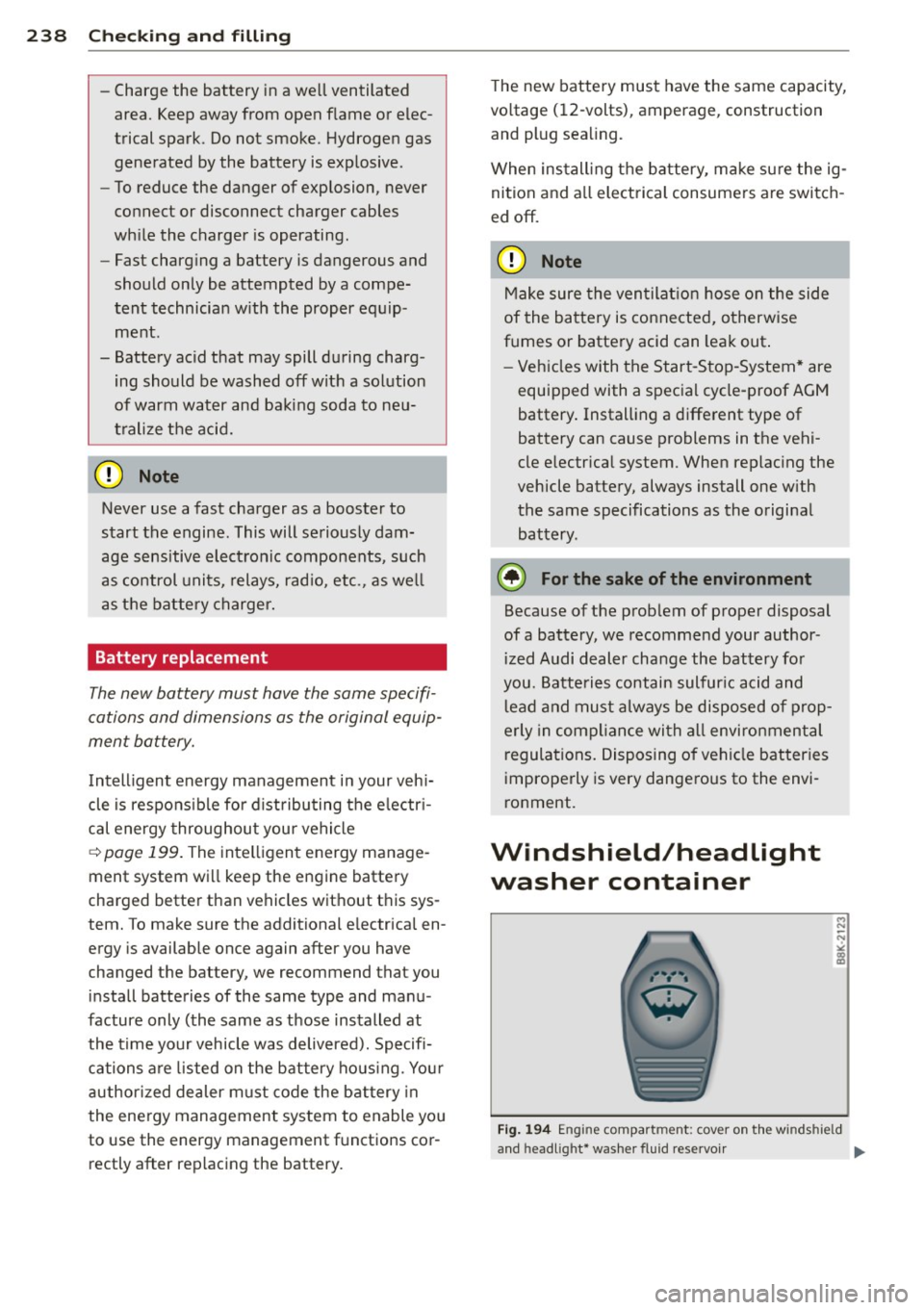
F ig . 1 94 Engine compartment: cover on the windshield
a n d headlight * was her fl ui d reservo ir
Ill>
Page 244 of 304
242 Tire s and wheels
Groove
means the space between two adjacent tread
ribs .
Load rating (code)
means the maximum load that a tire is rated
to carry for a given inflation pressure. You
may not find this informat ion on all tires be
cause it is not req uired by law.
Maximum load rating
means the load rating for a t ire at the max i
mum permissible inflation pressure for that
tire.
Maximum loaded vehicle weight
means the sum of:
(a) Curb weight
(b) Accessory weight
(c) Vehicle capacity we ight, and
(d) Production options weight
Maximum (permissible) inflation pressure
means the maximum cold inflation pressure
to which a tire may be inflated. Also called
"maximum inflation pressure ."
Normal occupant weight
means 150 lbs. (68 kilograms) times the
number of occupants seated in the vehicle up
to the total seating capacity of your vehicle .
Occupant distribution
means distribution of occupants in a vehicle.
Outer diameter
means the overa ll diameter of an inflated new
tire.
Overall width
means the linear distance between the exteri
ors of the sidewalls of an inflated tire, includ
ing elevations due to labeling, decorations, or
protective bands o r ribs .
Ply
means a layer of rubber-coated parallel cords.
Production options weight
means the combined weight of those insta lled
regular production options weighing over 5
lbs. (2.3 kg) in excess of those standard items
which they replace, not previously considered
in curb weight or accessory we ight, including
heavy duty brakes, ride levelers, roof rack,
heavy duty battery, and special tr im .
Radial ply tire
means a pneumat ic tire in which the ply cords
that extend to the beads are laid at substan
t ia lly 90 degrees to the center line of the
tread .
Recommended inflation pressure
see<=> page 241, Cold tire inflation pressure.
Reinforced tire
means a t ire design to operate at higher loads
and at h igher inflation pressures than the cor
responding standa rd tire. Reinforced tires
may be identified as "XL" "xl" "EXTRA LOAD"
' ' '
or "RF" on the sidewa ll.
Rim
means a metal support for a tire or a tire and
tube assembly upon which the tire beads are
seated.
Rim diameter
means nom inal d iameter of the bead seat. If
you change your wheel s ize, you will have to
purchase new tires to match the new rim di
ameter.
Rim size designation
means r im diameter and width .
Rim width
means nominal distance between rim flanges.
Sidewall
means that portion of a tire between the
t read and bead.
Page 261 of 304
remain continuously illuminated. This se
quence will continue upon subsequent vehicle
start-ups as long as the malfunction exists.
When the malfunction indicator is illuminat
ed, the system may not be able to detect or
signal low tire pressure as intended . TPMS
malfunctions may occur for a variety of rea
sons, including the installation of replace
ment or alternate tires or wheels on the vehi
cle that prevent the TPMS from functioning
properly . Always check the TPMS malfunction
telltale after replacing one or more tires or
wheels on your vehicle to ensure that the re
placement or alternate tires and wheels allow
the TPMS to continue to function properly.
Tire pressure indicator appears
Appl ies to vehicles: with tire pressur e monitoring sys te m
The tire pressure indicator in the instrument
cluster informs you if the tire pressure is too
low or if there is a system malfunction.
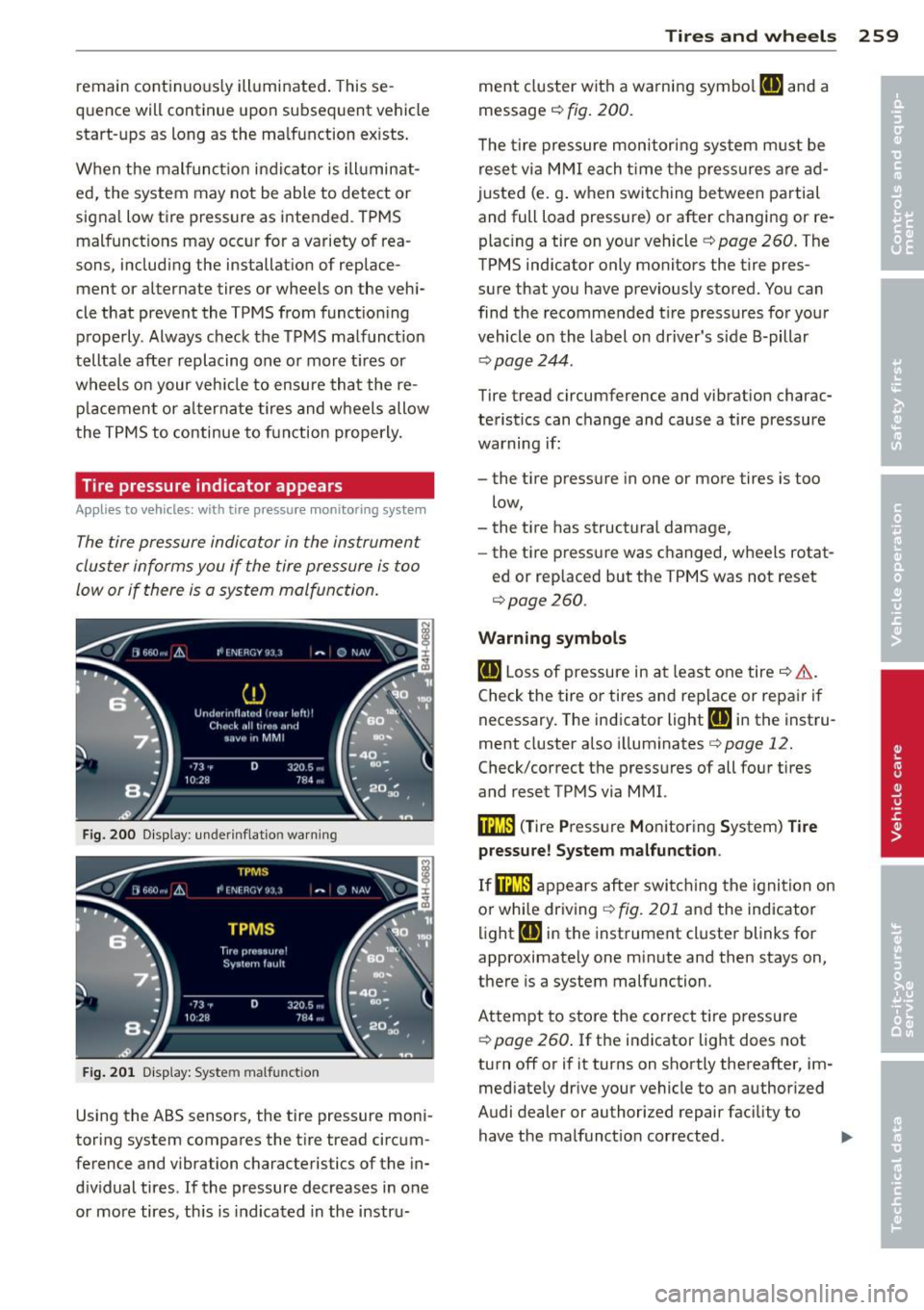
Fig. 200 Display : underinflation warning
Fig. 201 Display: System malfunction
Using the ABS sensors, the tire pressure moni
toring system compares the tire tread circum
ference and vibration characteristics of the in
dividual tires. If the pressure decreases in one
or more tires, this is indicated in the instru-
Tires and wheels 259
ment cluster with a warning symbol [I] and a
message
c::, fig. 200.
The tire pressure monitoring system must be
reset via MMI each time the pressures are ad
justed (e.g. when switching between partial
and full load pressure) or after changing or re
placing a tire on your vehicle
c::, page 260. The
TPMS indicator only monitors the tire pres
sure that you have previously stored. You can
find the recommended tire pressures for your
vehicle on the label on driver's side 8-pillar
~page 244.
Tire tread circumference and vibration charac
teristics can change and cause a tire pressure
warning if:
- the tire pressure in one or more tires is too
low,
- the tire has structural damage,
- the tire pressure was changed, wheels rotat-
ed or replaced but the TPMS was not reset
c::, page 260 .
Warning symbols
[I] Loss of pressure in at least one tire c::> &..
Check the tire or tires and replace or repair if
necessary. The indicator light
[I] in the instru
ment cluster also illuminates
c::>page 12.
Check/correct the pressures of all four tires
and reset TPMS via MMI.
i:mJ) (Tire Pressure Monitoring System) Tire
pressure! System malfunction .
If@m appears after switching the ignition on
or while driving
c::, fig. 201 and the indicator
light
[I] in the instrument cluster blinks for
approximately one minute and then stays on,
there is a system malfunction.
Attempt to store the correct tire pressure
c::, page 260. If the indicator light does not
turn off or if it turns on shortly thereafter, im
mediately drive your vehicle to an authorized
Audi dealer or authorized repair facility to
have the malfunction corrected.
Page 296 of 304
294 Index
K
Key ... . ... ... .. .. ..... ... .. .. .... .. 3 2
Battery rep lacement master key ... .. . . 33
Emergency key . .. ..... ... .. .. .... .. 32
Key not recognized . . . . . . . . . . . . . . . . . . 76
Key replacement ......... .... .... .. 32
Master key . . . . . . . . . . . . . . . . . . . . . . . . 32
M echanical key .............. ... ... . 33
Valet key . .. .. ........ .... ... .. .. .. 32
K ick-down
tiptronic
112
K nee airbags .... .. ..... ... .. .. .... . 164
Descr ipt ion .... . ...... ... .. .. .... . 164
How they work . .. ..... ... .. .. .... . 166
Important safety instructions . . . . . . . . 166
L
Lane assist . . . . . . . . . . . . . . . . . . . . . . . . . 93
L ane Change Ass istant
refer to side ass is t . . . . . . . . . . . . . . . . . . 96
LATC H .. .. .. ............. .... .. ... 187
D .. escnpt 1on .... .... .... .. .. .. .. .. .
Install ing a child restraint ...... .. .. .
L ocat ion .. .... ............. ... ' . .
M ount ing and releasing the an cho rage
hook
. . .. .. ............. .... .. .. .
188
18 9
188
189
Launch Contro l Program . ... .. .. .. .. . 112
Leather cleaning/protection ... .. .... . 2 13
Leaving home ............. .. .. .. .. .. 45
Lift ing jack ............... .. .. .. .. .
266
Lift ing vehicle
L ight 278
Ambience lighting . . . . . . . . . . . . . . . . . . 46
Com ing/ Leavi ng home ..... .. .. ...... 45
D aytime running lights .. .. .. .. .. .. ..
4 3
Eme rgency flashers . . . . . . . . . . . . . . . . . 4 4
Exterior lighting ..... ... .. .. .. .... ..
4 3
H eadlig ht range contro l ... .. .... .. . . 43
High beam ... ........... .. .. .... .. 45
Low beam ....................... ..
43
Rear fog lights ........... .... .... .. 43
Side marker lights .. ... ... .. .. .. .. .. 43
Turn signals ................ ... ... . 45 Li
ght/ rain sensor
Hea dlights . ..... .. ... ..... ... .. .. .
43
Intermittent (w indshie ld w ipers) ... .. . 48
Sensor defective . . . . . . . . . . . . . . . . . . . . 23
Loa ding the roof ra ck ................ . 62
Locking
Power loc king switch .............. .. 37
Remote cont ro l .... ........... .. .. . 35
U si ng the key ................. ..... 3 7
Low beams
Lower universal anchorages (Cana da)
Luggage compartment
43
187
Cargo ne t . . . . . . . . . . . . . . . . . . . . . . . . . 65
En larging . . . . . . . . . . . . . . . . . . . . . . . . .
64
Load ing ... .... .. ... .. ..... ... .. .. . 63
Ski sack ... .... .. ... .. ..... .... . .. . 65
Stowing luggage ... ... ..... ... .. ..
134
Tie -downs . . . . . . . . . . . . . . . . . . . . . . . . . 65
L uggage compartment lid
Movement-act ivated open ing . ... .. .. . 39
L umbar support
Front seats . . . . . . . . . . . . . . . . . . . . . . . . 54
M
Maintenance .. .. .. ..... ....... ... .. 283
Malfunction Ind icator Lamp (MIL) . . 2 1, 30
Manua l shift prog ram ............ ....
111
Massage function
Front seats . . . . . . . . . . . . . . . . . . . . . . . . 54
Matte finish paint clea ning .. ... .. .. ..
210
Mechan ica l key .. .. ................ .. 33
Mirrors Adjusting the exterior mirrors . . . . . . . . . SO
d' . 1mmmg .. .. .. .. ... .. .. ... ..... .. . 51
Vanity mir rors . .. .......... ...... .. 47
Monito ring the Advanced Airbag System 159
Mult if u nct ion steer ing whee l ........ .. . 2 5
mult itron ic (automatic transmission) . .. 107
N
Natura l leather
Cleaning
New t ires and whee ls
N HTSA
213
251
Co ntacting .... .... ... ..... ... .. .. 136
Page 303 of 304
It has always been Audi's policy to continu
ously improve its products . Audi, therefore,
reserves the right to make changes in design
and specifications, and to make additions or improvements in its products, without incur
ring any obligation to install them on prod
ucts previously manufactured.
Text, illustrations and specifications in this manual are based on the most up-to-date in
formation available at the time of printing.
All rights reserved. May not be reproduced or
translated in whole or in part without the written consent of AUDI AG. Specifications are
subject to change without notice.
Editorial deadline: 03/19/2013
@ For the sake of the environment
Printed on environmentally friendly paper
(bleached without chlorine, recyclable).
Printed in Germany
© 2013 AUDI AG