fuel AUDI A7 2017 Owner´s Manual
[x] Cancel search | Manufacturer: AUDI, Model Year: 2017, Model line: A7, Model: AUDI A7 2017Pages: 284, PDF Size: 72.29 MB
Page 28 of 284

Driver information s ystem
The MI L light may a lso ill uminate if there is a
leak in the on-board f uel vapor recovery system.
If the light ill uminates after a ref uell ing, stop
the vehicle and make sure the fuel filler cap is
proper ly closed
c;, page 193.
In order to make an accurate diagnosis, the stor
ed data can on ly be disp layed using specia l diag
nostic eq uipment (generic scan too l for 0BD).
I n order to connect the specia l diagnostic equip
ment, push the plug into the Data Link Connector
(DLC). The DLC is located to the rig ht of the hood
release ¢
fig. 14.
Your author ized Audi dealer or a qualified service
station can interpret the code and perform the necessary repa ir.
A WARNING
Do not use the diagnostic connector for pe r
sonal use. Incorrect usage can cause malfunc
tions, which can increase the risk of a colli
sion!
Electronic speed limiter
-
Your veh icle may be facto ry equipped wi th t ires
that a re rated for a maximum speed of 130 mph
(2 10 km/h). This is less t han the maxim um speed
of yo ur vehicle. To redu ce t he risk of s udden tire
fa ilur e and loss o f control if the veh icle is operat
ed at excessive speeds, yo ur vehicle a lso has an
electron ic speed limiter . The electronic spee d
lim ite r prevents your vehicle from going faster
than the t ire speed rating. For more information
c;, page 218.
I f th e en gine contro l unit receives faulty vehicle
road speed s ignals, the Ma lfunction Indicator
Lamp (MIL)
II will illuminate. If this occurs,
contact the nearest authorized Aud i dealer for
assis tance .
S models
Your veh icle's top speed is e lectron ica lly limited
to 155 mph (250 km/h).
If th e engine contro l unit receives faul ty vehi cle
roadspeed signa ls, the Malfunct io n Indicator
Lamp ( MIL)
¢4 will illuminate. If this occurs,
26
contact the nea rest author ized Audi dealer for
assista nee .
A WARNING
Always observe the posted speed limits and
adjust your speed to suit preva iling road, traf
f ic and weather conditions. Never drive your
vehicle faster than the maximum speed rating
of the ti res insta lled.
-
Page 57 of 284
co
co
.... N
" N .... 0
00
<.,;) 'SI'
-Do not hang heavy objects on the coat
hooks, as they could cause personal injury in
a sudden stop.
(D Note
Objects on the rear shelf that rub against the
rear w indow can damage the rear window
heating wires.
Roof rack
App lies to: ve hicles with roof rac k
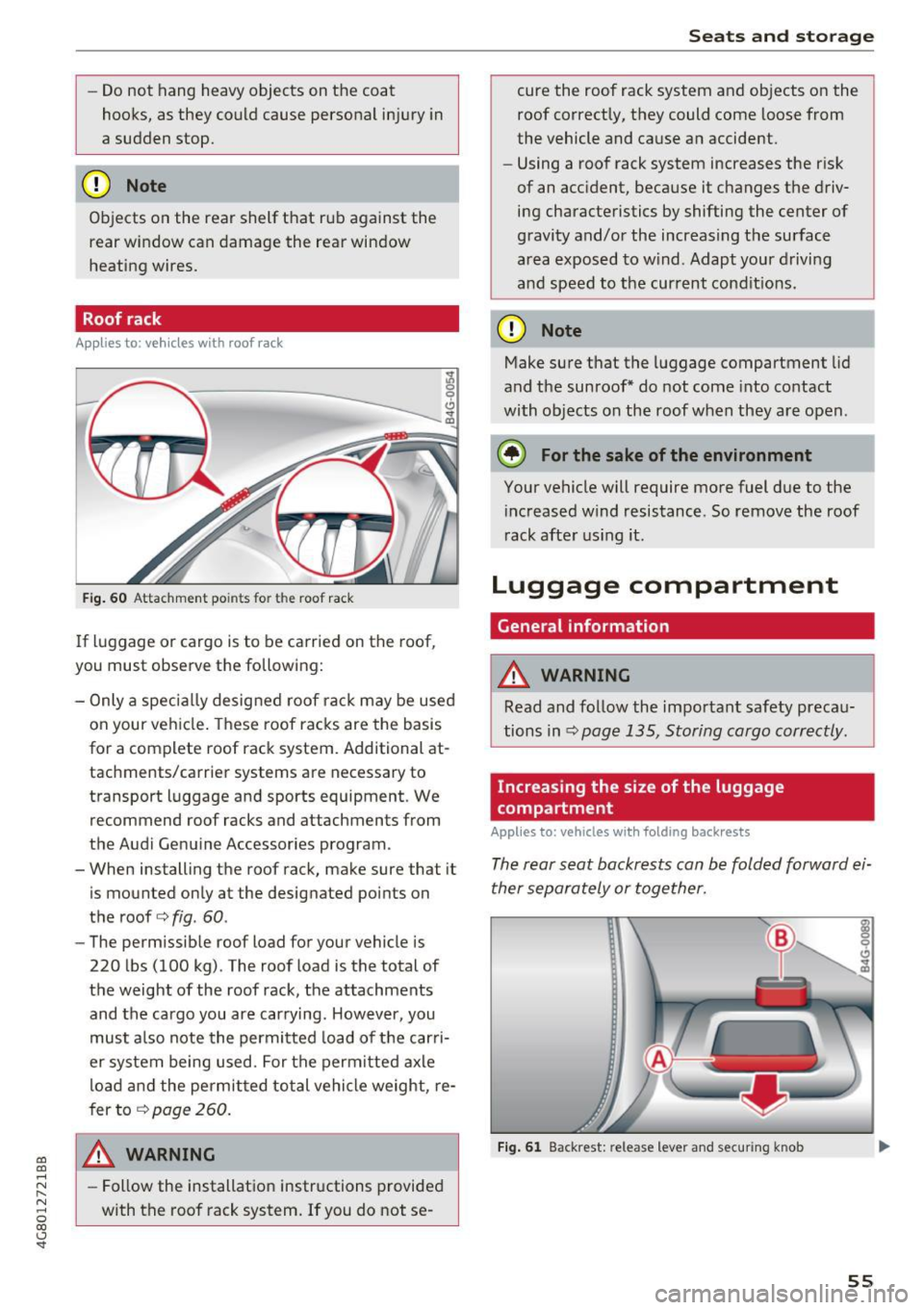
Fig. 60 Attac hm ent po int s for t he roof rack
If luggage or cargo is to be carried on the roof,
you must observe the following: :,;
0
0
Cl
"' a,
-
Only a special ly desig ned roof ra ck may be used
on your ve hicle . These roof rac ks are the basis
for a complete roof rack system. Additional at
tachm ents/carrier systems are necessary to
transport luggage and sports equipment . We
recommend roof racks and attachments from
the Audi Ge nuine Accessor ies program .
- When installing the roof rack, make sure that it
i s mounted only at the designated points on
the roof
c> fig . 60 .
- The permissib le roof load for your vehicle is
220 l bs (100 kg) . The roof load is the total of
the weight of the roof rack, the attachments and the cargo you are carrying . However, you
must a lso note the permit ted load of the car ri
er system being used. For the perm itted axle
l oad and the permit ted total vehicle weight , re
f er to
c> page 260.
A WARNING
- Follow the installation instructions provided
with the roof rack system. If you do not se-
Seats and storag e
cure the roof rack system and objects o n the
roof correct ly, t hey could come loose from
the vehicle and cause an accident.
- Using a roof rack system increases the r isk
of an accident , because it changes the driv
ing characte ristics by shifting the center of
gravity and/o r the increas ing t he surface
area exposed to w ind . Adapt your drivi ng
an d speed to the cur rent con ditions .
(D Note
Make sure t hat the luggage compartment lid
and t he sunroof* do not come into contact
with ob jects on the roof when they are open .
@ For the sake of the environment
Your vehicle will require more fuel due to the
increased w ind resis tance . So remove the roof
r ack afte r using it.
Luggage compartment
General information
A WARNING
-Read and follow the important safety preca u-
tions in ¢
pag e 135, Storing cargo correctly .
Increasing the size of the luggage
compartment
Applies to: vehicles with folding backrests
The re ar seat backrests can b e folded forward ei
ther separately or toge ther.
Fi g. 61 Backr est: re lease leve r and se cur ing knob
55
Page 61 of 284
co
co
.... N
" N .... 0
00
\.J '
Description
The climate control system warms, cools and re
moves humidity from the air in the vehicle interi
or. It is the most effective when the w indows and
sunroof* are closed. If there is a build-up of heat
inside the vehicle, ventilation can help to speed
up the cooling process.
I n all heating mode functions, except for defrost,
the blower on ly switches to a higher speed once
the engine coolant has reached a sufficient tem
perature .
Pollutant filter
The pollutant filter removes pollutants such as
dust and pollen from the air.
Key recognition
Appl ies to: ve hicles with de luxe a utoma tic clima te co ntro l
The blower setting and air distribution are stored
automatically and assigned to the remote control
key that you are using.
Appl ies to: ve hicles with 4 -zo ne del uxe automat ic cl imate
co ntrol
The climate control settings are automatically
stored and assigned to the remote control key
that is in use.
A WARNING
Poor visibility can lead to accidents.
- For safer driving, keep all windows free of
ice, snow and fog .
- Become familiar as quickly as possible with
the correct use and function of the climate
contro l system, especially with the defrost
ing and defogging function.
- When the temperature is below freezing,
only use the windshield washer system after
Warm and cold
the windshield has been warmed by the cli
mate control system. The washer fluid could
freeze on the windshield and impair visibili ty .
(D Note
-If you suspect that the climate control sys
tem is damaged, switch the system off to
prevent further damage and have it checked
by an authorized Audi dealer or authorized
Aud i Service Facility.
- Repairs to the Audi climate control system
require special technical knowledge and
special tools . See an authorized Aud i dealer
or authorized Audi Service Facility.
@ For the sake of the environment
-To save fuel, turn off cooling mode by press
ing the
IAJCI button . This will also reduce
em iss ions.
- In vehicles w ith a diesel engine, you can
switch the auto supplementary heater off in
the Infotai nment system.
(D Tips
- To prevent interference with the heat ing
and cooling output and to prevent the win
dows from fogging over, the air intake in
front of the windshie ld must be free of ice,
snow or leaves.
- Condensation from the cooling system can
dr ip and form a puddle of water under the
vehicle. This is normal and does not mean
there is a leak.
- The energy management system may tem
porarily switch off certain functions, such as
the seat heating* or rear window defogger .
These systems are avai lable aga in as soon
as the energy supply has been restored.
59
Page 68 of 284
Driving
system can be severely damaged by dr iving
th ro ugh water.
- Always switch the Star t/Stop sys tem * off
when driving through wate r
r:';> page 71.
{D) Tips
-Dete rm ine the depth befo re driv ing th ro ugh
wa ter.
- Do not s to p the veh icle, dr ive in reverse or
swi tc h t he eng ine off when dr iv ing t hrough
wa ter.
- K eep in mind t hat on coming veh icles m ay
crea te waves t hat raise the wate r level an d
make it too deep for your ve hicle to drive
th ro ugh safely.
- Avo id driving through s alt wa ter, because
th is can ca use corros io n.
Economical and environmentally-friendly
driving
The amount of fue l cons umption, the env iron
men tal impact and the wear to the engine,
b rakes and t ires dep ends mostly on your dr iv ing
style. W ith an anticipatory and economic driv ing
s tyle, f ue l consumption can be reduced by ap
p roximate ly 10-15% . The following tips will help
you conserve the environment and your money at
the same time .
Anticipatory dr iving
A veh icle uses the mos t fu el when a cce le ra ting.
W hen you dr ive wi th ant icipat ion, you do not
need to brake as often and so you ac celerate less .
When possib le, let your ve hicle coast wit h a
gear
engaged ,
for example, when you notice that the
next traffic light is red. This produces an engine
braking effect, which helps to protect the brakes
and tires and reduces the emissions a nd fuel con
sumpt io n to ze ro (f uel shut-off dur ing decelera
tion) .
Shift efficiently
An effective way to save fuel is to upshift earlier.
Staying in a gear too long uses fue l unnecessari
ly .
Press down on the acce le rator peda l slowly and
avoid "k ick -down" .
66
Avoid full acceleration
You should rarely travel at the maxim um vehicle
speed. Hig h speeds cause a disproportionate ly
high increase in fue l cons umption, emissions and
traffic noise. Slowe r driving saves fue l.
Reduce idling time
The Start-S top system * helps to re du ce the idling
time automat ic all y. In ve hicles withou t the Star t
Stop system *, i t is efficient to sw itch the engine
off when stopped at railroad crossings and long
red lights. Stopping the engine for 30-40 sec
onds a lready saves more fue l than the amo unt of
extra fue l needed to restart the engine.
It takes a very long time in id le to warm the en
gine up to operating temperature. Wear and
emissions are especially high in the warm- up
phase . Therefore, you shou ld begin driving im
med iate ly after starting the engi ne. Avoid high
RPMs wh ile doing this.
Have maintenance performed regul arly
By having maintenance pe rformed reg ula rly on
your vehicle, you can help to reduce fuel con
sumption before you even start to drive. The
mainte nance condition of your vehicle not on ly
affects traffic safety and long- term value but al
so im pacts
fuel consumption . A poorly main
ta ined engine can lead to fuel consump tio n t hat
i s 1 0% hig he r th an no rm al.
Avoid short trips
The eng ine and exhaust clean ing system must
r each their op tima l
operating temperature to ef
fect ively reduce consump tion a nd emissions.
A cold engine uses a d isproportionately high
amount of fuel. T he eng ine reaches operat ing
temperat ure and cons umption no rma lizes only
af ter approximate ly
2.5 miles (4 km).
Check the tire pressu re
To save fue l, make sure the t ires are always in
flated to t he correct press ure
r=':>page 221. The
fuel consumpt ion can increase by 5% if the pres
s ur e is only 0 .5 bar too low . Due to t he i ncreased
r oll ing resis tance, low tire p ressures w ill also
...
Page 69 of 284
co
co
.... N
" N .... 0
00
<.,;) 'SI"
lead to greater tire wear and will affect driving
behav ior.
Do not drive on
winter tires year-round , as this
will consume up to 10% more fuel.
Eliminate unnecessary weight
Since every kilogram of extra weight increases
fuel consumption, a quick inspection of the lug
gage compartment may be worth it to avoid un
necessary weight.
When not being used, a roof rack should be re moved to decrease the wind resistance of the ve
hicle. You will save approximately 12% of your
fuel when at speeds from 62-75 mph (100-120 km/h).
Save energy
The engine drives the generator, which generates
electricity; the fuel consumption also increases
with the demand for electricity. Therefore, switch
electrical equipment off when you no longer
need it. Examples of equipment that uses a lot of
energy are air blowers at a high setting, the rear
window defogger and seat heating*.
CD Note
Do not leave engine idling unattended after
starting. If warning lights should come on to
indicate improper operation, they would go
unheeded. Extended idling also produces
heat, which could result in overheating or
other damage to the vehicle or other proper
ty .
CD Note
-Have your vehicle maintained properly and
in accordance with the service recommenda
tions in your Warranty
& Maintenance book
let. Lack of proper maintenance as well as
improper use of the vehicle will impair the
function of the emission control system and
could lead to damage .
- Do not alter or remove any component of
the Emission Control System unless ap
proved by the manufacturer.
- Do not alter or remove any device, such as
heat shields, switches, ignition wires,
Driving
valves , which are designed to protect your
vehicle's Emission Control System and other
important vehicle components.
(D Tips
The consumption estimates as published by
ENVIRONMENTAL PROTECTION AGENCY
(EPA) and Transport Canada may not corre
spond to your actual consumption on the
road, which will vary depending upon vehicle
load and speed, road and weather conditions,
trip length, etc .
Steering
Manual steering wheel position adjustment
Applies to: vehicles with manual steering wheel adjustment
The steering wheel position is adjustable up and
down and forward and back.
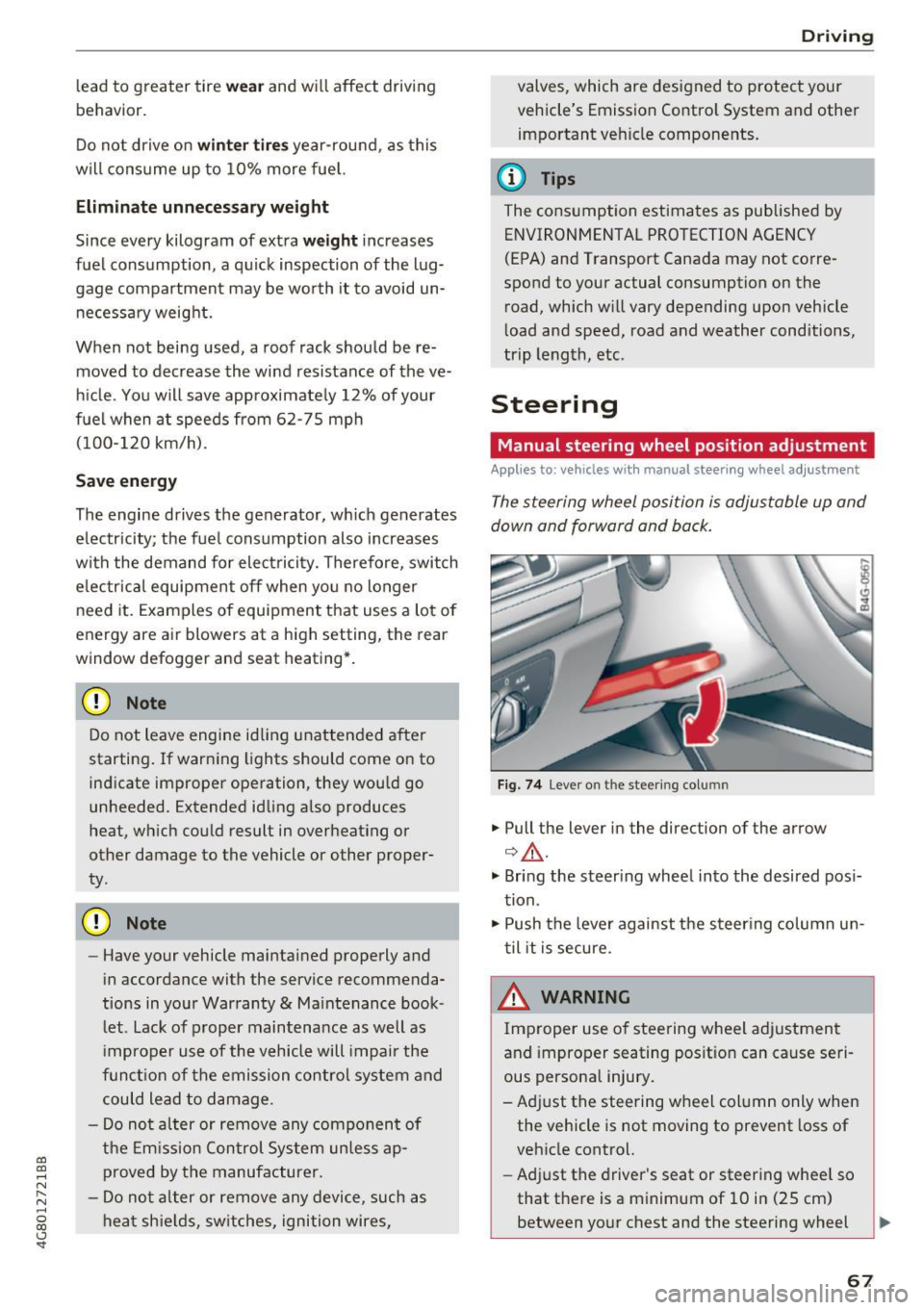
Fig. 74 L eve r o n t he stee ring col umn
"'Pull the lever in the direction of the arrow
Q &_ .
"' Bring the steering wheel into the desired posi
tion.
"' Push the lever against the steering column un
til it is secure.
_& WARNING
~ -
Improper use of steering wheel adjustment
and improper seating position can cause seri
ous personal injury.
-Adjust the steering wheel column only when the vehicle is not moving to prevent loss of
vehicle control.
- Adjust the driver's seat or steering wheel so
that there is a minimum of 10 in (25 cm) between your chest and the steering wheel
II>
67
Page 78 of 284
Driving
-Hill hold assist cannot hold the veh icle in
place on all h ills (for example, if the ground
is slippery or icy).
- To reduce the risk of an accident, always
make sure the vehicle is situated safely
wh ile stat ionary.
Automatic transmission
Introduction
The automat ic tra nsmission is cont rolled e lec
tronically . The transmission sh ifts up or down au
tomatically depending on which drive program is
selected.
Whe n a
mod erate dri ving style is used, the
transmission selects the most economical driving
mode. The transmiss ion upshifts at a lower RPM
and downshifts at a higher RPM to improve fuel
efficiency.
The transm ission switches to a spo rty mode after
a kick-down or when the driver uses a
spo rt y
driving style
characterized by quick accelerator
pedal movements, heavy acceleration, frequent
changes in speed and traveling at the maximum
speed.
If desired, the driver can also select the gears
manually ( tipt ronic mod e) 9 page 79.
A ppl ies to: ve hicles w ith 5 tro nic t ra n smi ssio n
The S tronic is a dual-clutch t ransmiss ion . Power
is transferred using two clutches that work inde
pendently from one another. They replace the
torque converter used in conventional automatic transmissions and allow the vehicle to accelerate
without a noticeable inter ruption in tract ion .
App lies to: ve hicles w ith a tipt ro nic tra ns mi ssio n
Power is transferred using a torque converter.
76
Selector lever positions
Fi g. 81 Inst rument cl uster: se lector leve r pos it ions
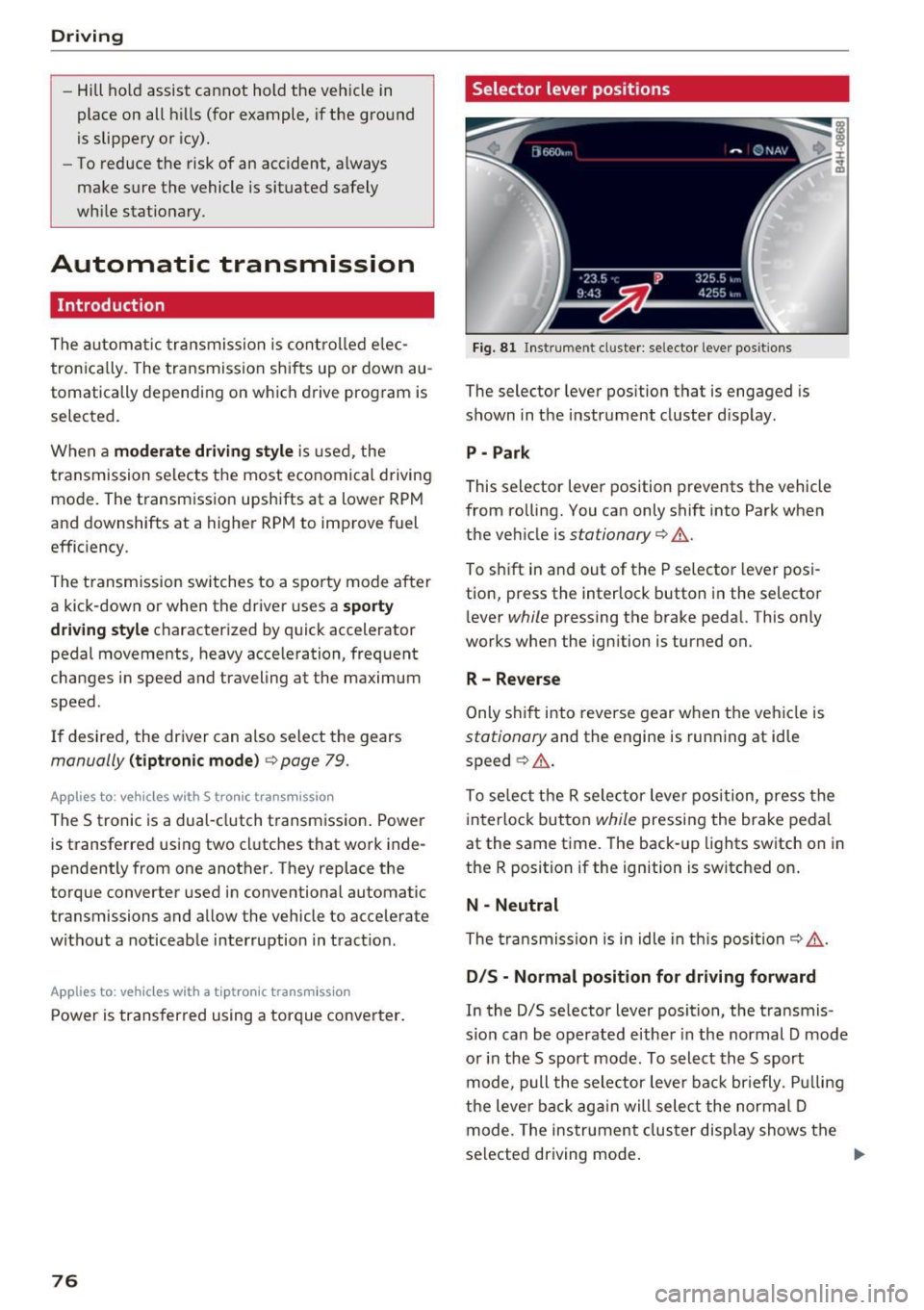
The selector lever position that is engaged is
shown in the instrument cluster d isplay .
P -Park
This selector lever position prevents the vehicle
from ro lling. You can only shift into Park when
the veh icle is
stationary 9 ,1. .
To sh ift in and out of the P selecto r lever posi
tion, press the interlock button in the selector
l ever
while pressing the brake pedal. This only
works when the ignition is turned on.
R- Reverse
Only s hif t into reverse gear w hen the veh icle is
stationary and the engine is running at idle
speed ~
,1..
To se lect the R sele ctor leve r position, press the
interlock button
while pressing the brake pedal
at the same time. The back -up lights switch on in
the R position if the ignition is switched on .
N -Neutral
The tra nsmission is in idle in th is posi tion ~ ,1. .
DIS -Normal position for driving forward
In the D/S se lector lever position, the transmis
s io n can be operated e ither in the normal D mode
o r in the S sport mode . To select th e S sport
mode, pull the selector leve r back br iefly . P ull ing
the leve r back ag ai n will sele ct the normal D
mode. The ins trument cluster display shows the
selected driving mode .
Page 193 of 284

co
co
.... N
" N .... 0
00
\.J '
Gasoline
Fuel supply
Applies to: vehicles with gaso line engine
Using the right fuel helps keep the environment
clean and prevents engine damage .
Fuel reco mm endati on
The fuel recommended for your vehicle is unlead
ed pr em ium
grade gasoline. Audi recommends
using TOP TIER Detergent Gasoline with a mini
mum octane rating of 91 AKI (95 RON). For more
information on TOP TIER Detergent Gasoline,
p lease go to the official website
(www.toptiergas .com) .
The recommended gasoline octane rating for
your engine can also be found on a label located
on the inside of the fuel filler flap . Th is rating
may be spec ified as AKI or RON.
Your vehicle may also be operated using unlead
ed regular gasoline with a min imum octane rat
ing of 87 AKl/91 RON. However, using 87 AKl/91
RON octane fuel will slightly reduce engine pe r
formance.
U se unlea ded gas oline only. Unleaded gasoline
is available throughout the USA, Canada, and in
most European count ries . We recommend that
you do not ta ke your vehicle to areas or countries
where un leaded gasol ine may not be availab le.
For more information on refueling your vehicle,
see
~ page 193.
Octane r ating
Octane rating indicates a gasoline's ability to re
sist engine damaging "knock" caused by prema
ture ignit ion and detonation . Therefore , buy ing
the correct grade of gasoline is very important to
h e lp prevent poss ible engine damage and a loss
of eng ine performance.
Gasoline most commonly used in the Un ited
States and Canada has the following octane rat
ings that can usually be found on the filler pump:
- Premium Grade: 91 -96 AKI
Ch eck ing and Filling
- Regu lar Grade: 87 -90 AK I
E xplanation of the abb reviations:
AK I=
Anti Knock Index = (R +M)/2 = (RON +MON)/
2
RON = Research Octane Number
MON = Motor Octane Number.
(D Note
- Do not use any fue l w ith octane ratings low
er than 8 7 AKI or 91 RON otherwise expen
sive engine damage w ill occur .
- Do
not use leaded gasoline. The use of lead
ed gasoline will severe ly damage your vehi
cle's catalytic converter and its ability to
control exhaust emissions .
Blended gasoline
Applies to: vehicles with gasoline engine
Use of gas olin e con tainin g alcoh ol or MTBE
( meth yl t ert ia ry but yl ether )
You may use unleaded gasoline blended with al
cohol or MTB E (commonly referred to as oxygen
ates) if the blended m ixture meets the follow ing
criteria:
Blend of gasolin e methanol (wood alcohol or
methyl alcoho l)
-Anti -knock index must be 87 AKI or h igher.
- Blend must contain no more than 3% metha-
nol.
- Blend must contain more than 2% co-solvents.
Blend of g asoline and ethanol (grain alc oh ol or
e th yl alcoh ol)
- Anti-knock index must be 87 AKI or h igher .
- Blend must not conta in more than 15% etha-
nol.
Bl end of g asoline and MTBE
-Anti-knock index must be 87 AK I or h igher.
- Blend must contain not mo re than 15% MTBE.
Se asonall y adjust ed ga soline
Many gasoline grades are blended to perform es
pecially well for winter or summer dr iving . Dur-
ing seasonal change-over, we suggest that you ..,.
191
Page 194 of 284

Check ing and F illing
fi ll up at busy gas stations where the seasona l
adjustm ent is more likely to be mad e in time .
0 Note
-Me thanol f uels which do no t meet these re
quirements may cause corrosion and dam
age to plastic and rubber components in the
fuel system .
- Do not use fuels that fail to meet the spec i
fied criteria in this chapter .
- If you are unable to determine whether or not a particular fuel blend meets the spec i
fications, ask your service station or its fuel supplier.
- Do not use fuel for which the contents can
not be identified.
- Fuel system damage and performance prob
lems resulting from the use of fue ls differ
ent from those specified are not the respon
s ibility of Audi and are not covered under
the New Veh icle or the Emiss ion Control
System Warranties.
- If you experience a loss of fuel economy or
driveability and performance problems due
to the use of one of these fuel b lends, we
r ecommend that you switch to unblended
fuel.
Gasoline additives
A ma jo r concern among many auto manufactur
ers is carbon deposit build- up ca used by the type
of gasoline you use.
A lthough gasoline grades d iffer from one manu
facturer to another, they have cer tain things in
common . All gaso line grades contain substances
that can cause deposits to collect on vita l engine
parts, such as fue l injectors and intake valves. Al
though most gasoline brands include additives to
keep engine and fuel systems clean, they are not
equally effective .
Audi recommends using TOP TIE R Detergent Gas
oline. For more information on TOP TIER Deter
gent Gasoline, please go to the official website (www.toptiergas .com) .
192
After an extended period o f using inadequate
fuels, carbon deposit bui ld-ups can rob your en
gine of peak performance.
([) Note
Damage or ma lf u nction due to poor fue l qual
ity is not covered by the Audi New Vehicle
Limited Warranty .
Diesel fuel
Applies to: vehicles wi th diese l en gin e
Always use ULSD (Ultra Low Sulfur Diese l) No. 2 .
The ULSD No. 2 meets the ASTM D97S.
D iesel fuel w ith concentrations of b iod iesel high
er than 5 % such as B l 1, B20 or BlOO are st rict ly
prohibited .
Se rvice station fuel pumps are labe led wi th the
correc t fu el i nfo rmation for easy recogn ition by
the user . If the diesel fue l pump is not labe led
ask the station operator what fue l is being dis
pensed before filling up your vehicle .
U LSD No . 2 may no t be ava ilable outside the USA
and Canada . Be s ure to check befo re t raveling to
other countries .
U LSD No . 2 can become th ic k e r i n very co ld tem
peratures, and this can impa ir the e ng ine's s tart
i ng and running . Depend ing on the season, gas
stations provide ULSD No . 2 that flows better in
cold temperatures so that you can continue oper
at ing your vehicle as usual.
(D Note
- Your vehicle's diese l engine was designed
so ley for use with ULSD No . 2 . Therefore,
never use gasoline, heating oil, other fuels
or flow improvers. These contain substances
that will severely damage the fuel system and the engine. Such damage will not be
covered by your New Vehicle Limited War
ranty.
- If you put any amo unt of incorrect fuel in
the fuel tank, do not start the engine under
any c ircumstances. Immed iate ly contact the
nearest author ized A udi dealer or author-
ized Aud i Serv ice Facility fo r ass istance .
IJ,-
Page 195 of 284

co
co
.... N
" N .... 0
00
<..:l 'SI"
These fuels contain substances that can se
vere ly damage the fuel system and the en
gine if the engine is started .
Refueling
Fuel filler neck
The fuel filler neck is located on the right rear
side panel behind the fuel filler flap.
If the power locking system should fail , you can
still open the flap manually - for detailed instruc
tions see
~ page 195 .
You can find the fuel tank capacity of your vehicle in
~ page 262 .
The label on the inside of the fuel filler flap tells
you the correct fuel for your vehicle. For mo re in
formation about fuel specifications , see
~ page 191 .
You r vehicle fuel tank has an onboa rd refuelling
vapor recovery sys tem . This fea tu re helps to pre
vent fuel vapors from escaping from the tank and polluting the environment while you refuel your
vehicle. In order to fill the tank properly while
protecting the environment, please follow this
refueling procedure carefully.
_& WARNING
Under norma l operating conditions, never car
ry additiona l fuel containers in your car. Gas
canisters and other containers used to trans
port fuel can be dangerous. Such containers,
full or empty, may leak and could cause a fire
in a collision . If you must transport fuel to
use for your lawn mower, snow blower, etc.,
be very careful and always observe local and
state laws regarding the use, transportation
and storage of such fuel containers. Make cer
tain the container meets industry standards
(ANSI/ASTM F852 -86).
(D Note
Never drive your vehicle until the fuel tank is
completely empty. The irregular supply of
fue l can cause misfiring. Gasoline could enter
the exhaust system and damage the catalyt ic
converter.
Checking and Filling
Fueling procedure
Fig. 176 Righ t re ar sid e of the v ehicl e: openin g th e fu el
fille r door
Fig. 177 Fue l filler doo r with at tached fuel cap
T he fue l filler door is unlocked or locked by the
central locking system.
Opening the fuel cap
"' Press on the left side of the fue l filler door to
open ~
fig. 176 .
"'U nscrew the tank cap counterclockwise.
"' Place the cap from above on the open fuel filler
door ~
fig. 177.
Closing the fuel cap
"' Sc rew the tank cap on to the right on the filler
neck until it cannot turn any farther.
"' Then press on the left s ide of the tank door un-
til it latches.
Once the pump nozzle switches off, the fuel tank
is "full ". Do not fill the tank mo re . Otherwise the
expans ion space in the tank w ill be filled .
The correct fuel type for your vehicle can be
found on a label located on the inside of the fuel
filler door. Fo r additional informa tion on fuel,
see
~ page 191.
193
Page 196 of 284

Checking and Filling
The fuel tank capacity of your vehicle is listed in
the
Technical Data section ~ page 262.
To avoid fuel spilling or evaporating from the fuel
tank always close fuel cap properly and com
pletely. An improperly closed fuel filler cap may
also cause the MIL lamp~
page 25 to come on.
A WARNING
Not paying attention when fueling or han
dling fuel incorrectly can lead to fires, explo
sions or serious injuries .
- Fuel ignites easily and can cause serious burns and other injuries .
- If you do not switch the engine off when fu
eling and/or do not insert the fuel no zzle
completely into the tank opening, fuel can
leak out or run over . Leaked fuel can ignite
and start a fire .
- Do not use the telephone while fueling. The
electromagnetic rays can cause sparks,
which can ignite fuel vapors and start a fire .
- Do not sit in your vehicle while fueling . If
you must make an exception and enter your
vehicle again while fueling, close the door
and touch metal to discharge static electricity before touching the fuel nozzle . Static
electricity can create sparks, which can ig
nite vapors when fueling.
- Do not smoke or have an open flame in the
area when fueling your vehicle or filling a
fuel container because this increases the risk of an explosion.
- For your safety, carrying fuel containers in
your vehicle is not recommended. Whether
full or empty, the container can leak and
cause a fire in the event of an accident.
- If you must make an exception and trans
port a fuel container, note the following:
- Never fill the fuel container with fuel
while it is in or on the vehicle. Static elec
tricity is discharged when filling which can
cause the fuel vapors to ignite and in
creases the risk of an explosion.
- Always place a fuel container on the
ground before filling.
- Always hold the fuel nozzle completely in
the fuel container when filling.
194
-If the fuel container is made of metal, the
fuel nozzle must always be in contact with
the container when filling it with fuel. This
prevents static electricity from discharg
ing .
-Never spill fuel in the vehicle or the lug
gage compartment . Evaporated fuel is ex
plosive and increases the risk of serious in
jury or death .
- Follow legal requirements when using, storing and transporting fuel containers .
- Make sure the fuel container conforms to industry standards (ANSI/ASTM F852-86).
(D Note
-Remove spilled fuel from vehicle paint im
mediately, because it can damage paint.
- Never drive until the fuel tank is completely
empty. The irregular supply of fuel that re
sults from that can cause engine misfires.
Uncombusted fuel will enter the exhaust
system and increase the risk of damage to
the catalytic converter .
(D Note
Applies to: vehicles with diesel eng ines
If the fuel tank runs completely empty, the
ignition must remain switched on for at least
30 seconds after refueling before starting the
engine. It may take longer than usual for the
engine to start, even up to a minute. This is
because the air must first bleed out of the
fuel system when starting the engine.
@ For the sake of the environment
Do not overfill the fuel tank, otherwise fuel
can leak out when the vehicle is warming up.
(y Tips
The fuel filler door on your vehicle does not lock if you lock the vehicle from the inside.
(D Tips
Applies to: veh icles with diesel e ngin es
Diesel vehicles are equipped with a misfueling
guard
l) . It allows the vehicle to be fueled on-
ly with a diesel fuel pump nozzle . .,.