door lock AUDI Q3 2015 Owner's Manual
[x] Cancel search | Manufacturer: AUDI, Model Year: 2015, Model line: Q3, Model: AUDI Q3 2015Pages: 258, PDF Size: 64.9 MB
Page 85 of 258
M N
M N
0 ::i co ,...., \!) 1.1'1 ,...., 1.1'1 ,....,
selector lever position such as D/S and re
lease the button.
~ Wait briefly until the transmission has shift
ed (you will feel a slight movement).
~ Remove your foot from the brake pedal and
accelerate.
St opp ing tem porar ily
~ Keep the vehicle stationary using the brak
ing peda l, for examp le at traffic lights.
~ Do not press the accelerator pedal when do
ing this.
~ To prevent the veh icle from roll ing when you
start driving, set the parking brake when
stopp ing on steep inclines
c::, ,& .
~ The parking brake will re lease automatically
and the vehicle will s tart moving once you
press the accelerator peda l.
Stopping/p ar king
If the selecto r lever is not in the P position
when you ope n the dr iver's door, the vehicle
could ro ll. The message
Shift to P and turn
off i gniti on, o therwi se vehicle ca n roll aw ay
appears.
~ Press and ho ld the brake pedal unt il the ve-
hicle has come to a complete stop.
~ Apply the parking brake c::, page 71, Parking.
~ Se lect the P selector leve r position c::, ,& .
Stopping on an incline
~ Always press the brake peda l to hold the ve
hicle i n place and prevent it from " rolling
back "
c::> &_. Do not try to prevent the vehi
cl e from "roll ing back" when a gea r is en
gaged by increasing the engine speed
c::> (D .
Starting on an incline
~ Activate the parking b rake .
~ With the d riving gea r se lected, press the ac
c e lerator pedal ca refully. The parking brake
will release automat ica lly if yo ur seat belt is
f astened.
Unde r ce rtain circumstances, such as dr iv ing
in the moun tains, it may be useful to swi tch
tempo rari ly to the manua l shift prog ram in o r-
Automa tic tran sm iss ion 83
der to ad just the gears to the driving condi
tions by hand
c::, page 84.
On s lopes, activate the parki ng b rake first and
then move the selec to r l ever to the P posi tion.
T his prevents too much stress from being
placed on the locking mechanism .
A WARNING
-The vehicle can also roll when the engine
is stopped.
- Unintended vehicle movement can cause
serio us injury.
- Never leave your vehicle with the engine
ru nning while in gear. If you must leave
your veh icle when the engine is running,
activate the parking brake and move the
selector lever to P.
- Power is still transm itted to the wheels
when the engine is runn ing at idle. To
prevent the vehicle from "creeping", you
must keep your foot on the brake when
the eng ine is ru nning and the se lector
leve r is in D/S o r R or "t ipt ron ic" mode is
selec ted .
-Do not press the accelerator pedal when
changing the se lector lever posi tion
while the veh icle is stationary and the
engine is running .
- Never sh ift into R or P wh ile driving.
- Before driving down a steep slope, re-
duce your speed and shift into a lowe r
gear wi th "tiptronic".
- Do not ride the bra kes o r press the bra ke
pe dal too often or too long when d riving
down a hi ll. Constant braking causes the
brakes to overheat and substantially re
duces braking performance, increases
brak ing distance or causes complete fa il
ure of the brake system .
- To prevent the vehicle from ro lling back
when stopp ing o n inclines, always ho ld it
in place with the brake pedal or parking
brake .
- Never hold the vehicle on an incline with
a slipping clutch. The clutch opens auto matically when it becomes too hot from
Page 102 of 258
100 Driving Safel y
Stowing luggage
Loading the luggage compartment
All luggage and other objects must be prop
erly stowed and secured in the luggage com
partment.
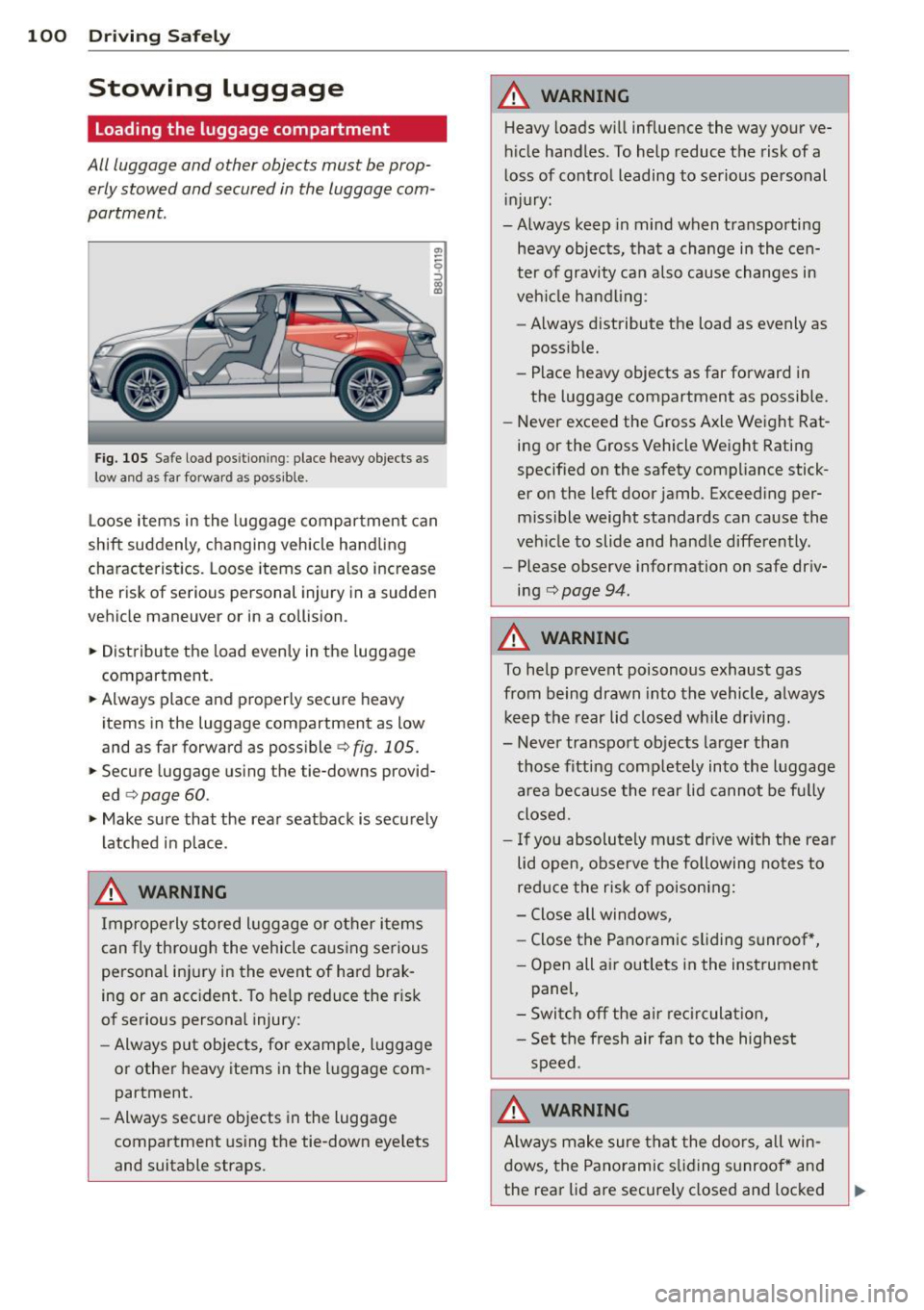
Fig. 105 S afe load pos itio nin g: place heavy objects as
low a nd as far forward as possible .
Loose items in the luggage compartment can
shift suddenly, changing vehicle hand ling
characteristics. Loose items can also increase
the risk of serious personal injury in a sudden
vehicle maneuver or in a collision .
.. Distribute the load evenly in the luggage
compartment .
.. Always place and properly secure heavy
items in the luggage compartment as low
and as far forward as possible
c> fig. 105.
.. Secure luggage using the tie-downs provid
ed
c> page 60.
.. Make sure that the rear seatback is securely
latched in place .
A WARNING
Improperly stored luggage or other items
can fly through the vehicle ca using serious
personal injury in the event of hard brak
ing or an accident. To help reduce the r isk
of serious personal injury:
- Always put objects, for examp le, luggage
or other heavy items in the luggage com
partment.
- Always secure objects in the luggage
compartment using the tie-down eye lets
and suitable straps.
A WARNING
-Heavy loads will influence the way your ve-
hicle handles. To help reduce the risk of a
loss of control leading to serious personal
injury:
-Always keep in mind when transporting
heavy objects, that a change in the cen
ter of gravity can also cause changes in
veh icle handling :
- Always distribute the load as evenly as
possible.
- Place heavy objects as far forward in
the luggage compartment as possible.
- Never exceed the Gross Axle Weight Rat
ing or the Gross Vehicle Weight Rating
specified on the safety compliance stick
er on the left door jamb. Exceeding per
missible weight standards can cause the
veh icle to slide and handle differently.
- Please observe information on safe driv
ing
c> page 94.
A WARNING
-
To help prevent poisonous exhaust gas
from being drawn into the vehicle, a lways
keep the rear lid closed while driving.
- Never transport objects larger than
those fitting comp letely into the luggage
area because the rear lid cannot be fully
closed .
- If you absolutely m ust dr ive with the rear
lid open, observe the following notes to
reduce the risk of poisoning:
- Close all windows,
- Close the Panoramic sliding sunroof *,
- Open all air outlets in the instrument
pane l,
- Switch off the air recirculat ion,
- Set the fresh air fan to the highest
speed.
A WARNING
A lways make sure that the doors, all win
dows, the Panoramic sliding sunroof * and
the rear lid are securely closed and locked
-
Page 126 of 258
124 Airbag sys te m
- a rearward-facing ch ild restraint has been
insta lled on the front passenger seat, or
- a forward-facing child restraint has been in
sta lled on the front passenger seat, or
- the weight registered on the front passen
ger seat is equa l to or less than the com
bined weight of a typical 1 year-old restrain
ed in one of the rear-facing or forward-fac
ing infant restraints listed in Federal Motor
Vehicle Safety Standard 208 with which the
Advanced Airbag System in your vehicle was
certified.
If the front passenger seat is not occupied,
the front airbag will not deploy, and the
P A S
S ENG ER AIR BA G OFF
light will stay on . Nev
er install a rearward-fac ing ch ild restra int on
the front passenger seat, the safest place for
a child in any kind of child rest raint is at one
of the seat ing positions on the rear seat
¢ page 114, Child restraints on the front seat
- some important things to know
and
¢ page 133, Child Safety.
If the PA SSENGER AIR BAG OFF light c om es
on
when one of the conditions listed above is
met, be sure to check the light regular ly to
make certain that the
PA SSENGER AIR BAG
OF F
light stays on cont inuo usly whenever the
ignit ion is on. If the
PA SSENGER AIR BA G
OFF
light does not appear and not stay on all
the t ime, stop as soon as it is safe to do so
and
- react ivate the system by turning the ignition
off and then turning it on again;
- remove and reinsta ll the chi ld restraint.
Make sure that the child restraint is properly
installed and that the safety be lt for the
front passenger seat has been correctly ro uted around the child restraint as descr i
bed in the chi ld restraint manufactu rer's in
stru ctions;
- make sure that the convertible locking re
t ra ctor on the safety belt fo r the front pas
senger seat has been act ivated and that the
sa fety belt has been pulled tight . The belt
must not be loose or have loops of slack so
that the senso r below the safety be lt latch
on the seat can do its job ¢
page 143.
- make sure that things that may increase the
weight of the child and ch ild safety seat are
not being transported on the front passen
ger seat;
- make sure that the safety belt tension sen
sor is not blocked. Shake the safety belt
latch on the front passenger seatback and
forth;
- If a strap or tether is be ing used to tie the
child safety seat to the front passenger
seat, make sure that it is not so tight that it
causes the weight-sens ing mat to measure
more weight than is actually on the seat.
If the PA SSENGER AIR BAG OFF light still
does not come on
and does not stay on con
t inuously (when the ignition is switched on),
- take the child restraint off the front passen- ger seat and install it properly at one of the rear seat positions . Have the airbag system
inspected by your autho rized Aud i deale r
immed iate ly.
- move the child to a rear seat position and make sure that the child is properly restra in
ed in a c hild restra int that is approp riate for
its s ize and age.
The
PASS ENG ER AIR BAG OFF light should
NOT come on when the ignit ion is on and an
adult is s itting in a proper seating position on
t h e front pas senge r sea t. If the
PASSENGER
AIR BAG OFF
light comes on and stays on or
flashes for about 5 seconds wh ile driving, un
der these ci rcumstances, make sure that:
- the adult on the front passenger sea t is
prope rly seated on the cente r of the sea t
cushion with his or her back up aga inst the
backrest and the backrest is not reclined
¢ page 95, Proper occupant seating posi
tions,
- the adult is not taking weight off the seat by
holding on to the passenger assist handle
above the front passenger door or support
ing their weight on the armrest,
- the safety belt is being proper ly worn and
that there is not a lot of s lack in the safety
be lt webb ing, .,..
Page 141 of 258
M N M N
0 :::i co
rl I.O
"' rl
"' rl
Child safety seats
Infant seats
Babies and infants up to about one year old
and 20 lbs. or 9 kg need special rearward -fac
ing child restraints that support the back,
neck and head in a crash.
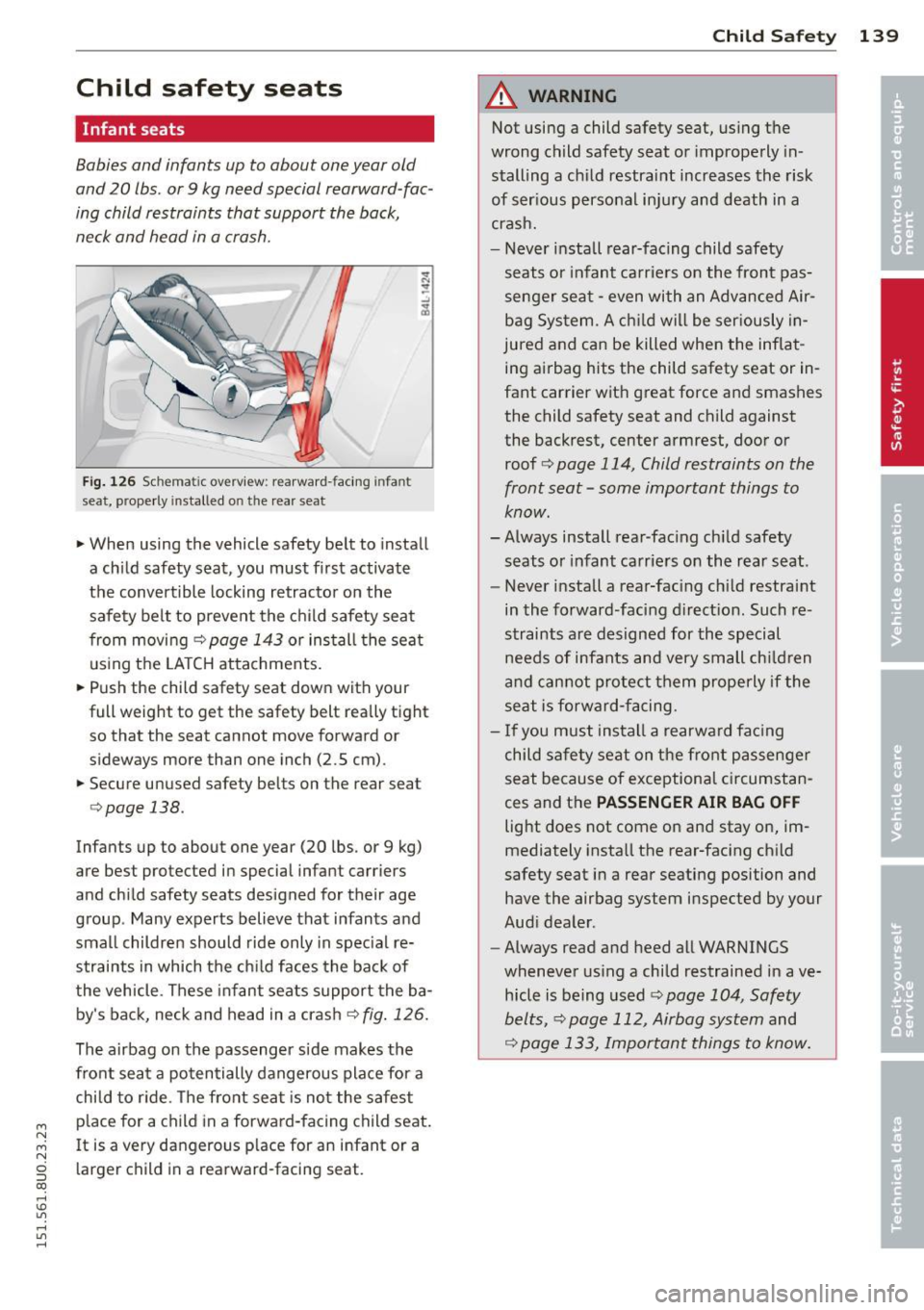
Fig . 126 Sche mati c overv iew: rearward-fac ing infa nt
seat, p roperly installed o n th e rear seat
.,. When using the vehicle safety belt to install
a ch ild safety seat , you must first activate
the convertible locking retracto r on the
safety be lt to prevent the child safety seat
from moving
r=;, page 143 or install the seat
using the LA T CH attachments.
.,. Push the child safety seat down with your
full weight to get the safety belt rea lly tight
so that the seat cannot move forward or
sideways more than one inch (2.5 cm) .
.,. Secure unused safety belts on the rear seat
¢ page 138.
Infants up to about one year (20 lbs . or 9 kg)
are best protected in special infan t carriers
and child safety seats designed for their age
group . Many experts believe that infants and
small children should ride only in spec ial re
straints in which the ch ild faces the back of
the vehicle. These infant seats support the ba
by's back, neck and head in a crash
¢ fig . 126.
The airbag on the passenger side makes the
front seat a po tentially dangerous place for a
child to r ide . The front seat is not the safest
p lace for a child in a forward -facing child seat.
It is a very dangerous p lace for an infant or a
l arger ch ild in a rearward-facing seat.
Child S afety 139
A WARNING
Not using a child safety seat, using t he
wrong child safety seat or improperly in
stall ing a ch ild restraint increases the risk
of ser ious personal injury and death in a
crash.
- Never install rear-facing child safety
seats or infant ca rr ie rs on the front pas
senger seat -even with an Advanced Air
bag Sys tem. A c hild will be ser iously in
jured and ca n be killed when the inflat
ing airbag hits the child safety seat or in
fant carrier with great force and smashes the child safety seat and child against
the backrest, center armrest, door or
roof
r=;, page 114, Child restraints on the
front seat- some important things to
know .
-Always install rear-fac ing ch ild safety
seats or infant carriers on the rear seat .
- Never install a rear-fac ing ch ild restraint
in the forward-fac ing d irect ion. Such re
straints are designed for the special needs of infants and very small ch ild ren
and can not prote ct them properly if the
seat is forward- facing.
- If you mus t insta ll a rearward fa cing
child sa fety seat on the fro nt passenger
seat because of exceptiona l circumstan
ces and t he
PASSENGER AIR BAG OFF
light does not come on and stay on, im
mediately insta ll the rear -fac ing ch ild
safety seat in a rear seating position and have the airbag system inspected by your
Aud i dea ler .
- Always read and heed all WARNINGS
wheneve r us ing a child restrained in ave
hicle is being used
r=;, page 104 , Safety
belts, ,=;,page 112, Airbag system
and
r=;, page 133, Important things to know.
Page 142 of 258
140 Child Safety
Convertible child safety seats
Properly used convertible child safety seats
can help protect toddlers and children over
age one who weigh between
20 and 40 lbs. (9
and 18 kg) in a crash.
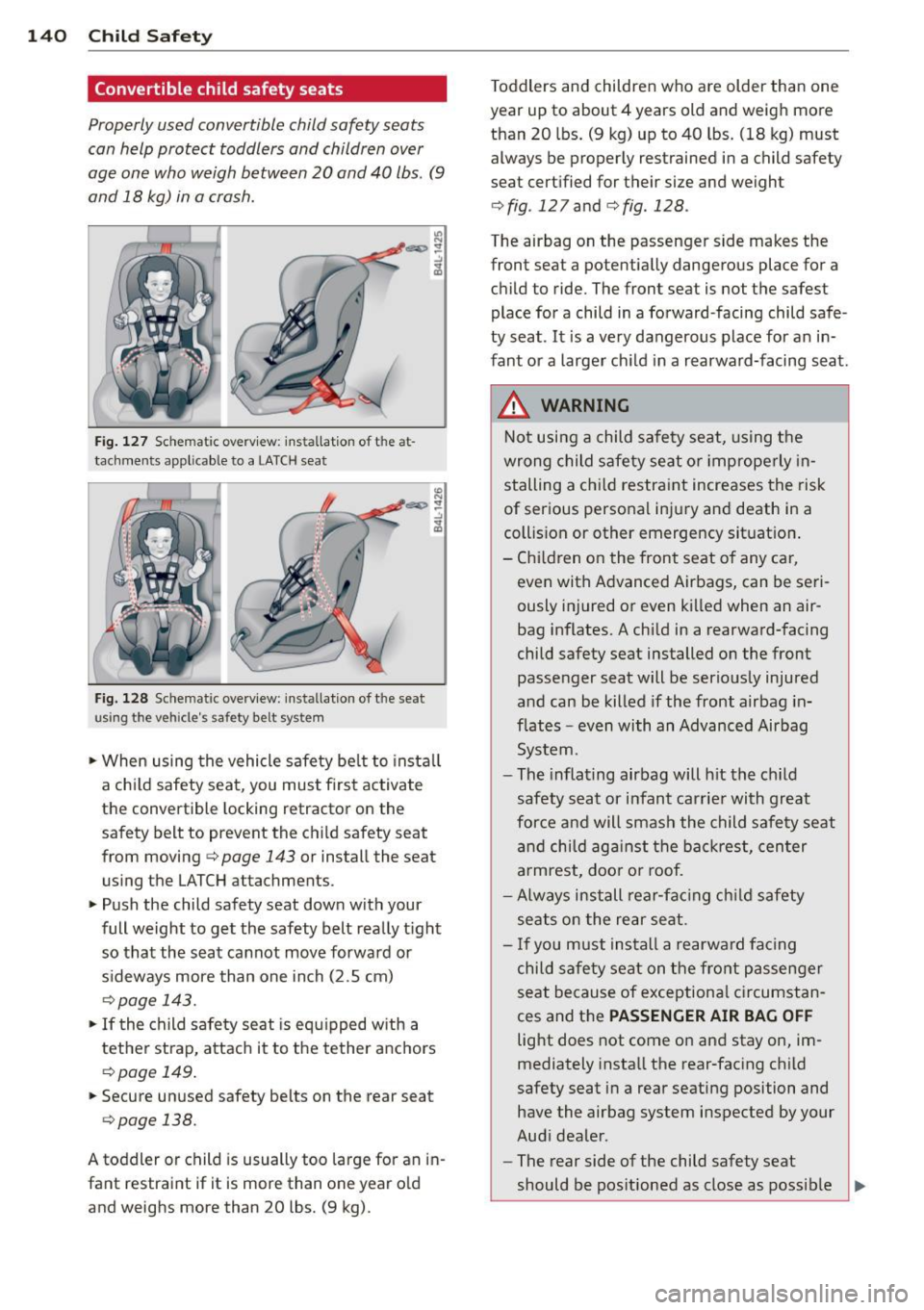
Fig. 127 Schematic overv iew : ins tallat ion of t he at
ta chments applicable to a LATCH seat
Fig. 128 Schematic overview: insta llation of th e seat
us ing t he veh icle's safety belt system
.. When using the vehicle safety be lt to install
a child safety seat, you must first activate
the convertible locking retractor on the
safety belt to prevent the child safety seat
from moving
c:> page 143 or install the seat
using the LATCH attachments .
.. Push the child safety seat down with your
full weight to get the safety belt really tight
so that the seat cannot move forward or sideways more than one inch (2.5 cm)
c:>page 143.
.. If the child safety seat is equ ipped with a
tether strap, attach it to the tether anchors
c:> page 149.
.. Secure unused safety belts on the rear seat
c:> page 138.
A toddler or child is usually too large for an in
fant restraint if it is more than one year old
and weighs more than 20 lbs. (9 kg) . Toddlers and
children who are older than one
year up to about 4 years old and weigh more
than 20 lbs. (9 kg) up to 40 lbs. (18 kg) must
always be properly restrained in a child safety
seat certified for their size and weight
c:> fig . 12 7 and c:> fig . 128 .
The airbag on the passenger side makes the
front seat a potentially dangerous place for a
child to ride. The front seat is not the safest
place for a child in a forward -facing child safe
ty seat . It is a very dangerous place for an in
fant or a larger child in a rearward-facing seat.
_&. WARNING
Not using a child safety seat, using the
wrong child safety seat or improp erly in
stalling a child restraint increases the risk
of serious personal injury and death in a
collision or other emergency situation .
- Children on the front seat of any car,
-
even with Advanced Airbags, can be seri
ously injured or even killed when an air bag inflates . A child in a rearward-facing
child safety seat installed on the front passenger seat will be seriously injured
and can be killed if the front airbag in
f la tes -even with an Advanced Airbag
System .
- The inflating airbag will hit the child
safety seat or infant carrier with great
force and will smash the child safety seat
and child against the backrest, center
armrest, door or roof.
- Always install rear-facing child safety
seats on the rear seat .
- If you must install a rearward facing
child safety seat on the front passenger
seat because of exceptiona l circumstan
ces and the
PASSENGER AIR BAG OFF
light does not come on and stay on, im
mediately install the rear-facing child
safety seat in a rear seating position and
have the airbag system inspected by your
Audi dealer.
- The rear side of the child safety seat
should be positioned as close as possible ..,.
Page 179 of 258

M N M N
0 :::i co
rl I.O
"' rl
"' rl
cause a fire in a co llision. If you must
transport fue l to use for yo ur lawn mowe r,
snow blower, etc., be very careful and al
ways observe local and state laws regard
ing the use, transportat ion and storage of
such fuel containers . Make certain the con
t ainer meets industry standards (ANSI/
AS TM F 852 -86).
(D Note
Never drive yo ur vehicle unt il the fuel tank
is completely empty . The irregular supp ly
of fuel can cause misfi ring. Gasoline could
enter the exhaust system and damage the
catalyt ic converte r.
Refueling
Fig. 140 Rig ht rea r veh icle s ide: Opening t he fuel f iller
fl ap
Fi g. 14 1 Fu el filler fla p with attach ed fu el c ap
When activating the central locking, the fuel
f ill er flap is automatically unlocked or locked .
Refue l the vehicle with the ignition turned
off.
Tak ing th e fuel cap off
• Press the left side of the fue l filler flap to
open it ¢
fig . 140 -arrow- .
• Unscrew fuel cap counter-clockwise and
hang it on the fuel f iller flap ¢
fig. 141.
Fuel suppl y and filling your fuel t ank 17 7
Refueling procedure
• Insert the fuel nozzle from the gasoline
pump into the fuel fi ller neck as far as it wi ll
go .
• Select a medium refueling rate so that the
no zz le switches off automatically when the
tank i s full .
Putting th e fuel cap bac k on
• After filling your tank, twist the fuel cap
clockw ise as far as it will go .
• Close the fue l filler flap.
T o avoid fuel spill ing or evaporating from the
fuel tank always close fuel cap properly and
completely . An improper ly closed fuel filler
cap may also cause the MIL lamp ¢
page 26
to come on.
A WARNING
Improper refue ling or handling of fuel can
cause fire, explosion and severe burns.
- Fuel is highly flammable and can cause
severe burns and other injur ies .
- Failure to shut the engine off while refu
eling and/or to insert the pump nozzle
fully into the fuel filler neck could cause
fue l to spray out of filler neck or to over
flow. Fue l spray and overflowing fuel can
cause a fire .
- Never use a ce llu lar telephone while re
fue ling. The electromagnet ic rad iation
can cause sparks that can ignite f uel va
pors and cause a fire.
- Never get back into yo ur vehicle while re
fuel ing.
If in excep tional circumstances
you must get back in your vehicle while refueling, make certain that you close
the door and touch metal to discharge static electricity before touching the fill
er nozzle again . Static electr icity can
cause sparks that can ignite fuel vapors
released during refueling.
- Never smoke or have an open f lame any
where in or near your veh icle when refu
eling or filling a portab le fuel conta iner .
- For your safety, we strongly recommend
that you do not t ravel with a portable
Page 181 of 258
M N M N
0 ::i co
rl I.O
"' rl
"' rl
Checking and filling Engine hood
Releasing and opening the engine hood
The engine hood is released from inside the
vehicle .
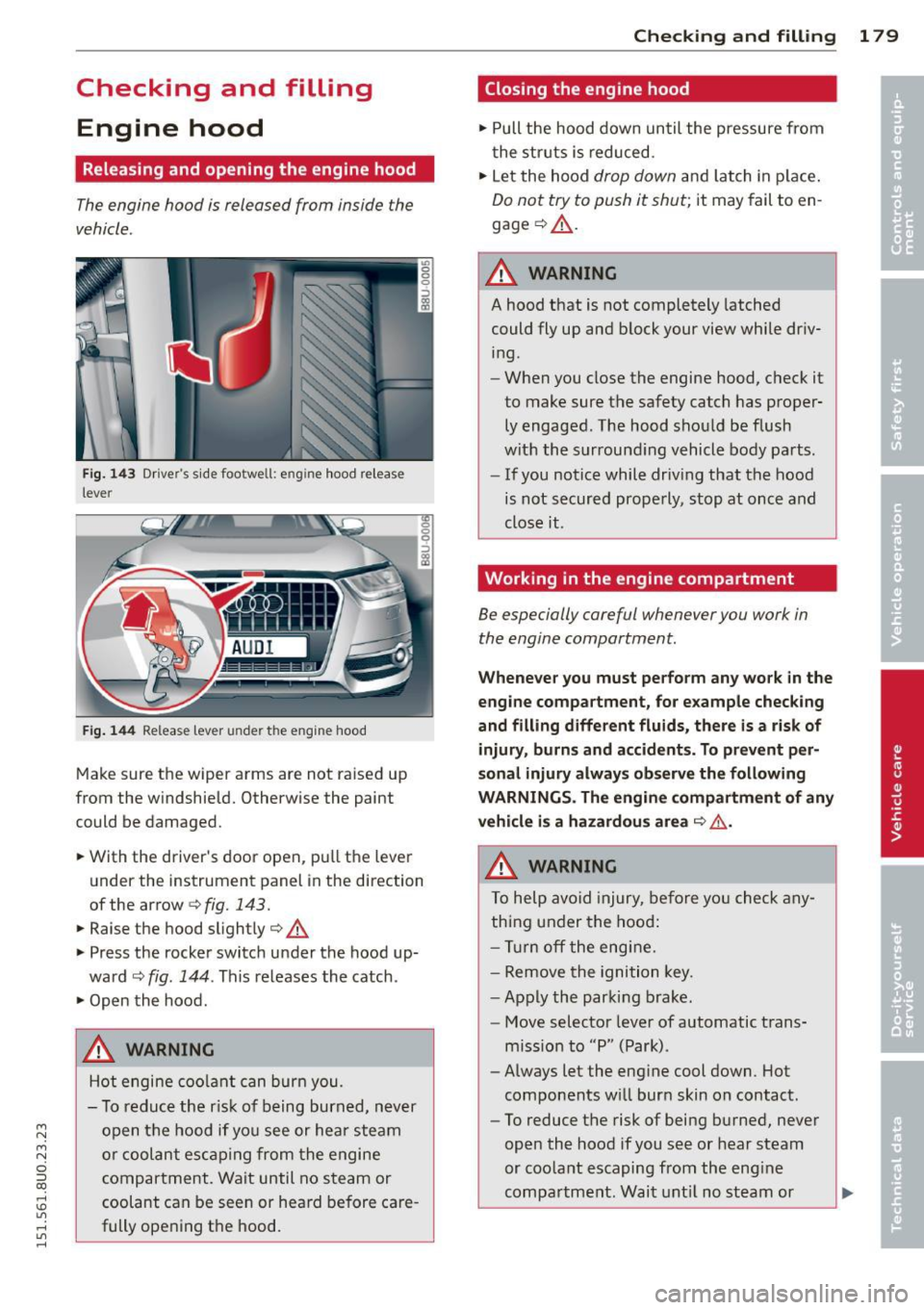
Fig. 1 43 Dr iver's side footwell: eng ine hood release
lever
F ig . 144 Re lease lever un der the engine hood
Make sure the wiper arms are not raised up
from the w indshield. Otherw ise the paint
could be damaged .
.. With the driver's door open, pu ll the lever
under the instrument panel in the direction
of the arrow
c> fig. 143.
.. Raise the hood slightly c> .&,
.. Press the rocker switch under the hood up
ward
c> fig. 144 . This releases the catch .
.. Open the hood.
A WARNING
Hot engine coo lant can burn you.
- T o reduce the r is k of being burned, never
open the hood if you see or hear steam
or coolan t escaping from the engine
compartment. Wait until no steam or
coolant can be seen or heard be fore care
fully opening t he hood.
Checkin g and fillin g 179
Closing the engine hood
.. Pull the hood down un til the pressure from
t he stru ts is reduced.
.. Let the hood
drop down and latch in p lace .
Do not try to push it shut; it may fail to en
gage¢ .&,.
A WARNING
-
A hood that is not completely latched
could fly up and b lock your view while dr iv
ing.
- When you close the engine hood , check it
to make sure the safety catch has proper
ly engaged. The hood shou ld be flush
with the surround ing vehicle body parts.
- If you notice while dr iving that the hood
is not secured properly, stop at once and
close it.
Working in the engine compartment
Be especially careful whenever you work in
the engine compartment.
Whene ve r you must pe rform an y wo rk in the
eng ine compa rtment , for e xample check ing
and filling different fluids, there is a risk of
injury , burns and accidents. To prevent per
so nal injury alway s observe th e foll owing
WARNINGS . Th e engin e compartm ent of an y
v e hicle i s a ha zardou s area
c> .&, .
A WARNING
To help avoid injury, be fore yo u check any
thing under the hood:
- Tu rn off the engi ne .
- Remove the ignition key.
- Apply the parking brake .
- Move selector leve r of automatic trans-
miss ion to "P" (Park) .
- Always let the engine cool down. Hot
components w ill bur n skin on contact.
- To reduce the risk of being burned, never
open the hood if you see or hear steam
or coo la nt escaping from the eng ine
compa rtment. Wait unt il no steam or
Page 246 of 258
24 4 Index
Tether anchors ... ..... ... .. .. .... . 149
Tether straps . . . . . . . . . . . . . . . . . . . . . 149
Chi ld safety loc ks
Power windows ........ .. .. .. .. .. ..
37
Rear doors .............. .. .. .... .. 36
Ch ild safety seats ............... ....
139
Booster seats . . . . . . . . . . . . . . . . . . . . . 14 1
Conve rtible child seats ............. 140
Convertible locking retrac to r .. .. .... . 143
Danger of using c hild restra ints in the
front sea t .. ..... ..... ... .. .. .... .
114
How do I properly install a child safety
seat in my vehicle? ..... ... .. .. .... . 136
Infant seats ............. .. .. .. .. .
139
Install ing ................. .. .... . 143
LATCH system ............. .... .... 148
Lower anchorages ......... .... .... 147
Safety instructions ............ .. ... 136
Unused safety belts on the rea r seat ..
138
Cigarette lighter . . . . . . . . . . . . . . . . . . . . . 53
C leaning ..... .. .. ..... ... .. .. .... . 170
Climate control . . . . . . . . . . . . . . . . . . . . . . 63
C lock . .. .. .. ............. .. .. .. ... .
23
C losing
Panorama s unroof ........ .... .... .. 38
Power windows .. ..... ... .. .. .... ..
37
C losing/open ing
at the lock cylinde r ...... .. .. .. .. .. .. 33
b y remote con trol . . . . . . . . . . . . . . . . . .
30
with the cen tral locking switch .. .... .. 32
wi th the convenience key . . . . . . . . . . . . . 31
Cold tire inflat ion pressu re . ... .... ....
199
Com ing home ............... .. .... .. 42
Compact spare tire .................. 217
also refer to Spare tire ... .. .. .. .. .. . 21 7
Compartments ................. ..... 56
Compass in the mirror . ... .. .. .. .. .. ..
48
Compl iance ............... .. .. .. .. . 24 0
Computer
refer to Trip computer . . . . . . . . . . . . . . . 22
Consumer Info rmation . . . . . . . . . . 101, 237
Contac ting N HTSA .................. 101
Controls
Clean ing ... ... .... ...... .. .. .. .. .
172
Convenience key
Indicator lights .. .. ... ..... ... .. .. .
70
Starting engine (START E NGINE STOP
button) ... .... .. ............. ..... 68
Stopp ing the engine (START ENGINE
STOP button) . . . . . . . . . . . . . . . . . . . . . . 69
Switch ing on ignition ... ....... ... .. . 68
unlocking/loc king .......... ........
31
Convenience opening/clos ing ..... .. .. . 37
Convertib le child sa fe ty se ats ... .. .. .. 14 0
Co nvertib le locking retractor
Activati ng .... ....................
145
Deact ivat ing ... .. ... .......... .. .. 146
U sing to secu re a child safety seat
1.43, 145
Coolant system . . . . . . . . . . . . . . . . . . . . . 186
Cooling mode (automat ic climate control) 64
Cooling System Expans ion tank ... ............. .... 186
Cruise contro l system
Changi ng speed .................. ..
74
Description . . . . . . . . . . . . . . . . . . . . . . . . 73
Preselect ing speed . . . . . . . . . . . . . . . . . . 7 4
Switch ing off .. .. ... .......... .. .. .
74
swit ching on . .. .. ............. .. ... 74
Cruisi ng range . . . . . . . . . . . . . . . . . . . . . . . 22
(u pholders . . . . . . . . . . . . . . . . . . . . . 55, 56
D
D ata recorde r . . . . . . . . . . . . . . . . . . . . . . 152
Date d isp lay ...... ................ .. 23
Daytime running lights . .. ..... .... . .. . 40
De clarat io n of compliance
Audi s ide ass ist .. ............. .. ..
240
Cell phone package . . . . . . . . . . . . . . . . 2 4 0
Convenience key . ... ... ..... ... .. .. 240
Cruise contro l .... .. .... .... ... .. .. 240
E lectronic immob ilizer .......... .... 240
Remote contro l key . . . . . . . . . . . . . . . . 240
D ecorative p art s/tr im
Cleaning .. .... .. .. ... ..... ... .. ..
172
Defective light bu lb wa rni ng ......... .. 18
Defrost ing (windows) ................ . 65
Dete rm ining co rrec t load limit ........
204
Digital clock . . . . . . . . . . . . . . . . . . . . . . . . 23
Digital compass ... ... .. ..... ... .. .. . 48
D imens ions . ...... ............. .... 2 35
Page 247 of 258
M N
M N
0 ::i co ,...., \!) 1.1'1 ,...., 1.1'1 ,....,
Dimming the rearview mirro r .. .. .. .. .. 45
Displays Cleaning . .. ............. .... .. ... 172
Doors Ch ild safety locks .. .... .... . .. .. .. .. 36
emergency locking ............ ... ... 33
Driver information system CD/radio display . . . . . . . . . . . . . . . . . . . . 20
Driver messages . . . . . . . . . . . . . . . . . . . . 20
Efficiency program . . . . . . . . . . . . . . . . . . 24
Open door/hood/rear lid warning . . . . . . 20
Operation by multifunction steering
wheel ... .. ................. .. .... 2 1
Opera tion by windsh ie ld wiper lever .. .. 2 1
Outside temperat ure display .. .. .. .. .. 20
Overv iew . . . . . . . . . . . . . . . . . . . . . . . . . . 20
Trip computer . . . . . . . . . . . . . . . . . . . . . . 22
Driver seat
refer to Seat ing pos ition ... .. .. .. .. .. 95
Drive se lect . . . . . . . . . . . . . . . . . . . . . . . . . 79
Dynamic steering .............. .... . 79
Sett ing the d riving mode ... .. .. .. .. .. 79
Driving offroad . . . . . . . . . . . . . . . . . . . . . 164
D riving safely . . . . . . . . . . . . . . . . . . . . . . . 94
Driving through water ...... .. .. .. .. . 165
D riving time ... ... ..... ... .. .. .. .... 22
Dust filter
refer to Po llutant filte r (au tomatic cli-
mate con trol) . . . . . . . . . . . . . . . . . . . . . . 63
Dynamic steering . . . . . . . . . . . . . . . . . . . . 79
E
Efficiency program . . . . . . . . . . . . . . . . . . . 24
Fuel economy messages . . . . . . . . . . . . . 25
Othe r equipment . . . . . . . . . . . . . . . . . . . 24
Elect rical accessories
refer to Socket . . . . . . . . . . . . . . . . . . . . . 54
E le ctr ical seat adjustment
refer to Seat ad justmen t ... .. ...... .. 51
Electromechanical parking b rake
E merg ency braking . . . . . . . . . . . . . . . . . 72
Par king .. .. ............. .... .. .... 7 1
Rele asing and clos ing ..... .. .. .. .. .. 70
S tart in g assis t . . . . . . . . . . . . . . . . . . . . . 7 1
S tarting from rest . . . . . . . . . . . . . . . . . . 71
Starting off with a trai le r . .. .. .. .. .. .. 72
Warn ing/ indicator lights . .. .. .. .. .. .. 14
Inde x 245
Electromechanical steer ing .... ... .. .. 158
Indicator lights .. .. . ... .... ... .. .. 158
El ectronic d ifferential lock
Wa rning/ind icator lights ........ .. .. . 16
E lectronic differential lock (EDL) . .. .. .. 153
E lectronic immob ilizer . .. ..... ... .. .. . 33
E lectronic power control
( EP C) warning/ indica to r ligh t .... .. .. . 17
E lectronic Stabilization Contro l (ESC) . .. 153
Hill descent assist .. .............. . 155
Offroad mode .. .. .. . .. .... .... .. .. 155
Warning/ind icator lights ........... .. 16
Emergency actuat ion
Doo~ ........ .. .................. 33
Panorama sunroof .. .............. .. 39
Rea r lid . . . . . . . . . . . . . . . . . . . . . . . . . . . 36
Su n shade (roof) ................. .. 39
Emergency brak ing . ............. .. .. . 72
Emergency fl ashe r .................. . 43
Warning/ind icator lights ..... ... .. .. . 19
Emergency key .. .... .. .. ...... ...... 29
Emergency operation Emergency brak ing funct ion (park ing
brake) .... .. .. .. ................. . 72
Emergency re lease
Se lector lever . . . . . . . . . . . . . . . . . . . . . . 86
E mergency starti ng ............. .. .. 228
Emergency towing . .. ........... .... 230
Energy management .. .. ..... ... .. .. 159
Battery power ..... . .. ..... ... .. .. . 15
Driver notification . . . . . . . . . . . . . . . . . . 15
E ngine
Comp artment . . . . . . . . . . . . . . . . . . . . . 181
Coolant ... .. .... .. . .. .. ..... ... .. 186
Data ... .. .. .... .. . .. .. ..... ... .. 236
Hood ... .. .. .. .... . ... ...... ... .. 179
Starting . . . . . . . . . . . . . . . . . . . . . . 66, 68
Starting with jumper cables ....... .. 228
Stopping .. .. .. .. .. . .. .. ..... .. 67, 69
Engine compartment Safety instr uctions . . . . . . . . . . . . . . . . . 179
Working the eng ine compartment 179
E ngine coolant
Indicator lig ht ... .. .. ...... ... .. .. . 14
Engine coolant system ............... 186
Adding coo lant . .................. . 187
Check ing coolant level . ......... .. .. 186
•
•
Page 248 of 258
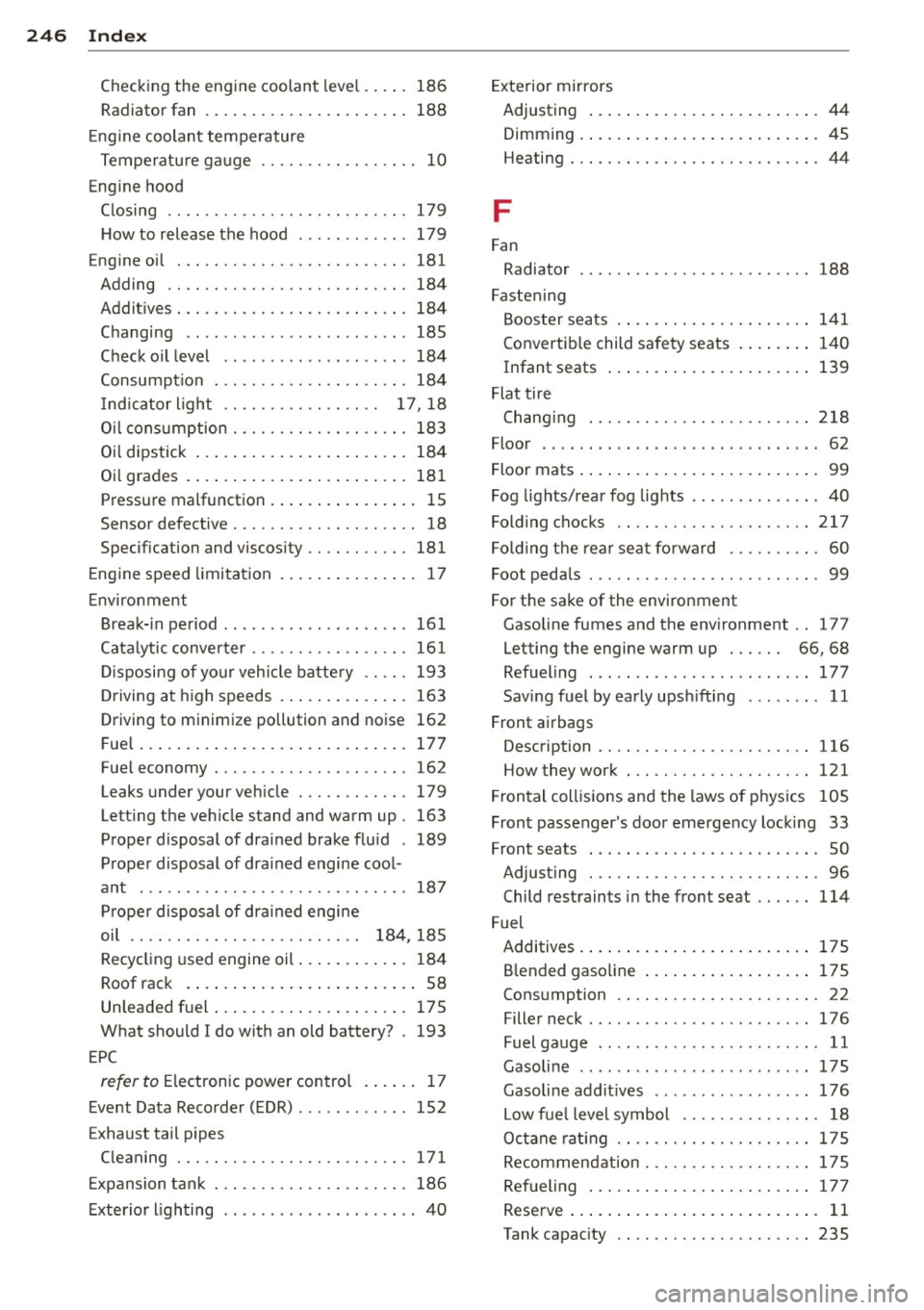
246 Index
Checking the engine coolant leve l .... . 186
Radiator fan . . . . . . . . . . . . . . . . . . . . . . 188
E ng ine coolant temperature
Temperature gauge ..... .. .. .. .. .. .. 10
Eng ine hood
Closing .... .......... ...... ... .. . 179
H ow to release the hood . . . . . . . . . . . . 179
E ngine oi l ..... ........... .... .... . 181
Adding .. .. ............. .. .. .. ... 184
Addi tives . . . . . . . . . . . . . . . . . . . . . . . . . 184
Changing .. ................ ... .. . 185
Check oil level ............ ... .. .. . 184
Consumpt ion . ........... .. .. .... . 184
I ndicator light . . . . . . . . . . . . . . . . . 17, 18
O il consumption .......... .... .... . 183
Oil dipstick ............... ... .... . 184
Oil grades . ................. ..... . 181
Pressure malfunction ....... .... ... .. 15
Sensor defective . . . . . . . . . . . . . . . . . . . . 18
Specification and viscosity .. .. .. .. .. . 181
Engine speed limitation ......... .... . . 17
Environment Break-in period ... ..... ... .. .. .. .. . 161
Cata lytic converter ............ ..... 161
Disposing of your vehicle battery .. .. . 193
Driving at high speeds ......... .. .. . 163
Driving to minimize pollution and noise 162
Fuel ... .... ................ ..... . 177
Fue l economy .............. .. .... . 162
Leaks under your vehicle ... .. .. .... . 179
Le tting the vehicle stand and warm up . 163
Proper disposal of dra ined brake fluid . 189
Proper disposal of dra ined engine cool-
ant . .. .... ... .......... .. .. .. .. . 187
Proper disposal of dra ined engine
oil . . . . . . . . . . . . . . . . . . . . . . . . . 184, 185
Recycling used engine oil ......... .. . 184
Roof rack . . . . . . . . . . . . . . . . . . . . . . . . . 58
Unleaded fuel ..................... 175
What should I do with an old battery? 193
EPC
refer to Electronic power control . . . . . . 17
Event Data Recorder (EDR) . ........ .. . 152
Exhaust tail pipes Cleaning . ............... ........ . 171
Expansion tank ............ .. .. .. .. . 186
Exterior lighting ............ ... .. ... . 40 Exterior
mirrors
Adjusting ..... .. .. .............. .. 44
Dimm ing . ... .. .. .. .............. .. 45
Heating ... .... .. ............. .... . 44
F
Fan
Radiator
Fastening Booster seats .... ................ .
Convertib le child safety seats ..... .. .
Infant seats ..... ............. ... .
Flat tire 188
141
140
139
Changing . .... .. ............. .... 218
Floor .. .. .. .. .. .. .. ...... .... ..... . 62
Floor mats . . . . . . . . . . . . . . . . . . . . . . . . . . 99
Fog lights/rear fog lights ...... ... .. .. . 40
Folding chocks .. .. ... .......... .... 217
Folding the rear seat forward ... .. .. .. . 60
Foot pedals ..... .. .......... ...... .. 99
For the sake of the environment Gasoline fumes and the environment .. 177
Le tting the engine warm up . . . . . .
66, 68
Refueling . . . . . . . . . . . . . . . . . . . . . . . . 177
Sav ing fuel by early upshifting ........ 11
Front airbags Description . . . . . . . . . . . . . . . . . . . . . . . 116
How they work . .. ............. .... 121
Frontal collis ions and the laws of physics 105
Front passenger's door emergency lock ing 33
Front seats . . . . . . . . . . . . . . . . . . . . . . . . . 50
Adjusting . .... .. ............. .... . 96
Child restraints in the front seat .. .. .. 114
Fuel Additives . ..... .. ................ . 175
B lended gasoline ................. . 175
Consumption .. ... ................ . 22
Filler neck . .... .. ............. .... 176
Fuel gauge . . . . . . . . . . . . . . . . . . . . . . . . 11
Gasoline .. ... ... ................ . 175
Gasoline additives ................ . 176
Low fuel level symbol . . . . . . . . . . . . . . . 18
Octane rating .. .. ............. .... 175
Recommendation ... ........... .. .. 175
Refueling . . . . . . . . . . . . . . . . . . . . . . . . 177
Reserve ........................... 11
Tank capacity .. .. ... .......... .... 235