window AUDI Q3 2017 Owner´s Manual
[x] Cancel search | Manufacturer: AUDI, Model Year: 2017, Model line: Q3, Model: AUDI Q3 2017Pages: 236, PDF Size: 58.93 MB
Page 100 of 236
Intelligent Technology
Depending on the vehicle battery charge level,
electrical equipment is switched off one item af
ter the other to prevent the vehicle battery from
draining and to maintain the starting ability.
Dynamic energy manag ement
W hile driving, dynamic energy management d is
trib utes the appropriate amount of energy to the
e lectrical equipment. It controls the battery
charge level so that the amount of energy is not
greater than the amount be ing generated in or
der to mainta in a n optima l vehicle battery charge
level.
(D Tips
- Ene rgy management cannot ove rcome the
l aws of physics . Note that the charge level
and length of the vehicle battery life a re
l imi ted.
- When the starting ability is endangered, the
(•) indicator light turns on
~ page 13 .
What you should know
Maintaining the starting ability is the highest
priority.
A lot of stress is placed on the vehicle battery
when dr iv ing short d ista nces, dur ing c ity dr iving,
and at cold times of the year . A lot of energy is
used but little is ge nerated.
It is a lso critical
when the engine is not runn ing but e lectr ica l
eq uipment is switc hed o n. In this case, energy is
used bu t none is ge ne ra te d.
In s ituations like this, energy manageme nt will
actively regu late the d istribution of ene rgy .
Long periods without use
I f yo u do not drive your vehicle for seve ral days or
weeks, electrical equipment is gradually scaled
back or switched off . This red uces energy use and
ensu res the veh icle w ill be able to star t afte r long
pe riods of time . Some convenience functions ,
such as inte rior lighting or powe r seat adjust
men t, may not be available unde r certa in ci rcum
s tances. These co nvenience functions will be
ava ilab le again once you switch the ign ition on
and start the engine .
98
With the engine switched off
The vehicle b attery wi ll dr ain if you use Info tain
ment func tions such as lis teni ng to the radio
while the engine is switched off.
The veh icle's abili ty to s ta rt may be impa ired by
the e nergy use, a message will appe ar i n t he I n
fota inment system display.
The message indicates that the system wi ll
swi tch off autom atically soon .
If you would lik e
to co ntin ue usi ng the func tio ns , you mus t start
t h e engine.
With the engine running
Althoug h electrica l energy is gene rated w hile
driv ing, the veh icle ba tte ry can dra in. This can
happe n if li tt le ene rgy i s generate d but much is
u sed, and the ch arge level of the vehi cle b attery
i s not optimal.
To resto re t he ba lan ce of energy, co mponents
t h at req uire large amo unts of energy a re tempo
ra rily sc aled b ack or sw itche d off. Heat ing sys
tems in partic ular re quire a great deal of energy .
If you notice, for example, that the seat heating*
or r ear window defogger is not work ing, then it
has been tempora rily reduced or switched off.
These systems are avai lab le aga in as soon as t he
energy supply has bee n restored .
In ad dition, yo u may notice that the idle speed
has slightly increased. That is normal and no
cause for concern. By increasing the idling speed,
the addit ional required energy will be ge nerated
and the veh icle battery w ill be charged .
Notice about data
recorded by the Event
Data Recorder and
vehicle control modules
Event Data Recorder
This vehicle is equ ipped w ith an Event Data Re
corder ( EDR) . The mai n purpose of an EDR is to
r ecord, in certain cras h or near crash -li ke situa
tions, such as an airbag deployme nt o r hi tt ing a
r oad obsta cle, da ta that w ill ass ist in understand
i ng how a vehi cle's systems pe rforme d. Th e EDR
Ill-
Page 105 of 236
00
00
......
"' ,....
"' ...... 0 0 :::,
00
- Always keep your feet on the floor in front
of the seat. Never rest them on the seat, in
strument panel, out of the window, etc. The
airbag system and safety belt will not be able to protect you properly and can even in
crease the risk of injury in a crash.
- Never drive with the backrest reclined or
tilted far back! The farther the backrests are
tilted back, the greater the risk of injury due
to incorrect positioning of the safety belt
and improper seating position .
- Children must always ride in child safety
seats¢
page 137 . Special precaut ions ap
ply when installing a ch ild safety seat on the
front passenger seat ¢
page 117.
Proper seating positions for passengers in
rear seats
Rear seat passengers must sit upright with both
feet on the floor consistent with their physical
size and be properly restrained whenever the ve hicle is in use.
To reduce the risk of injury caused by an incorrect
seating position in the event of a sudden braking
maneuver or an accident, your passengers on the
rear bench seat must always observe the follow
ing:
~ Make sure that the seatback is securely latched
in the upright position¢
page 49.
~ If there is a passenger on the rear center seat
ing position, slide the center head restraint up
ward at least to the next notch ¢
page 46.
~ Keep both feet flat in the footwell in front of
the rear seat .
~ Fasten and wear safety belts properly
¢page 112.
~ Make sure that children are always properly re
strained in a child restraint that is appropriate
for their size and age ¢
page 13 7.
A WARNING
Passengers who are improperly seated on the
rear seat can be seriously injured in a crash.
- Each passenger must always sit on a seat of
their own and properly fasten and wear the
safety belt belonging to that seat.
Driving safety
- Safety belts only offer maximum protection
when the seatback is securely latched in the
upright position and the safety belts are properly positioned on the body . By not sit
ting upright, a rear seat passenger increases
the risk of personal injury from improperly
positioned safety belts!
- Always adjust the head restraint properly so
that it can give maximum protection.
Proper adjustment of head restraints
Correctly adjusted head restraints are an impor
tant part of your vehicle's occupant restraint sys
tem and can help to reduce the risk of injuries in
accident situations.
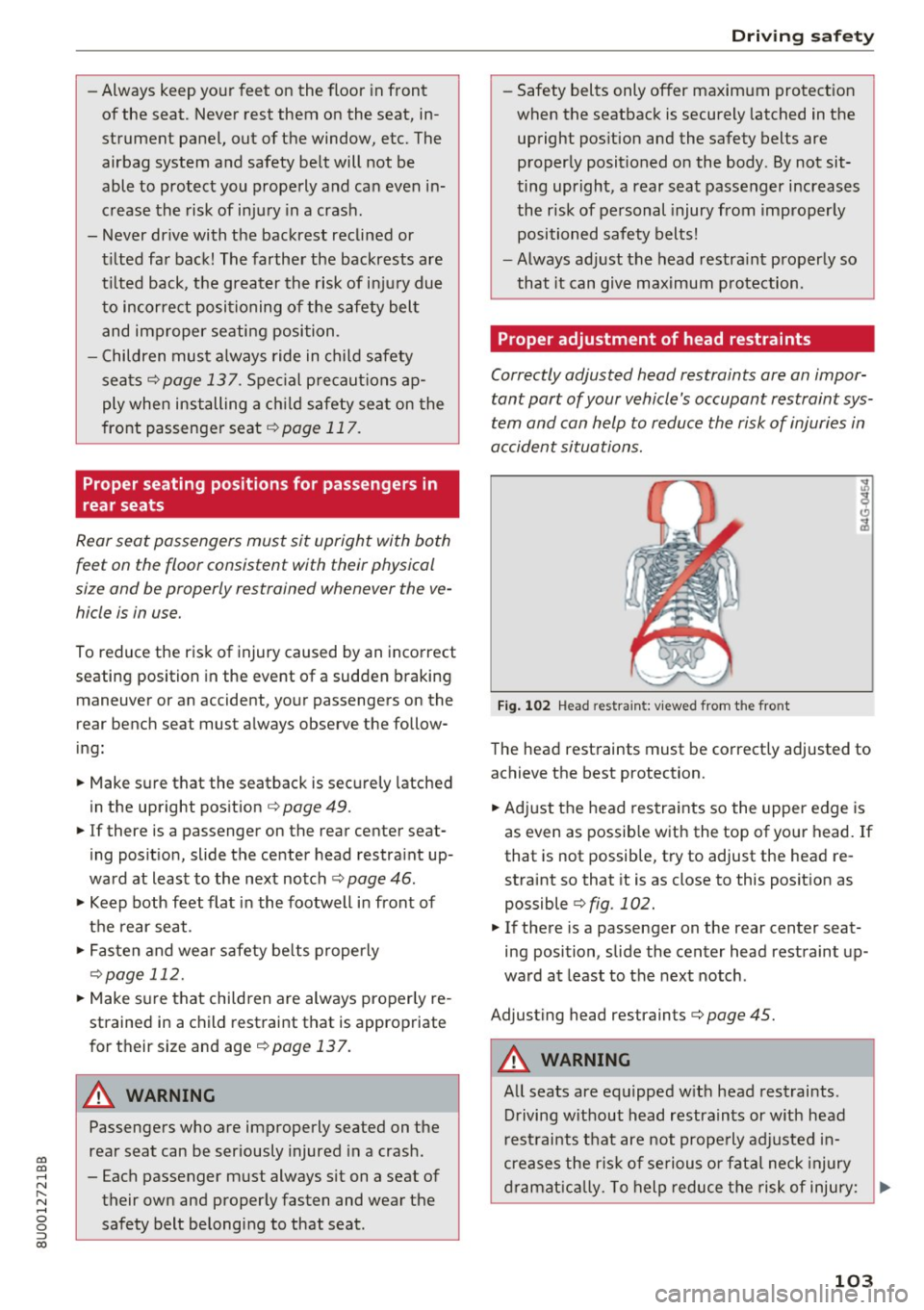
Fig. 102 Head restraint: vi ew ed from t he front
The head restraints must be correctly adjusted to
achieve the best protection.
~ Adjust the head restraints so the upper edge is
as even as possible with the top of your head. If
that is not possible, try to adjust the head re
straint so that it is as close to this position as
possible
¢ fig . 102.
~ If there is a passenger on the rear center seat
ing position, slide the center head restraint up
ward at least to the next notch .
Adjusting head restraints¢
page 45.
A WARNING
-All seats are equipped w ith head restraints.
Driving without head restraints or with head
restraints that are not properly adjusted in
creases the risk of serious or fata l neck injury
dramatically . To help reduce the risk of injury: ..,
103
Page 106 of 236
Driving sa fe ty
-Always drive with the head restraints i n
place and properly adjusted.
- Every person in the vehicle must have a
properly adjusted head restra int.
- Always make sure each person in the vehicle
properly adjusts their head restraint. Adjust
the head restra ints so the upper edge is as
even as possib le w ith the top of your head.
If that is not possib le, try to adjust the head
restra int so that it is as close to th is position
as possib le.
- Never attempt to adjust head restraint wh ile driving.
If you have dr iven off and
must adjust the driver headrest for any rea
son, fi rst stop the vehicle safely before at
tempting to ad just the head restr aint.
- Children must always be p roperly restrained
in a chi ld restrain t th at is appropria te fo r
their age and si ze
~page 137.
Examples of improper seating positions
The occupant restraint system can only reduce
the risk of injury if vehicle occupants are properly
seated.
I mp roper seating positions can cause se rious in
ju ry or deat h. Safety belts can only wo rk when
they are p roperly posi tioned o n the body . Im
p roper seating posi tions reduce t he effe ct iveness
of sa fety belts and w ill even increase the r isk o f
in jury and death by moving the safety be lt to crit
ical areas of the body . Improper seating posit ions
also increase the risk of ser ious injury and death
when an airbag deploys and strikes an occupant
who is not in the prope r seat ing position. A driver
is respo nsible for the safety of all vehicle occu
pants and especially fo r children. Therefo re:
~ Never allow anyone to assume an incorrect
seat ing pos ition w hen the veh icle is being used
~ .&. -
The follow ing bulletins list only some sample po
sitions that will inc rease the risk of serious inju ry
and death. Ou r hope is that these examples will
make you more aware of seat ing pos it io ns that
a re dangero us.
104
Therefore , whenever the vehicle is moving :
-neve r stand up in the vehicle
- neve r sta nd on the seats
- neve r kneel on the seats
- never ride w ith the seatback recl ined
- neve r lie down on the rear seat
- neve r lean up against the instrument panel
- never s it on the edge of the seat
- neve r sit sideways
- neve r lean out t he window
- neve r put your feet o ut the window
- never put your feet on the instrument panel
- neve r rest your feet on the seat cushion or back
of the seat
- never ride in the footwell
- never ride in the cargo area
'
A WARNING
Imp roper seating positions inc rease the risk
of ser ious personal injury and death whenever
a veh icle is being used.
- Always make sure that all veh icle occupants
stay in a proper seating posit ion and are
properly restrained whenever the vehicle is be ing used .
Pedal area
Pedals
The pedals must alway s be free to move and
must never be interfered with by a floor mat or
any o ther object.
Mak e su re t hat all pedals move free ly w ithout in
te rfe rence and t hat nothing prevents them from
r etur ning to their orig inal positions.
Only use floor mats that leave the pedal a rea free
and can be secured wi th floor ma t faste ne rs.
If a brake circuit fails, i ncreased brake pedal trav
el is requ ired to bring the vehicle to a fu ll stop.
A WARNING
Pedals that ca nnot move freely ca n cause loss
of vehicle contro l and increase the r is k of seri
ous injury.
Page 108 of 236
Driving safety
-Always put objects, for example, luggage or
other heavy items in the luggage compart
ment.
- Always secure objects in the luggage com
partment using the tie-down eyelets and
suitable straps.
A WARNING
Heavy loads will influence the way your vehi
cle handles. To help reduce the risk of a loss
of control leading to serious personal injury:
- Always keep in mind when transporting
heavy objects, that a change in the center of
gravity can also cause changes in vehicle
handling:
- Always distribute the load as evenly as
possible.
- Place heavy objects as far forward in the
luggage compartment as possible.
- Never exceed the Gross Axle Weight Rating or the Gross Vehicle Weight Rating specified
on the safety compliance sticker on the left
door jamb. Exceeding permissible weight
standards can cause the vehicle to slide and handle differently .
- Please observe information on safe driving
¢page 100.
A WARNING
To help prevent poisonous exhaust gas from
being drawn into the vehicle, always keep the
rear lid closed while driving.
- Never transport objects larger than those fitting completely into the luggage area be
cause the rear lid cannot be fully closed .
- If you absolutely must drive with the rear lid open, observe the following notes to reduce
the risk of poisoning:
- Close all windows,
- Close the Panoramic sliding sunroof*,
- Open all air outlets in the instrument pan-
el,
- Switch off the air recirculation,
- Set the fresh air fan to the highest speed .
106
A WARNING
,--
Always make sure that the doors, all win
dows, the Panoramic sliding sunroof* and the
rear lid are securely closed and locked to re
duce the risk of injury when the vehicle is not
being used .
-After closing the rear lid, always make sure
that it is properly closed and locked.
- Never leave your vehicle unattended espe
cially with the rear lid left open. A child
could crawl into the vehicle through the lug
gage compartment and close the rear lid be
coming trapped and unable to get out. Be
ing trapped in a vehicle can lead to serious
personal injury.
- Never let children play in or around the vehi
cle.
- Never let passengers ride in the luggage
compartment. Vehicle occupants must al
ways be properly restrained in one of the ve
hicle's seating positions.
(D Tips
- Air circulation helps to reduce window fog
ging. Stale air escapes to the outside
through vents in the trim panel. Be sure to keep these slots free and open .
- The tire pressure must correspond to the
load. The tire pressure is shown on the tire
pressure label. The tire pressure label is lo
cated on the driver's side B-pillar . The tire
pressure label lists the recommended cold
tire inflation pressures for the vehicle at its
maximum capacity weight and the tires that
were on your vehicle at the time it was man
ufactured. For recommended tire pressures
for normal load conditions, please see chap
ter
¢ page 181.
Tie-downs
The luggage compartment is equipped with four
tie-downs to secure luggage and other items.
Use the tie-downs to secure your cargo properly
¢page 105, Loading the luggage compartment . ..,_
Page 114 of 236
Safety belts
_&. WARNING
Not wearing safety belts or wearing them im
properly increases the risk of serious personal
injury and death . Safety belts can work only
when used correctly.
-Always fasten your safety belts correctly be fore driving off and make sure all passen
gers are correctly restrained.
- For maximum protection, safety belts must
always be positioned properly on the body.
- Never strap more than one person, includ
ing small children, into any belt.
- Never place a safety belt over a child sitting
on your lap.
- Always keep feet in the footwell in front of
the seat while the vehicle is being driven.
- Never let any person ride with their feet on
the instrument panel or sticking out the
window or on the seat.
- Never
remove a safety belt while the vehicle
is moving . Doing so will increase your risk of
being injured or killed .
- Never wear belts twisted.
- Never wear belts
over rigid or breakable ob-
jects in or on your clothing, such as eye
glasses, pens, keys, etc., as these may cause
injury.
- Never allow safety belts to become dam
aged by being caught in door or seat hard
ware .
- Do not wear the shoulder part of the belt
under your arm or otherwise out of position.
- Several layers of heavy clothing may inter
fere with correct positioning of belts and re
duce the overall effectiveness of the system.
- Always keep belt buckles free of anything
that may prevent the buckle from latching
securely .
- Never use comfort clips or devices that cre
ate slack in the shoulder belt. However, spe
cial clips may be required for the proper use
of some child restraint systems.
- Torn or frayed safety belts can tear, and
damaged belt hardware can break in an acci
dent . Inspect belts regularly.
If webbing,
bindings, buckles, or retractors are dam-
112
aged, have belts replaced by an authorized
Audi dealer or qualified workshop.
- Safety belts that have been worn and loaded
in an accident must be replaced with the
correct replacement safety belt by an au
thorized Audi dealer. Replacement may be
necessary
even if damage cannot be clearly
seen. Anchorages that were loaded must al
so be inspected.
- Never
remove, modify , disassemble, or try
to repair the safety belts yourself .
-Always keep the belts clean. Dirty belts may not work properly and can impair the func
tion of the inertia reel¢
table Interior
cleaning on page 193.
Safety belts
Fastening safety belts
Safety first -everybody buckle up!
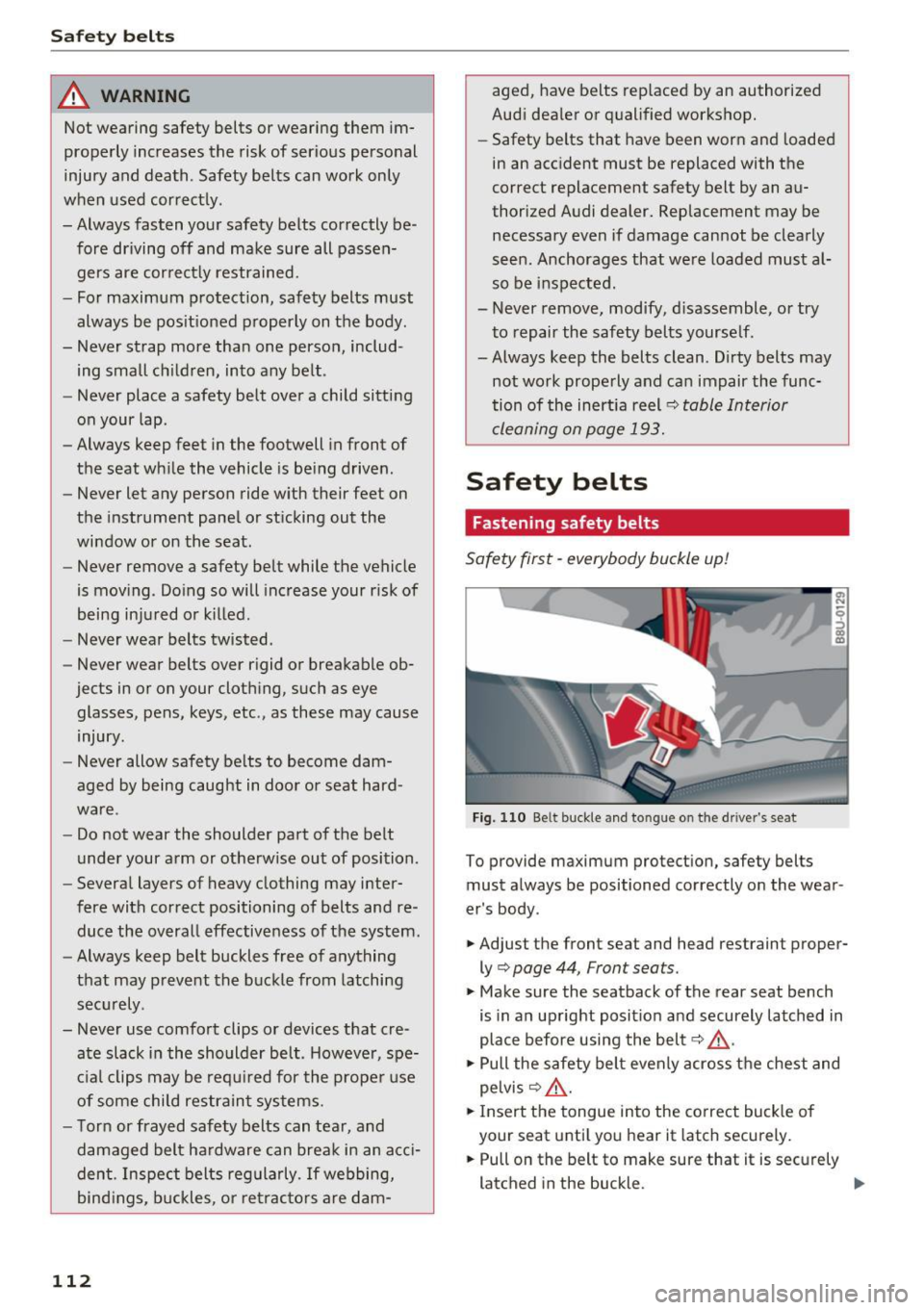
Fig. 110 Be lt buckle and tongue on the driver's seat
To provide maximum protection, safety belts
must always be positioned correctly on the wear
er's body .
.. Adjust the front seat and head restraint proper
ly¢
page 44, Front seats.
.. Make sure the seatback of the rear seat bench
is in an upright position and securely latched in
place before using the belt
q ,&. .
.. Pull the safety belt evenly across the chest and
pelvis¢ ,&. .
.. Insert the tongue into the correct buckle of
your seat until you hear it latch securely.
.. Pull on the belt to make sure that it is securely
latched in the buckle. .,,_
Page 135 of 236
a:,
a:,
...... N r--. N .-< 0 0 ::, a:,
How supplemental side airbags work
Side airbags deploy instantly and can help reduce the risk of upper torso injuries for occu
pants who are properly restrained.
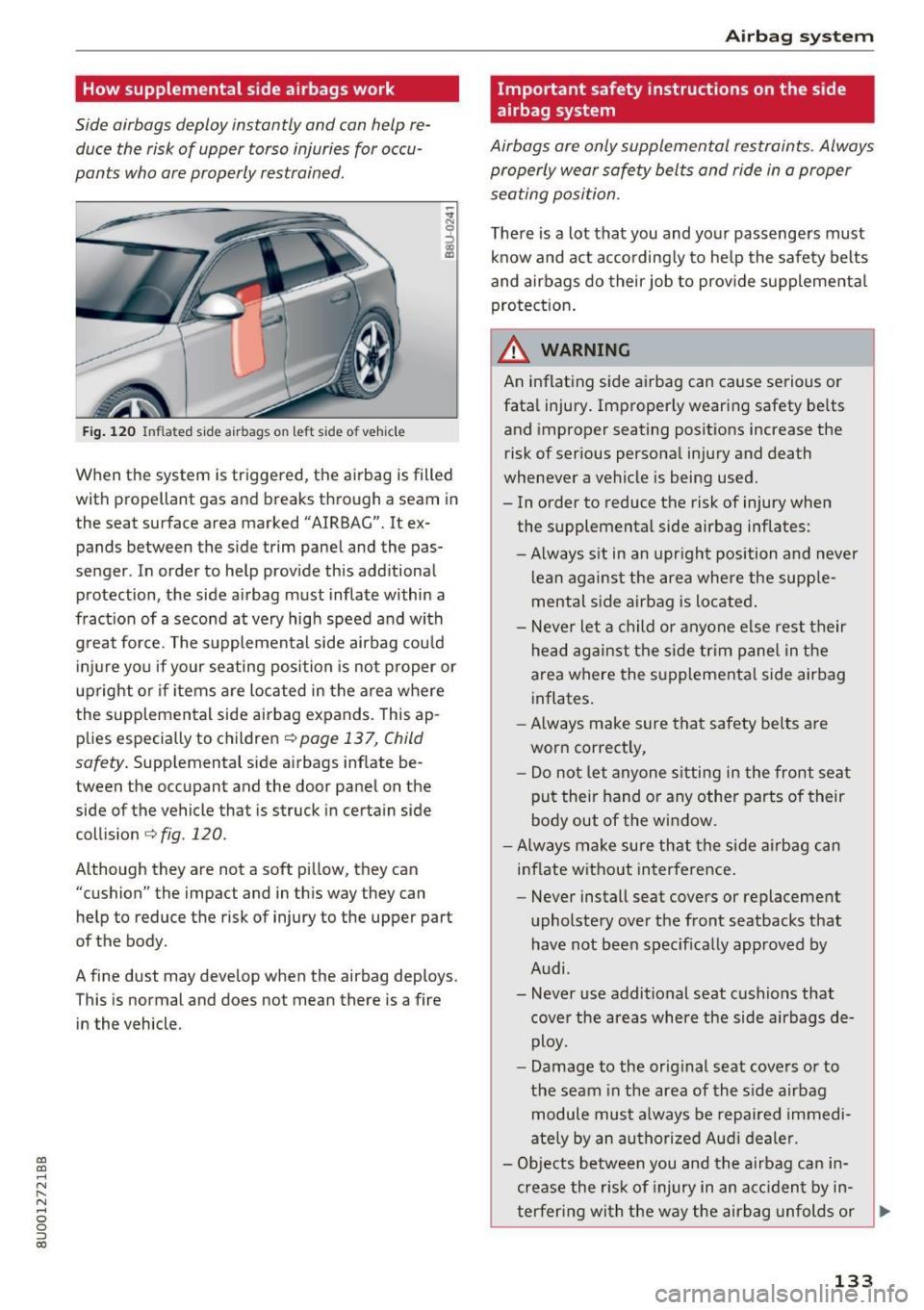
F ig . 120 In fla ted side airbags o n left s ide of v ehicle
When the system is triggered, the airbag is filled
with propellant gas and breaks through a seam in
the seat surface area marked "AIRBAG". It ex
pands between the side trim panel and the pas
senger . In order to help provide this add itiona l
protection, the side airbag must inflate within a
fract ion of a second at very high speed and with
great force. The s upplemental side airbag cou ld
injure you if your seating position is not p roper or
upright or if items are located in the area where
the supplemental side airbag expands. This ap
plies especially to childre n
¢ page 13 7, Child
safety.
Supplemental side airbags inf late be
tween the occupant and the door panel on the side of the vehicle that is struck in certa in side
collis ion
¢ fig . 120 .
Although they are not a soft pillow, they can
"cushion" the impact and in th is way they can
help to reduce the risk of injury to the upper part
of the body .
A fine dust may develop when the airbag deploys .
This is normal and does not mean there is a fire in the vehicle .
Airbag sys tem
Important safety instructions on the side
airbag system
Airbags are only supplemental restraints . Always
properly wear safety belts and ride in a proper
seating position .
There is a lot that you and yo ur passengers must
know and act according ly to he lp the safety belts
and airbags do their job to prov ide supplementa l
pro tect ion .
A WARNING
An inflating side airbag can cause serious or
fatal injury. Improperly wearing safety be lts
and improper seating posit ions increase the
risk of ser ious personal injury and death
whenever a vehicle is being used.
- In order to reduce the risk of injury when
the supplemental side airbag inflates:
- Always s it in an upr ight posi tion and never
lean against the area where the supp le
mental s ide airbag is located .
- Neve r let a child or anyone e lse rest their
head against the side tr im panel in the
area where the s upplementa l side airbag
inflates.
- Always make s ure tha t safety belts are
worn correctly,
- Do no t let anyone s itting in the front seat
put their hand or any other parts of their
body out of the window .
- Always make sure that the side airbag can
inflate without interference .
- Never install seat covers or replacement
upholste ry over the front seatbacks that
have not been specif ically approved by
Audi.
- Never use additional seat c ushions that
cover the areas where the side airbags de ploy.
- Damage to the orig inal seat covers or to
the seam in the area of the s ide airbag
module must a lways be repaired immedi
ate ly by an authorized Audi dealer .
-
-Objects between you and the a irbag can in
crease the r is k of injury in an a cciden t by in
terfering with the way the airbag unfolds o r _,.
133
Page 137 of 236
a:,
a:,
...... N r--. N
'"' 0 0 ::, a:,
registered by the control unit is high enough . If
this rate is below the referenc e va lue program
med into the contro l unit, the side curtain airbag
will not be triggered, even though the car may be
badly damaged as a result of the collision. It is
not possible to define an airbag triggering range
that will cover every poss ible a ngle of impact,
since the circumstances will vary considerab ly be
tween one coll is ion and another. Impo rtant fac
tors incl ude , fo r example , the nature (ha rd or
soft) of the impacting object , the ang le of im
pact, vehicle speed, etc .
¢ page 135, How side
curtain airbags work.
Aside from their normal s afety function, safe ty
be lts work to help keep the driver or front pas
senger in position in the event of a collision so
that the side curtain airbags can provide protec
tion .
The airbag system is not a s ubstitute for yo ur
safety be lt. Rather, it is part of the overa ll occu
pant restraint system in your vehicle. Always re
member that the airbag system can only help to
protect you if you are wearing your safety belt
and wear ing it properly . Th is is another reason
why you should always wear your safety belts ,
n ot j ust because the law requires you to do so
¢ page 109, General information .
It is important to remember that while the s ide
curta in a irbag system is des igned to he lp reduce
the likelihood of ser ious injuries, other i njuries,
for example, swel ling, b ruising, and m ino r abra
sions can a lso be associated w ith these airbags.
Remember too, these a irbags w ill dep loy only
once and only in certa in kinds of acc iden ts -your
safety be lts are always there to offer protection .
The side curtain airbag system basically
con sists of:
- T he elec tronic contro l module and external side
impact sensors
- T he side c urtain airbags above the front and
rea r side windows with ejection mitigation fea
tures
- T he airbag indicator light in the instrument
panel
The airbag system is monitored e lectronically to
make certain it is f unct ion ing properly at all
Airb ag sys tem
times. Each time you turn on the ignition, the air
bag system indicato r light wi ll come on for a few
seconds (self diagnostics) .
The side curtain airbag is not activated :
- if the ignition is turned off,
- in side co ll isions when the accele ration meas-
ured by the sensor is too low,
- in rear-end collisions.
A WARNING
- Safety belts an d the airbag system will only
p rovide protec tion when occupants are in
the proper seat ing position
¢ page 44,
Front seats.
- If the ai rbag ind ic a tor light~ page 14
comes when the veh icle is being used, have
the system inspected immediately by your
authorized Audi dealer . It is possib le that
the airbag will inflate when it is not sup
posed to, or w ill not inf late when it should.
How side curtain airbags work
Side curtain airbags con work together with side
airbags to help reduce the risk of head and upper
torso injuries for occupants who ore properly re
strained .
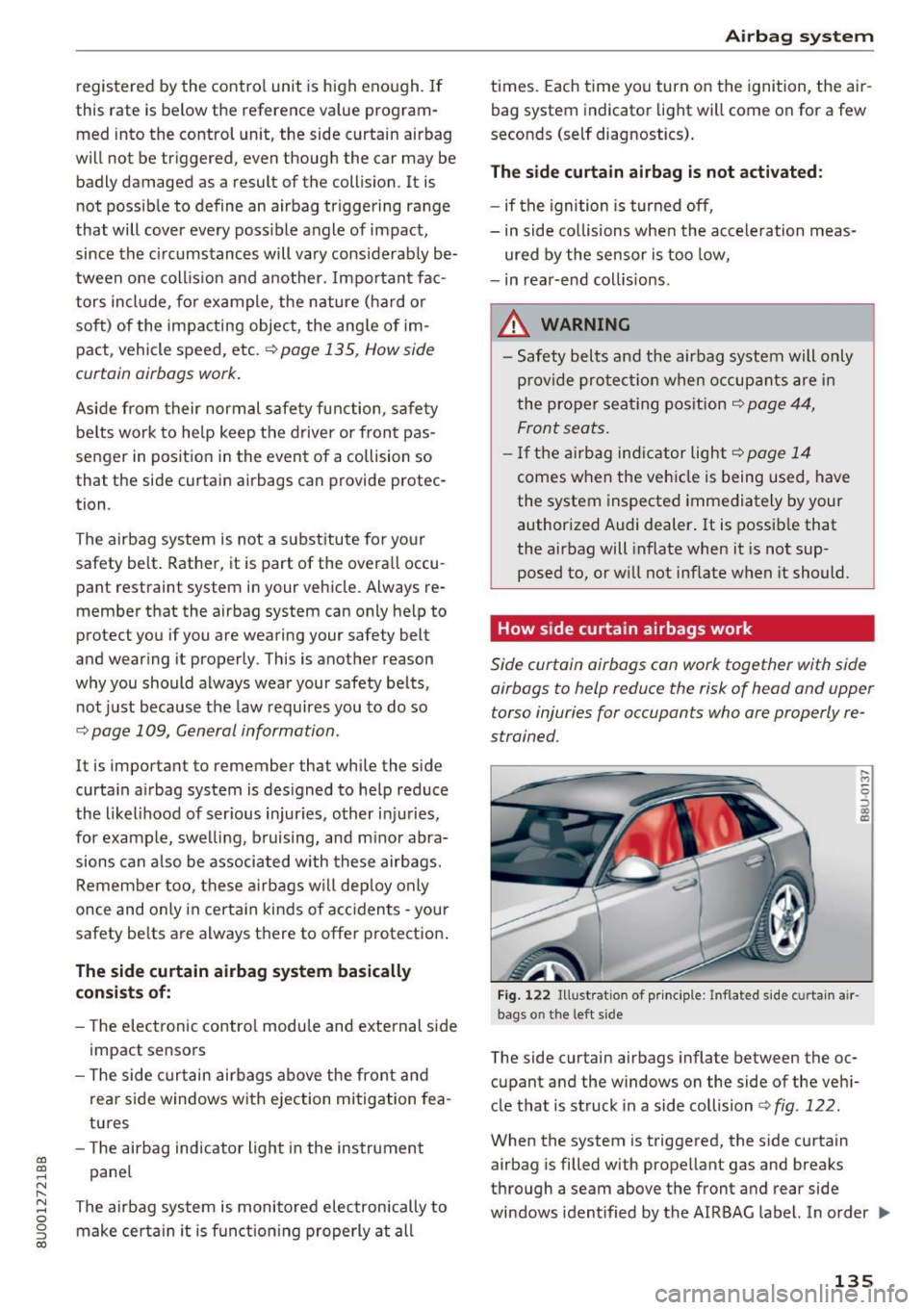
Fig. 122 Illust ration of pr incip le: Inflated s ide curta in air
bags o n the le ft s ide
The side curtain airbags inflate between the oc
cupant and the w indows on the side of the veh i-
cle that is struck in a side collision
¢ fig . 122.
When the system is triggered, the side curtain
airbag is filled with propellant gas and breaks
through a seam above the front and rear side
windows identified by the AIRBAG label. In order
liJ,
135
Page 171 of 236
a:,
a:,
...... N r--. N .... 0 0 ::, a:,
(D Note
Protect the vehicle battery against freezing if
the vehicle will be parked for long periods of time so that it is not destroyed by "freezing"
c;,page 169. Make sure that the vehicle bat
tery is charged.
@) For the sake of the environment
¥ Batteries contain polluting substances such
as sulfuric acid and lead. Contact an author
ized Audi dealer or authorized Audi Service
Facility for more information .
Charging the vehicle battery
Applies to: Q3
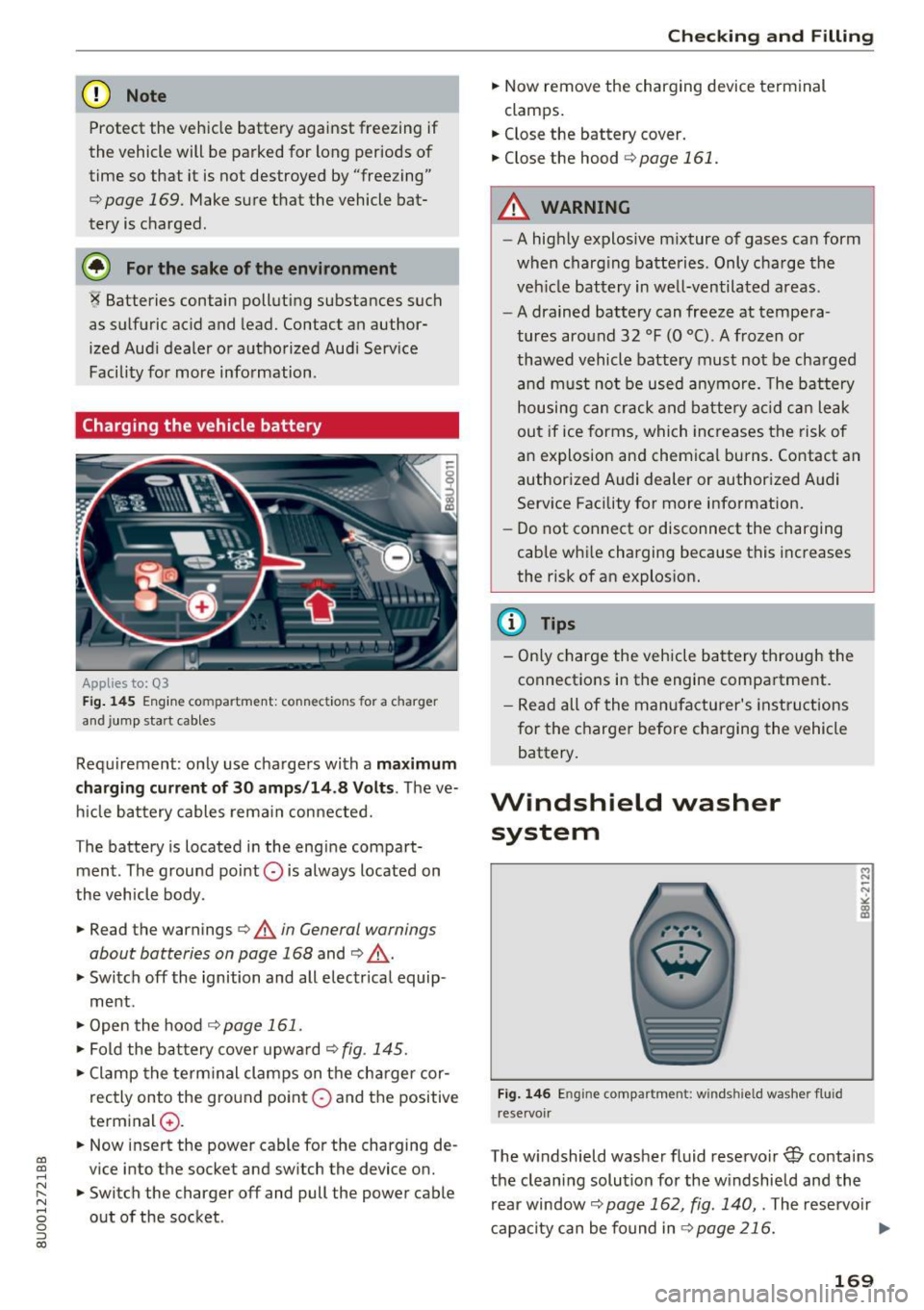
Fig. 145 Engine compartment: connections for a charg er
and jump start cables
Requirement : only use chargers with a maximum
charging current of 30 amps/14.8 Volts .
The ve
hicle battery cables remain connected.
The battery is located in the engine compart
ment. The ground point
0 is always located on
the vehicle body .
.,. Read the warnings
c;, .&. in General warnings
about batteries on page 168
and c;, .&, .
.,. Switch off the ignition and all electrical equip-
ment .
.,. Open the hood
c;, page 161 .
.,. Fold the battery cover upward c;, fig. 145 .
.,. Clamp the terminal clamps on the charger cor
rectly onto the ground point
0 and the positive
terminal
0 .
.,. Now insert the power cable for the charging de
vice into the socket and switch the device on.
.,. Switch the charger off and pull the power cable
out of the socket .
Checking and Filling
.,. Now remove the charging device terminal
clamps.
.,. Close the battery cover.
.,. Close the hood
c;, page 161.
A WARNING
-- A highly explosive mixture of gases can form
when charging batteries. Only charge the
veh icle battery in well-ventilated areas.
- A drained battery can freeze at tempera
tures around 32 °F (0 °C) . A frozen or
thawed vehicle battery must not be charged
and must not be used anymore . The battery
housing can crack and battery acid can leak
out if ice forms, which increases the risk of
an explosion and chemical burns. Contact an
authorized Audi dealer or authorized Audi
Service Facility for more information.
- Do not connect or disconnect the charging
cable while charging because this increases
the risk of an explosion.
@ Tips
- Only charge the vehicle battery through the
connections in the engine compartment.
- Read all of the manufacturer's instructions
for the charger before charging the vehicle
battery.
Windshield washer system
Fig. 146 Engine compar tmen t: win ds hiel d washer flu id
re servoir
M N
-N ~ (D a,
The windshield washer fluid reservoir W contains
the cleaning solution for the windshield and the rear window
c;, page 162, fig . 140, . The reservoir
capacity can be found in
c;,page 216. .,.
169
Page 172 of 236
Check ing and F illing
To reduce the risk o f lime sca le deposits on the
spray nozzles, use clean water with low amounts
of calcium. A lways add window cleaner to the wa
ter. When the outs ide temperatures are cold, an
anti-freezing agent should be added to the water
so that it does not freeze.
@ Note
-The concentration of anti-freezing agent
must be adjusted to the vehicle operating
cond itions in t he respective climate. A con
centration that is too high can lead to veh i
cle damage.
- Never add rad iator anti-freeze or other add i
tives to the washe r fluid .
- Do not use a glass cleaner that contains
paint solvents, beca use this cou ld damage
the pa int.
Service interval display
The service interval display detects when your ve
hicle is due for service.
The se rvice interva l disp lay works in two stages:
- Inspection o r oil change reminder : after acer-
ta in d istance is driven, a message appears in
the instrument cluster d isp lay every t ime the
ignition is sw itched on . T he remain ing distance
o r time is d isp layed b riefly.
- In spection or oil change due : if you r vehicle
has reached an inspection o r oi l change interval
o r both intervals at the same time, the mes
sage
Inspection due! or Oil change due! or Oil
change and in spection due!
a ppears br iefly a f
ter switching the ignition on .
Checking service intervals
You can check the rema ining distance o r time un
til the next oil change o r next inspection.
- Se lect: the
ICARI function button > (Car ) Sys
tems *
contro l button > Servicing & checks >
Ser vice interval display .
Resetting the indicator
Your author ized Audi dealer or authorized Audi
Serv ice Facility will reset the serv ice interval dis
p lay after pe rforming serv ice.
170
If you have changed the oi l yourself, yo u must re
set the oi l change interval.
Perform the fo llow ing to reset t he d isp lay:
- Select: the
I CARI funct io n button > (Car) Sy s
tem s*
control button > Serv icing & check s >
Service interval di splay . Turn the contro l knob
downwa rd to
Re set oil change int erval and
press the control knob .
(D Note
-On ly reset t he oil change ind icator if the oi l
was changed.
- Following the se rvic e interva ls is cr itica l to
ma inta ining the se rvice life and val ue of
yo ur vehicle, es pecially the eng ine. Even if
the mileage on the ve hicl e is low, do not ex
ceed t he time fo r the next service .
Page 193 of 236
00
00
......
"' ,....
"' ...... 0 0 :::,
00
Care and cleaning
General information
Regular, proper care helps to maintain your vehi
cle's value. It can a lso be a requirement when
submitting warranty claims for corrosion damage
and paint defects on the body.
The necessary care products can be obtained
from an authorized Audi dealer or authorized
Audi Service Facility . Read and follow the instruc
tions for use on the packaging.
A WARNING
- Us ing clean ing and care products incorrectly
can be dangerous to your health.
- Always store clean ing and care products out
of reach of children to reduce the r isk of po i
son ing .
@ For the sake of the environment
- Preferably purchase env ironmenta lly-friend
l y cleaning products.
- Do not d ispose of leftover cleaning and care
products with household trash.
Car washes
T he longer that deposits remain on the vehicle,
the more the surface may be damaged. High
temperatures such as those caused by sunlight increase the damag ing effect.
Befor e washing, rinse
off heavy depos its with
p lenty of water.
S tubborn depos its such as bird droppings or tree
sap are best removed with plenty of water and a
microfiber cloth.
A lso, wash t he un derside of yo ur vehicle once
road sa lt stops being used for the season .
Pressure washers
When washing your ve hicle w ith a pressure wash
e r, a lways fo llow the operating instructions pro
vided wi th the p ressure washer. This is especially
i mportant in rega rd to the pressure and sp raying
d istance . Do not aim the spray directly at seals on
side windows, doors, the hood, the luggage com-
Ca re and cleaning
partment lid or the panorama glass roof* or at
tires, rubber hoses, insulating material, sensors *
o r camera lenses* . Keep a distance of at least 16
in
(40 cm).
Do not remove snow and ice with a pressure
washer.
Never use cone nozz les o r high press ure nozzles .
T he water temperatu re must not be above
140 °F
(60 °().
Automatic car washes
Spray off the vehicle before washing.
Make s ure that the windows and roo f* are closed
and the windshie ld wipers are
off . Follow instruc
tions from the car wash ope rator, especially if
there are accessories attached to your vehicle.
If possible, use car washes that do not have
brushes .
Washing by hand
Clean the ve hicl e starting from the top and wor k
i ng down using a soft sponge o r cleaning br ush.
U se solven t-free cleaning produ cts.
Washing vehicles with matte finish paint by
hand
T o avo id damag ing the pa int w hen washi ng, fi rst
remove dust and large pa rticl es from you r vehi
cle . Insects, grease spots and fingerprints are
best removed w ith a special cleaner for matte
finish paint.
Apply t he product using a microf iber cloth . To
avoid damaging the paint surface, do not use too
much pressure.
Rinse the ve hicl e thoroug hly w ith wate r. Then
cl ean usi ng a neutral shampoo and a soft micro
fiber cloth .
Rinse the ve hicl e thorough ly aga in and let it air
dry. Remove any wate r residue using a chamois.
WARNING
-On ly wash the vehicle when the ign ition is
off and follow the instr uctions from the car
191