fuel AUDI Q5 2018 Owner's Manual
[x] Cancel search | Manufacturer: AUDI, Model Year: 2018, Model line: Q5, Model: AUDI Q5 2018Pages: 392, PDF Size: 60.56 MB
Page 313 of 392
u co ..... N r-N .....
~ 0 co
-If you are unable to determine whether or
not a particular fuel blend meets the speci
fications, ask your service station or its fuel
supplier.
- Do not use fuel for which the contents can
not be identified.
- Fuel system damage and performance prob
lems resulting from the use of fuels differ
ent from those specified are not the respon
sibility of Audi and are not covered under
the New Vehicle or the Emission Control
System Warranties .
- If you experience a loss of fuel economy or
driveability and performance problems due
to the use of one of these fuel blends, we
recommend that you switch to unblended
fuel.
Gasoline additives
A major concern among many auto manufactur
ers is carbon deposit build-up caused by the type
of gasoline you use.
Although gasoline grades differ from one manu
facturer to another, they have certain things in
common. All gasoline grades contain substances
that can cause deposits to collect on vital engine
parts, such as fuel injectors and intake valves.
Al
though most gasoline brands include additives to keep engine and fuel systems clean, they are not
equally effective .
Audi recommends using TOP TIER Detergent Gas
oline. For more information on TOP TIER Deter
gent Gasoline, please go to the official website
(www.toptiergas .com) .
After an extended period of using inadequate
fuels, carbon deposit build-ups can rob your
en
gine of peak performance.
(D Note
Damage or malfunction due to poor fuel qual
ity is not covered by the Audi New Vehicle
Limited Warranty.
Checking and Filling
Refueling
Fueling procedure
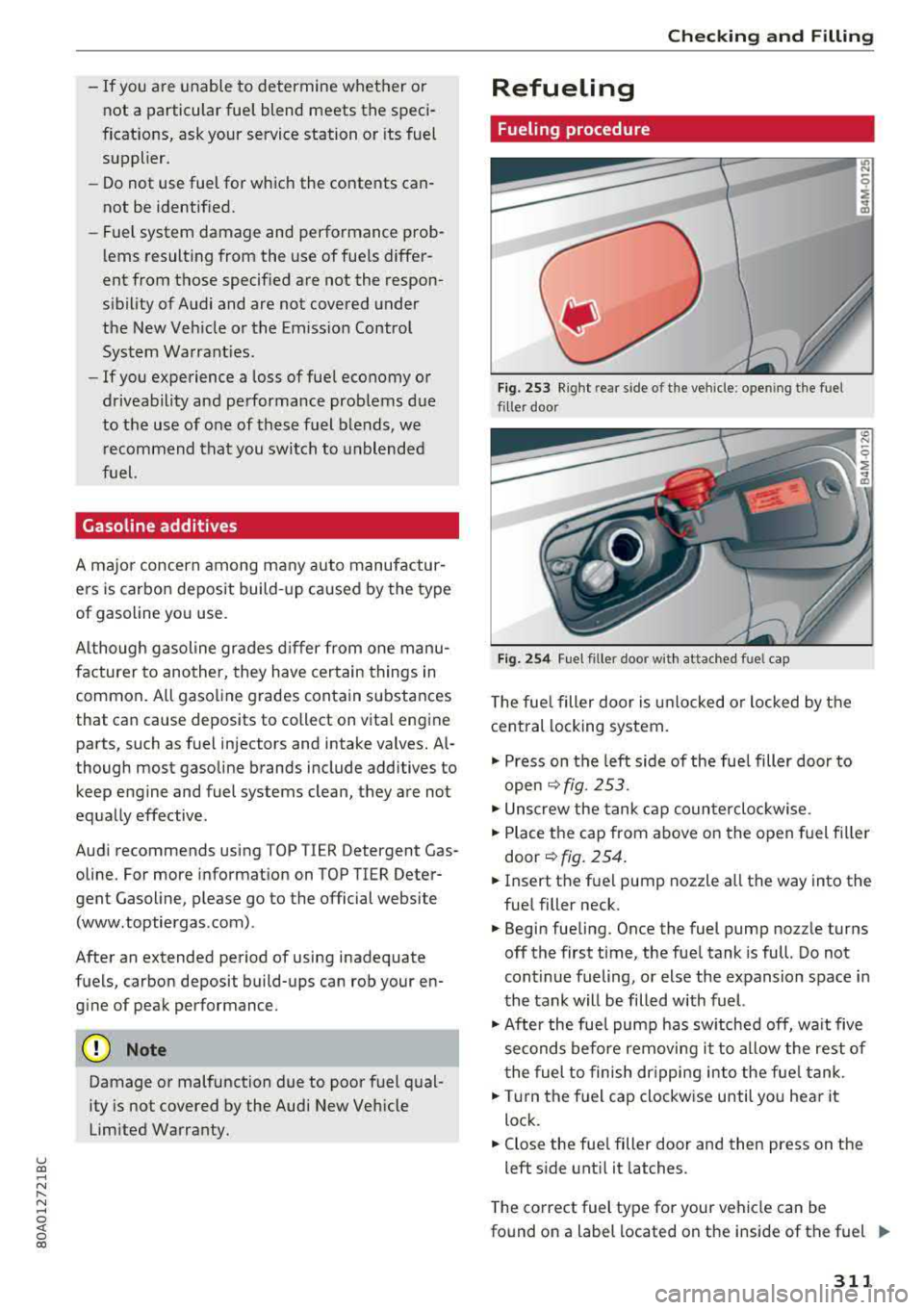
Fig. 253 Right rear s ide o f th e ve hicle : ope ning the fuel
filler door
Fig. 254 Fuel filler door with attached fue l cap
The fuel filler door is unlocked or locked by the
central locking system.
"' Press on the left side of the fuel filler door to
open
r::::>fig. 253.
"' Unscrew the tank cap counterclockwise.
"'Place the cap from above on the open fuel filler
door
r::::> fig. 254.
"'Insert the fuel pump nozzle all the way into the
fuel filler neck.
.,. Begin fueling. Once the fuel pump nozzle turns
off the first time, the fuel tank is full. Do not
continue fueling, or else the expansion space in
the tank will be filled with fuel.
"'After the fuel pump has switched off, wait five
seconds before removing it to allow the rest of
the fuel to finish dripping into the fuel tank.
"'Turn the fuel cap clockwise until you hear it
lock.
"' Close the fuel filler door and then press on the
left side until it latches .
The correct fuel type for your vehicle can be
found on a label located on the inside of the fuel
Iii>
311
Page 314 of 392
Check ing and F illing
fi ller door . For additional information on fuel,
see
r=> poge 310.
For the tank capac ity in yo ur vehicle , refer to the
Technical Data
r:!> pog e 369.
To reduce the r isk of fuel leak ing out or vapors
escap ing , make sure that the fuel tank is closed
correct ly. Otherwise
thP ¢'4 i ndicato r light will
t ur n on.
I f the central lock ing system malfunct ions, the
fue l filler door may emergency release
r=> poge 313.
_& WARNING
An improper f ueli ng p rocedure and improper
hand ling of fue l can lead to exp losions, fires,
severe b urns and other injuries .
- Do not smoke and keep away from open
flames .
- T he ign it ion m ust be switched off when re
f ueling .
- Cell p hones, radio devices and other radio
equipment s hou ld always be switched off
when refueling . Electromagnetic rays cou ld
cause sparks and start a fire .
- If you do not insert the fue l pump nozzle a ll
the way into the filler tube, then fue l can
l eak out . Spi lled fue l can ignite and start a
fire.
- Never get into the vehicle when refueling. If
there is an exceptional situation where the
vehicle must be entered, close the door and
touch a metal surface before touching the
fuel pump nozzle again . This will reduce the
risk of electrostat ic discharge that can cause
flying sparks . Sparks can start a fire when
r efuel ing .
_& WARNING
We recommend that you do not t ransport any
fue l conta iners in t he ve hicle. Fue l cou ld leak
out of the container and ignite, espec ially dur
ing an accident. This can cause exp losions,
fires and injuries .
- If you must transport fuel in a fuel contain
er, please note the following:
312
- Always place a fue l container on the
ground before fill ing . Never fill the fuel
container with fuel while it is in or on the
vehicle . Electrostatic charge can occur
while refueling and the fuel vapors could i gnite .
- For fuel containers made of metal, the fuel pump nozzle must always maintai n
contact with the conta iner to reduce the
r isk of s tat ic charge.
- Insert the fuel pump nozz le as far as pos
s ible into the fi lle r opening w hile refuel
ing .
-Fo llow lega l requ irements when using,
stor ing and t ransporti ng f uel con ta iners.
- Make su re that the fuel containe r meets
t h e i nd ust ry standa rds, fo r example ANS I
o r ASTM F852 -86.
@ Note
- Remove fuel that has overflowed onto any
vehicle components immediately to reduce
the risk of damage to the vehicle.
- Never dr ive unt il the fuel tank is completely
empty . T he irregula r supply of fue l that re
s u lts from that can cause eng ine misfi res.
Uncombus ted fuel will ente r th e exhaus t
system and increase the risk of damage to
the cata lytic converter .
@ For the sake of the environment
Do not overfill the fuel t ank, o therwise f uel
can leak o ut w hen the veh icle is warming up.
(D Tips
The fuel fille r doo r on your veh icle does not
l ock if you lock t he ve hicle from t he i nside us
i ng the centra l locking switc h.
Page 315 of 392
u co ..... N r-N .....
~ 0 co
Fuel filler door emergency release
If the central locking system is faulty, the fuel filler door can be unlocked manually.
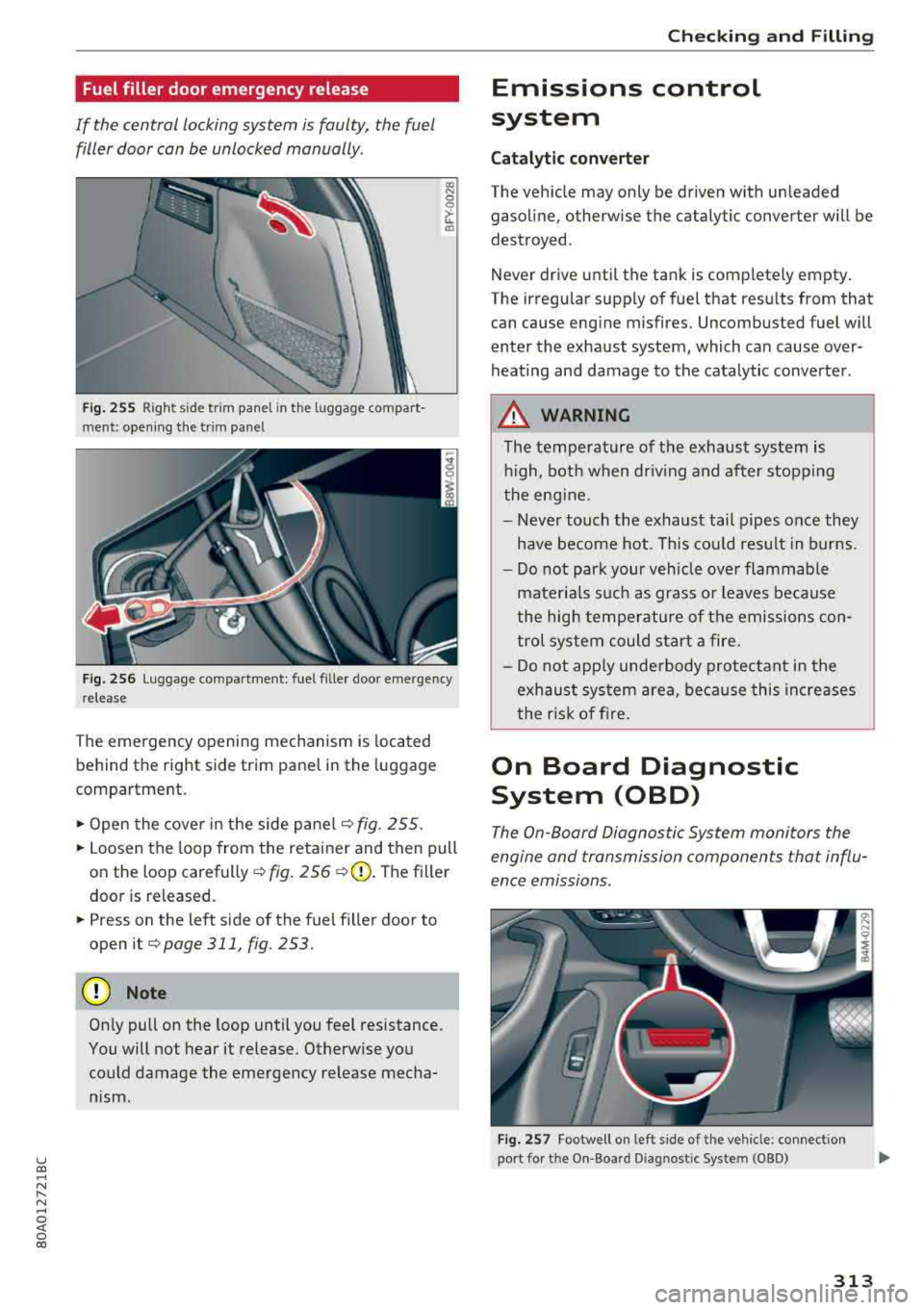
Fig . 255 Right side trim j)anel in the luggage compart
ment: opening the trim panel
Fig. 256 Luggage compartment: fuel filler door emergency
release
The emergency opening mechanism is located
behind the right side trim panel in the luggage
compartme nt.
.,. Open the cover in the side pane l¢ fig. 255.
.,. Loosen the loop from the retainer and then pull
on the loop
carefully¢ fig . 256 ¢ Q) . The filler
door is released .
.,. Press on the left side of the fuel filler door to
open it
¢page 311, fig. 253.
(D Note
On ly pull on the loop until you feel resistance.
You will not hear it release. Otherwise you could damage the emergency release mecha
nism.
Chec king and Filling
Emissions control
system
Cat alytic con verter
The vehicle may only be driven with unleaded
gasoline, otherwise the catalytic converter will be
destroyed.
Never drive until the tank is completely empty .
The irregu lar supply of fuel that results from that
can cause engine misfires. Uncombusted fuel will
enter the exhaust system, which can cause over
heating and damage to the catalytic converter .
A WARNING
The temperature of the exhaust system is
hi gh, both when driv ing and after stopping
the eng ine.
-
- Never touch the exhaust tail pipes once they
have be come hot. This cou ld resu lt in burns.
- Do not park your veh icle over flammable
mate ria ls such as grass or leaves because
the high temperature of the emissions con
trol system could start a fire.
- Do not app ly unde rbody protectant in the
exhaust sys tem area, beca use this increases
the risk of f ire.
On Board Diagnostic
System (OBD)
The On-Board Diagnostic System monitors the
engine and transmission components that influ
ence emissions .
Fig. 257 Footwell on left s ide of th e veh icle: conn ect io n
port fo r the O n-Board D iagnost ic System (08D)
313
Page 316 of 392
Check ing and F illing
On -Board Diagnostic S yst em
Eng ine data can be read out at the On-Board D i
agnostic System connection po rt using a special
testing device
¢ fig. 257 .
Indicator light
Ift hP ¢..ifi indicato r light b lin ks o r tu rns o n, there
is a malfunction that is caus ing poor emiss ions
qua lity and that could damage the catalytic con
verter.
Dr ive s low ly to an author ized Audi dealer or au
thor ized Audi Se rvice Fac il ity to have the ma l
f u nction co rrected.
The indicator l ight can also turn on if the fuel fi ll
er cap is not closed correct ly
9 page 311.
_& WARNING
Incorrect use of the connection po rt fo r th e
On-Board Diagnostic Sys tem can ca use mal
functions, which can then result in accidents
and serious injuries.
- Only allow an authorized Audi dealer or au
thorized Audi Service Facility to read out the
engine data .
Engine compartment
Working in the engine compartment
Special care is required if you are working in the
engine compartment
-
Fo r w ork in th e engi ne comp artm ent su ch as
c heck ing and filli ng flu id s, the re is a risk of in
jur y, scalding , ac cident s, and b urns . Fo r this
r easo n, follow all th e warning s and g enera l
sa fe ty preca ution s pro vided in the foll owin g in
f o rm ation . Th e e ng ine comp artmen t is a d an
ger ous ar ea .
9 &, .
_& WARNING
- T urn the eng ine off.
- Switch the ig nition off.
- Set the parking brake .
- Select the "P" selector lever pos it io n.
- let the engine coo l down.
314
- Never open the hood when there is steam or
coo lant escaping from the engine compart
ment, because there is a risk that you could
be burned . Wait unt il no steam or coolant is
escaping.
- Keep children away from the eng ine com
partment .
- Never sp ill fluids on a hot engine . These flu
ids (such as the anti-freezing agent con
tained in the coolant) can ignite .
- Avoid short c ircuits in the electrical system.
- When working in the engine compartment, remember that the radiator fan can switch
on even if the ignition is switched off, wh ich
increases the r isk of injury .
- Never open the cap on the coolant expan
sion tank when the engine is warm . The
cool ing system is under pressure .
- To protect your face, hands, and arms from
hot steam or coolant, cover the cap w ith a
large cloth when open ing.
- Do not remove the engine cover under any
circumstances . This increases the risk of
burns .
- If tests need to be performed with the en
gine runni ng, there is add itiona l danger due
to mov ing components (such as the r ibbed
be lt, alte rnato r and rad iato r fan) and from
the hig h-voltage ignition system.
- Do not unde r any ci rcumstances activate the
throttle inadvertent ly (for example, by hand
from the engine compartment) if the veh i
cle is stationary but the engine is running
and a gear is engaged. Otherwise, the vehi
cle will start to move immediate ly and this
could result in an acc ident.
- Pay attention to the following warnings
when work on the fue l system is required:
- Do not smoke.
- Never work near open flames .
- Always have a working fire extinguisher
nearby.
- All work on the battery or electrical system in your vehicle can result in injuries, chemi
cal burns, acc idents or burns . Because of
this, all work must be performed
only by an
author ized Audi dealer or author ized Audi
Serv ice Faci lity.
Page 319 of 392
u co .... N r--N .... 0 <( 0 00
A WARNING
Read and follow all WARNINGS before check
ing anything in the eng ine compartment
9poge 314.
Engine oil
If the engine oil level is too low
If you need to add engine oil, use an oil that is
listed on the sticker.
The sticker is located at the
front of the engine compartment
9 poge 316,
fig. 260.
I f the recommended engine oil is not available,
in an emergency you may add a maximum of 1
quart
Cl liter) of ACEA C3 or API SN engine oil
one time until the next oil change.
F or more information on the correct engine oil
for your ve hicle, contact an authorized Audi dea l
er or authorized Audi Service Facility. Have the oil
changed by an authorized Audi dealer or author ized Service Fac ility.
Audi recommends
~cas jjjjfl /[email protected] Fr,w.::«:J.o,-JAl.
Audi recommends using the Long Life high
performance engine oil from Audi Genuine
Parts.
Checking the engine oil level
The engine oil level con be checked in the Info
tainment system
Observe the safety precautions c::> & in Working
in the engine comportment on page 314.
~ Park your vehicle on a level surface.
~ S hu t the engine off when it is warm.
~ Switch only the ignition back on.
~ Wait approx imately two minutes.
~ Select in the Infotainment system: the I MENU I
button > Vehicle > left control button > Service
& checks
> Oil level.
~ Read the oi l level in the display. Add engine oil
if the bar in the oil leve l indicator is just before
"min"
c::> page 318.
Checking and Filling
@ Note
The engine oi l level must not be under the
"min" marking, as th is w ill increase the risk of
engine damage.
(D Tips
The oil leve l indicator in the display is only an
informational display.
If the oil leve l is too
l ow, a min imum oil warning appears in the in
strument cluster. Add oil and close the hood.
The current oil level is displayed in the Info
tainment system the next time the ignition is
switched on .
(D Tips
The engine oil consumption may be up to
0.5 quart/600 miles (0.5 liter/1,000 km), de
pending on driv ing sty le and operat ing cond i
tions. Consumption may be higher dur ing the
first 3,000 miles (5,000 km). Because of this,
the engine o il level must be checked regular
l y . It is best to check each time you refuel
your vehicle and before long drives.
- In order to provide effective lubrication and
cooling of internal engine components, a ll
internal combustion engines consume acer
tain amount of oil. Oil consumption varies
from engine to engine and may change sig
nifica ntly over the life of the engine. Typ i
cally, eng ines with a specified break-in peri
od consume more oil during the break-in pe
r iod than they consume after oil cons ump
t ion has stabilized.
- Under normal conditions, the rate of oil
consumption depends on the quality and
viscos ity of the oil, the RPM (revo lutions per
min ute) at which the engine is operated, the
ambient temperature and road conditions.
Further factors are the amount of oil dilu
tion from water condensation or fue l resi
due and the oxidation level of the oil. As any
eng ine is subject to wear as m ileage builds
up, the oil consumption may increase over
time until replacement of worn components
may become necessary.
.,..
317
Page 327 of 392
u a, .... N r-N ....
~ a,
Wheels
Wheels and Ti re s
General information
.,,.Check your tires regularly for
damage (punctures, cuts , cracks
and bulges). Remove foreign ob
jects from the tire tread .
.,,. If driving over curbs or similar
obstacles, drive slowly and ap
proach the curb at an angle.
.,,. Have faulty tires or rims re
placed immediately .
.,,.Protect your tires from oil ,
grease and fuel.
.,,. Mark tires before removing
them so that the same running
direction can be maintained if
they are reinstalled .
.,,.Lay tires flat when storing and
store them in a cool, dry locat ion
with as litt le exposure to light as
possible .
&_ WARNING -
-Never drive faster than the
maximum permitted speed
for your tires. This could cause the tires to heat up too much .
This increases the risk of an
acc ident because it can cause
the tire to burst.
-Always adapt your driving to the road and traffic condi-
Wheels
tions. Drive carefully and re
duce your speed on icy or slip
pery roads . Even winter tires
can lose traction on black ice .
@ N ot e
-Please note that summer and
winter tires are designed for
the condit ions that are typical
in those seasons. Audi recom
mends using winter ti res dur
ing the winter months. Low
temperatures significantly de crease the e lasticity of summ
er tires , which affects traction
and braking ab ility . If summer
tires are used in very cold
temperatures, cracks can form on the tread bars, resulting in
permanent tire damage that
can cause loud driving noise
and unbalanced tires.
-Burnished, polished or chromed rims must not be
used in winter driving condi
tions . The surface of the rims
does not have sufficient corro
sion protect ion for this and
could be permanently dam
aged by road salt or similar
substances.
325
Page 330 of 392
Wheel s
Glossary of tire and loading
terminology
Accessory weight
means the combined weight (in
excess of those standard items
which may be replaced) of auto matic transmission, power steer
ing , power brakes , power win
dows , power seats, radio, and
heater, to the extent that these
items are available as factory-in
stalled equipment (whether in
stalled or not).
Aspect ratio
means the ratio of the height to
the width of the tire in percent. Numbers of 55 or lower indicate a
low sidewall for improved steer
ing response and better overall
handling on dry pavement .
Bead
means the part of the tire that is
made of steel wires, wrapped or
reinforced by ply cords and that is
shaped to fit the rim.
Bead separation
means a breakdown of the bond
between components in the bead.
328
Cord
means the strands forming the
plies in the tire.
Cold tire inflation pressure
means the t ire pressure recom
mended by the vehicle manufac
turer for a tire of a designated
size that has not been driven for
more than a couple of miles (kilo
meters) at low speeds in the
three hour period before the tire pressure is measured or adjusted.
Curb weight
means the weight of a motor ve
hicle w ith standard equipment in
cluding the maximum capacity of
fuel, oil, and coolant, ai r condi
tioning and additional weight of
optional equipment.
E x tra load ti re
means a tire designed to operate
at higher loads and at higher in
flation pressures than the corre
sponding standard tire. Extra load
tires may be identified as "X L",
"
l" "EXTRA LOAD" or "RF" on X I I
the sidewall. .,.
Page 338 of 392
Wheels
increase the tire pressure to the
maximum specified
pressure ¢.&. -
Checking/correcting tire
pressure
~check the tire pressure at least
once per month and also check it
before every long drive .
~Always check the tire pressure
when the tires are
cold. Do not
reduce the pressure if it increas
es when the tires are warm.
~check the label¢ fig . 269 for
the correct tire pressure based
on vehicle load.
~correct the tire pressure if nec
essary .
~store the new tire pressure in
the Infotainment system
¢ page 343.
_&. WARNING
Always adapt the tire pressure
to your driving style and vehicle
load .
-Overloading can lead to loss of
vehicle control and increase
Tire pressure table
Please note that the information
contained in the following table
was correct at the time of print ing, and the information is sub
ject to change . If there are differ-
336
the risk of an accident. Read
and follow the important safe
ty precautions in
¢ page 337,
Tires and vehicle load limits.
-The tire must flex more if the tire pressure is too low or if
the vehicle speed or load are
too high. This heats the tire up
too much. This increases the risk of an accident because it
can cause the tire to burst and
result in loss of vehicle con
trol.
- Incorrect tire pressure in
creases tire wear and has a
negative effect on driving and
braking behavior, which in
creases the risk of an accident.
@ Note
Replace lost valve caps to re
duce the risk of damage to the
tire valves.
@ For the sake of the environment
Tire pressure that is too low in
creases fuel consumption.
ences between this information
and the tire pressures specified
Page 340 of 392
Wheels
vehicle's Gross Veh ic le Weig ht
R ati ng
("GVWR").
The "GVWR" includes the weight
of the basic vehicle, all factory in
stalled accessories, a full tank of
fuel, oil, coolant and other fluids
plus maximum load. The maxi
mum load includes the number of
passengers that the vehicle is in
tended to carry ("seating capaci
ty") with an assumed weight of 150 lbs . (68 kg) for each passen
ger at a designated seating posi
tion and the total weight of any luggage in the vehicle. If you tow
a trailer, the weight of the trailer
hitch and the tongue weight of
the loaded trailer must be includ
ed as part of the vehicle load .
The
Gro ss Ax le W eight Rating
("GAWR") is the maximum load
that can be applied at each of the
vehicle's two axles .
T he fact that there is an upper
limit to your vehicle's Gross Vehi
cle Weight Rating means that the
total weight of whatever is being
carried in the vehicle (including
the weight of a trailer hitch and
the tongue weight of the loaded
trailer) is limited . The more pas
sengers in the vehicle or passen -
338
gers who are heavier than the
standard weights assumed mean
that less weight can be carried as luggage .
The Gross Vehicle Weight Rating and the Gross Axle Weight Rat ing
are listed on the safety compli
ance sticker labe l located on the
driver's side B-pillar.
1.8. WARNING
Overloading a vehicle can cause loss of vehicle control, a crash
or other accident, serious per
sonal injury, and even death.
-Carrying more weight than your vehicle was designed to carry will prevent the vehicle
from handling properly and increase the risk of the loss of
vehicle control.
-The brakes on a vehicle that has been overloaded may not
be able to stop the vehicle
within a safe distance .
-Tires on a vehicle that has been overloaded can fail sud
denly, including a blowout and
sudden deflation, causing loss
of contro l and a crash.
-Always make sure that the to tal load being transported
-..
Page 342 of 392
Wheels
Wheel bolts and rims
Wheel bolts
Wheel bolts must be clean and loosen/tighten
easi ly.
Rims
Rims with a bolted rim ring* or with bolted wheel
covers* consist of multiple pieces . These compo
nents were bolted together using special bolts
and a special procedure . You must not repair or
d isassemble them
C> _&. .
_& WARNING
Wheel bolts that are tight ened or repaired in
correctly can become loose and result in loss
of vehicle control, which increases the risk of
an accident. For the correct tightening specifi
cation, see
e> page 356, Finishing.
-Always keep the wheel bolts and the
threads in the wheel hub clean and free of
grease.
- Only use wheel bolts that fit the rim.
- Always have damaged rims repaired by an
authorized Audi dealer or authorized Audi
Service Facility . Never repair or disassemble
rims yourse lf, because this increases the risk
of an accident.
Winter tires
Winter tires significantly improve the vehicle's
handling when driving in winter conditions . Be
cause of their construction (width, compound,
tread pattern), summer tires provide less trac
tion on ice and snow.
"'Use winter tires on all four wheels .
"'Only use winter tires that are approved for your
vehicle .
"'Please note that the maximum permitted
speed may be lower with winter tires
e> & in
General information on page 325.
An author
ized Audi dealer or authorized Audi Service Fa
cility can inform you about the maximum per
mitted speed for your tires .
"'Check the tire pressure after installing wheels
¢page 335.
340
The effectiveness of winter tires is reduced great
ly when the tread is worn down to a depth of
0.16 in (4 mm) . The characteristics of winter
tires also decrease greatly as the tire ages, re
gardless of the remaining tread.
@) For the sake of the environment
Reinstall summer tires at the appropriate
time, because they provide better handling
when roads are free of snow and ice. Summer
tires cause less road noise, tire wear and fuel
consumption .
(D Tips
You can also use all season tires instead of
winter tires. Please note that in some coun
tries where winter tires are required, only
winter tires with the
& symbol may be per
mitted.
Snow chains
Snow cha ins not only improve the driving in win
ter road conditions, but also the braking.
"'Only install snow chains on the rear wheels.
"' Check and correct the seating of the snow
chains after driving a few feet, if necessary. Fol
low the instructions from the manufacturer.
"'Note the maximum speed of 30 mph (SO km/
h). Note the local regulations.
Use of snow chains is only permitted with certain
rim/tire combinations due to technical reasons.
Check with an authorized Audi dealer or author
ized Audi Service Facility to see if you may use
snow chains.
Use
fine-mesh snow chains. They must not add
more than 0 .53 in (13.S mm) in height, including
the chain lock.
You must remove the snow chains on roads with
out snow . Otherwise, you could impair driving
ability and damage the tires .
_& WARNING
Using incorrect snow chains or installing snow
chains incorrectly can result in loss of vehicle
9"'