ECU AUDI Q5 2018 Workshop Manual
[x] Cancel search | Manufacturer: AUDI, Model Year: 2018, Model line: Q5, Model: AUDI Q5 2018Pages: 392, PDF Size: 60.56 MB
Page 320 of 392
Checking and Filling
-With all these variables coming into play,
no standard rate of o il consumption can be
established or specified. There is no alterna
tive to checking the oil level regularly and
frequently.
- If you have the impression your engine con
sumes excessive amounts of oil, we recom
mend that you consult an authorized Audi
dealer to have the cause of your concern properly diagnosed . Keep in mind that the
accurate measurement of oil consumption
requires great care and may take some
time. An authorized Audi dealer has instruc
tions about how to measure oil consump
tion accurately.
- You can find information on engine oil and
engine oil capacities for the USA at
www.audiusa.com/help/maintenance, or
for Canada at www.audi.ca/ca/web/en/
customer-area/ care-a nd-maintena nee/ aud
i
service-schedules. html , or call
800 -822-2834.
Adding engine oil
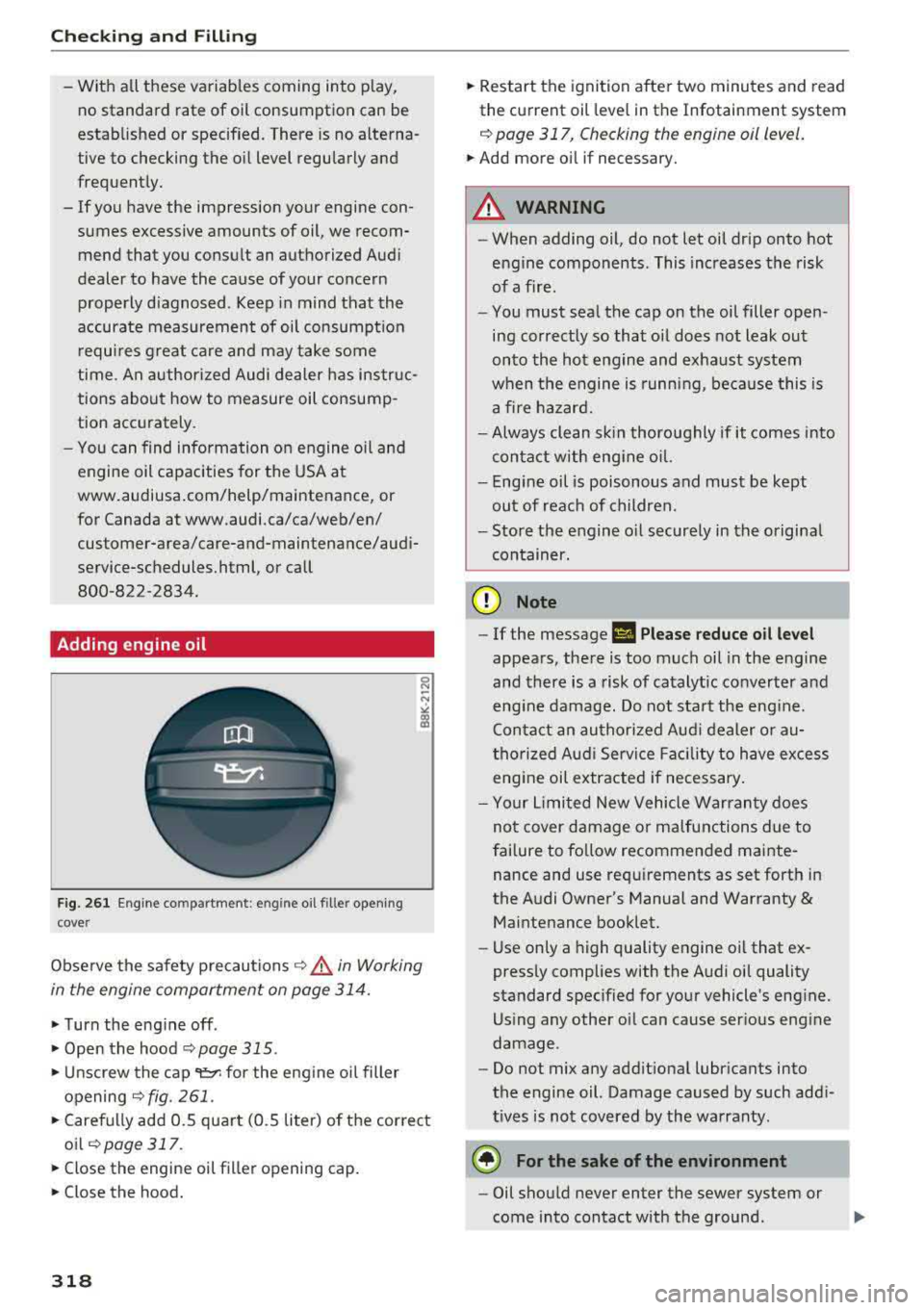
Fig. 261 Engine co mpartment : en gin e oil fille r opening
c ove r
0 N
-N ,.:
gi
Observe the safety precautions c::, &. in Working
in the engine compartment on page 314.
"Turn the engine off.
" Open the hood c::, page 315.
" Unscrew the cap 't=?1 for the engine oil filler
opening
c::, fig. 261.
,.. Carefully add O.S quart (0 .5 liter) of the correct
oil
c::, page 317.
,.. Close the engine oil filler opening cap.
,.. Close the hood.
318
,.. Restart the ignition after two minutes and read
the current oil level in the Infota inment system
c::, page 317, Checking the engine oil level.
"Add more oil if necessary.
A WARNING
- When adding oil, do not let oil drip onto hot
engine components . This increases the risk
of afire.
- You must seal the cap on the oil filler open
ing correctly so that oil does not leak out
onto the hot engine and exhaust system
when the engine is running, because this is
a fire hazard.
-Always clean skin thoroughly if it comes into
contact with engine oil.
- Engine oil is poisonous and must be kept
out of reach of children.
- Store the engine oil securely in the original
container.
(D Note
- If the message II Please reduce oil level
appears, there is too much oil in the engine
and there is a risk of catalytic converter and
engine damage. Do not start the engine.
Contact an authorized Audi dealer or au
thorized Audi Service Facility to have excess
engine oil extracted if necessary.
- Your Limited New Vehicle Warranty does
not cover damage or malfunctions due to
failure to follow recommended mainte
nance and use requirements as set forth in
the Audi Owner's Manual and Warranty &
Maintenance booklet.
- Use only a high quality engine oil that ex
pressly complies with the Audi oil quality
standard specified for your vehicle's engine. Using any other oil can cause serious engine
damage .
- Do not mix any additional lubricants into
the engine oil. Damage caused by such addi
tives is not covered by the warranty .
@ For the sake of the environment
-Oil should never enter the sewer system or
come into contact with the ground .
Page 322 of 392
Checking and Filling
Coolant addit ive
The coolan t additive is made of anti-freezi ng and
corrosion protection agents. Only use the fo llow
ing coolant additives . These additives may be
mixed w ith each other.
Coolant additive Specification
G 12e vo
TL 774 L
G12 ++ TL 774 G
G13 TL 774)
The amount of coolant additive that needs to be
mixed with water depends on the climate where
the vehicle will be operated. If the coolant addi
tive percentage is too low, the coolant can freeze
and damage the engine.
Coolant Freeze protec-
tion
additive
Warm min . 40% m in . -13 °F
reg ions (-25
°C)
max . 45%
Cold min. 50% max.
-40 °F
reg ions (-40 °C)
max. 55%
(D Note
- Before the start of winter, have an author
i zed Audi dealer or authorized Audi Service
Fac ility check if the coolant additive in your
vehicle matches the percentage appropriate
fo r the climate. This is especially important
when driving in co lde r climates.
- If the appropriate coolant additive is not
available in an emergency, do no t add any
othe r addi tive. You cou ld d amage the en
gine. If this happens, only use water and re
store the correct mixture ra tio with the
specified coolant additive as soon as possi
ble.
- Only refill with new coo lant.
- Radia tor sealan t must no t be m ixed w it h
the coo lant .
320
Adding coolant
(l!J .. ,
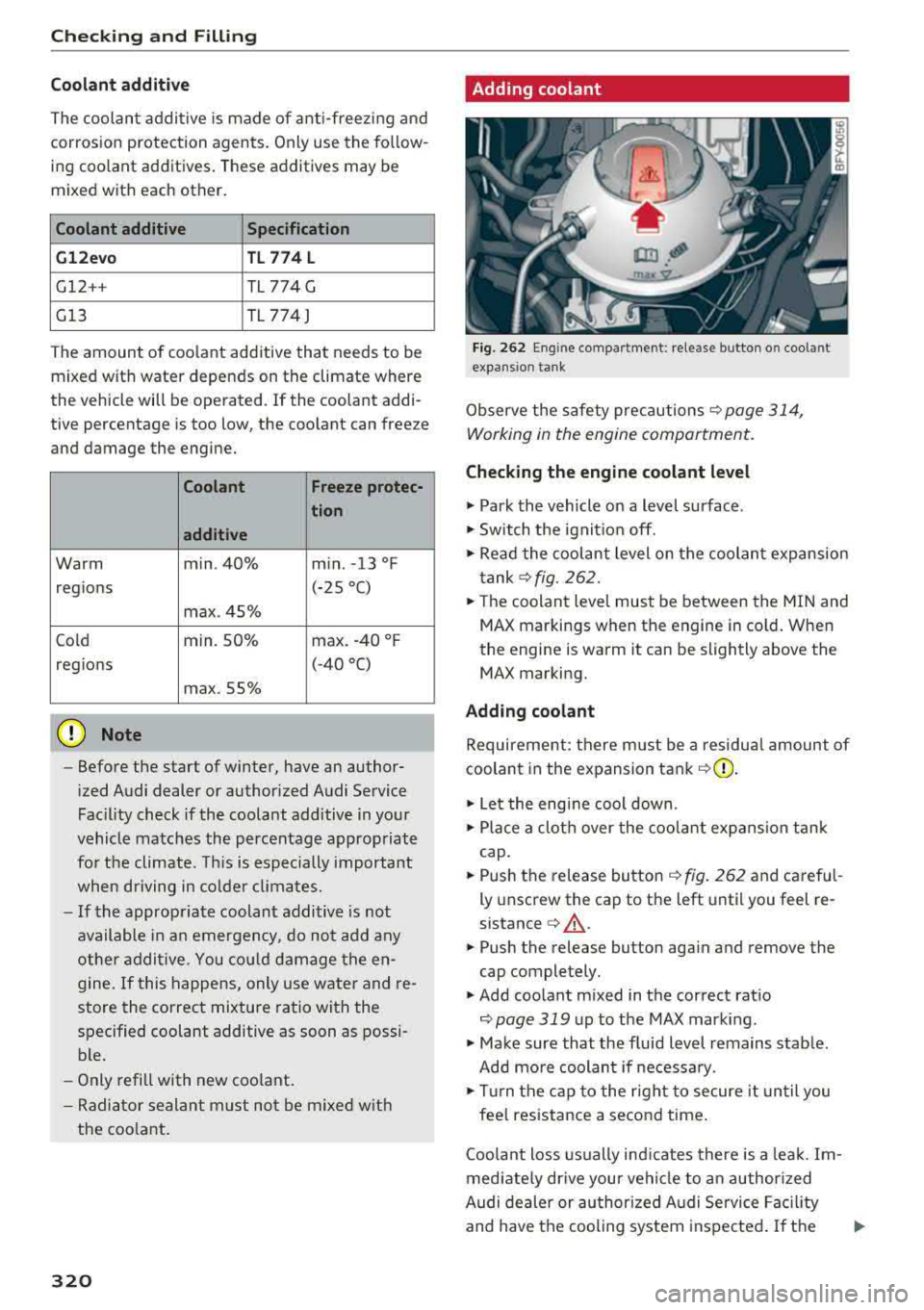
Fig. 262 En g in e compartment: release butto n on coola nt
expansio n tank
Observe the safety precautions ¢ page 314,
Working in the engine compartment.
Checking the engine coolant level
" Park the vehicle on a level surface.
11> Switch the igni tion off.
" Read the coolant level on the coolan t expansion
t ank
¢ fig. 262.
"T he coolant level must be between the MIN and
MAX marki ngs when the engine in cold . When
the engine is warm it can be slightly above the
MAX marking.
Adding coolant
Requireme nt: there m ust be a residual amount of
coolant in the expansion tank
¢ (D.
"Le t the engi ne cool down.
" Place a clot h over the coo lant exp ansion tank
cap.
" Push the release button ¢ fig. 262 and carefu l
ly unscrew the cap to the left unti l you feel re
sistance ¢ _A.
"Push the release button aga in and remove the
cap completely.
" Add coo la nt m ixed in the correct rat io
r:=;, page 319 up to the MAX mark ing .
" Ma ke sure that the f luid level remains stab le .
Add mo re coolan t if ne cessa ry .
" Tur n the cap to the r ight to secure it until you
fee l resista nce a second time .
Coo la nt loss us ually ind icates there is a lea k. Im
med iate ly dr ive you r veh icle to a n author ized
Audi dealer or au thor ized Audi Servi ce Fac ility
and have the cooling system ins pected .
If the
Page 352 of 392
Emergency assistance
Emergency assistance
General information
.,. Park the vehicle as far as possible from moving
traffic in the event of a breakdown. In the event
of a flat tire, park the vehicle on a level surface .
It you are on a steep hill, be especially careful.
.,. Set the parking brake .
.,. Switch the emergency flashers on .
.,. Have the passengers exit the vehicle . They
should move to a safe place, for example
be
hind a guard rail.
.&, WARNING
Follow the steps given above . This is for your
protection and the for the safety of other driv
ers.
Equipment
Vehicle tool kit/tire mobility kit/vehicle
jack
Applies to: vehicles with the vehicle tool kit, tire mobility kit
and veh icle jack
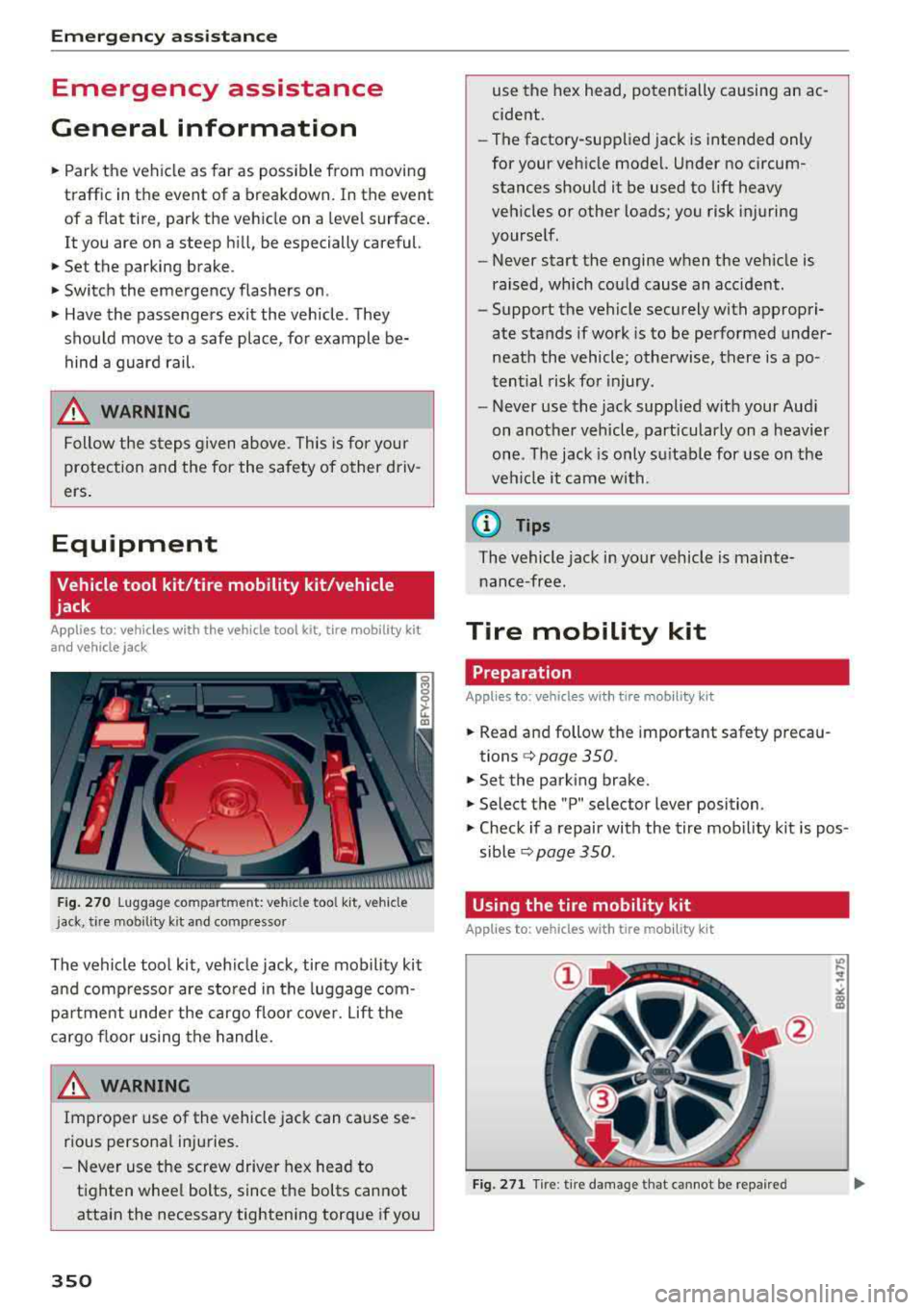
Fig. 270 Luggage co mpartment: ve hicle too l kit, veh icle
j ack, tir e m ob ility k it and comp ressor
The vehicle tool kit, vehicle jack, tire mobility kit
and compressor are stored in the luggage com·
pa rtm ent under the cargo floor cover. Lift the
cargo floor using the handle .
.&, WARNING
Improper use of the vehicle jack can cause se
rious persona l injuries.
-Never use the screw driver hex head to
tighten wheel bolts, since the bolts cannot
attain the necessary tightening torque if you
350
use the hex head, potentially causing an ac
cident.
-The factory-supplied jack is intended only
for your vehicle model. Under no circum stances should it be used to lift heavy
vehicles or other loads; you risk injuring
yourself.
-Never start the engine when the vehicle is
raised, which could cause an accident .
-Support the vehicle securely with appropri·
ate stands if work is to be performed under·
neath the vehicle; otherwise, there is a
po ·
tential risk for injury .
-Never use the jack supplied with your Audi
on another vehicle, particularly on a heavier
one . The jack is only su itable for use on the
vehicle it came with.
(i) Tips
The vehicle jack in your vehicle is mainte· nance-free .
Tire mobility kit
Preparation
Applies to: vehicles with tire mob ility kit
.,. Read and follow the important safety precau-
tions
c::> page 350 .
.,. Set the parking brake .
.,. Select the "P" selector lever position .
.,. Check if a repair with the tire mob ility kit is pos ·
sible
c::> page 350 .
Using the tire mobility kit
Applies to: vehicles with tire mob ility kit
Fig. 271 Tir e : tire damage that cannot be repaired
Page 355 of 392
u co ..... N r-N .....
~ 0 co
-If you have a flat tire, move a safe distance off the road. Turn off the engine, turn the
emergency flashers on and use other warn
ing devices to alert other motorists.
-Make sure that passengers wait in a safe
place away from the vehicle and well away
from the road and traffic.
-To help prevent the vehicle from moving
suddenly and possibly slipping off the jack*,
always fully set the parking brake and block
the front and back of the wheel diagonally opposite the wheel being changed. When
one front wheel is lifted off the ground,
placing the Automatic Transmission in P
(Park) will
not prevent the vehicle from
moving .
-Before you change a wheel, be sure the
ground is level and firm. If necessary, use a
sturdy board under the jack*.
-Always store the vehicle tool kit, the jack*
and the replaced tire in the luggage com
partment ¢ page 2 5 7.
(D Tips
-Obey all laws.
-Before changing the wheel, you must acti-
vate the jacking mode*, so that the auto
matic controls for the air suspension* do
not make it more difficult to lift the vehicle
with the jack*
c::> page 354.
Removing the caps
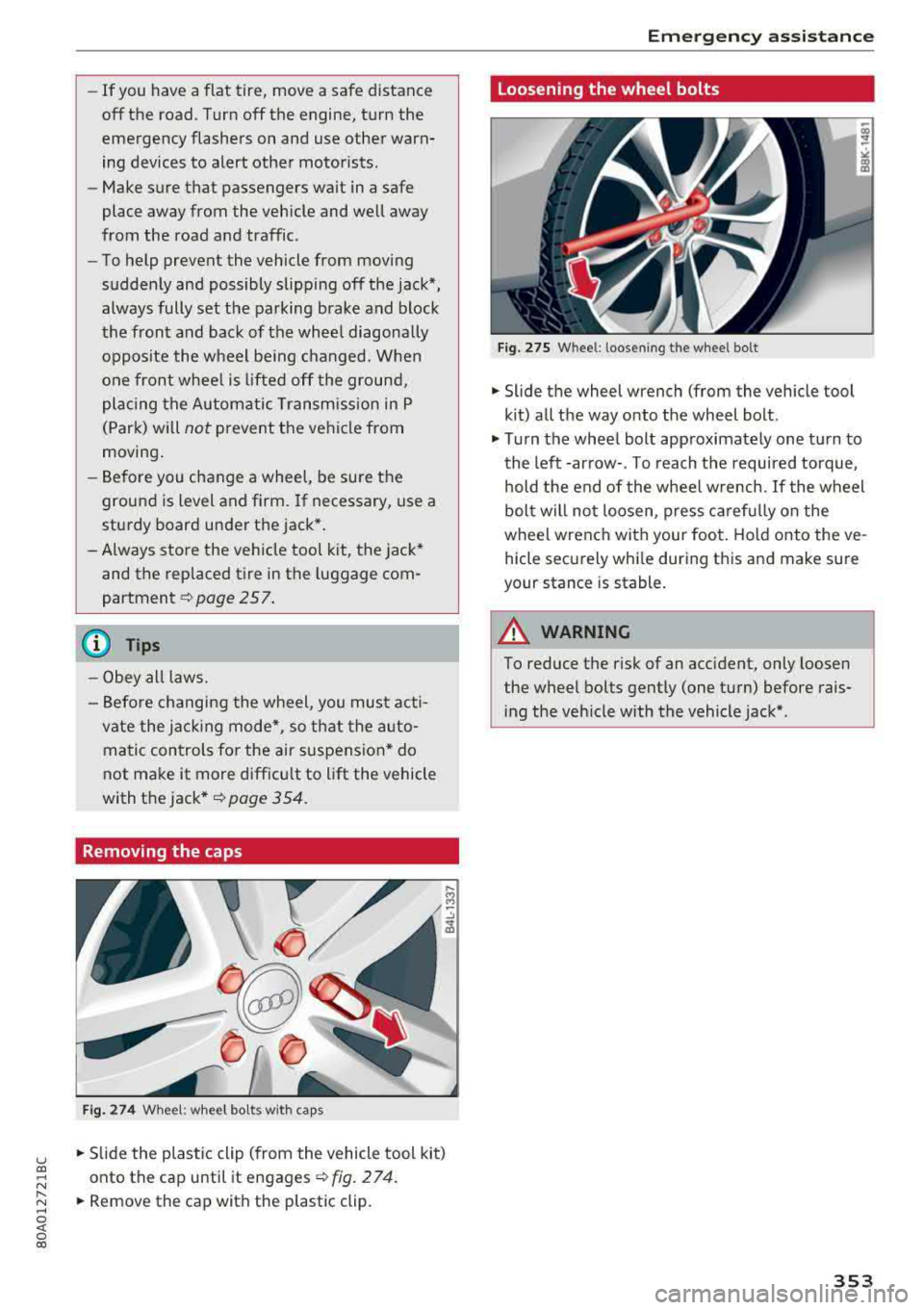
Fig . 274 Wheel: wheel bolts with caps
.. Slide the plastic clip (from the vehicle tool kit)
onto the cap until it engages
¢ fig. 274.
.. Remove the cap with the plastic clip.
Emergency assistance
Loosening the wheel bolts
Fig. 275 W hee l: l oosen ing t he wheel bolt
.. Slide the wheel wrench (from the vehicle tool
kit) all the way onto the wheel bolt .
.. Turn the wheel bolt approximately one turn to
the left -arrow-. To reach the required torque,
hold the end of the wheel wrench. If the wheel
bolt will not loosen, press carefully on the
wheel wrench with your foot. Hold onto the ve
hicle securely while during this and make sure
your stance is stable.
A WARNING
--To reduce the risk of an accident, only loosen
the wheel bolts gently (one turn) before rais
ing the vehicle with the vehicle jack* .
353
Page 356 of 392

Emergency assistance
Raising the vehicle
Fig. 276 Sill p ane ls : mar kin gs
Fig. 277 Sill: pos itio nin g th e ve hicle jack
"' Place the vehicle jack* (vehicle tool kit) on a
firm surface . Use a flat , stable support if neces
sary . On a slippery surface such as tile, you
shou ld use a non-slip pad (such as a rubber
mat) ¢,&. .
"'Find the mark ing on the sill that is closest to
the tire that will be changed
¢ fig. 2 76 . Behind
the marking, there is a lifting point on the side
sill for the vehicle jack*.
"'Turn the handwheel to raise the vehicle jack*
under the lifting point on the side sill until the
bracket on the jack @completely covers the
notch on your vehicle .
"' Align the vehicle jack* so the bracket @covers
the notch and the base @ is flat on the ground .
T he base @ mus t be direct ly unde r the lifting
po int @ .
"'Mount the crank on the vehicle jack*: insert the
crank into the opening on the handwheel. Turn
the crank to the left or right to secure it.
"'Continue raising the vehicle jack* with the
crank until the wheel lifts off the ground slight
ly .
354
A WARNING
,-
- Make sure the vehicle jack* is stable . There
is a risk of injury when the ground is slick or
soft, because the vehicle jack* could slide or
sink .
- Only raise your vehicle with the vehicle jack*
provided by the factory. If you use a veh icle
jack designed for another vehicle, your vehi
cle can slide and cause injury.
- Position the vehicle jack* only at the desig
nated mounting points on the side sill and
align the jack. Otherwise, the vehicle jack*
could slip and cause an injury if it does not
have sufficient hold on the vehicle.
- Vehicles with air suspension*: changes in
temperature or load can affect the height of
the stopped vehicle .
- To reduce the risk of an accident,
neve r start
the engine when the vehicle is raised.
- To reduce the risk of injury, support the
ve
hicle securely with suitable stands if work is
to be performed underneath the vehicle .
- To help prevent injury to yourself and your
passengers:
- Do not raise the veh icle until you are sure
the jack* is securely engaged.
- Passengers must not remain in the vehicle
when it is jacked up .
- Make sure that passengers wait in a safe
place away from the vehicle and well away
from the road and traffic .
- Make sure jack position is correct, adjust
as necessary and then continue to ra ise
the jack*.
- If work has to be done under the vehicle,
ensure that it is safely supported on suita
ble stands -risk of injury!
- Never start the engine when the vehicle is
on the jack* - risk of accident!
(D Note
Do not lift the vehicle by the sill. Position the
vehicle jack* only at the designated mounting
po ints on the side sill. Otherw ise, your vehicle
will be damaged .
..,.
Page 358 of 392
Emergency assistance
Finishing
.,. Reinstall the caps on the whee l bolts if neces
s ar y.
.,. Store the vehicle tool kit i n its design ate d
p lace .
.,. If the removed whee l does not fit in the spare
whee l we ll, store it sec ure ly in t he luggage
compartment
c::> page 257.
.,. Check the tire press ure on the installed whee l
as soon as possible .
.,. Correct the tire pressure a nd s to re i t in the I n
fota inment system
c::> page 343 .
.,. The w heel bo lt tig hte ning spe cifica tion mus t be
1 00 f t lbs ( 140 N m). C heck it as soon as p ossi
ble wi th a t orq ue w rench . Drive care fully unti l
then .
.,. Have the faulty wheel rep laced as quick ly as
poss ib le .
(D Tips
- If you notice t hat the w hee l bo lts are cor
r oded and diffic ult to t urn wh ile chan ging a
tire, they sh ould be replaced before you
chec k the tig htening torque.
- D rive at reduced speed until you have the
tig htening torques c hec ke d .
Notes on wheel changing
Please read the info rmation c::> page 332 if you
are go ing to use a replaceme nt tir e w hich is dif
f er ent fro m the tires on your v ehicle.
Afte r you change a t ire:
- Check the tire pressure on the replacement
tire immediately after installation.
- Have the wheel bolt tightening torque
checked with a torque wrench as soon as pos
sible by your authorized Audi dealer or quali
fied workshop.
- With steel and alloy wheel rims , the wheel
bolts are correctly tightened at a torque of
100 ft lbs (140 Nm) .
- If you notice that the wheel bolts are corroded
and difficult to turn while changing a tire,
they should be replaced before you check the
tightening torque.
356 -
Replace the flat tire with a new one and have
it installed on your vehicle as soon as possi
ble. Remount the wheel cover.
Until then, drive with extra care and at reduced
speeds.
_&. WARNING
- If you are going to equip yo ur vehicle with
tires or r ims which diffe r from those which
were facto ry installed, then be sure to read
the information
c::> page 332 .
- Always make sure the damage d w heel or
even a flat tire and the jack* and too l kit are
properly secured in the luggage compart
m en t and a re not loos e in the pass eng er
compa rtm ent .
- In a n accide nt or sudden maneuv er they
could fly forward, i njuring anyo ne in the ve
hicle .
- Always s to re damaged wh eel, jack* an d
t oo ls sec urely in th e luggage com partm ent .
O the rwise, in an a ccide nt or sud den ma neu
v er they co u ld fl y forw ard, c ausi ng injur y to
pa ssengers in the ve hicl e.
-
Collapsible spare tire
App lies to: vehicles wit h co llapsible spare t ire
The co llaps ib le spa re tir e is i nte nded fo r sho rt
t e rm use o nly. H ave the d amage d tire checked
a nd rep lac ed , if necess ary, by an autho riz ed Audi
d ealer or au thor ized A udi Se rvi ce Fac ility as soo n
as possible.
T here a re so me restr ictions o n the use of the co l
lap sib le spar e tir e. The coll apsible spar e tir e h as
b een desig ned s pecif ic a lly for your type o f vehi
cl e. Do not rep lace it wit h the co llaps ible spa re
ti re from a nother type of vehicle .
T he collapsibl e spar e tir e is l oc at e d i n the l ug
g age co mpa rtmen t under the ca rgo floo r cover .
Requireme nt: t he v ehicl e too l ki t
c::> pag e 350 and
th e co mpr ess or m ust b e laid out.
Removing
.,. Fold th e cargo floor cove r back c::> page 350 ,
fig. 270 .
Page 359 of 392
u co .... N ,..._
N ..... 0 <( 0 00
~ Turn the handwheel counter -clockwise and re-
move it .
~ Remove the collapsible spare tire.
You must inflate the co ll apsible spa re ti re be
forehand in order to use it.
Inflating
~ Remove the valve cap from the collaps ible
spare tire.
~ T ighten the compressor hose on the collapsible
spare tire va lve.
~ Connect the compressor hose to a vehicle sock
et and switch it on.
~ Let the compressor run until the specified value
on the tire pressure sticker is reached
<=> page 335 , fig. 269 <=>@.
~ Screw the valve cap back onto the valve .
Returning to stora ge
~ Remove the valve cap to drain the air.
~ Wait several hours before placing the collapsi
ble spare t ire in the spare wheel well. Only then
will it fold down completely so that you can
store it securely .
~ Then screw the valve cap back onto the valve .
~ Secure the collapsible spare t ire w ith the hand-
wheel.
~ Fold the cargo floor cove r bac k into p lace.
Snow chains
Using snow chains on the collaps ible spare t ire is
not permitted for techn ica l reasons .
If you have to drive with snow chains and a rear
tire fa ils, mount the collapsible spare tire in
place of a front tire . Install the snow chains on
the fro nt t ire that you removed, and insta ll that
i n p lace of the rear t ire that fa iled .
.8, WARNING
- Only use the co llaps ible sp are t ire in eme r
gencies and dr ive very caref ully, especially if
it is more than six years old.
- T he comp ressor and the hose can become
very hot d uring operat ion which in creases
the risk of burn injuries .
-
Emergenc y ass is tanc e
-After insta lling a co llapsib le spare tire, the
tire pressure m ust be checked as quickly as
possible to reduce the r isk of an accident.
- Do not drive faster than SO mph (80 km/h)
with the collapsib le spare tire . Driving faster
than that increases the risk of an acc ident.
- Avoid full-throttle acceleration, heavy brak ing, and fast cornering with the collapsible
spare tire, because this increases the risk of
an accident .
- Never drive using more than one collapsible
spare tire, because this increases the risk of
an accident .
- Normal tires or w inter t ires must not be
mounted on the collapsible spare tire r im .
@ Note
The compressor must be switched off after 12
minutes at the most to reduce the risk of
overheating. Let the compressor cool down
for several m inutes before us ing it aga in .
357
Page 366 of 392

Emergency situations
@ Tips
The discharged battery must be properly con
nected to the vehicle's electrical system .
When jump starting or charging the battery,
never connect the negative ground cable to
the battery negative post because the battery
manager system must be able to detect the
battery's state of charge. Always connect the
negat ive g round cable to the negative ground
post of the battery manager control unit.
Using the jump start
cable
Both jump start cables must be connected in the
correct order!
Fig. 286 E ngin e compartme nt: co nn ectors for jump start
cables and a charger
Fig. 287 Jump starting with a battery in another vehicle:
@-pro vidi ng current, @-dra ined
The procedure described below for connecting
jumper cables is intended to provide a jump start
for your vehicle.
Vehicle with discharged battery
... Turn off lights and accessories, move automatic
transm ission lever to "N" (Neutral) or "P" (Pa rk)
and set parking bra ke.
364
Connecting the positive cable (red) to the
positive terminal
... Open the red cover on the positive terminal
c:::>fig. 286.
1. Secure one end of the pos itive cable (red) to
the jump start pin
c:::> fig. 287 (J) (pin under
the red cover = "pos itive") on the veh icle that
needs to be started @.
2. Secure the other end of the positive cable
(red) to the posit ive terminal @on the bat
tery provid ing the cur rent @.
Connecting the negative cable (black) to the
negative terminal
3. Secure one end of the negative cable (black)
to the negative terminal @ on the battery
that is providing the current @.
4. Secure the other end of the negative cable
(black) to the jump start
pin @ (hex head pin
= "negative") on the vehicle that needs to be
started @.
Starting the engine
... Sta rt the eng ine on the vehicle providing the
jump start @and let it run at idle .
... Now start the engine on the vehicle with the
drained battery @.
... If the engine does not start, stop the starting
procedure after 10 seconds and then repeat it
after approx imately 30 seconds.
"' Once the engine w it h the drained vehicle bat
tery has been started, remove the cables in the
reverse order from the way they were install ed.
"' Close the red cover on the positive terminal.
The battery is vented to the outside to prevent
gases from enter ing the vehicle inter ior. Make
sure th at the j umper clamps are well connected
with their
metal ports in full contact with the
battery terminals .
A WARNING
-To avoid serious personal injury and damage
to the vehicle, heed all warnings and instruc
tions of the jumper cable manufacturer. If in
doubt, call for road service .
-Jumper cables must be long enough so that
the vehicles do not touch.
..,.
Page 367 of 392
-When connecting jumper cables, make sure
that they cannot get ca ught in any mov ing
parts in the engine compartment.
- Do not bend over the batteries - danger of
chem ica l burns!
- The battery cell lock ing screws must be
t ightened sec ure ly.
- Be fore you check anything in the e ngine
compartment, a lways read and hee d all
WAR NINGS
q page 314 .
(D Note
Impro per hook -up of jum pe r cables can r uin
the gene rato r.
- Always connect POSITI VE (+ ) to POS ITIV E
( + ), and NEGATIVE( -) to NEGAT IVE( -)
g roun d post of t he battery mana ger contro l
u nit.
- Check that a ll sc rew p lugs on t he battery
cells are screwed in firmly. I f not, t ighten
plugs prior to connecting clamp on negative
batte ry terminal.
- P lease note that the procedure fo r con nect
i ng a jumper cab le as desc ribed above ap
p lies specifica lly to the case of yo ur vehicle
being jump starte d. When you are giv ing a
ju mp s ta rt to anothe r vehicle , d o
not con
n ect the neg ative (-) cab le to the neg ative
(-) t ermin al on the di sch arged b attery @
q fig. 287 . In ste ad , securely connec t the
nega tive ( -) cab le to either a solid me tal
com ponent that is f irm ly bolted to the e n
gine block o r to the engine bloc k itself. If
the battery that is be ing cha rge d does not
vent to the outs ide, escap ing battery gas
could ignite and exp lode!
Towing with a tow truck
General hints
Your Audi requires special handling for towi ng .
The fo llow ing information is to be used by com
mercia l tow tr uck operators who know how to op-
u e rate the ir equip ment safe ly. co .....
~ - Never tow your Audi, towing will cause dam-N
~ age to the engine and transmission .
0 co
Emergency situations
-Never wrap the safety chains or winch cables
around the brake lines .
- To prevent unnecessa ry damage , your Audi
must be transported with a flatbed truck.
- To load the vehicle on to the flatbed, use the
towing loop found in the vehicle tools and at
tach to the front or rear anchorage
¢ page 365 and ¢ page 366 .
A WARNING
-A veh icle being towed is not safe for passen-
ge rs . Neve r allow anyone to ride in a vehicle
b eing towed, fo r any r eason.
Front towing loop
Only install the front towing loop when it is
needed.
Fig . 288 Front bu mpe r: in sta lling the tow ing loop
T he threaded opening for the towing loo p is lo
cate d on t he righ t side of the front bum per.
.. Remove the towing loop from the vehicle too l
ki t
¢ pag e 350 .
.. Pull s harp ly o n the trim in the dire ct ion o f the
a rrow to remove
¢ fig . 288.
.,. T ig hten t he towi ng loop in the threade d open
in g until it stops and then tighten it with a
wheel wrenc h .
.,. After using, p lace the tow ing loop back in the
veh icle tool k it.
A WARNING
-If the tow ing loop is not tightened until it
stops whe n installing, t he threads may be
pull ed ou t wh en towing the vehicle and th at
could ca use a n accident.
365
Page 368 of 392

Emergency situations
(D Note
The trim is attached to the bumper with sev
eral hooks . To reduce the risk of damage, do
not use any force when removing and instal
ling.
Rear towing loop
F ig . 289 Rear bumper: installing the towing loop
Vehicles with a towing loop
On vehicles without a factory-installed trailer
h itch*, the towing loop threads are located on
the right rear side of the bumper.
... Remove the towing loop from the vehicle tool
kit ¢
page 350.
... Press the cap inward with brief, forcefu l pres
sure ¢ fig. 289. The cap will loosen from the
bumper.
... Tighten the towing loop in the threaded open
ing until it stops and then t ighten it w ith a
wheel wrench.
... After using, place the towing loop back in the
vehicle tool kit.
Vehicles with a trailer hitch*
... Attach the towing bar or the towing cable to
the tra iler hitch.
Vehicles with a factory-installed trailer hitch* are
not equipped with towing loop threads at the
rear.
A WARNING
If the towing loop is not tightened until it
stops when insta lling, the threads may be
pulled out when towing the vehicle and that
could cause an accident.
366
A WARNING
,-
Applies to: vehicles with trailer hitch
- Only use a special towing bar to prevent
damaging the ball hitch. These towing bars
have been spec ially designed for trailer tow
ing hitches.
- Only use special towing cables.
Loading the vehicle onto a flatbed truck
Fig. 290 Veh icle on flatbed t ruck
Front hook up
.,. Align the vehicle with the centerline of the car
carrier ramp .
.,. Attach the winch hook to the front towline eye
previously installed .
Rear hook up
... Align the vehicle with the centerline of the car
carrier ramp.
.,. Attach the w inch hook to the rear towline eye
previously installed .
(D Tips
Check carefully to make sure the hook-up is
secure before moving the car up the flatbed
truck ramp .