ABS AUDI Q7 2012 Owner´s Manual
[x] Cancel search | Manufacturer: AUDI, Model Year: 2012, Model line: Q7, Model: AUDI Q7 2012Pages: 342, PDF Size: 86.42 MB
Page 174 of 342
172 Safety belts
What happens to occupants not wearing
safety belts?
In crashes unbelted occupants cannot stop themselves from flying forward and being in
jured or killed. Always wear your safety belts!
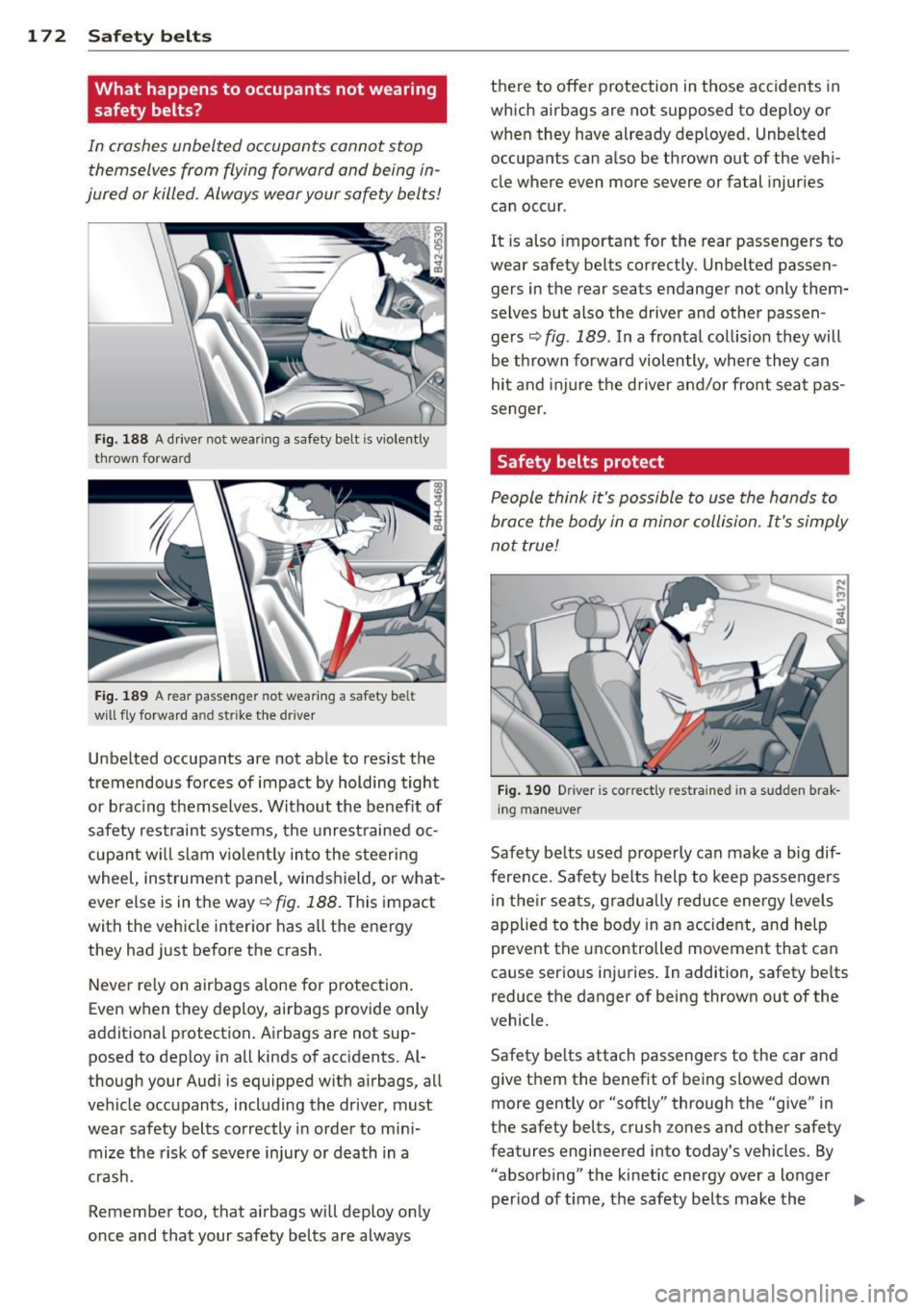
Fig. 188 A driver not wearing a safety belt is violently
thrown forward
Fig. 189 A rear passenger not wearing a safety belt
will fly forward and strike the drive r
Unbelted occupants are not able to resist the
tremendous forces of impact by holding tight
or bracing themselves. Without the benefit of
safety restraint systems, the unrestrained oc
cupant will slam violently into the steering
wheel, instrument panel, windshield, or what
ever else is in the way
q fig. 188. This impact
with the vehicle interior has all the energy
they had just before the crash.
Never rely on airbags alone for protection.
Even when they deploy, airbags provide only
additional protection. Airbags are not sup posed to deploy in all kinds of accidents. Al
though your Audi is equipped with airbags, all
vehicle occupants, including the driver, must
wear safety belts correctly in order to mini
mize the risk of severe injury or death in a
crash.
Remember too, that airbags will deploy only
once and that your safety belts are always there to offer protection in those accidents
in
which airbags are not supposed to deploy or
when they have already deployed. Unbelted occupants can also be thrown out of the vehi
cle where even more severe or fatal injuries
can occur .
It is also important for the rear passengers to
wear safety belts correctly. Unbelted passen
gers in the rear seats endanger not only them
selves but also the driver and other passen gers¢
fig. 189. In a frontal collision they will
be thrown forward violently, where they can
hit and injure the driver and/or front seat pas
senger.
Safety belts protect
People think it's possible to use the hands to
brace the body in a minor collision. It's simply
not true!
Fig. 190 Driver is correctly restra ined in a sudden brak
ing maneuver
Safety belts used properly can make a big dif
ference. Safety belts help to keep passengers
in their seats, gradually reduce energy levels
applied to the body in an accident, and help
prevent the uncontrolled movement that can
cause serious injuries. In addition, safety belts
reduce the danger of being thrown out of the
vehicle.
Safety belts attach passengers to the car and
give them the benefit of being slowed down
more gently or "softly" through the "give" in
the safety belts, crush zones and other safety
features engineered into today's vehicles. By
"absorbing" the kinetic energy over a longer
period of ti me, the safety belts make the
lilJJ,
Page 185 of 342
prevent them from providing any
protection.
- An improperly insta lled child restraint
can interfere with the airbag as it de
ploys and seriously injure or even kill the
child -even with an Advanced Airbag
System .
- Always carefully follow the manufactur
er's instructions provided with the child
safety seat or carrier.
- Never place additional items on the seat
that can increase the total weight regis
tered by the weight-sensing mat and can
cause i njury in a c rash .
Front airbags
Description of front airbags
The airbag sys tem can provide supplemental
protection to properly restrained front seat
occupants.
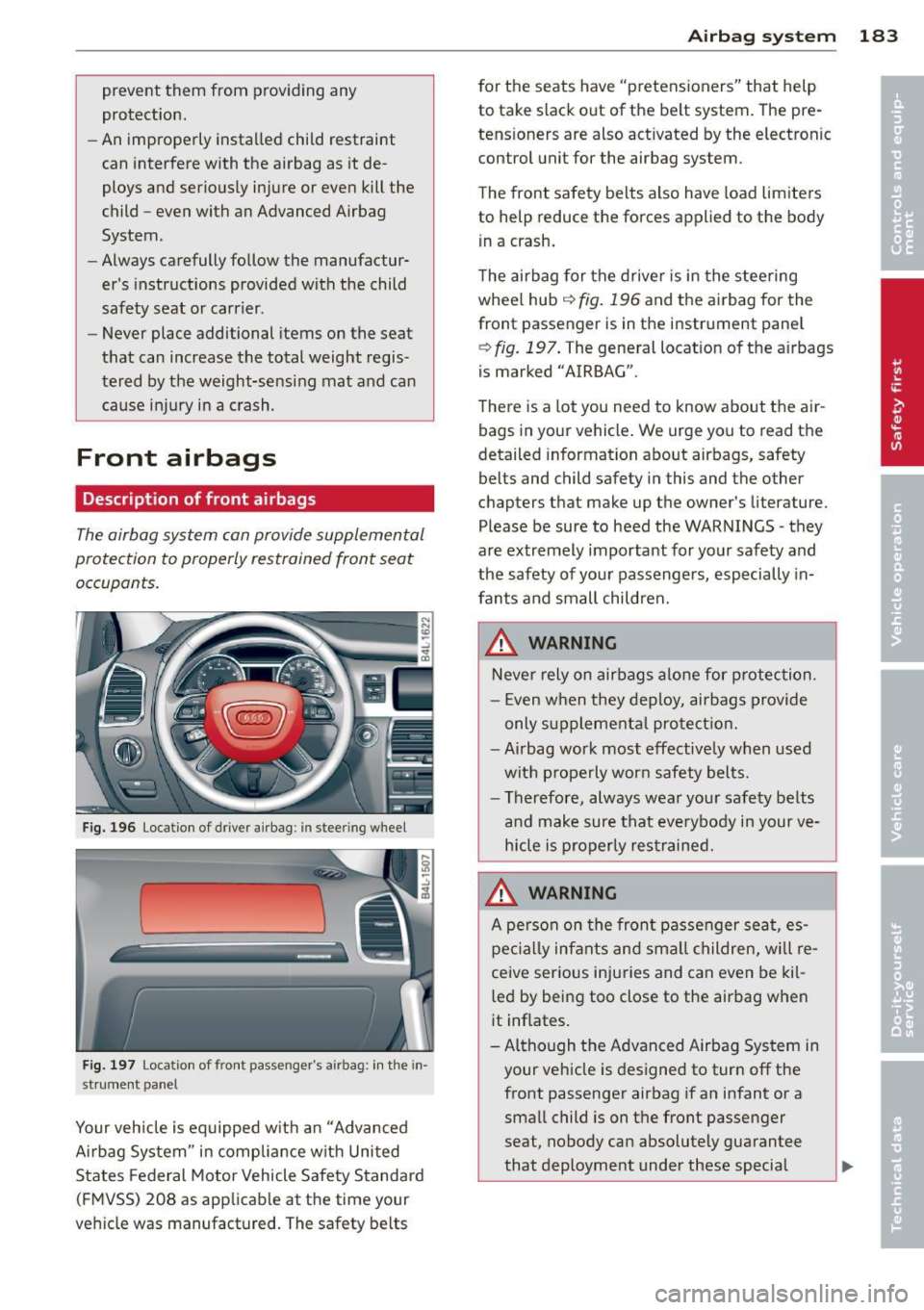
Fig. 196 Loca tion of driver ai rbag : in stee rin g whee l
Fig. 197 Locat io n of front passenger 's a irbag : in t he in
s trume nt panel
Your veh icle is eq uipped w it h an "Advanced
Ai rbag System " in compli ance w it h United
S tates Federal Motor Vehicle Safety Standard
(F MVSS) 208 as app licab le at the t ime your
ve hicle was manufactured. The safety be lts
A irba g sy stem 183
for the seats have "p retens ioners" that help
to take slack o ut of the be lt system. The pre
tens ioners are also act ivated by the electronic
control unit for the airbag system.
T he front sa fety belts also have load limite rs
to help reduce the forces applied to the body
in a crash .
T he airbag for the drive r is in the stee ring
whee l hub
q fig. 196 and the airbag for the
front passenger is in the instrument panel
~ fig. 197 . The general locat ion of the a irbags
is marked "AIRBAG" .
There is a lot you need to know about the ai r
bags in your vehicle . We urge you to read t he
detailed information about airbags, safety
belts and child safety i n this and the other
chapters that make up the owner's literature. Please be sure to heed the WARNINGS -they
a re extremely important for your safety and
the safety of yo ur passengers, especially in
fants and small children.
_&. WARNING
N eve r rely on airbags alone for protec tion.
- Even w hen they deploy, airbags provide
only s uppleme ntal pro tect ion .
- Airbag work most effective ly when used
wit h prope rly wor n safety belts .
- Therefore , always wea r you r safety belts
and make sure that eve rybody i n your ve
hicle is p rope rly res trained.
_&. WARNING
A pe rs o n on the fron t passe nger seat, es
pe cial ly inf ants and sm all children, will re
ceive serio us injuries and can even be kil
l e d by being too close to the airbag when
it inflates .
- Altho ugh the Advanced Airbag System in
your veh icle is designed to tur n off the
front passenge r airbag if an infant or a
small child is on the front passenger
seat, nobody can absolutely guarantee
that deployment under these specia l
11>-
Page 187 of 342
If the total weight on the front passenger
seat is more than that of a typical 1 year -old,
but less than the weight of a small adult, the
front airbag on the passenger side may deploy (the
P ASS ENGER AIR B AG OFF light does not
come on).
For example, th e airbag may depl oy if:
-a small child that is heavier than a typical 1
year-o ld child is on the front passenger seat
(regardless of whether the child is in one of
the chi ld safety seats listed
<=) page 202),
-a chi ld who has outgrown child restraints is
on the front passenger seat.
I f the front passenger airbag is turned
off, the
PA SSENGER AIR B AG OFF light in the center
of the instrument panel wi ll come on and stay
on.
The front a irbag on the passenger side may
not deploy (the PA SSENG ER AIR BAG O FF
light does not ill uminate and stay lit) if:
- a small adu lt or teenager is on the front pas
senger seat
- a passenger who is not sitt ing upright w ith
their back against a non-reclined backrest
with their feet on the vehicle floo r in front
of the seat is on the front passenge r seat .
If the front passenger airbag deploys, the
Federal Standard requires the a irbag to meet
the " low risk" deployment cr iteria to help re
duce the risk of inju ry through interaction
with the airbag. "Low risk" deployment occurs in those crashes that take place at lower de
celerations as defined in the electronic control
un it.
<=) page 190
Al ways rememb er: Even tho ugh your vehicle
is equipped with Advanced Airbags, the safest
p lace for children is properly restrained on the
back seat. Please be sure to read the impor
tant information in the sect ions that follow
and be sure to heed all of the WARNINGS.
A WARNING
To reduce the risk of injury when an airbag inflates, a lways wear safety belts prope rly.
A irbag system 185
-If you are unrestrained, leaning forward,
sitt ing s ideways or out of pos ition in any
way, your risk of injury is much higher.
- You will a lso receive serious injuries and
could even be killed if you are up aga inst
the airbag or too close to it when it in
flates -even w ith an Advanced A irbag
<=)page 179.
A WARNING
-
A child in a rearward-fac ing ch ild safety
seat installed on the front passenger seat
will be ser ious ly injured and can be killed if
the front airbag inflates -even with an Ad
vanced A irbag System.
- Al tho ugh the Advanced Airbag System in
your veh icle is designed to turn
off the
front airbag when a rearward -facing
child restraint has been insta lled on the
front passenger seat, nobody can abso
lutely guarantee that dep loyment is im
possible in all conceivable s ituations that
may happen dur ing the usefu l life of your
veh icle.
- The inflating airbag will h it the ch ild
safety seat or infant carrier with great
force and will smash the child safety seat
and child against the bac krest, center
armrest, doo r, or roof.
- Always install rearward-facing chi ld re
straints on the rear seat.
- If you must install a rearwa rd fac ing
child safety seat on the fro nt passenger
seat because of exceptiona l circumstan
ces and the
PASSENGER AIR BAG OFF
light does not come on and s tay on, im
mediately insta ll the rear-facing ch ild
safety seat in a rear seating position and
have the airbag system inspected by your
author ized Audi dealer.
A WARNING
If, in except iona l circumstances, you must
install a forward-facing child restraint on
the front passenger's seat:
~
•
•
Page 196 of 342

194 Airbag system
-If the vehicle or the circuit interrupter
is scrapped, all applicable safety pre
cautions must be followed.
@, For the sake of the envi ronment
Undeployed airbag modu les and preten
sioners might be classified as Perchlorate
Material -special handling may app ly, see
www.dtsc.ca.gov/hazardouswaste/per chlorate. When the vehicle or parts of the
restraint system including airbag modules
and safety belts w ith p retens ioners are
scrapped, all applicable laws and regula
tions must be observed. Your authori zed
Aud i dea ler is familiar wit h these requ ire
ments and we recommend that you have
your dealer perfo rm this service for you.
Other things that can affect Advanced
Airbag performance
Changing the vehicle's suspension system can
change the way that the Advanced Airbag Sys
tem pe rforms in a crash. For example, using
tire-r im combinations not app roved by Aud i,
lowe ring the vehicle, ch anging the stiffness of
the suspension, incl uding the springs, s uspen
sion struts, shock absorbers etc. can change
the forces that are measured by the ai rbag
sensors and sent to the electronic control
un it. Some suspension changes can, for exam
p le, increase the force levels measured by t he
sensors and make the airbag system deploy in
crashes in wh ich it would not dep loy if the
cha nges had not been made. Other k inds of
cha nges may reduce the force levels meas
ure d by the sensors and preven t the a irbag
from deploying when it sho uld .
The senso rs in the safety belt buckle fo r th e
d river and front passe nger sea t tell the elec
tronic control module if the safety belt is
l atched or not. I f the safety belt is being used,
the front airbag will deploy at a slightly high er rate of vehicle deceleration than if the safe
ty belt is not being used. Therefore, in a par
ticular collision, it is poss ible that an airbag
will not deploy at a seating position where the safety belt is being used but will inflate at the position where t
he safety be lt is not being
used. It is important that nothing interfere
with the safety be lt b uckles so that the sen
sors can send the correct information about
safety belt use to the electronic control un it.
A WARNING
=
Changi ng the veh icle's suspension includ-
i ng use of unapp roved tire-rim combina
tions can change Advanced Airbag per
fo rma nce and increase the r is k of seri ous
personal injury in a cra sh.
- N ever install suspension components
that do no t have the same pe rformance
chara cter istics as the compone nts o rigi
na lly ins talled on your vehicle .
- Never use tire-rim combinations that
have not been approved by Audi.
A WARNING
= -
It ems stored between the safety be lt
bu ckle and the cente r console can cause
the sensors in the b uckle to send the
wrong information to the e lectronic con
trol module and prevent the Advanced Air bag System from working prope rly.
- Always make sure that nothing can inter
fere with the safety belt buckles and that they are not obstructed .
Side airbags
Description of side airbags
The airbag system can provide suppl emental
protection to properly restrained occupants.
F ig . 20 0 Side air bag locat ion in th e driver's seat
Page 221 of 342
Intelligent technology Notice about data
recorded by vehicle
control modules
Your vehicle is not equipped with an Event Da
ta Recorder (EDR), installed by some manu
facturers for the express purpose of capturing
data for retrieval after an accident or crash
event. EDRs are sometimes called "crash re
corders".
Some state laws restrict the retr ieval or down
loading of data stored by EDRs that were in
stalled in a vehicle for the express purpose of
retrieving data after an accident or crash
event without the owner's consent.
Although your vehicle is not equipped with an
EDR, it is equipped with a number of electron
ic control modules for various vehicle systems
such as, for example, engine function, emis
sion control, as well as for the airbags and
safety belts.
These electronic control modules also record
vehicle-related data during norma l vehicle op
eration for diagnostic and repair purposes.
The recording capacity of the electronic con
trol modules is limited to data (no sound is re
corded) and only a small amount of data is ac
tually recorded over a very limited period of
time and stored when a system fault or other
condition is sensed by a control unit. Some of
the data then stored may relate to vehicle
speed, direction, braking as we ll as restraint
system use and performance in the event of a
crash or other condition. Stored data can only be read and downloaded with special equip
ment.
Intelligent technology 219
Electronic Stability
Control (ESC)
General information
The ESC improves the vehicle stability.
. ..---------..
------- -
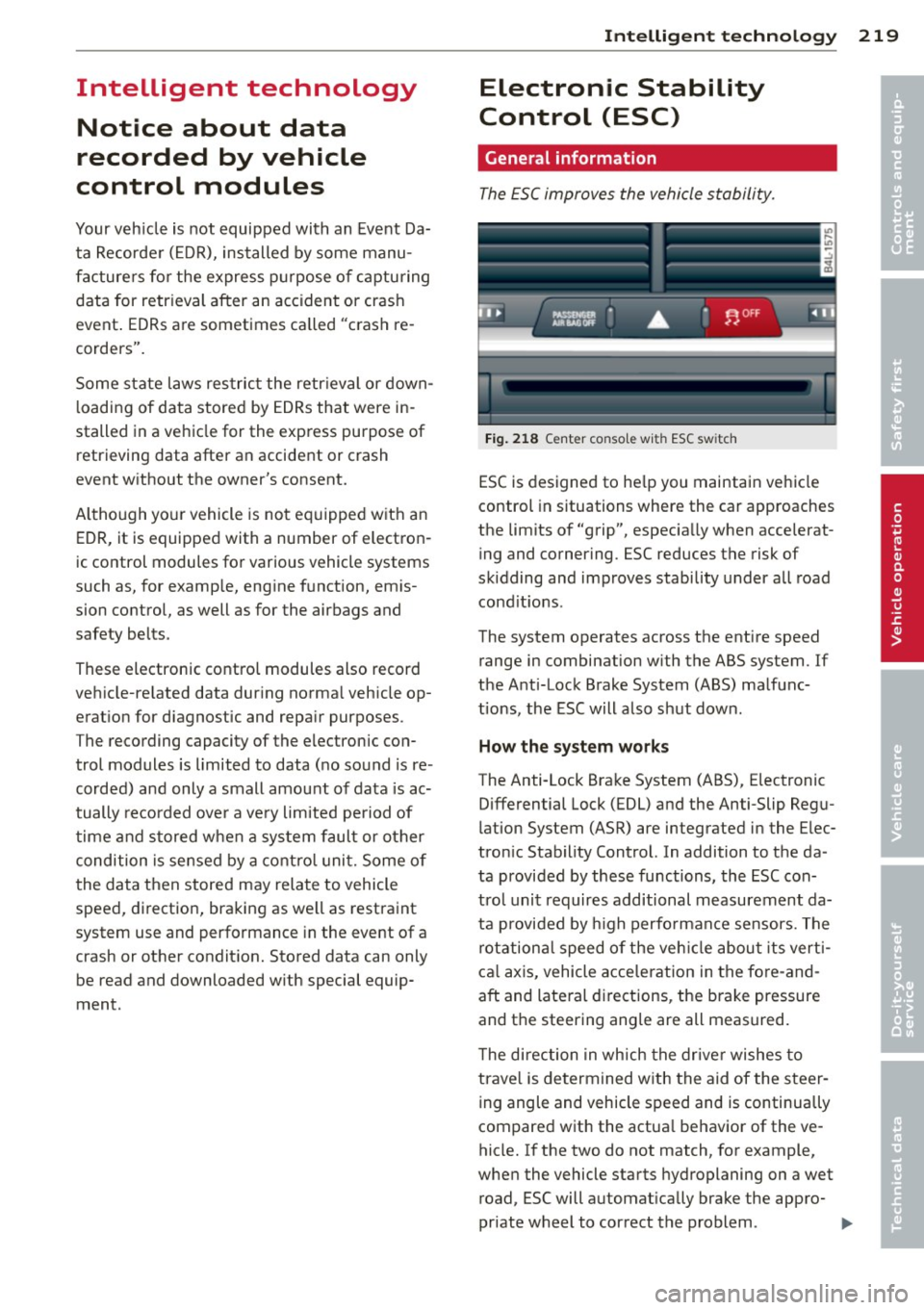
Fig. 218 Center console with ESC sw itch
ESC is designed to help you maintain vehicle
control in situations where the car approaches
the limits of "grip", especially when accelerat
ing and cornering. ESC reduces the risk of
skidding and improves stability under all road
condit ions .
The system operates across the entire speed range in combination with the ABS system. If
the Anti-Lock Brake System (ABS) malfunc
tions, the ESC will also shut down.
How the system works
The Anti-Lock Brake System (ABS), Electronic
Differential Lock (EDL) and the Anti-Slip Regu
lation System (ASR) are integrated in the Elec
tronic Stability Control. In addition to the da
ta provided by these functions, the ESC con
trol unit requires additional measurement da
ta provided by high performance sensors. The
rotational speed of the vehicle about its verti
cal axis, vehicle acceleration in the fore-and
aft and lateral directions, the brake pressure and the steering angle are all measured.
T he direction in wh ich the driver wishes to
travel is determined with the aid of the steer
ing angle and vehicle speed and is continually
compared with the actua l behavior of the ve
hicle. If the two do not match, for example,
when the vehicle starts hydroplaning on a wet
road, ESC will automatically brake the appro-
priate wheel to correct the problem. ..,_
•
•
Page 222 of 342
220 Intellig ent technol ogy
The vehicle is then stabilized by the forces act
ing on the whee l during braking. If the vehicle
is
oversteering (rear tends to sk id out of the
turn), the brakes are ma inly applied on the
wheel that is on the outside of the curve. In
the case of a vehicle that is
understeering
(tendency to slide out of the curve), the
brakes are applied as needed on the whee l
that is on the ins ide of the curve or addit ional
l y on the o ther wheels. An acoustic s ignal indi
cates when ESC b rake app lication cuts in
¢ A .
The system operates across the entire speed
range in combination with the ABS system
¢ page 223. If the Anti-Lock Brake System
(ABS) malfunctions, the ESC wi ll be out of ac
tion as well .
Activating
When you turn on the engine, ESC w ill auto
mat ica lly be act ivated and will perform a se lf
test. As soon as the test is comp leted, the sys
tem is in normal operating mode.
Offroad mod e
ESC should normally be ope rated in normal
mode because this ensures maximum vehicle
stability. If necessary, you can act ivate the
ESC offroad mode by pressing the but to n
¢ fig . 218 to obtain maximum traction and
braking ability when driving
off paved roads at
l ow speeds. In ESC offroad mode, the indica
tor light
fi illuminates and the message Off
road control Warning! Red uced t ract ion
ap
pears briefly in the display .
The ESC offroad mode can be usefu l in the fo l
low ing except iona l situations when slip or a
h ighly effective differentia l locking function is
desirable . Examples:
- when driving with tire chains,
- when driving in deep snow or on loose
ground,
- when driving on uneven surfaces with the
wheels severe ly unloaded (articulation), and
- when rocking the vehicle loose after it has
become stuck.
When the unusua l situat ion is past, you
should shift back to the normal ESC operating mode by pushing the button again
. The mes
sage
S tabilit y prog ram on then appears brief
l y in the display.
H ill descent control
T he hill descent con trol is swi tched on in ESC
offroad mode . When slowly descending steep
gradients on loose gro und or when the axles
are articulated, hill descent control provides
ass istance by automatically applying the
brakes to keep vehicle speed constant. The ve
hicle is also rendered easier to steer by selec
t ive d istr ibut ion of braking force . H ill descent
control intervenes when:
- the acce lerator pedal is not pressed,
- the vehicle is travelling less than 12 mph
(20 km/h),
- a steep gradient is detected,
- wheel behavior indicates loose ground or
conditions with poor adhesion (e.g . a lso axle
articu lation).
Hill descent con tro l operates both d riving for
ward and in reverse. Active hill descent con
trol is deactivated by pressing the accelerator
pedal unti l the conditions for activation al
ready listed are met again.
A WARNING
- The Electronic Stability Control is never
theless subject to the laws of phys ics. It
is part icu larly important to pay attention
to this fact on wet and slippery roads. It is therefore impo rtant that you a lways
a dapt your d riving to the condit ion of the
road and traffic cond itions. Do not allow
the increased safety provided by the Electron ic Stability Control system to lull
you into accepting additional safety
risks.
- Please be aware that in ESC offroad
mode, particularly on a smooth and s lip
pery road, the wheels may have an in
creased tendency to spin and the vehicle
may break away - danger of skidding!
- Stability is limited in the ESC offroad
mode.
Page 223 of 342
Electronic differential lock (EDL)
The electronic differential lock monitors the
rotational speed of the drive wheels.
G ener al note s
The electronic differentia l lock (EDL) helps the
car to start mov ing, accelerate and climb a
gradient on surfaces providing poor or almost
no gr ip . W ithout EDL, this would be difficult,
if not impossible .
How the s yst em work s
The EDL operates automatically . It monitors
the rotat ional speed of wheels w ith the help
of the ABS sensors <=>
page 223. If a noticea
ble
slip i s detected at the wheels (e.g . on slip
pery ground
on one side), the spinning wheels
are braked and power is transferred to the
other wheels. This is done up to a speed of
about 60 mph (100 km/h). Noises from the b rake system signal that wheel spin is being
contro lled .
Driving off
When driv ing off , a lways be sure to keep road
conditions in mind as you accelerate . If one
drive whee l spins because it is on a surface
with less grip, apply
plenty of throttle until
the car starts to move.
Overheating of brakes
To prevent the disc brake of the b raked wheel
from ove rheating if subjected to excessive
l oads on this whee l, the EDL cuts out tempo
ra rily. The vehicle remains operational and be
h aves in the same way as a vehicle without
EDL.
As soon as the brake has cooled down, EDL
switches on again automatically .
A WARNING
-When accelerating on slippery surfaces,
such as on ice or snow, always be careful
when depressing the acce lerator pedal.
Even with the EDL working, the drive
wheels can spin and reduce your ability
to control your car . R isk of crash!
Int ellig ent technolog y 221
-The increased safety afforded by EDL
does not mean that you can take safety
risks. Always adapt your driving style to
the road condit ions and traffic situation .
(!) Tips
If a fault occurs in the ABS, the EDL is also
not functioning. This is ind icated by the
ABS warning light <=>
page 18.
' Anti-Slip Regulation System (ASR)
The Anti-Slip Regulation System prevents the
driven wheels from spinning when the car is
accelerating.
G eneral not es
The Anti-Slip Regulation System (ASR) is inte
grated in the Electronic Stability Control
(ESC). When the vehicle starts up and acceler
ates, the wheels are prevented from spinning
by adjust ing the eng ine power to match the
amount of grip available from the road sur
face .
How the system works
ASR performs automatica lly, i.e. without the
driver 's intervention. With the aid of the ABS
sensors <=>
page 223, ASR monitors the speed
of the dr iven wheels. If the wheels start to
spin, engine torque is reduced automatically
unt il the t ires find enough grip to lock onto
the road surface. The system is active across
the enti re speed range.
The ASR works in conjunction with the ABS. If
a malfunction should occur in the ABS, the
ASR wi ll also be ou t of act ion.
A WARNING
The increased safety affo rded by ASR does
not mean that you can take sa fety risks.
A lways adapt your driving sty le to the road
conditions and traffic situation. ...,
•
•
Page 225 of 342
-Before descending a steep grade, reduce
speed and shift transmiss ion into a lower
gear or lower driving range. Do not ride
the brakes or hold the pedal down too
long or too often. This could cause the
brakes to get hot and dimin ish braking
efficiency.
- Do not "r ide the brakes" by resting your
foot on the pedal when you do not intend
to bra ke. Th is may cause the brakes to
overheat, prema ture wear and increased
stopping distance .
- Under certain climat ic and operating
condit ions such as passing through wa
ter, driving in heavy rain or after washing
the vehicle, the effectiveness of the
brakes can be reduced . In winter, ice can
accumulate on the brake pads, linings,
discs and drums. Carefully apply brakes
for a test . Brakes will dry and ice coat
ings will be cleaned off after a few care
ful brake applications.
- Driv ing for an extended period of time on
salt-covered roads w ithout us ing your
brakes can also affect braking efficiency .
Clean off accumulated salt coating from
brake discs and pads w ith a few caref ul
brake applicat ions.
- If you damage the front spoiler, or if you
install a different spoiler, be sure the air
flow to the front brakes is not obstruct
ed. Otherwise the brake system co uld
overheat reducing the effectiveness of
the entire brake system.
- Failure of one brake circuit will impair
the braking capability resulting in an in
creased stopp ing distance. Avoid driv ing
the vehicle and have it towed to the near
est author ized Audi dealer or qualified
workshop .
Brake booster
The brake booster adds extra braking power.
The brake booster works with vacuum pres
sure which is created only when the engine is
running¢ &,.
Int ellig ent technolog y 223
A WARNING
-Never let the veh icle roll to a stop with
the engine shut off .
- If the brake booster is not working, for
example when towing your vehicle, or because the brake booster has somehow
been damaged, the brake pedal must be
pressed considerably harder to make up
for the la ck of booster assistance .
Functioning of Anti-Lock Brake System
(ABS)
ABS prevents the wheels from locking up un
der braking.
T he ABS contributes effect ively to vehicle con
trol s ince it preve nts the whee ls from
locking
when the brakes are applied. This means that
the vehicle remains steerable and is less likely
to skid .
With ABS y ou do not nee d to pump the
bra ke. Just h old t he br ake ped al d own .
However, do not expect the ABS to shorten
braking distance under
all circumstances.
When dr iving on g ravel or on new ly fallen
snow o n top of icy s urfaces, braking dis tance
may be even longer, therefore, under these
circumstances, it is especia lly important that
you drive s low ly and wit h great care.
How the ABS s ystem works
An a utomat ic check is made when a speed of
about 12 mph (20 km/h) is reached . When
th is happens, a pumping noise can be heard.
If an ind iv idual whee l begi ns to rotate too
s low ly in relation to vehicle speed and tends
to lock, the ABS automatically reduces brake
pressure to prevent tha t whee l from locking .
T his automatic adjustment p rocess will cause
a
sli ght vibrati on of the brake pedal and some
no ises to a le rt you that ve hicle speed m ust be
adapted to existing road and traffic condi
tions. •
•
Page 226 of 342
224 Intellig ent technol ogy
8_ WARNING
Although the ABS is very effective, always
remember that bra king capability is limit
ed by t ire traction . Always adjust your dr iv
ing spee d according to the road and t raffic
co nditions. Do no t let t he extra sa fety af
forded by the ABS tempt you into ta king
extra risks. The ABS cannot overcome the
laws of physics.
@ Tips
- If ABS is not functioning prope rly, a
warning light will come on. See
¢page 18 .
-If a fault occurs in the ABS, the EDL is al
so not functioning. This is indicated by
the ABS warning light .
Brake assistant
The brake assistant is designed to achieve the
optimum braking effect .
The brake assistant helps to increase the ef
fective b rak ing power and thus to achieve a
shorter stopp ing distance. If the driver
presses the brake pedal very quickly, the brake
assistant automatica lly boosts the braking
force to the maximum level, up to the point where the anti-lock brake function (ABS) inter
venes to stop the wheels from locking. You
should then keep the brake pedal pressed un
til the veh icle has braked to the required
speed . The brake assistant sw itches itself off
as soo n as you re lease the brake pedal.
Automatic full braking a ssist
This funct ion allows full brak ing in spite of
h igh brake pedal forces (e .g . when the brakes
a re severely stressed because the vehicle is
fully loaded) . The driver notices th is function
throug h a reduction of pedal force and in
creased pedal trave l. When the brake peda l is
r e leased, fu ll braking assis t switc hes off again
automatically.
I f the re is an ABS fa il ur e, the brake ass ista nt
and automatic full b rak ing ass ist are not avai l
ab le . The brake assistant wi
ll not be operative if
there is a ma lfunction in the ABS .
8_ WARNING
-Please remember that the accident risk a l-
ways increases if you drive too fast, espe
cially in corners or on a slippery road, or if
you follow the veh icle ahead of you too
closely. Increased r isk of an accident can
not be compensated for even by the brake
assistant, so always maintain a safe speed.
Servotronic ® -
advanced power
steering system
The power steering systems uses the power of
the running engine to allow precise steering
with little effort.
The advanced Servotronic ® power steering
system senses the road speed and electron i
cally adjusts power assistance to provide com
fortab le and safe steering response exact ly
matched to the vehicle speed .
Power steer ing will not work if the engine is
off . As a result, the steering wheel will be hard
to turn .
The power steering fluid level is checked dur
ing the scheduled maintenance services .
d) Note
If there is an electronic malfunction, ser
votronic
will still function like a conven
tiona l powe r steering system, providing a
constant steering support force that is no
l onger proportionate to the vehicle speed .
This is most not iceable when turning the
stee ring wheel at low speeds (fo r example
when pa rking), - more effort w ill be re
q uired than us ua l.
- Be aware o f the different than usual
steering response and adjust your steer
ing force accordingly.
- Have the problem checked and set r ight
by an Audi dealer as soon as possible .
Page 237 of 342

Trailer towing Driving with a trailer
General information
Your Audi was designed primarily for passen
ger transportation .
If you plan to tow a trailer, p lease remember
that the additional load will affect durability,
economy and performance .
Trailer towing not on ly places more stress on
the vehicle, it also calls for more concentra
tion from the driver.
F or this reason, always fo llow the operating
and driving instructions provided and use
common sense.
(D Note
If you are going to tow a trai ler, you must
activate the trailer operation mode
q page 154, Towing a trailer.
Technical requirements
Traile r hitch
Use a weight-carrying hitch conforming to the
gross trailer weight. The hitch must be suita ble for your vehicle and trailer and must be
mounted securely on the vehicle's chassis at a
technically sound location. Use only a trailer
hitch with a removable ball mount. A lways
check with the trai ler hitch manufacturer to
make sure that you are using the correct
hitch.
Do not use a bumper hitch.
The hitch must be installed in such a way that
it does not interfere with the impact-absorb
i ng bumper system. No mod ifications should
be made to the vehicle exhaust and brake sys
tems . From time to time, check that all hitch
mounting bo lts remain securely fastened.
When you are not towing a trailer, remove the
trai ler hitch ball mount. This prevents the
hitch from causing damage should your veh i
cle be struck from behind~.&.
Trailer towing 235
Trailer brakes
If your trailer is equipped with a brak ing sys
tem, check to be sure that it conforms to all
regulations.
T he trailer hydraulic bra ke system must not be
directly connected to the vehicle's hydraulic
brake system
q .& .
Safety chains
Always use safety chains between your veh icle
and the trai le r.
Trailer lights
Trailer lights must meet all regulations. Be
sure to check with your authorized Audi dealer
for correct wiring, sw itches, and relays.
M irr ors
If you are unable to see the traffic behind you
using the regular outside mirrors, then you
must install extended mirrors.
It is important
that you always have clear v is ion to the rear.
_&. WARNING
- If a trailer has electrical brakes please
note that these brakes are not activated
by the factory-fitted control unit -risk of
accident!
- After removing the trailer hitch, do not
store it in you r vehicle. In case of sudden
brak ing, the hitch could fly forward and
injure you or your passengers.
- The Gross Vehicle Weight Rating for your
Audi Q7 vehicle, found on the safety
compliance labe l on the driver's side 8 -
pillar, must never be exceeded under any
circumstances. Exceeding the Gross Vehi
cle Weight Rating of your vehicle is likely
to damage your veh icle, and such dam
age will not be covered by your Limited New Vehicle Warranty. Exceeding the
Gross Vehicle Weight Rat ing will a lso
change the performance and handling
characteristics of your vehicle, which
could cause a crash resulting in serious
injury or death.
-
•
•