brake fluid AUDI Q7 2012 Owner´s Manual
[x] Cancel search | Manufacturer: AUDI, Model Year: 2012, Model line: Q7, Model: AUDI Q7 2012Pages: 342, PDF Size: 86.42 MB
Page 246 of 342
24 4 Cl eaning and protec tio n
8_ WARNING
- Moisture and ice on brakes may affect
braking efficiency¢
page 222, Gen eral
information.
Test the brakes carefu lly
e ach time you wash the veh icle .
- Always read and heed all WARNINGS and
-
other information ¢ page 239.
Body cavity sealing
The body cavity sealing does not need to be
checked .
All body cavities wh ich could be affected by
corrosion have been thoroughly protected at
the factory.
This sealing does not require any inspection or
additional treatment. If any wax should seep
out of the cavity when the ambient tempera
ture is high, it can be removed with a plastic
scraper and a suitable solvent.
8_ WARNING , ~
Solvents can be dangerous .
- Benzine is flammable and toxic . If you
use benzine for removing the wax, keep
sparks, flame and lighted c igarettes
away. Never dump benzine on the
ground, into open streams or down sew
age drains.
- Be sure to observe all safety and env iron
menta l regulations. Follow all instruc
tions on the con tainer .
- Always read and heed all WARN INGS and
other information
¢ page 239 .
Chassis
Have the undercoating checked for damage
from time to time.
The lower body shell of your Audi is also thor
oughly protected against corrosion .
Any damage to the undercoating caused by road hazards should be repa ired promptly .
8_ WARNING
Too much undercoating in the wrong p la
ces can cause a fire.
- Do not apply additional undercoating or
rustp roofing on or near the exhaust
manifold, exhaust pipes, catalytic con
verter or heat shields. While driving, the substance used fo r undercoating could
overheat and cause a fire.
- Always read and heed all WARNINGS and
other info rmation ¢
page 239.
Exhaust tail pipes
Road salt and o ther co rrosive materials w ill
damage the material in the exhaus t tail pipes
i f they a re not cleaned regular ly . Do not clean
the tail pipes with wheel cleaner, paint polish, chrome polish or other abras ive cleaners .
Clean the tail pipes with car care products
that are suitable for sta inless steel.
Your a uthorized Audi dea ler can provide clean
ing products that have been tested and ap
proved for your vehicle .
Care of interior
MMI display
.,. Clean the MM I display wi th a soft clean
cloth and an LC D cleaner .
T he M MI display can be cleaned wit h a profes
s io nal ly availab le " LCD cleane r". The cloth
sho uld be slightly dampened with t he clean
ing fluid to clean the disp lay.
CIT) Note
To avoid sc ratching the M MI display, you
shou ld never clean it dry.
MMI control console
.,. First clean the MMI contro l conso le with a
brush to remove dust from the housing .
.,. Then wipe the MMI control console with a
clean, soft, slightly damp cloth. .,..
Page 261 of 342
-Apply the parking brake.
- Move selector lever to "P" (Park).
- Always let the engine cool down. Hot
components will burn skin on contact.
- To reduce the risk of being burned, never
open the hood if you see or hear steam
or coolant escaping from the engine
compartment. Wa it until no steam or
coolant can be seen or heard before care
fully opening the hood.
- Keep children away from the engine com
partment .
- Never spill fluids on hot engine compo
nents. They can cause a fire.
- Never touch the radiator fan. The auxili
ary electric fan is temperature controlled
and can switch on suddenly.
- Never open the coolant reservoir cap
when the engine is still warm. The cool
ant system is pressurized and hot cool
ant could spray out .
- Protect your face, hands and arm from
steam or hot engine coolant by placing a
thick rag over the cap when you open the
coolant reservoir .
- If work on the fuel system or the electri
cal system is necessary:
- Always disconnect the battery.
- Never smoke or work near heaters or
open flames. Fluids in the engine com
partment could start a fire.
- Keep an approved fire extinguisher im
mediately available.
- To avoid electrical shock and personal in
jury while the engine is running or being
started, never touch:
- Ignition cables
- Other components of the high voltage
electronic ignition system.
-If you must perform a check or repair
with the engine running:
- First, fully apply the parking brake,
move selector lever to "P" (Park).
Checking and filling 259
-Always use extreme caution to prevent
clothing, jewelry, or long hair from get
ting caught in the radiator fan, V-belts
or other moving parts, or from contact ing hot parts . Tie back hair before
starting, and do not wear clothing that
will hang or droop into the engine.
- Minimize exposure to emission and
chemical hazards
9 .&, .
&_ WARNING
California Proposition 65 Warning:
- Engine exhaust, some of its constituents,
and certain vehicle components contain
or emit chemicals known to the State of
California to cause cancer and birth de
fects and reproductive harm. In addition,
certain fluids contained in vehicles and
certain products of component wear con
tain or emit chemicals known to the
State of California to cause cancer and birth defects or other reproductive harm.
- Battery posts, terminals and related ac
cessories contain lead and lead com
pounds, chemicals known to the State of
California to cause cancer and reproduc
tive harms. Wash hands after handling .
(D Note
When adding fluids, always make sure that
they are poured into the proper container
or filler opening, otherwise serious dam
age to vehicle systems will occur.
@ For the sake of the environment
To detect leaks in time, inspect the vehicle
floor pan from underneath regularly. If
you see spots from oil or other vehicle flu
ids, have your vehicle inspected by an au
thorized Audi dealer. •
•
Page 262 of 342
260 Checking and filling
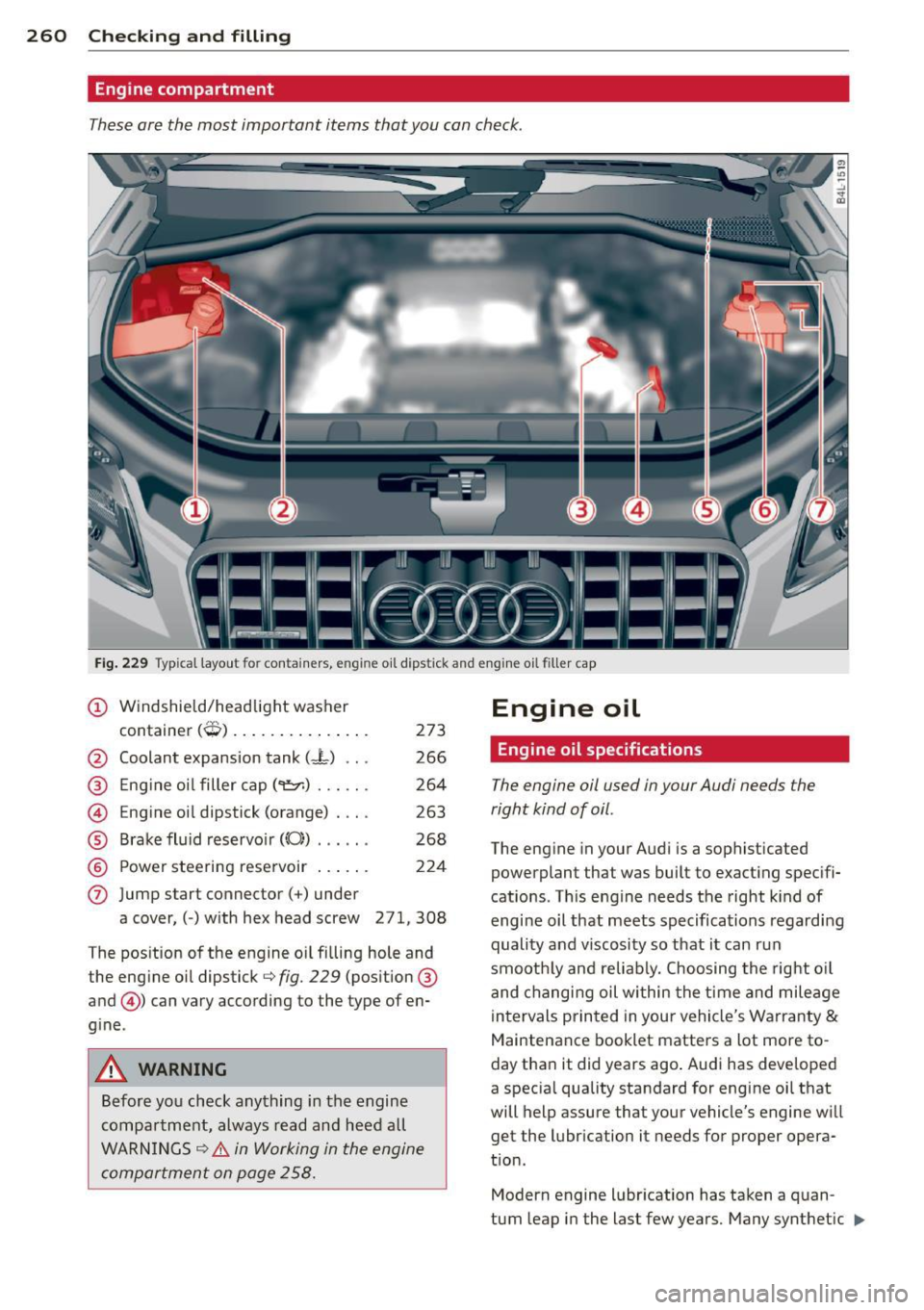
Engine compartment
These are the most important items that you can check .
Fig. 229 Typical layout for containers, engine oil di pstick and engin e oil fille r cap
(D W indshield/head light washer
t . (
;R ) con ainer ,.... .............. .
@ Coolant expansion tank (-L) .. .
@ Engin e oi l filler cap ('t".:r.) . .. .. .
©
®
®
(j)
Eng ine oil dipstick (orange) . .. .
Brake fluid reservoir
((0)) ..... .
Power steering reservoir ... .. .
Jump start connector( +) under 273
266
264
263
268
224
a cover,( ·) with hex head screw 271,308
The pos ition of the engine o il fi lling hole and
the engine oil dipstick
r=;, fig. 229 (position ®
and @) can vary according to the type of en
gine .
_&. WARNING
Before you check anything in the engine
compartment, always read and heed all
WARNINGS ¢.&.
in Working in the engine
c omportment on page 258.
-
Engine oil
Engine oil specifications
The engine oil used in your Audi needs the
right kind of oil.
The engine in your Audi is a sophist icated
powerplant that was built to exacting specifi
cations. Th is engine needs the right kind of
engi ne oil that meets specifications regard ing
quality and v iscosity so that it can run
smooth ly and reliab ly. Choosing the right oil
and changing oil within the time and mileage
intervals printed in your vehicle's Warranty
&
Maintenance booklet matters a lot more to
day tha n it did years ago . Audi has developed
a spec ia l quality standard for eng ine oil that
will help assure that your vehicle's engine w ill
get the lubr ication it needs for proper opera
t ion .
Modern engine lubr ication has taken a quan
tum leap in the last few years. Many synthetic "'
Page 270 of 342
268 Checking and filling
-If you drain the coolant, it must be
caught and safely stored in a proper con
tainer clearly marked "poison".
(D Note
- Coolant pollutes the environment and
could cause an engine fire . Excess cool-
ant will be forced out through the pres
sure relief valve in the cap when the en
gine becomes hot.
- If, in an emergency, only water can be
added , the correct ratio between water
and antifreeze
c:::> page 265 must be re
stored as soon as possible .
@ For the sake of the environment
Drained coolant should not be reused. Al
ways dispose of used coolant while observ ing all environmental regulations.
Radiator fan
The radiator fan switches on automatically by
itself
The radiator fan is driven by the engine via the
V-belt . The viscous clutch regulates the speed
of the fan accord ing to the temperature of the
coolant.
An auxiliary electric radiator fan* switches on
and off depending on coolant temperature
and other vehicle operating conditions.
After you switch the engine off, the aux iliary
fan can continue running for up to 10 minutes
- even with the ignition off. It can even switch
on again later by itself
c:::> &. , if
- the temperature of the engine coolant rises
due to the heat build-up from the engine in
t he engine compartment, or
- the engine compartment heats up because
the vehicle is parked in intense sunligh t.
_&. WARNING
- To reduce the risk of personal injury nev
er touch the radiator fan. -
The auxiliary electric fan is temperature
controlled and can switch on suddenly
even when the engine is not running.
- The auxiliary radiator fan switches on au
tomatically when the engine coolant reaches a certain temperature and will
continue to run until the coolant temper
ature drops.
Brake fluid
Checking brake fluid level
The brake fluid level can be checked with a
quick glance.
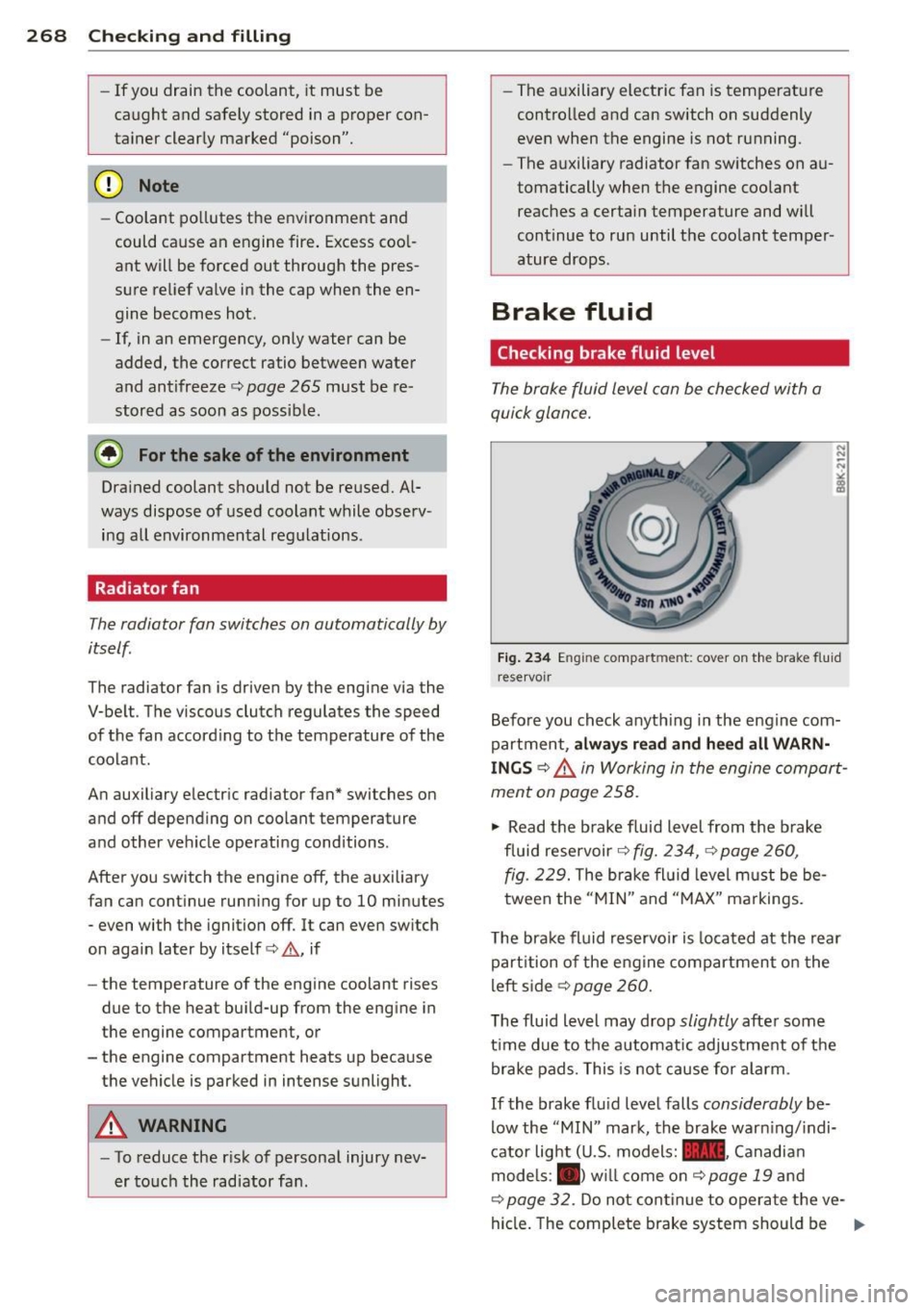
Fig. 234 E ngine compart men t: cove r on the brake fluid
reserv oir
Before you check anyth ing in the engine com
partment,
always read and heed all WARN
INGS c:::> _&. in Working in the engine compart
ment on page 258.
.,. Read the brake fluid level from the brake
fluid reservoir
c:::> fig. 234, c:::> page 260,
fig.
229. The brake fluid level m ust be be
tween the "MIN" and "MAX" markings.
The brake fluid reservoir is located at the rear
partition of the engine compartment on the
left side
c:::> page 260.
The fluid level may drop slightly after some
time due to the automatic adjustment of the
brake pads. This is not cause for alarm.
If the brake flu id level falls
considerably be
low the
"MIN " mark, the brake warning/indi
cator light ( U.S. models: -· Canadian
models :. ) w ill come on
c:::>page 19 and
c:::>page 32. Do not continue to operate the ve-
hicle. The compl ete brake system should be ..,.
Page 271 of 342
thoroughly checked by an authorized Audi
dealer or qualified workshop and the cause
corrected .
If the brake fluid level is too low ,
the brake warning/indicator light will i llum i
nate. Con tact an au thori zed Aud i dealer
im ·
mediately .
@ Tips
The brake fluid reservoir is located under
neath the cover.
Changing brake fluid
Have the brake fluid changed by an experi
enced technician .
Brake fluid absorbs moist ure from the a ir. If
the water content in the brake fluid is too
h igh, corrosion in the brake system may result
after a per iod of t ime . The bo iling po int of the
brake fluid w ill also decrease considerably and
decrease b raking performance .
Therefore, the brake flu id must be changed
every two years . Always use new brake fluid
which conforms to Federal Motor Vehicle
Standa rd "FMVSS 116 DOT 4".
The brake f lu id reservoir can be difficult to
reach, therefore, we recommend that yo u
have the brake f lu id changed by your author
i zed
Audi dea ler . Your deale r has the co rrect
too ls, the right b rake fluid and the know-how
to do this fo r you.
_& WARNING
- Br ake fluid is po isonous . It must be s to r
ed only in the closed orig inal con tainer
o ut of the reac h of c hildren!
- Br ake f ailure can resu lt from old or in ap
propr iate b ra ke fluid. Observe these pre
caut ions:
- Use on ly brake fluid that meets SAE
specif ication
J 1 703 and conforms to
Federal Motor V ehicle Sta ndard 116.
A lways check wi th you r auth o riz ed Audi
deale r to ma ke s ure you are using the
correct brake flu id . T he correc t type of
Checkin g and fillin g 269
brake f luid is also ind icated on t he
brake f luid rese rvoir.
- The bra ke fl uid must be new. Heavy use
of the brakes can cause a vapo r lock if
the brake fluid is left in the system too
l ong. This can seriously affect the effi
c iency of the brakes as well as your
safe ty. This co uld resu lt in an accide nt.
(1) Note
Brake fluid will damage the paint of your
vehicle.
@) For the sake of the environment
Because o f the prob lem of proper disposal
of brake fluid as well as the spec ial too ls
required and the necessary expertise, we
recomme nd that you have the brake flu id
changed by you r autho rized Aud i deale r.
Battery
General information
U nder normal operating cond itions, the bat
tery in your Audi does not need any ma inte
nance. With
high outside temperatures or
long da ily drives we recommend that you have
the e lectrolyte level chec ked by an au thorized
Audi dealer or qualified wo rkshop . The elec
t ro lyte level should also be che cked each time
t h e battery is cha rged
~ page 271.
Have the battery checked when you take your
vehicle in for se rv ice . You a re well advised to
replace a battery that is o lde r th an 5 years .
With certain types of airbag deployment, the ba tte ry is disconnected from the ve hicle elec
t rical sys tem for safety reasons
~ A in Re
pair, care and disposal of the airbags on
page 193.
Disconnecting the battery terminals
Some vehicle fu nctions (power window regu
lators, fo r example) are lost if the battery te r
mina ls are disconn ected . T hese functions have
to be relearned after the bat tery termina ls are
conne cte d ag ain. To p revent t his, the battery .,. •
•
Page 284 of 342
28 2 T ire s and wheel s
Tires and vehicle load limits
There are limits to the amount of load or
weight that any veh icle and any t ire can carry.
A vehicle that is overloaded wi ll not handle
well and is more difficult to stop. Overload ing
can not on ly lead to loss of vehicle control
,
but can a lso damage impo rtant parts of the
vehicle and can lead to sudden tire failure in-
,
eluding a blowout and sudden deflation that
can cause the veh icle to crash .
Your safety and that of your passengers a lso
depends on making sure that load limits are not exceeded. Vehicle load includes everybody
and everyth ing in and on the vehicle . These
load limits are tech nically referred to as the
vehicle 's
Gr oss Vehicl e W eig ht Rating
("GVWR").
The "GVWR" includes the we ight of the basic
vehicle, all factory installed accessories , a full
tank of fuel , oi l, coo lant and other fluids plus
maximum load. The maxim um load includes
the number of passengers that the vehicle is intended to carry ("seating capacity") with an
assumed weight of 150 lbs (68 kg) for each
passenger at a designated seating position
and the tota l weight of any l uggage in the ve
h icle. If you tow a trailer, the weight of the
trailer h itch and the tongue weight of the
loaded trailer must be included as part of the
ve hicle load .
The
G ro ss Ax le We ight Rat ing ("GAWR") is
the maximum load that can be applied at each
of the vehicle's two axles .
The Gross Vehicle Weight Rating and the
Gross Axle Weight Rating are listed on the
safety compliance st icker label located on the
driver's side B -p illar . Your Audi has 5 seating
positions, 2 in the front and 3 i n the rear for
total seating capacity of 5. On vehicles w ith
six seats*, your veh icle has two front seats,
two seats in the second row seating and two
seats in the third row seating . On vehicles
with seven seats*, your vehicle has two front
seats, three seats in the second row seating
and two seats in the third row seating . Each seating position has a seat belt
q
page 170,
Safety belts .
The fact that there is an upper limit to yo ur
vehicle's Gross Vehicle Weight Rating means
that the total weight of whatever is being car
ried in the vehicle (including the weight of a
trailer hitch and the tongue weight of the
loaded tra iler) is lim ited. The more passen
gers in the vehicle or passengers who are
heavier than the standard we ights assumed
mea n that less we ight can be carr ied as lug
gage .
The tire pressure label on your Audi also lists
the maximum combined weig ht of a ll of the
occupants and luggage or other cargo that
the vehicle can carry . Fo r the location of the
label qpage278, fig. 237.
_& WARNING
Overloading a vehicle can cause loss of ve
h icle cont ro l, a crash or other accident, se
rious personal injury, and even death.
- Ca rrying more we igh t than your veh icle
was des igned to carry wi ll prevent the
vehicle from handling properly and in
crease the risk of the loss of vehicle con
trol.
- The brakes on a vehicle that has been
overloaded may not be able to stop the
veh icle w ith in a safe distance.
- Tires on a vehicle that has been over load
ed can fail s uddenly, including a blowout
and sudden deflation, causing loss of
control and a crash .
- Always make sure that the total load be
ing transported -including the weight of
a trailer hitch and the tongue we ight of a
loaded trailer -does not ma ke the vehi
cle heavi er than the vehicle's Gross Vehi
cle Weight Rating.
Determining correct load limit
U se t he exa mple b elo w t o ca l
c ulat e th e t otal w eight of the
pa sseng ers a nd luggage or
Page 287 of 342
A WARNING
Sudden tire failure can lead to loss of con
trol, a crash and serious personal injury!
- Never drive a vehicle when the tread on
any tire is worn down to the wear indica
tors.
- Worn tires are a safety hazard, they do
not grip well on wet roads and increase
your risk of "hydroplaning" and loss of
control.
- Always keep chemicals that can cause
tire damage, such as grease, oil, gasoline
and brake fluid away from t ires.
- Tires age even if they are not be ing used
and can fail suddenly, especially at high
speeds . Tir es that are more than 6 years
old can only be used in an emergency
and then with special care and at lower
speeds.
- Never mount used tires on your vehicle if
you are not sure of their" previous histo
ry ." Old used tires may have been dam
aged even though the damage cannot be
seen that can lead to sudden tire failure
and loss of vehicle control.
Tires and wheels 285
New tires and replacing tires and wheels
New tires and wheels have to be broken in .
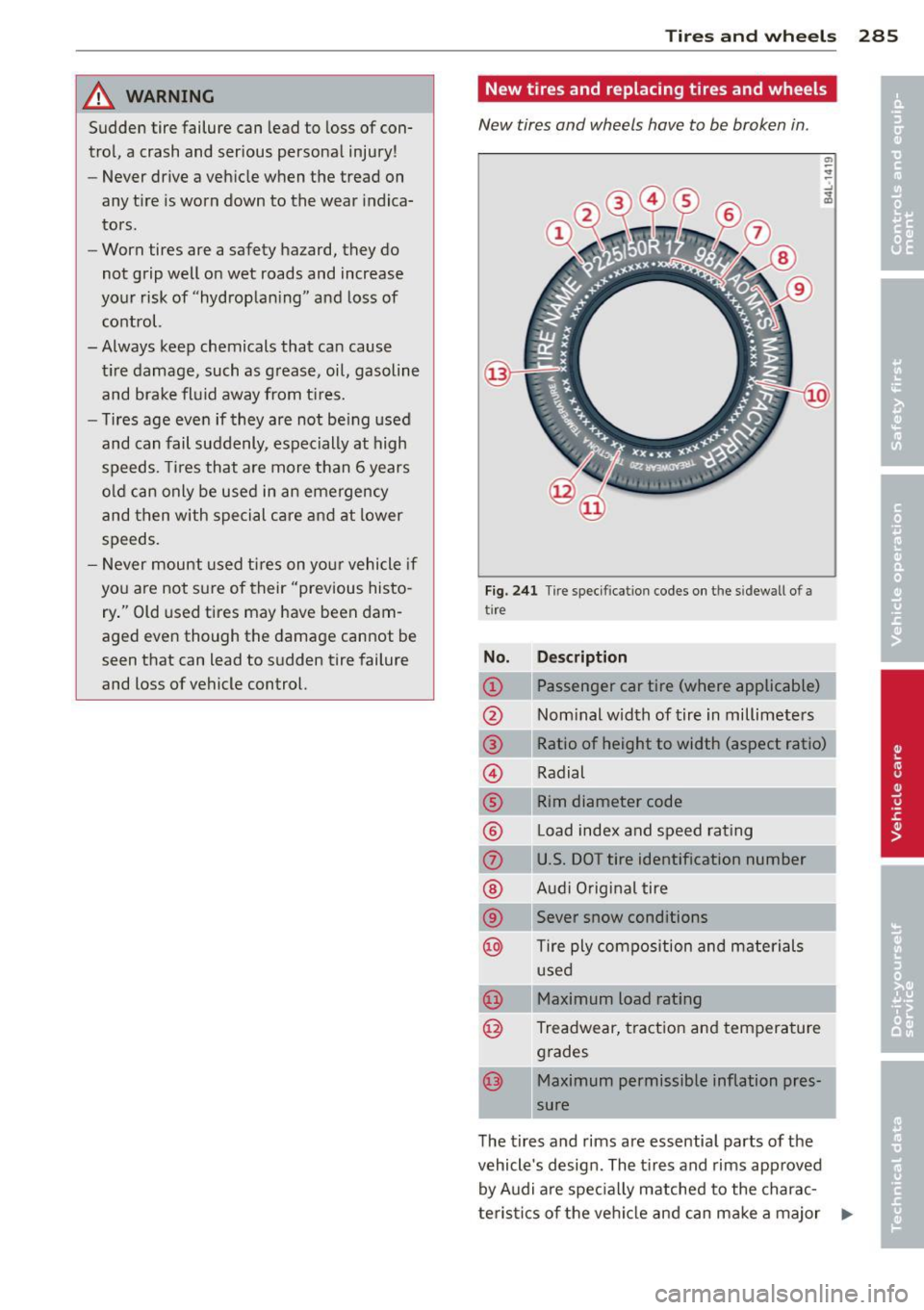
Fig. 241 Tir e specificat ion codes on t he s idewall o f a
tire
No. Description
CD Passenger car tire (where applicable)
@ Nominal width of tire in millimeters
® Ratio of height to width (aspect ratio)
© Radial
® Rim diameter code
® Load index and speed rat ing
(f) U.S. DOT tire identification number
® Audi Original tire
® Sever snow conditions
@ Tire ply composition and materials
used
@ Maximum load rating
@ Treadwear, traction and temperature
grades
@ Maximum permissible inflation pres-
sure
The tires and rims are essential parts of the
vehicle's design . The tires and rims approved
by Audi are specially matched to the charac
teristics of the vehicle and can make a major .,.
•
Page 323 of 342
-Always make sure the transm ission se
lector lever (automatic transmiss ion) is
in "P" (Park position) and the park brake
is firmly app lied .
@) For the sake of the environment
-Changing the eng ine settings w ill ad
versely affect em ission levels. This is det
rimental to the environment and increas
es fuel consumption .
- Always observe env ironmental regula
tions when d isposing of old engine oil,
used brake fluid, dirty engine coolant,
spent batter ies or worn out t ires.
- Undeployed airbag modules and preten
s ioners might be classified as Perchlo
rate Material -specia l hand ling may ap
ply, see www.dts c.ca .gov/hazardous
waste/perch lorate. When the veh icle or
parts of the restraint system includ ing
airbag modules safety belts wit h preten
sioners are scrapped, all applicable laws
and regulations must be observed. Your
a uthorized Audi dea ler is familiar w ith
these requirements and we recommend
that you have your dea ler perform this
serv ice for you .
Additional accessories,
modifications and
parts replacement
Additional accessories and parts
replacement
Always consult an authorized Audi dealer be
fore purchasing accessories.
Your veh icle incorporates the latest safety de
sig n featu res ensu ring a high standard of ac
tive and passive safety.
This safety could be compromised by non-ap proved changes to the veh icle. For this reason,
if parts have to be replaced, please observe
the following points when install ing addition
a l accessories:
Con sumer In formation 321
Approved Audi accesso ries and genuine Audi
parts are available from authorized Audi deal
ers.
T hese dea lers a lso have the necessary facili
ties, tools and trained specialists to install the
parts and accessories proper ly.
A WARNING
Using the wrong spare parts or using non
approved accessories can cause damage to
the vehicle and serious persona l injury.
- Use on ly accessories express ly approved
by Audi and genu ine Audi spare parts
- These parts and accessories have been
specially designed to be used on your ve
hicle .
- Never install accessories such as tele
phone cradles or beverage holders on air
bag covers or within the airbag deploy
ment zones . Do ing so will increase the
risk of injury if a irbags are triggered in an
accident!
- Before you check anything in the engine
compa rtment, always read and heed all
WARNINGS ~
page 248.
(D Note
-If items other than genuine Audi spare
parts, add-on equipment and accessory
items are used or if repair work is not
performed accord ing to spe cified meth
ods, this can result in severe damage to
yo ur vehicle's engine and body (such as
corrosion) and adversely affect your vehi
cle's warranty .
- If emergency repairs must be performed
elsewhere, have the vehicle examined by
an authorized Audi dealer as soon as
possible.
- The manufacturer cannot be held liable
for damage wh ich occurs due to failure
to comply with these stipulations.
•
•
Page 327 of 342
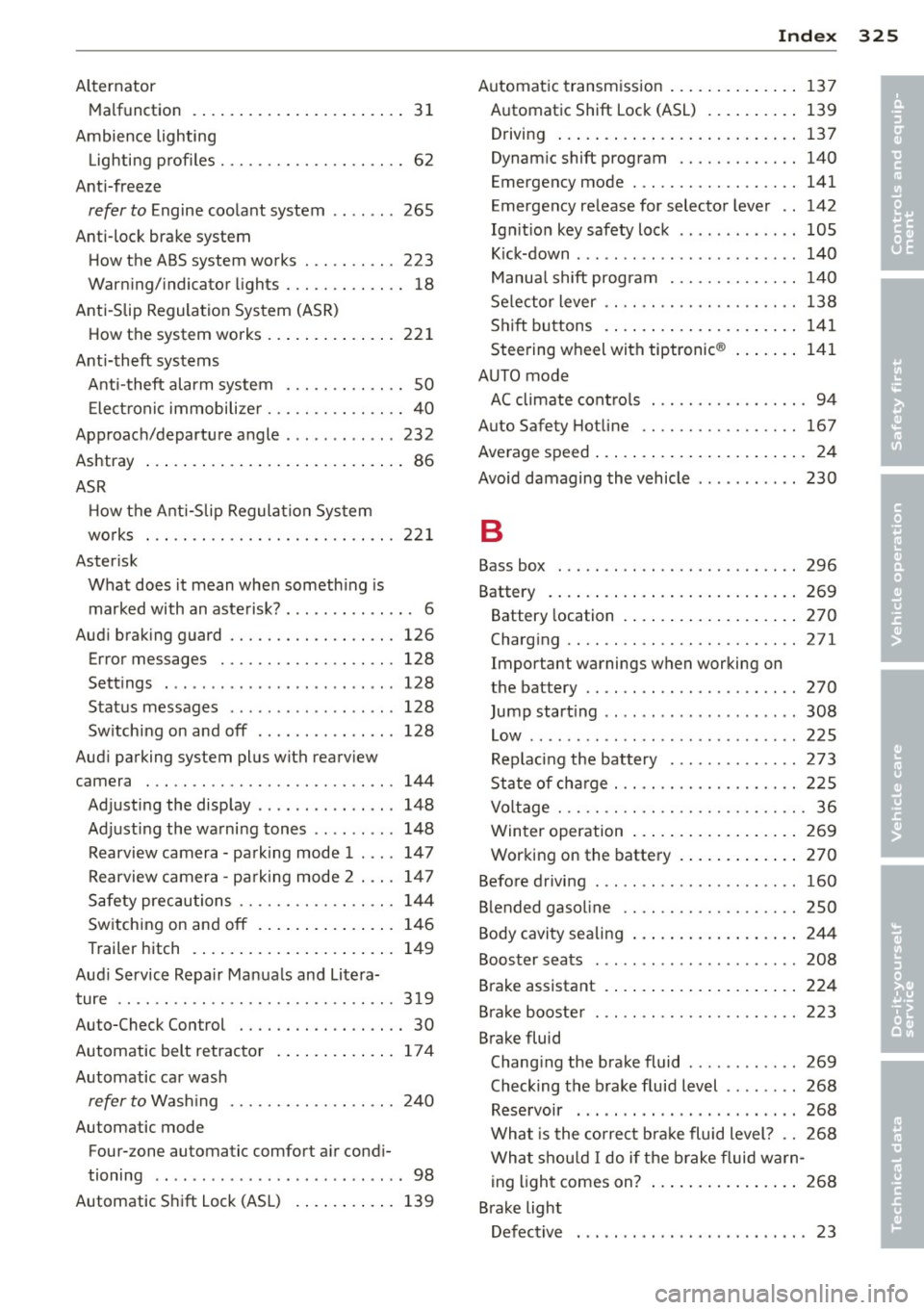
Alternator Malfunction . . . . . . . . . . . . . . . . . . . . . . . 31
Ambience lighting Lighting p rofiles .......... .. .. .. .... 62
Anti-freeze
refer to Engine coolant system .. ... .. 265
Anti-lock brake system How the ABS system works . .. .. .. .. . 223
War ning/ indicator lights ... .. .. .. .. .. 18
Anti-Slip Regulation System (ASR) How t he system works .. ... .. .. .. .. . 22 1
Anti-theft systems Anti- theft alarm system . . . . . . . . . . . . . SO
E lect ronic immobilize r ..... .. .. .. .. .. 40
App roach/departure angle . ......... .. 232
Ashtray ..... ... .. .. ..... ... .. .. .... 86
ASR How t he A nti-Sli p Regula tion System
works ... .. ................. .. ... 22 1
Aster isk
What does it mean whe n someth ing is
marked with an aste risk? . . . . . . . . . . . . . . 6
Aud i brak ing guard ......... .. .. .. .. . 126
Error messages .......... .... .. ... 128
Sett ings ................... ... ... 128
Stat us messages .... ..... .. .. .. .. . 128
Sw itching on and off ...... .. .. .. .. . 128
Aud i parking system plus with rearv iew
camera ... .. ................. .. ... 144
Adjusting the display ......... .... .. 148
Adjusting the warni ng tones .. .. .. .. . 14 8
Rearview camera - pa rking mode 1 ... . 147
Rearview camera - pa rk ing mode 2 . .. . 14 7
Safety precau tions ........ .. .. .. .. . 14 4
Sw itch ing on and off ... ... .. .. .. .. . 146
Trailer hitch . . . . . . . . . . . . . . . . . . . . . . 14 9
Aud i Servic e Repa ir Manuals and Litera-
ture .. .. .. .. ................. .. .. . 319
Auto-Check Control . . . . . . . . . . . . . . . . . . 30
Automatic belt retrac to r . . . . . . . . . . . . . 17 4
Automatic ca r wash
refer to Was hing ......... .. .. .. .. . 24 0
Automatic mode Four- zone automatic comfort a ir cond i-
tioning .. ............ ...... .... ... 98
Automatic S hift Lock (ASL) . ... .. .. ... 139
Inde x 325
Automat ic transm iss ion .. ..... ... .. .. 137
Automatic Shift Lock (ASL) ... ... .. .. 139
Driving ... .. .. .. .. . .. ... .... ... .. 137
Dynam ic shift program ............. 140
Emergency mode . ................. 141
Emergency re lease for selecto r lever .. 142
Ig nition key safety lock . .. .. ... ... .. 105
Ki ck-down . . . . . . . . . . . . . . . . . . . . . . . . 140
Manua l shift prog ram .......... .... 140
Se lector lever .. .. .... ........... .. 138
S hi ft buttons . . . . . . . . . . . . . . . . . . . . . 141
Steering wheel with tiptronic ®
A UTO mode 141
AC climate cont ro ls . . . . . . . . . . . . . . . . . 94
Auto Safety Hotline ............. .... 167
Ave rage speed . . . . . . . . . . . . . . . . . . . . . . . 24
Avoid damaging the vehicle .......... . 230
B
Bass box . .. .. .. .. ... ... ... .. .. .. .. 296
Battery . ... .. .... .. . .. .. ..... ... .. 269
Battery location .. .. . ... .... ... .. .. 270
Charg ing .. .. .. .. ................. 271
Important warnings when working on
the battery .. .. .. .. . .. .. ..... ... .. 270
Jump start ing .. .. .. ............... 308
Low .. .. .. .. .. .. .. . .. .... .... .... 225
Rep lac ing the battery .......... .. .. 273
State of cha rge . .. ................. 225
Voltage ... .. .. .. .... ........... .. . 36
Win ter operation ... . .. ..... ... .. .. 269
Working on the battery . ..... ... .. .. 270
Befo re d rivi ng . .. .. .. ............... 160
B lended gasoline .. ............. .. .. 2SO
Body cavity sealing ... . .. ..... ... .. .. 244
Boos ter seats ..... .. ............... 208
B rake assistant .. .... . ... ...... ... .. 224
B ra ke booste r ... .. .... ............. 223
Brake fluid Changi ng the brake fluid . .......... . 269
Checking the brake fluid level ....... . 268
Rese rvoir . .. .. .. .. . ....... ..... .. 268
What is the correct bra ke fluid level? .. 268
Wha t should I do i f the brake fluid w arn-
ing light comes on? .. .. ..... ... .. .. 2 68
B rake light
Defec tive . . . . . . . . . . . . . . . . . . . . . . . . . 23
•
•
Page 331 of 342

Engine Compartment .... ..... ... ... ... ...
260
Coolant .. .. .... ........ ... .. .. .. . 265
Hood .. .. .. ...... ........... .. ... 258
Starting . . . . . . . . . . . . . . . . . . . . 105 , 106
Starting with jumper cables .. ... .... 308
Stopping ... ... .. ... ... .. .. .. .. .. . 106
Engin e compartm ent
Safety instructions ... ..... .. .. .. .. .
258
Working the engine compar tmen t ... . 258
Engine coolant system ... ... .. .. .. .. . 265
Adding coolant . .. ..... ... .. .. .. ... 267
Checking coolant leve l .. ... .. .. .. .. . 266
Checking the eng ine coolant leve l .. .. . 266
M alfunct ion .. ........... .. .. .. .. .. 32
Radiator fan .............. ... ... .. 268
Engine coolant temperature
Temperature ga ug e .... ... .. .. .. .. ..
10
Eng ine data .. .. ........... .. .. .. .. . 3 16
Eng ine hood
C losing ...................... ....
258
H ow to release the hood . .. .. .. .. .. . 258
Engine oil . .. ............. .... .. .. . 260
Adding .. .. ........ ..... .... .. .. . 264
Addi tives . .. ............. .... .. .. . 264
Changing .................. .... .. 264
Checking the eng ine o il level .. .. .. .. . 263
Consumpt ion ................. .... 262
Indications and cond it ions requ iring ex-
tra checking ............. .... .. ...
263
O il grades .. ... .. ..... ... .. .. .. ... 260
Recommended oil check intervals .. .. . 263
Specification and viscosity . ... .. .. .. . 260
Eng ine oi l level ..... ..... .. .... .. .. .. 36
Eng ine oil pressure
Malfunct io n ... .. ... ... .. .. .. .. .. ..
33
Eng ine oil sensor defective . ... .. .. .. .. 36
E ng ine speed limitat io n ..... .. .. .. .. .. 36
Entry assist
Rear seats . . . . . . . . . . . . . . . . . . . . . . . . . 7 5
Environment Break-in period . .. ..... ... .. .. .. ...
228
Catalytic converter ........ .. .. .. .. . 229
Diesel particulate filter .... .. .. .. .. . 229
Disposing of your vehicle battery .. .. . 273
Driving at h igh speeds ......... ... .. 230
D riving to m inimize pollution and no ise 230
Inde x 329
Fuel . ... .. .. .... .. . .. .. ..... ... .. 253
Fuel economy .. .... . ... ...... ... .. 230
Leaks unde r your vehicle ..... ... .. .. 258
Letting the vehicle stand and warm up . 230
Proper disposal of dra ined brake fluid . 269
P roper disposal of drained eng ine cool -
ant .. .. .. .. .. .. .. . .. ... ... .. ....
267
Proper disposal of d ra in ed eng ine oi l .. 264
Recycling used eng ine oil . ....... .... 2 64
Un leaded fuel .. .. .... .... ....... .. 2 50
Wha t shou ld I do with an o ld battery? . 273
EPC
refer to Elect ron ic power control ...... 15
ESC
refer to E lectron ic Stability Control ( ESC) 16
Event Da ta Recorde r (ED R) ..... ... .. .. 219
Exhaust tail pipes
Cleaning .. .. .. .. .. . ... ...... ... ..
244
Expansion tank .. .. ................. 266
Explanation of some technical te rms ... 232
Ex terior lighting in the mirror housing 59
Exterior m irrors
Adjusting . . . . . . . . . . . . . . . . . . . . . . . . .
68
Dimming .. .. .. .. .. ............... . 69
Heating ... .. .. .. .... ....... .... ...
68
Eyeglasses compartment . ..... ... .. .. . 89
F
Fa ll line
Fan Fou r-zo ne automatic comfo rt air condi-232
t 1o ni ng ... .. .. .. .. . .. .......... .. . 98
Radiator .. .. .. .. .. . ... ........... 2 68
Fasten ing
Booster seats .. ... ...... ......... .
208
Convertible child safety seats ... ... .. 206
Infant seats . .. .. .. ........... .... 205
Flat tire
Changi ng ... .. .. .................
298
Floor mats . ... .. .... . ... ...... ... .. 165
Fog lights .. .. .. .... .......... ...... 58
Fo lding chocks .. .. ............. .... 295
Fo ld ing master key wi th remo te control . . 38
Foot pedals . .. .. .... .......... ..... 165
•
•