steering AUDI Q7 2018 Owner´s Manual
[x] Cancel search | Manufacturer: AUDI, Model Year: 2018, Model line: Q7, Model: AUDI Q7 2018Pages: 398, PDF Size: 185.58 MB
Page 271 of 398
Cl a:, ...... N
" N ...... 0
0
::r '
Importance of wearing safety belts and
sitting properly
Airbags are only supplemental restraints. For
airbags to do their job, occupants must always
properly wear their safety belts and be in a prop er seating position.
For your safety and the safety of your passen
gers, before driving off, always :
.,. Adjust the driver's seat and steering wheel
properly ~
page 253,
.,. Adjust the front passenger's seat properly
~page 254,
.,. Wear safety belts properly~ page 264,
.. Always properly use the proper child restraint
to protect children ¢
page 291.
In a collision, airbags must inflate within the
blink of an eye and with considerable force. The
supplemental airbags can cause injuries if the
driver or the front seat passenger is not seated
properly. Therefore in order to help the airbag to
do its job, it is important, both as a driver and as
a passenger to sit properly at all times .
By keeping room between your body and the
steering wheel and the front of the passenger
compartment, the airbag can inflate fully and
completely and provide supplemental protection in certain frontal collisions¢
page 253, Correct
passenger seating positions .
For details on the
operation of the seat adjustment controls
¢page 54.
It's especially important that children are proper
ly restrained ¢
page 291.
There is a lot that the driver and the passengers
can and must do to help the individual safety fea
tures installed in your Audi work together as a
system .
Proper seating position is important so that the
front airbag on the driver side can do its job. If
you have a physical impairment or condition that prevents you from sitting properly on the driver
seat with the safety belt properly fastened and
Airbag system
reaching the pedals, or if you have concerns with
regard to the function or operation of the Ad
vanced Airbag System, please contact your au
thori zed Audi dealer or qualified workshop, or
call Audi Customer Relations at 1-800-822-2834
for possible modifications to your vehicle.
When the airbag system deploys, a gas generator
will fill the airbags, break open the padded cov ers, and inflate between the steering wheel and
the driver and between the instrument panel and
the front passenger. The airbags will deflate im
mediately after deployment so that the front oc
cupants can see through the windshield again
without interruption.
All of this takes place in the blink of an eye, so
fast that many people don't even realize that the
airbags have deployed. The airbags also inflate
with a great deal of force and nothing should be
in their way when they deploy. Front airbags in
combination with properly worn safety belts slow
down and limit the occupant's forward move
ment . Together they help to prevent the driver
and front seat passenger from hitting parts of
the inside of the vehicle while reducing the forces acting on the occupant during the crash . In this
way they help to reduce the risk of injury to the
head and upper body in the crash. Airbags do not
protect the arms or the lower parts of the body.
Both front airbags will not inflate in all frontal
collisions . The triggering of the airbag system de
pends on the vehicle deceleration rate caused by
the collision and registered by the electronic con
trol unit . If this rate is below the reference value
programmed into the control unit, the airbags
will not be triggered, even though the car may be badly damaged as a result of the collision. Vehi
cle damage, repair costs or even the lack of vehi
cle damage is not necessarily an indication of
whether an airbag should inflate or not .
Since the circumstances will vary considerably between one collision and another, it is not possi
ble to define a range of vehicle speeds that will
cover every possible kind and angle of impact
that will always trigger the airbags . Important
factors include, for example, the nature (hard or
soft) of the object which the car hits, the angle of
impact, vehicle speed , etc. The front airbags will .,.
269
Page 272 of 398
Airbag syste m
also not inflate in side or rear co llisions, or in
ro llovers .
Always rememb er: Airbags will deploy only once,
and on ly in ce rtain k inds of coll is ions. Yo ur safety
be lts are always there to offer protection in those
situations in which airbags are not supposed to
deploy, or when they have already deployed; for
examp le, when your vehicle str ikes or is struck by
another vehicle after the first col lision.
This is just one of the reasons why an airbag is a
supp lementary restraint and is not a substitute
for a safety belt. The a irbag system works most
effect ively when used with the safety belts.
Therefore, always properly wear your safety belts
¢ page 261.
A WARNING
Sitting too close to the steering wheel o r in
st rument panel will decrease the effective
ness of the airbags and will inc rease the risk
of personal injury in a co llision.
- Never sit closer than 1 0 inches (25 cm) to
the steering wheel or instrument panel.
- If you cannot sit mo re than 10 inches
( 2 5 cm) from the steering wheel, invest i
gate whether adaptive equipment may be
available to help yo u reach the pedals and
increase your seating distance from the
steering wheel.
- All vehicle occupants and especially children
must be restrained properly whenever riding
in a vehicle. An unrestrained or improperly
restra ined child could be injured by striking
the interior or by being ejected from the ve
hicle during a sudden maneuver or impact.
An unrestrained or imp roperly restrained
child is also at greate r risk of inju ry or death
through contact with an infla ting airbag.
- If you are unrestrained, leaning fo rwa rd, s it
t ing s ideways or o ut o f pos ition in any way,
yo ur risk of in ju ry is much h igher.
- Yo u will also receive serious injuries and
c ould even be killed if you are up aga inst the
air bag or too close to it when it inflates -
even with an Advanced Airbag.
270
-
- To reduce the r is k of i njury when an a irbag
inflates, always wear safety belts prope rly
¢ page 264, Safety belts.
- Always make certa in that children age 12 or
younge r always ride in the rear seat. If chil
dren are not properly restrained, they may be severely injured or killed when an airbag
inflates.
- Never let ch ildren r ide unrestra ined or im
properly restrained in the vehicle . Ad just the
front seats properly .
- Never ride with the back rest recl ined .
- Always sit as far as possible from the steer-
ing wheel or the instrument panel
¢page 253.
-Always sit upright w ith your back against
the backrest of your seat.
- Never p lace your feet on the instrument
panel or on the seat. Always keep both feet
on the floor in front of the seat to help pre
vent serious injur ies to the legs and hips if
the airbag inflates.
- Never recl ine the front passenger's seat to
transpo rt objects . Items can also mo ve into
the area of the s ide airbag or the front air
bag du ring brak ing o r in a sudden maneu
ver . Obje cts nea r the airbags can become
pro jecti les and cause injury when an airbag
inflates.
A WARNING
Airbags that have deployed in a crash m ust be
replaced.
- Use on ly original equipment airbags ap
proved by Audi and installed by a trained
technician who has the necessary tools and
diagnostic equipment to properly replace
any airbag in yo ur vehicle and assure system
effectiveness in a crash.
- Never perm it salvaged or recycled airbags to
be installed in your vehicle .
Child restraints on the front seat - some
important things to know
.,. Be s ure to re ad the impo rtan t in format ion an d
hee d the WAR NINGS for impo rtant deta ils ..,.
Page 275 of 398
a co .... N r--. N .... 0
0
:E '
reduce their effectiveness or even prevent
them from providing any protection .
- An improperly installed child restraint can
interfere with the airbag as it deploys and
seriously injure or even kill the child -even
with an Advanced Airbag System .
- Always carefully follow the manufacturer's
instructions provided with the child safety
seat or carrier.
- Always make sure that there is nothing on
the front passenger seat that will cause the
capacitive passenger detection system in
the seat to signal to the Airbag System that
the seat is occupied by a person when it is
not, or to signal that it is occupied by some
one who is heavier than the person actually
sitting on the seat. The presence of addi
tional objects could cause the passenger
front airbag to be turned on when it should
be off, or could cause the airbag to work in a
way that is different from the way it would
have worked without the object on the seat .
Front airbags
Description of front airbags
The airbag system can provide supplemental
protection to properly restrained front seat occu
pants.
Fig. 233 Lo ca ti on of driver airb ag: in stee ring wheel
Airbag system
Fig. 234 Locat io n of fro nt passen ger 's airbag : in t he in·
s tr um en t pan el
Your vehicle is equipped with an "Advanced Air
bag System" in compliance with United States
Federal Motor Vehicle Safety Standard
(FMVSS) 208, as well as Canada Motor Vehicle
Safety Standard (CMVSS) 208 as applicable at
the time your veh icle was manufactured .
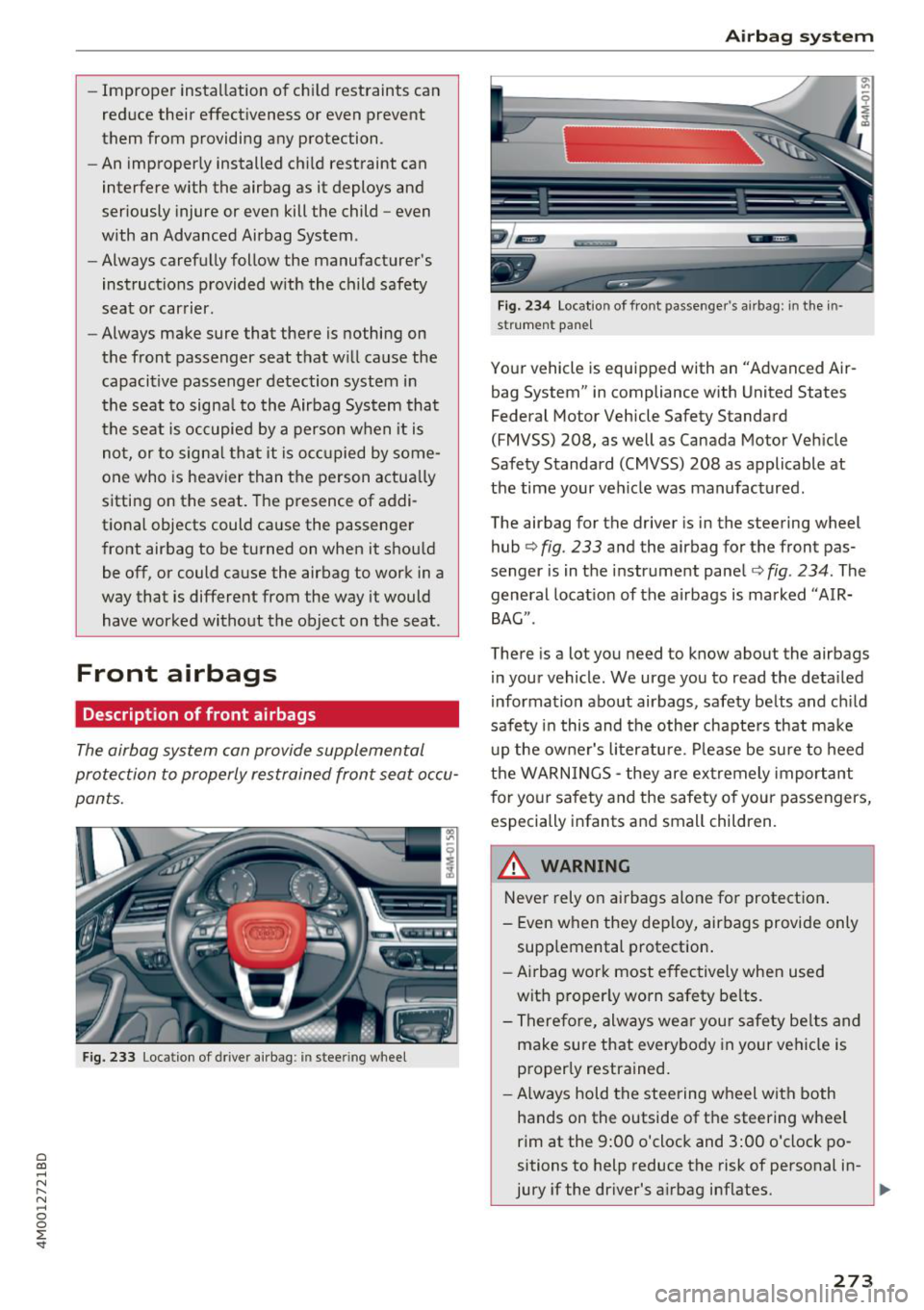
The airbag for the driver is in the steering wheel
hub
¢ fig . 233 and the airbag for the front pas
senger is in the instrument panel
¢fig . 234 . The
general location of the airbags is marked "AIR
BAG".
There is a lot you need to know abou t the airbags
in your vehicle . We urge you to read the detailed
information about airbags, safety belts and child
safety in this and the other chapters that make
up the owner's literature . Please be sure to heed
the WARNINGS -they are extremely important
for your safety and the safety of your passengers,
especially infants and small children.
_& WARNING
-
Never rely on airbags alone for protection .
- Even when they deploy, airbags provide only
supplemental protection.
- Airbag work most effectively when used
with properly worn safety belts.
- Therefore, always wear your safety belts and
make sure that everybody in your vehicle is
properly restrained.
- Always hold the steering wheel with both
hands on the outside of the steering wheel
rim at the 9:00 o'clock and 3:00 o'clock po
sitions to help reduce the risk of personal in-
jury if the driver's airbag inflates. ..,..
273
Page 276 of 398
Airbag syste m
-Never hold the steering whee l at the 12
o'clock pos it ion or w ith your han ds any
where inside the steering wheel or on the steering wheel hub. Holding t he steering
wheel the wrong way increases the risk of severe injury to the arms, hands, and head if
the d river a irbag deploys.
A WARNING
Objects between you and the a irbag w il l in
crease the risk of inj ury in a crash by interfer
ing w ith the way the airbag unfo lds and/or by
being pushed into you as the airbag inflates .
- Always make sure nothing is in the front air-
bag deployment zone that could be str uck
by the airbag when it inflates.
-
- Objects in the zone of a deploying airbag
can become projectiles when the airbag de
ploys and cause serious persona l injury .
- Never hold th ings in your hands or on your
lap when the vehicle is in use.
- Never place accessor ies or other objec ts
(s uch as c up ho lders, telephone brackets,
note pads, navigation systems, or things
that are large, heavy, o r bulky) on the doors;
never attach then to the doors or the wind
shield; never place them over or near or at
tach them to the area marked ,,AIRBAG" on
the steering wheel, instrument panel or the seat backrests; never p lace them between
these a reas and yo u or any other person in
the vehicle.
- Never attach objects to the w indshield
above the passenger front airbag, s uch as
accessory GPS navigation uni ts or mus ic
players . S uch objects could ca use serio us in
jury in a collision, especially when the air bags inflate.
- Never recline the front passenger seat to transport objects . Items can also move into
the deployment area of the side a irbags or
the front a irbag during breaking o r in a sud
den maneuver. Objects near the airbags can
fly dangerous ly through the passenger com
partment and cause injury, particularly
when the seat is reclined and the airbags in
flate.
274
A WARNING
A person on the front passenger seat, espe
cially infants and small ch ildren, wi ll receive
serious in juries and can even be k illed by be
ing too close to the airbag when it inflates .
- Although the Advanced Airbag System in your veh icle is designed to turn off the front
passenger airbag if an infant o r a small child
is on the fron t passenger sea t, nobody can
absolu tely guarantee tha t deployment un
de r these specia l condi tions is impossible in
all conceivable situations that may happen
during the useful life of yo ur vehicle.
- The Advanced Airbag System can dep loy in
accordance with the ,.low risk" option for 3-
and 6-year-old children under the U.S. Fed
eral Standard if a child w ith electrical capac
itance greater than the combined capac i
tance of a typical one-year o ld infant re
strained in one of the forward facing or rea r
ward-facing chi ld seats with which yo ur ve
hicle was certified is on the front passenger
seat and the o ther conditions for airbag de-
ployment are me t.
- Accident s tatisti cs have shown th at children
are generally safer in the rear seat are a than
in the front seat ing pos ition.
- For their own s afety, all ch ildren, especi ally
12 years and younger, should alw ays ride in
the back proper ly restrained for their age
and size .
Advanced front airbag system
Your vehicle is equipped with a front Advanced
Airbag System in compliance with United States
Federal Motor Vehicle Safety Standard (FMVSS)
208, as well as Canada Motor Vehicle Safety
Standard (CMVSS) 208 as applicable at the t ime
you r vehicle was manufactured .
-
The front Advanced Airbag System supplements
the safety belts to provide add itiona l protect ion
for the driver 's and front passenger's heads and
upper bod ies in fronta l crashes. The a irbags in
flate only in frontal impacts when the vehicle de-
ce le ra tion is high e no ugh.
II>-
Page 277 of 398
Cl a:, ...... N
" N ...... 0
0
::r '
seat occupants is not a substitute for your safety be lts. Rather, it is part of the overa ll occupant re
stra int system in your vehicle. A lways remember
that the airbag system can on ly help to protect
you, if you are sitting upr ight, wear ing your safe
ty belt and wear ing it properly . This is why you
and your passengers must always be prope rly re
stra ined, not just beca use the law req uir es yo u to
be.
The Advanced Airbag System in your ve hicle has
been ce rt ified to meet the " low r isk" requ ire
ments fo r 3 and 6 yea r-o ld children o n the pas
senger side and very sma ll adul ts on the d rive r
side . The low r is k dep loymen t cr iteria are intend
ed to he lp reduce t he ris k of injury through inter
action with the front airbag that can occ ur, for
examp le, by being too close to the steering whee l
and instrument pane l when the airbag inflates .
I n addition, the system has been certified to
comp ly with the "suppression" requirements of
the Safety Standard, to t urn off the front a irbag
for infants 12 months old and younger who are
restrained on the front passenger seat in c hild re
stra ints that are listed in the Standard
<=:>
page 293, Child restraints and Advanced Air
bags.
"Suppress ion" requ ires the front a irbag on the
passenger side to be turned
off if:
- a ch ild up to about one year of age is restra ined
on the front passenger seat in one of the rear
facing or forward-fac ing infant restra ints listed
in Federal Motor Vehicle Safety Standard 208
with wh ic h the Advanced Airbag System in your
vehicle was ce rt ified. For a listing of the c hild
r estra in ts tha t were used to certify your ve hi
cl e's comp lian ce wi th t he US S afety St andard
<=:>
page 293,
- When a person is de te cte d on the fron t passen
ger sea t th at has an electr ica l capaci tance t hat
is mo re t han t he tota l electrical capac itance of
a chi ld that is about 1 year old restrained in one
of the rea r-facing or forward-facing infant re
straints (listed in Federal Motor Vehicle Safety Standard 208 w ith which the Advanced A irbag
System in your ve hicle was certified), the front
Airbag syste m
airbag on the passenger side may or may not
dep loy.
T he
PASSENGER AIR BAG OFF~; ligh t comes on
whe n the elect ronic con trol uni t detec ts a t otal
electrica l capacitance on the front passenger seat
that requires the front airbag to be turned
off. If
the
PASSENGER AIR BAG OFF~; light does not
come on, the front airbag on the passenger side
has not been turned
off by the contro l unit and
can deploy if the contro l unit senses a n impact
t h at meets the cond it ions stored in its memory .
If the total electr ica l capacitance reg istered on
the front passenger seat is more t han that of a
typ ical 1 year-old , but less than the weight of a
small ad ult, the front a irbag on the passenger
s ide may dep loy (the
PASSENGER AIR BAG OFF
~; light does not come on).
For example, the airbag may deploy if :
-a small ch ild that is heav ier than a typica l 1
year-o ld child is on the front passenger seat
(regardless of whether the child is in one of t he
child safety seats listed<=:>
page 293),
- a child who has outgrown c hild restraints is on
the front passenger seat.
If the front passenge r ai rbag is t urned off, the
PASSENGER AIR BAG OFF~; light in the head
liner w ill come on and stay on.
If the front passenge r airbag deploys, the Feder
al Standard requi res t he airbag to meet the " low
risk" deployment criteria to he lp reduce the r is k
of i njury through interaction with the a irbag.
"Low risk" deployment occurs in those crashes
that take place at lower decelerations as defined
i n the electronic co ntro l unit .
<=:>page 281
Always remember : Even though your vehicle is
equipped with Advanced Airbags, the safest place
for ch ildre n is properly restra ined o n the back
seat . Please be s ure to read the impo rtant in for
mation in the sect ions that fo llow and be sure to
heed all of the WAR NIN GS.
_&. WARNING
To redu ce th e r is k of injury when an air bag in -
fl ates, always wea r sa fe ty be lts properly . ...,
275
Page 282 of 398
Airbag syste m
airbag inflates -even with an Advanced Airbag
System.
- The inflating airbag will hit the child safety
seat or infant carrier with great force and
will smash the child safety seat and child
against the backrest, center armrest, door
or roof .
- Always install rear-facing child safety seats
on the rear seat .
- If you must install a rearward-fac ing child
safety seat on the front passenger seat be
cause of exceptional circumstances and the
PASSENGER AIR BAG OFF~; light does not
come on and stay on, immed iate ly install
the rear-fac ing ch ild safety seat in a rear
seat ing pos ition and have the airbag system
inspected by your a uthorized Audi dea ler.
A WARNING
Objects between you and the a irbag w ill in
crease the risk of inj ury in a crash by interfer
ing with the way the airbag unfo lds or by be
ing pushed into you as the a irbag inflates.
- Never hold things in your hands or on your
lap when the vehicle is in use.
- Never transport items on or in the area of
the front passenger seat . Objects could
move into the area of the front airbags dur
ing brak ing or other sudden maneuvers and
become dangerous projectiles that can
cause serious personal injury if the a irbags
inflate .
- Never place or attach accessor ies or other
objects (such as cupholders, telephone
brackets, large, heavy o r bulky objects) on
the doors, over or nea r the area marked
"AIRBAG" on the steering wheel, instru
ment pane l, sea t backrests or between
those areas and yoursel f. These objects
could cause injury in a crash, especially
when the airbags inflate.
- Never recline the front passenger's seat to
transport objects . Items can also move into
the area of the side airbag o r the front a ir
bag dur ing braking or in a sudden maneu
ver. Objects near the airbags can become
280
-
pro jecti les and cause injury, part icularly
when the seat is reclined.
- Never p lace or transport objects on the
front passenger seat. Objects on the front passenger seat could cause the capacitive
sensor in the seat to signal to airbag system
that the seat is occupied by a person when it
in fact is not, or that the pe rson on the seat
is heavie r than he or she act ually is . The
change in elec tric capa citan ce beca use of
such o bje cts can c ause the p assenge r front
airbag to be turned on when it should be
off, or can cause the airbag to work in a way
that is different from the way it would have
wo rked without objects on the seat.
- Always make sure that there is nothing on
the front passenge r seat that will cause the
capacitive passenge r detection system in
the seat to signal to the Airbag System that
the seat is occup ied by a person when it is
not , or to signal that it is occupied by some
one who is heavier than the person act ually
sitt ing on the seat. The presence of an ob
ject could ca use the passenger front air bag
to be turned on when it should be off, or
could cause the airbag to work in a way that
is different from the way it would have
worked without the object on the seat.
A WARNING
The fine dust created when airbags deploy can
cause breathing prob lems for people with a
h istory of asthma or other breath ing cond i
tions .
- To reduce the r isk of breathing p roblems,
those with asthma or other respiratory con
ditions should get fresh a ir right away by
getting out of the vehicle or opening win
dows or doors .
- If you are in a collision in which airbags de
ploy, wash your hands and face with m ild
soap and water before eating.
- Be ca refu l not to get the dust into your eyes,
or into any cuts or scratches.
- If the residue should get into your eyes,
flush them w ith wate r.
Page 286 of 398
Airbag syste m
Make sure that the PASSENGER AIR B AG
OFF ,;;
light comes on and stays on all the
t ime whenever the ignition is switched on.
A WARNING
- If the PASS ENGER AIR B AG O FF 1'i; light
does not go out when an adult is sitting on
the front passenger seat after tak ing the
steps described above, make sure the adult
is p roperly seated and restrained at one of
the rear seating positions.
- Have the airbag system inspected by your
authorized Aud i dealer before transporting
anyone on the front passenger seat.
(D Tips
If the capacitive passenger detection system
determines that the front passenger seat is
empty, the frontal airbag on the passenge r
side w ill be tu rned off, and the
PA SSENGER
AIR BAG OFF
1'i ; light will stay on.
-
Repair, care and disposal of the airbags
Parts of the airbag system are installed at many
different places on your Audi. Installing, remov
ing, servic ing or repa iring a part in an area of the
veh icle can damage a part of an airbag system
and prevent that system from working properly
in a collision .
There are some important things you have to
know to make sure that the effectiveness of the
system w ill not be impaired and that discarded
components do not cause injury or pollute the
env ironment.
A WARNING
Improper care, serv icing and repai r proce
dures can increase the r is k of personal injury
and death by preventing an airbag from de
ploying when needed or dep loying an airbag
unexpectedly:
-
- Never cover, obstruct, or change the steer
ing wheel horn pad or airbag cover or the in
strument pane l or modify them in any way.
284
- Never attach any objects such as cupholders
or telephone mountings to the surfaces cov
ering the a irbag un its.
- For cleaning the horn pad or instrument
panel, use only a soft, dry cloth or one mois
tened w ith plain water. Solvents or cleaners
could damage the airbag cover or change
the st iffness or strength of the material so
that the airbag cannot deploy and protect
properly.
- Never repair, adjust, or change any parts of
the airbag system.
- All work on the steering wheel, instrument
panel, front seats or e lectr ica l system ( in
cluding the installation of a udio eq uipment,
cellular telephones and CB radios, etc.) m ust be performed by a qualified techn ician
who has the training and specia l equipment
necessary.
- For any work on the airbag system, we strong ly recommend that you see your au
thorized Audi dealer or qualified workshop.
- Never modify the front b umper or parts of
the vehicle body.
- Always make sure that the side a irbag can
inflate without interference:
- Never install seat covers or replacement
upholstery over the front seatbacks that
have not been specifically approved by
A udi.
- Never use additional seat c ushions that
cover the areas where the side airbags in
flate.
- Damage to the orig inal seat cove rs or to
the seam in the area of the s ide airbag
module mus t always be repaired immedi
ate ly by an autho rized Aud i dealer .
- The a irbag sys tem can deploy on ly once. Af
ter an airbag has been deployed, it m ust be
replaced with new replacement parts de
signed and approved especia lly for your
Audi model version . Replacement of com
plete airbag systems or airbag components
must be performed by qua lified workshops
only . Make sure that any airbag service ac
tion is entered in your Audi Warranty
&
Ma intenance booklet under AIRBAG RE-
PLAC EMENT RECORD.
Ii)-
Page 295 of 398
Cl a:, ...... N
" N ...... 0
0
::r '
switched on.
- If the
PASSENGER AIR BAG OFF~. light
does not come on and stay on, immediate
ly insta ll the forward-facing child seat in a
rear seating position and have the airbag
system inspected by your authorized Aud i
deale r.
- Always buckle the chi ld seat firmly in
place even if a ch ild is not sitt ing in it. A
loose ch ild seat ca n fly around during a
sudden stop o r in a coll is ion.
- Always read and heed all WARNINGS
wheneve r us ing a ch ild restraint in a veh i
cle
~ page 261, Safety belts, ~ page 269,
Airbag system and ~page 291, Impor
tant information .
(j) Tips
Always replace ch ild restraints that were in
stalled in a veh icle dur ing a crash. Damage to
a child restra int tha t is not visib le co uld cause
it to fail in another collision situation .
Advanced front airbag system and children
Your vehicle is equipped with an "Advanced Air
bag System" in comp liance with United States
Federa l Motor Vehicle Safety Standard (FMVSS)
208, as well as Canada Motor Veh icle Safety
Standard (CMVSS) 208 as applicable at the t ime
your ve hicle was manufactured .
The Advanced Airbag system in your vehicle has
been certified to meet the "low-risk" requ ire
ments for 3- and 6-year old children on the pas
senger side and small adults on the driver side.
The low risk deployment crite ria are intended to
reduce t he r isk of injury thro ugh inte ract ion with
the airbag t hat can occur, for examp le, by being
too close to the steering whee l and instrument
panel when the airbag inflates . In addition, the
system has been certified to comply with the
"suppression" req uirements of the Safety Stand
ard, to turn off the front airbag for infants up to
12 months who are restra ined on the front pas
senger seat in child restraints that are listed i n
the Standard .
Child s af ety
E ven thoug h your veh icle is equipped with an Ad
vanced Airbag system, all chi ldren, especially
those 12 years and younger, should a lways ride
in the back seat properly restrained for their age
and size . The airbag on the passenger side makes
the front seat a potentia lly dangerous p lace for a
ch ild to ride . Th e front seat is not the safest place
fo r a ch ild in a forward-fac ing ch ild safety seat.
It
can be a very dangerous place fo r an infant o r a
la rge r ch ild i n a rea rwa rd -facing seat.
T he veh icle 's Advanced A irbag System has a ca
pacit ive passenger detection system in the front
passenge r seat cushion that can detect the p res
ence of a baby or a c hild in a child res tra int sys
tem on this seat .
T he capacitive passenger detection system reg is
te rs the changes that result i n an elect rical field
whe n a child, a ch ild restraint, and a baby b la nket
are on t he fron t passenger seat. The change in
the measured capacitance due to the presence of a chi ld, a child restraint, and a baby blanket on
the front passenger seat is related to the child
restra int system resting on the seat. The meas
ured capacitance of a child restra int system var
ies depend ing on the type of system and specific
make and model.
The electrical capac itance of the various types,
makes, and models of child restraints specif ied
by the U .S . National Highway Traffic Safety Ad
min istrat ion (NHTSA) in the relevant safety
standard are stored in the Advanced Airbag Sys
tem contro l unit together with the capacitances
typ ica l of infants and a 1 -year old child. When a
c h ild restraint is used on the front passenger
seat with a typical 1 year -old infant, t he Ad
vanced Airbag System compares the capacitance
measured by the capacitive passenger detection
system with the data stored in the electronic con
trol un it .
Child restraints and Advanced Airbags
Regardless of the ch ild restraint that you use,
make sure that it has been certified to meet Safe
ty Standards and has been cert ified by its manu
fact urer for use w ith an airbag . Always be s ure
t h at the c hild restraint is properly installed at
IJJ,,
293
Page 341 of 398
0
a:,
.... N
equipped with them at the
factory
r=> page 349.
-If you install wheel covers on
the vehicle, make sure they al low enough air circulation to
cool the brake system. If they
do not, this could increase the risk of an accident.
Tire wear/damage
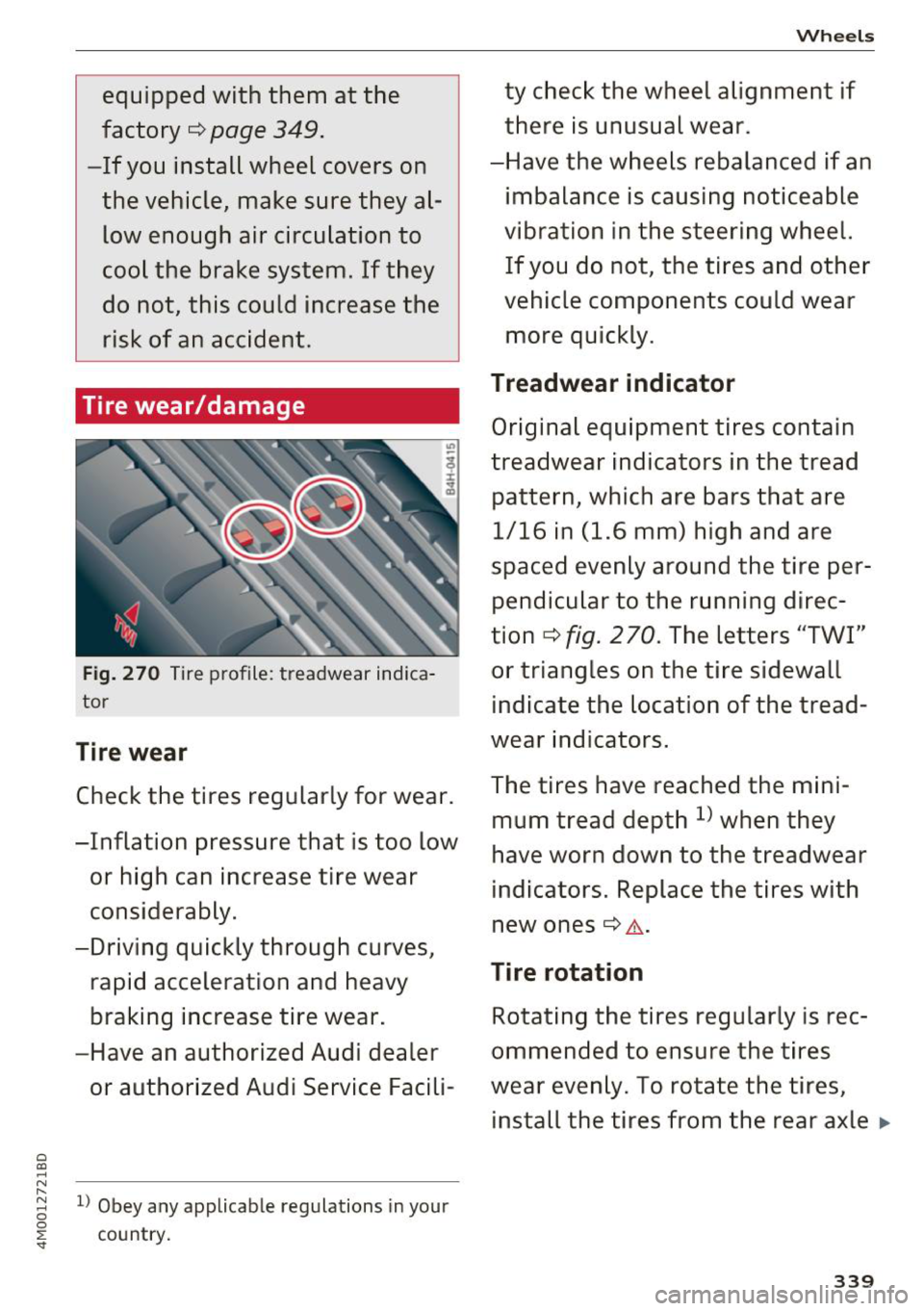
Fig. 270 Tire profile : treadwear indica
tor
Tire wear
Check the tires regularly for wear.
-Inflation pressure that is too low or high can increase tire wear
considerably.
-Driving quickly through curves, rapid acceleration and heavy
braking increase tire wear.
-Have an authorized Audi dealer or authorized Audi Service Facili-
"
8 l) Obey any applicable regulations in your
0 ~ country.
Wheels
ty check the wheel alignment if
there is unusual wear.
-Have the wheels rebalanced if an imbalance is causing noticeable
vibration in the steering wheel. If you do not, the tires and other
vehicle components could wear more quickly.
Treadwear indicator
Original equipment tires contain
treadwear indicators in the tread
pattern, which are bars that are 1/16 in (1.6 mm) high and are
spaced evenly around the tire per pendicular to the running direc
tion ¢
fig. 2 70. The letters "TWI"
or triangles on the tire sidewall indicate the location of the tread
wear indicators.
The tires have reached the mini mum tread depth
l) when they
have worn down to the treadwear
indicators. Replace the tires with
new ones¢ &.-
Tire rotation
Rotating the tires regularly is rec
ommended to ensure the tires
wear evenly. To rotate the tires, install the tires from the rear axle ..,.
339
Page 350 of 398
Wheels
Please note that the TPMS is not a substitute for
proper tire maintenance, and it is the driver's re
sponsibility to maintain correct tire pressure,
even if under-inflation has not reached the level
to trigger illumination of the TPMS low tire pres
sure telltale.
Your vehicle has also been equipped with a TPMS
malfunction indicator to indicate when the sys
tem is not operating properly. The TPMS mal
function indicator is combined with the low tire pressure telltale. When the system detects a
malfunction, the telltale will flash for approxi
mately one minute and then remain continuously
illuminated. This sequence will continue upon
subsequent vehicle start-ups as long as the mal
function exists.
When the malfunction indicator is illuminated,
the system may not be able to detect or signal
low tire pressure as intended. TPMS malfunctions
may occur for a variety of reasons, including the
installation of replacement or alternate tires or
wheels on the vehicle that prevent the TPMS
from functioning properly . Always check the
TPMS malfunction telltale after replacing one or
more tires or wheels on your vehicle to ensure
that the replacement or alternate tires and
wheels allow the TPMS to continue to function
properly.
If the tire pressure monitoring indicator
appears
Applies to: vehicles with Tire Pressure Monitoring System in
dic ato r
The tire pressure indicator in the instrument
cluster informs you if the tire pressure is too low
or if there is a system malfunction.
Using the ABS sensors, the tire pressure monitor
ing system compares the tire tread circumfer
ence and vibration characteristics of the individu
al tires . If the pressure changes in one or more
tires, this is indicated in the instrument cluster
display with an indicator light
RI] and a message.
If only one tire is affected , the location of that
tire will be indicated.
The tire pressures must be stored in the Infotain
ment system again each time the pressures
348
change (switching between partial and full load
pressure) or after changing or replacing a tire on
your vehicle ~
page 349. The tire pressure moni
toring system only monitors the tire pressure you have stored. Refer to the tire pressure label for
the recommended tire pressure for your vehicle
~ page 340, fig . 272.
Tire tread circumference and vibration character
istics can change and cause a tire pressure warn
ing if:
- the tire pressure in one or more tires is too low
- the tires have structural damage
- the tire was replaced or the tire pressure was
changed and it was not stored
~ page 349
- tires that are only partially used are replaced
with new tires
Indicator lights
RI] -loss of pressure in at least one tire~,& .
Check the tires and replace or repair if necessary.
Check/correct the pressures of all four tires and
store the pressure again in the Infotainment sys
tem
~ page 349.
m (Tire Pressure Monitoring System) Tire
pressure: malfunction! See owner's manual.
If
m appears after switching the ignition on or
while driving and the
RI] indicator light in the in
strument cluster blinks for approximately one
minute and then stays on, there is system mal
function. Try to store the correct tire pressures
~ page 349. In some cases, you must drive for
several minutes after storing the pressures until
the indicator light turns off . If the indicator light
does turn off or turns on again after a short peri
od of time, drive to an authorized Audi dealer or
authorized Audi Service Facility immediately to
have the malfunction corrected.
& WARNING
- If the tire pressure indicator appears in the
display, reduce your speed immediately and
avoid any hard steering or braking maneu
vers. Stop as soon as possible and check the
tires and their pressure.