fuel AUDI R8 SPYDER 2014 Owner's Manual
[x] Cancel search | Manufacturer: AUDI, Model Year: 2014, Model line: R8 SPYDER, Model: AUDI R8 SPYDER 2014Pages: 244, PDF Size: 61.06 MB
Page 167 of 244
(D Note
-Never use chemical solvents (e.g . lighter
flu id, turpentine), waxes, shoe polish or
s imilar products on Alcantara ® surfaces.
- To avoid damage, have stubborn stains
removed by a commercia l cleaning spe
cialist.
- Do not use brushes, stiff sponges or sim
ilarly abrasive cleaning aids.
Safety belts
Heavily soiled safety belts may not retract
properly .
~ Keep belts clean.
~ For cleaning, use a mild soap and water sol
ution. Let belts dry thoroughly and away
from direct sunlight.
~ Do not allow inertia reel safety belts to re
tract before they are completely d ry.
~ Check the condition of your safety belts reg
ularly.
A WARNING
Damaged safety belts can break in a crash.
- Any thing tha t might damage you r safety
belts co uld mean that you and your pas
sengers wo uld not be adequately pro
tected in an accident.
- Safety belt performance depends on cor rect installation . Never remove belts
from the vehicle to clean them.
- Do not use chemical cleaning agents,
bleach o r dyes . They have corrosive prop
erties which weaken the webbing.
- When cleaning your safety belts, inspect
them for damage. If you discover dam
age, see your authorized Audi dea ler.
- Always read and heed all WARNINGS and
the informat ion
¢page 156.
1) Use o nly the correct cleaning sol utio ns. Neve r use gas
oline or d iese l fuel.
Cleaning and protec tion
Engine compartment
Be especially careful when cleaning the en
gine compartment.
Corrosion p rotection
The engine compartment and transmission
have been corrosion-protected at the factory.
Good anti-corrosion treatmen t is very impor
tant, partic ularly in the winter.
If the vehicle
is frequently driven on salt treated roads, the
entire engine compartment and plenum panel
shou ld be thoroughly cleaned at the end of
winter and retreated to prevent salt damage .
At the same time, the underside of the veh icle
shou ld be washed as well.
If the engine compartment is cleaned at any
time with grease remov ing solutions
1>, or if
you have the engine washed, the a nti-corro
s ion treatment is almost always removed as
well.
It i s therefo re essentia l to have a long
lasti ng corrosion protection reapplied to all
su rfaces, seams, joints and components in the
engine compa rtment .
A WARNING
--=
Be aware: The eng ine compartment of any
motor veh icle is a potentially hazardous
area.
- Before work ing in the engine compart
ment, be sure to read the information
¢page 172.
-Before reaching into the front p lenum
panel, a lways remove the ignit ion key.
Otherwise, the w indshield wiper system
could u nintentionally be sw itched on,
possibly caus ing persona l injury from the
mov ing wipe r linkage.
- Never reach i nto the area around or
touch the rad iator fan. The aux iliary fan
is tempe ratu re controlled and ca n sw itch
on s uddenly -even when the ignition is
off. .,.
165
•
•
Page 169 of 244
Fuel supply and filling
your f uel tank
Gasoline
Fuel supply
Using the right fuel helps keep the environ
ment clean and prevents engine damage.
Fuel recommendation
The fuel recommended for you r vehicle is un
leaded premium
g rade gasolin e. See also
¢ page 225, Data . Audi recommends usi ng
TO P TI ER Deterge nt Gaso line wi th a minim um
oc ta ne ra ti ng of 9 1 AK I (9 5 RON). For more
in fo rmation on TO P TI ER De tergent Gaso line,
p lease go to the official website
(www .toptiergas .com) .
The re commended g asoline octane r ating for
your engine can a lso be fo und o n a label loca t
e d on the ins ide of the fuel filler flap . This rat
ing may be specif ied as A KI or RO N.
Your veh icle m ay also be oper ated using un
l e aded regular gasoline with a minimum oc
tane rating of 87 AKI/91 RON . However, using
87 AKI/9 1 RO N octa ne fue l w ill sli ghtly re
d uce eng ine perfo rmance .
Use unleaded gasoline only. Unleaded gaso
line is available th rougho ut the USA, Canada,
a nd in most E uropean cou ntries . We recom
mend that you do not ta ke yo ur vehicle to
areas or count ries where unleaded gasoline
may not be ava ilable.
F or mo re informat io n on refue ling your ve hi
cle, see
¢ page 168.
Octane rating
Octane r ati ng in dicates a gaso line's abili ty to
r es ist engine damaging "knock" ca used by
p remature ign ition and detonation. Therefore,
buy ing the correct grade of gaso line is very
i mportant to help prevent possible engine
damage and a loss of engine performance.
Gasoline most common ly used in the Unite d
States and Canada has the followin g octane
Fuel supply and filling your fuel tank 167
ra tings that can usu a lly be found on the fi ller
p ump :
- Premium Gr ade: 9 1 -9 6 AKI
- Regular Grade : 87 -90 AKI
Explanation of the abbreviations:
AKI = Anti K nock In d ex = (R+M )/2 = (RO N
+M ON)/2
RON= Resear ch O ctane Num ber
MO N= Motor Octane Number.
(D Note
- Do not use a ny fue l w it h octane rat ings
lower than 87 A KI or 9 1 RO N othe rwise
e xpensive engi ne damage w ill occur.
- Do
not use leaded gasoli ne! The use of
leaded gasolin e w ill severely damage
yo ur vehicl e's cata lytic co nve rter and its
ability to control exh aust em iss ions.
Blended gasoline
U se of gasoline containing alcohol or
MTBE (methyl tertiary butyl ether)
You may use unleaded g asoline blende d with
a lcohol o r MTBE (commonly re fer red to as
oxygenates) if the blende d mixture meets the
fo llow ing criteria:
Blend of gasoline methanol (wood alcohol or
methyl alcohol)
- Anti -kno ck index mus t be 87 A KI or higher.
- Blend must contain no mor e than 3% meth-
anol.
- Blend must co ntain more than 2% co-sol-
vents .
Blend of gasoline and ethanol (grain alcohol
or ethyl alcohol)
- Anti -knoc k index must be 87 A KI or higher.
- Blend must not conta in mo re tha n 10%
ethanol.
Blend of gasoline and MTBE
- Anti -knoc k index must be 87 AKI or higher . ll>-
•
•
Page 170 of 244

168 Fuel supply and filling your fuel tank
-Blend must contain not more than 15%
MTBE.
Seasonally adjusted gasoline
Many gasoline grades are blended to perform
especially well for winter or summer driving .
During seasonal change-over, we suggest that
you fill up at busy gas stat ions where the sea
sonal adjustment is more likely to be made in
time.
(CT) Note
- Methanol fuels which do not meet these
requirements may cause corrosion and
damage to plastic and rubber compo
nents in the fuel system.
- Do not use fuels that fail to meet the
specified criteria in this chapter.
- If you are unable to determine whether
or not a particular fuel blend meets the
specifications, ask your service station or
its fuel supplier.
- Do not use fuel for which the contents cannot be identified.
- Fuel system damage and performance
problems resulting from the use of fuels
different from those specified are not
the responsibility of Audi and are not
covered under the New Vehicle or the Emission Control System Warranties.
- If you experience a loss of fuel economy
or driveability and performance prob lems due to the use of one of these fuel
blends, we recommend that you switch
to unblended fuel.
Gasoline additives
A major concern among many auto manufac
turers is carbon deposit build-up caused by
the type of gasoline you use.
A lthough gasoline grades differ from one
manufacturer to another, they have certain
things in common. All gasoline grades contain
substances that can cause deposits to collect
on vital engine parts, such as fuel injectors
and intake valves. Although most gasoline
brands include additives to keep engine and fuel
systems clean, they are not equally effec
tive .
A udi recommends using TOP TIER Detergent
Gasoline. For more information on TOP TIER
Detergent Gasoline, please go to the official
website (www.toptiergas.com).
After an extended period of using inadequate
fuels, built-up carbon deposits can rob your
engine of peak performance.
(D Note
'
Damage or malfunction due to poor fuel
quality is not covered by the Audi New Ve
hicle Limited Warranty.
Fuel tank
Fuel filler neck
The fuel filler neck is located on the right rear
side panel behind the fuel filler flap.
If the unlocking system should fail, you can
still open the flap manually -for detailed in
structions see¢
page 170.
You can find the fuel tank capacity of your ve
hicle in
Technical Data <=>page 225.
The label on the inside of the fuel filler flap
tells you the correct fuel for your vehicle. For
more information about fuel specifications,
see ¢
page 167.
Your vehicle fuel tank has an on-board refuel
ing vapor recovery system. This feature helps
to prevent fuel vapors from escaping from the
tank and polluting the environment while you refuel your vehicle . In order to fill the tank
properly while protecting the environment,
please follow this refueling procedure careful
ly.
.8, WARNING
Under normal operating cond itions, never
carry additional fuel containers in your car.
Gas canisters and other containers used to
transport fuel can be dangerous. Such con
tainers, full or empty, may leak and could
cause a fire in a collision. If you must
Page 171 of 244
transport fuel to use for your lawn mower,
snow blower, etc., be very careful and al
ways observe local and state laws regard
ing the use, transportation and storage of
such fuel containers. Make certain the con
tainer meets industry standards (ANSI/
ASTM F8S2 -86) .
@ Note
Never drive your vehicle until the fuel tank
is completely dry. The irregular supply of
fue l can cause misfiring. Gasoline cou ld
enter into the exhaust system and damage
the catalytic converter .
Refueling
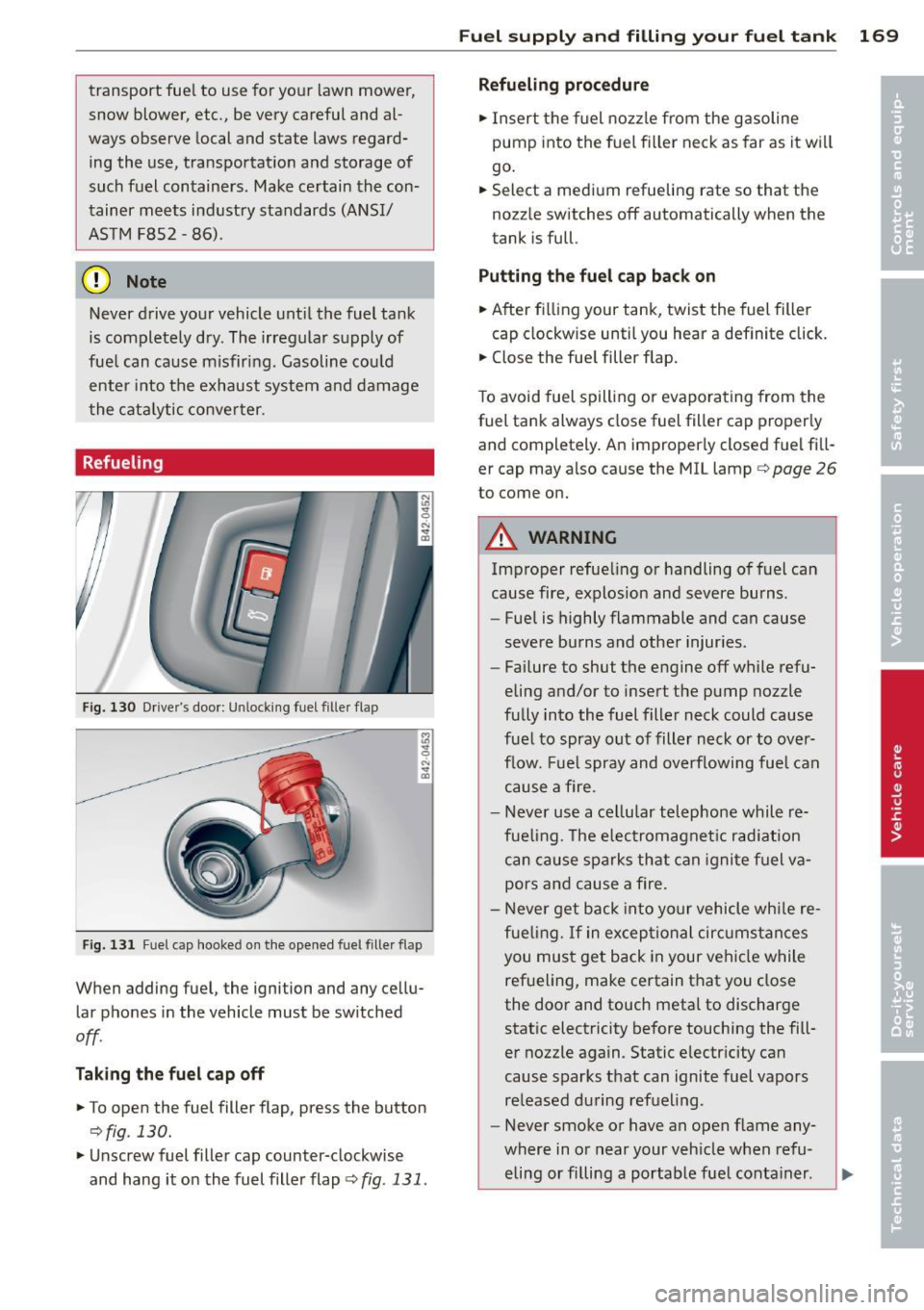
Fig. 130 Drive r's doo r: Unlock ing fuel filler flap
Fig. 131 Fu el cap hooked on the opened fuel filler flap
When adding fuel, the ignition and any cellu
lar phones in the vehicle must be switched
off .
Tak ing the fuel cap off
.. To open the fuel filler flap, press the button
9 fig . 130.
.. Unscrew fuel filler cap counter-clockwise
and hang it on the fuel filler flap ¢
fig. 131.
Fuel supply and filling your fuel tank 169
Refueling procedure
.. Insert the fuel nozzle from the gasoline
pump into the fuel filler neck as far as it will
go.
.. Select a medium refueling rate so that the
nozzle switches off automatically when the
tank is full.
Putting the fuel cap back on
.. After filling your tank, twist the fuel filler
cap clockwise until you hear a definite click.
.. Close the fuel filler flap.
To avoid fuel spilling or evaporating from the
fuel tank always close fuel filler cap proper ly
and completely. An improperly closed fuel fill
er cap may also cause the MIL lamp ¢
page 26
to come on.
A WARNING
Improper refueling or handling of fuel can
cause fire, explosion and severe burns.
- Fuel is highly flammable and can cause
severe burns and other injuries.
- Failure to shut the engine off while refu
eling and/or to insert the pump nozzle
fully into the fuel filler neck could cause
fuel to spray out of filler neck or to over
flow. Fuel spray and overflowing fuel can
cause a fire.
- Never use a cellular telephone while re
fueling. The electromagnetic radiation
can cause sparks that can ignite fuel va
pors and cause a fire.
- Never get back into your vehicle while re
fueling.
If in exceptional circumstances
you must get back in your vehicle while
refueling, make certain that you close
the door and touch metal to discharge static electricity before touching the fill
er nozzle again. Static electricity can
cause sparks that can ignite fuel vapors
released during refueling .
- Never smoke or have an open flame any
where in or near your vehicle when refu-
eling or filling a portable fuel container. ..,.
Page 172 of 244
1 70 Fuel supply and filling your fuel tank
-For your safety, we strongly recommend
that you do not travel with a portable
fuel container in your vehicle. The con
tainer, full or empty may leak and could
cause a fire, especially in a crash.
- If, under exceptional circumstances, you
must transport a portable fuel container,
please observe the following:
- Never fill a portable fuel container
while it is anywhere in or on the vehicle (for example, in the luggage compart
ment, or on the trunk). Static electrici
ty can build up while filling and can ig
nite fuel vapors causing a fire .
- Always place a portable fuel container
on the ground before filling.
-A lways keep the filler nozzle complete
ly inside the portable container before
and during filling.
- If filling a portable container made of
metal, the filler nozzle must always be
in contact with the-container. This will
help prevent static electricity from dis
charging and cause a fire .
- Never sp ill fuel inside the vehicle or
luggage compartment. Fuel vapors are
highly flammable.
- Always observe local and state/provin
cial laws regarding the use, storage
and transportation of fuel containers.
- Make certain the fuel container meets
industry standards (ANSI/ ASTM
F852-86).
(D Note
If any fuel has spilled onto the car, it
should be removed immediately to prevent
damage to the paint .
@) For the sake of the environment
As soon as the correctly operated nozzle
switches off automatically for the first
time, the tank is full. Do not try to add
more fuel because fuel may spill out. In
addition, the expansion space in the fuel
tank will be filled -causing the fuel to overflow
when it becomes warm and pol
lute the environment.
(D Tips
- Running your engine while refueling may
cause vapors to escape or even fuel to
spill out of the tank . This would then
shut off the fuel nozzle before the tank
is full.
- Do not refuel your vehicle with the ig n i
tion switched on. The fuel gauge may
otherwise not indicate the correct fuel
level after refueling .
Unlocking the fuel filler flap
by hand
You can open the fuel filler flap by hand if the
power locking system should fail.
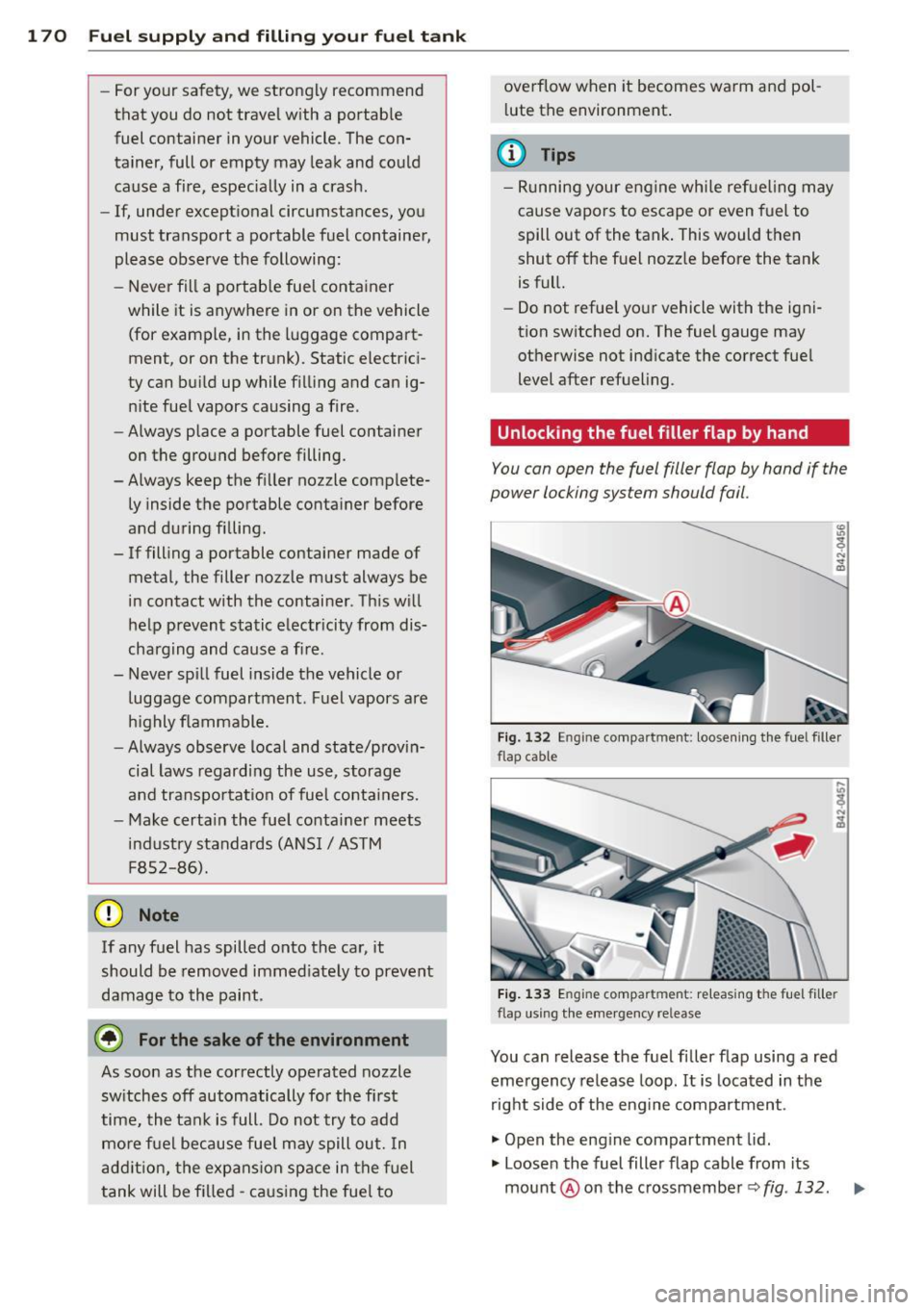
Fig. 132 Engine compart ment: loosening the fue l filler
fla p cable
Fig. 133 Engine compart ment : releas ing t he fuel fill er
flap using the emergency release
You can release the fuel filler flap using a red
emergency release loop. It is located in the
right side of the engine compartment.
.,. Open the engine compartment lid.
.,. Loosen the fuel filler flap cable from its
mount @ on the crossmember
Q fig. 132. ..,_
Page 173 of 244
~ Pull the red loop in the direct io n of the ar
row unti l the fuel filler flap opens
¢ fig.
133 .
~ Once the fuel fi ller flap is open, secure the
cable on the crossmember again.
~ Close the engine compa rtment lid
¢ page
174 .
Fuel supply and filling your fuel tank 171
•
•
Page 175 of 244
WARNINGS. The engine compartment of any
vehicle is a hazardous area!
c::> &.
A WARNING
To help avoid injury, before you check any
thing under the engine compartment lid:
- Switch off the engine.
- Remove the ignition key.
- Apply the parking brake.
- Move selector lever of S tronic to "N"
(Neutral); put manual transmission in
Neutral.
- Always let the engine cool down. Hot
components will burn skin on contact.
- To reduce the risk of being burned, never
open the engine compartment lid if you
see or hear steam or coolant escaping
from the engine compartment. Wait un
til no steam or coolant can be seen or heard before carefully opening the en
gine compartment lid .
- Keep children away from the engine com
partment .
-Never spill fluids on hot engine compo
nents. They can cause a fire.
- Never open the coolant reservoir cap when the engine is still warm. The coolant system is pressurized and hot cool
ant could spray out.
- Protect your face, hands and arm from
steam or hot engine coolant by placing a
thick rag over the cap when you open the
coolant reservoir .
- Do not remove the engine cover under
any circumstances. This increases the
risk of burns.
- If work on the fuel system or the electri
cal system is necessary:
- Always disconnect the battery.
- Never smoke or work near heaters or
open flames. Fluids in the engine com
partment could start a fire.
- Keep an approved fire extinguisher im
mediately available.
- To avoid electrical shock and personal in
jury while the engine is running or being
started, never touch:
Checking and filling 173
- Ignition cables
- Other components of the high voltage electronic ignition system.
- If you must perform a check or repair
with the engine running:
- First, fully apply the parking brake,
move selector lever of S tronic to "N"
(Neutral); put manual transmission in
Neutral.
- Always use extreme caution to prevent
clothing, jewelry, or long hair from get
ting caught in the radiator fan, V-belts
or other moving parts, or from contact ing hot parts. Tie back hair before
starting, and wear no clothing that will hang or droop into the engine.
- Minimize exposure to emission and chemical hazards
c::> .&. .
A WARNING
California Proposition 65 Warning:
- Engine exhaust, some of its constituents,
and certain vehicle components contain
or emit chemicals known to the State of
California to cause cancer and birth de
fects and reproductive harm. In addition, certain fluids contained in vehicles and
certain products of component wear con
tain or emit chemicals known to the
State of California to cause cancer and birth defects or other reproductive harm.
- Battery posts, terminals and related ac
cessories contain lead and lead com
pounds, chemicals known to the State of
California to cause cancer and reproduc
tive harms. Wash hands after handling.
@ Note
When adding fluids, always make sure that
they are poured into the proper container
or filler opening, otherwise serious dam
age to vehicle systems will occur.
@ For the sake of the environment
To detect leaks in time, inspect the vehicle
floor pan from underneath regularly. If
you see spots from oil or other vehicle
IJI>
•
•
Page 180 of 244
1 78 Che cking and filling
authorized Audi dealer will have to deny war
ranty cov erage un less you present to the dea l
er proof in the form of Serv ice o r Repair Or
ders tha t all sched uled maintena nce was per
f ormed in a t imely manner .
Engine oil consumption
T he engine in your vehicle depends on an ade
quate amoun t of oil to lubricate and cool all
of its moving par ts.
In order to provide effective l ubrication and
cooling of internal engine components, a ll in
ternal comb ustion eng ines consume a certa in
amount of o il. O il consumption var ies from
engine to eng ine and may c hange significa ntly
over the life of the eng ine . T ypically, eng ines
with a specifie d break-in per iod (see
c::> p oge 153) consume more oil during the
b reak-in per io d t han they co nsume after oil
consumption has sta bilized.
Unde r no rma l conditions, the rate of oil con
sum ption depends on the qu ality and vi scosity
of the oi l, the R PM ( revo lutions per m inute) at
which t he engine is ope rated, the ambient
temperature and road cond itio ns. Furthe r fac
tors are the amount of o il d ilution from water
condensation or fuel residue and the ox ida
ti on level of the oi l. As any engine is subject to
wear as mileage bu ilds up , the oil consump
tion may increase over t ime until replacement
of worn componen ts may become necessary.
W ith all these variables com ing into play, no
standa rd rate of o il consumption can be es
tablished or specif ied . T he re is no alternative
to regular and frequent checking of the oil lev
e l, see
Note .
If the ye llow eng ine o il level warning symbol
i n t he inst rument cluster
1\1 lights up, you
should check the o il l evel as soon as possibl e
c::> page 178. Top off the oil at you r earliest
conven ie nc e
c::>page 180.
_& WARNING
Before yo u check any thin g in t he engine
compartment , always read and hee d all
-
WAR NIN GS c::> & in Working in the engine
compartment on page 173.
(D Note
D riving wit h an insufficient o il level is like
l y to cause severe dama ge to the e ngine.
(D Tips
- The oil pressure warning display. is
not an indicator of the oil level. Do not
rely on it. Instead, check the oil level in
your engine at regular intervals , pref
erably each time you refuel, and always
before going on a long trip .
- If
you have t he impression yo ur engine
cons umes excessive amounts of o il, we
recommend that you consu lt your Aud i
deale r to have the cause of your concer n
prope rly diagnosed . K eep in m ind that
th e accu rat e meas urement of o il con
s u m ptio n re quires grea t care and may
t a ke some time. Y our Audi de aler h as i n
st ru ctio ns abou t how to measure oil con
sumption acc urately .
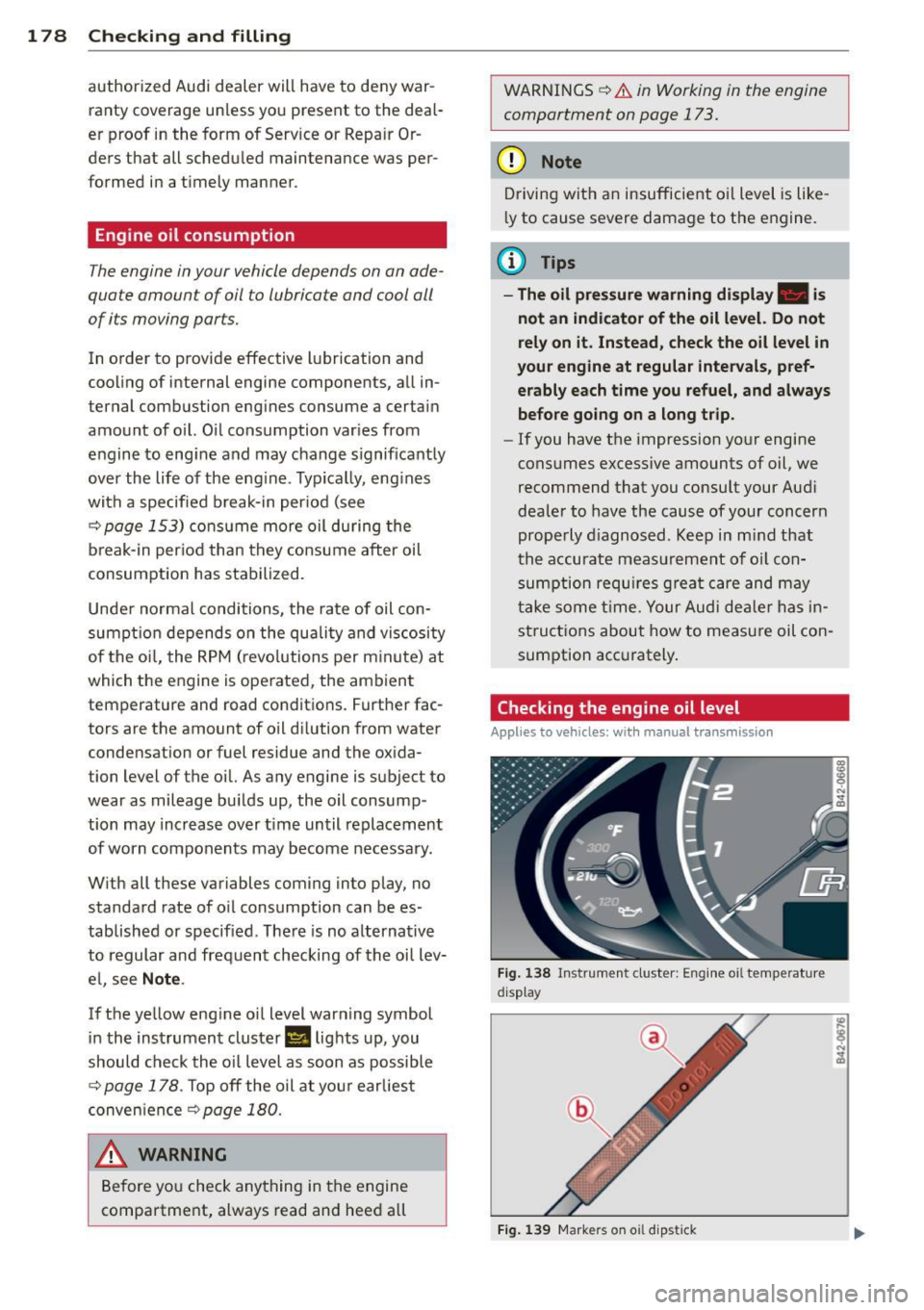
Checking the engine oil level
Applies to vehicles: with manual transmiss ion
Fig . 1 38 In st ru men t cl uste r: E ng in e oi l te m pe ratu re
d isp lay
Fig. 139 M arkers on o il dip stick
Page 192 of 244
190 Tire s and wheel s
-Never mount used tires on yo ur vehicle if
yo u are not sure of their "previous histo
ry." Old used tires may have been dam
aged even though the damage cannot be
seen that can lead to sudden t ire failure
and loss of vehicle control.
- If you notice unusual vibration or if the
vehicle pulls to one side when driving, al
ways stop as soon as it is safe to do so
and check the wheels and tires for dam
age.
(D Note
Please note that summer and winter tires
are designed for the cond itions that are
Glossary of tire and loading terminology
Accessory weight
means the comb ined we ight (in excess of
those standard items which may be rep laced)
of au toma tic tra nsmission, power steer ing,
power brakes, power windows, power seats,
radio, and heater, to the extent that these
items are availab le as factory -installed equip
ment (whether installed or not) .
Aspect ratio
means the ratio of the he ight to the w idth of
the tire in percent . Numbers of 55 or lower in
dicate a low sidewall for improved steering re
sponse and better overall handling on dry pavement .
Bead
means the part of the ti re that is made of
steel wires, wrapped or reinforced by ply cords
and that is shaped to fit the rim.
Bead s eparation
means a b reakdown of the bond between
components in the bead.
Cord
means the strands forming the plies in the
tire . typ
ica l in those seasons . Audi recommends
using winter tires during the winter
months . Low temperatures signif icant ly
decrease the e lasticity of summer tires,
which affects tract ion and brak ing ability.
If summer tires are used in very co ld tem
peratures, cracks ca n form on the tread
bars, res ulting in permanent tire damage
that can cause loud driving no ise and un
balan ced t ires. Audi is not responsible for
th is type of damage .
Cold tire inflation pre ssure
means the t ire p ressure recommended by the
vehicle manufacturer fo r a tire of a des ignated
s ize that has not bee n driven for more than a
coup le of miles (k ilometers) at low speeds in
the three hour period before the tire pressure
is measured or adjusted.
Curb weight
means the we ight of a motor ve hicle w ith
standard equipment including the max imum
capacity of fuel, oil, and coolant, air condi
tioning and additional weight of optiona l
equipment.
E x tra load tire
means a t ire designed to ope rate a t higher
loads and at highe r inflation p ressu res than
the corresponding standard tire. Extra load
tires my be identified as "XL", "xl", "EXTRA
LOAD", or "RF" on the sidewall.
Gross A xle Weight Rating ("GAWR ")
means the load -carry ing capacity of a s ingle
axle system , measured at the tire-ground in
terfaces.
Gr oss Vehicle Weight Rating ("GVWR ")
means the maximum total loaded we ight of
t h e vehi cle. .,.
Page 198 of 244
196 Tire s and wheel s
-Adjust the tire pressure to the load you are
carrying.
- Reinsta ll the va lve stem cap on the valve .
When should I check the tire pres sur e?
The correct tire pressure is especially impor
tant at high speeds. The pressure should
therefore be checked at least once a month
and a lways before starting a journey.
When should I adjust th e tir e pre ss ures ?
Adjust the tire pressure to the load you are
carry ing . After changing a wheel
o r replacing
wheels you have to adjust the tire pressures
on all wheels. In addition , you must then init i
alize the new tire pressures in the tire p res
sure mon itoring system ¢
page 206.
& WARNING
Incorrect tire pressures and/or underinf la
tion can lead sudden tire failure, loss of
contro l, collision, serious personal injury
or even death.
- When the warning symbo l
(11 appears in
the instrument cluster, stop and inspect
the tires .
- Incorrect tire pressure and/or underinfla
tion can cause increased tire wear and
can affect the handling of the veh icle and
stopp ing ability .
- Incorrect tire pressures and/or underin
flation can also lead to sudden tire fa il
ure, including a blowout and sudden de
flation, causing loss of vehicle control.
- The driver is responsible for the cor rect
t ire pressures for all tires on the vehicle .
T he applicable p ressu re values are locat
ed on a stic ker on the d rive r's side 8 -pil
lar .
- Only when all t ires on the vehicle a re fi l
led to the correct pressure, the tire p res
sure monitoring system can work cor
rect ly .
- The use of incorrect tire pressure values
can lead to accidents or other damage.
T herefore it is essential that the driver
observe the specified tire pressure va lues
for the tires and the correct press ures for the function of the ti re p
ress ure monitor
ing system.
- Always inflate tires to the recommended
and correct t ire pressure before dr iv ing
off.
- Driving with underinflated tires bend
more, letting them get too hot resulting
in tread separation, sudden tire failure
and loss of control.
- Excessive speed and/overloading can
cause heat build-up, sudden tire failure
and loss of control.
- If the tire pressure is too low or too high,
the t ires will wear prematurely and the
veh icle w ill not handle well.
- If the tire is not flat and you do not have
to change a wheel immediately, drive at
reduced speed to the nearest service sta
tion to check the t ire p ressure and add
ai r as req uired .
@ Note
Driving w ithout valve stem caps can cause
damage to the tire valves. To prevent this ,
always make sure that factory insta lled
valve stem caps o n all whee ls are se curely
moun ted on the valve.
@ For the sake of the environment
Underinflated tires w ill also increase the
fuel consumption.
Tires and vehicle load limits
T he re a re limits to the amount of load or
weight that any vehicle and any tire can carry.
A vehicle that is overloaded will not handle
well and is more d ifficu lt to stop . Overloading
can not only lead to lo ss of vehicle control,
but can also damage impor tant parts of the
vehicle and ca n lead to sudden tire fa ilure, in
clud ing a blowout and sudden deflation that
can cause the vehicle to cras h.
Your safety and that of your passengers also depends on making sure that load limits a re
not exceeded . Vehicle load i ncludes eve rybody
and everything in and on the veh icle . These .,..