warning AUDI R8 SPYDER 2015 Owners Manual
[x] Cancel search | Manufacturer: AUDI, Model Year: 2015, Model line: R8 SPYDER, Model: AUDI R8 SPYDER 2015Pages: 232, PDF Size: 58.36 MB
Page 172 of 232
Tires and wheels
Hidden damage
Damage to tires and rims is often
not readily visible. If you notice
unusual vibration or the vehicle
pulls to one side, this may indi
cate that one of the tires has been
damaged. The tires must be
checked immediately by an au
thorized Audi dealer or qualified
workshop.
Unidirectional tires
A unidirectional tire can be identi
fied by arrows on the sidewall,
that point in the direction the tire
is designed to rotate. You must
follow the specified direction of
rotation . This is necessary so that
these tires can develop their opti
mum characteristics regarding
grip, road noise, wear and hydro
planing resistance. For more in
formation
¢ page 203 .
A WARNING ~ -
New tires or tires that are old,
worn or damaged cannot pro
vide maximum control and
braking ability.
-New tires tend to be slippery
and must be broken in. To re
duce the risk of losing control,
a collision and serious person
al injuries, drive with special
170
care for the first 350 miles (560 km).
-Driving with worn or damaged tires can lead to loss of con
trol, sudden tire failure, in
cluding a blowout and sudden
deflation, crashes and serious
personal injuries. Have worn
or damaged tires replaced im
mediately.
-Tires age even if they are not being used and can fail sud
denly, especially at high
speeds. Tires that are more
than 6 years old can only be
used in an emergency and
then with special care and at
low speed.
-Never mount used tires on your vehicle if you are not sure
of their "previous history." Old
used tires may have been
damaged even though the
damage cannot be seen that
can lead to sudden tire failure
and loss of vehicle control.
-If you notice unusual vibration
or if the vehicle pulls to one
side when driving, always stop
as soon as it is safe to do so
and check the wheels and tires
for damage.
..
Page 176 of 232
Tires and wheels
wheel size, you will have to pur
chase new tires to match the new rim diameter .
Rim size designat ion
means rim diameter and width .
Rim width
means nominal distance between
rim flanges.
Sidewall
means that portion of a tire be
tween the tread and bead .
Speed rating (letter code )
means the speed at which a tire is
designed to be driven for extend
ed periods of time. The ratings range from 93 mph (150 km/h)
to 186 mph (298 km/h)
c::;, page 189. You may not find
this information on all tires be
cause it is not required by law.
T he speed rat ing letter code,
where applicable, is mo lded on
the tire sidewall and indicates the
maximum permissible road
speeds
c::;, .& in Winter tires on
page 194 .
Tire pressure monitoring
system
means a system that detects
when one or more of a vehicle's
1 7 4
tires are underinflated and ill umi
nates a low tire p ressure warning
telltale.
Tread
means that portion of a tire that
comes into contact with the road .
Tread separation
means pulling away of the tread
from the tire carcass .
Treadwear indicators (TWI)
means the projections within the
principal grooves designed to give
a visual indication of the degrees
of wear of the t read. See
c::;, page 185 , Tread Wear Indica
tor (TWI) for more information
on measuring tire wear.
Uniform Tire Quality Grading
is a tire information system devel
oped by the United States Nation
a l Highway Traffic Safety Adminis
tration (NHTSA) that is designed
to help buye rs make relative com
parisons among tires . The UTQG is
not a safety rating an d not a guar
antee tha t a tire will last for a
prescr ibed number of mi les or
perform in a certain way. It sim
ply gives tire buyers addit ional in
formation to combine w ith other
considerat ions, such as pr ice,
...
Page 181 of 232
.... N
" N ": ... IO "? N U'> .....
.&_ WARNING
Overloading a vehicle can cause loss of vehicle control, a crash
or other accident, serious per
sonal injury, and even death .
-Carrying more weight than your vehicle was designed to carry will prevent the vehicle
from handling properly and in crease the risk of a loss of ve
hicle control.
-The brakes on a vehicle that has been overloaded may not
be able to stop the vehicle
within a safe distance .
-Tires on a vehicle that has been overloaded can fail sud
denly causing loss of control
and a crash.
A WARNING
-
- Incorrect tire pressures and/or
underinflation can lead to a
serious or fatal accident.
-Incorrect tire pressures and/or underinflation cause increased
tire wear and can affect the
handling of the vehicle.
- Incorrect tire pressures and/or
underinflation can also lead to
sudden tire failure, including a blowout and sudden deflation,
causing loss of vehicle control.
Tires and wheels
Checking tire pressure
The correct tire pressure for the
tires originally installed on your
vehicle is listed on the tire pres
sure label located on driver 's side
8-pillar .
The recommended tire pressures
are on the tire pressure label and
in the table
c:::> page 176 , Cold tire
inflation pressure.
This means
that the pressure must be checked and adjusted when the
tire has not been driven for more
than a couple of m iles (kilome
ters) at low speeds during the
previous three hours. Air in the
tires expands when the t ire heats
up as a result of internal friction
as it flexes in use . The tire pres
sure is higher when the tire has
warmed up than when it is "cold".
It is the inflation pressure in a
"cold" tire that counts. Therefore,
you shou ld never let air out of a
warm tire to match "Cold tire in
flation pressure" recommenda
tions
c:::> page 176. The tires would
then be underinflated and could
fail suddenly.
The tire pressure label on your
Audi lists the recommended cold
tire inflation pressures for the
1 79
Page 183 of 232
.... N
" N ": ... IO "? N U'> .....
-Place the air pressure gauge on the valve .
- The tire pressu res should only be
checked an d adjusted when the
t ires are cold. The slig htly raised
pressures of warm tires must
not be reduced .
- Adjust the tire pressure to the
load you are carrying.
-Reinstall the valve stem cap on the valve .
When should I check the tire
pressu re?
The correct tire pressure is espe
cially important at high speeds .
The pressure should therefore be
checked at least once a month
and always before starting a jour
ney.
When should I adjust the tire pressures ?
Adjust the tire pressure to the
load you are carrying . After
changing a wheel
or replacing
wheels you have to adjust the tire pressures on all wheels. In addi
tion, you must then initialize the
new tire pressures in the tire pres
sure mon itoring system
¢page 196 .
Tires and wheels
A WARNING
Incorrect tire pressures and/or
underinflation can lead sudden
tire failure, loss of control, col lision, serio us personal injury or
even death .
-When the warning symbol
rD]
appears in the instrument
cluster, stop and inspect the
tires.
- Incorrect tire pressure and/or
underinflation can cause in
creased tire wear and can af
fect the handling of the vehi
cle and stopping ab ility.
- Incorrect tire pressures and/or
underinflation can also lead to
sudden tire failure, including a
blowout and sudden deflation,
causing loss of vehicle control.
- The driver is responsib le for
the correct tire pressures for
all t ires on the vehicle . The ap
plicable pressure values are lo
cated on a sticker on the driv
er's side B-pillar.
-Only when all tires on the ve hicle are filled to the correct
pressure, the tire pressure monitoring system can work
correct ly .
1 8 1
..
Page 185 of 232
.... N
" N ": ... IO "? N U'> .....
technically referred to as the vehi
cle's
Gross Vehicle We ight Rating
("GVWR") .
The "GVWR" includes the weight
of the basic vehicle, all factory in
stalled accessories, a full tank of
fuel, oil, coolant and other fluids plus maximum load. The maxi
mum load includes the number of
passengers that the vehicle is in
tended to carry ("seating capaci
ty") with an assumed weight of
150 lbs. (68 kg) for each passen
ger at a designated seating posi
tion and the total weight of any
luggage in the vehicle.
The
Gross Axle Weight Rating
("GAWR") is the maximum load
that can be applied at each of the
vehicle's two axles .
The Gross Vehicle Weight Rating and the Gross Axle Weight Rating
are listed on the safety compli
ance sticker label located on the
driver's side B-pillar. Your Audi
has 2 seating positions . Each
seating position has a safety belt
¢ page 95, Safety belts.
The fact that there is an upper
limit to your vehicle's Gross Vehi
cle Weight Rating means that the
total weight of whatever is being
Tires and wheels
carried in the vehicle is limited.
The more passengers in the vehi
cle or passengers who are heavier
than the standard weights as
sumed mean that less weight can
be carried as luggage.
The tire pressure label on your
Audi also lists the maximum com
bined weight of all of the occu
pants and luggage or other cargo
that the vehicle can carry. For the location of the label¢
page 176,
fig. 147.
A WARNING
-
Overloading a vehicle can cause
loss of vehicle control, a crash
or other accident, serious per
sonal injury, and even death.
-Carrying more weight than
your vehicle was designed to
carry will prevent the vehicle
from handling properly and in
crease the risk of the loss of
vehicle control.
-The brakes on a vehicle that has been overloaded may not be able to stop the vehicle
within a safe distance .
-Tires on a vehicle that has been overloaded can fail sud
denly, including a blowout and •
183
Page 188 of 232
Tires and wheels
All-wheel drive
Only the wheel/tire sizes specified
by the manufacturer may be used
on vehicles with all-wheel drive. For details see¢
page 139.
A WARNING
Sudden tire failure can lead to
loss of control, a crash and seri
ous personal injury!
-Never drive a vehicle when the tread on any tire is worn down
to the wear indicators.
-Worn tires are a safety hazard,
they do not grip well on wet
roads and increase your risk of
"hydroplaning" and loss of
control.
-Always keep chemicals that can cause tire damage, such
as grease, oil, gasoline and brake fluid away from tires.
-Tires age even if they are not
being used and can fail sud
denly, especially at high
speeds. Tires that are more
than 6 years old can only be
used in an emergency and
then with special care and at lower speeds.
-Never mount used tires on
your vehicle if you are not sure
of their "previous history." Old
186
used tires may have been
damaged even though the
damage cannot be seen that
can lead to sudden tire failure
and loss of vehicle control.
New tires and replacing tires
. and wheels
New tires and wheels have to be
broken in.
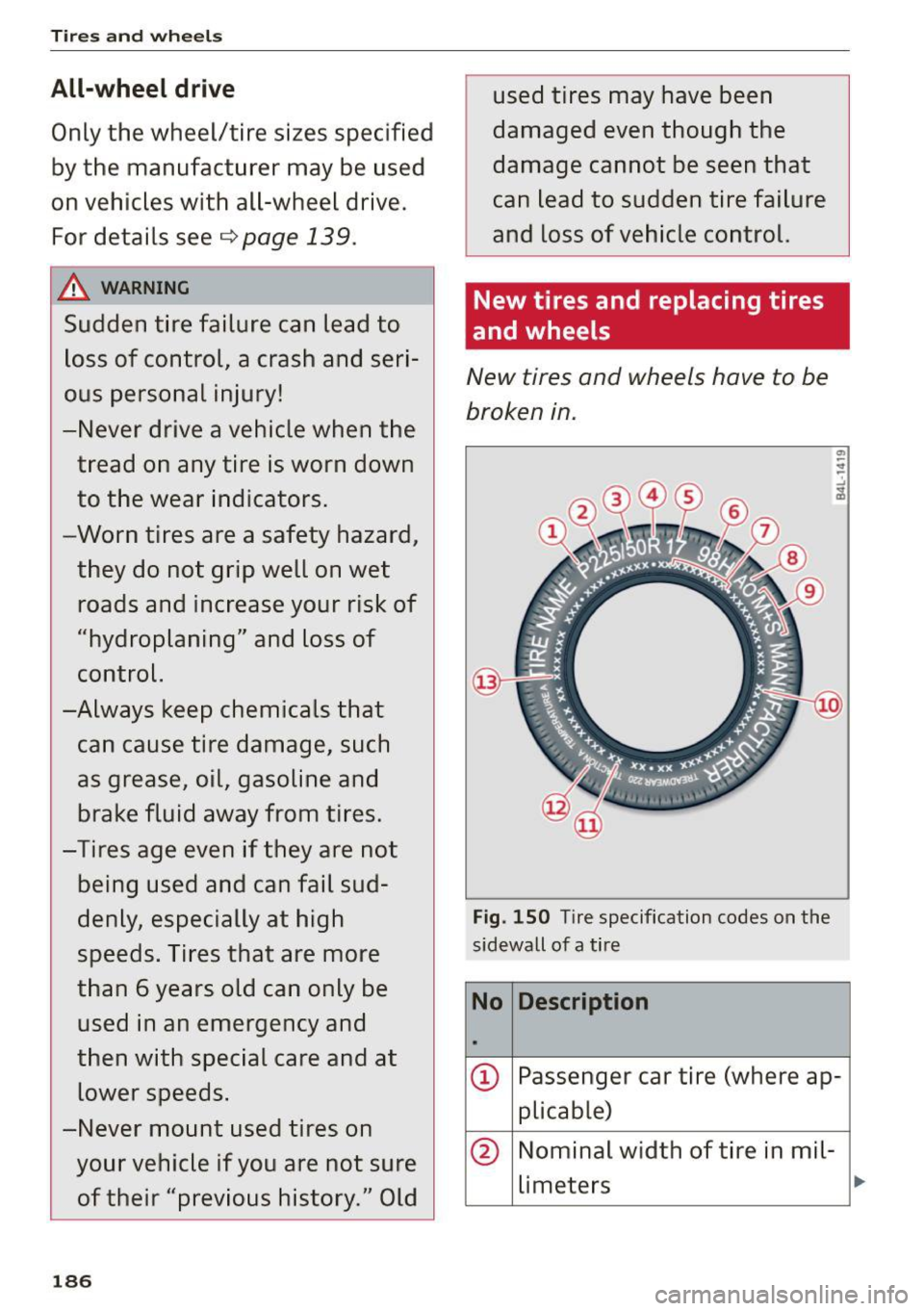
Fig. 150 Tire specification codes on the
sidewall of a tire
No Description
•
@ Passenger car tire (where ap-
plicable)
@ Nominal width of tire in mil-
limeters
Page 193 of 232
Tires and wheels
valve stem caps. Ask your au--Tires age even if they are not
thorized Audi dealer to replace being used and can fail sud-
lost valve stem caps .
denly, especially at high
The installation of replacement speeds
. Tires that are more
tires with steel cord body plies in than 6 years old can only be
the tire sidewall may cause mal- used
in an emergency and
function of the tire pressure man- then with special care and at
itoring system, and is not recom- lower speeds.
mended (cord material informa- -Never mount used tires on
tion in molded on the tire side- your vehicle if you are not sure
wall). of their "previous history." Old
Always check your tire pressure used tires may have been
damaged even though the
monitoring system indicator after
damage cannot be seen that
replacing one or more tires on
can lead to sudden tire failure
your vehicle. If the tire pressure
and loss of vehicle control.
monitoring system indicator
-Only the wheel/tire sizes
flashes, or is on, your system is
specified by the manufacturer
not working properly.
may be used on vehicles with
A_ WARNING all-wheel drive.
-Using incorrect or unmatched -Never drive faster than the
tires and/ or wheels or im- maximum speed for which the
proper tire and wheel com bi -
tires on your vehicle are rated
nations can lead to loss of because tires that are driven
control, collision and serious faster than their rated speed
personal injury. can fail suddenly.
-Always use tires, rims and
-Overloading tires cause heat
wheel bolts that meet the build-up, sudden tire failure,
specifications of original fac- including a blowout and sud-
tory-installed tires or other den deflation and loss of con-
combinations that have been trol.
... .... N
" specifically approved by the N ": ...
vehicle manufacturer. IO "? N
"' ....
191
Page 195 of 232
..... N
r-N "': ..... \!) 1.1'1
N 1.1'1 .....
Quality grades can be found where applicable on
the tire side wall between tread shoulder and maximum sect ion w idth
r::!:> page 186, fig. 150.
For example: Tread wear 200, Traction AA , Tem
perature
A.
All passenger car tires must conform to Federal
Safety Requirements in addition to these grades.
Tread wear
The tread wear grade is a comparative rating
based on the wear rate of the tire when tested
under controlled conditions on a spec ified gov
e rnment test course.
For example, a t ire graded
150 would wear one
and one half (1 1/2) times as well on the govern
ment course as a tire graded
100 .
The relative performance of tires depends upon
the actual conditions of their use, however, and
may depart significantly from the norm due to
variations in driving hab its, serv ice practices and
differences in road characteristics and climate.
Traction
The traction grades, from highest to lowest, are
AA, A, B and
C. Those grades represent the tire's
ab il ity to stop on wet pavement as measured un
der controlled condit ions on specified govern
ment test surfaces of asphalt and concrete. A tire
marked C may have poor traction performance
r::!;> .&. .
Temperature
The temperature grades are A (the highest), B,
and C, representing the tire's resistance to the
generation of heat and its ability to dissipate
h eat when tested under controlled cond it ions on
a specified indoor laboratory test wheel.
Sustained high temperature can cause the mate
rial of the tire to degene rate and reduce tire life,
and excessive temperature can lead to sudden
tire failure
r::!:> .&. .
The grade C corresponds to a level of perform
ance which all passenger car tires must meet un
der the Federal Motor Vehicle Safety S tanda rd
No.
109. Grades Band A represent higher levels
Tires and wheels
of performance on the laboratory test whee l than
the minimum required by law .
A WARNING
-
-
The traction grade assigned to th is tire is
based on straight-ahead braking traction
tests, and does not include accelerat ion, cor
nering, hydroplaning or peak traction charac
terist ics.
A WARNING
= -
The temperature grade for this tire is estab-
lished for a tire that is properly inflated and
not overloaded. Excessive speed, underinfla
tion, or excessive loading, either separately or
in combination, can cause heat buildup and
possible tire failure.
Winter tires
Winter tires can improve vehicle handling on
snow and ice . At temperatures below 45 °F (7 °C)
we recommend changing to winter tires .
In some heavy snow areas, local gove rnments
may require true wint er or "snow" tires, those
with very deeply cut tread. These tires should on
ly be used in pairs and be installed on a ll four
wheels. Make sure you purchase snow tires that
are the same size and construction type as the other tires on your vehicle.
If your vehicle is equipped with all-whee l drive *,
this will improve traction during winter driving,
even with the standard tires. However, we strong
ly recommend that you always equip all four
wheels on your vehicle with correctly fitted win
ter tires or all-season tires, when w inter road
condit ions are expected. This also improves the
vehicle's braking pe rformance and reduces stop
ping distances.
Summer tires provide less grip on ice and snow .
Winter tires (snow tires) must always be fitted on
all four wheels.
Compatible t ire pressure monitoring sensors
must be installed on all four winter tires for the
tire pressure monitoring system to function prop- erly
¢ page 190. ..,.
193
Page 196 of 232
Tires and wheels
Ask your authorized Audi dealer or qualified
workshop for permitted
winter tire sizes. Use on
ly radial winter tires.
Winter tires lose their effectiveness when the
tread is worn down to a depth of 0.157 inch
(4 mm).
Only drive with winter tires under winter condi
tions. Summer tires handle better when there is
no snow or ice on the roads and the temperature
is above 45 °F (7 °().
Please always remember that winter ti res may
have a lower speed rating than the tires originally
installed on your vehicle at the time it was manu
factured . Please see¢ page 189, Speed roting
(letter code) for a listing of the speed rat ing let
ter codes and the maximum speed at which the
t ires can be driven.
The speed rating letter code(¢ page 174) is on
the side wall of the tire ¢page 186.
A WARNING
Winter tires have maximum speed limits that
may be lower than your vehicle's maximum
speed. Always know the maximum speed be
fore driving off . Never drive faster than the
speed permitted for your specific winter tires .
This will cause damage to the tires leading to
an accident and serious personal injury to you
and your passengers.
A WARNING
Driving faster than the maximum speed for
which the winter tires on your vehicle were designed can cause tire failure including a
blowout and sudden deflation, loss of contro l,
crashes and serious personal injuries. Have
worn or damaged tires replaced immediately.
- Winter tires have maximum speed rating that may be lower than your vehicle's maxi
mum speed .
- Never drive faster than the speed for which
the winter or other tires installed on your
vehicle are rated.
194
-
A WARNING ,_ -
Always adjust your driving to the road and
traffic conditions . Never let the good accelera
tion of the winter tires and all-wheel drive
tempt you into taking extra risks. Always re
member:
- When braking, an all-wheel drive vehicle
handles in the same way as a front drive ve
hicle.
- Drive carefully and reduce your speed on icy
and slippery roads, even winter tires cannot
help under black ice conditions.
@ For the sake of the environment
Use summer tires when weather conditions
permit . They are quieter, do not wear as
quickly and reduce fuel consumption.
, Snow chains
Snow cha ins may be fitted only to the rear
wheels , and only to certain tire sizes. Ask your au
thorized Audi dealer on which tire sizes snow
chains can be used.
The snow chains must have low-profile links and
must not be thicker than 0.53 inch (13 .5 mm) ,
including the lock.
Remove wheel center covers before putting snow
chains on your vehicle ¢Ci) . For safety reasons
cover caps must then be fitted over the wheel
bolts . These are available from authorized Audi
dealers .
A WARNING
Using the wrong snow chains for your vehicle
or installing them incorrectly can increase the
risk of loss of control leading to serious per
sonal injury .
- Snow chains are available in different sizes.
Always make sure to follow the instructions
provided by the snow chain manufacturer .
- When driving with snow chains, never drive
faster than the speed permitted for your
specific snow chains .
- Always observe local regulations.
Page 197 of 232
..... N
r-N "': ..... \!) 1.1'1
N 1.1'1 .....
CD Note
-Remove snow chains before driving on roads
not covered with snow to avoid damaging
tires and wearing the snow chains down un necessarily.
- Snow chains, which come into direct contact
with the wheel rim, can scratch or damage
it. Therefore, make sure that the snow
chains are suitably covered . Check the posi
tion of the snow chains after driving a few
yards and correct if necessary. Follow the in
structions from the snow chain manufactur
er when doing so.
(j) Tips
Where snow chains are mandatory on certain
roads, this normally also applies to vehicles
with all-wheel drive.
Wheel bolts
Wheel bolts must always be tightened to the
correct torque .
The design of wheel bolts is matched to the fac
tory installed rims. If different rims are fitted,
the correct wheel bolts with the right length and
correctly shaped bolt heads must be used. This
ensures that wheels are fitted securely and that
the brake system functions correctly.
In certain circumstances, you may not use wheel
bolts from a different vehicle -even if it is the
same model ¢
page 217.
A WARNING
Improperly tightened or maintained wheel
bolts can become loose causing loss of con
trol, a collision and serious personal injury.
-
- Always keep the wheel bolts and the threads
in the wheel hubs clean so the wheel bolts
can turn easily and be properly tightened.
- Never grease or oil the wheel bolts and the
threads in the wheel hubs. They can become
loose while driving if greased or oiled, even
if tightened to the specified torque.
- Only use wheel bolts that belong to the rim
being installed.
Tires and wheels
- Never use different wheels bolts on your ve
hicle.
- Always maintain the correct tightening tor
que for the wheel bolts to reduce the risk of
a wheel loss. If the tightening torque of the
wheel bolts is too low, they can loosen and
come out when the vehicle is moving. If the
tightening torque is too high, the wheel bolts and threads can be damaged and the
wheel can become loose.
CD Note
The specified torque for the wheel bolts is 90
ft lb (120 Nm) with a tolerance of± 7 .4 ft lb
(± 10 Nm) . Torque wheel bolts diagonally. Af
ter changing a wheel, the torque must be
checked as soon as possible with a torque
wrench -preferably by an authorized Audi
dealer or qualified workshop.
Low aspect ratio tires
Your Audi is factory-equipped with low aspect ra
tio tires. These tires have been thoroughly tested
and been selected specifically for your model for
their superb performance, road feel and handling under a variety of driving conditions . Ask your au
thorized Audi dealer for more details.
The low aspect ratio of these tires is indicated by
a numeral of
55 or less in the tire's size designa
tion. The numeral represents the ratio of the
tire's sidewall height in relation to its tread width
expressed in percentage. Conventional tires have
a height/width ratio of 60 or more.
The performance of low-aspect-ratio tires is par
ticularly sensitive to improper inflation pres
sure. It is therefore important that low aspect
ratio tires are inflated to the specified pressure
and that the inflation pressure is regularly
checked and maintained. Tire pressures should be checked at least once a month and always
before a long trip
c> page 179, Checking tire
pressure.
195