ECO mode AUDI RS5 CABRIOLET 2013 Owner's Manual
[x] Cancel search | Manufacturer: AUDI, Model Year: 2013, Model line: RS5 CABRIOLET, Model: AUDI RS5 CABRIOLET 2013Pages: 286, PDF Size: 71 MB
Page 117 of 286
.. To open the garage door, press the p rog ram
med button . The LED® will light up or
flash.
.. To close the garage door, press the button
again.
@ Tips
To open the garage door, press the button,
but do not press it for longer ten seconds
or the Homeli nk modu le w ill switch to
programming mode.
Programming the transmitter (version A)
A pp lies to vehicles : wit h Homelink a nd MMI
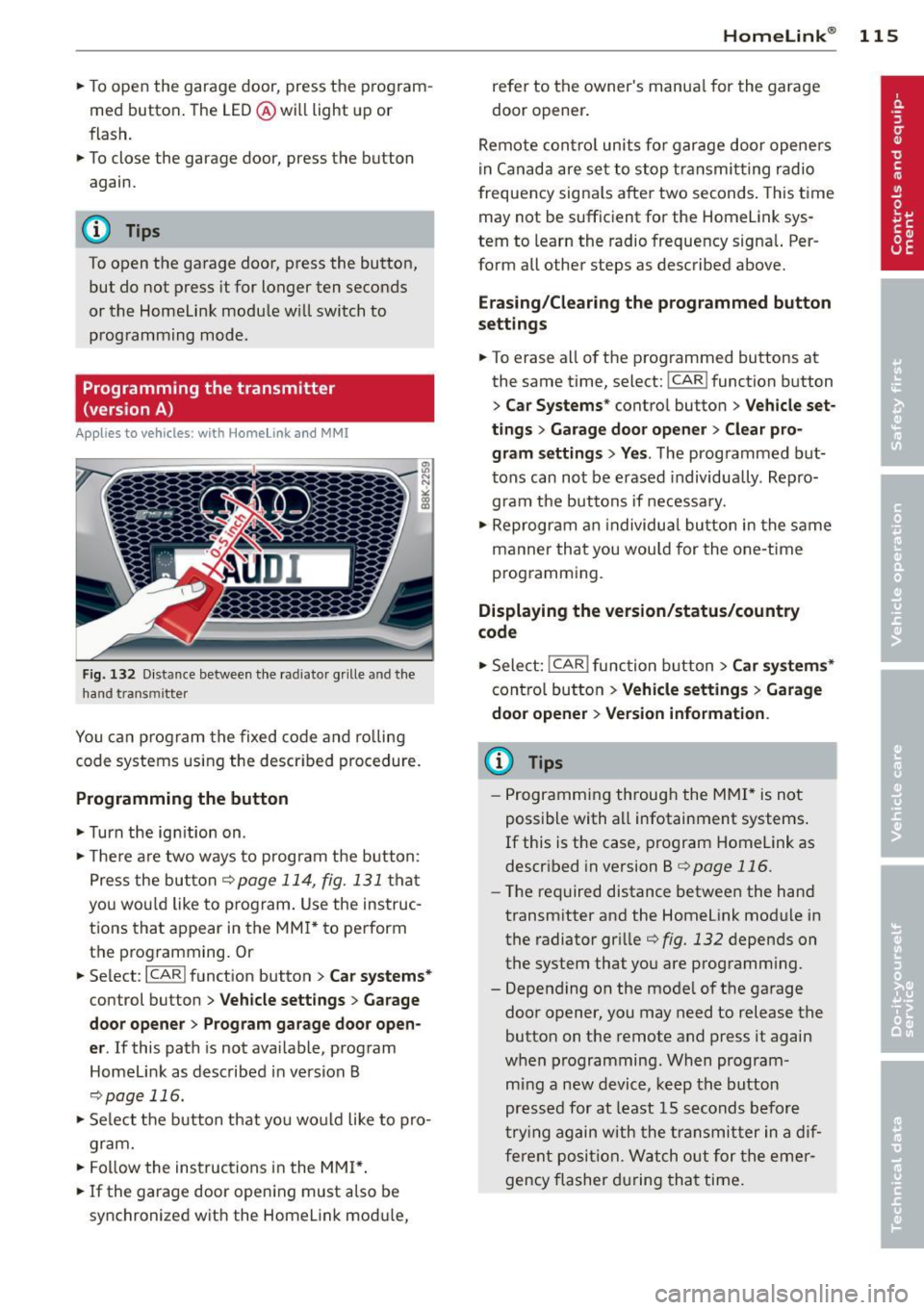
Fig. 132 D istance between t he radia tor grille and t he
hand transmitter
You ca n program the fixed code and ro lling
code systems us ing the described procedure.
Programming the button
.. Turn the ign it ion on .
.. The re a re two ways to prog ram the button:
Press the but ton
¢page 114, fig. 131 that
you wou ld like to program. Use the instruc
tions that appear in the MM I* to perform
the p rogramming. Or
.. Select :
I CARI function button > C ar system s*
control button > Vehicle sett ings > Garage
door opene r> Program garage door open ·
er .
If this path is not ava ilable, program
Homelink as described in vers ion B
¢page 116.
.. Se lect the b utton that you wo uld like to pro
gram.
.. Fol low the instructions in the MMI* .
.. If the garage door open ing must a lso be
synchronized wit h the Homelink mod ule,
Homelink ® 115
refer to the owner's manua l for the garage
door opener .
Remote con tro l units fo r garage door opene rs
in Canada are se t to stop transmit ting radio
frequency signa ls after two seconds . This t ime
may not be sufficient for the Home Link sys
tem to learn the radio frequency signal. Per
form all other steps as described above.
Erasing/Cl earing th e programmed button
s etting s
.. To erase all of the programmed buttons at
the same time, select:
I CAR! function button
> Car Sy stems * contro l button > Vehicle set ·
tings > Garag e door open er > Clear pro·
gr am settings > Yes .
The programmed but
tons can not be erased individua lly . Repro
gram the buttons if necessary .
.. Reprogram an individua l button in the same
manner that you would for the one-time
programming .
Displaying the version /status /country
code
.. Select: !CAR ! function b utton > C ar sy stem s*
cont ro l button > Vehicle setting s > Garage
door opener > Version information .
(D Tips
-Programming through the MMI* is not
possible with a ll infotainment systems .
If this is the case, program Homelink as
descr ibed in version B ¢
page 116.
-The required distance betwee n the hand
transm itter and the Homelink module in
the radiator grille¢
fig. 132 depends on
the system that you are programm ing .
- Depend ing on the mode l of the garage
door opener, you may need to release the
button on the remote and press it again
when programming. When program
m ing a new device, keep the button
pressed for at least 15 seconds before
t ry ing again with the transmit ter in a dif
ferent position. Watch o ut for the emer
gency flasher during tha t time .
Page 118 of 286

116 Homelink®
Programming the transmitter
(version B)
Applies to vehicles: with Homelink
Fig. 133 Distance between t he rad iator grille and the
hand transm itter
P rogramming: phase 1 on th e control unit
1. Sw itch on the ign it ion (do not start the
engine) .
2. Press and hold both of the outer Home
Link buttons
¢ page 114, fig. 131 unti l
the LED @turns off completely (about
20
seconds). Th is procedure clears the stand
ard codes that were set at the factory and
does not need to be repeated again to
p rogram the other buttons .
3 . Briefly press the Homelink button that
you would like to prog ram .
4. Wai t unti l the LED @ beg ins to blin k
q uickly. The Homelink module wi ll now
remain in learning mode for
5 minutes .
5. Now stand in front of your vehicle with
the original hand transmitter for the ga
rage door opener or for the device that
you would like to allocate to the Home
Link button .
P rogramming: pha se 2 on the radiator
gr ille
6 . Hold the orig inal hand transmitter some
what towa rds the center of your vehicle's
r adiato r grille ¢
fig. 133 .
7. Now activate (p ress) the hand transmit
ter.
8 . Pay attention to the tu rn signals fo r your
vehicle when activating the hand trans
mitter . If the emergency flashers blink
three times, the programming was suc
cessful. If the emergency flasher only blinks one time, the S minute time limit for the adaptation has expired or the pro
gramming was unsuccessful. Repeat the
programming from step 3 on the controls
or select another distance from the radia
tor grille.
9 . If the garage door or other devices still
fail to be activated w it h the HomeL ink
control buttons after programming is
comple ted, it is possib le tha t these sys
tems mig ht be work ing with a roll ing code
instead of the normal f ixed code .
A Roll
ing code pro gramming must be per
formed
¢ page 117 .
Program the remaining two buttons accord ing
to the instructions mentioned above . Begin
similarly with the 3rd step if the program
ming connection was successful for the first
button.
Remote contro l units for garage door openers
in Canada are set to stop transmitting radio
frequency signa ls after two seconds. This time
may not be suffic ient for the Homelink sys
tem to learn the radio frequency signa l. Per
form all other steps as described above.
E rasing the button s
.,. Switch on the ignition (do not start the en
gine).
.,. Press and hold both of the outer buttons un
til the LED @turns off completely (about
20 seconds) to erase all of the buttons si
multaneously .
.. Programmed buttons cannot be erased ind i
vidua lly. Reprogram the buttons if necessa
ry .
Reprogramming the buttons
.. Switch on the ignition (do not start the en
gine) .
.. To reprogram an individua l button, press
and hold the b utton until the L ED@starts
to f lash quickly (after abo ut ten seconds).
Release the button immedia tely. The Home
Link module will now remain in learning
mode for 5 minutes.
.,. Continue with step 5.
Page 119 of 286
@ Tips
-Programming using the Homelink but
tons is not possible with all infotainment
systems. If this is the case, program Homelink as described in version A
<=> page 115.
-The required distance between the hand
transmitter and the Homelink module in
the radiator grille<=>
fig. 133 depends on
the system that you are programming.
- Depending on the model of the garage
door opener, you may need to release the
button on the remote and press it again
when programming. When program
ming a new device, keep the button
pressed for at least 15 seconds before
trying again with the transmitter in a dif
ferent position. Watch out for the emer gency flasher during that time.
Programming the rolling code
App lies to vehicles: with Home link
Additionally, a rolling code programming for
the Homelink universal remote control is re
quired for some systems.
Identifying the rolling code
"'Press the previously programmed Homelink
button again and hold it down.
"'Look at the LED@<=>
page 114, fig. 131. If
the LED blinks quickly, the features, such as
the garage door opener, are equipped with
the rolling code.
"'Program the rolling code as follows:
Activating the garage door opener motor
unit
"'Locate the setting button on the garage
door opener motor unit. The exact location
and color of the button may vary depending
on the garage door opener manufacturer .
"'Press the setting button on the garage door
opener motor unit (usually this will activate
a "setting light display" on the motor unit).
Now you will have about
30 seconds time to
perform the HomeLink button programming
on the controls.
Homelink® 11 7
Programming on the controls
"'Press the Home Link button that was already
programmed and hold for two seconds.
"'To end rolling code programming , press and
hold the Home link button for two seconds
again.
"'The Homelink button may need to be press
ed a third time to end the adjustment proce
dure for some garage door openers .
After the controls have been programmed, the garage door opener should recognize the
Homelink signal and operate when the Home
Link button is pressed . Now you may program
the other buttons as needed .
(D Tips
- Programming the rolling code can be
performed quicker and more easily with
the help of a second person.
- If difficulties should arise when pro
gramming the rolling code, consult the
operating instructions for the garage
door opener or other devices for possible
solutions.
Page 153 of 286

There are some important things you have to know to make sure that the effectiveness of
the system will not be impaired and that dis
carded components do not cause injury or pol
lute the environment.
A WARNING
Improper care, servicing and repair proce
dures can increase the risk of personal in
jury and death by preventing an airbag from deploying when needed or deploying an airbag unexpectedly:
- Never cover, obstruct, or change the
steering wheel horn pad or airbag cover
or the instrument panel or modify them
in any way.
- Never attach any objects such as cu
pholders or telephone mountings to the
surfaces covering the airbag units.
- For cleaning the horn pad or instrument
panel, use only a soft, dry cloth or one
moistened with plain water. Solvents or
cleaners could damage the airbag cover
or change the stiffness or strength of the
material so that the airbag cannot de
ploy and protect properly.
- Never repair, adjust, or change any parts
of the airbag system.
- All work on the steering wheel, instru
ment panel, front seats or electrical sys
tem (including the installation of audio
equipment, cellular telephones and CB
radios, etc.) must be performed by a
qualified technician who has the training
and special equipment necessary.
- For any work on the airbag system, we
strongly recommend that you see your
authorized Audi dealer or qualified work
shop.
- Never modify the front bumper or parts
of the vehicle body.
- Always make sure that the side airbag
can inflate without interference:
- Never install seat covers or replace
ment upholstery over the front seat
backs that have not been specifically
approved by Audi.
Airbag system 151
-Never use additional seat cushions that
cover the areas where the side airbags
inflate.
- Damage to the original seat covers or
to the seam in the area of the side air
bag module must always be repaired
immediately by an authorized Audi
dealer.
- The airbag system can be activated only
once. After an airbag has inflated, it
must be replaced by an authorized Audi
dealer or qualified technician who has
the technical information, training and
special equipment necessary.
- The airbag system can be deployed only
once. After an airbag has been deployed, it must be replaced with new replace
ment parts designed and approved espe
cially for your Audi model version. Re placement of complete airbag systems
or airbag components must be per
formed by qualified workshops only.
Make sure that any airbag service action
is entered in your Audi Warranty
& Main
tenance booklet under
AIRBAG REPLACE
MENT RECORD.
- In accidents when an airbag is deployed,
the vehicle battery separates the alterna
tor and the starter from the vehicle elec
trical system for safety reasons with a
pyrotechnic circuit interrupter.
- Work on the pyrotechnic circuit inter
rupter must only be performed by a
qualified dealer - risk of an accident!
- If the vehicle or the circuit interrupter
is scrapped, all applicable safety pre
cautions must be followed.
{® For the sake of the environment
Undeployed airbag modules and preten
sioners might be classified as Perchlorate Material -special handling may apply, see
www.dtsc .ca.gov/hazardouswaste/per-
ch lorate. When the vehicle or parts of the
restraint system including airbag modules
safety belts with pretensioners are scrap ped, all applicable laws and regulations
must be observed. Your authorized Audi .,..
•
•
Page 162 of 286
160 Child Saf ety
same kind of child rest raint offered by child
restraint manufact urers.
The weight ranges fo r the ind ividual types,
makes and mode ls o f chi ld restra ints that the
NHTSA has specified in the Safety Standard
together with the weight ranges of typical in
fants and typical 1 year-o ld child have been
stored in the control unit of the Advanced A ir
bag System. When a child restraint is being
used on the front passenger seat with a typi
cal 1 year-old ch ild, the Advanced Airbag Sys
tem compa res the we ight measured by the
weight sensing mat with the informat io n sto r
ed i n the ele ct ron ic cont ro l uni t.
The electron ic control unit also registers the
tension on the front passenge r safety belt .
The tens io n on the safety be lt fo r the front
passenger seat will be d iffe ren t for an ad ult
who is prope rly using the safety belt as com
pared to the tension on the be lt whe n it is
used to attach a chi ld restraint to the seat.
The sensor below the latch for the safety be lt
for the front seat passenger meas ures the
tension on the be lt. The input from this sen
sor is then used with the we ight to "decide",
whether there is a ch ild restraint w ith a typ ical
1 year-o ld child o n the front passenger seat
and whe ther or not the ai rbag must be tu rned
off.
Child restraints and Advanced Airbags
Regardless o f the child restraint t hat you use,
make sure that it has been ce rtified to meet
United States Federal Motor Vehicle Safety
Standards and has been certified by its manu
facturer for use with a n airbag. Always be sure
that the child restraint is properly instal led at
one of the rear seat ing pos itions .
If in excep
tional c ircumstances you must use it on the
fro nt passenger sea t, caref ully read all of the
i n format ion on c hild safety and Advanced A ir
bags and heed a ll of the app licab le WAR N
I NGS . Ma ke certain that the child restraint is
correctly recognized by the weig ht-sensing
mat inside the front passenger seat, that the
fro nt passenger airbag is turned off and that the a
irbag sta tus is always cor rect ly signa led
by the
PASSENGER AIR BAG OFF light .
Many types and models of child res traints
h ave been available over the yea rs, new mod
els are introduced regu larly incorporating new
and improved designs and o lde r mode ls are
ta ken out o f product ion . Ch ild restra ints are
not standard ized . Child restraints of the same
type typically have different weights and sizes
and different 'footpr ints,' the size and shape
of the bottom of the ch ild restra int that sits
on the seat, when they are insta lled on a vehi
cl e seat. These d iffe rences make it v irtually
i mpossible to certify compl ian ce wi th t he re
quiremen ts for advanced airbags with eac h
and every chi ld restraint that has eve r been
sold in the past or wi ll be sold over the course
of the useful life of your veh icle.
F or t his reason, the United S tates National
Highway T raffic Safety Adm inist ration has
published a list of specific type, ma kes and
models of child restraints that must be used
to certify comp liance of the Advanced Airbag
System i n your veh icle with the suppression
requirements of Federal Motor Vehicle Safety
Standa rd 208. These ch ild restraints a re:
Subpart A -Car bed child re straints
Model
A ngel Guard Angel
Ride AA2403FOF
Manufactured on or
after
September 25, 2007
Subpart B -Rear-facing child restraints
Model Manufactured on or
after
Ce ntury 5martFit December 1, 19 99
4 543
Cosco Arriva September 25, 2007
I
22-013PAW and base
22-999WHO
I
Evenflo Discove ry Ad- December 1, 1999
just Right 212
Evenflo First Choice December 1, 1999
20 4
Graco Infant 8457 December 1, 1999
Page 180 of 286

178 Intelligent technolog y
@ Tips
-ABS and ASR on ly work correctly when
a ll four wheels are eq uipped w ith identi
ca l tires . Different tire s iz es can lead to a
r educt io n in engine power .
- You may hear no ises w hen the systems
described are wo rking.
- If the indicato r light
DJ or 11:11 (U SA
models) 1i] (Canada models) appears,
there may be a malf unct io n ¢
page 19,
c> page 19.
Switching on/off
ESC turns on au toma tically when you s tart
the engine.
Fig . 16 9 Ver sio n A : low er c ente r co nso le,~ OFF bu t·
to n
Fig . 17 0 Ve rsio n B: u ppe r ce nter conso le, ~ OFF but
to n
Switching sport mode on
Press the I;; OF F I button ¢ fig. 169 o r
c::> fig. 170 quickly. The act ions taken by the
E SC and ASR stabilize the vehicle a re limited .
T he
IJ ES C in dicator light tu rns on and the
me ssage
Stabilization control (ESC) : Sport .
Warning! Restricted stability
appe ars in the
d river info rmation disp lay
c::> A .
The following e xamp les are unusual situa
t io ns whe re it may ma ke sense to switch s port
mode on in order to allow the wheels to sp in:
- Ro cking the vehicle to free i t when i t is s tuck
- Dr iv ing in deep snow o r on loose g round
- Dr iving with snow chains
Sport mode can be sw itched on at a ny speed .
Switching ESC/ASR off
Press a nd ho ld the I~ OFF I but ton for three
secon ds. The
lfil•)H and fl indicator lights
turn on and the message
Stabilization con
trol (ESC) : off. Warni ng! Restricted stability
appears in the driver information display.
AS R is also switched off when ESC is switched
off . The stabilizat ion function is not ava ilable
c> A .
Switching on
Press the !.i, O FF I button ag ain to sw itch the
ESC back on . The
I indicator lig ht tu rns off
and the message
Stabilization control (ESC ):
On appears in the display.
A WARNING ,-
- Drive whee ls can sp in and you can lose
control of t he vehicle mo re eas ily w hen
ASR and ESC are in sport mode , especial
ly whe n the road is slippe ry .
- Sw itch to sport mode only when your
driving skills, traffic an d weather condi
tions per mit.
@ Tips
You cannot sw itch sport mode on whe n
adaptive c ruise co ntrol* is w ork in g.
Braking
What affects braking efficiency?
New brake pads
D uring the first 250 mi les (400 km), new
brake pad s do not possess the ir full b rak ing
effect, they have to be "broken in" first¢ &.
The break- in period can be considerably lon-
-
ger for ve hicles w ith ceram ic b rake rotors* . ll>
Page 181 of 286

You can compensate for th is sligh tly re duced
brak ing power by push ing harder on the brake
pedal. Avoid heavy braking loads d uring the
break-in per iod.
Operating condit ion s and d riv ing hab it s
The brakes on today's automobi les are st ill
subject to wear, depend ing largely on operat
ing conditions and driving habits¢.&. . On
vehicles that are either driven mostly in stop and-go city traffic or are driven hard, the brake pads should be checked by your author
i zed Audi dealer more often than specified i n
the
Warranty & Maint enan ce booklet . Failure
to have your brake pads inspected can result
in reduced b rake performance.
On steep slopes, you should use the brak ing
effect of the engine . Th is way, you prevent un
necessary wea r on the brake system. If you
must use you r brakes, do not hold the brakes
down continuously. P ump the b rakes a t inter
va ls.
Operating noise
Noises may occur when braking depending on
the speed, braki ng force and outside condi
tions such a s tempe ratu re a nd h umidity .
Due to the nature of the materials used i n ce
ramic brake rotors*, nois es may become more
apparent at low speeds.
Effect of w ater and ro ad s alt
In certain situat ions, for example after driving
through water, i n heavy ra in, after over night
condensation or after washing your car, the
b rak ing effect can be reduced by moistu re or
i ce on the bra ke roto rs and b rake pads . The
b ra kes must be dried fi rs t w it h a few caref ul
b ra ke app lications.
At h igher speeds and with the w indshield w ip
e rs turned on, the brake pads p ress against
the brake rotors for a short amount of time.
This occurs a t reg ular in tervals wi tho ut the
d river noticing and provides for better brake
response time un der wet conditions.
The effectiveness of the brakes can be reduced
when the vehi cle is dr iven o n a salt -cove re d
Int ellig ent technolog y 179
road and the b ra kes are no t used. Likewise ,
you clean off acc umulated salt coating from
brake d iscs and pads with a few cautio us ap
plications of the brake
9 ,&. .
Due to the ir sur face character istics, ceramic
brake rotors* absorb moisture i n such condi
tions. T his can cause a tempo rary reduction in
braking force compared to dry brakes. Yo u can
compensate for this by pressing the brake
pedal harder .
Corrosio n
There may be a tendency for dirt to b uild up
on the brake pads and corros ion to form on
the d iscs if the car is not driven regularly or
o nly for short trips w ith litt le use of the
brakes .
If the brakes are not used frequently, or if cor
ros ion has formed on the discs, i t is adv isable
to clean off the pads a nd d iscs by braking
firmly a few times from a moderately high
speed
9 &. .
Fault s in the brake sy stem
If you shou ld notice a sudden increase in
brake pedal travel, then one of the two b rake
c ircui ts may have failed ¢&. .
Lo w brake fluid lev el
Malfunctions can occ ur in the brake system if
the brake fluid level is too low. The brake fluid
level is monitored electronica lly.
Brake booster
T he br ake booster inc reases the pressure tha t
yo u gene rate with t he brake peda l. It works
o nl y when t he engine is running .¢
&
Brake lining wear status
B ra ke lining wear may be checked by visual in
spe ction o f the condition of the bra ke pads
th rough the open ings in the wheel. If neces
sary, the wheel may be removed for t his in
spection ¢
page 245, Changing a wheel.
•
•
Page 189 of 286
Avoid full throttle
Driving at moderate speeds saves fuel and
improves your mileage.
""Try and keep well below your car's maximum
speed.
Accelerating gently reduces fuel consump
tion, engine wear, and does not disturb the
environment.
Fu el consumption, exhaust emissions and en
g ine noise increase disproportionately at high
speeds. If you drive at approximately three
quarters of top speed, fuel consumption will
be reduced by one half. Never drive faster
than the posted speed limit and weather con
ditions permit .
Reducing unnecessary idling
Even when your car is just idling it burns up
fuel.
""Shut the engine off when you are not driving
the vehicle.
"" Do not warm up the vehicle by letting the
engine run at idle .
It makes sense to shut
off the engine in traff ic
jams, when waiting for trains to pass at ra il
road crossings, or at traffic lights that have
l ong wa its on red. Turning the engine
off for
just
30-40 seconds saves more fue l than is
burned starting the engine again .
It takes a long time for the engine to warm up
fully when it is running at idle. However, wear
and noxious emissions are especially high
when the engine is warming up. So you should
drive away as soon as you start the engine and
avoid running at high rpms while the engine is
still warming up.
(D Note
Do not leave engine idling unattended af
ter starting . If warning lights should come
on to indicate improper operation, they
would go unheeded. Extended idling also
produces heat, which cou ld result in over-
Driving and environment 187
'
heating or othe r damage to the vehicle or
other property.
Regular maintenance
A badly tuned engine unnecessarily wastes a
lot of fuel.
""H ave your veh icle serviced at regular inter-
vals.
By having your vehicle regu larly serviced by an
au thorized Aud i dea ler helps to ensure that it
runs properly and economic all y. The condition
of your veh icle not on ly affects its safety and
ability to hold its va lue, it a lso affects
fuel
consumption .
Check your oil each time you fill your tank.
The amount of o il used is related to engine
load and speed.
It is normal for the oil consumption of a new
engine to reach its lowest value after a certain
mileage has been driven.
You must drive your vehicle about 3,000 miles
(5,000 kilometers) before you can properly
assess oil consumpt ion.
This also app lies to fue l consumption and en
gine output.
(U) Note
- Have your vehicle maintained properly
and in accordance with the service rec
ommendations in your Warranty
& Main
tenance booklet. Lack of proper mainte
nance as well as improper use of the ve
hicle will impair the function of the
emission control system and could lead
to damage.
- Do not alter or remove any component of
the Emission Control System unless ap
proved by the manufacturer.
- Do not alter or remove any device, such
as heat shields, switches, ignition wires,
valves, which are designed to protect
your vehicle's Emission Control System
and other important vehicle compo
nents .
•
•
Page 192 of 286
190 Cleaning and protection
Automatic car wash
Th e ve hicl e can be washed in almost any
modern automatic car wash .
The vehicle paint is so du rable that t he ve hicle
can normally be washed without problems in
an automatic car wash . However, the effect on
the paint depends to a large extent on the de
sig n of the facility, the filte ring of the wash
wate r, the type of wash and care mater ia l, etc.
If th e p aint ha s a dull appearance afte r go ing
through the car wash or is scratched, bring
this to the attention of the operator immedi
ately.
If necessary, use a different car wash.
Th e power top does no t require special pre
cautions be fore passing through a car wash.
However , the car mu st not be treated with
hot wa x after the wash cycle!
The wax could
adversely affect the power top and even dam
age the fabric ove r a period of time.
The power top does not have to be washed ev
e ry time you use a car wash . The power top
can be spared if the car wash facility is equ ip
ped with manually adjustable roof brushes or
rollers.
Before going through a car wash, be sure to
take the usual precaut ions such as clos ing the
windows . Remove antenna if applicable.
I f yo u have installed additional accessories on
the vehicle - such as spoilers, etc. - it is best to
ask the car wash operator i f these should be
removed.
On ly use car washes where the vehi cle re
mains stationary and the cleaning equipment
moves around the vehicle wh ile washing and
drying. It is not recommended to use car
washes where the vehicle is moved forward on
a conveyer.
A WARNING
- Always read and heed all WAR NIN GS and
ot he r i nforma tio n
¢ page 189.
(D Note
- Before wash ing the ve hicle in an auto
matic ca r wash, please make su re to re
tract the exter ior mir rors to prevent
them from be ing damaged .
- Compare the w idth of yo ur vehicle with
the width of the tunne l at the facility.
- Compa re the track of yo ur vehicle with
the distance between the g uide rails of
the facility -there is a risk of damage to
the whee ls and tires.
Washing the vehicle by hand
A lot of water is needed when washing a vehi
cle by hand.
.,. Before yo u start washing, ma ke s ure you
have read a nd understood the WARNINGS
¢ .&, .
.,. First soak all dried d irt unt il it is soft, then
r inse it off .
.,. As you clean yo ur vehicle, start w ith t he roof
and wo rk your way down to t he bo ttom, us
ing a sponge, a s ponge g love or a clean
br ush .
.,. Rinse the s ponge o r th e sponge g love o ften,
flushi ng it clean eac h time .
.,. Use spec ia l car shampoo only for very persis
tent dirt .
.,. Rinse the car t ho roughly with water.
.,. Use a chamo is leather to gently wipe the ex-
t er ior d ry .
U se a separate sponge for cleaning the
whee ls, door s ills and othe r regions exposed
to road dirt . In this way, yo u w ill not scratch
t h e pa int w ith coarse pa rticles imb edded in
t h e sponge the next time you wash t he ca r.
A WARNING
- W ash your vehicl e only when the ign ition
is swi tched o ff to re duce the r isk o f a
crash .
- Always re ad and heed a ll WA RNIN GS and
o ther in fo rm ation
¢ page 1 89 .
Page 212 of 286
210 Check ing and filling
Modern engine lubrication has taken a quan
tum leap in the last few years. Many synthetic
oils ava ilable today provide better engine lu
brication that can outlast traditional petrole
um-based oils, making them a smart choice
for use throughout the life of your Audi .
Whether you use synthetic or petroleum
based engine oil, the oil that you use must
conform to Audi 's oil quality standard
VW 502 00 to he lp keep your vehicle's engine
running smoothly and help prevent the for
mat ion of harmfu l deposits, sometimes called
"sludge ", that ove r time can lead to expensive
repairs .
At the time of pr int ing , engine o ils available in
the U .S . and Canada that meet the exacting
specifi cations of Audi oi l standard VW 502 00
a re synthetic engine oils. This does not mean,
however, that every syn thetic engine oil will
meet Audi oil standard VW 502 00. So always
be sure that you use an approved oil.
To help prevent the format ion of harmful de
posits use only oi l with the fo llowing specifi
cations printed on the oil container :
Audi oil standard VW 502 00
O il container labe ls may carry the specif ica
tion s ingly or in comb inat ion with other des ig
nations and oil qua lity standards .
Viscosity
Engine oi ls are graded according to their vis
cosity. The proper viscosity grade oil for your
engine depends on cl imactic or seasonal con
d itions where you drive. You can use oil with a
viscosity grade of SA E SW40 across all tem
pe ratu re ranges for normal driving conditions .
However, if eng ine o il viscos ity grade SA E
SW40 is not avai lab le, you can also use viscos
ity grade SAE SW -30 or SAE OW-40 as long as
it meets Audi o il quality standard VW 502 00
specif ications .
Because engine oil that meets the Audi oil
standard may not be available everywhere
when you need it, we strongly recommend
that you always carry with you an ext ra quart (
li te r) of oil that exp ress ly con forms to the
VW 502 00 spec ification, in case you have to
top
off the oil while on the road.
Only if the level of the o il is a t or be low the
min imum mark -and no oi l that expressly
conforms to Audi oil standard VW 502 00
specifications is available - may you top
off
with a high quality engine o il, preferab ly syn
thet ic-based, tha t mee ts ACEA A3 or API SM
specifications, but even then , only in v iscosity
grades SAE SW-40 , SAE SW-30, o r SA E
OW-40. However, dur ing the entire time be
tween oil change inte rva ls , never top
off with
more than a total of 0.5 q t/ liter engine o il
t h at does not con form to Audi oi l specification
vw 502 00.
For more informa tion about eng ine oi l tha t
has been approved for your veh icle, please
contac t either yo ur authorized Aud i deale r or
Audi C ustome r Re lations at 1 (800) 822 -2834
or visit our web site at www .audiusa.com or
www.aud icanada .ca. Here you w ill also find a
current list of oils (manufacturers, brand
names e tc.) tha t conform to Audi oil s tanda rd
vw 502 00 .
Changing the engine oil
The eng ine oi l and oil fi lter must be changed
according to the mileage (kilometers) and
time intervals specified in your ve hicle's War
ranty
& Maintenance booklet. Do not exceed
these intervals -harmful deposits from old
engine oil ca n reduce eng ine performance and
can lead to expensive engine repa irs .
Changi ng the oil at the recommended inter
vals is so very important because the lubricat ing proper ties of oil decrease gradually during
norma l veh icle use . If you are not sure when
you have your oil changed, ask your author ized Audi Serv ice Adv isor.
Under some circumstances the engine oil
shou ld even be cha nged more frequent ly .
Change oil more often if you drive mostly
sho rt distances, operate the ve hicle in dusty
areas o r most ly unde r stop-and-go t raff ic con-
di tions, o r when you use your vehi cle where .,..