abs AUDI RS7 SPORTBACK 2014 User Guide
[x] Cancel search | Manufacturer: AUDI, Model Year: 2014, Model line: RS7 SPORTBACK, Model: AUDI RS7 SPORTBACK 2014Pages: 292, PDF Size: 73.56 MB
Page 136 of 292
134 Safety belts
-Failure to pay attention to the warning
light that come on, could lead to person
al injury.
Why safety belts?
Frontal collisions and the law of physics
Frontal crashes create very strong forces for
people riding in vehicles.
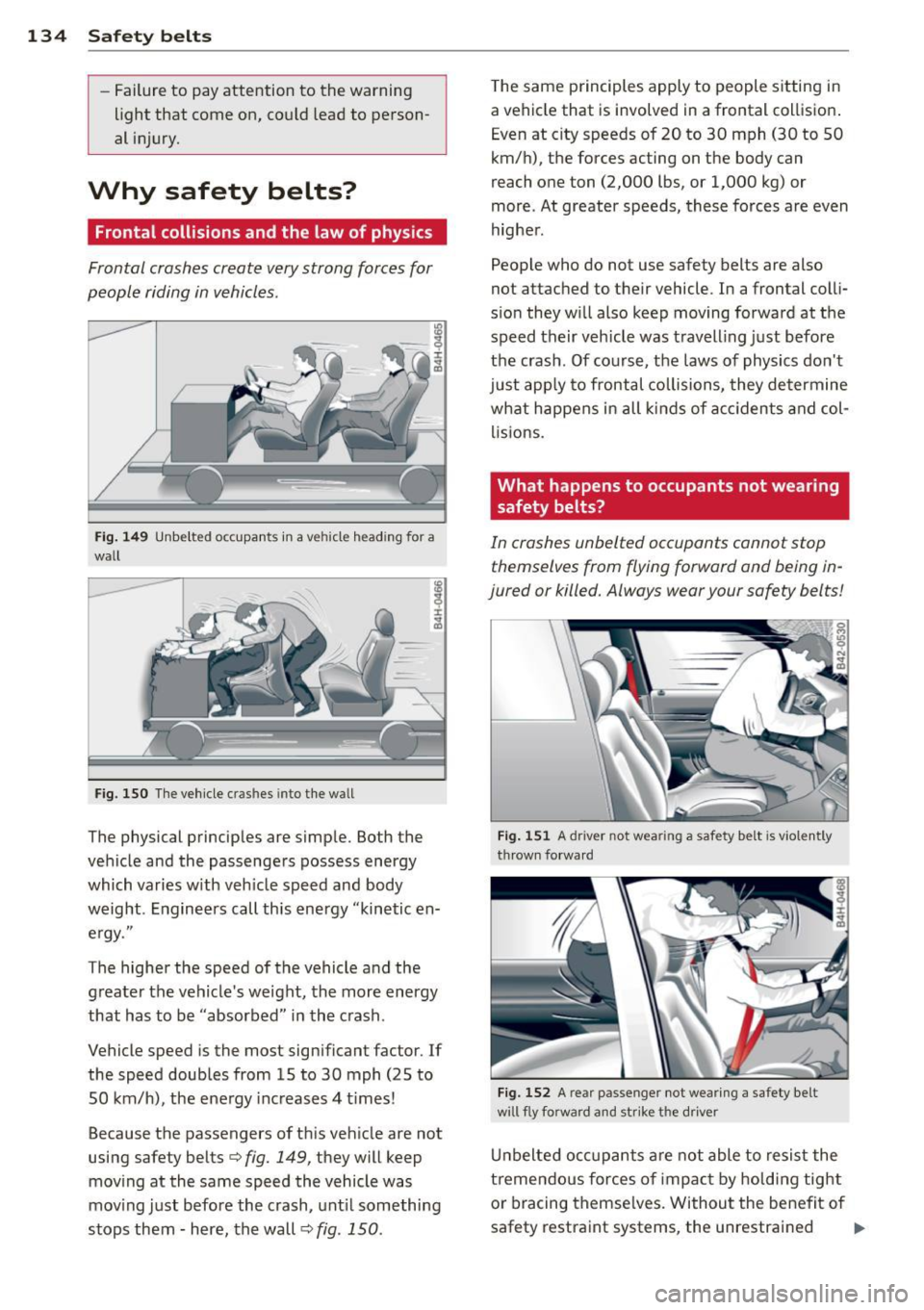
Fig. 149 Unbe lted occupants in a vehicle heading for a
wall
Fig. 150 Th e vehicle crashes into the wall
The physical principles are simple. Both the
vehicle and the passengers possess energy
which varies w ith veh icle speed and body
weight . Engineers call this energy "kinetic en
e rgy."
The higher the speed of the vehicle and the
greater the vehicle's weight, the more energy
that has to be "absorbed" in the crash.
Vehicle speed is the most significant factor.
If
the speed doubles from 15 to 30 mph (25 to
50 km/h), the energy increases 4 times!
Because the passengers of this veh icle are not
using safety belts¢
fig. 149, they will keep
moving at the same speed the vehicle was
mov ing just before the crash, until something
stops them - here, the wall ¢
fig. 150.
The same principles apply to people sitting in
a vehicle that is involved in a frontal collision .
Even at city speeds of 20 to 30 mph (30 to 50
km/h), the forces acting on the body can
reach one ton (2,000 lbs, or 1,000 kg) or
more. At greater speeds, these forces are even
higher.
Peop le who do not use safety belts are also
not attached to their vehicle. In a frontal colli
s ion they will also keep moving forward at the
speed their vehicle was t ravell ing just before
the crash . Of course, the laws of physics don't
just apply to frontal collisions, they determine
what happens in all kinds of accidents and col
lisions .
What happens to occupants not wearing
safety belts?
In crashes unbelted occupants cannot stop
themselves from flying forward and being in
jured or killed. Always wear your safety belts!
Fig. 151 A driver not wearing a safety belt is violently
thrown fo rwa rd
Fig . 152 A rear passe nge r not wearing a safety belt
will fly forward and strike the driver
Unbelted occupants are not able to resist the
tremendous forces of i mpac t by holding tight
or bracing themselves. Without the benefit of
safety restraint systems, the unrestrained
ll-
Page 137 of 292
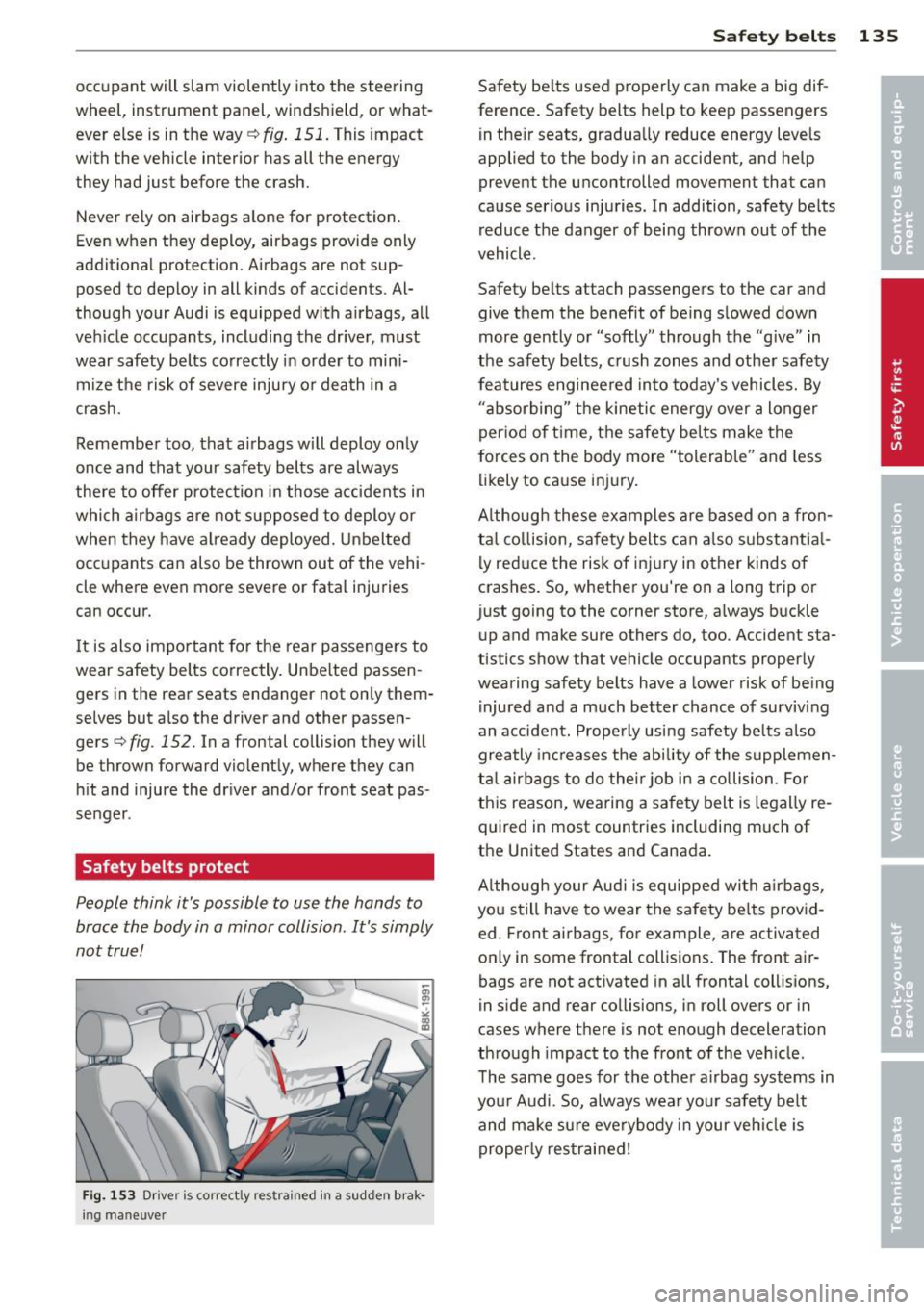
occupant will slam violently into the steering
wheel, instrument panel, windshield, or what
ever else is in the way
r::;; fig. 151. This impact
with the vehicle interior has all the energy
they had just before the crash.
Never rely on airbags alone for protection.
Even when they deploy, airbags provide only
additional protection. Airbags are not sup
posed to deploy in all kinds of accidents. Al
though your Audi is equipped with airbags, all
vehicle occupants, including the driver, must
wear safety belts correctly in order to mini
mize the risk of severe injury or death in a
crash.
Remember too, that airbags will deploy only
once and that your safety belts are always
there to offer protection in those accidents in
which airbags are not supposed to deploy or
when they have already deployed. Unbelted
occupants can also be thrown out of the vehi
cle where even more severe or fatal injuries
can occur.
It is also important for the rear passengers to
wear safety belts correctly. Unbelted passen
gers in the rear seats endanger not only them
selves but also the driver and other passen
gers
r::;; fig. 152. In a frontal collision they will
be thrown forward violently, where they can
hit and injure the driver and/or front seat pas
senger.
Safety belts protect
People think it's possible to use the hands to
brace the body in a minor collision. It's simply
not true!
Fig. 153 Driver is correctly restra ined in a sudden brak
ing maneuver
Safety belts 135
Safety belts used properly can make a big dif
ference. Safety belts help to keep passengers
in their seats, gradually reduce energy levels
applied to the body in an accident, and help
prevent the uncontrolled movement that can
cause serious injuries. In addition, safety belts
reduce the danger of being thrown out of the
vehicle.
Safety belts attach passengers to the car and
give them the benefit of being slowed down
more gently or "softly" through the "give" in
the safety belts, crush zones and other safety
features engineered into today's vehicles. By
"absorbing" the kinetic energy over a longer
period of time, the safety belts make the
forces on the body more "tolerable" and less
likely to cause injury.
Although these examples are based on a fron
tal collision, safety belts can also su bsta ntia l
ly reduce the risk of injury in other kinds of
crashes. So, whether you're on a long trip or
just going to the corner store, always buckle
up and make sure others do, too. Accident sta
tistics show that vehicle occupants properly
wearing safety belts have a lower risk of being
injured and a much better chance of surviving
an accident. Properly using safety belts also
greatly increases the ability of the supplemen
tal airbags to do their job in a collision . For
this reason, wearing a safety belt is legally re
quired in most countries including much of
the United States and Canada.
Although your Audi is equipped with airbags,
you still have to wear the safety belts provid
ed. Front airbags, for example, are activated
only in some frontal collisions. The front air
bags are not activated in all frontal collisions,
in side and rear collisions, in roll overs or in
cases where there is not enough deceleration
through impact to the front of the vehicle.
The same goes for the other airbag systems in
your Audi. So, always wear your safety belt
and make sure everybody in your vehicle is
properly restrained!
Page 149 of 292
q fig. 160. The general location of the airbags
is marked "AIRBAG".
There is a lot you need to know about the air bags in your vehicle. We urge you to read the
detailed information about airbags, safety
belts and child safety in this and the other
chapters that make up the owner's literature.
Please be sure to heed the WARNINGS -they
are extremely important for your safety and
the safety of your passengers, especially in
fants and small children .
A WARNING
Never rely on airbags alone for protection.
- Even when they deploy, airbags provide only supplemental protection .
- Airbag work most effectively when used
with properly worn safety belts .
- Therefore, always wear your safety belts
and make sure that everybody in your ve
hicle is properly restrained .
- Always hold the steering wheel with both
hands on the outside of the steering
wheel rim at the 9:00 o'clock and 3:00 o'clock positions to help reduce the risk
of personal injury if the driver's airbag in
flates.
- Never hold the steering wheel at the 12
o'clock position or with your hands any
where inside the steering wheel or on the
steering wheel hub. Holding the steering
wheel the wrong way increases the risk
of severe injury to the arms, hands, and
head if the driver airbag deploys .
A WARNING
Objects between you and the airbag will
increase the risk of injury in a crash by in
terfering with the way the airbag unfolds
and/or by being pushed into you as the air
bag inflates.
- Always make sure nothing is in the front
airbag deployment zone that could be
struck by the airbag when it inflates.
- Objects in the zone of a deploying airbag
can become projectiles when the airbag
Airbag system 147
deploys and cause serious personal in
Jury.
- Never hold things in your hands or on
your lap when the vehicle is in use.
- Never place accessories or other objects
(such as cup holders, telephone brackets,
note pads, navigation systems, or things
that are large, heavy, or bulky) on the
doors; never attach then to the doors or
the windshield; never place them over or
near or attach them to the area marked
,,AIRBAG" on the steering wheel, instru
ment panel or the seat backrests; never
place them between these areas and you
or any other person in the vehicle.
- Never attach objects to the windshield
above the passenger front airbag, such
as accessory GPS navigation units or mu
sic players. Such objects could cause seri
ous injury in a collision, especially when
the airbags inflate.
- Never recline the front passenger seat to
transport objects. Items can also move
into the deployment area of the side air
bags or the front airbag during breaking
or in a sudden maneuver. Objects near
the airbags can fly dangerously through
the passenger compartment and cause injury, particularly when the seat is re
clined and the airbags inflate.
WARNING
A person on the front passenger seat, es
pecially infants and small children, will re
ceive serious injuries and can even be kil
led by being too close to the airbag when
it inflates.
- Although the Advanced Airbag System in
your vehicle is designed to turn off the
front passenger airbag if an infant or a
small child is on the front passenger
seat, nobody can absolutely guarantee
that deployment under these special conditions is impossible in all conceiva
ble situations that may happen during
the useful life of your vehicle . .,.
•
•
Page 151 of 292
If the total electrical capacitance registered
on the front passenger seat is more than that
of a typ ica l 1 year-old, but less than the
weight of a small adult, the front airbag on the passenger side may deploy (the
PA SSEN
G ER AIR BA G OFF
light does not come on) .
For example, th e air bag m ay depl oy if :
-a small child that is heavier than a typical 1
year-o ld child is on the front passenger seat
(regardless of whether the child is in one of
the chi ld seats listed
¢ page 170),
-a chi ld who has outgrown child restraints is
on the front passenger seat.
I f the front passenger airbag is turned
off, the
PA SSENGER AIR BA G OFF light in the center
of the instrument panel wi ll come on and stay
on.
If the front passenger airbag deploys, the
F ederal Standard requires the a irbag to meet
the " low risk" deployment criteria to help re
d uce the risk of injury through interaction
with the airbag. "Low risk" deployment occurs
in those crashes that take place at lower de
celerations as defined in the electronic control
un it
o page 154 .
Alwa ys rem ember: Even though your vehicle
is equipped with Advanced Airbags, the safest
place for children is properly restrained on the
back seat. Please be sure to read the impor
tant information in the sect ions that follow
and be sure to heed a ll of the WARNINGS.
A WARNING
To reduce the risk of injury when an airbag
inf lates, a lways wear safety belts properly.
- If you are unres trained, lean ing fo rward,
sitting sideways or out of position in any
way, your risk of inj ury is much highe r.
- You w ill also receive serio us inju ries and
cou ld even be killed if you are up against
the a irbag or too close to it when it in
flates -even with an Advanced Airbag
¢ page 142 .
Airbag system 149
A WARNING
A child in a rearward-fac ing ch ild seat in
stalled on the front passenger seat will be
seriously inju red and can be killed if the
front airbag inflates -even w ith an Ad
vanced A irbag System .
- Although the Advanced Airbag System in
your veh icle is designed to turn
off the
front airbag when a rearward-facing child res traint has been installe d on the
front passenger seat, nobody can abso
lutely guarantee that dep loyment is im
possible in all conceivable situations that
may happen dur ing the usefu l life of your
veh icle.
- The inflating airbag will h it the ch ild seat
or infant carrier with great force and will
smash the child seat and child against
the backrest, center armrest, door, or roof.
- Always install rearward-facing chi ld re
straints on the rear seat .
- If you must install a rearward fac ing
child seat on the front passenger seat because of exceptional circumstances
and the
PASSENGER AIR BAG OFF light
does not come on and stay on, immed i
ately in sta ll the rear-fa cing child seat in a
rea r seat ing pos ition and have the airbag
system inspected by your Audi dealer.
A WARNING ,-
If, in except iona l circumstances, you must
install a forward-facing child restraint on
the front passenger's seat:
- Always make sure the forward-facing
seat has been designed and certified by
its manufacturer for use on a front seat
with a passenger front and s ide a irbag.
- Never put the forward-facing child re
straint up against or very near the instru ment panel.
- Always move the passenger seat into its rearmost position in the seat's fore and
aft adjustment range, as far away from
the airbag as possible, before installing
the forward-fac ing ch ild restra int . Th e •
-
•
Page 161 of 292
experience, informat ion a nd specia l
too ls necessary to perform the work
safely.
- If the veh icle or the circuit interrupter
is scrapped, all applicable safety pre
cautions must be followed.
@ For the sake of the environment
Undep loyed airbag modu les and preten
sioners might be classified as Perchlorate Material - special handling may apply, see
www.dtsc.ca .gov/hazardouswaste/per
chlorate. When the vehicle or parts of the
restraint system including airbag modules
and safety belts w ith pretens ioners are
scrapped, all applicable laws and regula
tions must be observed. Your author ized
Aud i dea ler is familiar with these requi re
ments an d we recommend that yo u have
your dea ler perform this se rvice for you .
Other things that can affect Advanced
Airbag performance
Changing the vehicle's suspension system can
change the way that the Advanced A irbag Sys
tem pe rforms in a crash. For example, us ing
tire -r im combinations not app rove d by Aud i,
l owering the vehicle, changing the stiffness o f
the suspension, incl uding the springs, s uspen
sion struts, shock absorbers etc. can change
the forces that a re measured by the airbag
sensors and sent to the elect ronic control
u ni t. Some suspension changes can, for exam
p le, increase the force levels measured by the
se nsors and make the airbag system deploy in
crashes in wh ich it would not dep loy if the
changes had not been made . Ot her k inds of
change s may reduce the force levels meas
u red by the sensors and prevent the a irbag
from deploying when it shou ld .
The sensors in the safety belt buckle fo r the
d river and front passenger sea t tell the elec
tronic control module if the safety belt is
l atched or not . If the safety belt is be ing used,
the front airbag will dep loy at a slightly high
er rate of vehicle deceleration than if the safe
ty belt is not being used. Therefore, in a pa r-
A irba g sy stem 159
ticular coll is io n, it is possible t hat an airbag
w ill not deploy at a seating position where the
safety belt is be ing used b ut w ill inflate at the
position where the safety belt is not be ing
used . It is important that nothing interfere
with the safety be lt buckles so that the sen
sors can send the cor rect info rmation about
safe ty be lt use to the electronic control un it .
A WARNING .
Changing the vehicle's suspension includ
i ng use of unapp roved tire-r im combin a
tions can cha nge Advanced Airbag per
formance and increase the risk of se rious
personal injury in a crash.
- Never install s uspension componen ts
that do not have the same performance characteristics as the components origi
na lly installed on your vehicle.
- Never use tire -rim combinations that
have not been approved by Audi .
Knee airbags
Description of knee airbags
Applies to vehicles: wit h knee airbags
The knee airbag system can provide supple
mental protection to properly restrained
front seat occupants .
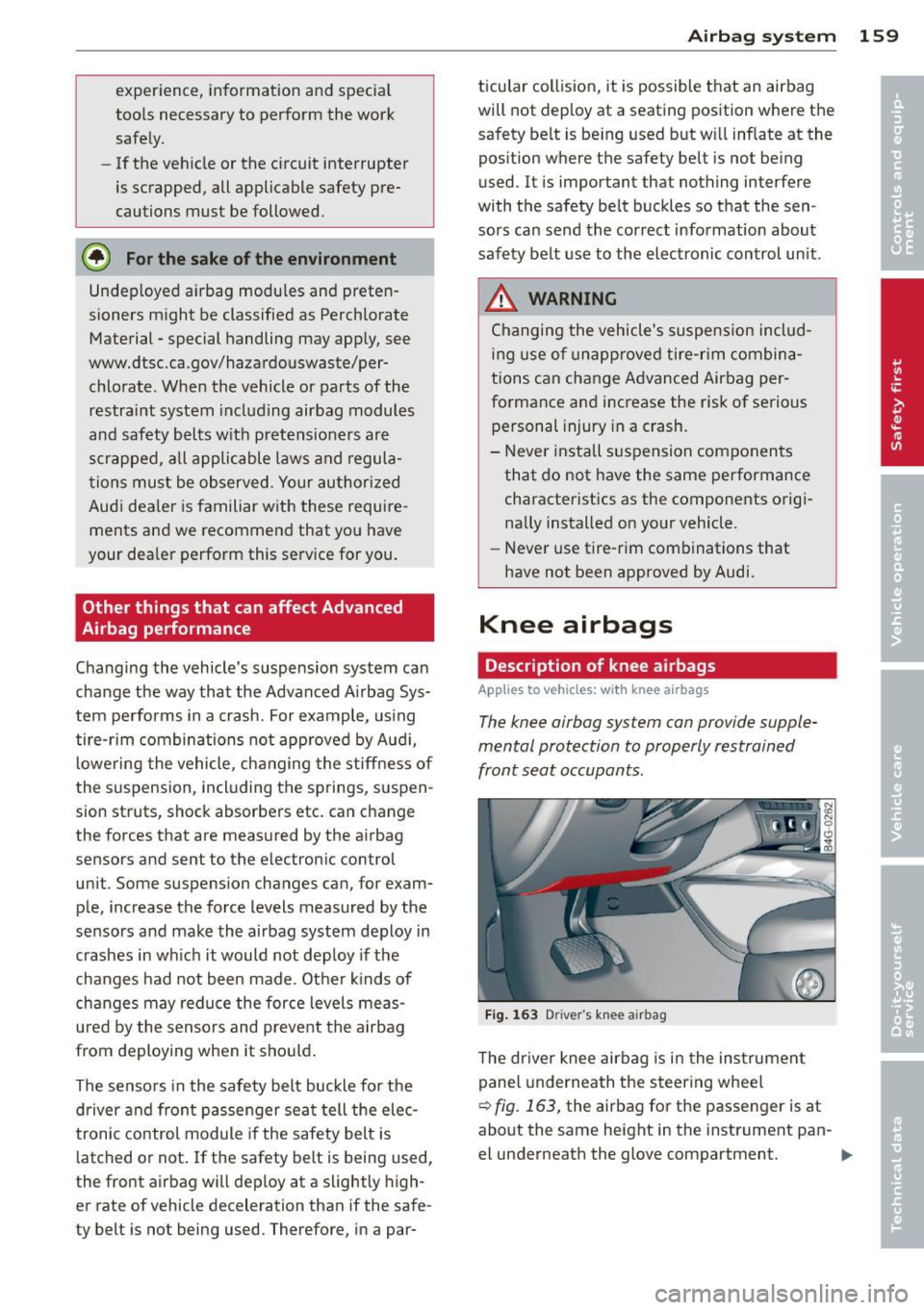
Fig. 1 63 Driver 's k nee airbag
T he driver knee airbag is in the ins trumen t
pane l underneath the steering wheel
r:::> fig. 163, the airbag for t he passenger is at
about the same height in the instrument pan-
el underneath the glove compartment. ..,.
Page 191 of 292
Intelligent technology Notice about data
recorded by vehicle
control modules
Your vehicle is not equipped with an Event Da
ta Recorder (EDR), installed by some manu
facturers for the express purpose of capturing
data for retrieval after an accident or crash
event. EDR's are sometimes called "crash re
corders".
Some state laws restrict the retr ieval or down
loading of data stored by EDR's that were in
stalled in a vehicle for the express purpose of
retrieving data after an accident or crash
event without the owner's consent.
Although your vehicle is not equipped with an
EDR, it is equipped with a number of electron
ic control modules for various vehicle systems
such as, for examp le, engine function, emis
sion control, as well as for the airbags and
safety belts.
These electronic control modules also record
vehicle-related data during norma l vehicle op
eration for diagnostic and repair purposes.
The recording capacity of the electronic con
trol modules is limited to data (no sound is re
corded) and only a small amount of data is ac
tually recorded over a very limited period of
time and stored when a system fault or other
condition is sensed by a control unit. Some of
the data then stored may relate to vehicle
speed, direction, braking as we ll as restraint
system use and performance in the event of a
crash or other condition. Stored data can only be read and downloaded with special equip
ment.
Electronic Stabilization
Control (ESC)
Description
ESC helps to improve road holding and vehicle
dynamics to help reduce the probability of
skidding and loss of veh icle control. It works
only when the engine is running. ESC detects
Intelligent technology 189
certain difficult driving situations, including
when the vehicle is beginning to spin (yaw)
out of control and helps you to get the veh icle
back under control by se lectively braking the
wheels, and/or reducing engine power and
providing steering ass istance to help hold the
vehicle on the driver's intended course. The in
dicator light
JjJ in the instrument cluster
blinks when ESC is taking action to help you
control the vehicle.
ESC has limitations .
It is important to remem
ber that ESC cannot overcome the laws of
physics.
It will not always be able to help out
under all conditions you may come up against.
For example, ESC may not always be able to
help you master situations where there is a
sudden change in the coefficient of friction of
the road surface. When there is a section of dry road that is suddenly covered with water,
slush or snow, ESC cannot perform the same
way it would on the dry surface. If the vehicle
hydroplanes (rides on a cushion of water in
stead of the road surface), ESC will not be
able to help you steer the vehicle because con
tact with the pavement has been interrupted
and the vehicle cannot be braked or steered .
During fast cornering, particularly on winding
roads, ESC cannot always deal as effectively
with difficult driving situations than at lower
speeds.
Always adjust your speed and driving style to
road, traffic and weather conditions. ESC can
not override the vehicle's physical limits, in
crease the available traction, or keep a vehicle
on the road if road departure is a result of
driver inattention. Instead, ESC improves the
poss ibility of keeping the vehicle under con
trol and on the road dur ing extreme maneu
vers by usin g the driver 's steering inputs to
help keep the vehicle going in the intended di
rection. If you are traveling at a speed that
causes you to run off the road before ESC can
provide any assistance, you may not experi
ence the benefits of ESC.
ESC includes and/or works together with the
anti- lock brake system (ABS), brake assist sys -
tem, anti-slip regu lation (ASR), electronic
Ill>
•
•
Page 192 of 292
190 Intelligent technology
differential lock (EDL), dynamic steering* and
selective whee l torque control. ESC is switch
ed on all the t ime. In certa in situations when
you need less traction, you can switch off ASR
by pressing the button
[ill c> page 191,
fig. 180. Be sure to switch ASR on again when
you no longe r need less traction .
Anti-loc k br ak ing system (ABS)
ABS prevents the wheels from locking up
when braking. The vehicle can still be steered
even during hard brak ing. Apply steady pres
sure to the brake pedal. Do not pump the ped
al. A puls ing in the brake pedal ind icates that
the system is he lp ing you to b rake the vehicle.
B rake as sist sys tem
The brake assist system can decrease braking
d istance. It increases braking power when the
driver presses the brake pedal quick ly in emer
gency situations. You must p ress and hold the
b rake pedal until the situation is over. I n
vehicles w ith adaptive cru ise cont rol*, the
b rake assist system is more sens it ive if the
d istance detected to the vehicle ahead is too
smal l.
Anti-slip regulation (ASR)
ASR reduces engi ne power when the d rive
wheels begin to spin and ad apts the fo rce to
the road condit ions. This makes i t easier to
start, accelerate and drive up hills .
Electronic differential lock (EDL)
The EDL brakes wheels that are spinning and
transfers the d rive powe r to the other d rive
wheel o r whee ls if the vehi cle is equipped wi th
a ll-w hee l drive* . This function is available up
to about 75 mph (120 km/h).
I n extreme cases, ED L automat ica lly swit ches
off to help keep the brake o n the braked whee l
from overheating . EDL wi ll switch on again au
tomatically when conditions have returned to
norma l.
Dynamic steering*
On vehi cles w ith dy namic stee ring*, ESC helps
stabilize the steering i n critical s ituations.
Selective wheel torque control
T he sele ctive whee l torq ue con trol ope rates
when driving through c urves . The front whee l
on the inside of th e curve o r both wheels on
the inside of the curve are braked selectively
as needed. This minimizes sliding in the front
whee ls and allows for more precise driving
t hr ough curves. The appl icable system may
not act ivate when dr iv ing in wet or snowy con
ditions .
,&. WARNING
-ESC, ABS, ASR, EDL, dy namic steeri ng*
and the select ive wheel torq ue con trol
c a nnot ove rcome the laws of physics.
T his is especially important on slippery
or wet roads.
If the systems begin acting
to stabilize your veh icle, yo u should im
mediately change your speed to match
the road and traffic conditions. Do not
let the increased safety provided by
these systems tempt you to take r isks.
Doing so will increase the risk of a loss of
veh icle cont ro l, collision and ser ious per
sonal injur ies.
- Always adapt your speed to road, traffic
and wea ther conditions. The risk of los
ing con trol of t he vehicle increases when
d riving too fast, espec ially through
curves and on slippery or wet roads, and
when dr iving too close to vehicles up
ahead. ESC, ABS, the brake assist sys
tem, ASR, EDL, dynam ic steering* and
the selective wheel torque contro l can
not prevent collisions .
- Always accelerate with special care on
even, smooth su rfaces such as those that
are wet or covered with ice and snow .
The drive wheels can spin eve n w ith
these assistan ce systems that cannot al
ways he lp to re duce the risk of loss of ve
h icle control.
(D Tips
- ABS and ASR o nly wo rk correctly when
all four wheels are equipped with identi
cal tires. D iffe ren t tire si zes can lead to a
reduction in engine power.
-
...
Page 208 of 292

206 Vehicl e c are and cle aning
Component Situation Solution
Tex tile s,
Stains adhering to Vacuum cleaner
Vin yl, the surface
A lcan ta ra Water -based stains Absorbent cloth and mild soap solutiona>
such as coffee, tea,
blood, etc.
O il-based stains Apply a mild soap solutiona >, blot away the d issolved oil
such as oil, make- or dye, treat afterward w ith water, if necessary
up, etc.
Special stains such Special stain remover, blot with absorbent material,
as ballpoint pen, treat afterward with mild soap solutiona >, if necessary
na il polish, latex
pa int, shoe polish,
etc.
N atu ral l eathe r Fresh stains Cotton cloth with a mild soap solution a>
Water-based stains Fresh stains: absorbent cloth
such as coffee, tea, Dr ied stains: sta in remover suitable for leather
blood, etc.
Oil-based stains Fresh stains: absorbent cloth and stain remover suitable
such as oil, make- for leather
up, etc. dried stains: Oil cleaning spray
Special stains such Stain remover suitable for leather
as ballpo int pen,
na il polish, latex
paint, shoe polish,
etc.
Care Regular
ly apply conditioning cream that protects from
light a nd penetrates into the material. Use specially-col-
ored conditioning cream, if necessary.
Carbon part s Dirty Clean tlhe same way as plastic parts
a) Mil d soap so lution : m ax im um two ta b les poons neu tral soa p in a lite r of wate r
& WARNING
The windshie ld may not be treated with
water-repe lling windshield coating agents.
Unfavorab le conditions such as wetness,
darkness, or low sun can result in in
creased glare. W iper blade chatter is also
possible .
(V Note
-Headlights /tail li ghts
- Never clean headlights or tail lights
w ith a dry cloth or sponge. - Do not use any cleaning product that
contains alcohol, because they could
cause cracks to form.
-W hee ls
- Never use any paint polish or other
abrasive mater ials.
- Damage to the protective layer on the
rims such as stone chips or scratches
must be repa ired immediately.
- Sen sor s/c ame ra len ses
-Never use warm or hot water to re-
move snow or ice from the camera
le ns. This could cause the lens to crack . ""
Page 225 of 292
Before you check anything in the engine com
partment,
always r ead and heed all W ARN
ING S ~ A in Working in the engine compart
ment on page 213.
.. Read the brake fluid level from the brake
fluid reservoir ¢
fig. 192, ~ page 215,
fig . 188.
The brake fluid level must be be
tween the "MIN" and "MAX" markings.
The location of the brake fl uid reservoir can be
seen in the engine compartment illustration
¢page 215.
The fluid level may drop slightly after some
time due to the automatic adjustment of the brake pads . This is not cause for alarm .
If the brake fluid level falls considerably be
l ow the "MIN" mark, the brake wa rning/indi
cator light
1111 (U .S . models)/ . (Canadian
models) will come on
~ page 14. Do not con
tinue to operate the vehicle. The comp lete
brake system shou ld be thoroughly checked
by an authorized Audi dealer or other quali
f ied fac ility and the cause corrected . If the
b rake fluid level is too low, the brake warn ing/
i ndicator light w ill illuminate . Contact an au
thor ized Audi dealer
imm ediately .
Changing brake fluid
Have the brake fluid changed by an experi
enced technician .
Brake fluid absorbs moisture from the a ir . If
the water content in the brake fluid is too
hi gh, cor rosion in the brake system may result
after a per iod of t ime . The bo iling po int of the
b rake fluid w ill also decrease considerab ly and
decrease braking performance.
Therefore, the brake flu id must be changed
ev ery two ye ars. A lways use new b rake fluid
which confo rms to Federal Motor Vehicle
Standard "FMVSS
116 DO T 4".
The brake flu id rese rvoi r ca n be difficult to
r each, therefo re , we recommend that yo u
h ave the brake fl uid changed by you r autho r
i zed
Audi de aler . Your dea le r has the correct
Checkin g and fillin g 223
tools, the right brake fl uid and the know -how
to do this for you .
A WARNING
-Brake flu id is poisonous. It must be stor
ed only in the closed or iginal container
out of the reach of children!
- Brake failure can resu lt from o ld or inap
propriate brake f lu id. Observe these pre
cautions:
- Use only b rake fluid tha t meets SA E
spe cificat ion
J 17 03 and conforms to
Federa l Moto r Ve hicl e Standard
116.
Always check with your authorized Audi
dealer to make sure yo u are using the
correct brake fluid. The correct type of
brake f luid is also ind icated on the
brake f luid reservoir .
- The brake fluid must be new. Heavy use
of the brakes ca n cause a vapor lock if
the brake fluid is left i n the system too
long. This can se riously affect the effi
c iency of the b rakes as well as your
safety , T his could result in an accident.
(!) Note
Brake fluid will damage the paint of your
vehicle.
@) For the sake of the environment
Because of the prob lem of proper disposal
of brake fluid as well as the spec ial too ls
r equired and the necessary expertise, we
r ecommend that you have th e brake flu id
changed by you r autho rized Aud i dea le r.
Battery
General information
Under normal operating cond itions, the bat
tery in your Audi does not need any ma inte
nance . With
high outside temperatu res or
lo ng da ily drives we recommend that you have
the e lectrolyte leve l che cked by a se rv ice fa
c il ity. The ele ctroly te leve l should also be
chec ked each t ime the battery is cha rged
~ page 226 . Iii>
•
•
Page 226 of 292
224 Check ing and filling
Have the battery checked when you take your
vehicle in for service. You are well advised to replace a battery that is older than 5 years .
W ith certa in types o f airbag deployment, the
battery is disconnected from the vehicle elec
trica l system for safety reasons¢
& in Re
pair, core and disposal of the airbags on
page 158.
Disconn ecting the battery terminal s
Some vehicle functions (power w indow regu
l ators, for example) are lost if the battery ter
minals are disconnected . These functions have
to be re learned after the battery terminals are
connected again. To prevent this, the battery
should only be disconnected from the vehicle
e lectrical system when absolutely necessary
for repairs .
Vehicles not driven for l ong period s
If you do not drive your vehicle over a period
of several days or weeks, electrical compo
nents are gradually cut back or switched off.
This reduces energy consumption and main
tains starting capab il ity over a longer period
¢
page 195. Some of the convenience func
tions may not operate, s uch as the inte rior
lights or power seat adjus tment. The conven
ience f unctions will be available again when
you switch on the ignition and start the en gine.
Winter operation
D uring the winter months, ba tte ry capaci ty
tends to decrease as tempe rat ures d rop . This
is because more powe r is also consumed while
starting , and the headlights, rear window de
fogger, etc., are used more often.
Avoid unnecessary power consumption, par
ticular ly in c ity traffic or when t raveling on ly
short distances. Let you r authorized Audi
dea ler check the capacity of the vehicle bat
tery before winter sets in
¢ page 226. A we ll
charged battery w ill not only prevent starting
prob lems when the weather is cold , but w ill
also last longer .
(D Tips
If your vehicle is left standing for seve ral
weeks at extremely low temperatures, the
vehicle battery sho uld be removed and
stored where it w ill not freeze . This will
prevent it from be ing damaged and having
to be replaced .
Working on the battery
Be especially careful when working on or near
the battery.
The battery is located in the luggage compart
ment under the floor. Before you check any
t hi ng in the luggage compartment,
read and
heed all WARNINGS
¢ ,& .
Always heed the safety warnings , when work
ing on the vehicle battery or the vehicle e lec
trical system to prevent inju ry.
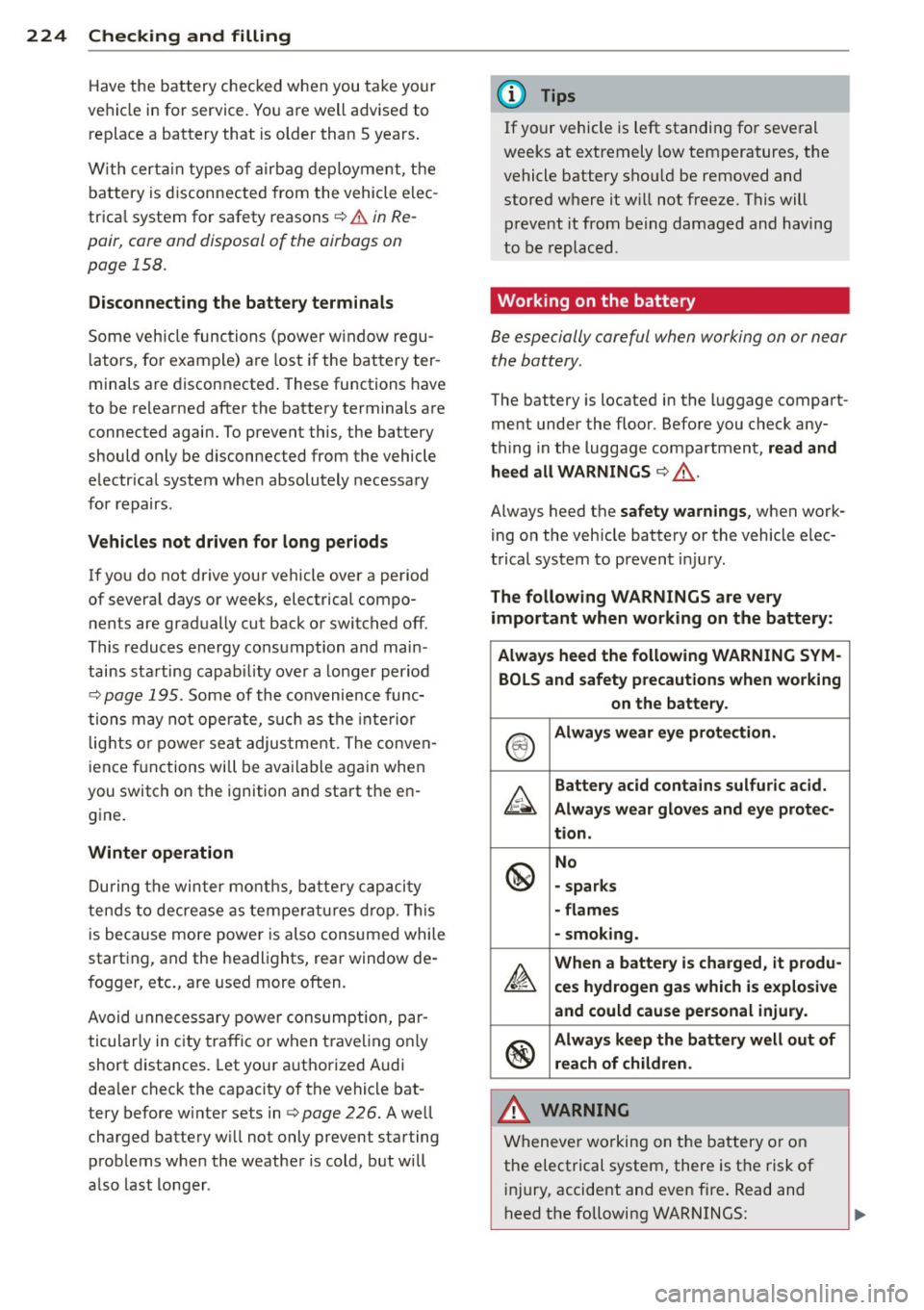
The following WARNINGS are very
important when working on the battery :
Al ways heed the follo wing WARNING SYM -
BOLS and safety precautions when working
on the battery .
®
Always wear eye prote cti on.
&
Battery acid contains sulfuric acid.
Always wear glove s and eye protec-
tion.
@
No
- spa rks
- flames
- smoking.
£
When a battery i s charged, it produ-
ce s hydrogen gas which is e xplosi ve
and could cau se personal injury.
@
Alwa ys k eep the battery well out of
rea ch of children .
_&. WARNING ~
Whenever working on t he battery o r on
the electrical system, there is the risk of
i njury, accident and even fire . Read and
heed the following WARNINGS:
-