fuel AUDI RS7 SPORTBACK 2014 Owner's Manual
[x] Cancel search | Manufacturer: AUDI, Model Year: 2014, Model line: RS7 SPORTBACK, Model: AUDI RS7 SPORTBACK 2014Pages: 292, PDF Size: 73.56 MB
Page 212 of 292
210 Fuel supply and filling your fuel tank
transport fuel to use for your lawn mower,
snow blower, etc., be very careful and al
ways observe local and state laws regard
ing the use, transportat ion and storage of
such fuel containers. Make certain the con
tainer meets industry standards (ANSI/
AS TM F852 -86) .
(D Note
Never drive your vehicle until the fuel tank
is completely empty. The irregular supply
of fuel can cause misfiring. Gasoline could
enter the exhaust system and damage the
catalyt ic converter.
Refuelling
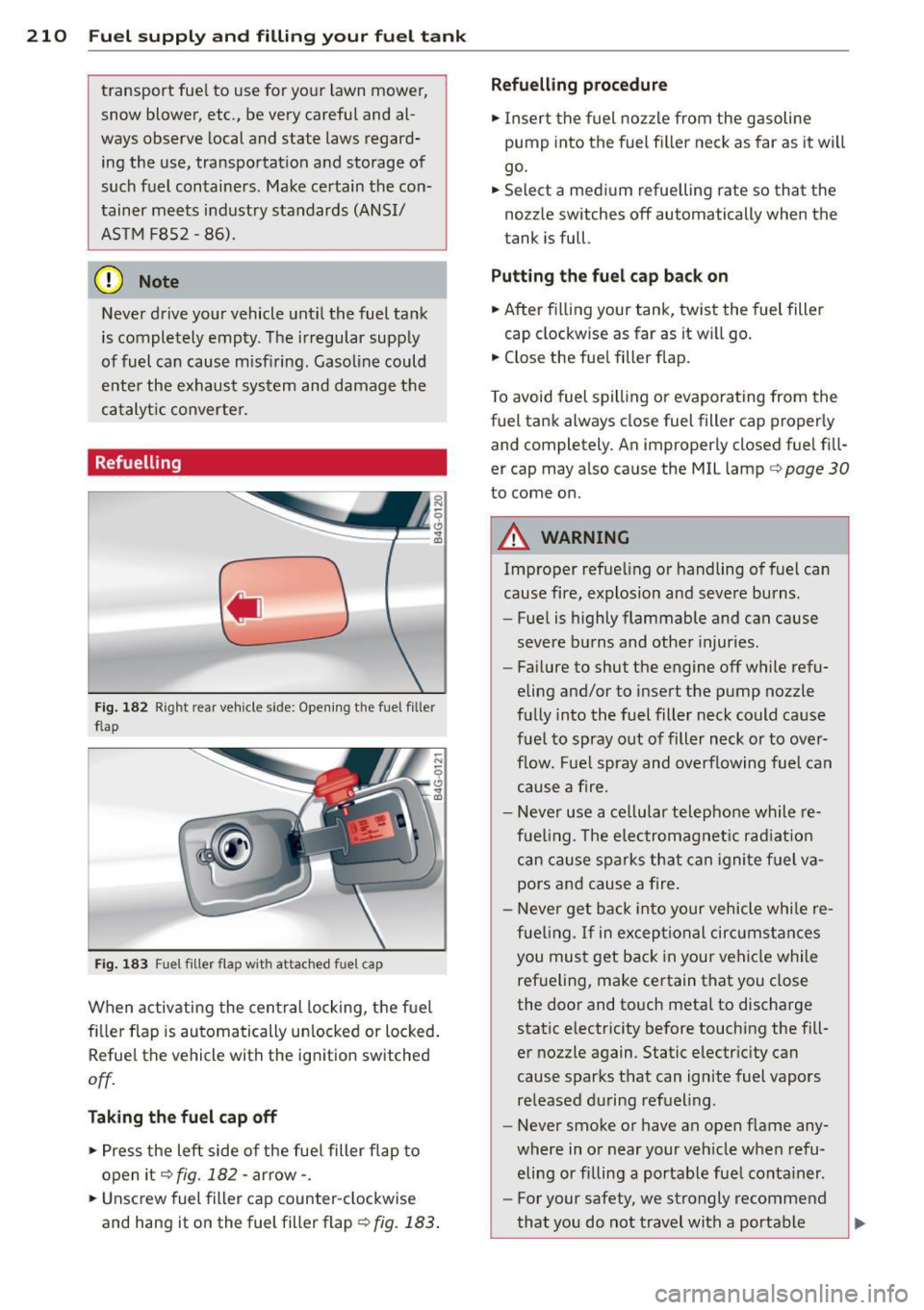
Fig. 182 Right rear vehicle side: Opening the fuel filler
flap
Fig . 183 Fuel filler flap with attached fuel cap
When activating the central locking, the fuel
fi ller flap is automatically un locked or locked.
Refuel the vehicle with the ignition switched
off.
Taking the fuel cap off
• Press the left side of the fuel filler flap to
open it
q fig. 182 -arrow-.
• Unscrew fuel filler cap counter-clockwise
and hang it on the fuel filler flap
¢ fig. 183.
Refuelling procedure
• Insert the fuel nozzle from the gasoline
pump into the fuel filler neck as far as it will
go .
• Select a med ium refuelling rate so that the
nozzle switches off automatically when the
tank is full.
Putting the fuel cap back on
• After filling your tank, twist the fuel filter
cap clockwise as far as it w ill go.
• Close the fue l filler flap.
T o avoid fuel spilling or evaporating from the
fuel tank always close fuel filter cap properly
and completely. An improperly closed fuel fill
er cap may also cause the MIL lamp¢
page 30
to come on.
A WARNING
Improper refue ling or handling of fuel can
cause fire, explosion and severe burns.
- Fuel is highly flammable and can cause
severe burns and other injuries.
- Fai lure to shut the engine off while refu
eling and/or to insert the pump nozzle
fully into the fuel filter neck could cause
fuel to spray out of filler neck or to over
flow. Fuel spray and overflowing fuel can
cause a fire.
- Never use a ce llular telephone while re
fue ling. Th e electromagnet ic rad iat ion
can cause sparks that can ignite fuel va
pors and cause a fire.
- Never get back into your vehicle whi le re
fueling.
If in exceptional circumstan ces
you must get back in your vehicle while
refueling, make certain that you close
the door and touch metal to discharge
static electricity before touching the fill
er nozzle again. Static electricity can
cause sparks that can ignite fuel vapors
released during refueling.
- Never smoke or have an open flame any
where in or near your veh icle when refu
eling or filling a portable fuel conta iner.
- For your safety, we strongly recommend
that you do not travel with a portable
Page 213 of 292
fuel container in your vehicle. The con
tainer, full or empty may leak and could
cause a fire, especially in a crash.
- If, under exceptional circumstances, you
must transport a portable fuel container,
please observe the following:
- Never fill a portable fuel container
while it is anywhere in or on the vehicle
(for example, in the lugga ge compart
ment, or on the tr unk). Static electrici
ty can bui ld up while fi lling and can ig
nite fuel vapors causing a fire .
- Always place a portable fuel container
on the ground before filling.
- Always keep the fi ller nozzle complete
ly inside the portable container before
and during filling.
- If filling a portable container made of
metal, the filler nozz le must always be
in contact with the container. Th is w ill
help prevent static electricity from dis
charging and cause a fire .
- Never sp ill fuel inside the vehicle or
luggage compartment. Fuel vapors are
h ighly flammable .
- Always observe local and state/provin
cial laws regarding the use, storage
and transportation of fuel containers .
- Make certain the fuel container meets
industry standards (ANSI/ ASTM
F852 -86) .
(D Note
If any fuel has spilled onto the car, it
should be removed immediately to prevent
damage to the paint.
~ For the sake of the environment
As soon as the correctly operated nozzle
sw itches off automatically for the first
time, the tank is full. Do not try to add
more fue l because fuel may spill out . In
add it ion, the expans ion space in the fuel
tank will be fi lled -causing the fuel to
overflow when it becomes warm and pol
lute the environment.
Fuel supply and filling your fuel tank 211
@ Tips
-Running your engine while refue lling
may cause vapors to escape or even
cause fuel to spill out of the tank. This
would then shut off the fuel nozzle be
fore the tank is full.
- Do not refuel your vehicle with the igni
tion switched on. The fuel gauge may
otherwise not ind icate the correct fuel
level after refuell ing .
- The fuel filler flap of your vehicle is not
locked when you lock the vehicle from
the inside.
Fuel filler flap emergency release
You can open the fuel filler flap by hand if the
power locking system should fail .
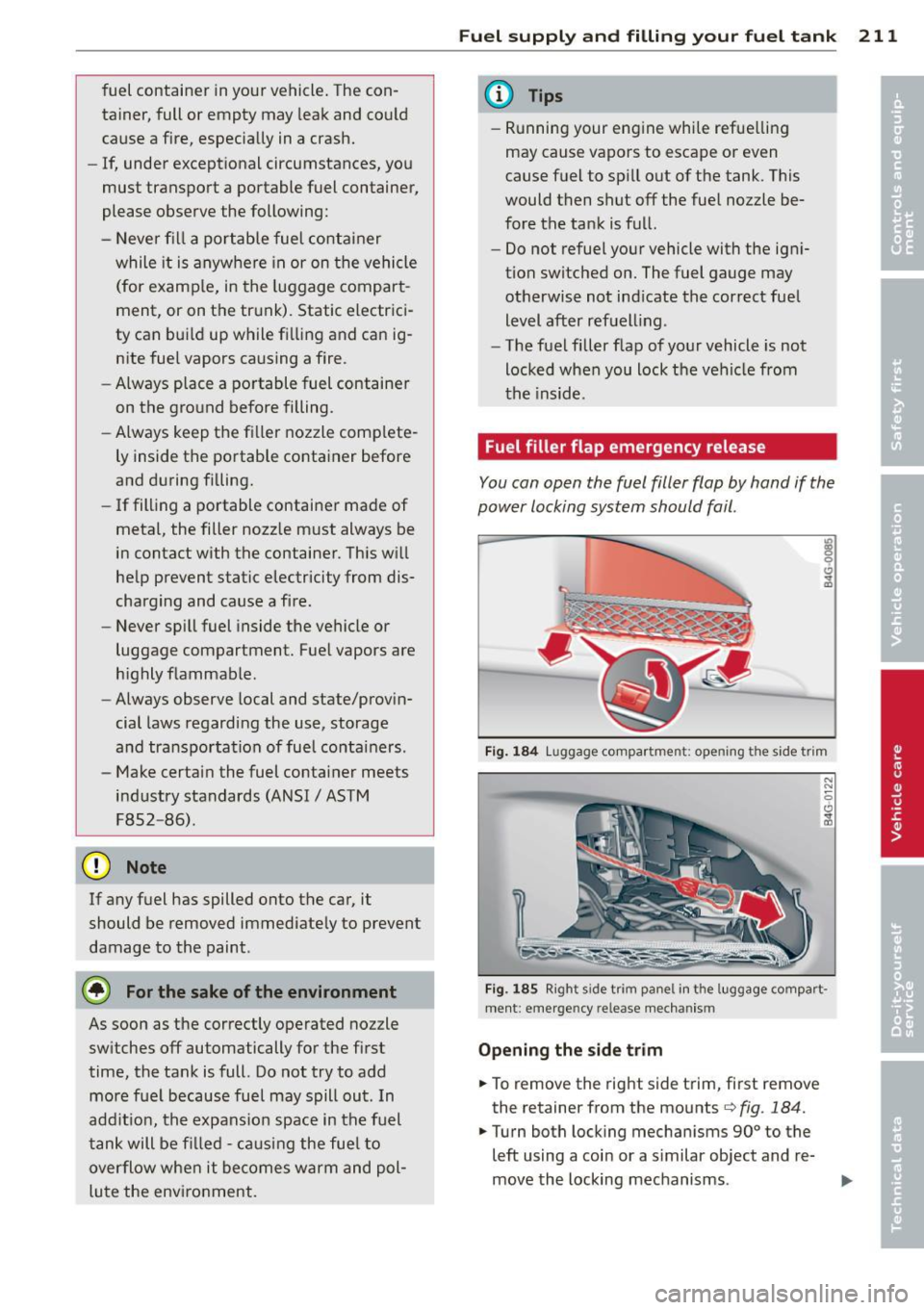
Fig. 184 Lug gage compart ment: ope ning th e side trim
N
"' 0
~
Fig . 185 Right s ide tri m pane l in t he luggage com part ·
ment : eme rge ncy re lease mechanis m
Opening the side trim
.. To remove the right side trim, first remove
the retainer from the mounts¢
fig. 184.
.. Turn both locking mechanisms 90° to the
left using a coin or a s imilar object and re-
move the locking mechanisms .
11J,,
Page 214 of 292
212 Fuel supply and filling your fuel tank
• Tilt the retainer upward and pu ll the trim
o ut. Lay the trim down on its side, because
there is an e lectrical wire on the bac k.
Fuel filler door emergency rel ease
The eme rgency re lease me chan ism is loc ated
behind the right side t rim pa ne l in the lug
gage compartment.
• Loosen the loop¢
fig. 185 from the retaine r
and then pull on the loop ca re fully ¢(D.
• Press on the le ft side of the fuel fille r doo r
to open ¢
page 210, fig. 182.
(D Note
On ly pull o n the loop un til you fee l resis t
a nce . You will not hear it release. Other
w ise you cou ld damage the emergency re
lease mechanism.
Page 219 of 292
temperatures stay below freezing point for l ong periods.
Detergent add itives in the o il w il l make fresh
oil look dark after the eng ine has been run
ning fo r a short time . This is norma l and is not
a reason to change the oi l more often than
recommended.
D am ag e or m alfun ction s due to lack of
ma intenanc e
It is essential that you change your oil at the
r ecommended inte rva ls using only engine o il
t hat complies wi th A udi oi l standard
VW 502 00 . Your Limited New Vehicle War
ranty does not cover damage or malfunctions
d ue to fa ilure to fo llow recommended mainte
nance and use requ irements as set forth in
the Audi Owner's Manua l and Warranty
&
Maintenance book let . Your dea ler will have to
deny warranty coverage u nless you present to
the dea ler p roof in the fo rm of Serv ice or Re
pa ir Orde rs that all s chedu led maintenance
wa s pe rformed in a t imely manner .
Engine oil consumption
The engine in your vehicle dep ends on an ade
quate amount of oil to lubricate and cool all
of its moving parts.
In o rder to provide effective lubrication and
cool ing of i nternal engine components, a ll in
ternal comb ustion eng ines consume a cert ain
amo unt of o il. Oil cons umption varies from
engine to engine and may change significantly
over the life of the engine. Typ ica lly, engines
with a specified break-in per iod (see
¢
page 198) consume more oil during the
break-in per iod than they consume after oil
consumption has stabilized .
Under norma l conditions, the rate of oil con
sumpt ion depends on the quality and viscosity
of the oil, the RPM (revo lutions per m inute) at
which the engine is operated, the amb ient
temperature and road condit ions. Furthe r fac
tors ar e the amount of o il d ilution from wate r
condensation or fuel residue and the ox ida
tion level of the oi l. As any engine is s ubje ct to
Checkin g and fillin g 217
wear as m ileage builds up, the oil consump
tion may increase over time until replacement
of worn components may become necessary.
Wi th a ll these variab les coming into p lay, no
standard rate of oil consumpt ion can be es
tablished or specified. There is no alternative
to regular and frequent check ing of the o il lev
el, see
Note .
If the yellow engine oil leve l warning symbo l
in the instrument cluster
II li ghts up, you
sho uld check the oil leve l as soon as possib le
¢
page 218. Top off the oil at your earliest
convenience
¢ page 218.
A WARNING
Before you c heck anythi ng i n the engine
com partment, always read a nd heed all
WARNINGS¢ .&.
in Working in th e engine
c ompartment on page 213.
(D Note
D riving w ith an insufficient o il level is like
ly to cause sever e damage to the engine .
(D Tips
- The oil pressure warning display. is
not an indicator of the oil le vel. Do not
rely on it . Instead, check the oil level in
your engine at regu lar intervals, pref
erably ea ch time you refuel, and always
before going on a long trip .
-If you have the impression yo ur engi ne
c ons umes ex ce ss ive amoun ts of o il, we
recommend that you consul t your Au di
de aler to have the cause of your concern
properly diagnosed . Keep in mind that
the accurate meas urement of o il con
sumption requires great care and may
take some t ime. Y our Audi dea ler has in
struct ions about how to measure oil con
sumption accurately.
-
•
•
Page 231 of 292
-Never mount used tires on yo ur vehicle if
yo u are not sure of their "previous histo
ry." Old used tires may have been dam
aged even though the damage cannot be
seen that can lead to sudden tire failure
and loss of vehicle control.
- If you notice unusual vibration or if the
vehicle pulls to one side when d riving, al
ways stop as soon as it is safe to do so
and check the wheels and tires for dam
age .
(D Note
Please note that summe r and wi nte r tires
are designed for the cond itions that are
Glossary of tire and loading terminology
Accessory weight means the comb ined weight (in excess of
those sta ndard items which may be rep laced)
of au toma tic transmission, power steer ing ,
power brakes, power windows, power seats,
radio, and heater, to the extent that these
items are availab le as factory-installed equip
ment (whether installed or not) .
Aspect ratio
means the rat io o f the height to the w idth of
the tire in percent . Numbers of 55 or lower in
dicate a low sidewall for improved steering re
sponse and better overa ll handling on dry
pavement .
Bead
means the part of the t ire t hat is made o f
steel wires, wrapped or reinforced by ply cords
and that is shaped to fit the r im.
Bead separation
means a b reakdown of the bond between
components in the bead .
Cord means the strands forming the plies in the
tire.
Tire s an d wheel s 229
typica l in those seasons . Aud i recommends
using winter tires during the winter
months . Low temperatures signif icant ly
dec rease the e lasticity of summer t ires,
which affects tract ion and brak ing ability.
If summer t ires are used i n very co ld tem
peratures, cracks ca n form o n the tread
bars , res ulting in perma nen t tire damage
that can cause loud driving noise and un
bala nced ti re s. Audi i s not respon sible for
th is type of damage .
Cold tire inflation pressure
means the t ire p ress ure recommended by t he
vehicle manufacture r fo r a tire o f a des ignated
s ize t hat has not bee n driven for more than a
coup le o f miles (k ilometers) at low speeds in
the three hour period before the tire press ure
is m easured or adjusted.
Curb weight
me ans the we ight of a motor ve hicle with
st andard equipmen t incl ud ing the max imum
capacity of fuel, oi l, and coolant, air condi
tioning and additional weig ht of optiona l
equipment.
Extra load tire
means a t ire design to oper ate a t higher load s
and at higher inflation pressures than the cor
responding standa rd tire . Extra load tires may
be identified as "XL", "x l", "EXTRA LOAD", o r
"RF" on the sidewal l.
Gross Axle Weight Rating ("GAWR")
me ans the load-ca rry ing capac ity of a single
axle system , measured at the tire -ground in
te rfaces.
Gross Vehicle Weight Rating ( "GVWR ")
mea ns the maximum total loaded we ight of
the ve hicl e. .,..
•
•
Page 237 of 292
-Turn the valv e stem cap counter-clockwise
to remove it from the tire valve.
- Place the air pressure gauge on the valve.
- The tire pressures should only be checked
and adjus ted when the tires are cold . The
s li ght ly raised p ressures of warm tires must
not be reduced .
- Adjust the tire pressure to the load you are
carrying .
- Re insta ll the va lve stem cap on the valve.
When should I che ck the tire pres sur e?
The correct tire pressure is espec ially impor
tant at high speeds. The pressure should
therefo re be checked at least once a month
and a lways before start ing a journey.
When should I adjust the tire p re ssure s?
Adjust the tire pressure to the load you are
carry ing . After changing a wheel
o r replacing
wheels you have to adjust the tire pressures
on all wheels. In addition , you must then
store the new ti re pressu res in the t ire pres
sure monitoring system
r::!.> page 246 .
A WARNING
Incorrect tire pressures and/or underinf la
tion can lead sudden tire failure, loss of contro l, collision, serious persona l injury
or even death.
- When the warning symbo l
[ti] appears in
the instrument cl uster, stop and inspect
the tires.
- Incorrect tire pressure and/or underinfla
t ion can cause increased tire wear and
can affect the handling of the veh icle and
stopp ing ability .
- Incorrect tire pressures and/or underin
flation can also lead to sudden tire fa il
ure, including a blowout and sudden de
flation, causing loss of vehicle control.
- The driver is responsible for the correct
tir e pressures fo r all t ires on the vehicle .
T he applicable pressu re va lues are locat
ed on a stic ker on the drive r's side B-pil
lar .
- Only when a ll t ires on the vehicle are fi l
led to t he cor rect pressure, the ti re p res-
Tire s an d wheel s 235
sure monitor ing system can work cor
rectly.
- The use of incorrect tire pressure va lues
can lead to acc idents or other damage.
Therefore it is essential that the driver
observe the spec ified t ire pressure values
for the tires and the correct pressures for
the function of the t i re p ress ure monito r
ing system .
- Always inf late t ires to the recommended
a nd correct t ire p ress ure before dr iv ing
off.
- Driving with unde rinflated tires bend
mo re, lett ing t hem get too hot resulti ng
in tread separation, s udden tire failure
and loss of cont ro l.
- Excess ive speed and/overloadi ng can
cause heat b uild- up, sudden tire failure
a nd loss of cont rol.
- If the tire pressure is too low or too high,
the t ires will wear prema turely and the
veh icle w ill not handle well.
- If the tire is not fla t and you do not have
to ch ange a wheel immedia tely, drive a t
red uced speed to the nearest service sta
tion to check the t ire p ress ure and add
air as requi red.
(D Note
Dr iving w it h out valve stem c aps can c ause
damage to the tire valves . To prevent this,
a lways make sure that factory insta lled
va lve stem caps on all whee ls are sec urely
mounted on the valve .
@ For the sake of the env ironment
Un derinflated tires wi ll also increase the
fuel consumption .
Tires and vehicle load limits
There are limits to the amount of load or
weight that any vehicle and any tire can carry.
A vehicle that is overloaded will not handle
well and is mo re d iff icult to stop. Overloading
can not o nly lead to loss of vehicle control,
but can also damage important parts of the
vehicle and c an le ad to sudden tire fa ilu re, .,..
•
•
Page 238 of 292
236 Tire s and whee ls
including a blowout and sudden deflation that
can cause the vehicle to crash.
Your safety and that of your passenge rs a lso
depends on making s ure that load limits are
not exceeded. Vehicle load includes everybody
and everything in and on the vehicle. These
load limits are techn ically referred to as the
vehicle's
Gr oss Veh icl e W eight R ating
("GVWR").
The "GVWR" includes the weight of the basic
ve hicle, all factory installed accessories, a full
tank of fuel, oil, coolant and other fluids plus
maximum load. The maximum load includes
the number of passengers that the vehicle is
i ntended to carry ("seating capacity") with a n
assumed weight of 150 lbs (68 kg) for each
passenger at a des ignated seat ing pos ition
and the tota l we ight of any luggage in the ve
h icle.
The
Gro ss Axle Weight Rating ("GAWR") is
the maximum load that can be app lied at each
of the vehicle's two axles .
The G ross Vehicle Weight Rating and the
Gross Axle Weight Rating are listed on the
safety compliance st icker labe l located on the
driver 's side B-p illar. Your A udi has 4 seating
positions, 2 in the front and 2 in the rear for
total seating capacity of 4. Each seating posi
tion has a safety belt
9 page 133, Safety
belts.
The fact that there is an upper limit to your
vehicle's Gross Vehicle Weight Rating means
that the tota l weight of whatever is being car
ried in the vehicle is limited. The more passen
gers in the veh icle or passengers who are
heav ier than the standard weights assumed
mean that less weight can be carried as lug
gage.
The tire pressure label on your Audi also lists
the maximum combined weight of all of the
occupants and luggage or other cargo that
the veh icle can carry . For the location of the
l abe l
9page 232, fig. 195.
A WARNING
Overloading a vehicle can cause loss of ve
h icle contro l, a crash or other accident, se
rious personal injury, and even death.
- Carrying more we ight than your veh icle
was des igned to carry will prevent the
veh icle from handling properly and in
crease the risk of the loss of vehicle con
trol.
- The brakes on a vehicle that has been
overloaded may not be able to stop the
veh icle w ith in a safe distance.
- Tires on a vehicle that has been overload
ed can fail suddenly, including a blowout
and sudden deflation, causing loss of
control and a crash.
- Always make sure that the total lo ad be
ing transpor ted does not make the veh i
cle heavier than the vehicle's Gross Vehi
cle Weight Rating.
Determining correct load limit
U se the exa mple belo w to ca l
c ula te the t otal weight of the
p ass engers a nd lu ggage or oth
e r thin gs that yo u plan to tran s
p o rt so t hat yo u can make sur e
th at yo ur vehi cle w ill n ot be
ove rloa ded.
Steps for Determining
Correct Load Limit
1. Lo cate th e statement "THE
COMBINED WEIGH T OF Q C-
CU PANT S A ND CARGO
SHOULD NE VER E XCEED XXX
KG OR XXX LBS" on your ve
hicle 's placard (tire inflation
11>
Page 245 of 292
Winter tires
Winter tires can improve vehicle handling on
snow and ice . At temperatures below 45 °F
(7 °C) we r ecommend changing to winter
tires.
In some heavy s now areas, local governments
may require true winter or "snow " tires, those
with ve ry deeply cut tread. These t ires shou ld
only be used in pa irs and be insta lled on all
fou r wheels. Ma ke sure yo u pu rchase snow
tires that are the same size and construction
type as the other tires on your vehicle .
Your veh icle is equipped w it h all-wheel drive,
this will improve tra ct io n du ring w inte r driv
ing, even with the s tandard tires. However, we
strongly recommend that yo u always eq uip a ll
four whee ls on your vehicle with cor rectly fit
ted w inter tires or all-se ason tires, when w in
te r r oad conditions are expected . This also im
proves the vehicle's braking performance and
reduces stopping distances .
Summe r tires provide less grip on ice and
snow.
W inter t ires (snow t ires) must a lways be fitted
on all four whee ls .
Ask yo ur autho rized Aud i dea ler o r qualified
wo rkshop fo r permi tted
winter tire siz es . Use
on ly radia l winter tires.
W inte r tir es lose the ir effectiveness when the
tread is worn down to a depth of 0.15 7 inch
(4 mm) .
Only drive with wi nter tires under winter con
d it ions . Summer tires hand le better when
there is no snow or ice on the roads and the
temperature is above 45 °F ( 7 °C).
I f you have a flat tire, see notes on replace
men t wheel ¢
page 239.
Please always remember that w inter tires may
h ave a lower speed rating than the t ires origi
n a lly installed on your veh icle at the t ime it
was manufactured. Plea se see ~
page 240,
Speed rating (letter code)
for a List ing of the
speed rat ing letter codes and t he maxim um
speed at w hic h the tir es can be driven.
Tire s an d wheel s 243
The speed rating letter code(¢ page 231) is
o n the side wall of the tire~
page 239 .
A WARNING
Winter t ires have maximum speed limits
that may be lower than your vehicle's max
imum speed. Always know the max imum
speed before driv ing off . Never drive faster
than the speed permitted for yo ur specific
winter tires . This wi ll ca use damage to the
tires leadi ng to an accident and ser ious
personal injury to you and your passen
gers .
A WARNING ,._.__
Driving faster than the maximum speed
for which the winter tires on your vehicle
were designed can cause tire fail ure in
cluding a blowout and sudden deflation, loss of contro l, crashes and ser ious per
sonal injuries. Have worn or damaged tires
replaced immediately .
- Wi nter tires have maximum speed rating
that may be lower than your vehicle 's
maximum speed .
- Never drive faster than the speed for
which the w inter or othe r tires installed
on you r vehicle a re rated .
A WARNING
Always a djust yo ur dr iv ing to the road and
traffic cond it ions . Never let the good ac
celer atio n of the winter t ires and al l-wheel
d rive tempt yo u into ta king ext ra risks. Al
ways remember:
- W hen braking, an all-wheel drive veh icle
handles in the same way as a front drive
vehicle .
- Drive c arefully and reduce your speed on
icy and slippery roads, even w inter t ires
cannot help under black ice conditions .
@ For the sake of the environment
Use summer tires when weather condi
tions permi t. T hey are qu iete r, do not wear
as quickly and reduce fuel consumpt ion .
•
•
-
Page 248 of 292
246 Tires and wheels
Refer to ¢page 243 for mo re detailed infor
mation regarding winter tires .
Tire pressure
monitoring system
(D General notes
Each tire, including the spare (if provided) ,
should be checked monthly when cold and in
flated to the inflation pressure recommended by the vehicle manufacturer on the vehicle
placard or tire inflation pressure label. (If your
vehicle has tires of a different size than the
size indicated on the vehicle placard or tire in
flation pressure label, you shou ld determine
the proper tire inflation pressure for those
tires).
As an added safety feature, your vehicle has
been equipped with a tire pressure monitor ing
system (TPMS) that illuminates a low tire
p ressure telltale when one or more of your
tires is significantly under-inflated. According
ly, when the low tire pressure telltale illumi
nates, you should stop and check your tires as
soon as possible, and inflate them to the proper pressure. Driving on a significantly un
der-inflated tire causes the tire to overheat
and can lead to tire failure . Under -inflation al
so reduces fuel efficiency and tire tread life,
and may affect the vehicle's handling and
stopping ab ility.
Please note that the TPMS is not a subst itute
for proper tire maintenance, and it is the driv
e r's responsib ility to ma inta in correct tire
pressure, even if under-inflation has not
reached the level to trigger illumination of the
TPMS low tire pressure telltale.
Your veh icle has also been equ ipped w ith a
TPMS malfunction indicator to indicate when
the system is not operating properly. The
TPMS malfunction indicator is combined with
the low tire pressure telltale . When the sys
tem detects a malfunction, the te lltale will
flash for approximately one minute and then remain continuously illuminated. This se- quence will continue upon subsequent vehicle
start-ups as
long as the malfunction exists.
When the malfunction indicator is illum inat
ed, the system may not be ab le to detect or
signal low tire pressure as intended . TPMS
malfunctions may occur for a variety of rea
sons, including the installation of replace
ment or alternate tires or wheels on the vehi
cle that prevent the TPMS from functioning
properly. Always check the TPMS malfunction
telltale after replacing one or more tires or
wheels on your vehicle to ensure that the re
placement o r alternate ti res and wheels allow
the TPM S to cont inue to function properly.
Description
The tire pressure monitoring system monitors
the pressure in the four tires when driving.
The system uses sensors that measure the
temperature and pressure in the tires. Theda
ta is sent from these sensors to the control
module by radio frequency.
The tire pressure monitoring system shows
the current pressures and temperatures of the
tires in the Infotainment system
¢page 247.
It also compares the current tire pressures
with the stored pressures and gives a warning in the driver information system if the tire
pressure is different from what is stored
¢ page 247.
The system does not detect if the stored tire
pressures match the recommended tire pres
sures. You must resave the tire pressures
¢page 248:
- eve ry time the tire p ressu res change, for ex
ample when the load in the vehicle changes,
- after replacing a t ire, or
- if wheels w ith new wheel sensors are used .
_&. WARNING
-The tire pressu re monitoring sys tem as
sists the driver in monitoring tire pres
sures. The driver is responsible for having
the tires inflated to the correct pressure. ..,.
Page 249 of 292
-Do not change the tire pressure when the
temperature of the tire is high. This
could result in serious damage to the tire
and even cause the tire to burst, increas
ing the risk of an accident.
- A tire with low pressure flexes more. This
heats the tire up too much . Th is could
cause the tread to separate and even
cause the tire to burst, increasing the
risk of an accident .
- The tire pressure monitoring system
does not warn about damage or defects
in the tire construct ion that could cause
the tire to burst, for examp le. Inspect
your ti res regularly.
@) For the sake of the environment
Low tire pressure increases fuel consump
tion and tire wear.
(D Tips
-If tires are replaced, the sensors/valves
do not need to be removed or replaced.
Just replace the valve stem and, if neces
sary, the valve and the wheel electronics.
If you have questions, see your author
ized Audi dealer or a qualified workshop.
- Using the tire mobility kit can results in
an incorrect display or a malfunction in
the tire pressure monitoring system.
Have the sensors replaced by an author
ized Audi dealer or a qualified workshop.
Display tire pressures/temperatures
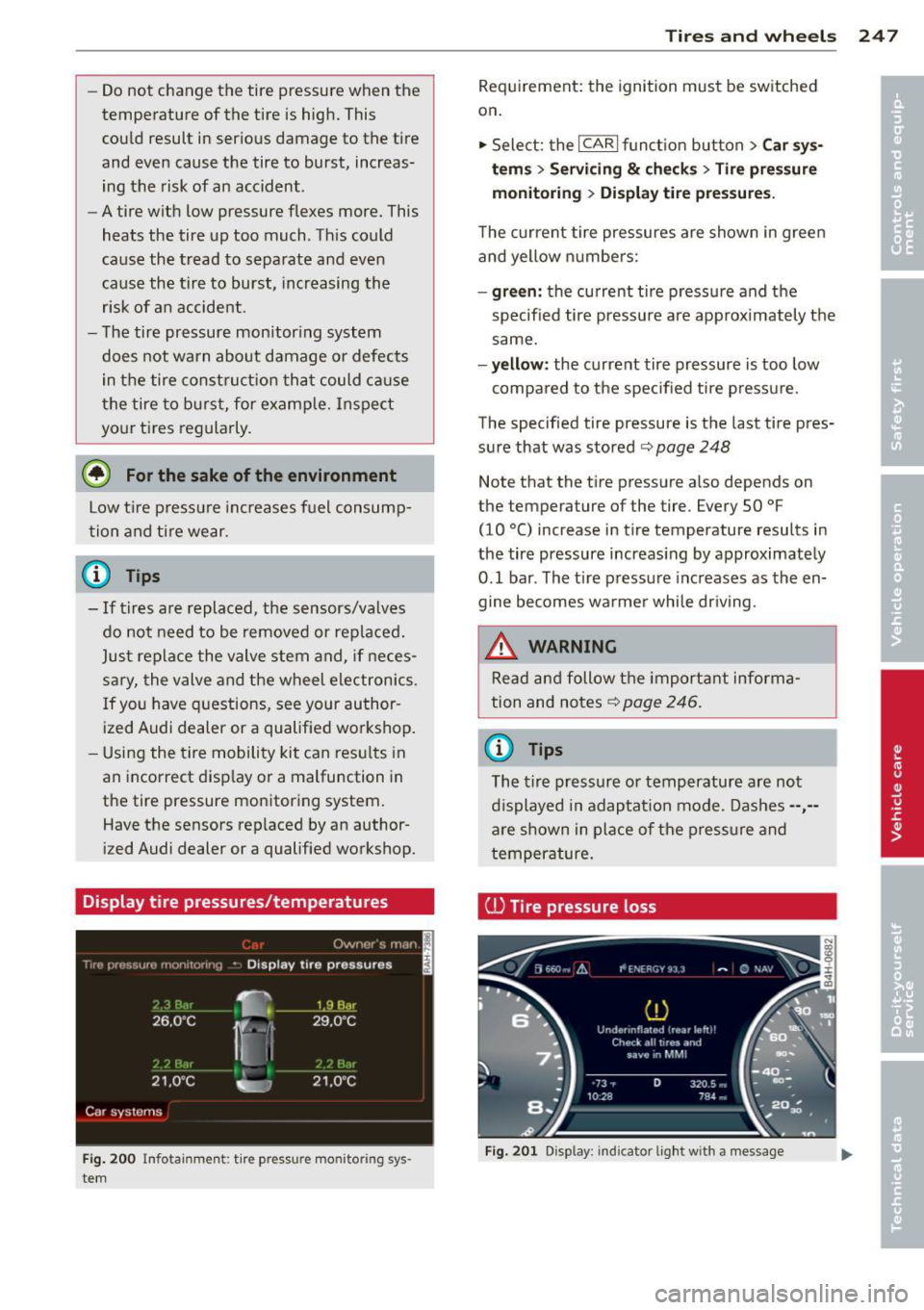
Fig. 200 Infotai nm en t: t ire pres sur e mo nito rin g sys
tem
Tires and wheels 247
Requirement: the ignition must be switched
on .
'" Select: the
I CAR I function button > Car sys
tem s
> Servicing & checks > Tire pressure
monitoring
> Di sp lay tire pressures.
The current tire pressures are shown in green
and yellow numbers:
-green: the current tire pressure and the
specified tire pressure are approximately the
same.
-yellow: the current tire pressure is too low
compared to the specified tire pressure.
The specified tire pressure is the last tire pres
sure that was stored
c::> page 248
Note that the tire pressure also depends on
the temper ature of the tire . Every 50 °F
(10
°() increase in tire temperature results in
the tire pressure increas ing by approximately
0.1 bar . The tire pressure increases as the en
gine becomes warmer while driving .
.&_ WARNING
Read and follow the important informa
tion and notes
c::> page 246 .
© Tips
The t ire pressure or temperature are not
displayed in adaptat ion mode. Dashes--,-
are shown in place of the pressure and
temperature.
ill Tire pressure loss
Fig. 201 Disp lay: in dic ator light w ith a message
-