brake AUDI RS7 SPORTBACK 2015 Owner's Manual
[x] Cancel search | Manufacturer: AUDI, Model Year: 2015, Model line: RS7 SPORTBACK, Model: AUDI RS7 SPORTBACK 2015Pages: 302, PDF Size: 74.76 MB
Page 85 of 302
"' N
a:: I.J "". rl I.O
"' rl
"' rl
Audi adaptive cruise control and braking guard 83
@ is located in front of that vehicle, the sys
tem will not react to the stationary vehicle.
Audi adaptive cruise
control
Description
Applies to vehicles: with Audi adaptive cruise co ntrol
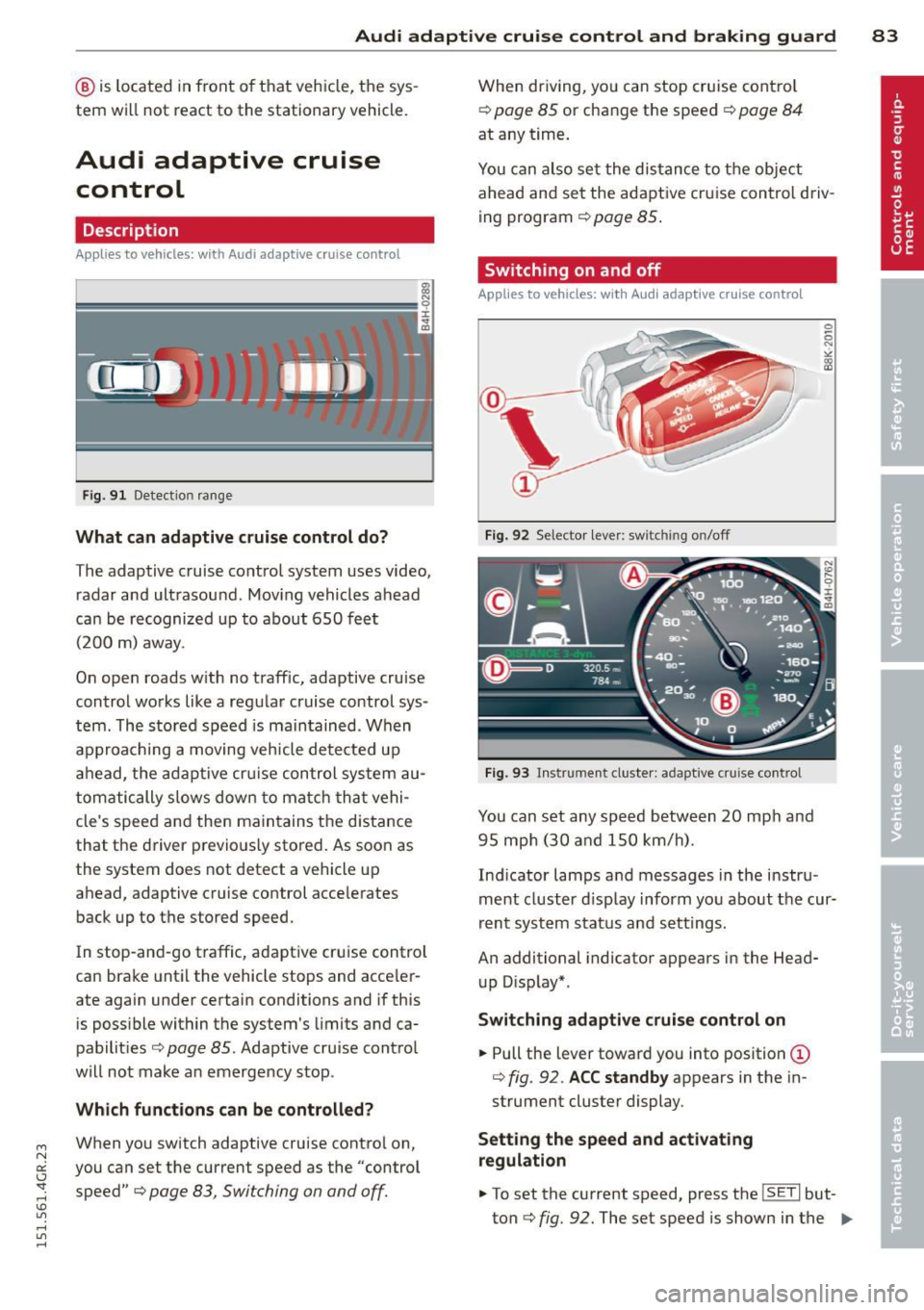
Fig. 91 Detectio n range
What can adaptive cruise control do?
The adaptive cruise control system uses video,
radar and ultrasound . Moving vehicles ahead
can be recognized up to about 650 feet (200 m) away.
On open roads w ith no traff ic, adaptive cruise
control works like a regular cruise control sys
tem. The stored speed is maintained . When
approaching a moving vehicle detected up
ahead, the adaptive cruise control system au
tomatically slows down to match that vehi
cle's speed and then maintains the distance
that the driver previously stored. As soon as
the system does not detect a vehicle up
ahead, adaptive cruise control accelerates
back up to the stored speed.
In stop-and-go traffic, adaptive cruise control
can brake until the vehicle stops and acce ler
ate again under certain conditions and if this
is possible within the system 's limits and ca
pabilities
c> page 85. Adaptive cruise control
will not make an emergency stop .
Which functions can be controlled?
When you switch adaptive cruise contro l on,
you can set the current speed as the "control speed"
c> page 83, Switching on and off.
When driving, you can stop cruise control
c> page 85 or change the speed c> page 84
at any time.
You can also set the distance to the object
ahead and set the adaptive cruise control driv
ing program
c> page 85 .
Switching on and off
Applies to vehicles: with Audi adaptive cruise control
Fig. 92 Selector lever: sw itchin g on/off
Fig. 93 Instrumen t cl uster : ad apt ive crui se cont rol
You can set any speed between 20 mph and
95 mph (30 and 150 km/h).
Indicator lamps and messages in the instru
ment cluster d isplay inform you about the cur
rent system status and settings.
An additional indicator appears in the Head
up Display* .
Switching adaptive cruise control on
.,. Pull the lever toward you into position (D
c> fig. 92 . ACC standby appears in the in
strument cluster display .
Setting the speed and activating
regulation
.,. To set the current speed, press the ISETI but
ton
c> fig. 92. The set speed is shown in the IJJ,,
Page 86 of 302
84 Audi adaptive cruise control and braking guard
tachometer ® and is also shown briefly in
the dis play@¢
fig. 93 .
• You must also press the brake pedal when
the vehicle is stopped.
Switching adaptive cruise control off
• Push the lever away from you in to position
@ until it clicks into place. The message
ACC off appears.
@ Indicator lights
fl-Adaptive cru ise con trol is switched on.
No vehicles are detected up ahead. The stored
speed is ma intained.
• - A moving veh icle is detected up ahead.
The adaptive cruise control system regulates
the speed and distance to the moving vehicle
ahead and acce lerates/brakes automat ica lly.
$ -Adaptive cruise control is switched on. A
moving vehicle up ahead was detected. You r
vehicle remains stopped.
• -When automatic brak ing is not able to
keep enough distance to a previously detected
moving vehicle up ahead, you must take con
trol and brake ¢
page 86, Prompt for driver
intervention.
© Display
If adaptive cruise control is not shown in the
d isplay, you can call it up with the multifunc
tion steering wheel buttons¢
page 22.
Based on the symbols in the display, you can
determ ine if the system is maintaining a dis
tance to the vehicle ahead and what that dis
tance is.
No vehicle -No vehicle ahead was detected .
White vehicle -A vehicle ahead was detected.
Red vehicle -Prompt for the driver to take ac
tion
c:::> page 86.
Both arrows on the scale © indicate the dis
tance to the vehicle ahead. No arrow appears
when the vehicle is on an open road and there
is no object ahead . If an object is detected
ahead, the arrow moves on the scale . T
he green zone on the scale shows the stored
distance . For information on changing the
stored distance, refer to ¢
page 85. If the
distance se lected is too close or may soon be
come too close, the arrows move into the red
zone on the sca le .
_&. WARNING
Improper use of the adaptive cruise con
trol can cause collisions, other accidents
and serious personal injur ies.
- Pressing the
ISET ! button when driv ing at
speeds be low 20 mph (30 km/h), will au
tomatically accelerate the vehicle to 20
mph (30 km/h), which is the minimum
speed that can be set.
© Tips
-If you switch the ignit ion or the adaptive
cruise control off, the set speed is erased
from the system memory.
- Th e electronic stabilizat ion contro l (ESC)
and the anti-s lip-regulat ion (ASR) are a u
tomatically turned on when the adaptive
cruise control is turned on. Both systems
cannot be turned off if the adaptive
cruise contro l is turned on.
Changing the speed
Applies to veh icles: w ith Audi adaptive cruise control
0
f
jJ
0
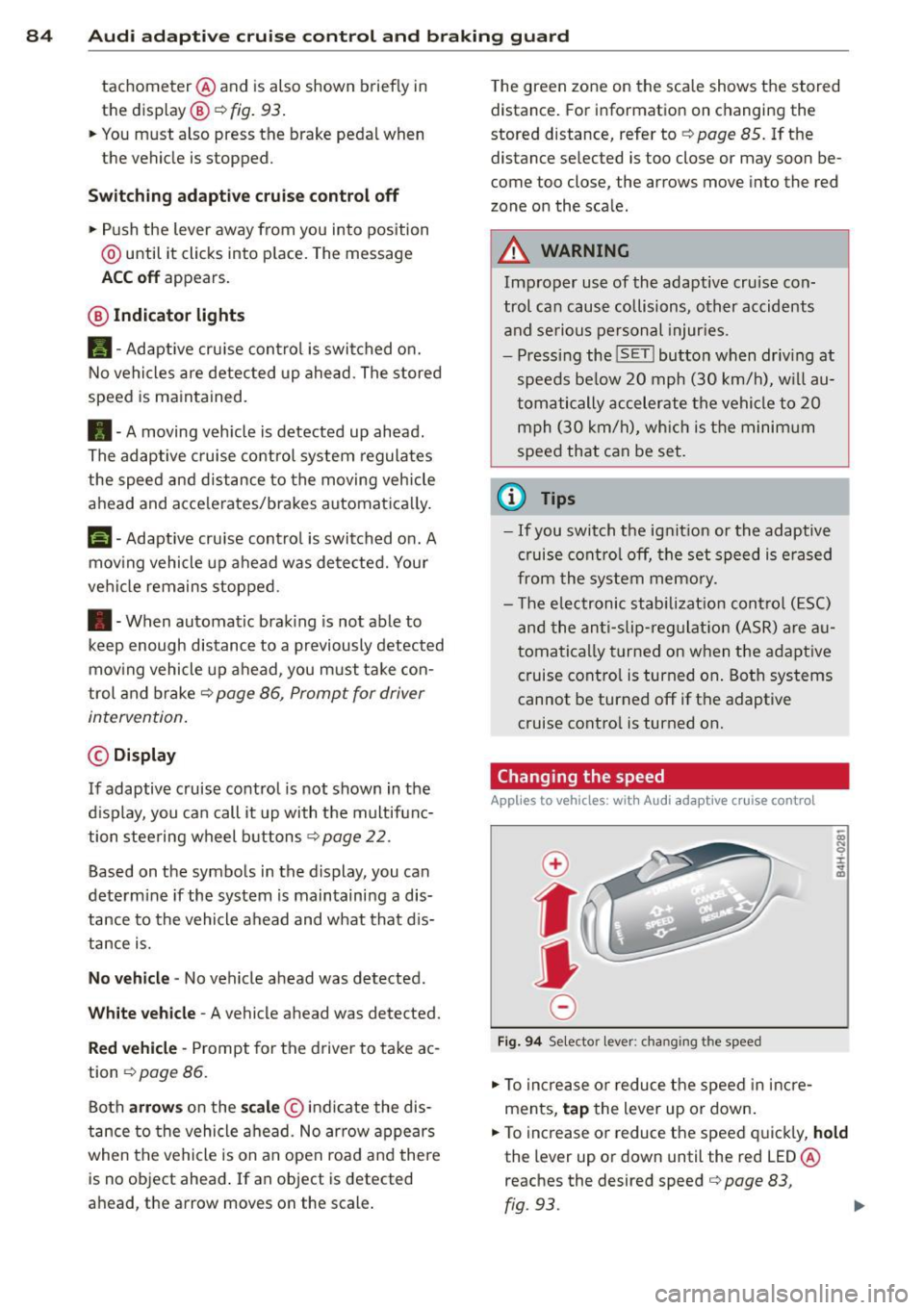
Fig. 94 Se lecto r lever: chang ing t he speed
• To increase or reduce the speed in incre
ments,
tap the lever up or down.
• To increase or reduce the speed quickly,
hold
the lever up or down until the red LED ®
reaches the desired speed
c:::> page 83,
rg . 93. ~
Page 87 of 302
"' N
a:: I.J "". rl I.O
"' rl
"' rl
Audi adaptive cruise control and braking guard 85
Following any changes, the new stored speed
will be displayed briefly in the display @
r::!) page 83, fig. 93.
Driving in stop-and-go traffic
Applies to vehicles: with Audi adaptive cruise co ntrol
The adaptive cruise control system also as
sists you in stop-and-go traffic. If a previous
detected vehicle ahead stops, your vehicle will brake to a stop, within the limits of the sys
tem.
.,. To resume driv ing with adaptive cruise con
trol, tap the accelerator pedal or
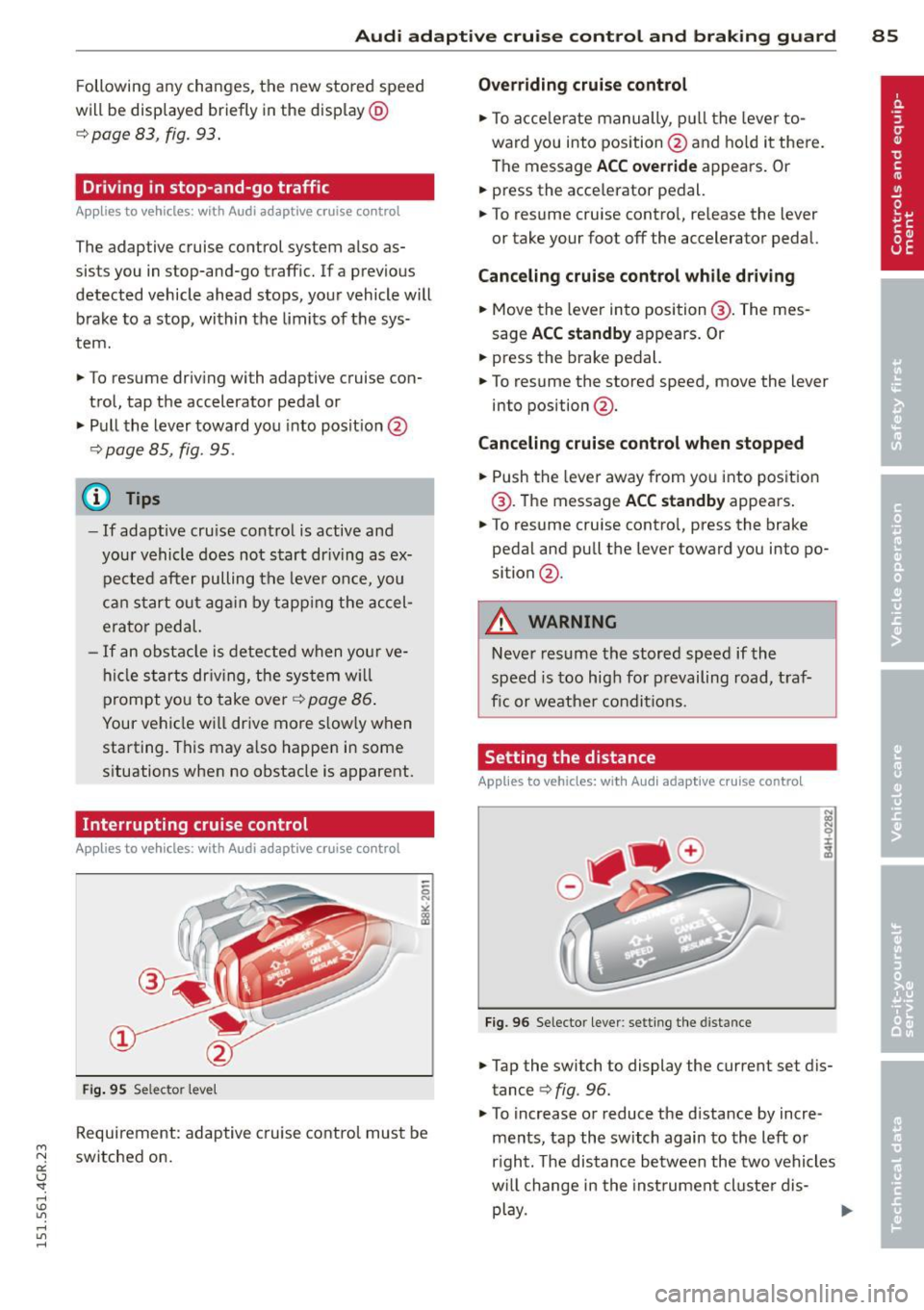
.,. Pull the lever toward you into posit ion @
¢page 85, fig. 95 .
@ Tips
-If adaptive cru ise control is active and
your vehicle does not start driving as ex
pected after pulling the lever once, you
can start out again by tapping the accel
erator pedal.
-If an obstacle is detected when your ve
hicle sta rts driving, the system will
prompt you to take over¢
page 86.
Your vehicle will drive more slow ly when
starting. This may also happen in some
situations when no obstacle is apparent.
Interrupting cruise control
App lies to vehicles: with Audi adaptive cruise control
Fig . 95 Se lector leve l
Requirement: adaptive cruise control must be
switched on.
Overriding cruise control
.,. To acce lerate manually, p ull the lever to
ward you into position@and hold it there.
The message
ACC override appears. Or
.. press the acce lerator pedal.
.,. To resume cruise control, re lease the lever
or take your foot off the accelerator pedal.
Canceling cruise control while driving
.,. Move the lever into position @. The mes
sage
ACC standby appears. Or
.,. press the brake pedal.
.,. To resume the stored speed, move the lever
into position @ .
Canceling cruise control when stopped
.,. Push the lever away from you into position
@ . The message
ACC standby appears .
.,. To resume cruise contro l, press the brake
pedal and pu ll the lever toward you into po
sition @.
A WARNING
-
Never resume the stored speed if the
speed is too high for prevailing road, traf
fic or weather conditions.
Setting the distance
Applies to vehicles: wit h Audi adapt ive cr uise contro l
Fig. 96 Selector lever: setting the distance
.,. Tap the switch to display the current set dis
tance ¢
fig. 96.
.,. To increase or reduce the distance by incre
ments, tap the switch again to the left or
r ight. The distance between the two vehicles
w ill change in the instrument cluster dis-
play. ..,.
Page 88 of 302
86 Audi adaptive cruise control and braking guard
When approaching a moving vehicle up ahead,
the adaptive cruise control system automati
cally brakes to match that object's speed and
then maintains the stored distance. If the ve
h icle ahead accelerates, adaptive cruise con
trol will also accelerate up to the stored
speed.
The higher the speed , the greater the distance
in yards (meters)
c::> & . The Distance 3 setting
is recommended .
The distances prov ided are spec ified values .
Depending on the driving situation and the
how the vehicle ahead is driving, the actual
d istance may be more or less than these tar
get distances.
The various symbols for the time increments
appear briefly in the information line @
c::> page 83, fig . 93 when you change the set
tings .
~-~- --Distance 1 : This setting corre
sponds to a distance of 92 feet/28 meters
when traveling at 62 mph (100 km/h), or a
time interval of 1 second.
~--~- -Distance 2: This setting corre
sponds to a distance of 118 feet/36 meters
when traveling at 62 mph (100 km/h), or a
time inte rval of 1.3 seconds .
~--- ~-Distance 3: This setting corre
sponds to a distance of 164 feet/SO meters
when traveling at 62 mph (100 km/h), or a
time interval of 1.8 seconds .
~---- ~ Distance 4: This setting corre
sponds to a distance of 210 feet/64 meters
when traveling at 62 mph (100 km/h), or a
time interval of 2.3 seconds .
A WARNING ,. -
Following other vehicles too closely in
creases the risk of collisions and serious
personal inj ury.
- Setting short distances to the traffic
ahead reduces the time and distance
available to bring your vehicle to a safe
stop and makes it even more necessary
to pay close attention to traffic. -
Always obey applicable traffic laws, use
good judgment, and select a safe follow ing d istance for the traff ic, road and
weather conditions.
@ Tips
- Distance 3 is set automatically each time
you switch the ignition on.
- Your standard settings are automatically
stored and assigned to the remote con
trol key being used.
Selecting the driving mode
Applies to veh icles: w ith Audi adaptive cruise co ntrol
.,. Select the desired driving mode in drive se
lect
c::> page 96 .
(D Tips
Your settings are automatically stored and
ass igned to the remote control key being
used.
Prompt for dr iver intervention
Applies to veh icles: w ith Audi adaptive cruise co ntro l
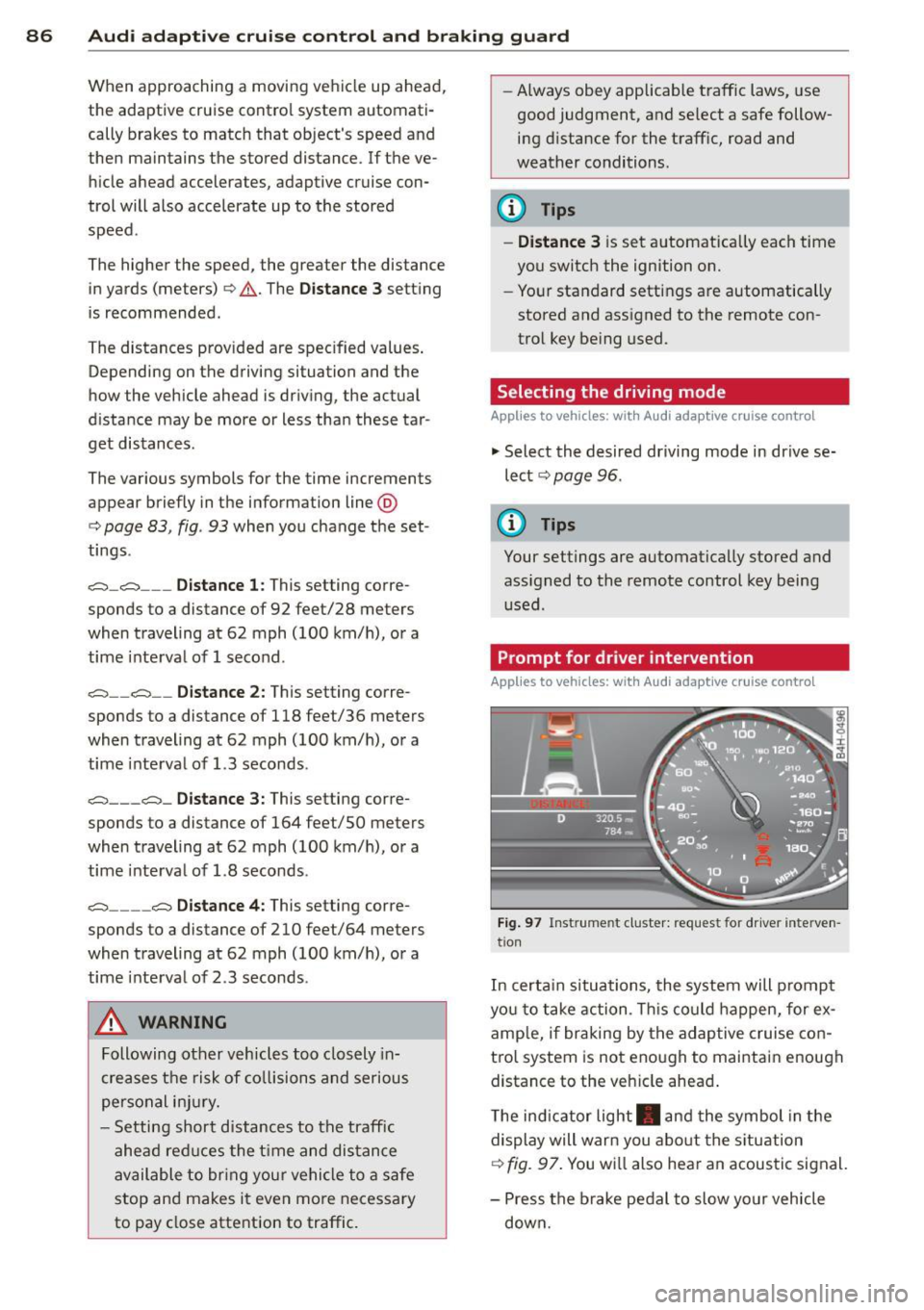
Fig. 97 Instrume nt cluster: req uest fo r drive r inte rven
t ion
In certain situations, the system will prompt
yo u to take action . This could happen, for ex
amp le, if braking by the adap tive cruise con
tro l system is not enough to maintain enough
distance to the veh icle ahead .
T he indicator light . and the symbol in the
display will war n you abo ut the situat ion
c::> fig. 97. You wi ll also hear an acoustic signal.
- Press the brake pedal to slow yo ur vehicle
down.
Page 89 of 302
Audi adaptive cruise control and braking guard 87
"' N
a:: I.J "". rl I.O
Audi braking guard
Description
Applies to vehicles: with Audi adaptive cruise control
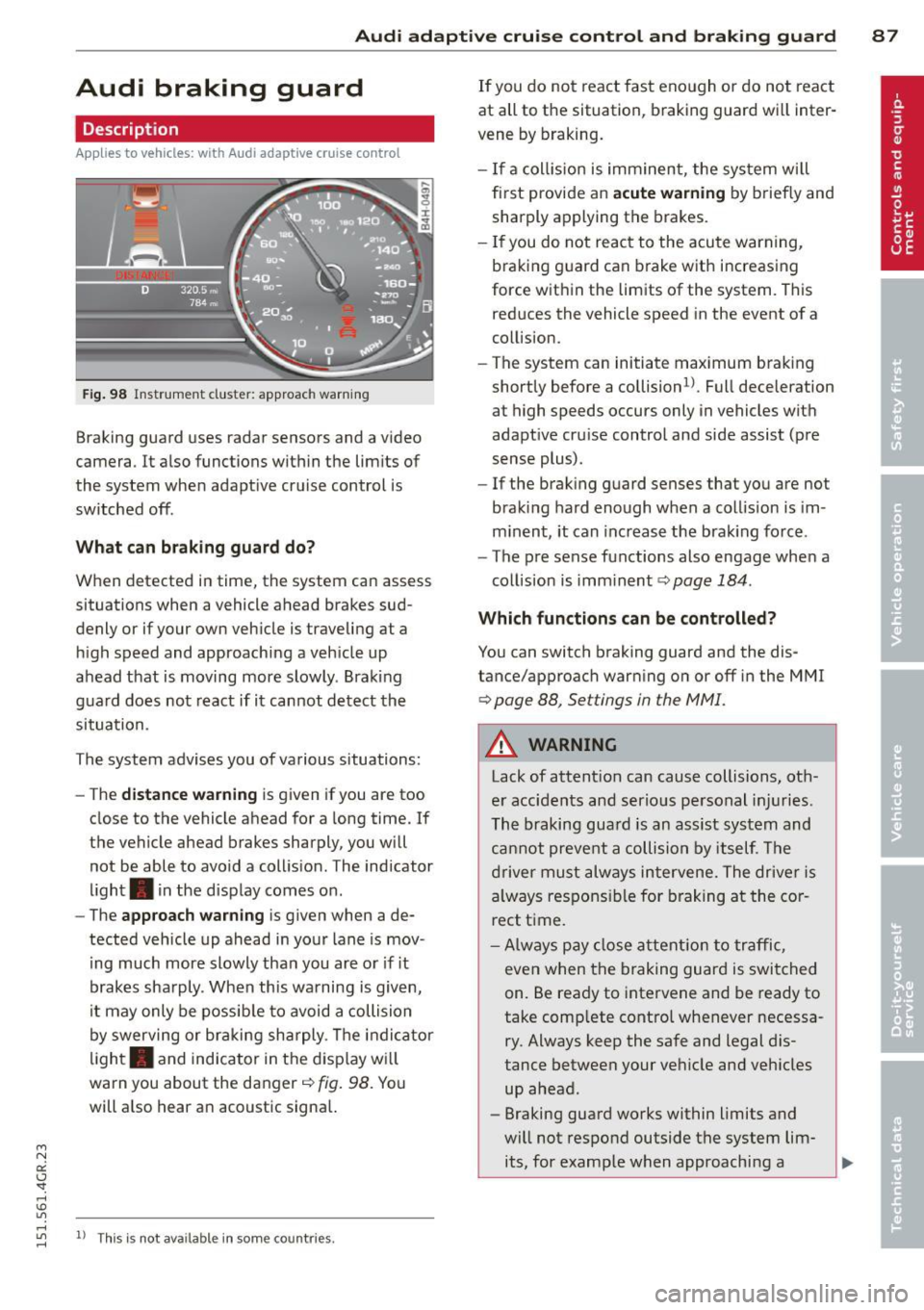
Fig. 98 Instrument cluster: approach warning
Braking guard uses radar sensors and a video
camera . It also functions within the limits of
the system when adaptive cruise control is
switched off .
What can braking guard do?
When detected in time, the system can assess
situations when a vehicle ahead brakes sud
denly or if your own vehicle is t raveling at a
high speed and approaching a vehicle up
ahead that is moving more slowly . Braking
guard does not react if it cannot detect the
situation.
The system advises you of various situations:
- The
distance warning is given if you are too
close to the vehicle ahead for a long time. If
the vehicle ahead brakes sharply, you will not be able to avoid a collision . The indicator
light. in the display comes on .
- The
approach warning is given when a de
tected vehicle up ahead in your lane is mov
i ng much more slowly than you are or if it
brakes sharply . When this warning is given,
it may only be possib le to avoid a collision
by swerving or braking sharply. The indicator
light. and indicator in the display will
warn you about the danger
c::> fig. 98. You
will also hear an acoustic signa l.
"' rl
"' 11
This is not ava ilable in som e coun tri es. rl
If you do not react fast enough or do not react
at all to the situation, braking guard will inter
vene by braking.
- If a col lision is imminent, the system will
first provide an
acute warning by brief ly and
sharply applying the brakes.
- If you do not react to the acute warning,
braking g uard can brake with increasing
force within the limits of the system . This
reduces the vehicle speed in the event of a
co llision.
- The system can initiate maximum braking
shortly before a collision
1 ) . Full deceleration
at high speeds occurs only in vehicles with
adaptive cru ise control and side assist (pre
sense plus) .
- If the braking guard senses that you are not
braking hard enough when a collision is im
minent, it can increase the brak ing force .
- The pre sense functions also engage when a
collision is imm inent
c::> page 184 .
Which function s can be controlled?
You can switch braking guard and the dis
tance/approach warning on or off in the MMI
c::> page 88, Settings in the MMI.
A WARNING
Lack of attention can cause collisions, oth
er accidents and serious personal injuries .
The braking guard is an assist system and
cannot prevent a collision by itself. The
driver must always intervene. The driver is
always responsible for braking at the cor
rect time.
- Always pay close attent ion to traffic,
even when the braking guard is switched
on. Be ready to intervene and be ready to
take comp lete control whenever necessa
ry . Always keep the safe and legal dis
tance between your vehicle and vehicles up ahead .
- Braking guard works within limits and
will not respond outside the system lim its, for example when approaching a
Page 90 of 302
88 Audi adaptive cruise control and braking guard
stopped vehicle or stationary obstacle (end of a traffic jam or vehicle that has
broken down in traffic).
- Always remember that the radar sensor
for the braking guard works only within
defined detection and range limits that
may prevent the proper detection of oth
er vehicles.
- The radar sensor's function and range
can be reduced by rain, snow and heavy
spray . Moving vehicles up ahead may not
be promptly detected or may not be de
tected at all.
- Reflective surfaces including crash barri
ers or tunnel entrances may impair the
function of the radar sensor.
({) Tips
-You can cancel the braking with increas
ing force that is initiated by the system
by braking yourself, by accelerating no
ticeably or by swerving.
- Braking guard error messages
¢page 88.
- Keep in mind that braking guard can
brake unexpectedly . Always secure any
cargo or objects that you are transport
ing to reduce the risk of damage or in
jury.
Settings in the MMI
Applies to vehicles: with Audi adaptive cruise co ntrol
.. Select : I CARI function button > (Car)* sys
tems
control button > Driver assist > Audi
braking guard.
System -
Switch braking guard On and Off.
When you switch the ignition on, the message
Audi braking guard off appears if the system
is switched off.
Early warning -The distance and approach
warnings in the display can be switched
On/
Off.
(D Tips
- Your settings are automatically stored
and assigned to the remote control key being used at the time the settings are
made.
- If you restrict or switch off the ESC, the
braking guard also switches itself off
¢page 189.
- Switch braking guard off when you are
loading the vehicle onto a vehicle carrier,
train, ship or other type of transporta
tion. This can prevent undesired warn
ings from the braking guard system.
Messages
Applies to vehicles: with Aud i adapt ive cru ise contro l
Braking guard: off
This driver message appears if the system is
turned off via the infotainment. Otherwise , if
the system is turned off, the information ap
pears every time shortly after the start of the
trip.
The driver message also appears if the system
is not available due to a malfunction or if the
ESC is not switched on¢
page 189. If this is
the case, the system will not provide warnings about a possible collision.
Braking guard: activated
This driver message appears if sharp brake
pressure was applied due to an acute warning.
ACC: Unavailable!
ACC and Audi braking guard: not available
The system cannot detect moving vehicles up
ahead correctly and is switched off. The sen
sors have been displaced or are not working
properly. The Audi pre sense functions may al
so be affected . Drive to your authorized Audi
dealer or authorized Audi service facility im
mediately to have the malfunction corrected.
ACC: currently unavailable. No sensor vision
ACC and braking guide: currently unavaila
ble. No sensor vision
This message appears if the sensor view is ob
structed, for example by leaves, snow, heavy
spray or dirt. Clean the sensors¢
page 81,
fig. 88. ll>-
Page 91 of 302
M N
0:: <.J 'SI: ,...., \!) ..,.,
,...., ..,., ,....,
Audi adaptive cruise control and braking guard 89
ACC: Currently unavailable. Gradient too
steep
The road ex ceed s the maxim um poss ible an
g le for p roper ad ap tive cruise contro l opera
tion. Adaptive c ruise control is sw itche d off .
ACC : Only available in D, Sor M
Select the D/S or M se lector lever position .
ACC: currently unavailable. Parking brake
applied
The adap tive cruise co ntrol system switches
off a utomat ica lly if t he pa rking bra ke is set.
ACC : Currently unavailable . Stability control
(ESC) input .
This message appea rs if the Electron ic Stabili
z at ion Cont ro l (E SC) is work ing to help stabi
l iz e the vehicle . In this case, ad aptive cruise
con tro l sw itches o ff autom atically.
ACC off : Manual control!
This message appea rs when adapt ive cr uise
c o ntro l cannot set t he par king bra ke. Press
the brak e pedal to preve nt the vehicle from
r olling .
•••
Three wh ite dots a ppear if a setting cannot be
se lected with t he se lecto r lever. Fo r example,
this happens if adapt ive cr uise control cannot
resume driv ing in stop-and -go traff ic because
one o f th e conditi ons required for ACC to wor k
i s not present.
Door open
The adap tive cruise co ntrol system c annot
sw itch on whe n a door is ope n.
Stationary object ahead
This m essage appea rs if you would like to
sw itch ada ptive cru ise con trol on and ther e is
a stat iona ry ve hicle o r ob stacle directly a head
of yo ur vehicle.
Page 105 of 302
"' N
a:: I.J "". rl I.O
"' rl
"' rl
Automatic Transmission
tiptronic
Introduction
The automatic transmission is controlled elec
tronically. The transmiss ion upsh ifts or down
shifts automatically depending on which drive
program is selected.
When a
moderate driving style is used, the
transmission selects the most econom ical
driving mode. It will then change up early and
delay the downshifts to give better fuel econ
omy.
The transmission switches to a sporty mode
after a kick-down or when the driver uses a
sporty driving style characterized by quick ac
celerator pedal movements, heavy accelera
tion, frequent changes in speed and traveling
at the maximum speed .
If desired, the driver can also select the gears
manually (tiptronic mode) ¢ page 107.
In the tiptronic transmission, power is trans
ferred by a torque converter .
Selector lever positions
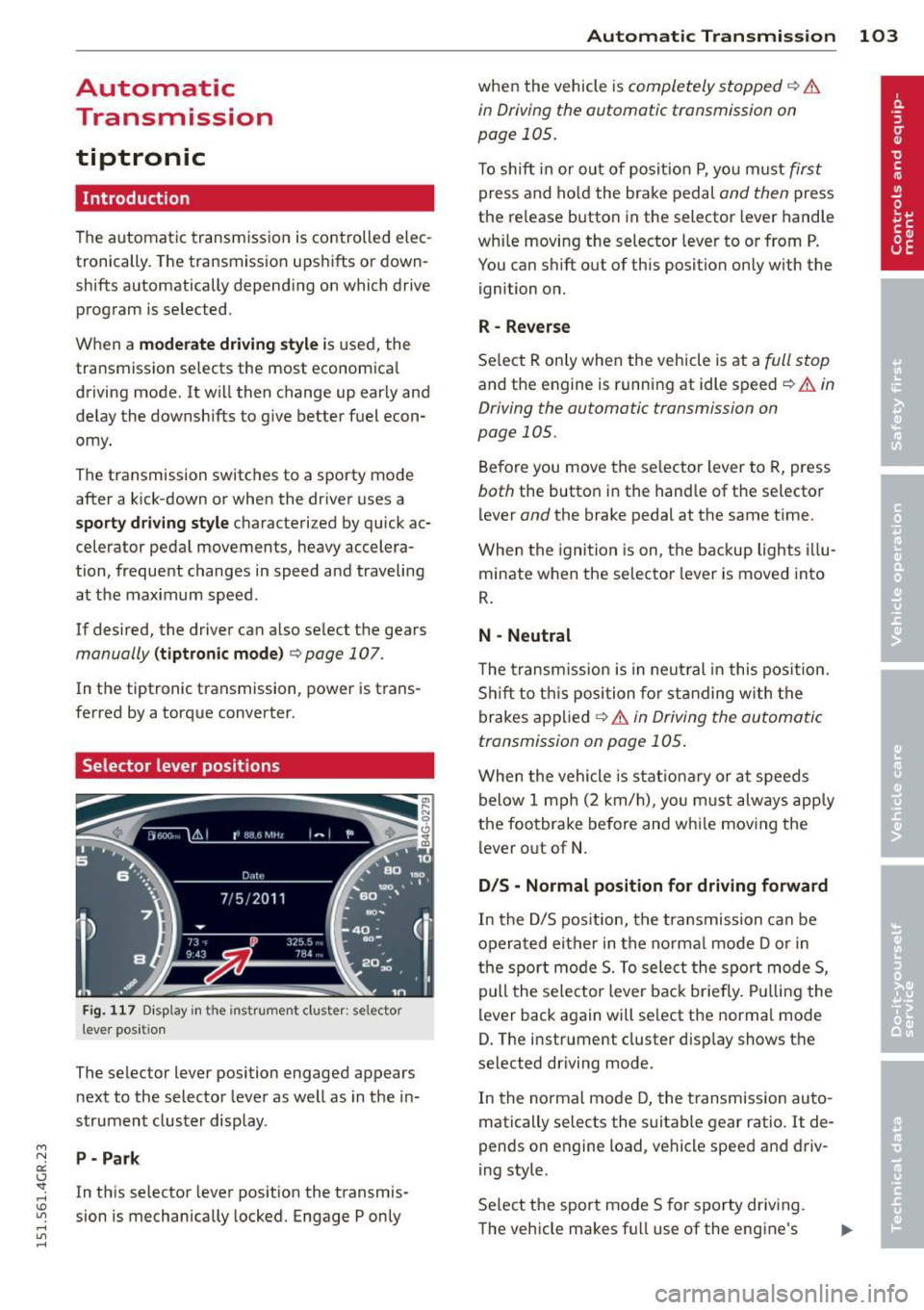
Fig. 117 Disp lay in the instrument cluster: selector
lever posit ion
The selector lever position engaged appears
next to the selector lever as well as in the in
strument cluster display.
P - Park
In this selector lever position the transmis
sion is mechanically locked. Engage P only
Automatic Transmission 103
when the vehicle is completely stopped ¢ &
in Driving the automatic transmission on
page 105.
To shift in or out of position P, you must first
press and hold the brake pedal and then press
the re lease button in the selector lever handle
whi le moving the selector lever to or from P.
You can shift out of this position only with the
ignition on.
R- Reverse
Select R on ly when the vehicle is at a full stop
and the engine is running at idle speed¢.&. in
Driving the automatic transmission on
page 105.
Before you move the selector lever to R, press
both the button in the hand le of the selector
lever
and the brake pedal at the same time .
When the ignition is on, the backup lights illu
minate when the selector lever is moved into
R.
N -Neutral
The transmission is in neutral in this position.
Shift to this position for standing w ith the
brakes applied ¢
& in Driving the automatic
transmission on page 105 .
When the vehicle is stationary or at speeds
below 1 mph (2 km/h), you must always apply
the footbrake before and whi le mov ing the
lever out of
N.
D/S -Normal position for driving forward
In the D/S position, the transmission can be
operated either in the norma l mode D or in
the sport mode S. To select the sport mode S,
pull the selector lever back briefly. Pulling the
lever back again will se lect the norma l mode
D. The instrument cluster display shows the
selected driving mode.
In the normal mode D, the transmission auto
matically selects the suitable gear ratio. It de
pends on engine load, vehicle speed and driv
ing style.
Select the sport mode S for sporty driv ing.
The vehicle makes full use of the engine's
Page 106 of 302
104 Autom atic Tran smi ssi on
power. Shifting may become noticeable when
accelerating .
When the veh icle is stationary or at speeds
be low 1 mph (2 km/h), you must always apply
the foot brake before and while moving the lever to D/S out of N .
.&_ WARNING
Read and follow all WARNINGS <=:> & in
Driving the automatic transmission on
page 105.
([) Note
Coasting downhi ll with the transmission in
N and the engine not running wi ll result in
damage to the automatic transmission
and possibly the catalytic converter.
(D Tips
- Audi drive select: you can adjust the
sporty shift characteristics in the
D y
namic driving mode.Swill appear in the
i nstrument cluster display instead of D .
- If you accidentally select N while driving,
take your foot off the acce lerator pedal
i mmediately and wait for the engine to
slow down to idle before selecting D/S.
- If there is a power failure, the selector
lever will not move out of the P position.
The emergency release can be used if
this happens
<=:> page 108.
Automatic Shift Lock {ASL)
The Automatic Shift Lock safeguards you
against accidentally shifting into a forward or the reverse gear and causing the vehicle to
move unintentionally.
. I r )
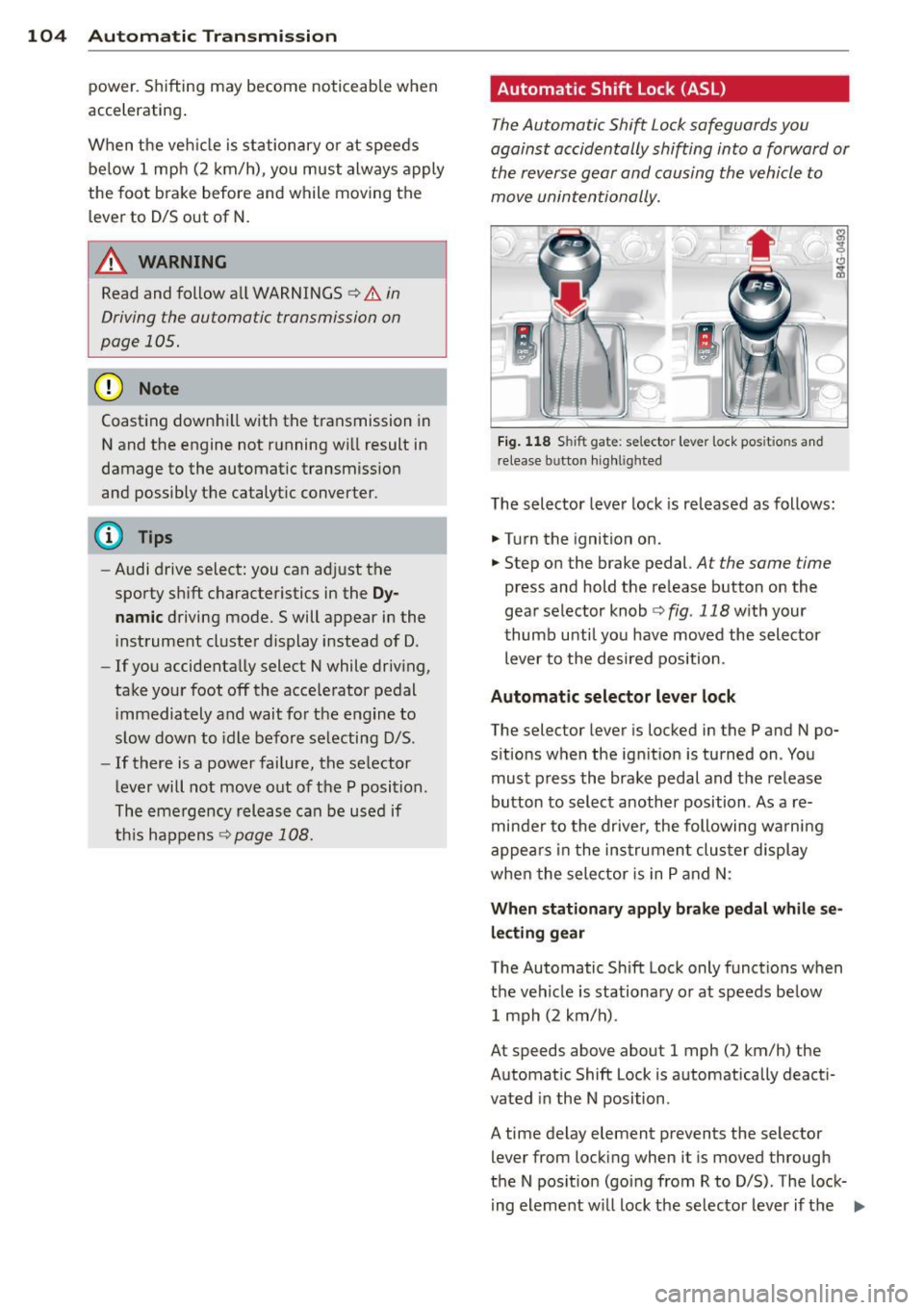
Fig . 118 Shift gate: selecto r lever lock pos it ions and
r elease button highl ig h ted
The selector lever lock is released as follows:
... Turn the ignition on .
.,. Step on the brake pedal.
At the same time
press and hold the release button on the
gear selector knob <=:>
fig. 118 w ith your
thumb until you have moved the selector
lever to the desired position .
Automatic selector le ve r lock
The selector lever is locked in the P and N po
sitions when the ign ition is turned on . You
must press the brake pedal and the release
button to select another position . As a re
minder to the driver, the following wa rning
appea rs in the instrumen t clus ter display
when the selector is in P and N:
Wh en stationar y appl y brak e peda l w hile se
le ct in g gear
The Automatic Shift Lock only funct ions when
the veh icle is stationary or at speeds below
1 mph (2 km/h) .
At speeds above about 1 mph (2 km/h) the
Automat ic Shift Lock is automatically deacti
vated in the N position .
A time delay element prevents the selector lever from locking when it is moved through
the N pos it ion (going from R to D/S) . The lock
ing element w ill lock the selector lever if the
Ill>
Page 107 of 302
"' N
a:: I.J "". rl I.O
"' rl
"' rl
lever is left in N (Neutral) for more than ap
proximately 2 second, without the brake ped
al being pressed .
Release button
The release button on the selector lever pre
vents the leve r from being accidentally shifted
into certa in positions. Depending on the direc
tion of the shift, the se lector lever locks at d if
ferent positions. The positions are highlighted in the illustration
c!> fig . 118.
Driving the automatic transmission
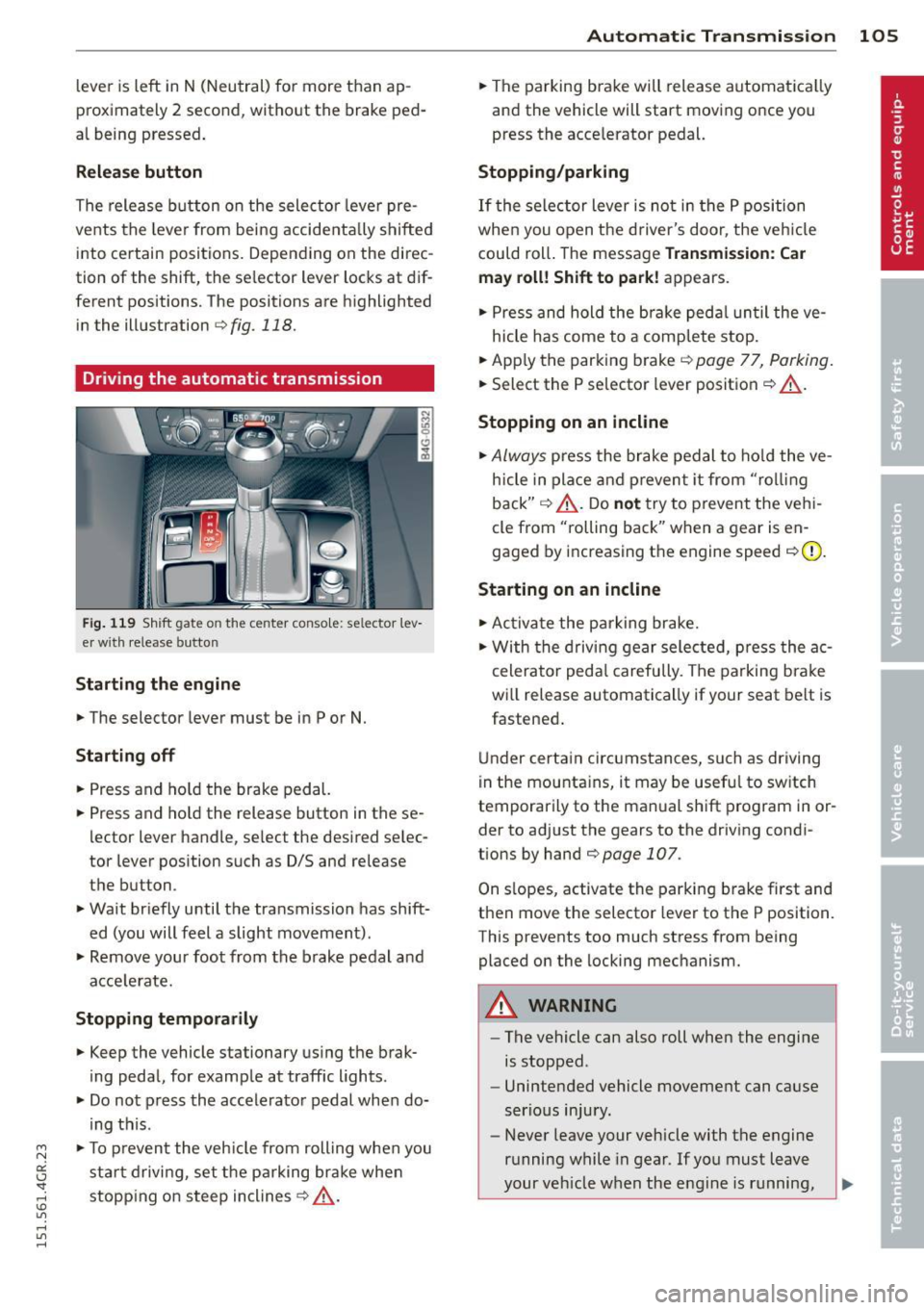
Fig. 119 Shift gate on the c ente r conso le: se lector le v
er with release button
Starting the engine
.,. The selector lever must be in P or N.
Starting off
.,. Press and hold the brake pedal.
.,. Press and hold the release button in these
l ector lever handle, se lect the desired se lec
tor lever position such as 0/5 and release
the button .
.,. Wait briefly until the transmission has shift
ed (you will feel a slight movement).
.,. Remove your foot from the brake pedal and
acce lerate.
Stopping temporarily
.,. Keep the vehicle stationary using the brak
ing pedal, for example at traffic lights .
.,. Do not press the accelerator pedal when do
ing this .
.,. To prevent the vehicle from rolling when you
start driving, set the parking brake when
stopping on steep inclines
c!> .&,.
Automatic Transmission 105
.,. The parking brake will release automatica lly
and the vehicle will start moving once you
press the acce lerator pedal.
Stopping/parking
If the selector lever is not in the P position
when you open the driver's door, the vehicle
could roll . The message
Transmission: Car
may roll! Shift to park!
appears .
.,. Press and hold the brake pedal un til the ve-
hicle has come to a complete stop .
.,. App ly the parking b rake
c::> page 77, Parking.
.,. Select the P selector lever position c::> .&,.
Stopping on an incline
.,. Always
press the brake pedal to hold the ve
hicle in place and prevent it from "rol ling
back"
c::> .&, . Do not try to prevent the vehi
cle from "rolling back" when a gear is en
gaged by increasing the engine speed
c::>(D.
Starting on an incline
.,. Activate the parking brake.
.,. With the driving gear selected, press the ac
celerator pedal carefully. The parking brake
wi ll release automatically if your seat belt is
fast ened .
Under certain circumstances, such as driving
in the mountains, it may be useful to switch
temporarily to the manual shift program in or
der to adjust the gears to the driving condi
tions by hand
c::>page 107.
On slopes, activate the parking brake first and
then move the selector lever to the P position.
This prevents too much stress from being placed on the locking mechanism.
A WARNING
-
- The vehicle can also roll when the engine
is stopped .
- Unintended vehicle movement can cause
serious injury.
- Never leave your vehicle with the engine
running while in gear . If you must leave
your veh icle when the engine is running,