center AUDI S3 SEDAN 2015 Owner's Guide
[x] Cancel search | Manufacturer: AUDI, Model Year: 2015, Model line: S3 SEDAN, Model: AUDI S3 SEDAN 2015Pages: 282, PDF Size: 71.14 MB
Page 162 of 282
Airb ag syst em
Monitoring the
Advanced Airbag System
:A Airbag monitoring indicator light
Two separate indicators monitor the function of
the Advanced Airbag System: the airbag moni
toring indicator light and the
PASSEN GER AIR
BAG OF F
light.
The Advanced Airbag System as we ll as the side
airbags and side curtain airbags with ejection
mitigation features (including the electronic con
trol unit, sensors and system wiring) are all
monitored continuously to make sure that they
are functioning properly whenever the ignition is
on . Every time you turn on the ignition, the air
bag system indicator light
fl will come on for a
few seconds (function check) .
The sy stem mu st be inspe cted when t he
indicato r lig ht
II:
- does not come on when the ignition is switched
on,
- does not go out a few seconds after you have
switched on the ignition, or
- comes on while driving.
If an airbag system ma lf u nction is detected, the
indicator light will first start flashing to catch the
driver's attention and then stay on continuously
to serve as a constant reminder to have the sys
tem inspected immediately .
If a malfunction occurs that turns the front air
bag on the passenger side off, the
PA SSE NGE R
A IR BAG OFF
light will come on and stay on
whenever the ignition is on.
.,&. WARNING
An airbag system that is not funct ion ing prop
erly cannot p rovide supplemental protect ion
in a frontal crash.
- If the airbag indicato r light
c::> page 20
comes when the vehicle is be ing used, have
the system inspected immediate ly by yo ur
authorized Aud i dealer .
It is possible t hat
the a irbag will inflate when it is not s up
posed to, or wi ll not inf late when it should.
160
PASSENGER AIR BAG OFF l ight
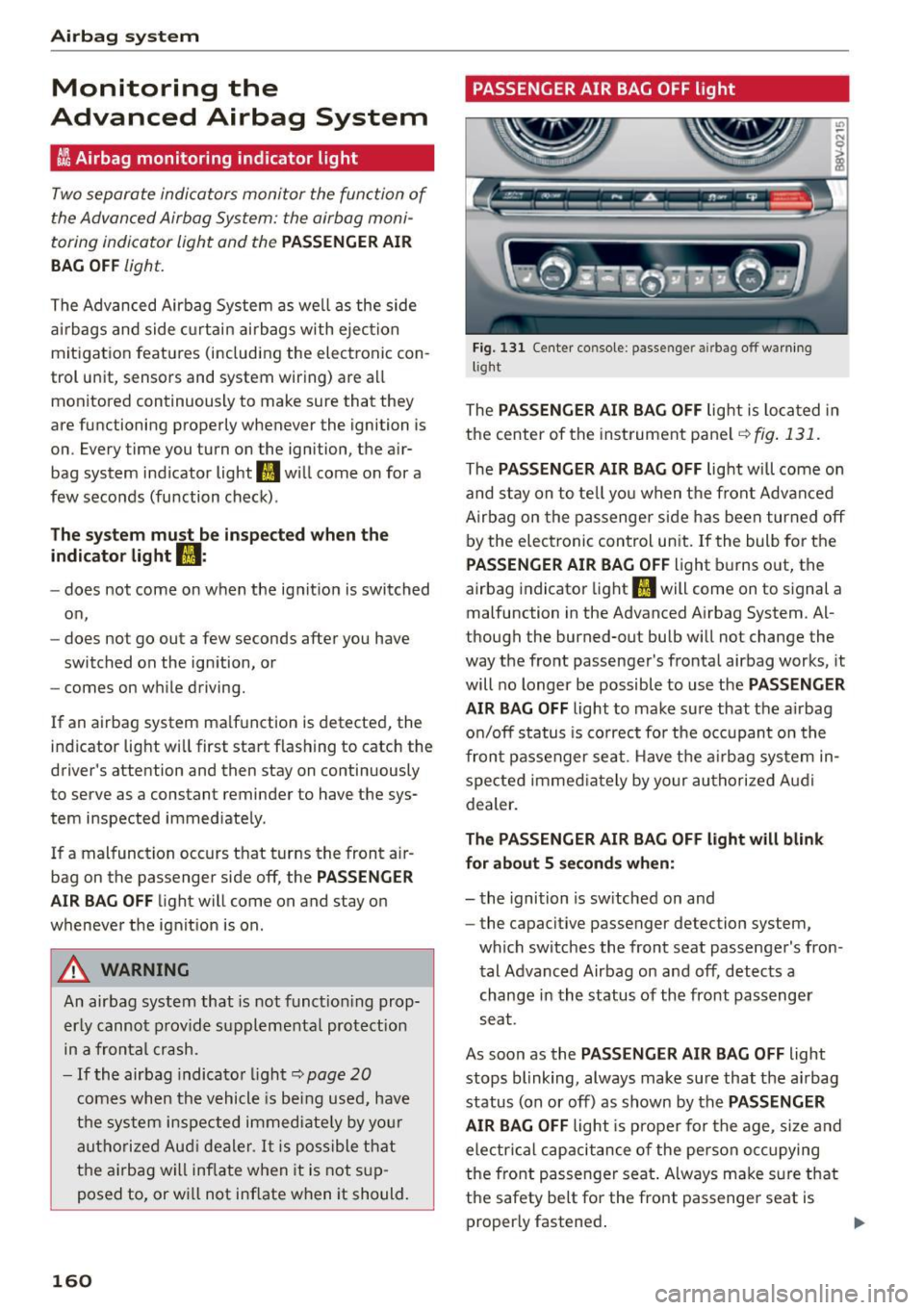
Fig. 131 Center console: passe nge r air bag off warning
light
The PASSENGER AIR BAG OFF light is located in
the center of the instrument panel
r:!;> fig. 131.
The PAS SENGER AIR BAG OFF light will come on
and stay on to te ll you when the front Advan ced
Airbag on the passenger side has been turned off by the electronic control unit. If the bulb fo r the
PASSENGER AIR BAG OFF light b urns o ut, the
airbag indicator light
rl will come on to s ignal a
malfunction in the Advanced A irbag System. Al
though the burned-out bulb will not change the
way the front passenger's frontal airbag works, it
will no longer be possible to use the
PASSENGER
A IR BAG OFF
light to make sure that the a irbag
on/off status is correct fo r the occupant on the
front passenger seat . Have the a irbag system in
spected immed iately by your au thorized A ud i
dealer.
Th e P ASSENGER AIR BAG OFF light will blink
for about 5 se cond s when :
- the ignition is sw itched on and
- the capacitive passenger detection system,
which switches the front seat passenger's fron
tal Advanced Airbag on and off, detects a
change in the status of the front passenger
seat.
As soon as the
PASS ENG ER AIR BAG O FF light
stops blinking, always make sure that the a irbag
status (on or off) as shown by the
PASSENGER
AIR BAG OFF
light is proper for the age, size and
electrical capacitance of the person occupying
the front passenger seat . Always make sure that
the safety be lt for the front passenger seat is
proper ly fastened . .,..
Page 164 of 282

Airbag syste m
-take the chi ld restraint off the front passenger
seat and install it properly at one of the rear seat positions. Have the airbag system inspect
ed by your Audi dealer immediately .
- move the child to a rear seat position and make
sure that the chi ld is properly restrained in a
child restra int that is appropriate for its si ze
and age .
The PA SSENGER AIR B AG light sh ould NOT
c ome on ...
The PASS ENGER AIR B AG OFF light should NOT
come on when the ignition is on and an adult is
sitting in a proper seating position on the front
passenger seat . If the
PAS SENGER AIR B AG OFF
light comes on and stays on or flashes fo r about
5 seconds while driving, under these circumstan
ces, make sure that:
- the adult on the front passenger seat is proper
ly seated on the center of the seat cushion with
his or her back up aga inst the ba ckrest and the
backrest is not reclined,
- the adult is not taking weight off the seat by
holding on to the passenger assist handle
above the front passenger door or suppo rting
their weight on the armrest,
- the safety belt is bei ng p roperly wor n and that
there is not a lot of s lack in the safety be lt web
bing,
- the re are no aftermarket seat covers or cush
ions or other things (such as blankets) on the
front passenger seat that might cause the ca pacitive passenger detection system to miscal
cu late electrical capacitance.
Important safety instructions on
monitoring the Advanced Airbag System
.&_ WARNING
- If the status of the Adv a need Airbag System
has changed while the vehicle is moving, the
PA SS ENGE R AI R BA G OFF light blinks for
about 5 seconds to catch the driver's atten
t ion. If this happens, always stop as soon as
it is safe to do so and check the steps descri
bed above .
162
-If the PA SSENGER AIR BAG OFF light does
not go off when an adult who is not very
small is sitting on the front passenger seat
after tak ing the steps described above,
make sure the adult is properly seated and
restrained at one of the rear seating posi
tions. Have the airbag system inspected by
your author ized Audi dealer befo re trans
port ing anyone on the front passenger seat.
.&_ WARNING
-
An airbag system that is not functioning prop
erly cannot provide supplemental protection
in a frontal crash .
- If the airbag indicator light~
page 20
comes when the vehicle is being used, have
the system inspected immediately by your
authorized Audi dealer. It is possible that
the airbag will inflate when it is not sup
posed to, or will not inflate when it should .
.&_ WARNING
If the front airbag inflates, a child without a
child restraint, or in a rearward -facing child
safety seat, or in a forward-fac ing ch ild re
straint that has not been proper ly installed
will be ser iously injured and can be killed.
- Even though your vehicle is equipped with
an Advanced A irbag System, make ce rtain
that a ll children, especially 12 years and
younger, a lways ride on the back seat prop
erly restrained for their age and size.
- Always install forward o r rear-facing child
seats on the rear seat -even with an Ad
vanced Airbag System.
- If you must install a rearwa rd-facing child
seat on the front passenger seat because of
exceptiona l circumstances and the
PASSEN·
G ER AIR BAG OF F
light does not appear and
stay on, immediately install the rear-facing
child seat in a rear seating position and have
the airbag system inspected by your Audi
dealer .
- If, in exceptional c ircumstances, you must
install a forward-facing child restraint on
the front passenger seat, always move the
Page 174 of 282
Child safety
Child safety
Important information
Introduction
The rear seat is generally the safest place in a
collision .
The physical principles of what happens when
your vehicle is in a crash apply also to children
¢ page 141, What happens to occupants not
wearing safety belts? .
But unlike adults and
teenagers, the ir muscles and bones are not fully
developed. In many respects children are at
g reater risk of serious injury in crashes than
adults.
Because children's bod ies are not fully deve loped,
they requ ire restra int systems especially de
signed for their size, weight, and body structure.
Many countr ies and all states of the United
States and provinces of Canada have laws requir
ing the use of approved c hild restraint systems
for infants and small children.
I n a fronta l crash at a speed of 20-35 mph
(30 -56 km/h) the forces acting on a 13 -pound
(6 kg) infant wi ll be more than 20 times the
weight of the child. This means the weight of the child would suddenly be more than 260 pounds
(120 kg). Under these conditions, only an appro
priate child restra int properly used can reduce
the r isk of serious injury . Ch ild restraints, like
adu lt safety be lts, must be used properly to be
effective. Used improperly, they can inc rease the
risk of serious injury in an accident.
Consult the child safety seat manufacturer's in
structions in order to be sure the seat is r ight for
your child's size¢
page 175, Important safety
instructions for using child safety seats .
Please
be sure to read and heed all of the important in
formation and WARNINGS about ch ild safety, Ad
vanced Airbags, and the installation of child re
straints in this chapter.
There is a lot you need to know about the Ad
vanced Airbags in your vehicle and how they work
when infants and children in child restraints are
on the front passenger seat. Because of the large
amount of important information, we cannot re-
172
peat it all here. We urge you to read the detailed
information in this owner's manua l about airbags
and the Advanced Airbag System in your vehicle and the very important information about trans
porting children on the front passenger seat.
Please be sure to heed the WARNINGS -they are
extremely important for your safety and the safe
ty of your passengers, especially infants and
small chi ld ren.
.&_ WARNING
- Accident statistics have shown that children
are generally safer in the rear seat area than
in the front seating position. Always restrain
any child age 12 and under in the rear.
- All vehicle occupants and especially children
m ust be restrained properly whenever riding
in a vehicle. An unrestrained or improperly restrained ch ild could be injured by striking
the inter ior or by be ing ejected from the ve
hicle dur ing a sudden maneuver or impact .
An unrestra ined or improperly restrained
child is a lso at greater risk of injury or death
through contact with an inflating airbag.
- A suitable ch ild restraint properly installed
and used at one of the rear seating posit ions
provides the highest degree of pro tect ion
for infants and small children in most acci
dent sit uations.
.&_ WARNING
Children on the front seat of any car even with
Advanced Airbags can be seriously injured or
even killed when an airbag inflates. A child in
a rearward-facing child safety seat installed
on the front passenger seat will be serious ly
injured and can be killed if the front airbag in
flates.
- The inflating airbag will h it the ch ild safety
seat or infant carr ier with great force and
w ill smash the child safety seat and child
aga inst the backrest, center armrest, or
door.
- Always install rear-fac ing ch ild safety seats
on the rear seat.
- If you must install a rearward fac ing ch ild
safety seat on the front passenger seat in
Page 178 of 282
Child safet y
"'When using the vehicle safety be lt to insta ll a
child safety seat, you must first activate the
convertible locking retractor on the safety belt
to prevent the ch ild safety seat from moving
¢ page 182.
"' Push the child safety seat down with your full
weight to get the safety belt really tight so that
the seat cannot move forward or sideways more
than one inch (2.5 cm).
"' Secu re unused safety belts on the rear seat
¢ page 177 .
Always remember: Even thoug h your veh icle is
eq uipped w ith an Advanced Ai rbag system, all
chi ldren, espec ia lly those 12 years and yo unger,
should always ride in the back seat properly re
strained for their age and s ize.
A WARNING
Not using a chi ld safety seat, using the wrong
child safety seat or improperly insta lling a
child restraint increases the r isk of serious
personal injury and death .
- All veh icle occupants and especially children
must be restra ined properly whenever riding
in a vehicle. An unrestrained or improperly
restrained child could be injured by striking
the interior or by being ejected from the ve
hicle du ring a sudden maneuver or impact.
An unrestrained or improperly restrained
child is also at greater risk of injury or death
thro ugh contact with an inflat ing airbag .
- Commercially avai lab le child safety seats
are required to comply with U.S . Fede ral Mo
tor Vehicle Safety Standard ( FMVSS) 213 (in
Canada CMVSS 213).
- When buying a ch ild restraint, select one
that fits your child and the vehicle.
- On ly use child restra int systems that fully
contact the flat port ion of the seat cush
ion. The ch ild restra int must not tip o r
lean to either s ide. Audi does no t recom
mend using child safety seats that res t on
legs o r tube -like frames. They do not pro
vide adequate contact with the seat.
- Always heed all legal requirements pe r
taining to the installation and use of ch ild
safety seats and carefully follow the in-
176
str uctions provided by the manufacturer
of the seat you are using.
- Never allow children under 57 inches
(1.45 meters) to wear a norma l safety belt.
They must always be restrained by a proper
child restraint system. Otherwise, they
could sustain injuries to the abdomen and
neck areas during sudden braking maneu
vers or accidents.
- Never let more than one child occupy a child safety seat.
- Never let babies or o lder children ride in a
veh icle wh ile sitting on the lap of another
passenger .
- Holding a child in your arms is never a sub
stitute for a child restraint system.
- The strongest pe rson could not hold the
child with the forces that exist in an acci
dent. The child will strike the interior of
the veh icle and can also be struck by the
passenger.
- The child and the passenger can also in jure each other in an accident .
- Never install rear-facing child safety seats or
infant carriers on the front passenger seat.
A child will be serious ly injured and can be
killed when the passenger airbag inflates -
even with an Advanced Airbag System .
- The inflating airbag will h it the ch ild safety
seat or infant carr ier with great force and
will smash the child safety seat and child
aga inst the backrest, center armrest, door
or roof.
- Always install rear-facing ch ild safety seats
or infant car riers on the rear sea t.
- Forwa rd-facing child safety seats instal led
on the front passenger's seat can inte rfe re
wit h the airbag when it inflates and cause
serious injury to the child. A lways install fo r
ward-facing child sa fety seats on the rear
seat.
- If except ional circumstances req uire the use
of a fo rward-facing child restraint on the
front passenger's seat, the child's safety
and well-be ing require that the following
special precautions be taken : ..,.
Page 180 of 282
Child safety
_& WARNING
A child in a child safety seat installed with the LATCH lower anchorages or with the standard
safety belt or a child in a booster seat on the
rear seat cou ld play with unused rear seat
safety belts and become entangled. This
could cause the child serious personal injury
and even death.
- Always secure unused rear seat safety belts
out of reach of children in child seats such
as by properly routing them around the
head restraint of the seat where the child re
straint is installed.
- Never activate the convertible locking re tractor when routing the safety belts around
the head restraints.
- Never let anyone sit at the center rear seat
ing position if the center rear safety belt has
been routed around a rear head restraint.
Child seats
Infant seats
Babies and infants up to about one year old and
20 lbs. or 9 kg need special rearward-facing
child restraints that support the back, neck and
head in a crash.
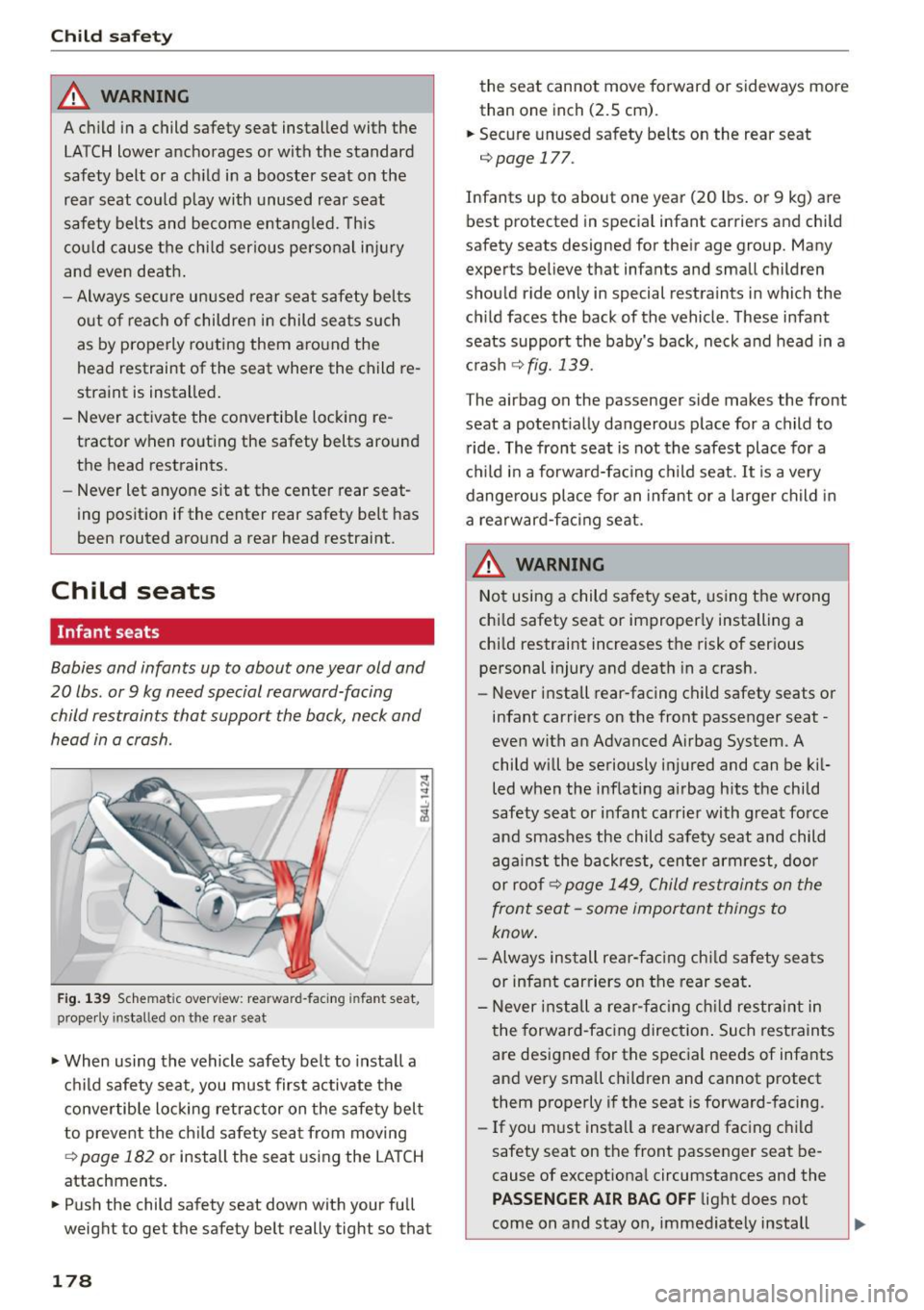
Fig. 139 Schematic overview: rearward-facing infant seat,
properly installed on the rear seat
.. When using the vehicle safety be lt to install a
child safety seat, you must first activate the
convertible locking retractor on the safety belt
to prevent the child safety seat from moving
c::> page 182 or install the seat using the LATCH
attachments.
.. Push the child safety seat down with your full
weight to get the safety belt really tight so that
178
the seat cannot move forward or sideways more
than one inch (2.5 cm).
.. Secure unused safety belts on the rear seat
c::>page 177.
Infants up to about one year (20 lbs. or 9 kg) are
best protected in special infant carriers and child
safety seats designed for their age group. Many
experts believe that infants and small children
should ride only in special restraints in which the
ch ild faces the back of the vehicle. These infant
seats support the baby's back, neck and head in a
crash
c::> fig. 139.
The airbag on the passenger side makes the front
seat a potent ially dangerous place for a child to
ride . The front seat is not the safest place for a
child in a forward-facing ch ild seat.
It is a very
dangerous place for an infant or a Larger child in
a rearward-facing seat.
_& WARNING
Not using a child safety seat, using the wrong
child safety seat or improperly installing a
child restraint increases the risk of serious personal injury and death in a crash.
- Never install rear-facing child safety seats or
infant carriers on the front passenger seat -
even with an Advanced Airbag System. A
child will be seriously injured and can be kil led when the inflating airbag hits the child
safety seat or infant carrier with great force
and smashes the child safety seat and child
against the backrest, center armrest, door
or roof
c::> page 149, Child restraints on the
front seat -some important things to
know .
-Always install rear-facing chi ld safety seats
or infant carriers on the rear seat.
- Never install a rear-fac ing ch ild restraint in
the forward-facing direction. Such restraints
are designed for the special needs of infants
and very small children and cannot protect
them properly if the seat is forward-facing.
- If you must install a rearward facing child
safety seat on the front passenger seat be
cause of exceptional circumstances and the
PASSENGER AIR BAG OFF light does not
come on and stay on, immediately install
~
Page 182 of 282
Child safety
personal injury and death in a collision or oth
er emergency situation.
- Children on the front seat of any car, even
with Advanced Airbags, can be seriously in
jured or even killed when an airbag inflates.
A child in a rearward-facing child safety seat
installed on the front passenger seat will be
seriously injured and can be killed if the
front airbag inflates -even with an Ad
vanced Airbag System.
- The inflating airbag will hit the child safety
seat or infant carrier with great force and
will smash the child safety seat and child
against the backrest, center arm rest, door
or roof.
- Always install rear-facing child safety seats
on the rear seat.
- If you must install a rearward facing child
safety seat on the front passenger seat be cause of exceptional circumstances and the
PASSENGER AIR BAG OFF light does not
come on and stay on, immediately install
the rear-facing child safety seat in a rear
seating position and have the airbag system inspected by your Audi dealer .
- The rear side of the child safety seat should
be positioned as close as possible to the
backrest on the vehicle seat .
- For adjustable head restraints: adjust or re
move the rear seat head restraint if it is dif
ficult to install the child seat with the head
restraint in place
Q page 56 . Install the
head restraint again immediately once the
child seat is removed. Driving without head
restraints or with head restraints that are
not properly adjusted increases the risk of
serious or fatal neck injury dramatically.
- Always read and heed all WARNINGS when
ever using a child restrained in a vehicle is
being used
Q page 140, Safety belts,
Q page 148, Airbag system and
Q page 172, Important information.
A WARNING
If exceptional circumstances require the use
of a forward-facing child restraint on the front
passenger's seat, the child's safety and well-
180
being require that the following special pre
cautions be taken :
- Make sure the forward-facing seat has been
designed and certified by its manufacturer
for use on a front seat with a passenger
front and side airbag .
- Always follow the manufacturer's instruc
tions provided with the child safety seat or infant carrier .
- Always move the front passenger seat into
the rearmost position of the passenger
seat's fore and aft adjustment range, and as
far away from the airbag as possible before installing the child restraint .
- Always make sure that nothing prevents the
front passenger's seat from being moved to
the rearmost position in its fore and aft ad
justment range.
- Always make sure the backrest is in an up
right position .
- Never place or use any electrical device
(such as a laptop, CD player, electronic
games device , power inverter or seat heater
for child seats) on the front passenger seat
if the device is connected to the 12-volt
socket or the cigarette lighter socket.
- If a seat heater has been retrofitted or oth
erwise added to the front passenger seat, never install any child restraint system on
this seat.
- Make sure that there are no wet objects
(such as a wet towel) and no water or other
liquids on the front passenger seat cushion.
- Never place objects on the seat (such as a
laptop, CD player, electronic games device,
power inverter or seat heater for child
seats). These may influence the electrical
capacitance measured by the capacitive pas
senger detection system and can also fly
around in an accident and cause serious per
sonal injury.
- Make sure that the
PASSENGER AIR BAG
OFF
light comes on and stays on all the time
whenever the ignition is switched on.
- If the
PASSENGER AIR BAG OFF light does
not come on and stay on, immediately in
stall the forward-facing child seat at a seat-
ing position on the rear seat and have the
~
Page 184 of 282
Child safet y
In order for the airbag to offer protection, it is
important that all vehicle occupants, especially
any children, who must be in the front seat be
cause of except ional circumstances, be proper ly
restrained and as far away from the airbag as
possible . By keeping room between the child's
body and the front of the passenger compart
ment, the airbag can inflate comp letely and pro
vide supp lemental protection in ce rtain frontal
coll is ions .
A WARNING
Not using a booster seat, using the booster
seat improperly, incorrect ly installing a boos
ter seat or using the vehicle safety belt im
properly increases the risk of serious personal
injury and death in a collision or other emer
gency situat ion. To help reduce the risk of se
r ious personal injury and/or death:
- The shoulder belt must lie as close to the
center of the child's collar bone as possible
and must lie flat and snug on the upper
body .
It must never lie across the throat or
neck. The lap belt must lie across the pelv is
and never across the stomach or abdomen.
Make sure that the be lt lies flat and snug.
Pull on the belt to tighten i f necessa ry .
- Failure to properly route safety be lts over a
child 's body will cause severe injuries in an
accident or other emergency sit uation
¢ page 140.
- The rear side of the child safety seat shou ld
be positioned as close as possible to the
backrest on the vehicle seat.
- For adjustable head restraints: adjust or re
move the rear seat head restraint if it is dif
ficult to install the child seat with the head
restraint in place¢
page 56. Install the
head restraint again immediately once the
child seat is removed . Driv ing without head
restraints or with head restraints that are
not properly adjusted increases the r isk of
serious o r fatal neck injury dramatically .
- Children on the front seat of any car, even
with Advanced Airbags, can be ser iously in
jured or even killed when an airbag inflates.
- Never let a child stand or knee l on any seat,
for example the front seat.
182
-
- Never let a child ride in the cargo area of
your veh icle.
- Always remember that a child leaning for
ward, sitting sideways or out of position in any way during an acc ident can be struck by
a deploying airbag. This will resu lt in serious
personal injury or death.
- If you must install a booster seat on the
front passenger seat because of exceptional
circumstances the
PASSENGER AIR BAG
OFF
li ght must come on and stay on, when
eve r the ign it ion is switched on.
- If the
PASSENGER AIR B AG OF F light does
not come on and stay on, perform the
checks described ¢
page 160, Monitoring
the Advanced Airbag System.
- Ta ke the child restraint off the front passen
ge r seat and install it properly at one of the
rear seat positions if the
PA SSENGER AIR
BAG OFF
light does not stay on whenever
the ignition is switched on .
- Always read and heed a ll WARNINGS when
ever using a child restrained in a vehicle is
being used¢
page 140, Safety belts,
¢page 148, Airbag system
and
¢ page 172, Important information.
Securing child seats
Securing a child safety seat using a safety
belt
Safety belts for the rear seats and the front pas
senger can be locked with the convertible lo cking
retractor to properly secure child safety seats .
The safety belts emergency locking retracto rs fo r
the rear seats safety belts and for the front pas
senger's seat safety be lt have a convert ible lock
ing retractor for chi ld restraints. The safety belt
must be locked so that belt webbing cannot un
reel. The retractor can be activated to lock the
safety belt and prevent the safety be lt webbing
from loosening up during normal driving. A child
safety seat can on ly be properly installed when
the safety belt is locked so that the child and
c hi ld safety seat will stay in p lace .
Always remember: Even though your vehicle is
equipped with an Advanced Airbag system, all
Page 185 of 282
M N
0 > co ,...., \!) ..,.,
..,.,
..,., ,....,
children, especially those 12 years and younger,
should always ride in the back seat properly re
strained for their age and size.
A WARNING
-
Improperly installed child safety seats in
crease the risk of serious personal injury and
death in a collision.
- Always make sure that the safety belt re
tractor is locked when installing a child safe
ty seat. An unlocked safety belt retractor
cannot hold the child safety seat in place
during normal driving or in a crash.
- Always buckle the child safety seat firmly in
place even if a child is not sitting in it . A
loose child safety seat can fly around during
a sudden stop or in a collision.
- Always make sure that the rear seat back
rest to which the center rear safety belt* is
attached is securely latched whenever the
rear center safety belt is being used to se
cure a child restraint.
- If the backrest is not securely latched, the
child and the child restraint will be thrown
forward together with the backrest and will strike parts of the vehicle interior. The child
can be seriously injured or killed.
- Never install rear-facing child safety seats or
infant carriers on the front passenger seat.
A child will be seriously injured and can be killed when the passenger airbag inflates.
- The inflating airbag will hit the child safety seat or infant carrier with great force and
will smash the child safety seat and child
against the backrest, center armrest, door
or roof.
- Always install rear-facing child safety seats or infant carriers on the rear seat.
- Forward-facing child safety seats or infant
carriers installed on the front passenger's
seat may interfere with the deployment of
the airbag and cause serious injury to the child.
- It is safer to install a forward-facing child
safety seat on the rear seat.
- Always read and heed all WARNINGS when
ever using a child restrained in a vehicle is
being used
r:::> page 172 . Special precautions
Child safety
apply when installing a child safety seat on
the front passenger seat
r:::> page 149, Child
restraints on the front seat -some impor
tant things to know .
A WARNING
Always take special precautions if you must
install a forward or rearward-facing child re
straint on the front passenger's seat in excep
tional situations:
- Whenever a forward or rearward-facing
child restraint is installed on the front pas
senger seat, the
PASSENGER AIR BAG OFF
light must come on and stay on whenever
the ignition is switched on.
- If the
PASSENGER AIR BAG OFF light does
not come on and stay on, perform the
checks described
r:::> page 160, Monitoring
the Advanced Airbag System.
- Take the child restraint off the front passen
ger seat and install it properly at one of the
rear seat positions if the
PASSENGER AIR
BAG OFF
light does not stay on whenever
the ignition is switched on.
- Improper installation of child restraints can
reduce their effectiveness or even prevent
them from providing any protection.
-An improperly installed child restraint can interfere with the airbag as it deploys and
seriously injure or even kill the child.
-Always carefully follow the manufacturer's
instructions provided with the child safety
seat or carrier.
- After checking to make sure that the child
restraint is properly installed, make certain
that the child restraint is correctly recog nized by the capacitive passenger detection
system in the front passenger seat and that
the
PASSENGER AIR BAG OFF light signals
the correct front passenger frontal airbag
status.
A WARNING
Forward-facing child restraints:
-
183
Page 186 of 282
Child safety
-Always make sure the forward-facing seat
has been designed and certified by its man
ufacturer for use on a front seat with a
passenger front and side airbag.
- Never put the forward-facing child restraint
up, aga inst or very near the instrument pan
el.
- Always move the passenger seat into its
rearmost position in the seat's fore and aft
adjustment range, as far away from the air
bag as possible before installing the for
ward-fac ing child restraint. The backrest
must be adjusted to an upright posit ion.
- Make sure that the
PASSENGER AIR BAG
OFF
light comes on and stays on all the time
whenever the ignition is switched on.
_&. WARNING
Rearward-fac ing ch ild restra ints:
- A child in a rearward-facing child safety seat
installed on the front passenger seat will be
seriously injured and can be killed if the
front airbag inflates -even with an Ad
vanced Airbag System .
- T he inflating airbag wil l hit the child safety
seat or infant carrier with great force and
will smash the chi ld safety seat and child
against the backrest, center armrest, door
or roof.
- Always be especially carefu l if you must in
stall a rearward facing child safety seat on
the front passenger seat in exceptional cir
cumstances.
- Make sure that the
PASSENGER AIR BAG
OFF
light comes on and stays on all the t ime
whenever the ignition is switched on .
- If the
PASSENGER AIR BAG OFF light does
not come on and stay on, immed iately in
stall the rear-fac ing ch ild safety seat in a
rear seating position and have the airbag
system inspected by your Aud i dealer.
184
· Activating the convertible locking retractor
Use the convertible locking retractor to secure a
child restraint.
Always heed the child safety seat manufacturer's
instructions when installing a child restraint in
your vehicle . T o activate the convert ible locking
retractor:
.. Place the child restraint on a seat, preferably on
the rear seat .
.. Slowly pull the belt
all the way out.
.. Route it around or through the child restraint
belt pat h
c::> ,&..
.. Push the ch ild safety seat down with your full
weight to get the safety belt really tight.
.. Insert the belt tongue into the buckle for that
seating position.
.. Guide the safety be lt back into the retractor un
til the belt lies flat and snug on the ch ild safety
seat.
.. You should hear a "clicking" noise as the belt
w inds back into the inertia reel. Test the con
vert ible lock ing retractor by pulling on the belt .
You should no longer be able to pull the belt
out of the ret ractor. The convertible locking re
tractor is now activated .
.. Make sure that the red release button is facing
away from the child restraint so that it can be
unbuckled quickly .
.. Pull on the belt to make sure the safety belt is
properly tight and fastened so that the seat
cannot move forward or s ideways more than
one inch (2 .5 cm).
_&. WARNING
Using the wrong child restraint or an improp
erly installed child restraint can cause serious
personal injury or death in a crash.
- Always make sure that the safety belt re
tractor is loc ked when insta lling a child safe
ty seat. An unlocked safety belt retractor
cannot hold the child safety seat in place
during normal driving or in a crash.
- Always buckle the child safety seat firmly in
place even if a chi ld is not sitting in it. A
loose child safety seat can fly around during
a sudden stop or in a crash.
.
Page 191 of 282
M N
0 > co ,...., \!) 1.1'1
1.1'1
1.1'1
,....,
Relea sin g the teth er strap
"' Loosen the tens ion following the child restra int
manufacturer's instructions.
"' Depress the spring catch on the hook and re
lease it from the anchorage.
(D Note
If you leave the child restraint with the tether
strap firmly insta lled for several days, this
could leave a mark on the upholstery on the
seat cush ion and backrest in the area where
the tether strap was installed. The upholstery
wou ld also be permanently stretched around
the tether strap. This applies espec ially to
leather seats.
Using tether straps on rearward-facing
child restraints
Currently, few rear-facing child restraint systems
come with a tether. P lease read and heed the
child restraint system manufacturer's instruc
tions carefully to determ ine how to properly in
stall the tether .
A WARNING
A child in a rearward-facing child safety seat
installed on the front passenger seat will be
ser iously injured and can be killed if the front
airbag inflates -even w ith an Advanced A irbag
System.
- T he inflating a irbag w ill hit the chi ld safety
s eat or infant carrie r wi th grea t fo rce and
will smash the chi ld safety seat and chi ld
against t he backrest, center armrest, or
doo r.
- If you mus t install a rearward facing chi ld
safety seat on the front passenger seat be
cause of exceptional c ircumstances and the
PASSENGER AIR BAG OFF light does not
come on and stay on, immediately install
the rear-fac ing child safety seat in a rear
seat ing pos it ion and have the airbag system
inspected by you r A udi dealer .
Child sa fety
Additional information
Sources of information about child
restraints and their use
T he re a re a number o f sou rces of add itiona l infor
mation about child restraint se lection, insta lla
tion and use:
N HT SA advises that the bes t ch ild safety seat is
the one that f its yo ur child and fits in your vehi
cle, and that you will use correctly and consis
tent ly .
T ry before yo u buy!
U.S National Highw ay Traffic Safety Admin istr a
tion
T el.: 1-888-3 27- 42 36 (TIY: 1-800-424-9153)
www. n htsa .gov
National SAFE KIDS Campaign
Tel.: (202) 662-0600
www.safe kids.o rg
Safety Belt Saf e U.S .A
Tel.: (800) 7 45-SAFE (English)
T el.: (800) 747-SANO (Span ish)
www.carseat .org
Transport Canada Information C entre
Tel.: 1-800-333-0371 o r call 1-613-998-86 16 if
you are in the Ottawa a rea
http://www.tc.gc.ca/e ng/ roadsafety/menu .htm
Aud i Cu stomer R elations
Tel.: (800) 822-2834
189