engine oil AUDI TT COUPE 2014 User Guide
[x] Cancel search | Manufacturer: AUDI, Model Year: 2014, Model line: TT COUPE, Model: AUDI TT COUPE 2014Pages: 284, PDF Size: 34.42 MB
Page 61 of 284
Downloaded from www.Manualslib.com manuals search engine 0
N
co
....
\D L/'l
N
L/'l
.... Avoid
driving at high speed
Avoid travelling at top speed. Fuel consumption,
exhaust emissions and noise Levels all increase
very rapidly at higher speeds. Driving at moder
ate speeds will help to save fuel.
Do not let the engine idle for longer than
necessary
Engine idling periods are automatically reduced
on vehicles with start/stop system*. On vehicles
without start/stop system*, it is worthwhile
switching off the engine at Level crossings, for in
stance, or at traffic lights with a Long red phase.
The fuel saved after only 30 -40 seconds is great
er than the amount of fuel needed to restart the
engine.
The engine takes a very Long time to warm up
when it is running at idling speed. Mechanical
wear and pollutant emissions are also especially
high during this initial warm-up phase. It is
therefore best to drive off immediately after
starting the engine. Avoid running the engine at
high speed.
Regular ser vicing
Regular servicing can establish a basis for good
fuel economy before you start driving. A well
serviced engine gives you the benefit of im
proved fuel efficiency as well as maximum relia
bility and an enhanced resale value.
A poorly maintained engine can consume up to
ten percent more fuel than necessary.
Check the oil level when filling the tank. Oil con
su mption depends to a great extent on the en
gine load and engine speed. It is quite normal
that the oil consumption of a new engine only
reaches its lowest level after a certain mileage.
This means that the oil consumption can only be
properly assessed after about 5,000 km. Depend
ing on your personal driving style, oil consump
tion can be up to 0.5 Ltr./1,000 km.
Avoid short trips
The engine and emission control system need to
reach their proper working temperature in order
to minimise fuel consumption and emissions . Driving
A cold engine uses disproportionately more fuel.
The engine only reaches its working temperature
after about four kilometres, when fuel consump
tion will return to a normal level.
Check tyre pressures
Always make sure the tyres are inflated to the
correct tyre pressures to save fuel. If the tyre
pressures are just 0.5 bar too Low, this can in
crease the fuel consumption by as much as 5 %.
Due to the greater rolling resistance, under-infla
tion also increases tyre wear and impairs han
dling.
The tyre pressures should always be checked
when the tyres are cold.
Do not use winter tyres all through the year; they
will increase fuel consumption by up to 10 %.
Avoid carrying unnecessary loads
Every kilo of extra weight will increase the fuel
consumption, so it is worth checking the Luggage
compartment occasionally to make sure that no
unnecessary Loads are being transported.
Save electrical energy
The engine drives the alternator to generate elec
tricity. This means that fuel consumption rises
when more power is required for electrical equip
ment. Switch off electrical equipment when it is
not needed. Electrical equipment which uses a
Lot of electricity includes the blower (at a high
setting), the rear window heating and the seat
heating*.
59
Page 63 of 284
Downloaded from www.Manualslib.com manuals search engine 0
N
co
....
\D L/'l A
WARNING
- Never run the engine in confined spaces.
The exhaust gases are toxic -risk of poison
ing!
- Never switch off the engine until the vehicle
is stationary.
- The brake servo and the power steering sys
tem work only when the engine is running.
You need more strength to steer and brake
the vehicle when the engine is switched off.
This would mean a greater risk of accidents
and serious injury, because you cannot steer
and brake in the normal manner.
Avoid high engine speeds, full throttle and ex
treme load conditions until the engine has
reached its normal operating temperature;
otherwise this can damage the engine.
{:!)) Note
- When starting from cold the engine may be
a little noisy for the first few seconds until
oil pressure has built up in the hydraulic
tappets. This is quite normal and no cause
for concern.
- If you leave the vehicle with the ignition
switched on, it will be switched off auto
matically after a while. Please note that
electrical equipment such as the exterior
lighting will also be switched off.
Switching off the engine
Applies to vehicles: with convenience key
• Stop the vehicle .
• Press the rel
s=
Tc-c
A -,c
R=
T,,..
E=
N�G =
I c-c
N -=
E ,....,
S=
T=
o=-c
P�I button
¢ page 60, Fig. 69.
Steering lockl
)
The steering will be locked if you switch off the
engine with the !STA
R
T E NGI N
E STOP!
button ,
move the selector lever to position P (on vehicles
with automatic gearbox*) and open the driv er's
door.
N
� l
l
This function is not available on all export versions. Driving
The steering will be locked if you switch off the
engine with the !S
T
A RT
ENGINE ST
O P
!
button
and open the driver's door. The steering lock acts
as a theft deterrent.
Emergency Off function
If necessary in an emergency, the engine can be
switched off while the vehicle is still moving.
Press the !STA
RT
ENGI
NE
STOP!
button twice in
quick succession or hold it in for longer than two
seconds.
A WARNING
- Never switch off the engine until the vehicle
is stationary . Otherwise you may not have
the full benefit of the brake servo and power
steering. You may need more strength to
steer and brake the vehicle than you nor
mally would. This would mean a greater risk
of accidents and serious injury, because you
cannot steer and brake in the normal man
ner.
-Always take the key with you when you leave
the vehicle. Otherwise the engine can be
started or power-operated equipment such
as the electric windows can be used. This
could result in serious injury.
CD CAUTION
If the engine has been working hard for a long
time, there is a risk of heat building up in the
engine compartment after the engine has
been switched off; this could cause engine
damage. For this reason, you should leave the
engine idling for about 2 minutes before
switching it off.
(1'> Note
After the engine is stopped the radiator fan
may run on for up to 10 minutes, even if the
ignition is switched off. The fan may also start
running again after some time if the coolant
temperature rises due to a build-up of heat,
llll-
61
Page 91 of 284
Downloaded from www.Manualslib.com manuals search engine 0
N
co
....
\D Lfl
N
Lfl
.... lane
change. In all cases, the side assist will give
a warning for the vehicles it has detected at the
latest when they enter the "blind spot".
© Other vehicles being overtaken
When you are overtaking another vehicle slowly,
with a speed differential of less than 15 km/h,
the warning lamp in the exterior mirror will light
up as soon as the other vehicle enters your blind
spot.
If you are overtaking another vehicle quickly, with
a speed differential of more than 15 km/h, the
warning lamp will not light up.
System limitations
The radar sensors are designed for normal lane
widths and monitor the lanes immediately to the
left and right of your vehicle. In certain situations
the warning lamp on one of the exterior mirrors
may light up even if no vehicle is travelling in an
area that could be critical in the event of a lane
change. For example:
- When you are travelling in a narrow lane or
when you are not travelling in the centre of the
lane. In this case the system may monitor an
other lane and register a vehicle that is not in
fact travelling in an adjacent lane.
- When you are driving into a bend. The side as
sist may react to a vehicle two lanes away.
- If the system detects other objects (such as
crash barriers, etc).
- In poor weather conditions. The functionality of
the side assist is then restricted.
The radar sensors ¢ Fig. 98 must not be obstruc
ted by stickers, bicycle racks, deposits or any oth
er substances which could impair the function of
the system. For notes on cleaning, please refer to
¢page 236.
.&_ WARNING
-Always watch the road and the area sur
rounding the vehicle. The side assist feature
is not a substitute for the full concentration
of the driver. The driver is always responsi
ble for the safety of lane changes and other
manoeuvres. Driver
assist systems
- In certain situations, the system may not
function properly, or the functionality of the
system may be restricted. For example:
- If other vehicles are approaching very
qui ckly, or if you are overtaking other
vehicles quickly. The warning lamp may
not light up in time.
- In poor weather conditions, such as heavy
rain, snow or road spray.
- If you are travelling in very wide lanes, in
tight bends or over crests. The system may
not detect vehicles in the adjacent lane
because they are outside the area covered
by the sensors.
CD CAUTION
Impacts or damage to the bumper, wheel
arches or underbody can cause misalignment
of the sensors. This can impair the functional
ity of the system. Have the systems checked
by a qualified workshop.
� Note
The warning lamps on the exterior mirrors
may not be properly visible if tinted foil is af
fixed to the side windows on the driver's or
passenger's side.
Switching on and off
Applies to vehicles: with Audi side assist
The system can be switched on and off on the in
fotainment system.
... Select the following on the infotainment sys
tem: I MENU I button >Car> left control button
> Driver assist> Audi side assist.
The warning lamps in the exterior mirrors light
up briefly each time the ignition is switched on to
indicate that the system is activated .
89
Page 104 of 284
Downloaded from www.Manualslib.com manuals search engine Intelligent
technology
The effectiveness of the brakes can also be tem
porarily reduced if the car is driven for some dis
tance without using the brakes when there is a
lot of salt on the road in winter. The layer of salt
that accumulates on the discs and pads can be re
moved with a few cautious brake applications.
Corrosion
There may be a tendency for dirt to build up on
the brake pads and corrosion to form on the discs
if the car is used infrequently, or if you only drive
low mileages without using the brakes very
much.
If the brakes are not used frequently, or if corro
sion has formed on the discs, it is advisable to
clean off the pads and discs by braking firmly a
few times from a moderately high speed ¢.&,..
Faults in the brake system
If the brake pedal travel should ever increase
suddenly, this may mean that one of the two
brake circuits has failed. Drive immediately to the
nearest qualified workshop and have the fault
rectified. On the way to the dealer, be prepared
to use more pressure on the brake pedal and al
low for longer stopping distances.
Low brake fluid level
Malfunctions can occur in the brake system if the
brake fluid level is too low. The brake fluid level is
monitored electronically.
Brake servo
The brake servo amplifies the pressure you apply
to the brake pedal. It only works when the engine
is running.
& WARNING
- When applying the brakes to clean off de
posits on the pads and discs, select a clear,
dry road. Be sure not to inconvenience or en
danger other road users; do not risk an acci
dent.
- Never let the car coast with the engine
switched off (this can cause accidents).
102 CD
CAUTION
- Never let the brakes "drag" by leaving your
foot on the pedal when you do not really in
tend to brake. This overheats the brakes, re
sulting in longer stopping distances and
greater wear.
- Before driving down a long, steep gradient,
it is advisable to reduce speed and move the
selector lever to a lower gear. In this way
you will make use of the engine braking ef
fect and relieve the load on the brakes. If
you still have to use the brakes, it is better
to brake firmly at intervals than to apply the
brakes continuously.
Note
- If the brake servo is out of action, you must
apply considerably more pressure to the
brake pedal than you normally would.
- If you wish to equip the car with accessories
such as a front spoiler or wheel covers, it is
important that the flow of air to the front
wheels is not obstructed, otherwise the
brakes can overheat.
Electronic stabilisation
control (ESC)
Description
The electronic stabilisation control (ES() increa
ses the car's stability. It reduces the tendency to
skid and improves the stability and road holding
of the vehicle. The ESC detects critical handling
situations, such as understeer, oversteer and
wheelspin on the driven wheels. It stabilises the
vehicle by braking individual wheels or by reduc
ing the engine torque. The indicator lamp Ii] in
the instrument cluster starts flashing as soon as
the ESC intervenes.
The following systems are integrated in the ESC:
Anti-lock brake system (ABS)
ABS prevents the wheels from locking up under
braking until the vehicle has reached a virtual
standstill. You can continue to steer the vehicle
even when the brakes are on full. Keep your foot
•
Page 107 of 284
Downloaded from www.Manualslib.com manuals search engine 0
N
co
....
\D L/'l
N
L/'l
.... Four-wheel
drive
(quattro)
Applies to vehicles: with four-wheel drive
On quattro models the engine power is distrib
uted to all four wheels.
General notes
On four-wheel drive vehicles, the engine power is
distributed to all four wheels. The distribution of
power is controlled automatically according to
your driving style and the road conditions. Also
refer to ¢ page 102, Electronic stabilisation con
trol (£SC).
The four-wheel drive is specially designed to
complement the superior engine power of your
Audi. This combination gives the car exceptional
handling and performance capabilities -both on
normal roads and in more difficult conditions,
such as snow and ice. Even so (or perhaps espe
cially for this reason), it is important to observe
certain safety points¢.&,..
Winter tyres
Thanks to its four-wheel drive, your car will have
plenty of traction in winter conditions, even with
the standard tyres. Nevertheless, we still recom
mend that winter tyres or all-season tyres should
be fitted on all four wheels when winter road
conditions are expected, mainly because this will
give a better braking response.
Snow chains
On roads where snow chains are mandatory, this
also applies to cars with four-wheel drive
¢ page 234, Snow chains.
Replacing tyres On vehicles with four-wheel drive, all four tyres
must have the same rolling circumference. Also
avoid using tyres with varying tread depths
¢ page 231, New wheels or tyres.
Off-road er?
Your Audi does not have enough ground clear
ance to be used as an off-road vehicle. It is there
fore best to avoid rough tracks and uneven ter
rain as much as possible. Intelligent
technology
_&. WARNING
- Even with four-wheel drive, you should al
ways adjust your speed to suit the condi
tions. Do not let the extra safety provided
tempt you into taking any risks when driving
- this can cause accidents.
- The braking ability of your car is limited by
the grip of the tyres. In this respect, your
car is no different from a car without four
wheel drive. So do not be tempted to drive
too fast on icy or slippery roads just because
the car still has good acceleration in these
conditions -risk of accident!
- On wet roads bear in mind that the front
wheels may start to "aquaplane" and lose
contact with the road if the car is driven too
fast. If this should happen, there will be no
sudden increase in engine speed to warn the
driver, as with a front-wheel drive car. So do
not drive too fast in the wet: adjust your
speed to suit the conditions (accident risk).
Rear spoiler
Applies to vehicles: with automatic rear spoiler
The automatic rear spoiler increases the car's
stability.
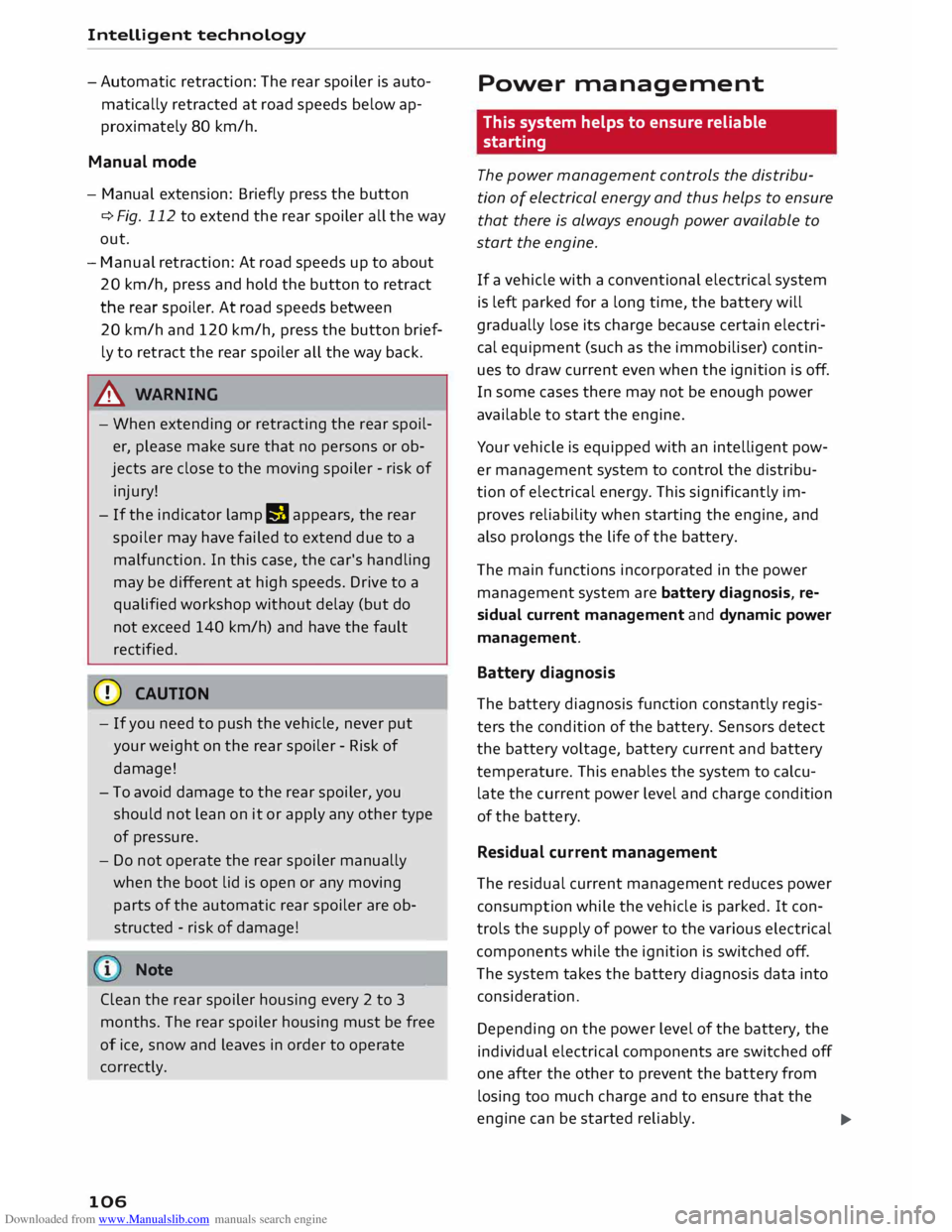
Fig. 112 Centre console: Button for rear spoiler
The rear spoiler can be extended or retracted
manually or automatically.
Automatic mode (normal operation)
- Automatic extension: The rear spoiler is auto
matically extended at road speeds above ap-
proximately 120 km/h.
..,.
105
Page 108 of 284
Downloaded from www.Manualslib.com manuals search engine Intelligent
technology
- Automatic retraction: The rear spoiler is auto
matically retracted at road speeds below ap
proximately 80 km/h.
Manual mode
- Manual extension: Briefly press the button
¢ Fig. 112 to extend the rear spoiler all the way
out.
- Manual retraction: At road speeds up to about
20 km/h, press and hold the button to retract
the rear spoiler. At road speeds between
20 km/h and 120 km/h, press the button brief
ly to retract the rear spoiler all the way back.
& WARNING
- When extending or retracting the rear spoil
er, please make sure that no persons or ob
jects are close to the moving spoiler -risk of
injury!
- If the indicator lamp (M appears, the rear
spoiler may have failed to extend due to a
malfunction. In this case, the car's handling
may be different at high speeds. Drive to a
qualified workshop without delay (but do
not exceed 140 km/h) and have the fault
rectified.
CD CAUTION
- If you need to push the vehicle, never put
your weight on the rear spoiler -Risk of
damage!
- To avoid damage to the rear spoiler, you
should not lean on it or apply any other type
of pressure.
- Do not operate the rear spoiler manually
when the boot lid is open or any moving
parts of the automatic rear spoiler are ob
structed -risk of damage!
Note
Clean the rear spoiler housing every 2 to 3
months. The rear spoiler housing must be free
of ice, snow and leaves in order to operate
correctly.
106 Power
management
This system helps to ensure reliable
starting
The power management controls the distribu
tion of electrical energy and thus helps to ensure
that
there
is always enough power available to
start the engine.
If a vehicle with a conventional electrical system
is left parked for a long time, the battery will
gradually lose its charge because certain electri
cal equipment (such as the immobiliser) contin
ues to draw current even when the ignition is off.
In some cases there may not be enough power
available to start the engine.
Your vehicle is equipped with an intelligent pow
er management system to control the distribu
tion of electrical energy. This significantly im
proves reliability when starting the engine, and
also prolongs the life of the battery.
The main functions incorporated in the power
management system are battery diagnosis, re
sidual current management and dynamic power
management.
Battery diagnosis
The battery diagnosis function constantly regis
ters the condition of the battery. Sensors detect
the battery voltage, battery current and battery
temperature. This enables the system to calcu
late the current power level and charge condition
of the battery.
Residual current management
The residual current management reduces power
consumption while the vehicle is parked. It con
trols the supply of power to the various electrical
components while the ignition is switched off.
The system takes the battery diagnosis data into
consideration.
Depending on the power level of the battery, the
individual electrical components are switched off
one after the other to prevent the battery from
losing too much charge and to ensure that the
engine can be started reliably.
..,.
Page 220 of 284
Downloaded from www.Manualslib.com manuals search engine Checking
and topping up fluids
Diesel can thicken at very low temperatures,
which can result in problems starting the engine
or prevent the engine from running smoothly. For
this reason, filling stations in some countries of
fer winter-grade diesel fuel during the cold
months so that you can continue to operate your
vehicle reliably. Ask at your filling station wheth
er the diesel fuel available there is suitable for
the current conditions and for the temperatures
which could potentially occur.
CD CAUTION
- Never use FAME fuels (biodiesel), petrol,
heating oil, thinners or any other fuels or
additives, as these could cause serious dam
age to the fuel system and the engine.
- Never start the engine if you fill up with the
wrong type of fuel, as this could damage
the fuel system and the engine. Obtain pro
fessional assistance.
Filling the tank
Procedure for filling the tank
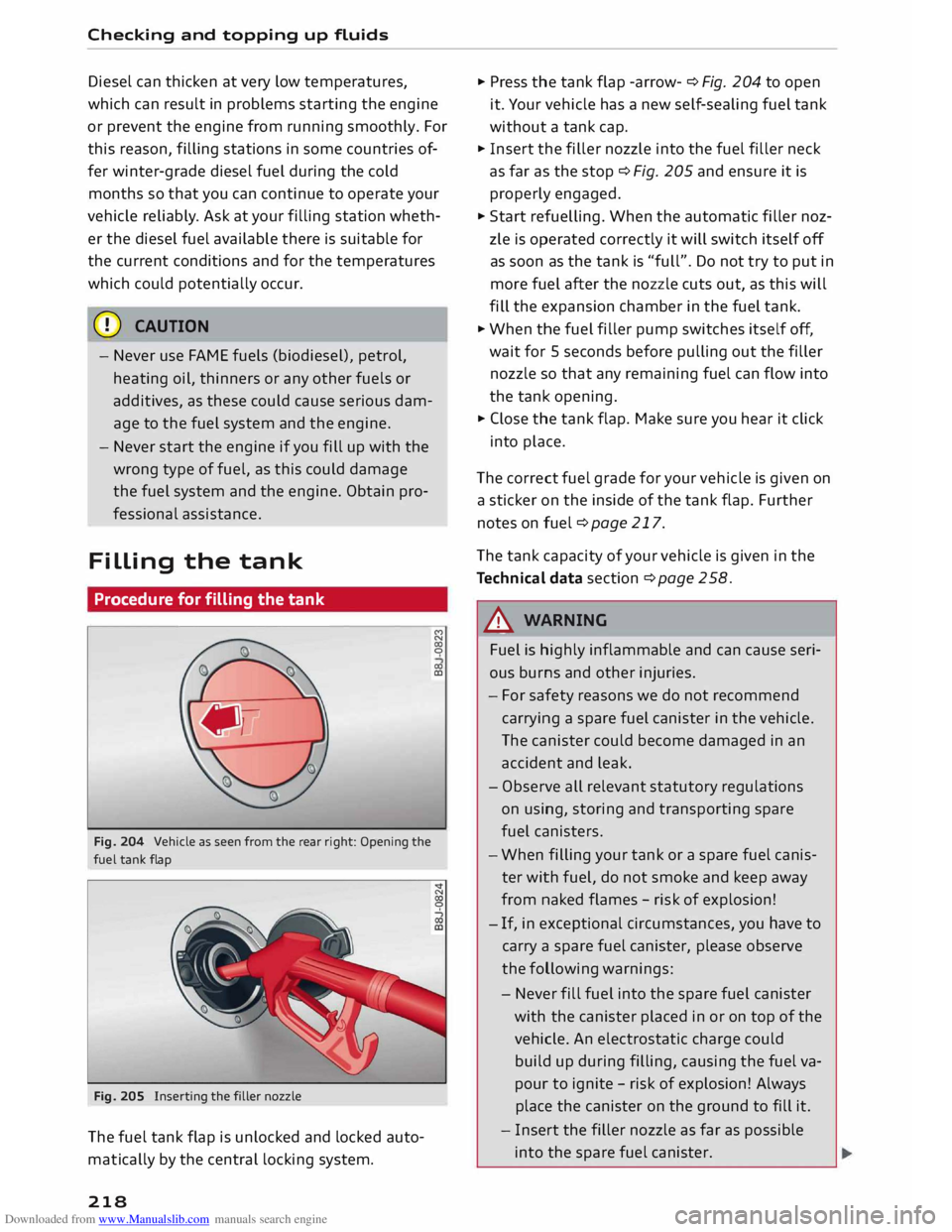
Fig. 204 Vehicle as seen from the rear right: Opening the
fuel tank flap
Fig. 205 Inserting the filler nozzle
The fuel tank flap is unlocked and locked auto
mati cally by the central locking system.
218 "'
N
00
0
00
ca �
Press the tank flap -arrow- ¢ Fig. 204 to open
it. Your vehicle has a new self-sealing fuel tank
without a tank cap.
� Insert the filler nozzle into the fuel filler neck
as far as the stop ¢ Fig. 205 and ensure it is
properly engaged.
� Start refuelling. When the automatic filler noz
zle is operated correctly it will switch itself off
as soon as the tank is "full". Do not try to put in
more fuel after the nozzle cuts out, as this will
fill the expansion chamber in the fuel tank.
� When the fuel filler pump switches itself off,
wait for 5 seconds before pulling out the filler
nozzle so that any remaining fuel can flow into
the tank opening.
� Close the tank flap. Make sure you hear it click
into place.
The correct fuel grade for your vehicle is given on
a sticker on the inside of the tank flap. Further
notes on fuel ¢page 217.
The tank capacity of your vehicle is given in the
Technical data section ¢ page 258.
& WARNING
Fuel is highly inflammable and can cause seri
ous burns and other injuries.
- For safety reasons we do not recommend
carrying a spare fuel canister in the vehicle.
The canister could become damaged in an
accident and leak.
- Observe all relevant statutory regulations
on using, storing and transporting spare
fuel canisters.
- When filling your tank or a spare fuel canis
ter with fuel, do not smoke and keep away
from naked flames -risk of explosion!
- If,
in exceptional circumstances, you have to
carry a spare fuel canister, please observe
the following warnings:
- Never fill fuel into the spare fuel canister
with the canister placed in or on top of the
vehicle. An electrostatic charge could
build up during filling, causing the fuel va
pour to ignite -risk of explosion! Always
place the canister on the ground to fill it.
- Insert the filler nozzle as far as possible
into the spare fuel canister.
Page 223 of 284
Downloaded from www.Manualslib.com manuals search engine 0
N
co
....
\D L/'l
N
L/'l
.... -
Never spill fluids on a hot engine. These flu
ids can cause a fire (e.g. radiator anti
freeze).
- Take care not to cause short circuits in the
electrical system, especially when working
on the battery.
- When working in the engine compartment
be aware that the radiator fan may start
running suddenly, even if the ignition is
switched off-risk of injury!
- Do not unscrew the cap on the expansion
tank when the engine is hot. The cooling
system is under pressure.
- Protect face, hands and arms by covering
the cap with a large, thick rag to protect
against escaping coolant and steam.
- Never remove the engine cover panel -risk
of burns!
- If any tests have to be performed with the
engine running, there is an extra safety risk
from the rotating parts, such as the drive
belts, alternator and radiator fan, etc., and
from the high-voltage ignition system.
- Vehicles with automatic gearbox: Never
open the throttle inadvertently (for instance
by hand from the engine compartment) if a
gear is engaged while the vehicle is station
ary with the engine running. The vehicle
could otherwise start moving immediately
and possibly cause an accident.
- Observe the following additional warnings if
work on the fuel system or the electrical
system is necessary:
- Always disconnect the battery.
- Do not smoke.
- Never work near naked flames.
- Always keep an approved fire extinguisher
immediately available.
CD CAUTION
When topping up fluids make sure the correct
fluid is put into the correct filler opening. This
can otherwise cause serious malfunctions or
engine damage. Checking
and topping up fluids
® For the sake of the environment
Inspect the ground underneath your vehicle
regularly so that any leaks are detected at an
early stage. If you find spots of oil or other
fluids, have your vehicle inspected in the
workshop.
{D) Note
On right-hand drive vehicles* some of the
containers/ reservoirs mentioned below are
located on the other side of the engine com
partment.
Opening the bonnet
The bonnet is released from inside the vehicle.
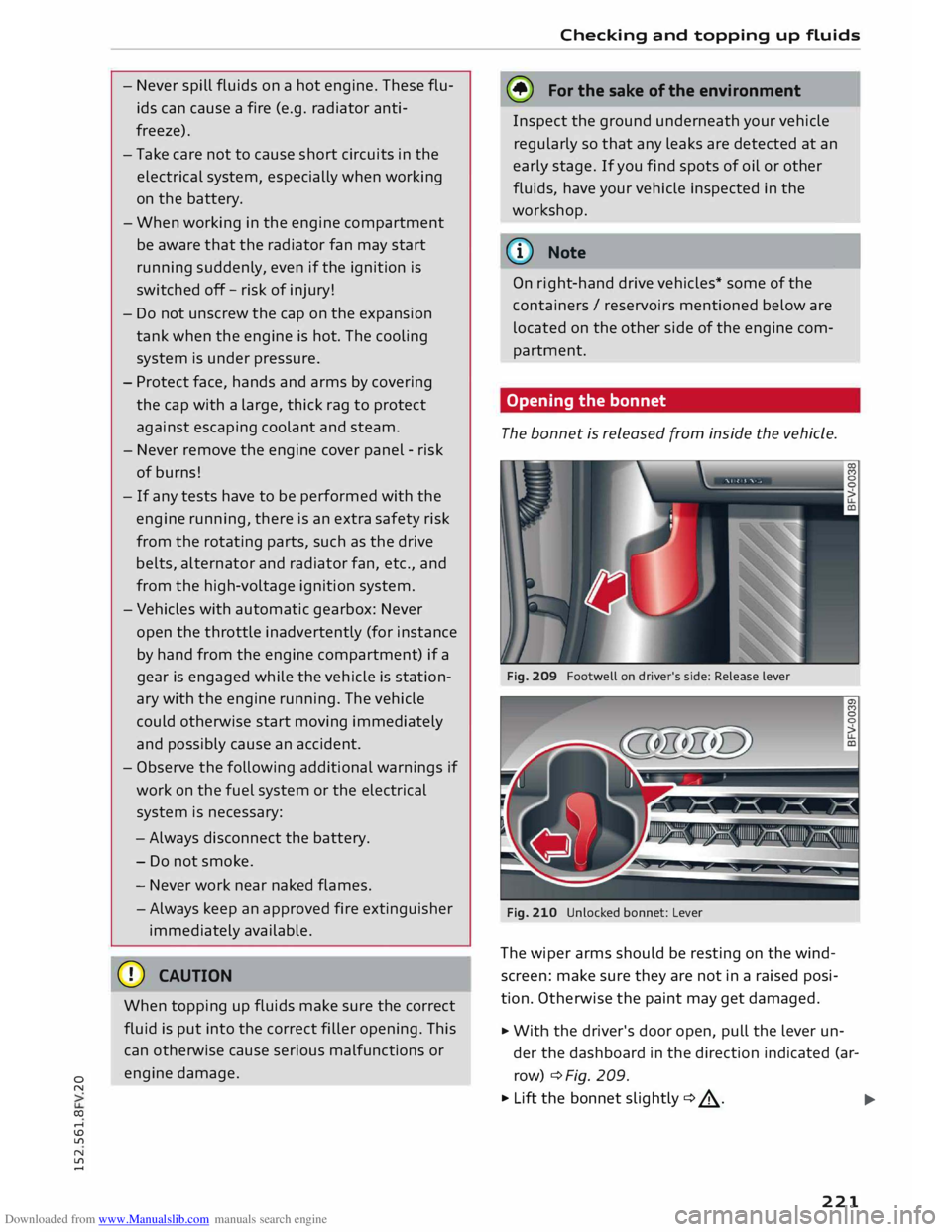
Fig. 209 Footwell on driver's side: Release lever
Fig. 210 Unlocked bonnet: Lever
The wiper arms should be resting on the wind
screen: make sure they are not in a raised posi
tion. Otherwise the paint may get damaged.
� With the driver's door open, pull the lever un
der the dashboard in the direction indicated (ar
row) ¢ Fig. 209.
� Lift the bonnet slightly¢.&_.
11111>
221
Page 224 of 284
Downloaded from www.Manualslib.com manuals search engine Checking
and topping up fluids
.. Press the release lever ¢Fig. 210 in the direc
tion indicated (arrow). This will release the ar
rester hooks.
.. Open the bonnet.
& WARNING
To avoid the risk of being scalded, never open
the bonnet if you see steam or coolant escap
ing from the engine compartment. Wait until
no steam or coolant can be seen before open
ing the bonnet.
Closing the bonnet
.. To close the bonnet, pull it down to overcome
the spring pressure.
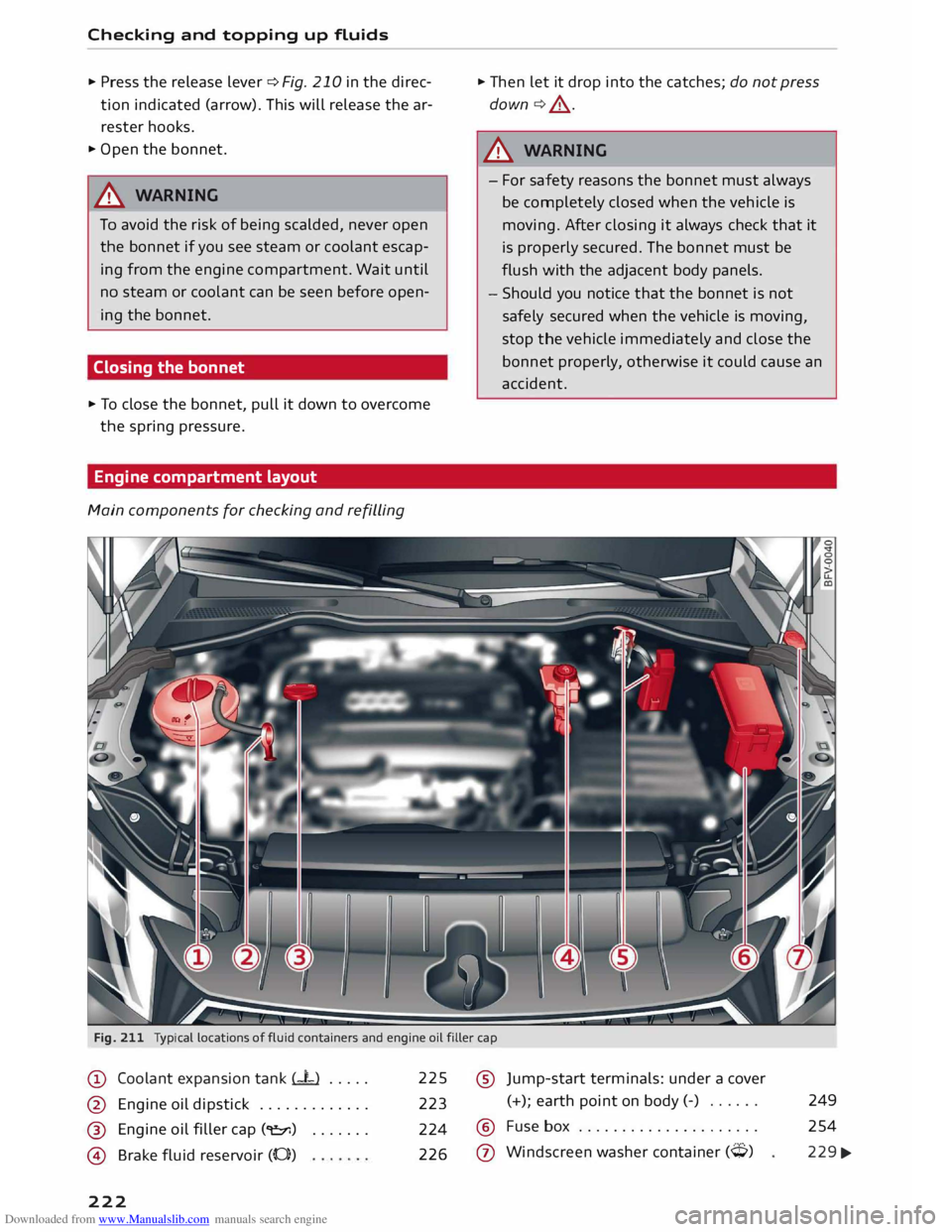
Engine compartment layout
Main components for checking and refilling ..
Then let it drop into the catches; do not press
down ¢,8. .
& WARNING
- For safety reasons the bonnet must always
be completely closed when the vehicle is
moving. After closing it always check that it
is properly secured. The bonnet must be
flush with the adjacent body panels.
- Should you notice that the bonnet is not
safely secured when the vehicle is moving,
stop the vehicle immediately and close the
bonnet properly, otherwise it could cause an
accident .
Fig. 211 Typical locations of fluid containers and engine oil filler cap
(D Coolant expansion tank (-L) .....
@
@
@ Engine
oil dipstick ............ .
Engine oil filler cap(�)
...... .
Brake fluid reservoir ((0))
222 225
®
223
224 ®
226 0 Jump-start
terminals: under a cover
(+); earth point on body(-) ...
...
249
Fuse box ..................... 254
Windscreen washer container (W)
229 ....
Page 225 of 284
Downloaded from www.Manualslib.com manuals search engine 0
N The
positions of the engine oil dipstick and en
gine oil filler cap ¢Fig. 211 (items @and @)
may be different on some engine versions.
Engine oil
Choosing the correct engine oil grade
The service interval display in the instrument
cluster of your vehicle will inform you when it is
time for an oil change. We recommend having
the oil changed by a qualified workshop.
If you have to top up the oil between oil changes,
use the grades of oil specified in the table in ac
cordance with VW standards. You will need to
know whether
- the vehicle is being serviced based on the flexi
ble or fixed oil change service (see Last service
record in Service Schedule).
- the vehicle has a petrol or diesel engine (see
sticker on inside of fuel tank flap).
- a diesel particulate filter is fitted on the vehicle
(see Delivery Inspection section of Service
Schedule).
Oil Change Serv-
Oil Change Serv-
ice (flexible)
ice (fixed)
Petrol VW50400 vw
502 00
engine Alternatively:
vw 504 ooa)
Diesel VW50700 With
diesel par-
engine ticulate
filter:
VW 507 00
Without diesel
particulate filter:
vw 505 01
Alternatively: vw 507 oob
>
al When using fuel complying with EN 228 or DIN 51626-1
b) When using fuel complying with EN 590 or DIN 51628
CD} Note
If the oil grades specified in the table are not
available, you can use one of the following
....
� grades
as a substitute. To prevent damage to
� the
engine, this should not be done more
.... Checking
and topping up fluids
than once between oil changes and no more
than 0.5 Litres should be used.
- Petrol engines: ACEA A3 or API SN (API SM)
standard
- Diesel engines: ACEA C3 or API CJ-4 stand
ard
(©) Note
- For China: Only oil complying with VW
standard 502 00 with viscosity SAE 5W-40
may be used on vehicles with a petrol en-
gine.
- The flexible oil change service is not availa
ble in all countries.
Checking the engine oil level
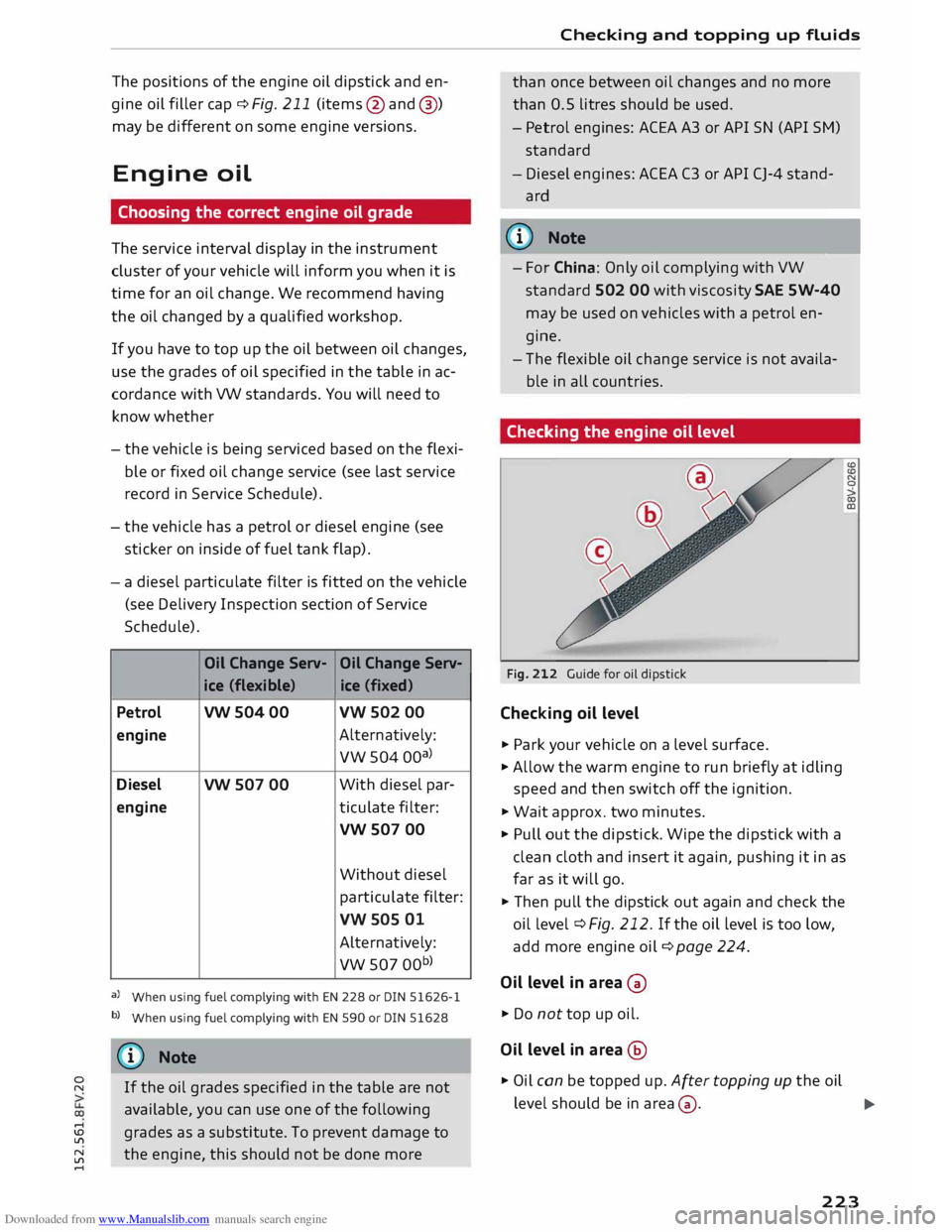
Fig. 212 Guide for oil dipstick
Checking oil level
.,. Park your vehicle on a Level surface.
.,. Allow the warm engine to run briefly at idling
speed and then switch off the ignition.
.,. Wait approx. two minutes.
.,. Pull out the dipstick. Wipe the dipstick with a
clean cloth and insert it again, pushing it in as
far as it will go.
.,. Then pull the dipstick out again and check the
oil level ¢ Fig. 212. If the oi L Level is too Low,
add more engine oil¢ page 224.
Oil level in area 0
.,. Do not top up oil.
Oil level in area @
.,. Oil can be topped up. After topping up the oil (£)
(£)
N
0
co
(Il
Level should be in area 0·
..,
223