airbag AUDI TT COUPE 2016 Owner's Manual
[x] Cancel search | Manufacturer: AUDI, Model Year: 2016, Model line: TT COUPE, Model: AUDI TT COUPE 2016Pages: 322, PDF Size: 52.86 MB
Page 184 of 322
Downloaded from www.Manualslib.com manuals search engine Safety belts
What happens to occupants not wearing
safety belts?
In crashes unbelted occupants cannot stop
themselves from flying forward and being in
jured or killed . Alway s wear your
safety belts!
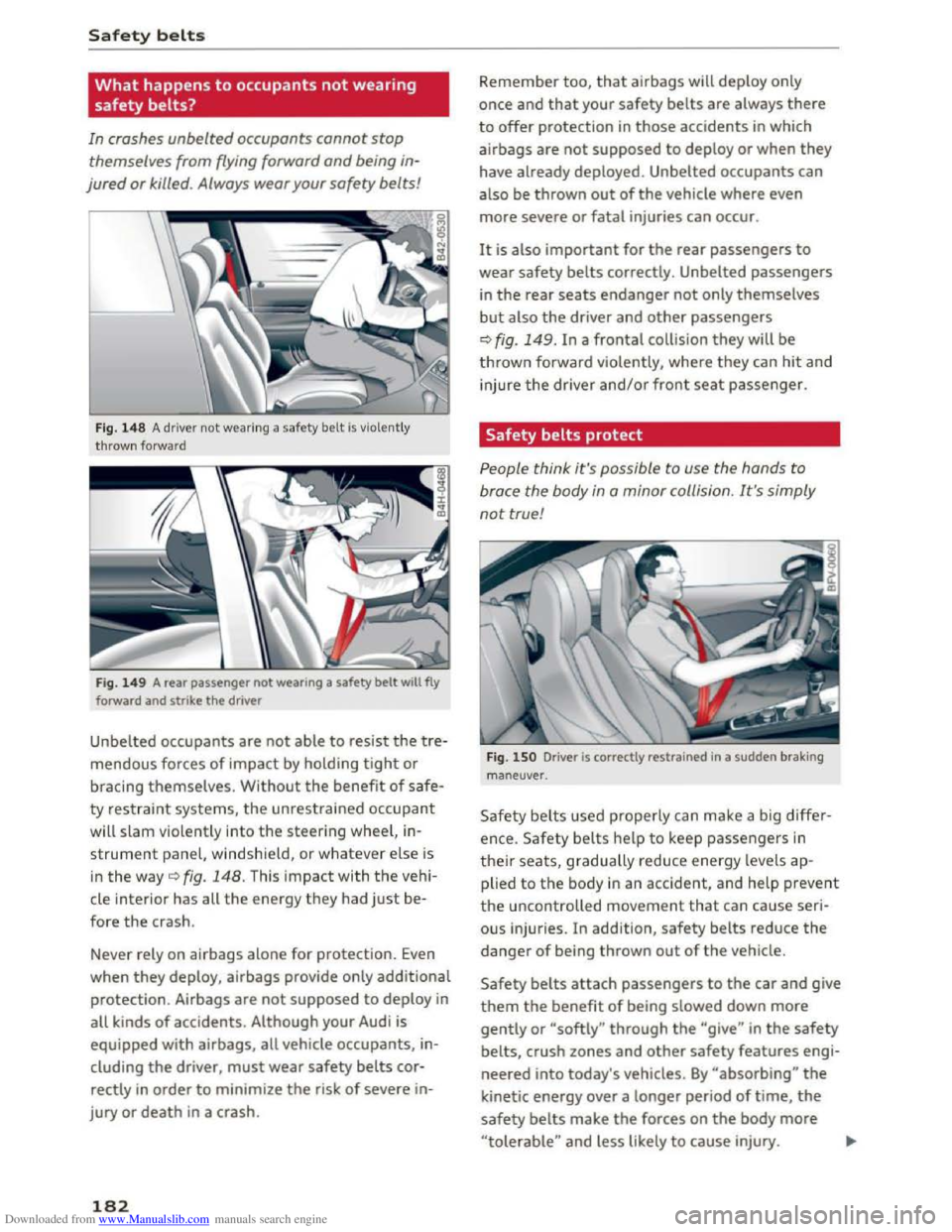
Fig. 148 A driver not wearing a safety belt is violently
thrown forward
F ig .
149 A rear passenger not wearing a safety belt will fly
forward and strike
the driver
Unbelted occupants are not able to resist the tre
mendous forces of impact by holding tight or
bracing themselves. Without the benefit of safe
ty restraint systems, the unrestrained occupant
will slam violently into the steering wheel, in
strument panel, windshield, or whatever else is
in the way q fig. 148. This impact with the vehi
cle i
nterior has all the energy they had just be
fore
the crash.
Never rely
on airbags alone for protection. Even
when
they deploy, airbags provide only additional
protection . Airbags are not supposed to deploy in
all kinds of accidents. Although your Audi is
equipped with airbags, all vehicle occupants, in
cluding
the driver, must wear safety belts cor
rectly
in order to minimize the risk of severe in
jury
or death in a crash.
182
Remember too, that airbags will deploy only
once
and that your safety belts are always there
to offer protection in those accidents in which
airbags
are not supposed to deploy or when they
have already deployed. Unbelted occupants can
also be thrown out of the vehicle where even
more severe or fatal injuries can occur .
I t is
also important for the rear passengers to
wear safety belts correctly. Unbelted passengers
in the rear seats endanger not only themselves
but also the driver and other passengers
~fig. 149. In a frontal collision they will be
thrown forward violently, where they can hit and
injure the driver and/or front seat passenger.
Safety belts protect
People think it's possible to use the hands to
brace
the body in a minor collision . It's simply
not true!
Fig. 150 Driver is correctly restrained in a sudden braking
man euver.
Safety belts used properly can make a big diffe r
ence. Safety
belts help to keep passengers in
their seats, gradually reduce energy leve ls ap
pli ed
to the body In an accident, and help prevent
the uncontrolled movement that can cause seri
ous injuries . In addition, safety belts reduce the
danger of being thrown out of the vehicle.
Safety belts attach passengers to the car and give
them the benefit of being slowed down more
gently or "softly" through the "give" in the safety
belts, crush zones and other safety features engi
neered into today's vehicles. By "absorbing" the
kinetic energy over a longer period of time, the
safety belts make the forces on the body more
"tolerable" and less likely to cause injury . .,..
Page 185 of 322
Downloaded from www.Manualslib.com manuals search engine ...... N
> u. CX> ...... u:>
"' ...... u:> ......
Although these examples are based on a frontal
collision, safety belts can also substantially re
duce the risk of injury in other kinds of crashes.
So, whether you're on a long trip or just going to
the corner store, always buckle up and make sure
others do, too. Accident statistics show that vehi
cle
occupants properly wearing safety belts have
a lower risk
of being injured and a much better
chance of surviving an accident. Properly using
safety belts also greatly increases the ability of
the supplemental airbags to do their job in a col
lision. For
this reason, wearing a safety belt is le
gally required
in most countries including much
of the United States and Canada.
Although your Audi is equipped with airbags, you
still have to wear the safety belts provided. Front
a irb
ags, for example, are activated only in some
frontal collisions. The front airbags are not acti
vated
in all frontal collisions, in side and rear col
lisions,
in roll overs or in cases where there is not
enough deceleration through impact to the front
of the vehicle . The same goes for the other airbag
systems in your Audi. So, always wear your safety
belt and make sure everybody in your vehicle is
properly restrained!
Important safety instructions about safety
belts
Safety belts
must always be correctly positioned
across the strongest bones
of your body.
"'Always wear safety belts as illustrated and de
scribed
in this chapter.
"'M ake su re that your safety belts are always
ready for use and
are not damaged.
A_ WARNING
Not wearing safety belts or wearing them im
properly increases
the risk of serious personal
injury and death. Safety belts can work only
when used correctly.
-Always fasten your safety belts correctly be
fore driving off and make sure all passen
gers are correctly restrained .
- For
maximum protection, safety belts must
always be positioned properly on the body .
Safety be lts
- Never strap more than one person, incl ud
ing
small children, into any belt.
-Never place a safety belt over a child sitting
on your lap.
- Always keep
feet in the footwell in front of
the seat while the vehicle is being driven.
- Never
let any person ride with their feet on
the instrument panel or sticking out the
window or on the seat.
-Never remove a safety belt while the vehicle
is moving. Doing
so will increase your risk of
being injured or killed.
- Never
wear belts twisted.
- N ever wear belts over rigid or breakable ob-
jects in or on your clothing, such as eye
glasses, pens, keys, etc., as these may cause
injury.
- Never allow
safety belts to become dam
aged by being caught in door or seat hard
ware.
-
Do not wear the shoulder part of the belt
under your arm or otherwise out of position.
- Several layers
of heavy clothing may inter
fere with correct positioning of belts and re
duce the overall effectiveness of the system.
-Always keep belt buckles free of anything
that may prevent the buckle from latching
securely.
- Never
use comfort clips or devices that cre
ate slack in the shoulder belt. However, spe
cial clips
may be required for the proper use
of some child restraint systems.
-Torn or frayed safety belts can tear and
damaged belt hardware can break in an acci
dent. Inspect belts regularly. If webbing,
b indings , buckles,
or retractors are dam
aged, have belts replaced by an authorized
Audi
dealer or qualified workshop.
- Safety
belts that have been worn and loaded
in an accident must be replaced with the
correct replacement safety belt by an au
thorized Audi dealer. Replacement may be
necessary even if damage cannot be clearly
seen. Anchorages that were loaded must al
so be inspected.
-Never remove, modify, disassemble, or try
to repair the safety belts yourself.
183
Page 188 of 322
Downloaded from www.Manualslib.com manuals search engine Safety belts
Unfastening safety belts
Unbuckle the safety belt with the red release
button only after the vehicle has stopped.
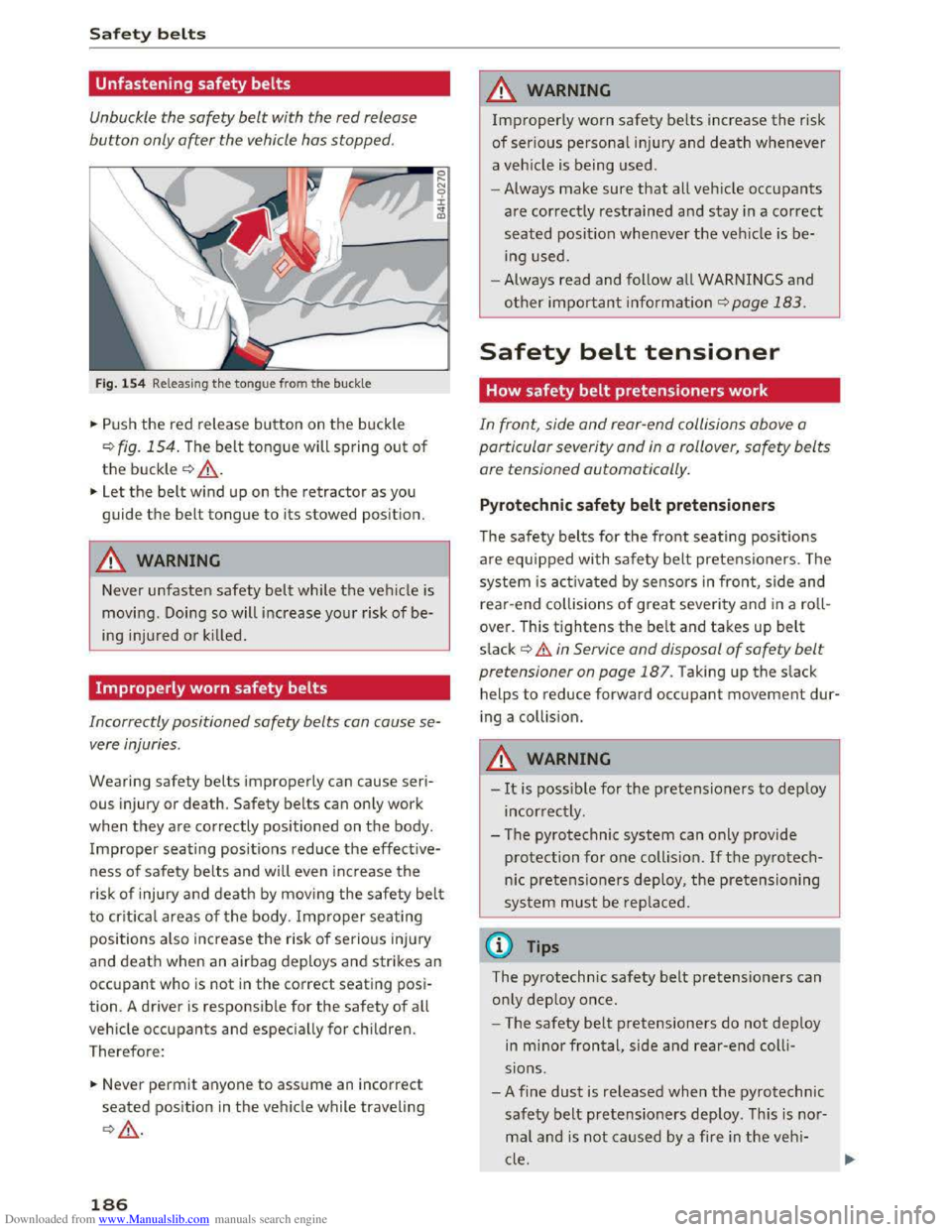
Fig. 154 Releasing the tongue from the buckle
.. Push the red release button on the buckle
Q fig. 154. The belt tongue will spring out of
the buckle Q ,&..
.. Let the belt wind up on the retractor as you
guide
the belt tongue to its stowed position.
A WARNING
Never unfasten safety belt while the vehicle is
moving . Doing so will increase your risk of be
ing injured
or kil led.
Improperly worn safety belts
a
~ 0 ± .. QJ
Incorrectly positioned safety belts can cause se
vere injuries .
Wearing safety belts improperly can cause seri
ous injury or death. Safety belts can only work
when they are correctly positioned on the body.
Improper seating positions reduce the effective
ness of safety belts and wil l even increase the
risk of injury and death by mov ing the safety belt
to crit ica l areas of the body. Improper seating
positions also increase the risk of serious injury
and death when an airbag deploys and strikes an
occupant who is not in the correct seating posi
tion. A driver
is responsible for the safety of all
vehicle
occupants and especially for children.
Therefore:
.. Never permit anyone to assume an incorrect
seated position in the vehicle while traveling
QA .
186
A WARNING
Improperly worn safety belts increase the risk
of serious personal injury and death whenever
a veh icle is being used.
- Always
make sure that all veh icle occupants
are corr ectly restrained and stay in a correct
seated position whenever the vehicle is be
ing
used.
- Always read and follow all WARNINGS and
other important information Q page 183.
Safety belt tensioner
How safety belt pretensioners work
In front, side and rear-end collisions above a
particular severity
and in a rollover, safety belts
are tensioned automatically .
Pyrotechnic safety belt pretensioners
The safety belts for the front seati ng pos it io ns
are equipped with safety belt pretensioners. The
system is acti va ted by sensors in front, side and
r
ear-end collisions of great seve rity and in a roll
over. This
tightens the belt and takes up belt
s lack ~ .& in Service and disposal of safety belt
pretensioner on page 187. Taking up the slack
helps
to reduce forward occupant movement dur
i ng a collis ion.
A WARNING
-It is possi ble for the pretensioners to deploy
incorrect ly .
- The pyrotechnic
system can only provide
protection for one collision. If th e py rotech
nic pretensioners deploy, the pretensioning
sys tem must be replaced.
(!) Tips
The pyrotechnic safety belt pretensioners can
o nl y
deploy once .
- The
safety belt pretensioners do not deploy
in minor frontal, side and rear-end colli
sions .
- A
fine dust is re leased when the pyrotechnic
safety belt pretensioners deploy . This is no r
mal and is not caused by a fire in the veh i
cle.
Page 189 of 322
Downloaded from www.Manualslib.com manuals search engine ...... N
G'. CX)
..... ID IJ' ..... ID .....
-The relevant safety requirements must be
observed when the vehicle or components
of the system are scrapped. A qualified
dealership is familiar with these regulations
and will be pleased to pass on the informa
tion
to you.
-
Be sure to observe all safety, environmental
and other regulations if the vehicle or indi
vidual
parts of the system, particularly the
safety belt or airbag, are to be disposed. We
recommend you have your authorized Audi
dealer perform this service for you.
Service and disposal of safety belt preten
sioner
The safety be lt pretensioners are parts of the
safety belts on your Audi. Installing, removing,
servicing
or repairing of belt pretensioners can
damage the safety belt system and prevent it
from working correctly in a collision .
There
are some important things you have to
know to make sure that the effectiveness of the
system will not be impaired and that discarded
components do not cause injury or pollute the
environment.
A WARNING
-
Improper care, servicing and repair proce
dures can increase the risk of personal injury
and
death by preventing a safety belt preten
sioner from activating when needed or acti
vating it unexpectedly:
-
The belt pretensioner system can be activat
ed only once.
If belt pretensioners have
been activated, the system must be re
placed.
- Never repair, adjust,
or change any parts of
the safety belt system.
-Safety belt systems including safety belt
pretensioners cannot be repaired. Special
procedures are required for removal, instal
lation and disposal of this system.
-For any work on the safety belt system, we
strongly recommend that you see your au
thorized Audi dealer or qualified technician
who has an Audi approved repair manual,
training and special equipment necessary .
Safety belts
@ For the sake of the environment
Undeployed air bag modules and pretension
ers might be classified as Perchlorate Materi
al -special handling may apply, see
www.dtsc.ca.gov/hazardouswaste/perchlo
rate. When the vehicle or parts of the re
straint system including airbag modules safe
ty belts with pretensioners are scrapped, all
applicable laws and
regulations must be ob
served. Your authorized Audi dealer is familiar
with
these requirements and we recommend
that you have your dealer perform this service
for you.
187
Page 190 of 322
Downloaded from www.Manualslib.com manuals search engine Airbag sy stem
Airbag system
Important information
Importance of wearing safety belts and
sitting properly
Airbags are only supplemental restraints. For
airbags to do their job, occupants must always
properly wear their
safety belts and be in a prop
er seating position.
For your safety and the safety of your passen
gers, before driving off, always:
,. Adjust the driver's seat and steering wheel
properly<::;> page 172,
,. Adjust the front passenger's seat properly
¢page 44,
,. Wear safety belts properly ¢page 183,
,. Always properly use the proper child restraint
to protect children ¢page 212.
In a collision airbags must inflate within the blink
of an eye and with considerable force. The sup
plemental airbags can cause injuries if the driver
or the front seat passenger is not seated proper·
Ly. Therefore in order to help the airbag to do its
job, it is important, both as a driver and as a pas
senger to sit properly at all times.
By keeping room between your body and the
steering wheel and the front of the passenger
compartment, the airbag can inflate fully and
completely and provide supplemental protection
in certain frontal collisions r=.> page 172, Correct
passenger seating positions . For details on the
operation of the seat adjustment controls
¢page45.
It's especially important that children are proper
ly restrained¢ page 212.
There is a lot that the driver and the passengers
can and must do to help the individual safety fea
tures installed in your Audi work together as a
system.
Proper seating position is important so that the
front airbag on the driver side can do its job. If
you have a physical impairment or condition that
prevents you from sitting properly on the driver
seat wi th the safety belt properly fastened and
188
reaching the pedals, or if you have concerns with
regard to the function or operation of the Ad
vanced Airbag
System, please contact your au
thorized Audi
dealer or qualified workshop, or
call Audi Customer Relations at 1-800-822-2834
for possible modifications to your vehicle.
When the airbag system deploys , a gas generator
will fill the airbags, break open the padded cov
ers, and inflate between the steering wheel and
the driver and between the instrument panel and
the front passenger. The airbags will deflate im
mediately after deployment so that the front oc
cupants can see through the windshield again
without interruption.
All of this takes place in th e blink of an eye, so
fast that many people don't even realize that the
airbags have deployed. The airbags also inflate
with a great deal of force and nothing should be
in their way when they deploy . Front airbags in
combination with properly worn safety belts slow
down
and limit the occupant's forward move
ment. Together they help to prevent the driver
and front seat passenger from hitting parts of
the inside the vehicle while reducing the forces
acting on the occupant during the crash. In this
way they help to reduce the risk of injury to the
head and upper body in the crash. Airbags do not
protect the arms or the lower parts of the body.
Both
front a irbags will not inflate in all frontal
collisions. The triggering of the airbag system de
pends on the vehicle deceleration rate caused by
the collision and registered by the electronic con
trol unit. If this rate is below the reference value
programmed into the control unit, the airbags
will not be triggered, even though the car may be
badly
damaged as a result of the co llision. Vehi
cle
damage, repair costs or even the lack of vehi
cle
damage is not necessarily an indication of
whether an airbag should inflate or not.
Since the circumstances will vary considerably
between one collision and another, it is not possi
ble to define a range of vehicle speeds that will
cover every possible kind
and angle of impact
that will always trigger the airbags. Important
factors include, for example, the nature (hard or
soft) of the object which the car hits, the angle of
impact, vehicle speed, etc. The front airbags will Iii>
Page 191 of 322
Downloaded from www.Manualslib.com manuals search engine ...... N
G'. CX)
..... ID IJ' ..... ID .....
also not inflate in side or rear collisions, or in
roll-overs.
Always rememb er: Airbags will deploy only once,
and only
in certain kinds of collisions . Your safety
belts are always there to offer protection in those
situations in which airbags are not supposed to
deploy, or when they have already deployed; for
example, when your vehicle strikes or is struck by
another vehicle after the first collision.
This
is just one of the reasons why an airbag is a
supplementary restraint and is not a substitute
for a safety belt. The airbag system works most
effectively when used with the safety belts.
Therefore, always properly wear your safety belts
r:::;.page 180.
A WARNING
-
Sitting too close to the steering wheel or in-
strument panel will decrease the effective
ness of the airbags and will increase the risk
of personal injury in a collision.
- Never
sit closer than 10 in (25 cm) to the
steering wheel or instrument panel.
-
If you cannot sit more than 10 in (25 cm)
from the steering wheel, investigate wheth
er adaptive equipment may be available to
held you reach the pedals and increase your
seating distance from the steering wheel.
-If you are unrestrained, leaning forward, sit
t ing sideways
or out of position in any way,
your risk
of injury is much higher.
-
You will also receive serious injuries and
could even be killed if you are up against the
airbag or too close to it when it inf lates -
even with an Advanced Airbag.
- To reduce
the risk of injury when an airbag
inflates, always
wear safety belts properly
Q page 184, Safety belts.
-Always make certain that children age 12 or
younger always ride in the rear seat. If chil
dren are not properly restrained, they may
be severely injured or killed when an airbag
inflates.
- Never
let children ride unrestrained or im
properly
restrained in the vehicle. Adjust the
front seats properly .
- Never ride with
the backrest reclined .
Airbag system
-Always sit as far as possible from the steer
ing wheel or the instrument panel
r:=:>page 172.
-Always sit upright with your back against
the backrest of your seat.
- Never place your feet on the instrument
panel or on the seat. Always keep both feet
on the floor in front of the seat to help pre
vent serious injuries to the legs and hips if
the airbag inflates.
- Never recline
the front passenger's seat to
transport objects. Items can also move into
the area of the side airbag or the front air
bag during braking
or in a sudden maneu
ver. Objects near the airbags can become
projectiles and cause injury when an airbag
inflates.
A WARNING ___,j
Airbags that have deployed in a crash must be
replaced.
-
Use only original equipment airbags ap
proved by Audi and installed by a trained
technician who has the necessary tools and
diagnostic equipment to properly replace
any
airbag in your vehicle and assure system
effectiveness in a crash.
- Never
permit salvaged or recycled airbags to
be installed in your vehicle.
Child restraints on the front seat -some
important things to know
"' Be sure to read the important information and
head the WARNINGS for important details
about children and Advanced Airbags
r:::;.page 212.
Even though your vehicle is equipped with an Ad
vanced Airbag
System, make certain that all chil
dren, especially those 12 years and younger, al
ways ride
in the back seat properly restrained for
their age and size. The airbag on the passenger
side makes the front seat a potentially dangerous
place for a child to ride . The front seat is not the
safest place for a child in a forward-facing child
seat. It can be a very dangerous place for an in-
fant or a child in a rearward -facing seat. ..,.
189
Page 192 of 322
Downloaded from www.Manualslib.com manuals search engine Airbag system
The Advanced Airbag System in your vehicle has
been certified to comply with the Requirements
of United States Federal Motor Vehicle Safety
Standard 208 as applicable at the time your vehi
cle
was manufactured.
The
Standard requires the front airbag on the
passenger side to be turned off ("suppressed") if
a child up
to about one year of age restrained in
one of the rear-facing or forward-facing infant re
straints listed in Federal Motor Vehicle Safety
Standard 208 with which the Advanced Airbag
System in your vehicle was certified has been in
stalled on the front passenger seat. For a listing
of the child restraints that were used to certify
compliance with the US Safety Standard
<=!>page 214.
The PA SSENGER AIR BAG OFF light in the over
head console tells you when the front Advan ced
Airbag on the passenger side has been turned off
by the electronic control unit.
E ach ti
me you turn on the igni tion, the PASSEN
GER
AIR BAG OFF l ight will come on fo r a few
seconds and:
- will stay on if the front passenger seat is not
occupied,
- will
stay on if the electrical capacitance meas
u red by the capacitive passenger detection sys
tem fo r th e fron t passenger seat equals the
combined capaci tance of an infant up to about
one year of age and one of the rearward-facing
or forward-facing child restraints listed in Fed
eral Motor Vehicle Safety Standard 208 with
which the Advanced Airbag System in your vehi
cle
was certifi ed. For a listing of the child re
straints that were used to certify your vehicle's
compliance with the U .S . Safety Standard
<=!>page 214.
- will stay on if there is a small ch ild or child re
straint on the front passenger seat,
- will go off if the front passenger seat is occu
pied by
an adult as registered by the capacitive
passenger detection system<=!> page 199, Mon
itoring the Advanced Airbag System.
The PASSENGER AIR BAG OFF light comes on
when electrical capacitance registered on the
front passenger seat is equal to or less than the
190
combined capacitance of a typical 1 year-old in
fant and one of the rearward-facing or forward
facing child restraints listed in Federal Motor Ve
hicle
Safety Standard 208 w ith which the Ad
vanced Airbag
System in your vehicle was certi
fied .
If the total electrica l capacitance registered on
the front passenger seat is more than that of a
typi ca l 1 year-old child but less than the weight
of a small adult, the front airbag on the passen
ger side can deploy (the PASSENGER AIR BAG
OFF light does not come on).
If the PAS SENGER AIR BAG OFF light does not
come on, the front airbag on the passenger side
has not been turned off by the electronic con trol
u
nit and can depl oy if the control unit senses an
impact that meets the conditions stored in its
memory .
For example, the airbag may deploy if:
- a small child that is heavier than a typical 1
year-old child is
on the front passenger seat
(regardless of whether the child is in one of the
child safety seats l isted<=:> page 214), or
- a child who has outgrown child restraints is on
the front passenger seat.
If the front passenger airbag is turned off, the
PASSENGER AIR BAG OFF ligh t comes on in the
overhead console and stays on.
If the front passenger airbag deploys, the Feder
al Standard requires the airbag to meet the "low
risk"
deployment criteria to reduce the r isk of in
jury through interaction w ith the airbag. "Low
risk "
deployment occurs in those crashes that
take place at lower decelerations as defined in
the electronic co ntrol unit<=!> page 200, PASSEN
G ER AIR BAG OFF light.
Always remember, a child seat or infant carrier
installed on the front seat may be struck and
k nocked out of positio n by the rapidly inflating
passenger's airbag i n a frontal collision. The a ir
bag cou ld greatly reduce the effectiveness of the
child restraint and even seriously injure the child
d uring inflation .
Page 193 of 322
Downloaded from www.Manualslib.com manuals search engine For this reason, and because the back seat is the
safest place for children -when properly restrain
ed according
to their age and size -we strongly
recommend that children always sit in the back
seat Q page 212, Child safety.
_&WARNING
A child in a rearward-fac ing child seat instal
led on
the front passenger seat will be seri
ously injured
and can be killed if the front air
bag inflates -even with
an Advanced Airbag
System.
-The inflating airbag will hit the child seat or
infant carrier with great force and will
smash the child seat and child against the
backrest, center armrest, door or roof.
- Always
install rear-facing child seats on the
rear seat.
-If you must install a rearward facing child
seat on the front passenger seat because of
exceptional circumstances and the PASSEN·
GER AIR BAG OFF light does not come on
and stay on, immediately install the rear
facing child
seat in a rear seating position
and have
the airbag system inspected by
your Audi dealer.
- Forward-facing child
seats installed on the
front passenger's seat may interfere with
the deployment of the airbag and cause se·
rious personal injury to the child.
A WARNING
If, in exceptional circumstances, you must in
stall a forward-facing child restraint on the
front passenger's seat:
-Always make sure the forward-facing seat
has been designed and certified by its man
ufacturer for use on a front seat with a pas
senger front and side airbag.
- Never
put the forward-facing child restraint
up against or very near the instrument pan
el.
-Always move the passenger seat into its
rearmost position in the seat's fore and aft
adjustment range, as far away from the air
bag as possible
before installing the for-
Airbag system
ward-facing child restraint. The backrest
must be adjusted to an upright position.
- Make
sure that the PASSEN GER AIR BAG
OFF light comes on and stays on all the time
whenever the ignition is switched on.
A WARNING
To reduce the risk of serious injury, make sure
that the PASSENGER AIR BAG OFF light will
be displayed
whenever a child restraint is in
stalled on the front passenger seat and the
ignition is switched on.
-
If the PAS SENGER AIR BAG OFF light does
not stay on, perform the checks described
~page 199, Monitoring the Advanced Air·
bag System.
-Take the child restraint off the front passen·
ger seat and install it properly at one of the
rear seat positions if the PASSENGER AIR
BAG OFF light does not stay on.
- Have
the airbag system inspected by your
Audi dealer immediately.
- Always carefully follow
instructions from
child restraint manufacturers when instal
ling child restraints.
A WARNING
If, in exceptional circumstances, you must in
stall a forward or rearward-facing child re
straint on the front passenger's seat:
-Improper installation of child restraints can
reduce their effectiveness or even prevent
them from provid ing any protection.
-An improperly installed child restraint can
interfere with the airbag as it deploys and
seriously injure
or even kill the child -even
with an Advanced Airbag System.
-Always carefully follow the manufacturer's
instructions provided with the child seat or
carrier.
-Always make sure that there is nothing on
the front passenger seat that will cause the
capacitive passenger detection system in
the seat to signal to the Airbag System that
the seat is occup ied by a person when it is ~
191
Page 194 of 322
Downloaded from www.Manualslib.com manuals search engine Airbag system
not, or to signal that it is occupied by some
one who is heavier than the person actually
sitting on the seat. The presence of addi
tional objects could cause the passenger
front airbag to be turned on when it should
be off, or could cause the airbag to work in a
way
that is different from the way it would
have worked
without the object on the seat.
Front airbags
Description of front airbags
The airbag system can provide supplemental
protection to properly restrained front
seat occu
pants.
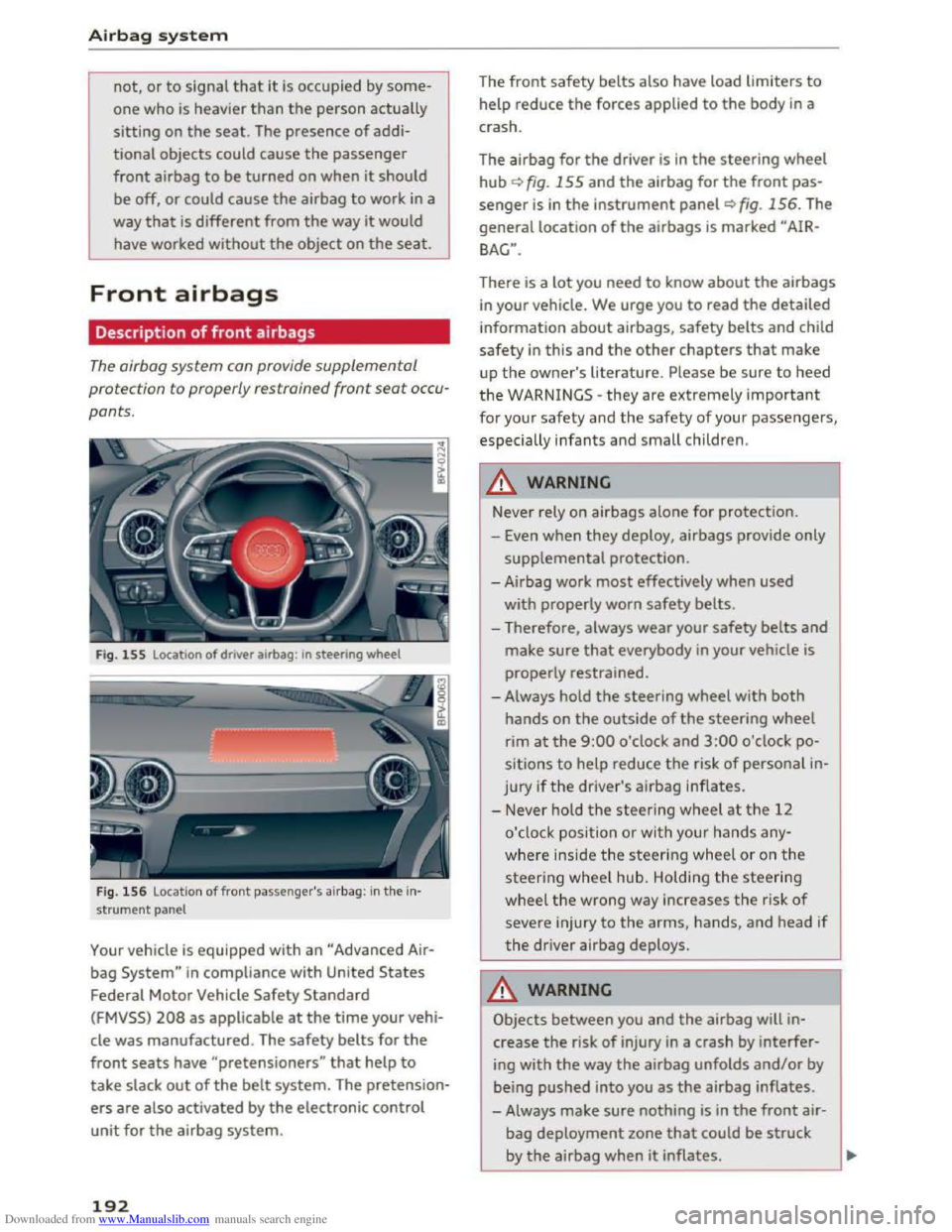
Fig. 155 Locat ion of driver airbag : in steering wheel
Fig.
156 Location of front passenger's airbag: in the in·
strument panel
Your vehicle is equipped with an "Advance d Air
bag System" in compliance with United States
Federal Motor Vehicle Safety Standard
(FMVSS) 208 as applicable at the time your vehi
cle
was manufactured. The safety belts for the
front seats have "pretensioners" that help to
take slack out of the belt system. The pretension
ers are also activated by the electronic control
unit for the airbag system.
192
The front safety belts also have load limiters to
help reduce the forces applied to the body in a
crash.
The airbag
for the driver is in the steering wheel
hub i::> fig. 155 and the airbag for the front pas
senger is in the instrument panel i::> fig. 156. The
general location of the airbags is marked "AIR
BAG".
There is a lot you need to know about the airbags
in your vehicle. We urge you to read the detailed
information about airbags, safety belts and child
safety in this and the other chapters that make
up the owner's literature. Please be sure to heed
the WARNINGS -they are extremely important
for your safety and the safety of your passengers,
especially infants and small children .
_&WARNING
-
Never rely on airbags alone for protection.
- Even when they deploy, airbags provide only
supplemental protection.
-Airbag work most effectively when used
with properly
worn safety belts.
- Therefore, always
wear your safety belts and
make sure that everybody in your vehicle is
properly
restrained.
- Always hold the steering wheel with both
hands on the outside of the steering wheel
rim at the 9:00 o'clock and 3:00 o'clock po
sitions
to help reduce the risk of personal in
jury if the driver's airbag inflates.
-Never hold the steering wheel at the 12
o'clock position or with your hands any
where inside the steering wheel or on the
steering wheel hub. Holding the steering
wheel the wrong way increases the risk of
severe injury to the arms, hands, and head if
the driver airbag deploys.
_&WARNING
Objects between you and the airbag will in
crease the risk of injury in a crash by interfer
ing with the way the airbag unfolds and/or by
being pushed into you as the airbag inflates.
- Always
make sure nothing is in the front air-
bag deployment zone that could be struck
by the airbag when it inflates. _____ ___.
Page 195 of 322
Downloaded from www.Manualslib.com manuals search engine -Objects in the zone of a deploying airbag
can
become projectiles when the airbag de
ploys and cause serious personal injury.
- Never hold
things in your hands or on your
lap
when the vehicle is in use.
-Never place accessories or other objects
(such as cup holders, telephone brackets,
note pads, navigation systems, or things
that are large, heavy, or bulky) on the doors;
never
attach then to the doors or the wind
shield; never place
them over or near or at
tach them to the area marked ,.AIRBAG" on
the steering wheel, instrument panel or the
seat backrests; never place them between
these areas and you or any other person in
the vehicle.
- Never
attach objects to the windshield
above
the passenger front airbag, such as
accessory GPS navigation units or music
players. Such
objects could cause serious in
jury
in a collision, especially when the air
bags inflate.
- Never recline
the front passenger seat to
transport objects. Items can also move into
the deployment area of the side airbags or
the front airbag during breaking or in a sud
den maneuver. Objects near the airbags can
fly dangerously through the passenger com
partment and cause injury, particularly
when the seat is reclined and the airbags in
flate.
A WARNING
A person on the front passenger seat, espe
cially infants and small children, will receive
serious injuries and can even be killed by be
ing
too close to the airbag when it inflates.
- Although
the Advanced Airbag System in
your vehicle is designed to turn off the front
passenger airbag if an infant or a small child
is on
the front passenger seat, nobody can
absolutely guarantee that deployment un
der these special conditions is impossible in
all conceivable situations that may happen
during the useful life of your vehicle.
- The Advanced Airbag
System can deploy in
accordance with the "low risk" option under
-I
Airbag system
the U.S. Federal Standard if a child that is
heavier
than the typical one-year old child is
on
the front passenger seat and the other
conditions for airbag deployment are met.
- Accident statistics have shown that children
are generally safer in the rear seat area than
in the front seating position .
- For
their own safety, all children, especially
12 years and younger, should always ride in
the back properly restrained for their age
and size.
Advanced front airbag system
Your vehicle is equipped with a front Advanced
Airbag
System in compliance with United States
Federal Motor Vehicle Safety Standard 208 asap
plicable at the time your vehicle was manufac
tured.
The front Advanced Airbag System supplements
the safety belts to provide additional protection
for the driver's and front passenger's heads and
upper bodies in frontal crashes. The airbags in
flate only in frontal impacts when the vehicle de
celeration is high enough.
The front Advanced Airbag System for the front
seat occupants is not a substitute for your safety
belts. Rather, it is part of the overall occupant re
straint system in your vehicle. Always remember
that the airbag system can only help to protect
you, if you are sitting upright, wearing your safe
ty belt and wearing it properly. This is why you
and your passengers must always be properly re
strained, not just because the law requires you to
be.
The Advanced Airbag
System in your vehicle has
been certified to meet the "low risk" require-
ments for 3 and 6 year-old children on the pas
senger side and very small adults on the driver
side. The low risk
deployment criteria are intend
ed to help reduce the risk of injury through inter
action with the front airbag that can occur, for
example, by being too close to the steering wheel
and instrument panel when the airbag inflates.
In addition,
the system has been certified to
comply with the "suppression" requirements of .,..
193