battery AUDI TT COUPE 2016 Owner's Manual
[x] Cancel search | Manufacturer: AUDI, Model Year: 2016, Model line: TT COUPE, Model: AUDI TT COUPE 2016Pages: 322, PDF Size: 52.86 MB
Page 205 of 322
Downloaded from www.Manualslib.com manuals search engine system will not be impaired and that discarded
components do not cause injury or pollute the
environment.
A WARNING
Improper care, servicing and repair proce
dures can increase the risk of personal injury
and death by preventing an airbag from de
ploying when needed or deploying an airbag
unexpectedly:
- 1
-Never cover, obstruct, or change the steer
ing wheel horn pad or airbag cover or the in
strument panel or modify them in any way.
- Never
attach any objects such as cup holders
or telephone mountings to the surfaces cov
ering
the airbag units.
- For cleaning
the horn pad or instrument
panel, use only a soft, dry cloth or one mois
tened with plain water. Solvents or cleaners
could damage the airbag cover or change
the stiffness or strength of the material so
that the airbag cannot deploy and protect
properly.
- Never repair,
adjust, or change any parts of
the airbag system.
-All work on the steering wheel, instrument
panel, front seats or electrical system (in
cluding
the installation of audio equipment,
cellular telephones and CB radios, etc.)
must be performed by a qualified technician
who has the training and special equipment
necessary.
- For any work on
the airbag system, we
strongly recommend that you see your au
thorized Audi dealer or qualified workshop.
- Never modify
the front bumper or parts of
the vehicle body.
- Always
make sure that the side airbag can
inflate without interference:
- Never install
seat covers or replacement
upholstery over the front seatbacks that
have not been specifically approved by
Audi.
- Never
use additional seat cushions that
cover the areas where the side airbags in
flate.
Airbag system
-Damage to the original seat covers or to
the seam in the area of the side airbag
module must always be repaired immedi
ately by an authorized Audi dealer.
-The airbag system can deploy only once. Af
ter an airbag has been deployed, it must be
replaced with new replacement parts de
signed and approved especially for your
Audi
model version. Replacement of com
plete airbag systems or airbag components
must be performed by qualified workshops
only. Make sure that any airbag service ac
tion is
entered in your Audi Warranty &
Maintenance booklet under AIRBAG RE
PLACEMENT RECORD.
-For safety reasons in severe accidents, the
alternator and starter are separated from
the vehicle battery with a pyrotechnic circuit
interrupter.
-Work on the pyrotechnic circuit interrupt
er must only be performed by a qualified
technicians who have
the experience, in
formation and special tools necessary to
perform the work safely.
-
If the vehicle or the circuit interrupter is
scrapped, all applicable safety precautions
must be followed.
@ For the sake of the environment
Undeployed airbag modules and pretension
ers might be classified as Perchlorate Materi
al -special handling may apply, see
www.dtsc.ca.gov/hazardouswaste/perchlo
rate. When the vehicle or parts of the re
straint system including airbag modules and
safety belts with pretensioners are scrapped,
all applicable laws and regulations must be
observed. Your authorized Audi dealer is fa
miliar
with these requirements and we recom
mend that you have your dealer perform this
service for you.
Other things that can affect Advanced
Airbag performance
Changing the vehicle's suspension system can
change the way that the Advanced Airbag System
performs in a crash. For example, using tire-rim ..,.
203
Page 238 of 322
Downloaded from www.Manualslib.com manuals search engine Checking and Filling
function of the emission control system
and could lead to damage.
@ For the sake of the environment
Even when the Emission Control System is op
erating properly, the exhaust gas can have a
sulfur-like
exhaust gas smell under some op
erating states. This depends on the sulfur
content of the fuel being used. Using a differ
ent brand of fuel may help, or filling the tank
with lead-free super grade gasoline.
Engine compartment
Working in the engine compartment
Special care is required if you are working in the
engine compartment
For work in the engine compartment such as
checking and filling fluids, there is a risk of in
jury, scald ing , accidents, and burns. For this
reason, follow all the following listed warnings
and general safety precautions. The engine
compartment is a dangerous area. ~ & .
I'
A WARNING
-Turn the engine off.
-switch the ignition off.
-
Set the parking brake.
-
Place the selector lever in the P position.
- Let
the engine cool down.
- Never
open the hood when you see that
steam or coolant drips from the engine
compartment-there is a danger of burns!
Wait unti l no steam or coolant flows out.
- Keep children away from the engine com
partment.
- Never spill fluids on a hot engine. These flu
ids (such
as the freeze protection contained
in the coolant) can catch fire.
- Avoid
short circuits in the electrical system,
especially the battery.
-When working in the engine compartment,
remember that the radiator fan can switch
on even
if the ignition is switched off, which
increases
the risk of personal injury.
236
- Never open the cap on the coolant expan
sion
tank when the engine is warm. The
cooling
system is under pressure.
-To protect your face, hands, and arms from
hot steam or coolant, cover the cap with a
large cloth when opening.
-Do not remove the engine cover under any
circumstances. This increases the risk of
burns.
-
If tests need to be performed with the en
gine running, there is additional danger due
to moving components (such as the ribbed
belt, alternator and radiator fan) and from
the high voltage ignition system.
-Do not under any circumstances give gas in
advertently (for example, by hand from the
engine compartment) if the vehicle is sta
tionary but the engine is running and a gear
is engaged. Otherwise the veh icle will start
to move immediately and could result in a
crash.
-
Pay attention to the following warnings list
ed when work on the fuel system or on the
electrical equipment is required.
- Always
disconnect the vehicle battery
from the vehicle electrical system.
-Do not smoke.
-Never work near open flames.
-Always have a working fire extinguisher
nearby
- To reduce
the risk of electric shock and in
jury, never
touch the follow ing components
when t he engine is running or is being start
ed:
- Ignition cable
-
Other components in the electronic high
voltage ignition system
-If you must check or perform work on the
engine while it is running:
-
Set the parking brake and place the selec
tor lever in the P (park) position first.
- Always
proceed with extreme caution so
that clothing, jewelry or long hair do not
become caught in the radiator fan, fan
belt or other moving components or do
not come into contact with hot compo-
nents. Tie back long hair before beginning .,..
Page 239 of 322
Downloaded from www.Manualslib.com manuals search engine work and do not wear clothing that can
hang down into the engine.
-Limit your exposure to exhaust and chemi
cals to as short a time as possible c::> &..
/Jj._ WARNING
California Proposition 65 Warning:
- Engine
exhaust, some of its constituents,
and certain vehicle components contain or
emit chemicals known to the State of Cali
fornia to cause cancer and birth defects and
reproductive harm. In addition, certain flu
ids
contained in vehicles and certain prod
ucts of component wear contain or emit
chemicals known to the State of California
to cause cancer and birth defects or other
reproductive harm.
-Battery posts, terminals and related acces
sories contain lead
and lead compounds,
chemicals known to the State of California
to cause cancer and reproductive harms.
Wash hands after handling.
CD Note
When filling fluids, be sure not to mix the flu
ids up.
Otherwise severe malfunctions and en
gine damage will occur.
@ For the sake of the environment
You should regularly check the ground under
your vehicle in order to detect leaks quickly. If
there are visible spots from oil or other fluids,
bring your vehicle
to an authorized Audi deal
er or authorized Audi Service Facility to be
checked.
Checking and Filling
Opening the hood
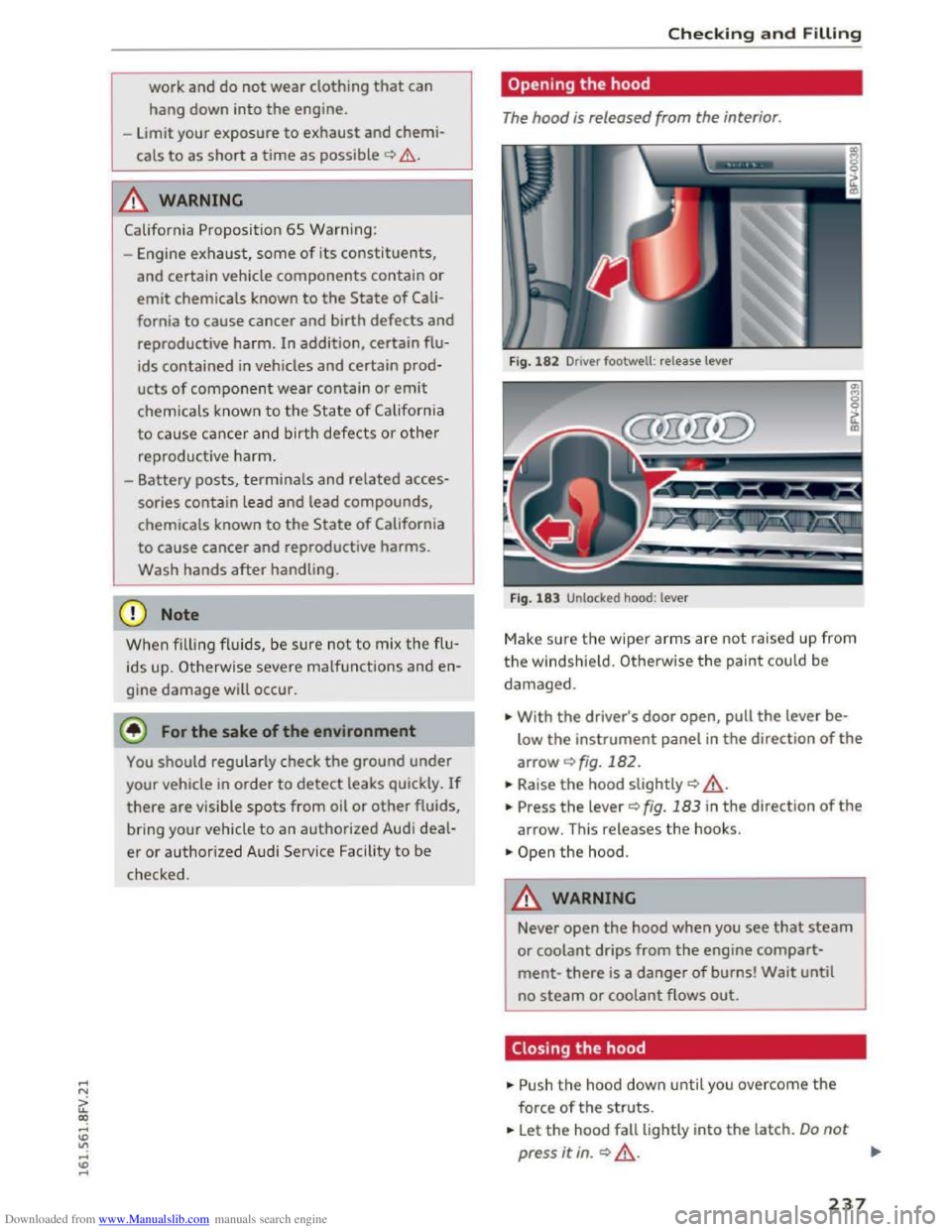
The hood is released from the interior.
Fig. 182 Driver footwell : release lever
Fig.
183 Unlocked hood: lever
Make sure the wiper arms are not raised up from
the windsh ield. Otherwise the paint could be
damaged.
... With the driver's door open, pull the lever be
low the instrument panel in the direction of the
arrowc::>fig.182 .
... Raise the hood slightly c::> ,&.
... Press the lever c::>fig. 183 in the direction of the
arrow. This releases the hooks.
.. Open the hood.
.&. WARNING
Never open the hood when you see that steam
or coolant drips from the engine compart
ment-there is a danger of burns! Wait until
no steam or coolant flows out.
Closing the hood
.. Push the hood down until you overcome the
force of the struts .
... Let the hood fall lightly into the latch. Do not
press it in. c::> ,&. ...
237
Page 247 of 322
Downloaded from www.Manualslib.com manuals search engine ~ For the sake of the environment
Because of the problem of proper disposal of
brake fluid as well as the special tools re
quired
and the ne cessary expertise, we rec
ommend that you have the brake fluid
changed by your authorized Audi dealer.
Battery
General information
The battery in your Audi does not need any main
tenance under normal operating conditions. Audi
recommends having the electrolyte level check
by an
authorized Audi dealer or authorized Audi
Service Facility
when there are high outside tem
peratures or when driving all day. The electrolyte
level should also be checked each time the bat
tery is charged ~page 247.
Have the battery checked when you bring your ve
hicle
in for an inspection . It is a good idea to re
place
the battery if it is more than S years old.
Sometimes when the airbags deploy, the battery
will be disconnected from the vehicle electrical
system for safety reasons ~.&in Repair, care
and disposal
of the airbags on page 203.
Disconnecting the battery
The battery should not be disconnected. Several
vehicle functions (power windows, for
example)
will be lost when the battery is disconnected. The
functions must be reprogrammed after connect
ing the battery. To avo id this, the battery should
only be disconnected from the vehicle electrica l
system when it is absolutely necessary.
Not running the vehicle for long periods of
time
If you do not drive your vehicle for several days or
weeks, electrical consumers are gradually scaled
back
or switched off. This reduces energy use and
ensures the vehicle will be able to start after long
periods of time~ page 92. Some convenience
functions, su ch
as interior lighting or power seat
adjustment, may not be available under certain
circumstances. These convenience functions will
be available again once you switch
the ignition on
and start the engine.
Checking and Filling
Winter operation
A lot of stress is placed on the battery during
cold weather, which results in reduced starting
ability. Have the battery checked and recharged if
necessary
before the cold weather begins.
A WARNING
- Work on the battery requires expert know l
edge. Contact an authorized Audi dealer or
authorized Audi Service Facility for informa
tion regarding the vehicle battery. There is a
risk for chemical
burns or explosions.
- Never
open the vehicle battery. Do not try to
change the battery electrolyte level. Other
wise explosive
gas will escape from the bat
tery and increase the risk of an exp losion. ___ ....J
Working on the battery
Be especially careful when working on or near
the battery.
The battery is located in the luggage compart
ment under the floor . Before you check anything
in the luggage compartment, read and heed all
WARNINGS~_&.
Always heed the safety warnings , when working
on
the vehicle battery or the vehicle electrical
system to prevent injury.
The following WARNINGS are very important
when working on the battery:
Always heed the following WARNING SYM-
BOLS and safety precautions when working on
the battery.
®
Always wear eye protection.
&
Battery acid contain s sulfuric acid. Al-
ways wear gloves and
eye protection .
@
No
- sparks
- flames
- smoking.
245
Page 248 of 322
Downloaded from www.Manualslib.com manuals search engine Checking and F illing
~
When a b attery is char ged, it pro duces
hyd rogen gas whi ch i s e xplo sive and
could
cau se pers onal injury.
®
Always kee p the battery well out of
re ach of childre n.
A WARNING
Whenever working on the ba ttery or on the
electrical system, there is the risk of injury,
accident and even fire. Read and heed the fol
lowing
WARNINGS:
- Always wear eye protection. Do not let bat
tery acid or any lead particles get on your
skin or clothing . Shield your eyes. Explosive
gases can cause blindness or other injury.
-
Battery acid contains sul furic acid. Sulfuric
acid
can cause blindness and severe burns.
- Always
wear gloves and eye protection. Do
not tilt the battery because acid could leak
out of the ventilation openi ngs.
- If you
get battery acid in your eyes or on
your skin, immediately rinse with cold wa
ter for several minutes and get medical at
tention.
-
If you should ingest any battery acid, seek
medical attention immediately.
-
Do not expose the battery to an open flame,
electric sparks or an open light.
-
Do not smoke.
-Do not interchange the positive and nega-
tive
cables.
-When working on the battery, be sure not to
short-circuit the terminals with tools or oth
er metal objects. This would cause the bat
tery to heat up very quickly, which could
lead to damage or explosion and personal
injury.
-
When a battery is charged, it produces hy
drogen gas which is explosive and could
cause personal injury .
- Always keep
the battery well out of the
reach of children.
- Before work is
done on the electrical sys
tem, disconnect the negative ground cable.
- Before
performing any work on the electri
cal
system, switch off the engi ne and igni
t i
on as well as any electrical equipment. The
246
-
negative cabl e on the battery m ust be dis
connected. If you are just going to replace a
light bulb,
then it is enough to switch off
the lights.
- Before di
sconnecting the battery, switch off
the anti-theft alarm system! Otherwise you
w ill
set off the alarm.
-
When disconnecting the battery, first dis
connect the negative cabl e and then the
positive cable.
- Before
reconnecting the battery, make sure
all electrical consumers are switched off.
Reconnect
the positive cable first and then
the negative cable. Never interchange the
cables -this could start a fire!
- Never
charge a frozen or a thawed-out bat
tery. It cou ld explode! If a battery has fro
zen,
then i t must be replaced. A discharged
b attery can freeze ove r at 32 °F (O °C).
-Make sure the vent hose is always attached
to the opening on the side of the battery .
- Never
use batteries which are damaged.
There is th e danger of an exp losion! Always
replace a da maged battery .
A WARNING
Cali fornia Proposition 65 Warning:
-
Batter y posts, ter m inals and related acces
sories contain lead a nd lead compounds,
chemicals known to the State of California
to cause cancer and reproductive problems.
Wash
hands after handling .
CD Note
-Do not disconnect the vehicle battery when
the ignition is on or when the engine is run
ning,
otherwise, you will damage electronic
components in the e lectrical system.
-If your veh icle is going to stand for a long
period of time without being driven, protect
the battery from "freezing" , otherwise it
will be damaged and will then have to be re
placed .
Page 249 of 322
Downloaded from www.Manualslib.com manuals search engine Charging the battery
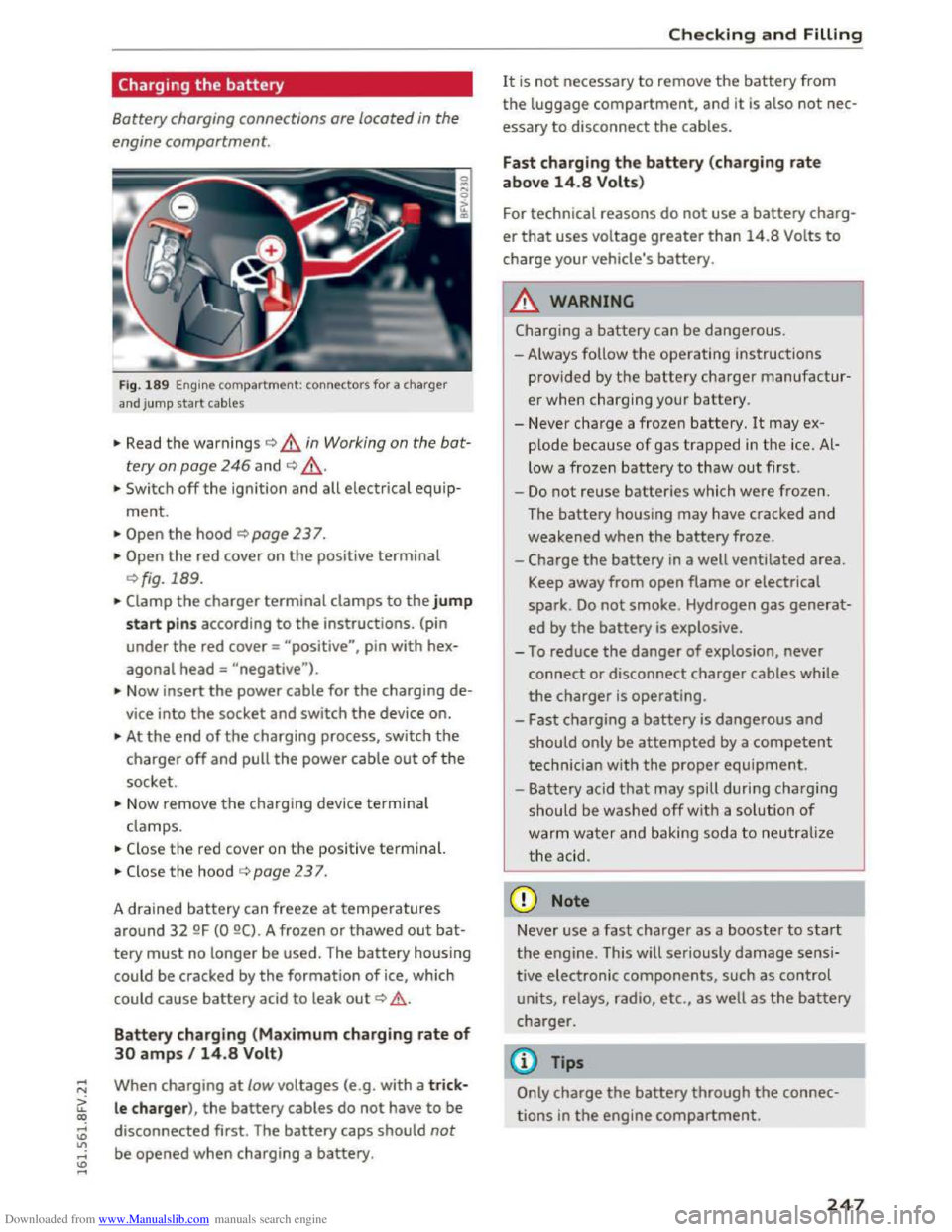
Battery charging connections are located in the
engine comportment.
Fig . 189 Engine compartment: connectors for a charger
and jump start cables
• Read the warnings ~,&.in Working on the bat
tery on page 246 and ~ ,&..
•Switch off the ignition and all electrical equip
ment.
• Open the hood ~page 23 7.
• Open the red cover on the positive terminal
~fig. 189.
•Clamp the charger terminal clamps to the jump
start pins according to the instructions. (pin
under the red cover= "positive", pin with hex
agonal head= "negative").
•
Now insert the power cable for the charging de
vice into the socket and switch the device on.
•At the end of the charging process, switch the
charger off and pull the power cable out of the
socket.
•Now remove the charging device terminal
clamps.
• Close the red cover on the positive terminal.
•Close the hood ~page 23 7.
A drained
battery can freeze at temperatures
around 32 QF (0 QC). A frozen or thawed out bat
tery must no longer be used. The battery housing
could be cracked by
the formation of ice, which
could cause
battery acid to leak out¢& .
Battery charging (Maximum charging rate of
30 amps I 14.8 Volt)
When charging at low voltages (e.g. with a trick
le charger ), the battery cables do not have to be
disconnected first. The battery caps should not
be opened when charging a battery.
Checking and Filling
It is not necessary to remove the battery from
the luggage compartment, and it is also not nec
essary to disconnect the cables.
Fast charg ing the battery ( charging rate
above
14. 8 Volts)
For technical reasons do not use a battery charg
er that uses voltage greater than 14.8 Volts to
charge your vehicle's battery.
A WARNING
!-='"
Charging a battery can be dangerous.
-Always follow the operating instructions
provided by
the battery charger manufactur
er when charging your battery.
-Never charge a froze n battery. It may ex
plode because of gas trapped in the ice. Al
low a frozen battery to thaw out first.
-
Do not reuse batteries which were frozen.
The
battery housing may have cracked and
weakened
when the battery froze.
-
Charge the battery in a well ventilated area.
Keep away
from open flame or electrical
spark.
Do not smoke. Hydrogen gas generat
ed by the battery is explosive.
-
To reduce the danger of explosion, never
connect or disconnect charger cables while
the charger is operating.
-Fast charging a battery is dangerous and
should only be attempted by a competent
technician with the proper equipment.
-Batte ry ac id that may spill during charging
should be washed
off with a so lution of
warm water and baking soda to neutralize
t
he acid.
CD Note
Never use a fast charger as a booster to start
the engine. This will seriously damage sensi
tive electronic components, such as control
units, relays, radio,
etc., as well as the battery
charger.
Tips
Only charge the battery through the connec
tions in the engine compartment.
247
Page 250 of 322
Downloaded from www.Manualslib.com manuals search engine Checking and Filling
Battery replacement
The new battery must have the same specifica
tions and dimensions as the original equipment
battery .
Intelligent energy management in your vehicle is
responsible for distributing the electrical energy
throughout your vehicle Q page 92. The intelli
gent energy management system will keep the
engine battery charged better than vehicles with
out this system. To make sure the additional
electrical energy is available once again after you
have
changed the battery, we recommend that
you install batteries of the same type and manu
facture only (the same as those insta lled at the
time your vehicle was delivered). Specificat ions
are listed on the battery housing. Your author
ized dealer must code the battery in the energy
management system to enable you to use the en
ergy management functions correctly after re
placing the battery.
The new
battery must have the same capacity,
voltage (12-volts) , amperage, construction and
plug sealing.
When installing the battery, make sure the igni
tion and all electrical consumers are switched
off.
CD Note
Make
sure the ventilation hose on the side of
the battery is connected, otherwise fumes or
battery acid can leak out.
@ For the sake of the environment
Because
of the problem of proper disposal of
a battery, we recommend your authorized
Audi dealer change the battery for you. Bat
teries contain sulfuric acid and lead and must
always be disposed of properly in compliance
with all
environmental regulations. Disposing
of vehicle batteries improperly is very danger
ous to the environment.
248
Windshield washer
system
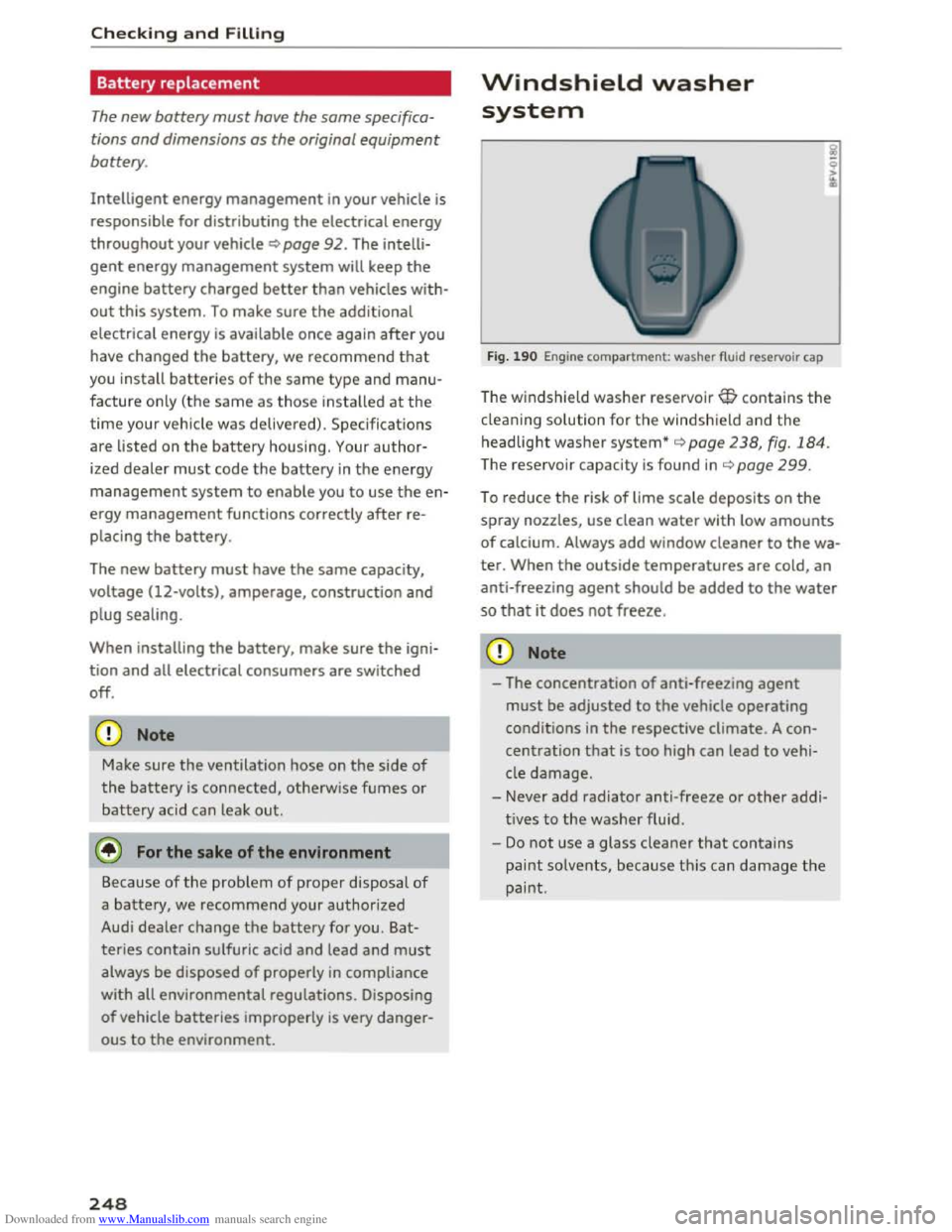
Fig. 190 Eng ine compartment: washer flu id reservo ir cap
The windshield washer reservoir W contains the
cleaning solution for the windsh ield and the
headlight washer system* Q page 238, fig. 184.
The reservoir capacity is found in Q page 299.
To reduce the risk of lime scale deposits on the
spray nozzles, use clean water with low amounts
of calcium. Always add window cleaner to the wa
ter. When the outside temperatures are cold, an
anti-freezing
agent should be added to the water
so that it does not freeze .
CD Note
- The
concentration of anti-freezing agent
must be adjusted to the vehicle operating
conditions in the respective climate. A con
centration that is too high can lead to vehi
cle damage.
-Never add radiator anti-freeze or other addi
tives to the washer fluid.
-
Do not use a glass cleaner that contains
paint solvents, because this can damage the
paint.
Page 251 of 322
Downloaded from www.Manualslib.com manuals search engine ..... N
G: CX)
.....
"' U"I
.....
"' .....
Service interval display
The service interval display detects when your ve
hicle
is due for service.
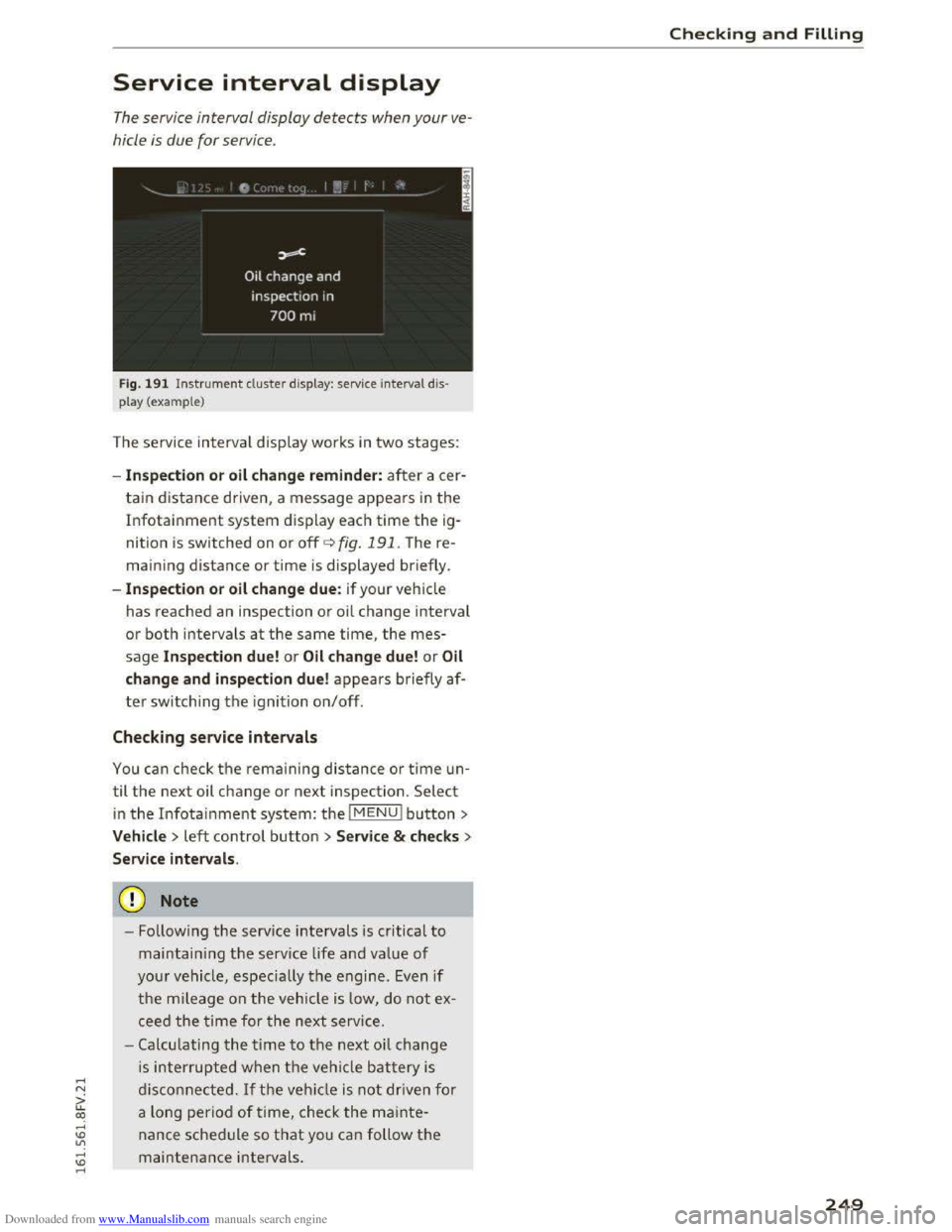
Fig . 191 Inst rument cluster display: serv ice in terva l d is
p lay (exa mpl
e)
The service interval display works in two stages:
-Inspection or oil change reminder: after a cer
tain distance driven, a message appears in the
Infotainment system display each time the ig
nition is switched on
or off¢ fig. 191. The re
main ing
distance or time is displayed briefly.
-Inspection or oil change due: if your vehicle
has reached an inspection or oil change interval
or both intervals at the same time, the mes
sage Inspection due! or Oil chang e due! or Oil
cha nge and inspection due! appears briefly af
ter switching the ignition on/off.
Check ing s ervice intervals
You can check the remaining distance or time un
til the next oil change or next inspection. Select
in the Infotainment system: the IMENUI button>
Vehicle > left control button > Ser vice & checks >
Service intervals .
@ Note
-Follow ing the service intervals is critical to
maintaining the service life and value of
your vehicle, especially the engine. Even if
the mileage on the vehicle is low, do not ex
ceed
the time for the next service.
- Calcu l
ating the time to the next o il change
is interrupted when the vehi cle battery is
disco n
nected. If the vehicle is not driven for
a long period
of time, check the mainte
nance schedule so that you can follow th e
maintenance intervals .
Checking and Filling
249
Page 256 of 322
Downloaded from www.Manualslib.com manuals search engine Wheels
(c) Vehicle capacity weight, and
(d) Production options weig ht
Maximum (permissible)
inflation pressure
means the maximum cold infla
tion pressure to which a tire may
be inflated. Also called "maxi
mum inflation pressure."
Normal occupant weight
means 150 lbs (68 kg) times the
number of occupants seated in
the vehicle up to the total seating
capacity of your vehicle .
Occupant distribution
means distribution of occupants
in a vehicle.
Outer diameter
means the overall diameter of an
inflated new tire.
Overall width
means the linear distance be
tween the exteriors of the side
walls of an inflated tire, including
elevations due to labeling, deco
rations, or protective bands or
ribs .
Ply
means a layer of rubber-coated
parallel cords.
254
Production options weight
means the combined weight of
those installed regular production
options weighing over 5 lbs (2.3
kg) in excess of those standard
items which they replace, not pre
viously
considered in curb weight
or accessory weight, including
heavy
duty brakes, ride levelers,
roof rack, heavy duty battery, and
special trim.
Radial ply tire
means a pneumatic tire in which
the ply cords that extend to the
beads are la id at substantially 90
degrees to the centerline of the
tread.
Recommended inflation
pressure
see¢ page 253, Cold tire infla
tion pressure.
Reinforced tire
means a tire designed to operate
at higher loads and at higher in
flation pressures than the corre
sponding standard tire. Rein
forced tires may be identified as
"XL", "xl", "EXTRA LOAD", or "RF"
on the sidewall. ...
Page 290 of 322
Downloaded from www.Manualslib.com manuals search engine Emergency situations
Emergency situations
General
This chapter is intended for trained emergency
crews and working personnel who have the nec
essary tools and equipment to perform these
operations.
Starting by pushing or
towing
CD Note
Vehicles with an automatic transmission can
not be started by pushing or towi ng.
Starting with jumper
cables
If necessary, the engine con be started by con
necting it to the battery of another vehicle.
If the engine should fail to start because of a dis
charged or weak battery, the battery can be con
nected to the battery of another vehicle, using a
pair of jumper cables to start the engine.
Jumper cables
Use only jumper cables of sufficiently large cross
section to carry the starter current safely. Refer
to the manufacturer's specifications.
Use only jumper cables with insulated terminal
clamps which are distinctly marked:
plus(+) cable in most cases co lored red
minus(-) cable in most cases colored black.
A WARNING _,
Batteries contain electricity, acid, and gas.
Any of these can cause very serious or fatal in·
jury. Follow the instructions below for safe
handling of your vehicle's battery.
-Always shield your eyes and avoid leaning
over
the battery whenever possible.
- A discharged
battery can freeze at tempera
tures just below 32 °F (0 °C). Before con
necting a jumper cable, you must thaw the
288
frozen battery completely, otherwise it
could explode.
-
Do not allow battery acid to contact eyes or
skin. Flush any contacted area with water
immediately.
-
Improper use of a booster battery to start a
vehicle may
cause an explosion.
- Vehicle
batteries generate explosive gases.
Keep sparks, flame and lighted cigarettes
away from batteries.
-Do not try to jump start any vehicle with a
low acid level
in the battery.
-The voltage of th e booster battery must also
have a 12-volt rating. The capacity (Ah) of
the booster battery should not be lower
than that of the discharged battery. Use of
batteries of different voltage or substantial
ly different "Ah" rating may cause an exp lo
sion and personal injury.
- Never
charge a frozen battery. Gas trapped
in the ice may cause an explosion.
- Never
charge or use a battery that has been
frozen. The battery case may have be weak
ened.
-Use of batteries of different voltage or sub
stantially different capacity (Ah) rating may
cause an explosion and injury. The capacity
(Ah)
of the booster battery should not be
lower than that of the discharged battery.
- Before you check anything in the engine
compartment, always read and heed all
WARNINGS
~page 236.
CD Note
- Applying a higher voltage booster battery
will cause expensive damage to sensitive
electronic
components, such as control
units, relays, radio, etc.
-There must be no electrical contact between
the vehicles as otherwise current could al
ready start to flow as soon as the positive
( +
)terminals are connected.
Tips
T he discharged battery must be properly con-
nected to the vehicle's electrical system. ~