wheel AUDI TT COUPE 2016 Service Manual
[x] Cancel search | Manufacturer: AUDI, Model Year: 2016, Model line: TT COUPE, Model: AUDI TT COUPE 2016Pages: 322, PDF Size: 52.86 MB
Page 194 of 322
Downloaded from www.Manualslib.com manuals search engine Airbag system
not, or to signal that it is occupied by some
one who is heavier than the person actually
sitting on the seat. The presence of addi
tional objects could cause the passenger
front airbag to be turned on when it should
be off, or could cause the airbag to work in a
way
that is different from the way it would
have worked
without the object on the seat.
Front airbags
Description of front airbags
The airbag system can provide supplemental
protection to properly restrained front
seat occu
pants.
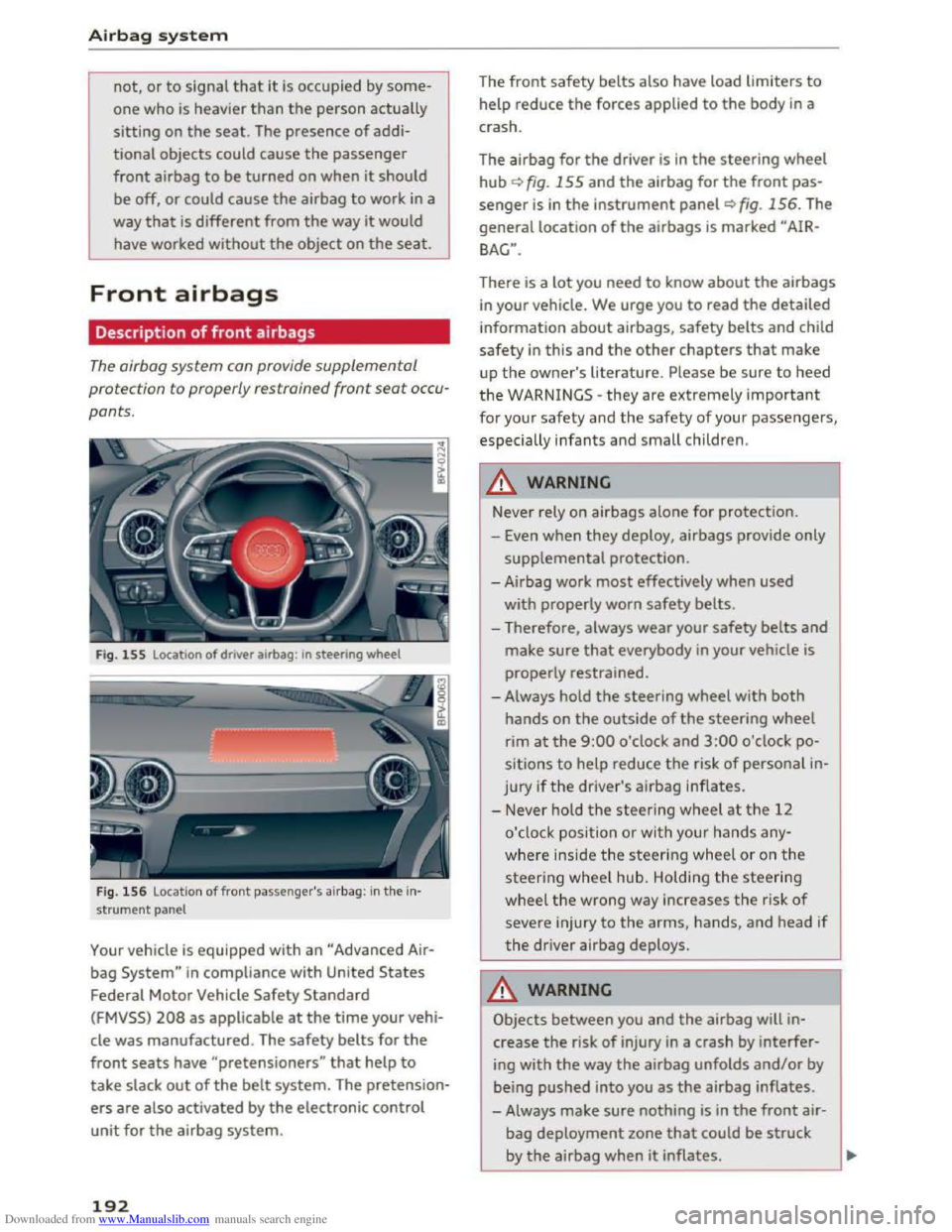
Fig. 155 Locat ion of driver airbag : in steering wheel
Fig.
156 Location of front passenger's airbag: in the in·
strument panel
Your vehicle is equipped with an "Advance d Air
bag System" in compliance with United States
Federal Motor Vehicle Safety Standard
(FMVSS) 208 as applicable at the time your vehi
cle
was manufactured. The safety belts for the
front seats have "pretensioners" that help to
take slack out of the belt system. The pretension
ers are also activated by the electronic control
unit for the airbag system.
192
The front safety belts also have load limiters to
help reduce the forces applied to the body in a
crash.
The airbag
for the driver is in the steering wheel
hub i::> fig. 155 and the airbag for the front pas
senger is in the instrument panel i::> fig. 156. The
general location of the airbags is marked "AIR
BAG".
There is a lot you need to know about the airbags
in your vehicle. We urge you to read the detailed
information about airbags, safety belts and child
safety in this and the other chapters that make
up the owner's literature. Please be sure to heed
the WARNINGS -they are extremely important
for your safety and the safety of your passengers,
especially infants and small children .
_&WARNING
-
Never rely on airbags alone for protection.
- Even when they deploy, airbags provide only
supplemental protection.
-Airbag work most effectively when used
with properly
worn safety belts.
- Therefore, always
wear your safety belts and
make sure that everybody in your vehicle is
properly
restrained.
- Always hold the steering wheel with both
hands on the outside of the steering wheel
rim at the 9:00 o'clock and 3:00 o'clock po
sitions
to help reduce the risk of personal in
jury if the driver's airbag inflates.
-Never hold the steering wheel at the 12
o'clock position or with your hands any
where inside the steering wheel or on the
steering wheel hub. Holding the steering
wheel the wrong way increases the risk of
severe injury to the arms, hands, and head if
the driver airbag deploys.
_&WARNING
Objects between you and the airbag will in
crease the risk of injury in a crash by interfer
ing with the way the airbag unfolds and/or by
being pushed into you as the airbag inflates.
- Always
make sure nothing is in the front air-
bag deployment zone that could be struck
by the airbag when it inflates. _____ ___.
Page 195 of 322
Downloaded from www.Manualslib.com manuals search engine -Objects in the zone of a deploying airbag
can
become projectiles when the airbag de
ploys and cause serious personal injury.
- Never hold
things in your hands or on your
lap
when the vehicle is in use.
-Never place accessories or other objects
(such as cup holders, telephone brackets,
note pads, navigation systems, or things
that are large, heavy, or bulky) on the doors;
never
attach then to the doors or the wind
shield; never place
them over or near or at
tach them to the area marked ,.AIRBAG" on
the steering wheel, instrument panel or the
seat backrests; never place them between
these areas and you or any other person in
the vehicle.
- Never
attach objects to the windshield
above
the passenger front airbag, such as
accessory GPS navigation units or music
players. Such
objects could cause serious in
jury
in a collision, especially when the air
bags inflate.
- Never recline
the front passenger seat to
transport objects. Items can also move into
the deployment area of the side airbags or
the front airbag during breaking or in a sud
den maneuver. Objects near the airbags can
fly dangerously through the passenger com
partment and cause injury, particularly
when the seat is reclined and the airbags in
flate.
A WARNING
A person on the front passenger seat, espe
cially infants and small children, will receive
serious injuries and can even be killed by be
ing
too close to the airbag when it inflates.
- Although
the Advanced Airbag System in
your vehicle is designed to turn off the front
passenger airbag if an infant or a small child
is on
the front passenger seat, nobody can
absolutely guarantee that deployment un
der these special conditions is impossible in
all conceivable situations that may happen
during the useful life of your vehicle.
- The Advanced Airbag
System can deploy in
accordance with the "low risk" option under
-I
Airbag system
the U.S. Federal Standard if a child that is
heavier
than the typical one-year old child is
on
the front passenger seat and the other
conditions for airbag deployment are met.
- Accident statistics have shown that children
are generally safer in the rear seat area than
in the front seating position .
- For
their own safety, all children, especially
12 years and younger, should always ride in
the back properly restrained for their age
and size.
Advanced front airbag system
Your vehicle is equipped with a front Advanced
Airbag
System in compliance with United States
Federal Motor Vehicle Safety Standard 208 asap
plicable at the time your vehicle was manufac
tured.
The front Advanced Airbag System supplements
the safety belts to provide additional protection
for the driver's and front passenger's heads and
upper bodies in frontal crashes. The airbags in
flate only in frontal impacts when the vehicle de
celeration is high enough.
The front Advanced Airbag System for the front
seat occupants is not a substitute for your safety
belts. Rather, it is part of the overall occupant re
straint system in your vehicle. Always remember
that the airbag system can only help to protect
you, if you are sitting upright, wearing your safe
ty belt and wearing it properly. This is why you
and your passengers must always be properly re
strained, not just because the law requires you to
be.
The Advanced Airbag
System in your vehicle has
been certified to meet the "low risk" require-
ments for 3 and 6 year-old children on the pas
senger side and very small adults on the driver
side. The low risk
deployment criteria are intend
ed to help reduce the risk of injury through inter
action with the front airbag that can occur, for
example, by being too close to the steering wheel
and instrument panel when the airbag inflates.
In addition,
the system has been certified to
comply with the "suppression" requirements of .,..
193
Page 197 of 322
Downloaded from www.Manualslib.com manuals search engine smash the child seat and child against the
backrest, center armrest, door, or roof.
- Always
install rearward-facing child re
straints on the rear seat.
-If you must install a rearward facing child
seat on the front passenger seat because of
exceptional circumstances and the PASSEN
GER AIR BAG OFF light does not come on
and stay on, immediately install the rear
facing child
seat in a rear seating position
and have the airbag system inspected by
your Audi dealer.
A WARNING
If, in exceptional circumstances, you must in
stall a forward-fac ing chi ld restraint on the
front passenger's seat:
- Always make sure the forward-fac ing seat
has been designed and cer t ified by its man
ufacturer for use on a fron t seat with a pas
senger front and side airbag .
- Never
put the forward-facing child restraint
up against or very near the instrument pan
el.
-Always move the passenger seat into its
rearmost position in the seat's fore and aft
adjustment range, as far away from the air
bag as possible, before install ing the for
ward-facing child
restraint. The backrest
must be adjusted to an upright positio n.
-Always make sure that there is nothing on
the front passenger seat that will cause the
capacitive passenger detection system in
the seat to signa l to the Airbag System that
the seat is occupied by a person when it is
not, or to signa l that it is occupied by some
one who is heavier than the person actually
sitting on the seat. T he presence of addi
tional objec ts could cause the passenger
fro nt airbag to be turned on when it should
be off, or could cause the airbag to work in a
way
that is different from the way it would
have worked
without the object on the seat.
- Make
sure that the PASSENGER AIR BAG
OFF light comes on and stays on all the time
whenever the ignition is switched on.
Airbag system
Advanced Airbag System components
The front passenger seat in your vehicle has a lo t
of ve ry important parts of the Advan ced Airb ag
System in it. These parts include the capacitive
passenger detection system, wiring, brackets,
and more. The control unit monitors the system
on the front passenger seat when the ignition is
switched on and turns the airbag indicator light
on when a malfunction in the one of the system
components is detected c> page 200. Because
the front passenger seat contai ns important
parts of the Advanced Airbag System, you must
take care to p revent it from being damaged.
Dam age to the seat m ay prevent the Advan ced
Airbag
System for the front passenger seat from
doing its job in a crash.
The front Advanced Airbag System consists
of the following:
-Crash sensors in the front of the ve hicl e tha t
measure vehicle acceleration/deceleration to
prov ide information to the Advanced Airbag
System about the severity of the crash.
-
An electronic control unit, with integrated
crash sensors for front and side impacts. The
control un it "decides" whether to f ir e the front
airbags based on the information rece ived from
the crash sensors. The control unit also "de
cides" whether the safety belt pretensioners
should be activated.
-
An Advanced Airbag with gas generator for the
driver inside the steering wheel hub .
-
An Adva nced Airbag with gas generator inside
the instrument panel for the front passenger.
- A
capacitive passenger detection system under
neath the front passenger seat cove r. This sys
tem measures the electrica l capacitance of the
pe rson in the seat. The information registered
is sent continuous ly to the electronic control
u
nit to reg ulate deployment of t he front Ad
vanced Airbag on
the passenger side.
-
An airbag monitori ng system and ind ic a tor
ligh t in t he i nstrument cl us ter c>poge 199.
-A sensor in each front seat registers t he d is
tance between the respective seat and the
steering wheel or ins trument panel. The infor-
mation registered is sent continuousl y to the ...
195
Page 200 of 322
Downloaded from www.Manualslib.com manuals search engine Airbag sy ste m
When an airbag deploys, fine dust is released.
This is normal and is not caused by a fire in the
vehicle. This dust is made up mostly of a powder
used to lubricate the airbags as they deploy. It
could irritate skin.
It is important to remember that while the sup
plemental airbag system is designed to reduce
the likelihood of serious injuries, other injuries,
for example swelling , bruising and minor abra
sions, can also happen when airbags inflate. Air
bags do not protect the arms or the lower parts
of the body. Front airbags supplement the three
point safety belts only in some frontal collisions
in which the vehicle deceleration is high enough
to deploy the airbags.
Front airbag s will not deploy:
-ifthe ignit ion is switched off when a crash oc-
curs,
-in side collisions,
-
in rear-end collisions,
-
in rollovers,
-
when the crash deceleration measured by the
airbag system is less than the minimum thresh
old needed for airbag deployment as registered
by the electronic control unit.
The front passenge r airbag will also not
deploy:
-when the front passenger seat is not occupied,
-
when the electrical capacitance measured by
the capacitive passenger detection system for
the front passenger seat indicates that the pas
senger side frontal airbag must be switc hed off
by the electronic control unit (the PASSENGER
AIR
BAG OFF light Q page 200 and how they
work comes on and stays on).
A WARNING
Sitting in the wrong position can increase the
risk of serious injury in crashes.
-To reduce the risk of injury when the airbags
inflate, the driver and passengers must al
ways
sit in an upright position, must not
lean against or place any part of their body
too close to the area where the airbags are
located.
198
-Occupants who are unbelted, out of position
or too close to the airbag can be seriously
injured
by an airbag as it unfolds with great
force in the blink of an eye Q page 189.
A WARNING
A child in a rearward-facing child seat instal
led
on the front passenger seat will be seri
ously injured
and can be killed if the front air
bag inflates -even with an Advanced Airbag
System.
-The inflating airbag will hit the child seat or
infant carrier with great force and will
smash the child seat and child against the
backrest, center armrest, door or roof.
- Always install rear-facing
child seats on the
rear seat.
- If you must install a rearward facing child
seat on the front passenger seat because of
exceptional circumstances and the PASSEN
GER AIR BAG OFF light does not come on
and stay on, immediately install the rear
facing child seat in a rear seating position
and have the airbag system inspected by
your Audi dealer.
A WARNING
Objects between you and the airbag will in
crease the risk of injury in a crash by interfer
ing with the way the airbag unfolds or by be
ing pushed into you as the airbag inflates.
- Never hold
things in your hands or on your
lap when the vehicle is in use.
-
-Never transport items on or in the area of
the front passenger seat. Objects could
move in
to the area of the front airbags dur
ing braking or other sudden maneuver and
become dangerous projectiles that can
cause serious personal injury if the airbags
inflate.
- Never place
or attach accessories or other
objects (such as cup holders, telephone
brackets, large, heavy or bulky objects) on
the doors, over or near the area marked
"AIRBAG" on the steering wheel, instru
ment panel, seat backrests or between
Page 205 of 322
Downloaded from www.Manualslib.com manuals search engine system will not be impaired and that discarded
components do not cause injury or pollute the
environment.
A WARNING
Improper care, servicing and repair proce
dures can increase the risk of personal injury
and death by preventing an airbag from de
ploying when needed or deploying an airbag
unexpectedly:
- 1
-Never cover, obstruct, or change the steer
ing wheel horn pad or airbag cover or the in
strument panel or modify them in any way.
- Never
attach any objects such as cup holders
or telephone mountings to the surfaces cov
ering
the airbag units.
- For cleaning
the horn pad or instrument
panel, use only a soft, dry cloth or one mois
tened with plain water. Solvents or cleaners
could damage the airbag cover or change
the stiffness or strength of the material so
that the airbag cannot deploy and protect
properly.
- Never repair,
adjust, or change any parts of
the airbag system.
-All work on the steering wheel, instrument
panel, front seats or electrical system (in
cluding
the installation of audio equipment,
cellular telephones and CB radios, etc.)
must be performed by a qualified technician
who has the training and special equipment
necessary.
- For any work on
the airbag system, we
strongly recommend that you see your au
thorized Audi dealer or qualified workshop.
- Never modify
the front bumper or parts of
the vehicle body.
- Always
make sure that the side airbag can
inflate without interference:
- Never install
seat covers or replacement
upholstery over the front seatbacks that
have not been specifically approved by
Audi.
- Never
use additional seat cushions that
cover the areas where the side airbags in
flate.
Airbag system
-Damage to the original seat covers or to
the seam in the area of the side airbag
module must always be repaired immedi
ately by an authorized Audi dealer.
-The airbag system can deploy only once. Af
ter an airbag has been deployed, it must be
replaced with new replacement parts de
signed and approved especially for your
Audi
model version. Replacement of com
plete airbag systems or airbag components
must be performed by qualified workshops
only. Make sure that any airbag service ac
tion is
entered in your Audi Warranty &
Maintenance booklet under AIRBAG RE
PLACEMENT RECORD.
-For safety reasons in severe accidents, the
alternator and starter are separated from
the vehicle battery with a pyrotechnic circuit
interrupter.
-Work on the pyrotechnic circuit interrupt
er must only be performed by a qualified
technicians who have
the experience, in
formation and special tools necessary to
perform the work safely.
-
If the vehicle or the circuit interrupter is
scrapped, all applicable safety precautions
must be followed.
@ For the sake of the environment
Undeployed airbag modules and pretension
ers might be classified as Perchlorate Materi
al -special handling may apply, see
www.dtsc.ca.gov/hazardouswaste/perchlo
rate. When the vehicle or parts of the re
straint system including airbag modules and
safety belts with pretensioners are scrapped,
all applicable laws and regulations must be
observed. Your authorized Audi dealer is fa
miliar
with these requirements and we recom
mend that you have your dealer perform this
service for you.
Other things that can affect Advanced
Airbag performance
Changing the vehicle's suspension system can
change the way that the Advanced Airbag System
performs in a crash. For example, using tire-rim ..,.
203
Page 206 of 322
Downloaded from www.Manualslib.com manuals search engine Airbag system
combinations not approved by Audi, lowering the
vehicle, changing the stiffness of the suspension,
including the springs, suspension struts, shock
absorbers etc. can change the forces that are
measured by the airbag sensors and sent to the
electronic control unit. Some suspension changes
can, for example, increase the force levels meas
ured by the sensors and make the airbag system
deploy in crashes in which it would not deploy if
the changes had not been made. Other kinds of
changes may reduce the force levels measured by
the sensors and prevent the airbag from deploy
ing when it should.
_&. WARNING
Changing the vehicle's suspension including
use
of unapproved tire-rim combinations can
change Advanced Airbag performance and in
crease the risk of serious personal injury in a
crash.
-Never install suspension components that
do not have the same performance charac
teristics as the components originally instal
led on your vehicle.
- Never use tire-rim
combinations that have
not been approved by Audi.
Knee airbags
Description of knee airbags
The knee airbag system can provide supplemen
tal protection to properly restrained front
seat
occupants.
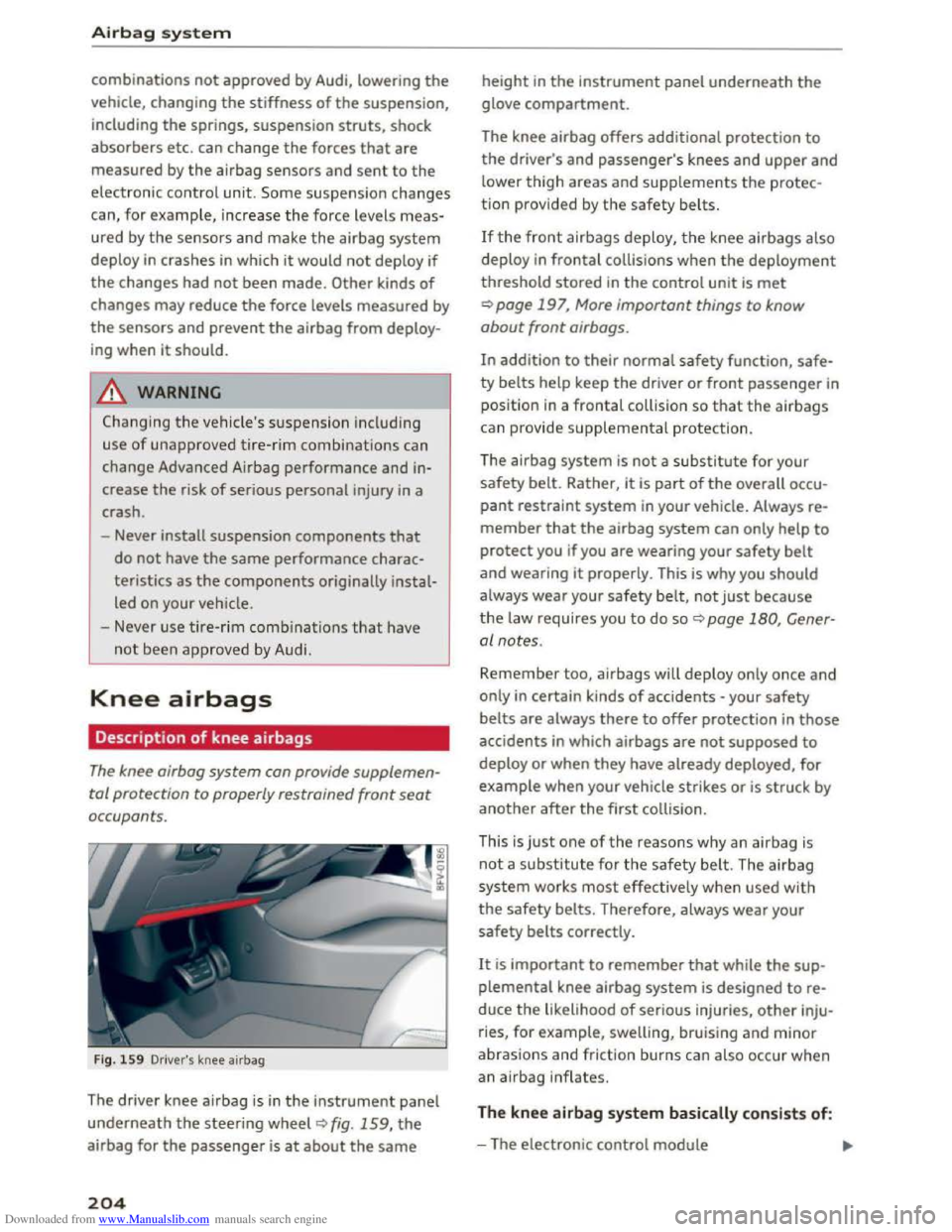
Fig. 159 Driver's knee airbag
The driver knee airbag is in the instrument panel
underneath the steering wheel Q fig. 159, the
airbag for the passenger is at about the same
204
height in the instrument panel underneath the
glove compartment.
The knee airbag offers additional protection to
the driver's and passenger's knees and upper and
lower thigh areas and supplements the protec
tion provided by the safety belts.
If the front airbags deploy, the knee airbags also
deploy
in frontal collisions when the deployment
threshold stored in the control unit is met
Qpage 197, More important things to know
about front airbags.
In addition to their normal safety function, safe
ty belts help keep the driver or front passenger in
position in a frontal collision so that the airbags
can provide
supplemental protection.
The airbag system is not a substitute for your
safety belt. Rather, it is part of the overall occu
pant restraint system in your vehicle. Always re
member that the airbag system can only help to
protect you if you are wearing your safety belt
and wearing it properly. This is why you should
always wear your safety belt, not just be ca use
t h e law requires you
to do so~ page 180, Gener
al notes .
Remember too, airbags will deploy only once and
only in certain kinds of accidents -your safety
belts are always there to offer protection in those
accidents in which airbags are not supposed to
deploy or when they have already deployed, for
example when your vehicle strikes or is struck by
another after the first collision.
This
is just one of the reasons why an airbag is
not a substitute for the safety belt. The airbag
system works most effectively when used with
the safety belts. Therefore, always wear your
safety belts correctly.
It is important to remember that while the sup
plemental knee airbag system is designed to re
duce the likelihood of serious injuries, other inju
ries, for example, swelling, bruising and minor
abrasions and friction burns can also occur when
an airbag inflates.
The knee airbag system basically consists of:
-The electronic control module .,.
Page 208 of 322
Downloaded from www.Manualslib.com manuals search engine Airbag system
-at least 10 in (25 cm) between the chest
and the steering wheel/instrument panel.
-
at least 4 in (10 cm) between the knees
and the lower part of the instrument pan
el.
- The risk
of personal injury increases if you
lean forward
or to the side, or if the seat is
improperly positioned and you are not wear
ing your safety belt. The risk increases even
more should the airbag deploy.
- Always
make sure that the knee airbag can
inflate without interference. Objects be
tween you and the airbag can increase the
risk of injury in an accident by interfering
with
the way the airbag deploys or by being
pushed into you as the airbag deploys.
- Never
let anybody, especially children or
animals ride in the footwell in front of the
passenger seat. If the airbag deploys, this
can result in serious or fatal injuries.
- Never carry
objects of any kind in the foot
well area in front of the driver's or pas
senger's seat. Bulky objects (shopping
bags, for example) can interfere with or
prevent proper deployment of the airbag.
Small objects can be thrown through the
vehicle if the airbag deploys and injure you
or your passengers.
-Make sure there are no cracks, deep scratch
es or other damage in the area of the instru
ment panel where the knee airbags are lo
cated.
-If children are incorrectly seated, their risk
of injury increases in a collision
~page 212, Child safety.
206
Side airbags
Description of side airbags
The airbag system can provide supplemental
protection to properly restrained front
seat occu
pants .
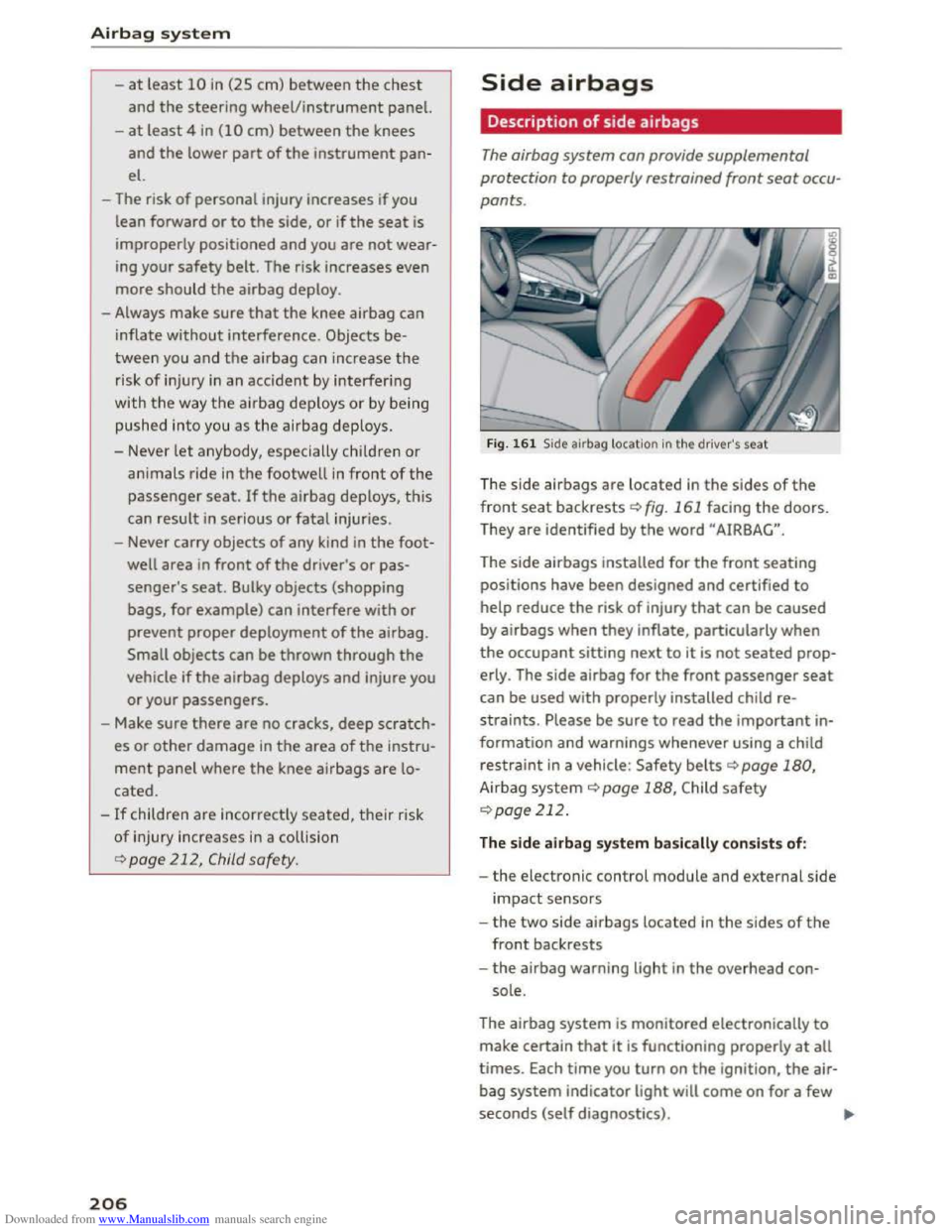
Fig . 161 Side airbag location in the driver's seat
The side airbags are located in the sides of the
front seat backrests Q fig. 161 facing the doors.
They
are identified by the word "AIRBAG".
The side airbags installed for the front seating
positions have been designed and certified to
help reduce the risk of injury that can be caused
by airbags when they inflate, particularly when
the occupant sitting next to it is not seated prop
erly. The
side airbag for the front passenger seat
can be used with properly installed child re
straints. Please be sure to read the important in
formation and warnings whenever using a child
restraint in a vehicle: Safety belts Q page 180,
Airbag system Q page 188, Child safety
¢page 212.
The side airbag syste m b asica lly consist s o f:
-
the electronic control module and external side
impact sensors
-the two side airbags Located in the sides of the
front backrests
-the airbag warning light in the overhead con
sole.
The airbag system is monitored electronically to
make certain that it is functioning properly at all
times. Each time you turn on the ignition, the air
bag system indicator light will come on for a few
seconds (self diagnostics). Iii>
Page 216 of 322
Downloaded from www.Manualslib.com manuals search engine Child safety
208 as applicable at the time your vehicle was
manufactured.
The Advanced Airbag system in your vehicle has
been certified to meet the "low-risk" require
ments for 3-and 6-year old children on the pas
senger side and small adults on the driver side.
The low risk deployment criteria are intended to
reduce the risk of injury through interaction with
the airbag that can occur, for example, by being
too close to the steering wheel and instrument
panel when the airbag inflates. In addition, the
system has been certified to comply with the
"suppression" requirements of the Safety Stand
ard, to turn off the front airbag for infants up to
12 months who are restrained on the front pas
senger seat in child restraints that are listed in
the Standard.
Even though your vehicle is equipped with an Ad
vanced Airbag
system, all children, especially
those 12 years and younger, should always ride
in the back seat properly restrained for their age
and size. The airbag on the passenger side makes
the front seat a potentially dangerous place for a
child
to ride. The front seat is not the safest place
for a child
in a forward-facing child safety seat. It
can be a very dangerous place for an infant or a
larger child in a rearward-facing seat.
The vehicle's Advanced Airbag System has a ca
pacitive
passenger detection system in the front
passenger seat cushion that can detect the pres
ence of a baby or a child in a ch ild restraint sys
tem on this seat.
The capacitiv e passenger detection system regis
ters the changes that resul t in an electrical field
when a ch ild , a child restraint, and a baby blanket
are on the front passenger seat. The change in
the measured capacitance due to the presence of
a child, a child restraint, and a baby blanket on
the front passenger seat is related to the child
restraint system resting on the seat. The meas
ured capacitance of a child restraint system var
ies
depending on the type of system and specific
make and model.
The electrical capacitance of the various types,
makes, and models of child restraints specified
by
the U.S.National Highway Traffic Safety Ad-
214
ministration (NHTSA) in the relevant safety
standard are stored in the Advanced Airbag Sys
tem control unit together with the capacitances
typical of infants and a 1-year old child. When a
child
restraint is used on the front passenger
seat with a typical 1 year-old infant, the Ad
vanced Airbag
System compares the capacitance
measured by the capacitive passenger detection
system with the data stored in the electronic con
trol unit.
Child restraints and Advanced front airbag
system
Regardless of the child restraint that you use,
make sure that it has been certified to meet Unit
ed States Federal Motor Vehicle Safety Standards
and ha s been certified by its manufacture r for
use with a n airbag. Always be sur e that the child
restraint is properly installed at one of the rear
seating positions. If in exceptional circumstances
you must use it on the front passenger seat, care
fully
read all of the information on child safety
and Advanced Airbags and heed all of the appli
cable WARNINGS. Make certain that the child
and child restraint are correctly recognized by the
capacitive passenger detection system in the
front passenger seat, that the front passenger
airbag is turned off, and that the airbag status is
always correctly si
gnaled by the PASSENGER AI R
BAG OFF light.
Many types and models of child restraints have
been available over the years, new models are in
troduced regularly incorporating new and im
proved
designs a nd older models are taken out of
production. Child restraints are not standardized .
Child
restraints of the same type typically have
different weights and sizes and different "foot
pr ints", the size and shape of the bottom of the
child restraint that sits on the seat, when they
are installed on a vehicle seat. These differences
make it virtually impossible to certify compliance
with the requirements for advanced airbags with
each
and every child restraint that has ever been
sold in the past or will be sold over the course of
the useful life of your vehicle.
For
this reason, the United States Nat ional High
way Traffic
Safety Administration has published a ..,_
Page 252 of 322
Downloaded from www.Manualslib.com manuals search engine Wheels
Wheels
Wheels and Tires
General information
.,.Check your tires regularly for
damage (punctures, cuts, cracks
and bulges). Remove foreign ob
jects from the tire tread.
.,. If driving over curbs or similar
obstacles, drive slowly and ap
proach the curb at an angle.
.,.Have faulty tires or rims re
placed
immediately.
.,.Protect your tires from oil,
grease and fuel.
.,.Mark tires before removing
them so that the same running
direction can
be maintained if
they are reinstalled .
... Lay tires flat when storing and
store them in a cool, dry location
with
as little exposure to light as
possible.
CD Note
-Please note that summer and
winter tires are designed for
the conditions that are typical
in those seasons. Audi recom
mends using winter tires dur
ing the winter months. Low
temperatures significantly de
crease the elasticity of summ
er tires, which affects traction
250
and braking ability. If summer
tires are used in very cold
temperatures, cracks can form
on the tread bars, resulting in
permanent tire damage that
can cause loud driving noise
and unbalanced tires.
-Burnished, polished or
chromed rims must not be
used in winter driving condi
tions. The surface of the rims
does not have sufficient corro
sion
protection for this and
could be permanently dam
aged by road salt or similar
substances.
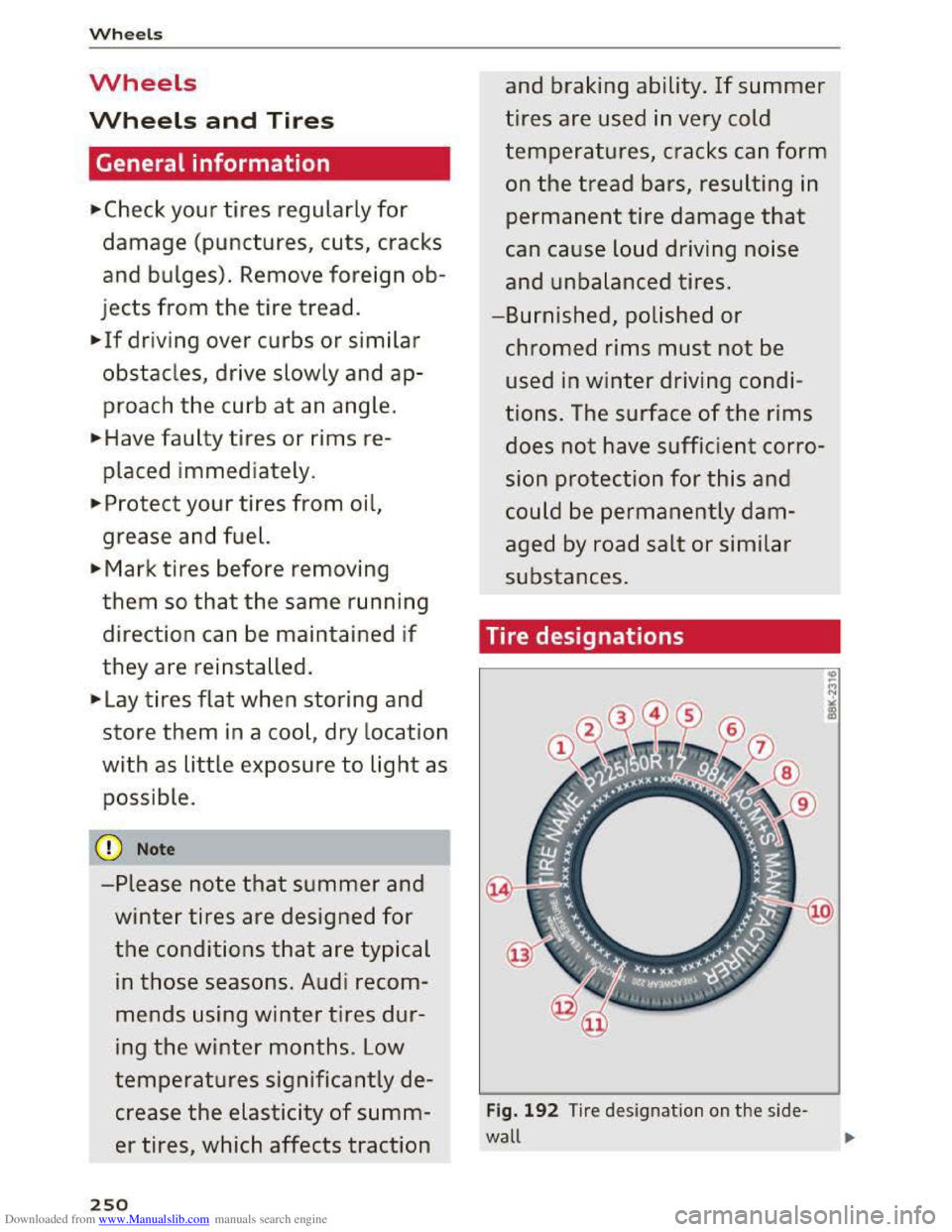
Tire designations
Fig. 192 Tire designation on the side
wall
Page 253 of 322
Downloaded from www.Manualslib.com manuals search engine CD Tires for passenger vehicles
(if applicable)
P indicates a tire for a passe ng er
vehi cl
e. T indi cates a tire de sig
nated
for tempora ry use.
@Nominal width
Nominal width of the tire be
tween
the s idewalls in millime
ters. In general: the Larger the
number, the wider the tire.
@ Aspect ratio
Height/width ratio expressed as a
percentage.
@ Tire construction
R indicates a radial tire.
®Rim diameter
Size of the rim diameter in inches.
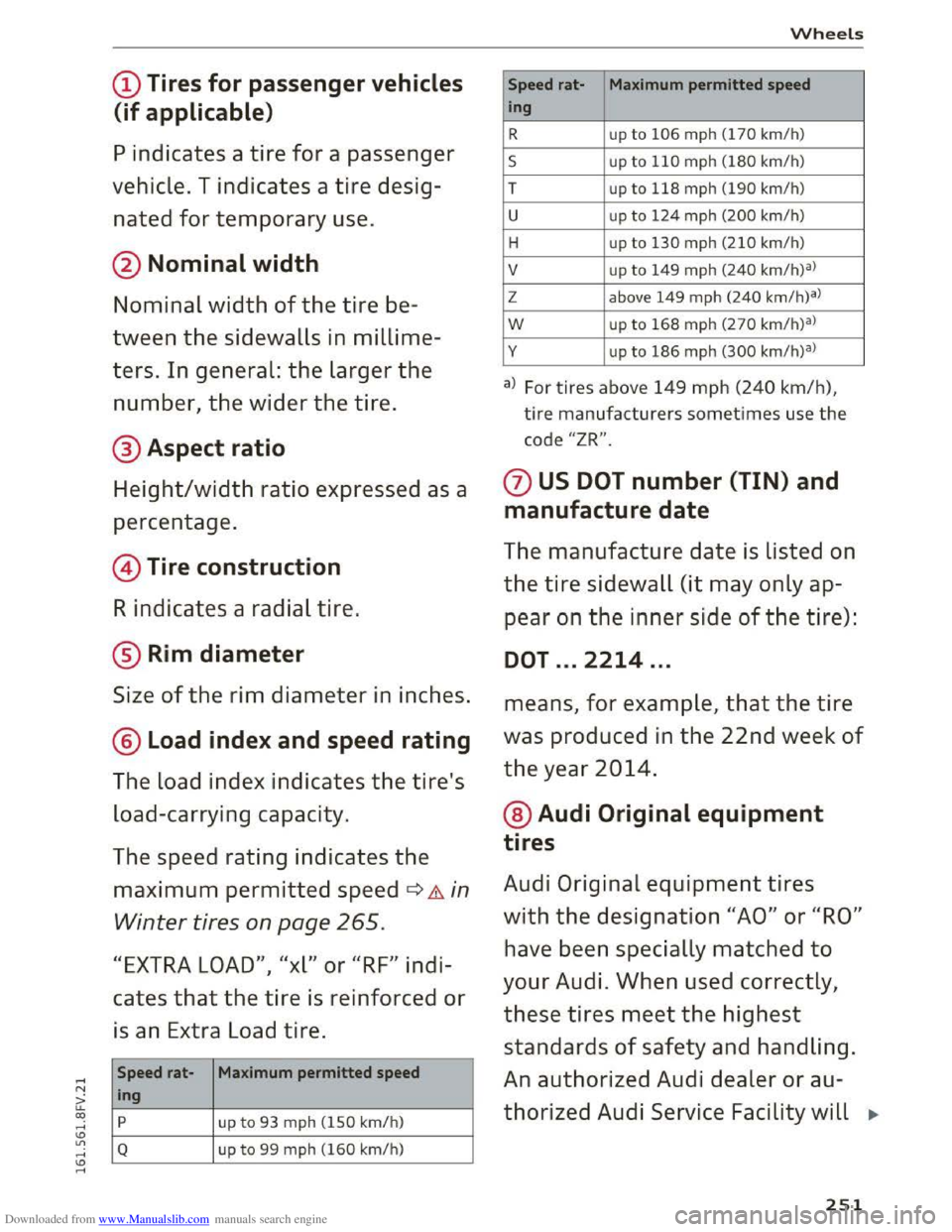
@ Load index and speed rating
The Load index indi cate s the tire' s
Load-carr yin g c apacity.
The speed rating indicates
the
maximum permitted speed¢.& in
W i
nter tires on page 265.
"EXTRA LOAD", "xl" or "RF" indi
cate s
that the tire is reinforced or
is an Extra Load tire.
Speed rat-Maximum permitted speed
ing
p up to 93 mph (1 50 km/h)
Q up to 99 mph (160 km/h)
Wheels
Speed rat-Maximum permitted speed
ing
R up to 106 mph (170 km/h)
s u p to 110 mph (180 km/h)
T up to 118 mph (190 km/h)
u up t o 124 mph (200 km/h)
H up to 130 mph (210 km/h)
v u p to 14 9 mph (240 km/h)al
z above 149 mph (240 km/h)al
w up to 168 mph (270 km/h)al
y up to 186 mph (300 km/h)al
a) For tires above 149 mph (2 40 km/h),
tire manufacture rs sometimes use t he
cod e "ZR".
(j) US DOT number (TIN) and
manufacture date
The manufac ture date is Listed on
the tire sidewall (it may only ap
pear on
the inner side of the tire):
DOT ... 2214 ...
means, for example , that the tire
was produced in the 22nd week of
the year 2014.
@Audi Original equipment
tires
Audi Original equipment tires
with the designation "AO" or "RO"
have been specially matched to
your Audi. When used correct ly,
these tires meet the highest
standards of safety and handling.
An authorized Audi dealer or au
thorized Audi Service Facility will ...
251