open gas tank AUDI TT COUPE 2016 Owners Manual
[x] Cancel search | Manufacturer: AUDI, Model Year: 2016, Model line: TT COUPE, Model: AUDI TT COUPE 2016Pages: 322, PDF Size: 52.86 MB
Page 234 of 322
Downloaded from www.Manualslib.com manuals search engine Checking and Filling
-If you a re unable to determine whether or
not a particular fuel blend
meets the speci
fications, ask your service station or its fuel
supplier.
-
Do not use fuel for which the contents can
not be identified.
- Fuel system damage and performance prob
lems resulting from
the use of fuels differ
ent from those specified are not the respon
sibility of
Audi and are not covered under
the New Vehicle or the Emission Control
System Warranties.
- If you experience a loss of fuel economy or
driveability and performance problems due
to
the use of one of these fuel blends, we
recommend
that you switch to unblended
fuel.
Gasoline additives
A major concern among many auto manufactur
ers
is carbon deposit build-up caused by the type
of gasoline
you use .
Although gasoline grades differ from one manu
facturer
to another, they have certain things in
common. All gasoline grades contain substances
that can cause deposits to collect on vital engine
parts, such as fuel injectors and intake valves.
Al
though most gasoline brands include additives to
keep engine and fuel systems clean, they are not
equally effective .
Audi recommends using TOP TIER Detergent Gas
oline.
For more information on TOP TIER Deter
gent Gasoline, please go to the official website
(www.toptiergas .com).
After an extended period
of using inadequate
fuels, carbon deposit build-ups can rob your en
gine of peak performance.
CD Note
Damage or malfunction due to poor fuel qual
ity
is not covered by the Audi New Vehicle
Limited Warranty.
232
Refueling
Fuel filler neck
The fuel filler neck is located on the right rear
side panel behind
the fuel filler flap.
If the power locking system should fail, you can
still open
the flap manually -for detailed instruc
tions see
~page 235.
You can find the fuel tank capacity of your vehicle
in ~page 299.
The label on the inside of the fuel filler flap tells
you
the correct fuel for your vehicle. For more in
formation about fuel specifications, see
~page 231.
Your vehicle fuel tank has an on board refuelling
vapor recovery system. This feature helps to pre
vent fuel vapors from escaping from
the tank and
polluting
the environment while you refuel your
vehicle .
In order to fill the tank properly while
protecting
the environment, please follow this
refueling procedure carefully.
.&. WARNING
Under normal operating conditions, never car
ry additional fuel containers in your car. Gas
canisters and other containers used to trans
port fuel can be dangerous. Such containers,
full or empty, may leak and could cause a fire
in a collision. If you must transport fuel to
use for your lawn mower, snow blower, etc.,
be very careful and always observe local and
state laws regarding the use, transportation
and storage of such fuel containers.
Make cer
tain the container
meets industry standards
(ANSI/ASTM F8S2 -86).
{[) Note
Never drive your vehicle until the fuel tank is
completely empty. The irregular supply
of
fuel can cause misfiring. Gasoline could enter
the exhaust system and damage the catalytic
converter.
Page 237 of 322
Downloaded from www.Manualslib.com manuals search engine ..... N
G: CX)
.....
"' U"I
.....
"' .....
.. Guide the reserve canister filler tube into the
funnel and start the emergency fueling.
.. Remove the funnel after refueling and close the
fuel filler door so that it latches shut.
CD Note
Remove any overflowing fuel from the ve hicle
paint immediately.
Fuel filler door emergency release
If the fuel filler door lock is faulty, the fuel filler
door con be unlocked manually.
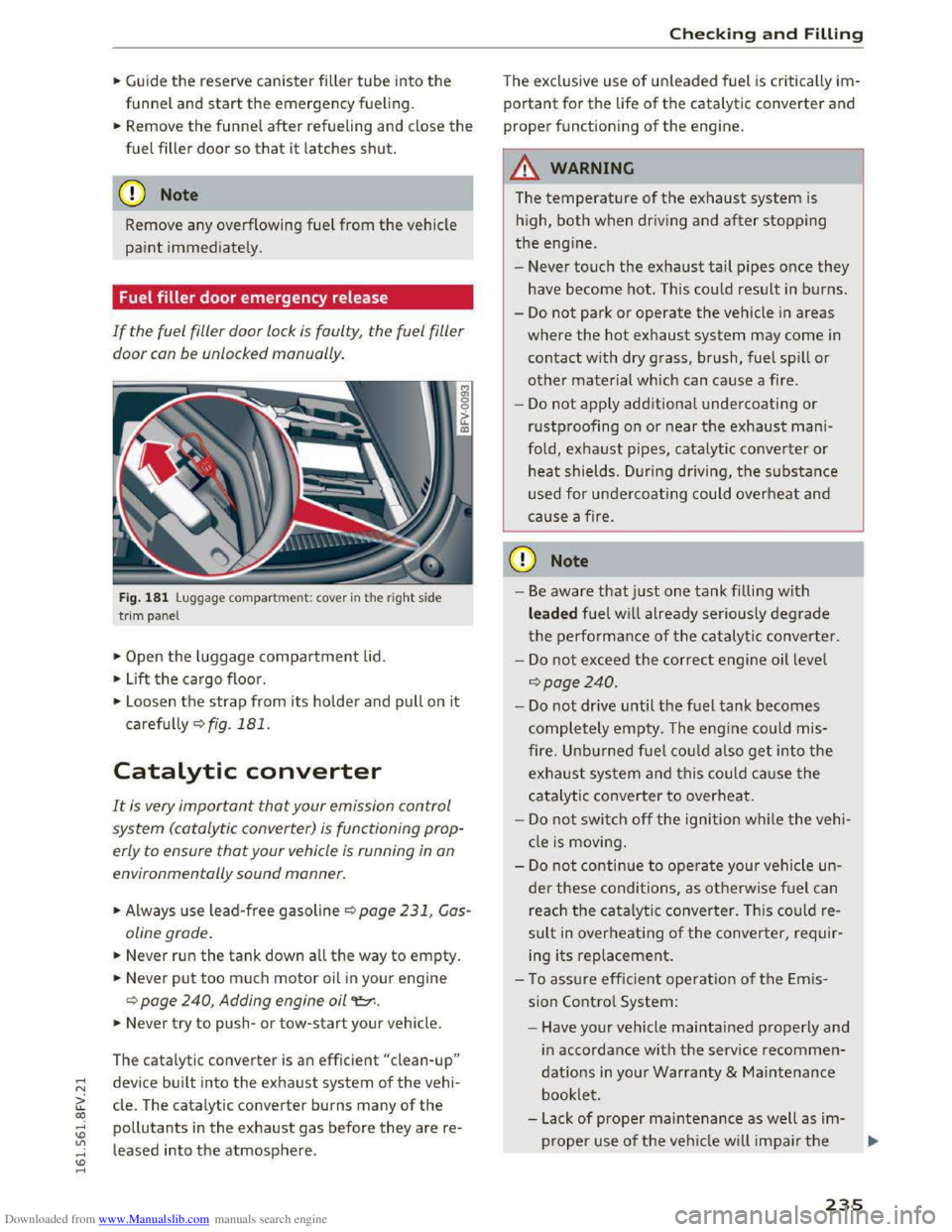
Fig. 181 L uggage compa rtment: cover in t he r ight side
t
rim panel
.,.. Open the luggage compartment lid.
.. L ift the cargo floor .
"'
"' 0 0
it IIl
.,.. Loosen the strap from its holde r and pull on it
carefu lly Qfig. 181.
Catalytic converter
It is very important that your emission control
system (catalytic converter) is functioning prop
erly to ensure
that your vehicle is running in on
environmentally sound manner.
.,.. Always use lead-free gasoline Q page 231, Gas
oline grade .
.. Never run the tank down all the way to empty.
.. Never put too m uch motor oil in your engine
Q page 240, Adding engine oil "t::r..
.. Never try to push-or tow-start your vehicle.
The
catal ytic converter is an efficient "clean-up"
device built into the exhaust system of the vehi
cle. The catalytic
converter burns many of the
pollutants in the exhaust gas before they are re
leased into
the atmosphere .
Checking and Filling
The exclusive use of unleaded fuel is critically im
portant for the life of the catalytic converter and
proper functioning of the engine.
A WARNING
f= - I
The temperature of the exhaust system is
high, both when driving and after stopping
the engine.
- Never
touch the exhaust tail pipes once they
have become hot. This could result in burns.
-Do not park or operate the vehicle in a reas
where the hot exhaust system may come in
contact with dry grass, brush, fuel spill or
other material which can cause a fire .
-
Do not appl y additional undercoating or
r ustproofing on or near the exhaust mani
fold, exhau
st pipes, catalytic converter or
heat shields. During driving, the substance
used for un dercoating could overheat and
cause a fire.
CD Note
-Be aware that just one tank filli ng with
leaded fuel w ill already seriously degrade
the performance of th e c atalytic converter .
-
Do not exceed the correct engine oil leve l
Qpoge240 .
-Do not drive until the fuel tank becomes
completely empty. The engi ne could mis
fire. Unbu r
ned fuel coul d also get into the
exhaust system and this could cause the
ca ta lyt ic co nver ter to overheat.
-Do not swi tch off the ignition whil e the vehi
cl e is moving .
-
Do not continue to operate your vehi cle un
der these condi tions, as o therwise fuel c a n
reach the catalytic converter. This could re
sult in over heating of the converter, requir
ing
its replacement .
- T o assu re
effic ient operatio n of the E mis
sion Contro l System:
-Have your vehicle maintained properly and
in accordance wi th the service recommen
dations in yo ur Warranty & Main tenance
bookle t.
- L ack
of proper maintenance as well as im-
p r
oper use of the veh icle w ill impair the .,..
235
Page 238 of 322
Downloaded from www.Manualslib.com manuals search engine Checking and Filling
function of the emission control system
and could lead to damage.
@ For the sake of the environment
Even when the Emission Control System is op
erating properly, the exhaust gas can have a
sulfur-like
exhaust gas smell under some op
erating states. This depends on the sulfur
content of the fuel being used. Using a differ
ent brand of fuel may help, or filling the tank
with lead-free super grade gasoline.
Engine compartment
Working in the engine compartment
Special care is required if you are working in the
engine compartment
For work in the engine compartment such as
checking and filling fluids, there is a risk of in
jury, scald ing , accidents, and burns. For this
reason, follow all the following listed warnings
and general safety precautions. The engine
compartment is a dangerous area. ~ & .
I'
A WARNING
-Turn the engine off.
-switch the ignition off.
-
Set the parking brake.
-
Place the selector lever in the P position.
- Let
the engine cool down.
- Never
open the hood when you see that
steam or coolant drips from the engine
compartment-there is a danger of burns!
Wait unti l no steam or coolant flows out.
- Keep children away from the engine com
partment.
- Never spill fluids on a hot engine. These flu
ids (such
as the freeze protection contained
in the coolant) can catch fire.
- Avoid
short circuits in the electrical system,
especially the battery.
-When working in the engine compartment,
remember that the radiator fan can switch
on even
if the ignition is switched off, which
increases
the risk of personal injury.
236
- Never open the cap on the coolant expan
sion
tank when the engine is warm. The
cooling
system is under pressure.
-To protect your face, hands, and arms from
hot steam or coolant, cover the cap with a
large cloth when opening.
-Do not remove the engine cover under any
circumstances. This increases the risk of
burns.
-
If tests need to be performed with the en
gine running, there is additional danger due
to moving components (such as the ribbed
belt, alternator and radiator fan) and from
the high voltage ignition system.
-Do not under any circumstances give gas in
advertently (for example, by hand from the
engine compartment) if the vehicle is sta
tionary but the engine is running and a gear
is engaged. Otherwise the veh icle will start
to move immediately and could result in a
crash.
-
Pay attention to the following warnings list
ed when work on the fuel system or on the
electrical equipment is required.
- Always
disconnect the vehicle battery
from the vehicle electrical system.
-Do not smoke.
-Never work near open flames.
-Always have a working fire extinguisher
nearby
- To reduce
the risk of electric shock and in
jury, never
touch the follow ing components
when t he engine is running or is being start
ed:
- Ignition cable
-
Other components in the electronic high
voltage ignition system
-If you must check or perform work on the
engine while it is running:
-
Set the parking brake and place the selec
tor lever in the P (park) position first.
- Always
proceed with extreme caution so
that clothing, jewelry or long hair do not
become caught in the radiator fan, fan
belt or other moving components or do
not come into contact with hot compo-
nents. Tie back long hair before beginning .,..
Page 309 of 322
Downloaded from www.Manualslib.com manuals search engine Frontal collisions and the laws of physics . . 181
Front armrest . . . . . . . . . . . . . . . . . . . . . . . . . 46
Front seats
Adjusting . . . . . . . . . . . . . . . . . . . . . . . . . . 173
Child restraints in the front seat . . . . . . . . 189
Fue l . . . . . . . . . . . . . . . . . . . . . . . . . . . . . . . . 231
Additives . . . . . . . . . . . . . . . . . . . . . . . . . . . 231
Blended
gasoline . . . . . . . . . . . . . . . . . . . . 231
Current consumption . . . . . . . . . . . . . . . . . . 23
Ethanol . . . . . . . . . . . . . . . . . . . . . . . . . . . . 231
Fuel filler neck . . . . . . . . . . . . . . . . . . . . . . 232
Fuel gauge . . . . . . . . . . . . . . . . . . . . . . . . . . . 8
Fuel
tank capacity . . . . . . . . . . . . . . . . . . . 299
Gasoline additives . . . . . . . . . . . . . . . . . . . 232
Indicator light . . . . . . . . . . . . . . . . . . . . . . . 16
Saving fuel . . . . . . . . . . . . . . . . . . . . . . . 57, 80
Fueling
Fuel filler
door emergency release . . . . . . 235
Fue l gauge . . . . . . . . . . . . . . . . . . . . . . . . . . . 8
Fuel tank capacity . . . . . . . . . . . . . . . . . . . 299
Opening the fuel filler door . . . . . . . . . . . . 233
With reserve canister (emergency fueling) 234
Fuses
Assignment . . . . . . . . . . . . . . . . . . . . . . . . 286
Replac ing . . . . . . . . . . . . . . . . . . . . . . . . . . 285
G
Garage door opener (Home Link) . . . . . . . . . . 33
Garment hooks . . . . . . . . . . . . . . . . . . . . . . . . 48
Gasoline . . . . . . . . . . . . . . . . . . . . . . . . . . . . 231
Octane rating ....................... 231
Recommendation .................... 231
Gas station message . . . . . . . . . . . . . . . . . . 137
Genera tor (indicator light) . . . . . . . . . . . . . . . 13
Global commands (voice recognition
system) . . . . . . . . . . . . . . . . . . . . . . . . . . . . . 105
Glossary of tire and loading terminology . . 252
Glove compartment . . . . . . . . . . . . . . . . . . . . 48
GPS (time) . . . . . . . . . . . . . . . . . . . . . . . . . . . 166
Gross Vehicle Weight Rating (GVWR) . . . . . 298
H
Handsfree
refer to Telephone . . . . . . . . . . . . . . . . . . . 110
Headlight range control system . . . . . . . . . . 36
Index
Headlight range control system (indicator
light) . . . . . . . . . . . . . . . . . . . . . . . . . . . . . . . .
16
Headlights . . . . . . . . . . . . . . . . . . . . . . . . . . . 37
Cleaning . . . . . . . . . . . . . . . . . . . . . . . . . . . 271
Headlight range control system . . . . . . . . . 36
Washer system . . . . . . . . . . . . . . . . . . . . . . 41
Heated
exterior mirrors . . . . . . . . . . . . . . . . . . . . . . 39
Rear window. . . . . . . . . . . . . . . . . . . . . . . . . 54
Seats..... .. .. .... ............... .. . 54
Washer nozzles . . . . . . . . . . . . . . . . . . . . . . 41
Heating and ventilation system
Adjust ing air vents . . . . . . . . . . . . . . . . . . . . 54
Help
Audi
connect . . . . . . . . . . . . . . . . . . . . . . . 130
Emergency call (911) ................. 117
Media . . . . . . . . . . . . . . . . . . . . . . . . . . . . . 164
Navigation . . . . . . . . . . . . . . . . . . . . . . . . . 144
Radio . . . . . . . . . . . . . . . . . . . . . . . . . . . . . 148
Telephone. . . . . . . . . . . . . . . . . . . . . . . . . . 120
Voice recognition system . . . . . . . . . . . . . 105
Hexagonal socket . . . . . . . . . . . . . . . . . . . . . 275
High voltage wa rning label . . . . . . . . . . . . . 298
Hill descent control . . . . . . . . . . . . . . . . . . . . 68
Home address . . . . . . . . . . . . . . . . . . . . . . . . 133
Editing . . . . . . . . . . . . . . . . . . . . . . . . . . . . 136
Navigation . . . . . . . . . . . . . . . . . . . . . . . . . 136
Storing . . . . . . . . . . . . . . . . . . . . . . . . . . . . 136
Homelink (garage door opener) . . . . . . . . . . 33
Horn . . . . . . . . . . . . . . . . . . . . . . . . . . . . . . . . . 6
How
are child restraint system anchors relat-
ed to child safety . . . . . . . . . . . . . . . . . . . . . 226
How many airbags does my vehicle have? . . 19S
How safety belt p retensioners work 186
I
Ign it ion (indicator light) . . . . . . . . . . . . . . . . 14
Imbalance (wheels) . . . . . . . . . . . . . . . . . . . 258
Immobilizer . . . . . . . . . . . . . . . . . . . . . . . 23, 25
Important things to do before driving . . . . 171
Importing/exporting (contacts) . . . . . . . . . 1 18
Improperly worn safety belts . . . . . . . . . . . 186
Ind icator lights . . . . . . . . . . . . . . . . . . . . . . . . . 9
Individual
speech training . . . . . . . . . . . . . . 166
Infant seats . . . . . . . . . . . . . . . . . . . . . . . . . 218
Inflation pressure (tires) . . . . . . . . . . . . . . . 260
307