engine AUDI TT ROADSTER 2011 Service Manual
[x] Cancel search | Manufacturer: AUDI, Model Year: 2011, Model line: TT ROADSTER, Model: AUDI TT ROADSTER 2011Pages: 260, PDF Size: 64.11 MB
Page 96 of 260
94 Homelin k®
Homelink ®
Universal remote
control
General information
The Homelink ® feature can learn up to three
radio frequency codes for most current trans
mitters used for operating garage doors, es tate gates, home or outdoor lighting sys
tems , and other devices.
You must first program the Homelink ® trans
mitter before you can use the system
¢ page 95, Programming the HomeLink ®
transmitter.
In order to program the Home Link ® transmit
ter for devices utilizing rolling code, a second person on a ladder who can safely reach the
garage door opener motor is recommended.
It is also necessary to locate the "learn" but
ton on your garage door opener motor . Refer
to the operating instructions for the opener,
as the location and color of this button may
vary by manufacturer .
You can still use the original remote control
for the device at any time.
A WARNING -
- Never use the Homelink® transmitter
with any garage door opener that does
have not the safety stop and reverse fea
ture as requ ired by federal safety stand
ards. This includes any garage door open
er mode l manufactured before April 1,
1982.
- A garage door opener which cannot de
tect an object, signaling the door to stop
and reverse does not meet current feder
al safety standards. Using a garage door
opener without these features increases
risk of serious injury or death.
- For safety reasons never release the
parking brake or start the engine while
anyone is standing in front of the vehicle .
- A garage door or an estate gate may
sometimes be set in motion when the Homelink
® remote control is being pro
grammed. If the device is repeatedly ac
tivated, this can overstrain motor and
damage its electrical components -an
overheated motor is a fire hazard!
- To avoid possible injuries or property
damage, please always make absolutely
certain that no persons or objects are lo
cated in the range of motion of any
equ ipment being operated.
0) Tips
- If you would like more information on
Homelink®, where to purchase the
Homelink ® compatible products, or
would like to purchase the Homelink ®
Home Lighting Package, please call toll
free: 1-800-355-3515.
- For Declaration of Comp liance to United
States FCC and Industry Canada regula
tions ¢
page 244.
Page 110 of 260
108 Safety belts
Why safety belts?
Frontal collisions and the law of physics
Frontal crashes create very strong forces for
people riding in vehicles .
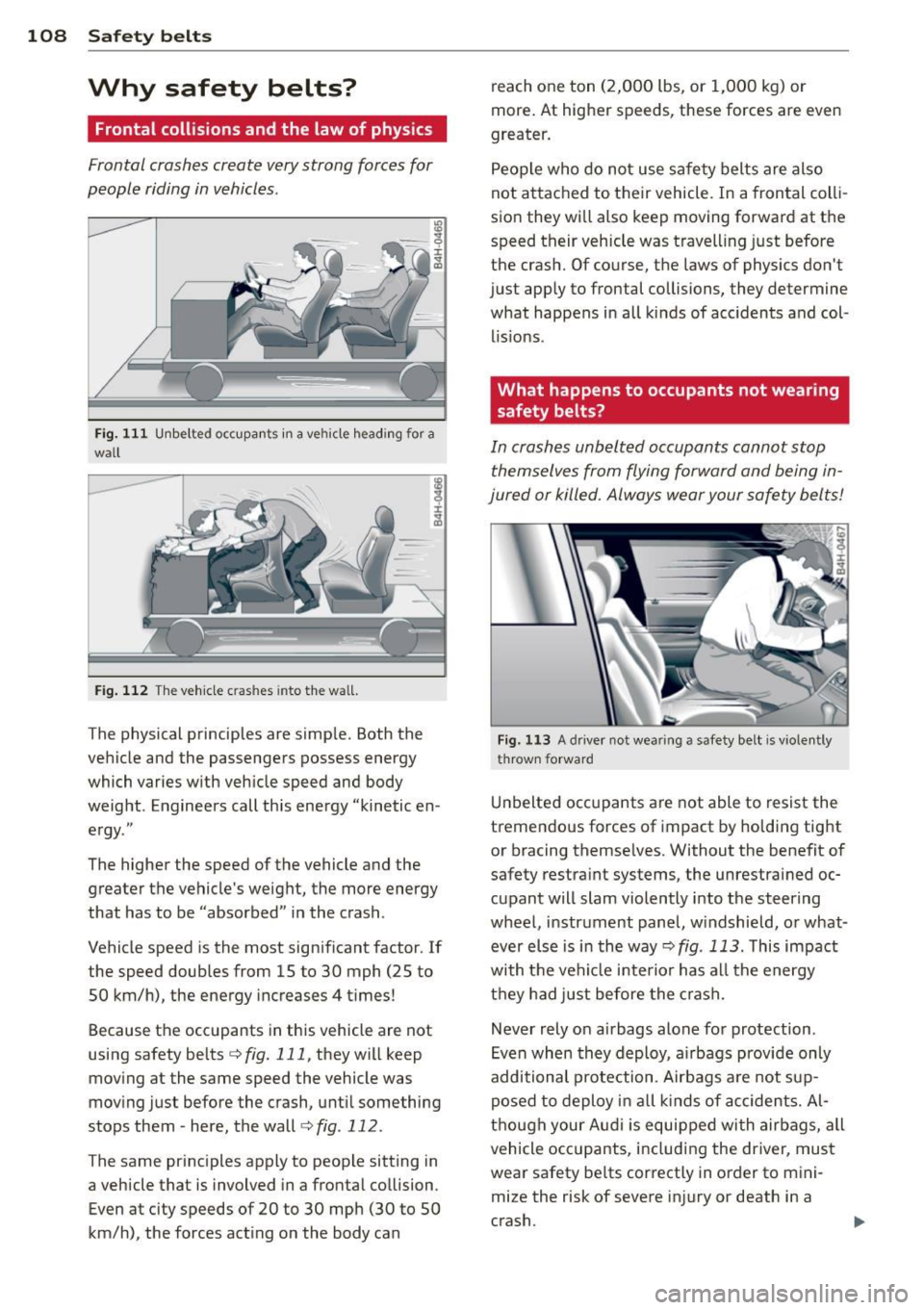
Fig. 111 Unbe lted occupa nts in a ve hicle heading for a
wall
Fig . 11 2 The ve hicle c ras hes into t he wa ll.
The physical principles are simp le. Both the
vehicle and the passengers possess energy
which varies w ith veh icle speed and body
weight . Engineers call th is energy ''kinetic en
ergy ."
The higher the speed of the vehicle and the
greater the vehicle's weight, the more energy
that has to be "absorbed" in the crash .
Vehicle speed is the most significant factor . If
the speed doub les from 15 to 30 mph (25 to
50 km/h) , the energy increases 4 t imes!
Because the occupants in this vehicle are not
using safety belts ¢
fig. 111, they will keep
mov ing at the same speed the vehicle was
mov ing just before the crash, unti l something
stops them -here, the wall¢
fig. 112 .
The same pr inc iples apply to people sitting in
a vehicle that is involved in a frontal collision .
Even at city speeds of 20 to 30 mph (30 to 50
km/h), the forces act ing on the body can reach one ton (2,000 lbs, or 1
,000 kg) or
more. At h igher speeds, these forces are even
greater.
Peop le who do not use sa fety belts are also
not a ttached to their vehicle. In a frontal colli
sion they wi ll also keep moving forward at t he
speed their vehicle was travell ing just before
the crash. Of course, the laws of physics don't
just app ly to frontal collisions, they determine
what happens in all kinds of acc idents and col
lis ions .
What happens to occupants not wearing
safety belts?
In crashes unbelted occupants cannot stop
themselves from flying forward and being in
jured or killed . Always wear your safe ty belts!
Fig . 11 3 A driver not wea ring a safety belt is vio le n tl y
t hrown forward
Unbelted occ upants a re not able to resist the
tremendous forces of impact by hold ing tight
or bracing themse lves. Without the benefit of
safety restra int systems, the unrestrained oc
cupant will slam violently into the steering
wheel, instr ument panel, w indshield, or what
ever else is in the way ¢ fig. 113. This impact
with the veh icle i nte rior has all the energy
t h ey had j ust before the c rash.
Never rely on airbags alone for protection .
Even when they deploy, a irbags provide only
additional prote ction . Airbags a re not sup
posed to deploy in all k inds of accidents. Al
t h ough your Aud i is equipped wi th airbags, all
vehicle occupants, i ncluding the driver, must
wear safety be lts cor rectly in o rder to m ini
mize the risk of severe in jury or death in a
crash .
Page 111 of 260
Remember too, that airbags will deploy only
once and that your safety belts are always
there to
offer protection in those accidents in
which airbags are not supposed to deploy or
when they have already deployed . Unbelted
occupants can also be thrown out of the vehi
cle where
even more severe or fatal injuries
can occur .
Safety belts protect
People think it's possible to use the hands to
brace the body in a minor collision . It 's simply
not true!
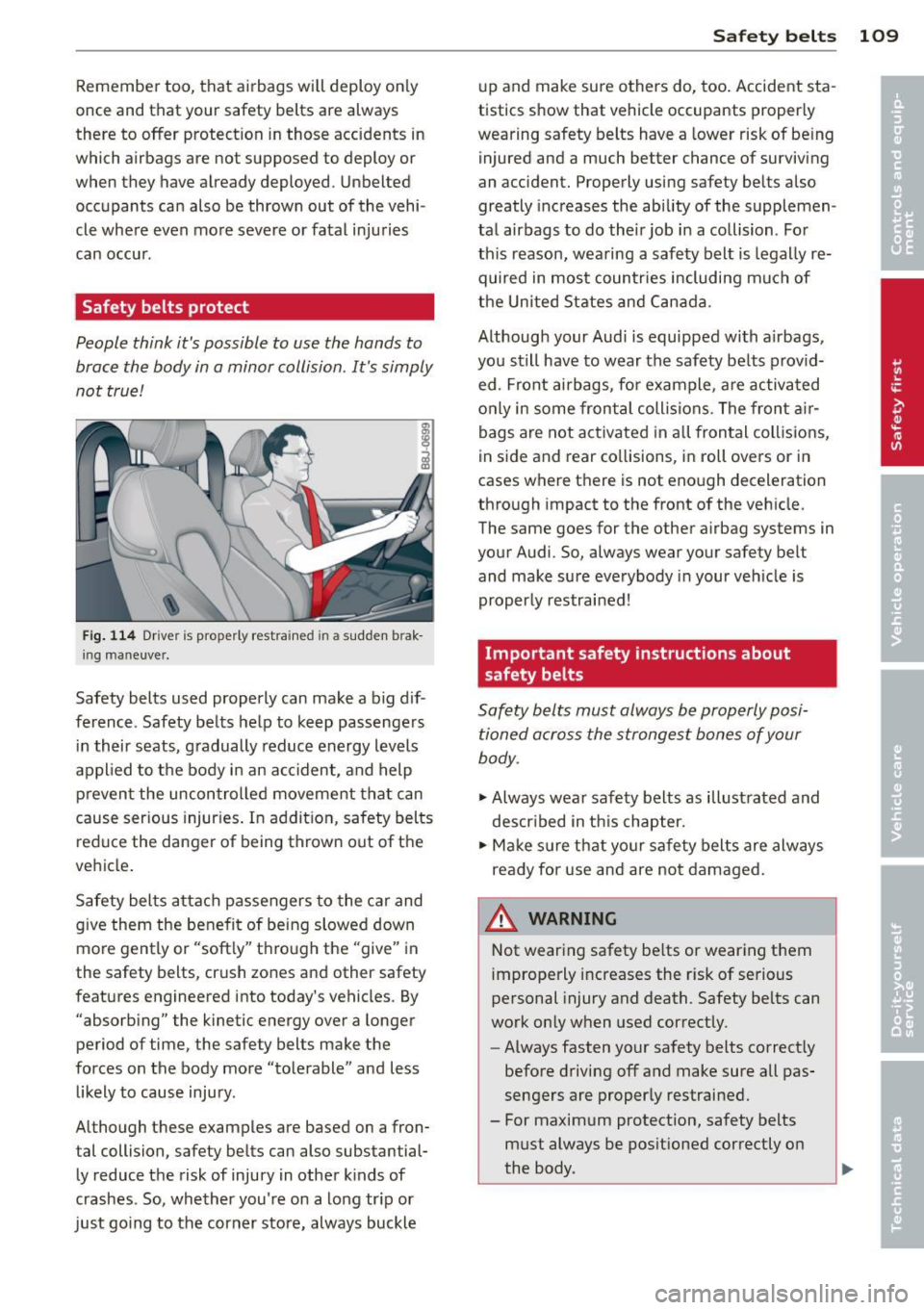
Fig . 114 Driver is properly restrained in a sudden b rak
i ng ma neuve r.
Safety belts used properly can make a big dif
ference . Safety belts help to keep passengers
in their seats, gradually reduce energy levels
applied to the body in an accident, and help
prevent the uncontrolled movement that can
cause serious injuries. In addition, safety belts
reduce the danger of being thrown out of the
vehicle.
Safety belts attach passengers to the car and
give them the benefit of being slowed down more gently or "softly" through the "give" in
the safety belts, crush zones and other safety
features engineered into today's vehicles . By
"absorbing" the kinetic energy
over a longer
period of time, the safety belts make the
forces on the body more "tolerable " and less
likely to cause injury.
Although these examples are based on a fron
tal collision, safety belts can also substantial ly reduce the risk of injury in other kinds of
crashes. So, whether you're on a long trip or
just going to the corner store, always buckle
Safety belts 109
up and make sure others do, too. Accident sta
tistics show that vehicle occupants properly
wearing safety belts have a lower risk of being
injured and a much better chance of surviving
an accident. Properly using safety belts also
greatly increases the ability of the supplemen
tal airbags to do the ir job in a collision . For
this reason, wearing a safety belt is legally re
quired in most countries including much of
the United States and Canada.
Although your Audi is equipped with a irbags,
you still have to wear the safety belts provid
ed . Front airbags, for example, are activated
only in some frontal collisions. The front air
bags are not activated in all frontal collisions,
in side and rear collisions, in roll overs or in
cases where there is not enough deceleration
through impact to the front of the vehicle.
The same goes for the other airbag systems in
your Audi . So, always wear your safety belt
and make sure everybody in your vehicle is
properly restrained!
Important safety instructions about
safety belts
Safety belts must always be properly posi
tioned across the strongest bones of your
body .
"' Always wear safety belts as illustrated and
described in th is chapter.
"'Make sure that your safety belts are always
ready for use and are not damaged.
A WARNING ~
Not wearing safety belts or wearing them
improperly increases the risk of serious
personal injury and death. Safety belts can
work only when used correctly.
- Always fasten your safety belts correctly
before driving
off and make sure all pas
sengers are properly restrained.
- For maximum protection, safety belts must always be positioned correctly on
the body .
Page 150 of 260

148 Intelligent technology
Intelligent technology Notice about data
recorded by vehicle
control modules
Your vehicle is not equipped with an Event Da
ta Recorder (EDR), installed by some manu
facturers fo r the express purpose of capturing
data for retrieval after an accident or crash
event . EDR's are sometimes called "crash re
corders".
Some state laws restrict the retrieval or down
loading of data stored by EDR's that were in
stalled in a vehicle for the express purpose of
retrieving data after an accident or crash
event without the owner's consent.
A lthough your vehicle is not equipped with an
EDR, it is equipped with a number of electron
ic control modules for various vehicle systems
such as, for example, engine function, emis
sion control, as well as for the airbags and
safety belts .
These electronic control modules also record
vehicle-related data during normal vehicle op
eration for diagnostic and repair purposes.
The recording capacity of the electronic con
trol modules is limited to data (no sound is re
corded) and only a small amount of data is ac
tually recorded over a very limited period of
time and stored when a system fault or other
condition is sensed by a control unit. Some of
the data then stored may relate to vehicle
speed, direction, braking as well as restraint
system use and performance in the event of a
crash or other condition. Stored data can only
be read and downloaded with special equip
ment.
Electronic Stabilization
Program (ESP)
General
The Electronic Stability Program increases
driving stability.
With ESP, control over the vehicle is increased
in situations when the vehicle is close to the
limits of grip, such as during acceleration and
in curves . ESP reduces the risk of skidding and
improves vehicle stability under all road con
ditions.
It operates at all speeds.
The Anti -Lock Brake System (ABS), Electronic
Differential Lock (EDS) and Anti-Slip Regula
tion System (ASR) are integrated in the Elec
tronic Stability Program .
How ESP works
The ESP control unit processes the following
data from high-sensitive sensors : the rota
tional speed of the vehicle about its vertical
axis , fore-and-aft and lateral acceleration
forces, brake pressure and steering angle.
Using steering angle and vehicle speed, the
direction the driver wishes to travel is deter
mined and continuously compared with actual
vehicle behavior. If the two do not match, for
example when the vehicle begins to skid, ESP
brakes the appropriate wheel automatically.
The vehicle is stabilized again by the forces
acting on the wheel during braking. With an
oversteering vehicle (tendency for the rear end to skid out of the curve), the brake appli
cation is mainly at the front wheel on the out
side of the curve, with an understeering vehi
cle (tendency to run wide in the curve) at the
rear wheel on the inside of the curve or addi
tionally at the other wheels as needed. This
brake application is accompanied by noises.
ESP works in conjunction w ith ABS
~ page 153. If there is malfunction in the
ABS, ESP is also inoperative.
Page 151 of 260

A WARNING
- The limits of physics cannot be suspended by ESP. Even in vehicles w ith ESP, you
should always adapt your driving to road
and traffic conditions. This is particular ly
t rue on a slippery and wet road. Do not
be tempted by the inc reased safety pro
vided to take ris ks - danger of an acci
dent!
- Please note tha t when ESP/ASR is deacti
vated, the drive whee ls can spin on icy
and slippery roads and the veh icle can
break away - danger of skidding!
Switching on and off
Fi g. 130 Center co nsole wit h ESP switch
The ES P is a utomatically activated when the
engine is star ted, and it performs a self-test.
As soon as the test is completed, the system
is in normal operating mode.
Deactivating
ESP should normally be activated at all times
because this ensures optimum vehicle stabil i
ty. Only in some cases it does make sense to
deactivate the Electronic Stability P rogram
(ESP) by press ing the button
~fig . 130. Deac
tivation is ind icated by the ESP lamp
I in the
instr ument cluster f lashes. The message
ESP
OFF
appears in the instrument cluster. Ant i
Slip Regulation is completely deactivated and
the stabilization effects from the ESP system are lim ited. Th is makes a mo re agile and spor
ty driv ing style poss ible, but the fu ll exte nt of
t he s tabiliza tion f unct ion is not available .
Intelligent technolog y 149
Activating
Press the@] button again~ fig. 130. T he ind i
cator light
I goes out . The message ESP ON
appears brief ly in the instrument cluster dis
play.
&_ WARNING
i=
You shou ld only switch the ESP off if your
driving ab ility and the traff ic situat ion al
low. Please note that when ESP/ASR is de
activated, the d rive wheels can spin on icy
a nd slippery roads and th e vehicle can
b reak away- dange r of skidd ing!
a) Tips
- If Aud i magnetic ride* is malfunct io ni ng,
the ESP may not sw itch off or it may
switch off automatically.
- In the event of a defect in the rear spoil er sys tem or in Audi magnet ic ride, it can
happen that ASR and ASR/ESP cannot be
deactivated, o r they are ac tiva ted au to
matically in the deactiva ted st ate.
Electronic differential lock (EDL)
The electronic differential lock monitors the
rotational speed of the drive wheels.
General notes
The electronic d ifferential lock (EDL) helps the
ca r to start moving, accele rate and climb a
gradient on su rfaces provid ing poor or a lmost
no g rip. Withou t EDL, this would be d iff icul t ,
i f not impossib le.
How the system works
The EDL operates automatica lly. It mon itors
the rotational speed of the dr ive wheels on an
axle with the help of the ABS sensors
c;:> page 153. If a noticeable difference in ro
tational speed
between the drive wheels on
o ne axle is detected (e.g. on s lippery ground
on one side), the s pinning wheel is braked,
thereby t ransferring power to the other drive
whee l or wheels (a ll-wheel drive). This is done
up to a speed of about 60 mph (100 km/h). ..,_
Page 152 of 260

150 Intelligent te chn olog y
Noises from the b rake system signal that
wheel spin is being controlled.
Driving off
When drivi ng off, a lways be sure to keep road
conditions in mind as you accelerate. If one
d rive wheel spi ns because it is on a surface
with less grip, gradua lly increase the press ure
on the accelerator pedal until the car starts to
move. The wheel less able to transfer power
spins.
O verheating of bra kes
To prevent the disc brake of the braked wheel
from overheating if subjected to excessive
loads, the EDL cuts out temporarily. The vehi
cle rema ins operationa l and behaves in the
same way as a vehicle without EDL.
As soon as the brake has cooled down, EDL
switches on again automatically .
A WARNING
-When accelerating on slippery surfaces,
such as on ice or snow, always be careful
when depressing the acce lerator pedal.
Even with the EDL working, the drive
wheels can spin and reduce yo ur ability
to contro l your car. -Risk of crash!
- The increased safety afforded by EDL
does not mean that you can ta ke safety
risks. Always adapt your dr iving sty le to
the road conditions and traff ic situa tion.
@ Tips
If a fa ult occurs in the ABS, the EDL is also
not f unct ion ing. This is indicated by the
ABS warning light ¢
page 17.
Anti-Slip Regulation System (ASR)
The Anti-Slip Regulation System prevents the
driven wheels from spinning wh en the car is
accelerating.
General notes
The Anti-Slip Regulation System (ASR) is inte
grated in the electronic stabilization program
(ESP). When th e vehicle starts up and acceler- ates, the whee
ls are prevented from spinning
by adjusting the engine power to match the
amount of grip available from the road sur
face.
How the system works
ASR pe rforms a utomat ica lly, i.e . w ithout t he
driver's intervention. With the aid of the ABS
sensors ¢
page 153, ASR monitors t he speed
of the dr iven whee ls . If the whee ls start to
spin, the engine torq ue is reduced automati
cally until the tires find enough gr ip to lock
onto the road surface . The system is active
across the ent ire speed range .
The ASR works in conjunction with the ABS. If
a malfunction should occur in the ABS, the
ASR w ill also be out of act io n.
@ Tips
To ensure that the ASR works properly, all
four whee ls must be fitted wit h ident ica l
tires . Any differences in ro lling radius of
the tires can cause the system to reduce
engine power wh en this is not desired. See
a lso
¢ page 205, New tires and repla cing
tires and wheels.
Rear spoiler
The rear spoiler improves vehicle handling
and enhances driver control .
Fig. 131 Switc h fo r rear spo iler
The rear spoiler deploys and retracts. Spoiler
operation can be set for automat ic or manual
operation .
Page 153 of 260
Automatic mod e (normal operat ion)
- Automatic deployment: At a speed of about
75 mph (120 km/h), the rear spoiler deploys
automatically .
- Automatic retraction: When speed drops be
low abo ut SO mph (80 km/h), the rear spoil
er retracts automatically.
Manual mode
- Manua l dep loyment: Tapping briefly on the
switch
¢ fig. 131 dep loys the rear spo iler .
- Manual retraction: At speeds up to about 10
mph (20 km/h), retract the rear spoiler by
pressing and holding the switch ¢
fig. 131.
At speeds between 10 mph (20 km/h) and
75 mph (120 km/h), retract the rear spoi ler
by tapping on the switch
¢ fig. 131 .
A WARNING
Driv ing at higher speeds w ithout the rear
spoiler dep loyed can impair handling char
acteristics, making the vehicle harder to
control.
- Always make sure that the spoiler is de·
ployed whe n driving at speeds over 85
mp h (140 km/h) . If the rea r spo ile r
wa rning/ind icator light in the instru
ment cluster comes on, the rear spo iler
may not have dep loyed.
- Never drive at speeds hig her than 85
mp h (1 40 km/h) if the spoiler is not de
ployed. Have the spoi ler inspected as
soon as possible by an authorized A udi
dealer or qualified workshop .
- Always obey speed limits and other traf
fic laws.
A WARNING
Improper operation of the rear spoiler can
cause crushing injuries .
- Always make sure that nobody, especia lly
children, is in the way when the rear
spoiler is deployed or retracted.
Q) Note
Never push the vehicle o r apply fo rce to
the rear spoiler -it could be damaged.
Int ellig ent technolog y 151
(D Tips
Clean the spoiler compa rtment every 2 to
3 months. The spoiler compartment must
a lways be free of ice, snow, leaves or other
debr is .
Braking
General information
What affects braking efficiency?
Ope rating condition s and driving h abits
The brakes on today's automobiles are still
subject to wear, depending largely on operat
ing condit ions and driving habits ¢.&, . On ve
hicles that a re either dr iven mostly in stop
and-go city t raff ic or are dr iven hard, the
brake pads should be chec ked by yo ur author
ized Audi dea ler mo re often than specified in
the
W arranty & Maintenanc e boo klet. Failure
to have your brake pads inspected can result in reduced brake performance .
On steep slopes, you should use the braking
effect o f the engine . This way, you prevent un
necessary wear on the brake system. If you
must use your brakes, do not hold the brakes
down cont in uous ly. Pump the brakes at inter
vals.
Noises may occur when braking depending on
the speed, braking force and o utside condi
tions such as temperature and humid ity.
Moisture o r ro ad s alt
U nder certa in conditions, for examp le, when
driving through water or very heavy rain , or
even after washing your vehicle, the b raking
effect can be reduced due to moist ure (or in
freezing cond itions ice) on the brake pads. A
few cautious brake applications should dry off
the brake pads or remove any ice coatings .
The effectiveness of the brakes can be reduced
when the vehicle is driven on a salt-covered road and t he brakes are not used. L ikewise,
you clean off accumulated salt coating from brake d iscs and pads with a few cautious ap-
plications of the b rake ¢ .&, .
IJJ,
•
•
Page 154 of 260
152 Intelligent technology
Corrosion
There may be a tendency fo r dirt to bu ild up
on the brake pads and corrosion to form on
the discs if the car is not driven regularly or
only for short trips with little use of the brakes .
I f the b rakes are not used frequen tly, or if cor
rosion has fo rmed on the discs, it is advisab le
to clean
off the pads and discs by b raking
firm ly a few times from a moderate ly high
speed
c> .& .
Fault s in the bra ke sy ste m
If you should notice a sudden increase in
brake peda l travel, then one of the two brake
circu its may have failed¢.& .
Low brake fluid level
Malf unc tions can occur in the brake system if
the brake fl uid level is too low. The b rake fluid
l eve l is monitored electronica lly .
Brake lining wear status
Brake lin ing wea r may be c hecked by visual i n
spection of the condition of the brake pads
through the openings in the whee l. If neces
sary, the whee l may be removed for this in
spection ¢
page 222, What should I be
aware of when changing a tire?.
Brake power assist unit
The brake power assist un it increases the
p ress ure th at yo u genera te with the b rake
pedal. It works on ly when the engine is run
ning.
& WARNING
- Yo u should perform braking maneuve rs
for the purpose of clean ing the brake
system on ly if road condit ions permit.
Other road users must not be put at r isk -
you may cause an acc ident!
- Before descending a steep grade, reduce
speed and shift transmiss io n into a lowe r
gear or lowe r driving position . Do not
ride the brak es or ho ld the pedal down
too long or too ofte n. This cou ld cause the brakes to get hot and dimin
ish b rak
ing efficiency.
- Do not " ride the brakes" by rest ing you r
foot on the pedal when you do not intend
to brake. This may cause the brakes to
overheat, premature wear and increased
stopping distance .
- Under certain cl imatic and ope rat ing
conditions such as passing through wa
ter, dr iv ing in heavy rain or after washing
the vehicle, the effectiveness of the
b rakes can be reduced . In wi nte r, ice can
a ccumu late on the br ake pads , lin ings,
d iscs and drums. Cautiously app ly bra kes
for a test . Brakes wi ll dry and ice coat
ings wi ll be cleaned
off after a few cau
tious b rake app lications .
- Driving for an exten ded period of t ime on
salt-covered roads without using your
brakes can a lso affect bra king efficiency.
Clean
off accum ulated salt coating from
brake discs and pads with a few cautious
brake applications.
- If you damage the front spoiler, or if you
install a diffe rent spoiler, be sure the a ir
f low to the front b rakes is not obs truc t
ed. Otherwise the bra ke system could
overhea t redu cing t he effectiveness o f
the entire brake system.
- Fai lure of one b rake circuit will impa ir
the braking capa bility result ing in an in
cre ase d stopping dist ance. Avoid driving
the vehicle and have it towed to the near
est A udi dealer or qualified workshop .
- Never let the vehi cle roll to a s top with
the engine sh ut
off .
- If t he bra ke booste r is no t working, for
examp le when towing yo ur vehicle, or
because the brake booster has somehow
been damaged, the bra ke peda l must be
pressed considerably harder to make up
for the lack of booster assistance .
Page 155 of 260
Anti-lock brake system (ABS)
ABS prevents the wheels from locking under braking.
The anti-lock brake system (ABS) makes a ma
jor contribution to increasing active dr iving
safety. You should not expect that braking d is
tances will be
shortened under all circumstan
ces with ABS. Braki ng d istance may even be
come somewhat
longer, for example, on grav
e l or in new snow on slippery g round, even if
you are driving care fully and s low ly.
ABS operation
When a vehicle speed of about 10 mph (20
km/h) is reached, an automatic test sequence
is run. Some noise from the pump may be au
d ible.
I f the speed of a wheel slows down too much
r e lative to veh icle speed and it starts to lock,
brake pressure to this wheel is reduced. This
ad justment process can be felt as a
pul sin g
moti on of the br ake pedal , accompanied by
some noises. You as the driver are intentiona l
ly being given the information that the whee ls
are tending to lock (ABS control range). In or
der for ABS to be able to operate optimally in
this range, you must keep the brake pedal de pressed - do not "pump the brakes ".
Brake a ssist ant
The brake power assist unit increases the
pressure that you generate with the brake
pedal. It works only w hen the eng ine is run
ning .
Automatic full br ak ing
This function allows full brak ing in spite of
high brake pedal forces (e.g. when the brakes
are severely stressed because the vehicle is
fully loaded) . The driver notices th is function
throug h a reduction of pedal force and in
creased pedal travel. When the brake pedal is released, fu ll braking assist switches off again
automatically .
Intellig ent technolog y 153
If there is an ABS failure, the b rake assistant
and automatic fu ll braking assist are not avail
able.
A WARNING
- ABS cannot suspend the laws of physics.
You should keep th is in mind in particu
lar on an icy or wet road . If ABS control
of braking intervenes, you should adjust
your speed immed iately to road and traf
fic conditions. Do not be tempted by the increased safety provided to take risks -
danger o f an accident .
- Please keep in mind tha t the risk of an
accident is increased by driving too fast,
particularly in bends and on icy or wet
roads, and by driving too close to the ve
hicle ahead . The increased risk of an acci
dent cannot be reduced by the brake as
sistant - danger of an accident.
(D Tips
If a malfunction occurs in the ABS, this is
s ignalled by an indicator light, see
<=:> page 17.
Electro-mechanical
power assist
The electro-mechanical power assist helps
the driver when steering .
The degree of power assist is electronically
matched to vehicle speed.
The power steering system assists the driver
so that he can steer the vehicle with reduced physical effort .
Power steering will not work if the engine is
off . As a result, the steering wheel will be hard
to turn .
A WARNING
If the system develops a problem, you
must seek qualified professiona l assis
tance.
•
•
Page 157 of 260

Energy management
Starting ability is optimized
Energy management controls the distribution
of electrical energy and thus optimizes the
availability of electrical energy for starting the engine .
If a vehicle with a conventional energy system
is not driven for a long period of time, the bat
tery is discharged by idling current consumers
(e.g. immobilizer). In ce rtain c ircumstances it
can result in there being insuff icient ene rgy
avai lab le to start the engine .
Intell igent energy management in your vehi
cle handles the d istribution of electrical ener
gy. Starting ab il ity is markedly imp roved and
the life of the battery is extended .
Basically, energy management consists of
batt ery diagno sis, idlin g current man ag e
m ent
and dyn ami c en ergy manag emen t.
Batter y diagnosis
Battery diagnosis continuously determines
the state of the battery . Sensors determ ine
battery vo ltage, battery current and battery
temperature. This determ ines the current
state of charge and the powe r of the battery.
Idling curr ent man agement
Idling current management reduces energy
consumption while the vehicle is stand ing .
W ith the ignition switched off, it cont ro ls the
energy s upply to the various electr ical compo
nents . Data from battery diagnosis is consid
ered.
D epending on the batte ry's state of charge,
i nd ividua l consumers are gradual ly t urned off
to prevent excess ive d ischarge of the battery
and thus maintain starting capability .
Dynam ic en ergy management
While the vehicle is being driven, dynamic en
e rgy management dist ributes the energy gen
e rated according to the needs of the individu
a l components.
It reg ulates cons umption, so
that more electrical energy is not being used
Int ellig ent technolog y 155
than is being generated and ensures an opti
mal state of charge for the battery.
(0 Tips
- But even energy management canno t
negate the limits of physics . Consider
that the power and life of a battery are
limited .
- If starting ability is threatened, you are
informed by a warning
r::!)poge 156,
Driver notification in the instrument
cluster display.
What you should know
The highest priority is given to maintaining
starting capability.
The battery is severe ly taxed in short -distance
driving, in city traffic and during the cold time
of year. Abundant electrical energy is re quired, but only a little is generated .
It is also
critical if the engine is not running and electri
cal components are turned on . In this in
stance energy is be ing consumed but none is
being generated.
It is in precisely these situations that you will
notice energy management actively regulat
ing the d istribution of energy .
Vehicle stands for an e xtended peri od
If you do not drive your vehicle over a period
of several days or weeks, e lectr ical compo
nents are gradually cut back or switched off.
This reduces energy consumption and ma in
ta ins start ing capability over a longer period .
Take into considerat ion that when you unlock
your vehicle, some convenience functions, such as the remote key or power seat adjust
ment, may not be available . The conven ience
funct ions w ill be available again when you
tu rn o n the ignition and start the engine .
With the engine turned off
If you listen to the radio, for example, w ith
the engine turned off, the battery is being d is-
charged.
~
•
•