warning CADILLAC ESCALADE 2010 3.G Owners Manual
[x] Cancel search | Manufacturer: CADILLAC, Model Year: 2010, Model line: ESCALADE, Model: CADILLAC ESCALADE 2010 3.GPages: 616, PDF Size: 39.41 MB
Page 440 of 616

Trailer Brakes
A loaded trailer that weighs more than 2,000 lbs(900 kg) needs to have its own brake system that isadequate for the weight of the trailer. Be sure to readand follow the instructions for the trailer brakes so theyare installed, adjusted and maintained properly.
Since the vehicle is equipped with StabiliTrak®, thetrailer brakes cannot tap into the vehicle's hydraulicsystem.
Driving with a Trailer
{WARNING:
When towing a trailer, exhaust gases may collect
at the rear of the vehicle and enter if the liftgate,
trunk/hatch, or rear-most window is open.
Engine exhaust contains carbon monoxide (CO)
which cannot be seen or smelled. It can cause
unconsciousness and even death.
To maximize safety when towing a trailer:
.Have the exhaust system inspected for
leaks and make necessary repairs before
starting a trip.
(Continued)
WARNING: (Continued)
.Never drive with the liftgate, trunk/hatch,
or rear-most window open.
.Fully open the air outlets on or under the
instrument panel.
.Adjust the Climate Control system to a setting
that brings in only outside air and set the fan
speed to the highest setting. See Climate
Control System in the Index.
For more information about carbon monoxide, see
Engine Exhaust on page 3!41.
Towing a trailer requires a certain amount ofexperience. The combination you are driving is longerand not as responsive as the vehicle itself. Getacquainted with the handling and braking of the rigbefore setting out for the open road.
Before starting, check all trailer hitch parts andattachments, safety chains, electrical connectors,lamps, tires and mirrors. If the trailer has electricbrakes, start the combination moving and then applythe trailer brake controller by hand to be sure thebrakes work.
6-50
Page 442 of 616
Driving On Grades
Reduce speed and shift to a lower gearbeforestartingdown a long or steep downgrade. If the transmission isnot shifted down, the brakes might get hot and nolonger work well.
Vehicles can tow in D (Drive). Shift the transmission toa lower gear if the transmission shifts too often underheavy loads and/or hilly conditions.
The tow/haul mode may be used if the transmissionshifts too often. SeeTow/Haul Mode on page 3!36.
When towing at high altitude on steep uphill grades,consider the following: Engine coolant will boil at alower temperature than at normal altitudes. If the engineis turned off immediately after towing at high altitude onsteep uphill grades, the vehicle may show signs similarto engine overheating. To avoid this, let the engine runwhile parked, preferably on level ground, with theautomatic transmission in P (Park) for a few minutesbefore turning the engine off. If the overheat warningcomes on, seeEngine Overheating on page 7!34.
Parking on Hills
{WARNING:
Parking the vehicle on a hill with the trailer
attached can be dangerous. If something goes
wrong, the rig could start to move. People can be
injured, and both the vehicle and the trailer can be
damaged. When possible, always park the rig on
a flat surface.
If parking the rig on a hill:
1. Press the brake pedal, but do not shift intoP (Park) yet. Turn the wheels into the curb if facingdownhill or into traffic if facing uphill.
2. Have someone place chocks under the trailerwheels.
3. When the wheel chocks are in place, release theregular brakes until the chocks absorb the load.
6-52
Page 443 of 616
4. Reapply the brake pedal. Then apply the parkingbrake and shift into P (Park).
5. Release the brake pedal.
{WARNING:
It can be dangerous to get out of the vehicle if the
shift lever is not fully in P (Park) with the parking
brake firmly set. The vehicle can roll.
If the engine has been left running, the vehicle
can move suddenly. You or others could be
injured. To be sure the vehicle will not move, even
when on fairly level ground, always put the shift
lever fully in P (Park) with the parking brake
firmly set.
Leaving After Parking on a Hill
1. Apply and hold the brake pedal.
2. Start the engine
3. Shift into a gear
4. Release the parking brake
5. Let up on the brake pedal.
6. Drive slowly until the trailer is clear of the chocks.
7. Stop and have someone pick up and storethe chocks.
Maintenance When Trailer Towing
The vehicle needs service more often when pulling atrailer. See this manual's Maintenance Schedule orIndex for more information. Things that are especiallyimportant in trailer operation are automatic transmissionfluid, engine oil, axle lubricant, belts, cooling systemand brake system. It is a good idea to inspect thesebefore and during the trip.
Check periodically to see that all hitch nuts and boltsare tight.
6-53
Page 447 of 616
Section 7 Service and Appearance Care
Service. . . . . . . . . . . . . . . . . . . . . . . . . . . . . . . . . . . . . . . . . . . . . 7-4Accessories and Modifications . . . . . . . . . . . . . . . . . . 7-4California Proposition 65 Warning . . . . . . . . . . . . . . . 7-5California Perchlorate MaterialsRequirements . . . . . . . . . . . . . . . . . . . . . . . . . . . . . . . . . 7-5Doing Your Own Service Work . . . . . . . . . . . . . . . . . . 7-6Adding Equipment to the Outside of theVehicle . . . . . . . . . . . . . . . . . . . . . . . . . . . . . . . . . . . . . . . . 7-6
Fuel. . . . . . . . . . . . . . . . . . . . . . . . . . . . . . . . . . . . . . . . . . . . . . . . . 7-7Gasoline Octane . . . . . . . . . . . . . . . . . . . . . . . . . . . . . . . . 7-8Gasoline Specifications . . . . . . . . . . . . . . . . . . . . . . . . . 7-8California Fuel . . . . . . . . . . . . . . . . . . . . . . . . . . . . . . . . . . 7-8Additives . . . . . . . . . . . . . . . . . . . . . . . . . . . . . . . . . . . . . . . . 7-9Fuel E85 (85% Ethanol) . . . . . . . . . . . . . . . . . . . . . . . . . 7-9Fuels in Foreign Countries . . . . . . . . . . . . . . . . . . . . . 7-10Filling the Tank . . . . . . . . . . . . . . . . . . . . . . . . . . . . . . . . . 7-11Filling a Portable Fuel Container . . . . . . . . . . . . . . . 7-13
Checking Things Under the Hood. . . . . . . . . . . . . . . 7-14Hood Release . . . . . . . . . . . . . . . . . . . . . . . . . . . . . . . . . 7-15Engine Compartment Overview . . . . . . . . . . . . . . . . 7-16Engine Oil . . . . . . . . . . . . . . . . . . . . . . . . . . . . . . . . . . . . . 7-17Engine Oil Life System . . . . . . . . . . . . . . . . . . . . . . . . 7-20Engine Air Cleaner/Filter . . . . . . . . . . . . . . . . . . . . . . . 7-22
Automatic Transmission Fluid . . . . . . . . . . . . . . . . . . 7-24Cooling System . . . . . . . . . . . . . . . . . . . . . . . . . . . . . . . . 7-28Engine Coolant . . . . . . . . . . . . . . . . . . . . . . . . . . . . . . . . 7-29Engine Overheating . . . . . . . . . . . . . . . . . . . . . . . . . . . 7-34Overheated Engine ProtectionOperating Mode . . . . . . . . . . . . . . . . . . . . . . . . . . . . . 7-37Engine Fan Noise . . . . . . . . . . . . . . . . . . . . . . . . . . . . . 7-37Power Steering Fluid . . . . . . . . . . . . . . . . . . . . . . . . . . 7-38Windshield Washer Fluid . . . . . . . . . . . . . . . . . . . . . . 7-39Brakes . . . . . . . . . . . . . . . . . . . . . . . . . . . . . . . . . . . . . . . . . 7-40Battery . . . . . . . . . . . . . . . . . . . . . . . . . . . . . . . . . . . . . . . . . 7-43Jump Starting . . . . . . . . . . . . . . . . . . . . . . . . . . . . . . . . . . 7-44
All-Wheel Drive. . . . . . . . . . . . . . . . . . . . . . . . . . . . . . . . . . . 7-49
Rear Axle. . . . . . . . . . . . . . . . . . . . . . . . . . . . . . . . . . . . . . . . . 7-50
Front Axle. . . . . . . . . . . . . . . . . . . . . . . . . . . . . . . . . . . . . . . . . 7-51
Headlamp Aiming. . . . . . . . . . . . . . . . . . . . . . . . . . . . . . . . 7-52
Bulb Replacement. . . . . . . . . . . . . . . . . . . . . . . . . . . . . . . . 7-54High Intensity Discharge (HID) Lighting . . . . . . . . 7-54LED Lighting . . . . . . . . . . . . . . . . . . . . . . . . . . . . . . . . . . . 7-55Back-Up Lamps . . . . . . . . . . . . . . . . . . . . . . . . . . . . . . . 7-55License Plate Lamp . . . . . . . . . . . . . . . . . . . . . . . . . . . . 7-56Replacement Bulbs . . . . . . . . . . . . . . . . . . . . . . . . . . . . 7-56
7-1
Page 451 of 616
GM Accessories are designed to complementand function with other systems on the vehicle.Your GM dealer/retailer can accessorize the vehicleusing genuine GM Accessories. When you go toyour GM dealer/retailer and ask for GM Accessories,you will know that GM-trained and supported servicetechnicians will perform the work using genuineGM Accessories.
Also, seeAdding Equipment to Your Airbag-EquippedVehicle on page 2!89.
California Proposition 65 Warning
Most motor vehicles, including this one, contain and/oremit chemicals known to the State of California tocause cancer and birth defects or other reproductiveharm. Engine exhaust, many parts and systems, manyfluids, and some component wear by-products containand/or emit these chemicals.
California Perchlorate Materials
Requirements
Certain types of automotive applications, such as airbaginitiators, seat belt pretensioners, and lithium batteriescontained in remote keyless transmitters, may containperchlorate materials. Special handling may benecessary. For additional information, seewww.dtsc.ca.gov/hazardouswaste/perchlorate.
7-5
Page 452 of 616
Doing Your Own Service Work
If this vehicle is a Two!mode Hybrid, see the Two!modeHybrid manual for more information.
{WARNING:
You can be injured and the vehicle could be
damaged if you try to do service work on a
vehicle without knowing enough about it.
.Be sure you have sufficient knowledge,
experience, the proper replacement parts,
and tools before attempting any vehicle
maintenance task.
.Be sure to use the proper nuts, bolts, and
other fasteners. English and metric fasteners
can be easily confused. If the wrong fasteners
are used, parts can later break or fall off.
You could be hurt.
If doing some of your own service work, use the properservice manual. It tells you much more about how toservice the vehicle than this manual can. To order theproper service manual, seeService PublicationsOrdering Information on page 9!17.
This vehicle has an airbag system. Before attemptingto do your own service work, seeServicing YourAirbag-Equipped Vehicle on page 2!89.
Keep a record with all parts receipts and list the mileageand the date of any service work performed. SeeMaintenance Record on page 8!14.
Adding Equipment to the Outside
of the Vehicle
Things added to the outside of the vehicle can affectthe airflow around it. This can cause wind noise andcan affect fuel economy and windshield washerperformance. Check with your dealer/retailer beforeadding equipment to the outside of the vehicle.
7-6
Page 457 of 616
Filling the Tank
{WARNING:
Fuel vapor burns violently and a fuel fire can
cause bad injuries. To help avoid injuries to you
and others, read and follow all the instructions on
the fuel pump island. Turn off the engine when
refueling. Do not smoke near fuel or when
refueling the vehicle. Do not use cellular phones.
Keep sparks, flames, and smoking materials away
from fuel. Do not leave the fuel pump unattended
when refueling the vehicle. This is against the law
in some places. Do not re-enter the vehicle while
pumping fuel. Keep children away from the fuel
pump; never let children pump fuel.
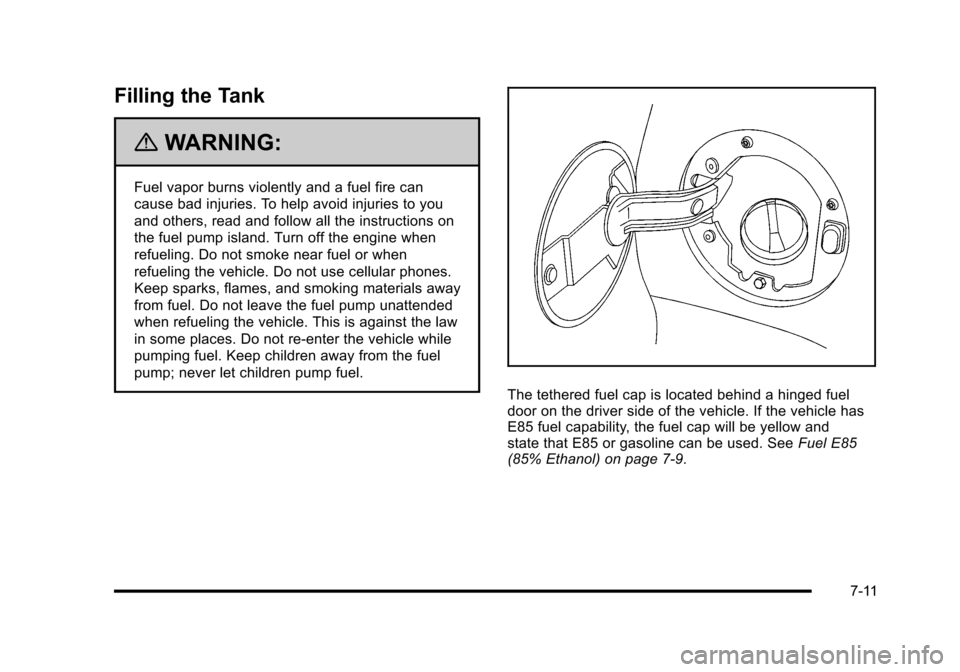
The tethered fuel cap is located behind a hinged fueldoor on the driver side of the vehicle. If the vehicle hasE85 fuel capability, the fuel cap will be yellow andstate that E85 or gasoline can be used. SeeFuel E85(85% Ethanol) on page 7!9.
7-11
Page 458 of 616
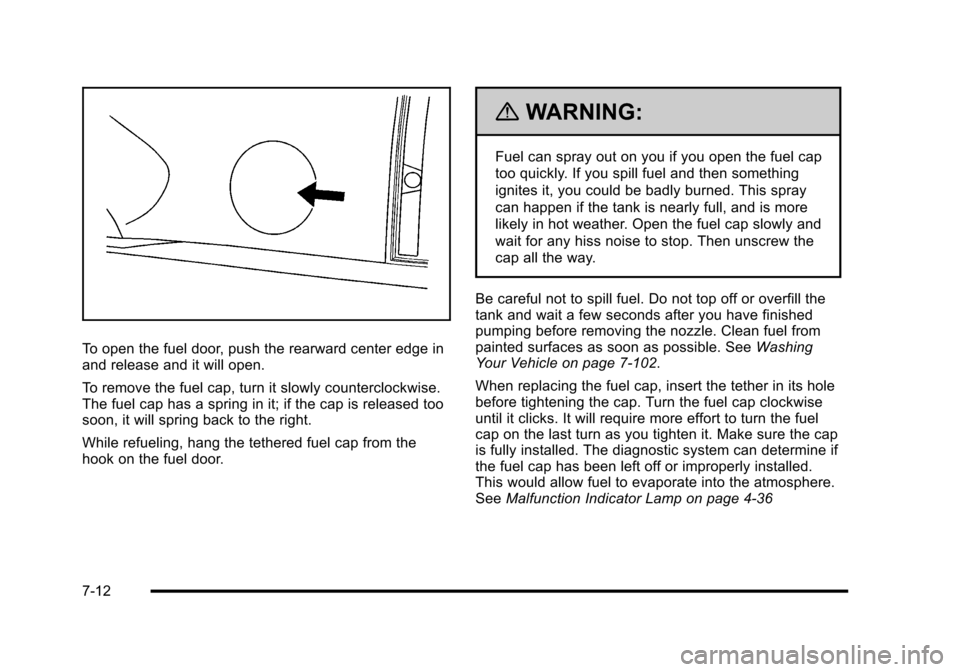
To open the fuel door, push the rearward center edge inand release and it will open.
To remove the fuel cap, turn it slowly counterclockwise.The fuel cap has a spring in it; if the cap is released toosoon, it will spring back to the right.
While refueling, hang the tethered fuel cap from thehook on the fuel door.
{WARNING:
Fuel can spray out on you if you open the fuel cap
too quickly. If you spill fuel and then something
ignites it, you could be badly burned. This spray
can happen if the tank is nearly full, and is more
likely in hot weather. Open the fuel cap slowly and
wait for any hiss noise to stop. Then unscrew the
cap all the way.
Be careful not to spill fuel. Do not top off or overfill thetank and wait a few seconds after you have finishedpumping before removing the nozzle. Clean fuel frompainted surfaces as soon as possible. SeeWashingYour Vehicle on page 7!102.
When replacing the fuel cap, insert the tether in its holebefore tightening the cap. Turn the fuel cap clockwiseuntil it clicks. It will require more effort to turn the fuelcap on the last turn as you tighten it. Make sure the capis fully installed. The diagnostic system can determine ifthe fuel cap has been left off or improperly installed.This would allow fuel to evaporate into the atmosphere.SeeMalfunction Indicator Lamp on page 4!36
7-12
Page 459 of 616
If the vehicle has a Driver Information Center (DIC), theTIGHTEN GAS CAP message displays if the fuel cap isnot properly installed.
{WARNING:
If a fire starts while you are refueling, do not
remove the nozzle. Shut off the flow of fuel by
shutting off the pump or by notifying the station
attendant. Leave the area immediately.
Notice:If you need a new fuel cap, be sure to getthe right type. Your dealer/retailer can get one foryou. If you get the wrong type, it may not fitproperly. This may cause the malfunction indicatorlamp to light and may damage the fuel tank andemissions system. SeeMalfunction Indicator Lampon page 4!36.
Filling a Portable Fuel Container
{WARNING:
Never fill a portable fuel container while it is in
the vehicle. Static electricity discharge from the
container can ignite the fuel vapor. You can be
badly burned and the vehicle damaged if this
occurs. To help avoid injury to you and others:
.Dispense fuel only into approved containers.
.Do not fill a container while it is inside a
vehicle, in a vehicle's trunk, pickup bed,
or on any surface other than the ground.
.Bring the fill nozzle in contact with the inside
of the fill opening before operating the nozzle.
Contact should be maintained until the filling
is complete.
.Do not smoke while pumping fuel.
.Do not use a cellular phone while
pumping fuel.
7-13
Page 460 of 616
Checking Things Under
the Hood
{WARNING:
An electric fan under the hood can start up and
injure you even when the engine is not running.
Keep hands, clothing, and tools away from any
underhood electric fan.
{WARNING:
Things that burn can get on hot engine parts and
start a fire. These include liquids like fuel, oil,
coolant, brake fluid, windshield washer and other
fluids, and plastic or rubber. You or others could
be burned. Be careful not to drop or spill things
that will burn onto a hot engine.
7-14