ECU CADILLAC ESCALADE 2010 3.G Owner's Guide
[x] Cancel search | Manufacturer: CADILLAC, Model Year: 2010, Model line: ESCALADE, Model: CADILLAC ESCALADE 2010 3.GPages: 616, PDF Size: 39.41 MB
Page 117 of 616
{WARNING:
A child in a rear-facing child restraint can be
seriously injured or killed if the right front
passenger airbag inflates. This is because the
back of the rear-facing child restraint would be
very close to the inflating airbag. A child in a
forward-facing child restraint can be seriously
injured or killed if the right front passenger airbag
inflates and the passenger seat is in a forward
position.
Even if the passenger sensing system has turned
off the right front passenger frontal airbag, no
system is fail-safe. No one can guarantee that an
airbag will not deploy under some unusual
circumstance, even though the airbag is
turned off.
Secure rear-facing child restraints in a rear seat,
even if the airbag is off. If you secure a
forward-facing child restraint in the right front seat,
always move the front passenger seat as far back
as it will go. It is better to secure the child restraint
in a rear seat.
The passenger sensing system is designed to turn offthe right front passenger frontal airbag if:
.The right front passenger seat is unoccupied.
.The system determines an infant is present in achild restraint.
.A right front passenger takes his/her weight off ofthe seat for a period of time.
.Or, if there is a critical problem with the airbagsystem or the passenger sensing system.
When the passenger sensing system has turned off theright front passenger frontal airbag, the off indicator willlight and stay lit to remind you that the airbag is off. SeePassenger Airbag Status Indicator on page 4!31.
The passenger sensing system is designed to turn on(may inflate) the right front passenger frontal airbaganytime the system senses that a person of adult size issitting properly in the right front passenger seat.
When the passenger sensing system has allowed theairbag to be enabled, the on indicator will light and staylit to remind you that the airbag is active.
2-85
Page 118 of 616
For some children, including children in child restraints,and for very small adults, the passenger sensingsystem may or may not turn off the right front passengerfrontal airbag, depending upon the person's seatingposture and body build. Everyone in your vehicle whohas outgrown child restraints should wear a safety beltproperly—whether or not there is an airbag forthat person.
{WARNING:
If the airbag readiness light ever comes on and
stays on, it means that something may be wrong
with the airbag system. To help avoid injury to
yourself or others, have the vehicle serviced right
away. SeeAirbag Readiness Lighton page 4!30
for more information, including important safety
information.
If the On Indicator is Lit for a Child
Restraint
If a child restraint has been installed and the onindicator is lit:
1. Turn the vehicle off.
2. Remove the child restraint from the vehicle.
3. Remove any additional items from the seat such asblankets, cushions, seat covers, seat heaters,or seat massagers.
4. Reinstall the child restraint following the directionsprovided by the child restraint manufacturer andrefer toSecuring a Child Restraint in the RightFront Seat Position on page 2!71.
5. If, after reinstalling the child restraint and restartingthe vehicle, the on indicator is still lit, turn thevehicle off. Then slightly recline the vehicleseatback and adjust the seat cushion, if adjustable,to make sure that the vehicle seatback is notpushing the child restraint into the seat cushion.
Also make sure the child restraint is not trappedunder the vehicle head restraint. If this happens,adjust the head restraint. SeeHead Restraintsonp a g e 2!2.
6. Restart the vehicle.
The passenger sensing system may or may notturn off the airbag for a child in a child restraintdepending upon the child’s seating posture andbody build. It is better to secure the child restraintin a rear seat.
2-86
Page 122 of 616

different vehicle. Any object, such as an aftermarketseat heater or a comfort enhancing pad or device,installed under or on top of the seat fabric, couldalso interfere with the operation of the passengersensing system. This could either prevent properdeployment of the passenger airbag(s) or preventthe passenger sensing system from properly turningoff the passenger airbag(s). SeePassenger SensingSystem on page 2!84.
If you have any questions, call CustomerAssistance. The phone numbers and addresses forCustomer Assistance are in Step Two of theCustomer Satisfaction Procedure in this manual.SeeCustomer Satisfaction Procedure on page 9!2.
If the vehicle has rollover roof-rail airbags, seeDifferent Size Tires and Wheelson page 7!75foradditional important information.
Q: Because I have a disability, I have to get myvehicle modified. How can I find out whether thiswill affect my airbag system?
A:If you have questions, call Customer Assistance.The phone numbers and addresses for CustomerAssistance are in Step Two of the CustomerSatisfaction Procedure in this manual. SeeCustomer Satisfaction Procedure on page 9!2.
In addition, your dealer/retailer and the service manualhave information about the location of the airbagsensors, sensing and diagnostic module andairbag wiring.
2-90
Page 125 of 616

Section 3 Features and Controls
Keys. . . . . . . . . . . . . . . . . . . . . . . . . . . . . . . . . . . . . . . . . . . . . . . . 3-3Remote Keyless Entry (RKE) System . . . . . . . . . . . 3-4Remote Keyless Entry (RKE) SystemOperation . . . . . . . . . . . . . . . . . . . . . . . . . . . . . . . . . . . . . 3-4Remote Vehicle Start . . . . . . . . . . . . . . . . . . . . . . . . . . . 3-7
Doors and Locks. . . . . . . . . . . . . . . . . . . . . . . . . . . . . . . . . 3-10Door Locks . . . . . . . . . . . . . . . . . . . . . . . . . . . . . . . . . . . . 3-10Power Door Locks . . . . . . . . . . . . . . . . . . . . . . . . . . . . . 3-10Delayed Locking . . . . . . . . . . . . . . . . . . . . . . . . . . . . . . . 3-11Programmable Automatic Door Locks . . . . . . . . . . 3-11Rear Door Security Locks . . . . . . . . . . . . . . . . . . . . . . 3-11Lockout Protection . . . . . . . . . . . . . . . . . . . . . . . . . . . . . 3-12Liftgate/Liftglass . . . . . . . . . . . . . . . . . . . . . . . . . . . . . . . 3-12Power Liftgate . . . . . . . . . . . . . . . . . . . . . . . . . . . . . . . . . 3-14Power Assist Steps . . . . . . . . . . . . . . . . . . . . . . . . . . . . 3-17
Windows. . . . . . . . . . . . . . . . . . . . . . . . . . . . . . . . . . . . . . . . . . 3-18Power Windows . . . . . . . . . . . . . . . . . . . . . . . . . . . . . . . 3-19Sun Visors . . . . . . . . . . . . . . . . . . . . . . . . . . . . . . . . . . . . . 3-21
Theft-Deterrent Systems. . . . . . . . . . . . . . . . . . . . . . . . . 3-22Content Theft-Deterrent . . . . . . . . . . . . . . . . . . . . . . . . 3-22PASS-Key®III+ Electronic Immobilizer . . . . . . . . . 3-24PASS-Key®III+ Electronic ImmobilizerOperation . . . . . . . . . . . . . . . . . . . . . . . . . . . . . . . . . . . . 3-24
Starting and Operating Your Vehicle. . . . . . . . . . . . 3-26New Vehicle Break-In . . . . . . . . . . . . . . . . . . . . . . . . . . 3-26Ignition Positions . . . . . . . . . . . . . . . . . . . . . . . . . . . . . . 3-27Retained Accessory Power (RAP) . . . . . . . . . . . . . 3-28Starting the Engine . . . . . . . . . . . . . . . . . . . . . . . . . . . . 3-29Adjustable Throttle and Brake Pedal . . . . . . . . . . . 3-30Engine Coolant Heater . . . . . . . . . . . . . . . . . . . . . . . . . 3-31Active Fuel Management™. . . . . . . . . . . . . . . . . . . . 3-32Automatic Transmission Operation . . . . . . . . . . . . . 3-32Tow/Haul Mode . . . . . . . . . . . . . . . . . . . . . . . . . . . . . . . . 3-36Parking Brake . . . . . . . . . . . . . . . . . . . . . . . . . . . . . . . . . 3-38Shifting Into Park . . . . . . . . . . . . . . . . . . . . . . . . . . . . . . 3-39Shifting Out of Park . . . . . . . . . . . . . . . . . . . . . . . . . . . . 3-40Parking Over Things That Burn . . . . . . . . . . . . . . . . 3-41Engine Exhaust . . . . . . . . . . . . . . . . . . . . . . . . . . . . . . . . 3-41Running the Vehicle While Parked . . . . . . . . . . . . . 3-42
3-1
Page 135 of 616
Delayed Locking
When locking the doors with the power lock switchand a door or the liftgate is open, the doors will lockfive seconds after the last door is closed. You will hearthree chimes to signal that the delayed locking featureis in use.
Pressing the power lock switch twice will overridethe delayed locking feature and immediately lock allthe doors.
This feature will not operate if the key is in the ignition.
You can program this feature using the DriverInformation Center (DIC). See DELAY DOOR LOCKunderDIC Vehicle Customization on page 4!57.
Programmable Automatic
Door Locks
Vehicles with an automatic lock/unlock feature enableyou to program the vehicle's power door locks. You canprogram this feature through the Driver InformationCenter (DIC). SeeDIC Vehicle Customizationonpage 4!57for more information on DIC programming.
Rear Door Security Locks
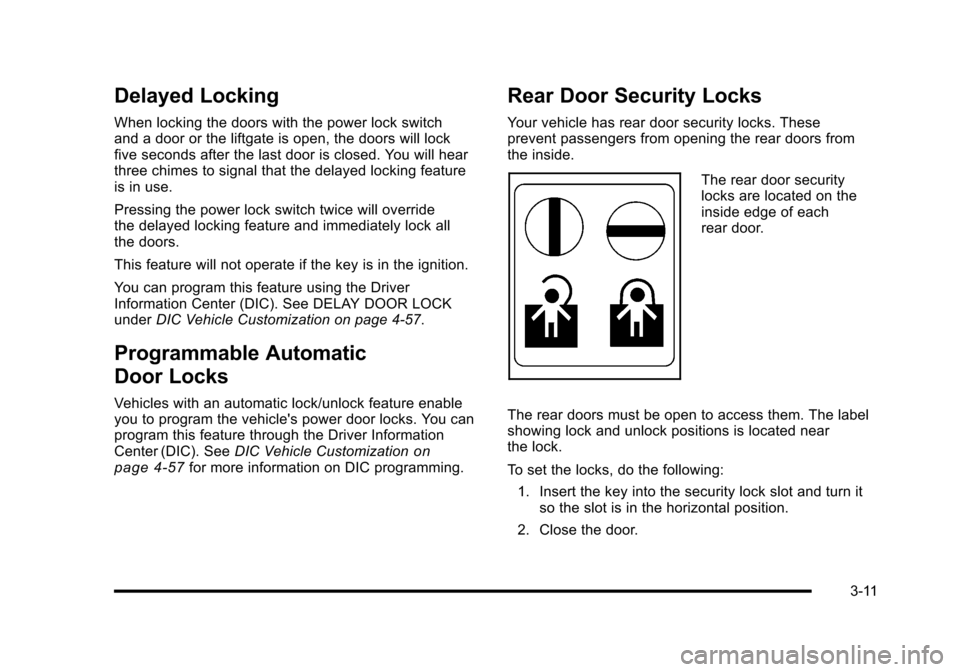
Your vehicle has rear door security locks. Theseprevent passengers from opening the rear doors fromthe inside.
The rear door securitylocks are located on theinside edge of eachrear door.
The rear doors must be open to access them. The labelshowing lock and unlock positions is located nearthe lock.
To set the locks, do the following:
1. Insert the key into the security lock slot and turn itso the slot is in the horizontal position.
2. Close the door.
3-11
Page 136 of 616
When you want to open a rear door when the securitylock is on, do the following:
1. Unlock the door by lifting the rear door manuallock, using the power door lock switch, or theRemote Keyless Entry (RKE) transmitter, if thevehicle has one.
2. Open the door from the outside.
To cancel the rear door security lock, do the following:
1. Unlock the door and open it from the outside.
2. Insert the key into the security lock slot and turn itso the slot is in the vertical position.
Lockout Protection
This feature protects you from locking the key in thevehicle when the key is in the ignition and a front dooris open.
If the driver's side power door lock switch is pressedwhen the driver's door is open and the key is in theignition, all of the doors will lock and then the driver'sdoor will unlock.
If the passenger's side power door lock switch ispressed when the front passenger's door is open andthe key is in the ignition, all of the doors will lock andthen the front passenger's door will unlock.
Liftgate/Liftglass
{WARNING:
It can be dangerous to drive with the liftglass or
liftgate open because carbon monoxide (CO) gas
can come into your vehicle. You cannot see or
smell CO. It can cause unconsciousness and
even death.
If you must drive with the liftglass or liftgate open,
or if electrical wiring or other cable connections
must pass through the seal between the body and
the liftglass or liftgate:
.Make sure all other windows are shut.
.Turn the fan on your heating or cooling
system to its highest speed with the
recirculation mode off. That will force outside
air into your vehicle. SeeDual Automatic
Climate Control System on page 4!20.
.If you have air outlets on or under the
instrument panel, open them all the way.
.If your vehicle is equipped with a power
liftgate, disable the power liftgate function.
SeeEngine Exhaust on page 3!41.
3-12
Page 146 of 616
Theft-Deterrent Systems
Vehicle theft is big business, especially in some cities.This vehicle has theft-deterrent features, however, theydo not make it impossible to steal.
Content Theft-Deterrent
Your vehicle has a content theft-deterrent alarm system.
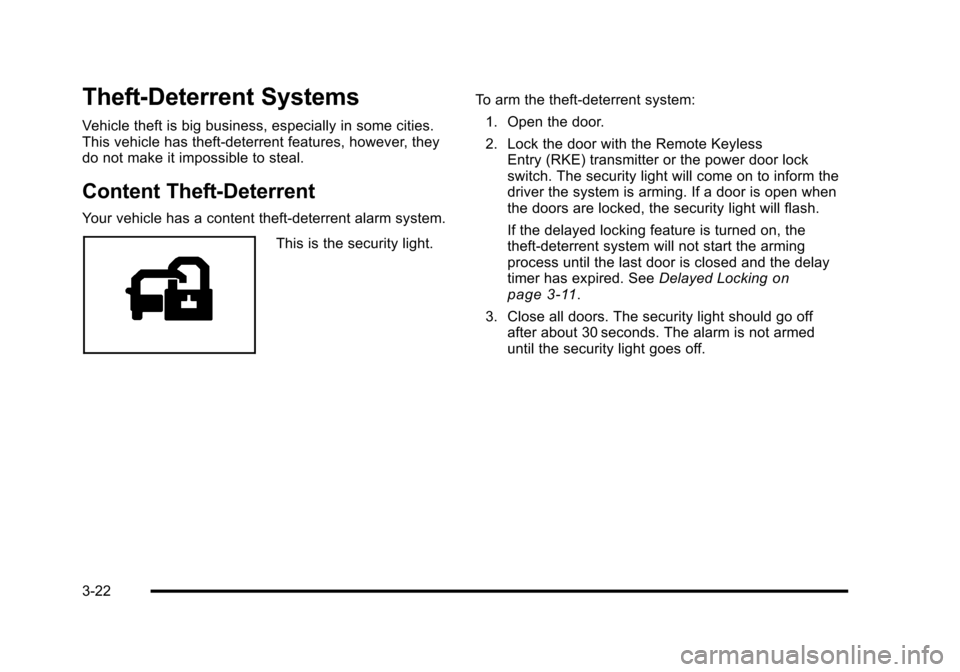
This is the security light.
To arm the theft-deterrent system:
1. Open the door.
2. Lock the door with the Remote KeylessEntry (RKE) transmitter or the power door lockswitch. The security light will come on to inform thedriver the system is arming. If a door is open whenthe doors are locked, the security light will flash.
If the delayed locking feature is turned on, thetheft!deterrent system will not start the armingprocess until the last door is closed and the delaytimer has expired. SeeDelayed Lockingonpage 3!11.
3. Close all doors. The security light should go offafter about 30 seconds. The alarm is not armeduntil the security light goes off.
3-22
Page 147 of 616
If a locked driver door is opened without using theRKE transmitter, a ten second pre-alarm will occur.The horn will chirp and the lights will flash. If the key isnot placed in the ignition and turned to START or thedoor is not unlocked by pressing the unlock button onthe RKE transmitter during the ten second pre-alarm,the alarm will go off. Your vehicle's headlamps will flashand the horn will sound for about 30 seconds, then willturn off to save the battery power.
The theft-deterrent system will not activate if the doorsare locked with the vehicle's key or the manual doorlock. It activates only if you use the power door lockswitch with the door open or the RKE transmitter.You should also remember that you can start yourvehicle with the correct ignition key if the alarm hasbeen set off.
To avoid setting off the alarm by accident:
.If you do not want to activate the theft-deterrentsystem, the vehicle should be locked with the doorkey after the doors are closed.
.Always unlock the doors with the RKE transmitter.Unlocking a door any other way will set off thealarm if it is armed.
If you set off the alarm by accident, press unlock on theRKE transmitter or place the key in the ignition and turnit to START to turn off the alarm. The alarm will not stopif you try to unlock a door any other way.
Testing the Alarm
To test the alarm:
1. From inside the vehicle, lower the driver's windowand open the driver's door.
2. Activate the system by locking the doors with thepower door lock switch while the door is open,or with the RKE transmitter.
3. Get out of the vehicle, close the door and wait forthe security light to go out.
4. Then reach in through the window, unlock thedoor with the manual door lock and open the door.This should set off the alarm.
While the alarm is set, the power door unlock switch willnot work.
If the alarm does not sound when it should but theheadlamps flash, check to see if the horn works.The horn fuse may be blown. To replace the fuse, seeFuses and Circuit Breakers on page 7!108.
If the alarm does not sound or the headlamps donot flash, the vehicle should be serviced by yourdealer/retailer.
3-23
Page 148 of 616
PASS-Key®III+ Electronic
Immobilizer
SeeRadio Frequency Statementon page 9!20forinformation regarding Part 15 of the FederalCommunications Commission (FCC) Rules andRSS-210/211 of Industry and Science Canada.
PASS-Key®III+ Electronic
Immobilizer Operation
Your vehicle has PASS-Key®III+ (PersonalizedAutomotive Security System) theft-deterrent system.PASS-Key®III+ is a passive theft-deterrent system.
The system is automatically armed when the key isremoved from the ignition.
The system is automatically disarmed when the key isturned to ON/RUN, ACC/ACCESSORY or START fromthe LOCK/OFF position.
You do not have to manually arm or disarm the system.
The security light will come on if there is a problem witharming or disarming the theft-deterrent system.
When the PASS-Key®III+ system senses that someoneis using the wrong key, it prevents the vehicle fromstarting. Anyone using a trial-and-error method to startthe vehicle will be discouraged because of the highnumber of electrical key codes.
If the engine does not start and the security light onthe instrument panel cluster comes on when trying tostart the vehicle, there may be a problem with yourtheft-deterrent system. Turn the ignition off andtry again.
If the engine still does not start, and the key appears tobe undamaged, try another ignition key. At this time,you may also want to check the fuse, seeFuses andCircuit Breakerson page 7!108. If the engine still doesnot start with the other key, your vehicle needs service.
3-24
Page 149 of 616
If your vehicle does start, the first key may be faulty.See your dealer/retailer who can service thePASS-Key®III+ to have a new key made. In anemergency, contact Roadside Assistance.
It is possible for the PASS-Key®III+ decoder to learnthe transponder value of a new or replacement key.Up to 10 keys may be programmed for the vehicle.The following procedure is for programming additionalkeys only. If all the currently programmed keys are lostor do not operate, you must see your dealer/retailer or alocksmith who can service PASS-Key®III+ to have keysmade and programmed to the system.
See your dealer/retailer or a locksmith who can servicePASS-Key®III+ to get a new key blank that is cutexactly as the ignition key that operates the system.
To program the new additional key:
1. Verify that the new key has a1stamped on it.
2. Insert the original, already programmed, key in theignition and start the engine. If the engine will notstart, see your dealer/retailer for service.
3. After the engine has started, turn the key toLOCK/OFF, and remove the key.
4. Insert the new key to be programmed and turn it tothe ON/RUN position within five seconds of turningthe ignition to the LOCK/OFF position in Step 3.
The security light will turn off once the key hasbeen programmed.
5. Repeat Steps 1 through 4 if additional keys are tobe programmed.
If you lose or damage your PASS-Key®III+ key, seeyour dealer/retailer or a locksmith who can servicePASS-Key®III+ to have a new key made.
Do not leave the key or device that disarms ordeactivates the theft deterrent system in the vehicle.
3-25