intake CHEVROLET CAMARO 1982 Repair Guide
[x] Cancel search | Manufacturer: CHEVROLET, Model Year: 1982, Model line: CAMARO, Model: CHEVROLET CAMARO 1982Pages: 875, PDF Size: 88.64 MB
Page 487 of 875
GM – CAMARO 1982-1992 – Repair Guide (Checked by WxMax) 487
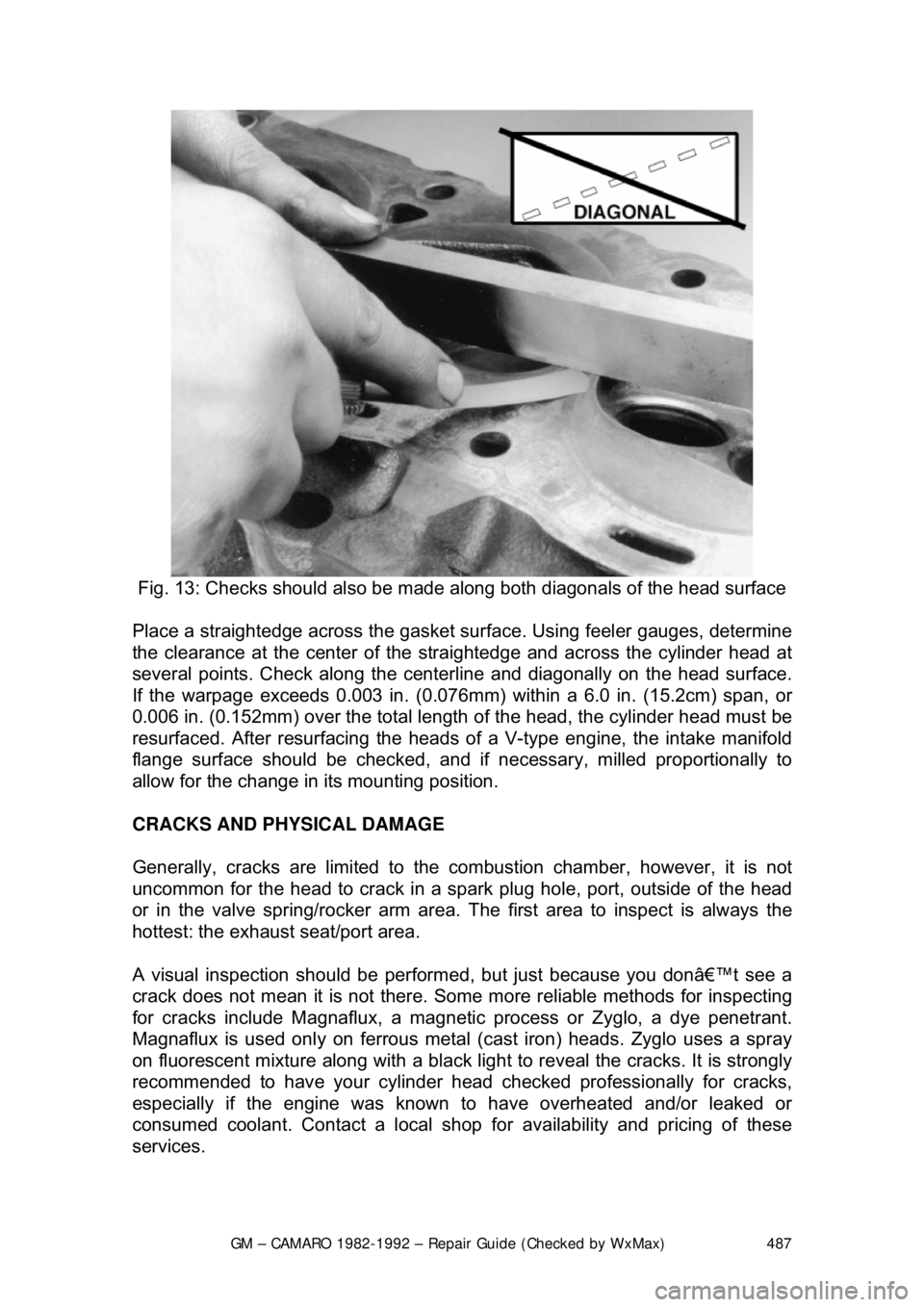
Fig. 13: Checks should also be made al ong both diagonals of the head surface
Place a straightedge across the gasket surf ace. Using feeler gauges, determine
the clearance at the cent er of the straightedge and across the cylinder head at
several points. Check along the centerli ne and diagonally on the head surface.
If the warpage exceeds 0.003 in. (0.076mm) within a 6.0 in. (15.2cm) span, or
0.006 in. (0.152mm) over the total length of the head, the cylinder head must be
resurfaced. After resurfacing the heads of a V-type engine, the intake manifold
flange surface should be checked, and if necessary, milled proportionally to
allow for the change in its mounting position.
CRACKS AND PHYSICAL DAMAGE
Generally, cracks are limited to the comb ustion chamber, however, it is not
uncommon for the head to crack in a s park plug hole, port, outside of the head
or in the valve spring/rocker arm area. The first area to inspect is always the
hottest: the exhaust seat/port area.
A visual inspection should be perform ed, but just because you don’t see a
crack does not mean it is not there. Some more reliable methods for inspecting
for cracks include Magnaflux, a magnetic process or Zyglo, a dye penetrant.
Magnaflux is used onl y on ferrous metal (cast iron) heads. Zyglo uses a spray
on fluorescent mixture along with a black light to reveal the cracks. It is strongly
recommended to have your cylinder head c hecked professionally for cracks,
especially if the engine was known to have overheated and/or leaked or
consumed coolant. Contact a local shop fo r availability and pricing of these
services.
Page 512 of 875

GM – CAMARO 1982-1992 – Repair Guide (Checked by WxMax) 512
5. Make sure the ring gaps are pr
operly spaced around the circumference
of the piston. Fit a piston ring co mpressor around the piston and slide the
piston and connecting rod assembly do wn into the cylinder bore, pushing
it in with the wooden hammer handle. Pu sh the piston down until it is only
slightly below the top of the cylinder bore. Guide the connecting rod onto
the crankshaft bearing journal carefully, to avoid damaging the
crankshaft.
6. Check the bearing clearance of all the rod bearings, fitting them to the
crankshaft bearing journals. Follow the procedure in the crankshaft
installation above.
7. After the bearings have been fitted, apply a light coating of assembly oil
to the journals and bearings.
8. Turn the crankshaft until the appropria te bearing journal is at the bottom
of its stroke, then push the piston a ssembly all the way down until the
connecting rod bearing seat s on the crankshaft journal. Be careful not to
allow the bearing cap screws to stri ke the crankshaft bearing journals
and damage them.
9. After the piston and connecting rod assemblies have been installed, check the connecting rod side clearance on each crankshaft journal.
10. Prime and install t he oil pump and the oil pump intake tube.
CAMSHAFT, LIFTERS AND TIMING ASSEMBLY 1. Install the camshaft.
2. Install the lifters/followers into their bores.
3. Install the timing gears/chain assembly.
CYLINDER HEAD(S) 1. Install the cylinder head(s) using new gaskets.
2. Assemble the rest of the valve tr ain (pushrods and rocker arms and/or
shafts).
ENGINE COVERS AND COMPONENTS
Install the timing cover(s) and oil pan. Re fer to your notes and drawings made
prior to disassembly and install all of the components that were removed. Install
the engine into the vehicle.
ENGINE START-UP AND BREAK-IN
STARTING THE ENGINE
Now that the engine is inst alled and every wire and hose is properly connected,
go back and double check that all cool ant and vacuum hoses are connected.
Check that you oil drain plug is instal led and properly tightened. If not already
done, install a new oil filt er onto the engine. Fill the crankcase with the proper
amount and grade of engine oil. Fill the cooling system with a 50/50 mixture of
coolant/water.
Page 537 of 875
GM – CAMARO 1982-1992 – Repair Guide (Checked by WxMax) 537
ENGINE CONTROLS
EMISSION CONTROLS
CRANKCASE VENTILATION SYSTEM
OPERATION
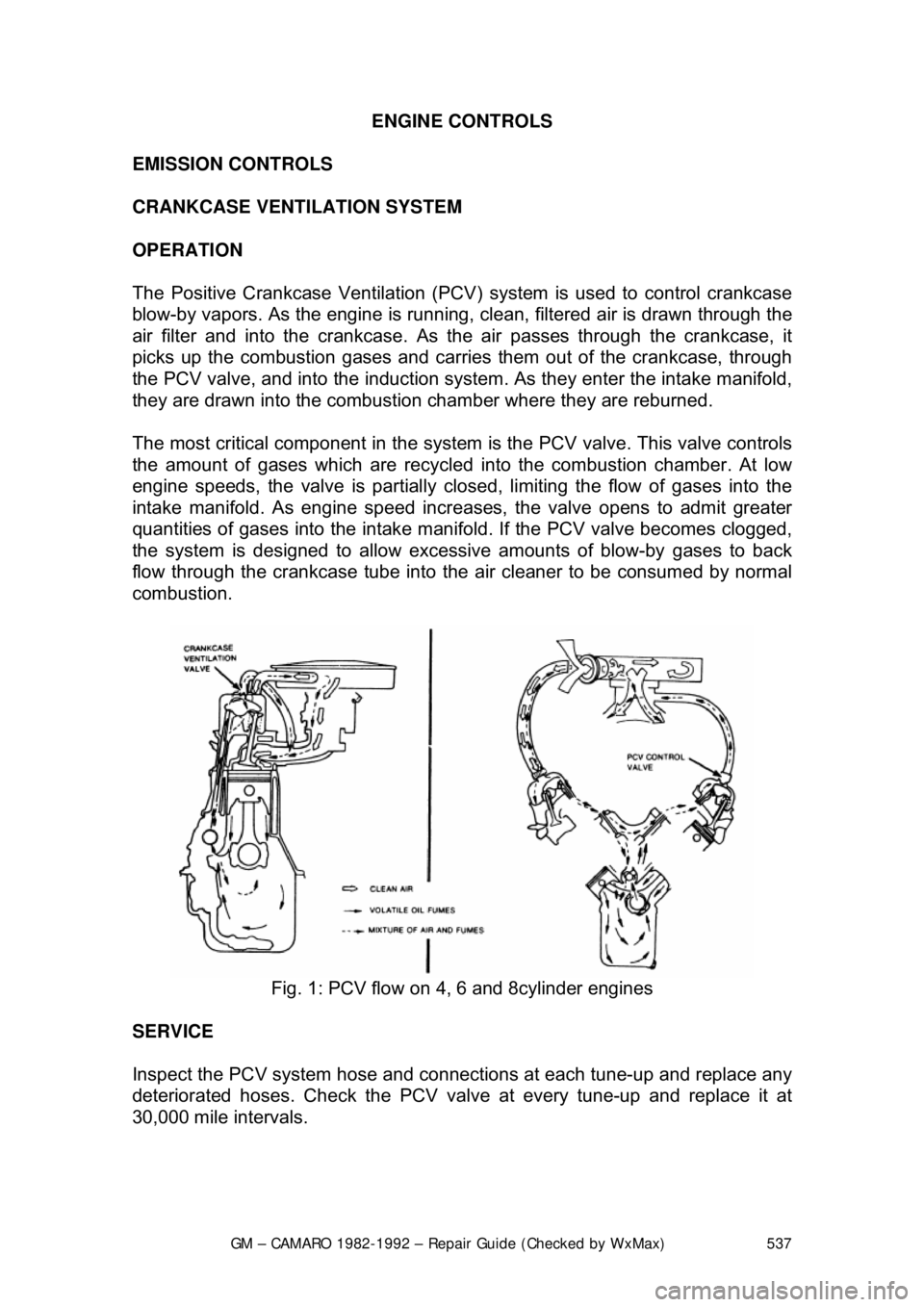
The Positive Crankcase Ventilation (PCV ) system is used to control crankcase
blow-by vapors. As the engine is running, clean, filtered air is drawn through the
air filter and into the crankcase. As the air passes through the crankca\
se, it
picks up the combustion gases and carries them out of the crankcase, through
the PCV valve, and into the induction system . As they enter the intake manifold,
they are drawn into the combustion chamber where they are reburned.
The most critical component in the system is the PCV valve. This valve controls
the amount of gases which are recycled into the combustion chamber. At low
engine speeds, the valve is partially clos ed, limiting the flow of gases into the
intake manifold. As engine speed incr eases, the valve opens to admit greater
quantities of gases into the intake manifold. If the PCV valve becomes clogged,
the system is designed to allow excessive amounts of blow-by gases to back
flow through the crankcase tube into the air cleaner to be consumed by normal
combustion.
Fig. 1: PCV flow on 4, 6 and 8cylinder engines
SERVICE
Inspect the PCV system hose and connecti ons at each tune-up and replace any
deteriorated hoses. Check the PCV valve at every tune-up and replace it at
30,000 mile intervals.
Page 538 of 875
GM – CAMARO 1982-1992 – Repair Guide (Checked by WxMax) 538
TESTING
1. Remove the PCV valve from the intake manifold or valve cover.
2. Run the engine at idle.
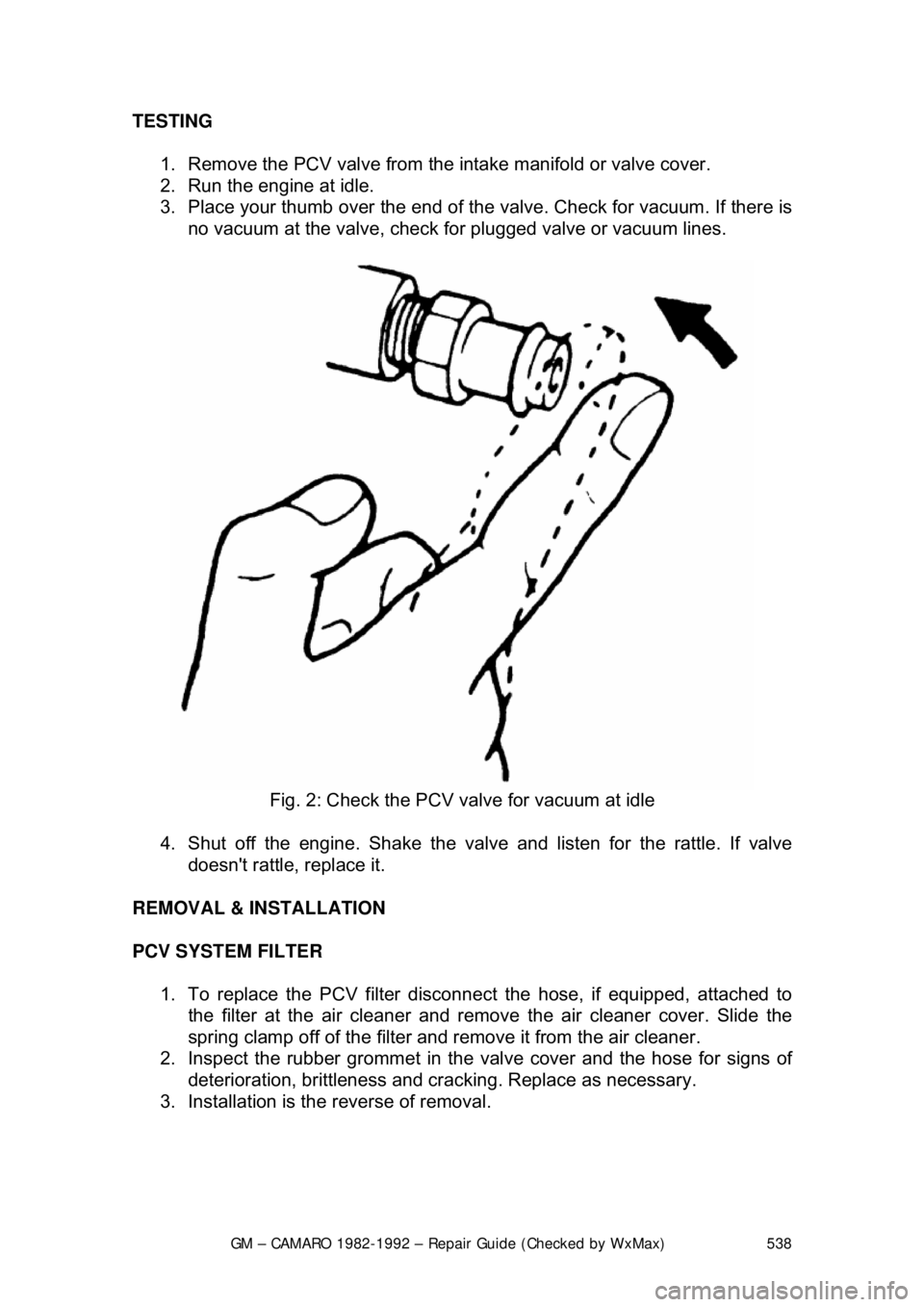
3. Place your thumb over the end of the valve. Check for vacuum. If there is
no vacuum at the valve, check fo r plugged valve or vacuum lines.
Fig. 2: Check the PCV valve for vacuum at idle
4. Shut off the engine. Shake the valv e and listen for the rattle. If valve
doesn't rattle, replace it.
REMOVAL & INSTALLATION
PCV SYSTEM FILTER
1. To replace the PCV filter discon nect the hose, if equipped, attached to
the filter at the air cl eaner and remove the air cleaner cover. Slide the
spring clamp off of the filter and re move it from the air cleaner.
2. Inspect the rubber grommet in the valve cover and the hose for signs of \
deterioration, brittleness and cracking. Replace as necessary.
3. Installation is the reverse of removal.
Page 539 of 875
GM – CAMARO 1982-1992 – Repair Guide (Checked by WxMax) 539
PCV VALVE
1. Disconnect the hose or pi pe from the PCV valve.
2. Gently pull the PCV valv e out of the grommet in the valve cover or intake
manifold.
3. Installation is the reverse of removal.
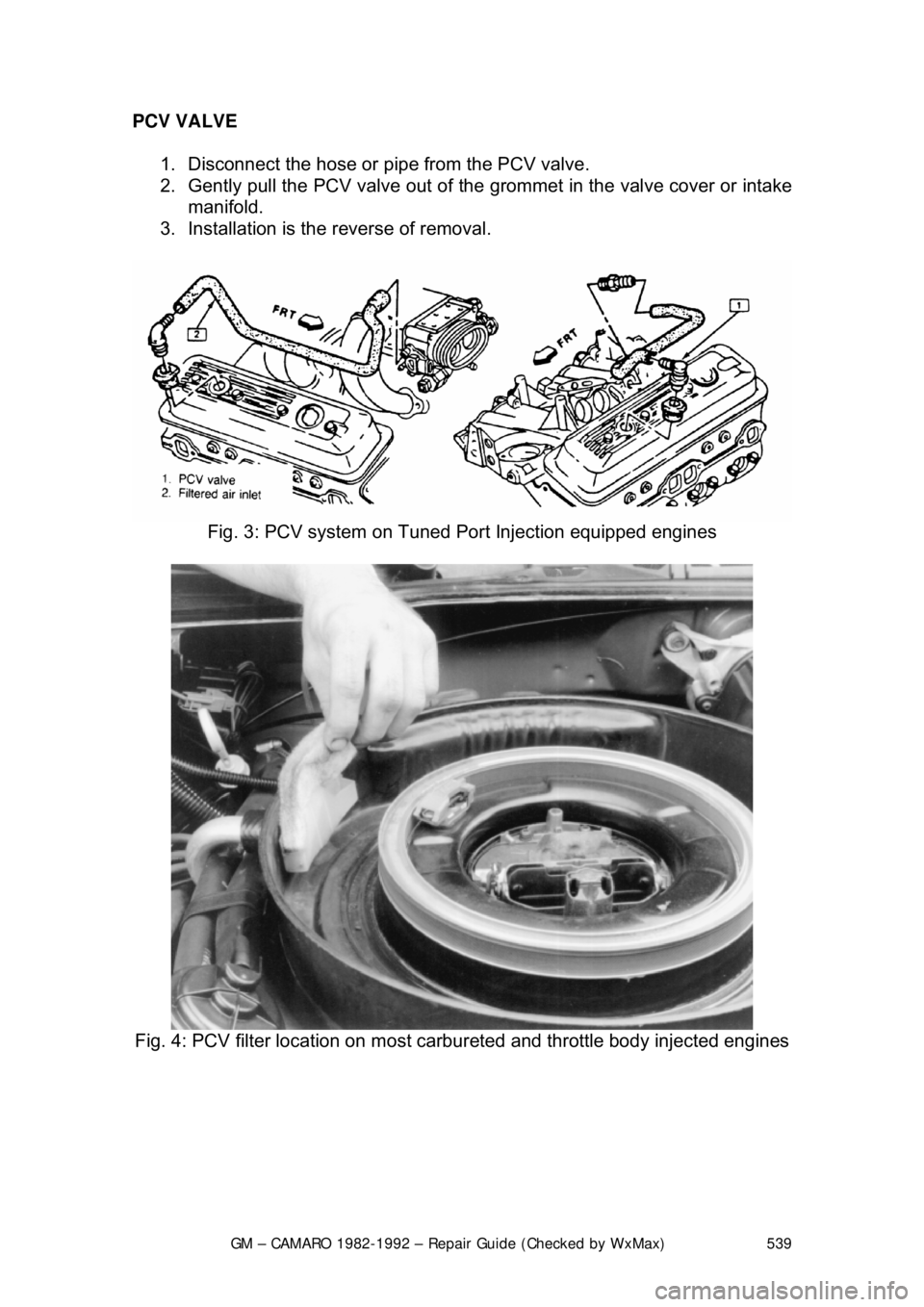
Fig. 3: PCV system on Tuned Port Injection equipped engines
Fig. 4: PCV filter location on most carbureted and throttle body injected engines
Page 547 of 875

GM – CAMARO 1982-1992 – Repair Guide (Checked by WxMax) 547
EXHAUST GAS RECIRCULATION (EGR) SYSTEM
OPERATION
All models are equipped with
this system, which consists of a metering valve, a
vacuum line to the carburet or or intake manifold, and cast-in exhaust passages
in the intake manifold. The EGR valve is controlled by vacuum, which opens
and closes in response to the vacuum signals to admit exhaust gases into the
air/fuel mixture. The exhaust gases lower peak combustion temperatures,
reducing the formation of NOx. The valve is closed at idle and wide open
throttle, but is open between the two extreme positions.
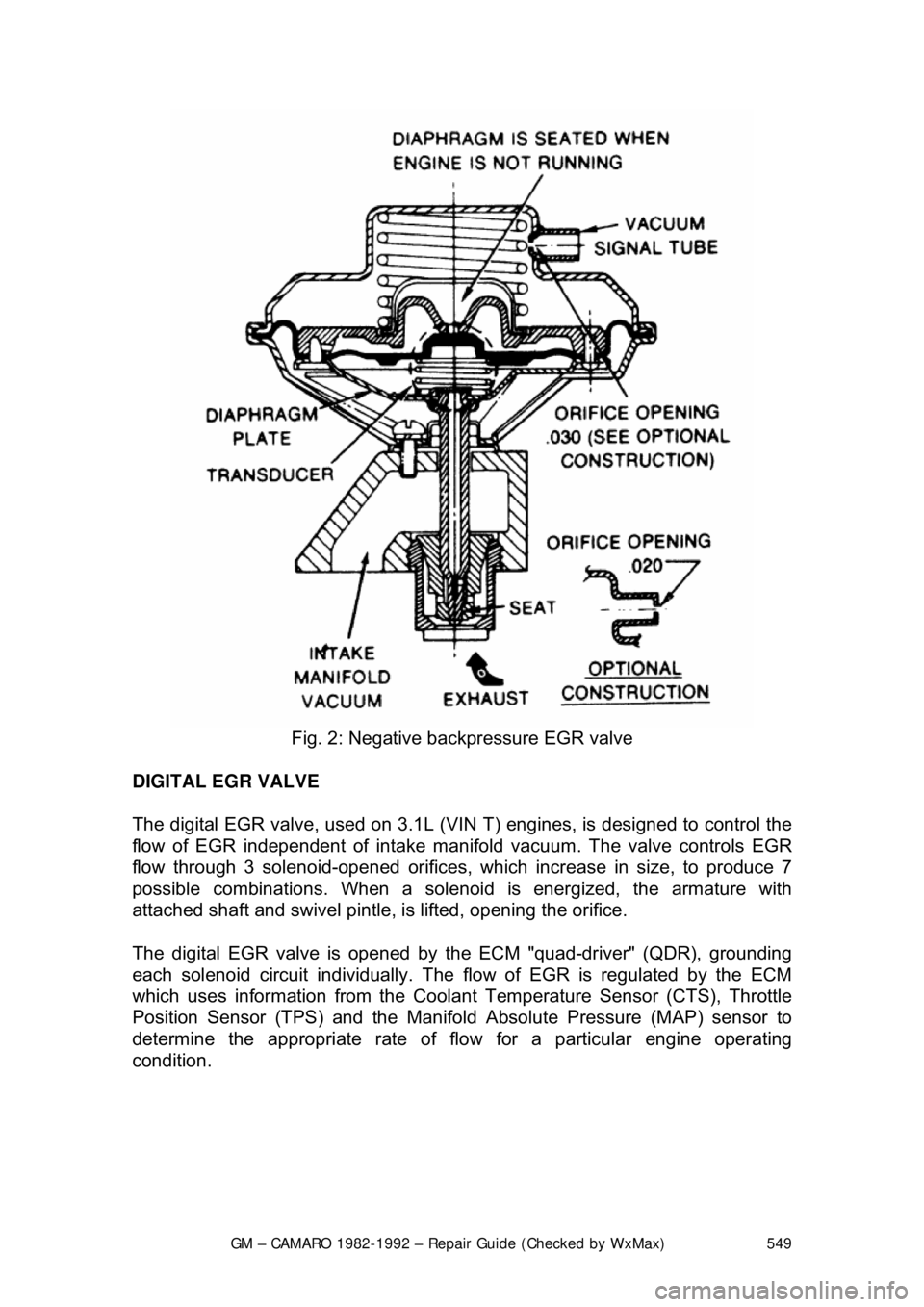
There are actually four types of EGR systems: Ported, Positive Back-Pressure,
Negative Backpressure and Digital. The pr inciple of all the systems are the
same; the only difference is in the me thod used to control how the EGR valve
opens.
Too much EGR flow at idle, cruise or during cold operation may result in the
engine stalling after cold start, the engine stalling at idle after deceleration,
vehicle surge during cruise and rough idle . If the EGR valve is always open, the
vehicle may not idle. Too little or no EGR flow allows combustion temperatures
to rise, which could result in spar k knock (detonation), engine overheating
and/or emission test failure.
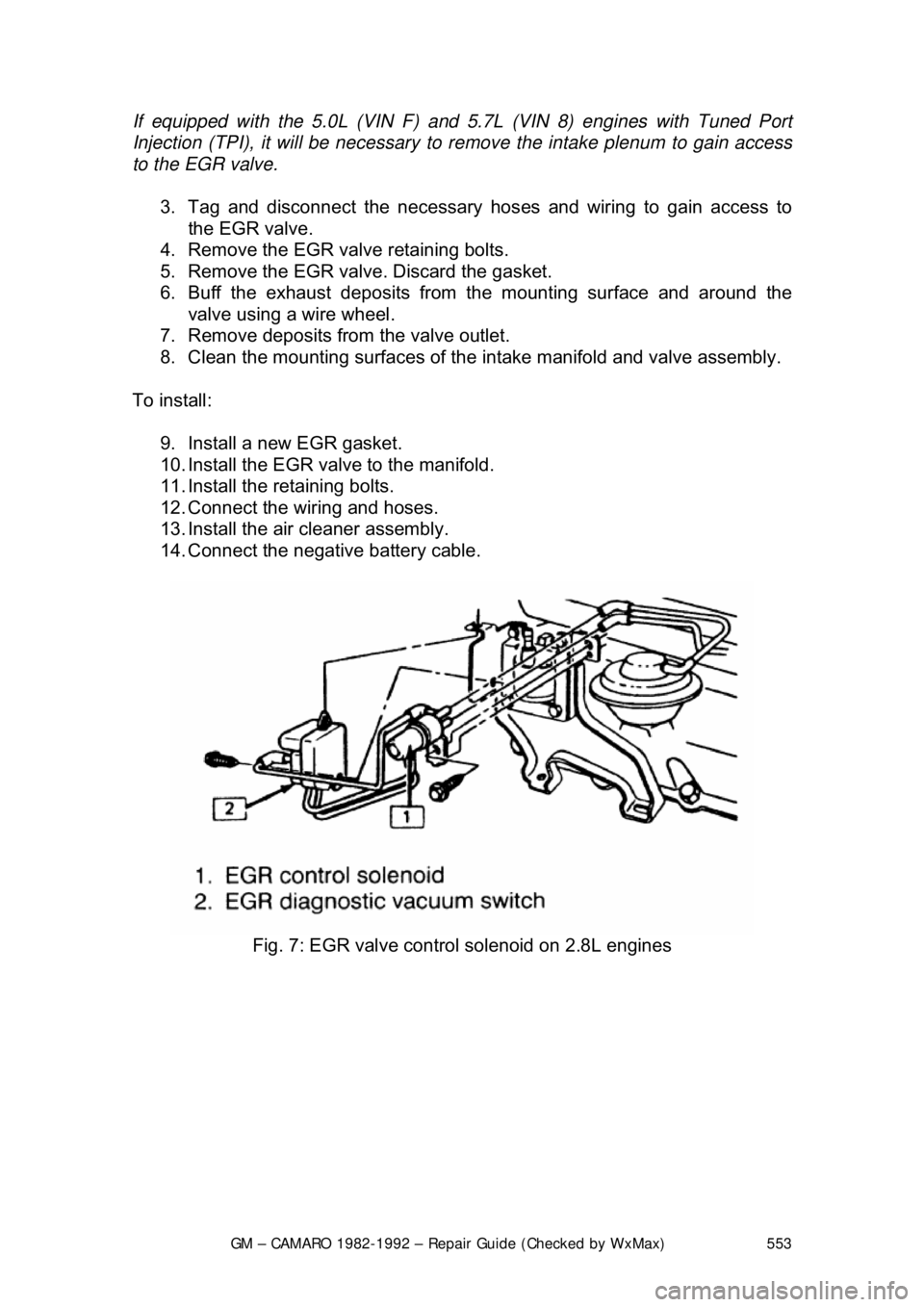
A Thermal Vacuum Switch (TVS) or vacuum control solenoid may sometimes\
be used in combination with the EGR va lve. The TVS will close off vacuum
during cold operation. A va cuum control solenoid uses Pulse Width Modulation
(PWM) to turn the solenoid ON and OFF numerous times a second and varies
the amount of ON time (pulse width) to vary the amount of ported vacuum
supplied the EGR valve.
PORTED VALVE
In the ported system, the amount of ex haust gas admitted into the intake
manifold depends on a ported vacuum signal. A ported vacuum signal is one
taken from the carburetor above the th rottle plates; thus, the vacuum signal
(amount of vacuum) is dependent on how far the throttle plates are opened.
When the throttle is closed (idle or dec eleration) there is no vacuum signal.
Thus, the EGR valve is closed, and no exhaust gas enters the intake mani\
fold.
As the throttle is opened, a vacuum is produced, which opens the EGR valve,
admitting exhaust gas into the intake manifold.
POSITIVE BACKPRE SSURE VALVE
This valve operates the same as the ported, except, it has an internal air bleed
that acts as a vacuum regulator. T he bleed valve controls the amount of
vacuum inside the vacuum chamber duri ng operation. When the valve receives
sufficient exhaust backpressure through the hollow shaft, it closes the bleed; at
this point the EGR valve opens.
Page 549 of 875
GM – CAMARO 1982-1992 – Repair Guide (Checked by WxMax) 549
Fig. 2: Negative backpressure EGR valve
DIGITAL EGR VALVE
The digital EGR valve, used on 3.1L (VIN T) engines, is designed to control the
flow of EGR independent of intake mani fold vacuum. The valve controls EGR
flow through 3 solenoid- opened orifices, which increa se in size, to produce 7
possible combinations. When a solenoid is energized, the armature with
attached shaft and swivel pintle, is lifted, opening the orifice.
The digital EGR valve is opened by t he ECM "quad-driver" (QDR), grounding
each solenoid circuit individually. The fl ow of EGR is regulated by the ECM
which uses information from the Coolant Temperature Sensor (CTS), Throttle
Position Sensor (TPS) and the Manifold Absolute Pressure (MAP) sensor to
determine the appropriate rate of flow for a particular engine operating
condition.
Page 552 of 875
GM – CAMARO 1982-1992 – Repair Guide (Checked by WxMax) 552
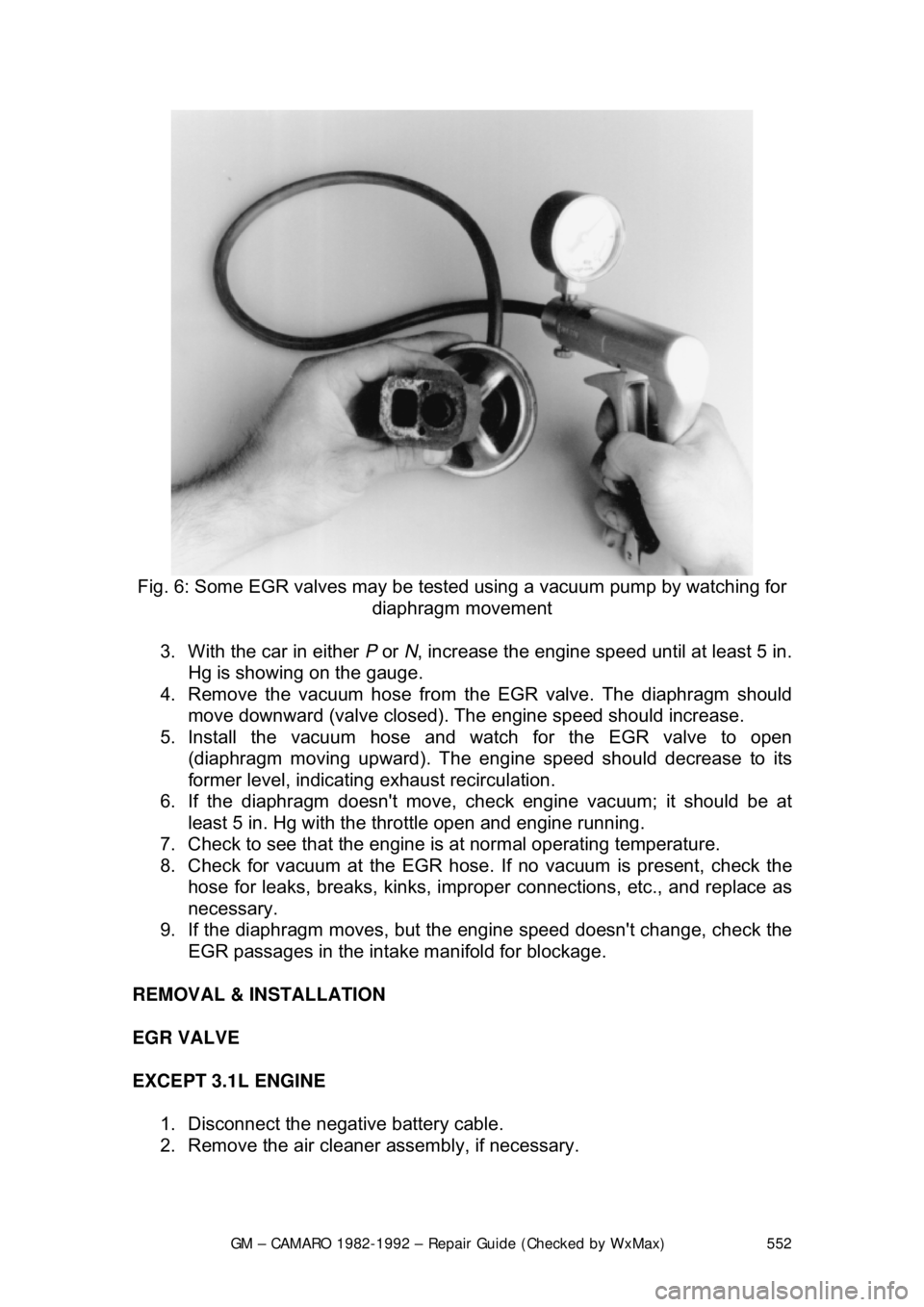
Fig. 6: Some EGR valves may be test ed using a vacuum pump by watching for
diaphragm movement
3. With the car in either P or N, increase the engine speed until at least 5 in.
Hg is showing on the gauge.
4. Remove the vacuum hose from t he EGR valve. The diaphragm should
move downward (valve closed). The engine speed should increase.
5. Install the vacuum hose and watch for the EGR valve to open (diaphragm moving upward). The engine speed should decrease to its
former level, indicating exhaust recirculation.
6. If the diaphragm doesn't move, c heck engine vacuum; it should be at
least 5 in. Hg with the throttle open and engine running.
7. Check to see that the engine is at normal operating temperature.
8. Check for vacuum at the EGR hose. If no vacuum is present, check the
hose for leaks, breaks, kinks, improper connections, etc., and replace as
necessary.
9. If the diaphragm move s, but the engine speed doesn't change, check the
EGR passages in the intake manifold for blockage.
REMOVAL & INSTALLATION
EGR VALVE
EXCEPT 3.1L ENGINE 1. Disconnect the negative battery cable.
2. Remove the air cleaner assembly, if necessary.
Page 553 of 875
GM – CAMARO 1982-1992 – Repair Guide (Checked by WxMax) 553
If equipped with the 5.0L (VIN F) and 5.7L
(VIN 8) engines with Tuned Port
Injection (TPI), it will be necessary to remove the intake plenum to gain access
to the EGR valve.
3. Tag and disconnect the necessary hos es and wiring to gain access to
the EGR valve.
4. Remove the EGR valve retaining bolts.
5. Remove the EGR valve. Discard the gasket.
6. Buff the exhaust deposits from the mounting surface and around the
valve using a wire wheel.
7. Remove deposits from the valve outlet.
8. Clean the mounting surfaces of the intake manifold and valve assembly.
To install: 9. Install a new EGR gasket.
10. Install the EGR valve to the manifold.
11. Install the retaining bolts.
12. Connect the wiring and hoses.
13. Install the air cleaner assembly.
14. Connect the negative battery cable.
Fig. 7: EGR valve control solenoid on 2.8L engines
Page 559 of 875
GM – CAMARO 1982-1992 – Repair Guide (Checked by WxMax) 559
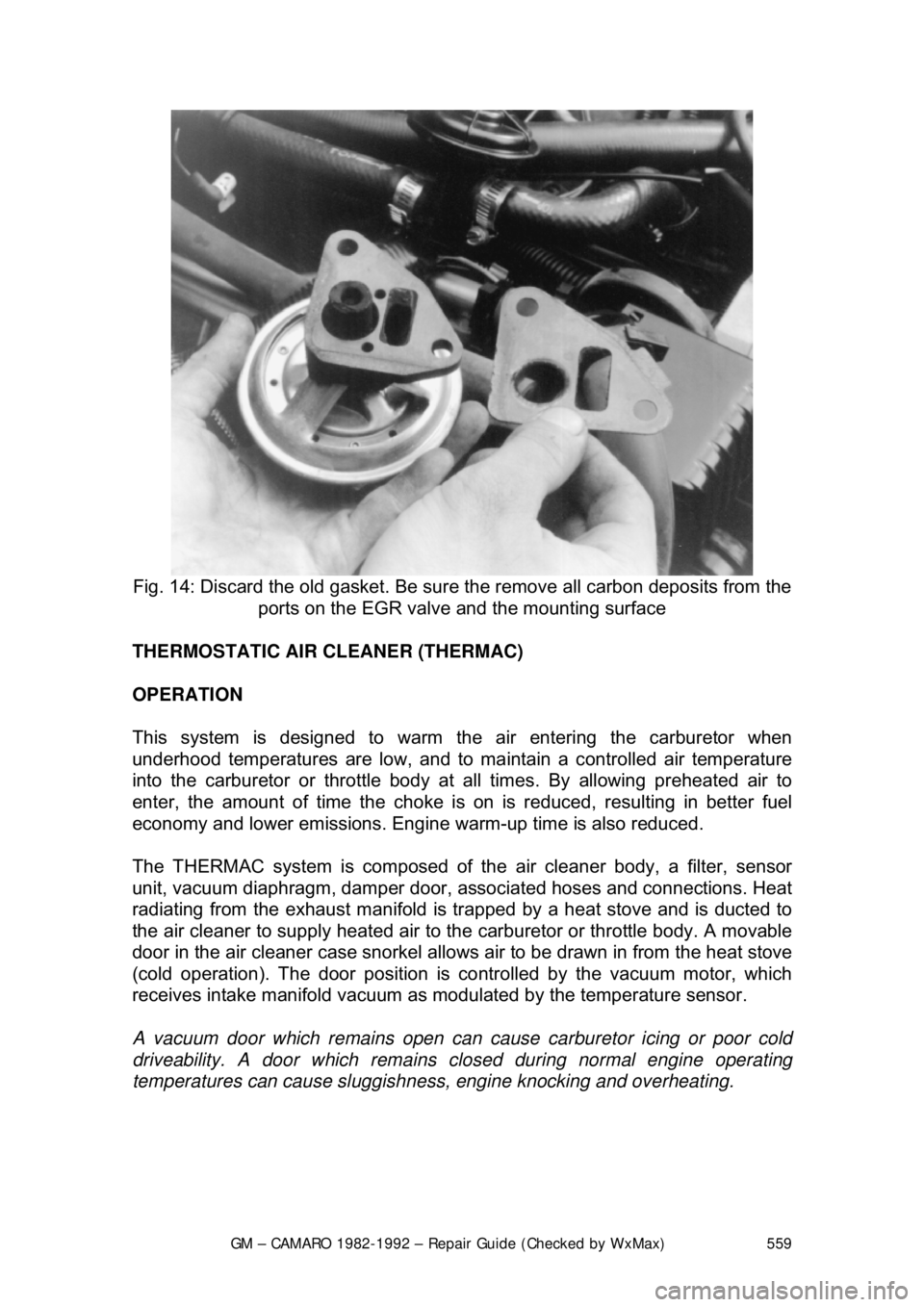
Fig. 14: Discard the old gasket. Be sure the remove all carbon deposits from the
ports on the EGR valve and the mounting surface
THERMOSTATIC AIR CLEANER (THERMAC)
OPERATION
This system is designed to warm the air entering the carburetor when
underhood temperatures are low, and to ma intain a controlled air temperature
into the carburetor or throttle body at all times. By allowing preheated air to
enter, the amount of time t he choke is on is reduced, resulting in better fuel
economy and lower emissions. Engine warm-up time is also reduced.
The THERMAC system is composed of th e air cleaner body, a filter, sensor
unit, vacuum diaphragm, damper door, a ssociated hoses and connections. Heat
radiating from the exhaust manifold is tr apped by a heat stove and is ducted to
the air cleaner to supply heated air to t he carburetor or throttle body. A movable
door in the air cleaner case snorkel allows air to be drawn in from the heat stove
(cold operation). The door position is co ntrolled by the vacuum motor, which
receives intake manifold vacuum as modulated by the temperature sensor.
A vacuum door which remain s open can cause carburetor icing or poor cold
driveability. A door which remains clos ed during normal engine operating
temperatures can cause sluggishne ss, engine knocking and overheating.