seat adjustment CHEVROLET CAMARO 1982 Repair Guide
[x] Cancel search | Manufacturer: CHEVROLET, Model Year: 1982, Model line: CAMARO, Model: CHEVROLET CAMARO 1982Pages: 875, PDF Size: 88.64 MB
Page 55 of 875
GM – CAMARO 1982-1992 – Repair Guide (Checked by WxMax) 55
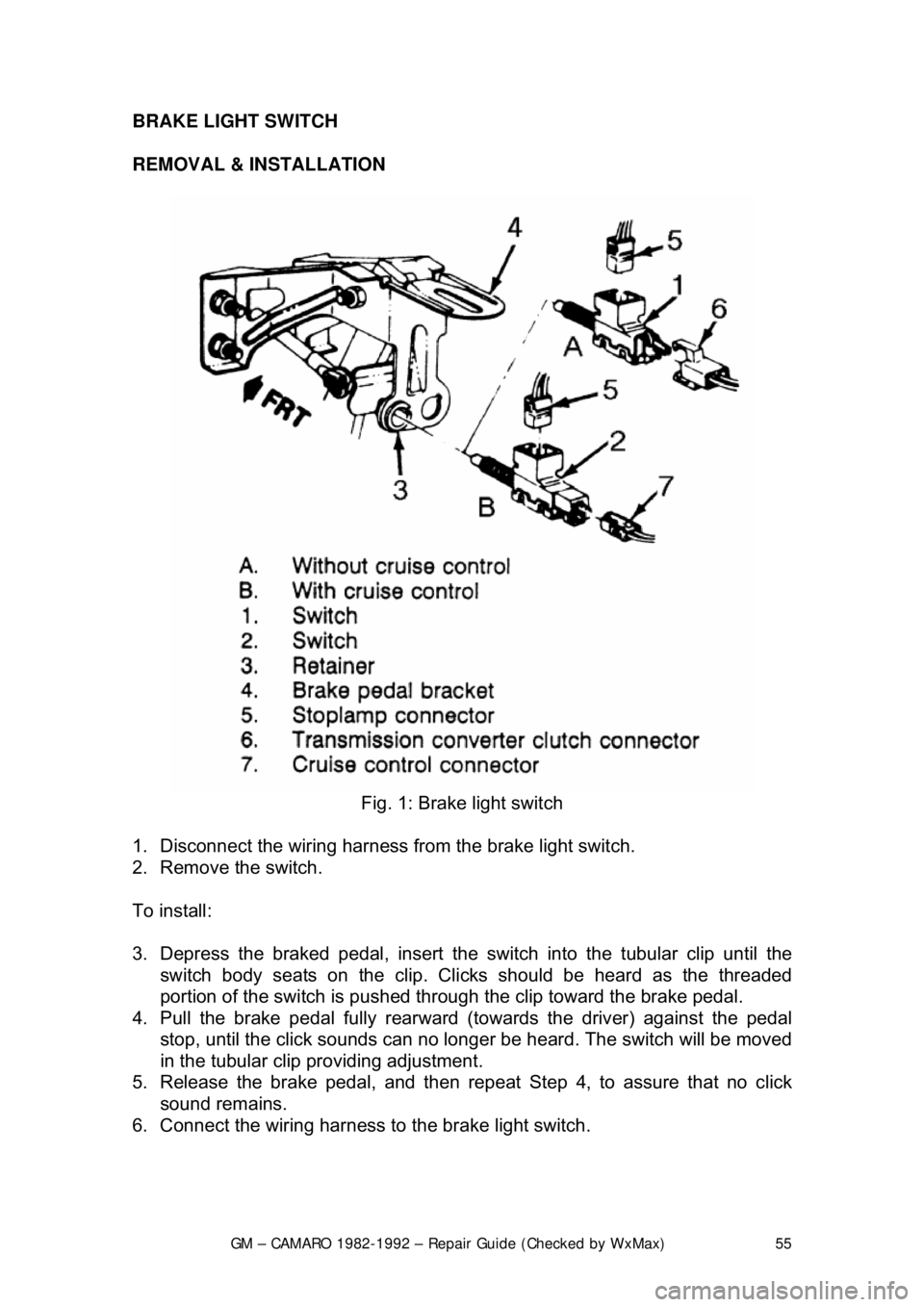
BRAKE LIGHT SWITCH
REMOVAL & INSTALLATION
Fig. 1: Brake light switch
1. Disconnect the wiring harness fr om the brake light switch.
2. Remove the switch.
To install:
3. Depress the braked pedal, insert the switch into the tubular clip until the
switch body seats on the clip. Cli cks should be heard as the threaded
portion of the switch is pushed through the clip toward the brake pedal.\
4. Pull the brake pe dal fully rearward (towards the driver) against the pedal
stop, until the click sounds can no long er be heard. The switch will be moved
in the tubular clip providing adjustment.
5. Release the brak e pedal, and then repeat Step 4, to assure that no click
sound remains.
6. Connect the wiring harness to the brake light switch.
Page 112 of 875

GM – CAMARO 1982-1992 – Repair Guide (Checked by WxMax) 112
4. Position a C-clamp a
nd tighten until the piston bottoms in the base of the
caliper housing. Make sure 1 end of the C-clamp rests on the inlet fitting bolt
and the other against the outboard disc brake pad.
It is not necessary to remove the parki ng brake caliper lever return spring to
replace the disc brake pads.
5. Remove the upper caliper guide pin bolt and discard.
6. Rotate the caliper housing. Be careful not to strain the hose or cable conduit.
7. Remove the disc brake pads.
To install:
8. Clean all residue from the pad guide surfaces on the mounting bracket and
caliper housing. Inspect the guide pins for free movement in the mounting
bracket. Replace the guide pins or boot s, if they are corroded or damaged.
9. Install the disc brake pads. The out board pad with insulator is installed
toward the caliper housing. The inboard pad with the w ear sensor is installed
nearest the caliper piston. The wear sens or must be in the trailing position
with forward wheel rotation.
10. Rotate the caliper housing into it 's operating position. The springs on the
outboard brake pad must not stick through the inspection hole in the caliper
housing. If the springs are sticking thr ough the inspection hole in the caliper
housing, lift the caliper housing and make the necessary corrections to the
outboard brake pad positions.
11. Install a new upper cali per guide pin bolt and tight en to 26 ft. lbs. (35 Nm).
Tighten the lower caliper guide pin bolt to 16 ft. lbs. (22 Nm).
12. With the engine runni ng, pump the brake pedal slo wly and firmly to seat the
brake pads.
13. Check the caliper parking brake levers to make sure they are against the
stops on the caliper housing. If the leve rs are not on their stops, check the
parking brake adjustment.
14. Remove the 2 wheel nuts from t he rotor and install the wheel and tire
assembly.
15. Lower the vehicle, che ck the master cylinder fluid level and road test the
vehicle.
BRAKE CALIPER
REMOVAL & INSTALLATION
CAUTION - Brake pads contain asbestos, which has been determined to be a
cancer causing agent. Never clean the brake surfaces with compressed air!
Avoid inhaling any dust from any brake surface! When cleaning brake surfaces,
use a commercially available brake cleaning fluid.
1982-88 MODELS
Page 114 of 875
GM – CAMARO 1982-1992 – Repair Guide (Checked by WxMax) 114
9. Inspect the guide pins and boots and re
place if corroded, worn or damaged.
Check the inlet fitting bolt for blockage.
10. Install the caliper housing over t he rotor and into the mounting bracket.
Install the 2 caliper guide pin bolts. Tighten the upper caliper guide pin bolt
to 26 ft. lbs. (35 Nm) and the lower gui de pin bolt to 16 ft. lbs. (22 Nm).
11. Connect the parking brake cable to t he caliper bracket and caliper lever.
Install the caliper lever return spring, if removed.
12. Install the inlet fitting, bolt and 2 new washers to the caliper housing. Tighten
the bolt to 22 ft. lbs. (30 Nm).
13. Bleed the brake system.
14. Adjust the parking brake free trav el if the caliper was overhauled.
15. Lower the vehicle and cycle the parking brake.
16. Raise and safely support the vehicle.
17. Inspect the caliper parking brake levers and ensure they are against the
stops on the caliper housing. If the levers are not on their stop, refer to the
parking brake adjustment.
18. Remove the 2 nuts securing the roto r and then install the wheel and tire
assembly. Lower the vehicle.
19. With the engine running, pump the br ake pedal slowly and firmly 3 times to
seat the disc brake pads. Check the hydraulic system for leaks.
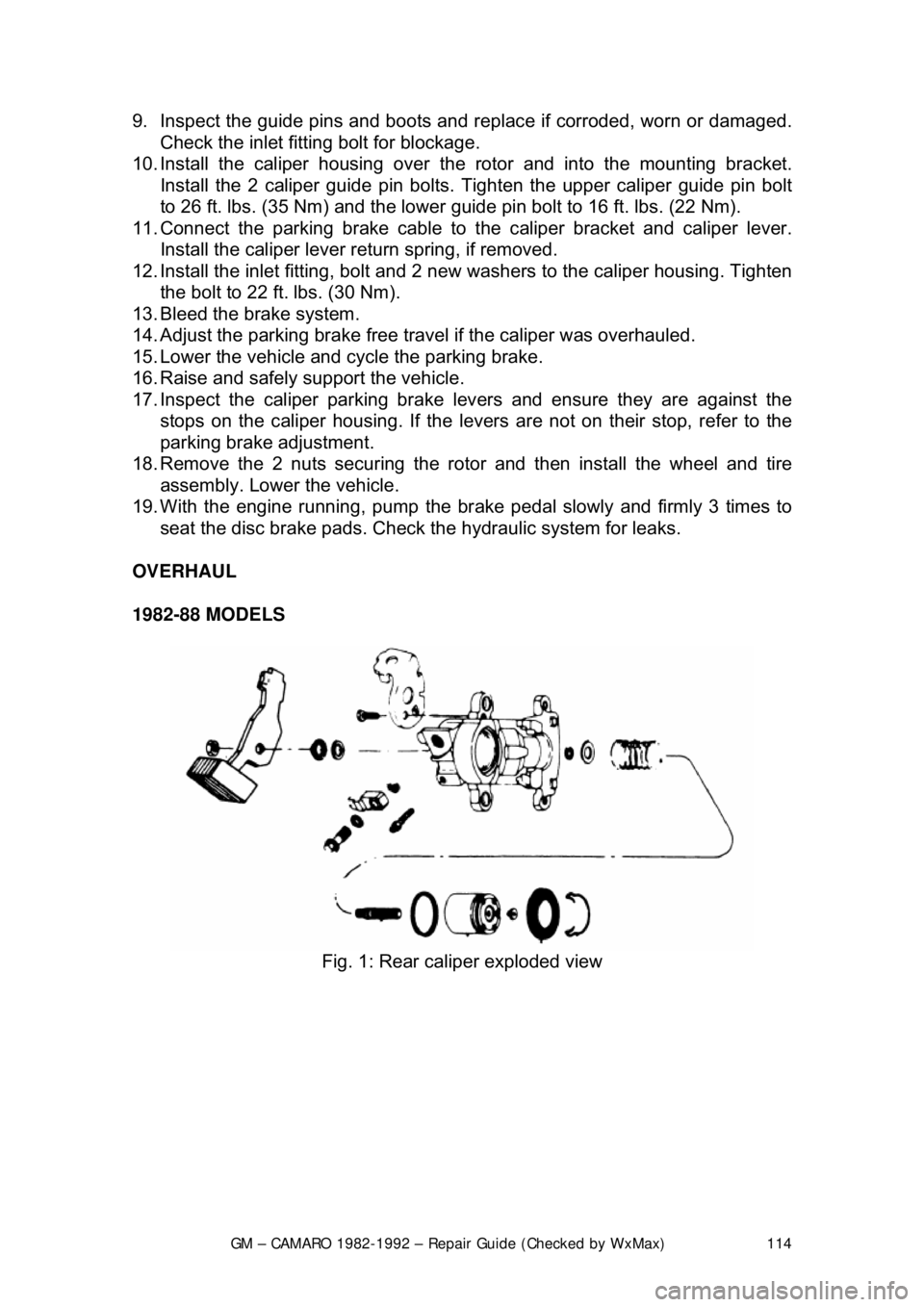
OVERHAUL
1982-88 MODELS
Fig. 1: Rear caliper exploded view
Page 169 of 875
GM – CAMARO 1982-1992 – Repair Guide (Checked by WxMax) 169
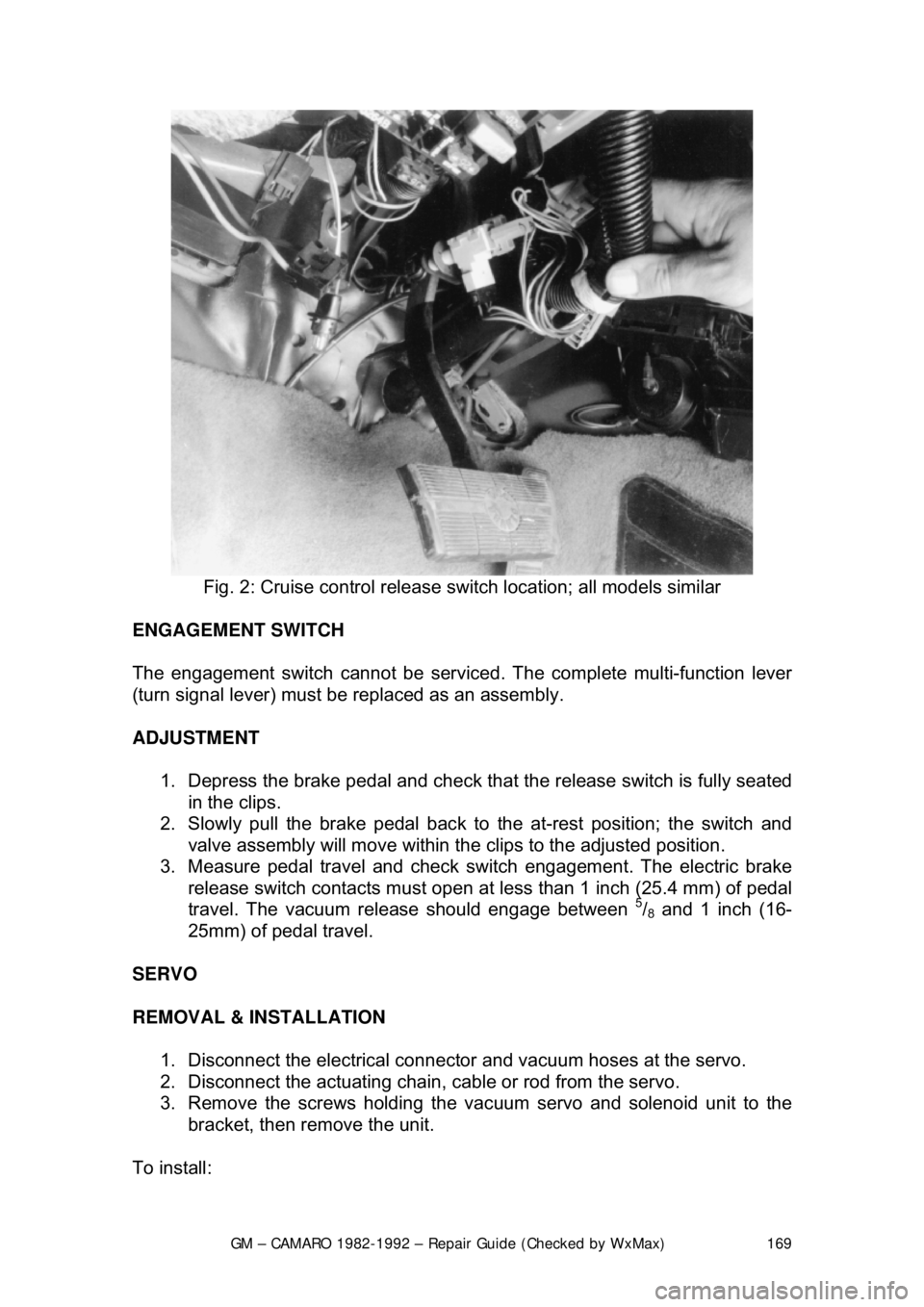
Fig. 2: Cruise control release sw itch location; all models similar
ENGAGEMENT SWITCH
The engagement switch cannot be serviced . The complete multi-function lever
(turn signal lever) must be replaced as an assembly.
ADJUSTMENT
1. Depress the brake pedal and check that the release switch is fully seated
in the clips.
2. Slowly pull the brake pedal back to the at-rest position; the switch and
valve assembly will move within the clips to the adjusted position.
3. Measure pedal travel and check s witch engagement. The electric brake
release switch contacts must open at less than 1 inch (25.4 mm) of pedal
travel. The vacuum release should engage between
5/8 and 1 inch (16-
25mm) of pedal travel.
SERVO
REMOVAL & INSTALLATION 1. Disconnect the electrical connecto r and vacuum hoses at the servo.
2. Disconnect the actuating chain, cable or rod from the servo.
3. Remove the screws holding the vac uum servo and solenoid unit to the
bracket, then remove the unit.
To install:
Page 581 of 875
GM – CAMARO 1982-1992 – Repair Guide (Checked by WxMax) 581
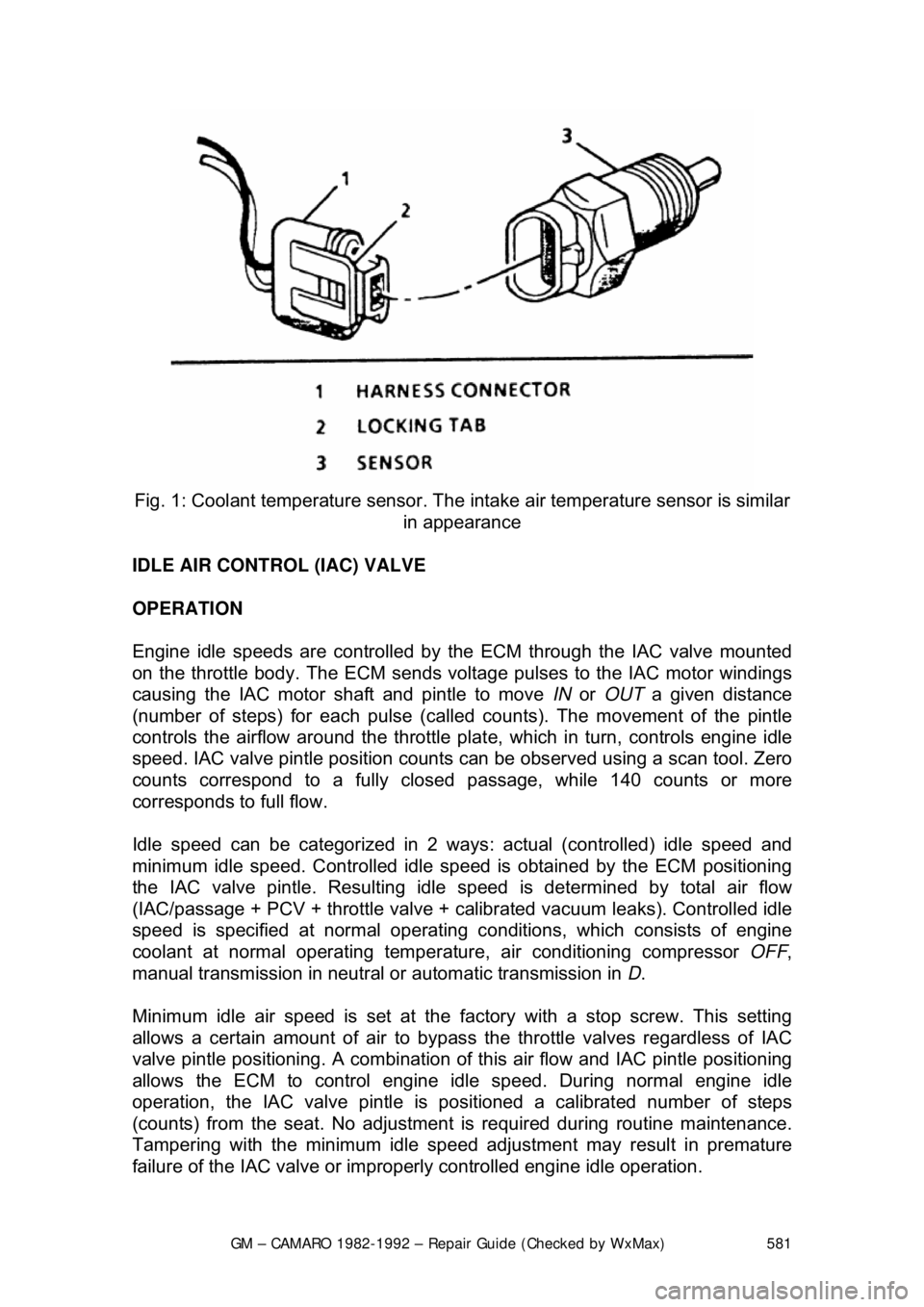
Fig. 1: Coolant temperature sensor. The in take air temperature sensor is similar
in appearance
IDLE AIR CONTROL (IAC) VALVE
OPERATION
Engine idle speeds are controlled by the ECM through the IAC valve mounted
on the throttle body. The ECM sends volt age pulses to the IAC motor windings
causing the IAC motor shaft and pintle to move IN or OUT a given distance
(number of steps) for each pulse (called counts). The movement of the pintle
controls the airflow around the throttle plat e, which in turn, controls engine idle
speed. IAC valve pintle position counts ca n be observed using a scan tool. Zero
counts correspond to a fully closed passage, while 140 counts or more
corresponds to full flow.
Idle speed can be categorized in 2 ways : actual (controlled) idle speed and
minimum idle speed. Contro lled idle speed is obtained by the ECM positioning
the IAC valve pintle. Resulting idle speed is determined by total air fl\
ow
(IAC/passage + PCV + throttle valve + ca librated vacuum leaks). Controlled idle
speed is specified at normal operating c onditions, which consists of engine
coolant at normal operating temper ature, air conditioning compressor OFF,
manual transmission in neutral or automatic transmission in D.
Minimum idle air speed is set at t he factory with a stop screw. This setting
allows a certain amount of air to bypas s the throttle valves regardless of IAC
valve pintle positioning. A co mbination of this air flow and IAC pintle positioning
allows the ECM to control engine idle speed. During normal engine idle
operation, the IAC valve pintle is positioned a calibrated number of steps
(counts) from the seat. No adjustment is required during routine maintenance.
Tampering with the minimum idle speed adjustment may result in premature
failure of the IAC valve or imprope rly controlled engine idle operation.
Page 672 of 875
GM – CAMARO 1982-1992 – Repair Guide (Checked by WxMax) 672
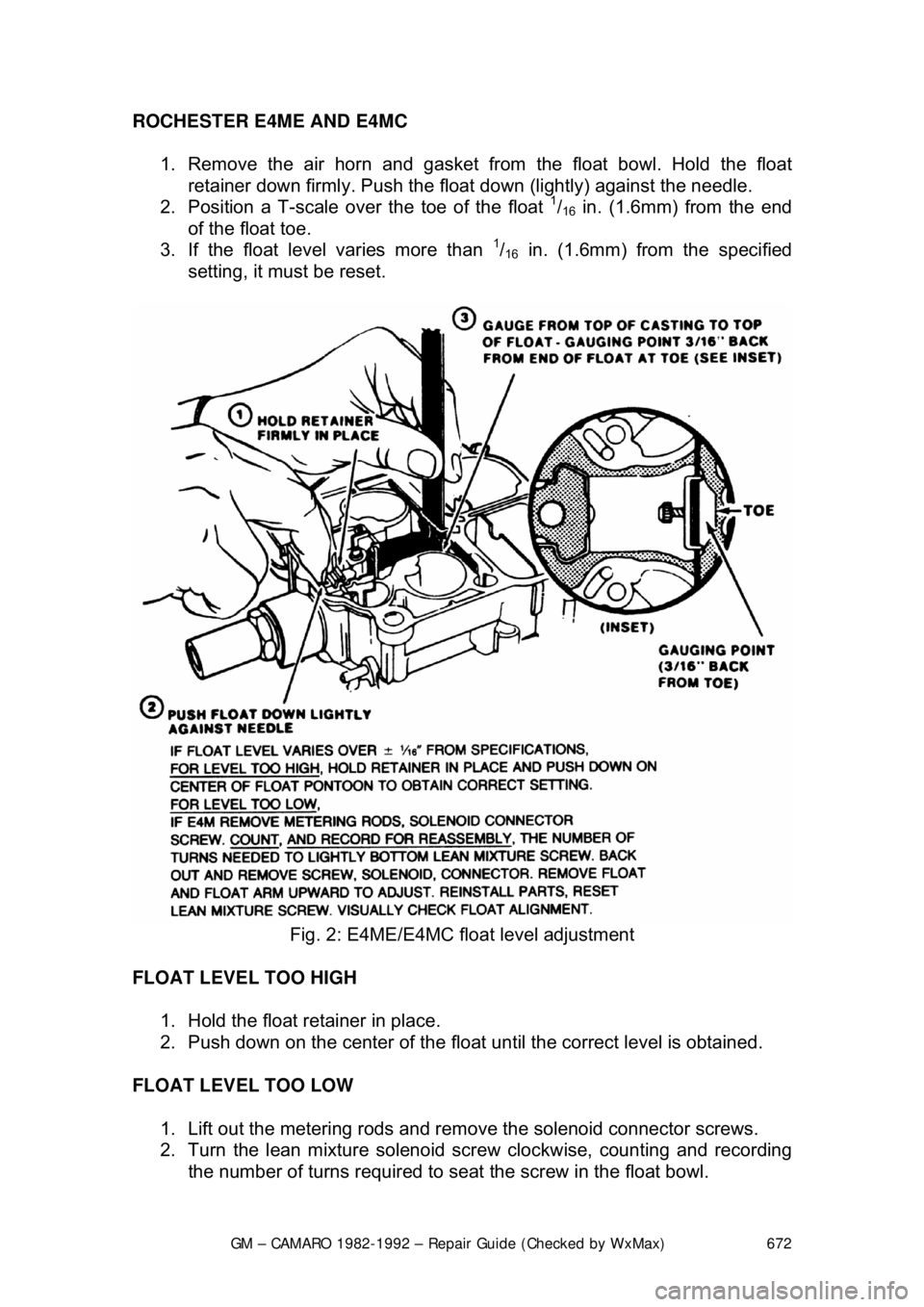
ROCHESTER E4ME AND E4MC
1. Remove the air horn and gasket from the float bowl. Hold the float retainer down firmly. Push the float down (lightly) against the needle.
2. Position a T-scale ov er the toe of the float
1/16 in. (1.6mm) from the end
of the float toe.
3. If the float level varies more than
1/16 in. (1.6mm) from the specified
setting, it must be reset.
Fig. 2: E4ME/E4MC float level adjustment
FLOAT LEVEL TOO HIGH 1. Hold the float retainer in place.
2. Push down on the center of the float until the correct level is obtained.
FLOAT LEVEL TOO LOW 1. Lift out the metering rods and remo ve the solenoid connector screws.
2. Turn the lean mixture solenoid screw clockwise, counting and recording
the number of turns required to seat the screw in the float bowl.
Page 695 of 875
GM – CAMARO 1982-1992 – Repair Guide (Checked by WxMax) 695
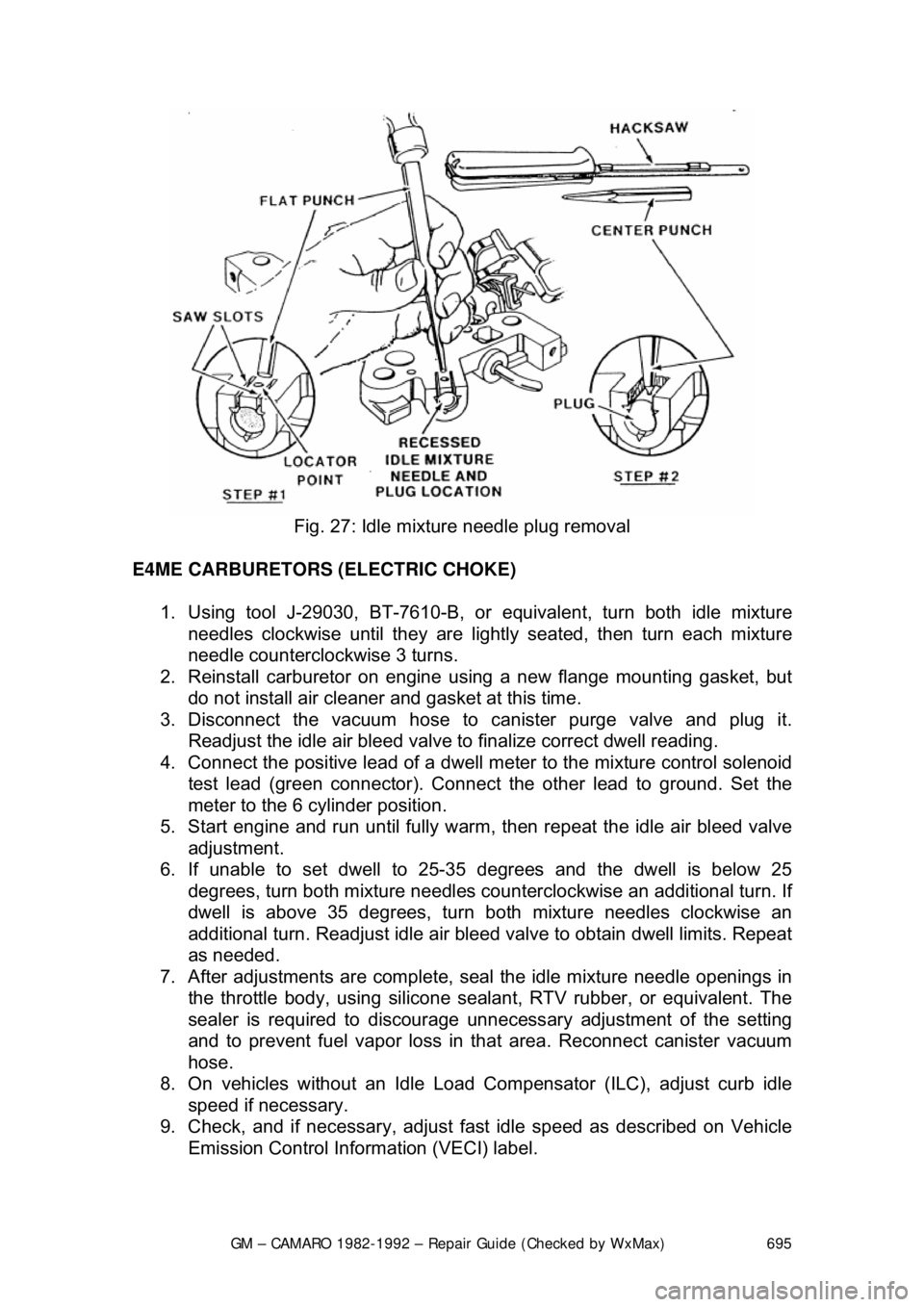
Fig. 27: Idle mixture needle plug removal
E4ME CARBURETORS (ELECTRIC CHOKE) 1. Using tool J-29030, BT-7610-B, or equivalent, turn both idle mixture
needles clockwise until they are lightly seated, then turn each mixture
needle counterclockwise 3 turns.
2. Reinstall carburetor on engine using a new flange mounting gasket, but
do not install air cleaner and gasket at this time.
3. Disconnect the vacuum hose to canister purge valve and plug it.
Readjust the idle air bleed valve to finalize correct dwell reading.
4. Connect the positive lead of a dwell me ter to the mixture control solenoid
test lead (green connector). Connect the other lead to ground. Set the
meter to the 6 cylinder position.
5. Start engine and run unt il fully warm, then repeat the idle air bleed valve
adjustment.
6. If unable to set dwell to 25-35 degrees and the dwell is below 25
degrees, turn both mixture needles counter clockwise an additional turn. If
dwell is above 35 degrees, turn both mixture needles clockwise an
additional turn. Readjust idle air bleed valve to obtain dwell limits. Repeat
as needed.
7. After adjustments are complete, seal the idle mixture needle openings in
the throttle body, using silicone sealant, RTV rubber, or equivalent. The
sealer is required to discourage unnecessary adjus tment of the setting
and to prevent fuel vapor loss in that area. Reconnect canister vacuum
hose.
8. On vehicles without an Idle Load Co mpensator (ILC), adjust curb idle
speed if necessary.
9. Check, and if necessary, adjust fa st idle speed as described on Vehicle
Emission Control Information (VECI) label.
Page 696 of 875
GM – CAMARO 1982-1992 – Repair Guide (Checked by WxMax) 696
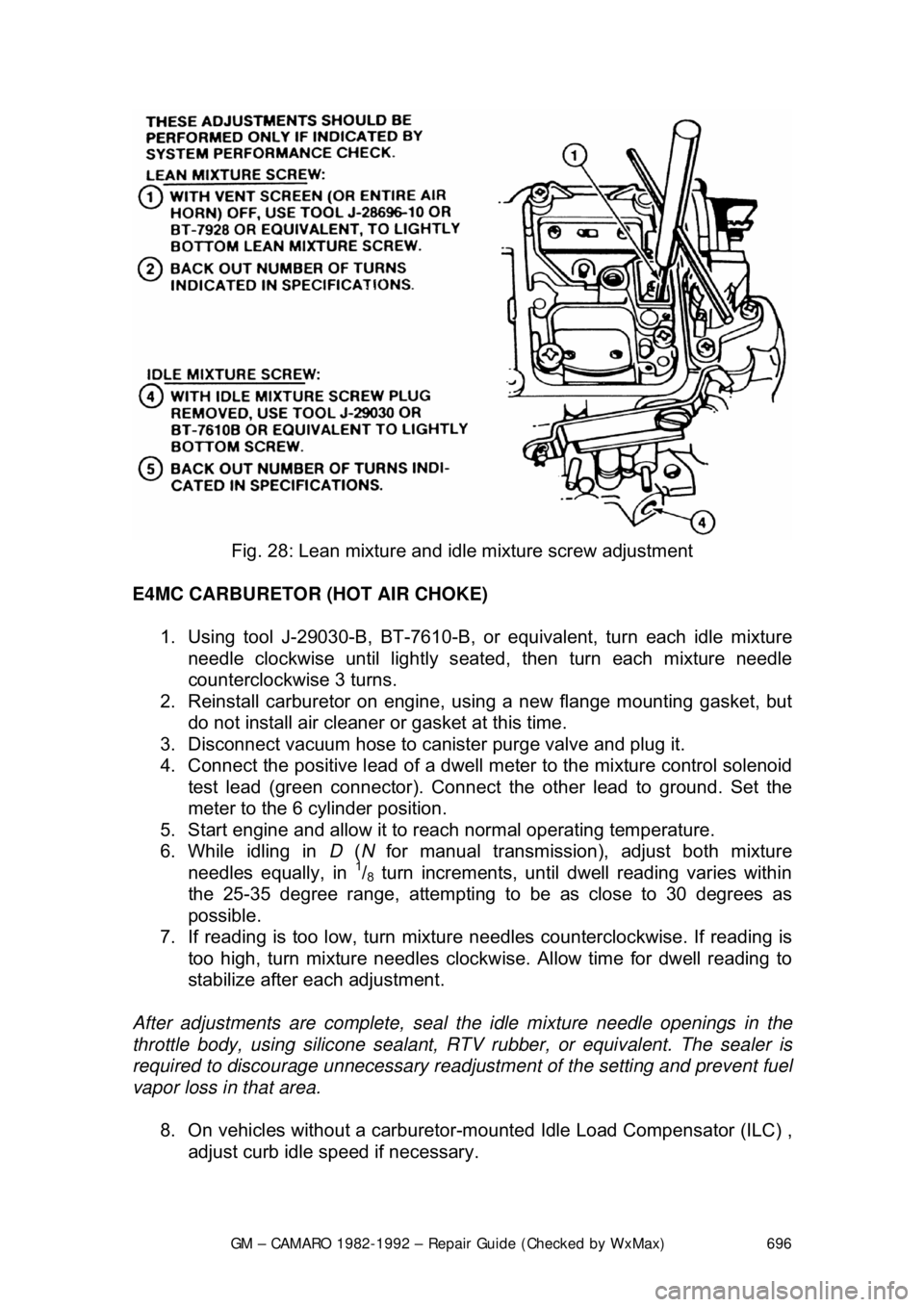
Fig. 28: Lean mixture and idle mixture screw adjustment
E4MC CARBURETOR (HOT AIR CHOKE) 1. Using tool J-29030-B, BT-7610-B, or equivalent, turn each idle mixture
needle clockwise until lightly seated, then turn each mixture needle
counterclockwise 3 turns.
2. Reinstall carburetor on engine, using a new flange mounting gasket, but
do not install air cleaner or gasket at this time.
3. Disconnect vacuum hose to c anister purge valve and plug it.
4. Connect the positive lead of a dwell me ter to the mixture control solenoid
test lead (green connector). Connect the other lead to ground. Set the
meter to the 6 cylinder position.
5. Start engine and allow it to reac h normal operating temperature.
6. While idling in D ( N for manual transmission), adjust both mixture
needles equally, in
1/8 turn increments, until dwell reading varies within
the 25-35 degree range, attempting to be as close to 30 degrees as
possible.
7. If reading is too low, turn mixtur e needles counterclockwise. If reading is
too high, turn mixture needl es clockwise. Allow time for dwell reading to
stabilize after each adjustment.
After adjustments are complete, seal t he idle mixture needle openings in the
throttle body, using silicone sealant, RTV rubber, or equivalent. The sealer is
required to discourage unnece ssary readjustment of the setting and prevent fuel
vapor loss in that area.
8. On vehicles without a carburetor -mounted Idle Load Compensator (ILC) ,
adjust curb idle speed if necessary.
Page 710 of 875

GM – CAMARO 1982-1992 – Repair Guide (Checked by WxMax) 710
•
Check the pump passages and the jet(s) for dirt, improper seating of the
discharge checkball or t he temperature bypass disc and/or scores in the
pumpwell. Check the condition of t he pump discharge check ball spring,
replace as necessary
• Check the pump linkage for excessiv e wear; repair or replace as
necessary
HARD STARTING-POOR COLD OPERATION
• Check the choke valve and linkage for excessive wear, binds or
distortion
• Test the vacuum break diaphragm(s) for leaks
• Clean or replace the fuel filter
• Inspect the float valve fo r sticking, dirt, etc.
• Also check the items under "Flooding"
POOR PERFORMANCE-POOR GAS MILEAGE
• Clean all fuel and vacuum passages in the castings
• Check the choke valve fo r freedom of movement
• Check the Mixture Control (M/C) soleno id for sticking, binding or leaking
• Check the air valve and secondary me tering rod for binding conditions. If
the air valve or metering rod is da maged or the metering rod adjustment
is changed from the factory setting, the air horn assembly must be
replaced. Also check the air valve le ver spring for proper installation
ROUGH IDLE
• Inspect the gasket and gasket mating su rfaces on the casting for nicks,
burrs or damage to the sealing beads
• Check the operation and sealing of the mixture control solenoid
• Clean all of the idle field passages
• If removed, inspect the idle mixture needle for ridges, burrs or being bent
• Check the throttle lever and valves for binds, nicks. or other damage
• Check all of the diaphragms for possible ruptures or leaks
After cleaning and checking all components, reassemble the carburetor, using
new parts and referring to the exploded view. When reassembling, make sure
that all screws and jets are tight in their seats, but do not overtighten as the tips
will be distorted. Tighten al l screws gradually, in rotation. Do not tighten needle
valves into their seats; uneven jetting will result. Always use new gaskets. Be
sure to follow all assembly and adjustment procedures.
Before performing any service on the carburet or, it is essential that it be placed
on a suitable holding fixtur e, such as tool J-9789-118, BY-30-15 or equivalent.
Without the use of the holding fixture, it is possible to damage throttle valves or
other parts of the carburetor.
Page 719 of 875

GM – CAMARO 1982-1992 – Repair Guide (Checked by WxMax) 719
11. Lubricate the new large O-ring with cl
ean engine oil and install it directly
over the backup washer. Be sure t he O-ring is seated properly and is
flush with the top of the fuel meter body surface.
12. Lubricate the new small O-ring with clean engine oil and install it on the
nozzle end of the injector. Push t he O-ring on far enough to contact the
filter.
WARNING - Do not attempt to reverse this procedure and install the backup
washer and O-ring after the injector is located in the cavity. To do so will
prevent proper seating of the O-ring in th e cavity recess which could result in a
fuel leak and possible fire.
13. Install the injector by aligning the raised lug on the injector base with the
notch cast into the fuel meter body . Push down on the injector making
sure it is fully seated in the cavity. In jector installation is correct when the
lug is seated in the notch and the electrical terminals are parallel to the
throttle shaft.
14. Using new gaskets on the fuel mete r cover and a new dust seal, install
the cover to the fuel meter body. Use an appropriate thread locking
compound on the cover attaching screws.
15. Connect the injector electrical c onnector by pushing straight down until
seated firmly in place.
16. Connect the negative battery cable.
17. With the engine OFF and the igniti on ON, check for fuel leaks.
18. Install the air cleaner.
ADJUSTMENTS
MINIMUM IDLE SPEED
Minimum idle speed should only be adjus ted when installing a replacement
throttle body. The idle stop screw is used to regulate the minimum idle speed of
the engine. The throttle body is adjusted at the factory, then covered with a cap
or plug to discourage unnecessary readjustment.
2.5L ENGINES 1. Remove the air cleaner and pl ug the THERMAC vacuum port.
2. Disconnect the TV cable from the th rottle control bracket to allow access
to the idle adjustment screw.
3. Remove the throttle stop screw plug or cap.
4. Connect a tachometer to the engine.
5. Disconnect the Idle Air Control (IAC) valve connector.
6. Start the engine with the transmi ssion in PARK (auto transmission) or
NEUTRAL (manual transmission) and allow the engine speed to
stabilize. All accessories (A/C, rear defogger, etc.) should be OFF.
7. Install tool J-33047 in t he idle air passage of the throttle body. Be certain
that the tool seats fully in t he passage and no air leaks exist.