Fuel system FORD FESTIVA 1991 Workshop Manual
[x] Cancel search | Manufacturer: FORD, Model Year: 1991, Model line: FESTIVA, Model: FORD FESTIVA 1991Pages: 454, PDF Size: 9.53 MB
Page 236 of 454
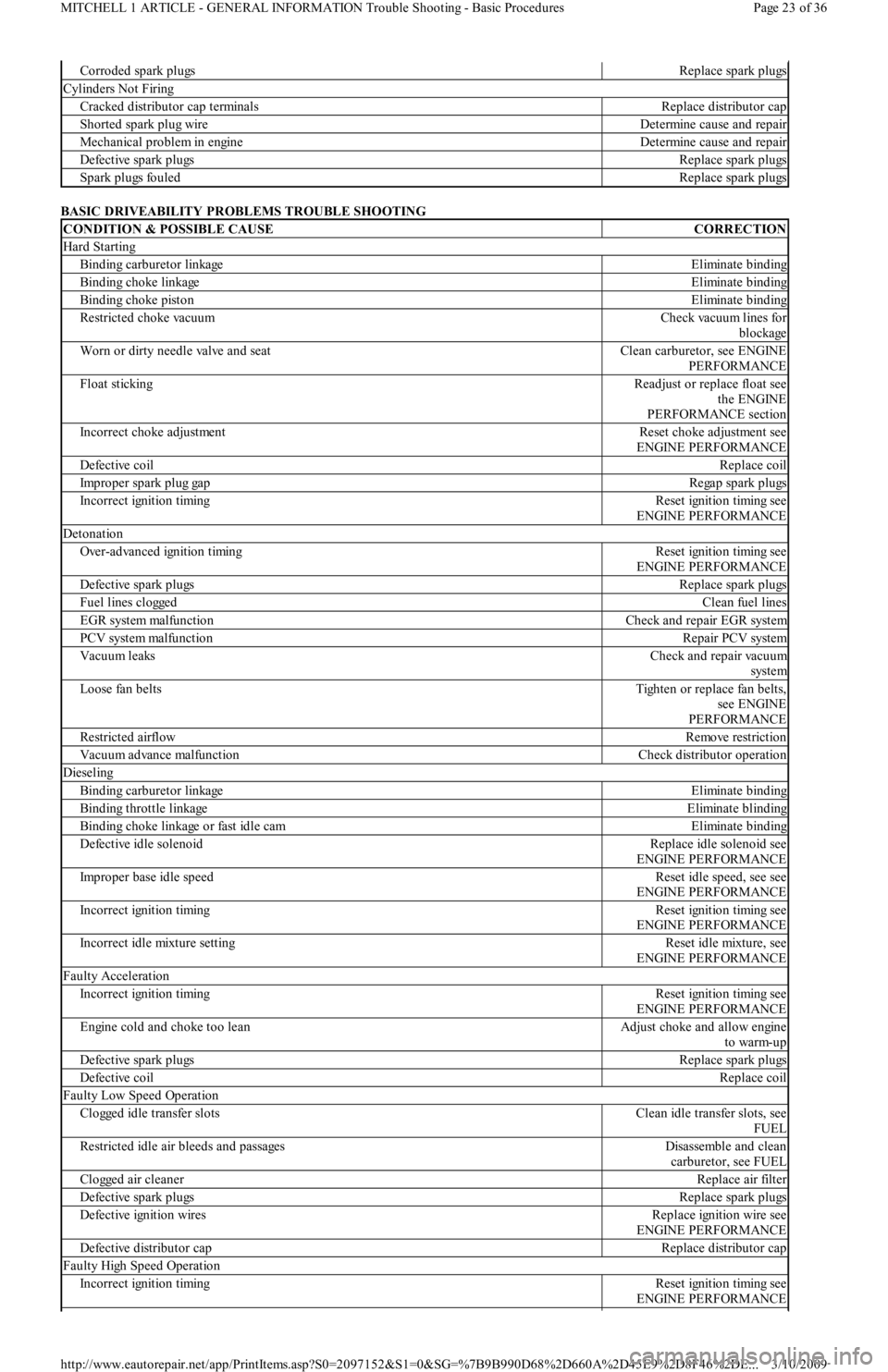
BASIC DRIVEABILITY PROBLEMS TROUBLE SHOOTING
Corroded spark plugsReplace spark plugs
Cylinders Not Firing
Cracked distributor cap terminalsReplace distributor cap
Shorted spark plug wireDetermine cause and repair
Mechanical problem in engineDetermine cause and repair
Defective spark plugsReplace spark plugs
Spark plugs fouledReplace spark plugs
CONDITION & POSSIBLE CAUSECORRECTION
Hard Starting
Binding carburetor linkageEliminate binding
Binding choke linkageEliminate binding
Binding choke pistonEliminate binding
Restricted choke vacuumCheck vacuum lines for
blockage
Worn or dirty needle valve and seatClean carburetor, see ENGINE
PERFORMANCE
Float stickingReadjust or replace float see
the ENGINE
PERFORMANCE section
Incorrect choke adjustmentReset choke adjustment see
ENGINE PERFORMANCE
Defective coilReplace coil
Improper spark plug gapRegap spark plugs
Incorrect ignition timingReset ignition timing see
ENGINE PERFORMANCE
Detonation
Over-advanced ignition timingReset ignition timing see
ENGINE PERFORMANCE
Defective spark plugsReplace spark plugs
Fuel lines cloggedClean fuel lines
EGR system malfunctionCheck and repair EGR system
PCV system malfunctionRepair PCV system
Vacuum leaksCheck and repair vacuum
system
Loose fan beltsTighten or replace fan belts,
see ENGINE
PERFORMANCE
Restricted airflowRemove restriction
Vacuum advance malfunctionCheck distributor operation
Dieseling
Binding carburetor linkageEliminate binding
Binding throttle linkageEliminate blinding
Binding choke linkage or fast idle camEliminate binding
Defective idle solenoidReplace idle solenoid see
ENGINE PERFORMANCE
Improper base idle speedReset idle speed, see see
ENGINE PERFORMANCE
Incorrect ignition timingReset ignition timing see
ENGINE PERFORMANCE
Incorrect idle mixture settingReset idle mixture, see
ENGINE PERFORMANCE
Faulty Acceleration
Incorrect ignition timingReset ignition timing see
ENGINE PERFORMANCE
Engine cold and choke too leanAdjust choke and allow engine
to warm-up
Defective spark plugsReplace spark plugs
Defective coilReplace coil
Faulty Low Speed Operation
Clogged idle transfer slotsClean idle transfer slots, see
FUEL
Restricted idle air bleeds and passagesDisassemble and clean
carburetor, see FUEL
Clogged air cleanerReplace air filter
Defective spark plugsReplace spark plugs
Defective ignition wiresReplace ignition wire see
ENGINE PERFORMANCE
Defective distributor capReplace distributor cap
Faulty High Speed Operation
Incorrect ignition timingReset ignition timing see
ENGINE PERFORMANCE
Page 23 of 36 MITCHELL 1 ARTICLE - GENERAL INFORMATION Trouble Shooting - Basic Procedures
3/10/2009 http://www.eautorepair.net/app/PrintItems.asp?S0=2097152&S1=0&SG=%7B9B990D68%2D660A%2D45E9%2D8F46%2DE
...
Page 237 of 454
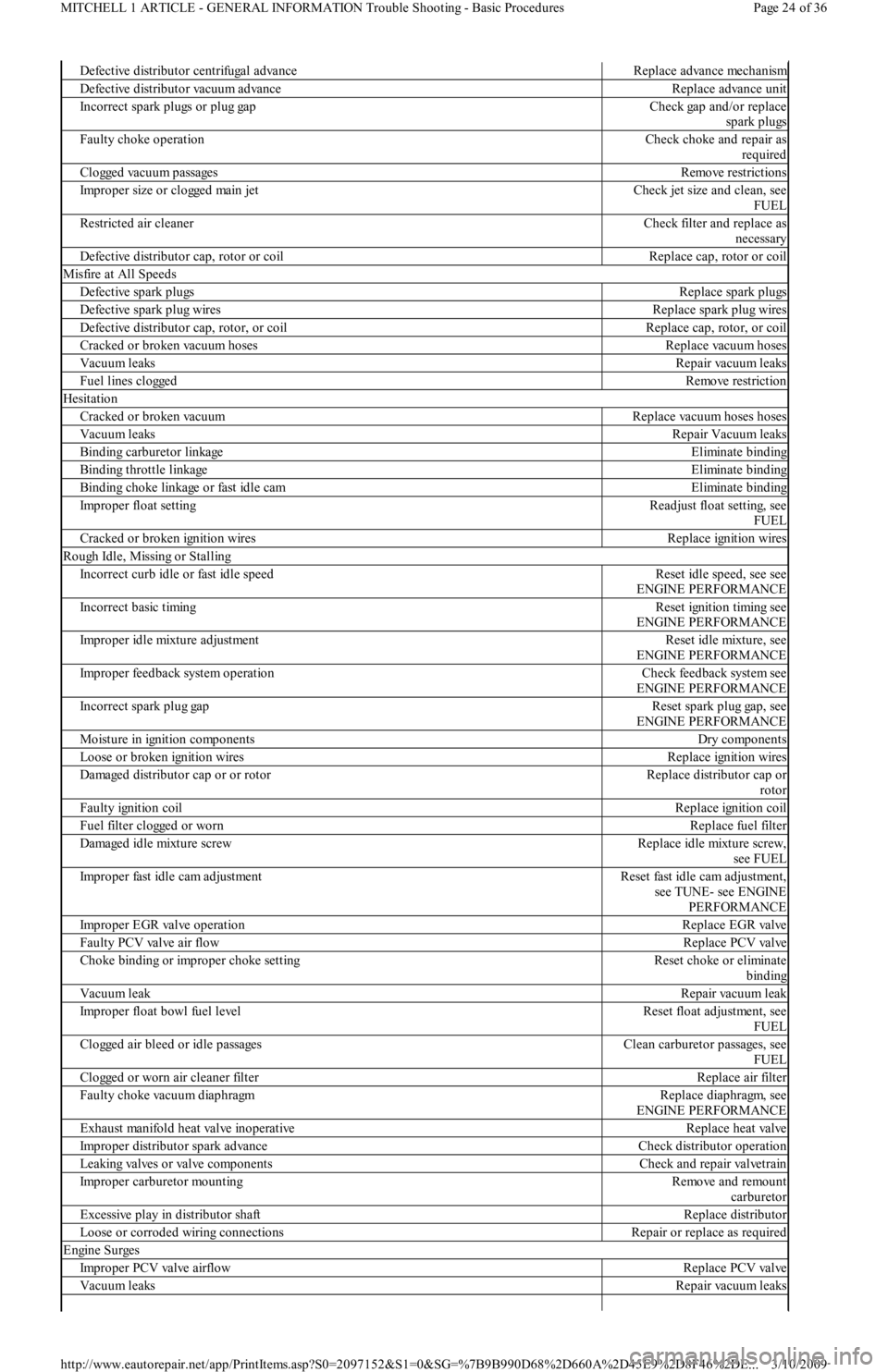
Defective distributor centrifugal advanceReplace advance mechanism
Defective distributor vacuum advanceReplace advance unit
Incorrect spark plugs or plug gapCheck gap and/or replace
spark plugs
Faulty choke operationCheck choke and repair as
required
Clogged vacuum passagesRemove restrictions
Improper size or clogged main jetCheck jet size and clean, see
FUEL
Restricted air cleanerCheck filter and replace as
necessary
Defective distributor cap, rotor or coilReplace cap, rotor or coil
Misfire at All Speeds
Defective spark plugsReplace spark plugs
Defective spark plug wiresReplace spark plug wires
Defective distributor cap, rotor, or coilReplace cap, rotor, or coil
Cracked or broken vacuum hosesReplace vacuum hoses
Vacuum leaksRepair vacuum leaks
Fuel lines cloggedRemove restriction
Hesitation
Cracked or broken vacuumReplace vacuum hoses hoses
Vacuum leaksRepair Vacuum leaks
Binding carburetor linkageEliminate binding
Binding throttle linkageEliminate binding
Binding choke linkage or fast idle camEliminate binding
Improper float settingReadjust float setting, see
FUEL
Cracked or broken ignition wiresReplace ignition wires
Rough Idle, Missing or Stalling
Incorrect curb idle or fast idle speedReset idle speed, see see
ENGINE PERFORMANCE
Incorrect basic timingReset ignition timing see
ENGINE PERFORMANCE
Improper idle mixture adjustmentReset idle mixture, see
ENGINE PERFORMANCE
Improper feedback system operationCheck feedback system see
ENGINE PERFORMANCE
Incorrect spark plug gapReset spark plug gap, see
ENGINE PERFORMANCE
Moisture in ignition componentsDry components
Loose or broken ignition wiresReplace ignition wires
Damaged distributor cap or or rotorReplace distributor cap or
rotor
Faulty ignition coilReplace ignition coil
Fuel filter clogged or wornReplace fuel filter
Damaged idle mixture screwReplace idle mixture screw,
see FUEL
Improper fast idle cam adjustmentReset fast idle cam adjustment,
see TUNE- see ENGINE
PERFORMANCE
Improper EGR valve operationReplace EGR valve
Faulty PCV valve air flowReplace PCV valve
Choke binding or improper choke settingReset choke or eliminate
binding
Vacuum leakRepair vacuum leak
Improper float bowl fuel levelReset float adjustment, see
FUEL
Clogged air bleed or idle passagesClean carburetor passages, see
FUEL
Clogged or worn air cleaner filterReplace air filter
Faulty choke vacuum diaphragmReplace diaphragm, see
ENGINE PERFORMANCE
Exhaust manifold heat valve inoperativeReplace heat valve
Improper distributor spark advanceCheck distributor operation
Leaking valves or valve componentsCheck and repair valvetrain
Improper carburetor mountingRemo ve an d remo u n t
carburetor
Excessive play in distributor shaftReplace distributor
Loose or corroded wiring connectionsRepair or replace as required
Engine Surges
Improper PCV valve airflowReplace PCV valve
Vacuum leaksRepair vacuum leaks
Page 24 of 36 MITCHELL 1 ARTICLE - GENERAL INFORMATION Trouble Shooting - Basic Procedures
3/10/2009 http://www.eautorepair.net/app/PrintItems.asp?S0=2097152&S1=0&SG=%7B9B990D68%2D660A%2D45E9%2D8F46%2DE
...
Page 250 of 454
Back To Article
GENERAL INFORMATION
T ROUBLE SHOOT ING
* PLEASE READ THIS FIRST *
ENGINE PERFORMANCE
TUNE-UP TROUBLE SHOOTING NOTE:T his article is generic in nature and all inform ation does not apply to all vehicles. For vehicle specific
inform ation, see the appropriate articles in the ENGINE PERFORMANCE category.
NOTE:T his article is generic in nature and all inform ation does not apply to all vehicles. For vehicle specific
inform ation, see the appropriate articles in the ENGINE PERFORMANCE category.
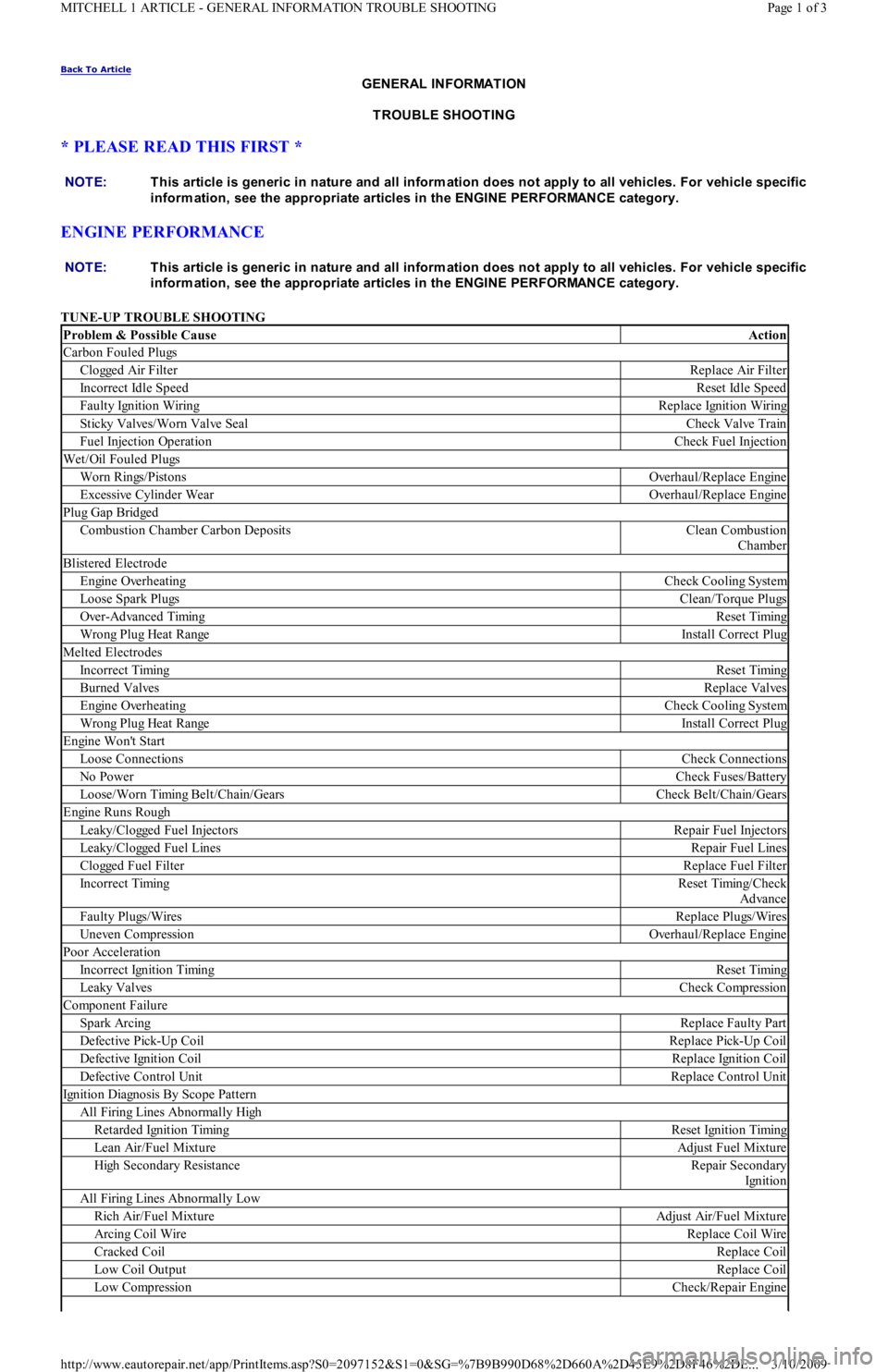
Problem & Possible CauseAction
Carbon Fouled Plugs
C l o gge d Air Fil t e rReplace Air Filter
Incorrect Idle SpeedReset Idle Speed
Faulty Ignition WiringReplace Ignition Wiring
Sticky Valves/Worn Valve SealCheck Valve Train
Fuel Injection OperationCheck Fuel Injection
Wet/Oil Fouled Plugs
Worn Rings/PistonsOverhaul/Replace Engine
Excessive Cylinder WearOverhaul/Replace Engine
Plug Gap Bridged
Combustion Chamber Carbon DepositsClean Combustion
Chamber
Blistered Electrode
Engine OverheatingCheck Cooling System
Loose Spark PlugsClean/Torque Plugs
Over-Advanced TimingReset Timing
Wrong Plug Heat RangeInstall Correct Plug
Melted Electrodes
Incorrect TimingReset Timing
Burned ValvesReplace Valves
Engine OverheatingCheck Cooling System
Wrong Plug Heat RangeInstall Correct Plug
Engine Won't Start
Loose ConnectionsCheck Connections
No PowerCheck Fuses/Battery
Loose/Worn Timing Belt/Chain/GearsCheck Belt/Chain/Gears
Engine Runs Rough
Leaky/Clogged Fuel InjectorsRepair Fuel Injectors
Leaky/Clogged Fuel LinesRepair Fuel Lines
Clogged Fuel FilterReplace Fuel Filter
Incorrect TimingReset Timing/Check
Advance
Faulty Plugs/WiresReplace Plugs/Wires
Uneven CompressionOverhaul/Replace Engine
Poor Acceleration
Incorrect Ignition TimingReset Timing
Leaky ValvesCheck Compression
Component Failure
Spark ArcingReplace Faulty Part
Defective Pick-Up CoilReplace Pick-Up Coil
Defective Ignition CoilReplace Ignition Coil
Defective Control UnitReplace Control Unit
Ignition Diagnosis By Scope Pattern
All Firing Lines Abnormally High
Retarded Ignition TimingReset Ignition Timing
Lean Air/Fuel MixtureAdjust Fuel Mixture
High Secondary ResistanceRepair Secondary
Ign it io n
All Firing Lines Abnormally Low
Rich Air/Fuel MixtureAdjust Air/Fuel Mixture
Arcing Coil WireReplace Coil Wire
Cracked CoilReplace Coil
Low Coil OutputReplace Coil
Low CompressionCheck/Repair Engine
Page 1 of 3 MITCHELL 1 ARTICLE - GENERAL INFORMATION TROUBLE SHOOTING
3/10/2009 http://www.eautorepair.net/app/PrintItems.asp?S0=2097152&S1=0&SG=%7B9B990D68%2D660A%2D45E9%2D8F46%2DE
...
Page 251 of 454
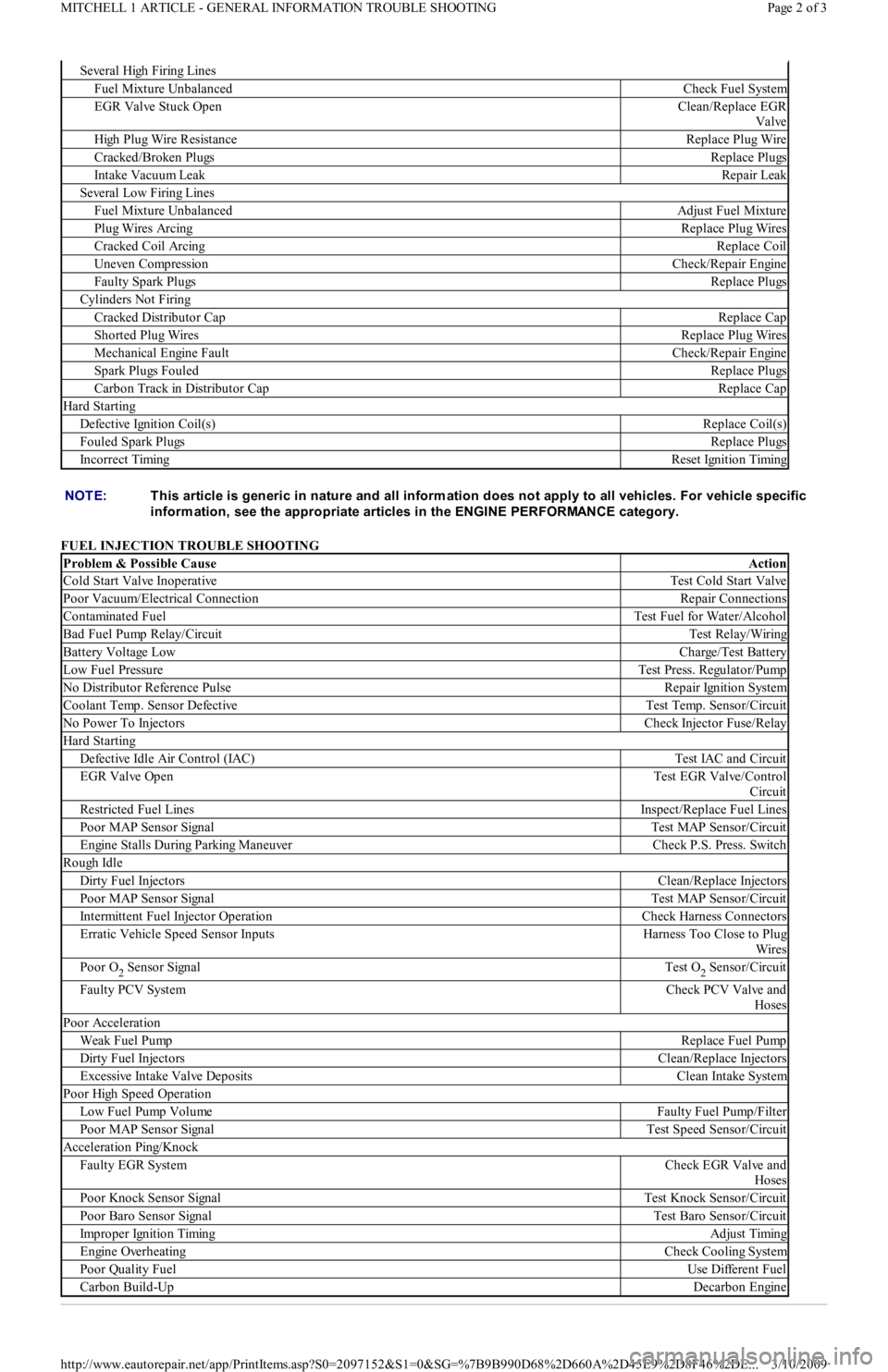
FUEL INJECTION TROUBLE SHOOTING
Se ve r a l High F ir in g Lin e s
Fuel Mixture UnbalancedCheck Fuel System
EGR Valve Stuck OpenClean/Replace EGR
Valve
High Plug Wire ResistanceReplace Plug Wire
Cracked/Broken PlugsReplace Plugs
Intake Vacuum LeakRepair Leak
Several Low Firing Lines
Fuel Mixture UnbalancedAdjust Fuel Mixture
Plug Wires ArcingReplace Plug Wires
Cracked Coil ArcingReplace Coil
Uneven CompressionCheck/Repair Engine
Faulty Spark PlugsReplace Plugs
Cylinders Not Firing
Cracked Distributor CapReplace Cap
Shorted Plug WiresReplace Plug Wires
Mechanical Engine FaultCheck/Repair Engine
Spark Plugs FouledReplace Plugs
Carbon Track in Distributor CapReplace Cap
Hard Starting
Defective Ignition Coil(s)Replace Coil(s)
Fouled Spark PlugsReplace Plugs
Incorrect TimingReset Ignition Timing
NOTE:T his article is generic in nature and all inform ation does not apply to all vehicles. For vehicle specific
inform ation, see the appropriate articles in the ENGINE PERFORMANCE category.
Problem & Possible CauseAction
Cold Start Valve InoperativeTest Cold Start Valve
Poor Vacuum/Electrical ConnectionRepair Connections
Contaminated FuelTest Fuel for Water/Alcohol
Bad Fuel Pump Relay/CircuitTest Relay/Wiring
Battery Voltage LowCharge/Test Battery
Low Fuel PressureTest Press. Regulator/Pump
No Distributor Reference PulseRepair Ignition System
Coolant Temp. Sensor DefectiveTest Temp. Sensor/Circuit
No Power To InjectorsCheck Injector Fuse/Relay
Hard Starting
Defective Idle Air Control (IAC)Test IAC and Circuit
EGR Valve OpenTest EGR Valve/Control
Circuit
Restricted Fuel LinesInspect/Replace Fuel Lines
Poor MAP Sensor SignalTest MAP Sensor/Circuit
Engine Stalls During Parking ManeuverCheck P.S. Press. Switch
Rough Idle
Dirty Fuel InjectorsClean/Replace Injectors
Poor MAP Sensor SignalTest MAP Sensor/Circuit
Intermittent Fuel Injector OperationCheck Harness Connectors
Erratic Vehicle Speed Sensor InputsHarness Too Close to Plug
Wires
Poor O2 Sensor SignalTest O2 Sensor/Circuit
Faulty PCV SystemCheck PCV Valve and
Hoses
Poor Acceleration
Weak Fuel PumpReplace Fuel Pump
Dirty Fuel InjectorsClean/Replace Injectors
Excessive Intake Valve DepositsClean Intake System
Poor High Speed Operation
Low Fuel Pump VolumeFaulty Fuel Pump/Filter
Poor MAP Sensor SignalTest Speed Sensor/Circuit
Acceleration Ping/Knock
Faulty EGR SystemCheck EGR Valve and
Hoses
Poor Knock Sensor SignalTest Knock Sensor/Circuit
Poor Baro Sensor SignalTest Baro Sensor/Circuit
Improper Ignition TimingAdjust Timing
Engine OverheatingCheck Cooling System
Poor Quality FuelUse Different Fuel
Carbon Build-UpDecarbon Engine
Page 2 of 3 MITCHELL 1 ARTICLE - GENERAL INFORMATION TROUBLE SHOOTING
3/10/2009 http://www.eautorepair.net/app/PrintItems.asp?S0=2097152&S1=0&SG=%7B9B990D68%2D660A%2D45E9%2D8F46%2DE
...
Page 264 of 454
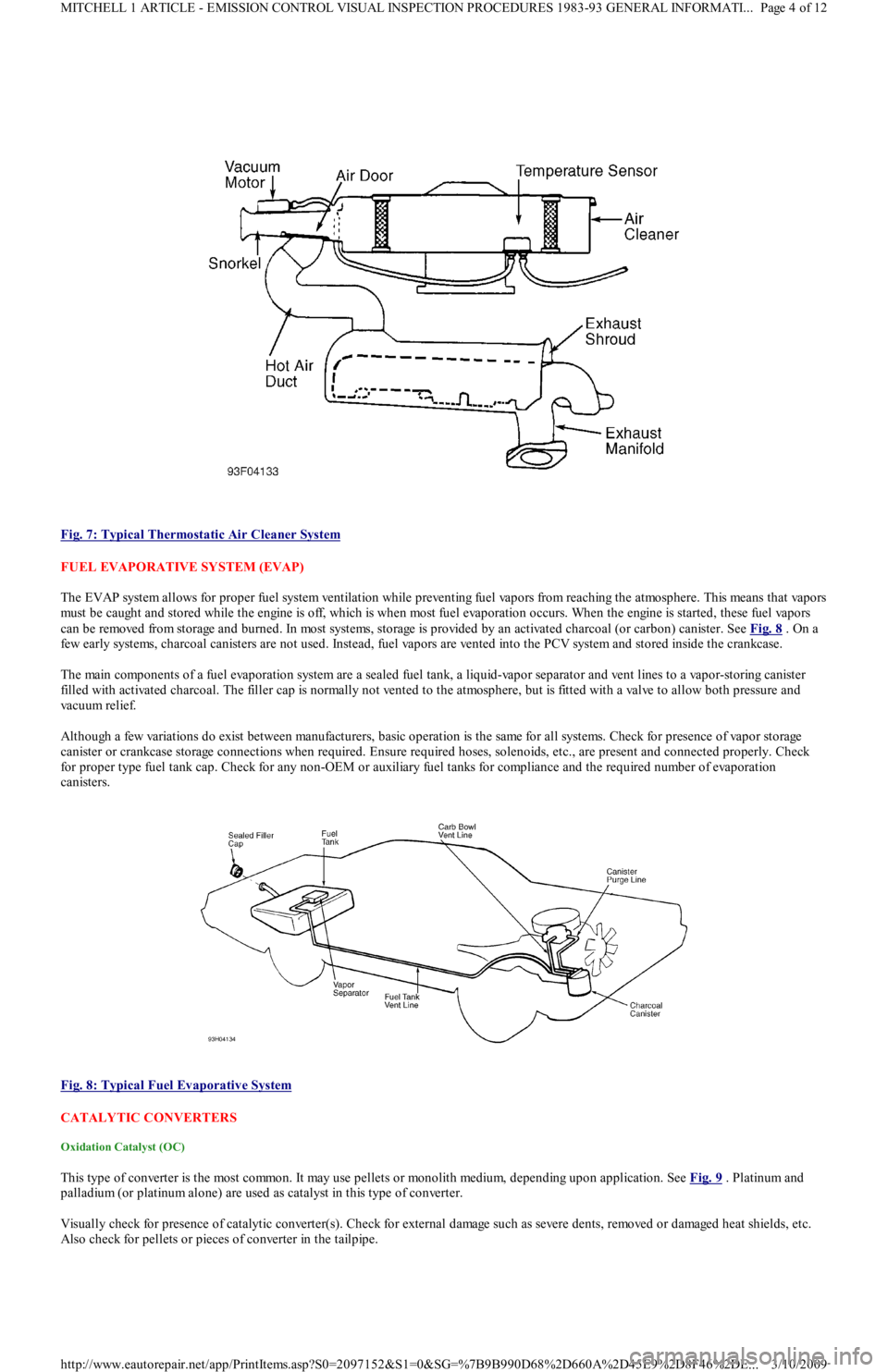
Fig. 7: Typical Thermostatic Air Cleaner System
FUEL EVAPORATIVE SYSTEM (EVAP)
The EVAP system allows for proper fuel system ventilation while preventing fuel vapors from reaching the atmosphere. This means that vapors
must be caught and stored while the engine is off, which is when most fuel evaporation occurs. When the engine is started, these fuel vapors
can be removed from storage and burned. In most systems, storage is provided by an activated charcoal (or carbon) canister. See Fig. 8
. On a
few early systems, charcoal canisters are not used. Instead, fuel vapors are vented into the PCV system and stored inside the crankcase.
The main components of a fuel evaporation system are a sealed fuel tank, a liquid-vapor separator and vent lines to a vapor-storing canister
filled with activated charcoal. The filler cap is normally not vented to the atmosphere, but is fitted with a valve to allow both pressure and
vacuum relief.
Although a few variations do exist between manufacturers, basic operation is the same for all systems. Check for presence of vapor storage
canister or crankcase storage connections when required. Ensure required hoses, solenoids, etc., are present and connected properly. Check
for proper type fuel tank cap. Check for any non-OEM or auxiliary fuel tanks for compliance and the required number of evaporation
canisters.
Fig. 8: Typical Fuel Evaporative System
CATALYTIC CONVERTERS
Oxidation Catalyst (OC)
This type of converter is the most common. It may use pellets or monolith medium, depending upon application. See Fig. 9 . Platinum and
palladium (or platinum alone) are used as catalyst in this type of converter.
Visually check for presence of catalytic converter(s). Check for external damage such as severe dents, removed or damaged heat shields, etc.
Also check for pellets or pieces of converter in the tailpipe.
Page 4 of 12 MITCHELL 1 ARTICLE - EMISSION CONTROL VISUAL INSPECTION PROCEDURES 1983-93 GENERAL INFORMATI
...
3/10/2009 http://www.eautorepair.net/app/PrintItems.asp?S0=2097152&S1=0&SG=%7B9B990D68%2D660A%2D45E9%2D8F46%2DE
...
Page 265 of 454
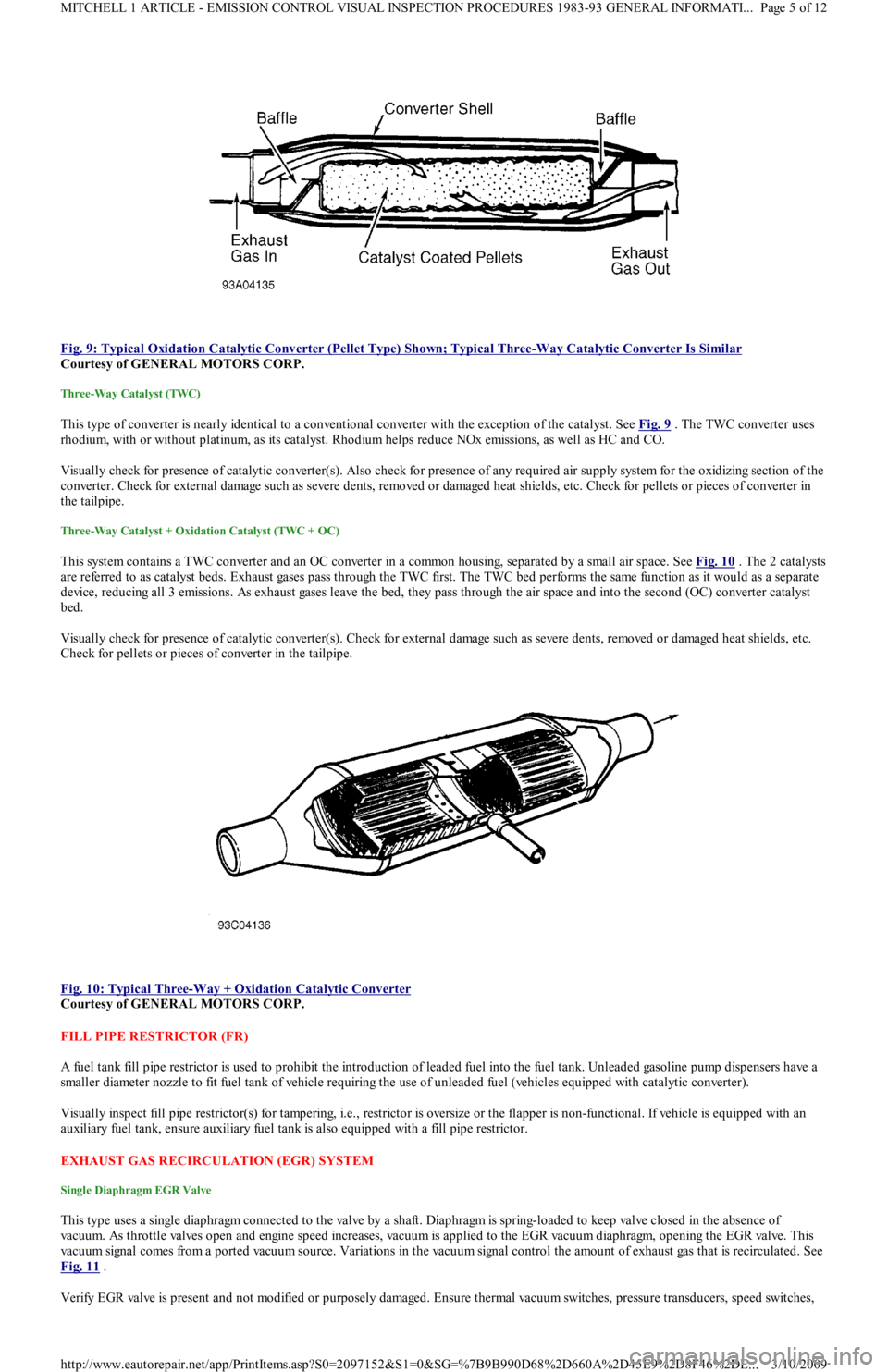
Fig. 9: Typical Oxidation Catalytic Converter (Pellet Type) Shown; Typical Three
-Way Catalytic Converter Is Similar
Courtesy of GENERAL MOTORS CORP.
Three-Way Catalyst (TWC)
This type of converter is nearly identical to a conventional converter with the exception of the catalyst. See Fig. 9 . The TWC converter uses
rhodium, with or without platinum, as its catalyst. Rhodium helps reduce NOx emissions, as well as HC and CO.
Visually check for presence of catalytic converter(s). Also check for presence of any required air supply system for the oxidizing section of the
converter. Check for external damage such as severe dents, removed or damaged heat shields, etc. Check for pellets or pieces of converter in
the tailpipe.
Three-Way Catalyst + Oxidation Catalyst (TWC + OC)
This system contains a TWC converter and an OC converter in a common housing, separated by a small air space. See Fig. 10. The 2 catalysts
are referred to as catalyst beds. Exhaust gases pass through the TWC first. The TWC bed performs the same function as it would as a separate
device, reducing all 3 emissions. As exhaust gases leave the bed, they pass through the air space and into the second (OC) converter catalyst
bed.
Visually check for presence of catalytic converter(s). Check for external damage such as severe dents, removed or damaged heat shields, etc.
Check for pellets or pieces of converter in the tailpipe.
Fig. 10: Typical Three
-Way + Oxidation Catalytic Converter
Courtesy of GENERAL MOTORS CORP.
FILL PIPE RESTRICTOR (FR)
A fuel tank fill pipe restrictor is used to prohibit the introduction of leaded fuel into the fuel tank. Unleaded gasoline pump dispensers have a
smaller diameter nozzle to fit fuel tank of vehicle requiring the use of unleaded fuel (vehicles equipped with catalytic converter).
Visually inspect fill pipe restrictor(s) for tampering, i.e., restrictor is oversize or the flapper is non-functional. If vehicle is equipped with an
auxiliary fuel tank, ensure auxiliary fuel tank is also equipped with a fill pipe restrictor.
EXHAUST GAS RECIRCULATION (EGR) SYSTEM
Single Diaphragm EGR Valve
This type uses a single diaphragm connected to the valve by a shaft. Diaphragm is spring-loaded to keep valve closed in the absence of
vacuum. As throttle valves open and engine speed increases, vacuum is applied to the EGR vacuum diaphragm, opening the EGR valve. This
vacuum signal comes from a ported vacuum source. Variations in the vacuum signal control the amount of exhaust gas that is recirculated. See
Fig. 11
.
Verify EGR valve is present and not modified or purposely damaged. Ensure thermal vacuum switches, pressure transducers, speed switches,
Page 5 of 12 MITCHELL 1 ARTICLE - EMISSION CONTROL VISUAL INSPECTION PROCEDURES 1983-93 GENERAL INFORMATI
...
3/10/2009 http://www.eautorepair.net/app/PrintItems.asp?S0=2097152&S1=0&SG=%7B9B990D68%2D660A%2D45E9%2D8F46%2DE
...
Page 270 of 454
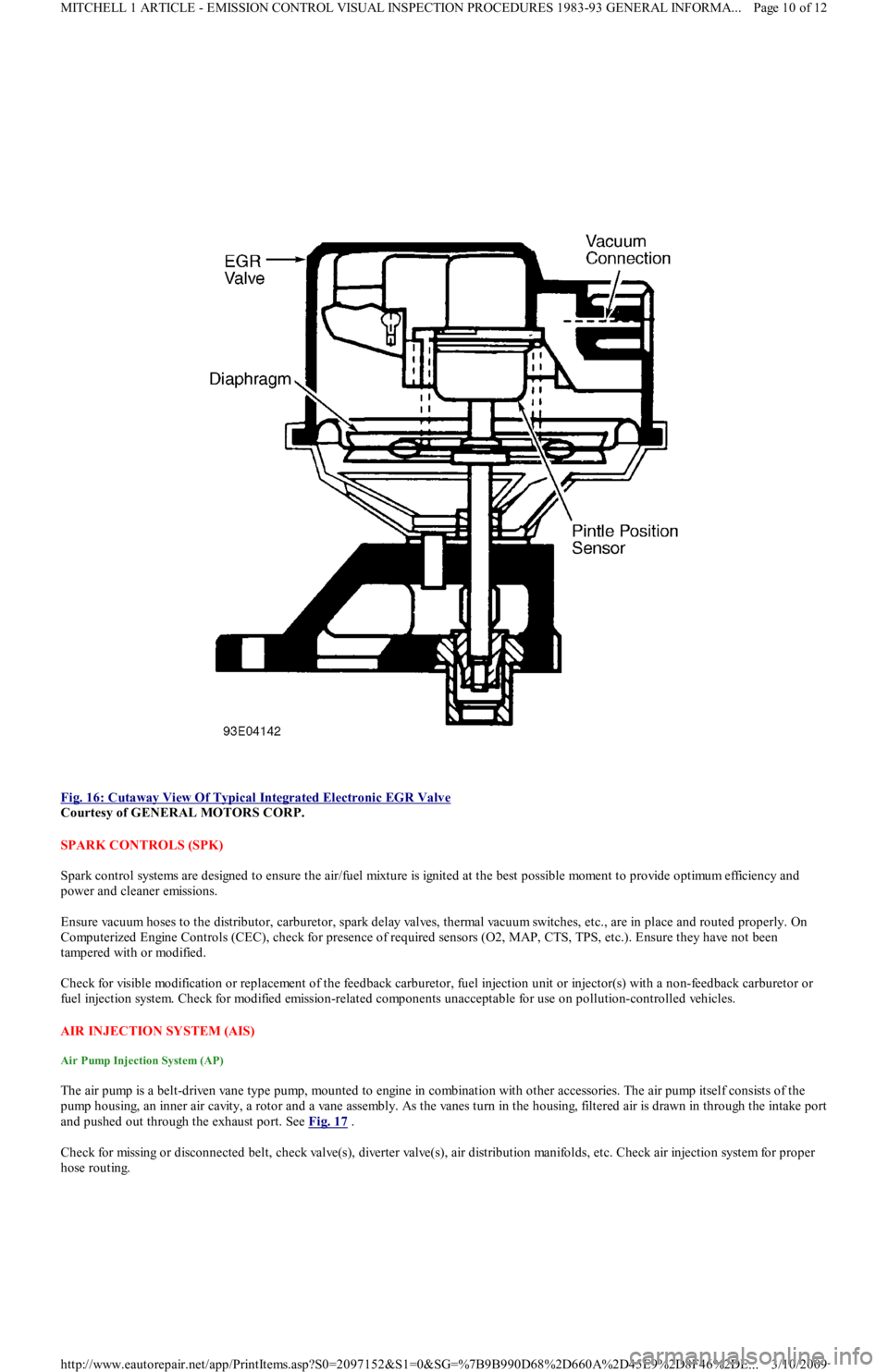
Fig. 16: Cutaway View Of Typical Integrated Electronic EGR Valve
Courtesy of GENERAL MOTORS CORP.
SPARK CONTROLS (SPK)
Spark control systems are designed to ensure the air/fuel mixture is ignited at the best possible moment to provide optimum efficiency and
power and cleaner emissions.
Ensure vacuum hoses to the distributor, carburetor, spark delay valves, thermal vacuum switches, etc., are in place and routed properly. On
Computerized Engine Controls (CEC), check for presence of required sensors (O2, MAP, CTS, TPS, etc.). Ensure they have not been
tampered with or modified.
Check for visible modification or replacement of the feedback carburetor, fuel injection unit or injector(s) with a non-feedback carburetor or
fuel injection system. Check for modified emission-related components unacceptable for use on pollution-controlled vehicles.
AIR INJECTION SYSTEM (AIS)
Air Pump Injection System (AP)
The air pump is a belt-driven vane type pump, mounted to engine in combination with other accessories. The air pump itself consists of the
pump housing, an inner air cavity, a rotor and a vane assembly. As the vanes turn in the housing, filtered air is drawn in through the intake port
and pushed out through the exhaust port. See Fig. 17
.
Check for missing or disconnected belt, check valve(s), diverter valve(s), air distribution manifolds, etc. Check air injection system for proper
hose routing.
Page 10 of 12 MITCHELL 1 ARTICLE - EMISSION CONTROL VISUAL INSPECTION PROCEDURES 1983-93 GENERAL INFORMA...
3/10/2009 http://www.eautorepair.net/app/PrintItems.asp?S0=2097152&S1=0&SG=%7B9B990D68%2D660A%2D45E9%2D8F46%2DE
...
Page 271 of 454
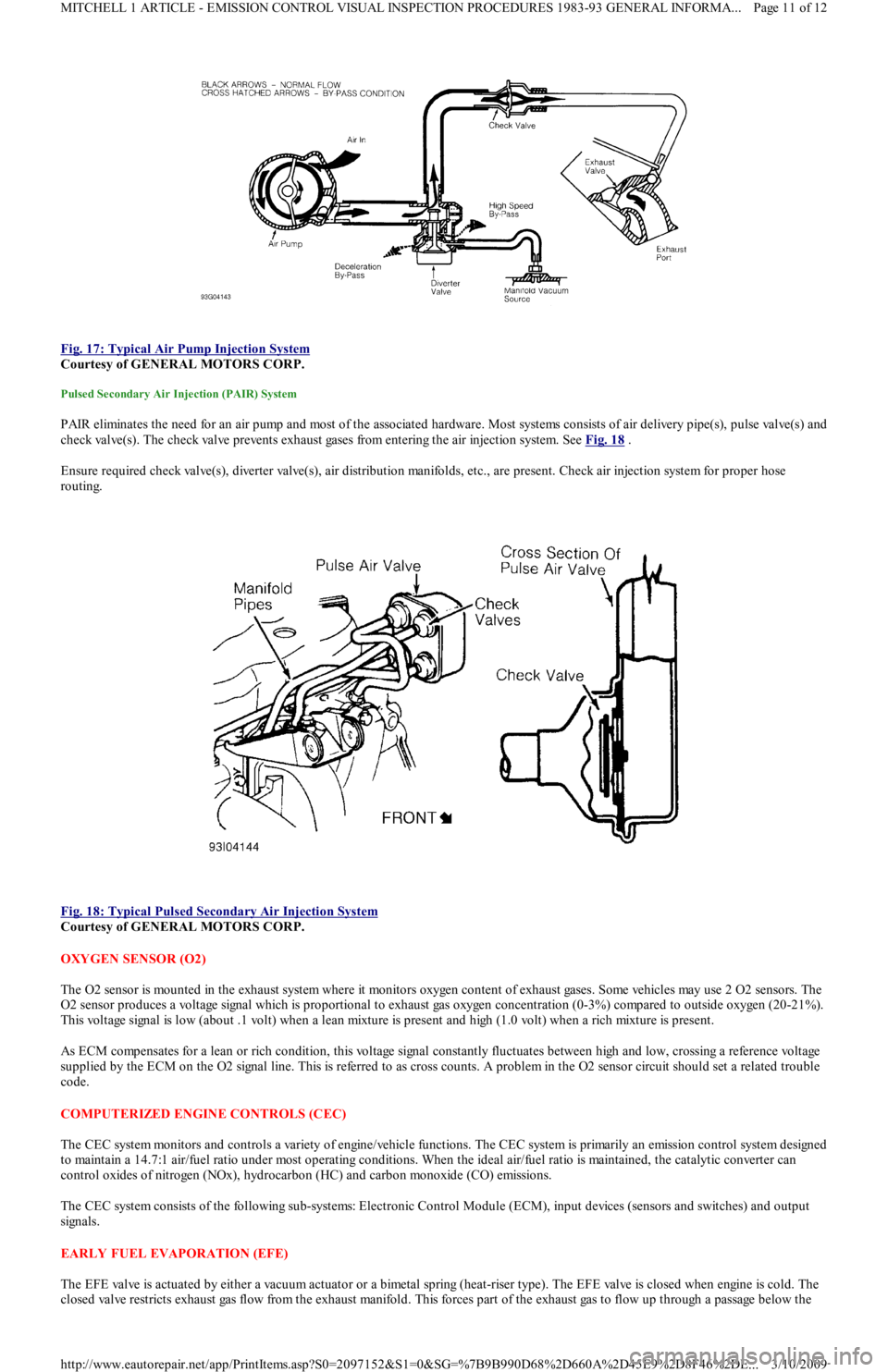
Fig. 17: Typical Air Pump Injection System
Courtesy of GENERAL MOTORS CORP.
Pulsed Secondary Air Injection (PAIR) System
PAIR eliminates the need for an air pump and most of the associated hardware. Most systems consists of air delivery pipe(s), pulse valve(s) and
check valve(s). The check valve prevents exhaust gases from entering the air injection system. See Fig. 18
.
Ensure required check valve(s), diverter valve(s), air distribution manifolds, etc., are present. Check air injection system for proper hose
routing.
Fig. 18: Typical Pulsed Secondary Air Injection System
Courtesy of GENERAL MOTORS CORP.
OXYGEN SENSOR (O2)
The O2 sensor is mounted in the exhaust system where it monitors oxygen content of exhaust gases. Some vehicles may use 2 O2 sensors. The
O2 sensor produces a voltage signal which is proportional to exhaust gas oxygen concentration (0-3%) compared to outside oxygen (20-21%).
This voltage signal is low (about .1 volt) when a lean mixture is present and high (1.0 volt) when a rich mixture is present.
As ECM compensates for a lean or rich condition, this voltage signal constantly fluctuates between high and low, crossing a reference voltage
supplied by the ECM on the O2 signal line. This is referred to as cross counts. A problem in the O2 sensor circuit should set a related trouble
code.
COMPUTERIZED ENGINE CONTROLS (CEC)
The CEC system monitors and controls a variety of engine/vehicle functions. The CEC system is primarily an emission control system designed
to maintain a 14.7:1 air/fuel ratio under most operating conditions. When the ideal air/fuel ratio is maintained, the catalytic converter can
control oxides of nitrogen (NOx), hydrocarbon (HC) and carbon monoxide (CO) emissions.
The CEC system consists of the following sub-systems: Electronic Control Module (ECM), input devices (sensors and switches) and output
signals.
EARLY FUEL EVAPORATION (EFE)
The EFE valve is actuated by either a vacuum actuator or a bimetal spring (heat-riser type). The EFE valve is closed when engine is cold. The
closed valve restricts exhaust gas flow from the exhaust manifold. This forces part of the exhaust gas to flow up through a passage below the
Page 11 of 12 MITCHELL 1 ARTICLE - EMISSION CONTROL VISUAL INSPECTION PROCEDURES 1983-93 GENERAL INFORMA...
3/10/2009 http://www.eautorepair.net/app/PrintItems.asp?S0=2097152&S1=0&SG=%7B9B990D68%2D660A%2D45E9%2D8F46%2DE
...
Page 273 of 454
Back To Article
GENERAL INFORMATION
Engine Perform ance Diagnostic Routine Outline
* PLEASE READ THIS FIRST *
WHERE DOES DRIVEABILITY DIAGNOSIS START?
PERFORM BASIC INSPECTION
1. Verify Customer Complaint
2. Perform Visual Inspection (See Basic Diagnostic Procedures)
3. Test Engine Sub-Systems (See Basic Diagnostic Procedures)
Mechanical Condition (Compression)
Ignition Output
Fuel Delivery
4. Check Air Induction System For Leaks
5. Check & Adjust Basic Engine Settings(See On-Vehicle Adjustments)
Ignition Timing
Idle Speed
CHECK FOR TROUBLE CODES
1. Check for Diagnostic Trouble Codes (DTCs).(See Self-Diagnostics)
2. Repair cause of DTCs.
3. Clear PCM memory and repeat self-test.
DIAGNOSE SYMPTOM
1. If no self-diagnostics available, or no trouble codes present, identify symptom.
2. See trouble shooting procedure to identify problem. (See Trouble Shooting - No Codes)
TEST SYSTEM
1. Perform required tests. (See Systems & Component Testing)
2. Verify complaint is repaired. NOTE:T his article is generic in nature and all inform ation does not apply to all vehicles. For vehicle specific
inform ation, see the appropriate articles in the ENGINE PERFORMANCE category.
NOTE:T his article is generic in nature and all inform ation does not apply to all vehicles. For vehicle specific
inform ation, see the appropriate articles in the ENGINE PERFORMANCE category.
NOTE:T his article is generic in nature and all inform ation does not apply to all vehicles. For vehicle specific
inform ation, see the appropriate articles in the ENGINE PERFORMANCE category.
NOTE:T his article is generic in nature and all inform ation does not apply to all vehicles. For vehicle specific
inform ation, see the appropriate articles in the ENGINE PERFORMANCE category.
NOTE:T his article is generic in nature and all inform ation does not apply to all vehicles. For vehicle specific
inform ation, see the appropriate articles in the ENGINE PERFORMANCE category.
Copyr ight 2009 Mitchell Repair Information Company, LLC. All Rights Reserved.
Article GUID: A00002341
Page 1 of 1 MITCHELL 1 ARTICLE - GENERAL INFORMATION Engine Performance Diagnostic Routine Outline
3/10/2009 http://www.eautorepair.net/app/PrintItems.asp?S0=2097152&S1=0&SG=%7B9B990D68%2D660A%2D45E9%2D8F46%2DE
...
Page 274 of 454
Back To Article
GENERAL INFORMATION
Engine Perform ance Safety Precautions
Always refer to Emission Decal in engine compartment before servicing vehicle. If manual and decal differ, always use decal
specifications.
Do not allow or create a condition of misfire in more than one cylinder for an extended period of time. Damage to converter may occur
due to loading converter with unburned air/fuel mixture.
Always turn ignition off and disconnect negative battery cable BEFORE disconnecting or connecting computer or other electrical
components.
DO NOT drop or shock electrical components such as computer, airflow meter, etc.
DO NOT use fuel system cleaning compounds that are not recommended by the manufacturer. Damage to gaskets, diaphragm materials
and catalytic converter may result.
Before performing a compression test or cranking engine using a remote starter switch, disconnect coil wire from distributor and secure it
to a good engine ground, or disable ignition.
Before disconnecting any fuel system component, ensure fuel system pressure is released.
Use a shop towel to absorb any spilled fuel to prevent fire.
DO NOT create sparks or have an open flame near battery.
If any fuel system components such as hoses or clamps are replaced, ensure they are replaced with components designed for fuel system
use.
Always reassemble throttle body components with new gaskets, "O" rings and seals.
If equipped with an inertia switch, DO NOT reset switch until fuel system has been inspected for leaks.
We a r sa fe t y go ggl e s wh e n d r il l in g o r gr in d in g.
Wear proper clothing which protects against chemicals and other hazards.
Copyr ight 2009 Mitchell Repair Information Company, LLC. All Rights Reserved.
Article GUID: A00002342
Page 1 of 1 MITCHELL 1 ARTICLE - GENERAL INFORMATION Engine Performance Safety Precautions
3/10/2009 http://www.eautorepair.net/app/PrintItems.asp?S0=2097152&S1=0&SG=%7B9B990D68%2D660A%2D45E9%2D8F46%2DE
...