clutch FORD FESTIVA 1991 Repair Manual
[x] Cancel search | Manufacturer: FORD, Model Year: 1991, Model line: FESTIVA, Model: FORD FESTIVA 1991Pages: 454, PDF Size: 9.53 MB
Page 355 of 454
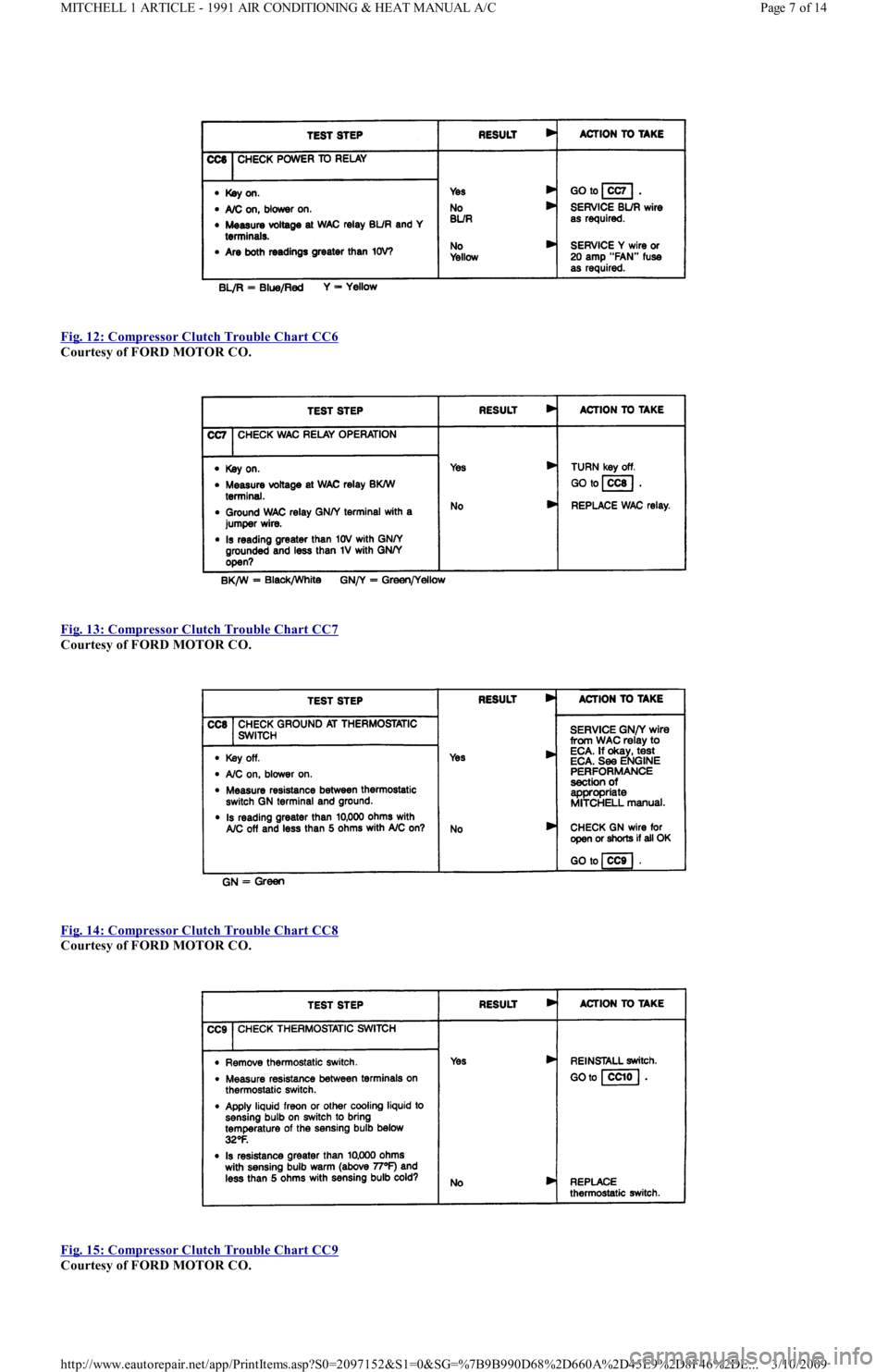
Fig. 12: Compressor Clutch Trouble Chart CC6
Courtesy of FORD MOTOR CO.
Fig. 13: Compressor Clutch Trouble Chart CC7
Courtesy of FORD MOTOR CO.
Fig. 14: Compressor Clutch Trouble Chart CC8
Courtesy of FORD MOTOR CO.
Fig. 15: Compressor Clutch Trouble Chart CC9
Courtesy of FORD MOTOR CO.
Page 7 of 14 MITCHELL 1 ARTICLE - 1991 AIR CONDITIONING & HEAT MANUAL A/C
3/10/2009 http://www.eautorepair.net/app/PrintItems.asp?S0=2097152&S1=0&SG=%7B9B990D68%2D660A%2D45E9%2D8F46%2DE
...
Page 356 of 454
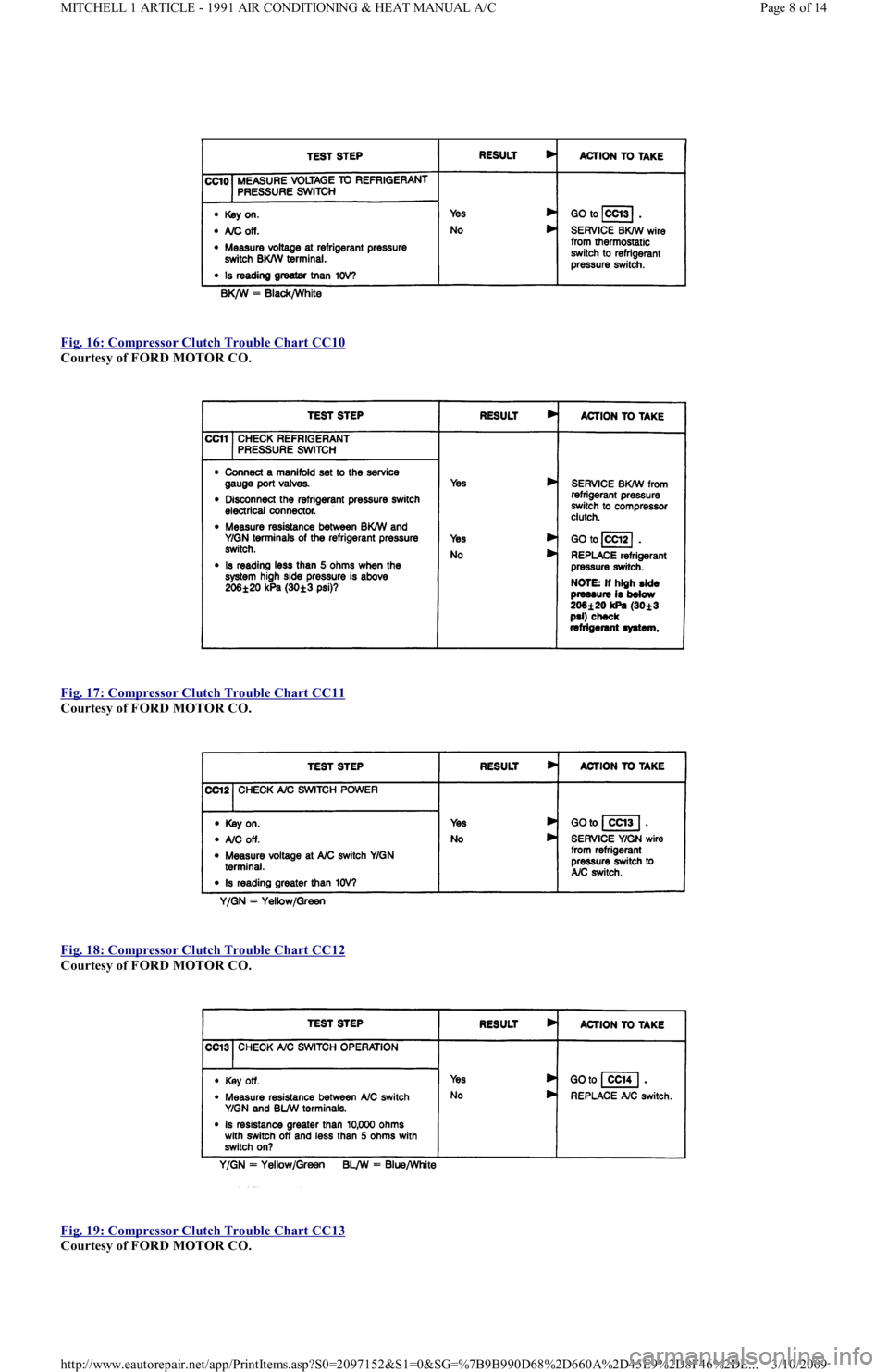
Fig. 16: Compressor Clutch Trouble Chart CC10
Courtesy of FORD MOTOR CO.
Fig. 17: Compressor Clutch Trouble Chart CC11
Courtesy of FORD MOTOR CO.
Fig. 18: Compressor Clutch Trouble Chart CC12
Courtesy of FORD MOTOR CO.
Fig. 19: Compressor Clutch Trouble Chart CC13
Courtesy of FORD MOTOR CO.
Page 8 of 14 MITCHELL 1 ARTICLE - 1991 AIR CONDITIONING & HEAT MANUAL A/C
3/10/2009 http://www.eautorepair.net/app/PrintItems.asp?S0=2097152&S1=0&SG=%7B9B990D68%2D660A%2D45E9%2D8F46%2DE
...
Page 357 of 454
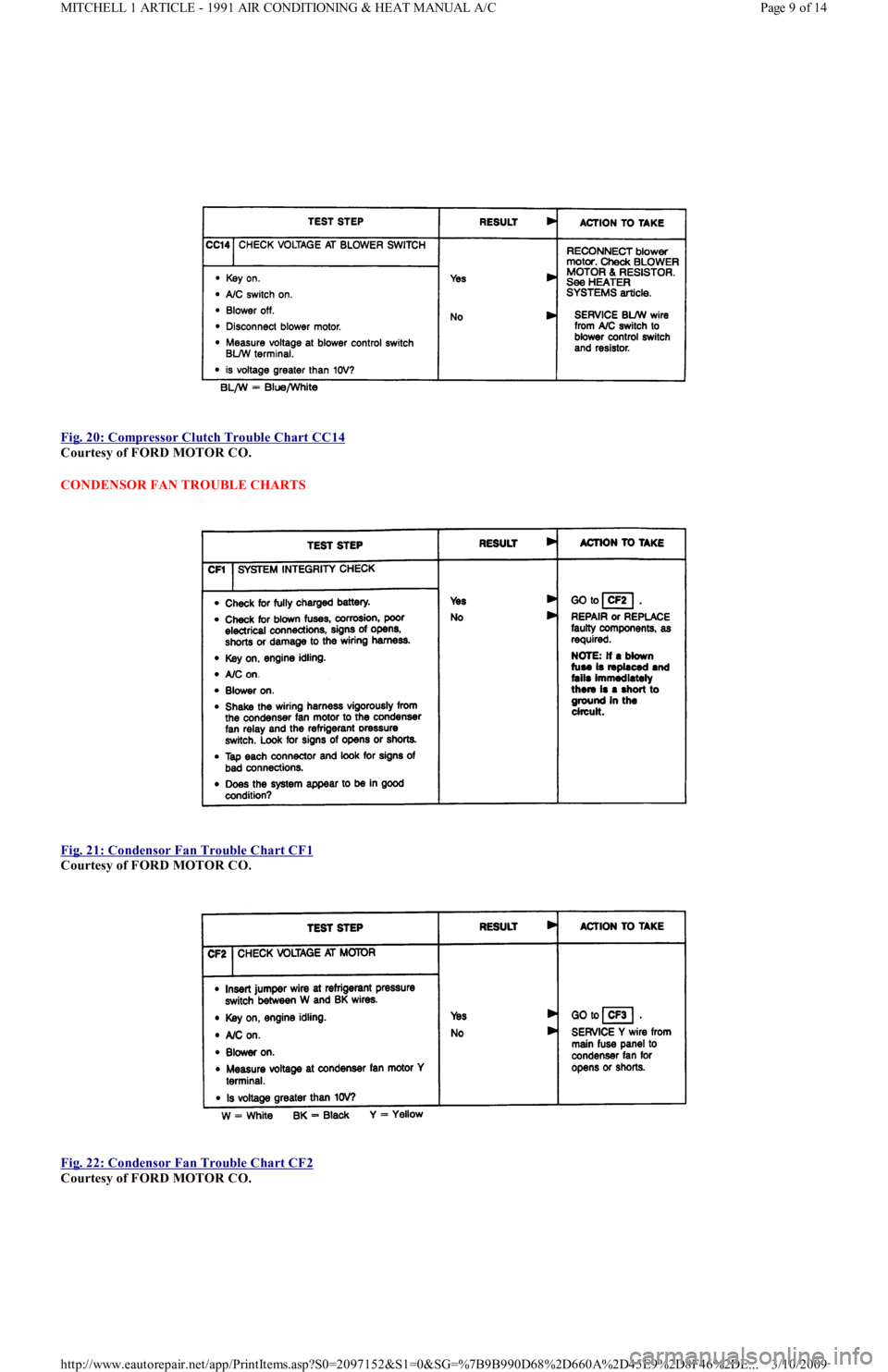
Fig. 20: Compressor Clutch Trouble Chart CC14
Courtesy of FORD MOTOR CO.
CONDENSOR FAN TROUBLE CHARTS
Fig. 21: Condensor Fan Trouble Chart CF1
Courtesy of FORD MOTOR CO.
Fig. 22: Condensor Fan Trouble Chart CF2
Courtesy of FORD MOTOR CO.
Page 9 of 14 MITCHELL 1 ARTICLE - 1991 AIR CONDITIONING & HEAT MANUAL A/C
3/10/2009 http://www.eautorepair.net/app/PrintItems.asp?S0=2097152&S1=0&SG=%7B9B990D68%2D660A%2D45E9%2D8F46%2DE
...
Page 371 of 454
whichever occurs first.
POWERTRAIN WARRANTY
Under this warranty, certain parts of the engine, transmission, axle and driveline are warranted against defects in materials and workmanship
for either 4 years/50,000 or 6 years/60,000 miles, depending on the model year. This coverage begins after 12 months or 12,000 miles. See
copy of warranty for specific components covered and length of coverage.
BUMPER-TO-BUMPER COVERAGE
All 1992-93 vehicles have complete warranty coverage against defects in materials and workmanship for 3 years or 36,000 miles, whichever
occurs first. There is no deductible with this warranty. Items not covered include tires and parts that are subject to normal wear and tear, such
as windshield wiper blades, brake linings, brake pads, clutch linings and scheduled maintenance items. There is no extended powertrain
coverage included in this warranty.
BATTERY COVERAGE
Begins at warranty start date and lasts up to 3 years or 36,000 miles, whichever occurs first. For the first 12 months in service (less than
36,000 miles), battery will be replaced at no charge. After that, battery will be replaced on a customer-participation basis: For the 13th-24th
month in service, Ford will pay 50%; for the 25th-36th month, Ford will pay 25%. Labor is covered for 3 years or 36,000 miles, whichever
occurs first.
SAFETY RESTRAINT SYSTEM COVERAGE
Begins at warranty start date and lasts for 5 years or 50,000 miles, whichever occurs first. Covers safety restraint problems not related to
comfort or appearance. Coverage for model years earlier than 1990 is 3 years with unlimited miles.
CORROSION COVERAGE
Begins at warranty start date and lasts for 6 years or 60,000 miles, whichever occurs first. 1992-93 models are covered for 6 years or 100,000
miles, whichever occurs first. Covers any holes in body sheet metal caused by corrosion.
EMISSIONS DEFECT & PERFORMANCE WARRANTIES (EXCEPT CALIFORNIA)
Defect Warranty ensures that vehicle meets applicable EPA regulations and that vehicle's emission control system is free from defects in
materials and workmanship for a period of 5 years or 50,000 miles, whichever occurs first.
The Performance Warranty covers all costs of repairing or adjusting any components or parts as needed for the vehicle to pass a Federally
required state or local emissions test.
Other emission control parts related to these components are covered by the Performance Warranty, where applicable. If another part fails due
to the failure of one of these components, both parts are covered. See customer's copy of warranty information for specific items co vered .
Performance Warranty coverage is limited to fewer components after 2 years or 24,000 miles.
EMISSIONS PERFORMANCE WARRANTY (CALIFORNIA)
If vehicle fails a Smog Check inspection, all necessary repairs and adjustments will be made by manufacturer to ensure that vehicle passes the
inspection. Warranty begins at warranty start date and lasts for a period of 3 years or 50,000 miles, whichever occurs first.
EMISSIONS DEFECT WARRANTY (CALIFORNIA)
If any emission-related part on the vehicle is defective, the part will be repaired or replaced by manufacturer. Warranty begins at warranty start
date and lasts for a period of 3 years or 50,000 miles, whichever occurs first.
Some emission-related parts are warranted for 7 years or 70,000 miles whichever occurs first, and will be repaired or replaced by manufacturer
if found to be defective in material or workmanship. See customer's copy of warranty information for specific items covered.
FUSES & FUSIBLE LINKS
FUSE PANEL & FUSIBLE LINK BLOCK LOCATIONS
The vehicle has a fuse block with fusible links and a fuse panel with circuit fuses. The fuse panel is located behind the instrument panel, left o
f
the steering column. The fuse block is located under the hood.
FUSE PANEL IDENTIFICATION NOTE:Powertrain Warranty varies in coverage length (4 years/50,000 m iles or 6 years/60,000 m iles) depending
on model year.
Page 7 of 9 MITCHELL 1 ARTICLE - MAINTENANCE INFORMATION 1988-93 MAINTENANCE Ford Motor Co. Maintenance Inform...
3/10/2009 http://www.eautorepair.net/app/PrintItems.asp?S0=2097152&S1=0&SG=%7B9B990D68%2D660A%2D45E9%2D8F46%2DE
...
Page 389 of 454
and disconnect cable from lock housing. Using slim-nose locking pliers, grip and remove round headed shear screws securing column
lock housing and cap to column jacket. See Fig. 2
.
2. Remove lock housing. To install lock housing, position lock cylinder and cap on column jacket. Using new screws, tighten only enough
to hold lock housing in position. Use ignition key to ensure lock works correctly without binding. Adjust switch if necessary. Tighten
shear screws until heads break off. Install ignition switch in cylinder. Reverse removal procedures to complete installation.
STEERING COLUMN
Removal & Installation (Capri)
1. Place wheels in a straight-ahead position. Remove ignition key and lock steering wheel. Disconnect negative battery cable and air bag
back-up power supply. Back-up power supply is a Blue rectangular unit located behind glove box, attached to instrument panel.
2. Remove air bag module from steering wheel. Remove steering column access cover and trim panel. Remove defroster duct connecting
hose. Remove steering column lower shroud. Loosen lower steering c o l u mn r e t a in in g n u t s. R e mo ve st e e r in g c o l u mn u p p e r r e t a in in g
nuts.
3. Remove ignition lock shield and ignition switch mount screw. Disconnect all necessary electrical connectors. Mark and remove steering
shaft universal joint bolt. Remove steering column from instrument panel. To install, reverse removal procedure. Once steering column
is completely installed, check all switches and functions for proper operation.
Removal (Festiva)
1. Disconnect battery ground cable. Place wheels in a straight-ahead position. Remove steering wheel, upper and lower column covers,
combination switch, ignition switch and harness connectors.
2. Remove steering column shield and air duct from below steering column. Remove 2 steering column upper mounting bracket-to-
instrument panel crossmember nuts.
3. Lower upper end of column as necessary to gain access to intermediate shaft upper "U" joint. Mark steering shaft and upper "U" jo in t fo r
reassembly reference.
4. Remove "U" joint attaching bolt. Loosen 2 steering column hinge bracket-to-clutch/brake pedal support nuts. Remove steering column
with upper "U" joint by pulling toward passenger compartment.
Installation (Festiva)
1. Align marks made during removal and install column with intermediate shaft upper "U" joint over intermediate shaft. Install, but do not
tighten, "U" joint clamp bolt.
2. Install and tighten hinge bracket nuts. Install shim clips on column upper bracket flanges (if removed). Position upper end of steering
column to instrument panel mounting studs.
3. Install upper bracket retaining nuts. Turn steering wheel lock-to-lock several times to align "U" joint splines. Tighten "U" joint clamp
bolt.
4. Install air duct and instrument panel brace. Install harness connectors, ignition switch, combination switch, upper and lower column
covers and steering wheel.
OVERHAUL
STEERING COLUMN
Disassembly & Reassembly (Capri)
1. Remove steering column. See STEERING COLUMN under REMOVAL & INSTALLATION. Position steering column in soft-jawed
vise. Using Steering Wheel Remover (T67L-3600-A), remove steering wheel. Put 2 strips of tape on air bag clockspring, to avoid
rotation.
2. Remove 3 clockspring retaining screws and remove clockspring. With ignition key installed, rotate tumbler to Run position while
pushing tumbler release pin with .125" (3.17 mm) drift. Remove tumbler and upper column shroud. Remove key warning switch.
3. Remove bearing plate. Remove and discard snap ring located at front end of steering column. Remove multifunction switch. Remove
column lock and upper bearing using a suitable bearing puller. To reassemble, reverse disassembly procedure.
Disassembly (Festiva)
Disassembly of steering column assembly is not recommended by manufacturer. If any components are found defective, replace steering
column assembly.
Inspection (Festiva)
1. Measure steering shaft for signs of collapse. Steering shaft length should be between 23.86-23.94" (606-608 mm). If measurement is not
within specification, replace steering column assembly.
2. Check for steering shaft side play. Any detectable side play can adversely affect steering control. If side play in excess of .03" (.75 mm)
is present, bearings are badly worn. Replace steering column assembly.
Reassembly (Festiva)
NOTE:If steering rack and interm ediate shaft are also rem oved, "U" joints and interm ediate shaft m ust be
m arked for reassem bly reference. Both ends of shaft are identical.
CAUT ION: If steering shaft shear pins break during housing or bearing rem oval, the com plete shaft and colum n
m ust be replaced. T o determ ine if pins have sheared, m easure steering shaft from top end of shaft to
center of U-
joint bearing. If length is less than 24.23" (615.7 m m ) or greater than 24.66" (617.7 m m ), pins
have sheared.
Page 3 of 4 MITCHELL 1 ARTICLE - STEERING COLUMN 1991 STEERING Ford Motor Co. - Steering Columns
3/10/2009 http://www.eautorepair.net/app/PrintItems.asp?S0=2097152&S1=0&SG=%7B9B990D68%2D660A%2D45E9%2D8F46%2DE
...
Page 409 of 454
Back To Article
1988-94 AUT OMAT IC T RANSMISSIONS
Ford ATX Overhaul
APPLICATION
APPLICATION
DESCRIPTION
The transaxle consists of 3 main units: automatic transaxle, torque converter and differential assembly. The automatic transaxle consists of
front and rear clutches, one-way clutch, low-reverse brake assembly, oil pump and hydraulic controls (valve body and servo piston
assemblies). The valve body is controlled by the governor valve, vacuum throttle valve diaphragm (modulator) and kickdown solenoid. The
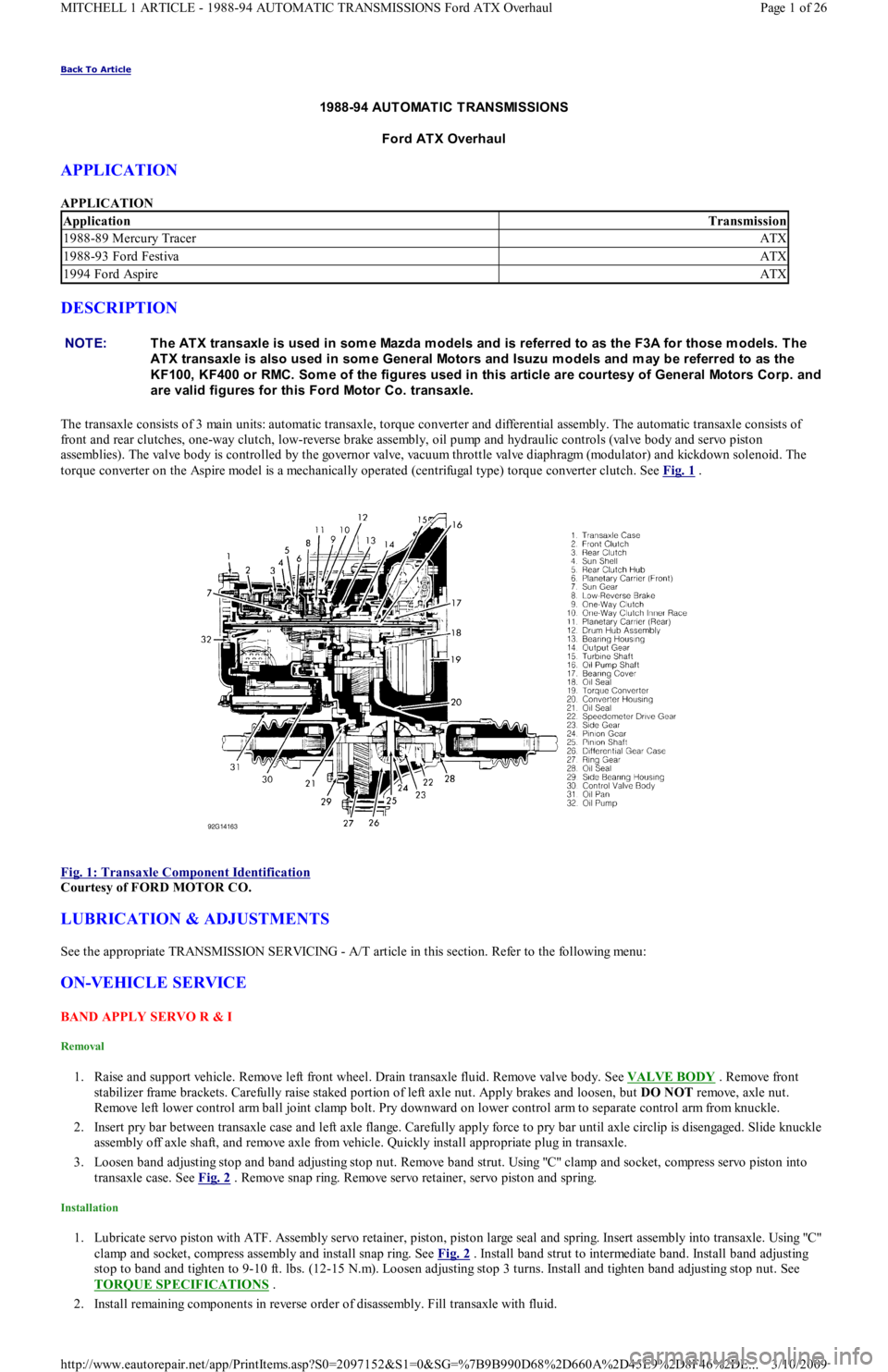
torque converter on the Aspire model is a mechanically operated (centrifugal type) torque converter clutch. See Fig. 1
.
Fig. 1: Transaxle Component Identification
Courtesy of FORD MOTOR CO.
LUBRICATION & ADJUSTMENTS
See the appropriate TRANSMISSION SERVICING - A/T article in this section. Refer to the following menu:
ON-VEHICLE SERVICE
BAND APPLY SERVO R & I
Removal
1. Raise and support vehicle. Remove left front wheel. Drain transaxle fluid. Remove valve body. See VALVE BODY . Remove front
stabilizer frame brackets. Carefully raise staked portion of left axle nut. Apply brakes and loosen, but DO NOT remove, axle nut.
Remove left lower control arm ball joint clamp bolt. Pry downward on lower control arm to separate control arm from knuckle.
2. Insert pry bar between transaxle case and left axle flange. Carefully apply force to pry bar until axle circlip is disengaged. Slide knuckle
assembly off axle shaft, and remove axle from vehicle. Quickly install appropriate plug in transaxle.
3. Loosen band adjusting stop and band adjusting stop nut. Remove band strut. Using "C" clamp and socket, compress servo piston into
transaxle case. See Fig. 2
. Remove snap ring. Remove servo retainer, servo piston and spring.
Installation
1. Lubricate servo piston with ATF. Assembly servo retainer, piston, piston large seal and spring. Insert assembly into transaxle. Usin g "C"
clamp and socket, compress assembly and install snap ring. See Fig. 2
. Install band strut to intermediate band. Install band adjusting
stop to band and tighten to 9-10 ft. lbs. (12-15 N.m). Loosen adjusting stop 3 turns. Install and tighten band adjusting stop nut. See
TORQUE SPECIFICATIONS
.
2. Install remaining components in reverse order of disassembly. Fill transaxle with fluid.
ApplicationTransmission
1988-89 Mercury TracerATX
1988-93 Ford FestivaATX
1994 Ford AspireATX
NOTE:T he AT X transaxle is used in som e Mazda m odels and is referred to as the F3A for those m odels. T he
AT X transaxle is also used in som e General Motors and Isuzu m odels and m ay be referred to as the
KF100, KF400 or RMC. Som e of the figures used in this article are courtesy of General Motors Corp. and
are valid figures for this Ford Motor Co. transaxle.
Page 1 of 26 MITCHELL 1 ARTICLE - 1988-94 AUTOMATIC TRANSMISSIONS Ford ATX Overhaul
3/10/2009 http://www.eautorepair.net/app/PrintItems.asp?S0=2097152&S1=0&SG=%7B9B990D68%2D660A%2D45E9%2D8F46%2DE
...
Page 411 of 454
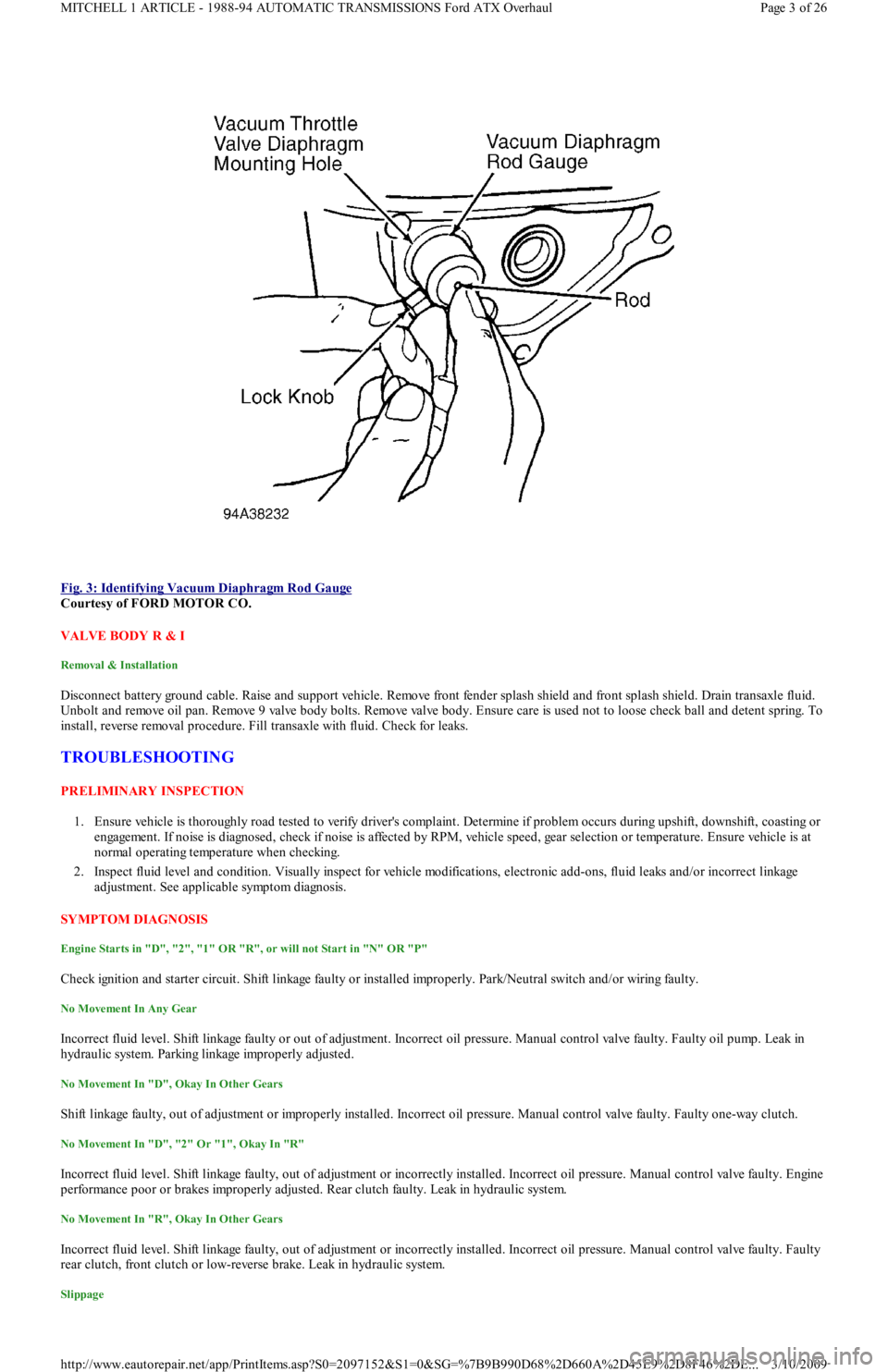
Fig. 3: Identifying Vacuum Diaphragm Rod Gauge
Courtesy of FORD MOTOR CO.
VALVE BODY R & I
Removal & Installation
Disconnect battery ground cable. Raise and support vehicle. Remove front fender splash shield and front splash shield. Drain transaxle fluid.
Unbolt and remove oil pan. Remove 9 valve body bolts. Remove valve body. Ensure care is used not to loose check ball and detent spring. To
install, reverse removal procedure. Fill transaxle with fluid. Check for leaks.
TROUBLESHOOTING
PRELIMINARY INSPECTION
1. Ensure vehicle is thoroughly road tested to verify driver's complaint. Determine if problem occurs during upshift, downshift, coasting or
engagement. If noise is diagnosed, check if noise is affected by RPM, vehicle speed, gear selection or temperature. Ensure vehicle is at
normal operating temperature when checking.
2. Inspect fluid level and condition. Visually inspect for vehicle modifications, electronic add-ons, fluid leaks and/or incorrect linkage
adjustment. See applicable symptom diagnosis.
SYMPTOM DIAGNOSIS
Engine Starts in "D", "2", "1" OR "R", or will not Start in "N" OR "P"
Check ignition and starter circuit. Shift linkage faulty or installed improperly. Park/Neutral switch and/or wiring faulty.
No Movement In Any Gear
Incorrect fluid level. Shift linkage faulty or out of adjustment. Incorrect oil pressure. Manual control valve faulty. Faulty oil pump. Leak in
hydraulic system. Parking linkage improperly adjusted.
No Movement In "D", Okay In Other Gears
Shift linkage faulty, out of adjustment or improperly installed. Incorrect oil pressure. Manual control valve faulty. Faulty one-way clutch.
No Movement In "D", "2" Or "1", Okay In "R"
Incorrect fluid level. Shift linkage faulty, out of adjustment or incorrectly installed. Incorrect oil pressure. Manual control valve faulty. Engine
performance poor or brakes improperly adjusted. Rear clutch faulty. Leak in hydraulic system.
No Movement In "R", Okay In Other Gears
Incorrect fluid level. Shift linkage faulty, out of adjustment or incorrectly installed. Incorrect oil pressure. Manual control valve faulty. Faulty
rear clutch, front clutch or low-reverse brake. Leak in hydraulic system.
Slippage
Page 3 of 26 MITCHELL 1 ARTICLE - 1988-94 AUTOMATIC TRANSMISSIONS Ford ATX Overhaul
3/10/2009 http://www.eautorepair.net/app/PrintItems.asp?S0=2097152&S1=0&SG=%7B9B990D68%2D660A%2D45E9%2D8F46%2DE
...
Page 412 of 454
ATF level incorrect or contaminated. Manual valve out of adjustment. Vacuum modulator faulty or leak in vacuum circuit. Fluid pressures
incorrect. Oil pump faulty. Leak in hydraulic circuit.
Vehicle Creeps In "N" Position
Shift linkage faulty, out of adjustment or incorrectly installed. Manual control valve faulty. Contaminated fluid. Faulty rear clutch.
Vehicle Creeps Excessively
Engine idle speed too high.
Vehicle Will Not Creep
Fluid level incorrect or fluid contaminated. Shift linkage faulty, out of adjustment or incorrectly installed. Engine idle too low. Manual
control valve faulty. Faulty oil pump. Leak in hydraulic system. Faulty front or rear clutch.
Low Maximum Speed & Poor Acceleration
Incorrect ATF level or contaminated fluid. Selector linkage out of adjustment. Engine stall speed incorrect. Poor engine performance. Brake
band faulty or out of adjustment. Faulty low-reverse brake, front clutch, rear clutch or hydraulic circuit.
Harsh "N" To "D" Engagement
Engine idle too high. Leak in vacuum circuit. Incorrect oil pressure. Manual control valve faulty. Faulty rear clutch. Low fluid level.
Harsh 1-2 Shift
Leak in vacuum circuit. Engine stall speed incorrect. Contaminated fluid. Manual control valve faulty. Band servo faulty. Brake band damaged
or out of adjustment.
Harsh 2-3 Shift
Leak in vacuum circuit. Incorrect oil pressure. Manual control valve faulty. Band servo or front clutch faulty. Brake band faulty.
Shift Shock Felt On Kickdown Downshift
Shift linkage damaged, out of adjustment or incorrectly installed. Leak in vacuum circuit. Kickdown solenoid, switch or wiring fau l t y.
Incorrect oil pressure. Manual control valve or governor valve faulty. Leak in hydraulic system.
2-1 Shift Shock With Lever In "1" Position
Leak in vacuum circuit. Engine stall speed incorrect. Manual control valve faulty. Contaminated fluid. Low-reverse brake faulty. Line pressure
high.
Shift Shock On Deceleration
Range selector out of adjustment. Vacuum diaphragm or piping faulty. Kickdown solenoid out of adjustment or faulty. Excessive line pressure.
M a n u a l va l ve fa u l t y. Go ve r n o r va l ve fa u l t y.
Vehicle Brakes In "R" Position
Band servo faulty. Contaminated fluid. Faulty rear clutch. Brake band damaged or out of adjustment. Parking linkage damaged or improperly
adjusted.
Vehicle Brakes On 1-2 Shift
Manual control valve faulty. Contaminated fluid. Front clutch or low-reverse brake faulty. One-way clutch faulty.
Vehicle Brakes On 2-3 Shift
Manual control valve faulty. Band servo faulty. Contaminated fluid. Brake band out of adjustment or damaged.
No Engine Braking In "1" Position
Shift linkage damaged, out of adjustment or installed incorrectly. Incorrect oil pressure. Manual control valve faulty. Contaminated fluid.
Low-reverse brake faulty. Leak in hydraulic system.
No Shift Shock; Slippage On 1-2 Shift
Incorrect fluid level. Shift linkage damaged, out of adjustment or incorrectly installed. Leak in vacuum circuit. Oil pressure incorrect. Manual
control valve faulty. Band servo faulty. Contaminated fluid. Brake band faulty. Leakage in hydraulic system.
No Shift Shock; Slippage When Manually Shifted From "1" To "2" Position
Incorrect fluid level. Shift linkage damaged, out of adjustment or installed incorrectly. Leak in vacuum circuit. Engine idle speed incorrect.
Engine stall speed incorrect. Manual control valve faulty. Contaminated fluid. Brake band out of adjustment or damaged. Oil pump faulty.
No Shift Shock; Slippage On 2-3 Shift
ATF contaminated or level incorrect. Shift linkage faulty. Vacuum modulator faulty or leak in vacuum circuit. Line pressure not correct. Band
servo faulty. Front clutch faulty. Leak in hydraulic system.
Slippage On 3-2 Kickdown
Page 4 of 26 MITCHELL 1 ARTICLE - 1988-94 AUTOMATIC TRANSMISSIONS Ford ATX Overhaul
3/10/2009 http://www.eautorepair.net/app/PrintItems.asp?S0=2097152&S1=0&SG=%7B9B990D68%2D660A%2D45E9%2D8F46%2DE
...
Page 413 of 454
Leak in vacuum circuit. Oil pressure incorrect. Manual valve faulty. Band servo faulty. Contaminated fluid. Front clutch faulty. Brake band
out of adjustment or damaged. Leak in hydraulic system.
Transaxle Slips In 1st Gear
Incorrect fluid level. Shift linkage faulty, out of adjustment or incorrectly installed. Incorrect oil pressure. Manual control valve faulty.
Contaminated fluid. Incorrect idle speed. Faulty kickdown solenoid, switch or wiring.
No 1-2 Shift
Shift linkage defective, out of adjustment or incorrectly installed. Leak in vacuum circuit. Faulty kickdown solenoid, switch or wiring.
Contaminated fluid. Manual control valve faulty. Governor valve faulty. Band servo faulty. Brake band out of adjustment. Leak in hydraulic
system. Rear clutch faulty.
No 2-3 Shift
Shift linkage defective, out of adjustment or incorrectly installed. Leak in vacuum circuit. Faulty kickdown solenoid, switch or wiring.
Contaminated fluid. Manual control valve, governor valve or band servo faulty. Leak in hydraulic system. Front clutch faulty.
No Lock-Up
Faulty torque converter, wiring or solenoid.
1-3 Shift; Skips 2nd
Contaminated fluid. Brake band out of adjustment or damaged. Leak in hydraulic system.
No 3-2 Downshift
Leak in vacuum circuit. Manual control valve, governor valve or band servo faulty. Contaminated fluid. Faulty front clutch. Brake band out of
adjustment of damaged. Leak in hydraulic system.
No 2-1 or 3-1 Downshift
Leak in vacuum circuit. Manual control valve, governor valve or band servo faulty. Contaminated fluid. Brake band out of adjustmen t o r
damaged. One-way clutch faulty.
Slippage When Accelerating In 3rd Gear Above Kickdown Speed
Shift linkage damaged, out of adjustment or installed incorrectly. Leak in vacuum circuit. Oil pressure incorrect. Manual control valve or
governor valve faulty. Contaminated fluid. Front clutch faulty. Leak in hydraulic system.
No Kickdown At Normal Speeds In 3rd Gear
Leak in vacuum circuit. Kickdown solenoid, switch or wiring faulty. Manual control valve or governor valve faulty. Contaminated fluid. Brake
band out of adjustment or damaged. Leak in hydraulic system.
1-2 & 2-3 Shift Points Too High
ATF contaminated or level incorrect. Vacuum modulator faulty or leak in vacuum circuit. Line pressures incorrect. Manual valve out of
adjustment. Governor valve faulty. Hydraulic circuit leaking.
3-2 & 2-1 Shift Points Too High
Shift linkage damaged, out of adjustment or incorrectly installed. Kickdown solenoid, switch or wiring faulty. Leak in vacuum circuit.
Incorrect oil pressure. Manual control valve or governor valve faulty. Leak in hydraulic system.
1-2 Or 2-3 Shifts With Shift Lever In "1" Position
Shift linkage damaged, out of adjustment or installed incorrectly. Manual control valve faulty. Leak in hydraulic system.
2-1 or 2-3 Shifts With Shift Lever In "2" Position
Shift linkage damaged, out of adjustment or installed incorrectly. Incorrect oil pressure. Manual control valve faulty.
Vehicle Moves In "P" Or Parking Gear Remains Engaged When
Shifted Out Of "P" Position
Shift linkage damaged, out of adjustment or incorrectly installed. Parking linkage out of adjustment or damaged.
Transaxle Noisy In "P" Or "N" Position
Incorrect fluid level. Incorrect oil pressure. Faulty rear clutch, oil pump, one-way clutch or planetary gear.
Transaxle Noisy In "D", "1", "2" or "R"
Oil pressure incorrect. Rear clutch, oil pump, one-way clutch or planetary gears faulty.
Transmission Overheats
ATF level incorrect. Engine stall speed and/or line pressure incorrect. Faulty band servo, front clutch, rear clutch, brake band, low-reverse
brake, oil pump, torque converter or planetary gear. Leak in hydraulic circuit.
Page 5 of 26 MITCHELL 1 ARTICLE - 1988-94 AUTOMATIC TRANSMISSIONS Ford ATX Overhaul
3/10/2009 http://www.eautorepair.net/app/PrintItems.asp?S0=2097152&S1=0&SG=%7B9B990D68%2D660A%2D45E9%2D8F46%2DE
...
Page 415 of 454
inspect and repair circuit between switch harness connector and fuse panel.
5.Check Kickdown Switch
Turn ignition off. Check continuity between kickdown switch terminals. Continuity should only exist with accelerator fully depressed. I
f
switch is functioning correctly, go to next step. Replace switch if it failed testing. Road test vehicle to verify repair.
6.Check Circuit Between Kickdown Switch & Kickdown Solenoid
Ensure ignition is off. Disconnect kickdown switch harness connector. Disconnect kickdown solenoid harness connector. Check
continuity of White/Black wire between switch harness connector and solenoid harness connector. If continuity does not exist, inspect
and repair open circuit as needed. If continuity exists, check continuity between White/Black wire terminal at solenoid harness
connector and ground. If continuity exists, inspect and repair short circuit as needed. If continuity does not exist, replace kickdown
solenoid.
VACUUM THROTTLE VALVE DIAPHRAGM (MODULATOR) TEST
1.Check System Integrity
Inspect all vacuum hoses and connections for leaks or damage. Disconnect vacuum hose at diaphragm connection and inspect for
leaking ATF. Repair as needed. Go to next step.
2.Check Vacuum At Modulator
Ensure ignition is off. Disconnect vacuum hose at modulator valve and connect vacuum gauge to hose. Start and run engine at idle.
Vacuum should be 15-22 In. Hg. If vacuum is not within specification, inspect and repair vacuum hose. If vacuum is within specification,
go to next step.
3.Check Modulator Valve Function
Turn ignition off. Remove modulator valve from transaxle. Connect hand-held vacuum pump to valve. Apply 16-20 In. Hg of vacuum.
Ensure vacuum is held by valve. Release vacuum and verify that valve moves freely. If valve is functioning correctly, go to next step.
Replace valve if it fails testing.
4.Check Vacuum Diaphragm Rod
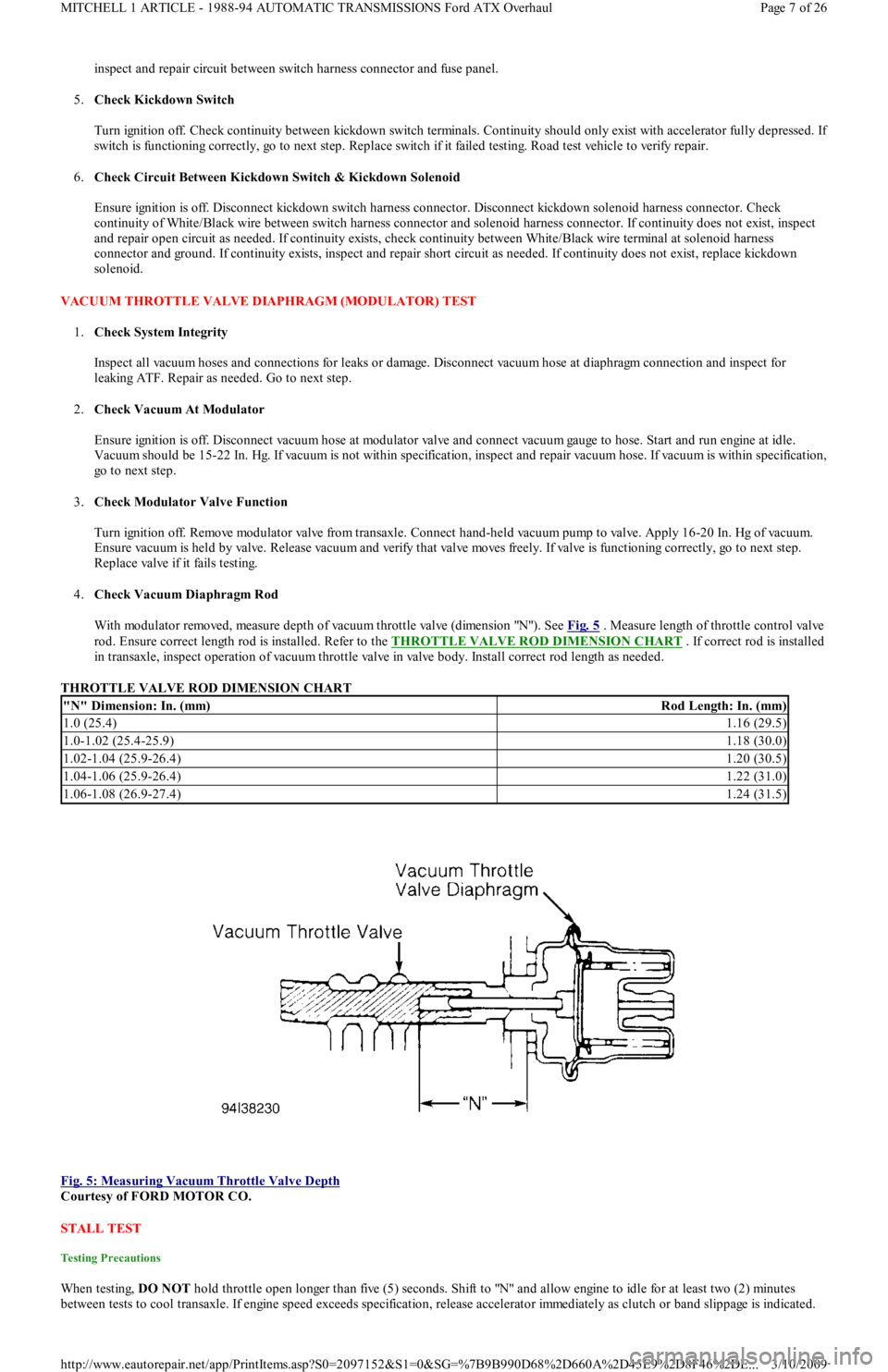
With modulator removed, measure depth of vacuum throttle valve (dimension "N"). See Fig. 5
. Measure length of throttle control valve
rod. Ensure correct length rod is installed. Refer to the THROTTLE VALVE ROD DIMENSION CHART
. If correct rod is installed
in transaxle, inspect operation of vacuum throttle valve in valve body. Install correct rod length as needed.
THROTTLE VALVE ROD DIMENSION CHART
Fig. 5: Measuring Vacuum Throttle Valve Depth
Courtesy of FORD MOTOR CO.
STALL TEST
Testing Precautions
When testing, DO NOT hold throttle open longer than five (5) seconds. Shift to "N" and allow engine to idle for at least two (2) minutes
between tests to cool transaxle. If engine speed exceeds specification, release accelerator immediately as clutch or band slippage is indicated.
"N" Dimension: In. (mm)Rod Length: In. (mm)
1.0 (25.4)1.16 (29.5)
1.0-1.02 (25.4-25.9)1.18 (30.0)
1.02-1.04 (25.9-26.4)1.20 (30.5)
1.04-1.06 (25.9-26.4)1.22 (31.0)
1.06-1.08 (26.9-27.4)1.24 (31.5)
Page 7 of 26 MITCHELL 1 ARTICLE - 1988-94 AUTOMATIC TRANSMISSIONS Ford ATX Overhaul
3/10/2009 http://www.eautorepair.net/app/PrintItems.asp?S0=2097152&S1=0&SG=%7B9B990D68%2D660A%2D45E9%2D8F46%2DE
...