axle FORD MUSTANG 1969 Volume One Chassis
[x] Cancel search | Manufacturer: FORD, Model Year: 1969, Model line: MUSTANG, Model: FORD MUSTANG 1969Pages: 413, PDF Size: 75.81 MB
Page 99 of 413
03-02-23
Suspension
03-02-23
SEDAN MODELS ONLY-
SPRING CLIPS
5705
,^-::^^^^SSSS^
^CS^.-''' .--'""-.'.'""'"* D D
A
f~
V
C
T
BRACKET
(STATION WAGON-
AND RANCHERO
ONLY) 5610
INSULATOR RETAINER
5736
INBOARD
SHACKLE
BUSHING
5791
... ».IA-
vae.
FRONT HANGER
INBOARD BUSHING
FRONT HANGER
OUTBOARD BUSHING
REAR
SHACKLE
ASSEMBLY
5776
OUTBOARD SHACKLE
BUSHING
5791
LOWER INSULATOR 5732
INSULATOR PLATES
(H.D.
STATION WAGON
AND RANCHERO) 5A584
SPRING CLIP PLATE
(STATION WAGON
AND RANCHERO
ONLY) 5798-99
SPRING HANGER
MOUNTING BOLT
HANGER
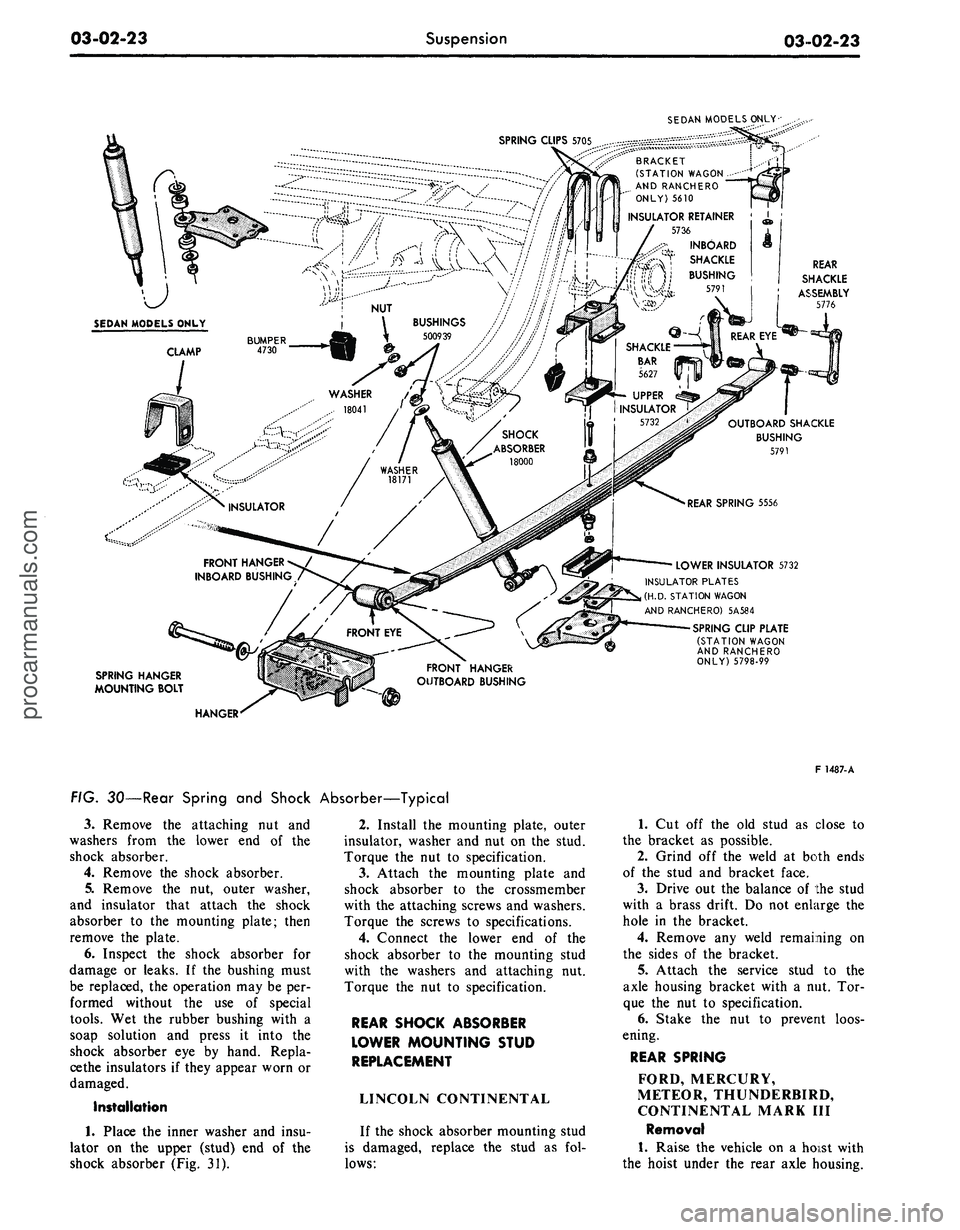
FIG. 30—Rear Spring and Shock Absorber—Typical
3.
Remove the attaching nut and
washers from the lower end of the
shock absorber.
4.
Remove the shock absorber.
5.
Remove the nut, outer washer,
and insulator that attach the shock
absorber to the mounting plate; then
remove the plate.
6. Inspect the shock absorber for
damage or leaks. If the bushing must
be replaced, the operation may be per-
formed without the use of special
tools.
Wet the rubber bushing with a
soap solution and press it into the
shock absorber eye by hand. Repla-
cethe insulators if they appear worn or
damaged.
Installation
1.
Place the inner washer and insu-
lator on the upper (stud) end of the
shock absorber (Fig. 31).
2.
Install the mounting plate, outer
insulator, washer and nut on the stud.
Torque the nut to specification.
3.
Attach the mounting plate and
shock absorber to the crossmember
with the attaching screws and washers.
Torque the screws to specifications.
4.
Connect the lower end of the
shock absorber to the mounting stud
with the washers and attaching nut.
Torque the nut to specification.
REAR SHOCK ABSORBER
LOWER MOUNTING STUD
REPLACEMENT
LINCOLN CONTINENTAL
If the shock absorber mounting stud
is damaged, replace the stud as fol-
lows:
F 1487-A
1.
Cut off the old stud as close to
the bracket as possible.
2.
Grind off the weld at both ends
of the stud and bracket face.
3.
Drive out the balance of the stud
with a brass drift. Do not enlarge the
hole in the bracket.
4.
Remove any weld remaining on
the sides of the bracket.
5.
Attach the service stud to the
axle housing bracket with a nut. Tor-
que the nut to specification.
6. Stake the nut to prevent loos-
ening.
REAR SPRING
FORD, MERCURY,
METEOR, THUNDERBIRD,
CONTINENTAL MARK III
Removal
1.
Raise the vehicle on a hoist with
the hoist under the rear axle housing.procarmanuals.com
Page 100 of 413
03-02-24
Suspension
03-02-24
LOCK NUT
INSULATOR
NG
NUT
MOUNTING STUD
WASHER
LOCK WASHER
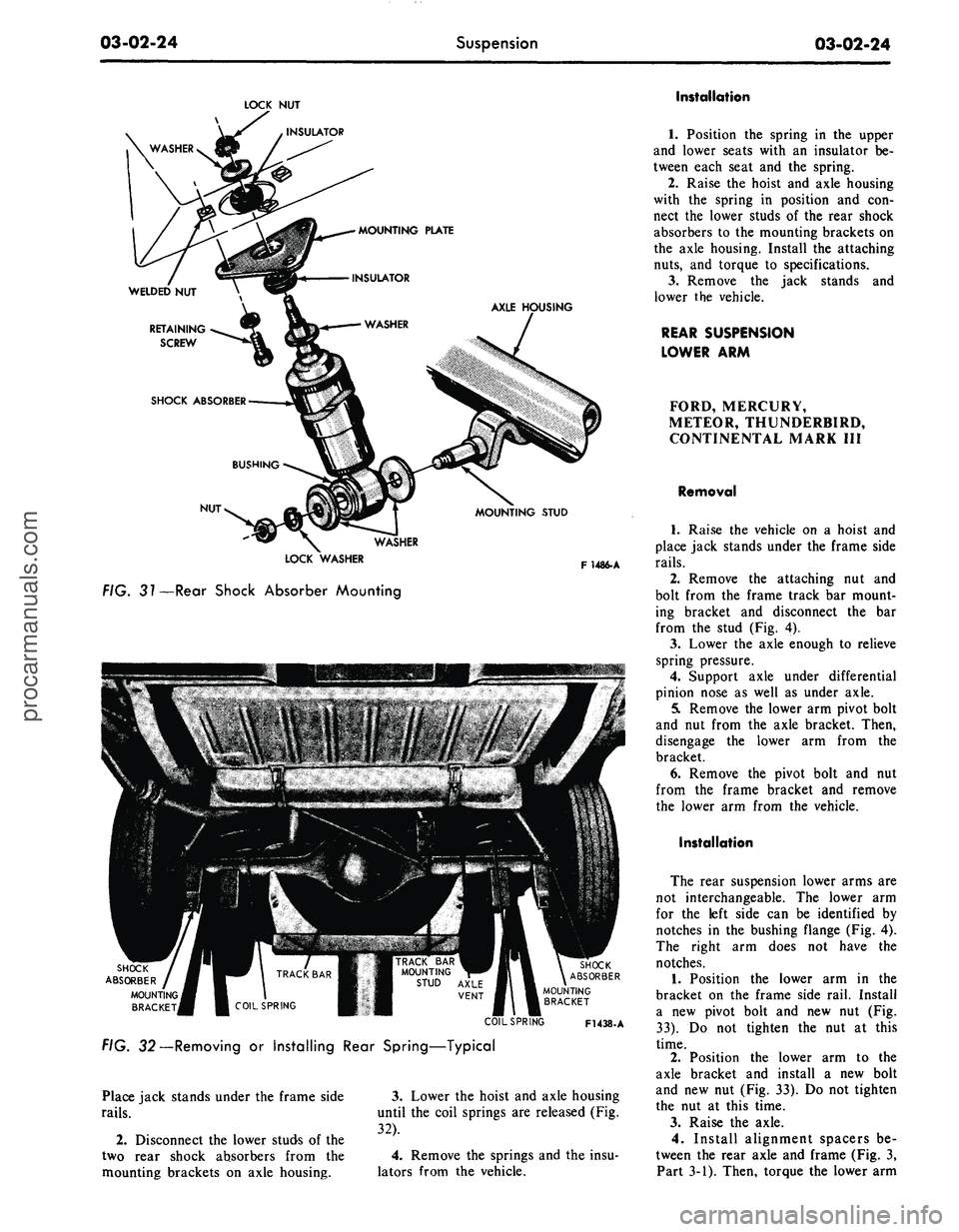
FIG. 31—Rear Shock Absorber Mounting
F1486-A
TRACK BAR
MOUNTING
STUD AXLE
VENT
SHOCK
ABSORBER
MOUNTING
BRACKET
SHOCK
ABSORBER
MOUNTING
BRACKET
V-V.
FIG. 32—Removing or Installing Rear Spring—Typical
COIL SPRING
F1438-A
Place jack stands under the frame side
rails.
2.
Disconnect the lower studs of the
two rear shock absorbers from the
mounting brackets on axle housing.
3.
Lower the hoist and axle housing
until the coil springs are released (Fig.
32).
4.
Remove the springs and the insu-
lators from the vehicle.
Installation
1.
Position the spring in the upper
and lower seats with an insulator be-
tween each seat and the spring.
2.
Raise the hoist and axle housing
with the spring in position and con-
nect the lower studs of the rear shock
absorbers to the mounting brackets on
the axle housing. Install the attaching
nuts,
and torque to specifications.
3.
Remove the jack stands and
lower the vehicle.
REAR SUSPENSION
LOWER ARM
FORD, MERCURY,
METEOR, THUNDERBIRD,
CONTINENTAL MARK III
Removal
1.
Raise the vehicle on a hoist and
place jack stands under the frame side
rails.
2.
Remove the attaching nut and
bolt from the frame track bar mount-
ing bracket and disconnect the bar
from the stud (Fig. 4).
3.
Lower the axle enough to relieve
spring pressure.
4.
Support axle under differential
pinion nose as well as under axle.
5.
Remove the lower arm pivot bolt
and nut from the axle bracket. Then,
disengage the lower arm from the
bracket.
6. Remove the pivot bolt and nut
from the frame bracket and remove
the lower arm from the vehicle.
Installation
The rear suspension lower arms are
not interchangeable. The lower arm
for the left side can be identified by
notches in the bushing flange (Fig. 4).
The right arm does not have the
notches.
1.
Position the lower arm in the
bracket on the frame side rail. Install
a new pivot bolt and new nut (Fig.
33).
Do not tighten the nut at this
time.
2.
Position the lower arm to the
axle bracket and install a new bolt
and new nut (Fig. 33). Do not tighten
the nut at this time.
3.
Raise the axle.
4.
Install alignment spacers be-
tween the rear axle and frame (Fig. 3,
Part 3-1). Then, torque the lower armprocarmanuals.com
Page 101 of 413
03-02-25
Suspension
03-02-25
pivot bolts and nuts to specification
(Part 3-13).
5.
Connect the track bar to the
frame bracket with a new nut and
bolt. Torque the nut to specification
(Part 3-13).
6. Remove the alignment spacers
and jack stands and lower the vehicle.
REAR SUSPENSION-
UPPER ARM
FORD, MERCURY,
METEOR, THUNDERBIRD,
CONTINENTAL MARK HI
Removal
1.
Raise the vehicle and support the
frame side rails with jack stands.
2.
Support the rear axle, then dis
connect the track bar from the frame
bracket.
3.
Lower the axle and support axle
under differential pinion nose, as well
as under axle.
4.
Remove the nut, bolt and two
washers that attach the upper arm to
the axle housing. Disconnect the arm
from the housing.
5.
Remove the nut and bolt that se-
cures the upper arm to the crossmem-
ber and remove the arm.
Installation
1.
Hold the upper arm in place on
the crossmember and install a new at-
taching bolt, a new lockwasher and a
new nut. Do not tighten the nut at this
time.
2.
Secure the upper arm to the axle
housing with a new attaching bolt,
two washers and a new nut. Do not
tighten the nut at this time.
3.
Install alignment spacers be-
tween the rear axle housing and
frame.
4.
Connect the track bar to the
frame bracket with a new nut and
bolt. Torque the nut to specifications.
5.
Torque the upper arm front nut
to specification. Remove the align-
ment spacers and the jack stands.
6. Adjust the pinion angle and tor-
que the rear nut to specification.
7.
Lower the vehicle.
TRACK BAR
FORD, MERCURY,
METEOR, THUNDERBIRD,
CONTINENTAL MARK HI
1.
Raise the vehicle on an axle con-
tact hoist.
FRONT PIVOT BOLT
LOWER ARM
REAR PIVOT BOLT NUT
F1439-A
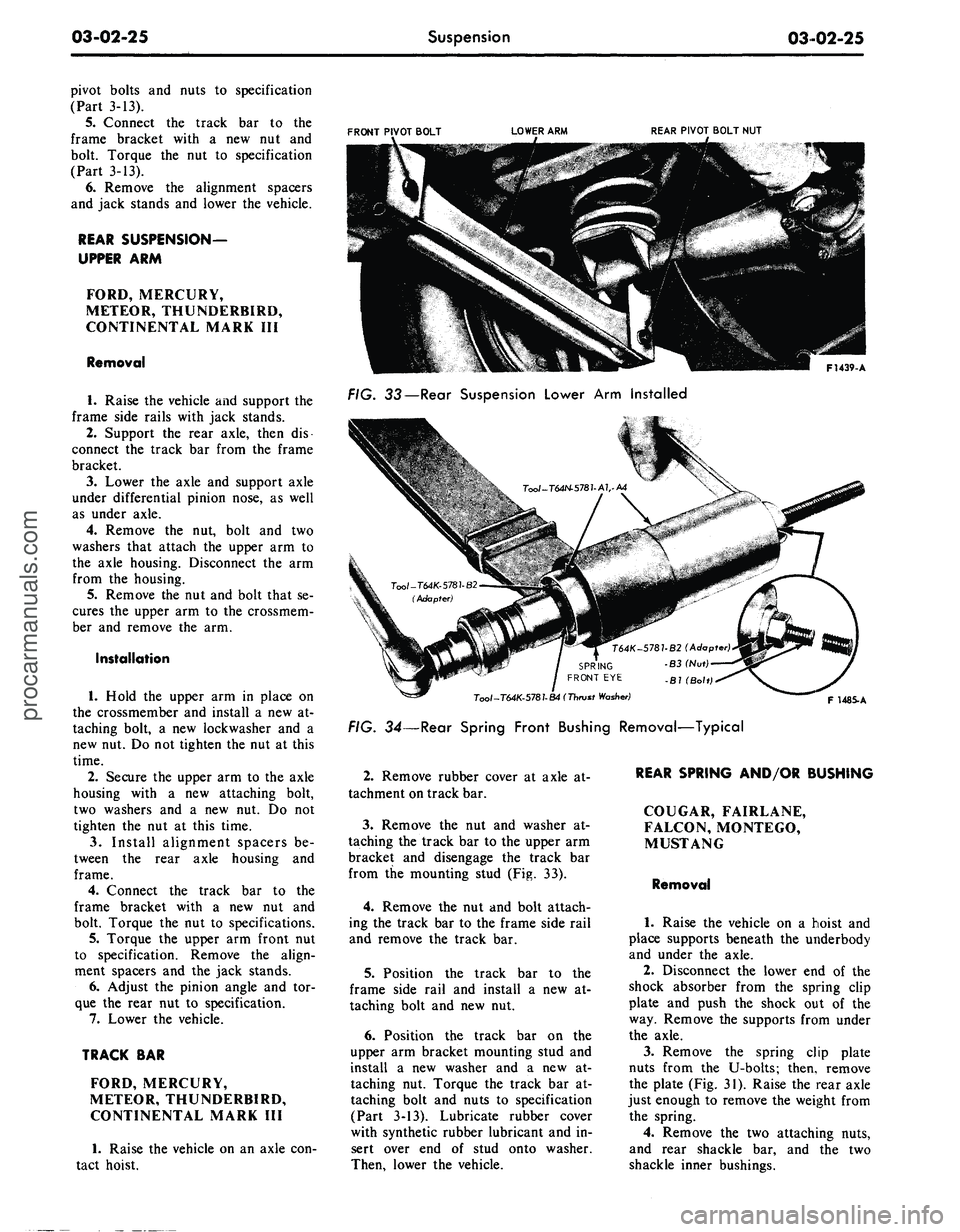
FIG. 33—Rear Suspension Lower Arm Installed
Tool-T64K-5781-B4 (Thrust
Washer)
FIG. 34—Rear Spring Front Bushing Removal—Typical
F 1485. A
2.
Remove rubber cover at axle at-
tachment on track bar.
3.
Remove the nut and washer at-
taching the track bar to the upper arm
bracket and disengage the track bar
from the mounting stud (Fig. 33).
4.
Remove the nut and bolt attach-
ing the track bar to the frame side rail
and remove the track bar.
5.
Position the track bar to the
frame side rail and install a new at-
taching bolt and new nut.
6. Position the track bar on the
upper arm bracket mounting stud and
install a new washer and a new at-
taching nut. Torque the track bar at-
taching bolt and nuts to specification
(Part 3-13). Lubricate rubber cover
with synthetic rubber lubricant and in-
sert over end of stud onto washer.
Then, lower the vehicle.
REAR SPRING AND/OR BUSHING
COUGAR, FAIRLANE,
FALCON, MONTEGO,
MUSTANG
Removal
1.
Raise the vehicle on a hoist and
place supports beneath the underbody
and under the axle.
2.
Disconnect the lower end of the
shock absorber from the spring clip
plate and push the shock out of the
way. Remove the supports from under
the axle.
3.
Remove the spring clip plate
nuts from the U-bolts; then, remove
the plate (Fig. 31). Raise the rear axle
just enough to remove the weight from
the spring.
4.
Remove the two attaching nuts,
and rear shackle bar, and the two
shackle inner bushings.procarmanuals.com
Page 102 of 413
03-02-26
Suspension
03-02-26
T64K-578 7-B2 (Adapter)
-83 (Nut)
(Bolt)
SPRING FRONT
EYE
Tool-T64K-5781-B2 (Adapter)
BUSHING
F 1484-A
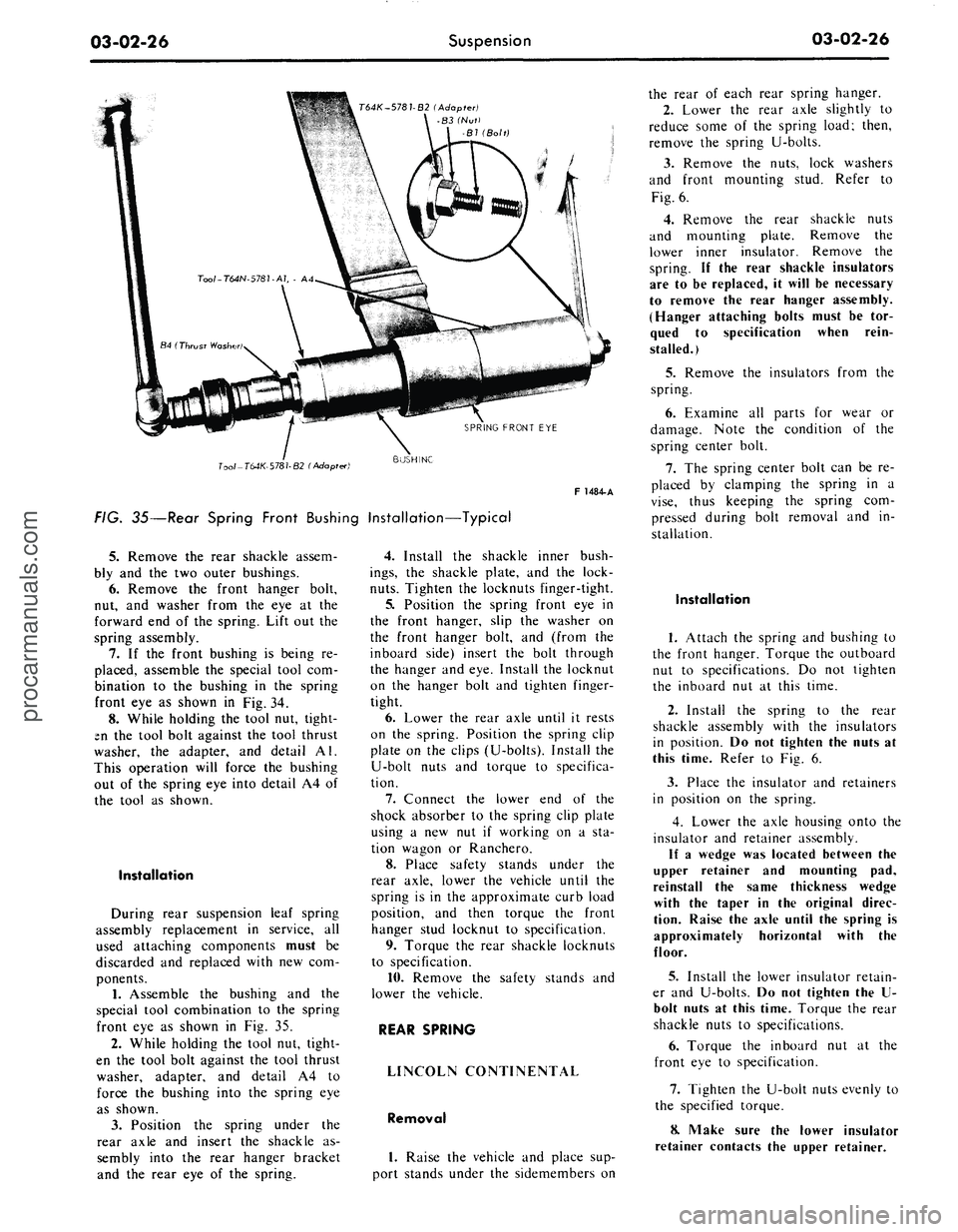
FIG. 35—Rear Spring Front Bushing Installation—Typical
5.
Remove
the
rear shackle assem-
bly
and the two
outer bushings.
6. Remove
the
front hanger bolt,
nut,
and
washer from
the eye at the
forward
end of the
spring. Lift
out the
spring assembly.
7.
If the
front bushing
is
being
re-
placed, assemble
the
special tool
com-
bination
to the
bushing
in the
spring
front
eye as
shown
in
Fig.
34.
8. While holding
the
tool
nut,
tight-
en
the
tool bolt against
the
tool thrust
washer,
the
adapter,
and
detail
Al.
This operation will force
the
bushing
out
of the
spring
eye
into detail
A4 of
the tool
as
shown.
Installation
During rear suspension leaf spring
assembly replacement
in
service,
all
used attaching components must
be
discarded
and
replaced with
new com-
ponents.
1.
Assemble
the
bushing
and the
special tool combination
to the
spring
front
eye as
shown
in Fig. 35.
2.
While holding
the
tool
nut,
tight-
en
the
tool bolt against
the
tool thrust
washer, adapter,
and
detail
A4 to
force
the
bushing into
the
spring
eye
as shown.
3.
Position
the
spring under
the
rear axle
and
insert
the
shackle
as-
sembly into
the
rear hanger bracket
and
the
rear
eye of the
spring.
4.
Install
the
shackle inner bush-
ings,
the
shackle plate,
and the
lock-
nuts.
Tighten
the
locknuts finger-tight.
5.
Position
the
spring front
eye in
the front hanger, slip
the
washer
on
the front hanger bolt,
and
(from
the
inboard side) insert
the
bolt through
the hanger
and
eye. Install
the
locknut
on
the
hanger bolt
and
tighten finger-
tight.
6. Lower
the
rear axle until
it
rests
on
the
spring. Position
the
spring clip
plate
on the
clips (U-bolts). Install
the
U-bolt nuts
and
torque
to
specifica-
tion.
7.
Connect
the
lower
end of the
shock absorber
to the
spring clip plate
using
a new nut if
working
on a sta-
tion wagon
or
Ranchero.
8. Place safety stands under
the
rear axle, lower
the
vehicle until
the
spring
is in the
approximate curb load
position,
and
then torque
the
front
hanger stud locknut
to
specification.
9. Torque
the
rear shackle locknuts
to specification.
10.
Remove
the
safety stands
and
lower
the
vehicle.
REAR SPRING
LINCOLN CONTINENTAL
Removal
1.
Raise
the
vehicle
and
place
sup-
port stands under
the
sidemembers
on
the rear
of
each rear spring hanger.
2.
Lower
the
rear axle slightly
to
reduce some
of the
spring load; then,
remove
the
spring U-bolts.
3.
Remove
the
nuts, lock washers
and front mounting stud. Refer
to
Fig.
6.
4.
Remove
the
rear shackle nuts
and mounting plate. Remove
the
lower inner insulator. Remove
the
spring.
If the
rear shackle insulators
are
to be
replaced,
it
will
be
necessary
to remove
the
rear hanger assembly.
(Hanger attaching bolts must
be tor-
qued
to
specification when rein-
stalled.)
5.
Remove
the
insulators from
the
spring.
6. Examine
all
parts
for
wear
or
damage. Note
the
condition
of the
spring center bolt.
7.
The
spring center bolt
can be re-
placed
by
clamping
the
spring
in a
vise,
thus keeping
the
spring
com-
pressed during bolt removal
and in-
stallation.
Installation
1.
Attach
the
spring
and
bushing
to
the front hanger. Torque
the
outboard
nut
to
specifications.
Do not
tighten
the inboard
nut at
this time.
2.
Install
the
spring
to the
rear
shackle assembly with
the
insulators
in position.
Do not
tighten
the
nuts
at
this time. Refer
to Fig. 6.
3.
Place
the
insulator
and
retainers
in position
on the
spring.
4.
Lower
the
axle housing onto
the
insulator
and
retainer assembly.
If
a
wedge
was
located between
the
upper retainer
and
mounting
pad,
reinstall
the
same thickness wedge
with
the
taper
in the
original direc-
tion. Raise
the
axle until
the
spring
is
approximately horizontal with
the
floor.
5.
Install
the
lower insulator retain-
er
and
U-bolts.
Do not
tighten
the U-
bolt nuts
at
this time. Torque
the
rear
shackle nuts
to
specifications.
6. Torque
the
inboard
nut at the
front
eye to
specification.
7.
Tighten
the
U-bolt nuts evenly
to
the specified torque.
8. Make sure
the
lower insulator
retainer contacts
the
upper retainer.procarmanuals.com
Page 107 of 413
03-03-02
Automatic Air Leveling System
03-03-02
REMOVAL AND INSTALLATION
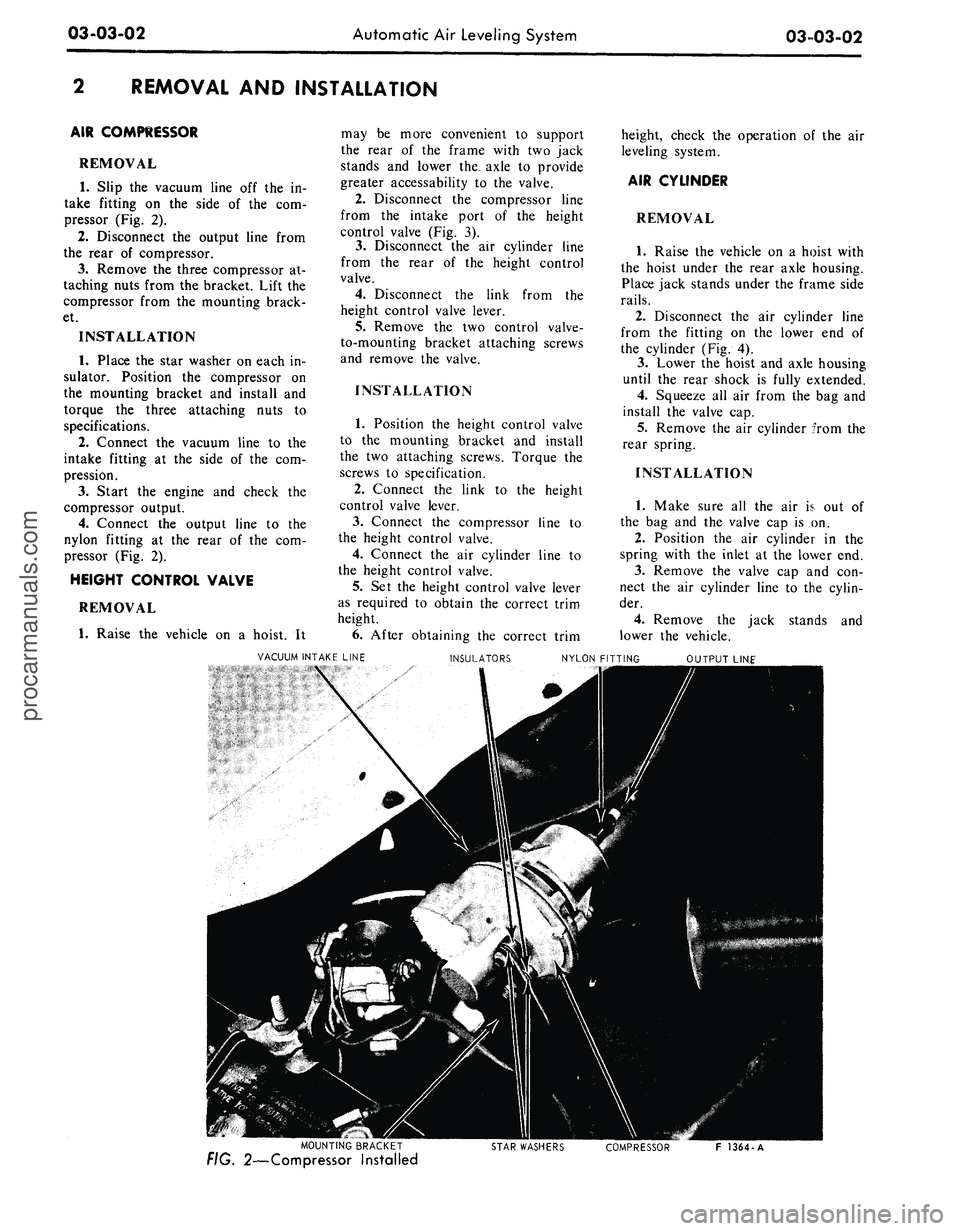
AIR COMPRESSOR
REMOVAL
1.
Slip the vacuum line off the in-
take fitting on the side of the com-
pressor (Fig. 2).
2.
Disconnect the output line from
the rear of compressor.
3.
Remove the three compressor at-
taching nuts from the bracket. Lift the
compressor from the mounting brack-
et.
INSTALLATION
1.
Place the star washer on each in-
sulator. Position the compressor on
the mounting bracket and install and
torque the three attaching nuts to
specifications.
2.
Connect the vacuum line to the
intake fitting at the side of the com-
pression.
3.
Start the engine and check the
compressor output.
4.
Connect the output line to the
nylon fitting at the rear of the com-
pressor (Fig. 2).
HEIGHT CONTROL VALVE
REMOVAL
1.
Raise the vehicle on a hoist. It
may be more convenient to support
the rear of the frame with two jack
stands and lower the, axle to provide
greater accessability to the valve.
2.
Disconnect the compressor line
from the intake port of the height
control valve (Fig. 3).
3.
Disconnect the air cylinder line
from the rear of the height control
valve.
4.
Disconnect the link from the
height control valve lever.
5.
Remove the two control valve-
to-mounting bracket attaching screws
and remove the valve.
INSTALLATION
1.
Position the height control valve
to the mounting bracket and install
the two attaching screws. Torque the
screws to specification.
2.
Connect the link to the height
control valve lever.
3.
Connect the compressor line to
the height control valve.
4.
Connect the air cylinder line to
the height control valve.
5.
Set the height control valve lever
as required to obtain the correct trim
height.
6. After obtaining the correct trim
height, check the operation of the air
leveling system.
AIR CYLINDER
REMOVAL
1.
Raise the vehicle on a hoist with
the hoist under the rear axle housing.
Place jack stands under the frame side
rails.
2.
Disconnect the air cylinder line
from the fitting on the lower end of
the cylinder (Fig. 4).
3.
Lower the hoist and axle housing
until the rear shock is fully extended.
4.
Squeeze all air from the bag and
install the valve cap.
5.
Remove the air cylinder from the
rear spring.
INSTALLATION
1.
Make sure all the air is out of
the bag and the valve cap is on.
2.
Position the air cylinder in the
spring with the inlet at the lower end.
3.
Remove the valve cap and con-
nect the air cylinder line to the cylin-
der.
4.
Remove the jack stands and
lower the vehicle.
VACUUM INTAKE LINE
INSULATORS
NYLON FITTING
MOUNTING BRACKET
FIG. 2—Compressor Installed
STAR WASHERS
COMPRESSOR
F 1364-Aprocarmanuals.com
Page 111 of 413
03-04-02
Automatic Air Leveling System — Lincoln Continental
03-04-02
REMOVAL AND INSTALLATION
COMPRESSOR
REMOVAL
1.
Raise the front of the vehicle and
place jack stands under frame side
rails.
2.
Turn the front wheels all the way
to the right. Working from the und-
erside of the left front fender, remove
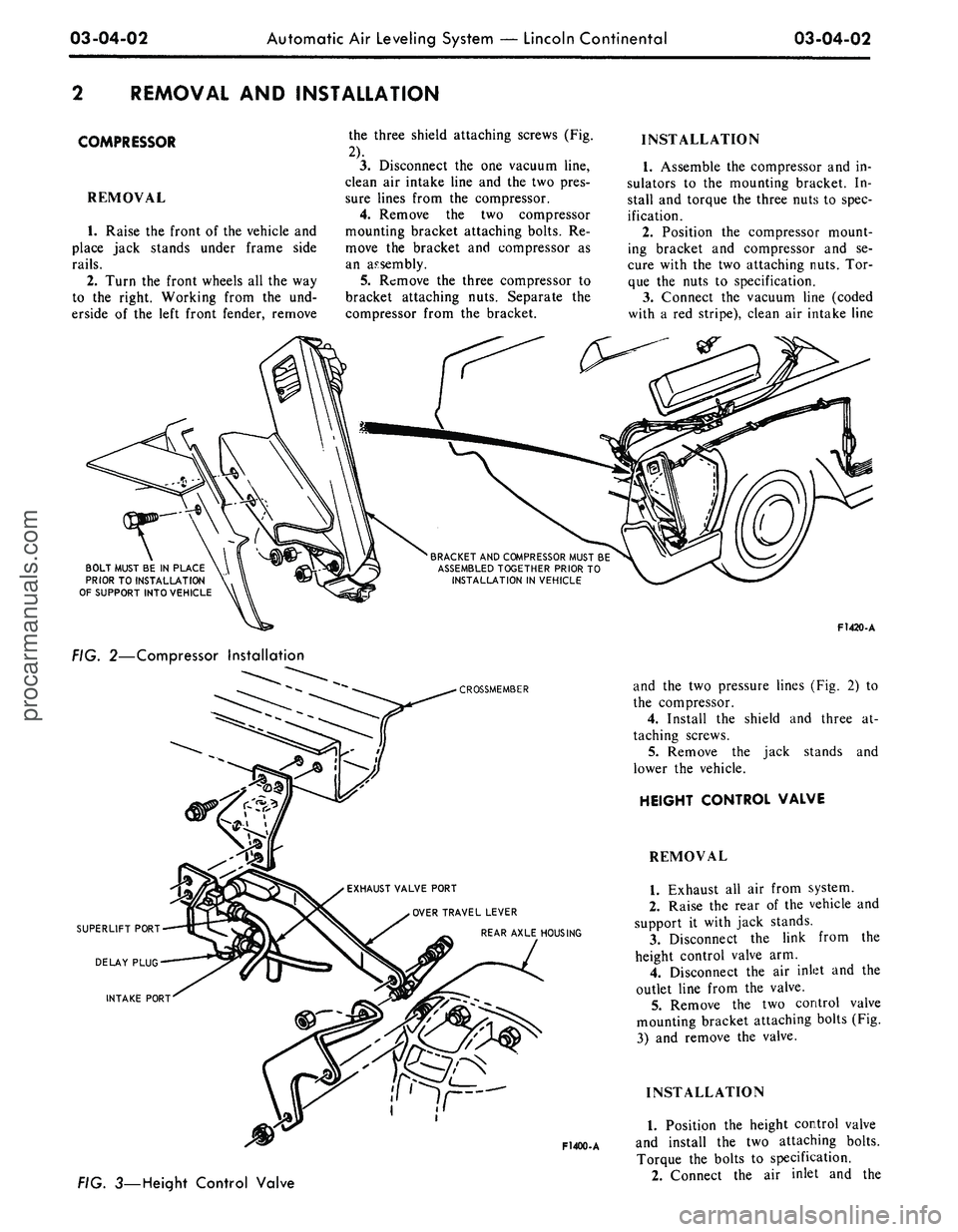
the three shield attaching screws (Fig.
2).
3.
Disconnect the one vacuum line,
clean air intake line and the two pres-
sure lines from the compressor.
4.
Remove the two compressor
mounting bracket attaching bolts. Re-
move the bracket and compressor as
an assembly.
5.
Remove the three compressor to
bracket attaching nuts. Separate the
compressor from the bracket.
INSTALLATION
1.
Assemble the compressor and in-
sulators to the mounting bracket. In-
stall and torque the three nuts to spec-
ification.
2.
Position the compressor mount-
ing bracket and compressor and se-
cure with the two attaching nuts. Tor-
que the nuts to specification.
3.
Connect the vacuum line (coded
with a red stripe), clean air intake line
BRACKET
AND
COMPRESSOR
MUST
BE
ASSEMBLED
TOGETHER
PRIOR
TO
INSTALLATION
IN
VEHICLE
BOLT MUST
BE IN
PLACE
PRIOR
TO
INSTALLATION
OF
SUPPORT
INTO
VEHICLE
FIG. 2—Compressor Installation
CROSSMEMBER
EXHAUST
VALVE PORT
OVER
TRAVEL
LEVER
REAR AXLE
HOUSING
F1400-A
3—Height Control Valve
F1420-A
and the two pressure lines (Fig. 2) to
the compressor.
4.
Install the shield and three at-
taching screws.
5.
Remove the jack stands and
lower the vehicle.
HEIGHT CONTROL VALVE
REMOVAL
1.
Exhaust all air from system.
2.
Raise the rear of the vehicle and
support it with jack stands.
3.
Disconnect the link from the
height control valve arm.
4.
Disconnect the air inlet and the
outlet line from the valve.
5.
Remove the two control valve
mounting bracket attaching bolts (Fig.
3) and remove the valve.
INSTALLATION
1.
Position the height control valve
and install the two attaching bolts.
Torque the bolts to specification.
2.
Connect the air inlet and theprocarmanuals.com
Page 112 of 413
03-04-03
Automatic Air Leveling System — Lincoln Continental
03-04-03
outlet lines to their respective parts.
3.
Adjust the trim height as de-
tailed in Section 4.
4.
Connect the link to the arm.
5.
Remove the jack stands and
lower the vehicle.
SUPER LIFT SHOCK ABSORBER
REMOVAL
1.
Raise the vehicle and place jack
stands under the axle to compress the
super lift.
2.
Loosen the air line or lines (right
super lift) slowly to release the air
from the system. Then, disconnect the
line or lines.
3.
Remove the three mounting plate
attaching screws from the upper end
of the super lift.
4.
Remove the attaching nut and
washer from the lower end of the
super lift and remove it from the vehi-
cle.
5.
Remove the nut, outer washer
and the insulator that attach the super
lift to the mounting plate. Remove the
plate, remaining insulator and washer.
INSTALLATION
1.
Position a washer, insulator,
mounting plate, insulator, washer and
nut on the stud at the upper end of
the super lift. Torque the nut to speci-
fication.
2.
Install the mounting plate, outer
insulator, washer and nut on the stud.
Torque the nut to specification.
3.
Attach the mounting plate and
shock absorber to the crossmember
with the attaching screws to specifica-
tions.
4.
Connect the lower end of the
super lift to the mounting stud with
the washers and attaching nut. Torque
the nut to specification.
5.
Connect the air line or lines
(right super lift) to the super lift.
6. Start the engine and check for
leaks.
3 IN-VEHICLE ADJUSTMENTS AND REPAIRS
REGULATOR ADJUSTMENT HEIGHT CONTROL VALVE
The regulator may be adjusted if
the regulator pressure is under 100 psi
with the reservoir pressure at a mini-
mum of 140 psi. If the regulated pres-
sure exceeds 130 psi, the regulator
must be replaced.
To adjust the regulator, remove the
boot and reposition the sleeve and re-
tainer deeper into the body of the re-
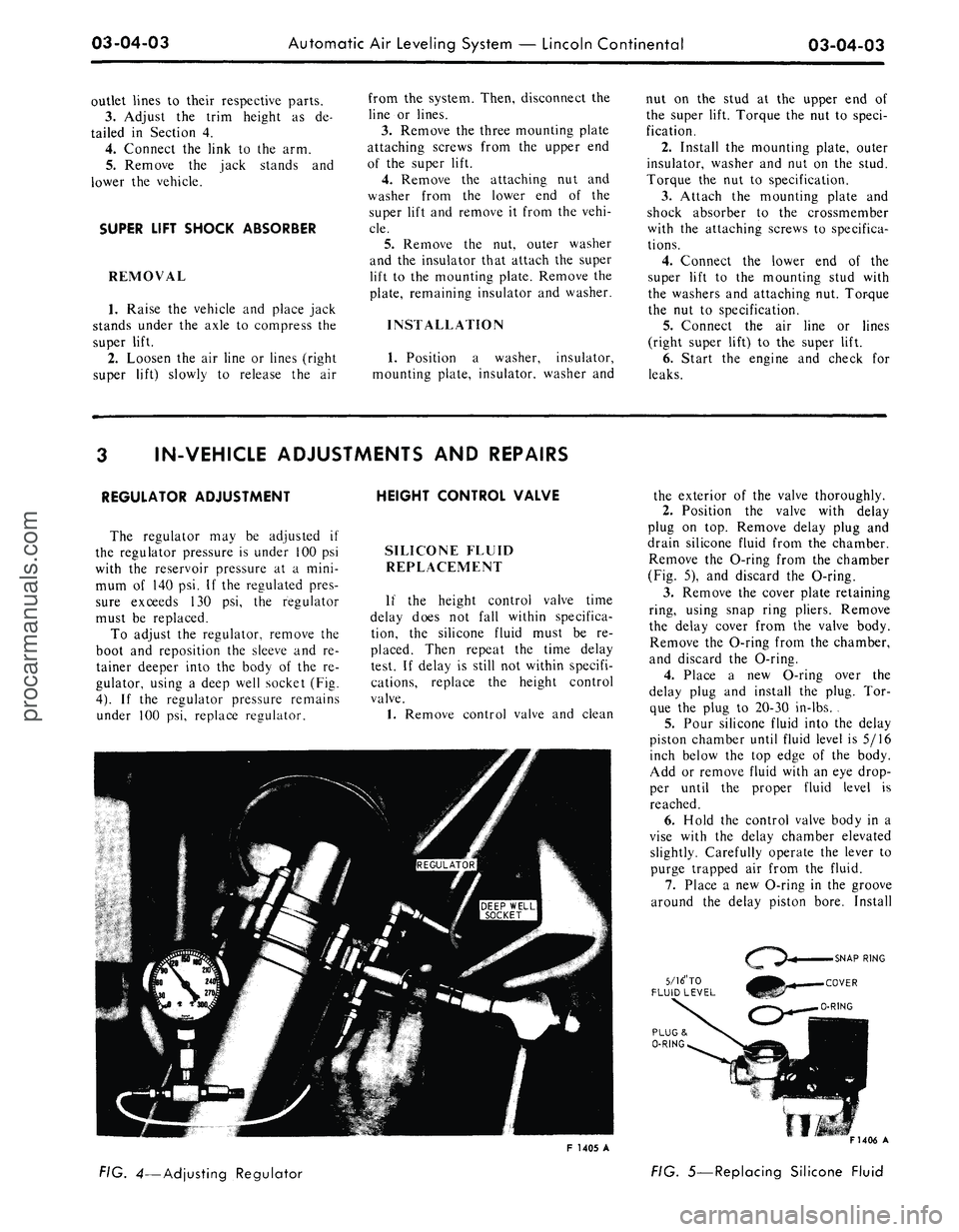
gulator, using a deep well socket (Fig.
4).
If the regulator pressure remains
under 100 psi, replace regulator.
SILICONE FLUID
REPLACEMENT
If the height control valve time
delay does not fall within specifica-
tion, the silicone fluid must be re-
placed. Then repeat the time delay
test. If delay is still not within specifi-
cations, replace the height control
valve.
1.
Remove control valve and clean
the exterior of the valve thoroughly.
2.
Position the valve with delay
plug on top. Remove delay plug and
drain silicone fluid from the chamber.
Remove the O-ring from the chamber
(Fig. 5), and discard the O-ring.
3.
Remove the cover plate retaining
ring, using snap ring pliers. Remove
the delay cover from the valve body.
Remove the O-ring from the chamber,
and discard the O-ring.
4.
Place a new O-ring over the
delay plug and install the plug. Tor-
que the plug to 20-30 in-lbs. .
5.
Pour silicone fluid into the delay
piston chamber until fluid level is 5/16
inch below the top edge of the body.
Add or remove fluid with an eye drop-
per until the proper fluid level is
reached.
6. Hold the control valve body in a
vise with the delay chamber elevated
slightly. Carefully operate the lever to
purge trapped air from the fluid.
7.
Place a new O-ring in the groove
around the delay piston bore. Install
5/16" TO
FLUID LEVEL
F 1405 A
FIG. 4—Adjusting Regulator
F1406 A
FIG. 5—Replacing Silicone Fluidprocarmanuals.com
Page 172 of 413
03-12-01
Wheels
And
Tires
03-12-01
PART
3-12
Wheels
And
Tires
COMPONENT INDEX
FRONT
HUB AND
DRUM ASSEMBLY
Removal
and
Installation
FRONT
HUB AND
ROTOR ASSEMBLY
Removal
and
Installation
FRONT WHEEL ASSEMBLY DESCRIPTION
FRONT WHEEL BEARING ADJUSTMENT
FRONT WHEEL GREASE SEAL
AND
BEARING
Removal, Installation, Repacking
HOISTING INSTRUCTIONS
LIFE GUARD TIRE
Balancing
Correcting Vibration
and
Shake
Description
Repairs
REAR WHEEL ASSEMBLY DESCRIPTION
WHEELS AND TIRES (Conventional)
Removal
and
Installation
MODEL APPLICATION
All
Models
12-07
12-07
12-01
12-02
12-05
12-02
12-01
12-03
Ford
N/A
N/A
N/A
N/A
Mercury
N/A
N/A
N/A
N/A
Meteor
N/A
N/A
N/A
N/A
Cougar
N/A
N/A
N/A
N/A
Fairlane
N/A
N/A
N/A
N/A
Falcon
N/A
N/A
N/A
N/A
Montego
N/A
N/A
N/A
N/A
Mustang
N/A
N/A
N/A
N/A
Lincoln-
Continental
12-03
12-03
12-02
12-08
Thunderbird
12-03
12-03
12-02
12-08
Continental-
Mark
III
12-03
12-03
12-02
12-08
A page number indicates that
the
item
is for the
vehicle listed
at the
head
of the
column.
N/A indicates that
the
item
is not
applicable
to the
vehicle listed.
DESCRIPTION
FRONT WHEEL ASSEMBLY
Each front wheel
and
tire
is
bolted
to
its
respective front
hub and
brake
drum
or
rotor assembly.
Two
opposed
tapered roller bearings
are
installed
in
each
hub. A
grease retainer
is in-
stalled
at the
inner
end of the hub to
prevent lubricant from leaking into
the drum
or on the
rotor.
The
entire
assembly
is
retained
to its
spindle
by
the adjusting
nut, nut
lock
and
cotter
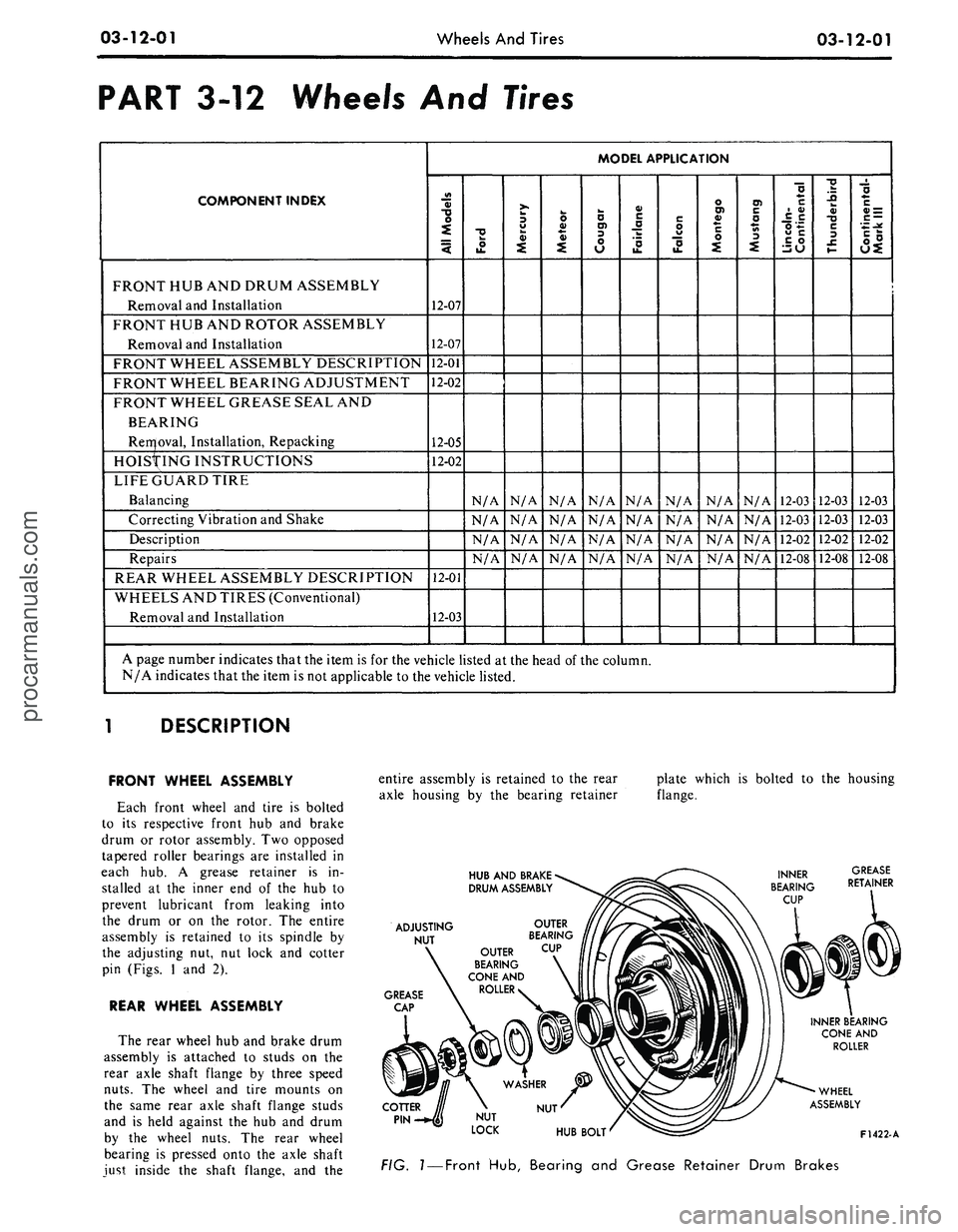
pin (Figs.
1 and 2).
REAR WHEEL ASSEMBLY
The rear wheel
hub and
brake drum
assembly
is
attached
to
studs
on the
rear axle shaft flange
by
three speed
nuts.
The
wheel
and
tire mounts
on
the same rear axle shaft flange studs
and
is
held against
the hub and
drum
by
the
wheel nuts.
The
rear wheel
bearing
is
pressed onto
the
axle shaft
just inside
the
shaft flange,
and the
entire assembly
is
retained
to the
rear
axle housing
by the
bearing retainer
HUB
AND
BRAKE
DRUM
ASSEMBLY
plate which
is
bolted
to the
housing
flange.
ADJUSTING
NUT
GREASE
CAP
OUTER
BEARING
OUTER
CUP
BEARING
CONE
AND
ROLLER
NUT
INNER BEARING
CONE
AND
ROLLER
WHEEL
ASSEMBLY
HUB
BOLT'
^£=3^
F1422-A
FIG.
1
—
Front
Hub,
Bearing
and
Grease Retainer Drum Brakes
procarmanuals.com
Page 180 of 413
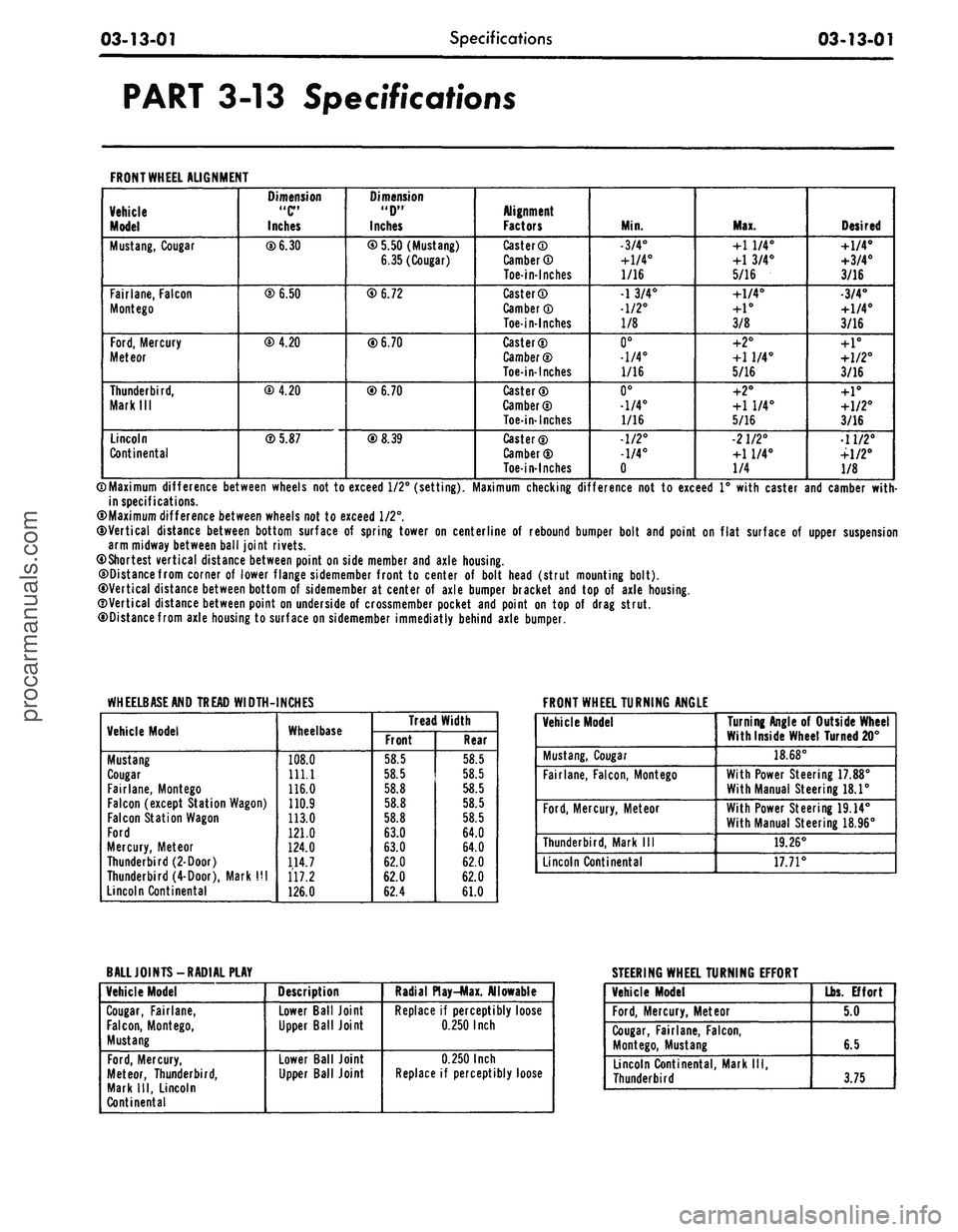
03-13-01
Specifications
03-13-01
PART 3-13 Specifications
FRONT
WHEEL
ALIGNMENT
Vehicle
Model
Mustang,
Cougar
Fairlane, Falcon
Mont
ego
Ford,
Mercury
Meteor
Thunderbird,
Mark III
Lincoln
Continental
Dimension
"C"
Inches
(I) 6.30
® 6.50
©4.20
® 4.20
©5.87
Dimension
"D"
Inches
©5.50 (Mustang)
6.35 (Cougar)
©6.72
©6.70
©6.70
©8.39
Alignment
Factors
Caster©
Camber©
Toe-in-Inches
Caster©
Camber©
Toe-in-Inches
Caster©
Camber©
Toe-in-Inches
Caster©
Camber®
Toe-in-Inches
Caster®
Camber®
Toe-in-Inches
Min.
-3/4°
+1/4°
1/16
-1
3/4°
•1/2°
1/8
0°
•1/4°
1/16
0°
•1/4°
1/16
-1/2°
•1/4°
0
Max.
+1 1/4°
+1 3/4°
5/16
+1/4°
+1°
3/8
+2°
+11/4°
5/16
+2°
+1 1/4°
5/16
-2
1/2°
+11/4°
1/4
Desired
+1/4°
+3/4°
3/16
•3/4°
+1/4°
3/16
+1°
+1/2°
3/16
+1°
+1/2°
3/16
•11/2°
+1/2°
1/8
©Maximum difference between wheels not to exceed 1/2° (setting). Maximum checking difference not to exceed 1° with caster and camber
with-
in specifications.
©Maximum difference between wheels not to exceed 1/2°.
©Vertical distance between bottom surface of spring tower on centerline of rebound bumper bolt and point on flat surface of upper suspension
arm midway between ball joint rivets.
©Shortest vertical distance between point on side member and axle housing.
©Distance from corner of lower flange sidemember front to center of bolt head (strut mounting bolt).
©Vertical distance between bottom of sidemember at center of axle bumper bracket and top of axle housing.
©Vertical distance between point on underside of crossmember pocket and point on top of drag strut.
©Distance from axle housing to surface on sidemember immediatly behind axle bumper.
WHEELBASEAND TREAD WIDTH-INCHES
FRONT WHEEL TURNING ANGLE
Vehicle Model
Mustang
Cougar
Fairlane, Montego
Falcon (except Station Wagon)
Falcon Station Wagon
Ford
Mercury, Meteor
Thunderbird (2-Door)
Thunderbird (4-Door), Mark HI
Lincoln Continental
Wheelbase
108.0
111.1
116.0
110.9
113.0
121.0
124.0
114.7
117.2
126.0
Tread
Front
58.5
58.5
58.8
58.8
58.8
63.0
63.0
62.0
62.0
62.4
Width
Rear
58.5
58.5
5«.5
58.5
58.5
64.0
64.0
62.0
62.0
61.0
Vehicle Model
Mustang,
Cougar
Fairlane, Falcon, Montego
Ford,
Mercury, Meteor
Thunderbird, Mark III
Lincoln Continental
Turning Angle of Outside Wheel
With Inside Wheel Turned 20°
18.68°
With Power Steering 17.88°
With Manual Steering 18.1°
With Power Steering 19.14°
With Manual Steering 18.96°
19.26°
17.71°
BALL JOINTS -RADIAL PLAY
STEERING WHEEL TURNING EFFORT
Vehicle Model
Cougar, Fairlane,
Falcon,
Montego,
Mustang
Ford,
Mercury,
Meteor, Thunderbird,
Mark III, Lincoln
Continental
Description
Lower Ball Joint
Upper Ball Joint
Lower Ball Joint
Upper Ball Joint
Radial Play-Max. Allowable
Replace if perceptibly loose
0.250
Inch
0.250
Inch
Replace if perceptibly loose
Vehicle Model
Ford,
Mercury, Meteor
Cougar, Fairlane, Falcon,
Montego, Mustang
Lincoln Continental, Mark III,
Thunderbird
Lbs.
Effort
5.0
6.5
3.75procarmanuals.com
Page 185 of 413
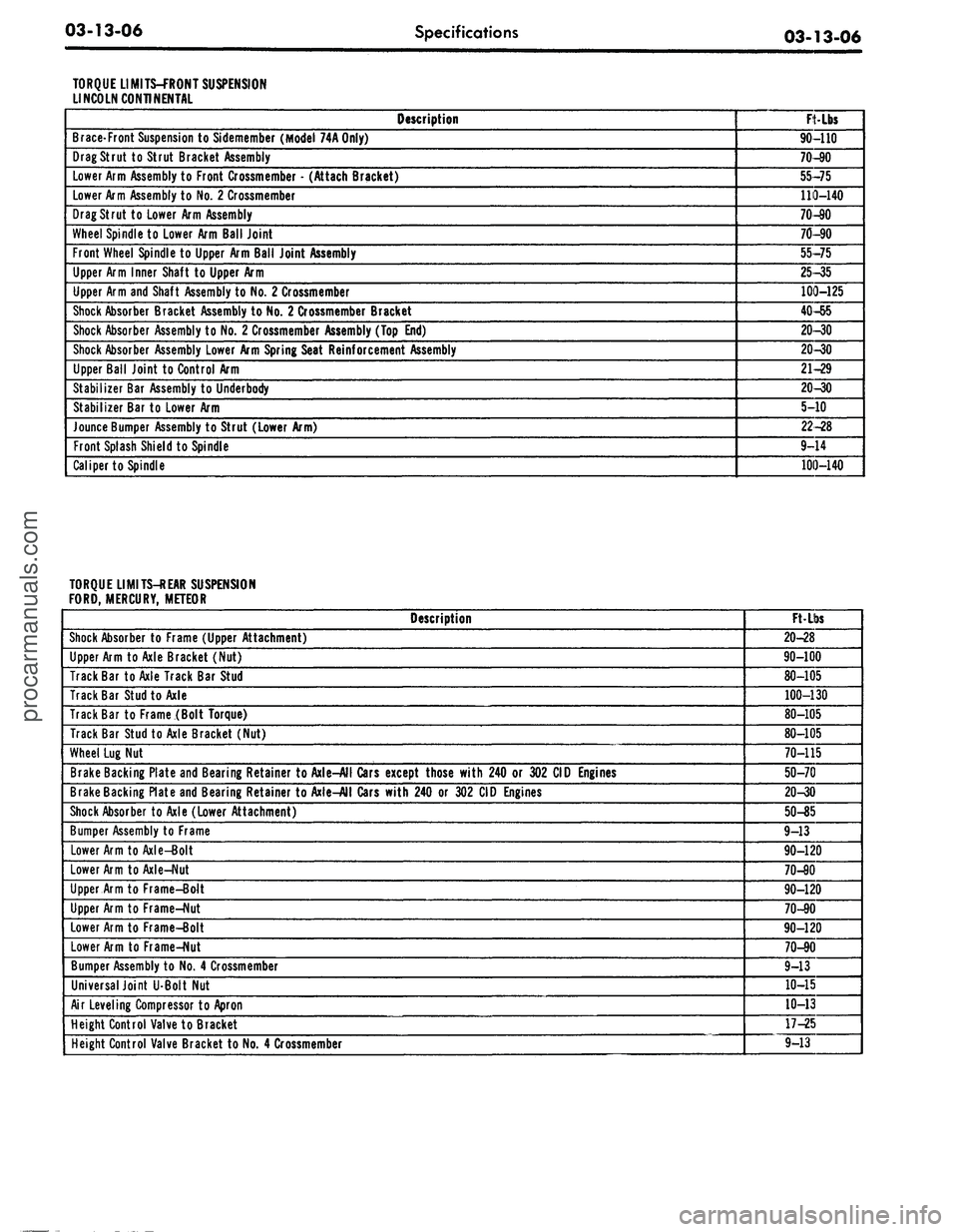
03-13-06
Specifications
03-13-06
TORQUE LIMITS-FRONT SUSPENSION
LINCOLN CONTINENTAL
Description
Brace-Front Suspension to Sidemember (Model 74A Only)
Drag Strut
to
Strut Bracket Assembly
Lower Arm Assembly to Front Crossmember
-
(Attach Bracket)
Lower Arm Assembly to No. 2 Crossmember
Drag Strut
to
Lower Arm Assembly
Wheel Spindle to Lower Arm Ball Joint
Front Wheel Spindle to Upper Arm Ball Joint Assembly
Upper Arm Inner Shaft
to
Upper Arm
Upper Arm and Shaft Assembly to No. 2 Crossmember
Shock Absorber Bracket Assembly to No. 2 Crossmember Bracket
Shock Absorber Assembly to No. 2 Crossmember Assembly (Top End)
Shock Absorber Assembly Lower Arm Spring Seat Reinforcement Assembly
Upper Ball Joint
to
Control Arm
Stabilizer Bar Assembly
to
Underbody
Stabilizer Bar
to
Lower Arm
Jounce Bumper Assembly
to
Strut (Lower Arm)
Front Splash Shield to Spindle
Caliper to Spindle
FtLbs
90-110
70-90
55-75
110-140
70-90
70-90
55-75
25-35
100-125
40-55
20-30
20-30
21-29
20-30
5-10
22-28
9-14
100-140
TORQUE LIMITS-REAR SUSPENSION
FORD, MERCURY, METEOR
Description
Shock Absorber
to
Frame (Upper Attachment)
Upper Arm to Axle Bracket (Nut)
Track Bar to Axle Track Bar Stud
Track Bar Stud to Axle
Track Bar
to
Frame (Bolt Torque)
Track Bar Stud to Axle Bracket (Nut)
Wheel Lug Nut
Brake Backing Plate and Bearing Retainer to Axle-All Cars except those with 240
or
302 CID Engines
Brake Backing Plate and Bearing Retainer to Axle-All Cars with 240
or
302 CID Engines
Shock Absorber to Axle (Lower Attachment)
Bumper Assembly
to
Frame
Lower Arm to Axle-Bolt
Lower Arm to Axle-Nut
Upper Arm
to
Frame-BoU
Upper Arm
to
Frame-Nut
Lower Arm
to
Frame-Bolt
Lower Arm
to
Frame-Nut
Bumper Assembly to No. 4 Crossmember
Universal Joint
U-Bolt
Nut
Air Leveling Compressor
to
Apron
Height Control Valve to Bracket
Height Control Valve Bracket to No. 4 Crossmember
FtLbs
20-28
90-100
80-105
100-130
80-105
80-105
70-115
50-70
20-30
50-35
9-13
90-120
70-90
90-120
70-90
90-120
70-90
9-13
10-15
10-13
17-25
9-13procarmanuals.com