wheel GEELY MK 2008 User Guide
[x] Cancel search | Manufacturer: GEELY, Model Year: 2008, Model line: MK, Model: GEELY MK 2008Pages: 416, PDF Size: 25.19 MB
Page 30 of 416
2-9 c. Check levels of braking fluid, engine coolant, engine oil, transmission oil, power steering fluid, and
washing fluid to see if there is any leaking.
d. Inspect if brake pedal, clutch pedal, accelerator pedal, transmission shifter, steering wheel, choke are
loose or stuck. The free travel of clutch pedal is 5~15mm, the free travel of brake pedal is 1~6mm and
the free play of steering wheel is less than 30mm(measurement point at margin of steering wheel). if it
is out of this normal range, the clutch needs to be tuned.
e. Inspect if the connection of battery, lamps and signal lights are normal, and if the wire routing and
position are correct and not loose.
f. Inspect if the tire pressure is correct.
(2) On-road inspection If the inspection result of the above items is good, start the engine and test the car on
road, and perform the following inspections.
a. Acceleration pedal, see if the operation is smooth and if it is loose.
b. Clutch, see if there is any stuck or abnormal noise, and slip when driving.
c. Transmission,check if shifting is smooth,or rough and wrong shifting.Inspect if the display of A/T
shift lever is normal.
d. Steering, check if steering is light and smooth, and if the steering wheel turns back after steering.
e. Brake pedal, apply brake pedal to check if the braking functions well when vehicle speed is at
40km/h and if the vehicle runs off track.
f. Park brake, when parking brake handler is pulled, there should be 6~9 clicking sounds. Pull park brake
when vehicle is running at the speed of 20km/h and transmission is at neutral gear to see if it brakes.
g. Vehicle speed meter, observe the vehicle speed meter while driving. When speed changes, check if the
indicator is moving steadily or shakes.
h. Heating and air-conditioning.Try every control button to see if both heating and cooling system work
well.
i. Abnormal noise, listen carefully to see if there is any abnormal noise from engine, drive line system or
any other parts of the vehicle at a steady speed and during accelerating, and decelerating.
(3) Inspection after test ride check if there is anything abnormal in the vehicle while driving and conduct the
following inspections after the vehicle is parked.
a. Check electrical fan When engine coolant temperature is beyond 92.5°C, the radiator fan should be
running; When A/C is on and the pressure of refrigerant is more than 1.5 cooling ton, air conditioning
cooling fan should be running.
b. Check headlamp, method: park the car 5m away from the inspection surface (inspection board, curtain,
or wall) to the front bumper, and check if the beam from headlamp is good. The upper level if headlamp
should be 540mm above the ground, and the distance between headlamps on the two sides is 900mm.
c. Inspect engine idle speed,idle speed of hot engine is 800r/min±50r/min,when A/C compressor works,
the idle speed should be 900r/min±50r/min. If idle speed is abnormal, adjust the idle speed adjust
ment screw to adjust it.
(4) Usage of new cars in breaking-in period Follow the instructions below in the first 1500~2500km breaking
mileage to avoid wear and abnormal damage in breaking-in period, and to improve vehicle performance, fuel
economy and to extend vehicle useful life.
a. Drive steadily during breaking-in; do not accelerate harshly to avoid running engine at high speed.
Engine should not exceed 4500r/min in any gears. Especially at the early stage of breaking-in, vehicleUsage and Maintenance of MK Series - Usage of MK Series
Page 34 of 416
2-13For servicing items whose deadlines have expired, they should be maintained at the same intervals as before. The
intervals are recorded in maintenance schedule.
Rubber hoses
Used in cooling and heating system, braking and fuel-feeding systems should be inspected by qualified Geely
technicians according to Geely maintenance schedule.
There are all very important maintenance items. Hoses must be replaced immediately should there be any aging
or damage. Please pay attention, rubber hoses age as time goes by, and they may have problems of inflation, wear,
or crack.
Special Tips
If the vehicle is driven under one or more of the following circumstances, the maintenance items should be
carried out more frequently. See attached maintenance schedule.
A Road condition
1. drive on rough, muddy or skiddy roads
2. drive on dusty roads.
B driving condition
1. Repeat driving within 8km a few times, or when the outdoor temperature is below 0 degree centigrade.
2. Idle the car drive at a low speed for a long time, such as police car, taxi, or door to door delivery vehicles.
3. Continuously drive the car at high speed for more than 2 hours (80% of the max speed).IV. Regular inspections1. weekly schedule
inspect engine oil level and cleanness
inspect engine coolant level
inspect brake fluid level
inspect windshield wash fluid level
inspect power steering fluid level
2. monthly inspections
inspect water pump belt
inspect electrolyte level in battery
inspect tire air pressure and wear
inspect steering wheel
inspect brake
inspect acceleration pedal
3. inspection when driving (low speed)
inspect speed meter and water temperature
check steering wheel power and if vehicle runs off-track
check if the front wheels skid or swing
inspect if brake functions or if the vehicle runs off-track when brake is functioning
4. other inspection items
Eliminate problems immediately when there is anything abnormalUsage and Maintenance of MK Series - Maintenance Category and Content of MK Sedan
Page 36 of 416
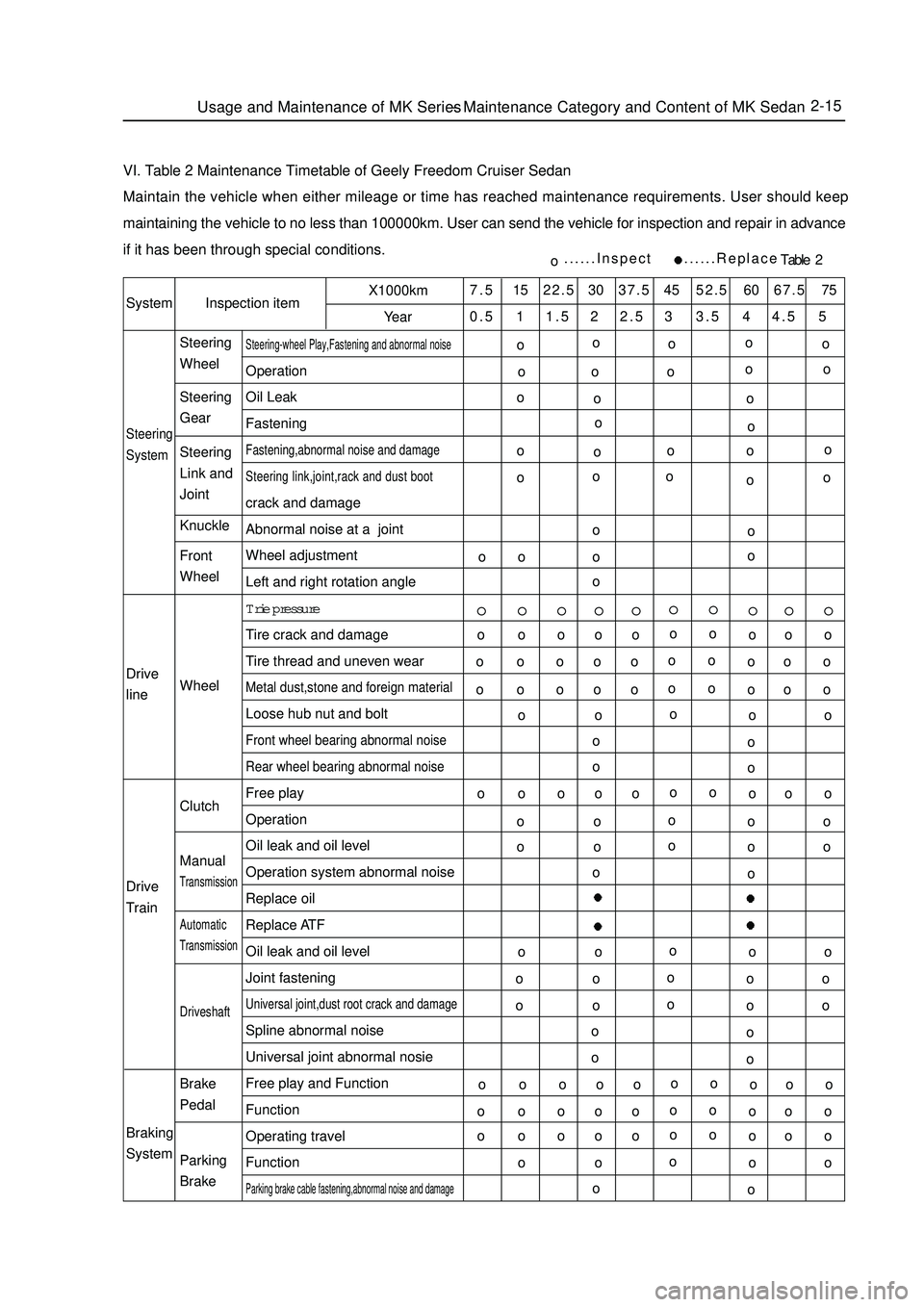
2-15
VI. Table 2 Maintenance Timetable of Geely Freedom Cruiser SedanMaintain the vehicle when either mileage or time has reached maintenance requirements. User should keep
maintaining the vehicle to no less than 100000km. User can send the vehicle for inspection and repair in advance
if it has been through special conditions.SystemInspection itemX1000km
Year7.5 15 22.5 30 37.5 45 52.5 60 67.5 75
0.5 1 1.5 2 2.5 3 3.5 4 4.5 5Steering
SystemSteering-wheel Play,Fastening and abnormal noiseOperation
Oil Leak
FasteningFastening,abnormal noise and damage
Steering link,joint,rack and dust bootcrack and damage
Abnormal noise at a joint
Wheel adjustment
Left and right rotation angle
Trie pressure
Tire crack and damage
Tire thread and uneven wearMetal dust,stone and foreign materialLoose hub nut and boltFront wheel bearing abnormal noise
Rear wheel bearing abnormal noiseFree play
Operation
Oil leak and oil level
Operation system abnormal noise
Replace oil
Replace ATF
Oil leak and oil level
Joint fasteningUniversal joint,dust root crack and damageSpline abnormal noise
Universal joint abnormal nosie
Free play and Function
Function
Operating travel
FunctionParking brake cable fastening,abnormal noise and damageo......Inspect ......ReplaceTable 2 Drive
line
Drive
Train
Braking
SystemSteering
Wheel
Steering
Gear
Steering
Link and
Joint
Knuckle
Front
Wheel
Wheel
Clutch
ManualTransmissionAutomaticTransmissionDriveshaftBrake
Pedal
Parking
BrakeUsage and Maintenance of MK Series - Maintenance Category and Content of MK Sedano
o
oo
o o oo o
o o
oo
o o
oo
ooo
o
o oo
o ooo
o o o
o
oo o o o
o o o o
o
oo o o o
o o o o
o
oo o o o
o o o o
o
oo o o o
o o o o
o
oo o o o
o o o o
o
oo o o o
o o o o
o
oo o o o
o o o o
o
oo o o o
o o o o
oo o o
o
o
o o o
o
o
o o o
o
o
o o o
o
o
o o o
o
o
o o o
o
oo o
o o
o o
o o
o o
o oo o o
o
o
Page 38 of 416
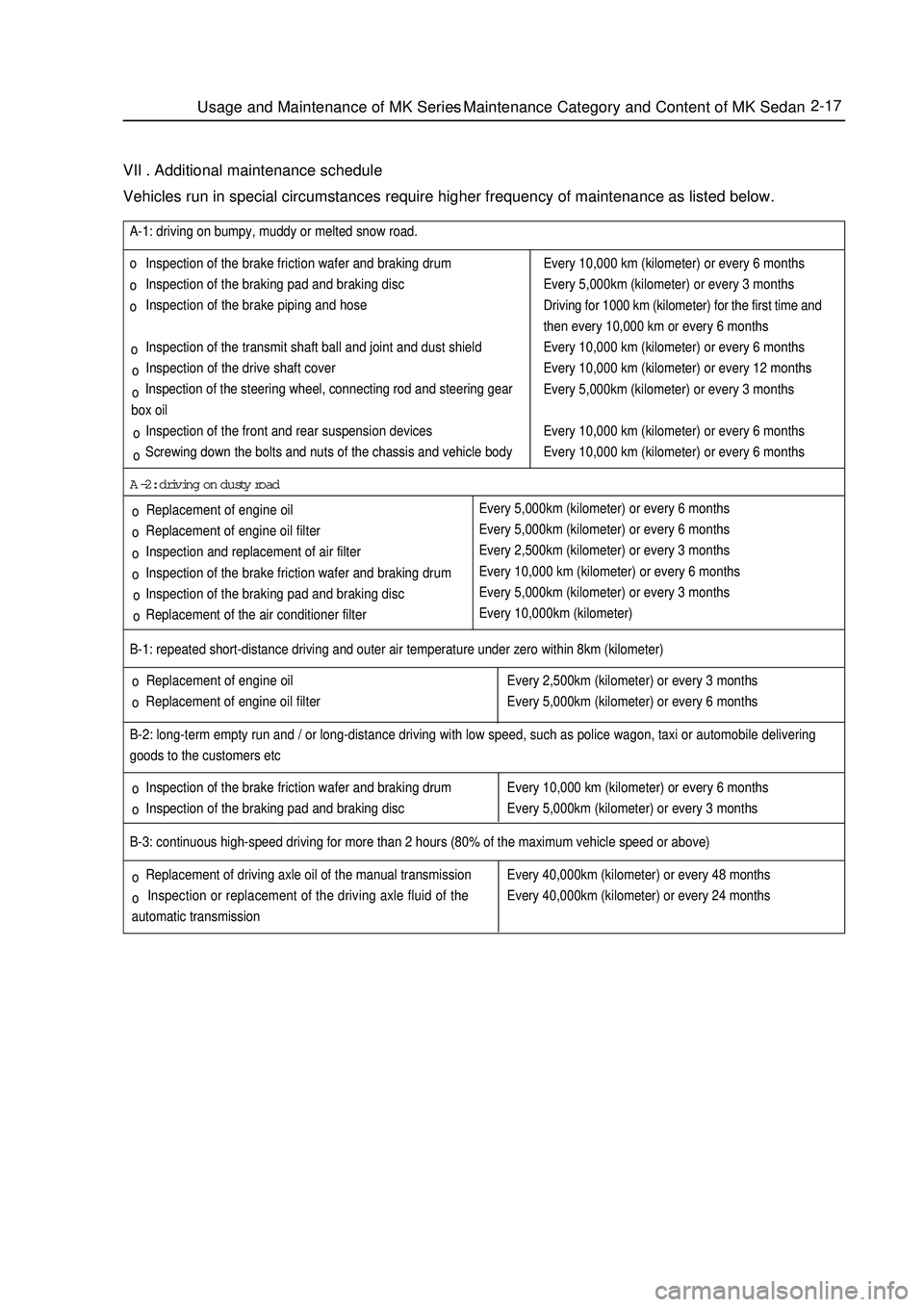
2-17
VII . Additional maintenance scheduleVehicles run in special circumstances require higher frequency of maintenance as listed below. Replacement of engine oil
Replacement of engine oil filter B-1: repeated short-distance driving and outer air temperature under zero within 8km (kilometer)
Inspection of the brake friction wafer and braking drum
Inspection of the braking pad and braking disc B-2: long-term empty run and / or long-distance driving with low speed, such as police wagon, taxi or automobile delivering
goods to the customers etcEvery 2,500km (kilometer) or every 3 months
Every 5,000km (kilometer) or every 6 months
Every 10,000 km (kilometer) or every 6 months
Every 5,000km (kilometer) or every 3 monthsB-3: continuous high-speed driving for more than 2 hours (80% of the maximum vehicle speed or above)
Replacement of driving axle oil of the manual transmission
Inspection or replacement of the driving axle fluid of the
automatic transmissionEvery 40,000km (kilometer) or every 48 months
Every 40,000km (kilometer) or every 24 months Inspection of the brake friction wafer and braking drum
Inspection of the braking pad and braking disc
Inspection of the brake piping and hose
Inspection of the transmit shaft ball and joint and dust shield
Inspection of the drive shaft cover
Inspection of the steering wheel, connecting rod and steering gear
box oil
Inspection of the front and rear suspension devices
Screwing down the bolts and nuts of the chassis and vehicle body A-1: driving on bumpy, muddy or melted snow road.
Replacement of engine oil
Replacement of engine oil filter
Inspection and replacement of air filter
Inspection of the brake friction wafer and braking drum
Inspection of the braking pad and braking disc
Replacement of the air conditioner filterA-2: driving on dusty roadEvery 10,000 km (kilometer) or every 6 months
Every 5,000km (kilometer) or every 3 months
Driving for 1000 km (kilometer) for the first time and
then every 10,000 km or every 6 months
Every 10,000 km (kilometer) or every 6 months
Every 10,000 km (kilometer) or every 12 months
Every 5,000km (kilometer) or every 3 months
Every 10,000 km (kilometer) or every 6 months
Every 10,000 km (kilometer) or every 6 months
Every 5,000km (kilometer) or every 6 months
Every 5,000km (kilometer) or every 6 months
Every 2,500km (kilometer) or every 3 months
Every 10,000 km (kilometer) or every 6 months
Every 5,000km (kilometer) or every 3 months
Every 10,000km (kilometer)Usage and Maintenance of MK Series - Maintenance Category and Content of MK Sedanoo o
o o o o
o o
o
o o
o o
o o
o ooo
Page 39 of 416

2-18Section 3 Daily Maintenance of MK SedanDaily maintenance means operation of vehicle regular inspection, cleaning, fastening, and refilling according to
vehicle usage and condition on the basis of regular maintenance to make sure the vehicle is at good status. Daily
maintenance can be performed by driver or professional automotive mechanics in daily use of vehicle. But some
of the items must be conducted by professional mechanics at service shops.
1. Maintenance of air cleaner
Air cleaner filters the air that is coming into engine for the first time. Dust and other dirt filtered out gathers in the
induction tube. Air cleaner filters a lot of dust and dirty, so it must be cleaned in time.
2. Maintenance of air filter
Air filter does not only filter the dust and dirt in the air, but also keeps smooth ventilation. Its status has great effects
on the fuel economy and power of the engine, so it must be checked and maintained in time.
Before it is time to replace air filter, maintain it. Remove the filter, knock it with hand or stick to get rid of dust
on the filter and remove dirt inside the filter cover according to the cleanness of the road that the vehicle usually
runs on.
ATTENTION: do not clean the filter with wet cloth. Fasten the filter well when installing it back.
3. Maintenance of battery
Battery is used to start the vehicle and supply power to electrical facilities. Its status directly affects the regular
usage of the vehicle, especially for vehicles equipped with electrical controlled facilities. Keeping the battery in
good technical status and connections is especially important. It is necessary to often perform the following
inspections and maintenance in regular usage:
(1) Clean the outside of battery Inspect if the battery case or cover surface is dirty or has dirt, oil, or other dirty
things regularly. Clean it and keep the surface dry to avoid electrical leak caused by cover deformation.
(2) Check battery connections Bad connection between battery electrode and cable results in low engine start
speed which makes it difficult to start the vehicle or the vehicle cannot be started because of low output voltage
from battery. Loose connection at battery end leads to damage of electrical components and loss of trouble code
and other information stored in RAM of the computer system as a result of low voltage. Therefore, it is necessary
to check if the connection of cables on the battery electrode is good. When it is found loose, it must be fastened.
If there is any rust, the cables must be loosened, washed clean and be connected again.
4. Maintenance of tires and wheels
(1) Keeping tires and wheels under good condition is very important to vehicle fuel consumption and driving
safety. Therefore, inspect and maintain the tires regularly. Every 10000 km, the wheels should be adjusted. Follow
the sequence in picture 3:
Judge if there is any hidden problems in vehicle chassis mechanism by observing wear in different places, andfinding out the hidden problems does not only help you to understand
the technical status of the vehicle, but also benefits driving safety.
a. Serious wear on both edges of tire tread, means tires often
work with low tire pressure.
b. Wear of middle of the tire tread is mainly because the tires
are used with high tire pressure.This kind of wear shortens
the useful life of tires, and may result in sudden flat tire
when the vehicle runs on uneven road surface or meets any
obstacles.Usage and Maintenance of MK Series - Daily Maintenance of MK Sedan
Page 40 of 416
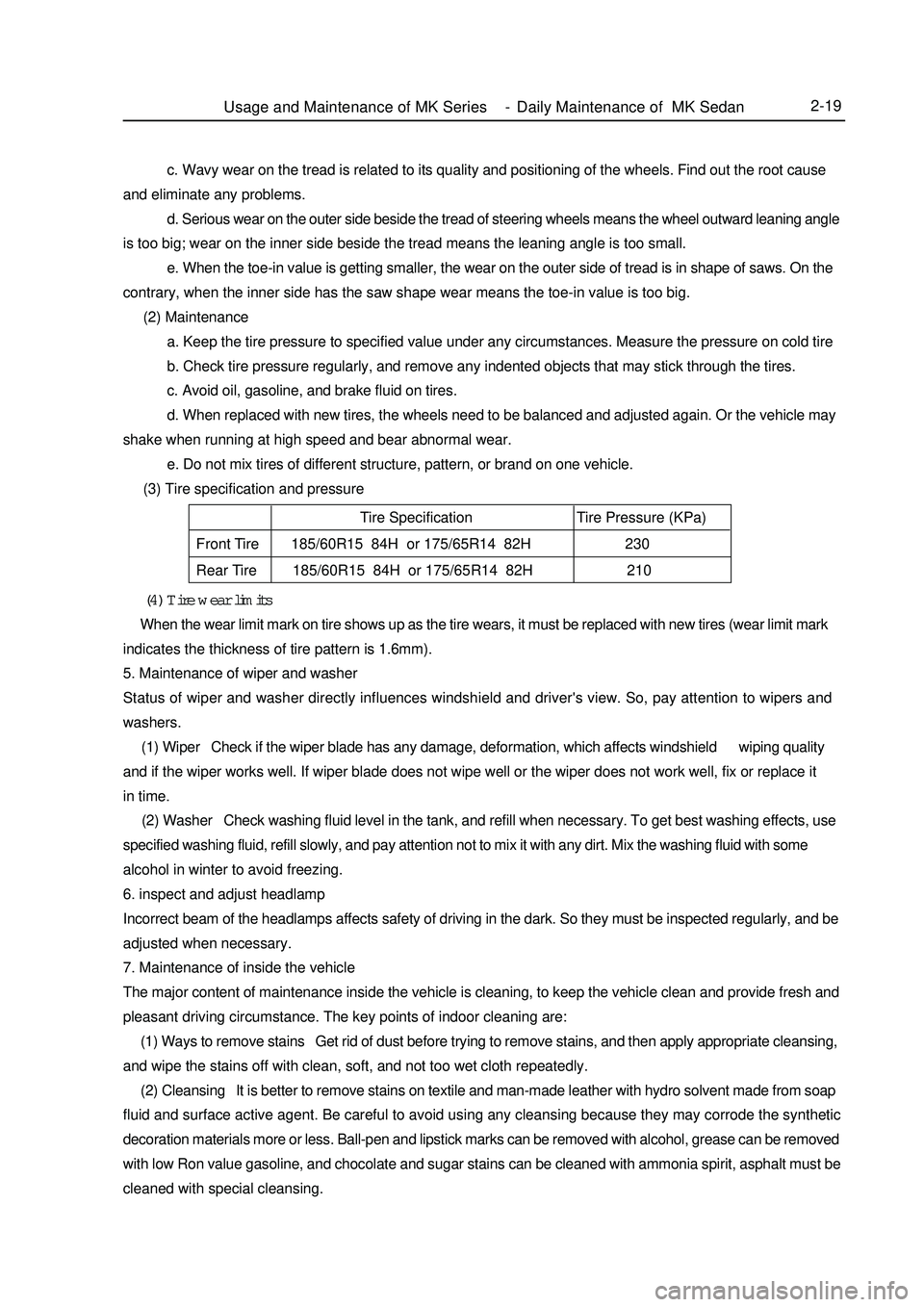
2-19 (4) Tire wear limits When the wear limit mark on tire shows up as the tire wears, it must be replaced with new tires (wear limit mark
indicates the thickness of tire pattern is 1.6mm).
5. Maintenance of wiper and washer
Status of wiper and washer directly influences windshield and driver's view. So, pay attention to wipers and
washers.
(1) Wiper Check if the wiper blade has any damage, deformation, which affects windshield wiping quality
and if the wiper works well. If wiper blade does not wipe well or the wiper does not work well, fix or replace it
in time.
(2) Washer Check washing fluid level in the tank, and refill when necessary. To get best washing effects, use
specified washing fluid, refill slowly, and pay attention not to mix it with any dirt. Mix the washing fluid with some
alcohol in winter to avoid freezing.
6. inspect and adjust headlampIncorrect beam of the headlamps affects safety of driving in the dark. So they must be inspected regularly, and be
adjusted when necessary.
7. Maintenance of inside the vehicle
The major content of maintenance inside the vehicle is cleaning, to keep the vehicle clean and provide fresh and
pleasant driving circumstance. The key points of indoor cleaning are:
(1) Ways to remove stains Get rid of dust before trying to remove stains, and then apply appropriate cleansing,and wipe the stains off with clean, soft, and not too wet cloth repeatedly.
(2) Cleansing It is better to remove stains on textile and man-made leather with hydro solvent made from soap
fluid and surface active agent. Be careful to avoid using any cleansing because they may corrode the synthetic
decoration materials more or less. Ball-pen and lipstick marks can be removed with alcohol, grease can be removed
with low Ron value gasoline, and chocolate and sugar stains can be cleaned with ammonia spirit, asphalt must be
cleaned with special cleansing.Tire Specification Tire Pressure (KPa)
Front Tire 185/60R15 84H or 175/65R14 82H 230
Rear Tire 185/60R15 84H or 175/65R14 82H 210c. Wavy wear on the tread is related to its quality and positioning of the wheels. Find out the root cause
and eliminate any problems.
d. Serious wear on the outer side beside the tread of steering wheels means the wheel outward leaning angle
is too big; wear on the inner side beside the tread means the leaning angle is too small.
e. When the toe-in value is getting smaller, the wear on the outer side of tread is in shape of saws. On the
contrary, when the inner side has the saw shape wear means the toe-in value is too big.
(2) Maintenance
a. Keep the tire pressure to specified value under any circumstances. Measure the pressure on cold tire
b. Check tire pressure regularly, and remove any indented objects that may stick through the tires.
c. Avoid oil, gasoline, and brake fluid on tires.
d. When replaced with new tires, the wheels need to be balanced and adjusted again. Or the vehicle may
shake when running at high speed and bear abnormal wear.
e. Do not mix tires of different structure, pattern, or brand on one vehicle.
(3) Tire specification and pressureUsage and Maintenance of MK Series - Daily Maintenance of MK Sedan
Page 46 of 416

Table 3Section 2 Removal of the Engine Assembly from the Vehicle1. Avoid petrol overflowing (Disconnect from the fuel tank).
2. Remove the front wheel.Figure 1-5Engine AssemblyRemoval of the Engine Assembly from the Vehicle3-5CO
Normal
Low
HighHC
High
High
HighProblems
Bad idle speed
Bad idle speed
(HC reading fluctuates)
Bad idle speed
(Black smoke exhausts)Causes
1. Ignition fault:
Incorrect ignition timing;
Dirt, short circuit, or incorrect spark plug gap.
2. Incorrect valve gap.
3. Suction and exhaust valve leak.
4. Cylinder leaks.
1. Vacuum leaks.
PCV pipe . manifold;
Idle speed control valve;
Brake booster pipeline.
2. Spark lacks since the mixed gas is too thin.
1. Air filter is blocked.
2. PCV valve is blocked.
3. EFI system fails.
ECU fails.
Pressure regulator of fuel oil is out of order.
Water temperature sensor does not work.
Suction pressure/temperature sensor fails.
Injector fails.
The throttle position sensor fails.3. Discharge the coolant completely.
4. Remove the air filter assembly with hose (see Figure 1-5).
(1) Disconnect the joint of the temperature sensor and the wire
plug.
(2) Disconnect the vent duct from the hose of the air filter.
(3) Release the wire clip bolt on the air filter.
(4) Disconnect the hose of the air filter from the throttle body.
(5) Remove 3 bolts and the air filter assemblies.
5. Remove the battery.
6. Remove the fuel pipe sub-assembly.
7. Disconnect the water pipe; disconnect the water outlet pipe of the
heater from the air conditioner pipe.
8. Release the nut and remove the accelerator control cable. -
Page 47 of 416
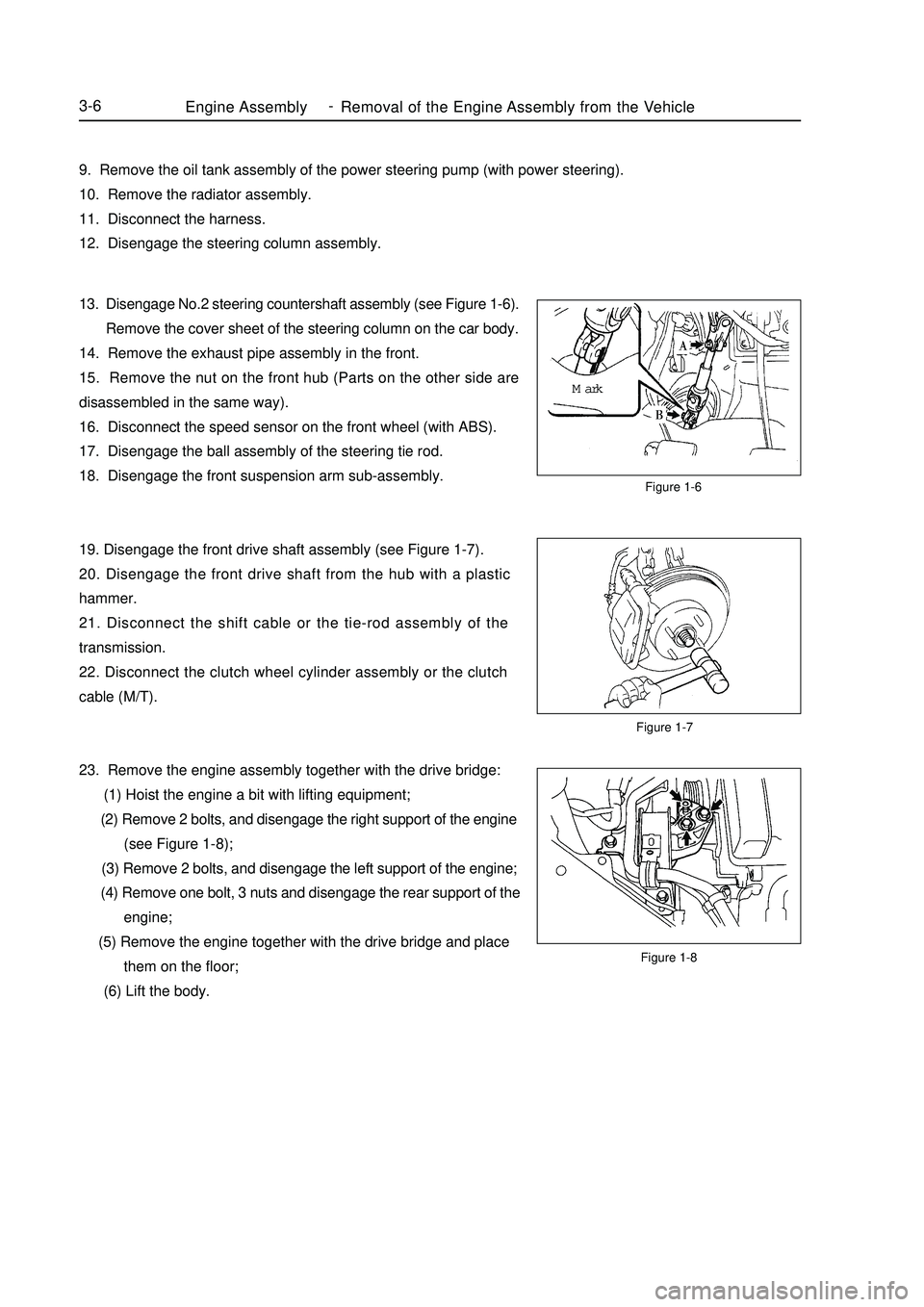
Figure 1-7Figure 1-6
Figure 1-8Engine AssemblyRemoval of the Engine Assembly from the Vehicle3-69. Remove the oil tank assembly of the power steering pump (with power steering).
10. Remove the radiator assembly.
11. Disconnect the harness.
12. Disengage the steering column assembly.
13. Disengage No.2 steering countershaft assembly (see Figure 1-6).
Remove the cover sheet of the steering column on the car body.
14. Remove the exhaust pipe assembly in the front.
15. Remove the nut on the front hub (Parts on the other side are
disassembled in the same way).
16. Disconnect the speed sensor on the front wheel (with ABS).
17. Disengage the ball assembly of the steering tie rod.
18. Disengage the front suspension arm sub-assembly.
19. Disengage the front drive shaft assembly (see Figure 1-7).
20. Disengage the front drive shaft from the hub with a plastic
hammer.
21. Disconnect the shift cable or the tie-rod assembly of the
transmission.
22. Disconnect the clutch wheel cylinder assembly or the clutch
cable (M/T).
23. Remove the engine assembly together with the drive bridge:
(1) Hoist the engine a bit with lifting equipment;
(2) Remove 2 bolts, and disengage the right support of the engine
(see Figure 1-8);
(3) Remove 2 bolts, and disengage the left support of the engine;
(4) Remove one bolt, 3 nuts and disengage the rear support of the
engine;
(5) Remove the engine together with the drive bridge and place
them on the floor;
(6) Lift the body.Mark -
Page 68 of 416
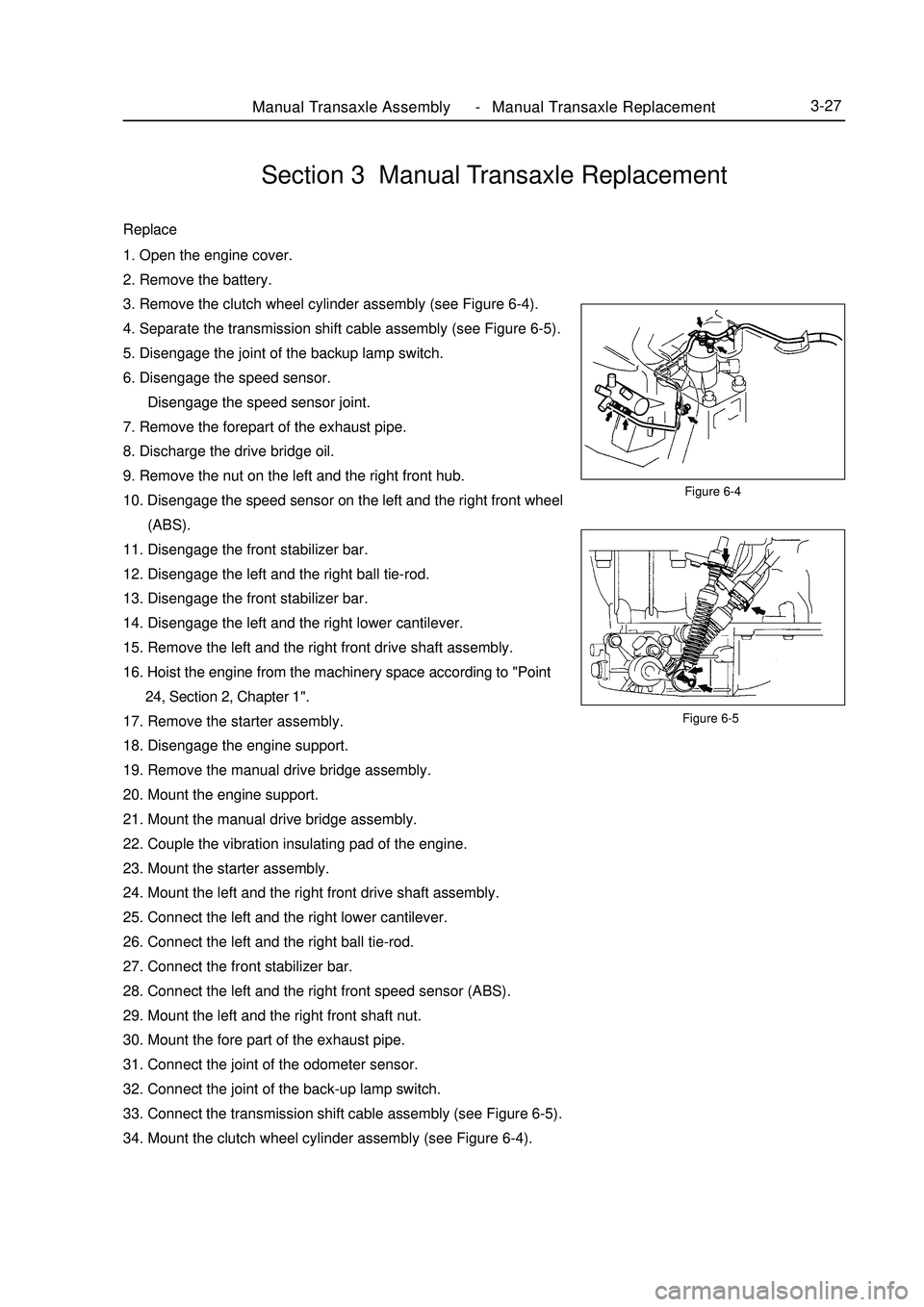
Figure 6-5Manual Transaxle Assembly Manual Transaxle Replacement3-27Section 3 Manual Transaxle ReplacementReplace1. Open the engine cover.
2. Remove the battery.
3. Remove the clutch wheel cylinder assembly (see Figure 6-4).
4. Separate the transmission shift cable assembly (see Figure 6-5).
5. Disengage the joint of the backup lamp switch.
6. Disengage the speed sensor.
Disengage the speed sensor joint.
7. Remove the forepart of the exhaust pipe.
8. Discharge the drive bridge oil.
9. Remove the nut on the left and the right front hub.
10. Disengage the speed sensor on the left and the right front wheel
(ABS).
11. Disengage the front stabilizer bar.
12. Disengage the left and the right ball tie-rod.
13. Disengage the front stabilizer bar.
14. Disengage the left and the right lower cantilever.
15. Remove the left and the right front drive shaft assembly.
16. Hoist the engine from the machinery space according to "Point
24, Section 2, Chapter 1".
17. Remove the starter assembly.
18. Disengage the engine support.
19. Remove the manual drive bridge assembly.
20. Mount the engine support.
21. Mount the manual drive bridge assembly.
22. Couple the vibration insulating pad of the engine.
23. Mount the starter assembly.
24. Mount the left and the right front drive shaft assembly.
25. Connect the left and the right lower cantilever.
26. Connect the left and the right ball tie-rod.
27. Connect the front stabilizer bar.
28. Connect the left and the right front speed sensor (ABS).
29. Mount the left and the right front shaft nut.
30. Mount the fore part of the exhaust pipe.
31. Connect the joint of the odometer sensor.
32. Connect the joint of the back-up lamp switch.
33. Connect the transmission shift cable assembly (see Figure 6-5).
34. Mount the clutch wheel cylinder assembly (see Figure 6-4).Figure 6-4 -
Page 74 of 416
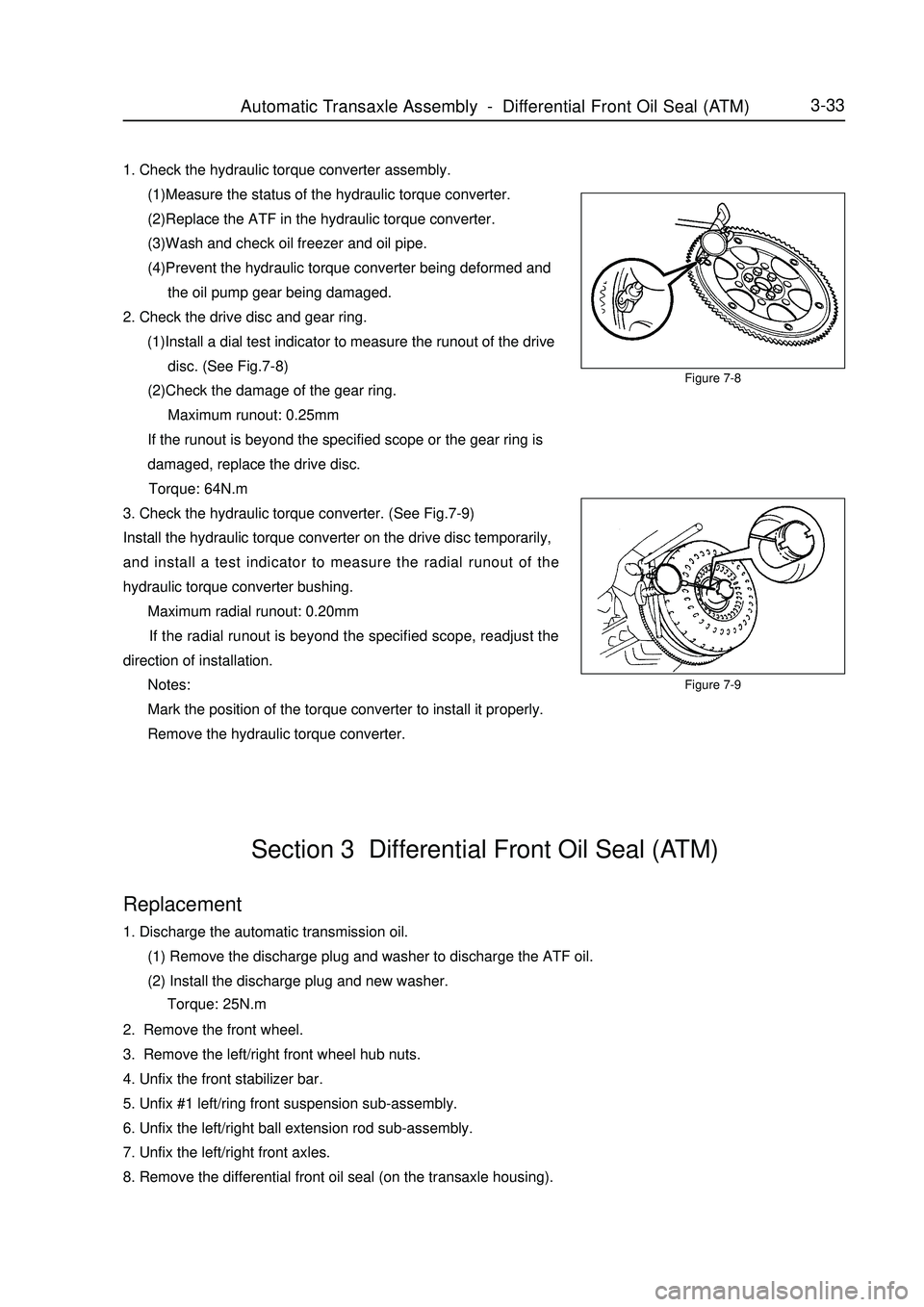
Figure 7-93-33Replacement1. Discharge the automatic transmission oil.
(1) Remove the discharge plug and washer to discharge the ATF oil.
(2) Install the discharge plug and new washer.
Torque: 25N.m
2. Remove the front wheel.
3. Remove the left/right front wheel hub nuts.
4. Unfix the front stabilizer bar.
5. Unfix #1 left/ring front suspension sub-assembly.
6. Unfix the left/right ball extension rod sub-assembly.
7. Unfix the left/right front axles.
8. Remove the differential front oil seal (on the transaxle housing).Section 3 Differential Front Oil Seal (ATM)1. Check the hydraulic torque converter assembly.
(1)Measure the status of the hydraulic torque converter.
(2)Replace the ATF in the hydraulic torque converter.
(3)Wash and check oil freezer and oil pipe.
(4)Prevent the hydraulic torque converter being deformed and
the oil pump gear being damaged.
2. Check the drive disc and gear ring.
(1)Install a dial test indicator to measure the runout of the drive
disc. (See Fig.7-8)
(2)Check the damage of the gear ring.
Maximum runout: 0.25mm
If the runout is beyond the specified scope or the gear ring is
damaged, replace the drive disc.
Torque: 64N.m
3. Check the hydraulic torque converter. (See Fig.7-9)
Install the hydraulic torque converter on the drive disc temporarily,
and install a test indicator to measure the radial runout of the
hydraulic torque converter bushing.
Maximum radial runout: 0.20mm
If the radial runout is beyond the specified scope, readjust the
direction of installation.
Notes:
Mark the position of the torque converter to install it properly.
Remove the hydraulic torque converter.Figure 7-8Automatic Transaxle Assembly Differential Front Oil Seal (ATM) -