engine KIA CARENS RHD 2017 Owners Manual
[x] Cancel search | Manufacturer: KIA, Model Year: 2017, Model line: CARENS RHD, Model: KIA CARENS RHD 2017Pages: 723, PDF Size: 40.8 MB
Page 579 of 723
729
What to do in an emergency
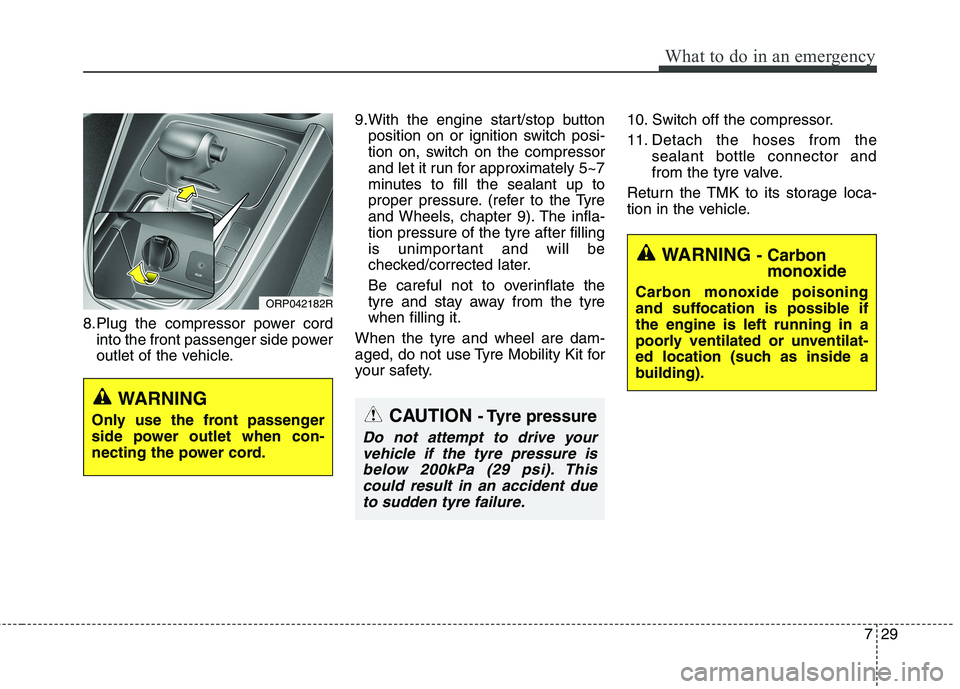
8.Plug the compressor power cordinto the front passenger side power
outlet of the vehicle. 9.With the engine start/stop button
position on or ignition switch posi-
tion on, switch on the compressor
and let it run for approximately 5~7
minutes to fill the sealant up to
proper pressure. (refer to the Tyre
and Wheels, chapter 9). The infla-tion pressure of the tyre after filling
is unimportant and will be
checked/corrected later.
Be careful not to overinflate the
tyre and stay away from the tyrewhen filling it.
When the tyre and wheel are dam-
aged, do not use Tyre Mobility Kit for
your safety. 10. Switch off the compressor.
11. Detach the hoses from the
sealant bottle connector and
from the tyre valve.
Return the TMK to its storage loca-
tion in the vehicle.
WARNING - Carbon
monoxide
Carbon monoxide poisoning
and suffocation is possible ifthe engine is left running in a
poorly ventilated or unventilat-
ed location (such as inside a
building).
WARNING
Only use the front passenger
side power outlet when con-
necting the power cord.
CAUTION - Tyre pressure
Do not attempt to drive your
vehicle if the tyre pressure is below 200kPa (29 psi). Thiscould result in an accident dueto sudden tyre failure.
ORP042182R
Page 581 of 723
731
What to do in an emergency
Notes on the safe use of the
Tyre Mobility Kit
Park your car at the side of theroad so that you can work with the
TMK away from moving traffic.
Place your warning triangle in a
prominent place to make passing
vehicles aware of your location.
To be sure your vehicle will not move, even when you're on fairly
level ground, always set your park-
ing brake.
Only use the TMK for sealing/infla- tion passenger car tyres. Do not
use on motorcycles, bicycles or
any other type of tyres.
Do not remove any foreign objects- such as nails or screws -that have
penetrated the tyre.
Before using the TMK, read the precautionary advice printed onthe sealant bottle!
Provided the car is outdoors, leave the engine running. Otherwise
operating the compressor may
eventually drain the car battery. Never leave the TMK unattended
whilst it is being used.
Do not leave the compressor run- ning for more than 10 min. at a time
or it may overheat.
Do not use the TMK if the ambient temperature is below -30°C (-22°F).
When the tyre and wheel are dam- aged, do not use Tyre Mobility Kit
for your safety. Technical Data
System voltage: DC 12 V
Working voltage: DC 10 - 15 V
Amperage rating: max. 15 A
Suitable for use at temperatures:
-30 ~ +70°C (-22 ~ +158°F)
Max. working pressure: 6 bar (87 psi)
Size
Compressor: 170 x 150 x 60 mm (6.7 x 5.9 x 2.4 in.)
Sealant bottle: 85 x 77 ø mm (3.3 x 3.0 ø in.)
Compressor weight: 0.8 kg (1.8 lbs)
Sealant volume: 200 ml (12.2 cu. in.)
❈ Sealant and spare parts can be obtained and replaced at an
authorised vehicle or tyre dealer.
Empty sealant bottles may be dis-
posed of at home. Liquid residuefrom the sealant should be dis-
posed of by your vehicle or tyredealer or in accordance with local
waste disposal regulations.
Page 588 of 723
Maintenance
Engine compartment . . . . . . . . . . . . . . . . . . . . . . . . 8-3
Maintenance services . . . . . . . . . . . . . . . . . . . . . . . . 8-6• Owner’s responsibility . . . . . . . . . . . . . . . . . . . . . . . . 8-6
. . . . . . . . . . . . . . . . 8-6
. . . . . . . . . . . . . . . . 8-7
Owner maintenance . . . . . . . . . . . . . . . . . . . . . . . . . 8-9 . . . . . . . . . . . . . . . . . . . 8-9
Scheduled maintenance service . . . . . . . . . . . . . 8-11
Explanation of scheduled maintenance items . . . 8-28
Engine oil. . . . . . . . . . . . . . . . . . . . . . . . . . . . . . . . . 8-32 . . . . . . . . . . . . . . . . . . . 8-32
. . . . . . . . . . . . . . . 8-33
Engine coolant . . . . . . . . . . . . . . . . . . . . . . . . . . . . 8-34 . . . . . . . . . . . . . . . . . . 8-34
. . . . . . . . . . . . . . . . . . . . . . . . . 8-37
Brake/clutch fluid . . . . . . . . . . . . . . . . . . . . . . . . . . 8-38 . . . . . . . . . . . . 8-38
Washer fluid . . . . . . . . . . . . . . . . . . . . . . . . . . . . . . 8-39 . . . . . . . . . . . . . . . . 8-39
Parking brake - hand type . . . . . . . . . . . . . . . . . . 8-39 . . . . . . . . . . . . . . . . . . 8-39
Fuel Filter . . . . . . . . . . . . . . . . . . . . . . . . . . . . . . . . 8-40 . . . . . . . . . . . . . . . . . 8-40 Air cleaner air cleaner . . . . . . . . . . . . . . . . . . . . . . 8-40
. . . . . . . . . . . . . . . . . . . . . . . . . . . . 8-40
Climate control air filter . . . . . . . . . . . . . . . . . . . . 8-42 . . . . . . . . . . . . . . . . . . . . . . . . . . . . . . 8-42
. . . . . . . . . . . . . . . . . . . . . . . . . . . . 8-42
Wiper blades . . . . . . . . . . . . . . . . . . . . . . . . . . . . . . 8-44 . . . . . . . . . . . . . . . . . . . . . . . . . . . . . . 8-44
. . . . . . . . . . . . . . . . . . . . . . . . . . . 8-44
Battery . . . . . . . . . . . . . . . . . . . . . . . . . . . . . . . . . . . 8-48 . . . . . . . . . . . . . . . . . . . . . . . 8-48
. . . . . . . . . . . . . . . . . . . . . . . . . 8-50
. . . . . . . . . . . . . . . . . . . . . . . . . . 8-50
. . . . . . . . . . . . . . . . . . . . . . . . . . . . . . . . . . 8-51
Tyres and wheels . . . . . . . . . . . . . . . . . . . . . . . . . . 8-52 . . . . . . . . . . . . . . . . . . . . . . . . . . . . . . . . . . . . 8-52
. . . . . . . 8-52
. . . . . . . . . . . . . . . . 8-53
. . . . . . . . . . . . . . . . . . . . . . . . . . . . . . . . 8-54
. . . . . . . . . . . . . 8-55
. . . . . . . . . . . . . . . . . . . . . . . . . . . . . 8-56
. . . . . . . . . . . . . . . . . . . . . . . . . . . 8-57
. . . . . . . . . . . . . . . . . . . . . . . . . . . . . . . . 8-57
. . . . . . . . . . . . . . . . . . . . . . . . . . . . 8-57
. . . . . . . . . . . . . . . . . . . . . . . . . 8-58
. . . . . . . . . . . . . . . . . . . . . . . . . 8-62
8
Page 590 of 723
83
Maintenance
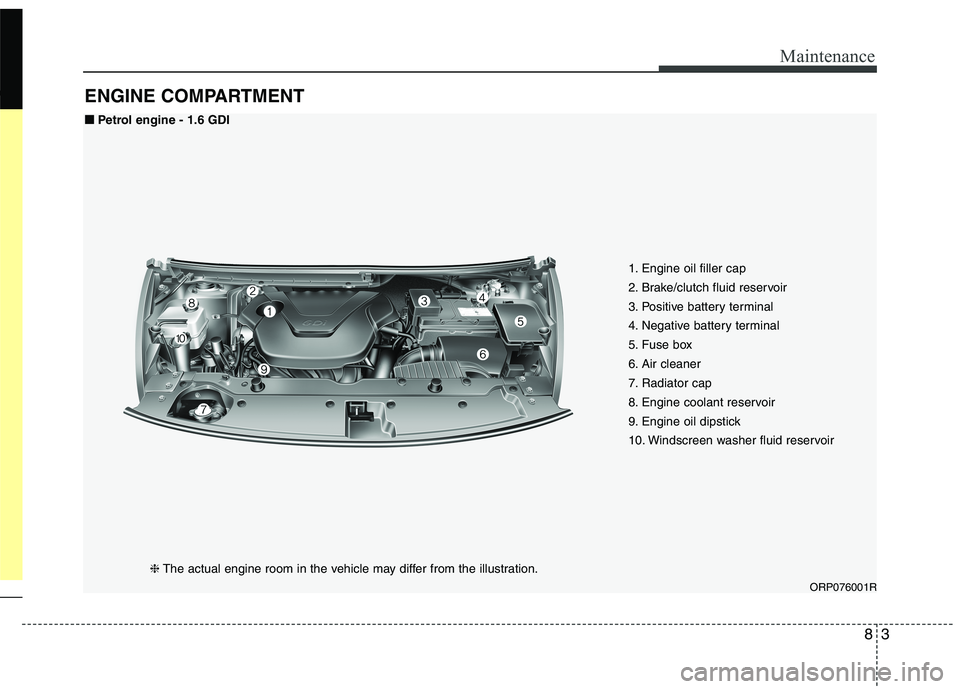
ENGINE COMPARTMENT
ORP076001R
❈
The actual engine room in the vehicle may differ from the illustration. 1. Engine oil filler cap
2. Brake/clutch fluid reservoir
3. Positive battery terminal
4. Negative battery terminal
5. Fuse box
6. Air cleaner
7. Radiator cap
8. Engine coolant reservoir
9. Engine oil dipstick
10. Windscreen washer fluid reservoir
■■
Petrol engine - 1.6 GDI
Page 591 of 723
Maintenance
4
8
ORP076002R/ORP076003R
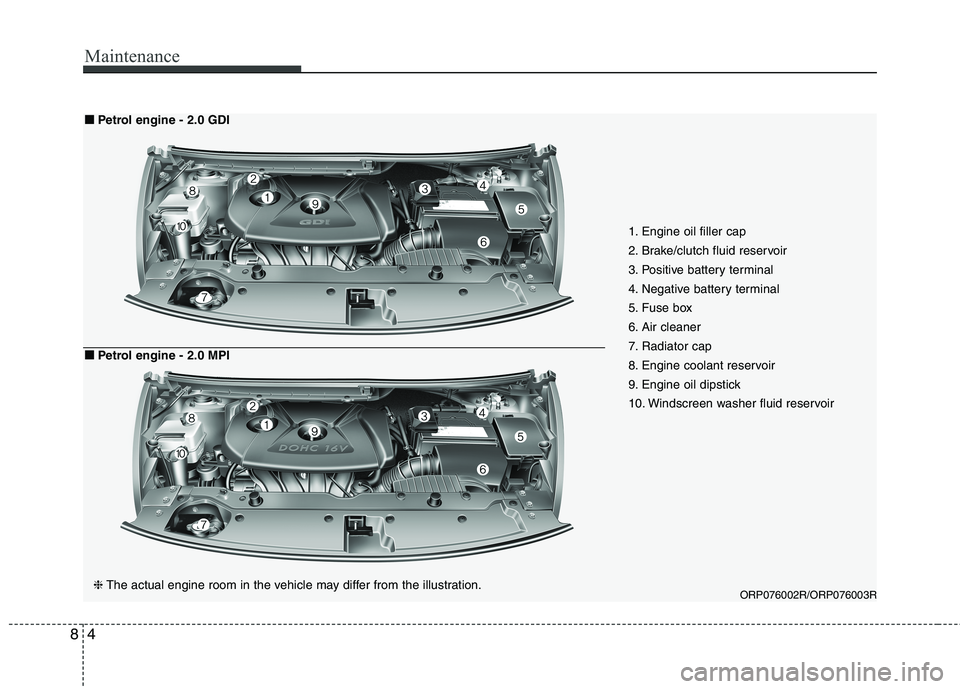
1. Engine oil filler cap
2. Brake/clutch fluid reservoir
3. Positive battery terminal
4. Negative battery terminal
5. Fuse box
6. Air cleaner
7. Radiator cap
8. Engine coolant reservoir
9. Engine oil dipstick
10. Windscreen washer fluid reservoir
■■
Petrol engine - 2.0 GDI
■■Petrol engine - 2.0 MPI
❈ The actual engine room in the vehicle may differ from the illustration.
Page 592 of 723
85
Maintenance
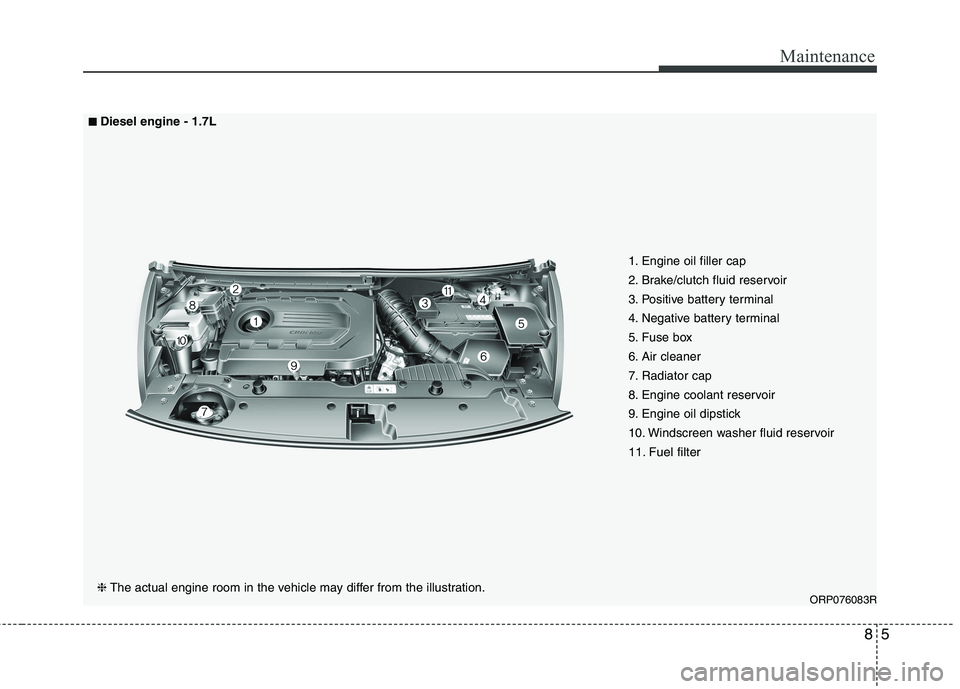
1. Engine oil filler cap
2. Brake/clutch fluid reservoir
3. Positive battery terminal
4. Negative battery terminal
5. Fuse box
6. Air cleaner
7. Radiator cap
8. Engine coolant reservoir
9. Engine oil dipstick
10. Windscreen washer fluid reservoir
11. Fuel filter
ORP076083R
❈
The actual engine room in the vehicle may differ from the illustration.
■■
Diesel engine - 1.7L
Page 594 of 723
87
Maintenance
Engine compartment precau- tions (Diesel engine)
• The injector operates at high volt-age (maximum 200v). Therefore,
the following accidents may occur.
- Direct contact with the injector orinjector wiring may cause electric
shock or damage your muscle or
nerve system.
- The electromagnetic wave from the operating injector may cause
the artificial heart pacemaker tomalfunction.
Follow the safety tips provided below, when you are checking theengine room whilst the engine is
running.
- Do not touch the injector, injectorwirings, and the engine computer
whilst the engine is running.
- Do not remove the injector con- nector whilst the engine is run-ning.
- People using pacemakers must not go near the engine whilst the
engine is starting or running.WARNING - Maintenance
work
Performing maintenance work on a vehicle can be danger-
ous. You can be seriously
injured whilst performing
some maintenance proce-
dures. If you lack sufficient
knowledge and experience or
the proper tools and equip-
ment to do the work, we rec-ommend that the system be
serviced by an authorised Kia
dealer.
Working under the bonnet with the engine running is
dangerous. It becomes even
more dangerous when you
wear jewelry or loose cloth-
ing. These can become entan-
gled in moving parts and
result in injury.
(Continued)(Continued)
Therefore, if you must run the
engine whilst working under
the bonnet, make certain that
you remove all jewelry (espe-
cially rings, bracelets, watch-
es, and necklaces) and all
neckties, scarves, and similar
loose clothing before gettingnear the engine or coolingfans.
Page 595 of 723
Maintenance
8
8
WARNING - Diesel Engine
Never work on injection system with engine running or within 30seconds after shutting off
engine. High-pressure pump,
rail, injectors and high-pressurepipes are subject to high pres-
sure even after the engine
stopped. The fuel jet produced by
fuel leaks may cause serious
injury, if it touches the body.
People using pacemakers
should not move than 30cm clos-er to the ECU or wiring harness
within the engine room whilst
engine is running, since the high
currents in the electronic engine
control system produce consid-
erable magnetic fields.CAUTION
Do not put heavy objects or apply excessive force on top ofthe engine cover (if equipped)or fuel related parts.
When you inspect the fuel system (fuel lines and fuelinjection devices), we recom- mend that you contact anauthorised Kia dealer.
Do not drive long time with the engine cover (if equipped)removed.
When checking the engine room, do not go near fire.
Fuel, washer fluid, etc. areflammable oils that may cause fire.
Before touching the battery, ignition cables and electricalwiring, you should disconnectthe battery "-" terminal. You may get an electric shockfrom the electric current.
(Continued)
(Continued) When you remove the interior trim cover with a flat head (-)driver, be careful not to dam-age the cover.
Be careful when you replace and clean bulbs to avoidburns or electrical shock.
Page 596 of 723
89
Maintenance
OWNER MAINTENANCE
We recommend that the following
lists are vehicle checks and inspec-
tions that should be performed by the
owner or an authorised Kia dealer atthe frequencies indicated to help
ensure safe, dependable operation
of your vehicle.
If you have any question, we recom-
mend that you consult an authorised
Kia dealer.
These Owner Maintenance Checks
are generally not covered by war-
ranties and you may be charged for
labour, parts and lubricants used. Owner maintenance schedule
When you stop for fuel:
Check the engine oil level.
Check coolant level in coolant
reservoir.
Check the windscreen washer fluid level.
Look for low or under-inflated tyres.
Check the radiator and condenser. Check if the front of the radiator and condenser are clean and not
blocked with leaves, dirt or insectsetc.
If any of the above parts are
extremely dirty or you are not sure
of their condition, we recommend
that you contact an authorised Kia
dealer.
Whilst operating your vehicle:
Note any changes in the sound ofthe exhaust or any smell of
exhaust fumes in the vehicle.
Check for vibrations in the steering wheel. Notice any increased steer-
ing effort or looseness in the steer-
ing wheel, or change in its straight-ahead position.
Notice if your vehicle constantly turns slightly or “pulls” to one side
when travelling on smooth, levelroad.
When stopping, listen and check for unusual sounds, pulling to one
side, increased brake pedal travel
or “hard-to-push” brake pedal.
If any slipping or changes in the operation of your transaxle occurs,
check the transaxle fluid level.
Check manual transaxle operation, including clutch operation.
WARNING
Be careful when checking your
engine coolant level when the
engine is hot. Scalding hot
coolant and steam may blow out
under pressure. This could cause
burns or other serious injury.
Page 597 of 723
Maintenance
10
8
Check automatic transaxle / dual
clutch transmission P (Park) func- tion.
Check parking brake.
Check for fluid leaks under your vehicle (water dripping from the air
conditioning system during or after
use is normal).
At least monthly:
Check coolant level in the enginecoolant reservoir.
Check the operation of all exterior lights, including the stoplights, turn
signals and hazard warning flash-
ers.
Check the inflation pressures of all tyres including the spare.
At least twice a year
(i.e., every Spring and Fall) :
Check radiator, heater and air con- ditioning hoses for leaks or dam-
age.
Check windscreen washer spray and wiper operation. Clean wiper
blades with clean cloth dampened
with washer fluid.
Check headlight alignment.
Check muffler, exhaust pipes, shields and clamps.
Check the lap/shoulder belts for wear and function.
Check for worn tyres and loose wheel lug nuts.
At least once a year :
Clean body and door drain holes.
Lubricate door hinges and checks,and bonnet hinges.
Lubricate door and bonnet locks and latches.
Lubricate door rubber weather- strips.
Check the air conditioning system.
Inspect and lubricate automatic transaxle / dual clutch transmission
linkage and controls.
Clean battery and terminals.
Check the brake (and clutch) fluid level.